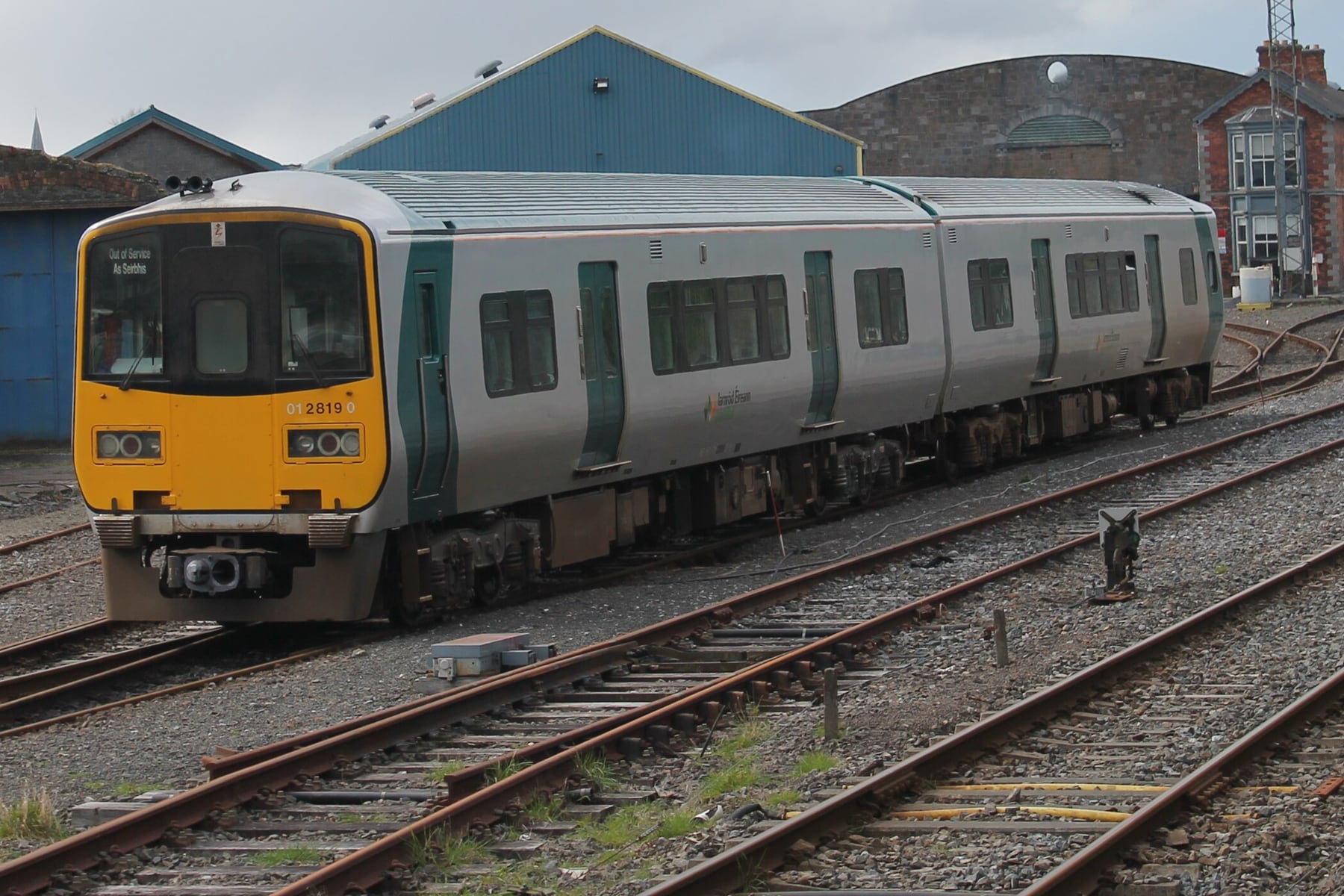
Limerick to Galway
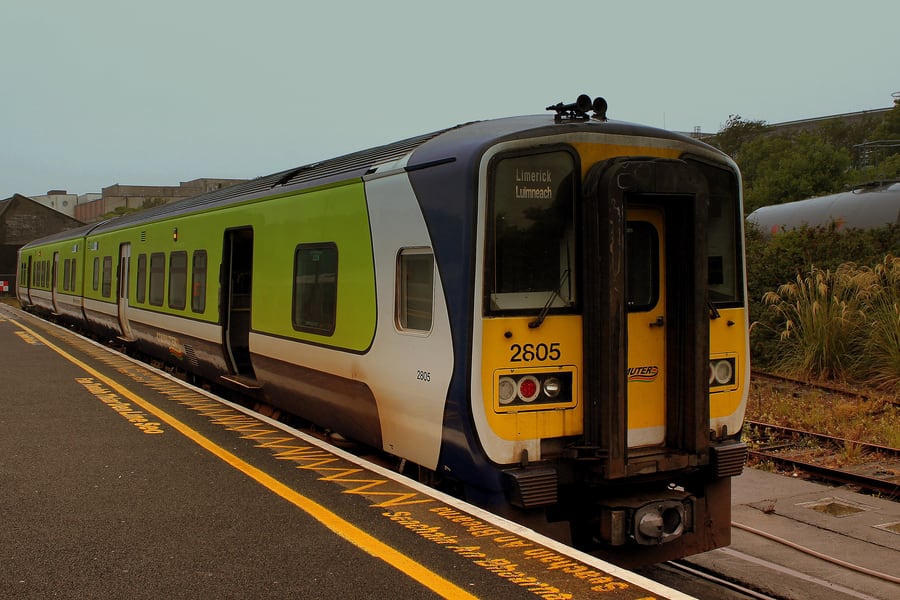
Milepost98 / Wikimedia Commons · CC BY-SA 4.0 · 2016 · cropped
- DistanceLimerick Colbert to Galway Ceannt · seven stops between
- DurationAbout 1 h 55 min
- Best seasonAll year · late May for Fleadh Nua in Ennis
Introduction
For thirty-four years no passenger train ran north of Ennis. The line from Ennis to Athenry, built in the 1860s as one link in a railway up the west of Ireland from Limerick to Sligo, lost its Limerick–Galway trains in 1963 and its last passenger service in 1976; after the final fertiliser train in 2000 it carried nothing at all. A local campaign, West on Track, gathered more than 100,000 signatures, and on 29 March 2010 the rebuilt line reopened as part of what is now called the Western Railway Corridor.
Today five trains a day each way, four on Sundays, run from Limerick Colbert to Galway Ceannt in a little under two hours. They cross the farmland of Clare and south Galway through Ennis, Gort (between the Burren and the Slieve Aughty hills) and Athenry, with stone walls and small fields on both sides. It is a country railway, mostly single track, and an easy way to reach the places where Yeats and Lady Gregory began the Irish Literary Revival.
The Journey
Trains leave from Limerick Colbert, the station on Parnell Street that the Waterford & Limerick Railway opened in 1858 and that has carried the name of Con Colbert, one of the executed leaders of the 1916 Rising, since 1966. The Galway trains run out of the city across County Clare to Sixmilebridge, a station first opened in January 1859 and reopened with the line in 2010, and on to Ennis, the county town, about forty minutes from Limerick. The stretch past Newmarket-on-Fergus is low-lying and has flooded more than once; the line was shut for months in 2015–16 and again for a few weeks in 2024.
The reopened line
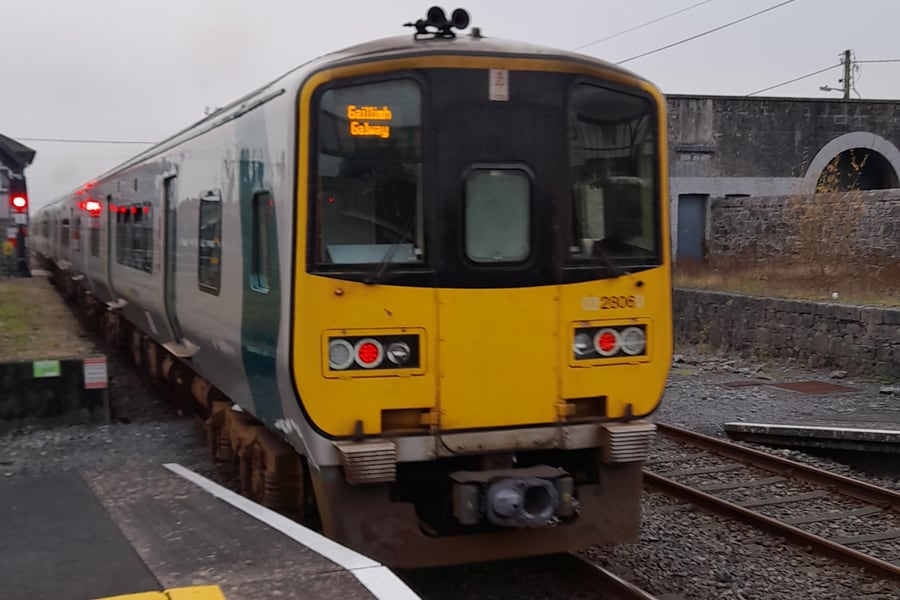
North of Ennis is the section that came back in 2010. The track had been relaid from November 2007 and the project, which cost €106 million, finished within budget. Gort, first opened in September 1869, was rebuilt on its old site, and Ardrahan and Craughwell reopened with it, Craughwell with a new single platform close to the original. This is quiet country of hedges, limestone walls and grazing, and the halts are small; Craughwell, like Sixmilebridge, is unstaffed. The trains are usually Iarnród Éireann's 2800-class railcars, ten units built in Japan by Tokyu Car and in service since 2000, now all based at Limerick.
At Athenry the line meets the main line from Dublin, which the Midland Great Western opened on 1 August 1851. The old line north towards Tuam and Claremorris is next to come back: clearance work has begun near Tuam, and construction is funded to start in 2028.
Into Galway
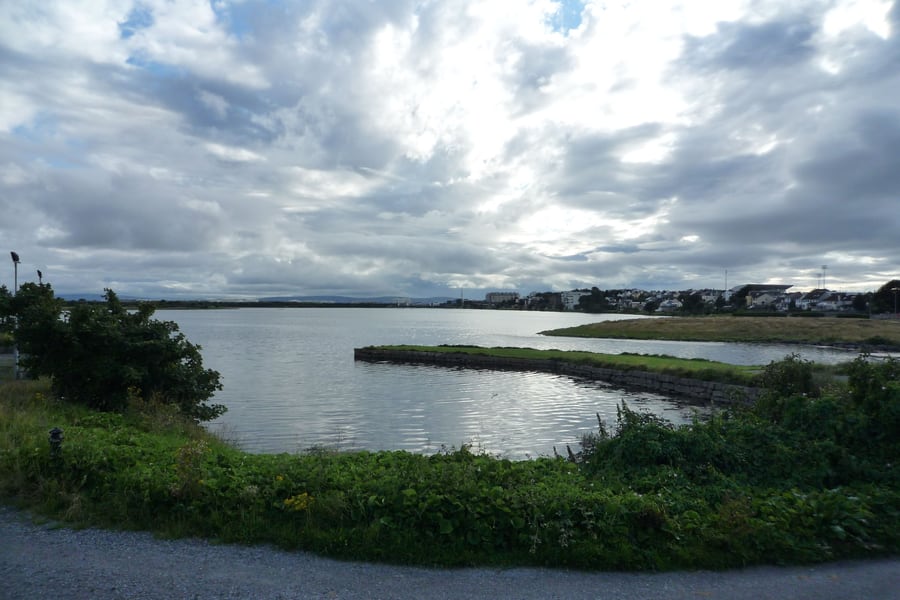
The last miles share the Dublin line through Oranmore, a station that opened in 2013. A passing loop and second platform are being built there, due by the end of 2027, so that more trains can run on the single track. The railway then crosses the inlet of Lough Atalia on its bridge and runs into Galway Ceannt, the terminus on Eyre Square, opened the same day as Athenry in 1851. Trains for Limerick leave from its short second platform.
Along the route
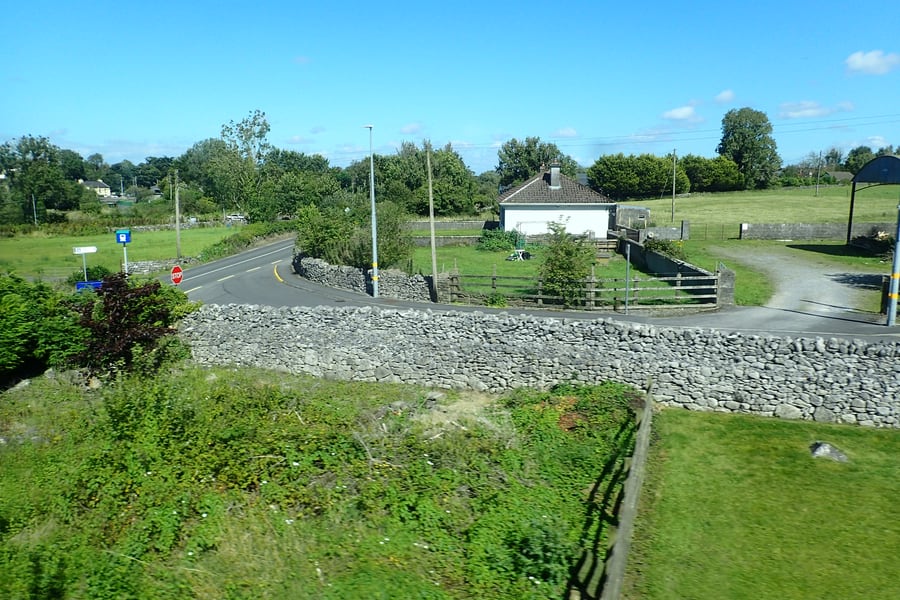
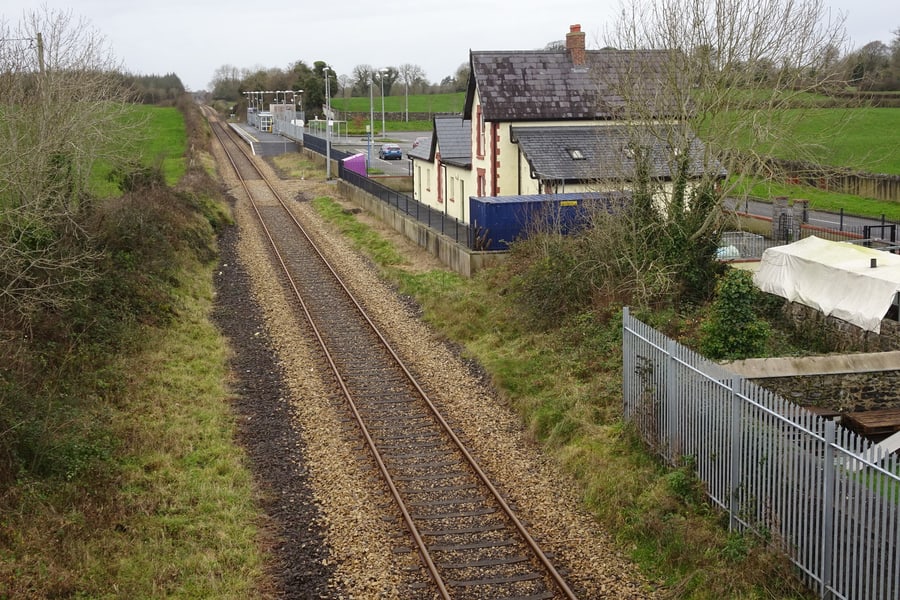 Nigel Thompson / Geograph Britain and Ireland / Wikimedia Commons · CC BY-SA 2.0 · cropped
Sixmilebridge
The first stop out of Limerick, in the village locals call "the Bridge". The station opened in January 1859, closed in 1963 and reopened with the line north in March 2010.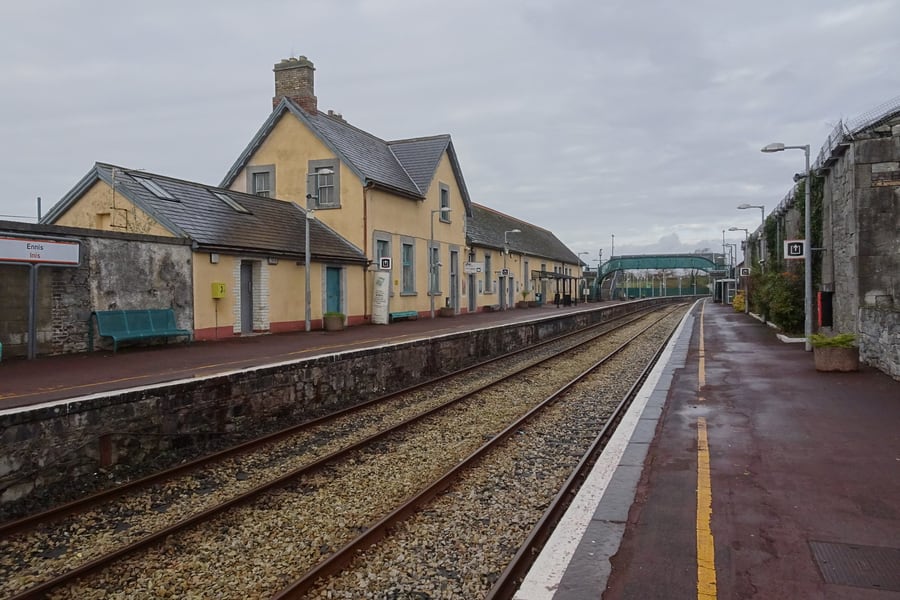 Nigel Thompson / Geograph Britain and Ireland / Wikimedia Commons · CC BY-SA 2.0 · cropped
Ennis
The county town of Clare, and the end of the commuter trains from Limerick. Passenger trains came back here in stages from 1984, a quarter of a century before the line on to Athenry.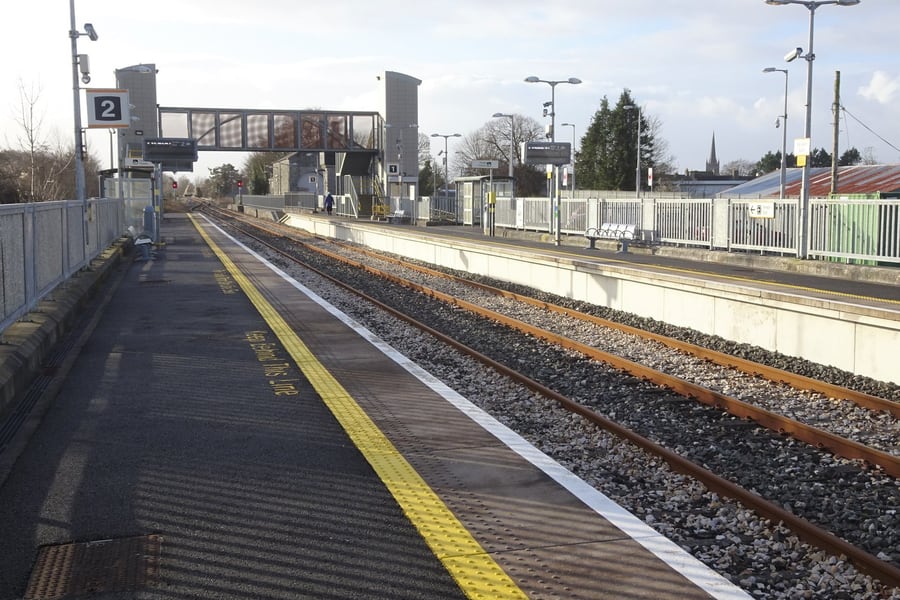 Nigel Thompson / Geograph Britain and Ireland / Wikimedia Commons · CC BY-SA 2.0 · cropped
Gort
Opened in September 1869, closed in 1976 and rebuilt on its old site for the reopening. It is the station for Coole Park, Thoor Ballylee and the round tower at Kilmacduagh.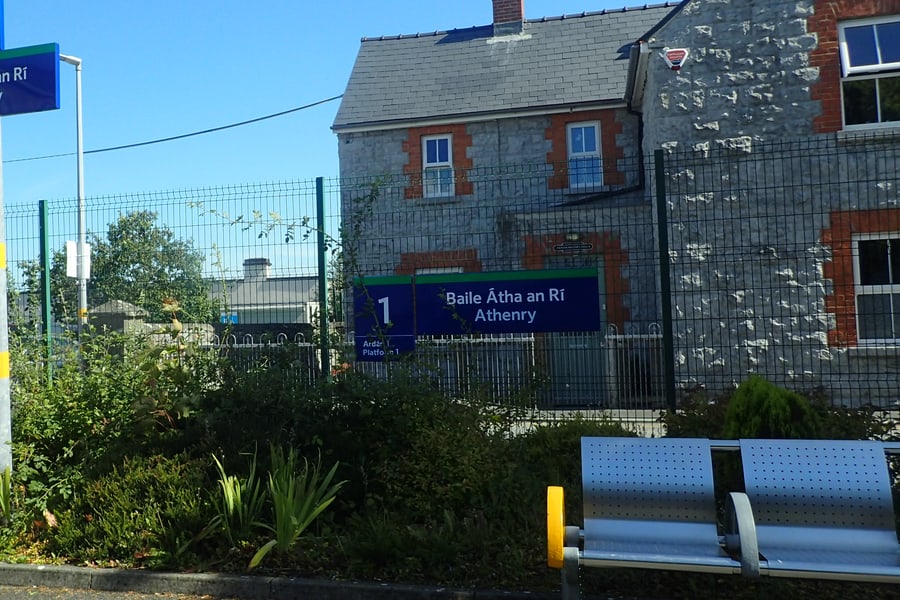 Marathon / Geograph Britain and Ireland / Wikimedia Commons · CC BY-SA 2.0 · 2024 · cropped
Athenry
The junction with the Dublin–Galway main line, opened in 1851. Its medieval town walls are among the best preserved in Ireland, with some 70 per cent of the circuit still standing.A bit of history
Culture & experiences along the way
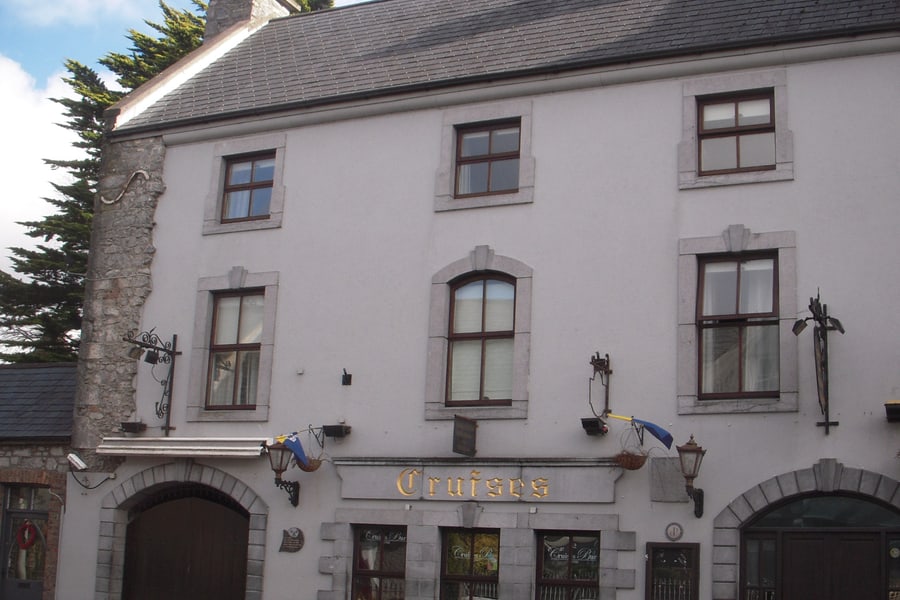 C O'Flanagan / Geograph Britain and Ireland / Wikimedia Commons · CC BY-SA 2.0 · cropped
Fleadh Nua in Ennis
Every May since 1974 Ennis has hosted Fleadh Nua, Comhaltas Ceoltóirí Éireann's festival of traditional music, song and dance: concerts, céilís, workshops, sessions and music in the streets. It has grown from three days to ten, with more than 120 events; the 2027 festival runs from 29 May to 7 June.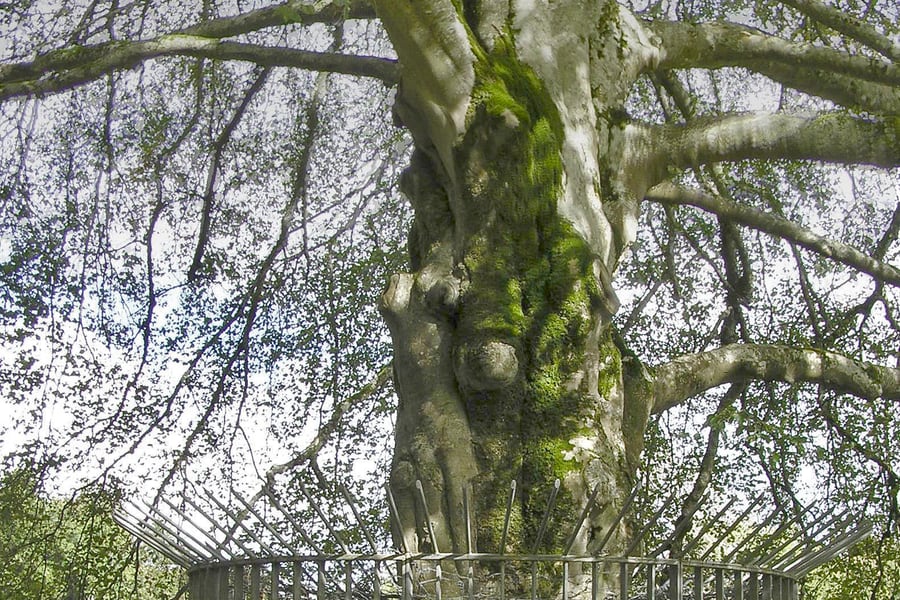 Thpohl / Wikimedia Commons · Public domain · cropped
The Autograph Tree at Coole
In the walled garden at Coole Park, Lady Gregory's estate near Gort, a copper beech is carved with the initials of her guests from the Irish Literary Revival: Yeats, Shaw, Synge, Seán O'Casey, Edward Martyn and others. The park's grounds are open all year, free of charge.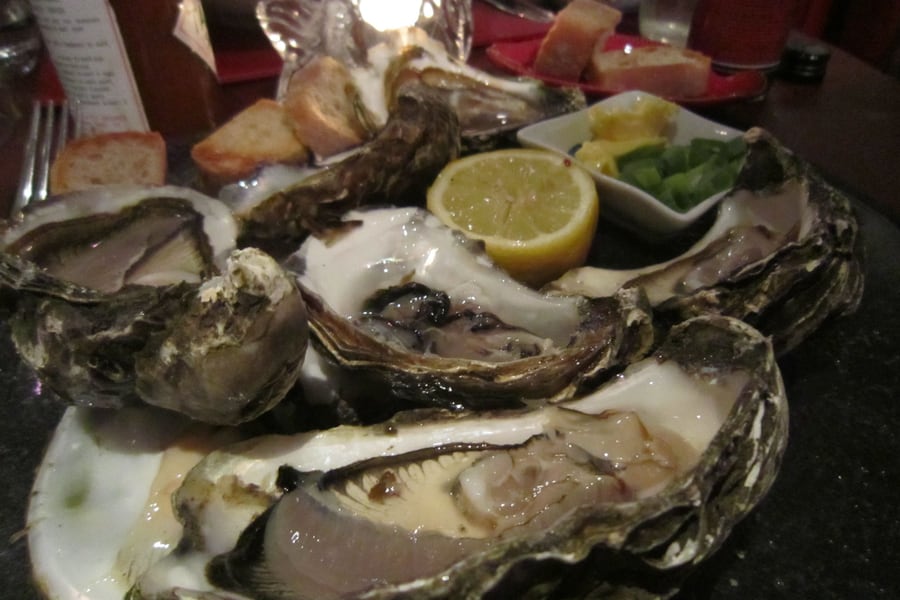 Lisa Harbin / Wikimedia Commons · CC BY-SA 2.0 · 2011 · cropped
Galway oysters
Galway has held an oyster festival since 1954, when the manager of the railway hotel on Eyre Square started one to mark the opening of the oyster season. It falls on the last weekend of September, the season's first month, and stages the World Oyster Opening Championship.Timetables
Trains run every day, and reservations are optional. Times below are from Irish Rail's timetable for Limerick–Galway, valid from 14 December 2025 until further notice, checked against the journey planner for November 2026; public holidays run to a different pattern.
Monday to Saturday
| Limerick → Galway | |||||
|---|---|---|---|---|---|
| Limerick Colbert dep | 05:55 | 09:20 | 14:20 | 18:05 | 19:50 |
| Sixmilebridge | 06:17 | 09:41 | 14:41 | 18:26 | 20:11 |
| Ennis | 06:49 | 09:59 | 15:02 | 19:11 | 20:29 |
| Gort | 07:11 | 10:21 | 15:24 | 19:46 | 20:51 |
| Ardrahan | 07:20 | 10:30 | 15:33 | 19:55 | 21:00 |
| Craughwell | 07:29 | 10:38 | 15:42 | 20:04 | 21:08 |
| Athenry | 07:49 | 10:52 | 15:56 | 20:19 | 21:22 |
| Oranmore | 08:00 | 11:04 | 16:07 | 20:30 | 21:33 |
| Galway Ceannt arr | 08:09 | 11:13 | 16:16 | 20:39 | 21:42 |
The 18:05 waits almost half an hour at Ennis, which makes it the slowest of the five.
Coming back, trains leave Galway at 06:15, 10:25, 13:45 and 17:52, reaching Limerick at 08:20, 12:22, 15:42 and 19:52. A later 18:50 runs to Ennis, where passengers change for the 21:10 to Limerick, arriving at 21:50.
Sundays
From Limerick at 09:00, 12:28, 15:55 and 18:15, arriving in Galway at 10:55, 14:30, 17:51 and 20:14. From Galway at 08:25, 11:55, 16:10 and 18:30, arriving in Limerick at 10:20, 13:48, 18:04 and 20:26.
Times and live running: Irish Rail · Journey planner (opens in a new tab) · Timetables by route (opens in a new tab).
Tickets
Irish Rail sells its online fares through the journey planner, and on this line they are low: a single from Limerick Colbert to Galway Ceannt was €10.40 on every direct train of a November weekday, at the Low, Medium and Full fares alike, and the cheapest fare shown that week was €10.08.
A reservation is optional, so a ticket bought online simply covers the train you booked; Ennis station also has a ticket office. Fares read from the Irish Rail planner in November 2026.
Book your tickets
Online single
€10.40, Limerick Colbert–Galway Ceannt
The online fare on every direct train, bought through the Irish Rail journey planner.
Book Tickets (opens in a new tab, on irishrail.ie)via irishrail.ieRail Passes
A rail pass covers the whole line. Irish Rail is in Interrail's table of included companies — checked in November 2026, last updated 21 October — with its InterCity and Regional trains included and reservations optional, so a pass holder can board any train from Limerick to Galway without paying a supplement.
The one-country pass is the Interrail Ireland Pass, which covers Northern Ireland as well as the Republic. Adult second-class prices read from Interrail on 3 November 2026 (they change with Interrail's promotions):
| Travel days within one month | Adult, 2nd class |
|---|---|
| 3 days | € 103 |
| 4 days | € 124 |
| 5 days | € 143 |
| 6 days | € 162 |
| 8 days | € 194 |
Whether it is worth it
For this journey alone, no. A pass day costs more than €30, and the online single from Limerick to Galway is about €10. It pays only when this line is one leg of a longer trip around the island.
Places to Visit
Limerick's castle is the place to start before the train, and Athenry's walled medieval town is worth breaking the journey for. The best of the line is around Gort, where the country of Yeats and Lady Gregory lies within a few kilometres of the station; in summer 2026 a free shuttle bus ran daily from June to August between Gort, Thoor Ballylee, Coole Park and Kilmacduagh.
 Mélodie Masson / Wikimedia Commons · CC BY-SA 3.0 · 2012 · cropped
King John's Castle, Limerick
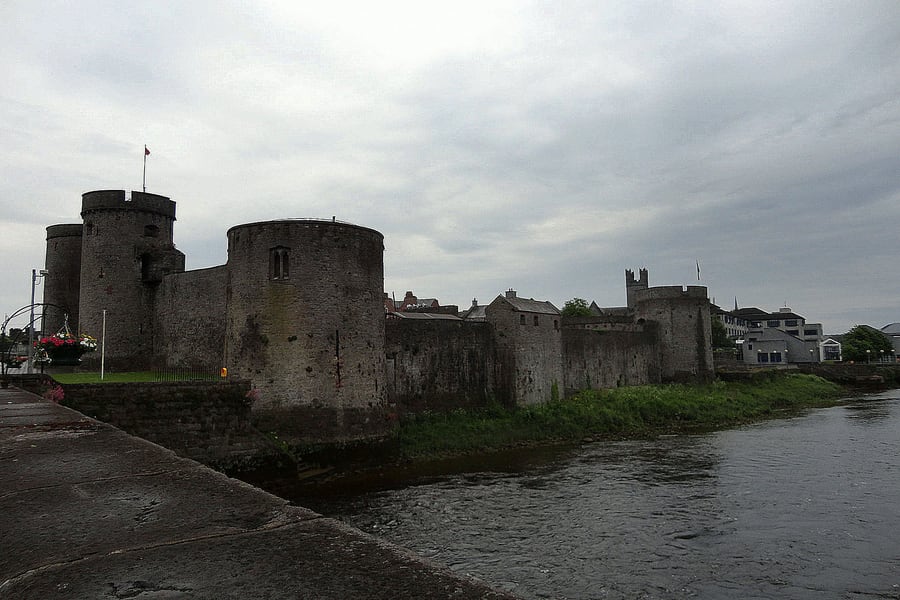
Built on the orders of King John of England around 1200 on King's Island beside the Shannon, where the Vikings had made their first permanent base in 922. The castle withstood five sieges in the seventeenth century. A €5.7 million redevelopment in 2011–13 added a visitor centre with exhibitions on its Viking and Norman history. It opens every day, from 9:30 to 5 in winter and to 6 in summer.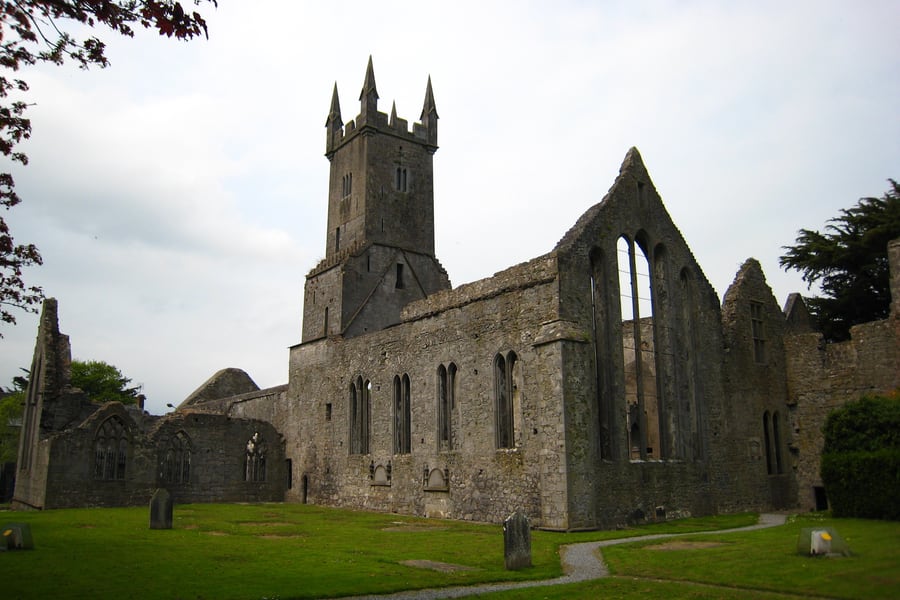 Bea y Fredi / Wikimedia Commons · CC BY 2.0 · 2007 · cropped
Ennis Friary
Founded by the O'Brien kings of Thomond in the thirteenth century, it had 350 friars and a school of 600 pupils by 1375. The ruin on Abbey Street, by the River Fergus, is a National Monument known for its fifteenth- and sixteenth-century carvings in the local limestone, among them St Francis showing the stigmata. Open 13 March to 4 November in 2026; adult admission €5.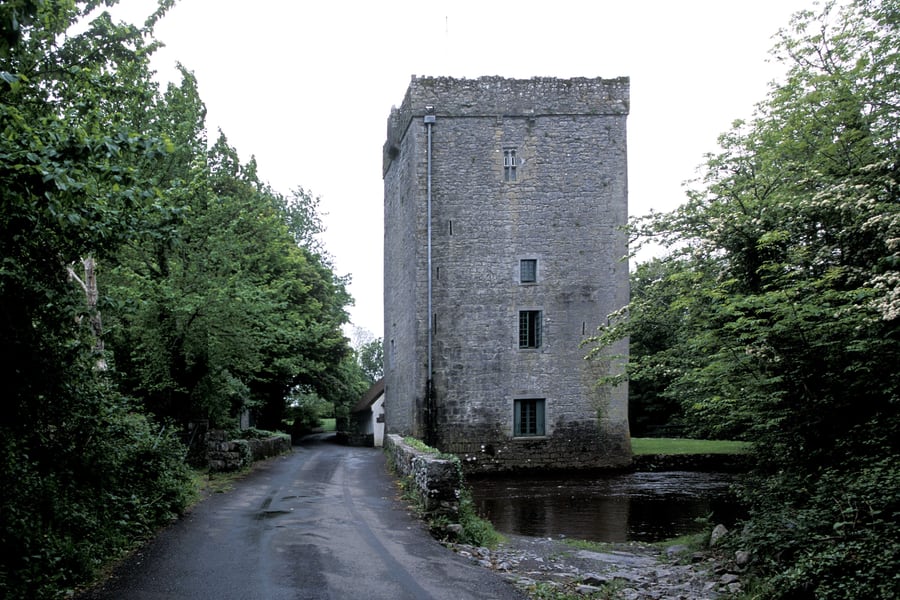 Jerzy Strzelecki / Wikimedia Commons · CC BY-SA 3.0 · cropped
Thoor Ballylee
A fifteenth-century de Burgo tower house on a riverbank 5 km from Gort. W. B. Yeats bought it for £35 in 1916 or 1917, restored it, and spent summers here with his family through the 1920s; he named it Thoor, from the Irish for tower. It opens daily from Easter to mid-October, with an exhibition on the poet; adult admission €7.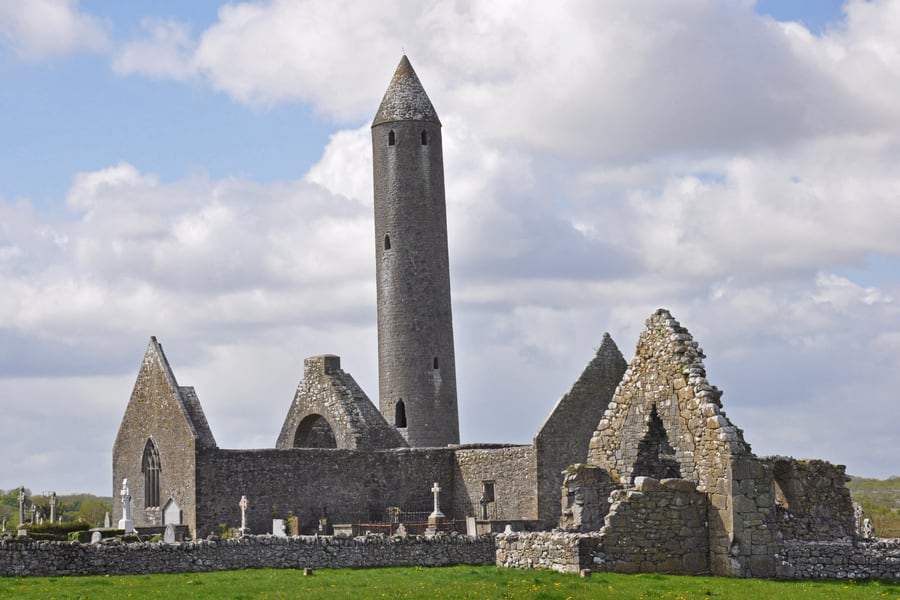 Jennifer Boyer / Wikimedia Commons · CC BY 2.0 · 2012 · cropped
Kilmacduagh
A ruined monastic settlement 5 km south-west of Gort, on land the seventh-century king Guaire gave his cousin St Colman MacDuagh. Its round tower, from the eleventh or twelfth century and 112 feet high, is the tallest in Ireland, and stands among the roofless cathedral and churches in open fields. The name means "church of Duach's son", and the tower's bell is said to lie at the bottom of a nearby lake.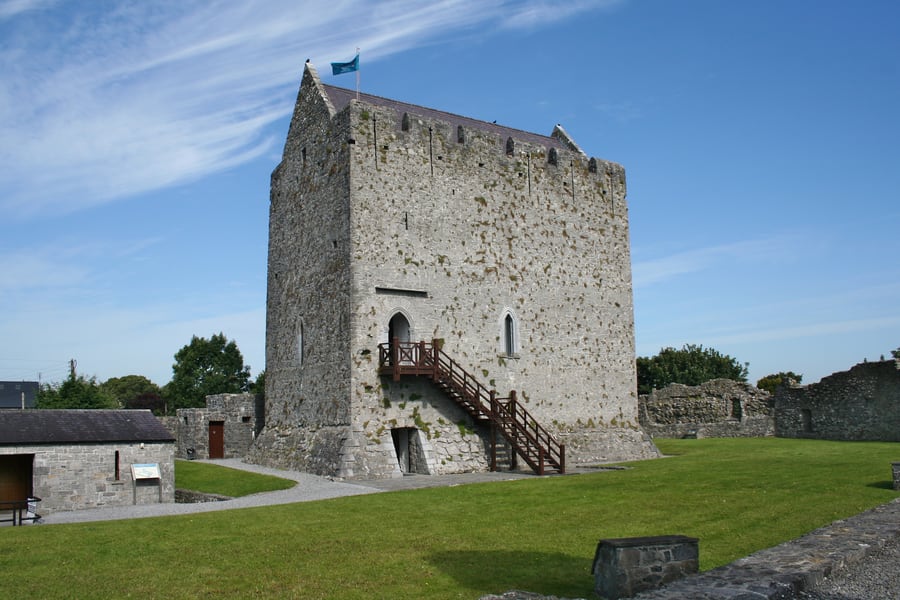 Ingo Mehling / Wikimedia Commons · CC BY-SA 3.0 · cropped
Athenry Castle
The three-storey hall-keep Meyler de Bermingham built around 1235–40 guards a ford on the Clareen river; its battlements are original thirteenth-century work and its doorway is carved in the local "School of the West" style. Inside, a film tells the castle's history. Open 13 March to 5 November in 2026; adult admission €5.Where to Sleep
The line is short enough to ride as a day trip from either city, but Ennis and Gort are worth a stop on the way. A night in Ennis puts the friary and the town's pubs within a short walk, and in Galway the old railway hotel stands on Eyre Square beside the station.
Where to stay
The Hardiman
On Eyre Square, Galway, beside the station
Opened as the Railway Hotel in August 1852, a year after the station, it was where Alcock and Brown stayed after the first non-stop transatlantic flight in 1919.
Check Availability (opens in a new tab, on thehardiman.ie)via thehardiman.ieOld Ground Hotel
Ennis, County Clare
A hotel in Ennis with the Town Hall Bistro, the Poets Corner bar and the Brendan O'Regan restaurant.
Check Availability (opens in a new tab, on oldgroundhotelennis.com)via oldgroundhotelennis.comQuestions or corrections
Planning this trip and stuck on something, or spotted a time, fare or detail that has changed? Send us a message about Limerick to Galway. We read every one, and we update this page when something has changed.