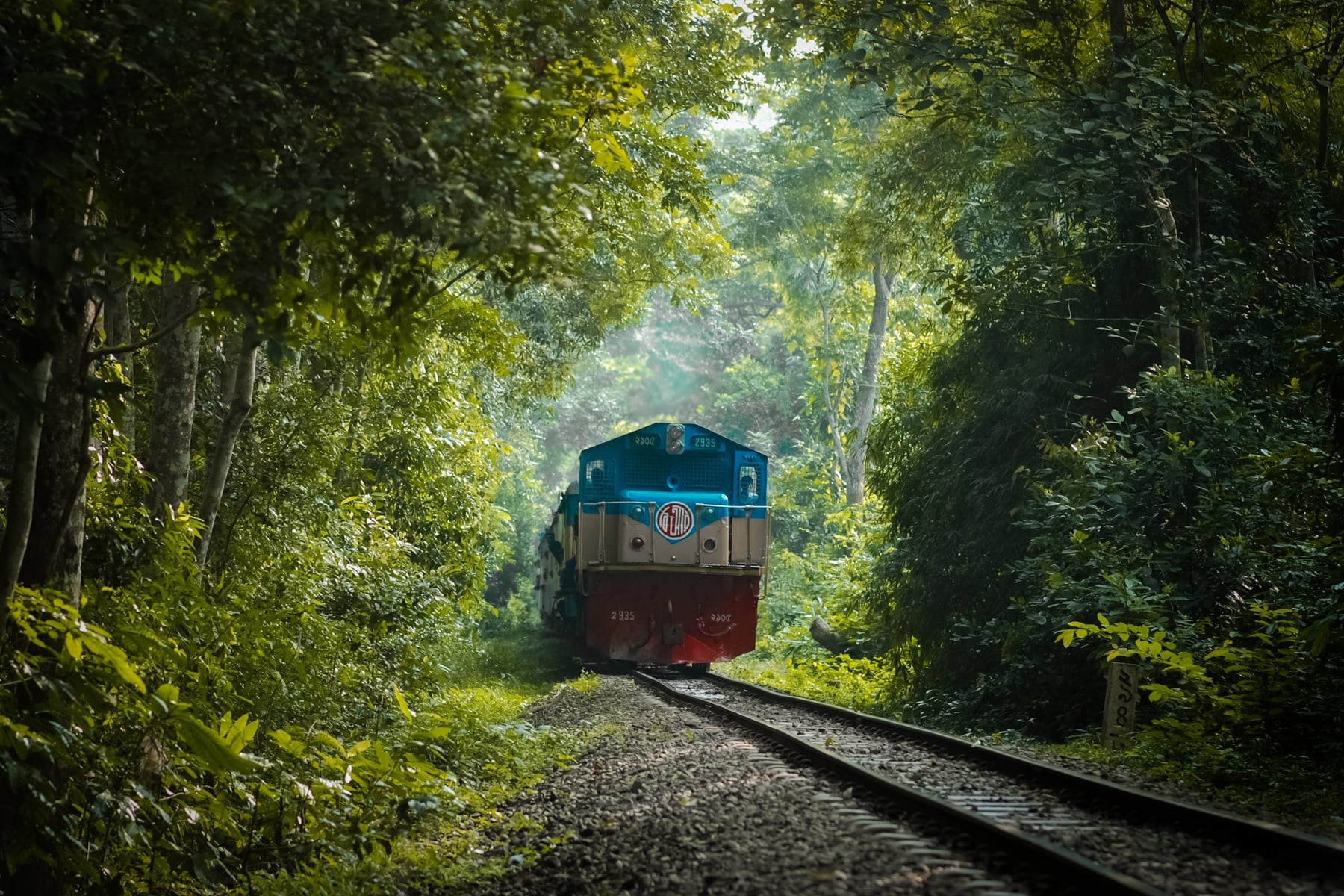
Dhaka to Sylhet
Tawkir.ahmad / Wikimedia Commons · CC BY-SA 4.0 · cropped
- Distance319 km (198 miles)
- Duration6 hr 30 min by the fastest day train
- Best seasonNovember to March
Introduction
In May 1921 tea workers walked out of the gardens of the Chargola valley, in what was then the Sylhet district, and gathered at Karimganj railway station to go home. According to the labour historian Sukomal Sen, European railway officials there ordered that no tickets be sold to them. The government's own report says many forced their way on to the trains without tickets, and others walked. The line they were trying to leave on had been built for the tea they were leaving.
It is still the way into the tea country. The Assam Bengal Railway laid it through Kulaura between 1896 and 1898 for Assam's planters, and the branch to Sylhet followed between 1912 and 1915. Thousands of the workers reached Chandpur, where on the night of 20 May 1921 the station was cleared by force; accounts differ on who did it and on how many were hurt or killed. Railway staff struck within days, and tea workers still mark 20 May as their own day.
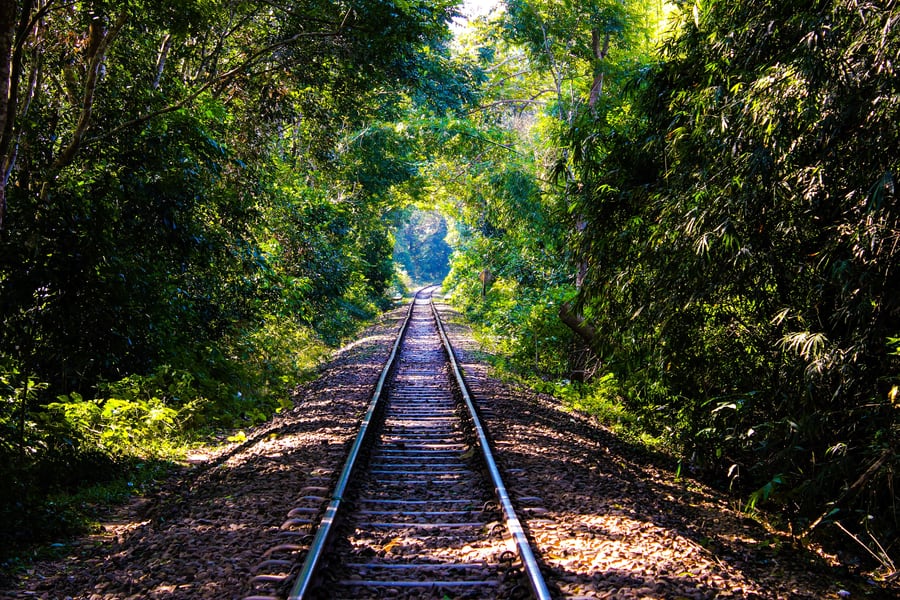
Four named trains now run from Dhaka to Sylhet in each direction, on metre-gauge track, in between six and a half hours and seven and three quarters. Beyond Shaistaganj the plain gives way to low hills planted with tea, and then to the Lawachara forest, which the line runs straight through. Sreemangal, four hours out on the morning train, is the place to get off.
The Journey
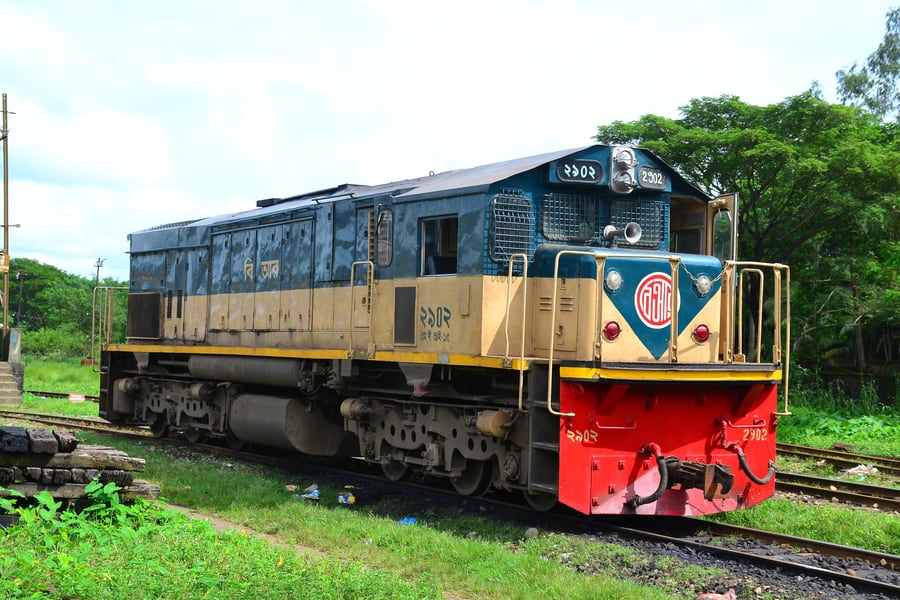
The Sylhet trains leave from Kamalapur behind, most days, a locomotive of Class 2900: an EMD GT18LC-2 design of 1,500 horsepower, built under licence by Hyundai Rotem between 1999 and 2013, thirty-nine in all. The Parabat Express has run since 2 September 2016 with air-braked coaches from PT INKA of Indonesia.
The first call is Biman Bandar, the airport station, twenty-three minutes out.
The shared first half
As far as Bhairab Bazar this is the Chattogram main line: north through Tongi and east across the flat country round Narsingdi, then over the Meghna. Bridges on this route are billed by the kilometre too, since the pontage charge of December 2025 applies to the Dhaka to Sylhet fare table. At Akhaura, where the Chattogram trains turn south, none of the four Sylhet expresses stops. They run on north-east along the line the Assam Bengal Railway opened between 1896 and 1898.
Into the tea
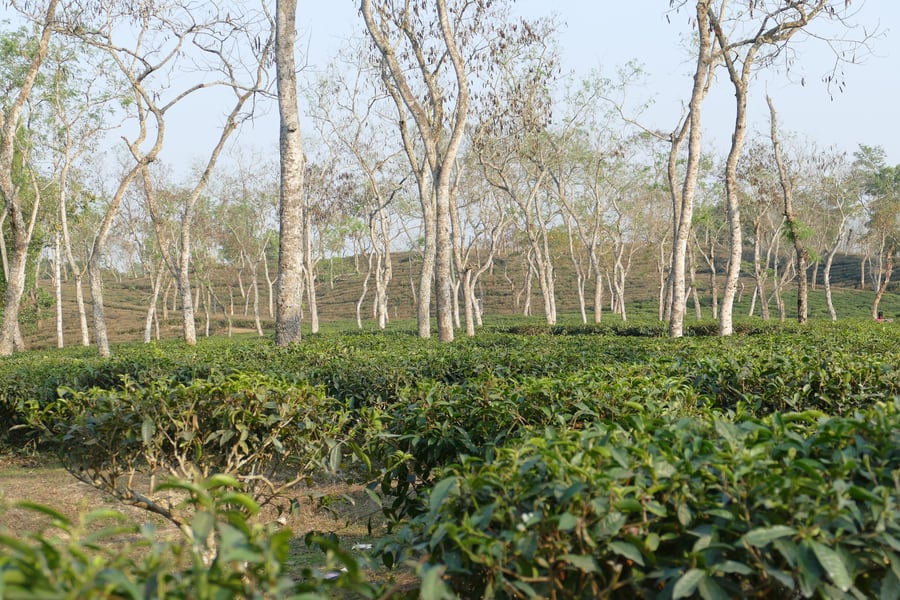
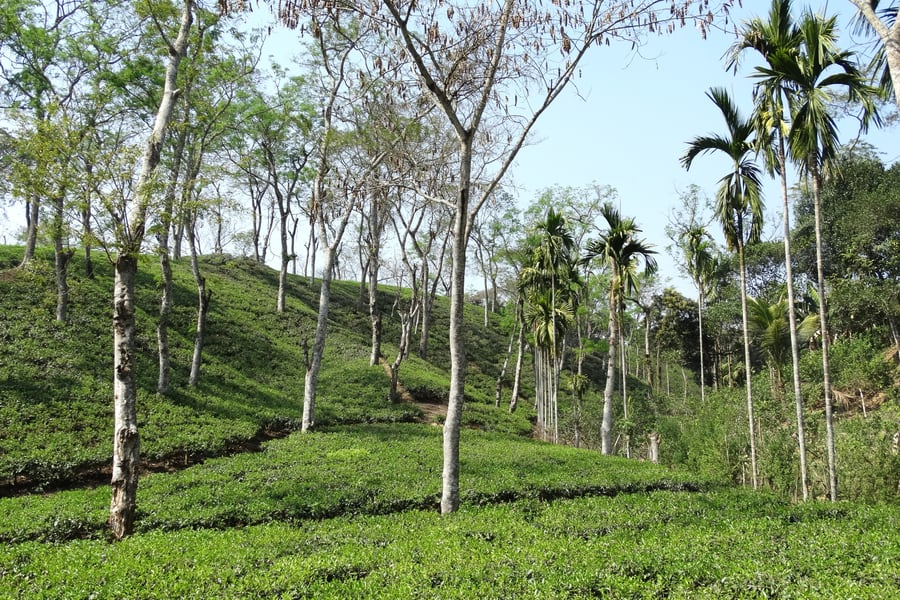
Past Shaistaganj the ground begins to fold, and the rows of tea start to come down to the track. In 2010 the Sylhet division held 135 of the country's 162 gardens. Sreemangal, the town the gardens are centred on, is the next major call.
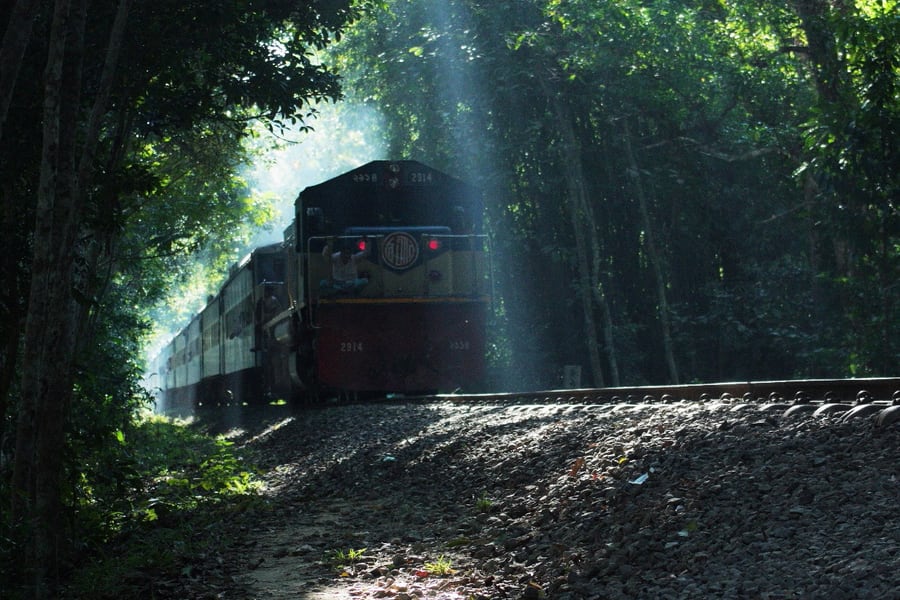
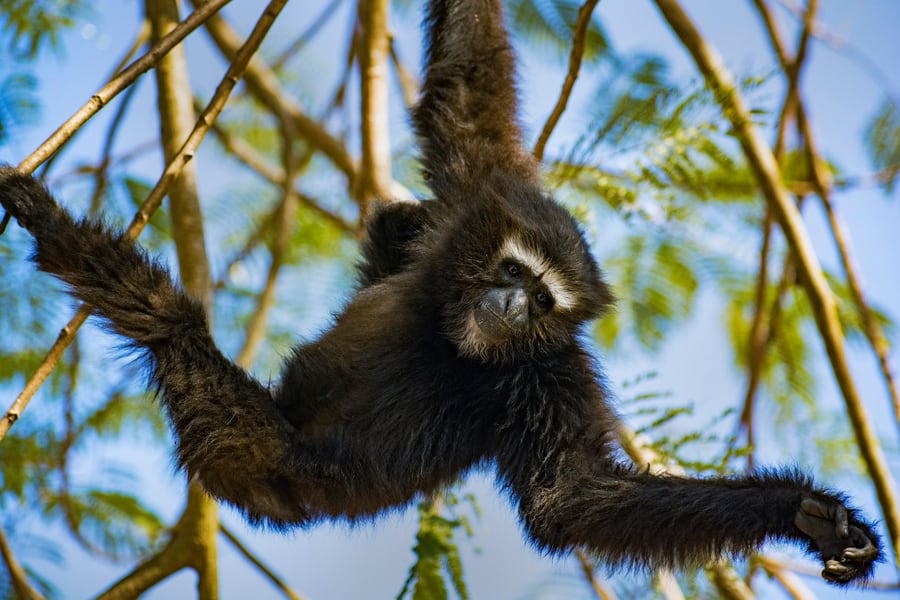
Beyond it the train enters the Lawachara forest, which the line divides. The hoolock gibbons here travel through the canopy, and the forest department has strung rope bridges above the rails so they can cross. A 2021 survey counted 43 gibbons in 13 families in the forest. Bhanugach and Shamshernagar are the next calls, depending on the train.
Kulaura and the branch
Kulaura Junction is the point where the old main line and the Sylhet train part. The original railway carried straight on through Shahbazpur to Karimganj, 57 kilometres from here, and on to Badarpur and Assam. That is the line the workers of 1921 came down towards Chandpur. The frontier of 1947 now crosses it, and the section to Shahbazpur was closed in 2002; a rebuilding financed by India was reported 30 per cent complete in 2021.
The Sylhet train takes the branch of 1912 to 1915 instead, through Baramchal and Maijgaon, the last stop before the terminus. A dual-gauge rebuilding of the track from Akhaura, approved in 2019 and due for June 2025, has not been built, so the line remains metre gauge. The train comes to rest at Sylhet station, under a roof of white concrete umbrellas opened in 2004, a short ride from the Surma river.
Along the route
 Abdul Momin / Wikimedia Commons · CC BY-SA 4.0 · cropped
A rope across the rails
The line divides the Lawachara forest, and the hoolock gibbons on either side travel through the canopy. Rope bridges now hang above the rails so that they can cross without coming down.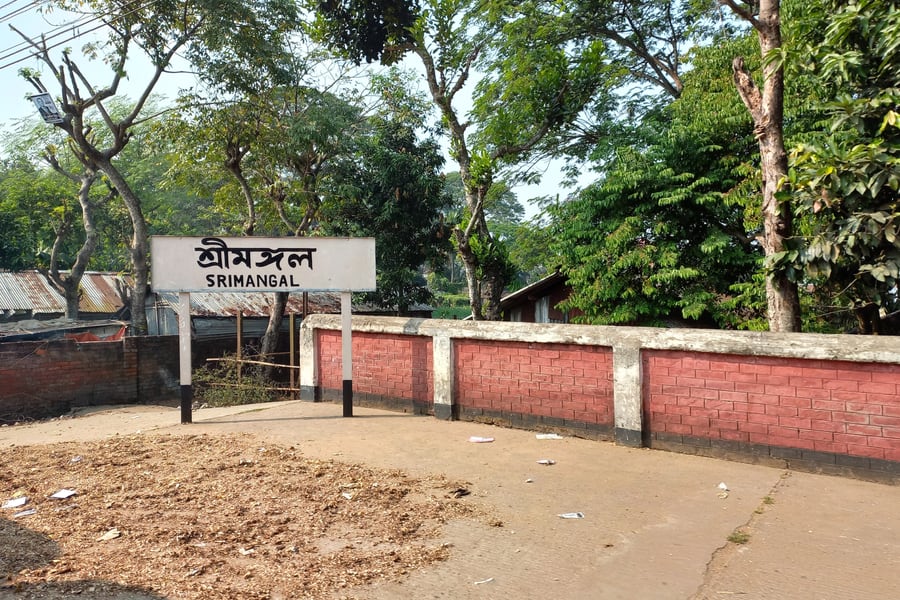 CAPTAIN RAJU / Wikimedia Commons · CC BY-SA 4.0 · cropped
Srimangal, by its own sign
The station for the town often called the country's tea capital, four hours out on the morning train. The Bangladesh Tea Research Institute has its home in Sreemangal.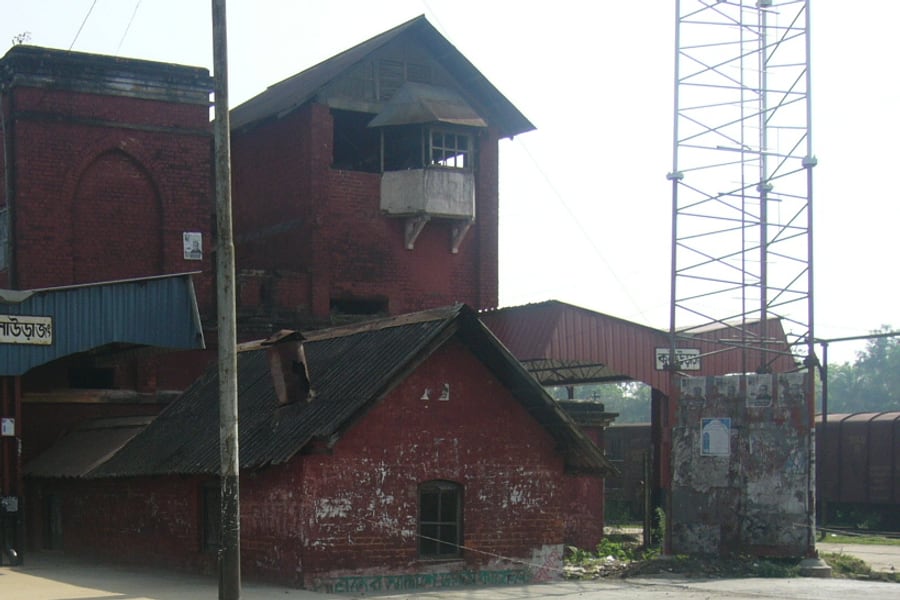 Shahnoor Habib Munmun / Wikimedia Commons · Public domain · cropped
Kulaura, where the main line went on
The old railway to Assam carried straight on from this brick junction to Shahbazpur and Karimganj. The trains to Sylhet take the branch, and the line beyond has been closed since 2002.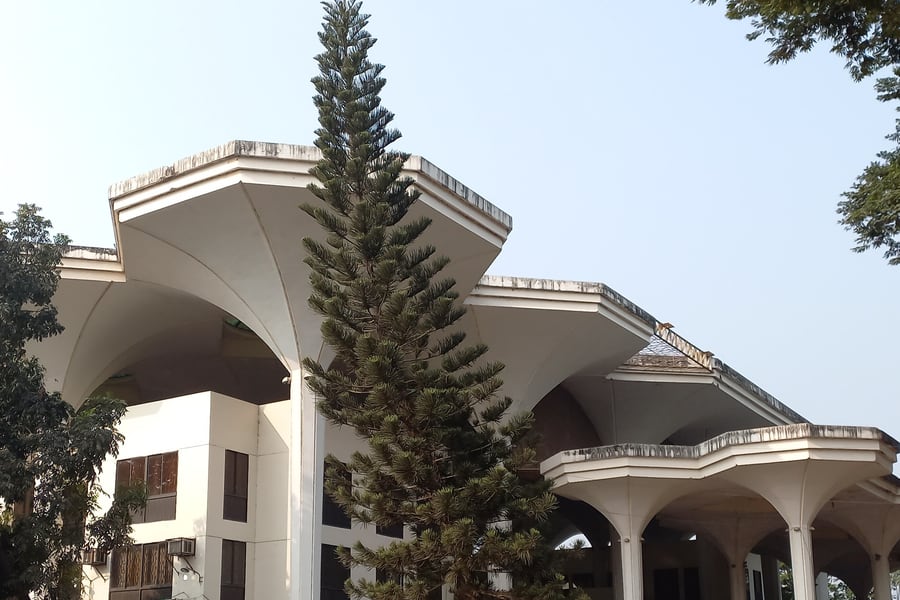 CAPTAIN RAJU / Wikimedia Commons · CC BY-SA 4.0 · cropped
Umbrellas at the end of the line
Sylhet station was rebuilt in 2004 to the design of A.K. Rafique Uddin Ahmed, with white concrete umbrellas opening from slim columns. The train ends here, a short ride from the Surma.A bit of history
Culture & experiences along the way
 © Moheen Reeyad / Wikimedia Commons · CC BY-SA 4.0 · cropped
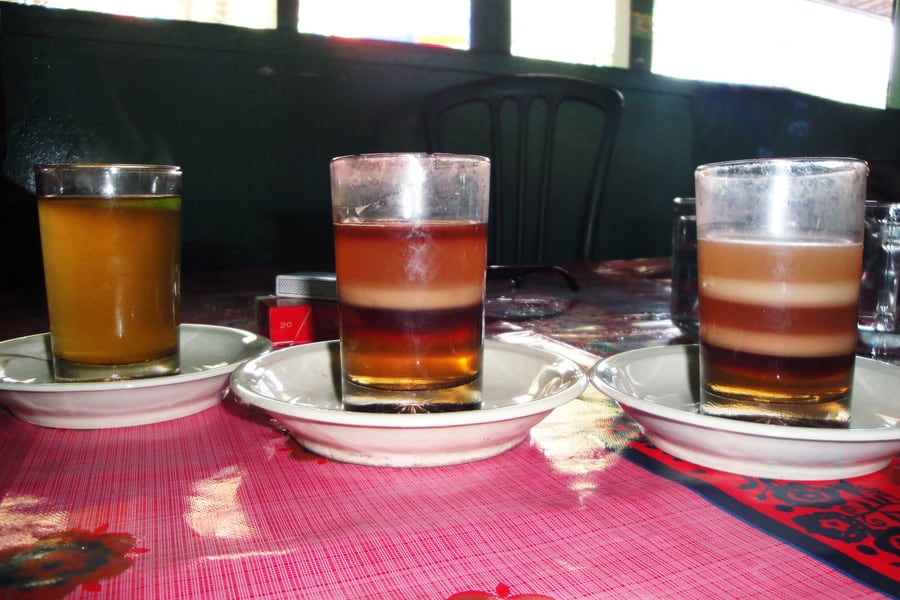
Seven layers in a glass
Sreemangal's best-known drink was worked out by Romesh Ram Gour in Manipuri Para from 2002, starting with two layers and adding them one at a time. Teas of different density are poured so that they stay apart, he says for about six hours. The recipe remains his own.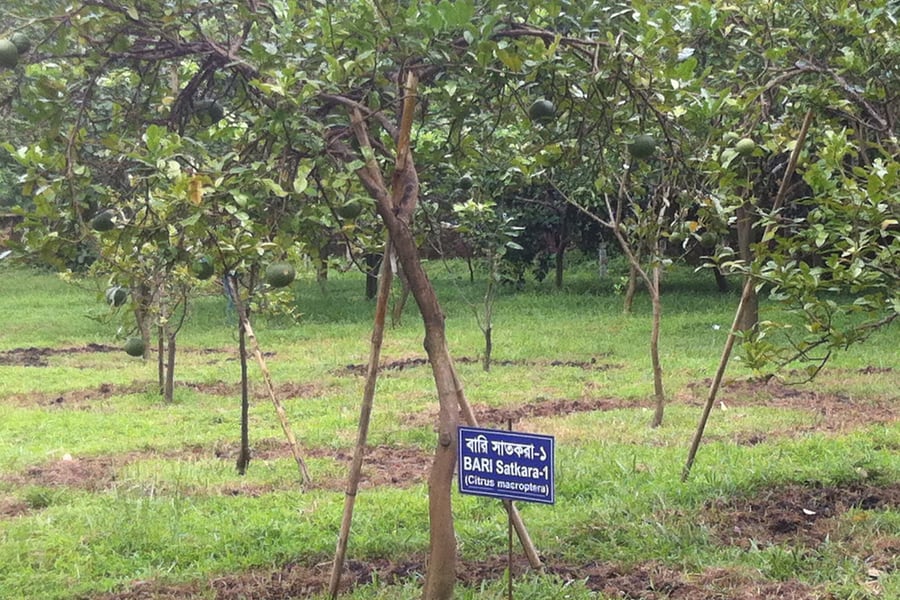 Abu Sayeed / Wikimedia Commons · CC BY-SA 4.0 · cropped
Shatkora in the curry
The thick rind of this bitter citrus goes into Sylheti beef, goat, fish and lentil dishes, green or ripe, and gives them a flavour and scent of their own. The pulp is thrown away, and the rind is sun-dried or pickled to last the year. It grows widely across the region.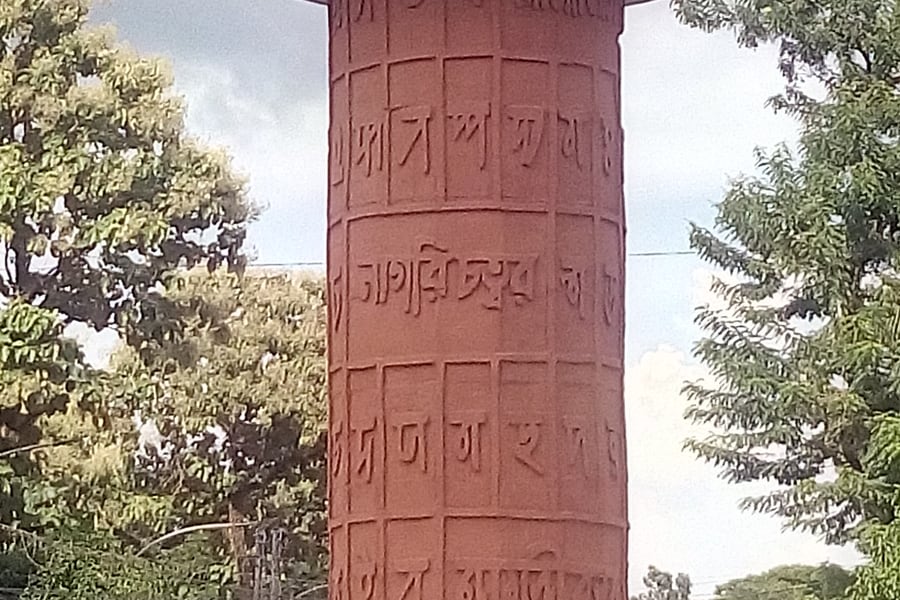 Sajibur / Wikimedia Commons · CC BY-SA 4.0 · cropped
Nagri, the script of Sylhet
Sylheti was long written in a script of its own, used for poetry and printed at the Islamia Press in the town from about 1869 until fire destroyed it in 1971. The letters are carved today on the Nagri Chattar, a terracotta column near the Surma that anyone can walk up to.Timetables
Four named intercity trains run in each direction. Times are Bangladesh Railway's own, from its train-information service, as of November 2026, in local time (BST, UTC+6). Every train from Dhaka also calls at Biman Bandar, 23 minutes after leaving.
Dhaka to Sylhet
| Train | Dhaka | Sreemangal | Sylhet | Time | Runs |
|---|---|---|---|---|---|
| Parabat Express 709 | 06:30 | 10:32 | 13:00 | 6 h 30 | daily except Monday |
| Jayentika Express 717 | 11:15 | 16:01 | 19:00 | 7 h 45 | daily except Tuesday |
| Kalni Express 773 | 14:55 | 18:52 | 21:30 | 6 h 35 | daily except Friday |
| Upaban Express 739 | 22:00 | 02:09 | 05:00 | 7 h 00 | daily except Wednesday |
Sylhet to Dhaka
| Train | Sylhet | Sreemangal | Dhaka | Time | Runs |
|---|---|---|---|---|---|
| Kalni Express 774 | 06:15 | 08:17 | 12:55 | 6 h 40 | daily except Friday |
| Jayentika Express 718 | 12:00 | 14:40 | 19:15 | 7 h 15 | daily except Thursday |
| Parabat Express 710 | 16:00 | 17:59 | 22:40 | 6 h 40 | daily except Monday |
| Upaban Express 740 | 23:30 | 01:41 | 05:40 | 6 h 10 | daily except Monday |
The Jayentika makes the most calls and is the slowest in the down direction. The Paharika Express and the Udayan Express link Sylhet with Chattogram over the same line, joining it at Akhaura.
Trains are retimed at short notice. The live version is at eticket.railway.gov.bd (opens in a new tab).
Tickets
Bangladesh Railway sells its own seats, online and at station counters. Online tickets open ten days before travel, and buying online needs a registered account, verified against a Bangladeshi national ID or birth certificate.
Fares are set by the railway and last changed on 20 December 2025, when the pontage charge began counting long bridges on this route as extra distance. The mail train, at Tk 140, is the cheapest way along the line, and a commuter seat is Tk 170.
Book your tickets
Ezaztime / Wikimedia Commons · CC BY-SA 3.0 · croppedShovan Chair
Tk 410 · Dhaka to Sylhet
The non-air-conditioned reserved chair, and the lowest intercity fare in the railway's published table.
Book Tickets (opens in a new tab, on eticket.railway.gov.bd)via eticket.railway.gov.bdIfthekhar Omer / Wikimedia Commons · CC BY-SA 4.0 · croppedSnigdha — air-conditioned chair
Tk 788 · Dhaka to Sylhet
The air-conditioned saloon, at nearly twice the fare of the Shovan Chair.
Book Tickets (opens in a new tab, on eticket.railway.gov.bd)via eticket.railway.gov.bdRahmanmostafiz78 / Wikimedia Commons · CC BY-SA 4.0 · croppedAC Berth — cabin
Tk 1,465 · Dhaka to Sylhet
A berth in an air-conditioned cabin, on the trains that carry one; an air-conditioned seat is Tk 943.
Book Tickets (opens in a new tab, on eticket.railway.gov.bd)via eticket.railway.gov.bdRail Passes
No rail pass covers Bangladesh. Interrail and Eurail are European products, the Indian and Sri Lankan passes stop at their own borders, and Bangladesh Railway has no tourist pass of its own.
With an air-conditioned chair to Sylhet at Tk 788, a pass would have little to discount. Seats are limited by the ten-day booking window rather than the price, and no ticket type changes that. As of November 2026.
Places to Visit
The journey divides naturally in two. Sreemangal and Bhanugach are the stations for the forest, the lake and the middle of the tea country; Sylhet has the shrine, the bridge and the swamp forest to the north, which stands in water from May to early October.
 Kritzolina / Wikimedia Commons · CC BY-SA 4.0 · cropped
Lawachara National Park
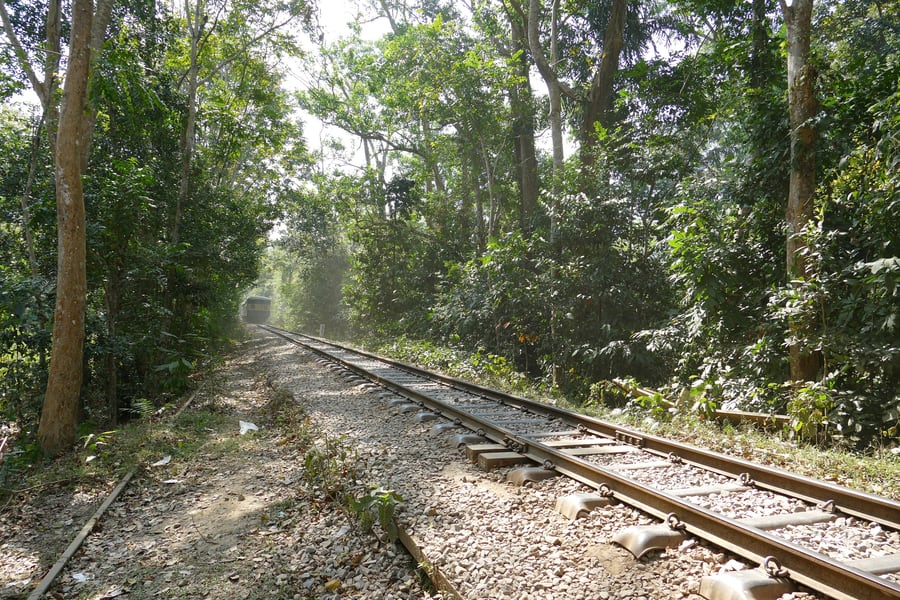
About 1,250 hectares of the West Bhanugach Reserved Forest, declared a national park on 7 July 1996 and lying 8 kilometres from Sreemangal. Its records list 246 birds and 20 mammals, among them six primates, the western hoolock gibbon among them. The railway runs straight through the park, on the line the trains from Dhaka take every day.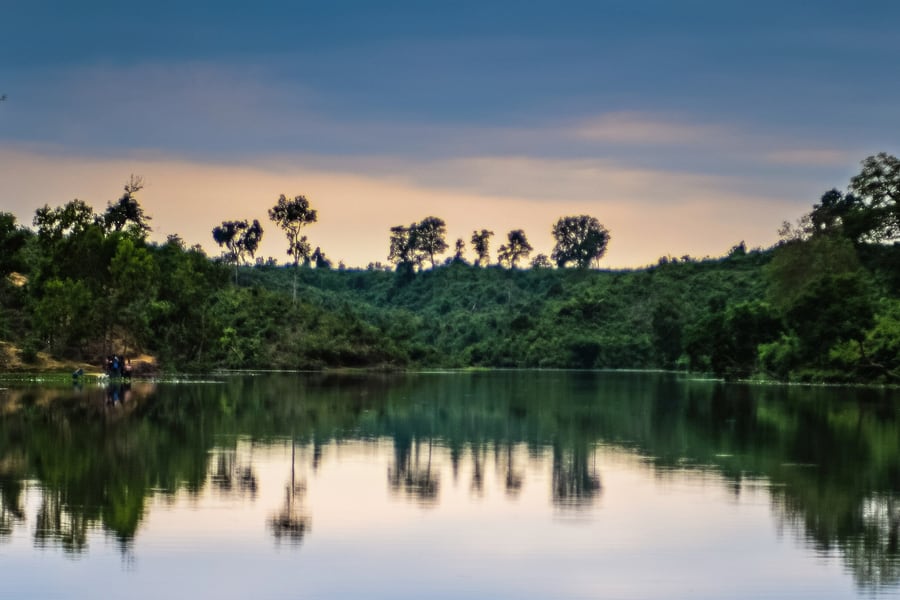 Polen2018 / Wikimedia Commons · CC BY-SA 4.0 · cropped
Madhabpur Lake
A narrow water held between low hills inside the Madhabpur tea estate, with tea planted to the bank on one side and lilies and blue lotus on the surface. It is the only confirmed site in Bangladesh for the great white-bellied heron, and the surrounding hills are planted right up to the water.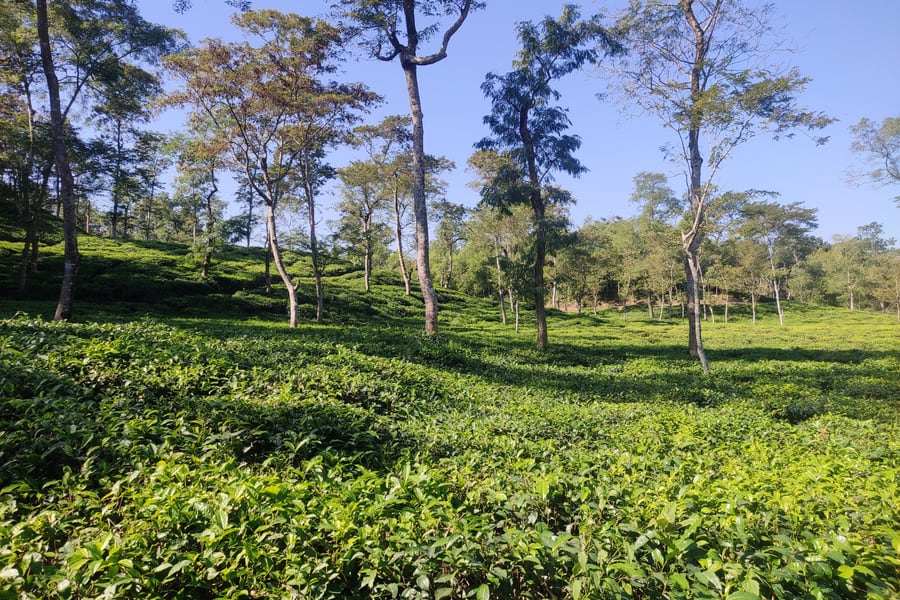 Kryesmin / Wikimedia Commons · CC0 · cropped
Malnicherra Tea Estate
The first tea garden of Bangladesh was laid out here in 1854, about 1,500 acres of low hills on the edge of the city, close to the airport, and commercial production began three years later. The hillside carries the date in large white letters.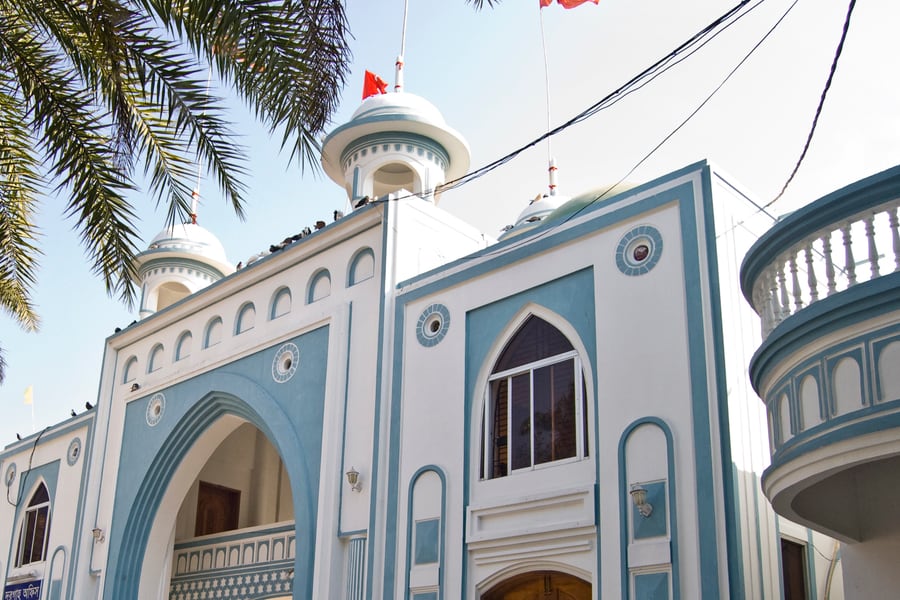 Ariful Haque Bhuiyan from Gambang, Malaysia / Wikimedia Commons · CC BY 2.0 · cropped
Shrine of Shah Jalal
The Sufi saint Shah Jalal settled in Sylhet after the fighting of 1303, and was buried here in 1346, a year after the traveller Ibn Battuta had come through the mountains to meet him. Descendants of his companion Haji Yusuf are still its guardians, and the pigeons called Jalali kobutor are said to stay around it. Hundreds of devotees visit every day.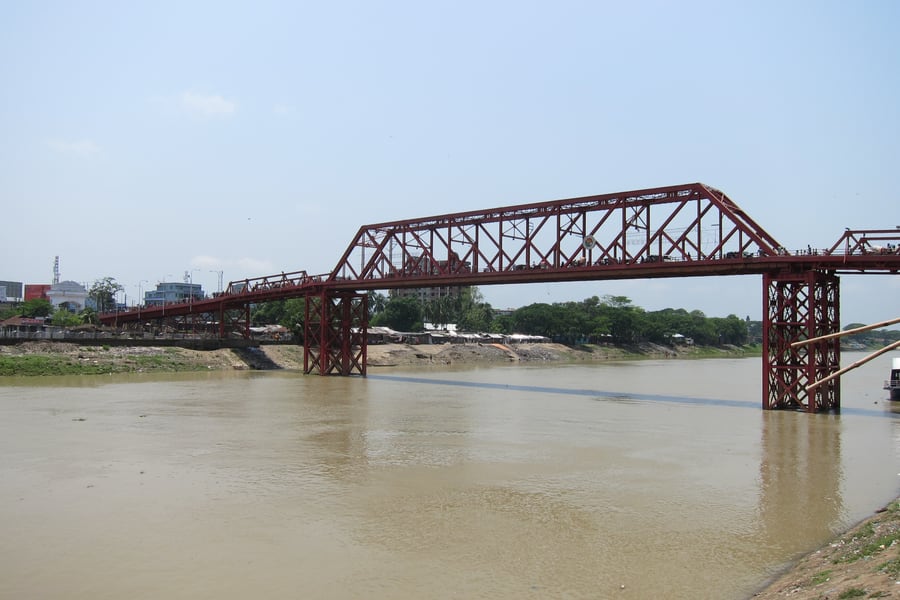 Kuruman from Tokyo, Japan / Wikimedia Commons · CC BY 2.0 · cropped
Keane Bridge
The steel bridge over the Surma was built in 1936 and takes its name from Sir Michael Keane, Governor of Assam from 1932 to 1937. It runs 350 metres across the river in the centre of the city. Part of it was blown up in the Liberation War of 1971, and it was repaired in 1977.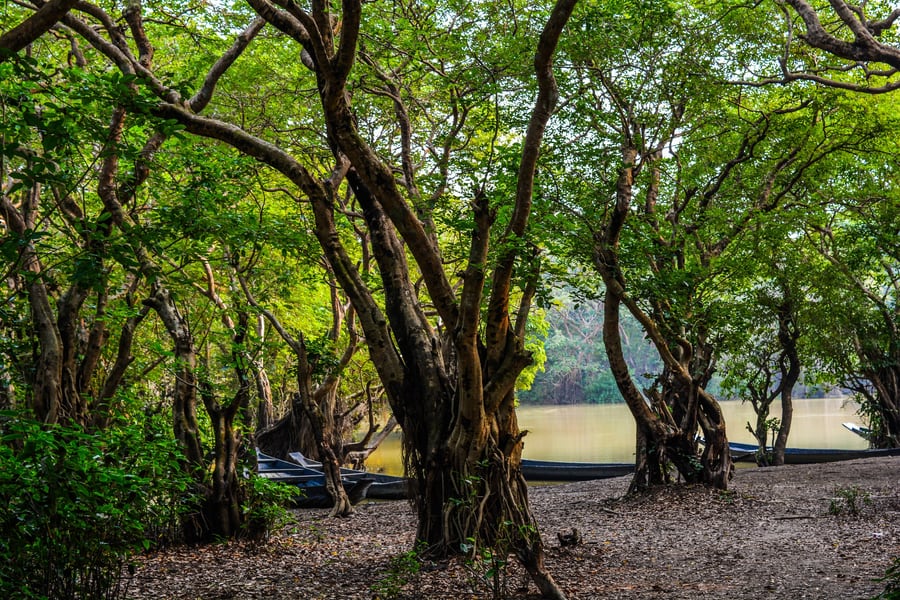 Syed Sajidul Islam / Wikimedia Commons · CC BY-SA 4.0 · cropped
Ratargul Swamp Forest
A freshwater swamp forest of about 3,325 acres beside the Gowain river, some 26 kilometres from Sylhet, and a boat from Gowainghat is the way in. From May to early October the water stands several metres deep among the trees, most of them Koroch, and a 504-acre part was made an animal sanctuary in 2015. In the dry months the trees stand on open ground.Where to Sleep
Sreemangal is the base for the gardens and the forest, Sylhet for the city. The Upaban Express reaches Sylhet at 05:00 and Sreemangal at 02:09, well before any check-in, so the morning Parabat is the easier way to arrive.
Where to stay
Grand Sultan Tea Resort & Golf
Bhanugach Road, Sreemangal
Its own site lists 134 rooms and suites in eight categories, set in the tea gardens of Sreemangal, on the road towards Lawachara.
Check Availability (opens in a new tab, on grandsultanresort.com)via grandsultanresort.comNazimgarh Sylhet City
Sylhet
Its own site describes thirty-five rooms and suites with balconies, on six acres of landscaped hillside within the city.
Check Availability (opens in a new tab, on nazimgarh.com)via nazimgarh.comQuestions or corrections
Planning this trip and stuck on something, or spotted a time, fare or detail that has changed? Send us a message about Dhaka to Sylhet. We read every one, and we update this page when something has changed.