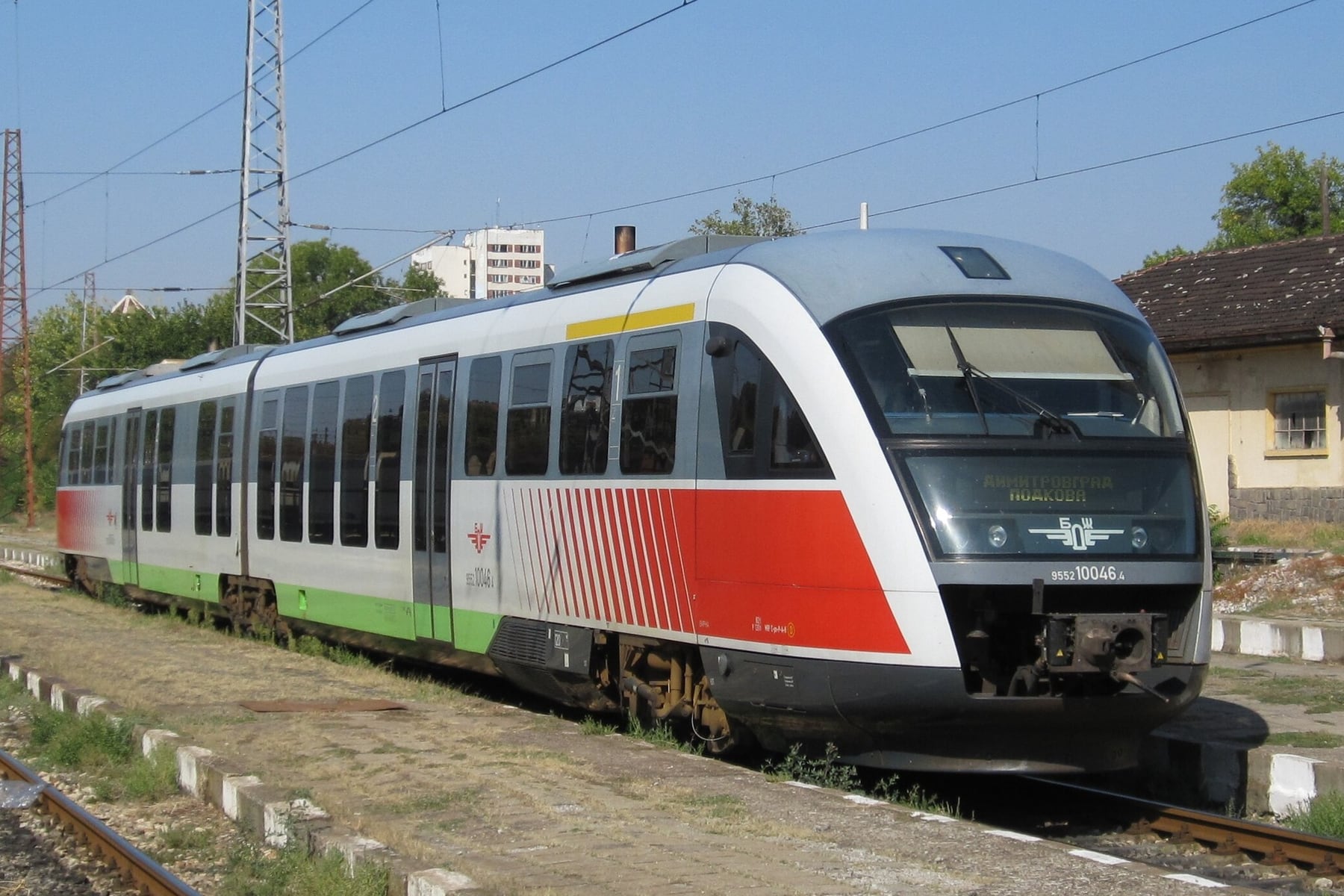
Into the Eastern Rhodopes by Kardzhali
Phil Richards from London, UK / Wikimedia Commons · CC BY-SA 2.0 · cropped
- DistanceDimitrovgrad–Podkova · 119 km
- Duration2 h 45 to 3 h 06
- Best seasonAll year · three trains a day each way
Introduction
When Bulgaria built the railway from the Thracian plain into the Eastern Rhodopes, it did not leave the work to contractors. Everyone living in a settlement within ten kilometres of the line owed labour on it, as permanent or temporary labour duty, and they could work it off with their own hands, with their carts, or by paying instead. Over the years most of the contractors were let go, and the state built the rest itself. The line that came out of it reached Kardzhali in 1931 and the village of Podkova in 1944.
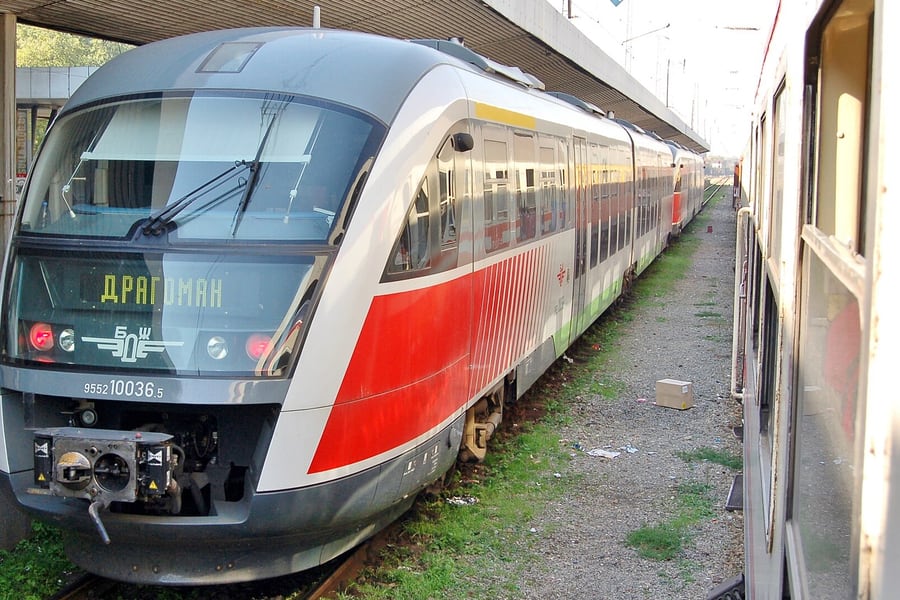
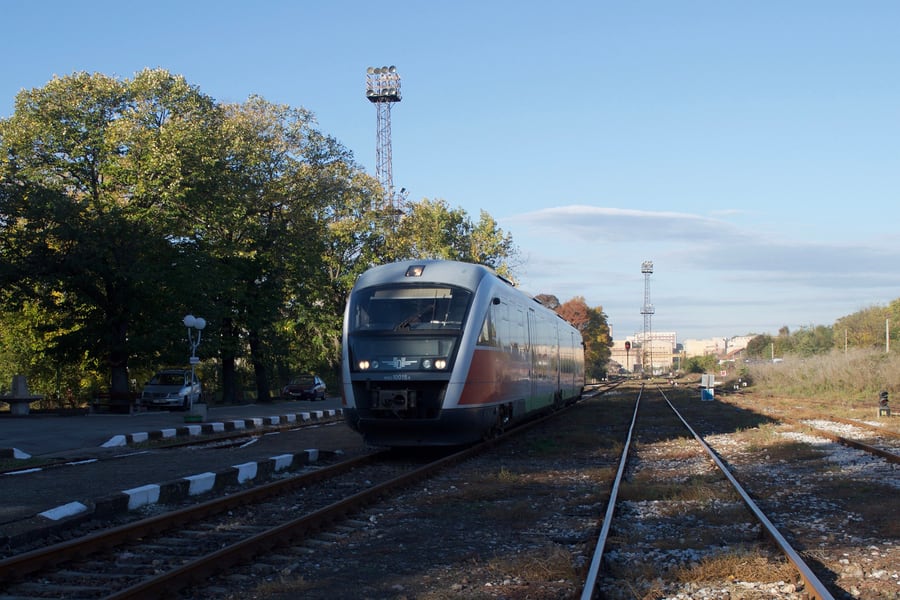
Three trains a day still make the whole run from Dimitrovgrad. They are diesel units, because this is the one stretch of BDŽ main line 4 that was never electrified, and the train has a nickname, the Rhodope Caterpillar for the way it sways through the bends, at 40 to 60 km/h and in places no more than 25.
What the ride is actually like
It is an ordinary BDŽ train, and the full 119 kilometres cost €4.04 to €4.50 in second class. The first half-hour runs to Haskovo. Then the line climbs, passes under the watershed at Most in a tunnel, and comes down to the Arda, running along the shore of the Studen Kladenets reservoir and past pale cliffs to Kardzhali. Beyond, it goes on through Momchilgrad to the end of the track at Podkova, about three hours from where you started.
The Journey
This is the southern end of BDŽ's main line 4, which runs from Ruse on the Danube to Podkova and crosses the Balkan range on the way. Nothing runs through: every train for Kardzhali and Podkova starts at Dimitrovgrad, apart from the afternoon one, which comes from Plovdiv. From Dimitrovgrad the line is single track, unelectrified and worked by diesel multiple units, the Siemens Desiros of BDŽ class 10 among them.
Aimed at the Aegean
The railway was first meant to reach the sea. After the Balkan Wars of 1912–13 Bulgaria's southern border lay on the Aegean, and in 1914 a line was surveyed from Mihaylovo through Mastanli, as Momchilgrad was then called, and Gyumyurdzhina, today's Komotini, to the port of Porto Lagos. The state signed with the German bank Disconto-Gesellschaft to build it and the harbour, but the First World War stopped the work, and the Treaty of Neuilly took the Aegean coast away.
What came instead began as a military supply line. In 1920 the government chose a route from Rakovski, today's Dimitrovgrad, by Haskovo and Kardzhali, and army engineers laid it at 600 mm as far as Haskovo by February 1923. The gauge was argued over twice more before a decree of 13 February 1924 settled on standard gauge for the whole line. Rakovski to Haskovo reopened that way on 1 February 1928, and the railhead then moved south a section at a time: Knizhovnik in December 1928, Maslinovo in 1930, Kardzhali on 8 November 1931 and Momchilgrad in December 1932. The last section, to Podkova, was built during the Second World War and opened on 20 November 1944.
How it was built
The local population built much of it. People in settlements within ten kilometres of the line owed it labour, worked off in person, with their carts or in cash, while other jobs went to contractors or to teams of skilled workers paid by the cubic, square or running metre. Most of the contractors were dropped along the way.
To keep the tunnels short and the cost down, the line from Dimitrovgrad to Momchilgrad was laid with curves as tight as 250 metres and gradients up to 25 ‰. It crosses the ridge between the Maritsa and the Arda at Most, at 392.7 metres, through a tunnel 1,121 metres long. After Momchilgrad the last section is far gentler, nowhere steeper than 9.5 ‰.
Along the way
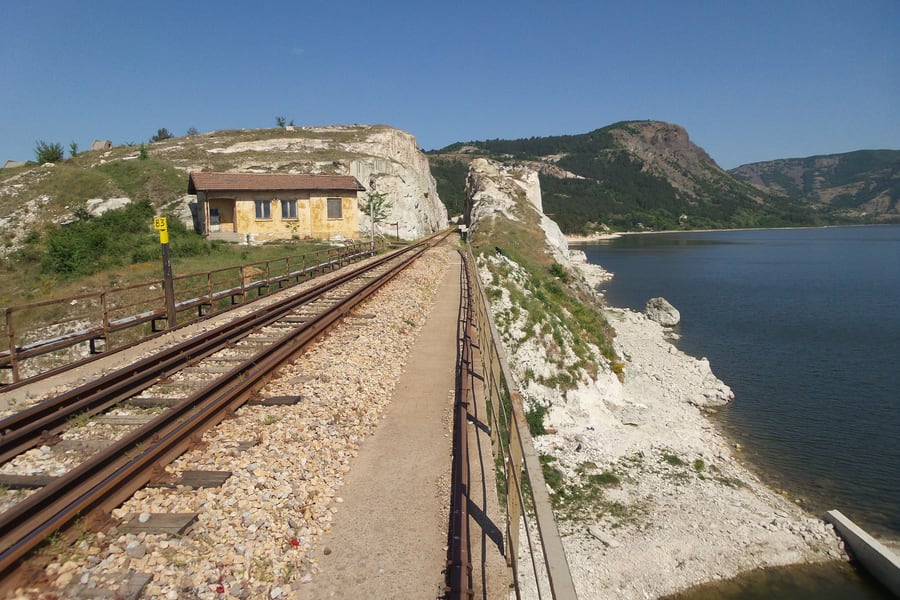
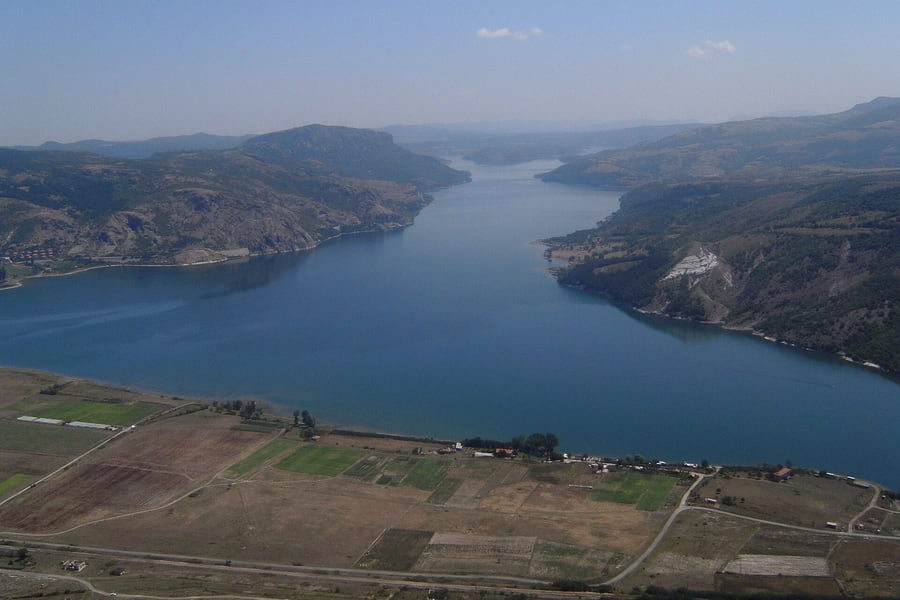
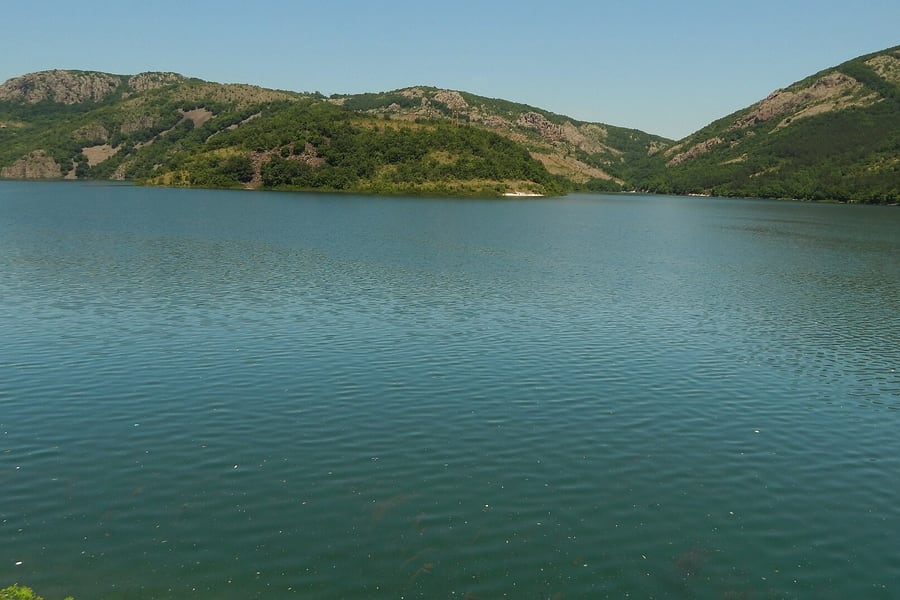
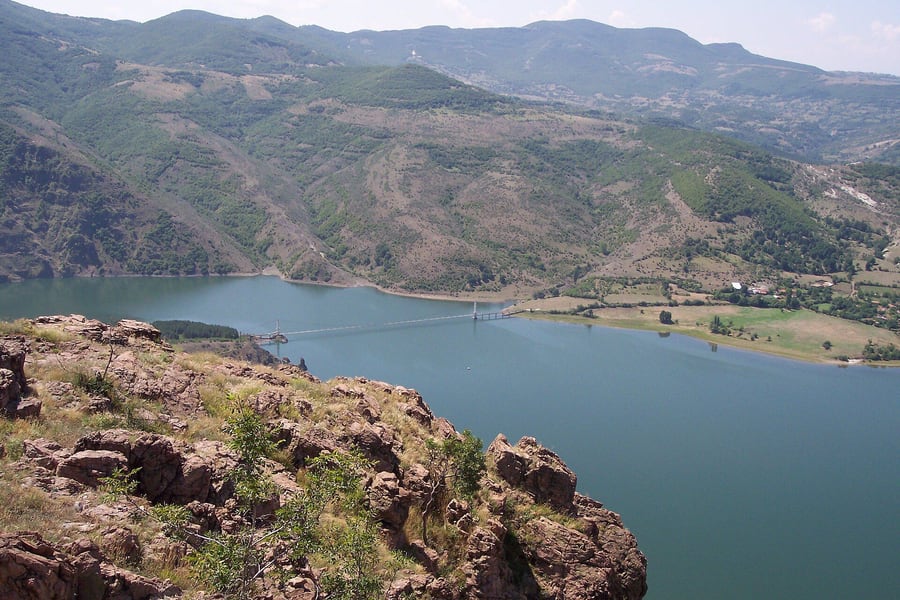
Haskovo is half an hour out. South of Most the scenery changes: the track drops to the Arda and follows the shore of the Studen Kladenets reservoir, crossing the reservoir on a bridge 208 metres long. The halts here are walkers' stations. Perperek serves the Thracian hill city of Perperikon, Sredna Arda stands on the water inside a nature reserve, Momina Skala is the stop for the footbridge to Lisitsite, and Shiroko Pole is the start of the walk to Monyak fortress. At Zhelyazna Vrata the line passes through a cutting in white rock, then crosses the Arda on a 178-metre bridge beyond Kardzhali, the regional capital. At the 2011 census Momchilgrad was the largest Bulgarian settlement with a Turkish majority, and the line ends 17 kilometres further on at Podkova.
Along the route
 Phil Richards from London, UK / Wikimedia Commons · CC BY-SA 2.0 · cropped
Haskovo, first by narrow gauge
Army engineers had a narrow-gauge line running from Rakovski, today's Dimitrovgrad, to Haskovo by February 1923. It was rebuilt to standard gauge and reopened on 1 February 1928. Every train calls here, about 25 minutes out.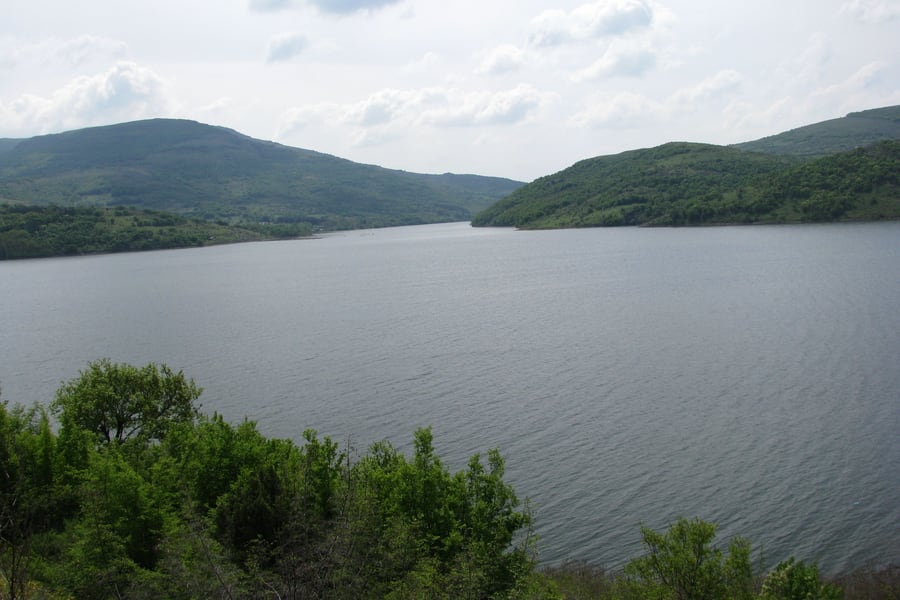 SolarisaA / Wikimedia Commons · CC BY-SA 4.0
Down to the Arda
At Most the line passes under the watershed between the Maritsa and the Arda in a 1,121 m tunnel, at 392.7 m. Beyond it Sredna Arda halt stands on the shore of the Studen Kladenets reservoir, inside a nature reserve.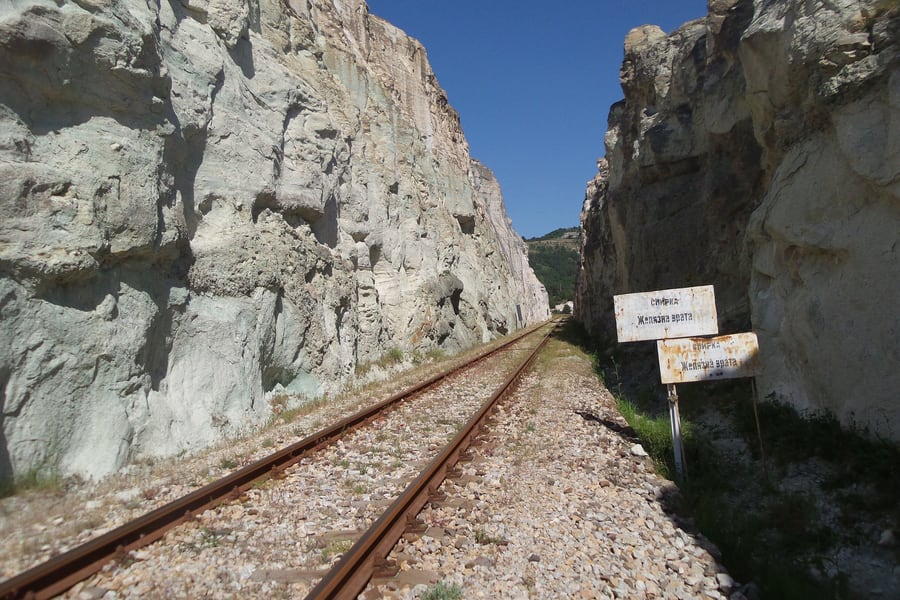 San4ez357 / Wikimedia Commons · CC BY-SA 4.0
The Iron Gate
At Zhelyazna Vrata, "Iron Gate", the track squeezes through a cutting in pale rock before the last run beside the water into Kardzhali. The halt shares its name with the pass that Monyak fortress guarded in the twelfth century.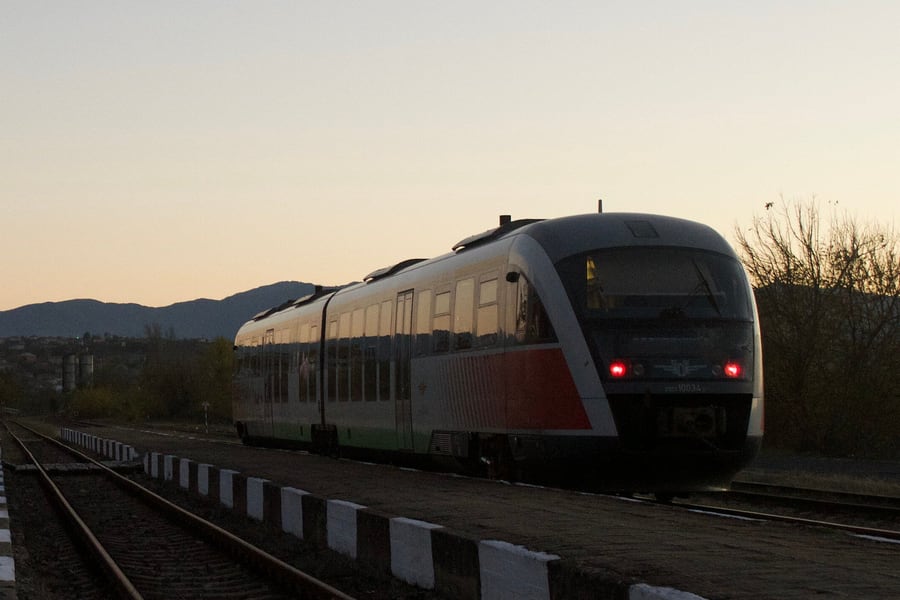 Phil Richards from London, UK / Wikimedia Commons · CC BY-SA 2.0 · cropped
Out to Podkova
The last 17 km from Momchilgrad were built during the Second World War and opened on 20 November 1944, on gentler gradients than the rest. The line ends at Podkova, 119 km from Dimitrovgrad, with a wooden mosque 700 metres from the station.A bit of history
Culture & experiences along the way
 Paolaaa / Wikimedia Commons · CC BY-SA 3.0
The footbridge to Lisitsite
Momina Skala halt is the nearest stop to the longest rope bridge in Bulgaria, slung across the reservoir to Lisitsite, a village of 15 to 20 people reached only on foot or by train. From the village a path climbs to the rock niches of Chitkaya, thought to have been Thracian sanctuaries.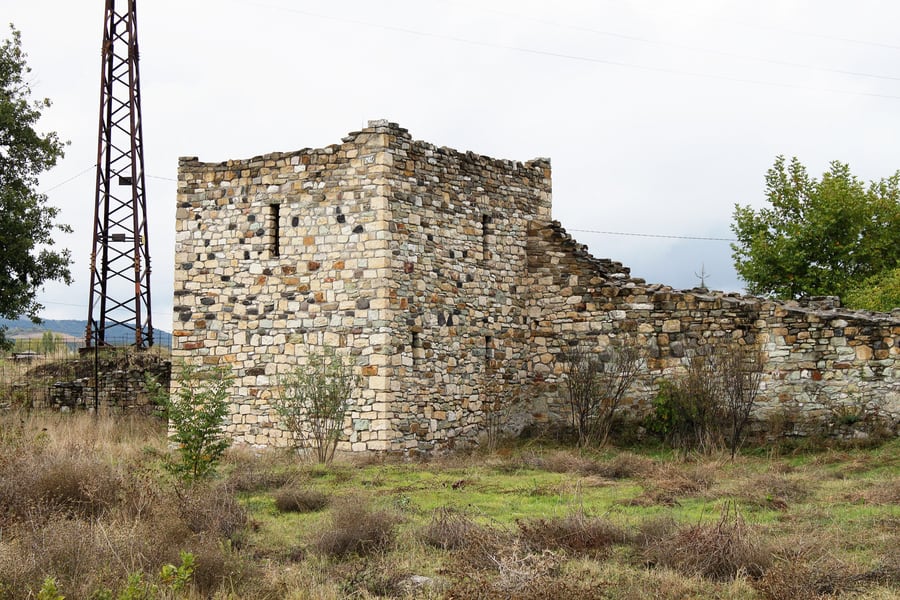 Bin im Garten / Wikimedia Commons · CC BY-SA 3.0
A medieval monastery in a Kardzhali suburb
On the high right bank of the Arda in Veselchane, the walled St John the Precursor monastery began as a complex founded in the sixth or seventh century, and may have been a bishop's seat by the tenth or eleventh. Excavated from 1962, its church was restored and consecrated again in 2000.Timetables
Three trains a day run the whole way in each direction. All times below were read from BDŽ's own timetable (opens in a new tab) on 23 November 2026, for Wednesday 25 November, and the same three trains appeared on the boards for Saturday 28 November and for 5 and 11 December. Every one of them is a diesel multiple unit and runs the full 119 km.
Dimitrovgrad to Podkova
| Train | Dimitrovgrad | Haskovo | Kardzhali | Momchilgrad | Podkova | Time |
|---|---|---|---|---|---|---|
| REG 40161 | 04:40 | 05:07 | 06:50 | 07:10 | 07:31 | 2 h 51 |
| ICF 4651 | 10:55 | 11:21 | 12:56 | 13:16 | 13:40 | 2 h 45 |
| REG 40153 | 14:33 | 15:01 | 16:56 | 17:17 | 17:39 | 3 h 06 |
Podkova to Dimitrovgrad
| Train | Podkova | Momchilgrad | Kardzhali | Haskovo | Dimitrovgrad | Time |
|---|---|---|---|---|---|---|
| REG 40162 | 07:35 | 07:58 | 08:25 | 10:12 | 10:40 | 3 h 05 |
| ICF 4652 | 14:25 | 14:49 | 15:13 | 16:45 | 17:10 | 2 h 45 |
| REG 40164 | 17:45 | 18:08 | 18:33 | 20:19 | 20:46 | 3 h 01 |
Which train to take
REG 40153 starts at Plovdiv at 13:15, so it is the one through train from the city; for the others, change at Dimitrovgrad. The regional trains call at many more halts than the ICF, including Perperek, Zhelyazna Vrata and Zvezdelina; the faster ICF misses those three and a few more, so take a regional train for Perperikon.
The midday ICF makes a day out to the end of the line possible: down to Podkova by 13:40, and back on the 17:45.
The December timetable change
On 23 November the board showed the same three trains on every date sampled up to 11 December 2026, and nothing at all on 14 December, which points to the new timetable period rather than a cancellation. Check the day's board before travelling after that date.
Tickets
This is an ordinary domestic BDŽ journey, priced in euros. For the 119 kilometres from Dimitrovgrad to Podkova the fare panel gave €4.04 in second class on the regional trains and €4.50 on the ICF, with children aged 7 to 10 at €2.02 and €2.25, a group rate for three to six people and an indicative return of €7.31 or €8.13. BDŽ says its prices can vary by day, so treat these as one reading, taken on 23 November 2026.
The regional trains are second class only. The ICF also has first class, at €5.62 for the whole run. Tickets are sold at the station and on BDŽ's own booking site.
Book your tickets
Dimitrovgrad – Podkova
119 km, first class on the ICF only
€4.04 on the regional trains and €4.50 on the faster ICF when this page was written, with children aged 7 to 10 at half that and no reservation needed in second class.
Book Tickets (opens in a new tab, on Bulgarian State Railways (BDŽ))via Bulgarian State Railways (BDŽ)Booking online with BDŽ
The operator's own ticketing site
Tickets are sold at station counters and through BDŽ's own booking site.
Book Tickets (opens in a new tab, on Bulgarian State Railways (BDŽ))via Bulgarian State Railways (BDŽ)Rail Passes
Bulgaria is covered by Interrail and Eurail passes, and BDŽ, which runs every train on this line, is included for its suburban, regional and IC fast trains alike.
Whether a pass is worth it for this journey
Not on its own. The whole run costs €4.04 to €4.50 in second class, and the Interrail Bulgaria Pass costs €67 for an adult for three travel days within a month (€50 for a youth, which is the price the booking page shows first). A pass only pays here as part of a longer trip that already needs one.
Reservations
None are needed in second class. Interrail lists the routes on which BDŽ's fast trains require a reservation, and Dimitrovgrad to Podkova is not among them; it does require one for first class on any fast train, which here means the first-class seats of the ICF.
Pass conditions as of November 2026, from interrail.com's railway companies table (opens in a new tab) and its Bulgaria Pass page.
Places to Visit
Most of what is worth seeing on this line lies a walk or a short ride from a halt rather than in the towns themselves. Perperikon and Monyak are reached from halts on the way to Kardzhali, Tatul by road from Momchilgrad, and Haskovo's old mosque is in a town that every train calls at.
 TodorBelomorski / Wikimedia Commons · CC BY-SA 4.0
The Old Mosque of Haskovo
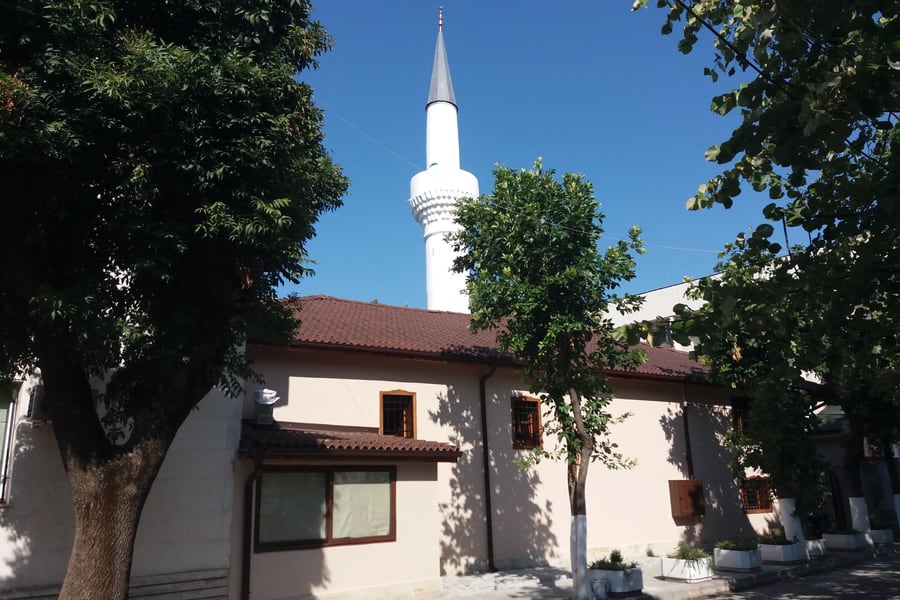
An Arabic inscription on a stone slab at the entrance gives 1395 as the year the Eski Mosque was built. If it refers to the building that stands today, this is the oldest Muslim house of prayer in Bulgaria. Its prayer hall is lit by two rows of windows, it was declared a cultural monument in 1968, and it is still Haskovo's main mosque.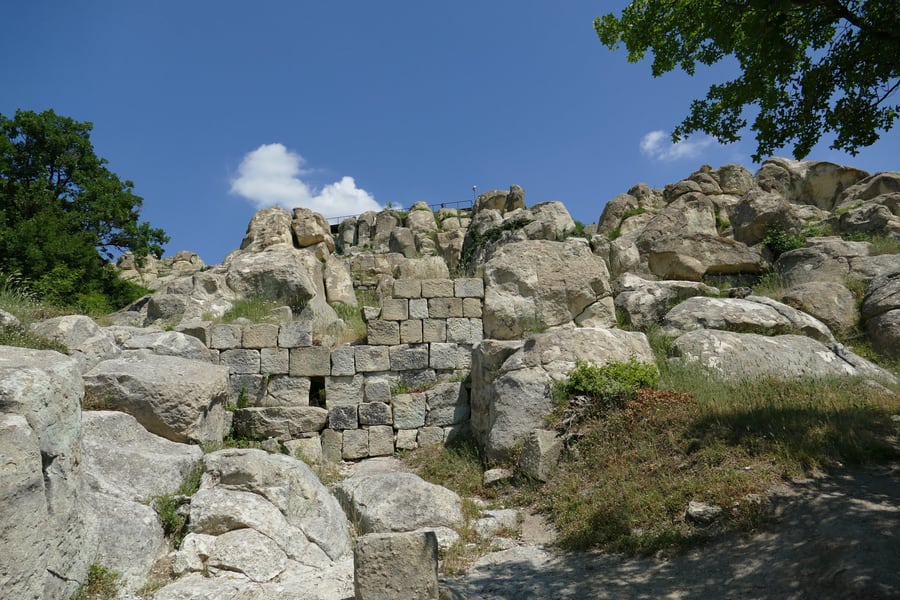 Kritzolina / Wikimedia Commons · CC BY-SA 4.0
Perperikon
A Thracian city on a 470 m rocky hill 15 km north-east of Kardzhali, and the largest ensemble of megalithic remains in the Balkans. Its medieval name may come from a gold-refining process or from an old word for altar fire, and a gold-bearing river flows past it. Digs began in 1931 and have run continuously since 2000. The regional trains stop at Perperek, the halt for it.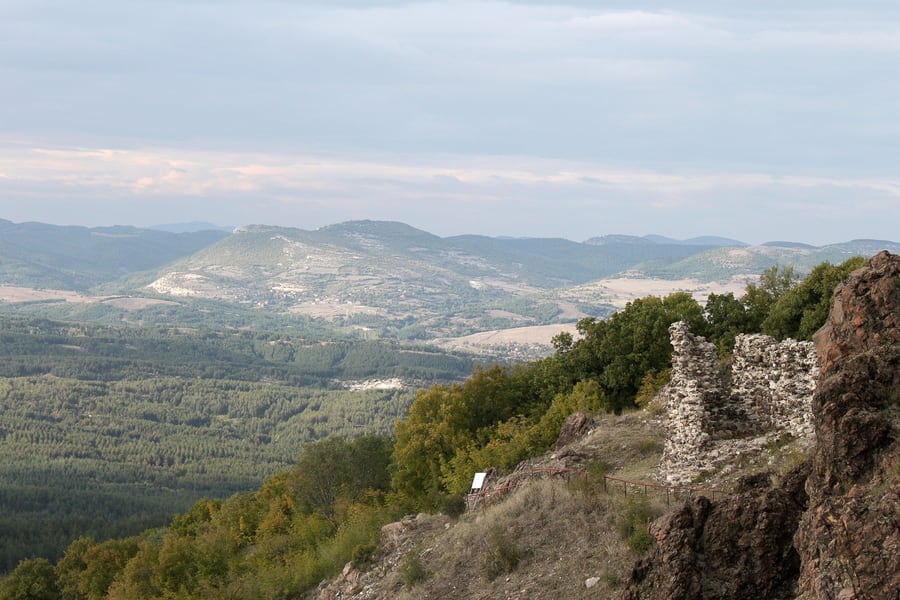 Bin im Garten / Wikimedia Commons · CC BY-SA 3.0
Monyak fortress
A twelfth-century fortress on a 587 m height above the Studen Kladenets reservoir, its outer wall more than 270 metres long and up to 8 metres high. Geoffrey of Villehardouin wrote that in 1206 the crusaders' regent, Henry of Flanders, camped below it, and it was there he learnt that the Latin emperor Baldwin had died in Bulgarian captivity. It is a walk of 40 to 50 minutes from Shiroko Pole village.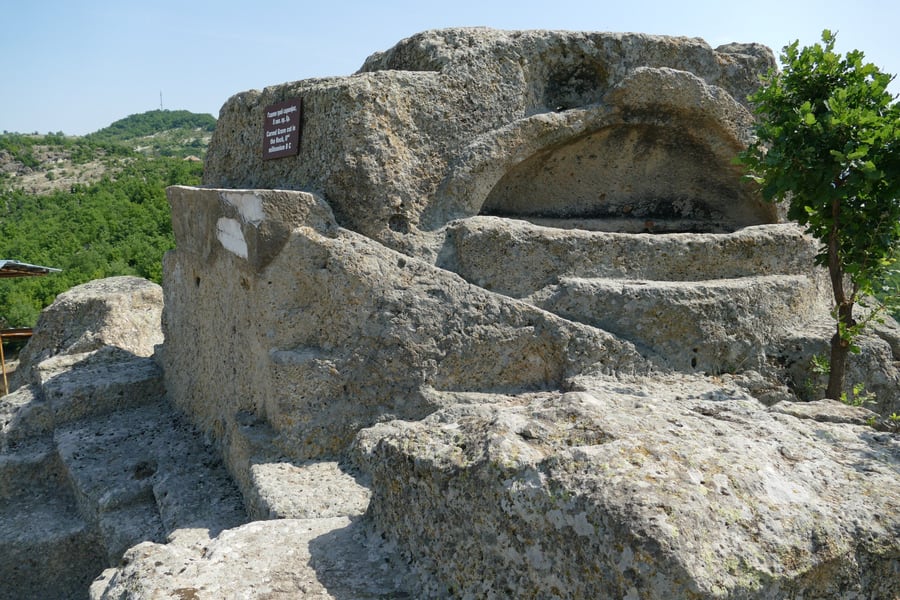 Kritzolina / Wikimedia Commons · CC BY-SA 4.0
The Thracian tomb at Tatul
In a village 15 km east of Momchilgrad, archaeologists uncovered a Thracian tomb and the rock sanctuary around it. Finds go back to 4000 BC, and about 30 clay altars date from the nineteenth and eighteenth centuries BC. The excavation leader, Nikolay Ovcharov, links the site with the cult of Orpheus.Where to Sleep
The two hotels below are in Haskovo and Kardzhali. Neither is booked through this site: each card links to the hotel's own website, and no price, rating or star count appears on either, because none has been verified here.
Where to stay
Hotel Vigor
Haskovo, on Bulgaria Boulevard
A city business hotel with a lobby bar, a café terrace, a restaurant, a gym and sauna, and free parking for guests.
Check Availability (opens in a new tab, on vigorhotel.bg)via vigorhotel.bgHotel Arpezos
Kardzhali, on the left bank of the Arda
In the centre of Kardzhali with a view over the town, 120 beds and breakfast included; its restaurant opens only for booked private events.
Check Availability (opens in a new tab, on hotelarpezos.com)via hotelarpezos.comQuestions or corrections
Planning this trip and stuck on something, or spotted a time, fare or detail that has changed? Send us a message about Into the Eastern Rhodopes by Kardzhali. We read every one, and we update this page when something has changed.