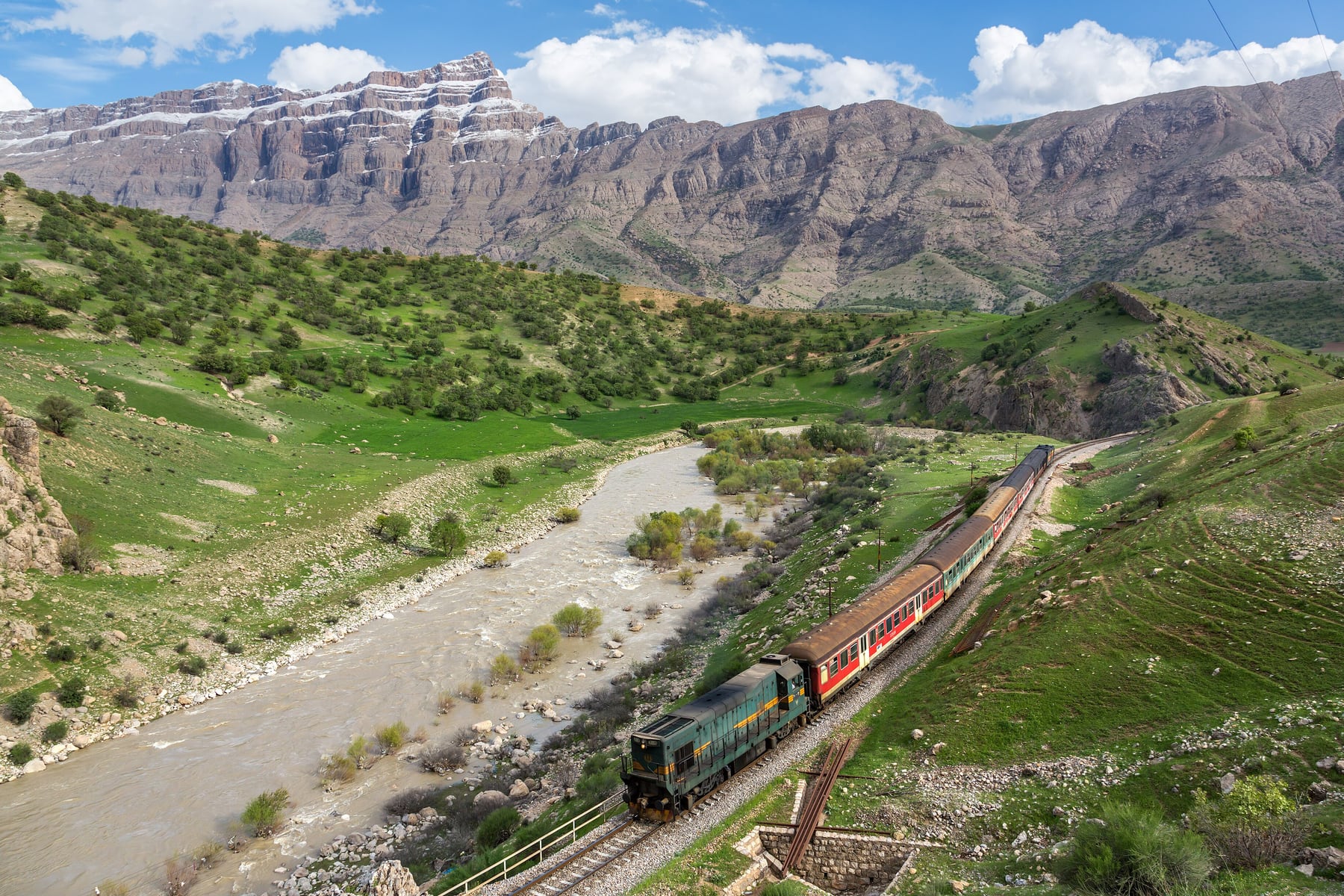
Dorud to Andimeshk
Kabelleger / David Gubler / Wikimedia Commons · CC BY-SA 4.0 · 2016 · cropped
- DistanceAbout 257 km; no operator distance is published
- Duration5 hours 10 minutes, Dorud 05:55 to Andimeshk 11:05
- Best seasonAll year · the rain falls November to April; summers are dry and very hot
Introduction
Every long-distance train between Tehran and the Persian Gulf crosses the Zagros at night. The afternoon Raja from Tehran reaches Dorud at 22:37 and Ahvaz before dawn, and the evening trains north from Andimeshk are through the mountains long after dark. The only way to see this part of Iran's main line is the local: four trains a day between Dorud and Andimeshk, stopping at every station in the gorges, and the 05:55 from Dorud runs the gorges by daylight in every season.
The line is the southern half of the Trans-Iranian Railway, built between 1927 and 1938 with Iranian money rather than foreign loans and inscribed by UNESCO in 2021 as a railway — 224 tunnels and 360 bridges between the two seas, every gradient held under 3 per cent. This is where it comes down off the plateau to the plain of Khuzestan: loops at Sepid Dasht, ledges above the Sezar and the Dez, and the Shahi tunnel, 2,525 m long. The rolling stock is part of the story too. The local is worked by an EMD diesel of American design hauling coaches that carried German regional passengers before they came here.
Near the top, the train stops beside a 48-metre waterfall. Near the bottom are Susa and Chogha Zanbil, both World Heritage Sites. A seat for the whole way costs 70,000 toman.
The Journey
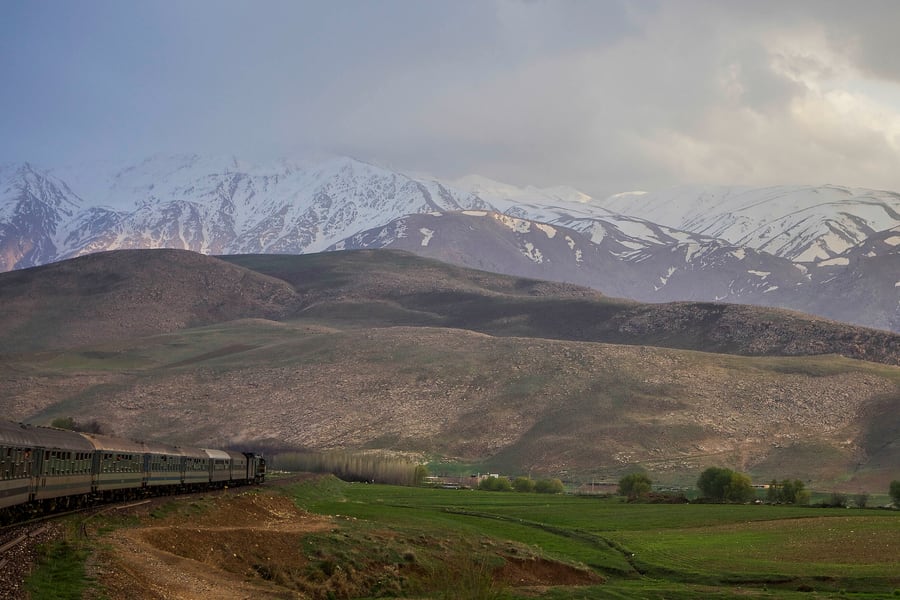
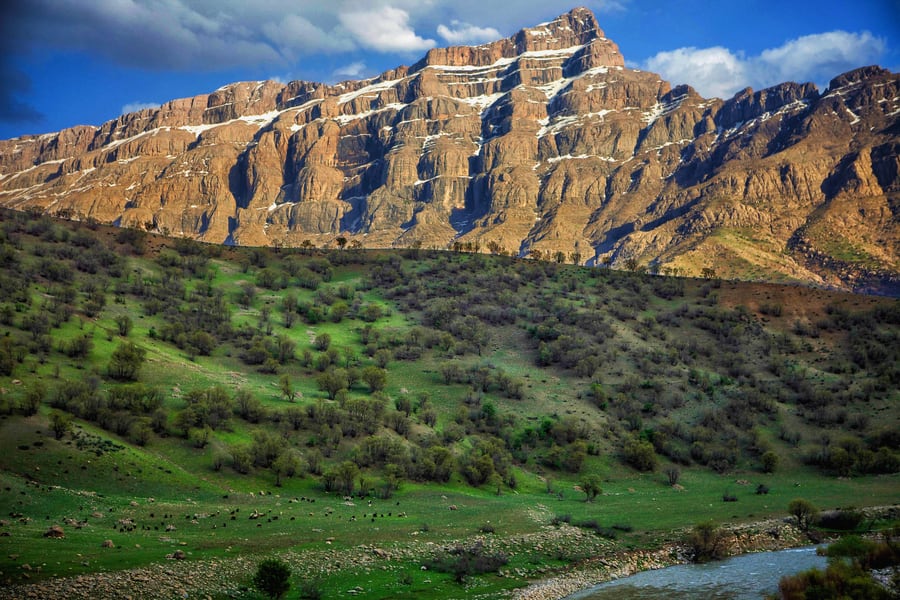
The 05:55 leaves Dorud with the town still asleep. Dorud sits at the foot of Oshtorankuh, the "mountain of camels" — eight snow-covered peaks over 4,000 m — and the railway leaves it heading south-east down the valley of the Sezar. Qaroon is the first stop, eighteen minutes out; Bisheh comes at 06:39.
Bisheh is the stop to know. The station sits in a grove of tall trees, springs rise opposite the platform and run straight through it, and below the line they pour over the cliff as the Bisheh waterfall, 48 m to the rocks and another ten into the Sezar. For a long time the train was the only way in, and it is still the easy one.
Down through the gorges
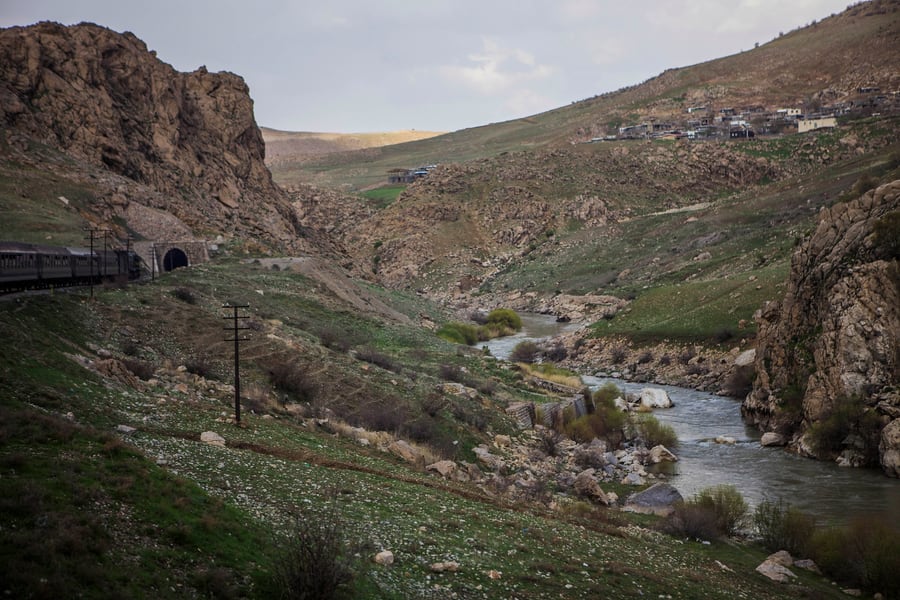
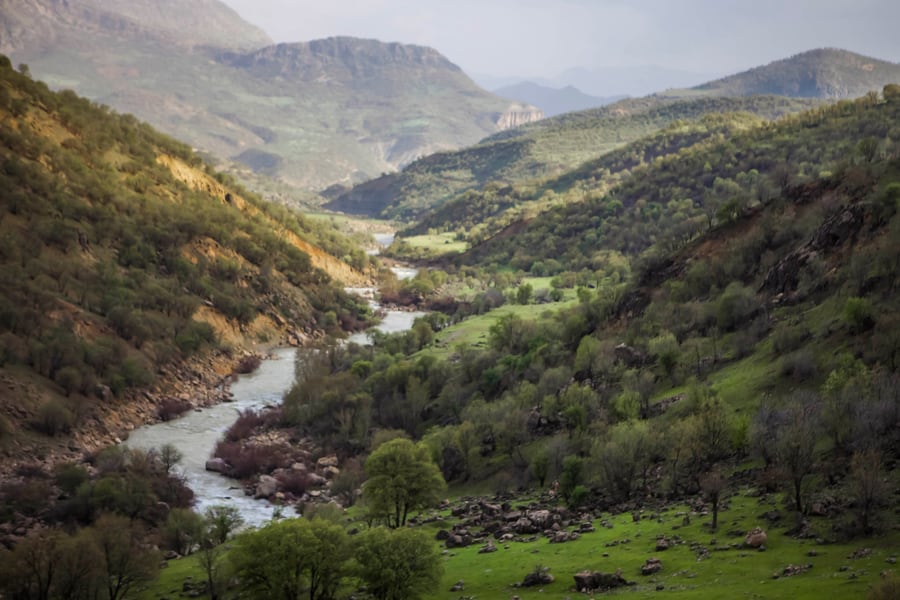
Below Bisheh the descent starts in earnest. The line swings out in loops around Sepid Dasht, capital of the Papi district, then threads Chamsangar, Keshvar and Tang-e Haft — the seventh gorge — with the river beside it most of the way. A tang is a defile, and the station names say what the ground is like. Between Tang-e Panj and Taleh Zang the train goes through the Shahi tunnel, 2,525 m; north of Taleh Zang there is a bridge that Iraqi aircraft bombed again and again during the Iran–Iraq war, and that the railwaymen put back each time. About 5 km from Taleh Zang is the Shevi waterfall, and the train to Taleh Zang has always been the main way in.
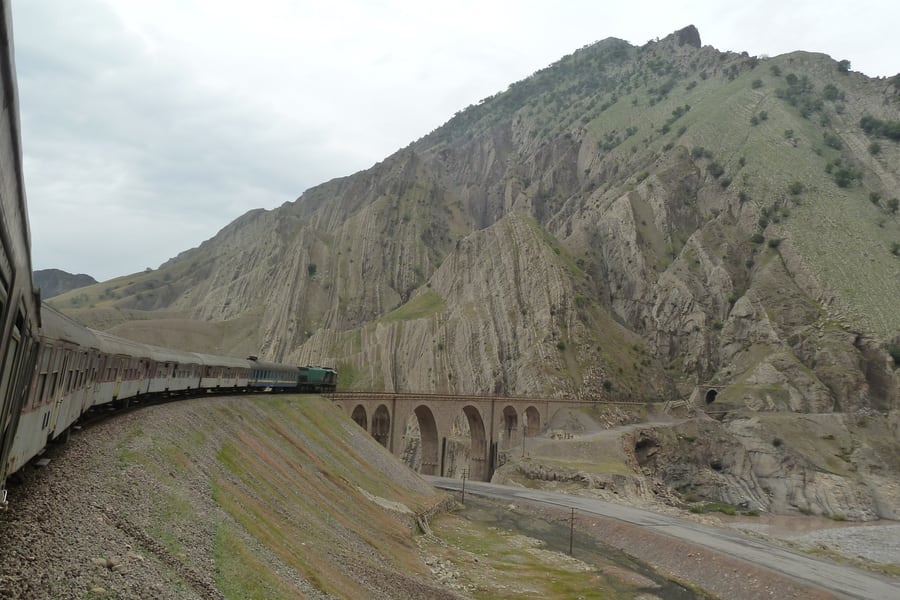
Below Shahbazan — where the highest bridge on this district of the railway crosses a side valley — the line follows the Balarud river on towards the plain, through Mazu, Balarud and Gol Mahak. The last call before the terminus is Dokuheh, three kilometres north of Andimeshk, a name that in Iran recalls the eight years of war with Iraq. The train runs into Andimeshk at 11:05.
How the railway got here
The southern end is the oldest part of this route. An American contractor built the line north from the Gulf through Ahvaz towards Dezful at the end of the 1920s, and Reza Shah opened the southern railway at Andimeshk on 5 January 1930. Then the money ran out, and the hard part — the Zagros — went in 1933 to the Danish firm Kampsax, with six years to reach Tehran. Dorud station opened on 25 August 1938; the next day the northern and southern halves met near Arak, and the railway was complete.
Within four years it was a war route. The US Army Transportation Corps took over the southern division in December 1942 to carry supplies to the Soviet Union, and found the tunnels so choked with smoke and oil fumes that it brought in American diesels. They started on the plains south of Andimeshk and by September 1943 were working through to Qom.
What pulls it
The local is still American and still diesel. In 2016 it was in the charge of RAI 40-012, an EMD G12, hauling a rake of former DB Regio "Silberlinge" — German regional coaches — with a baggage car and a boxcar carrying a diesel generator behind. Nobody is selling the view. It is a train for the villages of the Zagros that happens to run down one of the great mountain railways.
Along the route
 Ninara / Wikimedia Commons · CC BY 2.0 · 2011 · cropped
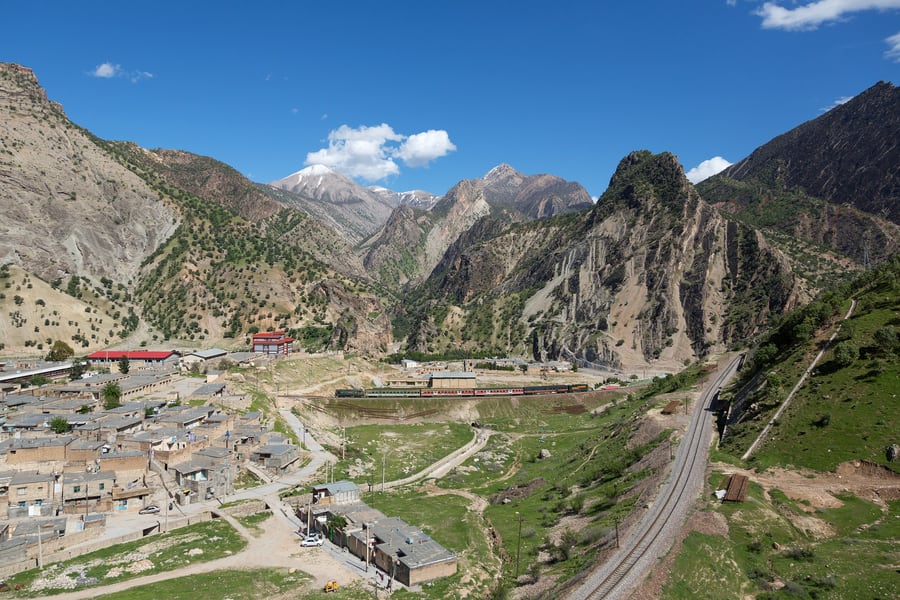
The loops at Sepid Dasht
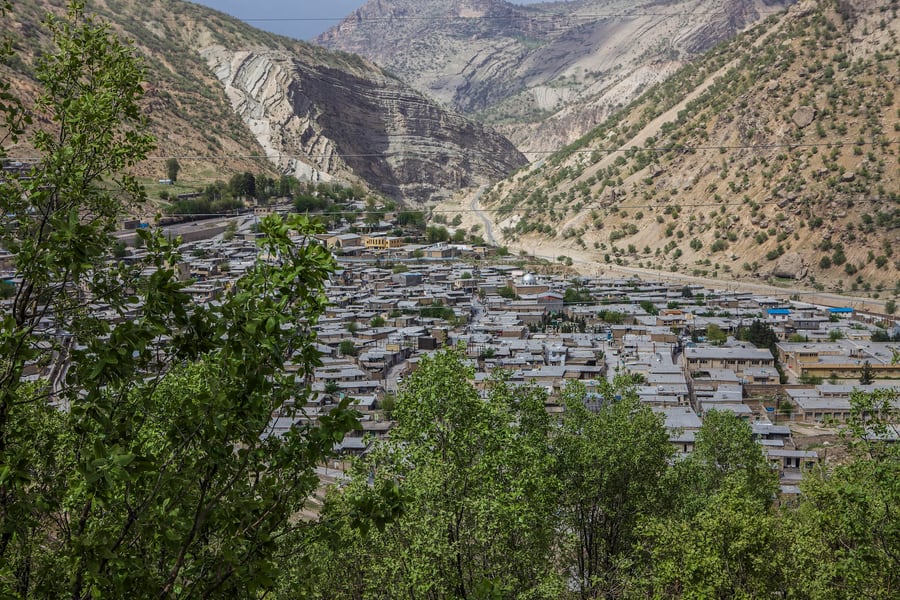
The first real descent. Below Bisheh the line swings out in loops to lose height around Sepid Dasht, a small town of under three thousand people that is the capital of the Papi district, with the bare walls of the Zagros standing over it.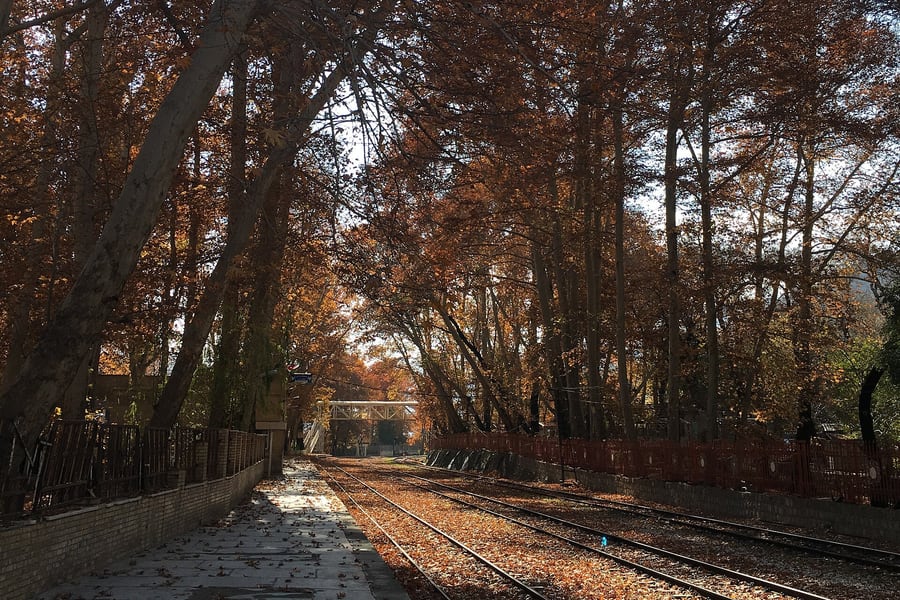 Meysam / Wikimedia Commons · CC BY-SA 4.0 · 2019 · cropped
Bisheh station
A platform under tall trees, forty-four minutes out of Dorud. Springs rise opposite the station and run straight through it to become the waterfall below — which, until the road came, you could only reach by train.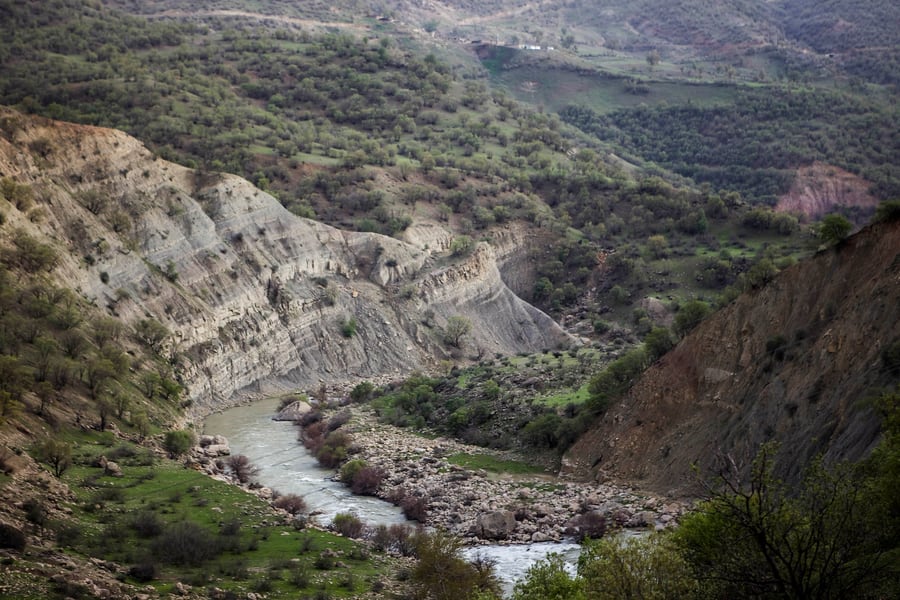 Ninara / Wikimedia Commons · CC BY 2.0 · 2011 · cropped
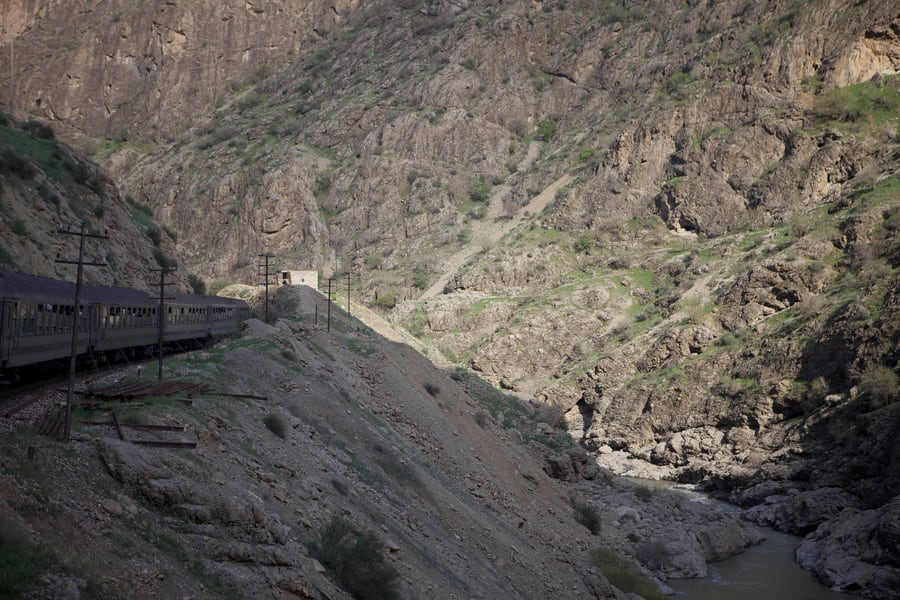
The Sezar gorge
For most of the way down the railway keeps company with rivers — the Sezar, then the Bakhtiari and the Dez. Between Taleh Zang and Tang-e Panj it leaves them for the Shahi tunnel, 2,525 m long.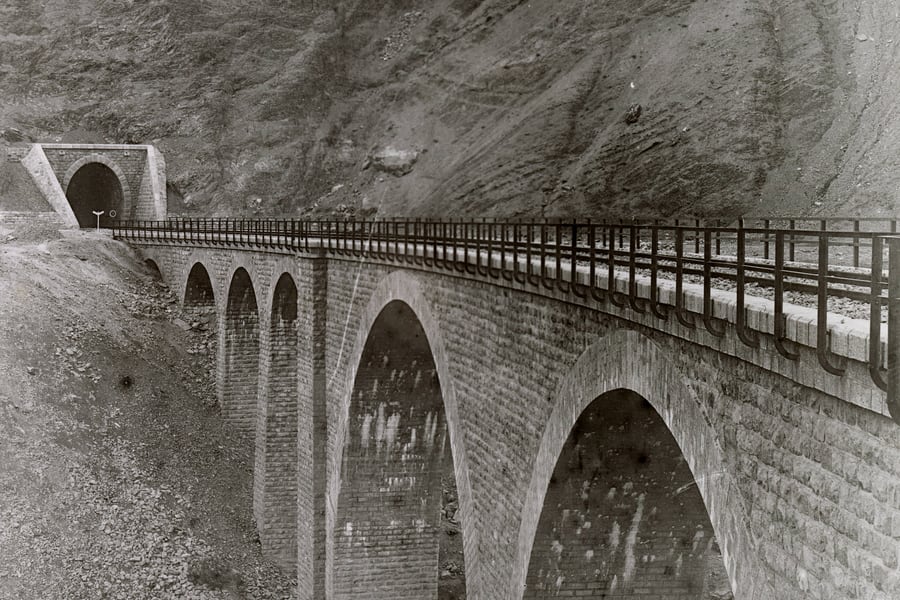 Stanley Scott Collection, US Army Corps of Engineers via Wikimedia Commons · public domain · c. 1943 · cropped
The bridges near Shahbazan
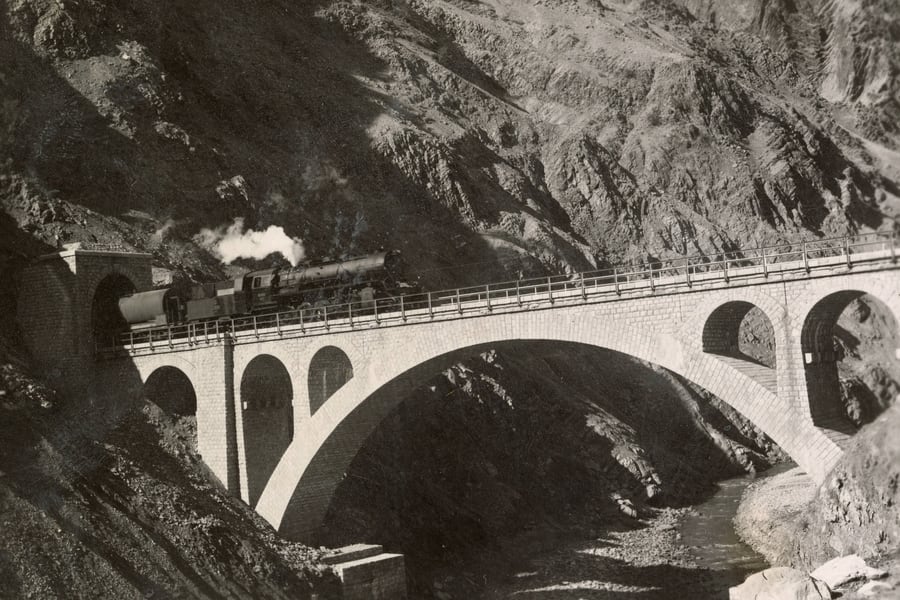
The tallest bridge on the Zagros district of the railway stands just south of Shahbazan, one of a run of masonry arches that carry the line from tunnel mouth to tunnel mouth across the side valleys.A bit of history
Culture & experiences along the way
 Hamid majdolashrafi / Wikimedia Commons · CC BY-SA 4.0 · cropped
The Tomb of Daniel at Shush
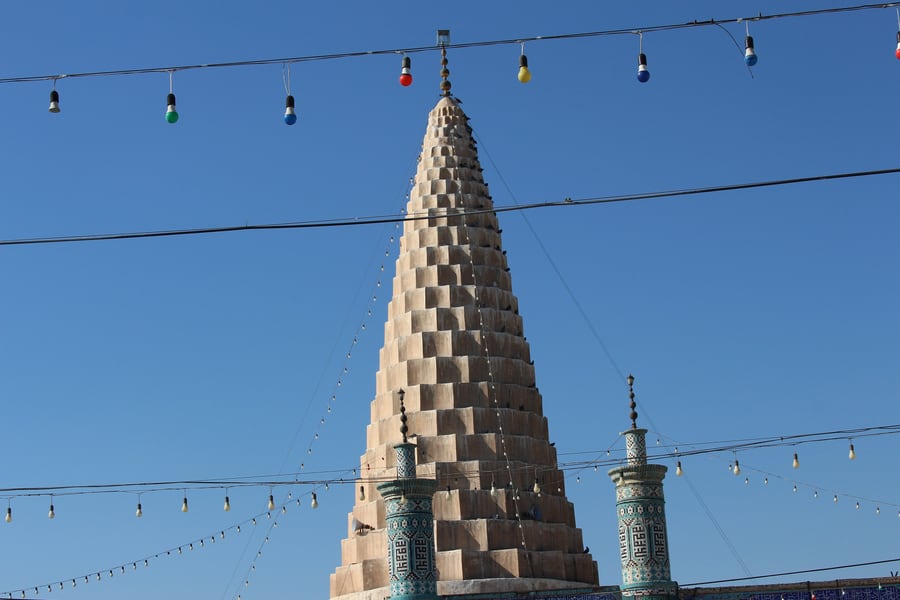
A white cone of stepped stone over the traditional grave of the prophet Daniel, in the town that grew over ancient Susa. Benjamin of Tudela was shown it in the 1160s, and it is still a working shrine visited by Muslims and Iran's Jewish community alike, with strings of coloured lights hung across the courtyard.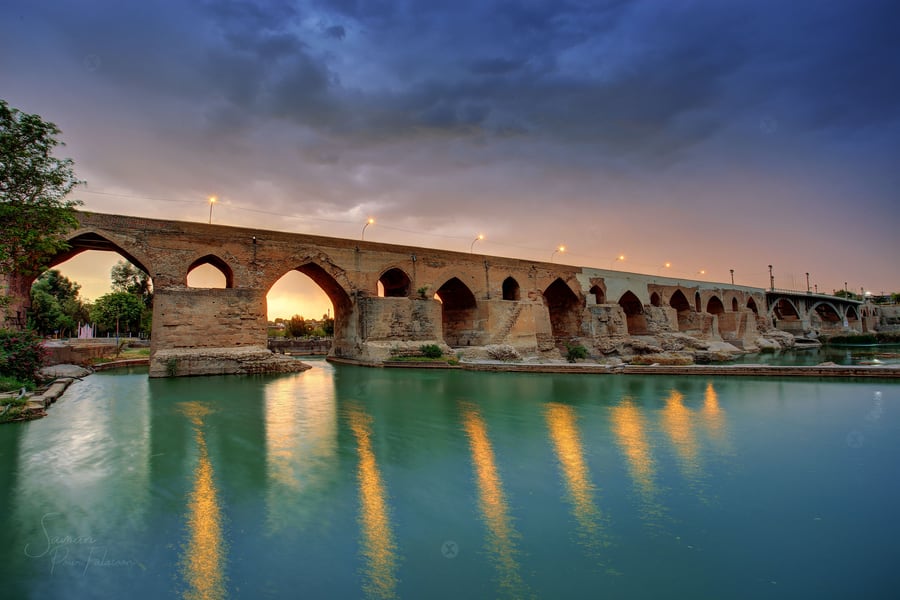 سامان پورفلاطون / Wikimedia Commons · CC BY-SA 4.0 · cropped
An evening on the bridge at Dezful
Dezful takes its name from a bridge — dezh and pul, fortress and bridge — built over the Dez under the Sasanian king Shapur II. The stone piers are original; the brick above them was rebuilt again and again across a thousand years. Trains for Dezful stop at neighbouring Andimeshk.Timetables
Four local trains a day, two in each direction, every day of the week. Times are from the Islamic Republic of Iran Railways' own timetable for its suburban (homeh) trains on this line, valid 26 October 2026 to 15 March 2027, as republished by the Iranian rail news portal rah-ahan.ir — the railway's own site does not answer outside Iran. Every train calls at every station; the tables show the principal ones.
Dorud to Andimeshk
| Train | Dorud | Bisheh | Sepid Dasht | Keshvar | Tang-e Panj | Shahbazan | Andimeshk |
|---|---|---|---|---|---|---|---|
| 940 | 05:55 | 06:39 | 07:01 | 07:52 | 08:37 | 09:25 | 11:05 |
| 915 | 14:30 | 15:11 | 15:33 | 16:24 | 17:15 | 18:01 | 19:35 |
Andimeshk to Dorud
| Train | Andimeshk | Shahbazan | Tang-e Panj | Keshvar | Sepid Dasht | Bisheh | Dorud |
|---|---|---|---|---|---|---|---|
| 914 | 04:05 | 05:56 | 06:53 | 07:50 | 08:41 | 09:04 | 09:40 |
| 941 | 13:20 | 15:02 | 15:48 | 16:33 | 17:26 | 17:49 | 18:25 |
Take the 940. It is the one train that runs the gorges — Keshvar to Shahbazan, 07:52 to 09:25 — in daylight in every season. The afternoon trains are the alternative in the long days of spring and summer; for Bisheh alone, the 940 out of Dorud (Bisheh 06:39) and the 941 back (Bisheh 17:49) give you the whole day at the waterfall.
Getting to Dorud. The afternoon Raja from Tehran (14:30, four-berth compartments) reaches Dorud at 22:37 and carries on to Ahvaz, and it is sold on alibaba.ir.
The line is exposed to winter weather: on 7 November 2026 the morning pair, 914 and 940, were cancelled for the day because of rain and flooding. Check the day before.
As of November 2026. Times for the long-distance trains: alibaba.ir/train/THR-DORUD (opens in a new tab).
Tickets
Fares are in toman, ten rials to the toman. The railway's suburban fare table for November 2026 puts the whole run from Dorud to Andimeshk at 70,000 toman, one price for the line.
Buying it is the open question, and this page will not pretend otherwise. No online seller lists the local: alibaba.ir sells only the long-distance trains through Dorud, and a reader commenting on the timetable page says the Dorud–Andimeshk train cannot be booked online. Plan to buy at the ticket office in Dorud or Andimeshk, and arrive early. The overnight from Tehran is easier: it is sold on alibaba.ir. Visa and Mastercard do not work in Iran, so pay in cash, with a Central Bank rial card for non-residents, or through an Iranian agency.
Book your tickets
The Dorud–Andimeshk local
RAI suburban train, twice a day each way
One fare for the whole line; no online seller could be found.
viaTehran to Dorud, the night before
Raja, four-berth compartments — Dorud 22:37
The afternoon train from Tehran that puts you in Dorud for the 05:55.
Book Tickets (opens in a new tab, on alibaba.ir)via alibaba.irRail Passes
No rail pass covers Iran. Interrail's One Country Pass list, checked in November 2026, stops at Türkiye; Iran does not appear on it, and there is no Iranian national multi-journey ticket either.
Nor would one help here. The whole line costs 70,000 toman. What matters on this journey is being at the ticket office early, not buying in bulk.
Places to Visit
The two ends of this line are very different places. Dorud is the mountains — a lake you walk to and a waterfall the train stops beside. Andimeshk is the edge of the Khuzestan plain, and within a short ride of it are some of the oldest monuments in Iran. The four below run in the order the morning train reaches them.
 Safa.daneshvar / Wikimedia Commons · CC BY 4.0 · cropped
Gahar Lake
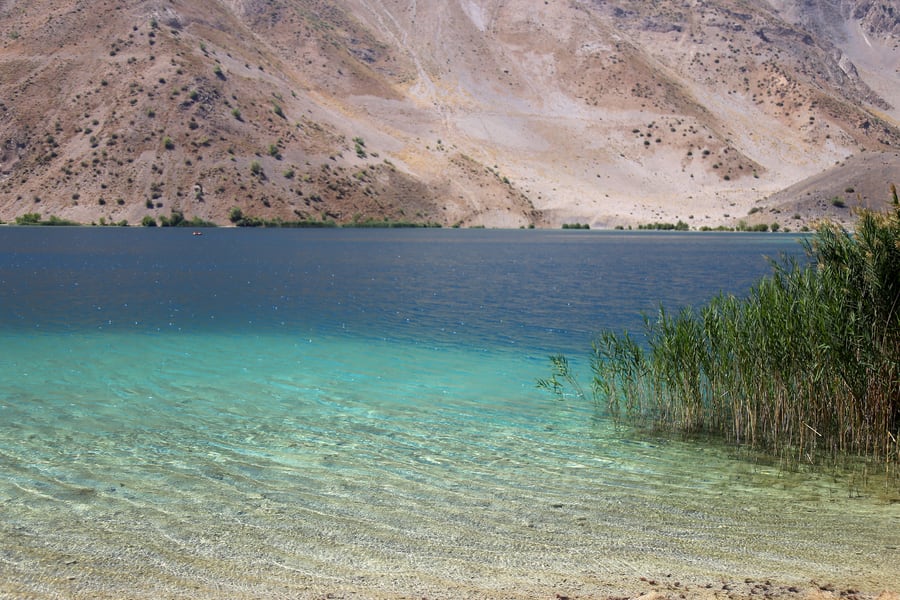
South-east of Dorud, at 2,400 m inside the Oshtorankuh protected area, a lake most likely dammed by an earthquake landslide on the main Zagros fault. No road reaches it — you walk in — which is why the water stays as clear as this. About 70,000 people a year make the trek, and the first European on record to reach it came over the mountain from Dorud in 1888.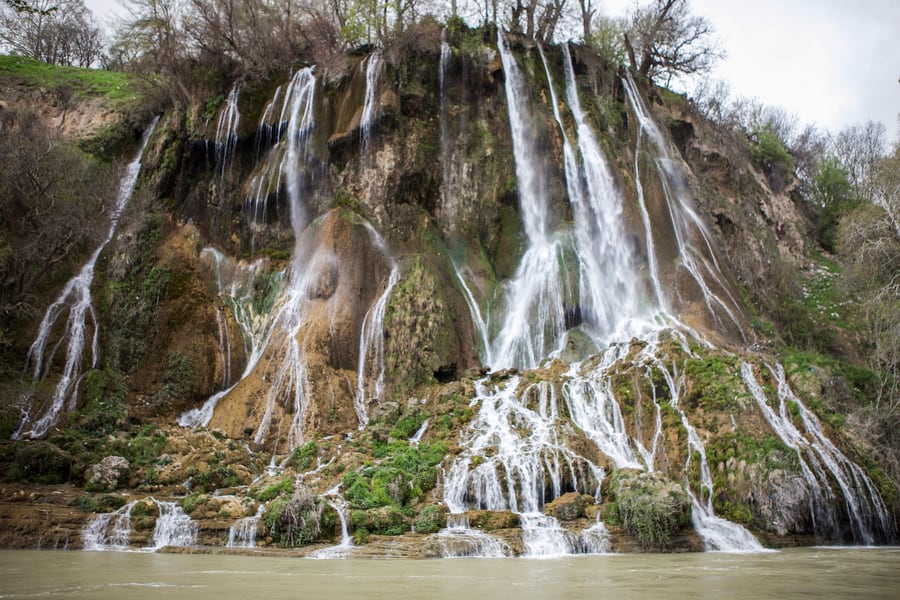 Ninara / Wikimedia Commons · CC BY 2.0 · 2011 · cropped
Bisheh waterfall
Get off at Bisheh and the falls are below the platform: many small cascades, 48 m to the rocks and another ten to the Sezar, spread across a crest about 20 m wide in oak forest. It is a registered national natural monument, there are camping platforms and a small market in the village, and the afternoon train back to Dorud calls at 17:49.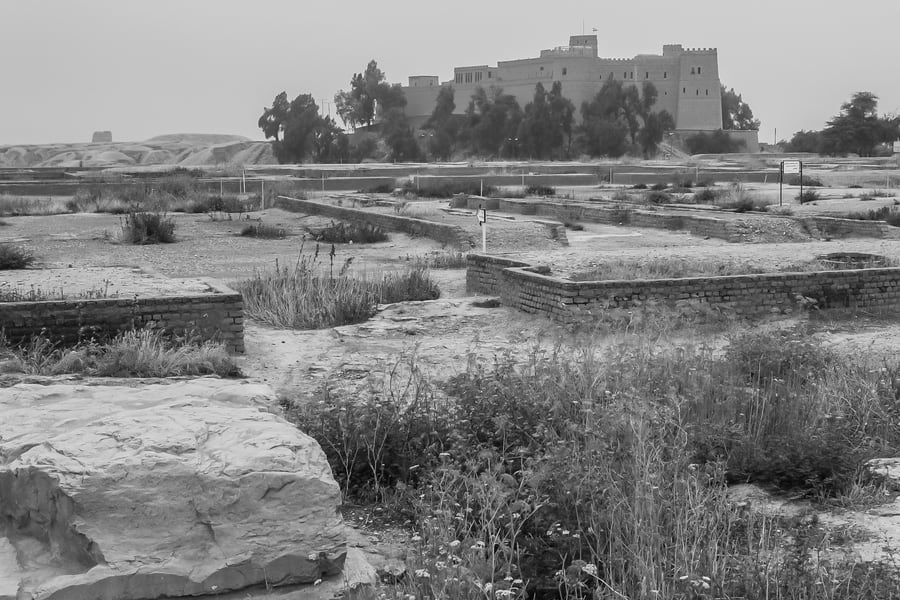 Ninaras / Wikimedia Commons · CC BY 4.0 · cropped
Susa
Thirty-four kilometres south of Andimeshk on the same railway, the capital of Elam and the winter capital of the Achaemenid kings, a World Heritage Site since 2015. The Code of Hammurabi was dug up here. The castle on the mound was built by the French excavators in the 1890s, largely out of bricks taken from the ruins around it.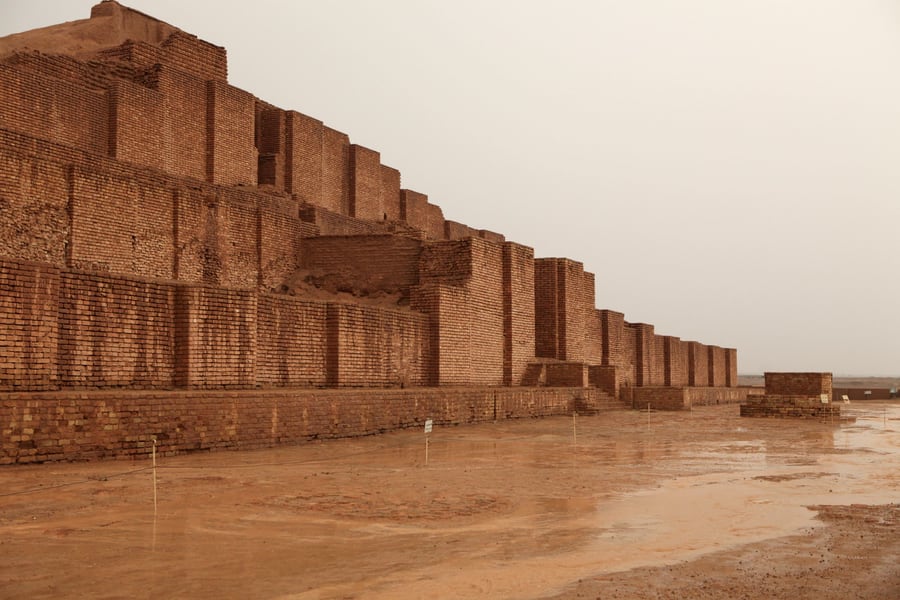 Ninara / Wikimedia Commons · CC BY-SA 2.0 · cropped
Chogha Zanbil
About 30 km beyond Susa, the ziggurat that King Untash-Napirisha raised for the god Inshushinak around 1250 BC — one of the few outside Mesopotamia, and by UNESCO's account the best-preserved anywhere. In 1979 it became the first Iranian site on the World Heritage List. Some of its baked facing bricks still carry cuneiform naming the gods.Where to Sleep
Both cards below are at the Andimeshk end, and both link to the hotels' pages on alibaba.ir rather than to a website of their own — none of the hotels we looked at in Andimeshk, Dezful or Dorud keeps one we could find. Neither card has a photograph: Iran has no freedom of panorama, so a picture of a modern building cannot be published freely.
Dorud is the gap. No hotel there is listed on alibaba.ir, and the 05:55 means a night in the town. Arriving on the 22:37 from Tehran, ask at the station or book through an Iranian agency before you travel. Coming the other way, sleep in Andimeshk or Dezful and take the 13:20 north in spring or summer.
Where to stay
Grand Hotel Andimeshk
Vahdat Street, by the city's big park
Forty rooms on three floors, with an easy run to the railway station and the bus terminal.
Check Availability (opens in a new tab, on alibaba.ir)via alibaba.irJahangardi Hotel Dezful
Imam Hossein Square, Dezful
A restaurant and café on 15 Khordad Boulevard, in neighbouring Dezful.
Check Availability (opens in a new tab, on alibaba.ir)via alibaba.irPractical information
Which train. Southbound on the 940, Dorud 05:55. It is the only working that covers every gorge in daylight all year round.
Which side. No source states one, and this page will not guess. The line winds constantly through the gorges — stand at a door or a corridor window rather than committing to a seat.
Language. The railway, its stations and its ticketing work in Persian. There is no English timetable and no English booking channel. Have the station names written in Persian script — دورود Dorud, بیشه Bisheh, اندیمشک Andimeshk — and an offline translation app.
Money. Sanctions keep Visa and Mastercard out of Iran entirely. Bring cash to change, or arrange a rial debit card for non-residents.
Season. The trains run all year. Rain falls between November and April, and it can close the line for a day; summers are dry and very hot, especially at the Andimeshk end.
Onward. Suburban trains run on from Andimeshk to Shush and Ahvaz, at the same 70,000 toman. Shush is the stop for Susa and the Tomb of Daniel, and the base for Chogha Zanbil.
Questions or corrections
Planning this trip and stuck on something, or spotted a time, fare or detail that has changed? Send us a message about Dorud to Andimeshk. We read every one, and we update this page when something has changed.