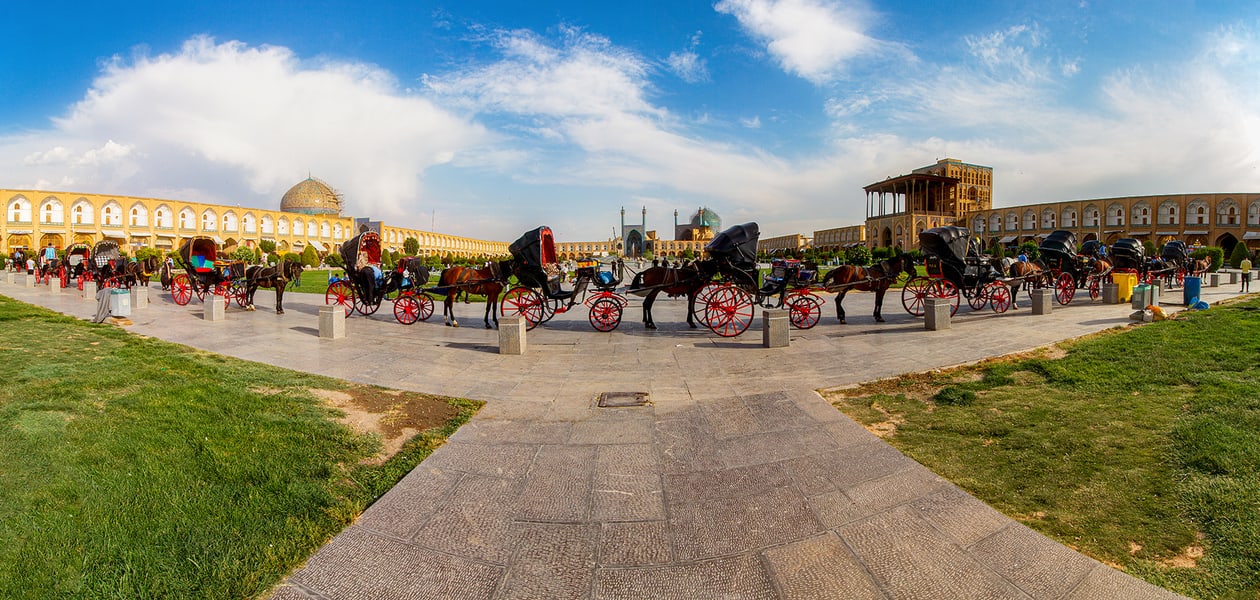
Iran
Faraz ahanin / Wikimedia Commons · CC0 · cropped
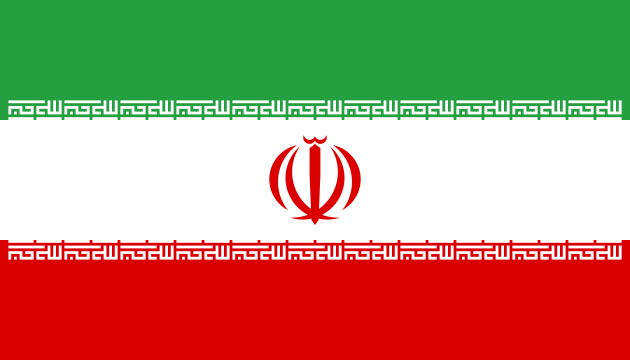
Iran covers 1,648,195 km² of western Asia and holds over 92 million people, which places it seventeenth in the world on both counts. The capital is Tehran. Iraq and Turkey lie to the west, Armenia, Azerbaijan and Turkmenistan to the north, Afghanistan and Pakistan to the east, and there are long coasts on the Caspian Sea in the north and the Persian Gulf and Gulf of Oman in the south. The interior is a high plateau ringed by mountains — the Zagros down the western side, the Alborz along the Caspian — and enclosing two great salt deserts, the Dasht-e Kavir and the Dasht-e Lut.
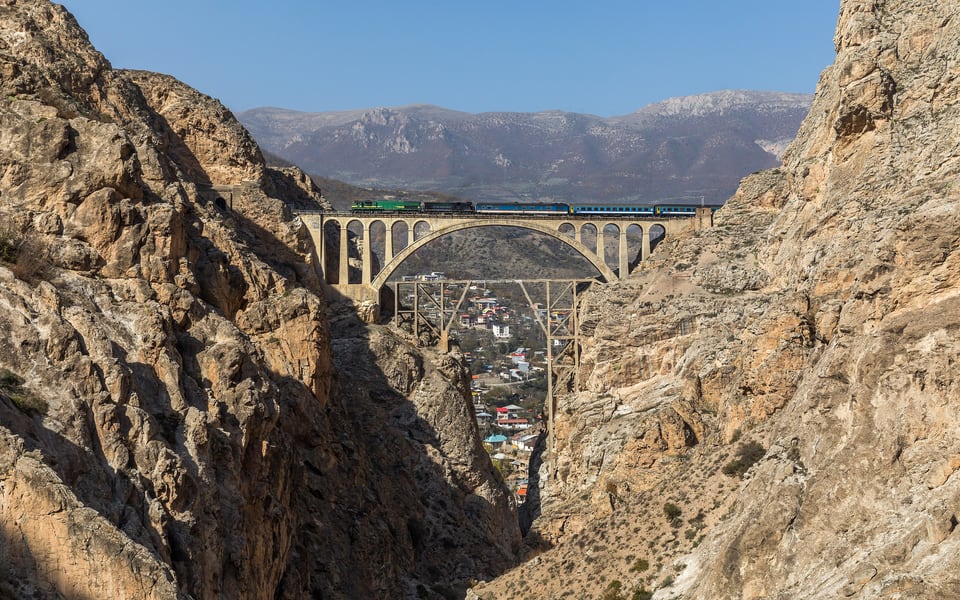
The railway had to cross all of that, and the way it did is why it matters. Iran's network is standard gauge, state-owned, and it was 11,106 km in 2008 with a great deal more under construction. Its spine is the Trans-Iranian Railway, 1,394 km from the Caspian to the Persian Gulf through two mountain ranges and four climatic zones, started in 1927, completed in 1938 and inscribed as a UNESCO World Heritage Site — for the railway itself, which is rare. At the edges the gauge changes: Russian broad gauge at the ex-Soviet borders, Indian broad gauge towards Pakistan.
Rail journeys in Iran
Good to know
What is the Trans-Iranian Railway?
A 1,394 km line joining the Caspian Sea to the Persian Gulf, started in 1927 and completed in 1938. Building it took 224 tunnels — eleven of them spiral — and 360 bridges, and it was carried out by the Iranian government together with 43 contractors from many countries. Unusually for an early railway, it was funded by national taxes, deliberately, to avoid foreign investment and the control that came with it. UNESCO inscribed it as a World Heritage Site in July 2021.
What gauge is Iran?
1,435 mm standard gauge for almost all of it, which is unusual for the region and makes Iran a bridge between systems. There is a short stretch of 1,520 mm Russian gauge — about 94 km — at the ex-Soviet frontiers, and a 1,676 mm Indian-gauge line from the Pakistani border to Zahedan. Three gauges meet inside one country.
How much of the network is electrified?
Very little of it. The electrified section is the Jolfa–Tabriz line in the north-west, about 148 km, and the vast majority of the fleet is diesel. Iran's railway is a long-distance diesel network working very large distances, not an electrified intercity system, and only about a thousand kilometres of it is double track.
Are there rail passes for Iran?
No. Iran belongs to no pass scheme and there is no national multi-journey ticket. Tickets are bought for the individual train, through the operator or through Iranian travel platforms. Persian is the official language and the language of the railway.