Tehran to Mashhad
Aboozarbahari / Wikimedia Commons · CC BY-SA 4.0 · 2018 · cropped
- Distance926 km
- Duration8 hours 45 minutes by day on the Pardis; about 10 to 11 hours overnight
- Best seasonAll year · October for the saffron harvest; summers are very hot on the desert edge
Introduction
Mashhad is Iran's second city and the home of the Imam Reza shrine, which draws nearly 30 million pilgrims a year — more than any other pilgrimage site in Islam. Around twenty trains a day leave Tehran for Mashhad, and almost all of them are sleepers: four- and six-berth compartments, dinner served in some, a station platform at dawn.
The way to see the line is the one that runs by day. Raja's Pardis leaves Tehran at 07:45 and covers the whole 926 km in 8 hours 45 minutes, stopping only at Semnan, Damghan, Shahrud and Nishapur. All day the Alborz runs along one side of the train and the edge of the Dasht-e Kavir, the Great Salt Desert, along the other. The stations are the towns between them: Semnan with its Qajar gate, Damghan with one of the oldest mosques in Iran, and Nishapur, the city of turquoise.
The line reached Mashhad in 1957. By 1976 French turbotrains had cut the journey from sixteen hours to eight and a half. The Pardis does it in about the same time today, and reaches Mashhad in the late afternoon.
The Journey
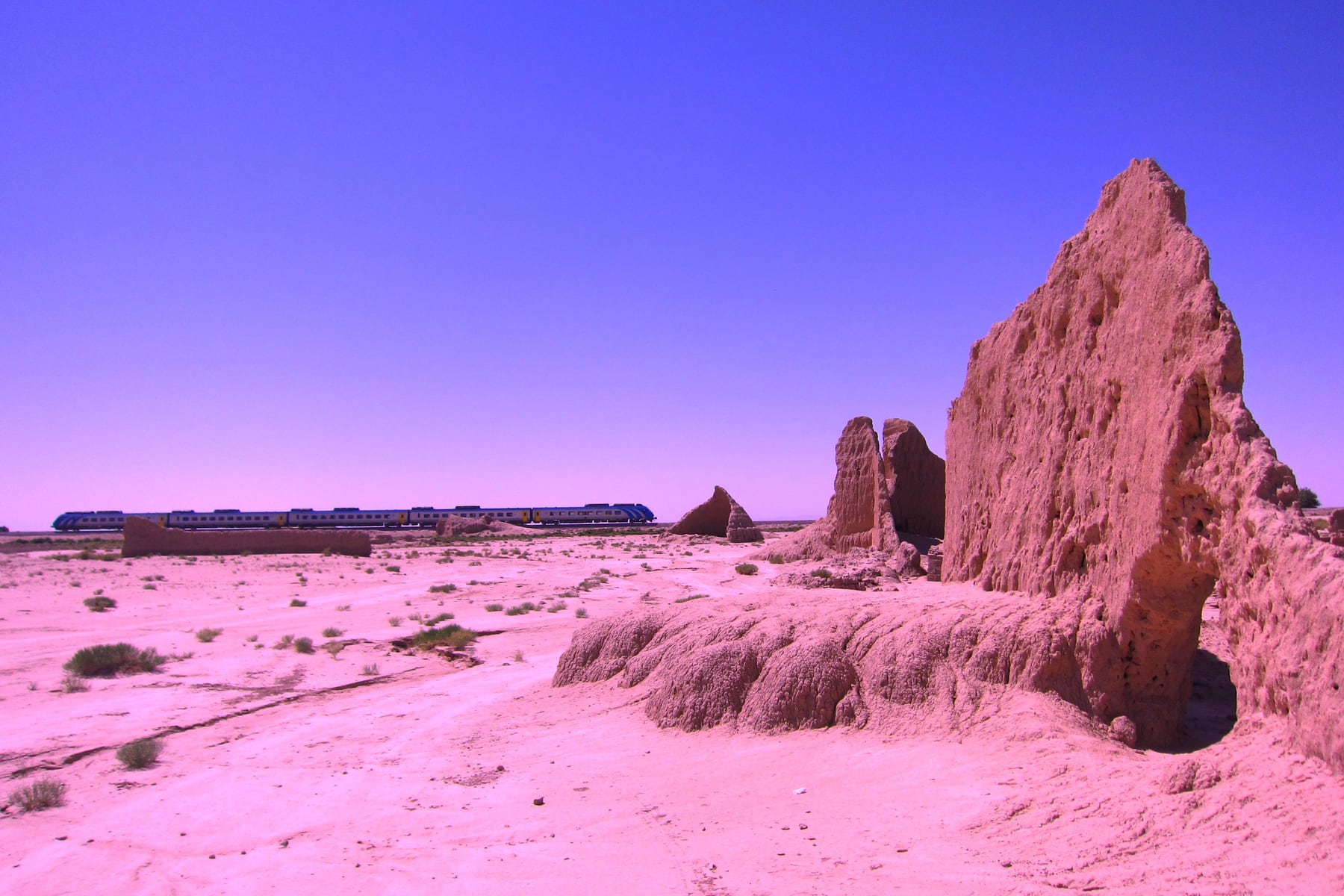
The Pardis leaves Tehran at 07:45 heading south-east across the plain. At Garmsar, where the Trans-Iranian main line carries on north into the Alborz towards the Caspian, the Mashhad line turns east. From here the pattern of the day is set. To the north, on the left, the Alborz stands along the horizon. To the south lies the Dasht-e Kavir, a salt desert some 800 km long. The railway runs along the strip of farmland and towns between them.
Semnan comes at 09:35. Its Qajar gate stands at a crossroads in the middle of the town, and the mountains behind it are close enough to show snow in the colder months. Damghan follows at 10:46. Near the town the train passes the low mound of Tepe Hissar, lived on for two thousand years before 1900 BC. In the town is Tarikhaneh, a mosque probably of the 8th century.
East of Shahrud
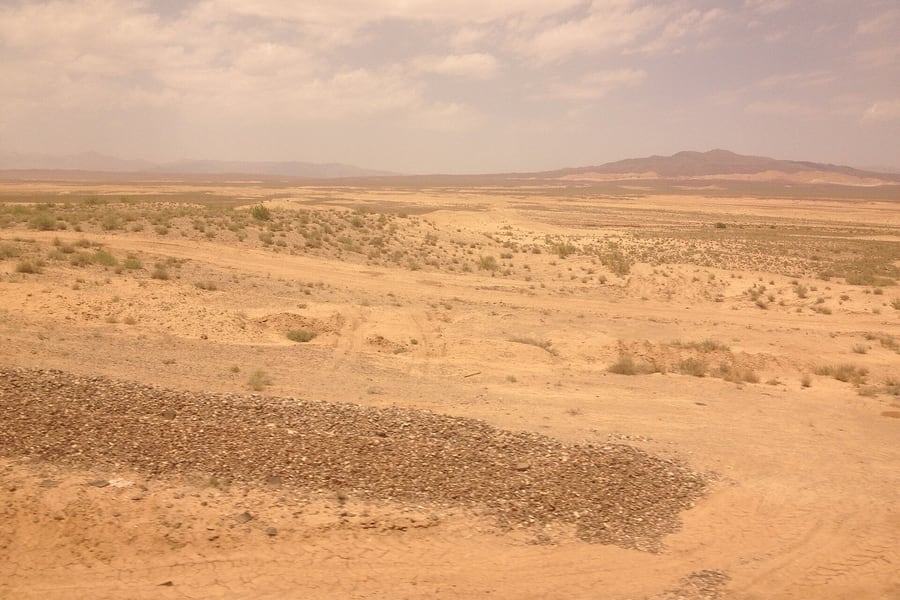
Shahrud is at 11:31, and Bastam, with the shrine of the Sufi Bayazid Bastami, is six kilometres north of it. Then comes the longest stretch without a stop, nearly three and a half hours. The towns thin out and the desert comes up to the line: gravel, scrub and low ranges on the skyline. The overnight trains stop at Neqab here. The Pardis does not stop again until Nishapur at 14:56, the city of the turquoise mines in its hills. From there it is an hour and a half more to Mashhad, which it reaches at 16:30.
The train
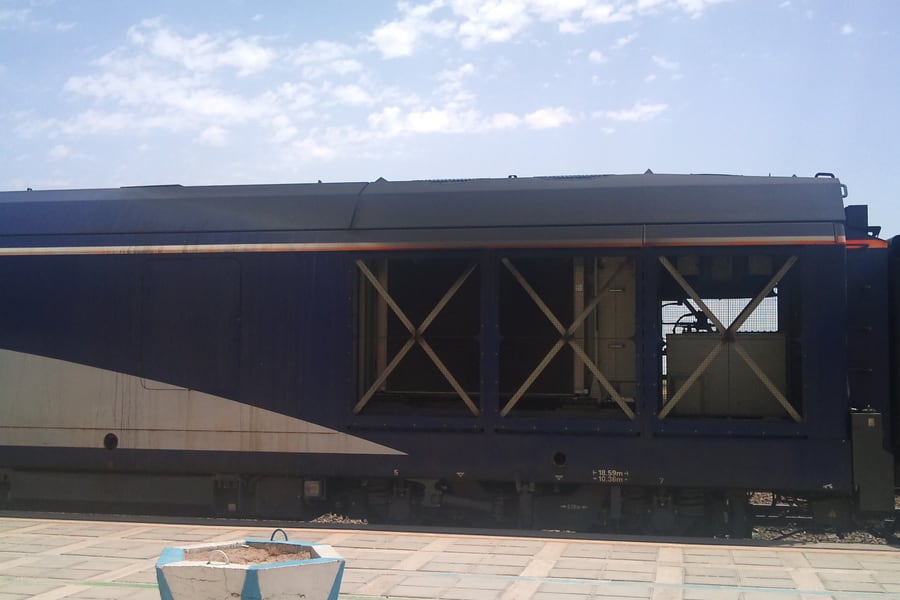
The Pardis is not a locomotive and coaches. It is a self-propelled trainset of five saloon cars, with seats in rows and no compartments. Raja, the state passenger company, overhauled five of these sets in 2023–24. The night trains are a different world. Nine companies sold tickets on the route in November 2026 — Raja itself, Fadak, Bonrail, Noor-al-Reza and five more — and their trains carry names and star ratings like hotels. Raja's own five-star Zendegi serves dinner in the compartment or in a restaurant car, and some private trains offer two-berth luxury compartments.
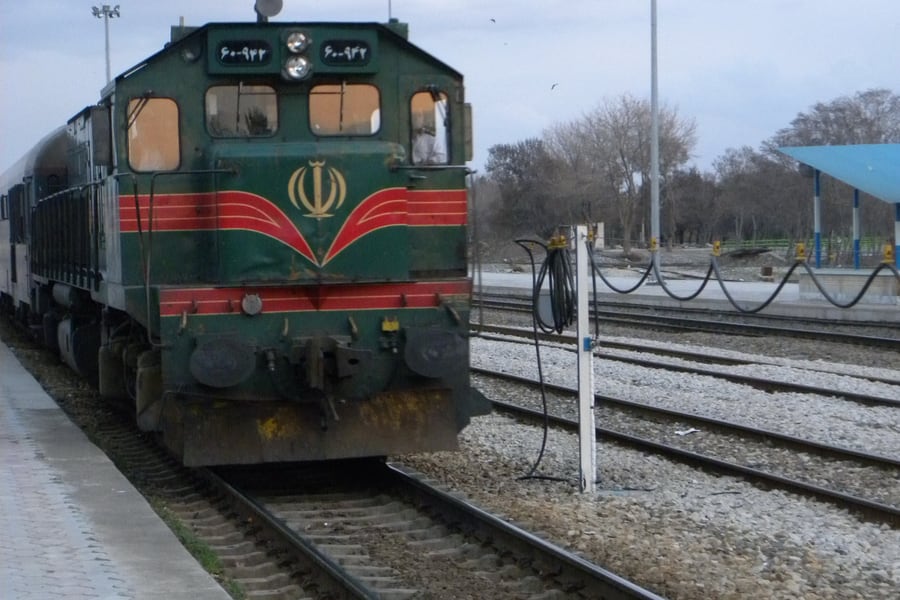
Most of the long-distance trains are hauled by diesels. Iran's railway still runs American-designed EMD locomotives and Siemens ER24PC units, and both have been photographed on this line.
How the line got here
Work on the line began in 1937. The Allied occupation of 1941 stopped the work at Shahrud, and the line did not reach Mashhad until 2 May 1957, when Mohammad Reza Shah and Queen Soraya arrived on the royal train to open the station. The present station building, which Heydar Ghiai modelled on Parthian palaces, followed in 1966. In 1976 four French RTG turbotrains cut the journey from more than sixteen hours to about eight and a half. The line was double-tracked in stages between the early 1990s and about 2010.
Along the route
 علی علوی / Wikimedia Commons · CC BY 3.0 · 2012 · cropped
The salt flats past Garmsar
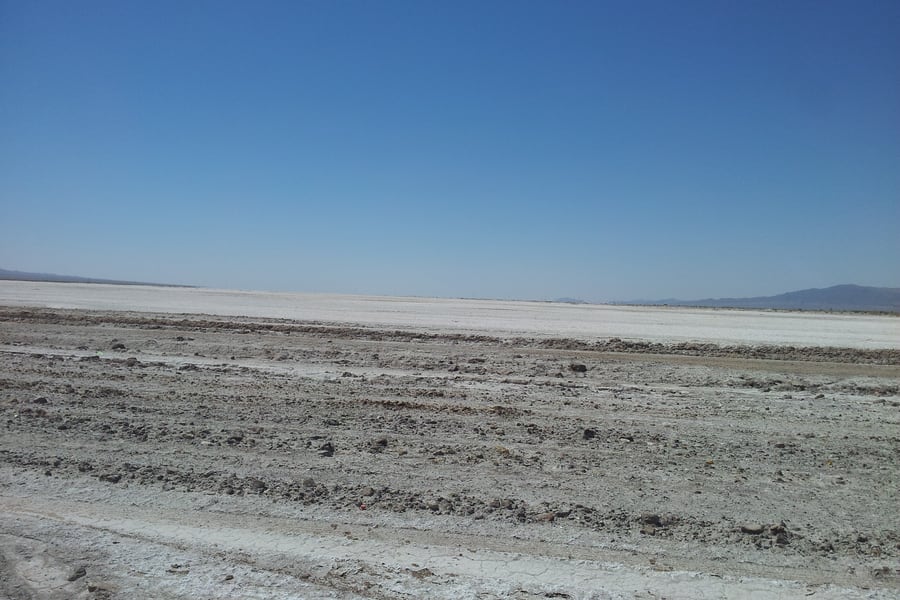
East of Garmsar the line runs along the northern rim of the Dasht-e Kavir, the Great Salt Desert — about 800 km long and 320 km wide, stretching from the foot of the Alborz to the Lut. Out of the window it is white crust and heat haze.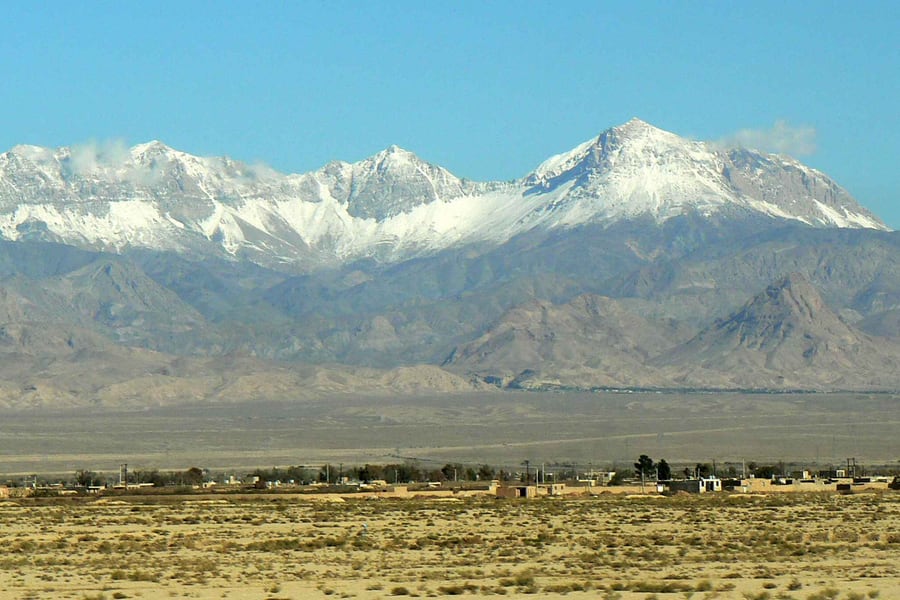 Asadi / Wikimedia Commons · public domain · 2008 · cropped
The Alborz above Semnan
On the other side of the train the Alborz never leaves the horizon. Approaching Semnan its eastern ridges stand straight up out of the plain, snow on the peaks in the colder months, with villages strung out along their foot.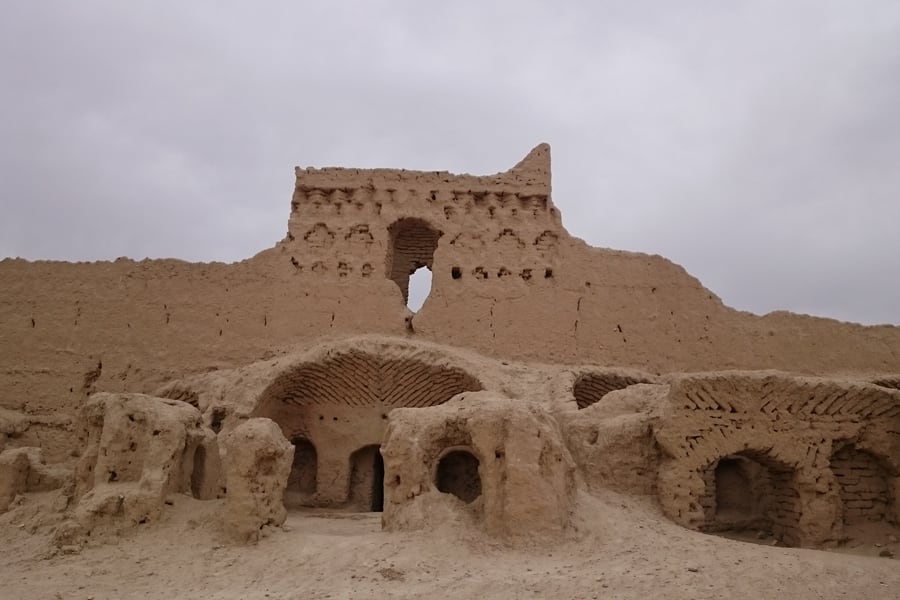 V.Kavusi / Wikimedia Commons · CC BY-SA 4.0 · 2017 · cropped
Tepe Hissar
Two kilometres south-east of Damghan the line passes a low mound some 600 m across, lived on from about 3900 to 1900 BC. Erich Schmidt dug it for the Penn Museum in 1931–32 and also found a Sasanian building with stucco columns six feet across.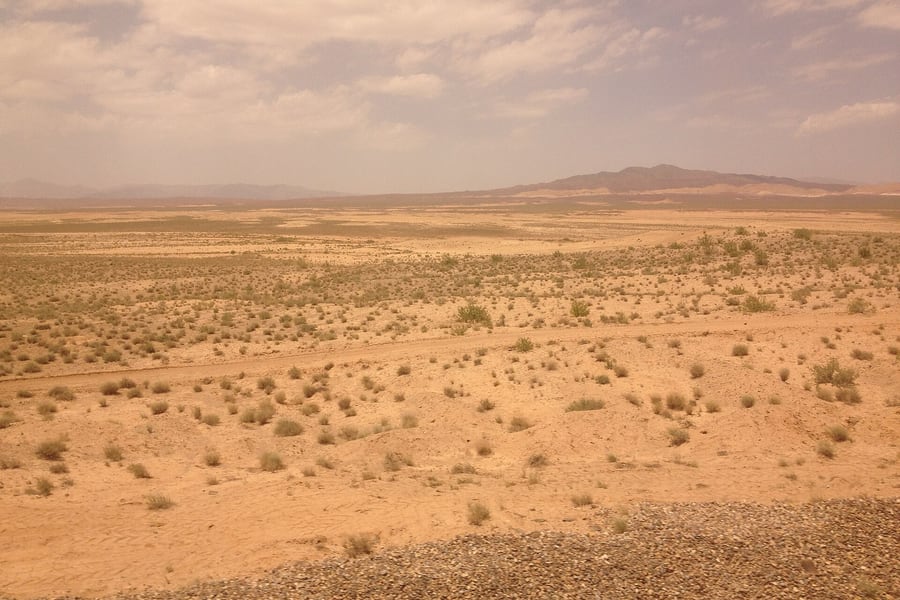 Leyth / Wikimedia Commons · CC BY-SA 4.0 · 2015 · cropped
The long run to Nishapur
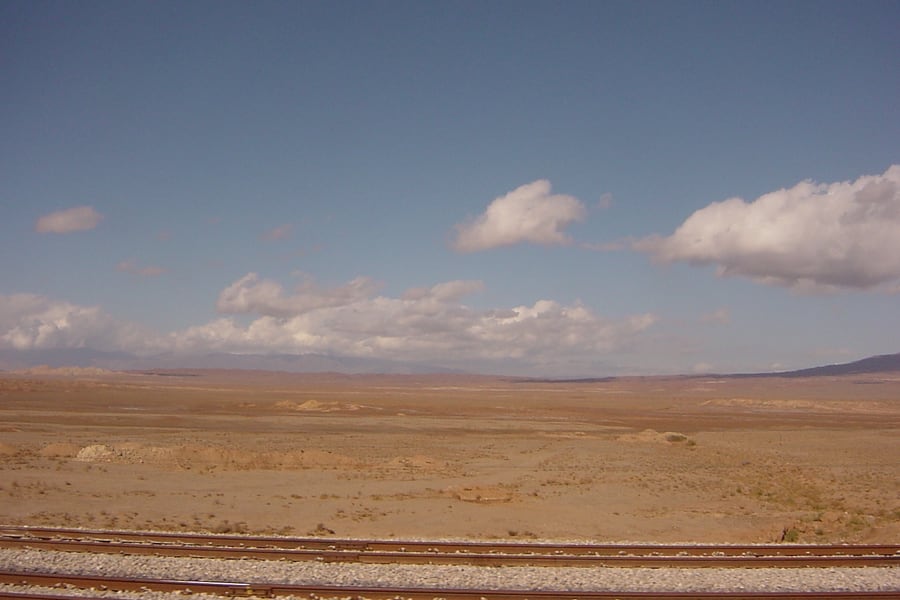
After Shahrud the Pardis does not stop for nearly three and a half hours, until Nishapur. This is the emptiest stretch of the day: scrub and gravel to the horizon, and low ranges on the skyline.A bit of history
Culture & experiences along the way
 Vathlu / Wikimedia Commons · CC BY-SA 4.0 · 2008 · cropped
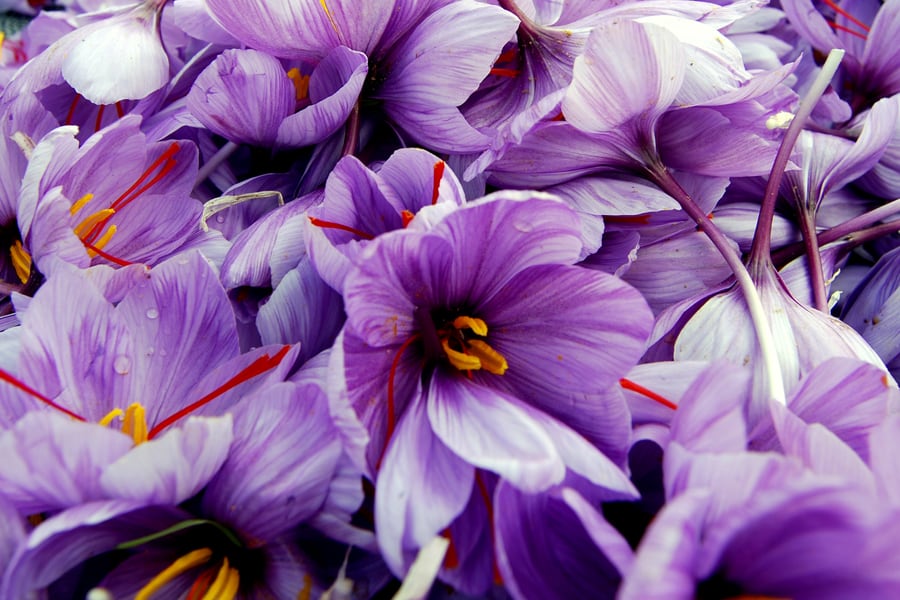
Saffron in its season
Iran grows about 90 per cent of the world's saffron, and Khorasan is where it began. The crocus flowers only in October, after almost everything else has gone to seed, and it takes about 150 flowers to make a single gram of the dried red threads.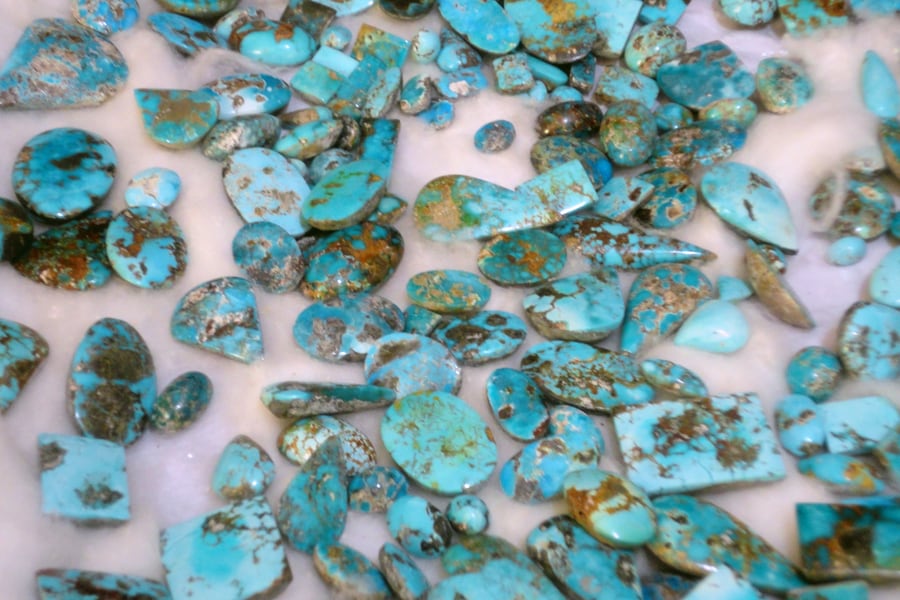 Sonia Sevilla / Wikimedia Commons · CC0 · 2014 · cropped
Nishapur turquoise
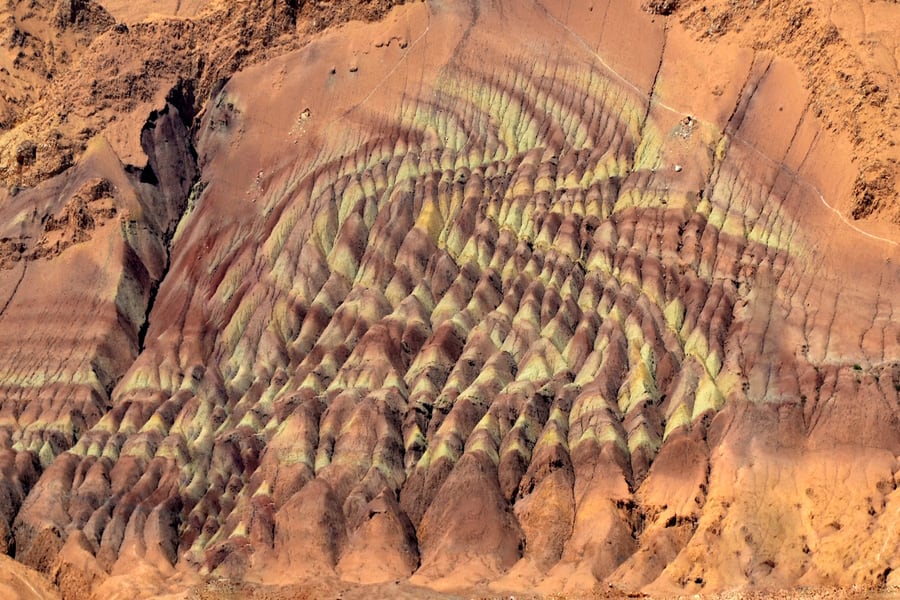
The turquoise mines in the hills of Nishapur are among the oldest workings known anywhere, and their sky-blue stone became the measure that all turquoise is judged against. It comes out of the ground blue and turns green if heated, from broken rock on the slopes of Ali-mersai, a peak of 2,012 m.Timetables
Raja runs two day trains each way, the Pardis and the Saba. They ran at the same times on both dates we read, a week apart in November 2026, and the times below are their own calling points as the seller lists them. Nearly every other train on the route runs overnight.
Tehran to Mashhad
| Train | Tehran | Semnan | Damghan | Shahrud | Nishapur | Mashhad |
|---|---|---|---|---|---|---|
| Pardis 370 | 07:45 | 09:35 | 10:46 | 11:31 | 14:56 | 16:30 |
| Saba | 09:10 | 21:30 |
Mashhad to Tehran
| Train | Mashhad | Nishapur | Shahrud | Damghan | Semnan | Tehran |
|---|---|---|---|---|---|---|
| Pardis 371 | 04:45 | 06:05 | 09:01 | 09:36 | 10:53 | 13:10 |
| Saba 319 | 06:10 | 18:15 |
Take the Pardis 370. It covers the whole line in daylight in every season, and it is the faster of the two by more than three hours. The northbound Pardis leaves Mashhad at 04:45, before dawn in every season, so its first stretch is in the dark.
The night trains. About twenty more trains a day leave each end, most of them between mid-afternoon and midnight, taking about ten to eleven hours. Their departure times moved, some by hours, between the two dates we checked, so read them for your own date. Raja's five-star Zendegi, for example, left Tehran at 20:30 on 11 November and at 18:15 a week later.
Book early. Read on 7 November, every train from Tehran on 11 November was already full. For 18 November, eleven days ahead, only the two day trains still had seats.
As of November 2026. Times and seats: alibaba.ir/train/THR-MHD (opens in a new tab).
Tickets
Fares are in toman, ten rials to the toman. A seat on the Pardis is 2,115,000 toman and the slower Saba is 1,060,000. A berth in a five-star sleeper with dinner is 4,160,000, and the three-star six-berth trains run from about 1,100,000 to 1,400,000. In November 2026 alibaba.ir was selling most of these trains 14 per cent below the full fare.
Tickets are sold online by Iranian agencies such as alibaba.ir, in Persian. Visa and Mastercard do not work in Iran, so pay in cash, with a Central Bank rial card for non-residents, or through an Iranian agency. This is a pilgrim route and the trains fill up: buy as soon as your dates are fixed.
Book your tickets
The Pardis, by day
Raja saloon train 370 — Tehran 07:45, Mashhad 16:30
Reserved seats in rows, the only train that does the whole line in daylight.
Book Tickets (opens in a new tab, on alibaba.ir)via alibaba.irThe Saba, the cheapest seat
Raja saloon train — Tehran 09:10, Mashhad 21:30
A slower day train that arrives after dark, at half the Pardis fare.
Book Tickets (opens in a new tab, on alibaba.ir)via alibaba.irA five-star sleeper
Four-berth compartments, dinner included
Raja's Zendegi and the private operators' top trains, overnight in about ten and a half hours.
Book Tickets (opens in a new tab, on alibaba.ir)via alibaba.irRail Passes
No rail pass covers Iran. Interrail's One Country Pass list, checked in November 2026, stops at Türkiye; Iran does not appear on it, and there is no Iranian national multi-journey ticket either.
Nor would one help here. What matters on this route is buying early, because the trains sell out.
Places to Visit
Every stop the Pardis makes is a town worth getting off at. The places below run in the order the morning train reaches them, ending at the shrine that most of the route's passengers are travelling to.
 Arosha-photo (Reza Sobhani) / Wikimedia Commons · CC BY-SA 4.0 · cropped
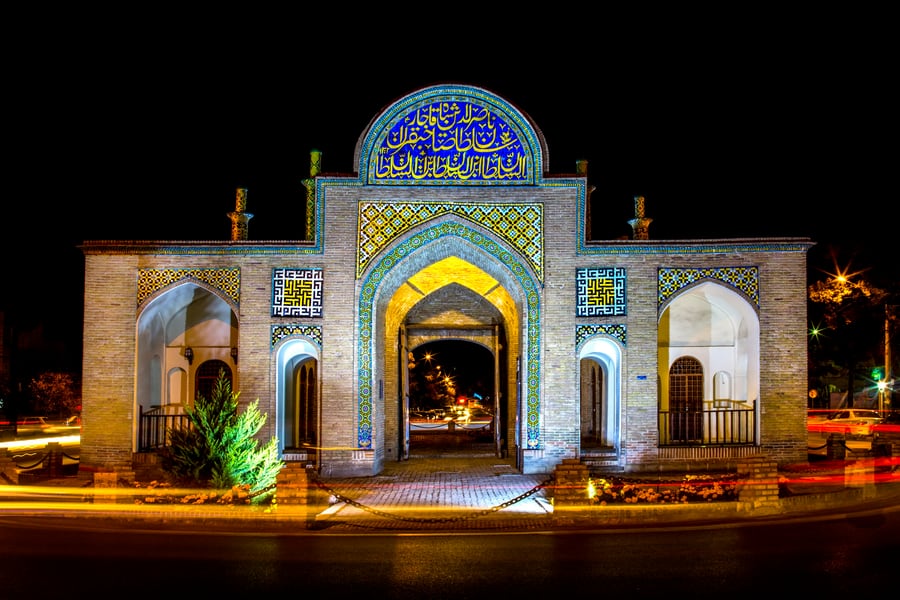
The Arg Gate, Semnan
The northern gate of Semnan's citadel, and the only part of it still standing — the rest was pulled down in the Reza Shah years. Its inscription dates it to 1302 AH (1884–85), under Naser al-Din Shah. Look for the figures of Qajar soldiers on the façade and the scene of Rostam fighting the White Demon. It stands at a crossroads in the middle of the town.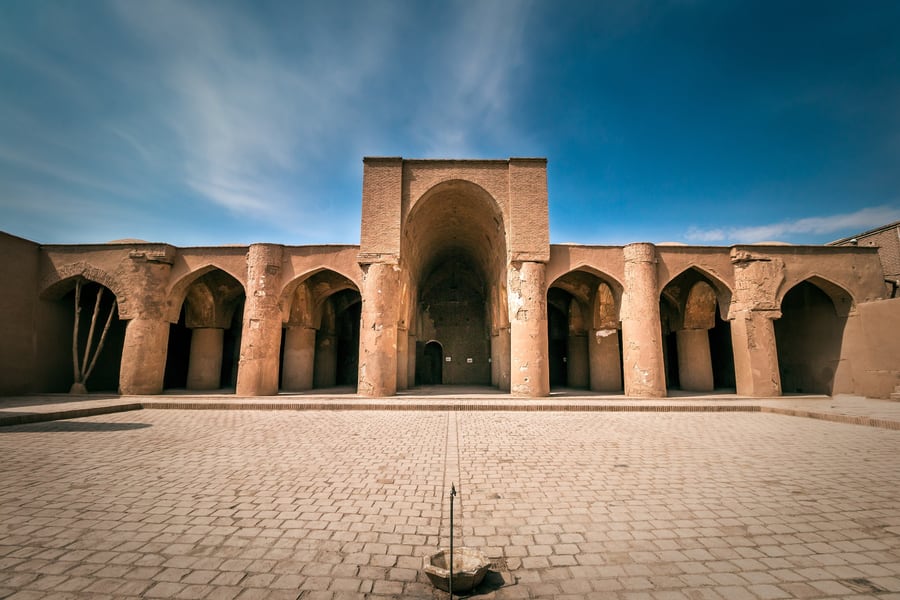 Dardodel / Wikimedia Commons · CC BY-SA 4.0 · 2016 · cropped
Tarikhaneh, Damghan
One of the oldest mosques in Iran, most likely of the 8th century, and built by tradition on the site of a Zoroastrian fire temple. A square courtyard is closed in by barrel-vaulted arcades on round brick piers that look more Sasanian than Islamic. It was among the first buildings on Iran's national heritage list, in 1932, and is still used for prayer.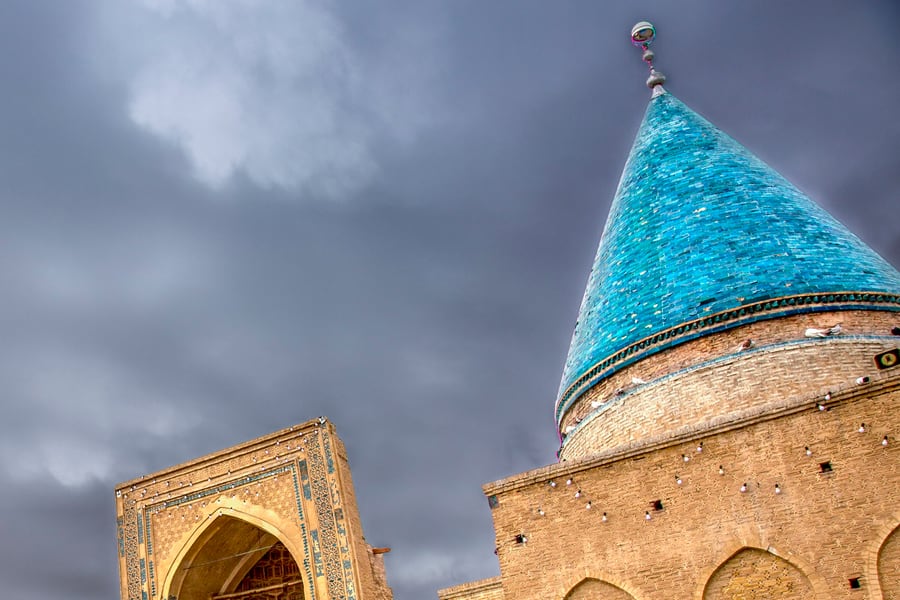 Arosha-photo (Reza Sobhani) / Wikimedia Commons · CC BY-SA 4.0 · cropped
Bastam
Six kilometres north of Shahrud, under the Alborz, a small town built around the tomb of the Sufi master Bayazid Bastami, who died in 874. The shrine complex grew around him from the Seljuk period to the Qajar — tomb, monastery, mosques, a madrasa and the Kashaneh tower — under tall conical roofs of turquoise tile.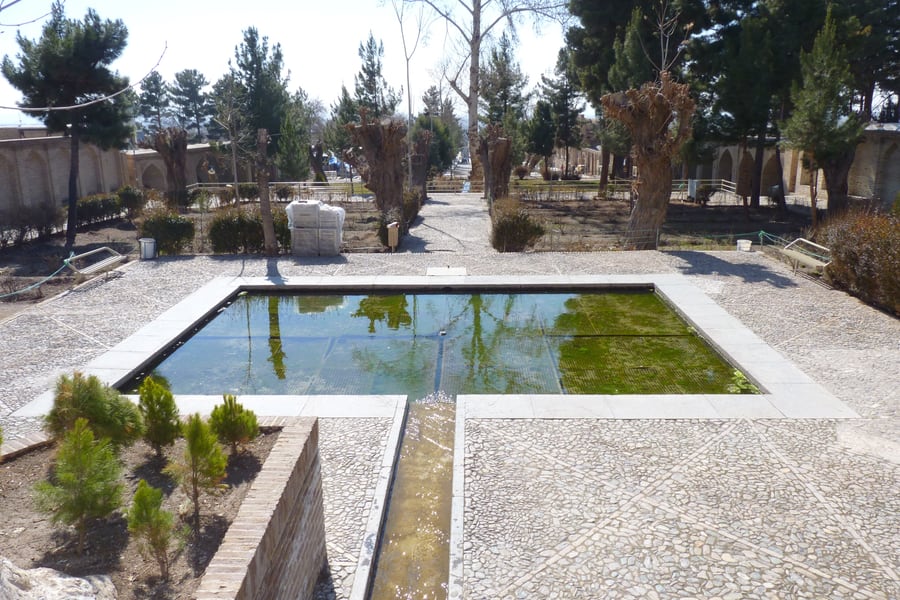 آرمین / Wikimedia Commons · CC0 · 2012 · cropped
Qadamgah, Nishapur
The best known of the qadamgah, the "footstep places" tied to Imam Reza. The shrine was built at Shah Abbas's order in 1611 over an older one, and a stone set in the building is believed to carry the Imam's footprint. Around it is a walled garden of old trees and a long pool — a quiet stop before Mashhad.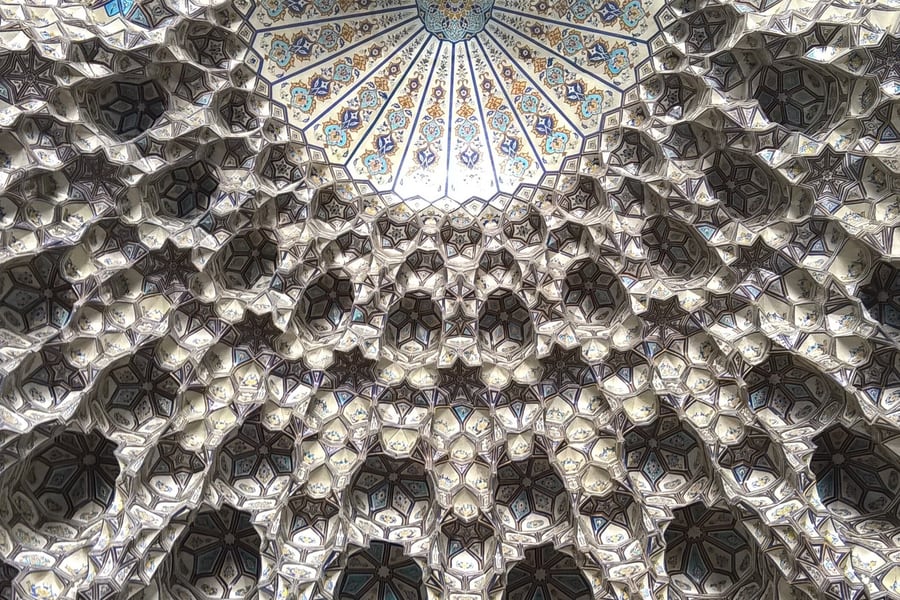 Dr.rezaei 13 / Wikimedia Commons · CC BY-SA 4.0 · 2016 · cropped
The Goharshad Mosque, Mashhad
The great Friday mosque inside the Imam Reza shrine, built from 1418 to about 1430 for the Timurid empress Goharshad, wife of Shah Rukh. It follows the four-iwan courtyard plan; the azure dome and its two minarets each rise about 43 m, and the walls are faced in tile mosaic, with a calligraphy band designed by her son Baysunghur.Where to Sleep
The 07:45 means a night in Tehran before you go; the card below is a central hotel twenty minutes from the station. The two Mashhad cards both link to the hotels' own websites. None of the cards has a photograph: Iran has no freedom of panorama, so a picture of a modern building cannot be published freely.
Around the anniversary of Imam Reza's death the railway has run 26 extra trains to Mashhad, and the city fills with pilgrims. Book rooms early if your dates fall near it.
Where to stay
Ferdowsi International Grand Hotel
Central Tehran, twenty minutes from the station
Twenty-two thousand square metres in the historic and business centre of the city, with five restaurants and its own conference halls.
Check Availability (opens in a new tab, on ferdowsihotel.com)via ferdowsihotel.comDarvishi Royal Hotel
Imam Reza Street, near the shrine
A five-star hotel on Imam Reza Street, with its own spa, restaurants and coffee shops.
Check Availability (opens in a new tab, on darvishiroyal.com)via darvishiroyal.comGolden Palace International Hotel
Qasr-e Talaei, Mashhad
A spa with a pool, sauna and Turkish bath, a bowling and climbing club, and a library.
Check Availability (opens in a new tab, on goldenpalacehotel.ir)via goldenpalacehotel.irPractical information
Which train. Eastbound on the Pardis 370, Tehran 07:45. It is the only train that runs the whole line in daylight all year round.
Which side. Eastbound, the Alborz is on the left, to the north, and the desert is on the right. Sit on the left for the mountains.
Language. The railway, its stations and its ticketing work in Persian. There is no English timetable and no English booking channel. Have the station names written in Persian script — تهران Tehran, دامغان Damghan, نیشابور Nishapur, مشهد Mashhad — and an offline translation app.
Money. Sanctions keep Visa and Mastercard out of Iran entirely. Bring cash to change, or arrange a rial debit card for non-residents.
Season. The trains run all year. Summers on the desert edge are very hot. October is the saffron harvest in Khorasan.
Questions or corrections
Planning this trip and stuck on something, or spotted a time, fare or detail that has changed? Send us a message about Tehran to Mashhad. We read every one, and we update this page when something has changed.