Tehran to Tabriz
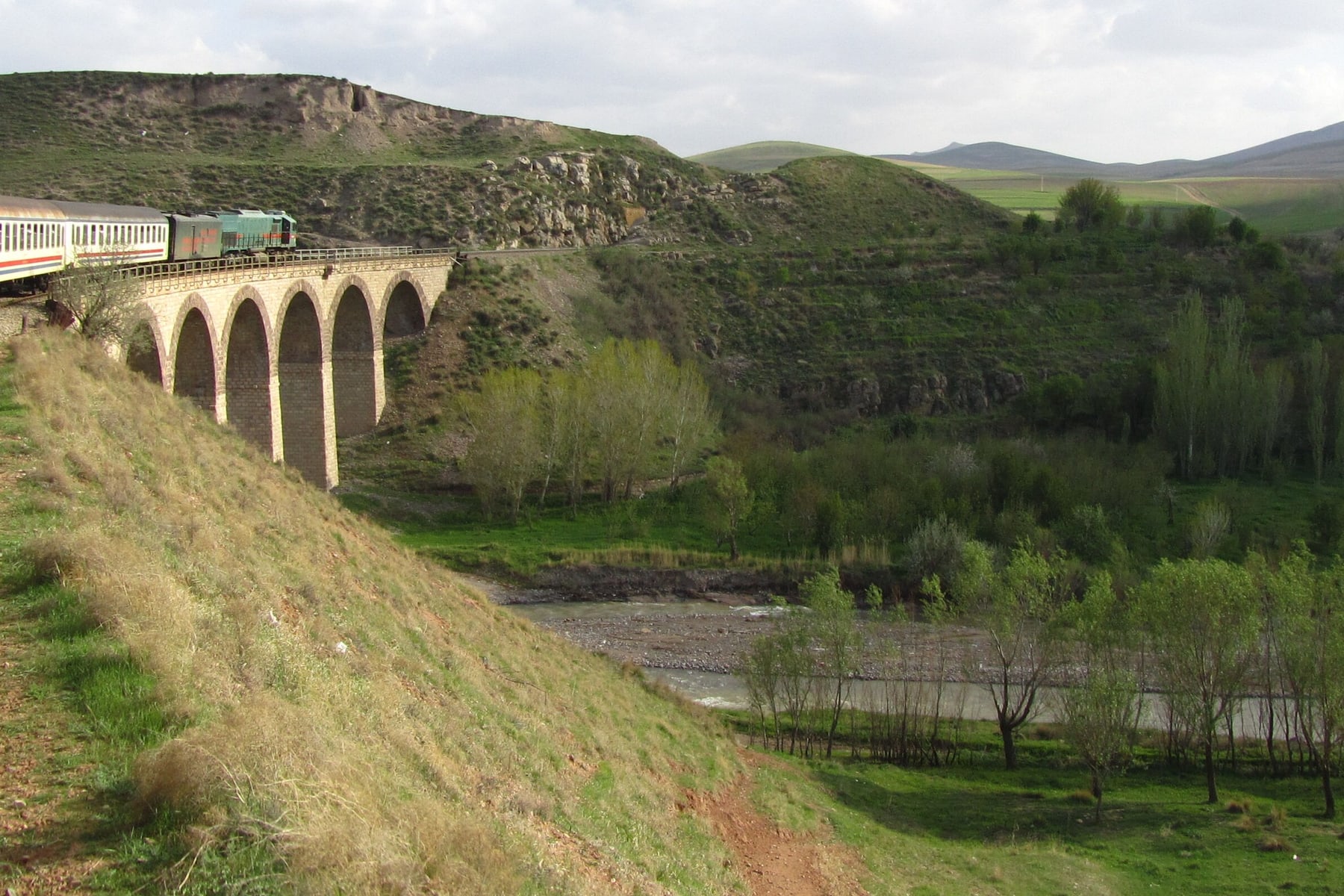
Mehrdad Sarhangi / Wikimedia Commons · CC BY 3.0 · 2011 · cropped
- Distance748 km
- DurationAbout 12 hours, by day on the Van train or overnight
- Best seasonMid-April to August, when the day train runs in daylight end to end
Introduction
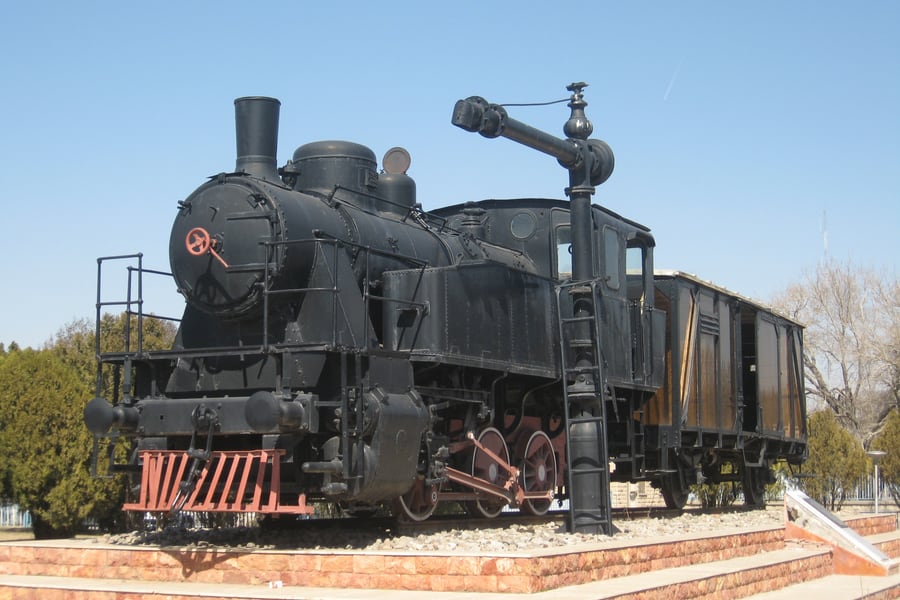
Tabriz is the capital of East Azerbaijan, a city of carpets and one of the great bazaars of the Silk Road. It had a railway long before the capital's line reached it: a Russian-built line from Jolfa brought the first train into Tabriz in 1916, more than forty years before the line from Tehran arrived.
That line opened in 1958 and runs 748 km. It crosses the Qazvin plain past Zanjan, drops into the gorges of the Qezel Ozan at Mianeh, and then takes the long way round: south of Sahand, a volcano of 3,707 m, down the eastern side of Lake Urmia and up into Tabriz. It takes about twelve hours, and almost every train runs overnight.
The exception is international. Twice a week Raja's train from Van, in eastern Türkiye, leaves Tabriz at 06:21 and reaches Tehran at 18:25. It is the only train that runs the whole line by day.
The Journey
The trains leave Tehran westward through Karaj and across the plain at the foot of the Alborz to Qazvin, then on past Takestan and Khorramdarreh to Zanjan. The westbound Van train, which leaves Tehran at 13:30 on Sundays and Wednesdays, reaches Qazvin at about half past three and Zanjan at about half past five.
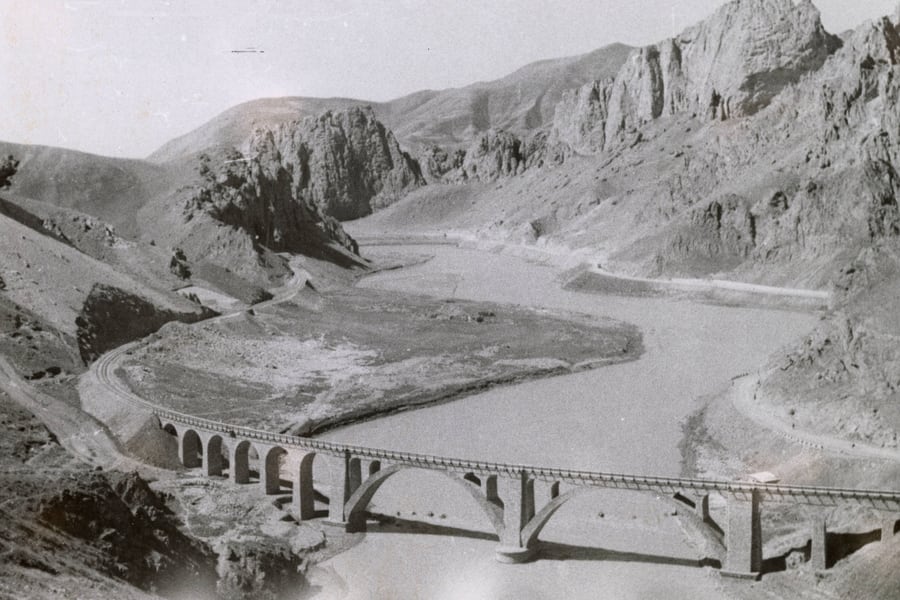
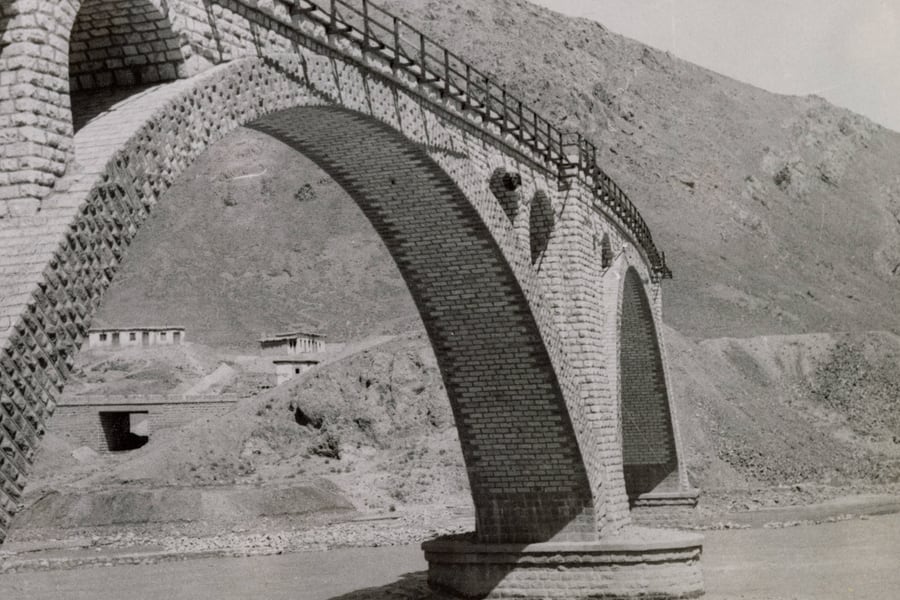
Beyond Zanjan the line comes down to the Qezel Ozan and its gorges. Near Mianeh the railway crosses it on a tall stone arch. US Army engineers photographed the bridges and the Qaflankuh gorge in 1943.
Round Sahand
At Mianeh the line does not head straight for Tabriz. It turns west through Hashtrud and climbs into the hills south of Sahand, through the canyon of the Qaranqu river and over the stone viaduct at Mardaq near Maragheh, a town of medieval tomb towers.
From Maragheh the line turns north, through Ajabshir and Azarshahr on the eastern side of Lake Urmia, with Sahand on the other side of the train, and runs up into Tabriz. A cut-off from Mianeh to Tabriz by way of Bostanabad opened in 2023, but the passenger trains we checked still take about twelve hours, the time the long way round takes.
The trains
Every train on the route in November 2026 was Raja's, with four-berth sleeping compartments. The coaches carry names rather than numbers — Sarir, Novin, Ahoo — and a four-star rating. Most leave in the evening and arrive in the morning.
The Van train is the one to find. It runs Tehran–Tabriz–Salmas–Khoy–Razi and over the Turkish border to Van on Lake Van, about 22 hours with customs at Razi and at Kapıköy, where a Turkish locomotive takes over. The service came back in March 2025 after five years without one. Going west it leaves Tehran at lunchtime and crosses the mountains in the dark. Coming back it leaves Tabriz at 06:21 and runs the whole line by day, reaching Tehran at 18:25.
Along the route
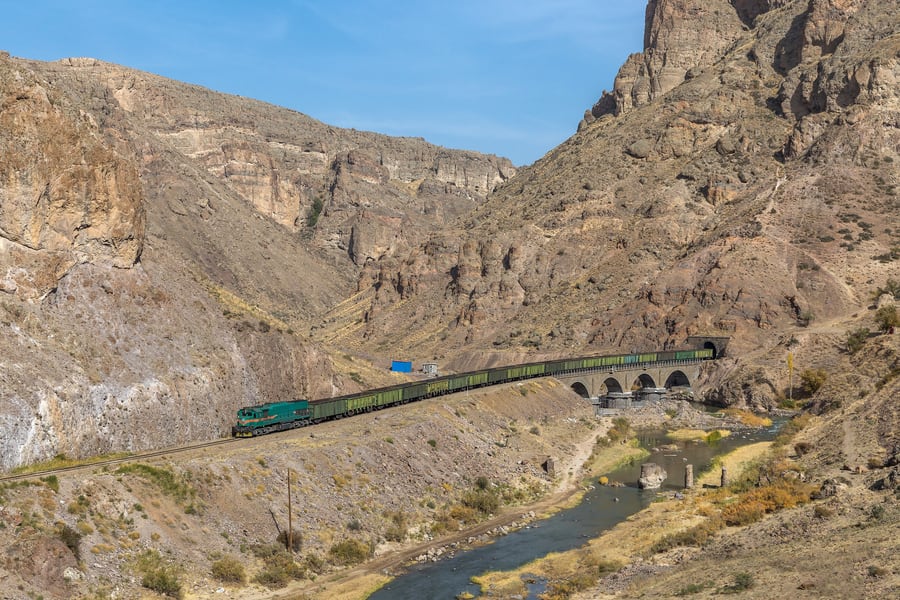
 Nassirihadi / Wikimedia Commons · CC BY-SA 4.0 · 2020 · cropped
The Qezel Ozan at Mianeh
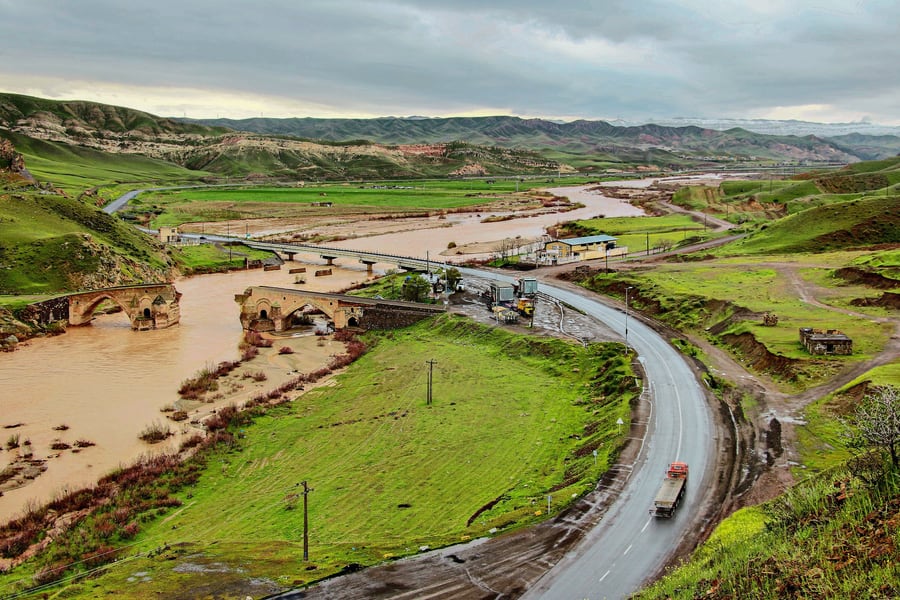
Near Mianeh the railway crosses the Qezel Ozan. The old road crossed it on the three-arched Pol-e Dokhtar, whose central arch was blown up in December 1946 and later rebuilt; it is still standing.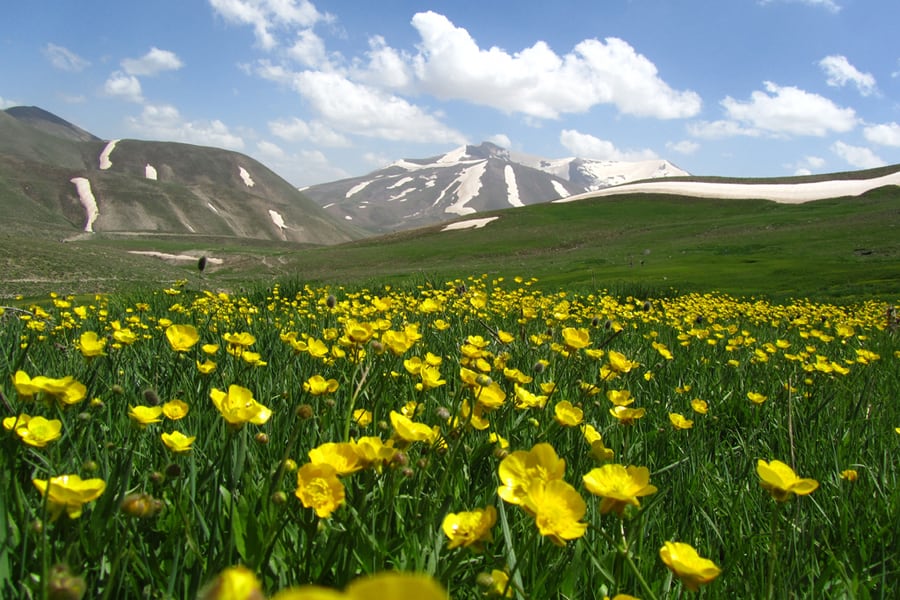 Mehrdad Sarhangi / Wikimedia Commons · CC BY 3.0 · 2011 · cropped
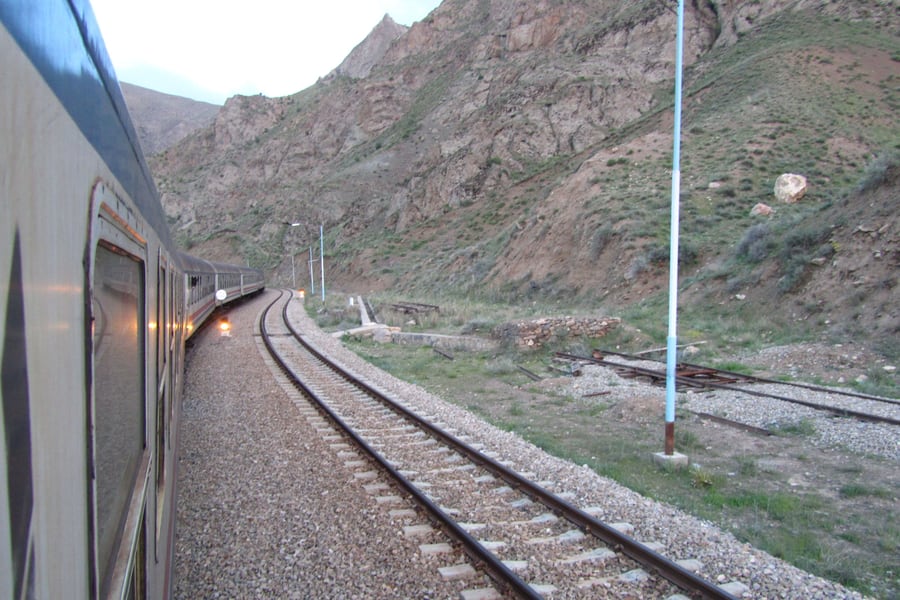
Round the flanks of Sahand
From Hashtrud to Tabriz the line works round Sahand, a heavily eroded volcano of 3,707 m with some seventeen peaks over 3,000 m. In spring its slopes are green and in flower, with snow still lying on the ridges.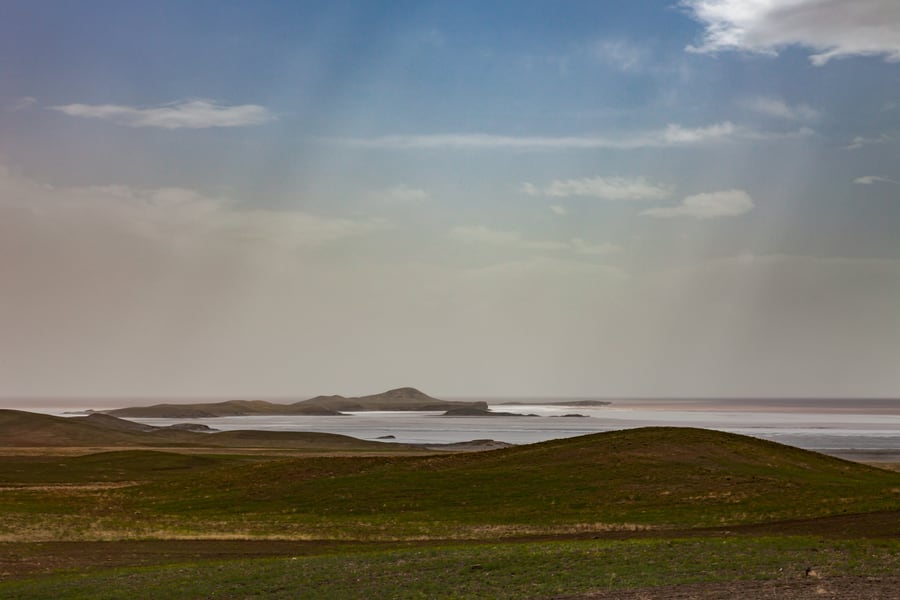 Ninara / Wikimedia Commons · CC BY 2.0 · 2011 · cropped
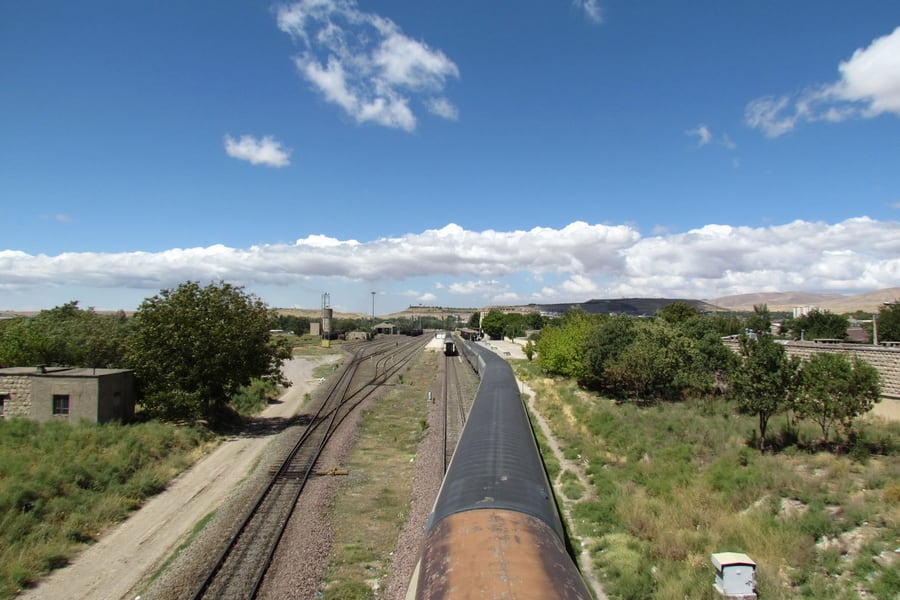
Lake Urmia
Between Maragheh and Tabriz the line runs through Ajabshir and Azarshahr, on the eastern side of Lake Urmia, once the largest lake in West Asia. It had almost dried up by September 2025; early in 2026 it rose to its highest level in five years.A bit of history
Culture & experiences along the way
 Aminlakestani / Wikimedia Commons · CC BY-SA 4.0 · 2017 · cropped
The Bazaar of Tabriz
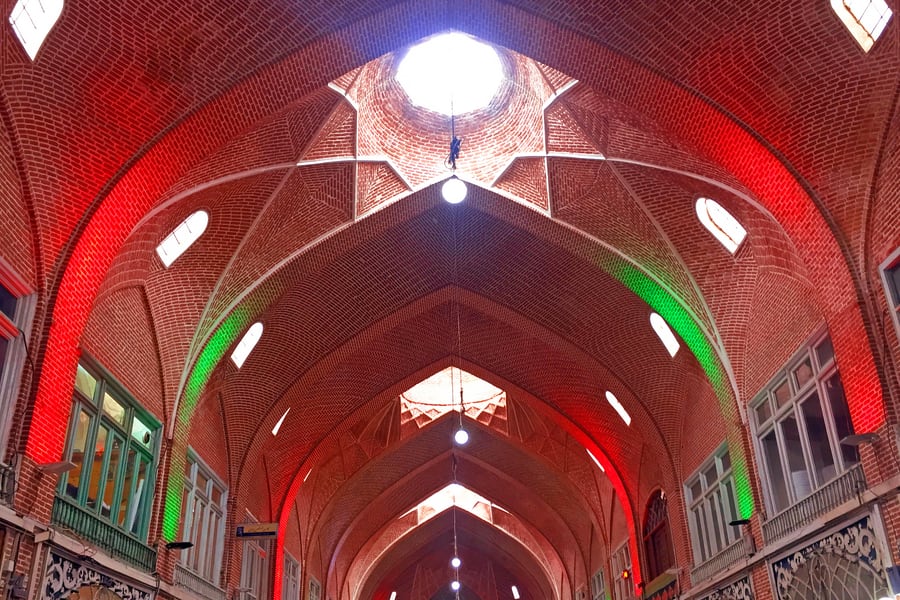
One of the oldest bazaars in the Middle East, under brick vaults that run for street after street, each row for its own trade: gold in the Amir bazaar, hand-woven carpets in the Mozaffariyeh, sorted by knot. Marco Polo described it; UNESCO listed it in 2010.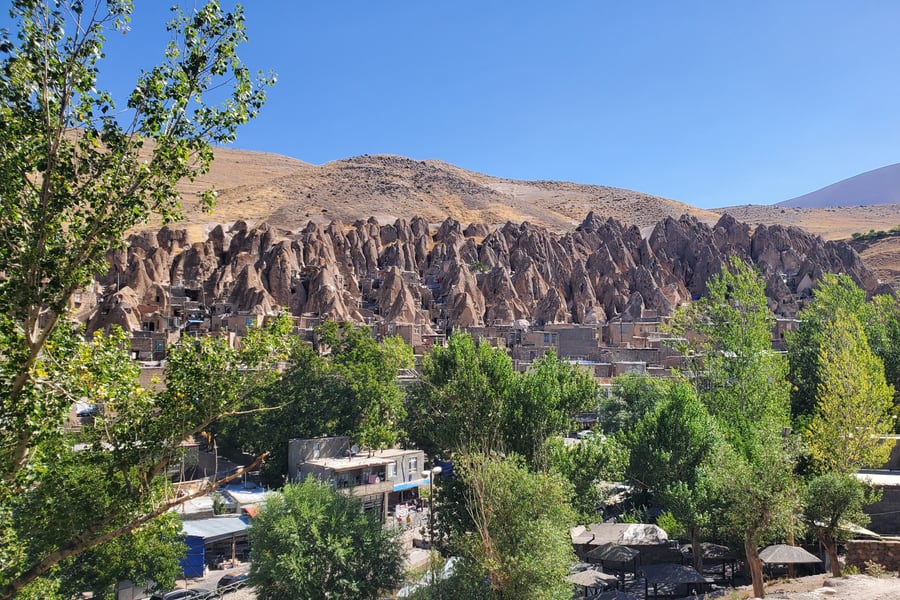 Rəcəb Yaxşı / Wikimedia Commons · CC BY-SA 4.0 · 2022 · cropped
The cliff houses of Kandovan
In the foothills of Sahand, near Osku, people still live in homes cut into cones of volcanic tuff, some 30 to 40 m tall. The cones are the eroded ash of Sahand's eruptions, and the gullies between them are the village streets.Timetables
Raja runs every train on the route. We read the seller's board for each day from 11 to 20 November 2026; the day departures below kept the same times on every date they ran. The night trains did not, so their pattern is given in words.
Tabriz to Tehran
| Train | Days | Tabriz | Mianeh | Tehran |
|---|---|---|---|---|
| Van–Tehran | Tue, Fri | 06:21 | 18:25 | |
| Tabriz–Mashhad | most days | 11:40 | 17:37 | 00:35 |
Take the 06:21. It is the only train that covers the whole line in daylight, roughly from mid-April to the end of August; in winter it leaves Tabriz before sunrise. It was sold out on every date we read, so book as early as you can. The 11:40 runs on most days and crosses the mountains between Tabriz and Mianeh by day, then continues overnight to Tehran and on to Mashhad.
Tehran to Tabriz
| Train | Days | Tehran | Qazvin | Zanjan | Tabriz |
|---|---|---|---|---|---|
| Tehran–Van | Sun, Wed | 13:30 | 15:31 | 17:34 | 02:00 |
The Tehran–Van train sees the plain as far as Zanjan by day and the mountains in the dark. It goes on to Van, arriving at 12:25.
The night trains. On most days a sleeper leaves each end in the evening: from Tehran at 18:30 or 20:17, from Tabriz at 16:15 or 17:25, taking twelve to thirteen and a half hours. Which runs, and when, changes from day to day, so check your date.
The eastern half by day. On 17 November a Saba seated train left Mianeh at 05:25 and reached Tehran at 12:10.
As of November 2026. Times and seats: alibaba.ir/train/TBZ-THR (opens in a new tab).
Tickets
Fares are in toman, ten rials to the toman. A berth in a four-berth compartment between Tehran and Tabriz is 1,880,000 toman, on the Van train and the night sleepers alike; Tabriz to Mianeh is 963,900. In November 2026 alibaba.ir was selling most of these trains 13 to 14 per cent below the full fare.
Tickets are sold online by Iranian agencies such as alibaba.ir, in Persian. Visa and Mastercard do not work in Iran, so pay in cash, with a Central Bank rial card for non-residents, or through an Iranian agency. The Van train was sold out on every date we read, so buy as soon as your dates are fixed.
Book your tickets
The Van train, by day
Tabriz 06:21, Tehran 18:25 — Tuesdays and Fridays
A berth in a four-berth compartment on the only train that runs the whole line in daylight.
Book Tickets (opens in a new tab, on alibaba.ir)via alibaba.irThe afternoon train from Tabriz
Tabriz 11:40, Mianeh 17:37 — most days
A four-berth sleeper that crosses the mountain half by day and reaches Tehran after midnight.
Book Tickets (opens in a new tab, on alibaba.ir)via alibaba.irThe night sleeper
Four-berth compartments, most evenings
Raja's overnight trains in both directions, twelve to thirteen and a half hours end to end.
Book Tickets (opens in a new tab, on alibaba.ir)via alibaba.irRail Passes
No rail pass covers Iran. Interrail's One Country Pass list, checked in November 2026, includes Türkiye but not Iran, and there is no Iranian national multi-journey ticket either.
A Türkiye pass does not help on this page: it covers the Turkish railway, not the Iranian part of the Van train. Here what matters is buying early.
Places to Visit
The line passes four cities with monuments older than any railway. The places below run in the order a train from Tehran reaches them, ending in Tabriz.
 Blondinrikard Fröberg / Wikimedia Commons · CC BY 2.0 · 2018 · cropped
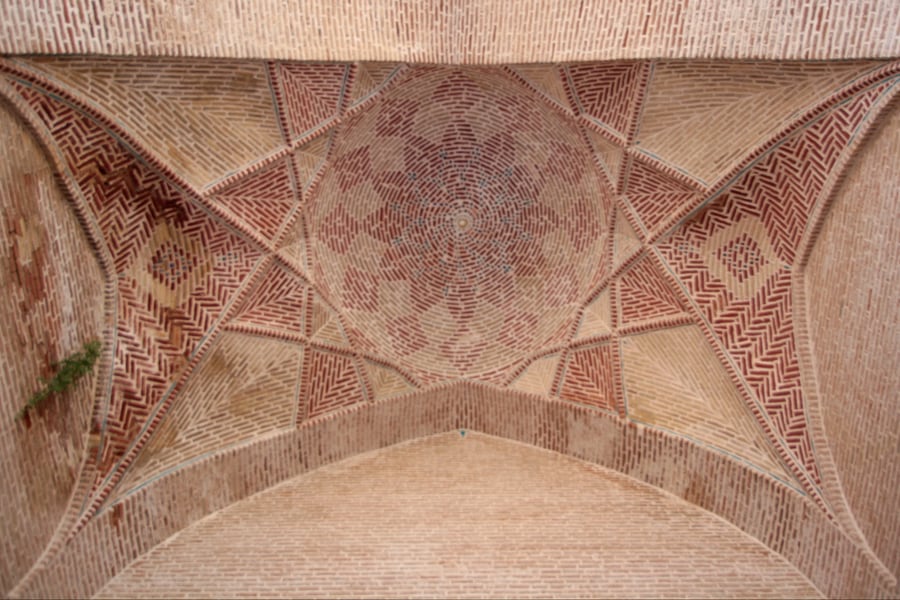
The Jameh Mosque, Qazvin
One of the oldest mosques in Iran: its first part is said to have been built on the orders of Harun al-Rashid in 807, by tradition on the site of a Zoroastrian fire temple. The double-shelled main dome is Seljuk, and the rest was added piece by piece up to the late Safavid years. Look up inside, at brick vaults laid in patterns. Part of the complex burned in January 2013.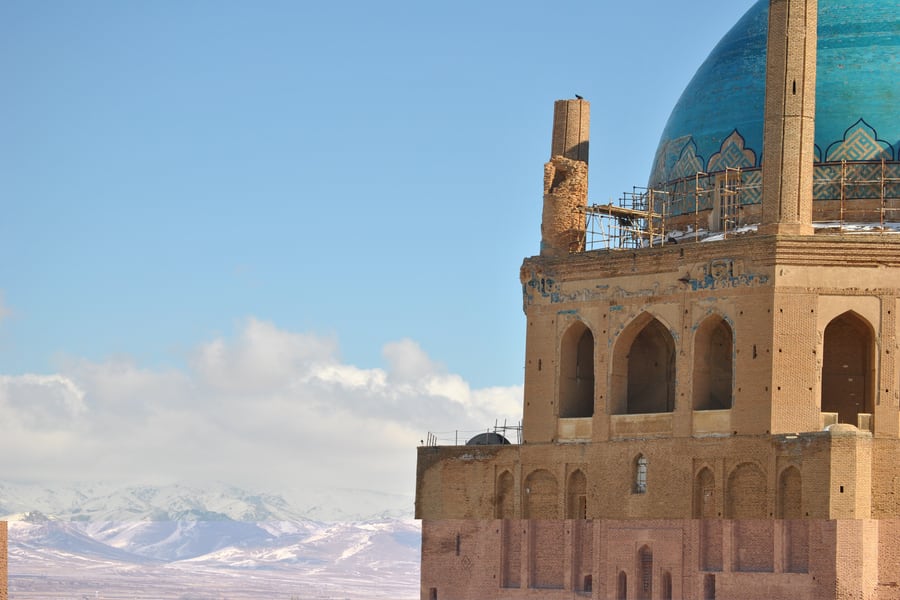 Jamshydf / Wikimedia Commons · CC BY-SA 4.0 · 2010 · cropped
The Dome of Soltaniyeh
South-east of Zanjan, on the plain, stands the mausoleum of the Ilkhanid ruler Öljaitü, built between 1307 and 1313. Its double-shelled dome, almost 25 m across and about 50 m high, is one of the largest brick domes in the world. The tile and painted plaster inside survive far better than the outside. It is a UNESCO World Heritage Site and is still under restoration.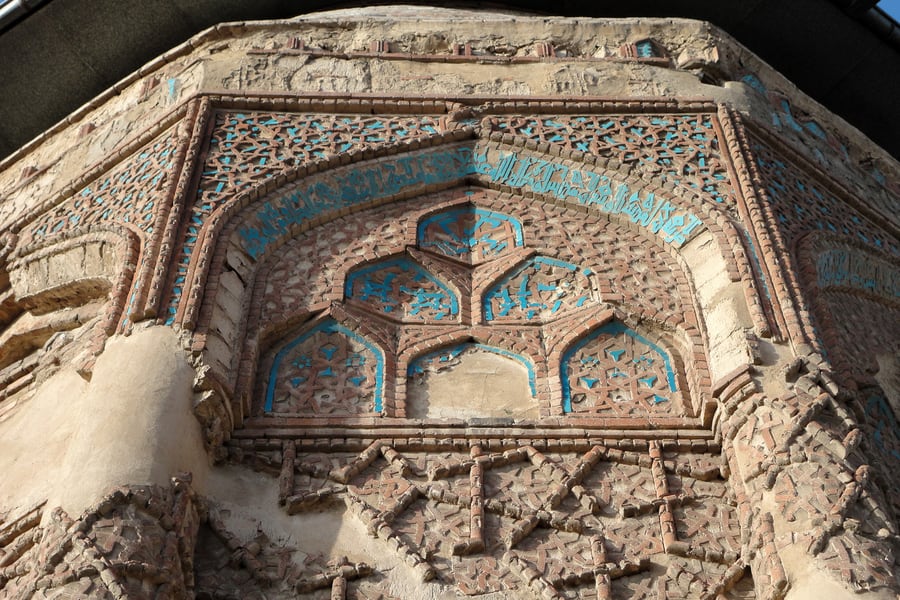 Nassim Hosseini / Wikimedia Commons · CC BY-SA 4.0 · 2011 · cropped
Gonbad-e Kabud, Maragheh
The "Blue Tomb", a ten-sided tomb tower in brick, most often dated to 593 AH (1196–97). Its conical roof is gone, but the walls are still covered in geometric brick patterns, with rows of muqarnas and inlaid turquoise tile. Local tradition calls it the tomb of Hulagu Khan's mother, which no one has proved. Hulagu also began Maragheh's observatory, in 1259.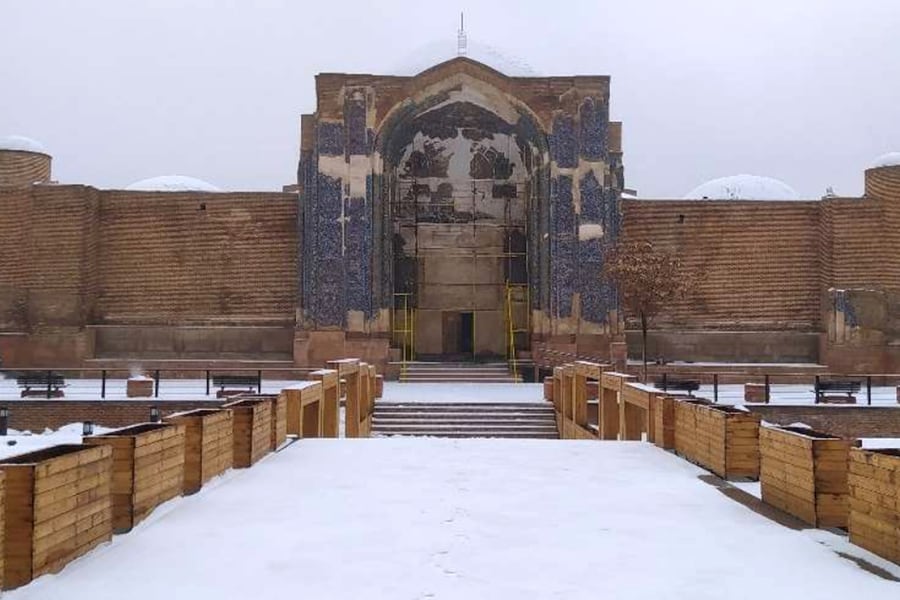 Ahad Nejad Ebrahimi, Aylar Javadpour / Wikimedia Commons · CC BY-SA 4.0 · 2023 · cropped
The Blue Mosque, Tabriz
Finished in 1465 under the Qara Qoyunlu, and the last example in the city of the Turkmen style of building and tilework: cobalt and turquoise mosaic, much of it gilded. An earthquake in 1780 left little more than the entrance iwan standing. Rebuilding began in 1973 and was still unfinished in 2025; the shell is now a museum near the bazaar.Where to Sleep
The 06:21 from Tabriz means a night in Tabriz before you go. One card below is a hotel by El-Goli park; the other is in the cliff village of Kandovan, for a night in a room cut into the rock. Neither Tabriz hotel has a website of its own that we could open, so both cards link to the hotel's page on alibaba.ir. The Tehran card links to the hotel's own site.
None of the cards has a photograph: Iran has no freedom of panorama, so a picture of a modern building cannot be published freely.
Where to stay
Ferdowsi International Grand Hotel
Central Tehran, twenty minutes from the station
Twenty-two thousand square metres in the historic and business centre of the city, with five restaurants and its own conference halls.
Check Availability (opens in a new tab, on ferdowsihotel.com)via ferdowsihotel.comPars El-Goli Hotel
Beside El-Goli park, Tabriz
Next to El-Goli park, a few minutes' walk from the El-Goli metro station.
Check Availability (opens in a new tab, on alibaba.ir)via alibaba.irLaleh Kandovan Rock Hotel
In the cliff village of Kandovan
Rooms cut into the rock of Kandovan village, some with their own jacuzzi, about forty minutes' drive from central Tabriz.
Check Availability (opens in a new tab, on alibaba.ir)via alibaba.irPractical information
Which train. Tabriz to Tehran on the Van train, 06:21 on Tuesdays and Fridays, roughly from mid-April to the end of August. It is the only train that runs the whole line in daylight.
Which side. Leaving Tabriz southward, Lake Urmia is on the right and Sahand on the left.
Language. The railway, its stations and its ticketing work in Persian. There is no English timetable and no English booking channel. Have the station names written in Persian script — تهران Tehran, زنجان Zanjan, میانه Mianeh, مراغه Maragheh, تبریز Tabriz — and an offline translation app.
Money. Sanctions keep Visa and Mastercard out of Iran entirely. Bring cash to change, or arrange a rial debit card for non-residents.
Season. The trains run all year. Tabriz has cold winters with snow; from late autumn to early spring the early and late hours of the Van train are dark.
Questions or corrections
Planning this trip and stuck on something, or spotted a time, fare or detail that has changed? Send us a message about Tehran to Tabriz. We read every one, and we update this page when something has changed.