The Douala to Yaoundé Express
Fotsingboris / Wikimedia Commons · CC BY-SA 4.0 · 2015
- Distance264 km, Douala to Yaoundé
- Duration4 h 40
- Best seasonDaily in both directions, all year
Introduction
The railway between Douala and Yaoundé was never meant to go to Yaoundé. The Germans began it at Douala in 1908 as the Mittellandbahn, and they aimed it at Mbalmayo, a town on the Nyong where the river was navigable for 250 km and steamers were already working. The rails had reached Eséka when the First World War stopped the work. France took over the colony, chose Yaoundé as its capital in 1922, and bent the line towards the new seat of government; trains reached it on 15 August 1927. Mbalmayo, the original goal, was given a 600 mm branch.
So the train that now runs between Cameroon's two great cities is a railway that followed the capital rather than one that made it. Camrail's Train Express, TE185 and TE186, leaves Douala at 06:30 and Yaoundé at 17:00 every day of the year, covers the 264 km in 4 h 40, and calls only five times on the way — Edéa, Messondo, Eséka, Makak and Ngoumou — for two minutes each.
It is a long, conventional train of eleven cars: four first class, four Premium, a bar-restaurant, a generator van and a van for parcels and luggage. The cars are air-conditioned and fitted with power sockets, and the Premium fare of 6,000 FCFA was set in 2021 at the level of the air-conditioned coaches on the highway — with the difference that the train ends in the middle of Douala, not in the traffic at its edge.
The Journey
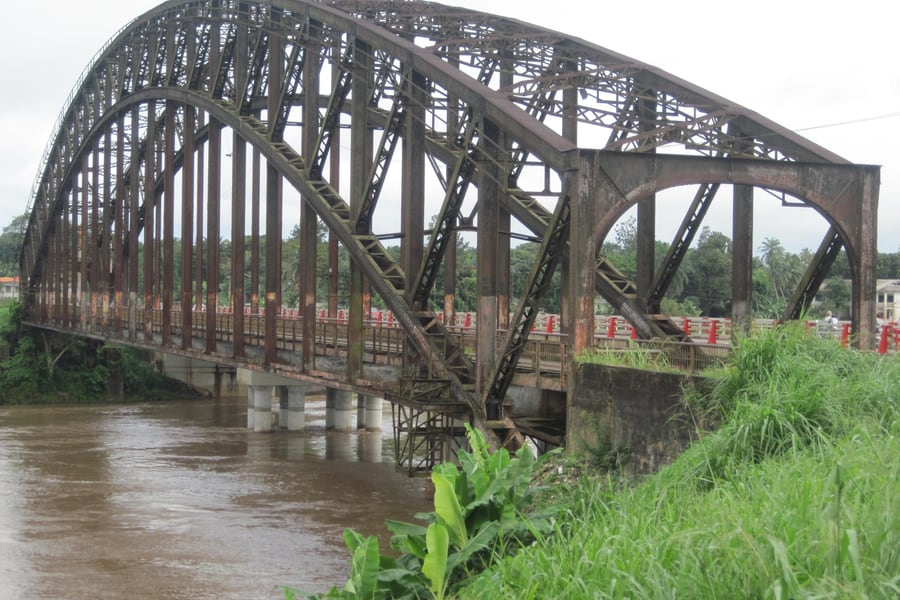
The morning train leaves Douala Bessengué at half past six and heads east out of the city across the coastal plain, the estuary country of the Wouri behind it. Its first stop is the Sanaga at Edéa, the largest river in Cameroon, which divides here around an island and is crossed in two bridges. The southern arm runs up to 26 metres deep in flood, which is why the German engineers of 1911 spanned it without a single pier. Their bridge still stands beside the railway's present one, lent support by the newer piers.
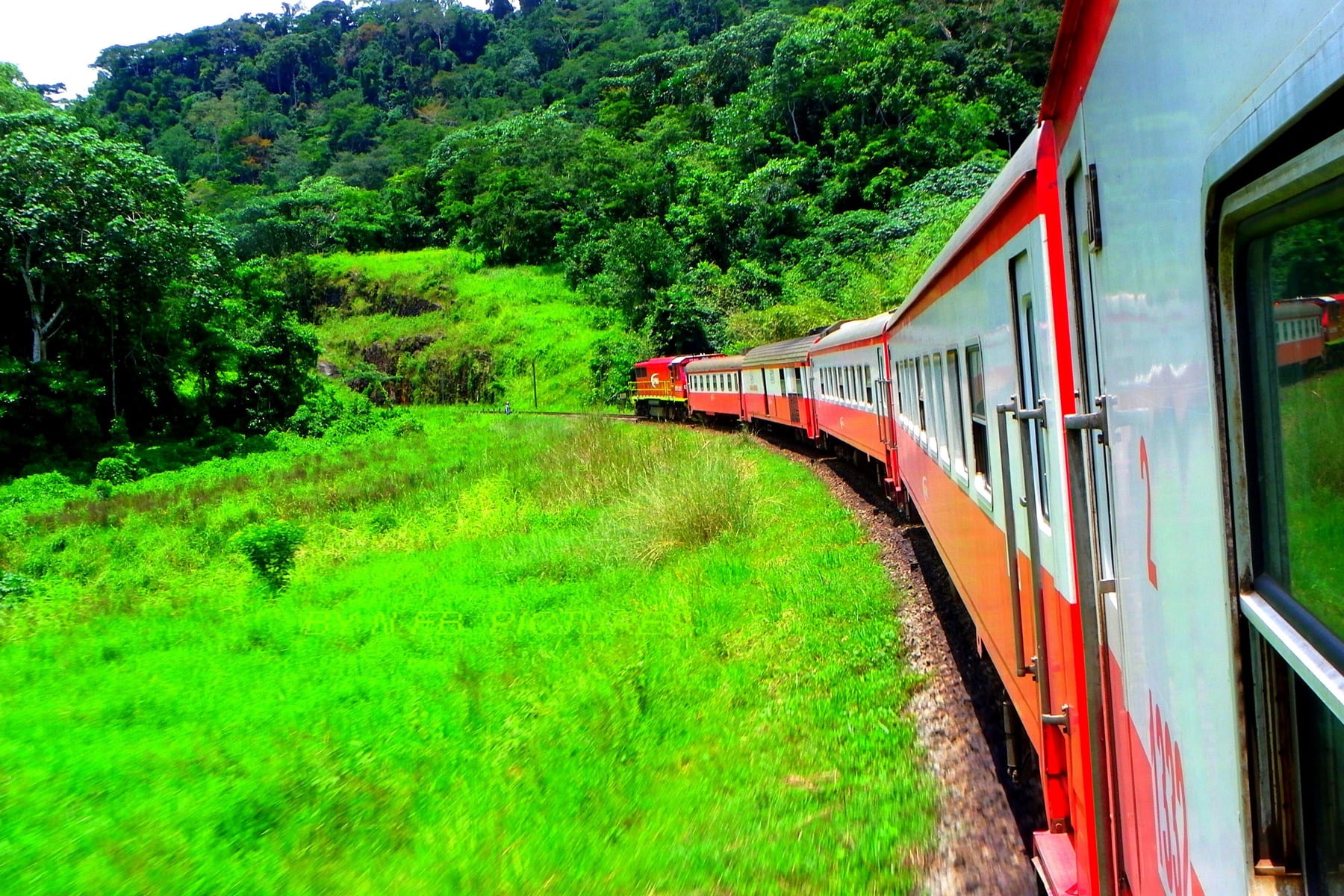
Beyond Edéa the line climbs into the Bassa country, and this is the stretch to stay awake for: a long run through forest, the cars curving round hillsides thick with trees, as in the photograph at the top of this page, taken from a Yaoundé–Douala train in 2015. Messondo and Eséka come in the middle of it. Eséka was the German railhead in 1914, and a 600 mm line ran on from there to Makak, now the next stop on the express. After Makak and Ngoumou the forest opens out, the houses thicken, and the train runs into Yaoundé, about 750 metres above the sea it left, a little after eleven.
A railway that has been straightened
The line the express uses is not quite the line the Germans and the French built. Between 1975 and 1983 parts of the lower section were laid on a new alignment, partly with money from the German development bank KfW. The rebuilding cut 48.4 km from the route and brought the timetable between the two cities down from nine hours to six and a half. The express, with five stops of two minutes each, does it in 4 h 40.
The train
Camrail's description of the express is eleven cars: four first-class, four Premium, a bar-restaurant, a generator van and a van for parcels and luggage. The cars are air-conditioned and fitted with power sockets and television screens, and the bar-restaurant serves meals and drinks through the run. First and Premium are the only two classes sold.
The locomotive is whatever Camrail's depot provides; its passenger and freight fleets are not separate. When the service was launched on 1 July 2021, the government handed over four new locomotives at Yaoundé on the day of the first run, to add to nine others recently bought.
Along the route
 Mrndjock / Wikimedia Commons · CC BY-SA 3.0 · 2013 · cropped
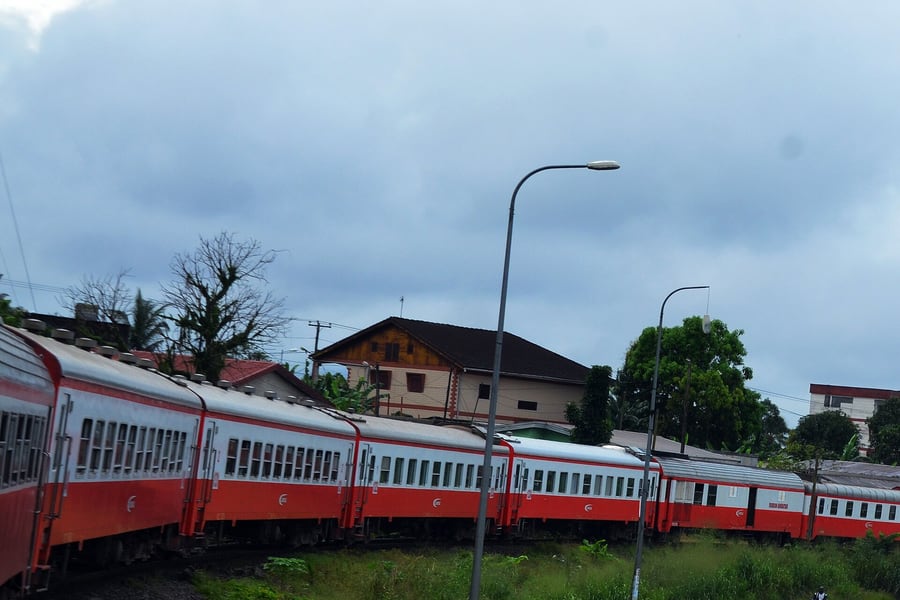
The bridge that leans on its successor
At Edéa the 1911 bridge crossed the Sanaga's deep southern arm in a single 159.6-metre span, longer than the Victoria Falls Bridge. It now carries walkers and cyclists, propped on the piers of the road and rail bridges built beside it.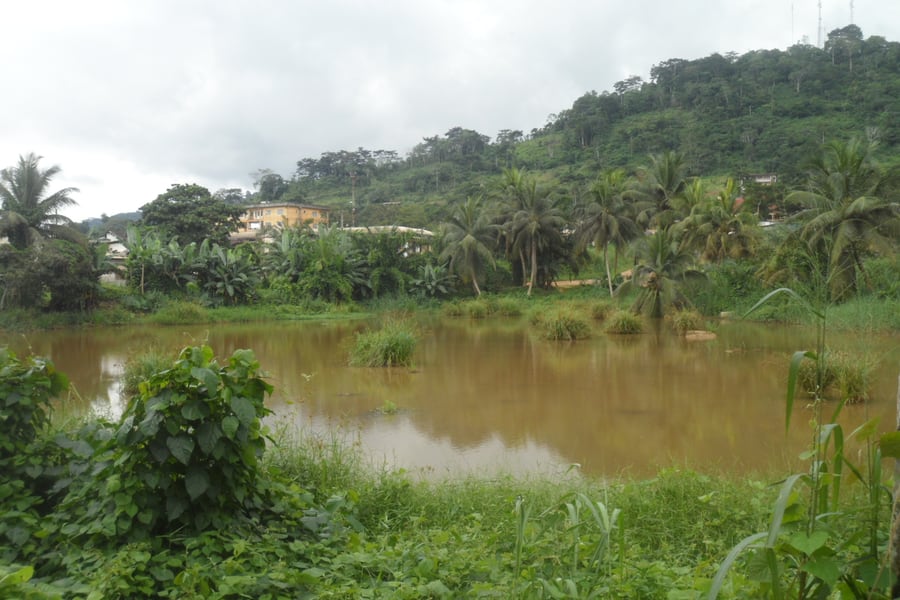 Eric Freyssinge / Wikimedia Commons · CC BY-SA 4.0 · 2016 · cropped
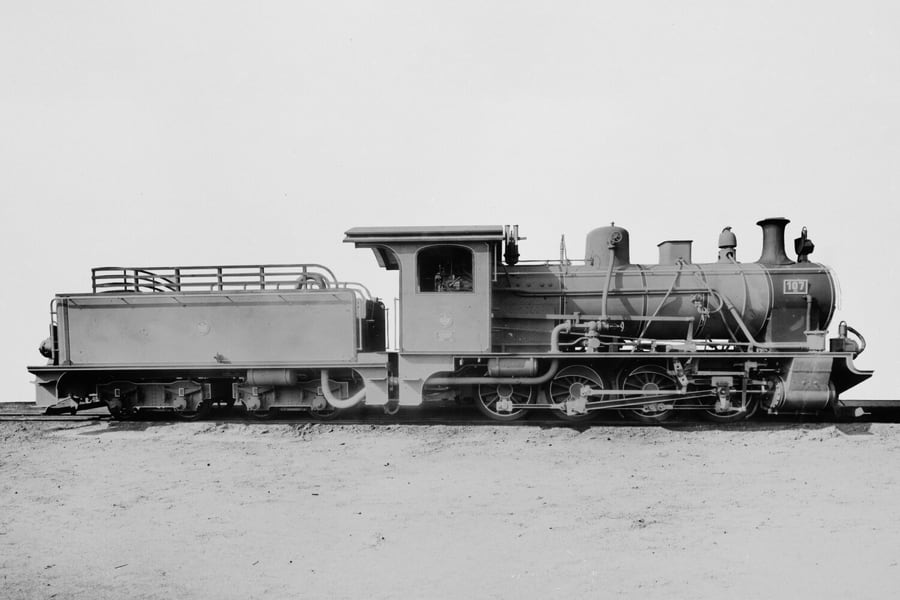
Where the German railhead stopped
The rails reached Eséka on 17 June 1914, weeks before the war halted the work. A 600 mm line carried on for 40 km to Makak, and the express now stops at both.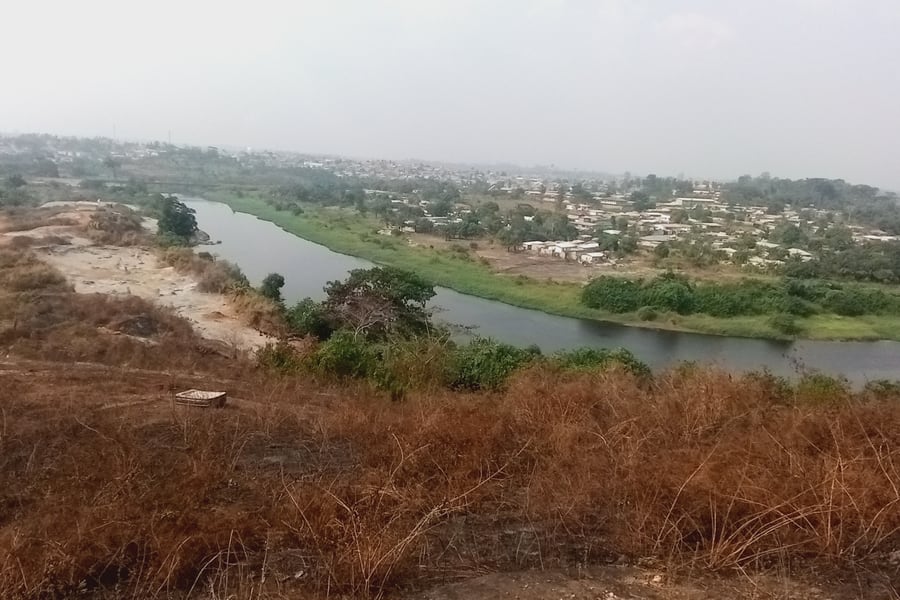 Kamtoh Frederic / Wikimedia Commons · CC BY-SA 4.0 · 2021 · cropped
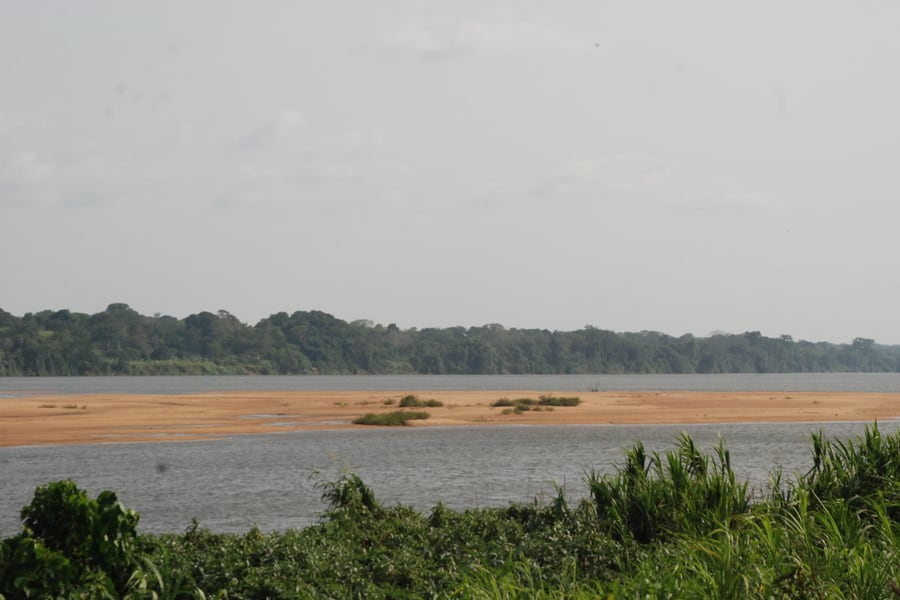
The river it was built for
The line was aimed at Mbalmayo on the Nyong, where steamers already worked 250 km of river. When the French bent it towards Yaoundé, Mbalmayo got a 600 mm line from Otélé instead.A bit of history
Culture & experiences along the way
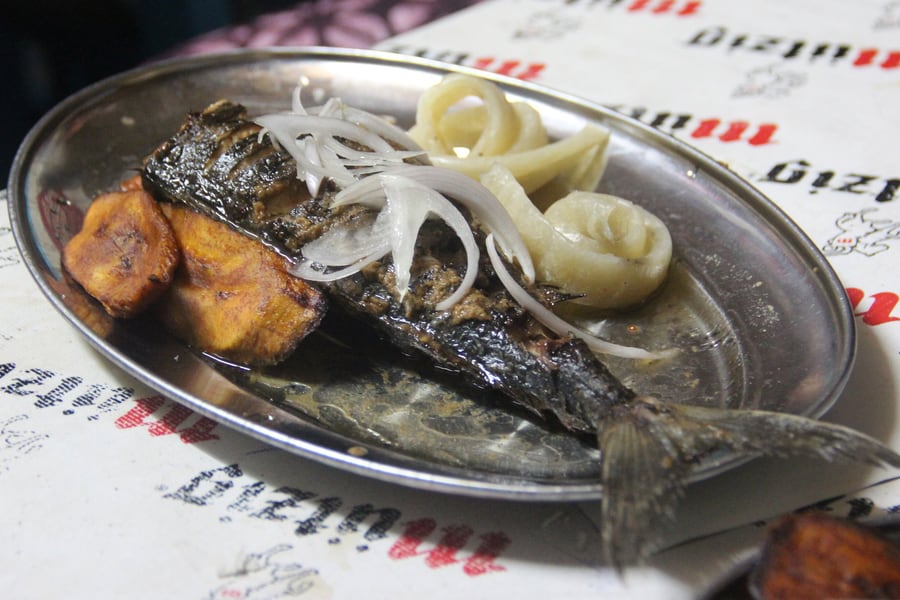 GuillaumeG / Wikimedia Commons · CC BY-SA 3.0 · 2013 · cropped
Miondo, the coast's cassava
The Sawa peoples of the coast soak, sieve and roll cassava into a paste, wrap it in leaves and steam it into miondo: thin, springy sticks that keep for days and are peeled and eaten with the fingers. They go with ndolé, with sauces, and in Douala's grill-houses with braised fish and fried plantain.Timetables
One express runs each way, every day of the year: out of Douala in the early morning, back from Yaoundé in the late afternoon.
| Train | Route | Departs | Arrives |
|---|---|---|---|
| TE185 | Douala Bessengué → Yaoundé | 06:30 | about 11:10 |
| TE186 | Yaoundé → Douala Bessengué | 17:00 | about 21:40 |
Camrail gives the journey time as 4 h 40 and publishes departures rather than arrivals, so the arrival times above are the departure plus that figure. The express calls at Edéa, Messondo, Eséka, Makak and Ngoumou, for two minutes each.
The line has slower trains too. Train 181 leaves Douala at 07:30 and train 184 leaves Yaoundé at 08:15, daily; they run as semi-fast trains five days a week, in about eight hours, and as all-stations omnibuses on the other two, in twelve to thirteen. They carry second class only.
TE185 connects in Yaoundé with the overnight sleeper to Ngaoundéré, which leaves at 19:50.
The selling system showed the 06:30 and 17:00 departures on every date checked from 23 November to 3 December 2026. Confirm on camrail.cm (opens in a new tab) before travelling.
Times as of November 2026.
Tickets
Tickets are sold on Camrail's own platform at mycamrail.cm (opens in a new tab), paid by mobile money, and at the station counters in Douala and Yaoundé. Camrail has warned that a counterfeit Facebook page and a fake booking form have taken money in its name; its own websites and its guichets are the only official sources.
Two fares cover the run, the same in either direction: Premium at 6,000 FCFA and first class at 9,000 FCFA. The booking system returned those figures on every date checked.
Fares as of November 2026.
Book your tickets
Premium class
Douala to Yaoundé, either way
A seat in one of the express's four air-conditioned Premium cars.
Book Tickets (opens in a new tab, on mycamrail.cm)via mycamrail.cmFirst class
Douala to Yaoundé, either way
A seat in one of the four first-class cars, next to the bar-restaurant.
Book Tickets (opens in a new tab, on mycamrail.cm)via mycamrail.cmRail Passes
No rail pass covers Cameroon, and Camrail sells no multi-journey ticket of its own for this line.
What it does run, on this train only, is a loyalty scheme: after ten journeys on the express, the next one is free. For anyone travelling between the two cities once, the ordinary fare is the whole story.
Checked November 2026.
Places to Visit
The express runs between Cameroon's economic capital and its political one, and both are worth a day. In between, the stops are working towns rather than destinations, and the train does not wait long enough at any of them to look round. Edéa, on the Sanaga, is the one worth a separate visit.
Cameroon has no freedom of panorama, so the photographs here show the rivers and the hills rather than the cities' buildings.
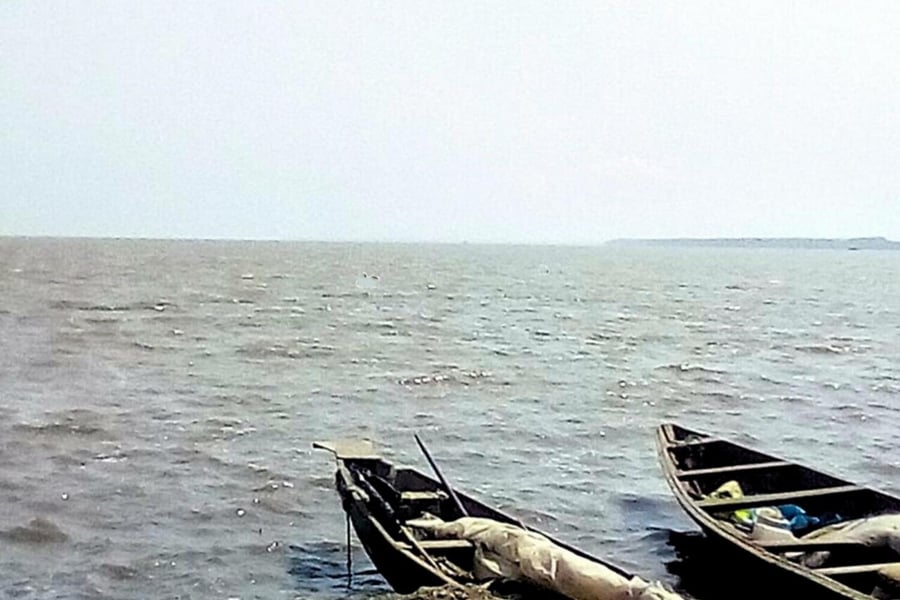 Achking / Wikimedia Commons · CC BY-SA 4.0 · 2018 · cropped
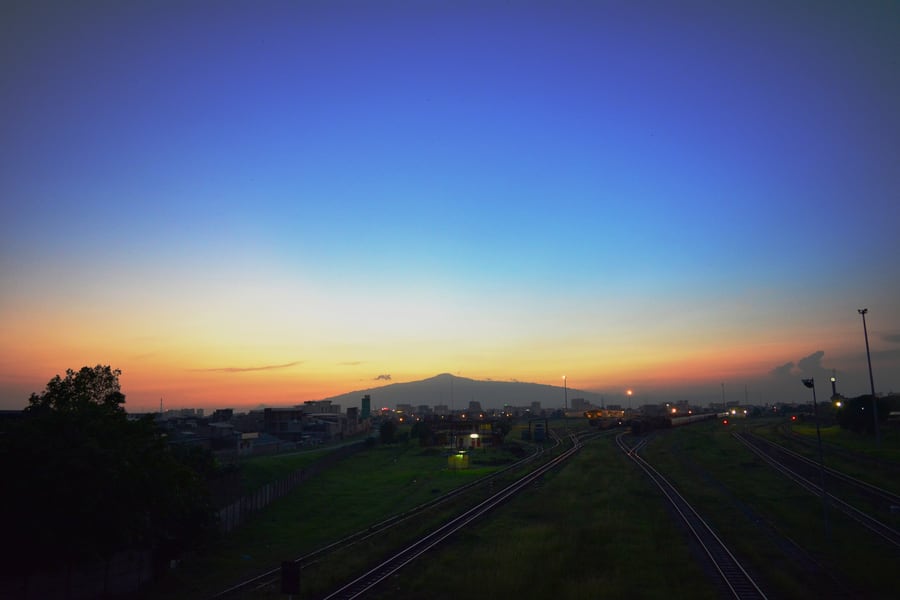
Douala
Cameroon's largest city and its economic capital, spread along the Wouri estuary. Its port handles most of the country's exports — oil, cocoa, coffee, timber — and is the sea end of the rail and road corridor to N'Djamena. The express leaves from Bessengué, the main station, and on a clear evening Mount Cameroon shows above the tracks to the north-west.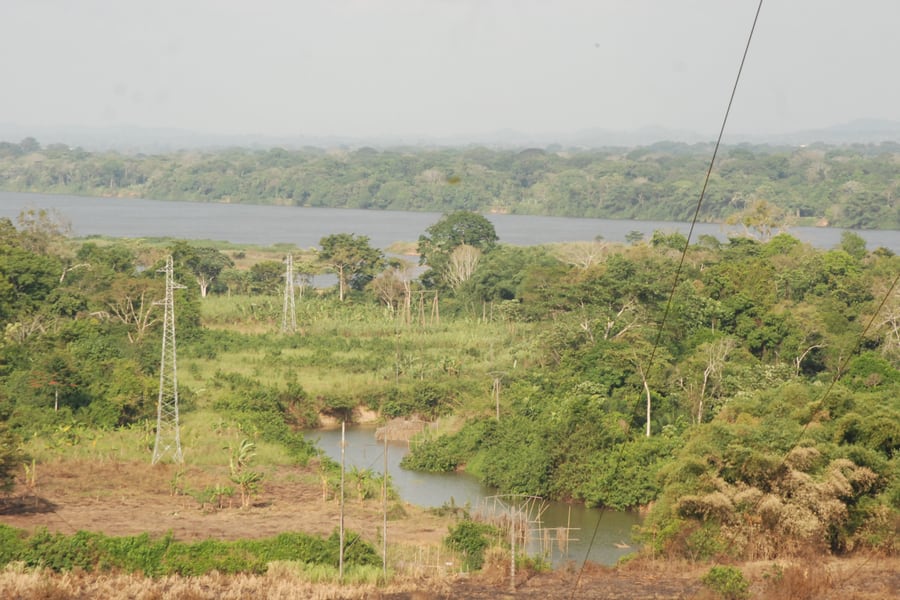 Photokadaffi / Wikimedia Commons · CC BY-SA 4.0 · 2013 · cropped
Edéa
The first stop, a town on the Sanaga that the railway reached in 1912. The river breaks into falls and rapids here, and the hydroelectric station that powers the town stands on them. Palm oil is the other living — Socapalm has worked a plantation outside town since 1969 — and the Douala-Edéa National Park lies between the town and the sea.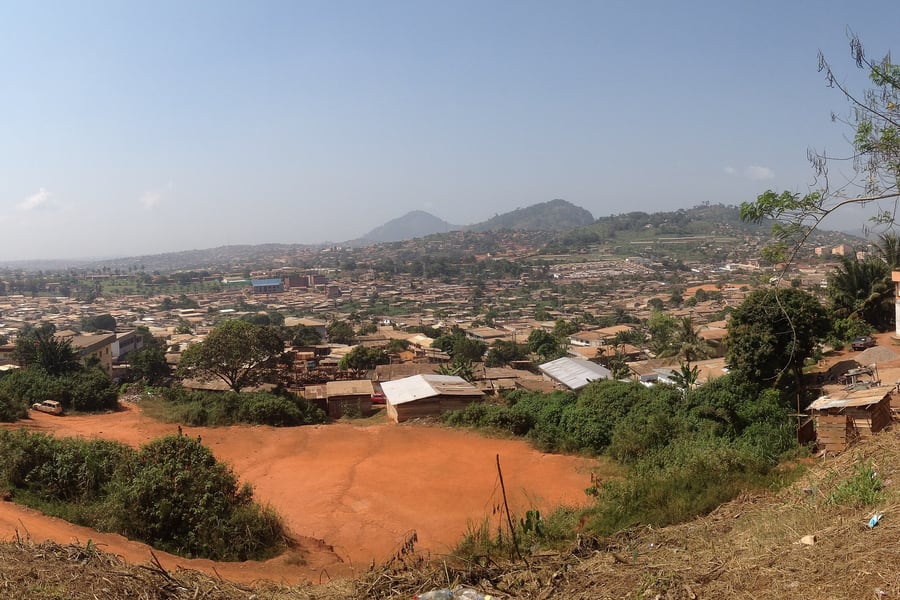 Bdx / Wikimedia Commons · CC BY-SA 4.0 · 2014 · cropped
Yaoundé
The capital, chosen by the French in 1922 and kept at independence in 1960. It began as a German trading post for rubber and ivory between the Nyong and the Sanaga, and now holds more than 2.8 million people on hills at about 750 metres, so the best views of it are from above. The express arrives in the late morning, which leaves the rest of the day for the city.Where to Sleep
The morning express leaves at half past six, so a night in Douala beforehand is the easy way to catch it. The city's established hotels are in Akwa, the commercial centre, and in Bonanjo, the old administrative quarter by the river; both are a taxi ride from Bessengué station.
In Yaoundé the train arrives in the late morning and the evening departure is at five, so a night there is only needed for anyone staying on — or travelling north on the sleeper, which leaves the same station at 19:50.
Where to stay
Akwa Palace
Boulevard de la Liberté, in the Akwa quarter
A hotel open since 1951 in the commercial heart of Douala, with 185 rooms and suites, an outdoor pool and three restaurants.
Check Availability (opens in a new tab, on hotel-akwa-palace.com)via hotel-akwa-palace.comHôtel Sawa
Bonanjo, Douala's old administrative quarter
A garden hotel with a pool, whose poolside rooms have balconies over the Wouri and the port.
Check Availability (opens in a new tab, on hotelsawa.com)via hotelsawa.comHilton Yaounde
Boulevard du 20 Mai, in the central business district
A city-centre hotel under two kilometres from the National Museum, with an outdoor pool and waterside bar, tennis and a fitness centre.
Check Availability (opens in a new tab, on hilton.com)via hilton.comPractical information
This is the line on which the Eséka derailment happened. On 21 October 2016 a Camrail train from Yaoundé to Douala derailed near Eséka. Seventy-nine people were killed and about 550 injured. A bridge on the national highway between the two cities had collapsed a few days before, the train was carrying far more passengers than it was built for, and it had been lengthened from nine carriages to seventeen to take them. Passenger service between the two cities stopped afterwards, and the express that runs today was launched on 1 July 2021, close to five years later, with reserved seats in two classes.
For the trip itself: arrive at the station in good time to find the car on the ticket — the express stops for only two minutes at each intermediate station. The bar-restaurant serves throughout, and there are power sockets in the cars. Announcements on Camrail's trains are made in French and English.
Questions or corrections
Planning this trip and stuck on something, or spotted a time, fare or detail that has changed? Send us a message about The Douala to Yaoundé Express. We read every one, and we update this page when something has changed.