The Douro Line
Nelso Silva / Wikimedia Commons · CC BY-SA 2.0
- Distance~160 km
- DurationAbout 3½ hours
- Best seasonSpring & autumn
Introduction
Some of the world's great railway journeys cost a fortune and run once a week. The Linha do Douro is not one of them. It is an ordinary regional train — cheap, unreserved, used by people going to market — and it happens to run through some of the most beautiful country in Europe.
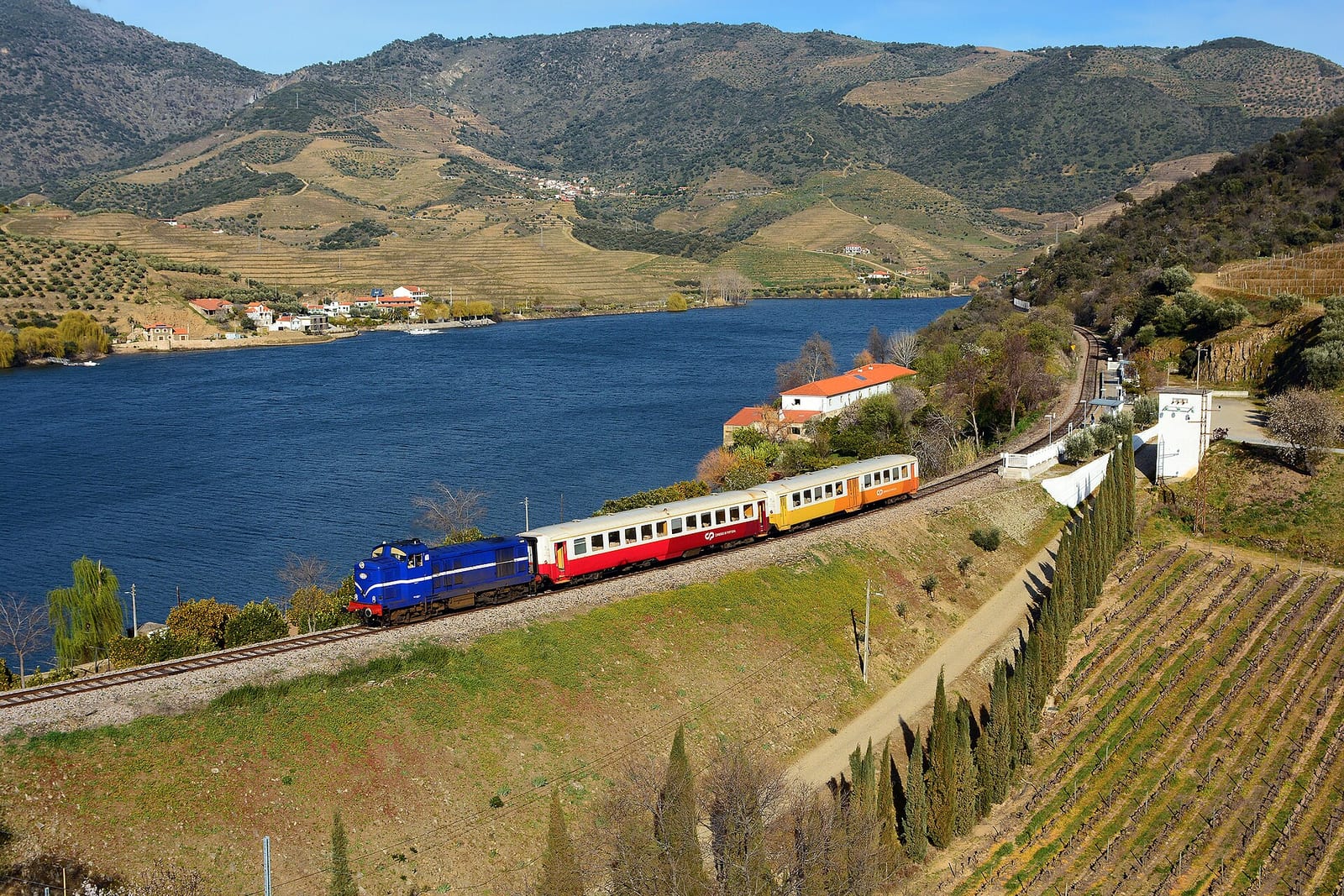
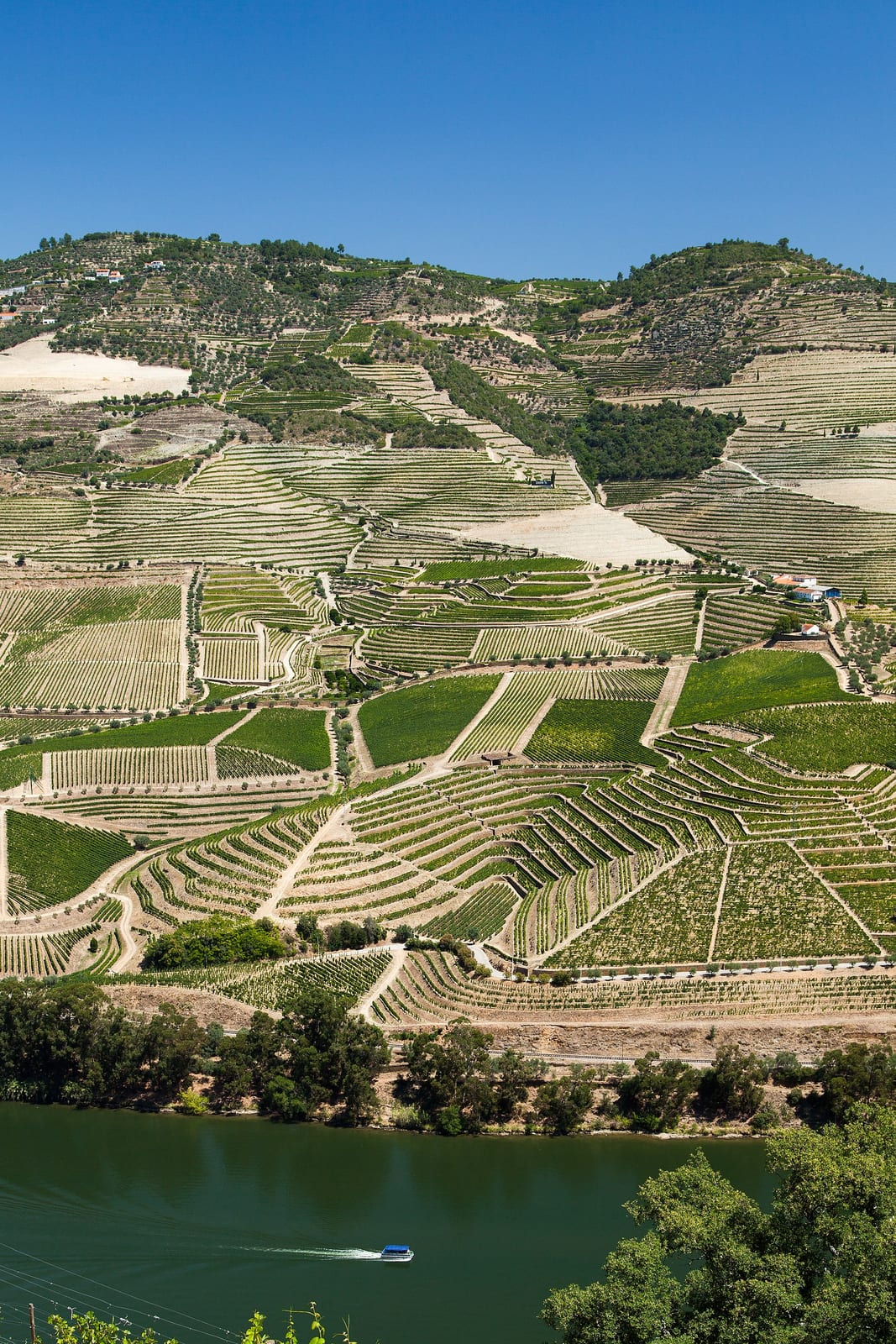
From Porto the line heads inland, and after an hour of suburbs and river bridges it meets the Douro and simply refuses to leave it. For the next two hours the track hugs the north bank, curling around every bend of the water as the hills close in and the terraced vineyards rise overhead — the Alto Douro, a UNESCO World Heritage Site and the oldest demarcated wine region on earth, the birthplace of port.
The whole run from Porto to the little terminus at Pocinho covers about 160 kilometres in roughly three and a half hours. Bring a bottle of something local, take a window seat on the river side, and let one of the world's loveliest lines do the rest.
The Journey
The journey begins in Porto, ideally at São Bento — a station that is itself a sight, its concourse tiled floor-to-ceiling with painted blue azulejos. Trains run up the valley from here and from the larger Campanhã station just outside the centre.
The first stretch, as far as Marco de Canaveses, is the workaday part: electric trains, tunnels, glimpses of the river. Then the wires end, a diesel takes over, and at Peso da Régua — the capital of the wine trade — the line settles in beside the water for good. This is where the magic starts. The Douro here is wide and slow, dammed into a chain of still green reaches, and the railway runs so close to it that the water seems to lap at the ballast.
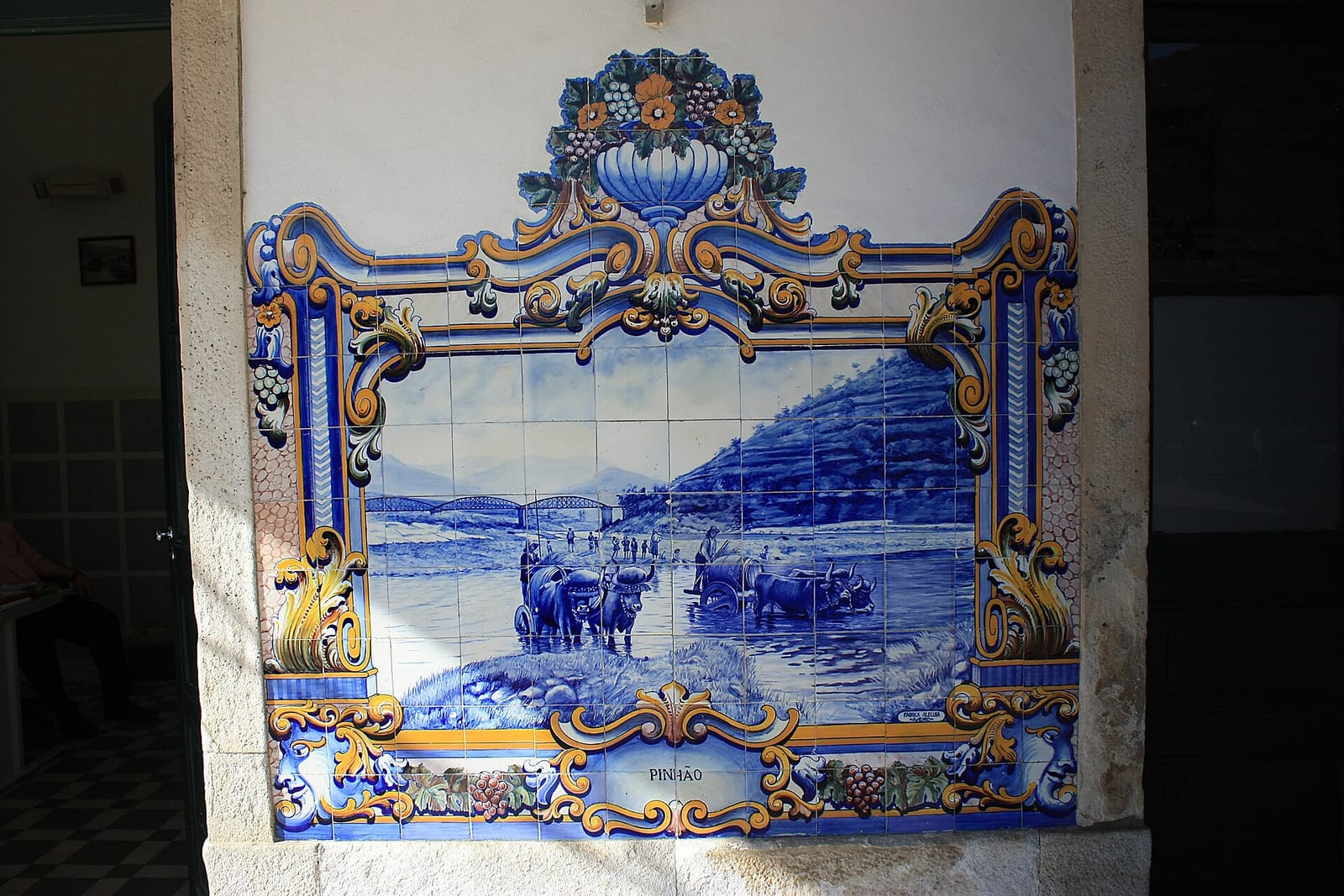
Pinhão, deep in the best vineyards, is the loveliest stop — a tiny station wrapped in azulejo panels of the grape harvest, and a fine place to step off for a night among the quintas. Beyond it the valley grows wilder and emptier. Past Tua the gorge narrows, the terraces give way to scrub and rock, and the line clings to a ledge just above the river all the way to the sleepy terminus at Pocinho.
Once, the train carried on from here across the border into Spain; that link closed in 1988, and Pocinho is now the quiet end of the line — a place to turn around, or to set off by road into the wild upper Douro.
Along the route
Nelso Silva / Wikimedia Commons · CC BY-SA 2.0The river line
Beyond Régua the railway leaves the road behind and runs right along the water, curling around every bend of the Douro for the best part of two hours — arguably the most scenic stretch of ordinary track in Europe.Grand Parc / Wikimedia Commons · CC BY 2.0The Alto Douro vineyards
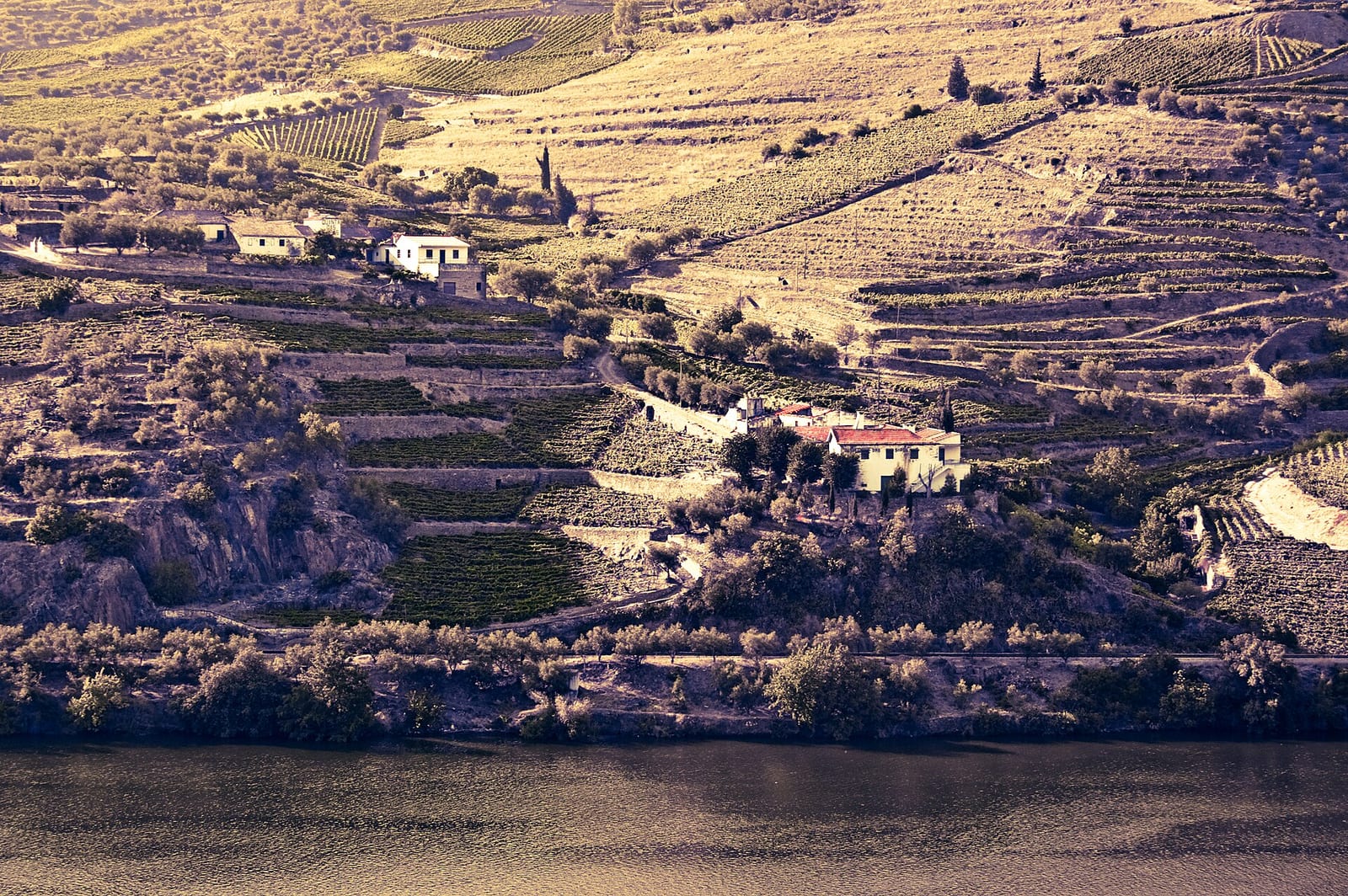
The whole valley is a UNESCO World Heritage Site — steep schist terraces of vines that have made port wine since a royal charter demarcated the region in 1756, the first anywhere in the world to be mapped and named.Dinu / Wikimedia Commons · CC BY 2.0Pinhão and its azulejos
The tiny station at Pinhão, deep in the wine country, is lined with painted blue-and-white azulejo panels showing the grape harvest and river life — one of the loveliest small stations in Portugal, and a fine place to break the journey.A bit of history
Culture & experiences along the way
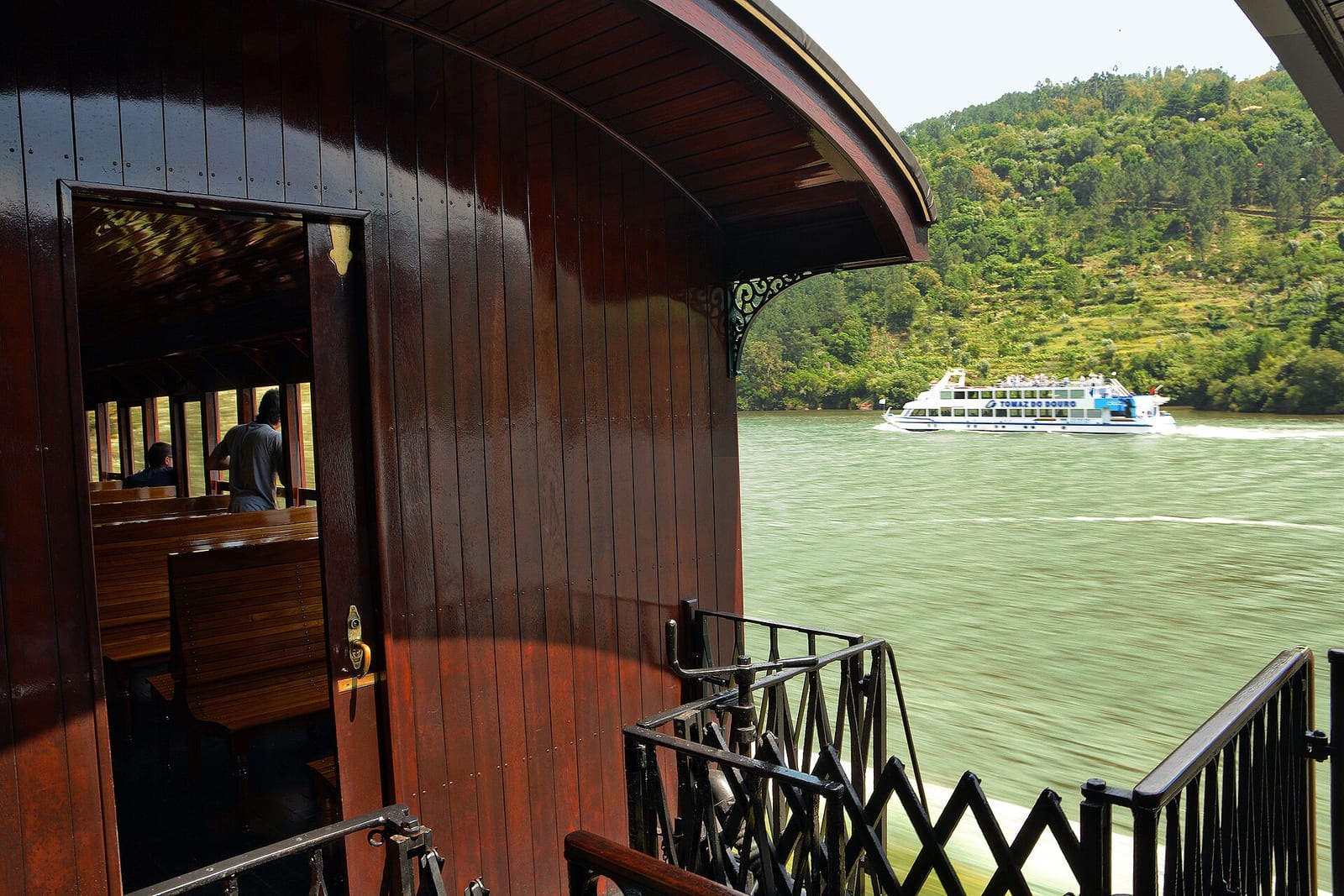
Nelso Silva / Wikimedia Commons · CC BY-SA 2.0The Douro Historical Train
In summer a separate heritage service, the Comboio Histórico do Douro, runs vintage carriages between Régua and Tua — a three-hour round trip with live folk music, regional sweets and glasses of port poured as the valley rolls by.Feliciano Guimarães / Wikimedia Commons · CC BY 2.0Port at the source
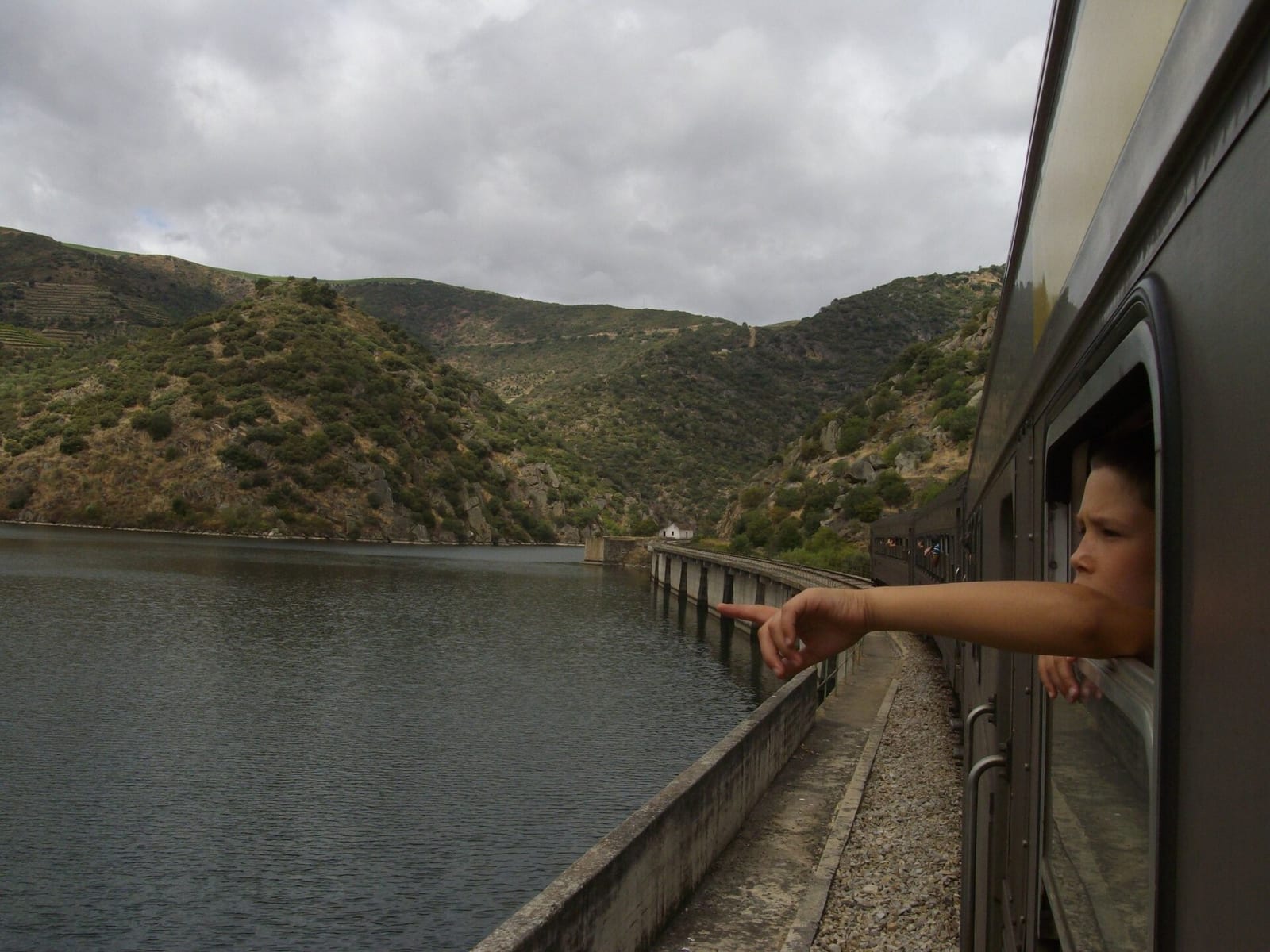
The terraces the train threads are the birthplace of port. Break the trip at a riverside quinta for a tasting and a tour, and understand why the whole valley was shaped, terrace by terrace, around a single fortified wine.André Marques / Wikimedia Commons · CC BY 2.0A window on the gorge
Past Tua the valley narrows and grows wilder, the line clinging to a ledge just above the river with the water almost close enough to touch — the sort of view most railways charge a fortune for, here on a regional ticket.Timetables
The Douro line is a scheduled CP regional service, not a tourist special — which is exactly why it's such good value. Trains start from Porto Campanhã (a short hop from São Bento); about seven Regional departures a day run up the valley, though only some go the full way to Pocinho — many terminate at Régua.
Real departures from Porto Campanhã (2026 timetable — confirm before travelling):
08:41 · 11:25 · 12:30 · 15:31 · 19:01 · 20:21 · 23:36
Rough journey times:
| Section | Time |
|---|---|
| Porto → Peso da Régua | ~2 h |
| Régua → Pinhão | ~25 min |
| Régua → Pocinho (the wild upper line) | ~1½ h |
| Porto → Pocinho (end to end) | ~3½ h |
Good to know:
- Check which train reaches Pocinho. Service thins out beyond Régua; the Régua–Pocinho trains are the ones to plan around — miss one and the wait can be long.
- Sit on the river side. Heading upriver, the best of the water is on the right beyond Régua.
- The historic train is separate. The vintage Comboio Histórico do Douro (Régua–Tua) runs only on summer weekends, on its own ticket — see below.
Times as of the 2026 timetable. Confirm current schedules with the operator — see the Tickets section below.
Tickets
The beauty of the Douro is that the headline journey costs almost nothing. It is a standard CP regional fare, bought on the day at the station or online, with no reservation and no fuss — one of the great travel bargains anywhere. Trains run several times a day from Porto up to Pocinho, though it is worth checking the timetable so you are not stranded on the sparse upper section.
The seasonal Comboio Histórico do Douro is the other option: vintage carriages on the Régua–Tua stretch with music and port wine aboard, and this one does sell out, so book directly with CP for summer weekend dates. The best of both is to take the ordinary train up to Régua and the historic train on from there.
Book your tickets
CP Regional
The everyday Douro train
The ordinary CP regional service from Porto (São Bento or Campanhã) up the line to Pocinho — inexpensive, unreserved and used by locals, with several trains a day. Simply the best-value great railway journey in Europe.
Book Tickets (opens in a new tab, on Comboios de Portugal)via Comboios de PortugalComboio Histórico do Douro
Summer heritage train · Régua–Tua
The seasonal Douro Historical Train — vintage carriages hauled along the classic Régua–Tua stretch on summer weekends, with music, sweets and port wine on board. Seats are limited and popular dates sell out, so book ahead.
Book Tickets (opens in a new tab, on Comboios de Portugal)via Comboios de PortugalRail Passes
Interrail passes are valid on the ordinary trains. Interrail's table of railway companies lists CP's Regional and InterRegional trains as included in Portugal, and its Portugal page says regional trains need no reservation. The pass covers Porto to Pocinho.
The seasonal Comboio Histórico do Douro is different: Interrail names it among the trains excluded in Portugal, so it is bought separately from CP.
For this journey alone, a pass is not worth buying. The regional fare up the valley is small. A pass pays when the Douro is part of a longer trip through Portugal, where CP's Alfa Pendular and Intercity trains need a €5 reservation bought locally.
Checked October 2026 against interrail.com (opens in a new tab), Interrail's Portugal page (opens in a new tab) and its reservation fees (opens in a new tab).
Places to Visit
The line strings together the whole wine country, and either end opens onto much more of northern Portugal. Because the fare is so cheap and the trains are frequent enough to hop between, the Douro rewards breaking the journey more than almost any railway in Europe — get off, walk, drink something, catch the next one.
Beyond Pocinho the rails stop but the valley does not. The Douro Superior and the Côa are car country, and worth the hire.
 Jakub Hałun / Wikimedia Commons · CC BY 4.0 · cropped
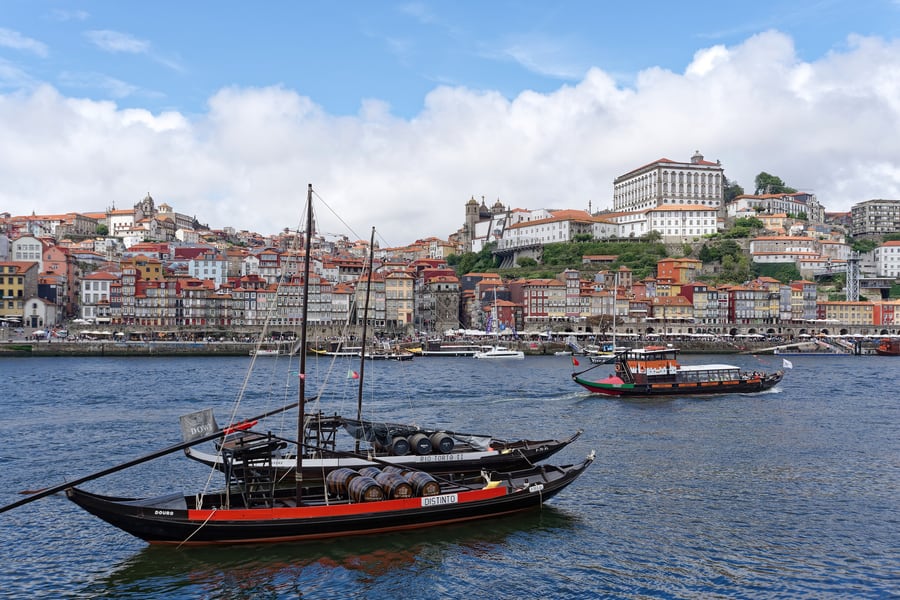
Porto
Where the line begins, and a city worth days of its own. The Ribeira waterfront — the tiered, tiled house-fronts stacked below the cathedral — is part of the historic centre inscribed by UNESCO in 1996, together with the Luís I bridge and the Serra do Pilar monastery opposite. Moored below it sit barcos rabelos, the flat-bottomed boats that carried wine down from the valley from the thirteenth century until the dams went in.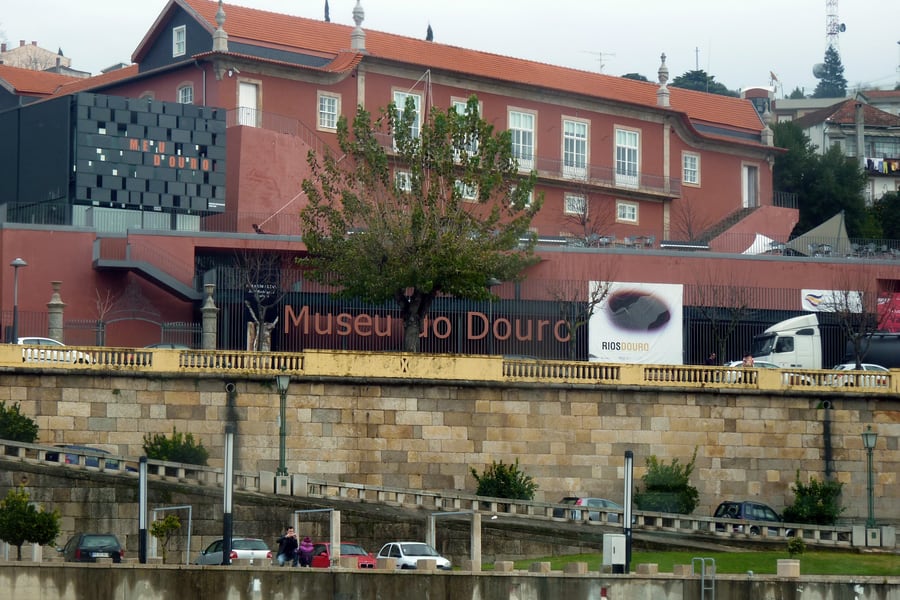 Duca696 / Wikimedia Commons · CC BY-SA 3.0 · cropped
Peso da Régua
The working capital of the port trade, where the wine has been gathered, taxed and shipped for centuries. The Museu do Douro is the serious introduction to all of it — created by act of parliament in 1997 and housed in the Casa da Companhia Velha, once the headquarters of the royal chartered company that ran the whole demarcated region. Régua is also the easiest place on the line to pick up a boat.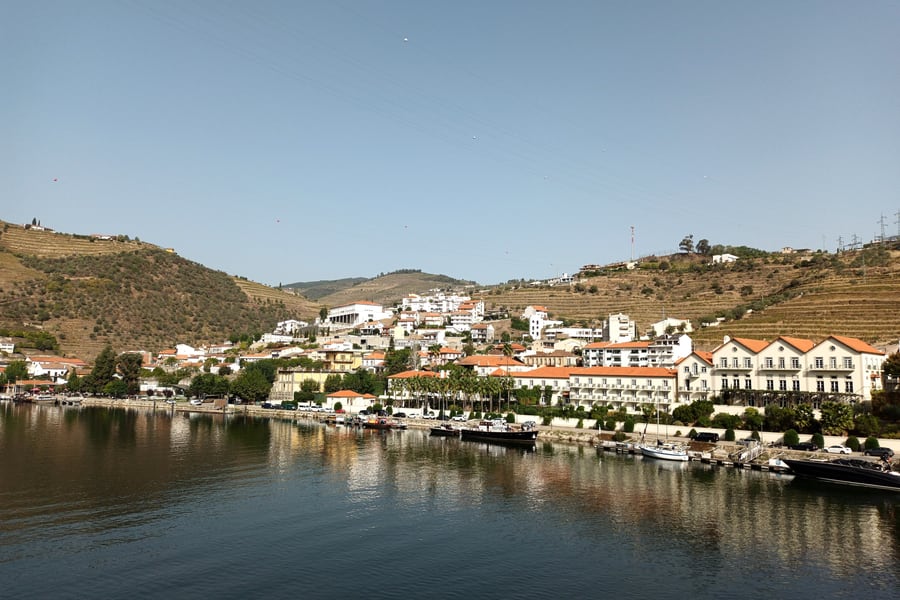 Acediscovery / Wikimedia Commons · CC BY 4.0 · cropped
Pinhão
The prettiest stop on the railway and the middle of the best vineyards. The village itself is small — a curve of houses on the north bank where the Pinhão river comes in — and it is ringed by quintas that take visitors for tastings, tours and boat trips. Most people who break the journey break it here, and the station's famous azulejo panels are waiting on the platform you arrive at.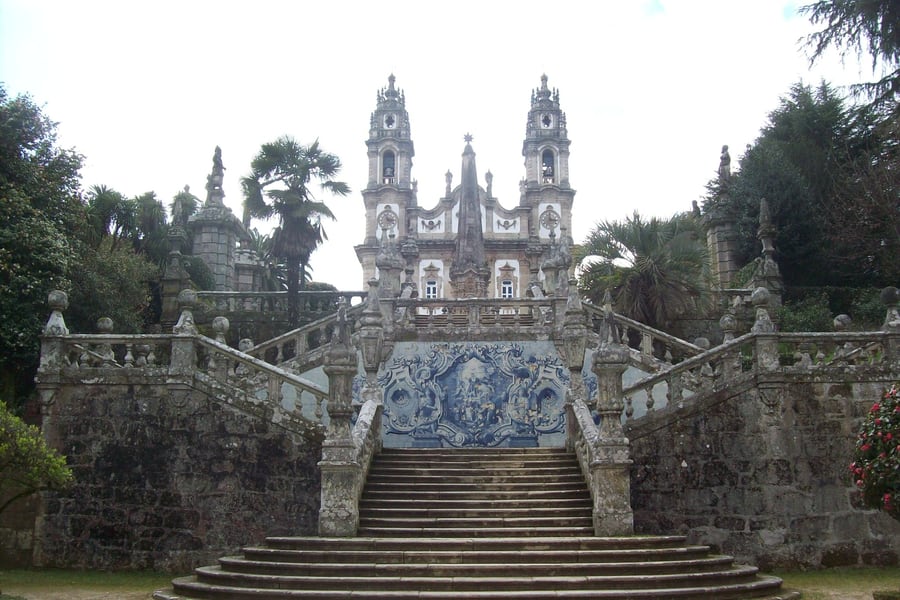 Celso Pinto de Carvalho / Wikimedia Commons · CC BY-SA 3.0 · cropped
Lamego
A short hop inland from Régua, and Portuguese baroque at full volume. The Sanctuary of Nossa Senhora dos Remédios stands above the town at the head of a 686-step stairway that zig-zags up between balustrades, statues and blue-and-white azulejo panels; the sanctuary itself dates from 1750. Lamego also keeps a Gothic cathedral with a Romanesque tower, and a castle keep above the roofs.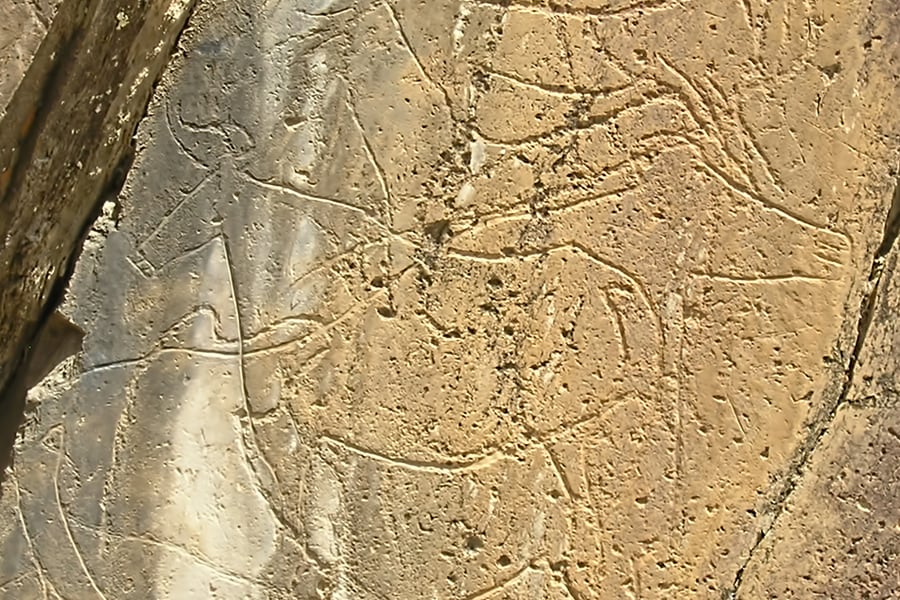 Reino Baptista / Wikimedia Commons · CC BY-SA 4.0 · cropped
The Côa Valley
Beyond Pocinho the country turns wild, and hidden in it is one of the great Palaeolithic sites on earth: animals cut into open-air schist along a seventeen-kilometre stretch of the Côa, dated between roughly 22,000 and 10,000 BC. They were found in the early 1990s during work on a dam. The dam was cancelled in November 1995, the valley was UNESCO-listed in 1998, and visits are guided, by four-wheel drive, and booked.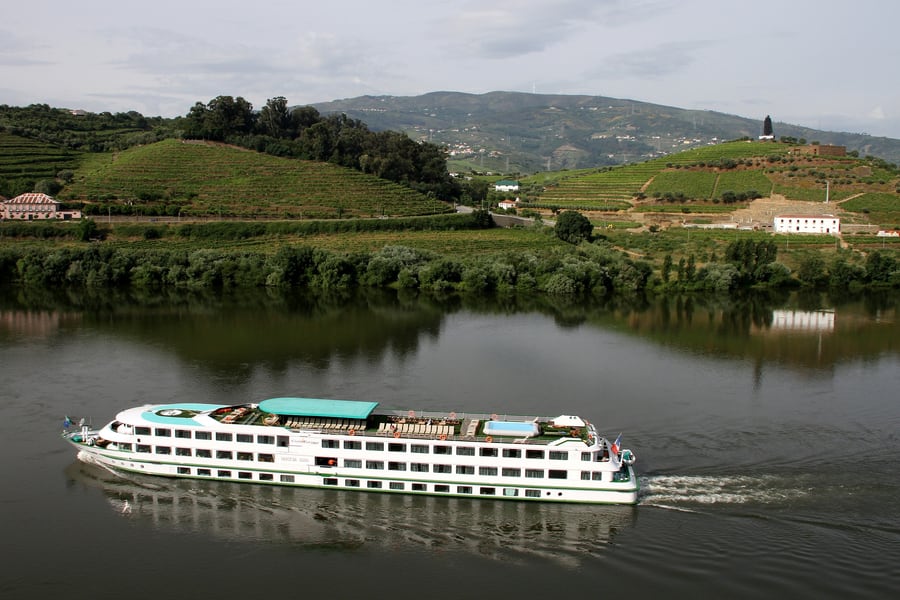 Gerd Eichmann / Wikimedia Commons · CC BY-SA 4.0 · cropped
Back down by boat
Plenty of people ride the train up and come back on the water, or take a day cruise out of Régua or Pinhão. It is a genuinely different view — from the river the terraces rise above you instead of falling away below — and the boat works through the Carrapatelo lock, where it is raised or lowered about 35 metres inside the dam wall. The dam was finished in 1972; the river has been navigable like this ever since.Where to Sleep
The Douro is a day trip from Porto, but the valley rewards at least one night — ideally at a working wine estate, watching the light change over the terraces.
- Porto — the obvious base at the Porto end, with everything from grand riverside hotels to design guesthouses in the old town, and easy morning trains up the line.
- Peso da Régua — practical and central for the wine country, with riverside hotels and quick connections in both directions.
- Pinhão & the quintas — the romantic choice: a quinta (wine estate) stay among the vineyards, many with pools, tastings and terraces over the river. Book well ahead for the September–October harvest.
- Lamego — a quieter, historic alternative a short drive up from Régua, good for exploring the wider region.
The valley is busiest — and most beautiful — during the vindima (grape harvest) in early autumn, so reserve quinta stays for that season well in advance.
Questions or corrections
Planning this trip and stuck on something, or spotted a time, fare or detail that has changed? Send us a message about The Douro Line. We read every one, and we update this page when something has changed.