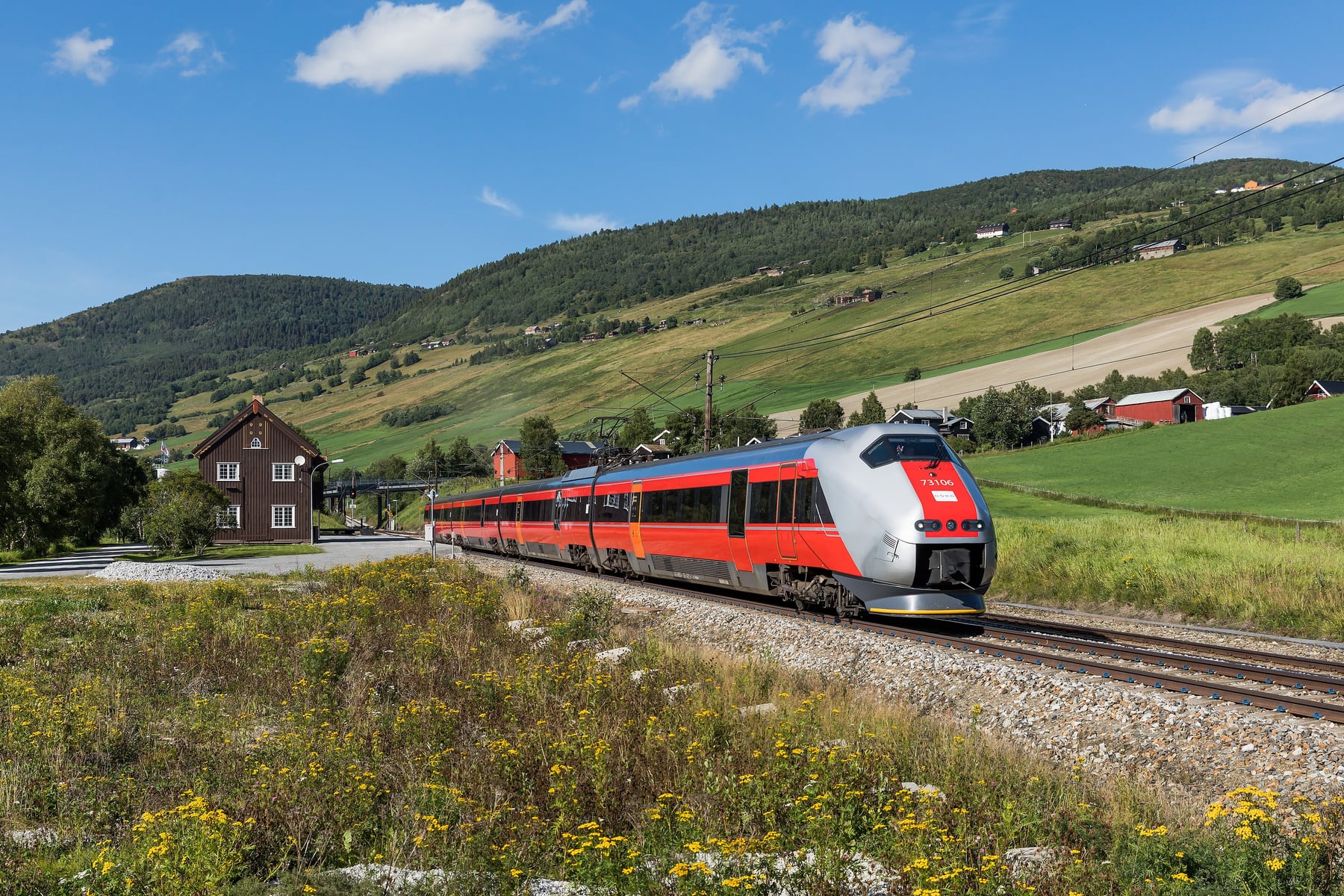
The Dovre Line
Kabelleger / David Gubler / Wikimedia Commons · CC BY-SA 4.0
- DistanceOslo S–Trondheim S · 553 km
- Duration6 hours 38 minutes to 7 hours 16 by day · about 8 hours by night
- Best seasonAll year; June to September for musk oxen, birds and the mountain garden
Introduction
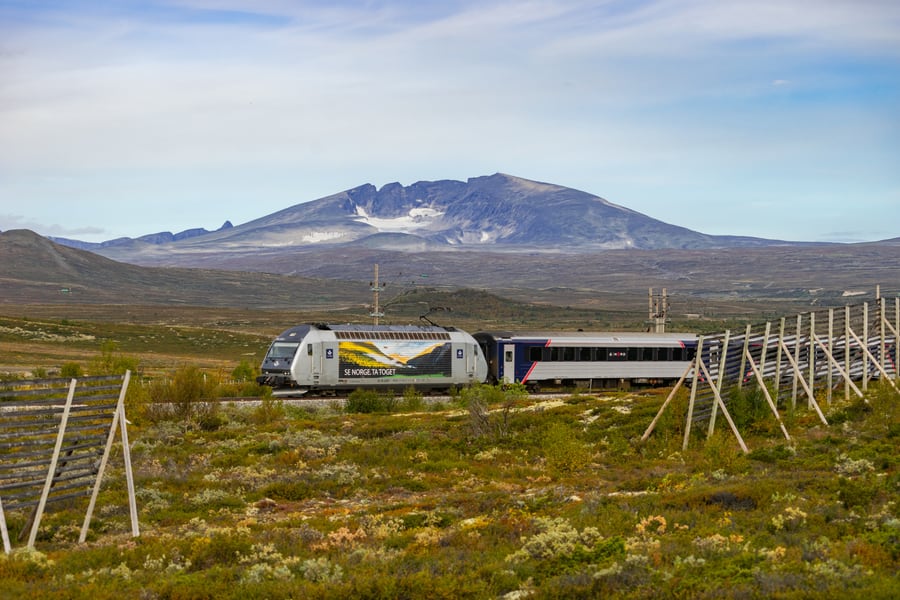
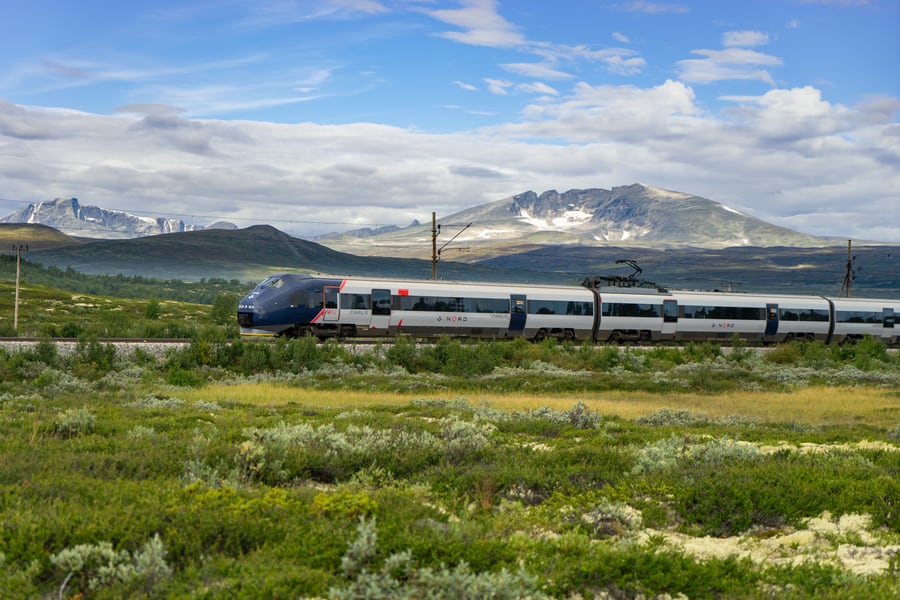
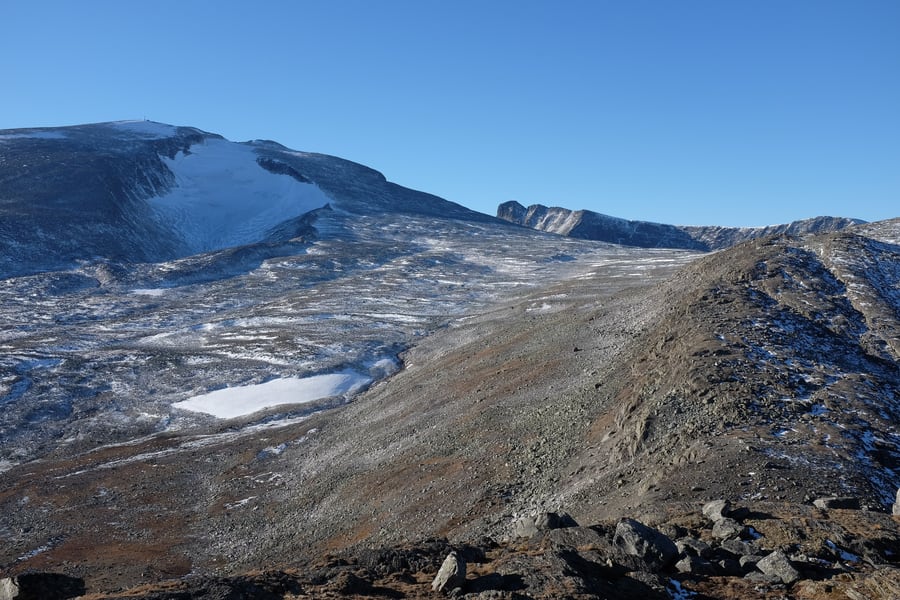
The Dovre Line is the main railway from Oslo to Trondheim, 553 kilometres up the length of the Gudbrandsdalen and over the Dovrefjell. Beyond Dombås the train leaves the forest behind and runs out across an open mountain plateau, the snow-streaked dome of Snøhetta on the western skyline. Just north of Hjerkinn station it reaches 1,024 metres, the highest point of the line. On the moor beside the track there may be musk oxen.
The railway took some seventy years to put together. Norway's first line, from the capital to Eidsvoll, opened in 1854; a narrow-gauge line from Trondheim to Støren followed in 1864, and the line up the Gudbrandsdalen reached Otta in 1896 and Dombås in 1913. The last link, over the mountain from Dombås to Støren, was opened by King Haakon VII at Hjerkinn on 17 September 1921. The line was electrified throughout in 1970, and since June 2020 its trains have been run by SJ Norge as SJ NORD.
On weekdays five trains run each way by day and one by night. The fastest takes 6 hours 38 minutes. Every seat is reserved, every train has a café, and the night train carries sleeping compartments.
The Journey
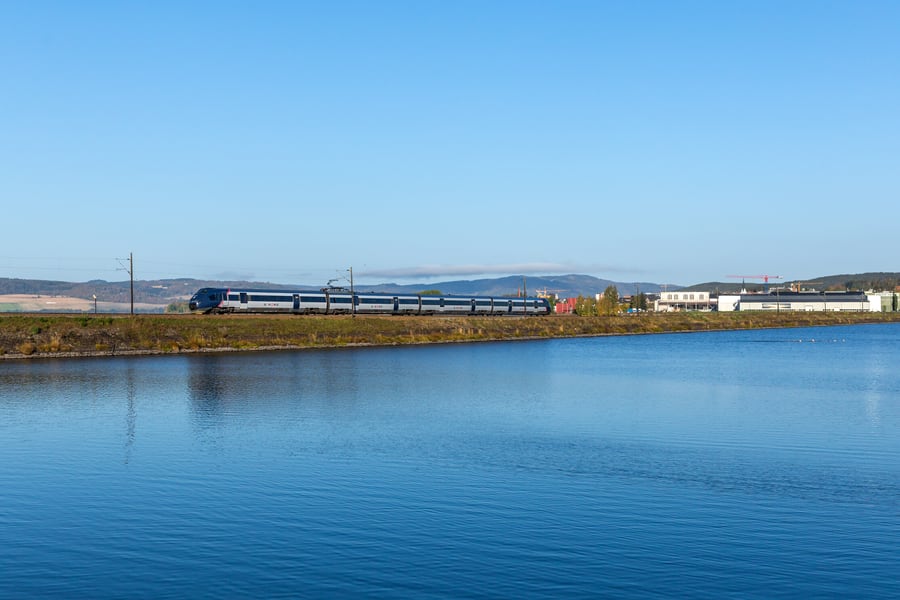
The train leaves Oslo S through Lillestrøm and Oslo Airport, on the Gardermoen Line of 1998, the only high-speed railway in Norway, and rejoins the old main line at Eidsvoll. From Minnesund it runs for much of the way beside Mjøsa, the largest lake in the country, to Hamar and to Lillehammer, at the top of the lake, where the Gudbrandsdalen begins.
Up the valley
For the next two hours the line follows the river Gudbrandsdalslågen north through the valley: past Kvitfjell, the stave church at Ringebu, Vinstra and Otta, to Dombås, 659 metres up, where the Rauma Railway leaves for Åndalsnes and the sea.
Over the Dovrefjell
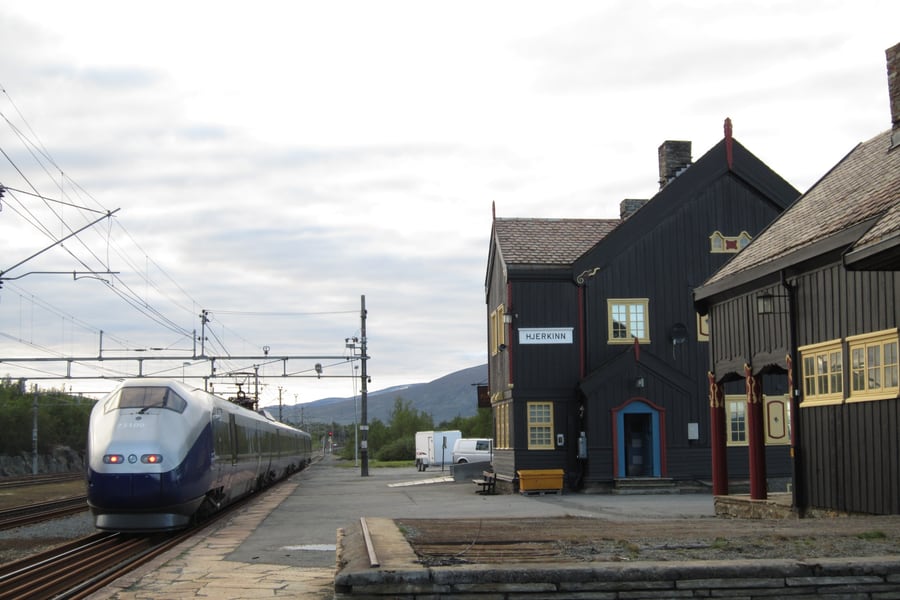
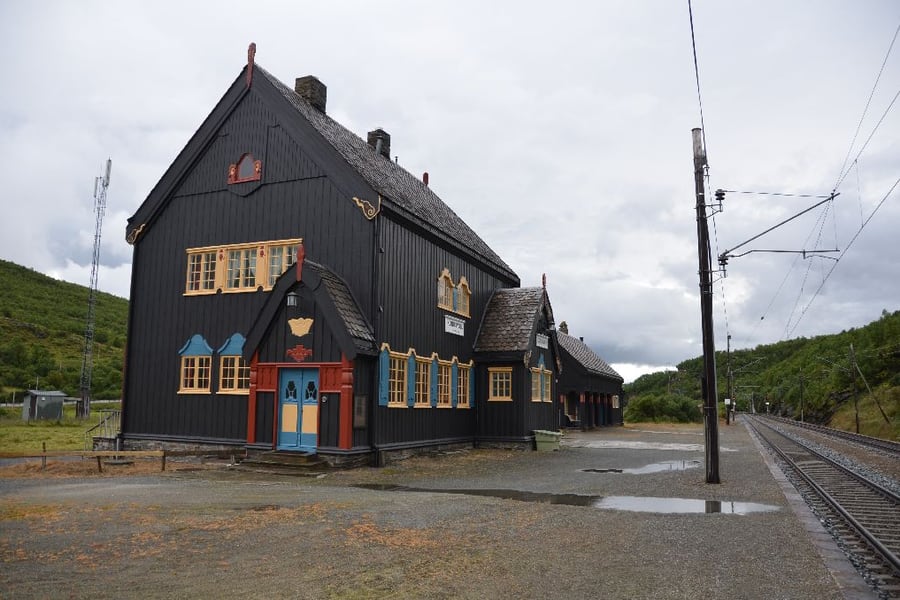
Beyond Dombås the line climbs past the marshes of Fokstumyra onto the plateau and reaches Hjerkinn, at 1,017 metres the highest station. A little over a kilometre further north it reaches 1,024 metres. Hjerkinn and Kongsvoll, the next station, both have station buildings by the architect Erik Glosimodt, and both are protected. From Kongsvoll the line drops down the narrow valley of the Driva, Drivdalen, to Oppdal, crosses to Støren, where the Røros Line from Hamar comes in, and follows the Gaula down to Trondheim.
The trains
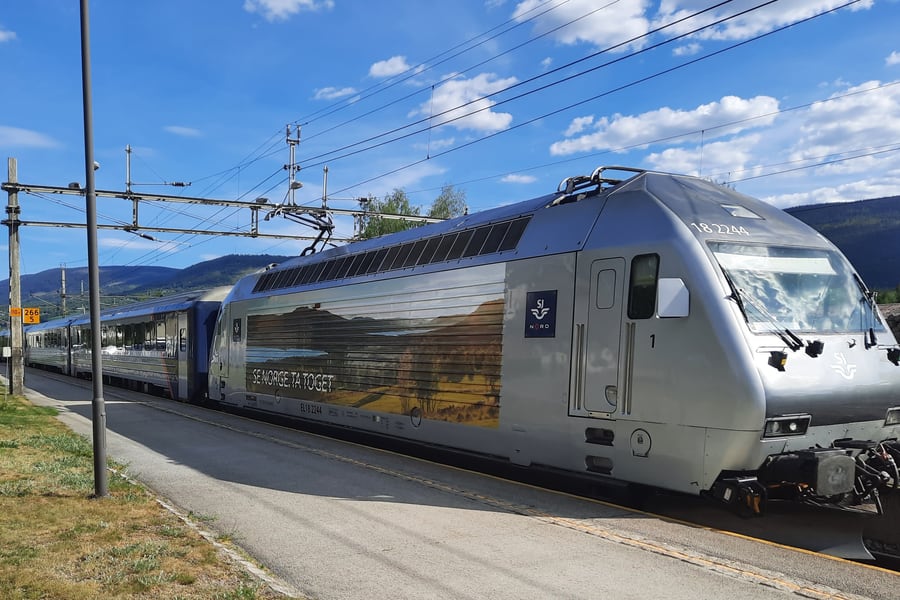
The day trains are either Class 73 electric units or El 18 electric locomotives hauling coaches. Seats are in Standard, in the quieter Premium carriage on selected trains, or in Premium Pluss, where the seats recline. There is a family carriage with a playroom on the long-distance trains, and a café on every one; SJ's menu on this line includes a Dovreburger.
Along the route
 Leonhard Lenz / Wikimedia Commons · CC0
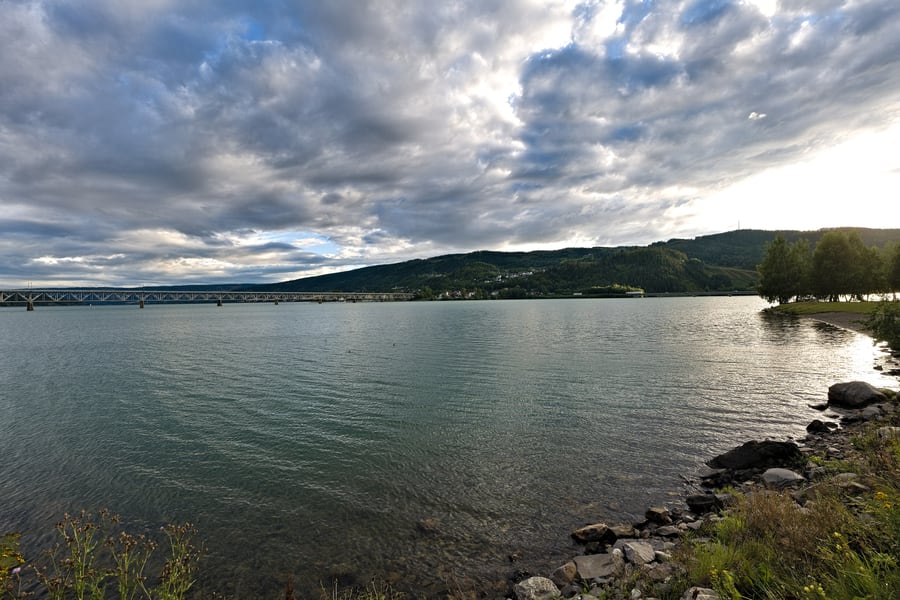
Beside Mjøsa
For much of the way from Minnesund to Lillehammer the line runs beside Mjøsa, Norway's largest lake: 117 kilometres long and up to 453 metres deep, so deep that its floor lies below sea level.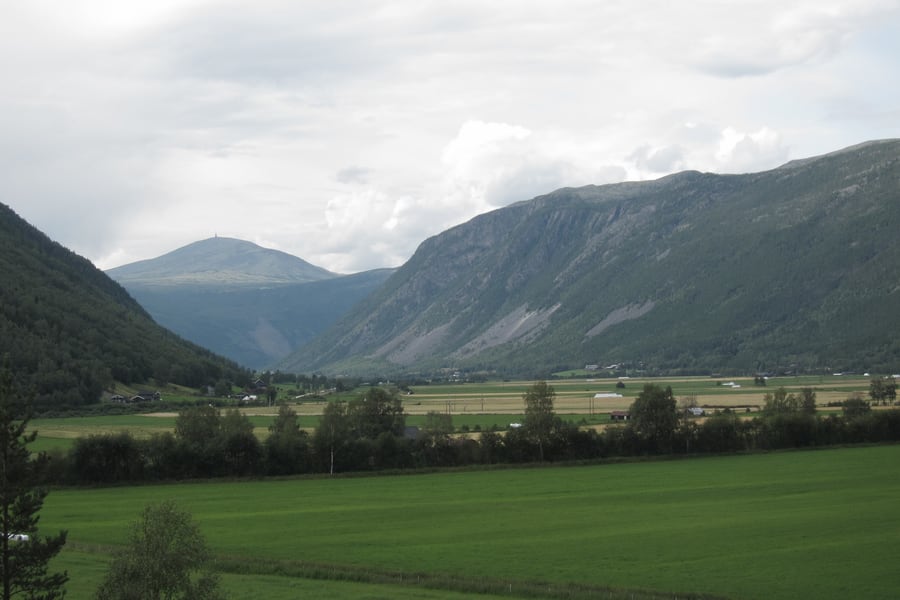 Erik den yngre / Wikimedia Commons · CC BY-SA 4.0
The valley of valleys
SJ calls the Gudbrandsdalen the valley of valleys. The line follows its river for two hours, past old farms on the slopes; at Gålå, near Vinstra, Ibsen's Peer Gynt has been played beside the lake every summer since 1989.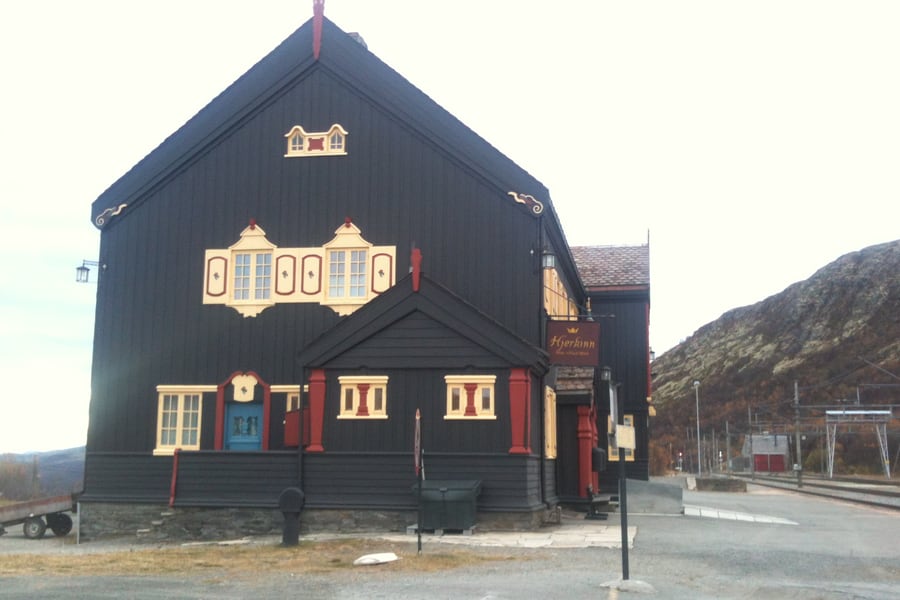 Bjoertvedt / Wikimedia Commons · CC BY-SA 3.0
The top of the line
Hjerkinn, at 1,017 metres, is the highest station; the line peaks at 1,024 metres just to the north. King Haakon VII opened it here on 17 September 1921. The station's architect, Erik Glosimodt, was killed in a collision the next night.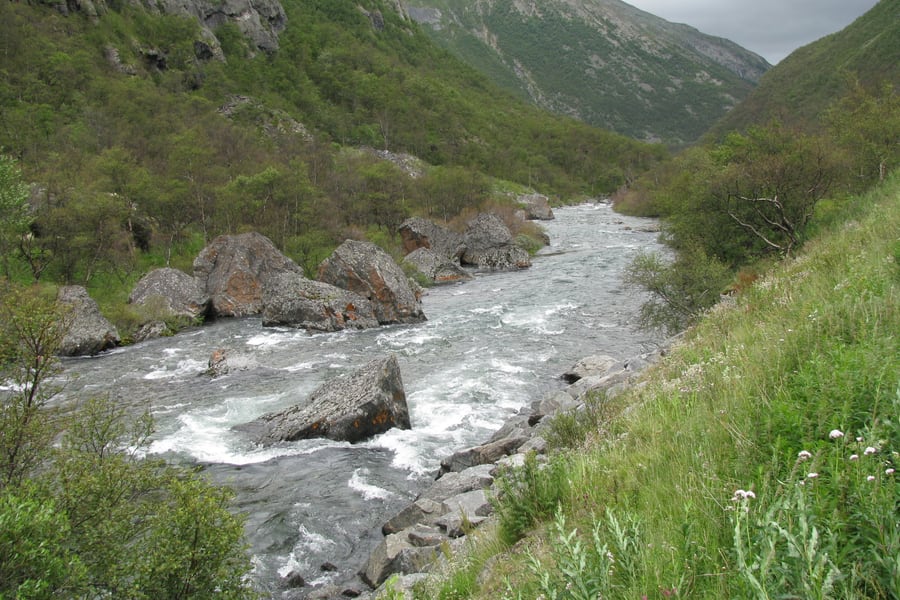 Orcaborealis / Wikimedia Commons · CC BY-SA 3.0
Down Drivdalen
From Kongsvoll the line drops with the river Driva through a narrow valley, with the national park on both sides and the old King's Road beside it, from 886 metres to 544 at Oppdal.A bit of history
Culture & experiences along the way
 Bjoertvedt / Wikimedia Commons · CC BY-SA 3.0
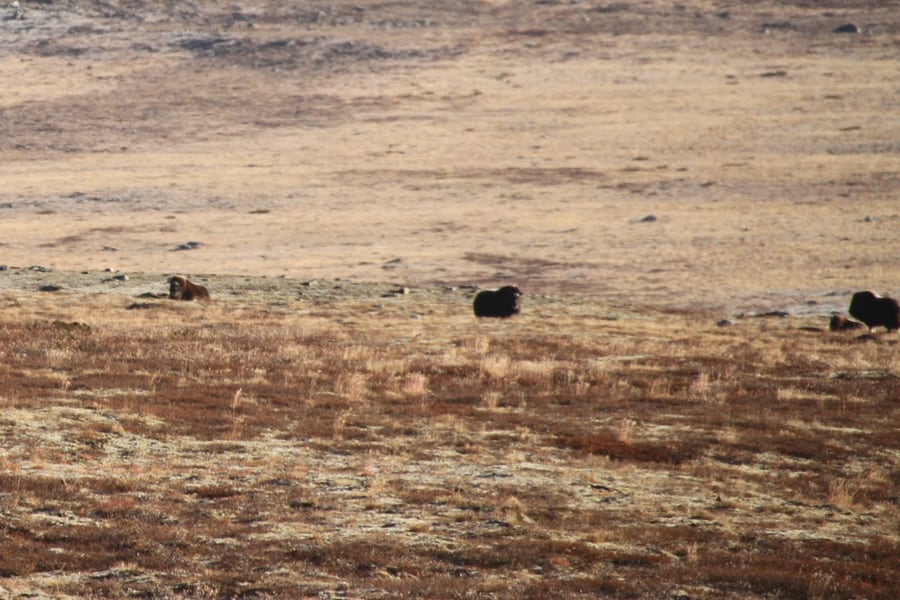
A musk ox safari
In 1913 navvies building this line found two fossil musk ox vertebrae near Berkåk, and the find led to the animal being brought back. Ten came from Greenland in 1932; today's herd descends from releases from 1947. Guided safaris from Hjerkinn take five to seven hours. Keep at least 200 metres away.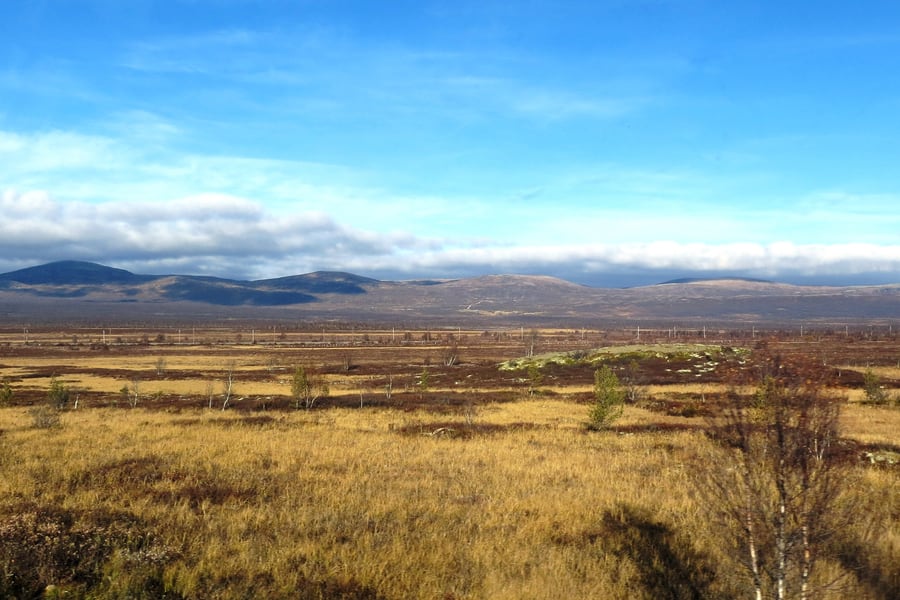 Bjoertvedt / Wikimedia Commons · CC BY-SA 3.0
The birds of Fokstumyra
The marshes north of Dombås were protected in 1923 because the new railway had disturbed country that had been almost untouched. Now a nature reserve and a Ramsar site for wetland birds, it has a marked path and a bird tower; from 1 May to 1 August, keep to the path.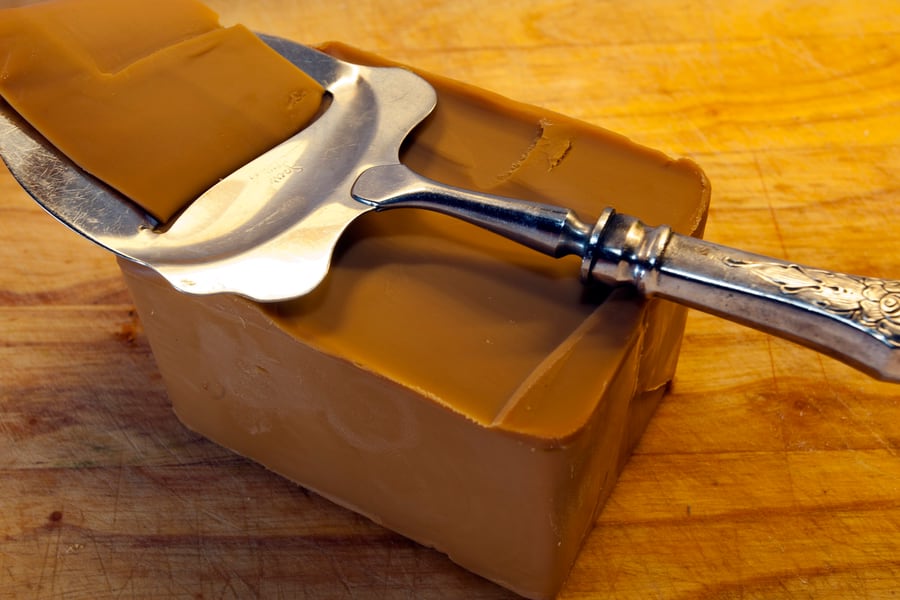 Arnstein Bjone / Wikimedia Commons · CC BY-SA 4.0
Brown cheese from Gålå
In 1863 the milkmaid Anne Hov, at the Valseter mountain farm near Gålå, added cream to the whey as it boiled down and made a firmer, richer cheese; later she added goat's milk too. Brunost, as Norway calls it, is now one of the country's best-known foods.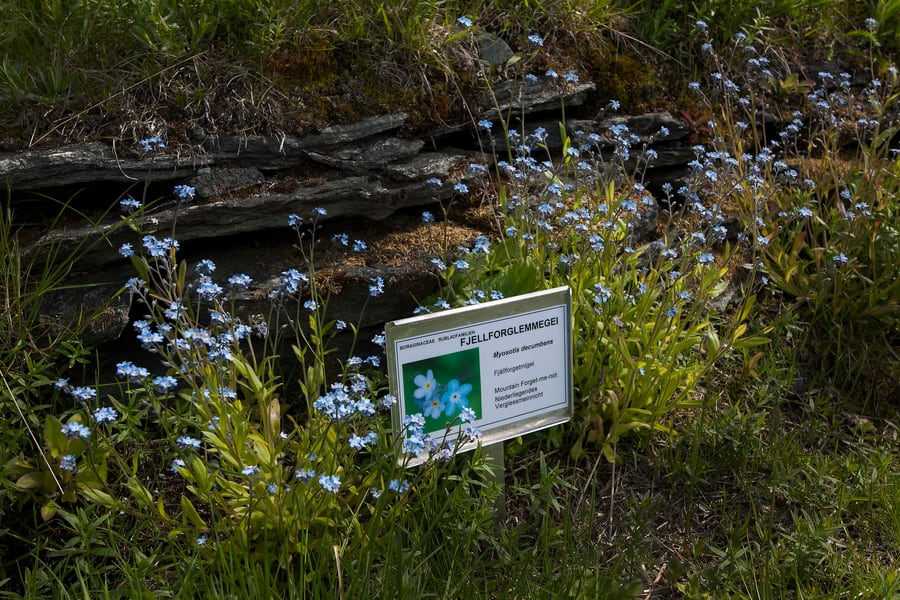 Åge Hojem / NTNU Vitenskapsmuseet / Wikimedia Commons · CC BY 2.0
The mountain garden at Kongsvoll
The only botanical mountain garden in Scandinavia lies at 890 metres beside Kongsvold Fjeldstue: about 250 species, most of which arrived on their own, labelled where they grow. The botanist Thekla Resvoll founded it in 1924 with NSB, whose gardeners helped run it until 1947.Timetables
SJ NORD runs the Dovre Line as line F6: five day trains each way from Monday to Friday, fewer at the weekend, and a night train every night except Saturday. Every seat is reserved.
Oslo to Trondheim
| Train | Runs | Oslo S | Lillehammer | Dombås | Hjerkinn | Oppdal | Trondheim S |
|---|---|---|---|---|---|---|---|
| 43 | Daily | 08:02 | 10:00 | 12:01 | 12:25 | 13:00 | 14:40 |
| 45 | Mon–Fri | 10:02 | 12:00 | 14:05 | 14:33 | 15:07 | 16:52 |
| 47 | Daily | 14:02 | 16:02 | 18:14 | 18:39 | 19:14 | 20:55 |
| 49 | Not Sat | 16:02 | 18:04 | 20:10 | 20:34 | 21:08 | 22:45 |
| 51 | Not Sat | 18:02 | 20:02 | 21:57 | 22:21 | 22:56 | 00:40 |
| 405 (night) | Not Sat | 22:50 | 01:23 | 03:36 | 04:01 | 04:41 | 06:41 |
Trondheim to Oslo
| Train | Runs | Trondheim S | Oppdal | Hjerkinn | Dombås | Lillehammer | Oslo S |
|---|---|---|---|---|---|---|---|
| 40 | Mon–Fri | 05:55 | 07:42 | 08:16 | 08:47 | 10:46 | 12:48 |
| 42 | Daily | 08:17 | 09:53 | 10:27 | 10:54 | 12:50 | 14:48 |
| 44 | Not Sat | 09:11 | 10:56 | 11:30 | 11:59 | 13:57 | 16:04 |
| 46 | Not Sat | 13:32 | 15:24 | 15:59 | 16:28 | 18:41 | 20:48 |
| 48 | Daily | 15:27 | 17:10 | 17:44 | 18:12 | 20:03 | 22:02 |
| 406 (night) | Not Sat | 23:17 | 01:11 | 01:48 | 02:17 | 04:39 | 06:49 |
These are the times from 13 December 2026. Until then, train 44 leaves Trondheim at 09:52 and train 46 at 13:06; the others differ by a few minutes at most. On Saturdays train 42 runs about four minutes later from Oppdal and reaches Oslo at 15:02. The cheap Trollpris fares are sold on trains 40 and 51. Every train also calls at Lillestrøm, Oslo Airport, Hamar, Hunderfossen, Kvitfjell, Ringebu, Vinstra, Otta, Kongsvoll, Berkåk, Støren and Heimdal; trains 40 and 45 also at Dovre and Kvam, and the night trains at Moelv and Brumunddal.
For the best of the mountain, travel by day: the plateau between Dombås and Kongsvoll takes about 35 minutes.
Times as of October 2026, from Entur's journey planner, checked for 19 October 2026 to 16 February 2027. Check your date on Entur (opens in a new tab) or with SJ Norge (opens in a new tab).
Tickets
Tickets are sold through Entur, Norway's national journey planner, on its website and app; SJ Norge's own pages send you there. Every ticket carries a seat reservation. Non-flexible tickets are the cheapest and cannot be changed or refunded; the Trollpris fares on the 05:55 from Trondheim and the 18:02 from Oslo are lower still, and limited in number.
There are three ways to sit: Standard; Premium, from NOK 299, a quieter carriage with hot drinks, on selected day trains; and Premium Pluss, from NOK 499, a reclining seat with a footrest. On the night train a sleeping compartment is added to a Standard ticket. Fares checked October 2026.
Book your tickets
SJ NorgeStandard
A reserved seat, every train
The cheapest way to travel, with a café car on board and the low Trollpris fares on two departures.
Book Tickets (opens in a new tab, on SJ Norge)via SJ NorgeGeir A. Granviken / SJ NorgePremium
A quieter carriage, on selected day trains
Hot drinks and water included, usually in a carriage at one end of the train, with little through traffic.
Book Tickets (opens in a new tab, on SJ Norge)via SJ NorgeGeir A. Granviken / SJ NorgePremium Pluss
A reclining seat with a footrest
Seats that recline to 45 degrees, with a reading light, power, fruit and hot drinks; sold on Entur as "Reclining seat".
Book Tickets (opens in a new tab, on SJ Norge)via SJ Norge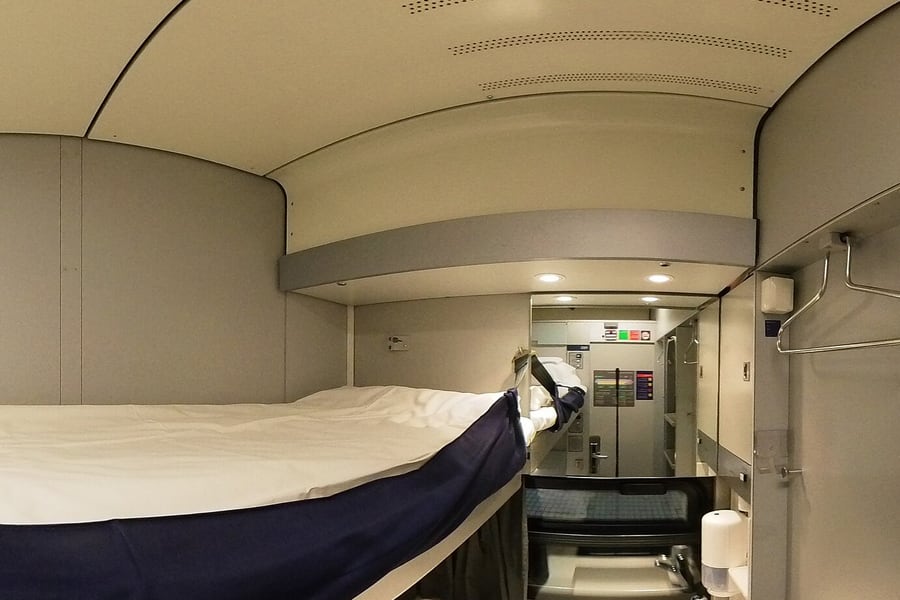 Asbjørn / Wikimedia Commons · CC BY-SA 4.0 · cropped
The night train
A sleeping compartment of your own
Two beds and a washbasin, booked as a supplement to a Standard ticket, for up to two adults and two children under six.
Book Tickets (opens in a new tab, on SJ Norge)via SJ NorgeRail Passes
Interrail and Eurail passes are valid, with a compulsory reservation. Interrail's table of railway companies lists SJ Norge's trains in both the Global Pass and the One Country Pass for Norway, with reservation mandatory. Book the seat on Entur as an "Interrail / Eurail seat reservation" traveller: €4.30 for a Standard seat in second class, €43 for a Premium Pluss reclining seat, and €86–107 for a sleeping compartment on the night train. First-class pass holders reserve Premium free. A pass is valid in Norway only for travellers who are not resident there.
A pass pays for this journey if Norway is part of a longer trip. For Oslo to Trondheim alone, compare a travel day of the pass, plus the reservation, with the fare Entur quotes for your date.
Checked October 2026 against Interrail's table of railway companies (opens in a new tab), its reservation fees (opens in a new tab) and night-train fees (opens in a new tab), and SJ Norge's Interrail page (opens in a new tab).
Places to Visit
With five trains a day each way on weekdays, a stop on the way costs a few hours, not a day. Every place below has a station that all trains call at.
 Leif Jørgensen / Wikimedia Commons · CC BY-SA 4.0
Hamar
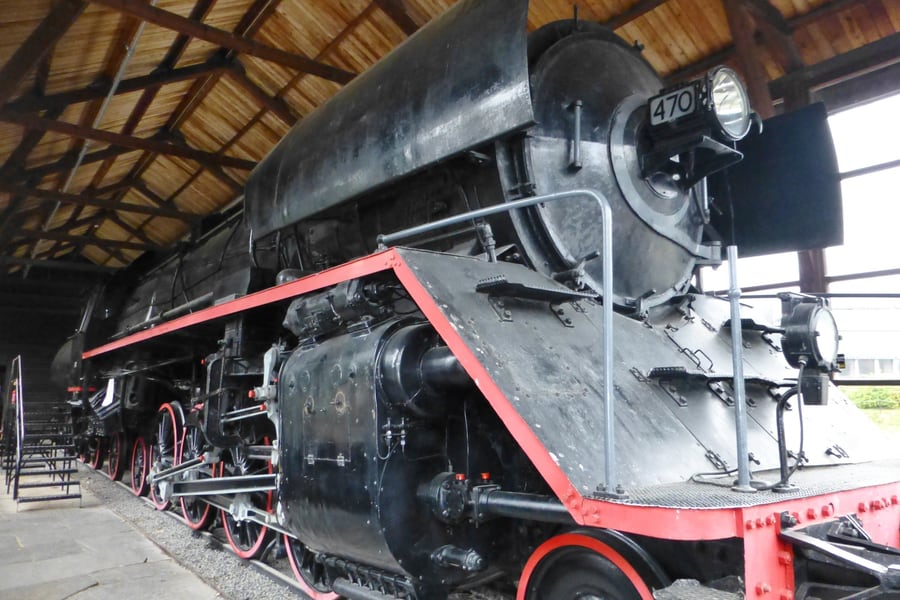
The Norwegian Railway Museum, founded in 1896, stands at Martodden on the shore of Mjøsa. Its collection includes Dovregubben, the Dovre Giant: no. 470, one of the seven Class 49s, the largest steam locomotives Norway's state railway ever had, built for heavy trains on this line and retired in 1957. In summer the narrow-gauge Tertitten runs in the museum park.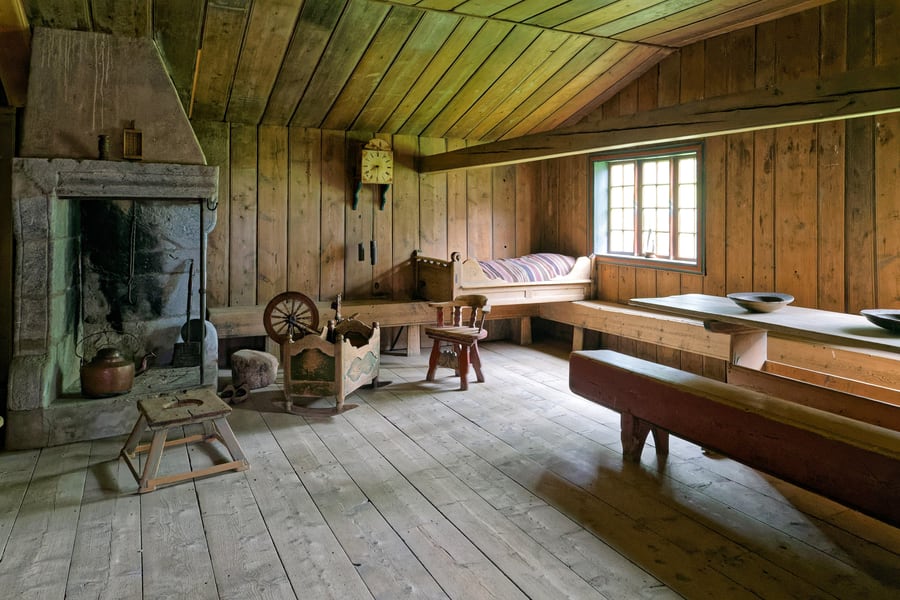 Holger Uwe Schmitt / Wikimedia Commons · CC BY-SA 4.0
Lillehammer
The host of the 1994 Winter Olympics is also home to Maihaugen, one of the largest open-air museums in Northern Europe: close to 200 buildings gathered from the Gudbrandsdalen by the collector Anders Sandvig, from medieval farms to a school, a post office and a railway station. The Garmo stave church was re-erected here in 1920–21.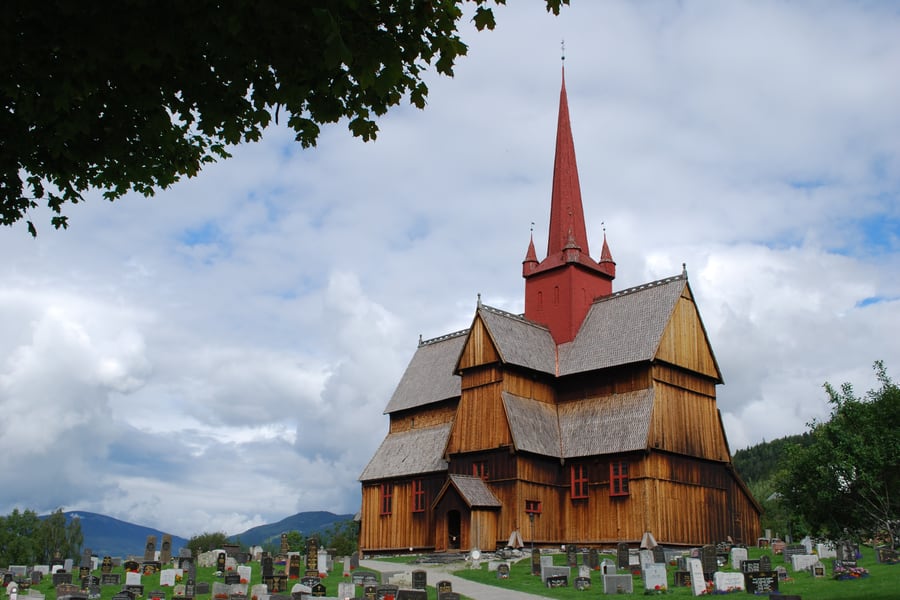 Concierge.2C / Wikimedia Commons · CC BY-SA 3.0 no
Ringebu
The stave church was built in the early 1200s from logs cut in the 1190s. Around 1630 the master builder Werner Olsen enlarged it into a cross, with the red tower that now stands over the valley. In 1814 it was one of the churches where Norway voted in its first national election, for the assembly that wrote the constitution.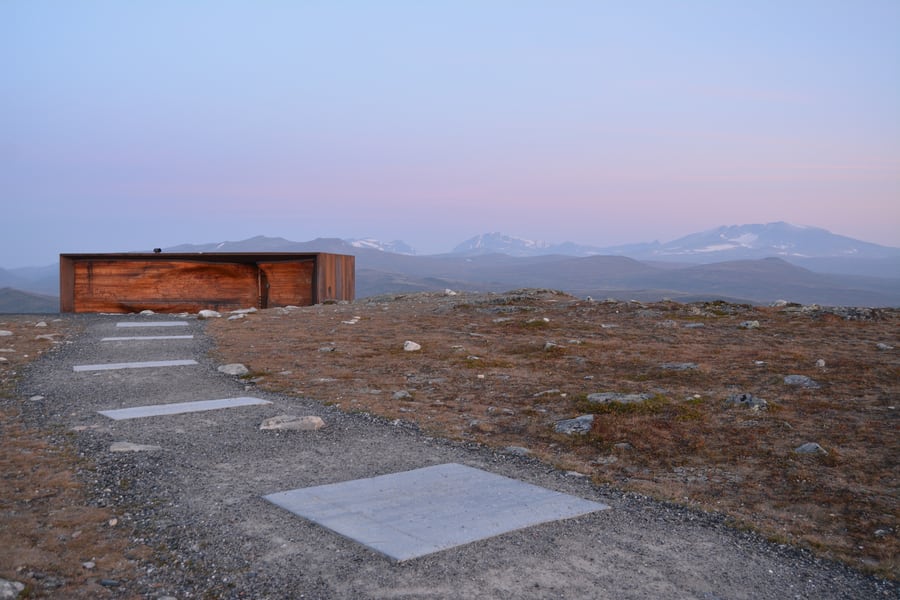 FrDr / Wikimedia Commons · CC BY-SA 4.0
Hjerkinn
Above Hjerkinn, half an hour's walk from the car park at Tverrfjellet, the wild reindeer centre's viewing pavilion looks out across the national park to Snøhetta; it is open in the summer season. Hjerkinn is also where musk ox safaris start, and where you can ride Icelandic horses on the plateau from Hjerkinn Fjellstue.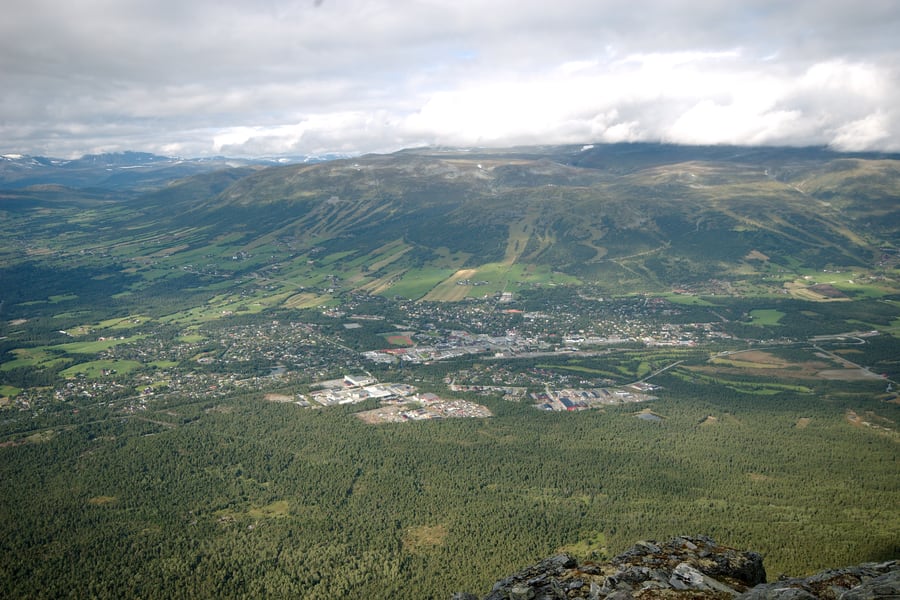 Håvard Berland / Wikimedia Commons · CC BY-SA 1.0
Oppdal
The village at the foot of Drivdalen is where three old roads meet — from Dombås over the mountains, from Sunndalsøra and from Trondheim — and the municipal arms show them. On the slopes to the north is Oppdal Ski Center, the largest ski area in Norway by extent, with 39 slopes on four mountains.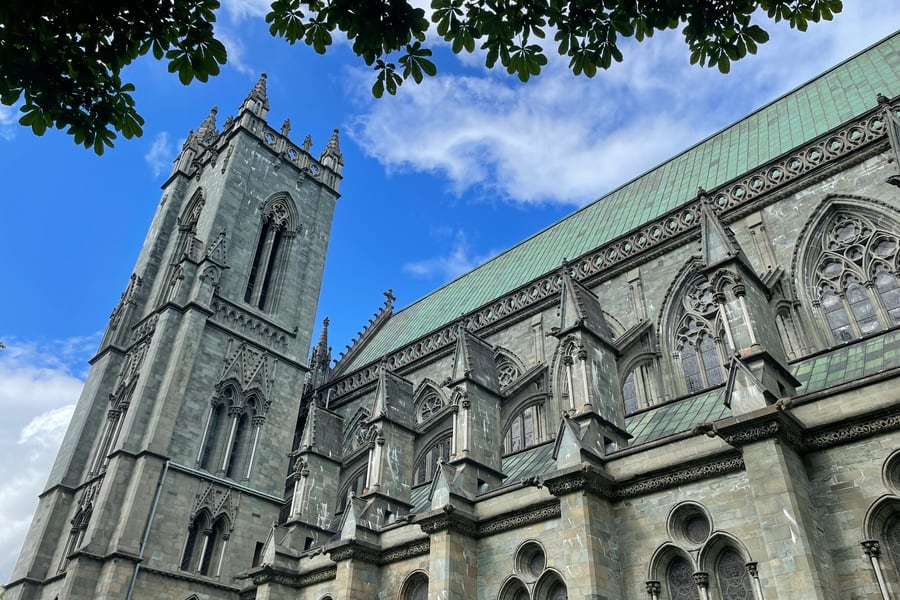 Tulipasylvestris / Wikimedia Commons · CC BY-SA 4.0
Trondheim
Nidaros Cathedral was built from 1070 to about 1300 over the grave of King Olav II, the saint who brought Christianity to Norway; it is the northernmost medieval cathedral in the world, and Norway's kings are consecrated there. For centuries pilgrims crossed the Dovrefjell on foot to reach it, by the road that still runs through the yard at Kongsvold.Where to Sleep
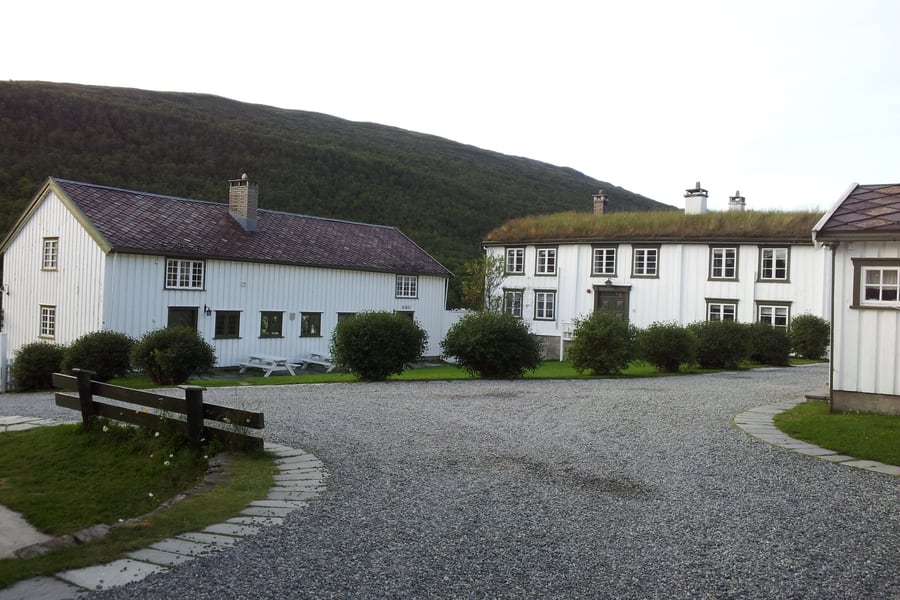
The journey fits in a day, but the Dovrefjell is worth a night of its own. Two old mountain inns stand on the plateau, each within reach of a station, on the road that pilgrims and travellers used over the mountain for centuries before the railway.
Where to stay
 Alexander Lindbäck / Wikimedia Commons · CC BY-SA 3.0
Kongsvold Fjeldstue
Five minutes' walk from Kongsvoll station
A state mountain inn since 1670, on the pilgrim road over the Dovrefjell; its oldest buildings date from the 1720s, and it opens in the summer season.
Check Availability (opens in a new tab, on frich.no)via frich.no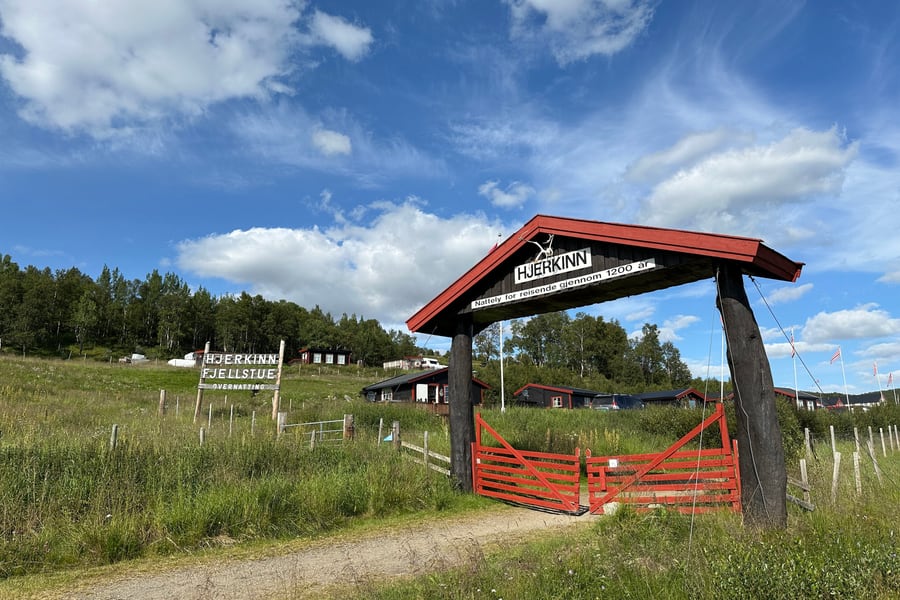 Ssu / Wikimedia Commons · CC BY-SA 4.0
Hjerkinn Fjellstue
On the plateau at Hjerkinn
A mountain inn and farm run by the same family since the 1600s, with rooms, apartments and riding on Icelandic horses.
Check Availability (opens in a new tab, on hjerkinn.no)via hjerkinn.noQuestions or corrections
Planning this trip and stuck on something, or spotted a time, fare or detail that has changed? Send us a message about The Dovre Line. We read every one, and we update this page when something has changed.