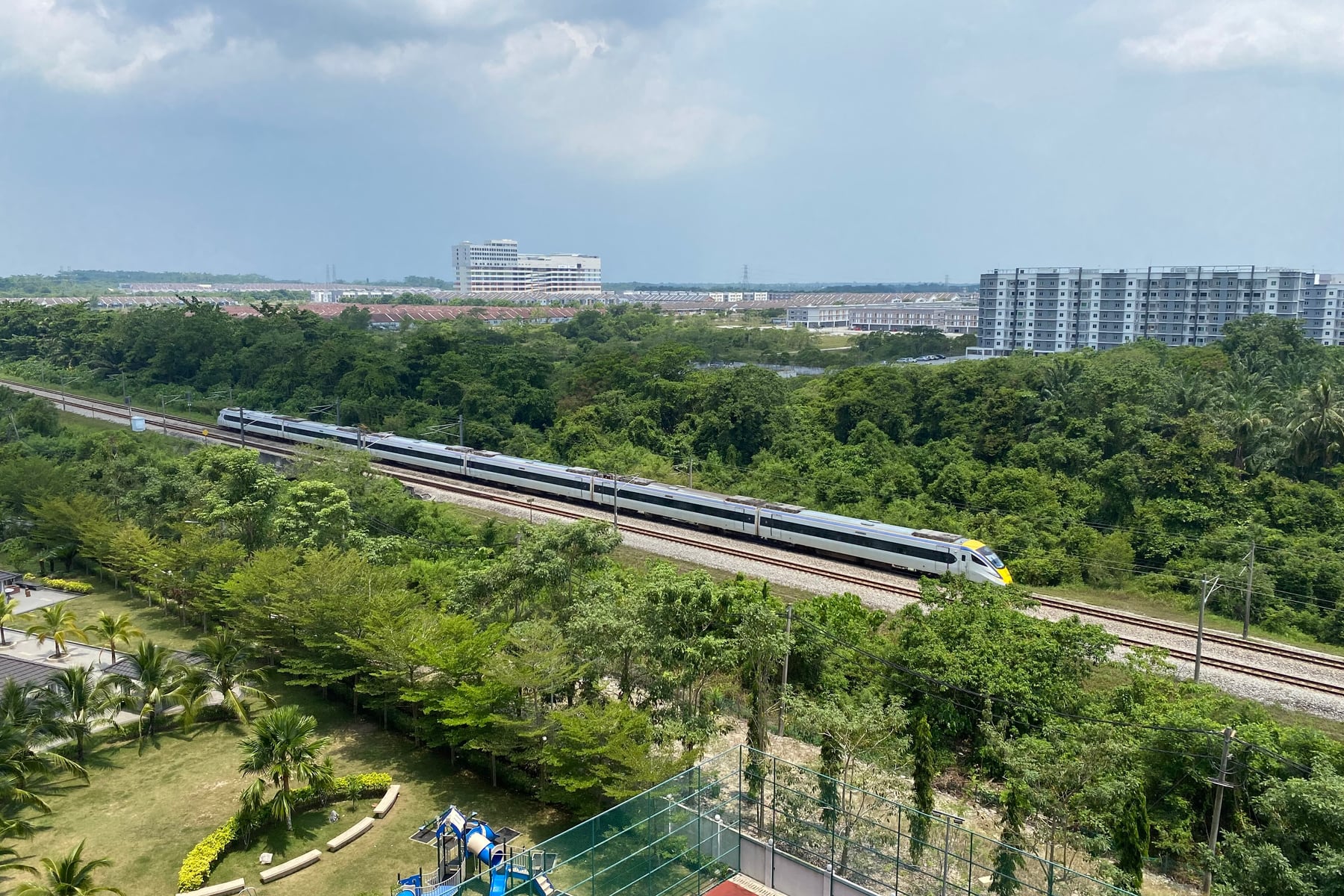
The West Coast ETS
Hiroki.loh.st / Wikimedia Commons · CC BY-SA 4.0 · cropped
- DistanceAbout 900 km · metre gauge, electrified
- DurationAbout 10½ hours, changing at KL Sentral
- Best seasonAll year
Introduction
Malaya's first railway was not a main line. It opened at Taiping on 1 June 1885 and ran down to the coast at Port Weld, to carry tin from the mines to the sea. More short lines followed, each from a mining town to a port, and over the next thirty years they were joined into one trunk line down the west side of the peninsula, finished from the Thai border to Johor Bahru in 1918.
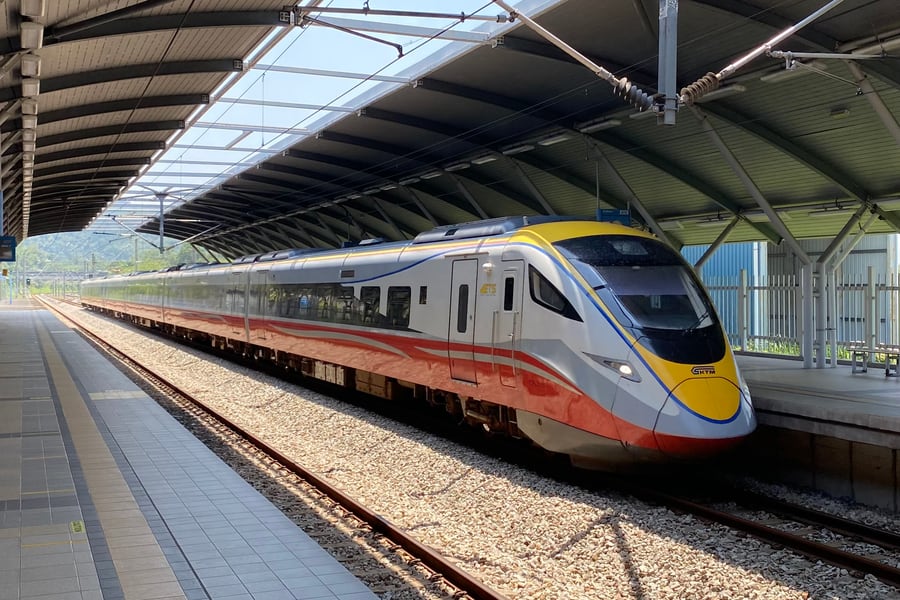
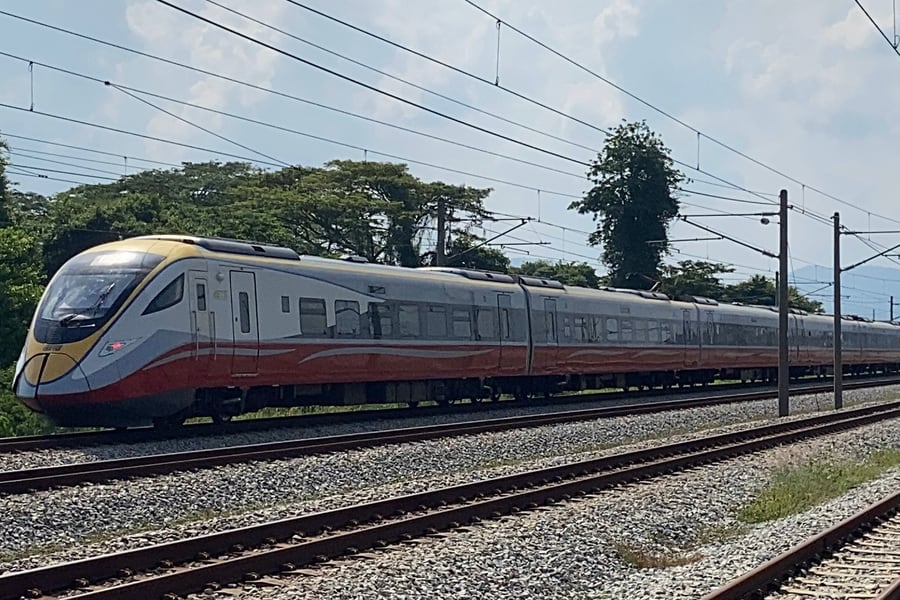
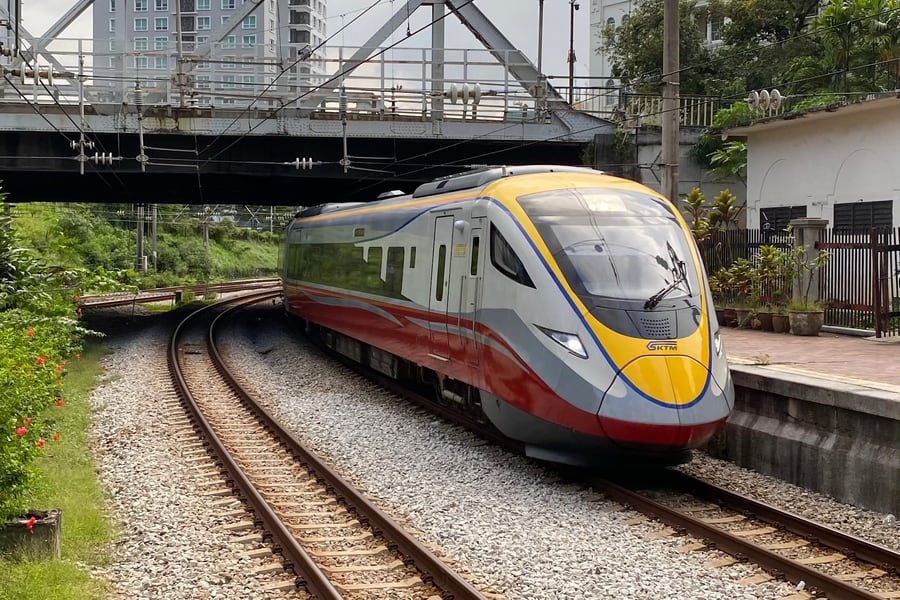
That line now carries the ETS, KTMB's Electric Train Service: six-car electric sets on metre gauge, running at up to 140 km/h on double track from Padang Besar, on the Thai border, through Alor Setar, Taiping, Ipoh and Kuala Lumpur to JB Sentral, across the water from Singapore. The whole run is about 900 kilometres.
No ETS runs the whole way. The trains from the north end at KL Sentral, and the trains to Johor start there, so the journey is two rides with a change in Kuala Lumpur, and a day is enough for both.
The Journey
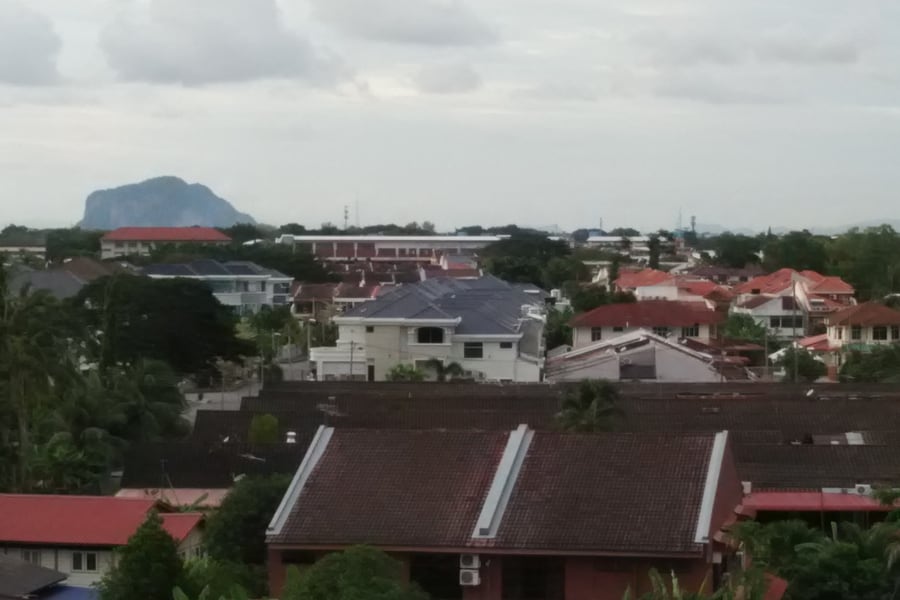
Padang Besar station stands about 200 metres from the Thai border, and Thai trains from Hat Yai use it too; Malaysian and Thai immigration share the building. The ETS heads south past Arau and across the paddy plains of Kedah to Alor Setar, with the limestone of Gunung Keriang standing out of the rice fields.
Below Sungai Petani the trains for Kuala Lumpur keep inland of Butterworth and Penang, cross into Perak and reach Taiping, where the railway began, under the forested slopes of Bukit Larut. Next comes the royal town of Kuala Kangsar, then the Kinta Valley: Ipoh, whose 1917 station is called the Taj Mahal of Ipoh, then Batu Gajah and Kampar among limestone hills and the old tin country. From Tanjung Malim it runs on through Rawang and Sungai Buloh into Kuala Lumpur, some five and a half hours and 534 km from the border.
The change at Kuala Lumpur
The northern trains end at KL Sentral, the city's main station, and the southern trains start there. They are separate services with separate tickets, and KTMB names no connection time, so leave an hour. A few ETS trains use the old Kuala Lumpur station instead, a short way north on the same line.
South of Kuala Lumpur the line runs through Kajang and Seremban to Pulau Sebang/Tampin and Gemas, where the Jungle Railway leaves for the interior. Beyond the Johor border it calls at Segamat and Kluang before it runs into JB Sentral, about 370 km and four and a half hours from Kuala Lumpur. The Shuttle Tebrau crosses the Causeway from there to Woodlands, in Singapore.
The trains
The ETS runs on KTM Class 93 trains, electric six-car sets built by CRRC Zhuzhou in China. KTMB runs them as ETS Platinum, the faster trains with fewer stops, and ETS Gold, which call at more of the small stations. The seats are in pairs either side of the aisle, every coach is air-conditioned, and each seat has a power socket and a tray table.
Along the route
 Marufish / Wikimedia Commons · CC BY-SA 2.0 · cropped
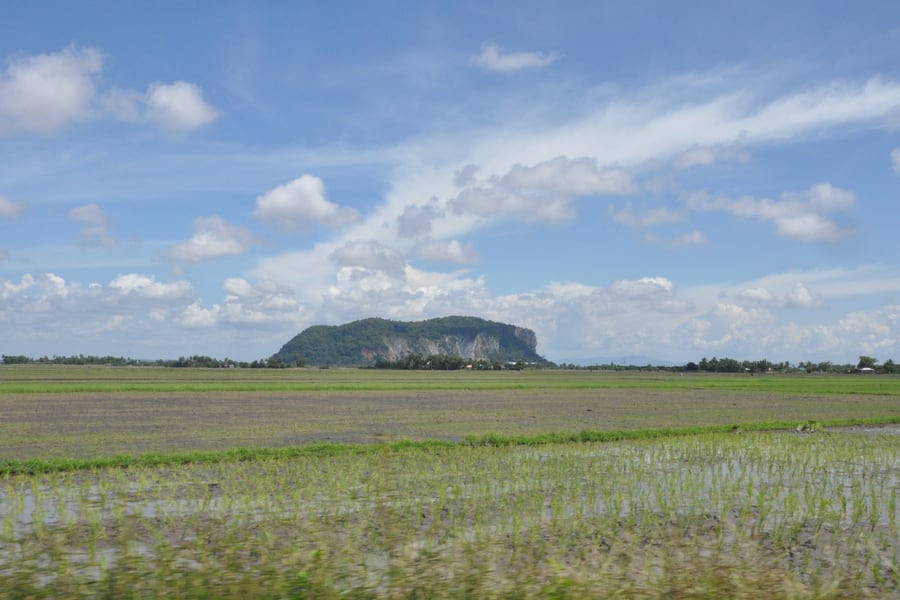
The rice plains of Kedah
South of Padang Besar the train runs across flat paddy country towards Alor Setar, and the isolated limestone block of Gunung Keriang stands up out of the fields.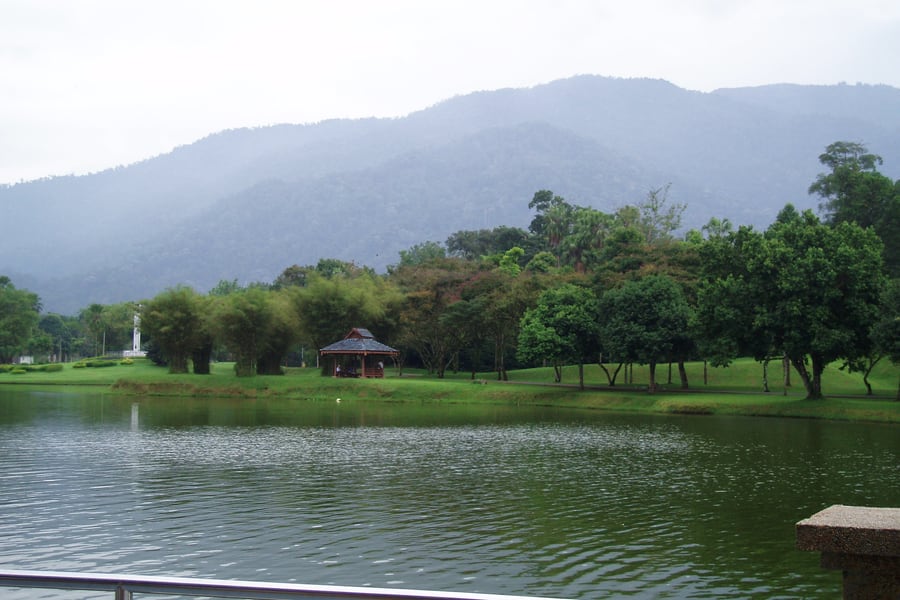 Johnwxh30 / Wikimedia Commons · Public domain · cropped
Taiping, where it began
Malaya's railways began here on 1 June 1885, with a line from Taiping down to the coast at Port Weld to carry tin. The ETS still stops at Taiping, beneath the hills.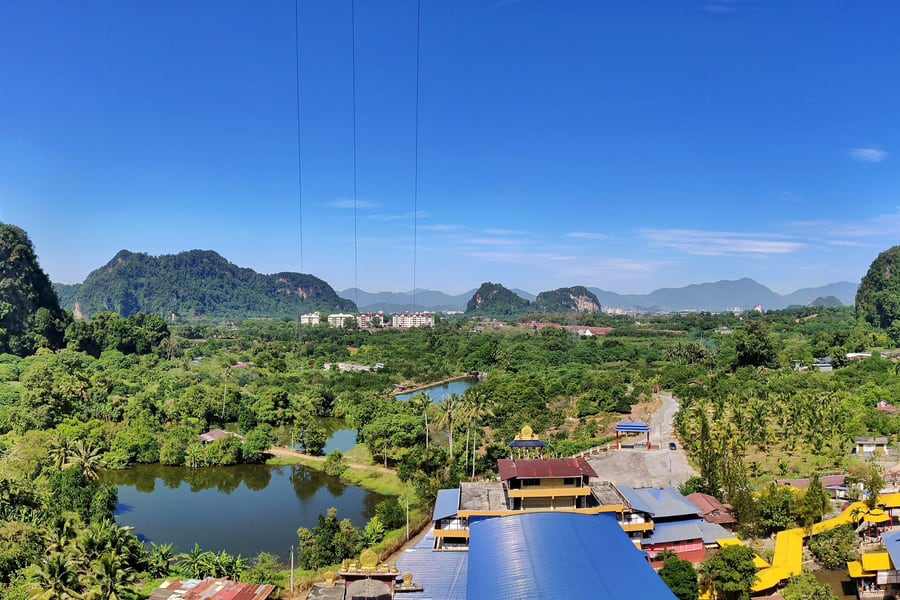 Dennis Sylvester Hurd / Wikimedia Commons · CC0 · cropped
The Kinta Valley
Around Batu Gajah and Ipoh the line runs up the valley of the Kinta River, once among the richest tin fields in the world, past limestone hills hollowed into caves.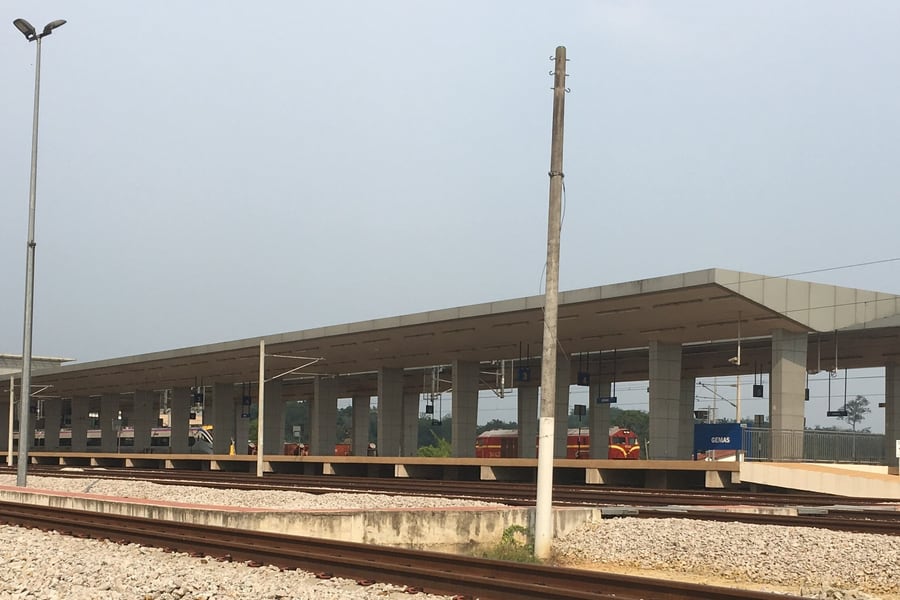 Slleong / Wikimedia Commons · CC0 · cropped
Gemas junction
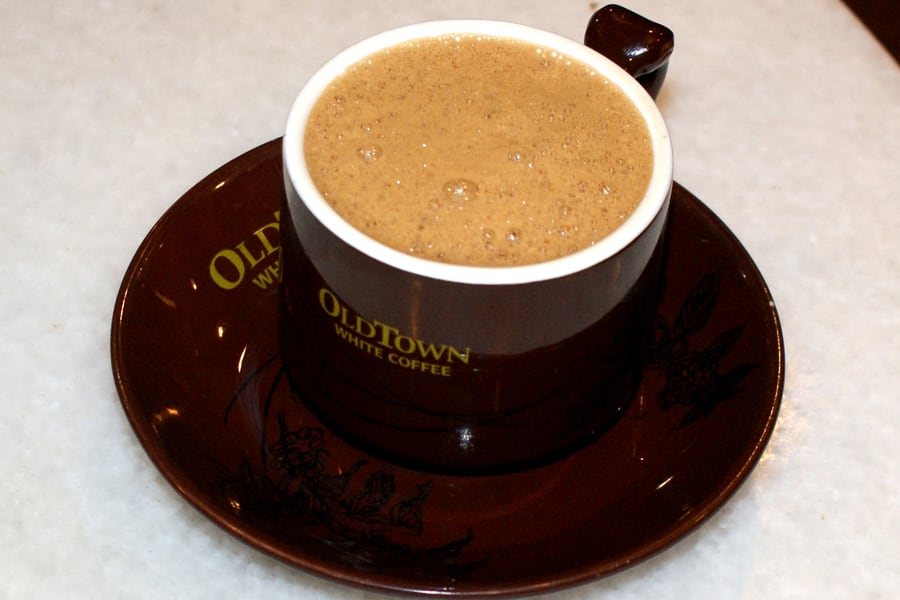
South of Kuala Lumpur the train calls at Gemas, near the Johor border, where the Jungle Railway leaves the main line for the interior and the far north-east.A bit of history
Culture & experiences along the way
 Hhaithait / Wikimedia Commons · CC BY-SA 3.0 · cropped
Ipoh white coffee
Ipoh's own coffee is made from beans roasted with palm-oil margarine and served with condensed milk. It is the reason Lonely Planet named Ipoh one of the world's top three coffee towns, and the train stops in the middle of the city.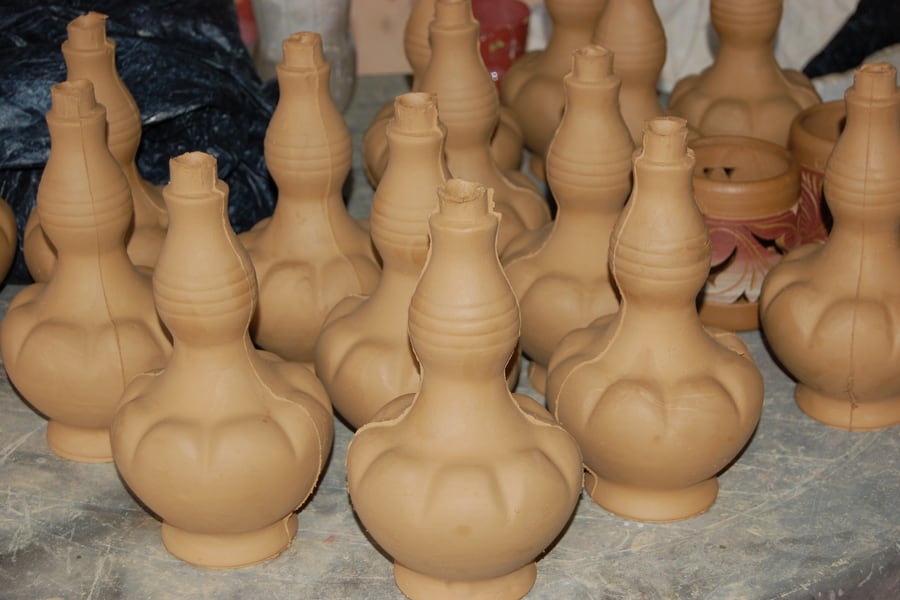 Marufish / Wikimedia Commons · CC BY-SA 2.0 · cropped
Labu sayong pottery
The labu sayong is a clay water pitcher shaped like a bottle gourd, made in Sayong, about 10 km from Kuala Kangsar. The craft began in the village of Kampung Kepala Bendang, where the clay was to hand, and has spread to the potters' families in the villages around.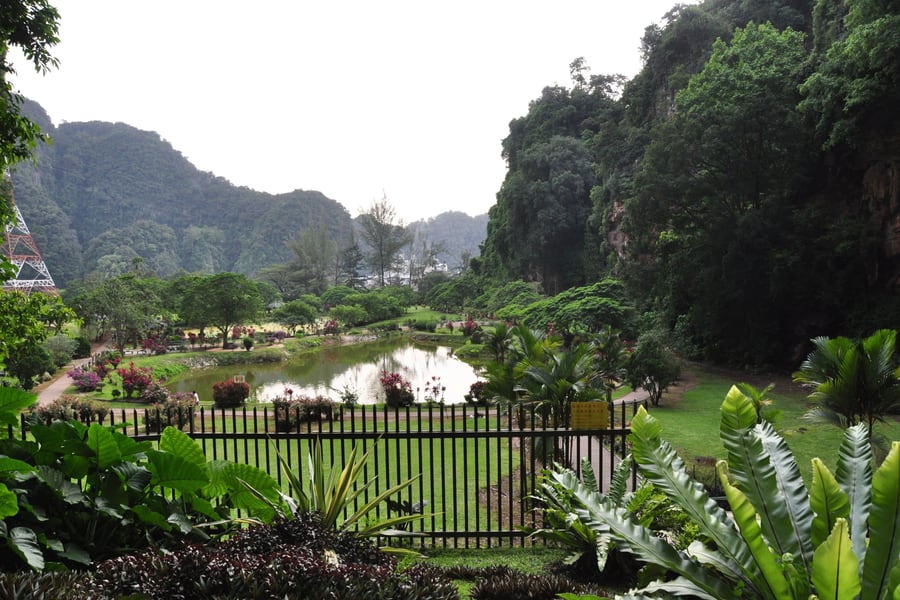 Marufish / Wikimedia Commons · CC BY-SA 2.0 · cropped
Kek Lok Tong
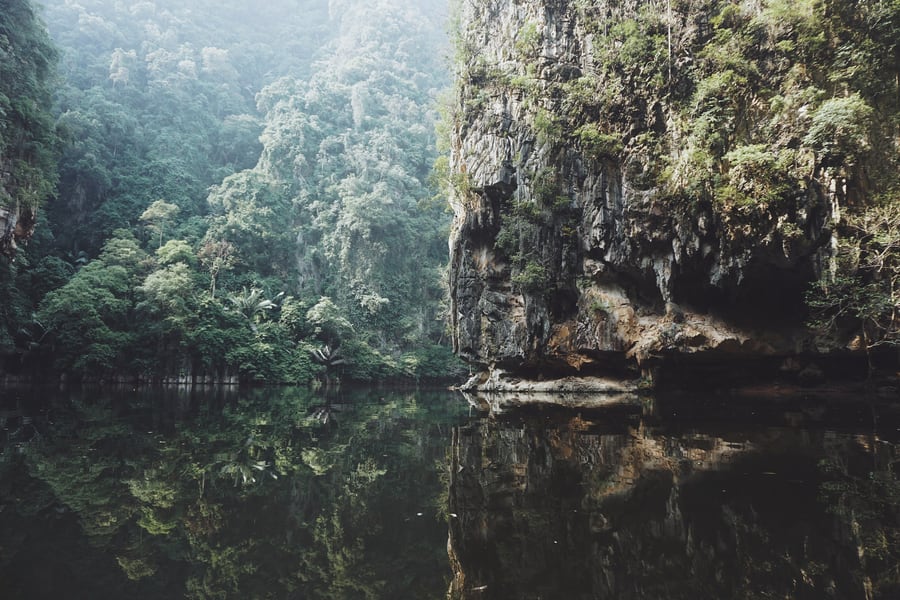
Ipoh's limestone hills are full of caves, and several hold Chinese temples. At Kek Lok Tong the cave opens out at the back onto a garden of ponds and lawns, shut in on every side by the cliffs.Timetables
The ETS runs every day of the year. From 1 January 2027 KTMB runs it as two sets of trains that meet at KL Sentral: one between Padang Besar and Kuala Lumpur, one between Kuala Lumpur and JB Sentral. Extra trains run on Fridays, Saturdays and Sundays; the ones below run daily. Every seat is reserved.
Padang Besar to Kuala Lumpur
| Train | Padang Besar | Alor Setar | Ipoh | KL Sentral |
|---|---|---|---|---|
| Platinum 9221 | 07:00 | 07:39 | 10:01 | 12:25 |
| Gold 9251 | 08:20 | 09:00 | 11:25 | 14:05 |
| Platinum 9225 | 10:30 | 11:09 | 13:31 | 15:55 |
| Platinum 9227 | 13:30 | 14:09 | 16:31 | 18:55 |
| Platinum 9231 | 15:25 | 16:04 | 18:26 | 20:50 |
| Platinum 9235 | 17:30 | 18:09 | 20:31 | 22:55 |
All six call at Taiping and Kuala Kangsar. Going north, trains leave KL Sentral for Padang Besar at 07:20, 11:05, 14:35, 17:35, 19:35 and 23:30; the 07:20 arrives at 12:43, and the 23:30 at 04:53.
Kuala Lumpur to JB Sentral
| Train | KL Sentral | Seremban | Gemas | JB Sentral |
|---|---|---|---|---|
| Platinum 9523 | 07:55 | 09:18 | 10:20 | 12:20 |
| Gold 9555 | 09:25 | 10:43 | 11:50 | 14:00 |
| Gold 9557 | 10:50 | 12:18 | 13:25 | 15:35 |
| Platinum 9529 | 12:05 | 13:28 | 14:30 | 16:30 |
| Platinum 9531 | 13:20 | 14:38 | 15:40 | 17:40 |
| Platinum 9535 | 17:20 | 18:43 | 19:45 | 21:45 |
| Platinum 9537 | 19:45 | 21:13 | 22:15 | 00:15 |
Going north, trains leave JB Sentral for KL Sentral at 05:30, 07:10, 08:25, 11:40, 13:45, 16:20 and 17:20, taking between 4 h 20 and 4 h 40.
The whole line in a day: the 07:00 from Padang Besar reaches KL Sentral at 12:25, and the 13:20 reaches JB Sentral at 17:40. Northbound, the 05:30 from JB Sentral reaches KL Sentral at 10:10, in time for the 11:05, which reaches Padang Besar at 16:28.
Times as of November 2026, for the timetable from 1 January 2027, from KTMB's ETS timetable and its booking system. Check them on KTMB (opens in a new tab) before you travel, especially around Hari Raya and other public holidays.
Tickets
Tickets come from KTMB, on its KITS website and app or at the station, and every one is for a named seat on one train. The whole line takes two tickets, one to KL Sentral and one on from it, bought separately. Book ahead around Hari Raya, when the whole country travels.
Fares change with the day and the demand. In mid-January 2027 the lowest adult fares between Padang Besar and KL Sentral were MYR 123 on an ETS Platinum and MYR 111 on an ETS Gold, and between KL Sentral and JB Sentral MYR 99 and MYR 77, with higher fares from Friday to Sunday.
Fares as of November 2026, from KTMB's booking system.
Book your tickets
ETS Platinum
Padang Besar–KL Sentral from MYR 123 · KL Sentral–JB Sentral from MYR 99
The faster trains, with fewer stops, sold for one seat on one train.
Book Tickets (opens in a new tab, on KTMB)via KTMBETS Gold
Padang Besar–KL Sentral from MYR 111 · KL Sentral–JB Sentral from MYR 77
The trains that call at more of the small stations, and the cheaper fares.
Book Tickets (opens in a new tab, on KTMB)via KTMBRail Passes
No rail pass covers the ETS. Interrail and Eurail are European schemes, and no Malaysian railway is in Interrail's list of covered companies. KTMB's own MyRailLife passes are for its commuter trains and shuttles, not the ETS, so the whole line is bought as two ordinary tickets.
Checked November 2026 against Interrail's list of railway companies (opens in a new tab) and KTMB's booking site.
Places to Visit
The ETS stops in the middle of most of the towns it serves, so the line is easy to break: a night in Ipoh or Taiping turns a long day into two short ones. Three of the stops below share an architect, Arthur Benison Hubback, who designed the stations at Ipoh and Kuala Lumpur and the mosque at Kuala Kangsar.
 Fairuskhafiz / Wikimedia Commons · CC BY-SA 4.0 · cropped
Alor Setar
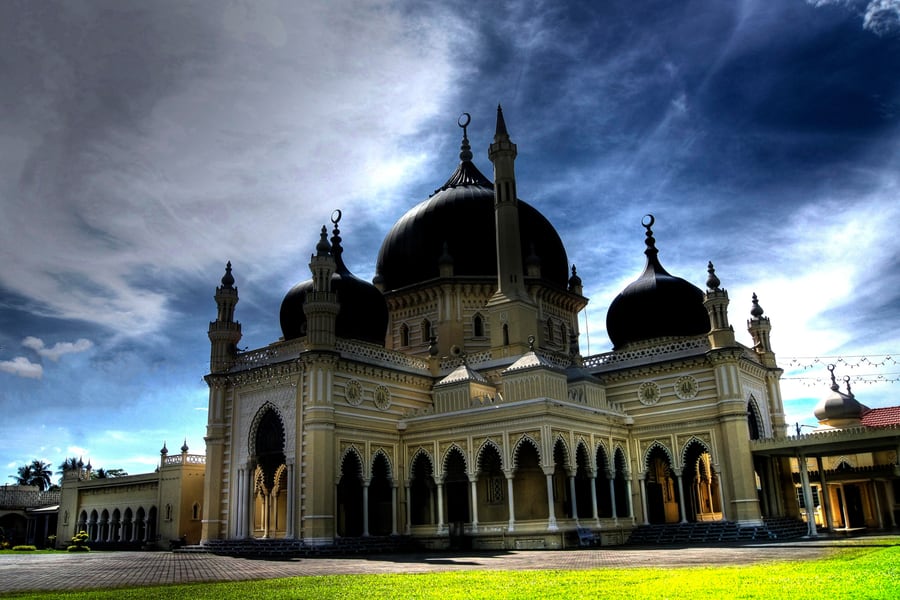
Every train from Padang Besar calls at Alor Setar, the capital of Kedah, under an hour from the border. Its state mosque, the Zahir Mosque, was built in 1912 and is one of the oldest and grandest in Malaysia, with black domes over arcades of pointed arches.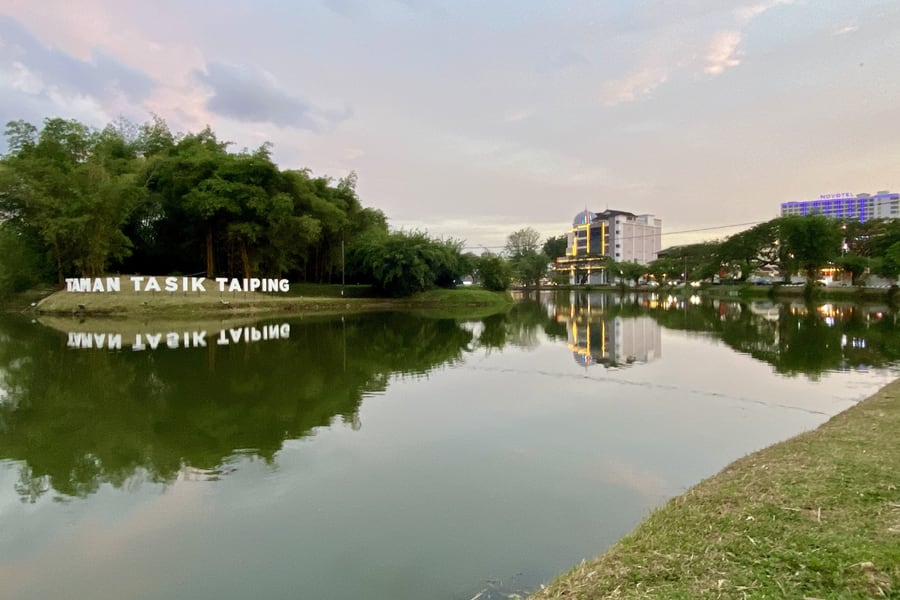 Slleong / Wikimedia Commons · CC0 · cropped
Taiping Lake Gardens
The first public garden in Malaya was laid out in 1880 on an abandoned tin mine, given for the purpose by the mining magnate Chung Keng Quee. Its 64 hectares hold ten lakes and ponds at the foot of Bukit Larut, with rain trees along Residency Road beside them.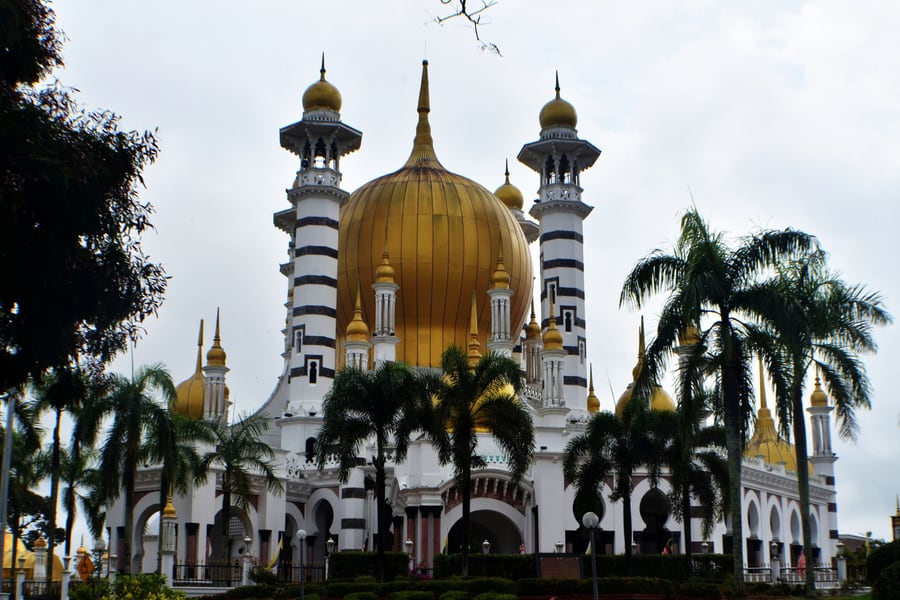 Miss Prema Darshini / Wikimedia Commons · CC BY-SA 4.0 · cropped
Ubudiah Mosque
In the royal town of Kuala Kangsar, the Ubudiah Mosque was built for Sultan Idris of Perak between 1913 and 1917, slowed by the First World War and by two royal elephants that fought and broke its Italian marble. Its architect, Arthur Benison Hubback, also designed the stations at Ipoh and Kuala Lumpur.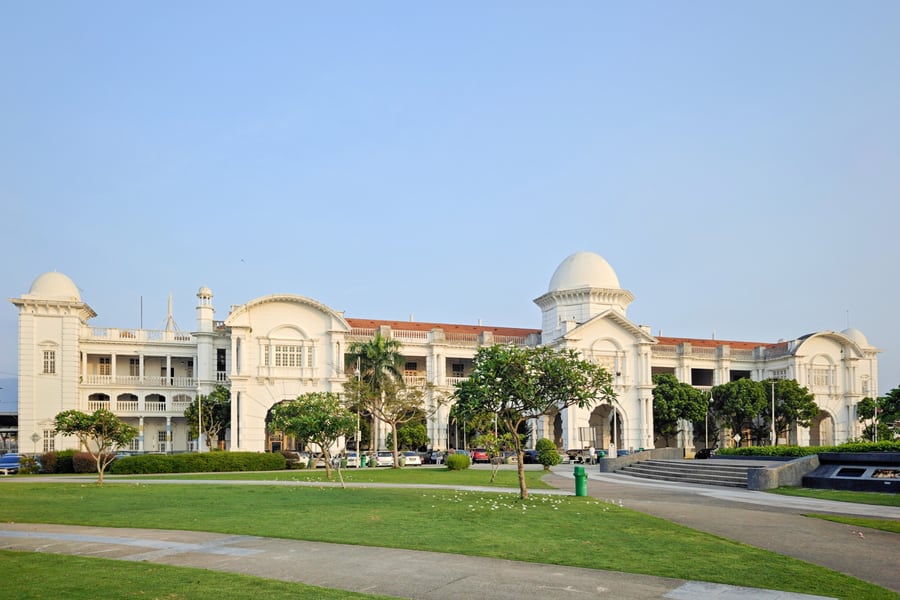 FBilula / Wikimedia Commons · CC BY-SA 4.0 · cropped
Ipoh
Ipoh grew rich on the tin of the Kinta Valley, and its railway station shows it. Hubback's white building of 1917, with a hotel on its upper floor, is known locally as the Taj Mahal of Ipoh. It shares its street with the town hall, the court and the main post office.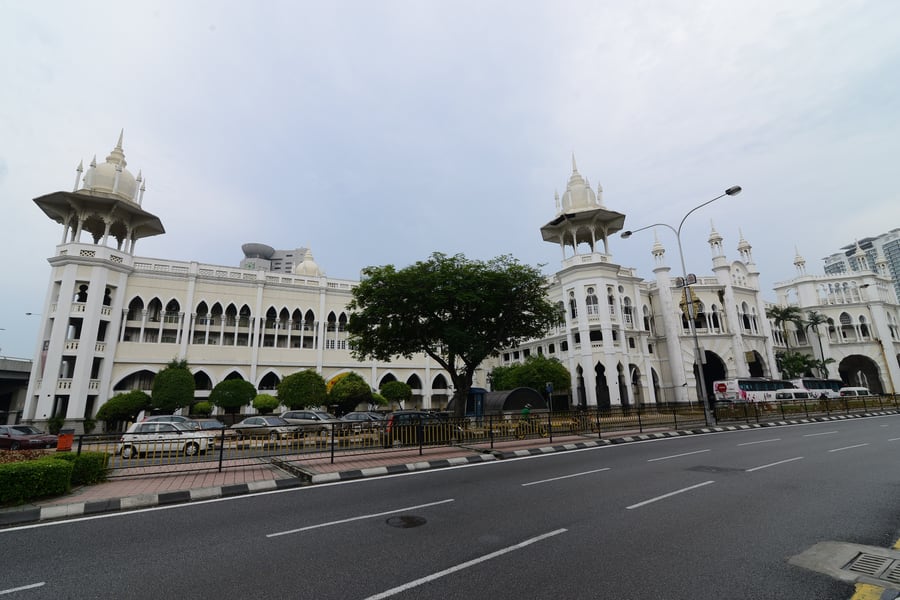 Jorge Láscar / Wikimedia Commons · CC BY 2.0 · cropped
Kuala Lumpur railway station
KL Sentral replaced it as the city's main station in 2001, but Hubback's station of 1910, a run of domes, arches and pavilions on Jalan Sultan Hishamuddin, still sees trains, including some ETS services. It is a short walk from the National Mosque.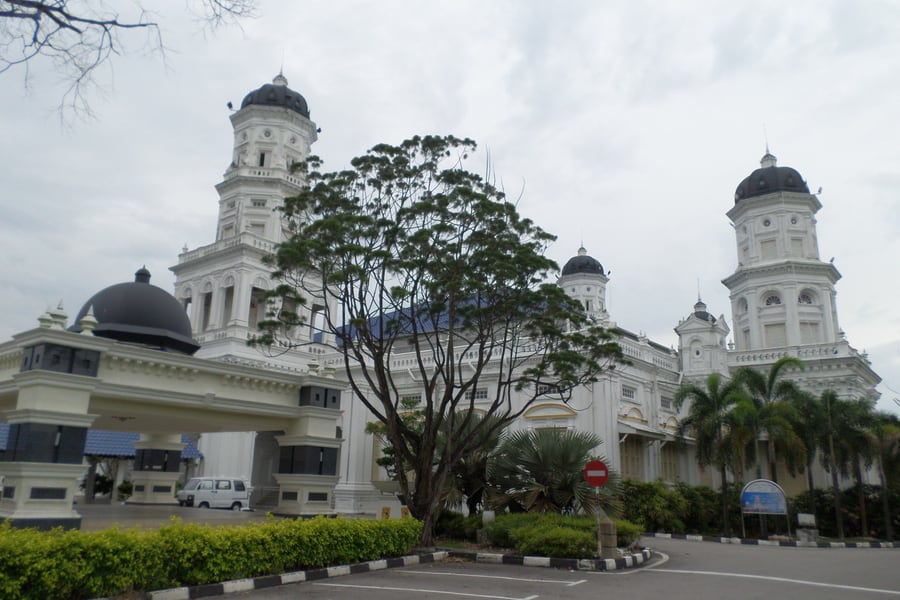 Chongkian / Wikimedia Commons · CC BY-SA 4.0 · cropped
Johor Bahru
JB Sentral stands at the Malaysian end of the Causeway, with KTMB's Shuttle Tebrau running across to Woodlands in Singapore. The state mosque of Johor, on Jalan Skudai, was built between 1892 and 1900 under Sultan Abu Bakar, whose name it carries.Where to Sleep
Kuala Lumpur, where the line divides, is the natural place to stop for a night and make two days of it, rather than taking the change between the northern and southern trains on the same afternoon.
Where to stay
The Majestic Hotel Kuala Lumpur
Minutes from KL Sentral
Built around the restored Hotel Majestic of 1932, with 300 rooms and suites.
Check Availability (opens in a new tab, on marriott.com)via marriott.comQuestions or corrections
Planning this trip and stuck on something, or spotted a time, fare or detail that has changed? Send us a message about The West Coast ETS. We read every one, and we update this page when something has changed.