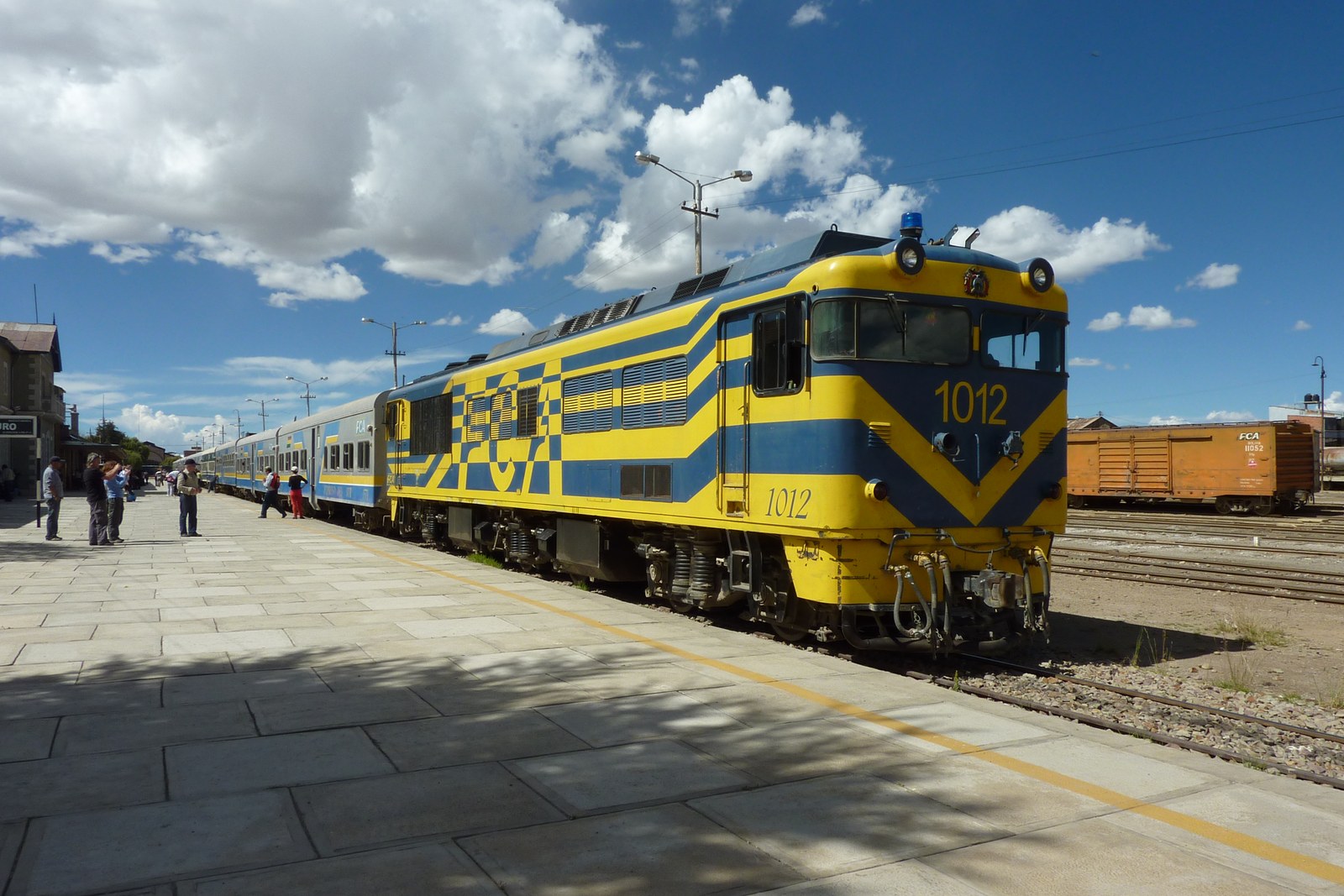
The Expreso del Sur
Nils Öberg / Wikimedia Commons · CC0 · cropped
- DistanceOruro–Villazón · ~650 km
- DurationAbout 15 hours (Oruro–Villazón)
- Best seasonDry season May–Oct; Salar mirror Dec–Apr
Introduction
Bolivia is one of the few countries left where the train is still a real journey rather than a museum piece, and its finest ride runs down the spine of the Andean altiplano — the high, cold, treeless plateau that sits at nearly 4,000 metres above the sea. This is the line of the Expreso del Sur, run by the Empresa Ferroviaria Andina, and it is the way travellers have long reached the most extraordinary sight in the country: the Salar de Uyuni, the largest salt flat on earth.
The train sets out from Oruro, an old mining city, and runs some 650 kilometres south to Villazón on the Argentine border, calling at Uyuni — the gateway to the salt — and the red-rock canyon town of Tupiza along the way. It is not a luxury cruise; it is an ordinary, comfortable, inexpensive service train, with reclining seats, a dining car and the heating you badly want when the altiplano night drops below freezing outside the glass.
What makes it unforgettable is the country it crosses. For hours the window fills with salt pans, llamas, distant volcanoes and mud-brick villages under an immense sky; then, in the far south, the grey plateau gives way to the astonishing red rock of Tupiza. Ride it as the Bolivians do, wrapped up against the cold with the plateau sliding past, and you have one of the last great train journeys of the Andes.
The Journey
The journey begins at Oruro, the railhead of the Bolivian altiplano and the terminus of the passenger line south. In the days before departure the station fills with travellers, traders and their bundles; then the blue-and-yellow train pulls out into the vast, flat, straw-coloured plateau, and the long run to the border begins.
For the first hours there is a hypnotic sameness to the altiplano — pale grassland, salt flats catching the light, flocks of llamas and alpacas, the occasional adobe hamlet with its church, and always, on the horizon, the cones of dormant volcanoes. The train runs high and steady at around 3,700 metres, and as the afternoon fades the cold comes down hard; this is when the heated carriage earns its keep.
By evening the train reaches Uyuni, and most travellers get off here. This wind-scoured town on the edge of the Salar de Uyuni is the reason the line is famous: from Uyuni, 4x4 tours strike out across the blinding white salt to the cactus islands, the coloured lagoons and the flamingos beyond, and on the town's edge the rusting engines of the train cemetery stand as a monument to the railway's own past. It is worth breaking the journey here for days.
Those who stay aboard press on through the night, deeper into the south. In the small hours the country changes utterly: the flat plateau crumples into the deep, glowing red gorges of the Cordillera de Chichas, and the train winds down to Tupiza, a frontier town straight out of a Western — it was near here that Butch Cassidy and the Sundance Kid made their last stand. A little further and the line reaches Villazón, on the Argentine border, where the rails of one country meet those of the next. It is a journey that begins on the roof of the Andes and ends among red canyons — and never once stops giving you something to look at.
Along the route
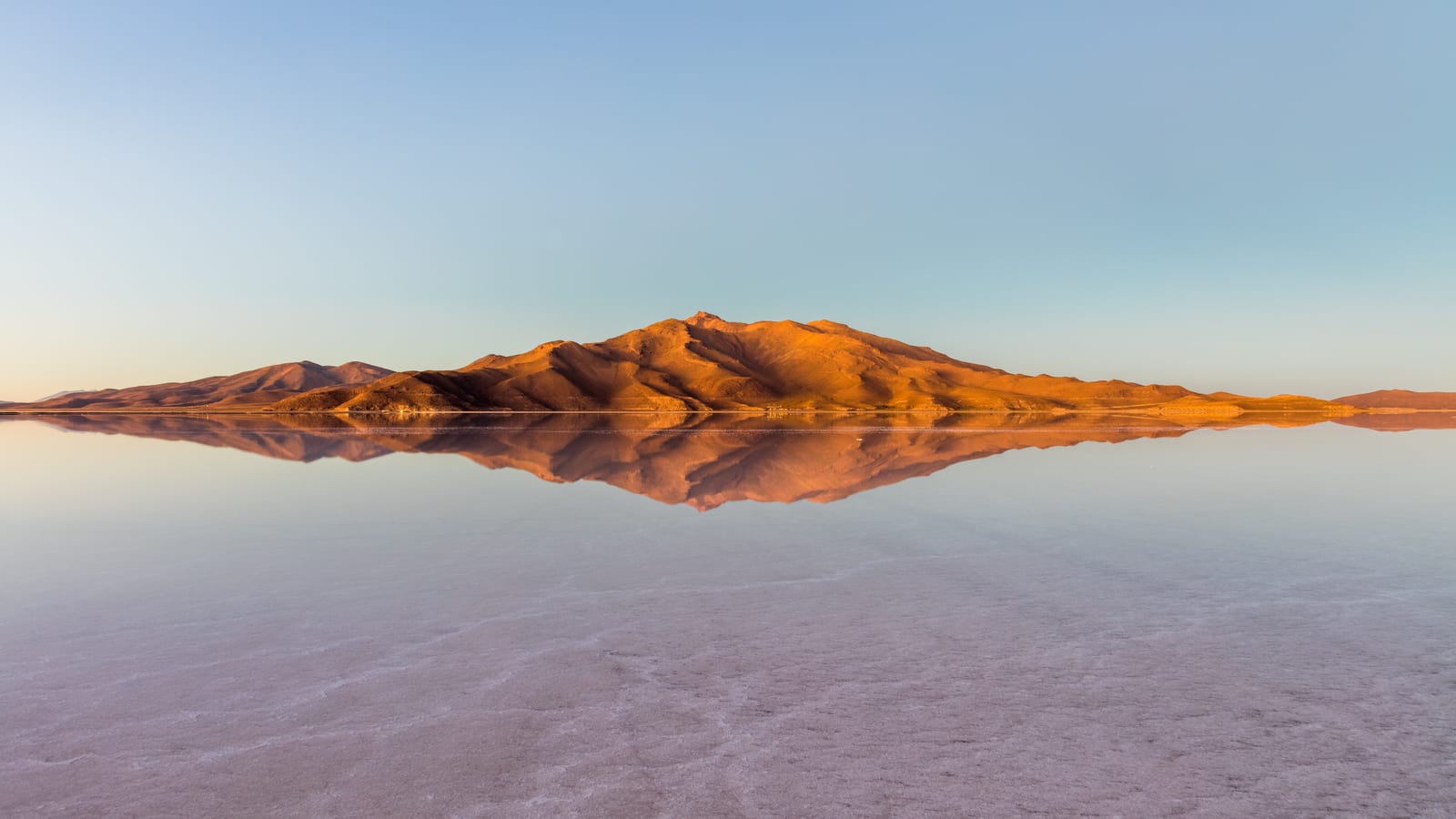
Diego Delso, delso.photo, License CC BY-SA · Wikimedia CommonsThe Salar de Uyuni
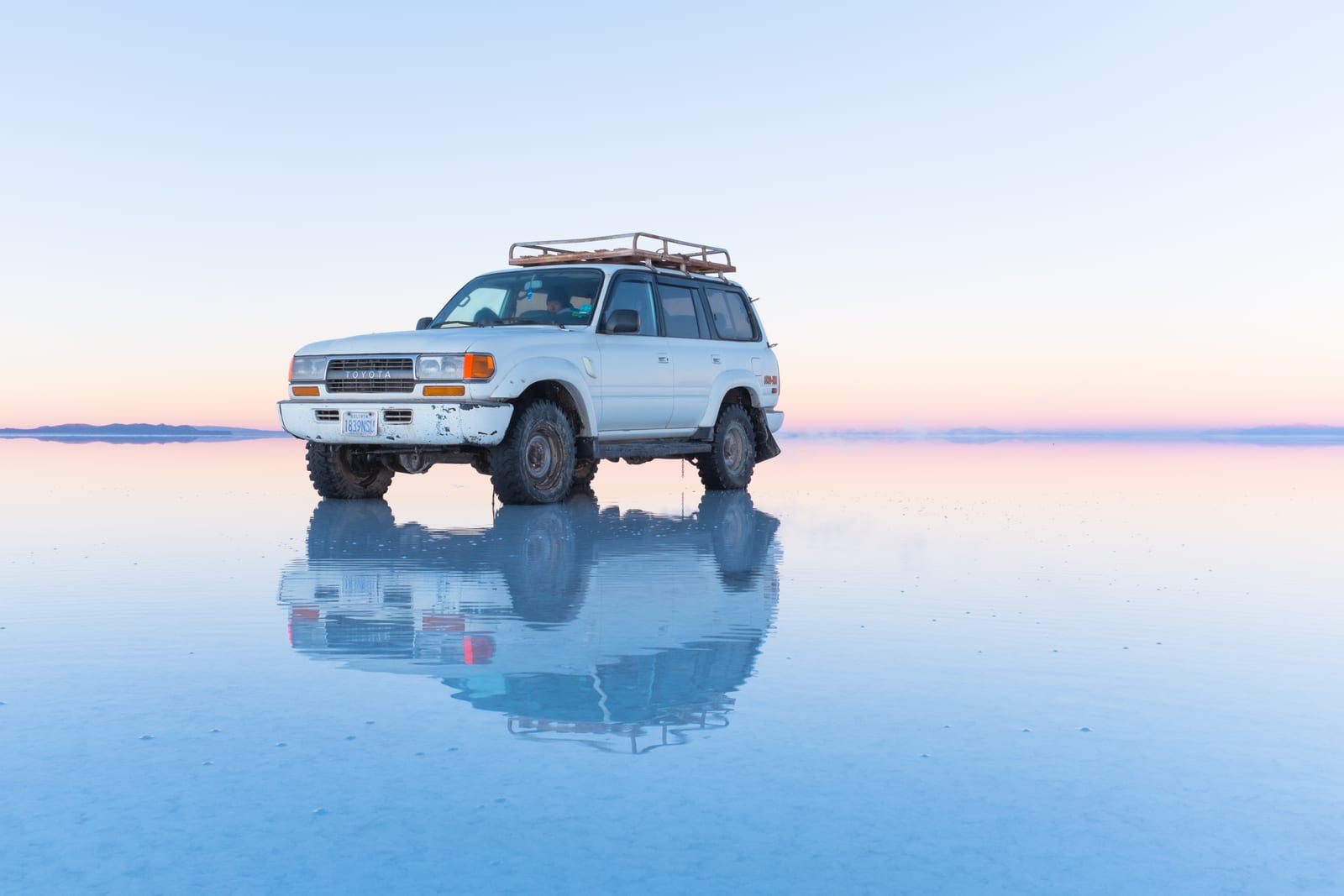
Uyuni is the gateway to the largest salt flat on earth — 10,582 square kilometres of blinding white crust at 3,656 metres. After rain it floods to a film of water and becomes a perfect mirror of the sky. The train does not cross it, but it is why most people ride this line.LBM1948 / Wikimedia Commons · CC BY-SA 4.0The Uyuni train cemetery
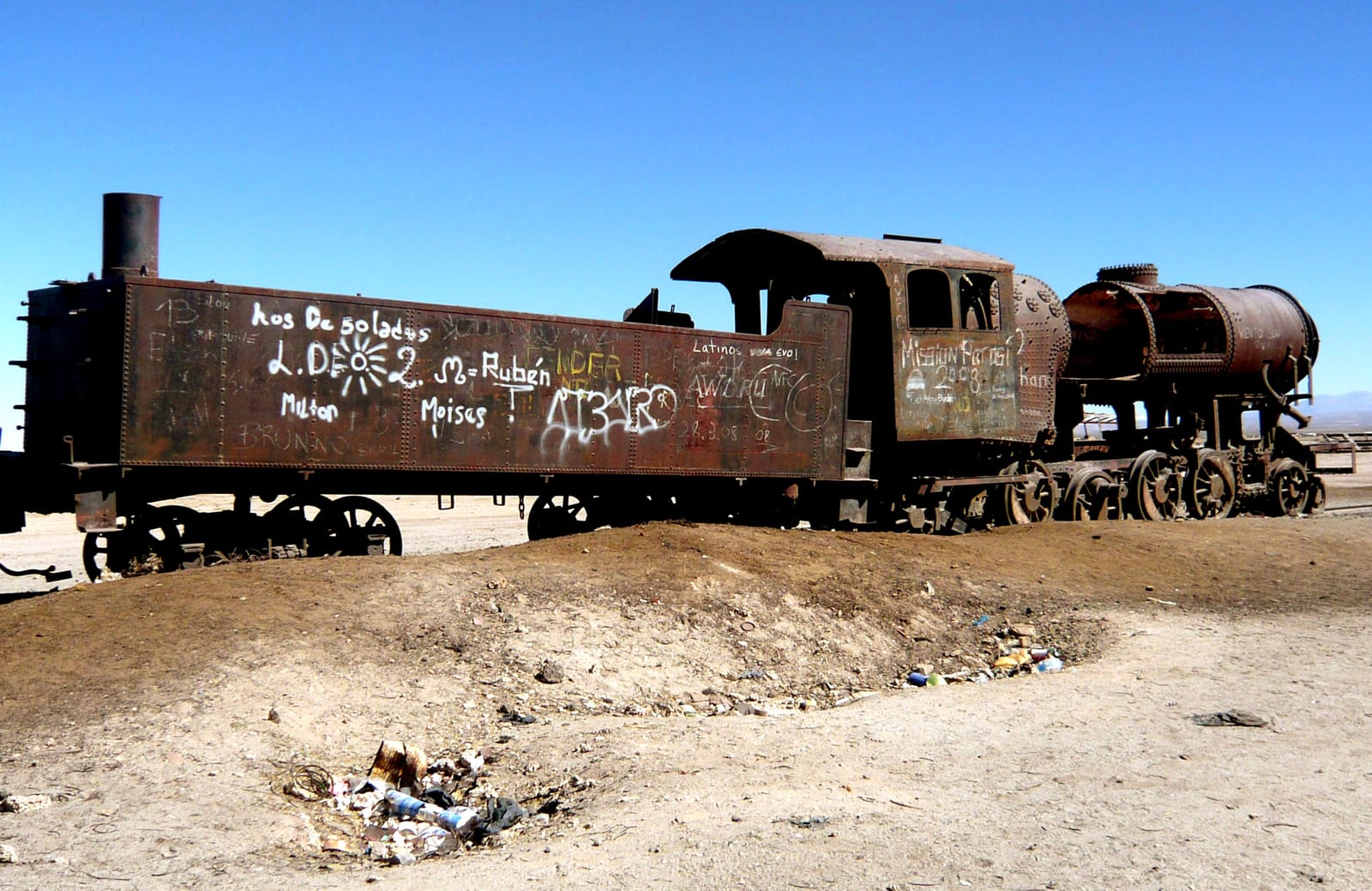
On the plain outside Uyuni lie the skeletons of scores of steam locomotives. They worked the mineral railway to the Pacific from the 1890s; when the ore ran out they were simply left to the wind and the salt, and they rust there still.Belinda Grasnick / Wikimedia Commons · CC BY-SA 2.0Down the altiplano to Tupiza
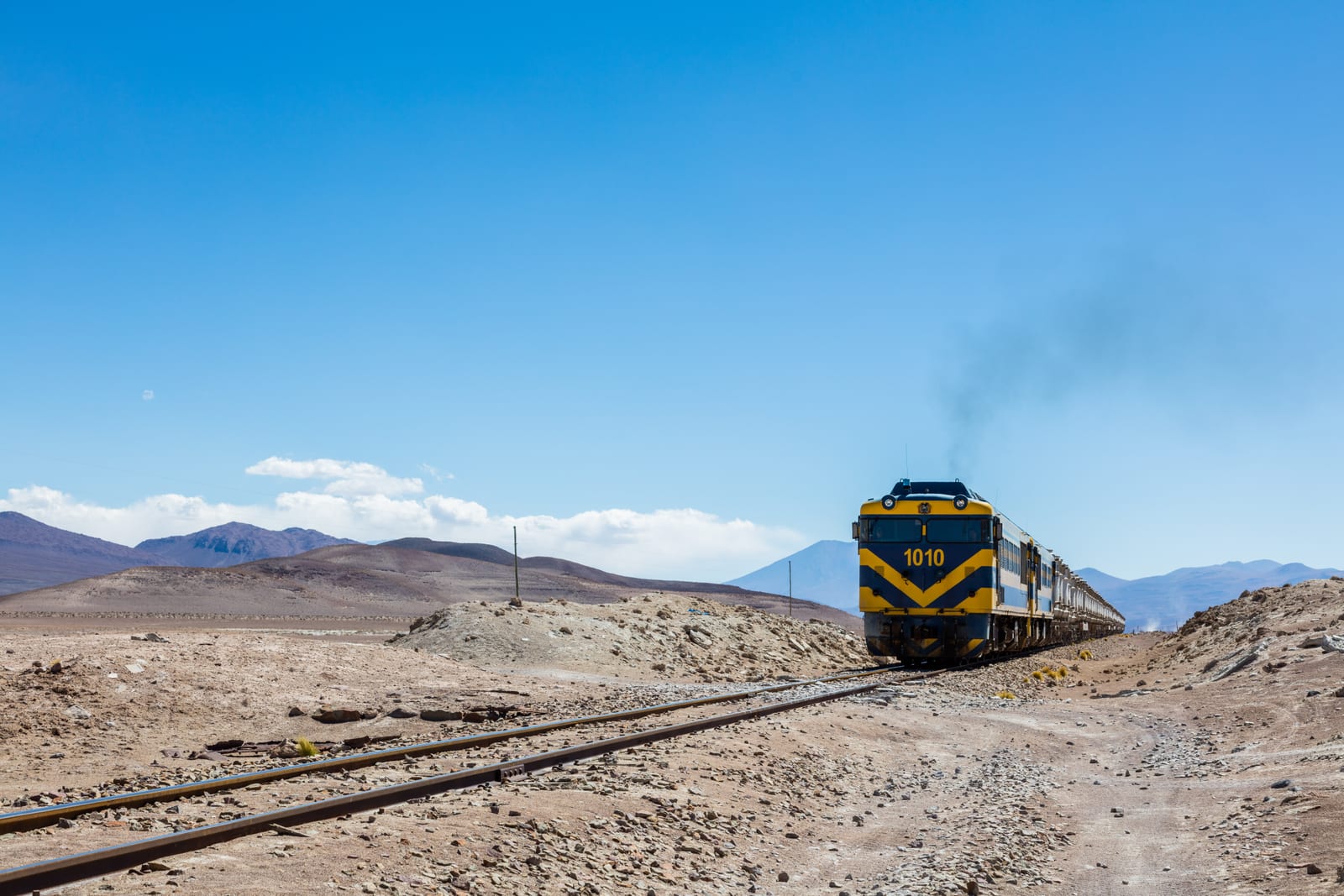
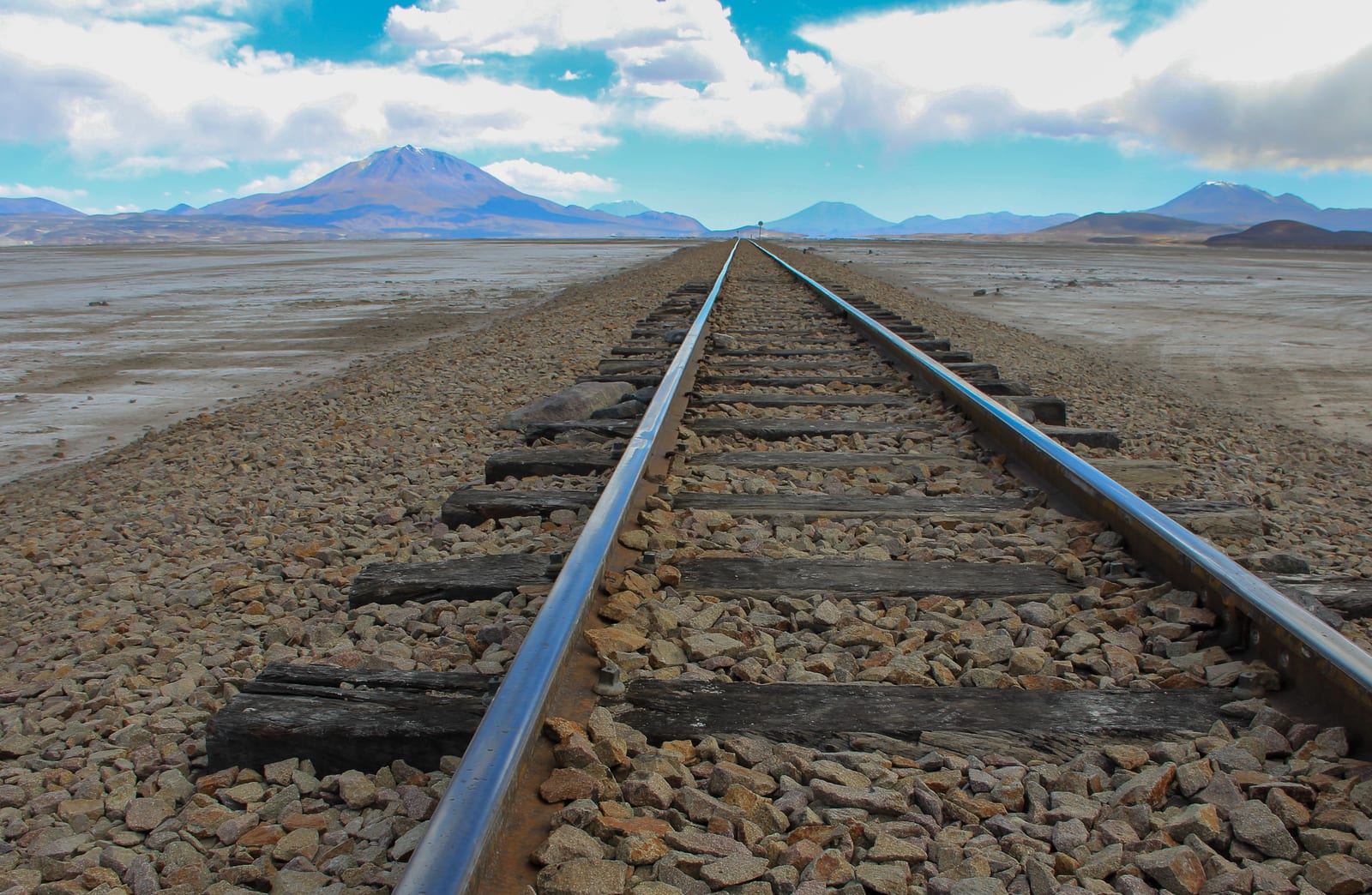
South of Uyuni the line climbs and dips across the bare altiplano — llamas, salt pans, distant volcanoes — before dropping into the red-rock canyons around Tupiza, the Wild-West country where Butch Cassidy and the Sundance Kid met their end.A bit of history
Culture & experiences along the way
wallygrom / Wikimedia Commons · CC BY-SA 2.0Ejecutivo and Salón class
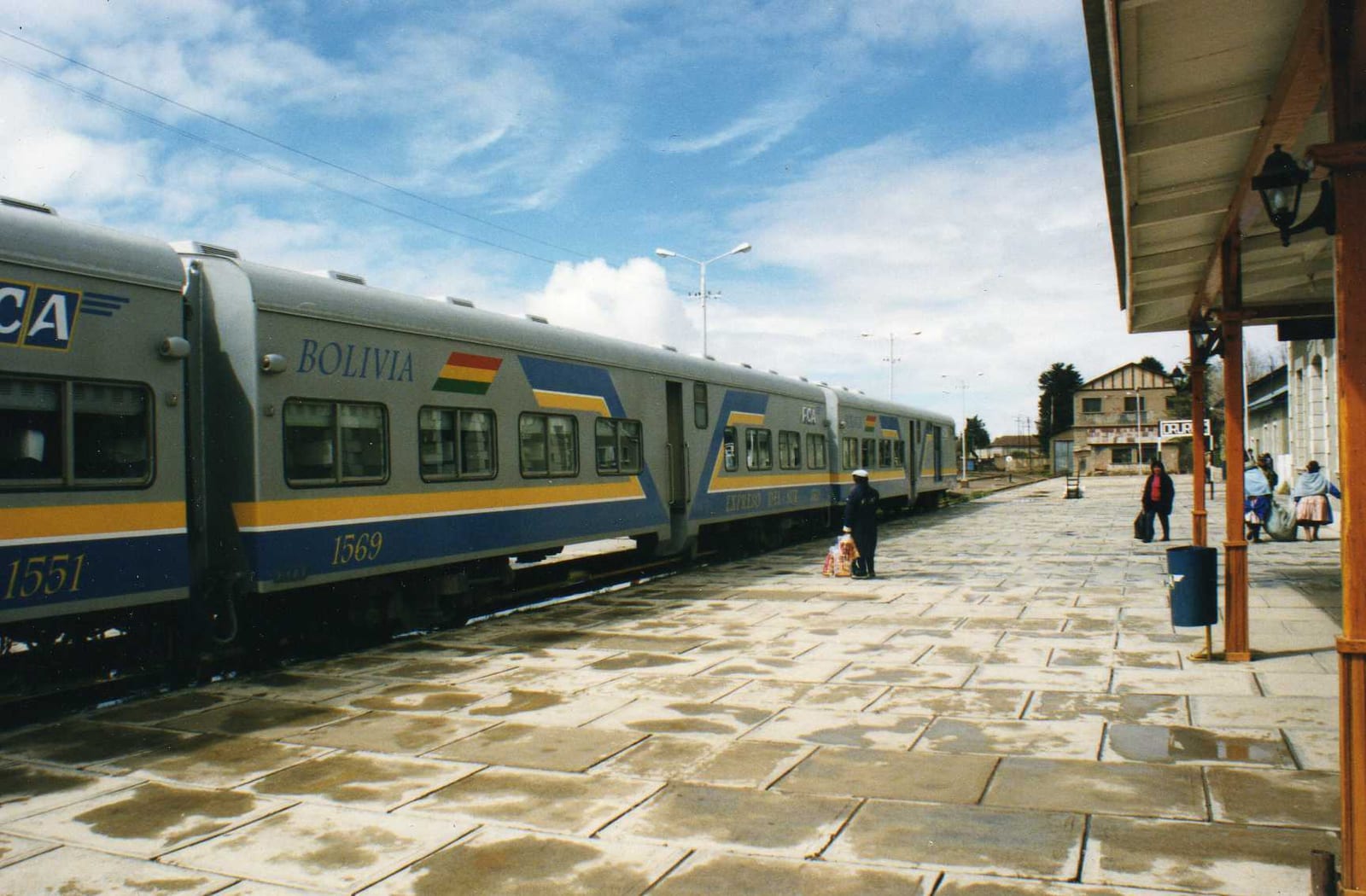
The Expreso del Sur is the fast, comfortable train, with reclining seats in Ejecutivo and Salón class, heating for the cold altiplano nights and a dining car. Its slower sister, the Wara Wara del Sur, stops everywhere and adds a cheaper Popular class — the true local train. Either way this is inexpensive, ordinary travel, not a tourist cruise, and all the better for it.Jimmy Harris / Wikimedia Commons · CC BY 2.0Uyuni, gateway to the salt
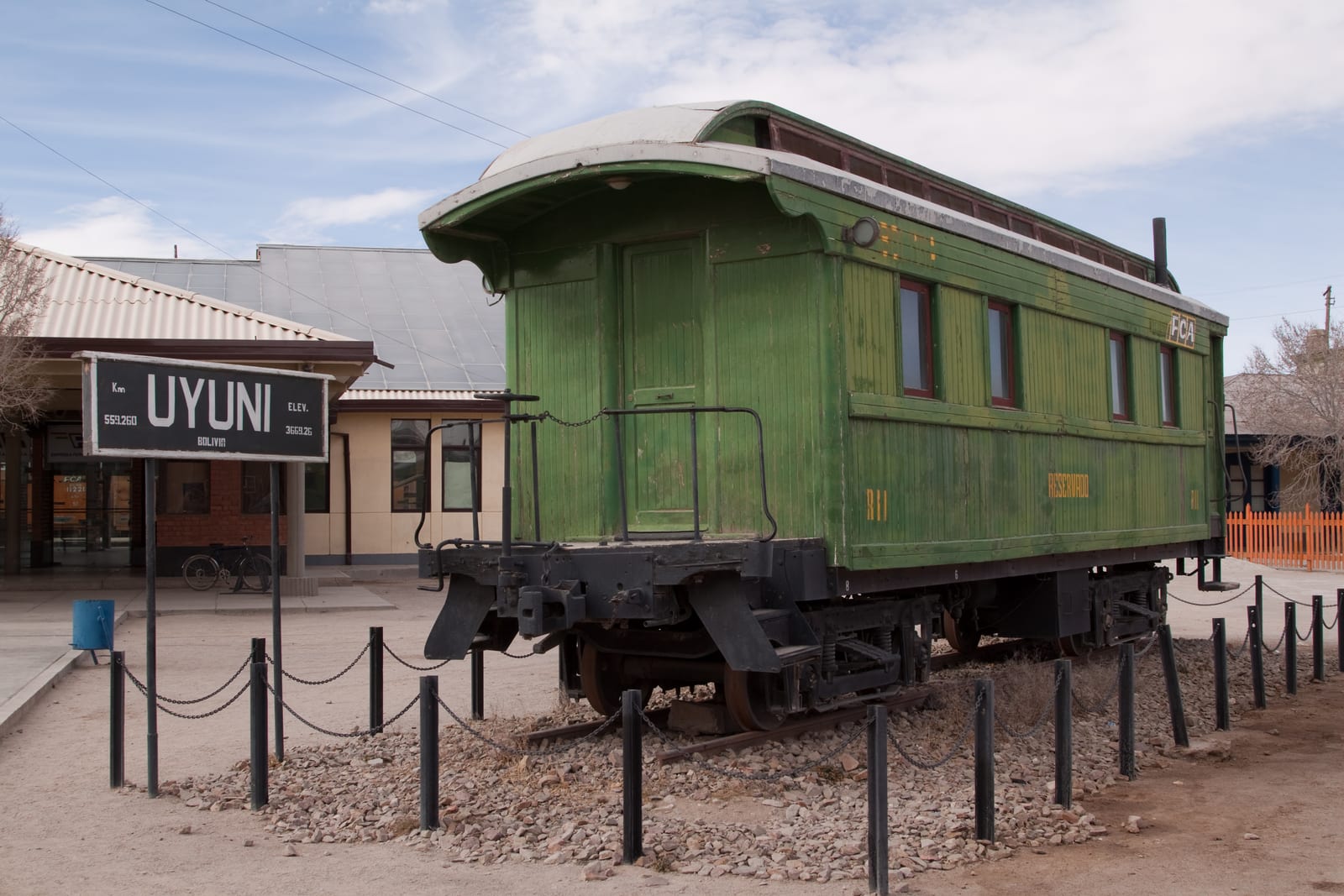
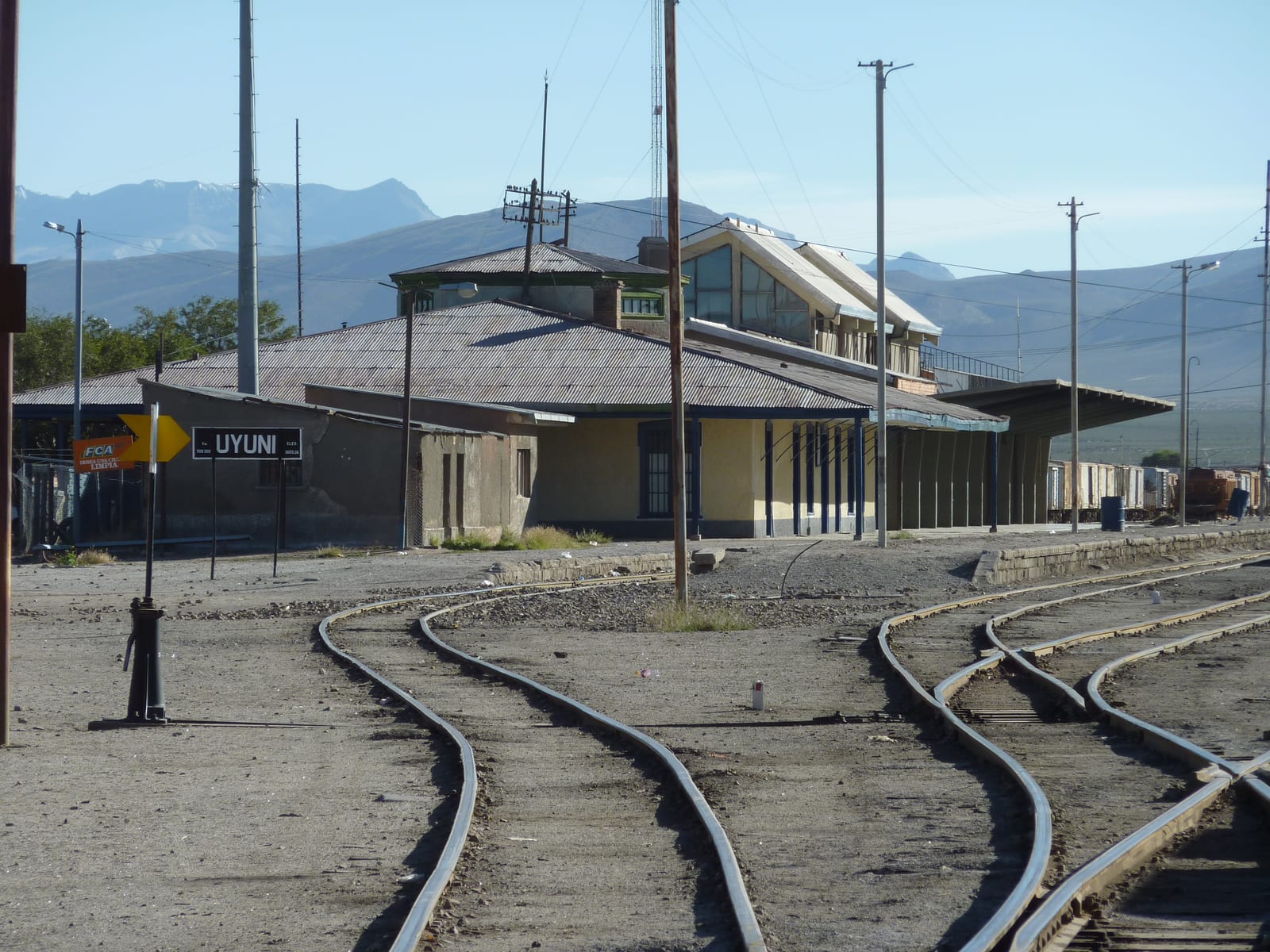
Most travellers break the journey at Uyuni — a windswept railway town at 3,670 metres that lives off the salt flat on its doorstep. Its streets are full of tour agencies, its edge is guarded by the rusting engines of the train cemetery, and its station is the jumping-off point for the 4x4 trips out onto the Salar and the coloured lagoons beyond.Bob Ramsak / Wikimedia Commons · CC BY 3.0A night on the roof of the Andes
Both trains run partly by night, and the darkness on the altiplano is total — then a huge canopy of stars, the carriage rocking, the temperature dropping below freezing outside the window. Wrap up, watch the lights of a lonely village slide past, and wake to red canyons and the border. It is one of the last great overnight rides in South America.Timetables
The line is worked by Empresa Ferroviaria Andina (FCA) with two trains: the faster Expreso del Sur, which makes only the main stops, and the all-stations Wara Wara del Sur. Between them they run most days of the week, but each runs only on set days and largely overnight, so the timetable needs planning.
Expreso del Sur (Ejecutivo & Salón class), as of the 2026 timetable — confirm before travelling:
| Oruro → Villazón (Tue & Fri) | Villazón → Oruro (Wed & Sat) | ||
|---|---|---|---|
| Oruro | 14:30 | Villazón | 15:30 |
| Río Mulato | 19:00 | Tupiza | 17:45 |
| Uyuni | 21:20 | Atocha | 20:55 |
| Atocha | 00:40 | Uyuni | 23:45 |
| Tupiza | 03:55 | Río Mulato | 02:30 |
| Villazón | 06:05 | Oruro | 06:55 |
Wara Wara del Sur (adds Popular class; calls at all halts) runs Oruro → Villazón on Wed & Sun, departing Oruro 19:00 and reaching Uyuni about 02:35 and Villazón about 11:50; and Villazón → Oruro on Mon & Thu, departing Villazón 15:30.
Good to know:
- For the Salar, aim for Uyuni. On the Expreso del Sur from Oruro you reach Uyuni around 21:20 — a civilised evening arrival for the salt-flat tours. It is the single most popular stretch of the line.
- It runs into the night. Both trains cross the coldest, highest country after dark; bring warm layers even in summer, as carriages can be chilly and station stops are freezing.
- Getting to Oruro. Oruro is linked to La Paz and Cochabamba by frequent buses (about 3–4 hours from La Paz); most travellers reach the railhead that way and pick up the train there.
Times as of the 2026 FCA timetable and subject to change. Confirm the current schedule and days of operation with the operator before you travel — see the Tickets section below.
Tickets
This is an ordinary, affordable railway rather than a tourist special, so buying a ticket is simple and the fares are low. The Expreso del Sur offers Ejecutivo, with the fullest reclining seats, and Salón; the all-stations Wara Wara del Sur adds a cheaper Popular class. Ejecutivo is worth the small extra on the long overnight legs. Tickets are sold at the stations and through Ferroviaria Andina, and your passport is needed to book.
Book ahead around the peak salt-flat months and Bolivian holidays. Bring bolivianos in cash, food to supplement the dining car, and layers — the altiplano nights are genuinely cold. The most popular plan is to ride Oruro to Uyuni, break for the Salar, then continue south to Tupiza and Villazón; the line rewards taking it in stages.
Book your tickets
Expreso del Sur · Oruro–Uyuni–Villazón
The fast train, Ejecutivo & Salón
Ferroviaria Andina's flagship service down the altiplano — reclining Ejecutivo and Salón seats, running Oruro to Villazón (via Uyuni and Tupiza) on Tuesdays and Fridays, and back on Wednesdays and Saturdays. Book at the station or through the operator; check current days and times before you travel.
Book Tickets (opens in a new tab, on Ferroviaria Andina (FCA))via Ferroviaria Andina (FCA)Wara Wara del Sur · the local train
All stops, adds Popular class
The slower, all-stations train on the same Oruro–Villazón line, calling at every altiplano halt and adding a cheaper Popular class alongside Ejecutivo and Salón. It runs Oruro to Villazón on Wednesdays and Sundays, and back on Mondays and Thursdays — the true local way to see the line.
Book Tickets (opens in a new tab, on Ferroviaria Andina (FCA))via Ferroviaria Andina (FCA)Rail Passes
No rail pass covers the Expreso del Sur. Interrail and Eurail are European schemes, and Bolivia is not among the 33 countries in Interrail's list of covered railway companies. Ferroviaria Andina sells each journey as a ticket, at the station or online, and your passport is needed to book.
Checked October 2026 against Interrail's list of railway companies (opens in a new tab).
Places to Visit
This is a line that strings together some of the most remarkable places in Bolivia, and it rewards breaking the journey rather than riding straight through. The stops below are the ones worth building days around.
Two things on the route do not get a card of their own. On the edge of Uyuni stands the Cementerio de Trenes — a plain of rusting nineteenth-century locomotives left where the old mineral railway died, a short walk or a cheap taxi from town. And at the far south, Villazón is chiefly a border crossing into Argentina, its twin town La Quiaca lying just across the frontier; from there this journey can flow straight on into the great railways and landscapes of the Argentine Northwest.
Most people give the Salar and the Eduardo Avaroa reserve two or three days on a 4x4 tour out of Uyuni, taking in the coloured lagoons, the geysers at Sol de Mañana and the desert rock formations together. Almost nobody regrets it.
 kallerna / Wikimedia Commons · CC BY-SA 4.0 · cropped
Isla Incahuasi
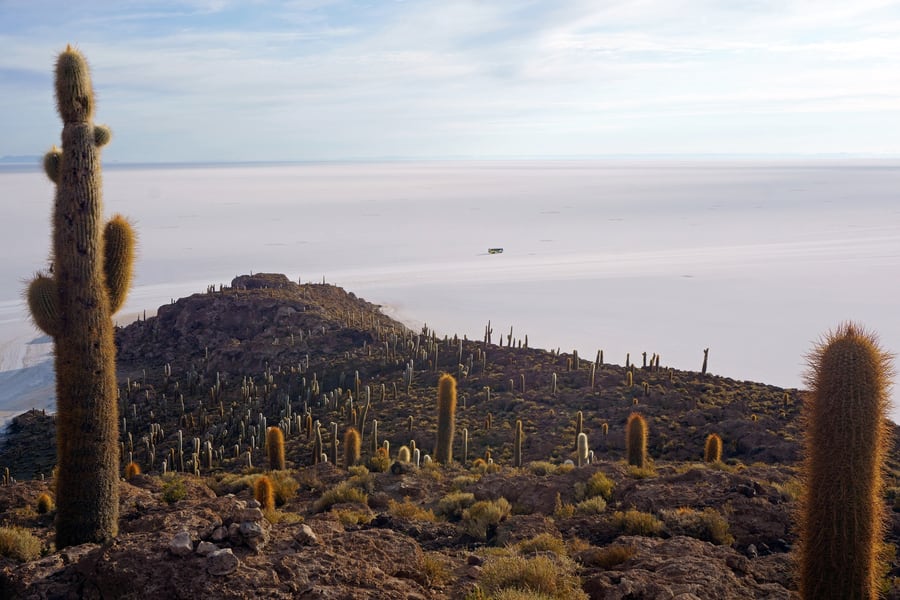
A rocky outcrop in the middle of the Salar de Uyuni, 24 hectares of it, standing at 3,656 m and covered in giant Trichocereus pasacana cactus. It is the top of an ancient volcano, drowned when this was a vast prehistoric lake some 40,000 years ago, and its surface is a crust of fossil algae and coral-like deposits. Walking up through the cactus with white salt running to the horizon on every side is the moment most people remember.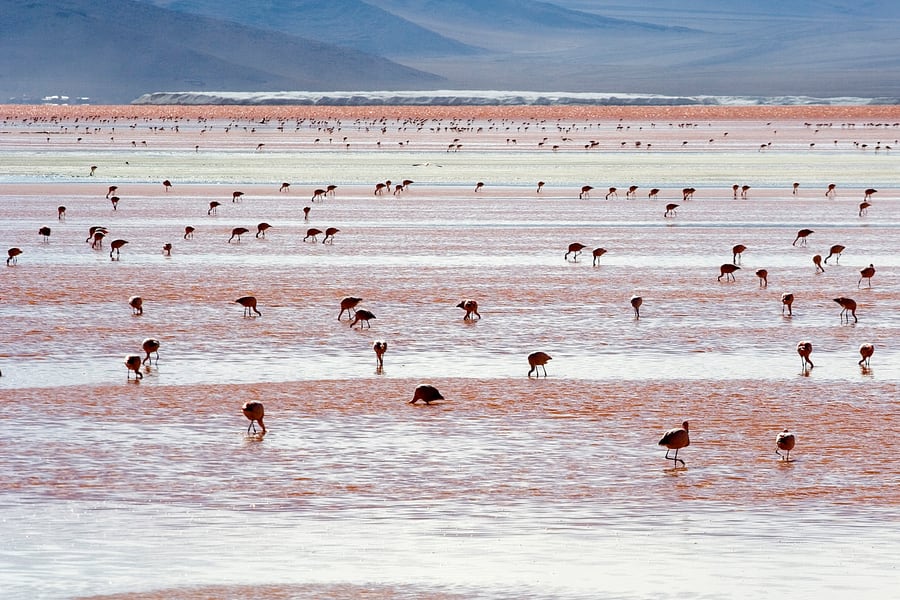 Luca Galuzzi / Wikimedia Commons · CC BY-SA 2.5 · cropped
Laguna Colorada
At 4,278 m in the Eduardo Avaroa reserve, a shallow lake 10.7 km long and barely a third of a metre deep on average, coloured a startling blood red by mineral sediments and by Dunaliella salina, a salt-loving algae. Three flamingo species feed here and the rare James's flamingo is the most numerous. There is nothing gentle about it — wind, altitude and colour all arrive at once.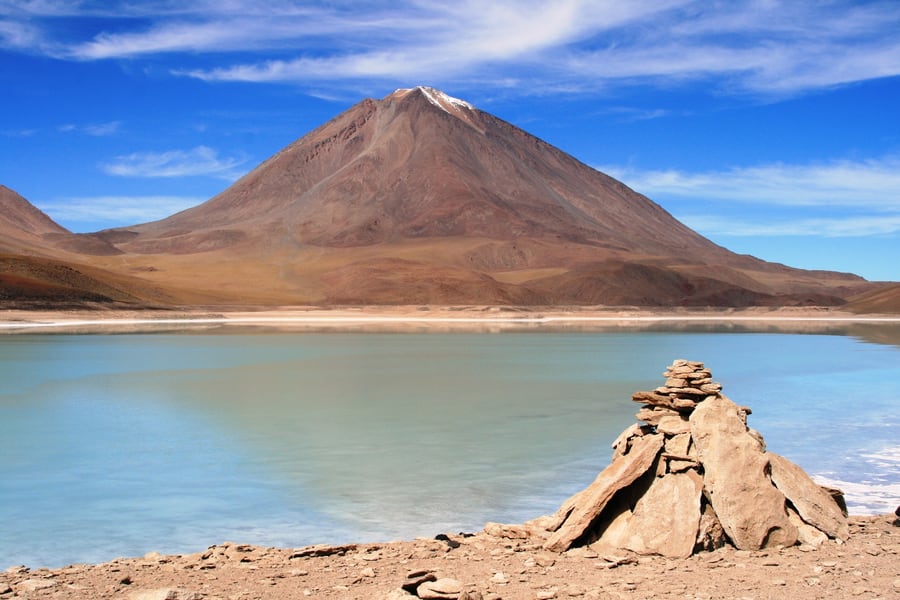 Carlos Adampol Galindo / Wikimedia Commons · CC BY-SA 2.0 · cropped
Laguna Verde
The southern corner of the reserve, on the Chilean border, where a green lake sits beneath the near-perfect cone of Licancabur (5,916 m). The colour comes from dissolved silicon and other oxides washed out of the volcano. There is a small freshwater lake in the summit crater too, about 70 by 90 metres and among the highest in the world. Most 4x4 tours reach it on their last morning.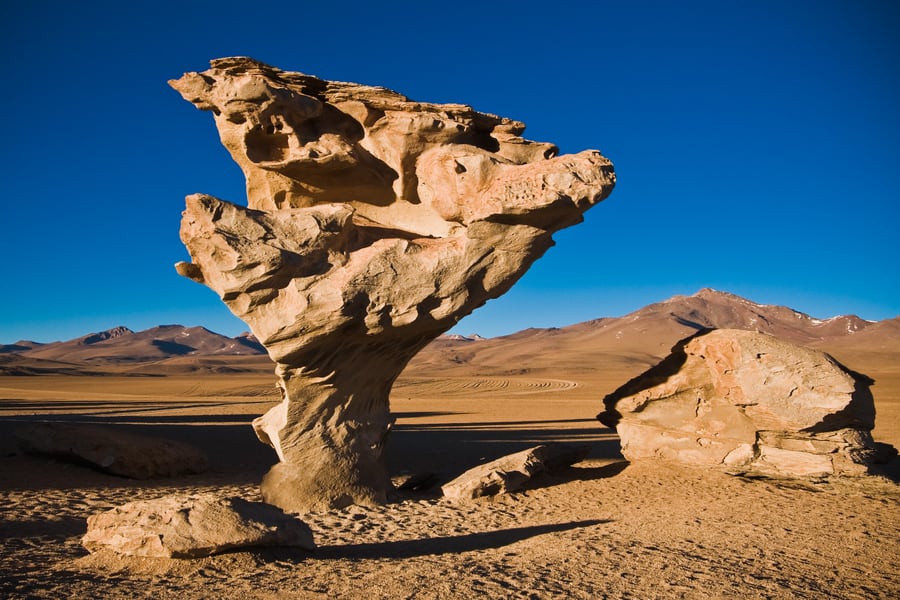 Pedro Szekely / Wikimedia Commons · CC BY 2.0 · cropped
Árbol de Piedra
A lone block of rock about seven metres high standing in the sand dunes of the Siloli desert, 18 km north of Laguna Colorada. Wind-driven sand has eaten away the softer stone at its base until what is left balances on a stem barely thick enough to hold it up. It is the single most photographed object in the reserve, and unlike almost everything else out here it needs no explanation.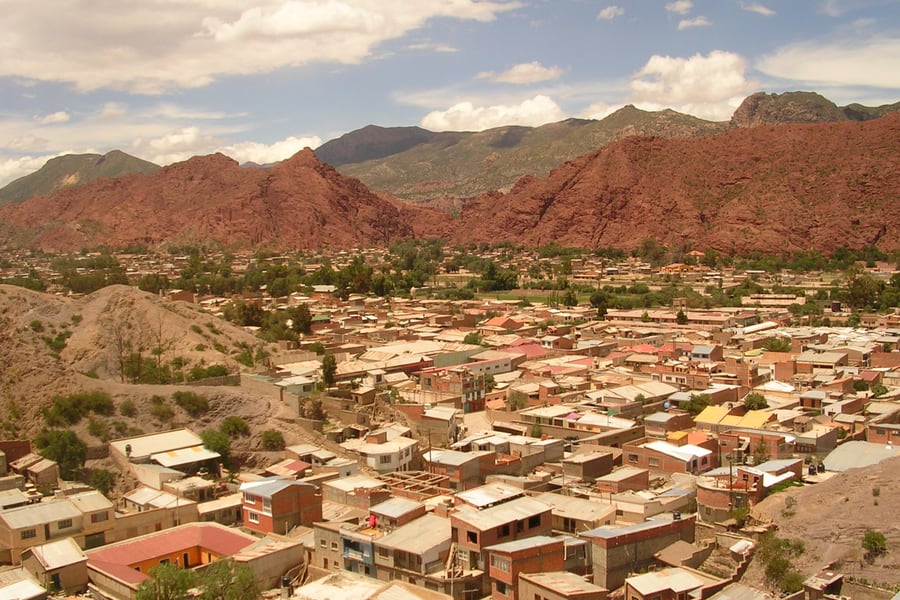 Elemaki / Wikimedia Commons · CC BY 3.0 · cropped
Tupiza
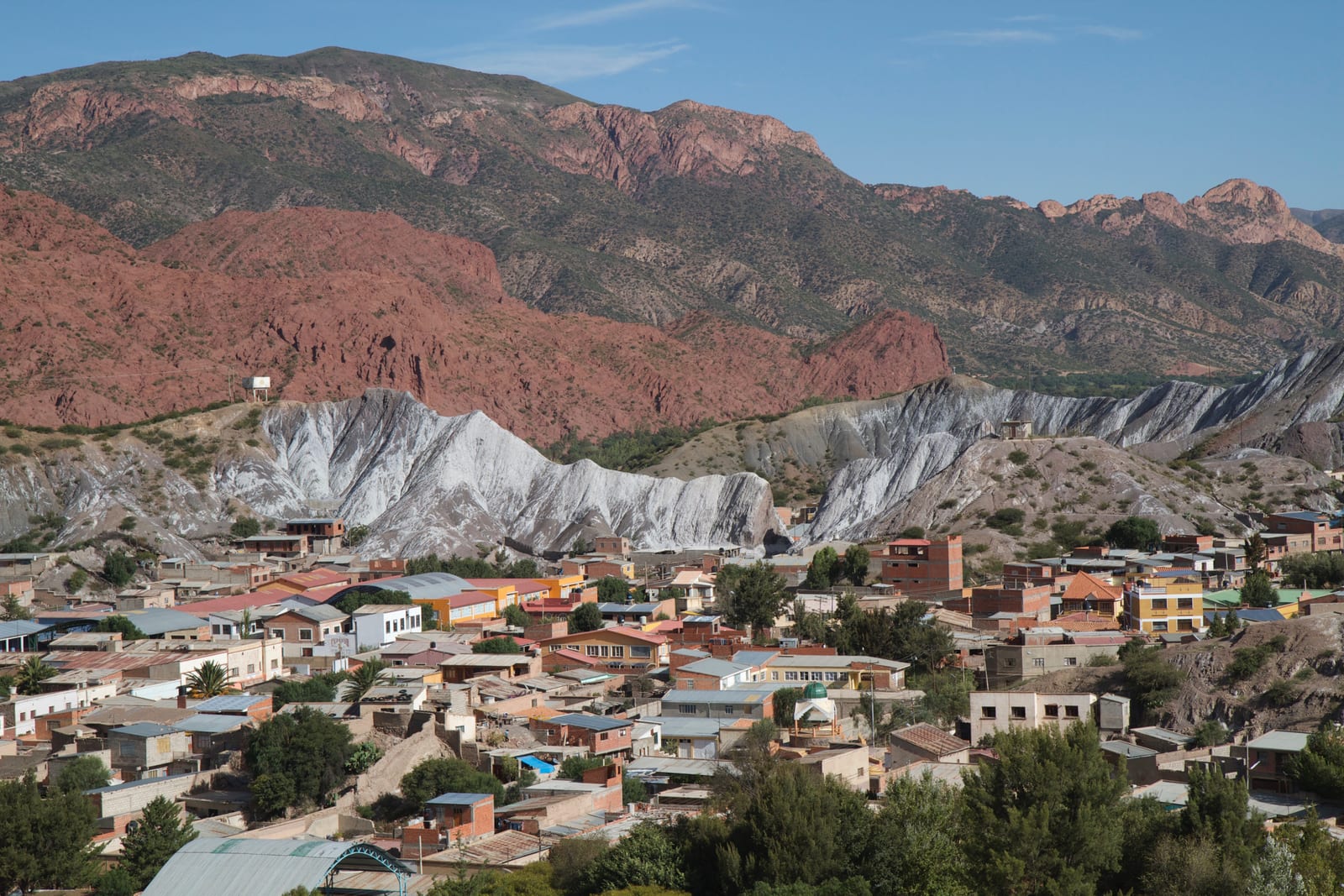
At about 2,850 m, and a complete change from the altiplano — a warm, dusty town on a river, ringed by red escarpments and badlands that rise straight out of grey scrub. This is horseback and 4x4 country, and the Quebrada de Palala and the fins of El Sillar are within an easy morning. It is also where Butch Cassidy and the Sundance Kid are said to have died, at San Vicente nearby; the site is disputed and outfitters will still take you there.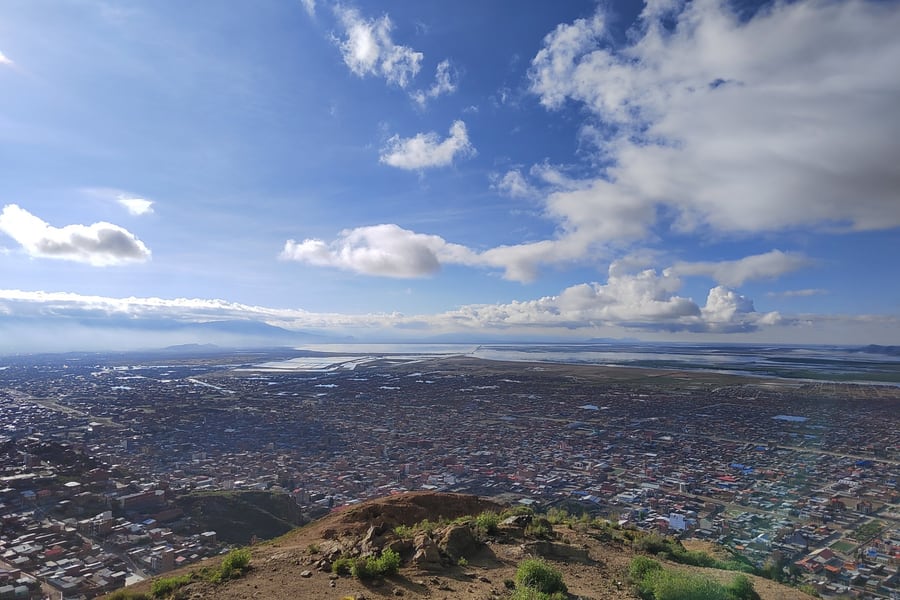 Alberto Schiappapietra / Wikimedia Commons · CC BY-SA 4.0 · cropped
Oruro
Founded on 1 November 1606 as a silver camp and still a mining city — tin, tungsten, silver and copper have all come out of the hills behind it. It sits at 3,735 m above the shallow salt lakes of Uru Uru and Poopó, which is what gives the city its strange, luminous horizon. Come in February or March and it is somewhere else entirely: the Carnaval de Oruro fills the streets with masked diablada dancers for days.Where to Sleep
Where you sleep on this journey depends on how far you break it, but the natural rhythm of the line makes the choices easy.
In Uyuni you will find the widest range, from simple travellers' hostels to a handful of memorable salt hotels — lodgings built partly from blocks of salt out on and around the flat itself, an experience in their own right. Uyuni is where most people spend a night or two before and after the Salar tour, so book ahead in high season.
In Oruro, at the start, are straightforward city hotels handy for the evening train and, if you have timed it right, for Carnaval — for which rooms are scarce and expensive, so reserve far in advance.
In Tupiza, in the red-rock south, there are relaxed guesthouses and small hotels geared to travellers heading out on horseback into the canyons — a warmer, gentler place to rest than the freezing altiplano towns further north.
As with all our journeys, we point to the shape of the trip rather than specific bookings: a salt-built room in Uyuni for the Salar, a night in Oruro for the train (or the Carnaval), and a canyon guesthouse in Tupiza — with the long altiplano ride linking them together. Wherever you stay on the plateau, pack for the cold: nights above 3,500 metres are bitter, and heating is not a given.
Questions or corrections
Planning this trip and stuck on something, or spotted a time, fare or detail that has changed? Send us a message about The Expreso del Sur. We read every one, and we update this page when something has changed.