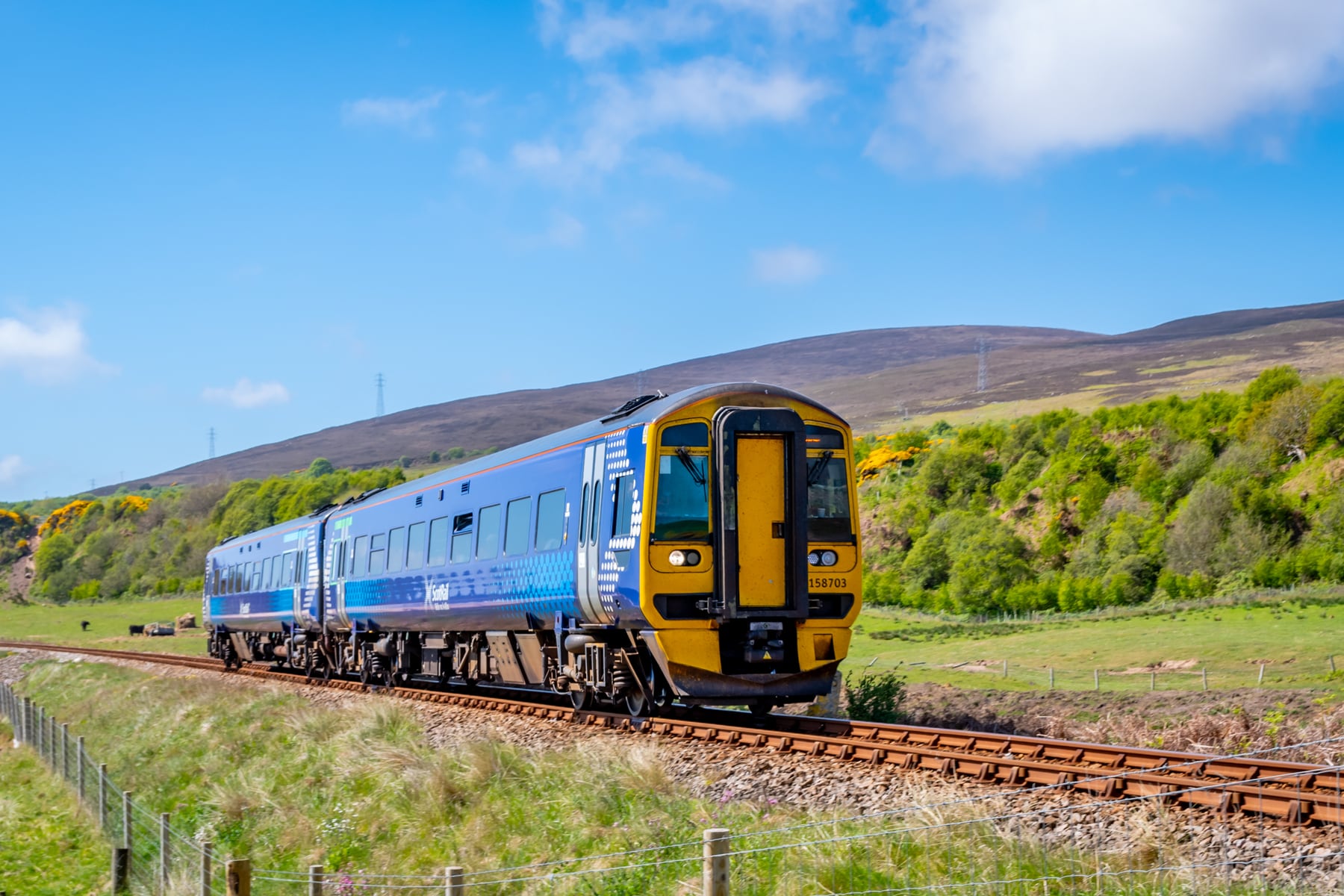
The Far North Line
Peter Moore / Wikimedia Commons · CC BY-SA 2.0 · cropped
- DistanceAbout 161 miles, Inverness to Wick, by way of Thurso
- DurationAbout 4 h 20 min
- Best seasonEvery day · one train each way on Sundays
Introduction
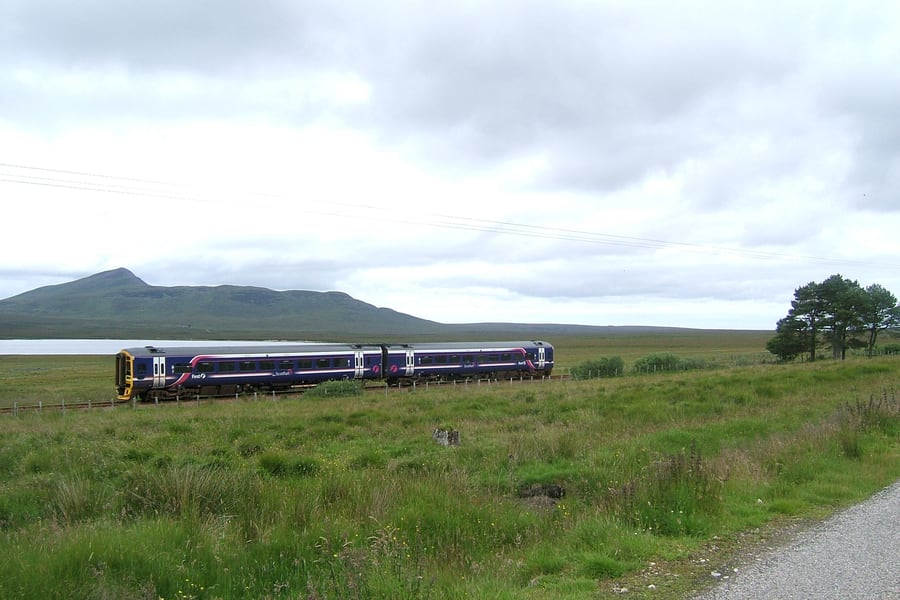
The Far North Line is the northernmost railway in Britain. It runs 161 miles from Inverness to Wick, with a short branch to Thurso, the northernmost station on the network, and it is single track almost all the way. It follows the coast of the Moray Firth north, but twice it turns far inland: once to loop round by Lairg, and once to cross the empty peatland of the Flow Country to Caithness.
The line was built in stages between 1862 and 1874, much of it pushed north by the Duke of Sutherland, who had his own station at Dunrobin Castle. It was listed for closure in 1963 and kept open after protests. North of Helmsdale it crosses the largest blanket bog in Europe, a landscape UNESCO made a World Heritage Site in 2024, where some of the stations are miles from the nearest road.
ScotRail runs four trains a day each way between Inverness and Wick, every day except Sunday, when there is one. Each calls at Thurso on the way, and the whole journey takes about four hours and twenty minutes.
The Journey
Trains leave Inverness westwards, across the River Ness and the Caledonian Canal, and run along the Beauly Firth to Beauly, whose single platform is the shortest on the National Rail network. At Dingwall, the busiest station on the line after Inverness, the Kyle Line turns off west to Kyle of Lochalsh, and the Far North Line follows the Cromarty Firth past Alness and Invergordon to Tain, on the Dornoch Firth.
The Lairg loop
Tain and Golspie are only 11 miles apart as the crow flies, but the railway takes about 40 to get from one to the other. Where the road crosses the Dornoch Firth on a bridge, the line follows the shore inland to Ardgay, then runs up the Kyle of Sutherland and crosses it on the Shin Viaduct, between the request stops of Culrain and Invershin. It follows the River Shin north to Lairg, whose station is a mile and a half from the village, and turns east down Strath Fleet past Rogart and Loch Fleet to the sea at Golspie.
The Sutherland coast
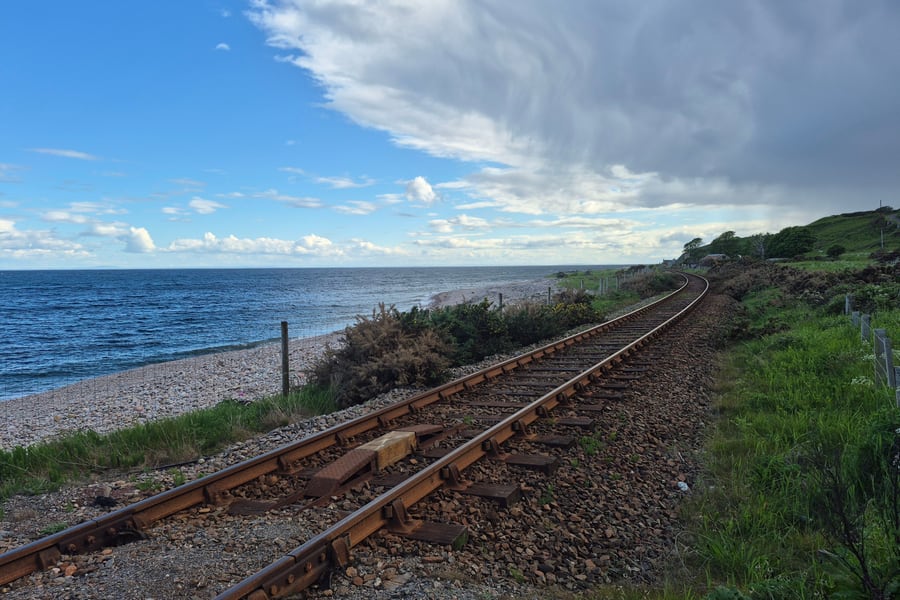
Just beyond Golspie is the little halt built for Dunrobin Castle, then the line runs along the shore, sometimes only a few metres from the water, through Brora to Helmsdale. This stretch was the Duke of Sutherland's own railway, opened in 1870.
Across the Flow Country
North of Helmsdale the terrain of the Ord of Caithness is too difficult for a railway, so the line turns inland up the Strath of Kildonan, past Kildonan and Kinbrace, and out onto the Flow Country. Forsinard, with the RSPB's visitor centre beside the platform, is the last place where two trains can pass. Beyond it the line does not meet a public road for 17 miles, and it crosses into Caithness by Altnabreac, one of the most isolated stations in Britain.
Caithness
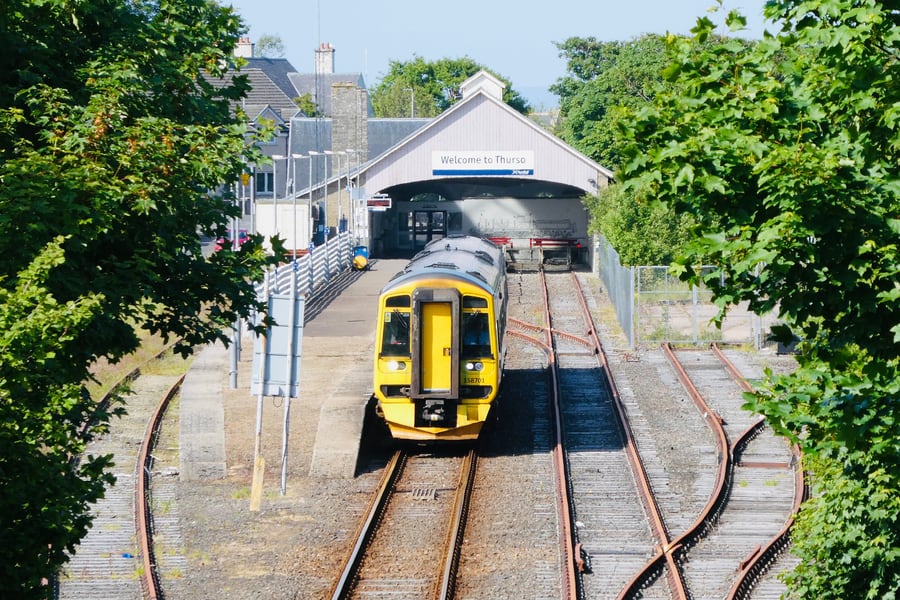
Past Scotscalder the line reaches Georgemas Junction, the northernmost junction in Britain. Here the train turns off on the branch to Thurso, reverses, comes back to Georgemas and then runs on east to Wick, 18 miles further on, on the east coast. Trains have worked this way since 2000; before that they were split at Georgemas, one half for each town.
How the line is worked
There are no tunnels and ten passing loops, and the line is signalled by radio, with the Radio Electronic Token Block system. All trains are ScotRail Class 158 "Express Sprinter" diesel units. Eight stations are request stops, and since 2022 the Far North Line has been the first in the UK where you press a button on a kiosk at the platform to stop the train; to get off at one, tell the guard.
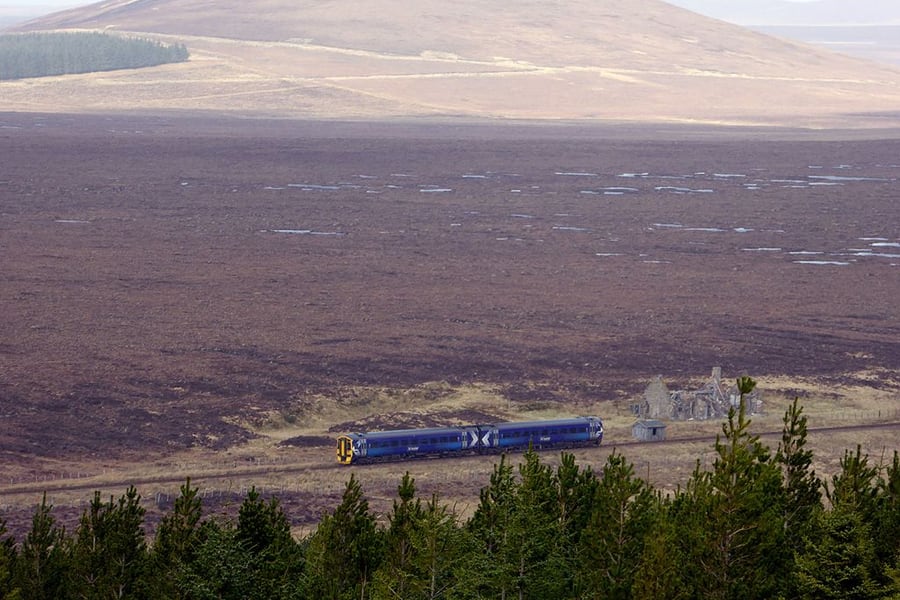
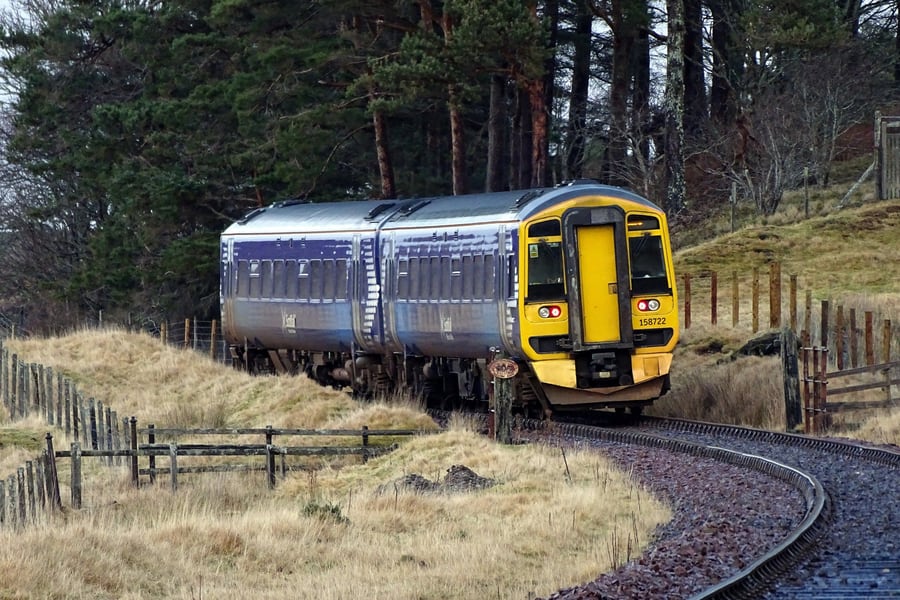
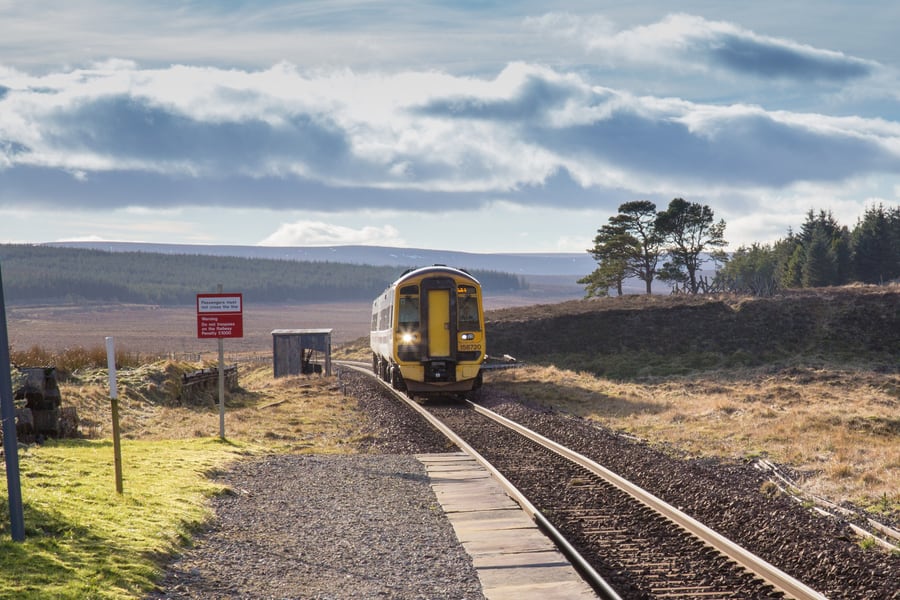
Along the route
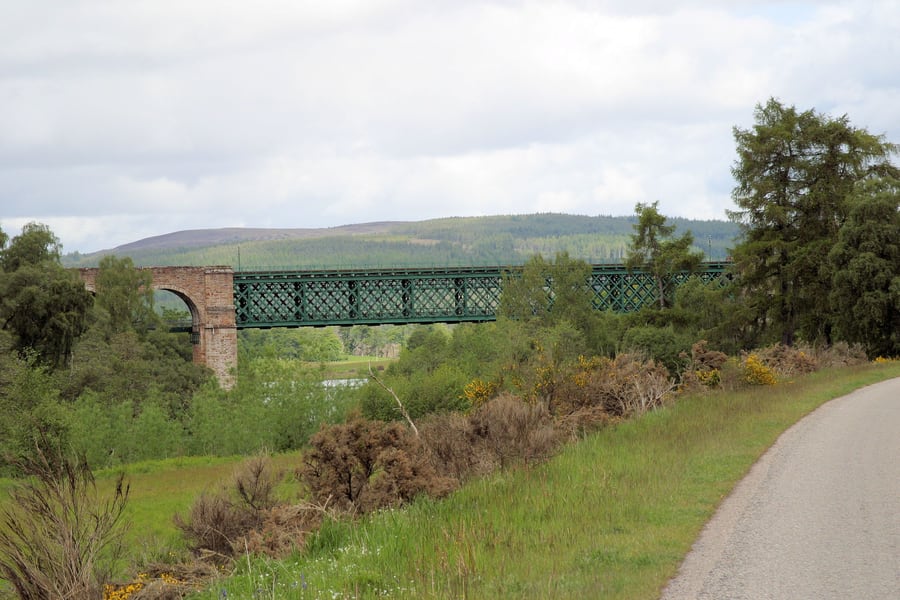 Stuart Logan / Wikimedia Commons · CC BY-SA 2.0 · cropped
Shin Viaduct
The line crosses the Kyle of Sutherland between Culrain and Invershin, two request stops just 34 chains apart. There is no road across here: until a footpath was hung beside the viaduct in 2000, the train was the only short way over.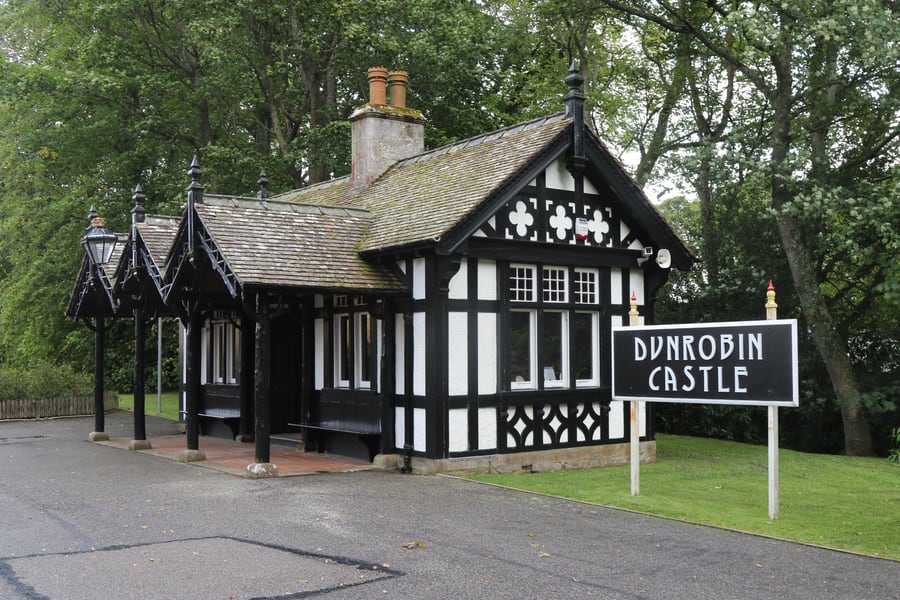 Andrew Abbott / Wikimedia Commons · CC BY-SA 2.0
Dunrobin Castle station
Built as the Duke of Sutherland's private halt, with its own timbered waiting room, it reopened to the public in 1985. It is a request stop in the castle's season only, and as it has no lighting, trains call only in daylight hours.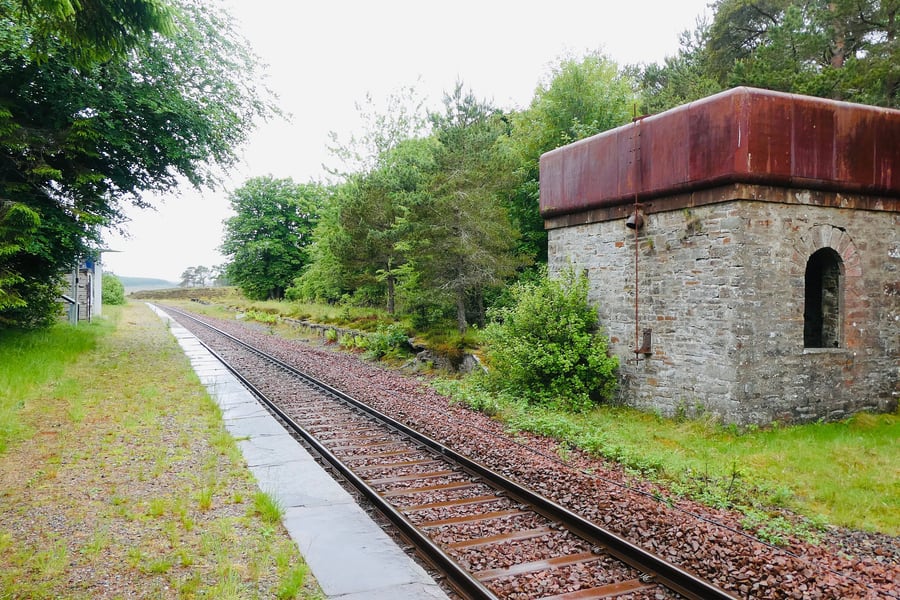 Sexy Simon / Wikimedia Commons · CC BY-SA 4.0 · cropped
Altnabreac
About 11 miles from the nearest village and nearly 7 from a paved road, Altnabreac is one of the most isolated stations in Britain. An old water tank still stands by the platform. After an access dispute, trains began calling again in April 2025.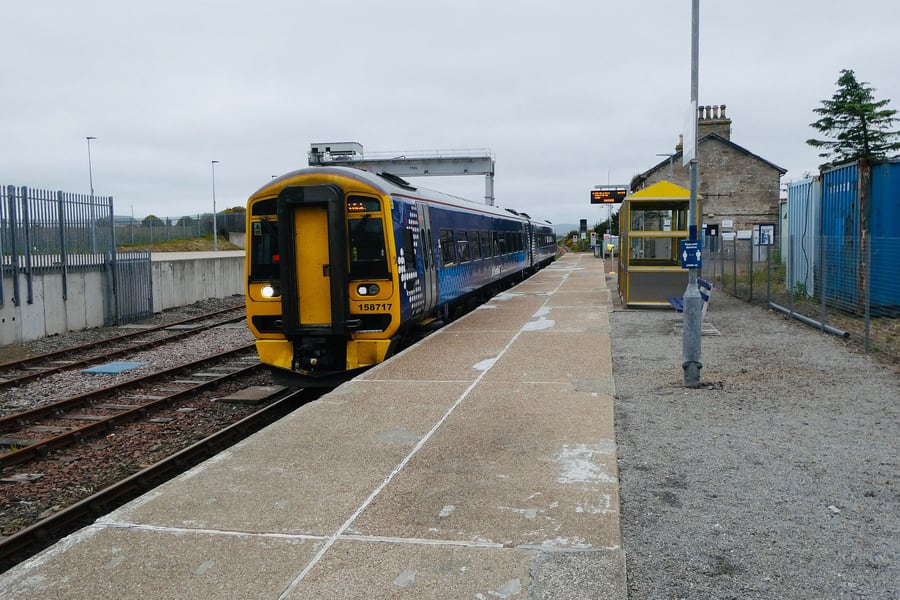 Sexy Simon / Wikimedia Commons · CC BY-SA 4.0 · cropped
Georgemas Junction
At the northernmost junction in Britain the Wick train turns off to Thurso, reverses there, comes back and calls at Georgemas a second time before going on to Wick. The 18 miles to Wick are the longest gap between stations on the line.A bit of history
Culture & experiences along the way
 Jack Shainsky / Wikimedia Commons · CC BY 2.0 · cropped
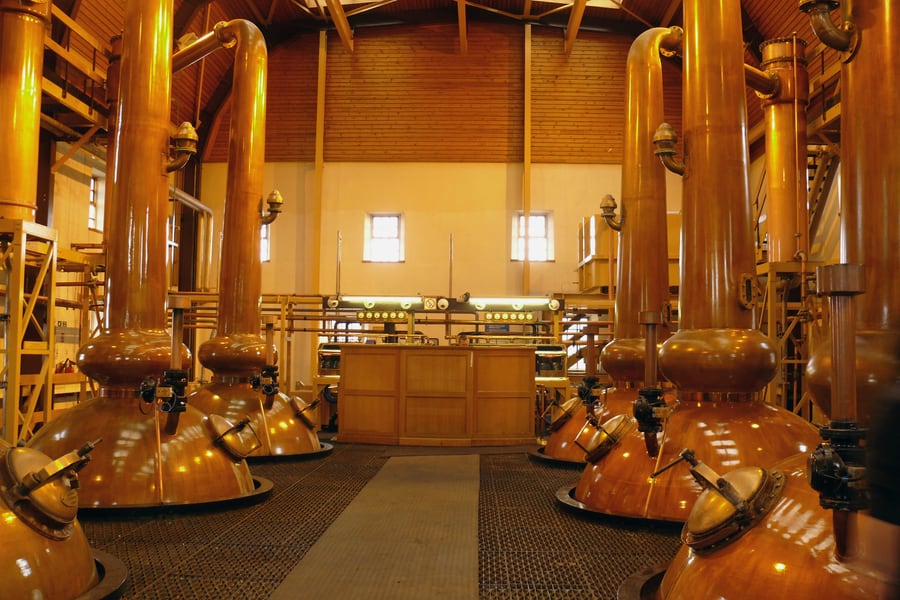
A tour of Glenmorangie
On the edge of Tain, Glenmorangie distils its single malt in what are said to be the tallest stills in Scotland. The Classic Tour takes an hour and ends with two drams; the visitor centre and shop open 10am–5pm, and booking is recommended for tours.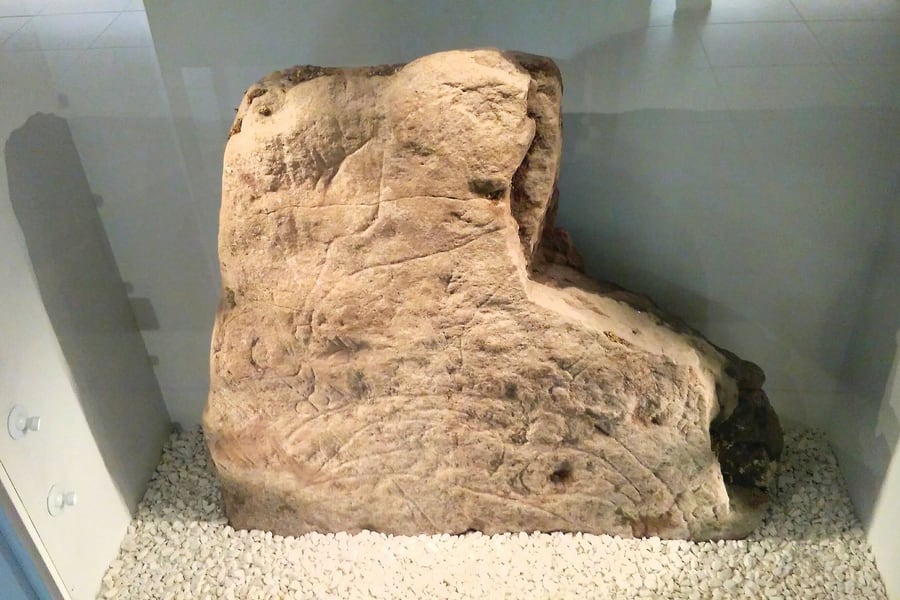 Pasicles / Wikimedia Commons · CC0 · cropped
Timespan, Helmsdale
Helmsdale's museum tells the story of the parish: the herring boom, the Clearances, the gold rush of 1869 and the last wolf in Sutherland. It has a reconstructed street with the old smiddy, and the Borrobol Stone, a Pictish carving found in a burn in 2009.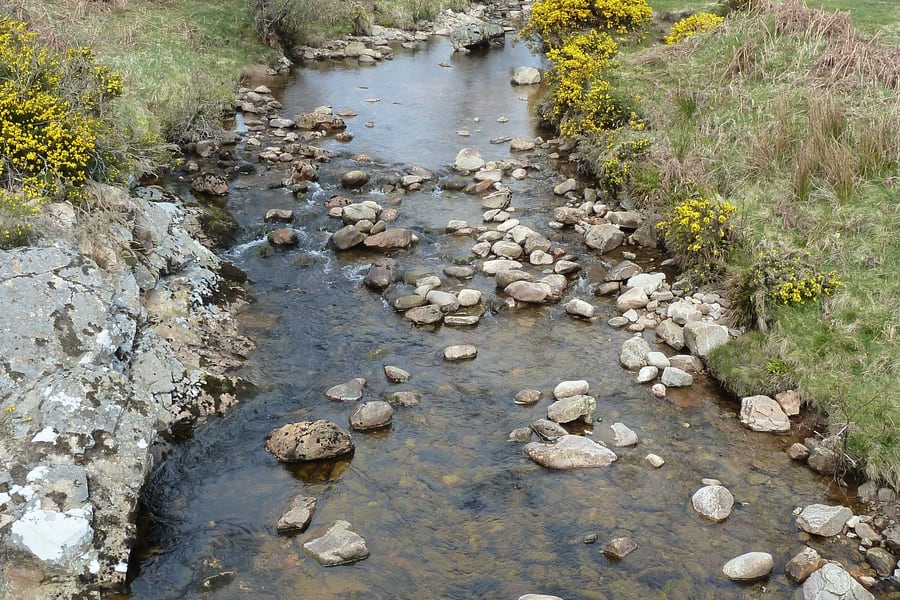 Peter Bond / Wikimedia Commons · CC BY-SA 2.0 · cropped
Panning for gold at Baile an Or
In 1869 hundreds of prospectors camped in the Strath of Kildonan after gold was found in its burns. You can still pan the Kildonan Burn at Baile an Or, the "town of gold", with a day permit from the Suisgill Estate, between mid-April and the end of September.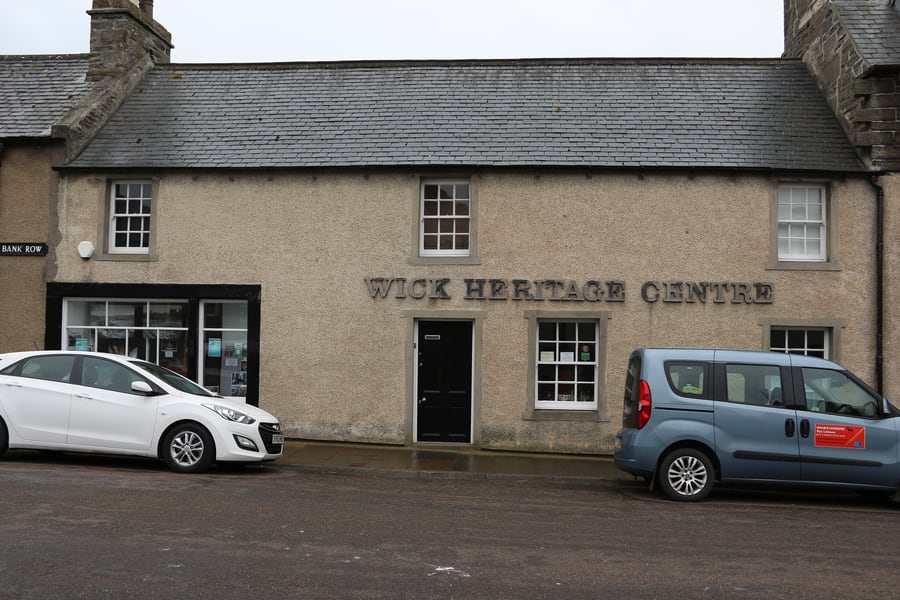 Braveheart / Wikimedia Commons · CC BY-SA 4.0
Wick Heritage Centre
Run by the Wick Society since 1971, the centre tells the story of a town built on the herring fishery, with the Johnston Collection of local photographs taken between 1863 and 1975. The society also looks after the Isabella Fortuna, a fishing boat of 1890.Timetables
ScotRail runs four trains a day each way between Inverness and Wick from Monday to Saturday, and one each way on Sundays. Every one calls at Thurso on the way, and the journey takes between 4 h 15 min and 4 h 31 min end to end.
Northbound, Monday to Saturday
| Inverness | Tain | Lairg | Helmsdale | Forsinard | Thurso | Wick |
|---|---|---|---|---|---|---|
| 07:00 | 08:16 | 08:49 | 09:44 | 10:21 | 10:59 | 11:31 |
| 10:41 | 11:48 | 12:20 | 13:12 | 13:46 | 14:24 | 14:56 |
| 14:00 | 15:13 | 15:45 | 16:36 | 17:10 | 17:50 | 18:22 |
| 18:31 | 19:46 | 20:18 | 21:08 | 21:42 | 22:20 | 22:53 |
Southbound, Monday to Saturday
| Wick | Thurso | Forsinard | Helmsdale | Lairg | Tain | Inverness |
|---|---|---|---|---|---|---|
| 06:18 | 06:50 | 07:27 | 08:00 | 08:52 | 09:23 | 10:39 |
| 08:02 | 08:34 | 09:13 | 09:46 | 10:38 | 11:10 | 12:27 |
| 12:34 | 13:06 | 13:47 | 14:21 | 15:12 | 15:46 | 17:08 |
| 16:00 | 16:32 | 17:11 | 17:44 | 18:35 | 19:07 | 20:13 |
Good to know:
- Sundays. One train each way: from Inverness at 17:54, reaching Thurso at 21:45 and Wick at 22:17, and from Wick at 11:58, leaving Thurso at 12:30 and reaching Inverness at 16:15.
- Thurso first. Northbound trains reach Thurso about half an hour before Wick, and southbound trains leave Thurso about half an hour after Wick: they reverse at Georgemas Junction to call there.
- Shorter trains also run between Inverness and Dingwall, Tain or Lairg, so the southern end has more services than the table shows.
- Request stops. Culrain, Invershin, Rogart, Dunrobin Castle, Kildonan, Kinbrace, Altnabreac and Scotscalder are request stops: press the button at the platform kiosk to stop a train, and tell the guard if you want to get off. Dunrobin Castle is open only in the castle's season.
Times as of October 2026, from the National Rail journey planner for Tuesday 13, Saturday 17 and Sunday 18 October; times at intermediate stations are departures southbound and arrivals northbound. Check your date on scotrail.co.uk (opens in a new tab).
Tickets
The Far North Line is part of the National Rail network, so tickets are ordinary ScotRail fares, in Standard class only. Sampling the National Rail journey planner for one adult from Inverness to Wick or Thurso on Tuesday 13 October 2026, the lowest single on every train was £16.60, and the lowest return £33.20; for mid-December the lowest single was £28.00, so book early.
For a longer trip, the Highland Rover gives four days of travel in eight on the Highland lines, including this one, the Kyle Line and the West Highland Line, with the Stagecoach coach from Thurso to Scrabster; ScotRail priced it at £99. Fares checked October 2026 on the National Rail journey planner (opens in a new tab); Highland Rover price from ScotRail as of March 2026; pounds sterling.
Book your tickets
Single, Inverness to Wick or Thurso
Standard class · direct train
The lowest single fare offered on every Far North Line train on the date sampled.
Book Tickets (opens in a new tab, on scotrail.co.uk)via scotrail.co.ukHighland Rover
Any 4 days in 8 · trains and some coaches
Four days of travel on the Highland lines, including Inverness to Wick and Thurso and the coach on to Scrabster.
Book Tickets (opens in a new tab, on nationalrail.co.uk)via nationalrail.co.ukRail Passes
Interrail passes are valid. Interrail's own table of railway companies for Great Britain lists ScotRail as included, so the line is covered by a one-country Interrail Great Britain Pass or a Global Pass.
Visitors who do not live in the UK can also buy a BritRail Great Britain Pass, valid on all National Rail services, or the BritRail Spirit of Scotland Pass, which covers the National Rail network in Scotland for 4 days in 8 or 8 days in 15. The Spirit of Scotland Pass cannot be used before 09:15 on weekdays, but Inverness to Wick and Thurso is one of the routes exempt from that rule, so the 07:00 from Inverness is covered.
For this journey alone, a pass is not worth buying. A single from Inverness to Wick sampled at £16.60. A pass, or the Highland Rover, pays only when the line is one day of a longer trip round Scotland.
Checked October 2026 against interrail.com (opens in a new tab) and britrail.com (opens in a new tab).
Places to Visit
With four trains a day, the line rewards a night or two along the way: get off in the morning, look round, and catch the afternoon train on. The places below run from south to north, from Tain to Wick.
 Tim Heaton / Wikimedia Commons · CC BY-SA 2.0 · cropped
Tain
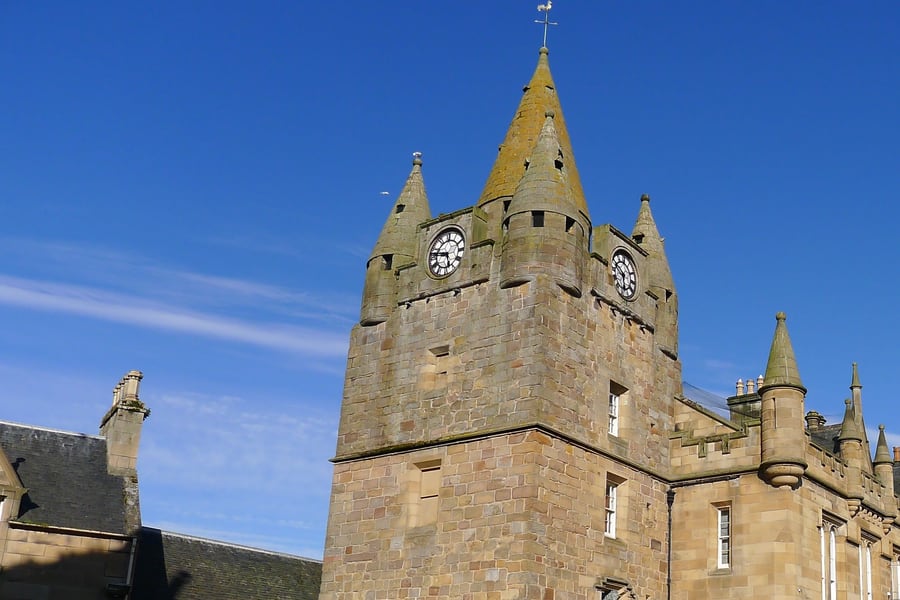
Tain received its first royal charter in 1066, which makes it the oldest royal burgh in Scotland. It grew round the shrine of St Duthac, an important place of pilgrimage in the late Middle Ages: James IV came at least once a year. The Tolbooth on the High Street was completed in 1708, its spire and corner turrets added in 1733. The local museum is called Tain Through Time.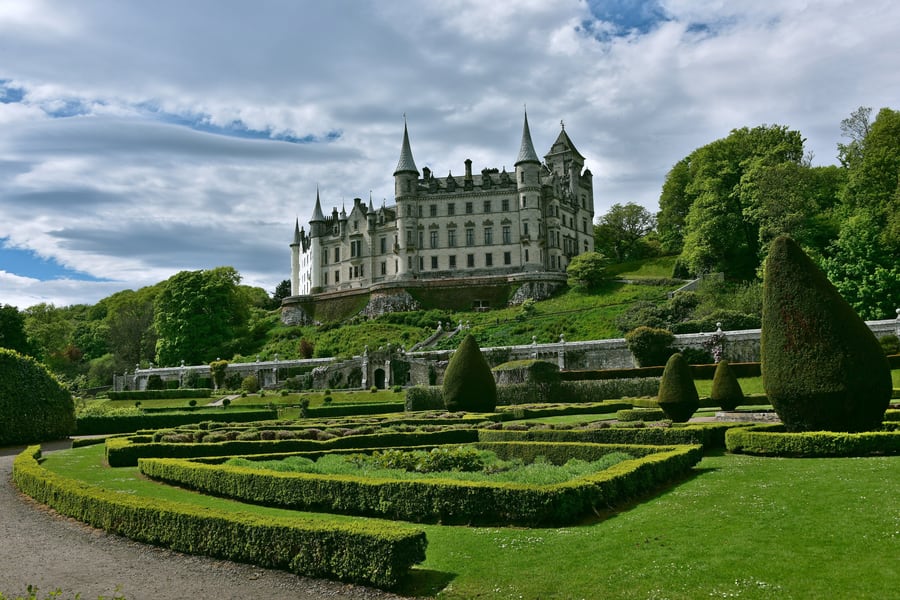 August Schwerdfeger / Wikimedia Commons · CC BY 4.0
Dunrobin Castle
The seat of the Earls and Dukes of Sutherland is the most northerly of Scotland's great houses, with 189 rooms. Its oldest part dates from the Middle Ages, but the towers and spires were added by Sir Charles Barry, the architect of the Houses of Parliament, between 1835 and 1850. Visitors see the state rooms, the formal gardens and a museum, and the resident falconer flies birds of prey on the lawns. It opens from April to October.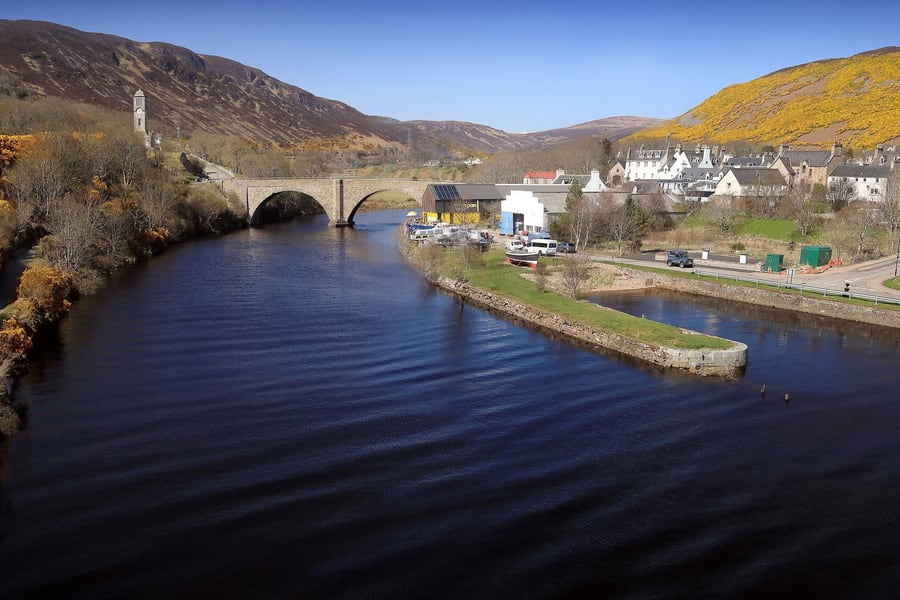 Charlie Marshall / Wikimedia Commons · CC BY 2.0 · cropped
Helmsdale
The village was laid out in 1814 to take families cleared from the Strath of Kildonan to make way for sheep. Thomas Telford's bridge of 1811 still crosses the river, and at the mouth of the strath stands The Emigrants, a three-metre bronze by Gerald Laing, unveiled in 2007, of a family leaving their home. A twin statue stands by the Red River in Winnipeg.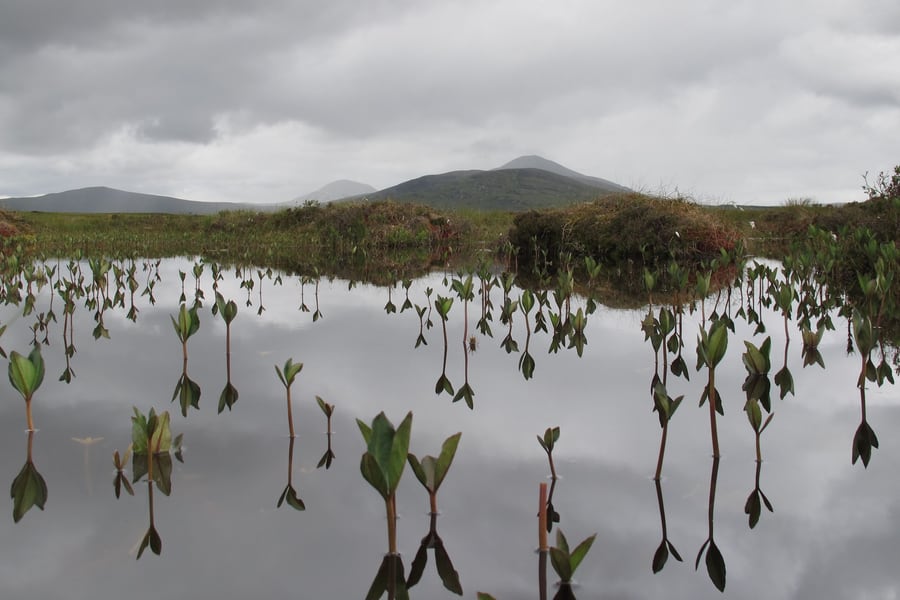 Greg Fitchett / Wikimedia Commons · CC BY-SA 2.0 · cropped
Forsinard Flows
The Flow Country is the largest blanket bog in Europe, a landscape of deep peat and pools that has been building up for 9,000 years, and UNESCO made it a World Heritage Site in 2024. At Forsinard the RSPB looks after more than 21,000 hectares of it, with a visitor centre beside the station, a boardwalk trail and the Flows Lookout Tower. Spring and summer bring golden plover, dunlin and hen harriers.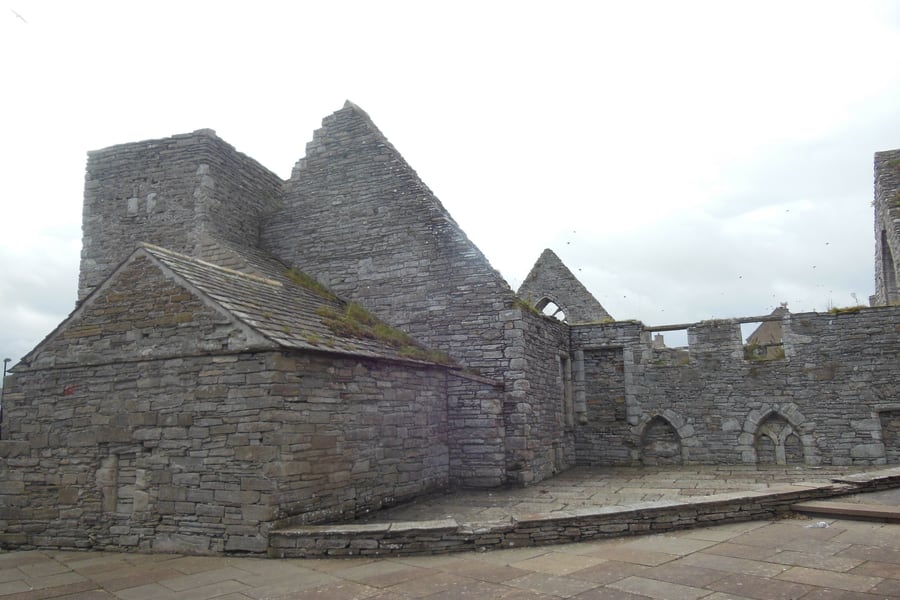 Bill Henderson / Wikimedia Commons · CC BY-SA 2.0 · cropped
Thurso
Thurso was an important Norse port, and it lies further north than the southern tip of Norway. In the town stand the ruins of Old St Peter's Kirk, one of the oldest churches in Scotland, dating from at least 1125. A mile and a half away at Scrabster, the NorthLink ferry sails to Stromness in Orkney.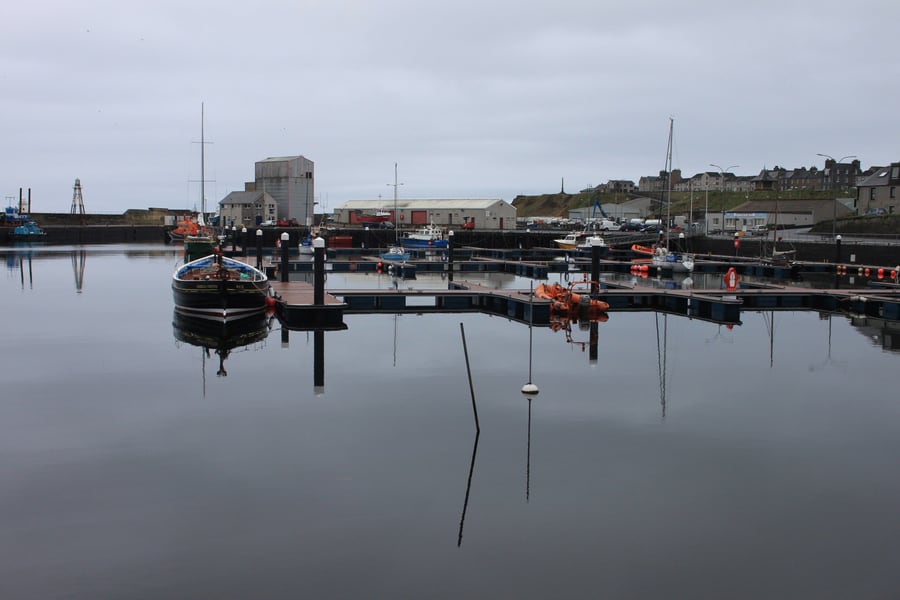 Roger Davies / Wikimedia Commons · CC BY-SA 2.0
Wick
A royal burgh since 1589, Wick boomed with the herring: Thomas Telford planned Pulteneytown across the river for the British Fisheries Society, and by the 1840s more than a thousand boats worked from the harbour. The town also has what Guinness counts as the world's shortest street, Ebenezer Place, 2.06 metres long. John o' Groats is 17 miles north by bus.Where to Sleep
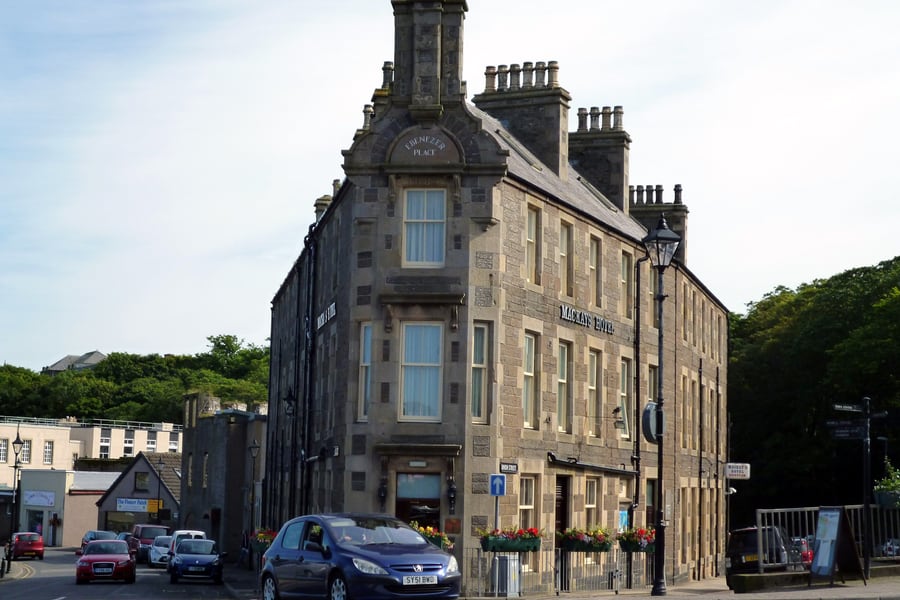
Mackays is a family hotel in the middle of Wick, at the end of the line, and the Bridge is a guest house on the main street of Helmsdale, a good halfway stop before the Flow Country.
Where to stay
 Dr Neil Clifton / Wikimedia Commons · CC BY-SA 2.0 · cropped
Mackays Hotel
Wick · 30 en-suite rooms
A family-run hotel in the middle of Wick, whose bistro door is the only address on Ebenezer Place.
Check Availability (opens in a new tab, on mackayshotel.co.uk)via mackayshotel.co.uk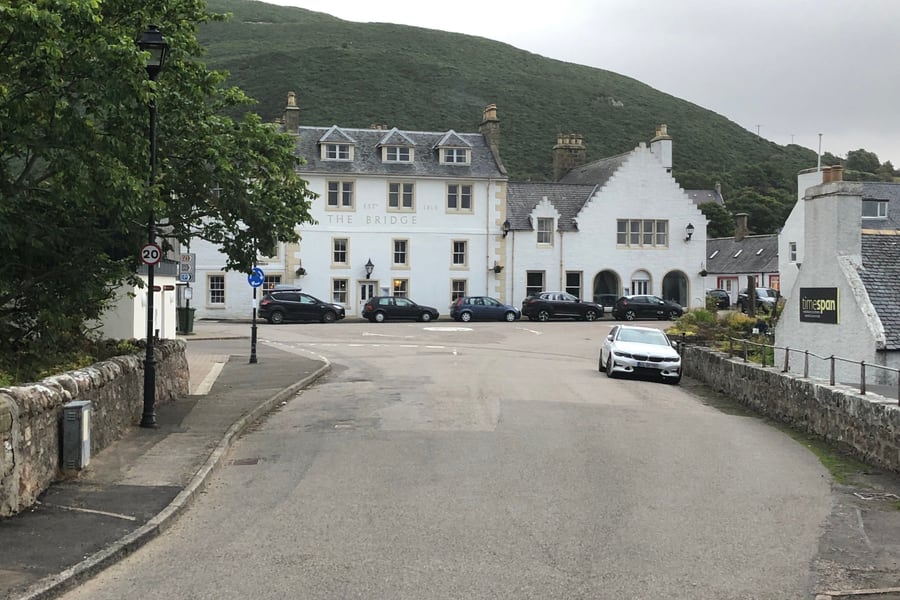 Richard Webb / Wikimedia Commons · CC BY-SA 2.0 · cropped
The Bridge
Helmsdale · guest house on Dunrobin Street
A refurbished guest house in the old Bridge Hotel, with en-suite rooms and breakfast included.
Check Availability (opens in a new tab, on thebridgehelmsdale.co.uk)via thebridgehelmsdale.co.ukQuestions or corrections
Planning this trip and stuck on something, or spotted a time, fare or detail that has changed? Send us a message about The Far North Line. We read every one, and we update this page when something has changed.