The Kyle Line
Sexy Simon / Wikimedia Commons · CC BY-SA 4.0
- DistanceInverness–Kyle of Lochalsh · the Kyle line proper is 63¾ miles from Dingwall
- DurationAbout 2 h 40 min end to end
- Best seasonApril to October — but a winter storm along Loch Carron is unforgettable
Introduction
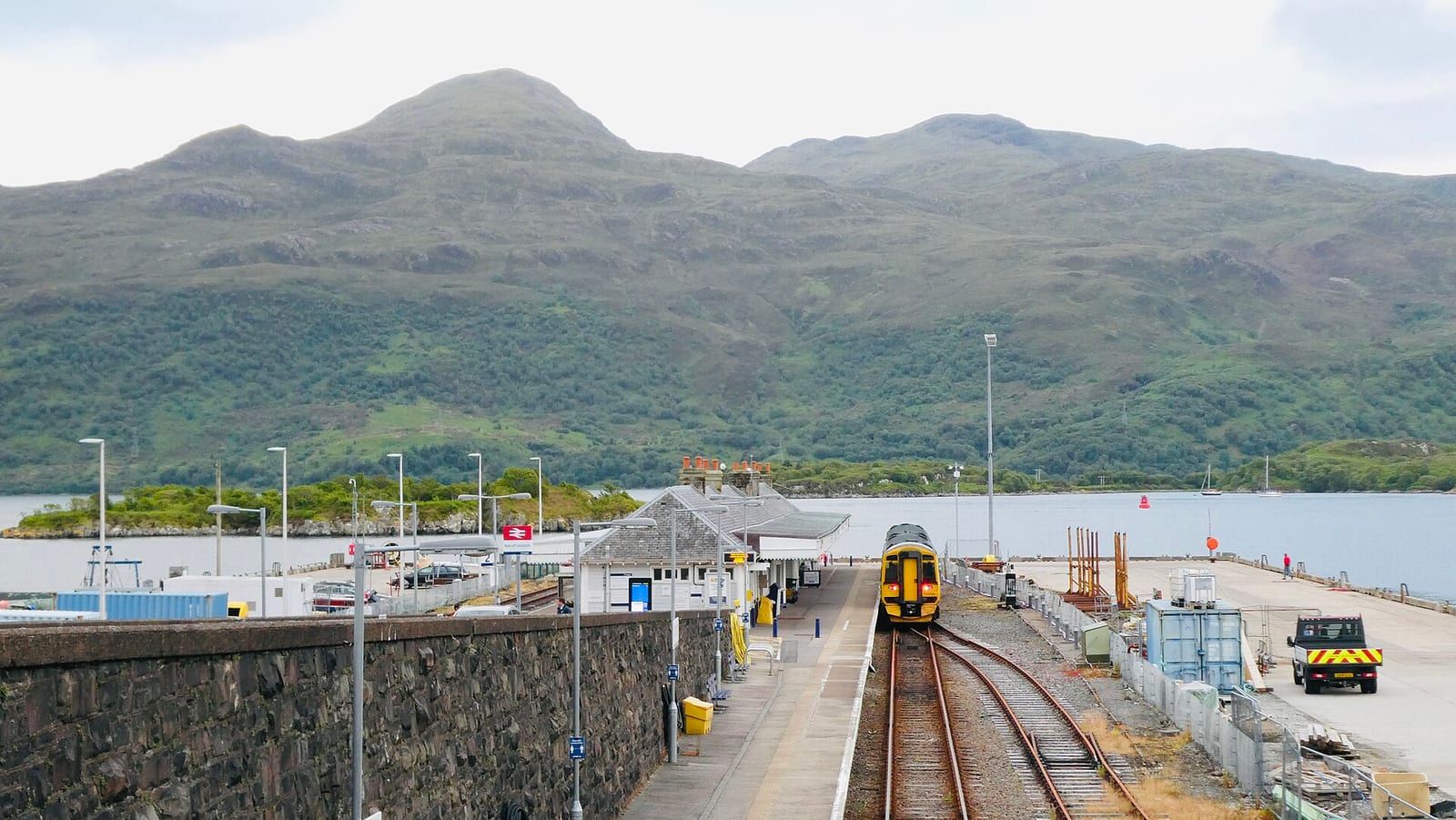
Every railway-lover has a private list of lines that feel like a secret, and the Kyle Line sits near the top of most of them. It crosses Scotland from east coast to west in about two hours and forty minutes: out of Inverness along the Beauly Firth, through the farm country of the Black Isle's fringe to Dingwall, and then west — up into moorland where the stations are lonelier than lighthouses, over the watershed, and down Glen Carron to the sea. The finale is the part nobody forgets: the last ten miles, blasted out of the rock in 1897, run on a ledge along Loch Carron through the postcard village of Plockton, and the rails finally stop on the pier at Kyle of Lochalsh, pointed straight at the hills of Skye.
The line was born ambitious and nearly died twice. The Dingwall & Skye Railway opened as far as Strome Ferry in 1870, meaning to reach the fishing traffic of the west; the costly extension to Kyle took another twenty-seven years. In the 1960s the Beeching Report condemned it, and in 1971 closure loomed again — both times the communities along the line fought, and won. Their reward, and ours, is that this remains a working public railway: four ScotRail trains a day each way, with request stops where you flag the driver down like a country bus.
Ride it after its more famous cousin, the West Highland Line, and you may find you prefer it — shorter, stranger, emptier, and with that incomparable arrival above the water. Sit on the left heading west for Loch Carron, and keep your camera out from Strathcarron onwards.
The Journey
The Kyle Line divides neatly into east, middle and west — an hour of each, and no two alike.
East: firths and farmland. Leaving Inverness, the train curves along the head of the Beauly Firth, calling at Beauly and Muir of Ord before reaching Dingwall, the junction town where the Far North Line to Thurso and Wick peels away. Dingwall's platforms have seen more than a century and a half of Highland comings and goings; today the train pauses just long enough to swap passengers before turning west into the hills.
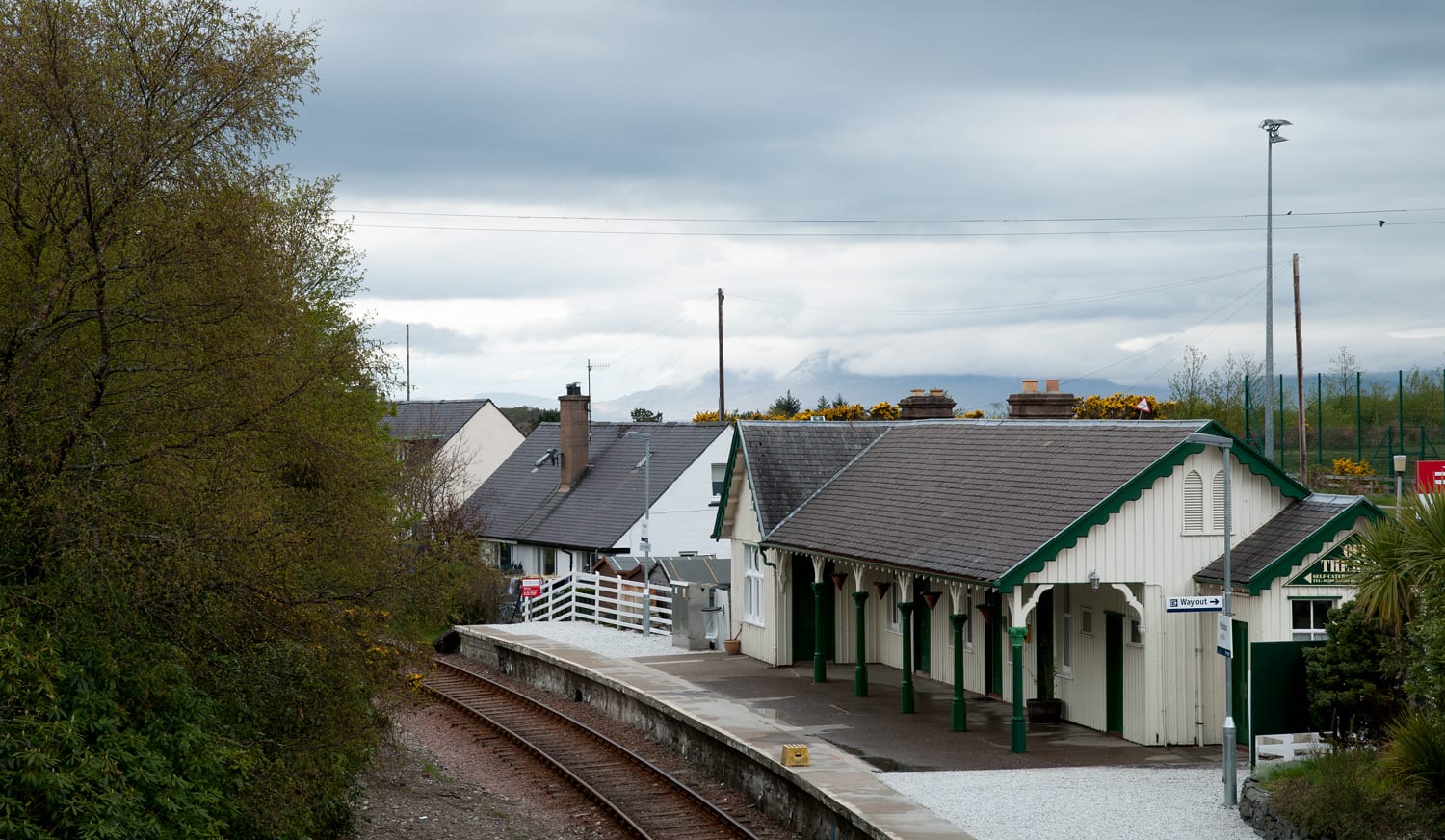
Middle: the moors. From Garve the country empties fast. The line climbs past Loch Luichart and the lonely halts of Lochluichart and Achanalt — request stops serving a handful of houses — to Achnasheen, a station with a platform, a red phone box and very little else for miles. This is where trains cross on the single track, and where the line's engineering purpose shows plainest: it was driven through here to reach the west, not to serve the middle. Over the watershed, the train drops down Glen Carron through Achnashellach's forests to reach salt water for the first time at Strathcarron.
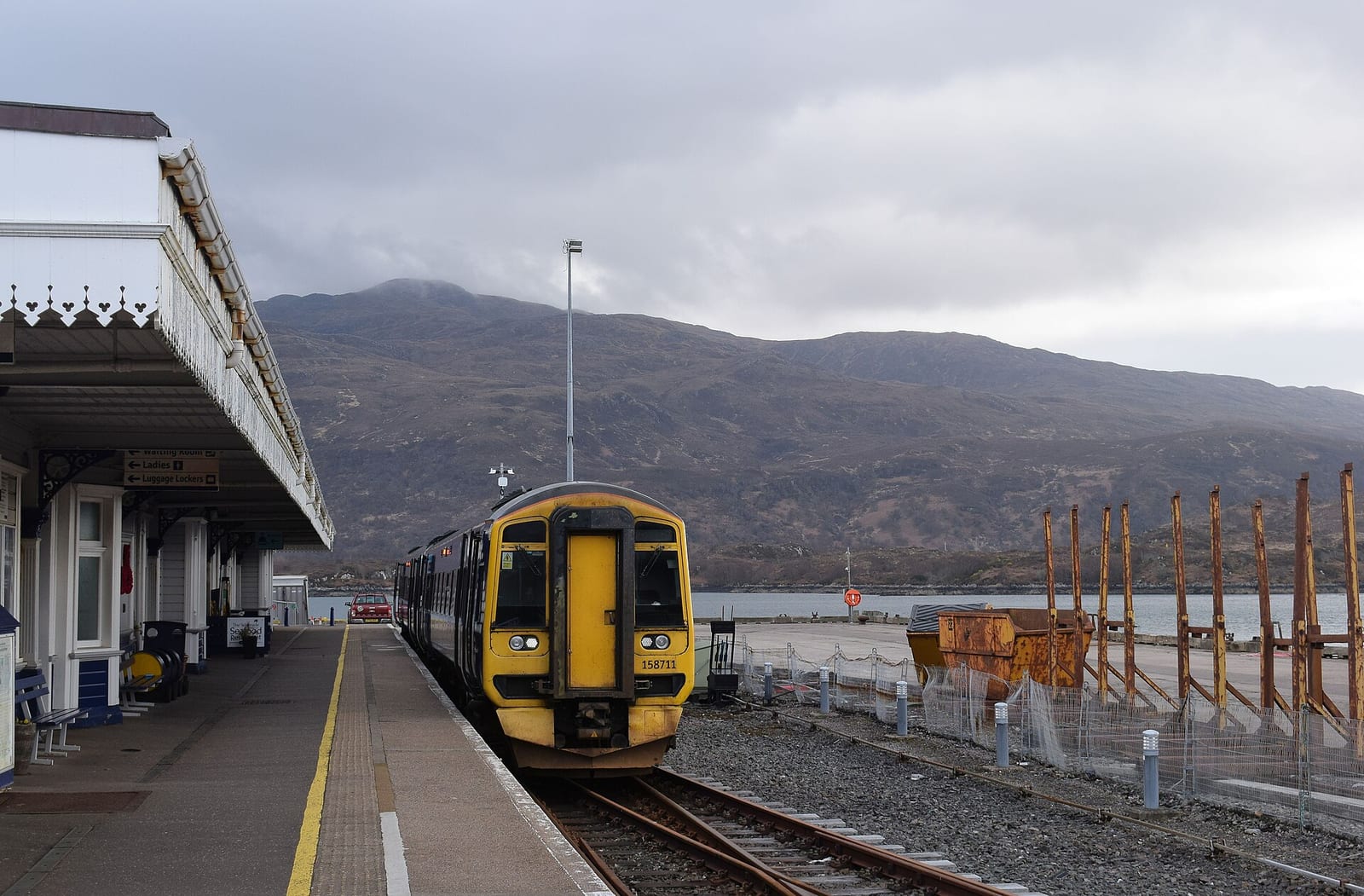
West: the ledge. Now comes the money. At Attadale the mountains push the line to the very shore of Loch Carron, and from Stromeferry — the original 1870 terminus, where steamers once left for Skye — the 1897 extension begins: rock cuttings, avalanche-shelter walls, glimpses of seals on the skerries, the loch widening towards the open sea. Plockton, its bay full of dinghies and its main street improbably fringed with cabbage palms, is the celebrated stop; Duncraig, a castle's private halt barely a mile on, is the eccentric one. Then Duirinish, a last curve, and the train rolls onto the pier at Kyle of Lochalsh, where the buffer stops sit a few steps from the slipway and the Cuillin-backed profile of Skye fills the view. Two hours forty from Inverness — coast to coast across the Highlands, in time for lunch by the water.
Along the route
 Peter Jeffery / Wikimedia Commons · CC BY-SA 2.0
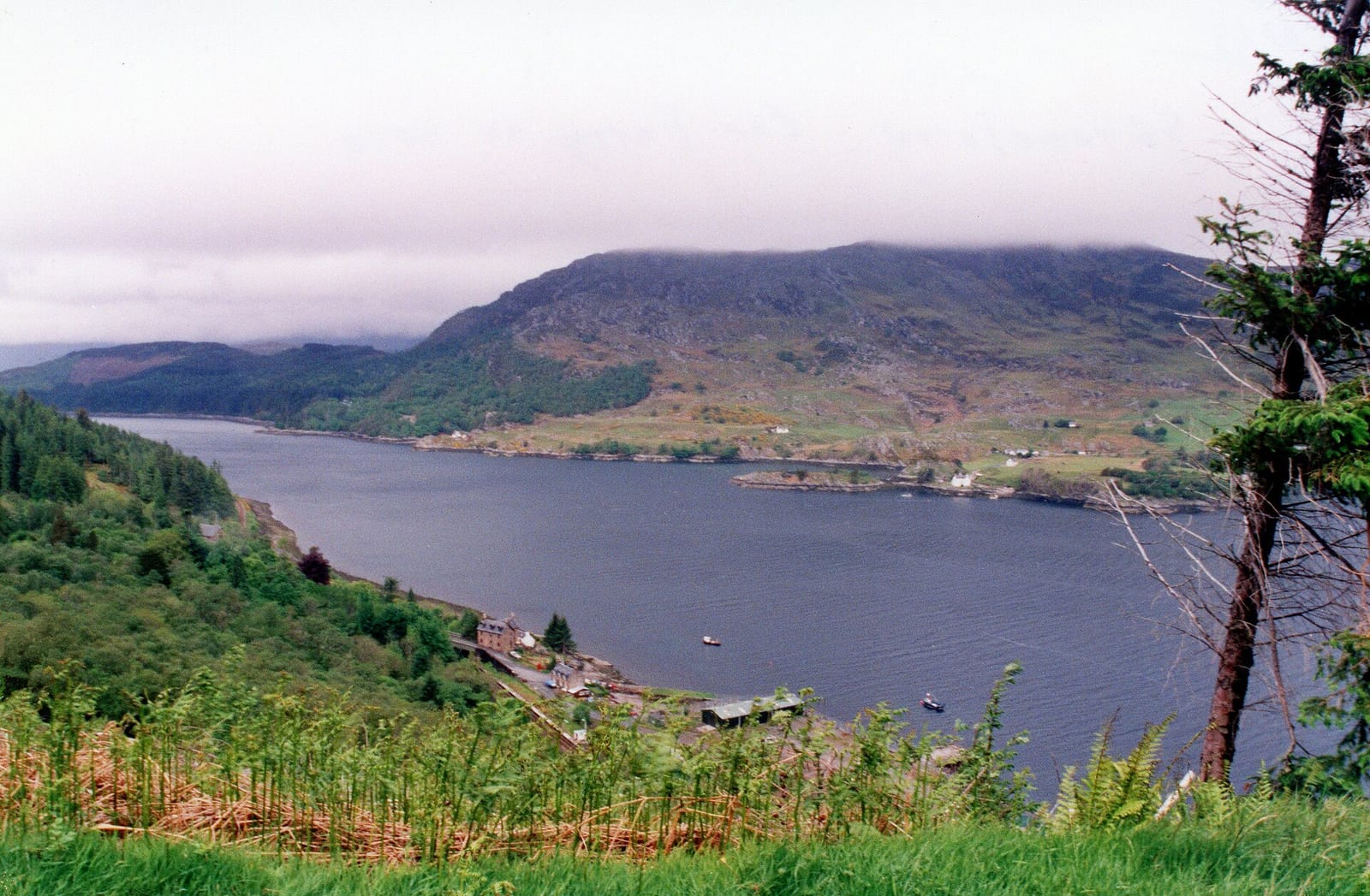
The ledge along Loch Carron
The 1897 extension from Stromeferry was blasted out of the rock along the shore of Loch Carron — a final ten miles on a ledge between cliff and sea, skirting bays where seals haul out. It was ferociously expensive to build, and every penny shows from the left-hand windows.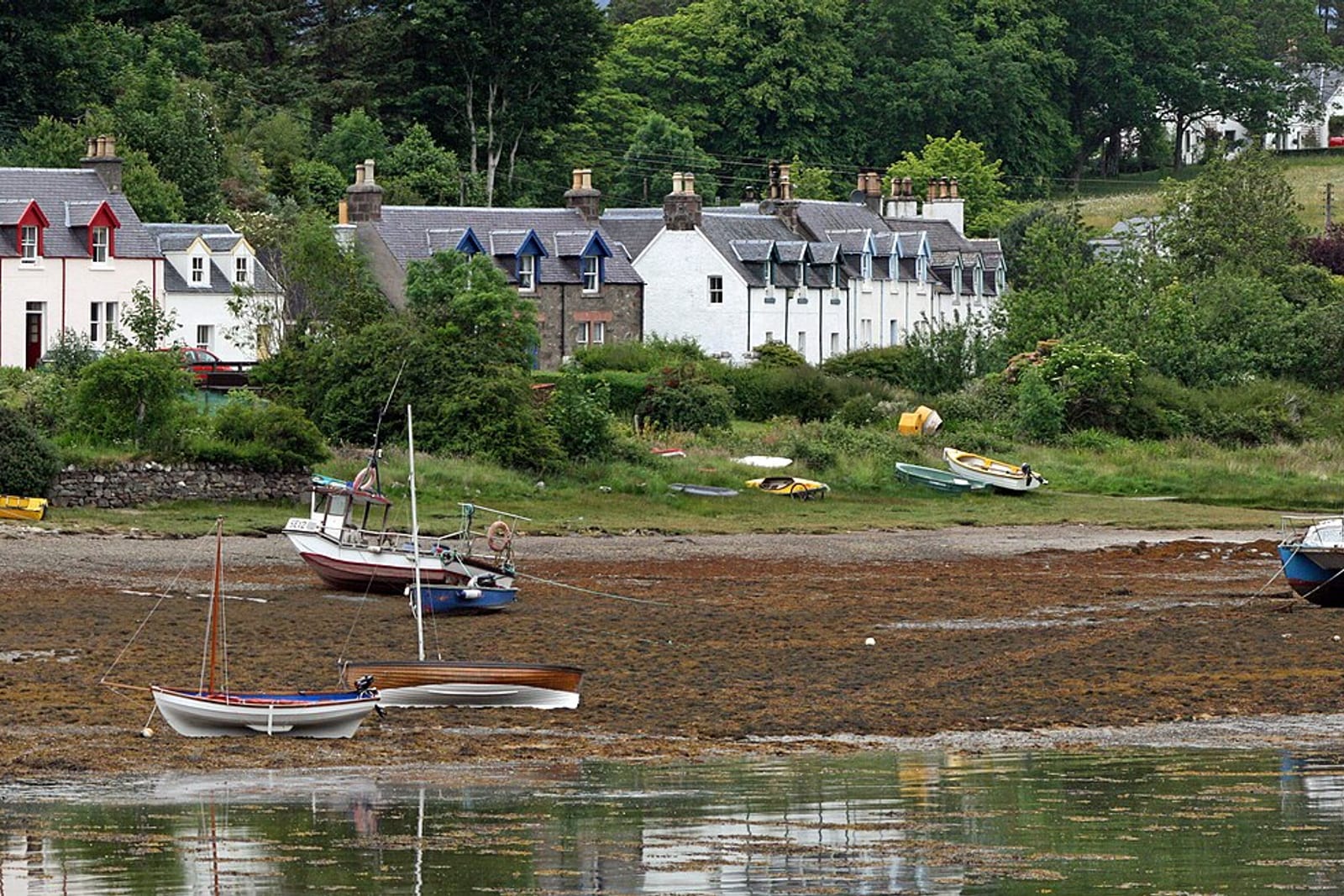 Jo and Steve Turner / Wikimedia Commons · CC BY-SA 2.0 · cropped
Plockton
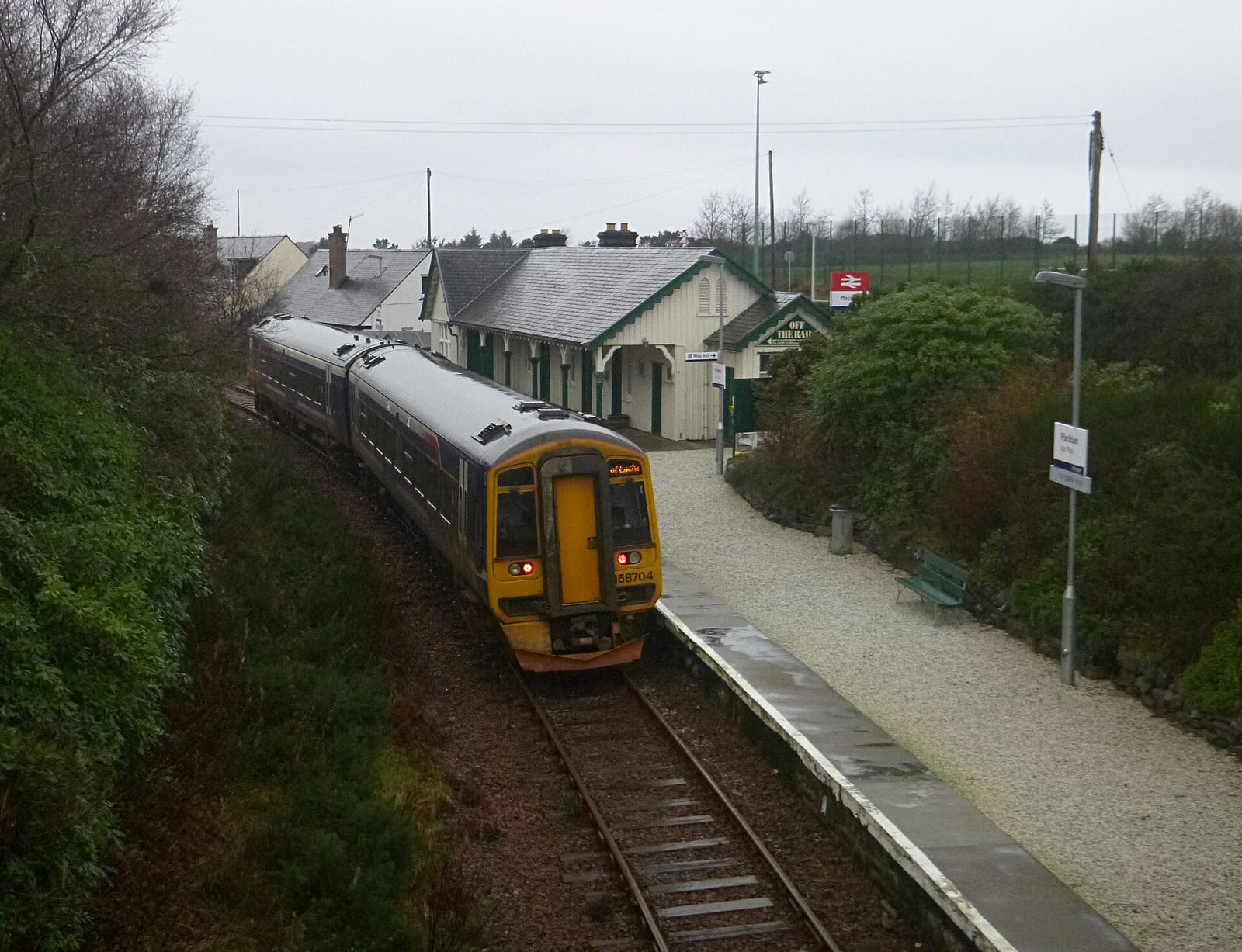
Sheltered by the hills, warmed by the Gulf Stream drift and improbably fringed with palm-like cabbage trees, Plockton is a crescent of whitewashed cottages around a bay of small boats. The station is minutes from the harbour.Sexy Simon / Wikimedia Commons · CC BY-SA 4.0A terminus facing Skye
The rails stop on the pier at Kyle of Lochalsh, where boats once left for Skye. The bridge carries the traffic now, but the view is unchanged — the narrows, the lighthouse and the hills of the island stacked across the water.A bit of history
Culture & experiences along the way
Mike McBey / Wikimedia Commons · CC BY 2.0Request stops, used properly
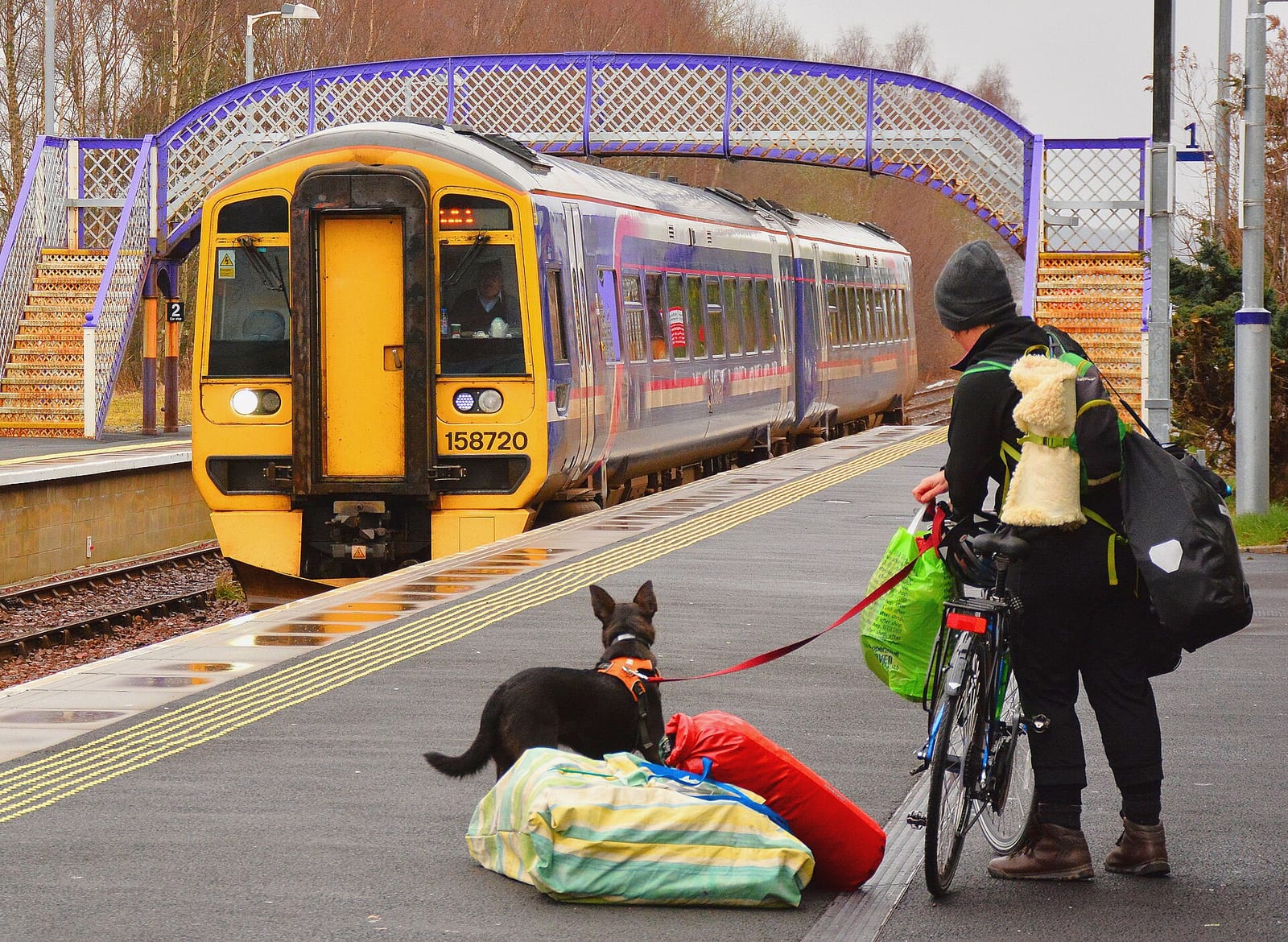
Several of the line's smallest platforms — Duncraig, Duirinish, Attadale, Achnashellach — are request stops: tell the conductor if you want to alight, and put an arm out on the platform if you want to board. It is the most charming administrative procedure in British railways, and it opens up empty glens to walkers with a timetable in hand.Trevor Littlewood / Wikimedia Commons · CC BY-SA 2.0The train that refused to die
The Beeching axe listed the Kyle line in the 1960s, and closure came back on the table in 1971 — both times local campaigns won, and the trains kept running. Ride it and you understand why people fought: for the communities along Loch Carron the railway is still the all-weather road that the map never provided.Peter Moore / Wikimedia Commons · CC BY-SA 2.0Crossing at Achnasheen
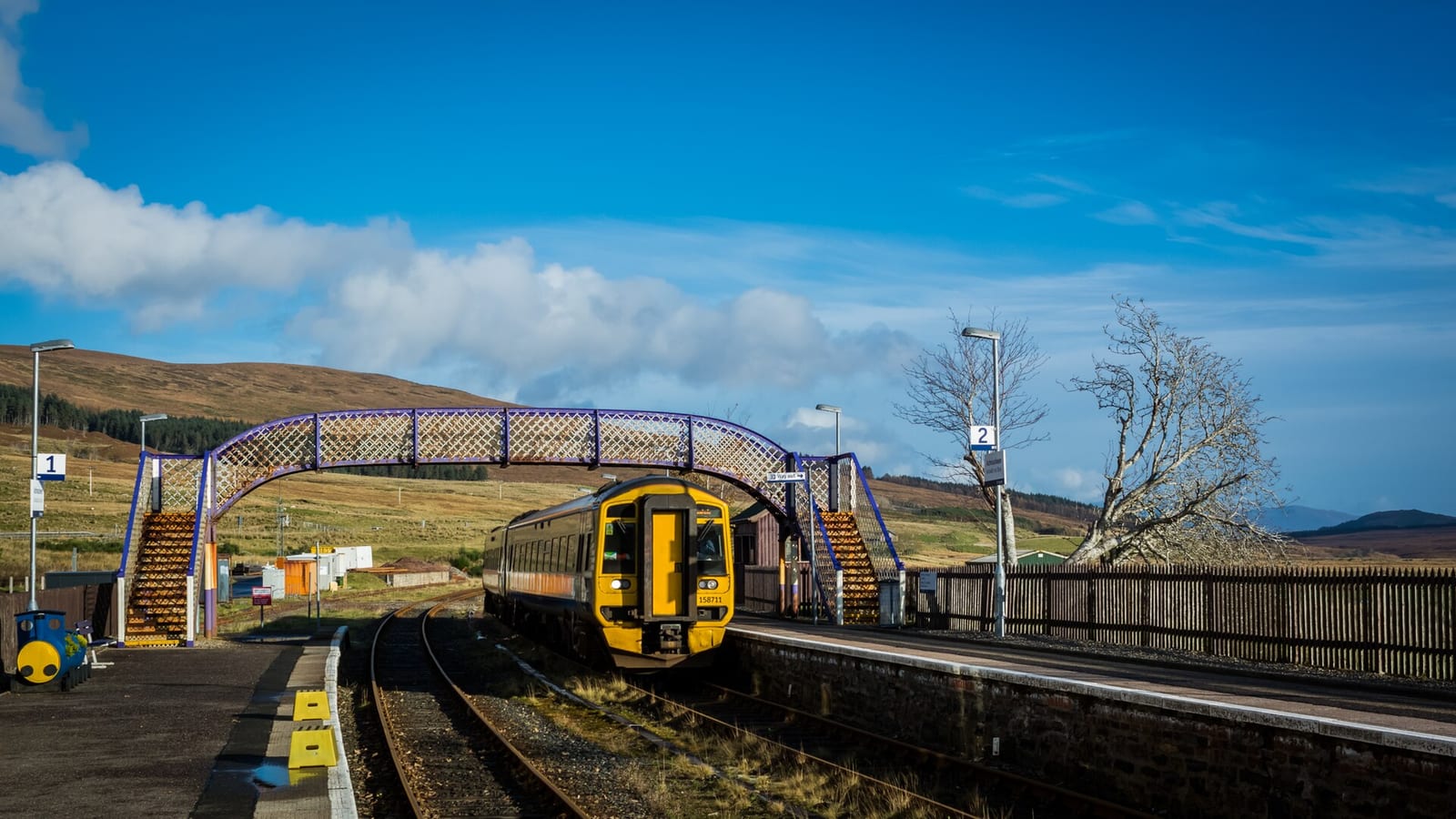
The line is single track, so trains cross at the passing loops — most memorably at lonely Achnasheen, out on the moor, where eastbound and westbound services meet at the platforms. Watch the token of empty country change hands: two trains, a minute of bustle, then the silence closes back in.Timetables
Four trains a day run each way between Inverness and Kyle of Lochalsh on Mondays to Saturdays, with two on Sundays. Times below are the current national timetable (17 May – 12 December 2026), as of July 2026.
Inverness → Kyle of Lochalsh (Mon–Sat)
| Inverness dep | Kyle arr |
|---|---|
| 08:53 | 11:31 |
| 10:56 | 13:35 |
| 13:35 | 16:16 |
| 17:54 | 20:34 |
Kyle of Lochalsh → Inverness (Mon–Sat)
| Kyle dep | Inverness arr |
|---|---|
| 05:45 | 08:31 |
| c. 12:06 | 14:42 |
| 13:46 | 16:27 |
| 17:13 | 19:59 |
The midday departure from Kyle shifts by a couple of minutes with the seasons (12:06 until late October, 12:08 after). On Sundays two trains run each way: Inverness 10:59 → 13:48 and 17:54 → 20:34 (the evening train leaves Dingwall at 18:33 in the autumn pattern); returning from Kyle at 10:20 → 13:02 and 15:09 → 17:53.
All services call at Dingwall, Garve, Achnasheen, Strathcarron, Stromeferry and Plockton; the smallest platforms — Lochluichart, Achanalt, Achnashellach, Attadale, Duncraig, Duirinish — are request stops, so tell the conductor (or signal from the platform) if you need them.
Times change with each national timetable — check for your date at scotrail.co.uk (opens in a new tab) or nationalrail.co.uk before travelling.
Tickets
Tickets could not be simpler: the Kyle Line is part of the national network, so Inverness to Kyle of Lochalsh is sold by every station and ticket site in Britain. Buy direct from ScotRail (opens in a new tab) to avoid booking fees. Advance singles, released about twelve weeks ahead and tied to one train, are cheapest; Off-Peak fares cost more but keep you flexible, which matters here — a spontaneous hour in Plockton is exactly what this line invites, and with four trains a day you want the freedom to take the next one.
No seat reservations are available or needed, but board a few minutes early in summer for a left-hand window seat heading west, which owns the Loch Carron finale. Bicycles travel free, though spaces on the Class 158s are limited and should be reserved. Buses to Skye are a separate fare.
Book your tickets
ScotRail tickets
Advance, Off-Peak and Anytime fares
The Kyle Line is part of the national network — any ticket site or station sells Inverness–Kyle of Lochalsh. Advance singles are the cheapest; Off-Peak fares keep you flexible, which matters on a line with four trains a day. Buy direct from ScotRail with no booking fees; e-tickets are accepted on board.
Book Tickets (opens in a new tab, on ScotRail)via ScotRailDay return from Inverness
Out on the morning train, back by dinner
The classic way to taste the line: the morning departure from Inverness reaches Kyle before midday, leaving hours for the pier, lunch and Skye views before an afternoon train home. Plockton makes an even better stopover — alight there on the way back and catch the last service into Inverness.
Book Tickets (opens in a new tab, on ScotRail)via ScotRailRail Passes
Interrail passes are valid. Interrail's own table of railway companies for Great Britain lists ScotRail as included, so the line is covered by a one-country Interrail Great Britain Pass or a Global Pass.
Visitors who do not live in the UK can also buy a BritRail Great Britain Pass, valid on all National Rail services, or the BritRail Spirit of Scotland Pass, which covers the National Rail network in Scotland for 4 days in 8 or 8 days in 15. The Spirit of Scotland Pass cannot be used before 09:15 on weekdays, but Inverness to Kyle of Lochalsh is one of the routes exempt from that rule, so the first train of the morning is covered.
For this journey alone, a pass is not worth buying. A single from Inverness to Kyle of Lochalsh sampled at £18.00 for a weekday in October. A pass pays only when the line is one day of a longer trip round Scotland.
Checked October 2026 against interrail.com (opens in a new tab) and britrail.com (opens in a new tab).
Places to Visit
Two and a half hours is short enough to do in one sitting and long enough that breaking it is worth considering — particularly since several of the stops are request halts, which means the train will stop almost anywhere along the line if you ask.
Between the cities and the big names there are quieter places the cards skip. Dingwall, the old county town at the head of the Cromarty Firth, repays a wander between trains. Garve is the railhead for the Ben Wyvis massif. And Achnashellach, a request stop with nothing at it, drops hillwalkers straight at the foot of the Coulin forest paths — one of the finest station-to-summit starts anywhere in Britain, and unreachable this easily by any other means.
Kyle of Lochalsh itself is a small harbour town that grew around the railway and the old ferry slip. It is not the destination so much as the door: the bridge, the buses and the boats all leave from within sight of the buffer stops.
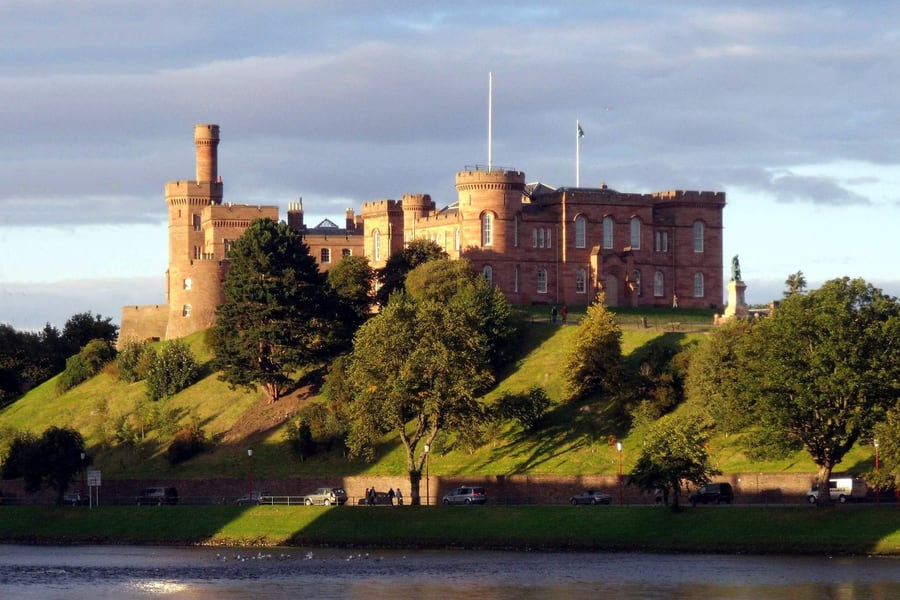 dave conner / Wikimedia Commons · CC BY 2.0 · cropped
Inverness
The Highland capital bookends the line, and its landmark has just come back. The red sandstone castle above the River Ness spent two centuries as a court and a prison, closed in 2021, and reopened on 9 February 2026 as the Inverness Castle Experience after a £47 million conversion — Highland storytelling inside, and views from the tower. Culloden battlefield and Loch Ness are both a short ride out.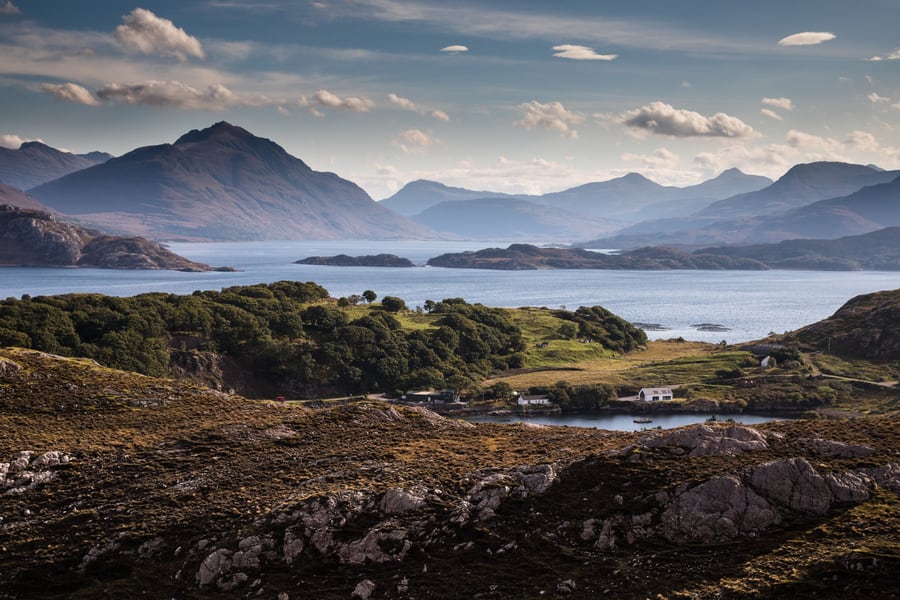 Simaron / Wikimedia Commons · CC BY-SA 2.0 · cropped
Torridon
Reached by road from Achnasheen, the Torridon hills are the grandest mountain landscape in Scotland and among the oldest ground in Britain — Torridonian sandstone stacked in terraces, capped with quartzite around 500 million years old. Liathach, Beinn Eighe and Beinn Alligin stand over the sea loch. Beinn Eighe became Britain's first national nature reserve in 1951, and protects the biggest Caledonian pinewood left in the north-west.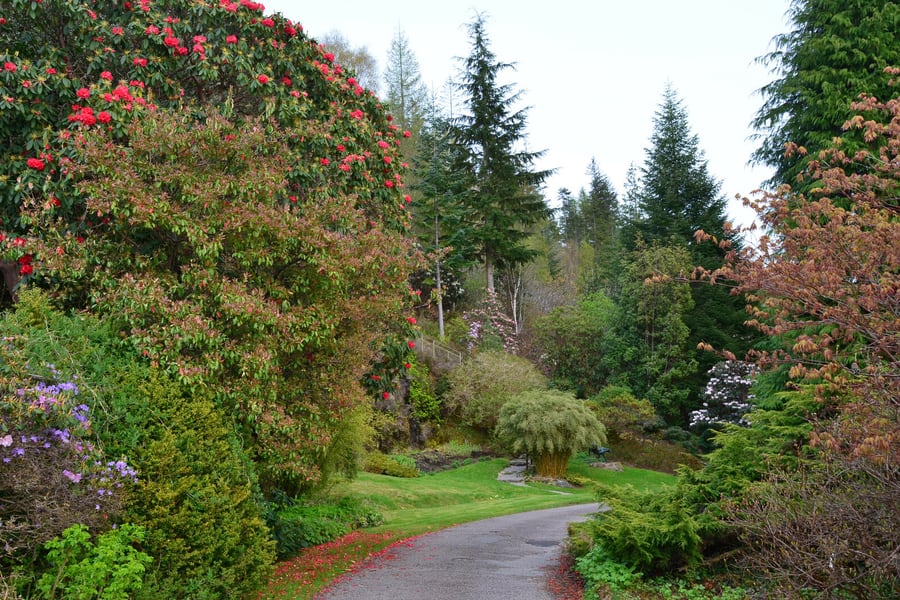 Jim Barton / Geograph Britain and Ireland / Wikimedia Commons · CC BY-SA 2.0 · cropped
Attadale Gardens
One of the few gardens in Britain with its own railway halt: ask the guard and the train stops at Attadale, about two hundred metres from the gate. Twenty acres run up the hillside above Loch Carron — rhododendrons the Victorians planted, water gardens, a fernery, bridges and rare trees that survive here only because the sea keeps the frost off. Open daily from April to October.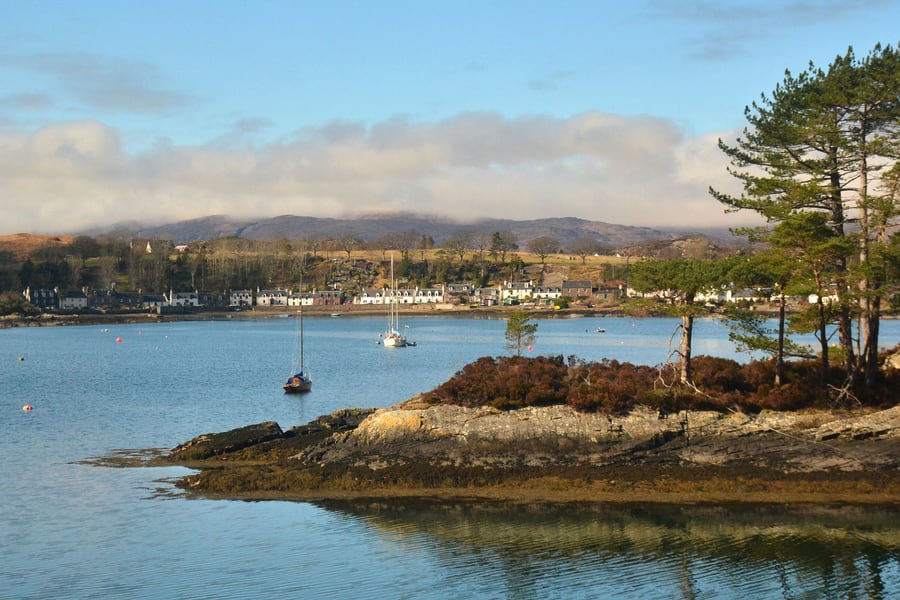 Mike McBey / Wikimedia Commons · CC BY 2.0 · cropped
Plockton
A planned village of 468 people laid out around 1820, curved along a bay that faces east and so escapes the Atlantic weather. The North Atlantic Drift does the rest: the New Zealand cabbage trees along Harbour Street, planted in the 1960s and universally called palms, give it an air no Highland village should have. Seal trips run in summer, and television fans know it as Hamish Macbeth's Lochdubh.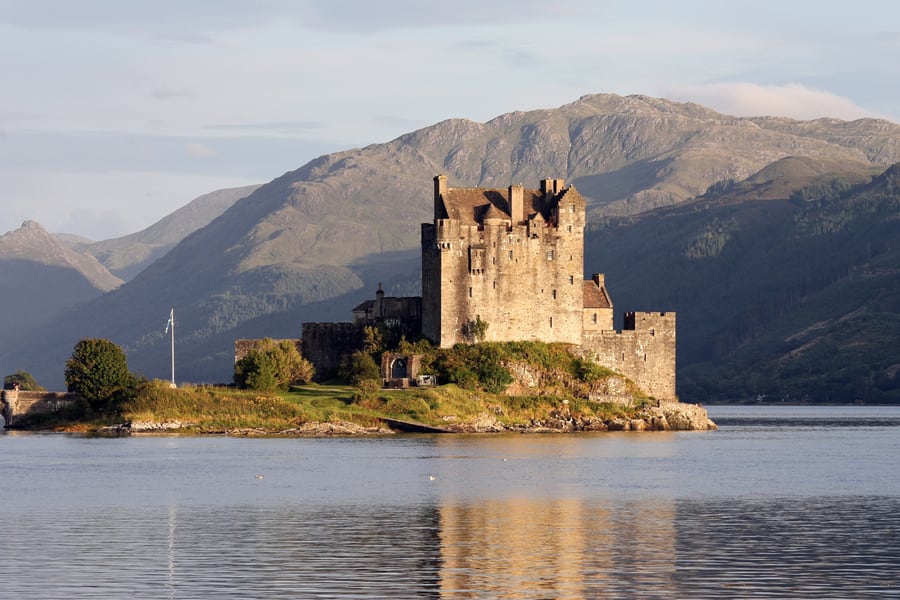 Eusebius / Wikimedia Commons · CC BY 3.0 · cropped
Eilean Donan
The most photographed castle in Scotland stands on its island at Dornie, where Loch Duich, Loch Long and Loch Alsh meet, a bus or taxi ride east of the terminus. What you see is barely a century old: the Royal Navy shelled the place to rubble in May 1719 during a Jacobite rising, and it lay ruined for two hundred years until John MacRae-Gilstrap rebuilt it between 1919 and 1932.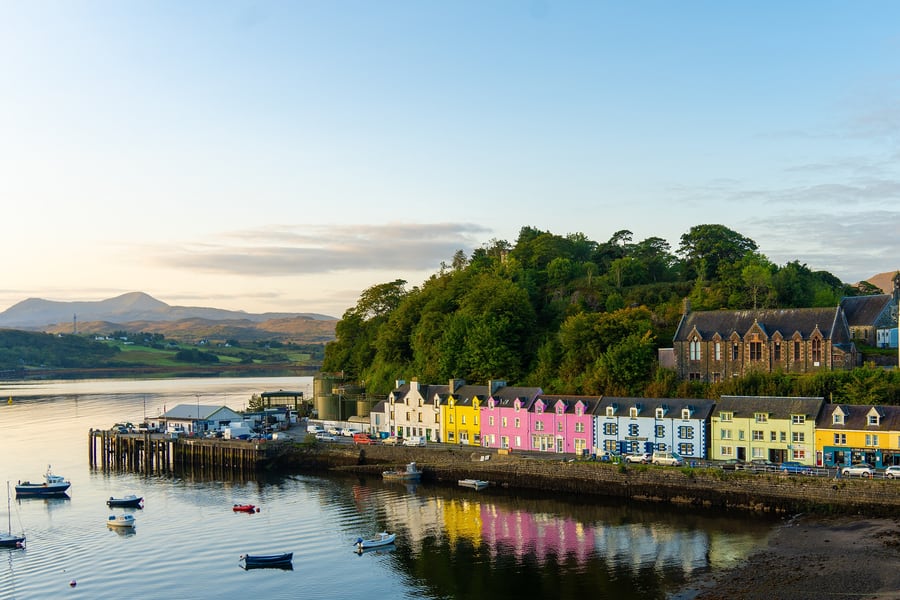 הגמל התימני / Wikimedia Commons · CC BY-SA 4.0 · cropped
Skye
Kyle of Lochalsh is small, but buses cross the Skye Bridge from outside the station and the island opens up. Portree, the capital and largest town at 2,310 people, has a pier by Thomas Telford and a row of painted houses along the harbour that everybody photographs. North of it lie the Storr and the Quiraing; south and west, the Cuillin. With an early train you can be there for lunch.Where to Sleep
Plockton is the overnight everyone hopes for: harbour-front inns and guesthouses where the tide rises and falls outside the window, seafood a short walk from the station, and the last train onwards or back giving the day a gentle deadline. Rooms are few and summer demand is high — book well ahead.
Kyle of Lochalsh has hotels and B&Bs clustered near the pierhead, convenient for an early train or a morning bus to Skye; neighbouring Kyleakin, just over the bridge, adds hostels and harbour views on the island side. If your real destination is Skye, Broadford and Portree offer the widest choice, both linked to the station by bus.
Inverness, at the eastern end, has the Highlands' fullest spread of accommodation — riverside hotels, hostels and B&Bs by the dozen — and makes the natural base for riding the line as a day return. For something more remote, the walkers' lodges and bunkhouses of the Glen Carron and Torridon country put you deep in the hills with the railway as your lifeline; check the request-stop times carefully so the last train doesn't leave without you.
Questions or corrections
Planning this trip and stuck on something, or spotted a time, fare or detail that has changed? Send us a message about The Kyle Line. We read every one, and we update this page when something has changed.