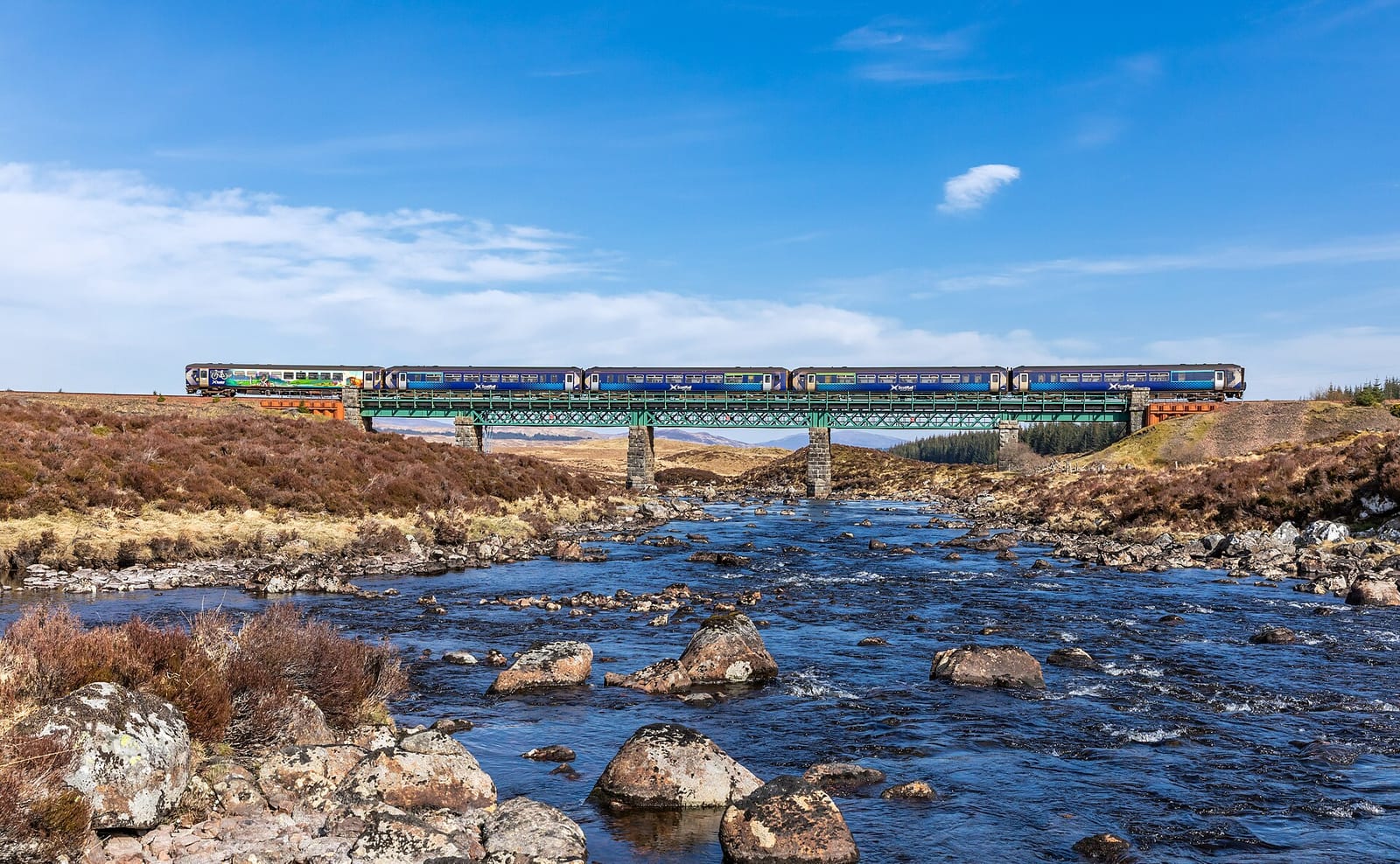
The West Highland Line
Kabelleger / Wikimedia Commons · CC BY-SA 4.0
- DistanceGlasgow Queen Street–Fort William–Mallaig · ~164 miles / 264 km
- Duration3¾ h to Fort William · 5¼ h to Mallaig
- Best seasonMay to October for daylight — winter crossings have their own drama
Introduction
There is a strong case that the finest railway journey in the world costs about forty pounds and leaves from platform level at Glasgow Queen Street three times a day. In 2009 the readers of Wanderlust magazine voted the West Highland Line the top rail journey on earth — ahead of the Trans-Siberian — and the remarkable thing is that it is not a cruise train or a heritage operation but an ordinary ScotRail service, two or three purple carriages that rattle out of the city and, five hours later, arrive at a fishing port facing the Isle of Skye.
In between lies scenery that gets steadily less believable. The train climbs away from the Clyde along Loch Long and the top of Loch Lomond, divides at Crianlarich — one half for Oban, one for Fort William — sweeps around the Horseshoe Curve beneath Beinn Dorain, and then does something no road manages: it strikes out across Rannoch Moor, twenty miles of bog, lochan and deer where the Victorians, unable to find solid ground, simply floated the track on a raft of tree roots and brushwood. It still floats today. In the middle of the crossing the train pauses at Corrour, the highest mainline station in the United Kingdom at 410 metres, which no public road has ever reached.
The line opened to Fort William on 11 August 1894; the extension to Mallaig, with its great concrete viaduct at Glenfinnan, followed in 1901. Film fans know the last leg as the Hogwarts Express route — our separate guide to the steam-hauled Jacobite covers that summer spectacle — but the deeper magic is the everyday one: a working public railway, all year round, through country this empty. Buy a ticket, take the left-hand window, and let Britain's wildest line do the rest.
The Journey
The journey falls into three acts, and the train gives you time to learn each one.
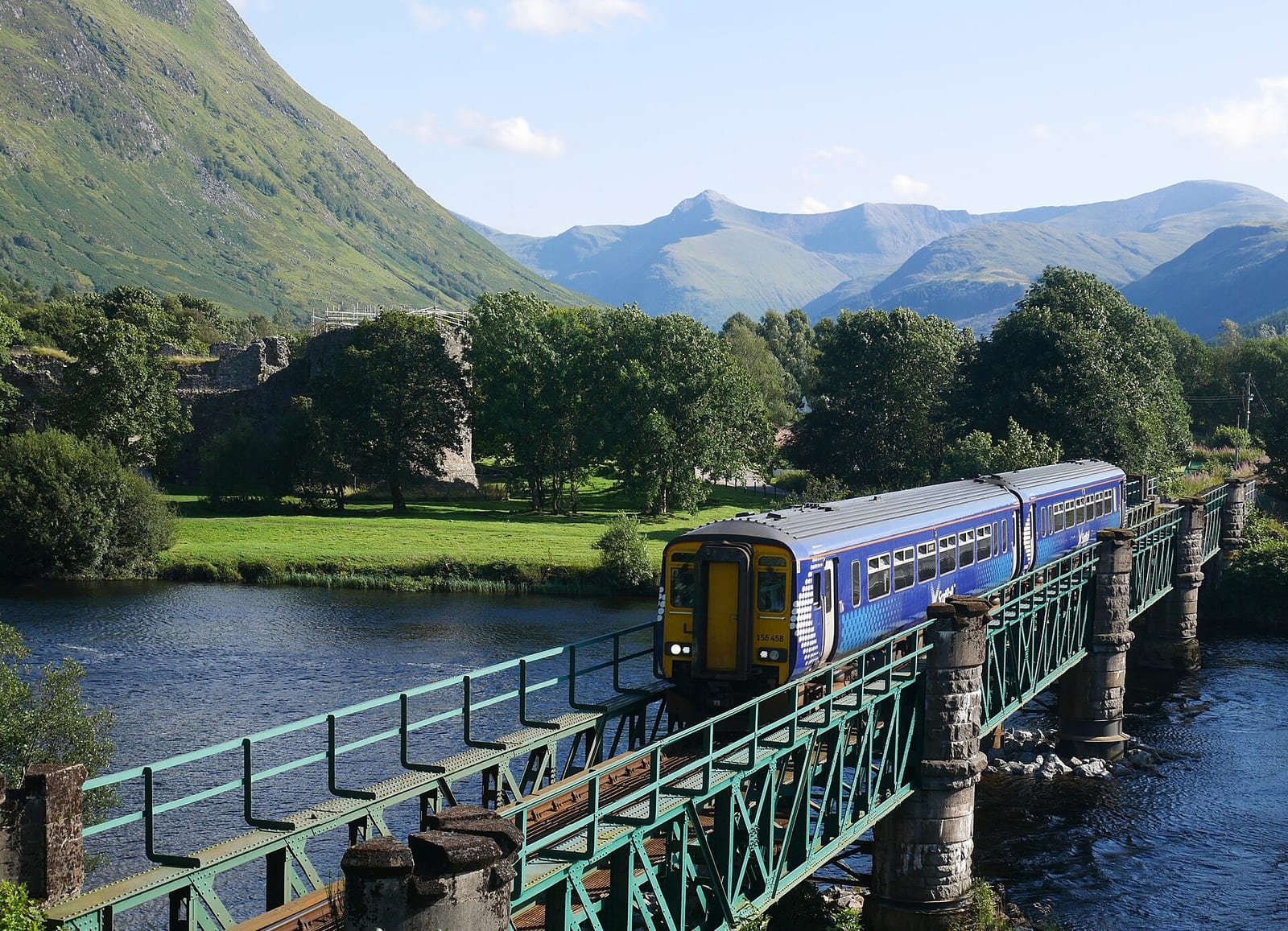
Act one: the lochs. Out of Glasgow Queen Street the line runs west along the Clyde before turning north at Helensburgh to climb above Gare Loch and Loch Long — sea lochs, with submarines occasionally in the first and hills closing in around the second. At Arrochar & Tarbet the train crosses the narrow isthmus to the shore of Loch Lomond and follows the loch's quiet upper reaches, where the tourist crowds of the southern end never come. At Crianlarich, junction of the West Highlands, the train divides: the front portion heads west for Oban, crossing the head of Loch Awe near Kilchurn Castle, while the rear carries on north — check you are sitting in the right half, and enjoy the platform ritual of uncoupling either way.
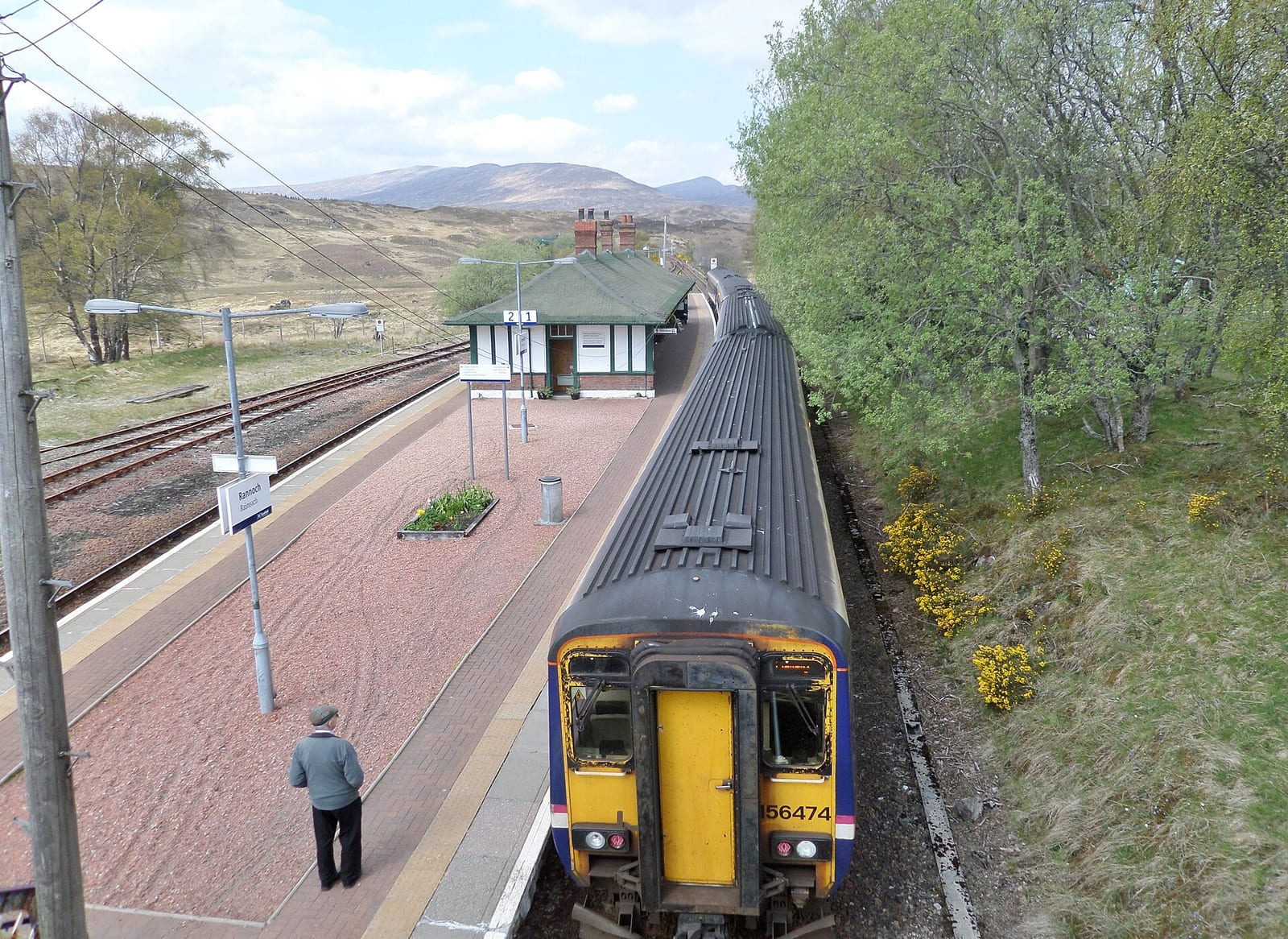
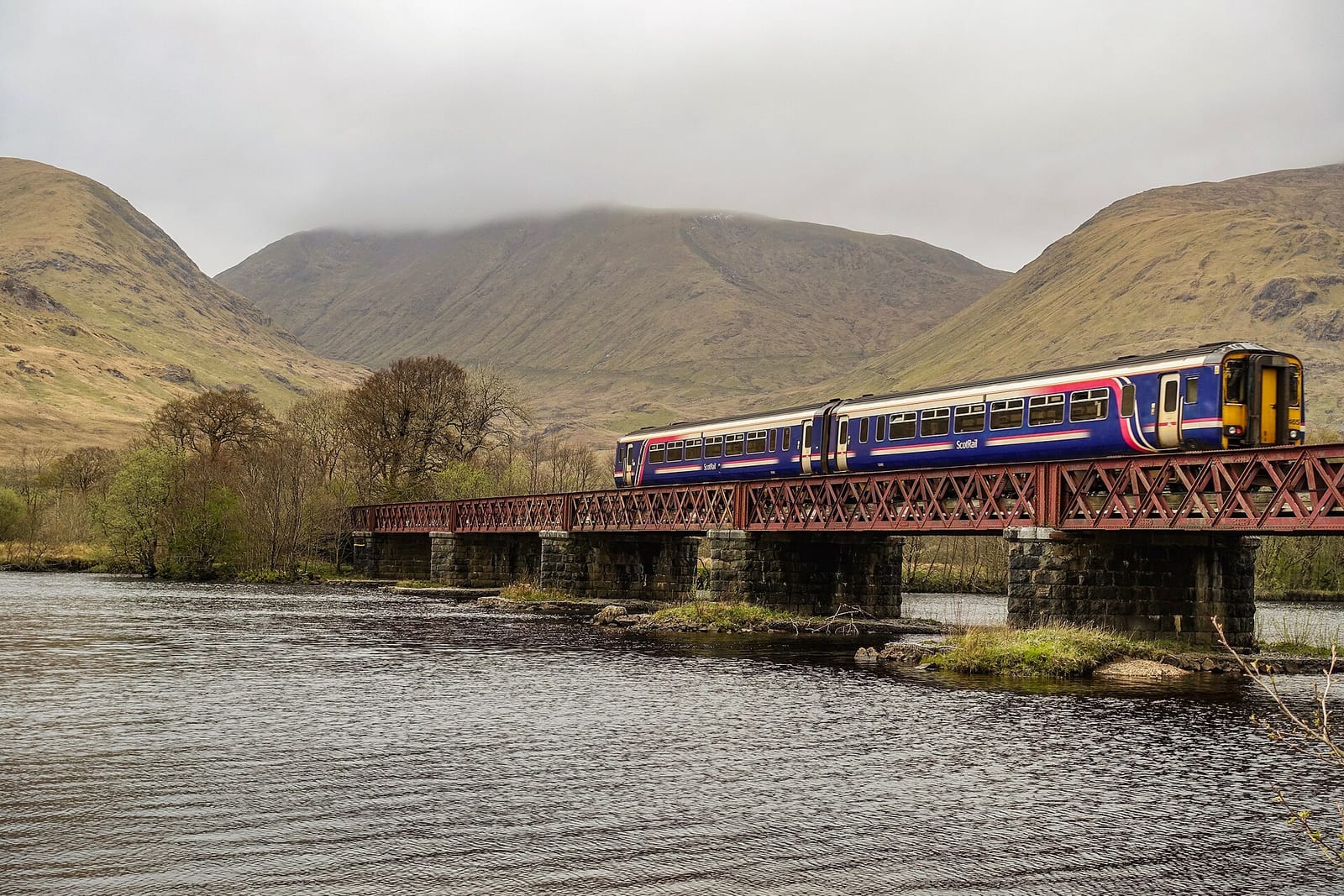
Act two: the moor. Beyond Tyndrum comes the Horseshoe Curve, the line's grand gesture — too poor to bridge the glen between Beinn Odhar and Beinn Dorain, the builders swung the railway around it in a great arc that lets you watch your own train curving ahead. Then, past Bridge of Orchy, the country simply empties. Rannoch Moor is twenty miles of peat, rock and water crossed by no road; the track rides its raft of brushwood and tree roots, and the train sways gently, like something at sea. Rannoch station has a tea room and a sculpted stone head of James Renton, the director who part-funded the struggling railway from his own pocket. A snow shed guards the cutting to the north. Then Corrour: a platform, a restaurant with rooms, 410 metres of altitude and not a road in sight — the Trainspotting stop, and for many riders the point where the journey tips from scenic into extraordinary.
Act three: the sea. The line drops past Tulloch and along Loch Treig into the green Great Glen, crossing the River Lochy with the Ben Nevis massif filling the windows, and pauses at Fort William, the Highlands' little capital. Then comes the 1901 Mallaig Extension: Glenfinnan Viaduct curving above Loch Shiel, the beaches at Arisaig and Morar white as the Caribbean and colder than it, and finally Mallaig, where the rails stop at the harbour and the ferries take over for Skye and the Small Isles. Five and a quarter hours from the city — and most people ride it back again within days, just to sit on the other side.
Along the route
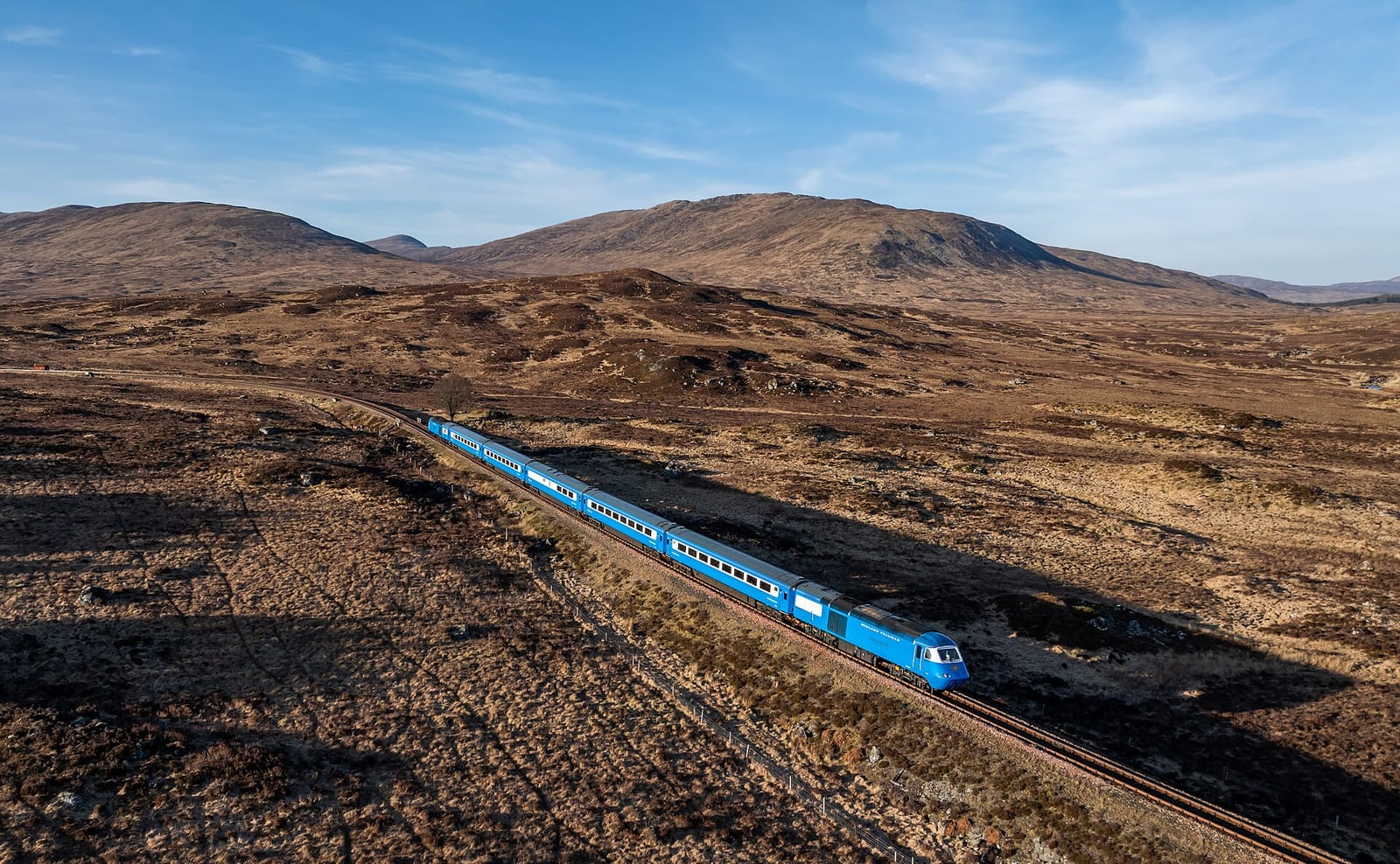
Kabelleger / Wikimedia Commons · CC BY-SA 4.0Rannoch Moor, afloat
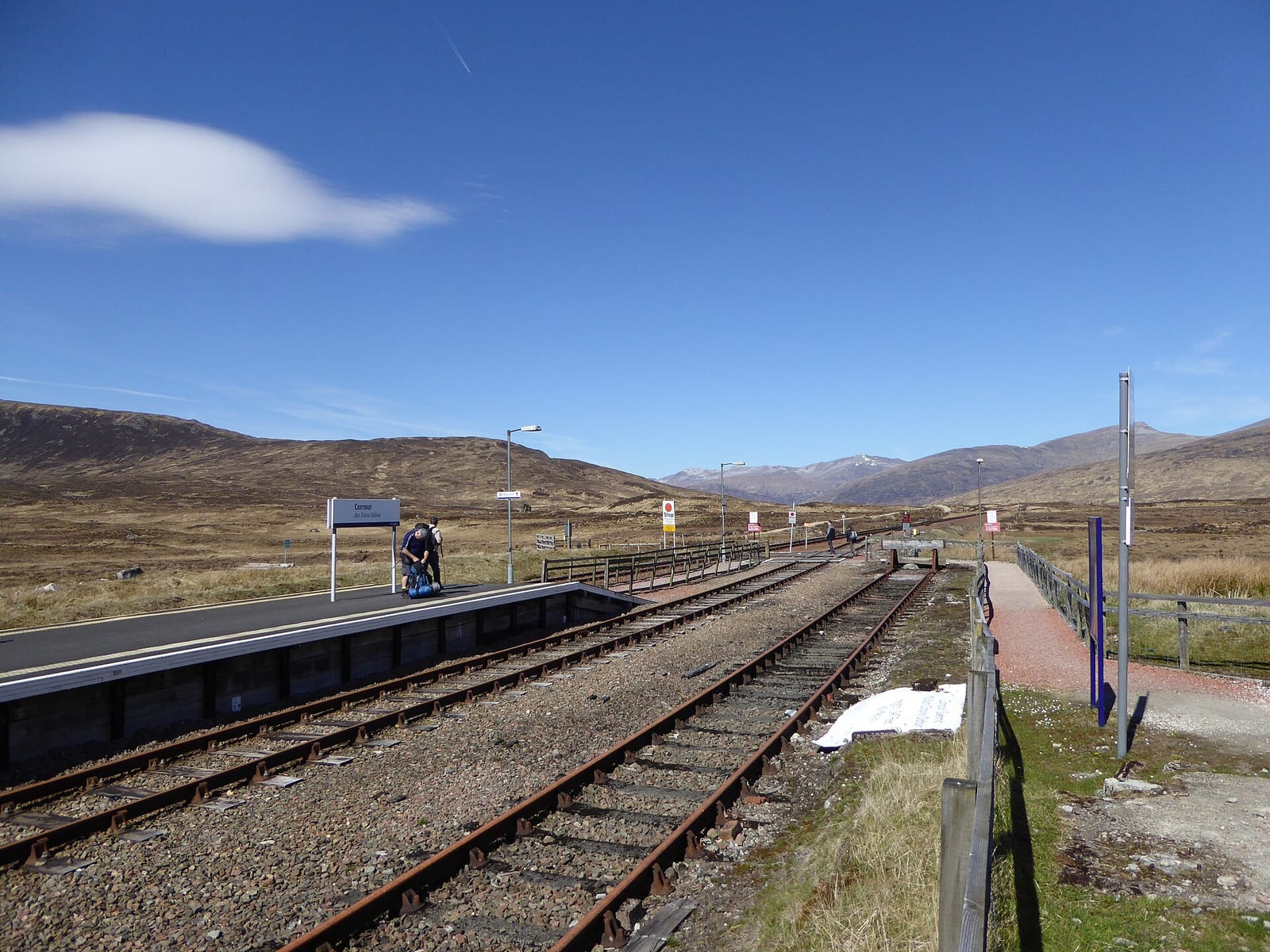
For twenty miles the train crosses a blanket bog so deep the Victorians could not find a bottom to build on — so they floated the railway on a mattress of tree roots, brushwood and thousands of tons of earth, and it floats there still. No road crosses the moor.Alan O'Dowd / Wikimedia Commons · CC BY-SA 2.0Corrour — no road in, no road out
At 410 metres, Corrour is the highest mainline station in the UK, and the nearest public road is a ten-mile walk away. It exists for the estate, the hikers and the station-house restaurant — and it had its moment of fame in Trainspotting.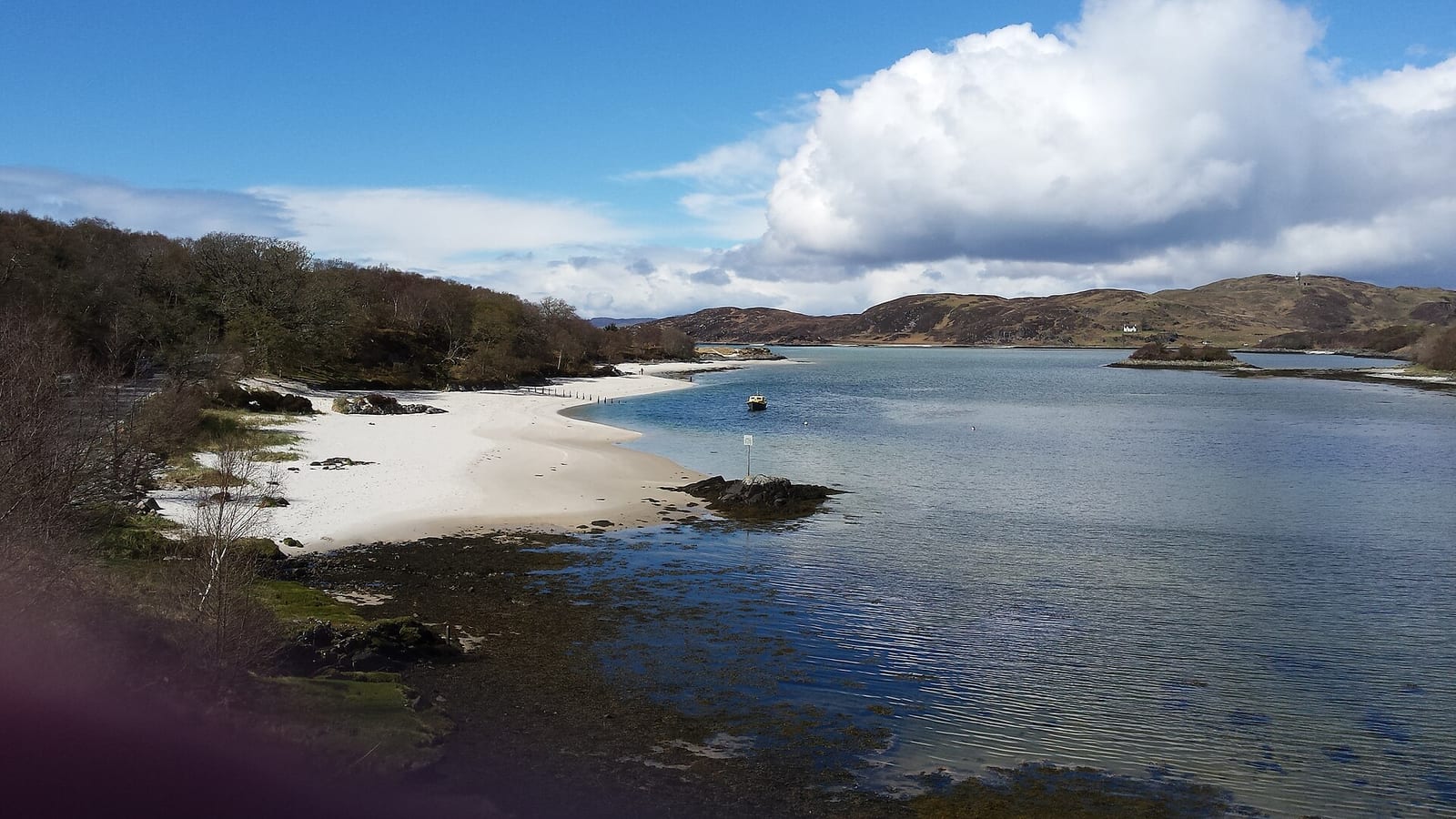 Peter Mackenzie / Wikimedia Commons · CC BY-SA 2.0
Down to the sea at Mallaig
Beyond Fort William the 1901 Mallaig Extension — built by "Concrete Bob" McAlpine, with the Glenfinnan Viaduct as its showpiece — swings past white-sand beaches to the fishing port, calling at Arisaig, the most westerly station in Great Britain.A bit of history
Culture & experiences along the way
User:Metrophil / Wikimedia Commons · CC BY-SA 3.0Ride it like a local
No reservations needed, no premium fare — this is a normal ScotRail service with big windows, and the same seat costs the same whether you ride ten minutes or five hours. Sit on the left leaving Glasgow for Loch Long and Loch Lomond, then swap sides for the moor. The catering trolley (when it runs) sells tea; bring the rest.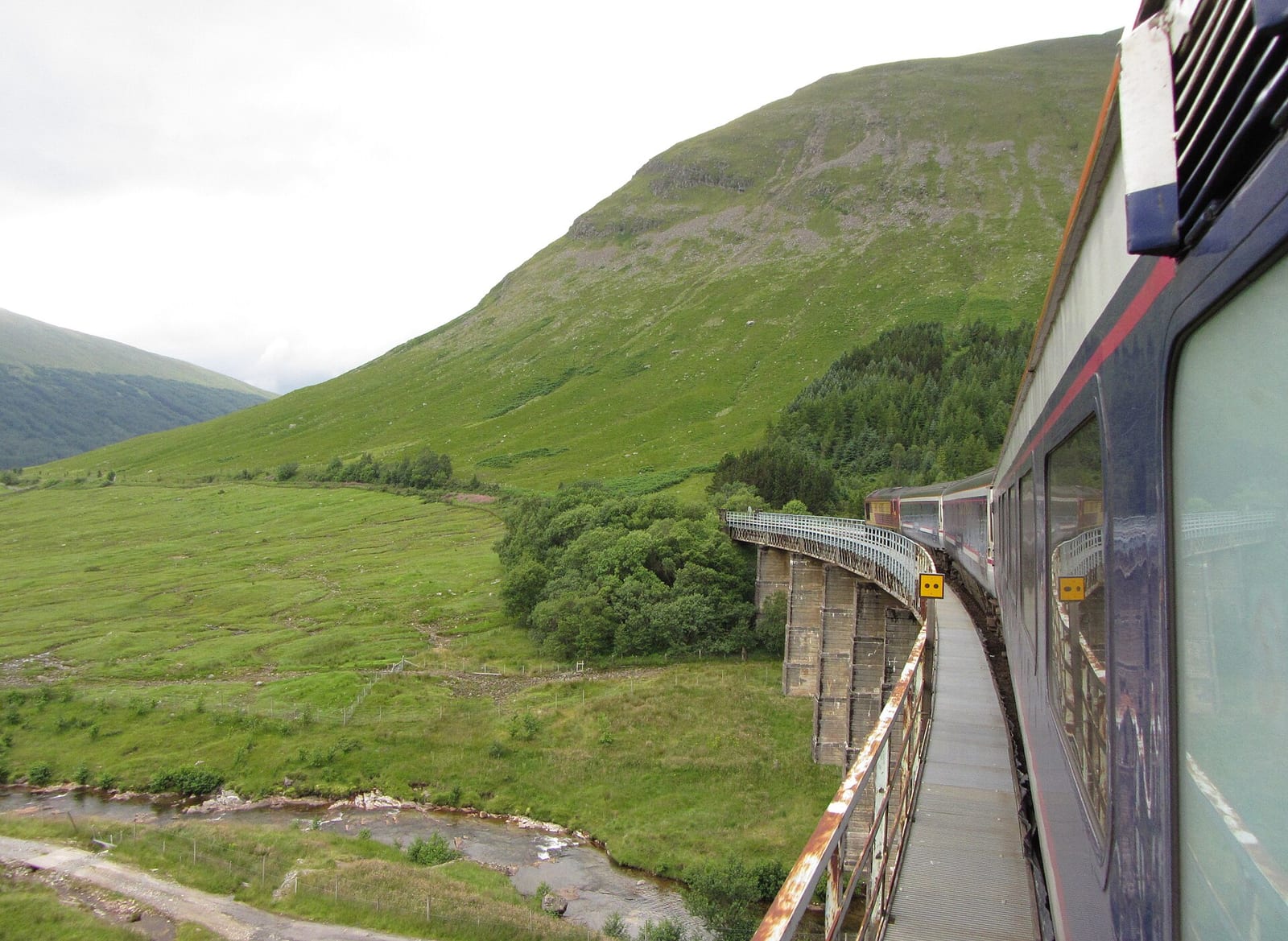 Gareth James / Wikimedia Commons · CC BY-SA 2.0
The Horseshoe Curve
Between Upper Tyndrum and Bridge of Orchy the builders could not afford a viaduct straight across the glen, so the line sweeps around three sides of it instead — the Horseshoe Curve, with Beinn Dorain towering over the train as it doubles back on itself. One of the great pieces of railway theatre in Britain, included free.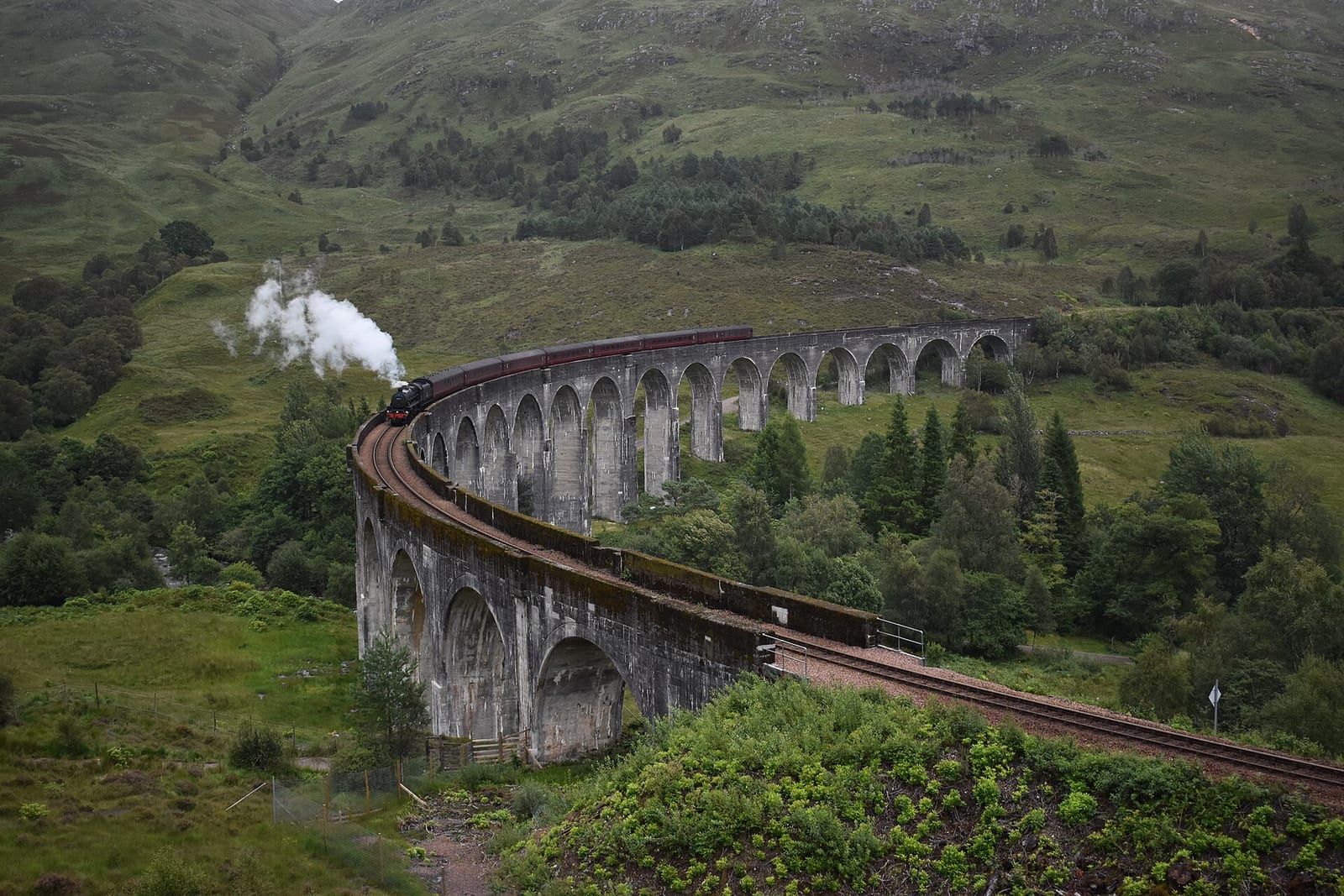 S. Perquin / Wikimedia Commons · CC BY-SA 4.0
Steam over the last leg
In summer, the Fort William–Mallaig section is also worked by the steam-hauled Jacobite — the "Hogwarts Express" of the films. Ride the ScotRail service one way and the steam train the other, and you get the same magnificent coast twice, once with a window that opens. See our separate Jacobite guide for dates and booking.Timetables
Three through trains a day link Glasgow with Fort William and Mallaig on Mondays to Saturdays, two on Sundays — plus the Caledonian Sleeper from London on the Fort William leg. Times below are the current national timetable (17 May – 12 December 2026), as of July 2026.
Glasgow Queen Street → Fort William → Mallaig (Mon–Fri)
| Glasgow dep | Fort William arr | Mallaig arr |
|---|---|---|
| 08:22 | 12:12 | 13:40 |
| 12:22 | 16:09 | 17:44 |
| 18:24 | 22:06 | 23:37 |
Saturday departures are within a few minutes of the same times (08:21 / 12:22 / 18:23). On Sundays two trains run through: 12:20 → 16:09 / 17:44 and 18:21 → 22:06 / 23:39. The overnight Caledonian Sleeper from London Euston also works down the line each morning except Saturdays, arriving Fort William at 10:00.
Mallaig → Fort William → Glasgow (Mon–Fri)
| Mallaig dep | Fort William dep | Glasgow arr |
|---|---|---|
| 06:03 | 07:44 | 11:33 |
| 10:09 | 11:40 | 15:34 |
| 16:05 | 17:37 | 21:43 |
A late local also leaves Mallaig at 18:15 for Fort William, timed for the southbound sleeper to London at 19:50.
At Crianlarich each of these trains divides or combines with an Oban portion — the 08:22, 12:22 and 18:24 from Glasgow reach Oban at 11:27, 15:28 and 21:27 respectively. Sit in the correct half; the guard announces which portion is which.
Times change with each national timetable — check for your date at scotrail.co.uk (opens in a new tab) or nationalrail.co.uk before travelling.
Tickets
This is the rare world-class journey where the ticket is the easy part: the West Highland Line is an ordinary part of Britain's national network, so any station or ticket site will sell it. Advance singles, released about twelve weeks ahead, are the bargain; Off-Peak returns cost more but let you take any train, which suits a journey where you may want to break the trip at Corrour or Fort William on a whim. Buy direct from ScotRail (opens in a new tab) to avoid booking fees.
There are no seat reservations and none are needed outside summer Saturdays — board early at Glasgow for a left-hand window seat. Bikes travel free but spaces are limited and must be reserved. If your plans include the steam-hauled Jacobite, book that separately and well ahead; the rails and the views are identical, only the locomotive and the price differ.
Book your tickets
ScotRail tickets
Advance, Off-Peak and Anytime fares
The West Highland Line is part of the national network — buy any ScotRail ticket from Glasgow Queen Street to Fort William or Mallaig. Advance singles, released about twelve weeks ahead, are much the cheapest; Off-Peak fares stay flexible. No seat reservations are needed, and the price is the same wild ride either way.
Book Tickets (opens in a new tab, on ScotRail)via ScotRailThe Jacobite steam train
Summer steam over the Mallaig leg
West Coast Railways' steam-hauled Jacobite covers the Fort William–Mallaig section in summer — the same rails, the Glenfinnan Viaduct included, behind a working steam locomotive. It books out far ahead in high season; combine it with the ScotRail service for a two-way day from Fort William.
Book Tickets (opens in a new tab, on West Coast Railways)via West Coast RailwaysRail Passes
Interrail passes are valid. Interrail's own table of railway companies for Great Britain lists ScotRail as included, so the whole line, Glasgow to Oban, Fort William and Mallaig, is covered by a one-country Interrail Great Britain Pass or a Global Pass.
Visitors who do not live in the UK can also buy a BritRail Great Britain Pass, valid on all National Rail services, or the BritRail Spirit of Scotland Pass, which covers the National Rail network in Scotland for 4 days in 8 or 8 days in 15. The Spirit of Scotland Pass cannot be used before 09:15 on weekdays, but Glasgow to Oban, Fort William and Mallaig are exempt from that rule, so the morning departures from Glasgow are covered.
No pass covers the steam-hauled Jacobite between Fort William and Mallaig; it is bought separately.
For a single run to Mallaig, a pass is not worth buying. A single from Glasgow Queen Street to Mallaig sampled from £30.00 for a weekday in October. A Spirit of Scotland Pass starts to pay when the line is one leg of a longer circuit, such as on to Skye and back by way of Kyle of Lochalsh and Inverness.
Checked October 2026 against interrail.com (opens in a new tab) and britrail.com (opens in a new tab).
Places to Visit
What makes this line unusual is that breaking the journey costs you very little. The trains are infrequent but they are spread through the day, most of the stops are places worth an afternoon, and the ones that are not — the request halts out on the moor — are exactly the ones walkers want.
A few that do not get a card of their own are still worth knowing about. Rannoch is the other stop that feels roadless, with the moor pressing up to the platform and a tearoom in the station building; Leum Uilleim, the Trainspotting hill, rises from the same ground a stop further north. Arisaig and Morar, on the last few miles before the terminus, hide some of the best beaches in Britain — white shell sand, water the wrong colour for Scotland, and the Small Isles on the horizon. And at Crianlarich the line splits: the other branch runs down to Oban past Loch Awe and the ruin of Kilchurn Castle, a fine day out in itself if you have time to double back.
The practical advice is the same at every stop. Check the return working before you step off, because out here the alternative to the train is usually a very long walk.
 Helen Simonsson / Wikimedia Commons · CC BY-SA 3.0 · cropped
Glasgow
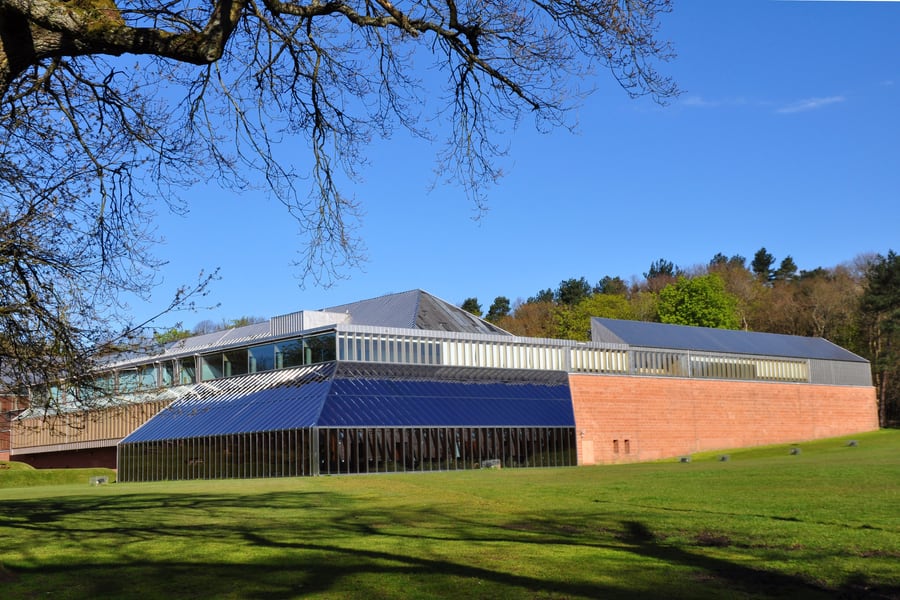
Queen Street is a working city terminus, not a tourist attraction — which is a reason to arrive a day early. The Burrell Collection, more than 9,000 objects that Sir William Burrell handed to the city in 1944, reopened in March 2022 after a £68m rebuild and sits in the woods of Pollok Country Park, three miles from the centre. Mackintosh, the Victorian merchant grid and the music are all within walking distance of the platform.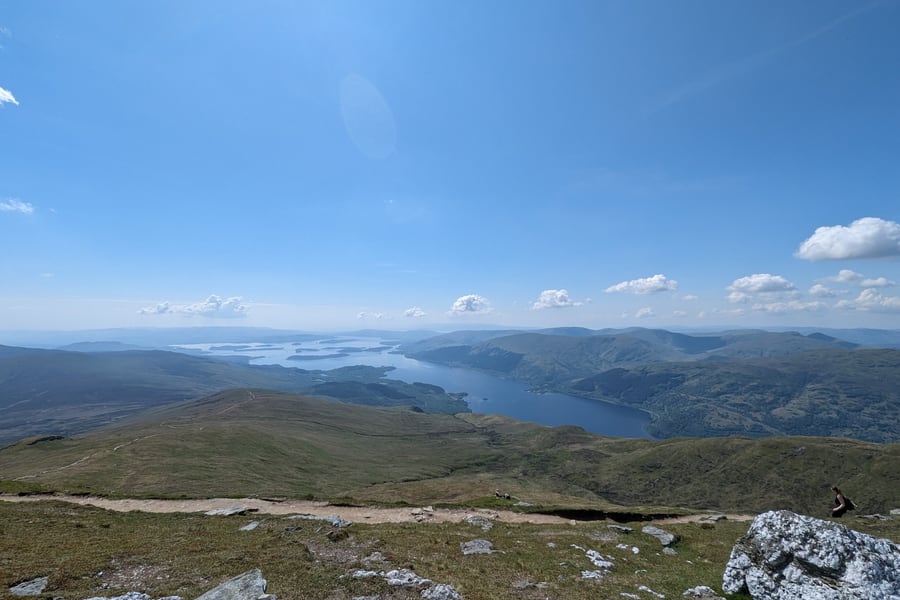 Unforgiven75 / Wikimedia Commons · CC BY-SA 4.0 · cropped
Arrochar, Tarbet and Loch Lomond
The first act of the journey runs the length of Loch Lomond, which at 71 square kilometres is the largest lake in Great Britain by surface area and scattered with thirty or more islands. Ben Lomond, 974 metres, rises across the water — the most southerly Munro in Scotland and a walk many people do in a day. West of the station the ridges of the Arrochar Alps begin, the Cobbler among them.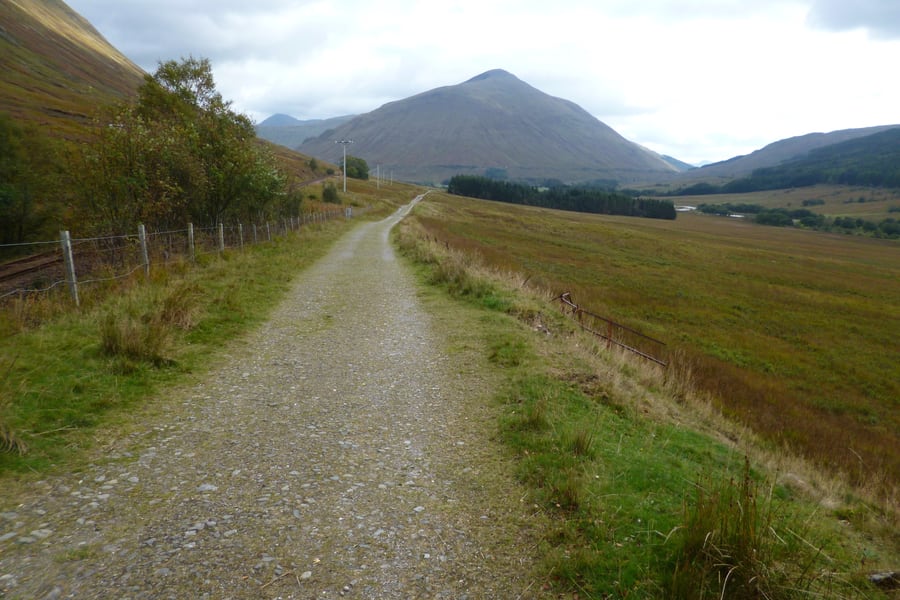 Dave Kelly / Geograph Britain and Ireland / Wikimedia Commons · CC BY-SA 2.0 · cropped
Crianlarich, Tyndrum and the West Highland Way
The railway and the West Highland Way keep company for much of the route, and walkers use the train to skip or rescue a stage. The path runs 154 kilometres from Milngavie to Fort William, opened on 6 October 1980 as Scotland's first official long-distance footpath, and around 45,000 people now walk the whole thing each year. Bridge of Orchy offers the best short walk from any platform on the line.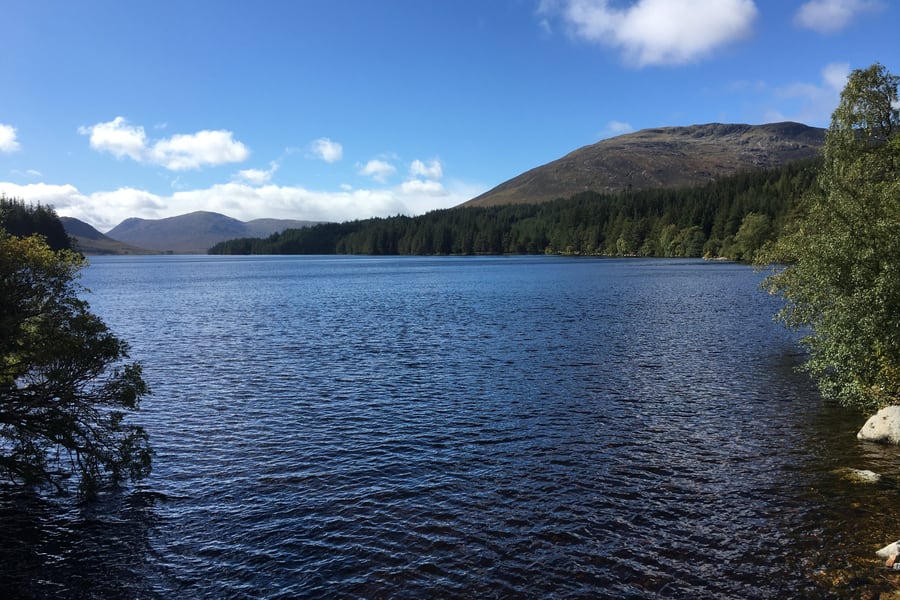 Steven Brown / Geograph Britain and Ireland / Wikimedia Commons · CC BY-SA 2.0 · cropped
Corrour and Loch Ossian
At 410 metres, Corrour is the highest mainline station in Britain, and no public road reaches it — the nearest is fifteen miles of private track. The station house, rebuilt in 1998, is now a bar and restaurant a few paces from the platform, and the SYHA hostel at the head of Loch Ossian is just over a mile's walk. Arrive on a morning train, leave on an afternoon one, and check that before you commit.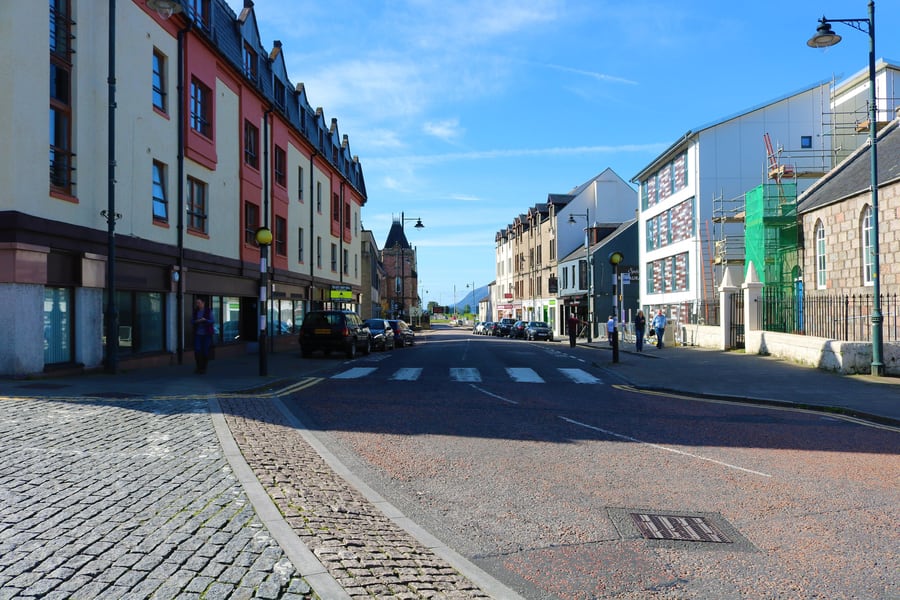 Bill Kasman / Geograph Britain and Ireland / Wikimedia Commons · CC BY-SA 2.0 · cropped
Fort William
The town that calls itself the Outdoor Capital of the UK sits on Loch Linnhe with Ben Nevis, Britain's highest mountain at 1,345 metres, behind it. The High Street is the practical heart of the western Highlands — gear shops, a good museum, the end of the West Highland Way — and Glen Nevis, Old Inverlochy Castle and the Caledonian Canal are all a short way out. It is also where the Mallaig line and the sleeper meet.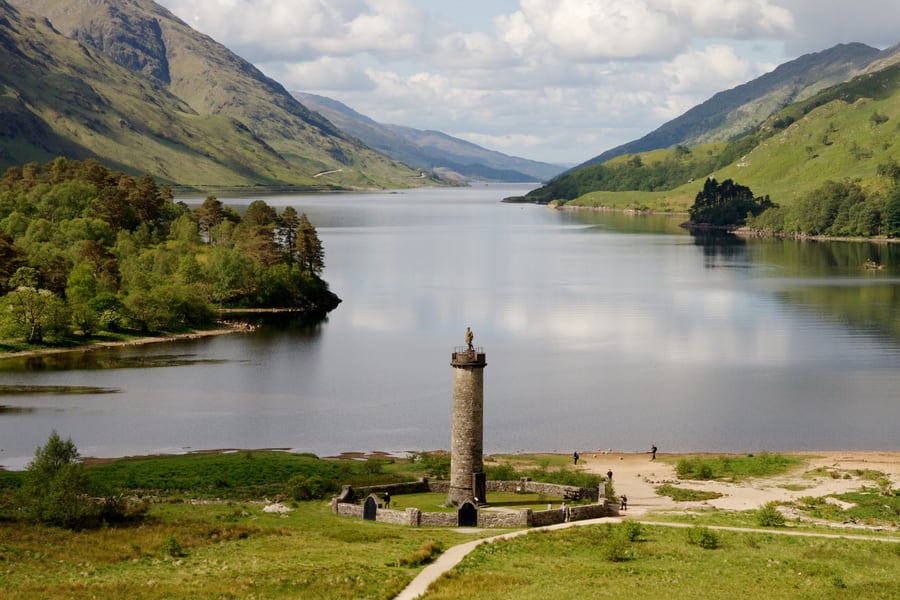 Christoph Strässler / Wikimedia Commons · CC BY-SA 2.0 · cropped
Glenfinnan
Most people come for the viaduct, but the monument at the head of Loch Shiel is the older story: a 21-metre tower raised in 1814 by Alexander Macdonald of Clanranald, designed by James Gillespie Graham, on the spot where Prince Charles Edward Stuart's standard went up in 1745. The National Trust for Scotland has looked after it since 1938 and runs the visitor centre beside it.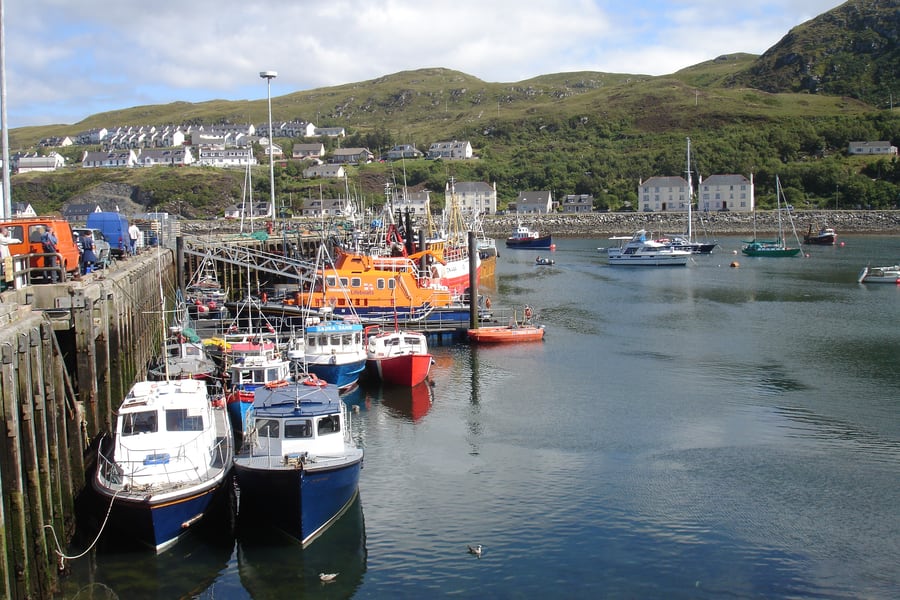 Rob Newman / Geograph Britain and Ireland / Wikimedia Commons · CC BY-SA 2.0 · cropped
Mallaig
A village of 660 people that exists because of boats and then because of the railway: laid out in the 1840s by Lord Lovat, reached by the line in 1901, and by the 1960s the busiest herring port in Europe. The harbour still works. Ferries leave for Armadale on Skye, for Rum, Eigg, Muck and Canna, and for Inverie in Knoydart — the mainland village with no road to it.Where to Sleep
The line lends itself to breaking the journey, and the stops reward it.
Fort William has the widest choice — everything from hostels and B&Bs to country-house hotels along Loch Linnhe — and makes the natural overnight base: arrive on the afternoon train, ride the Jacobite or climb Ben Nevis next day, continue to Mallaig the day after. Book ahead in July and August, when the town fills with walkers and Harry Potter pilgrims alike.
Corrour offers one of Britain's strangest and most memorable nights: the station house itself has rooms and a restaurant, and a mile away the eco-hostel at Loch Ossian sleeps walkers in a wooden building on the loch shore, lit by the kind of silence only a roadless glen provides. Both are small and sell out far ahead for summer weekends.
Rannoch station's tea room sits beside a Victorian shooting-lodge hotel on the moor's edge, and Bridge of Orchy has a walkers' hotel opposite the station — both good bets for a night in the empty middle of the line. At the far end, Mallaig and neighbouring Arisaig have harbour-view guesthouses that make a fine full stop before a morning ferry to the isles.
Along the southern section, staying at Ardlui or Arrochar turns the head of Loch Lomond into a first-night stop barely ninety minutes from Glasgow.
Questions or corrections
Planning this trip and stuck on something, or spotted a time, fare or detail that has changed? Send us a message about The West Highland Line. We read every one, and we update this page when something has changed.