The Caledonian Sleeper
Kabelleger / Wikimedia Commons · CC BY-SA 4.0
- DistanceLondon Euston–Fort William / Inverness / Aberdeen · and Glasgow / Edinburgh
- DurationEuston–Fort William: 12¾ h overnight · Lowland routes ~7¾ h
- Best seasonYear-round — long June daylight puts sunrise over the moor; winter adds snow
Introduction
There is a particular joy in going to bed in one country's capital and waking up, unhurried and horizontal, in another country's wilderness — and no train in Britain delivers it like the Caledonian Sleeper. Two of them leave London Euston every night except Saturday: the Lowland sleeper, which divides in the night to reach Glasgow and Edinburgh by half past seven, and the Highland sleeper, a long train that splits into three — one portion each for Aberdeen, Inverness and, most romantically, Fort William.
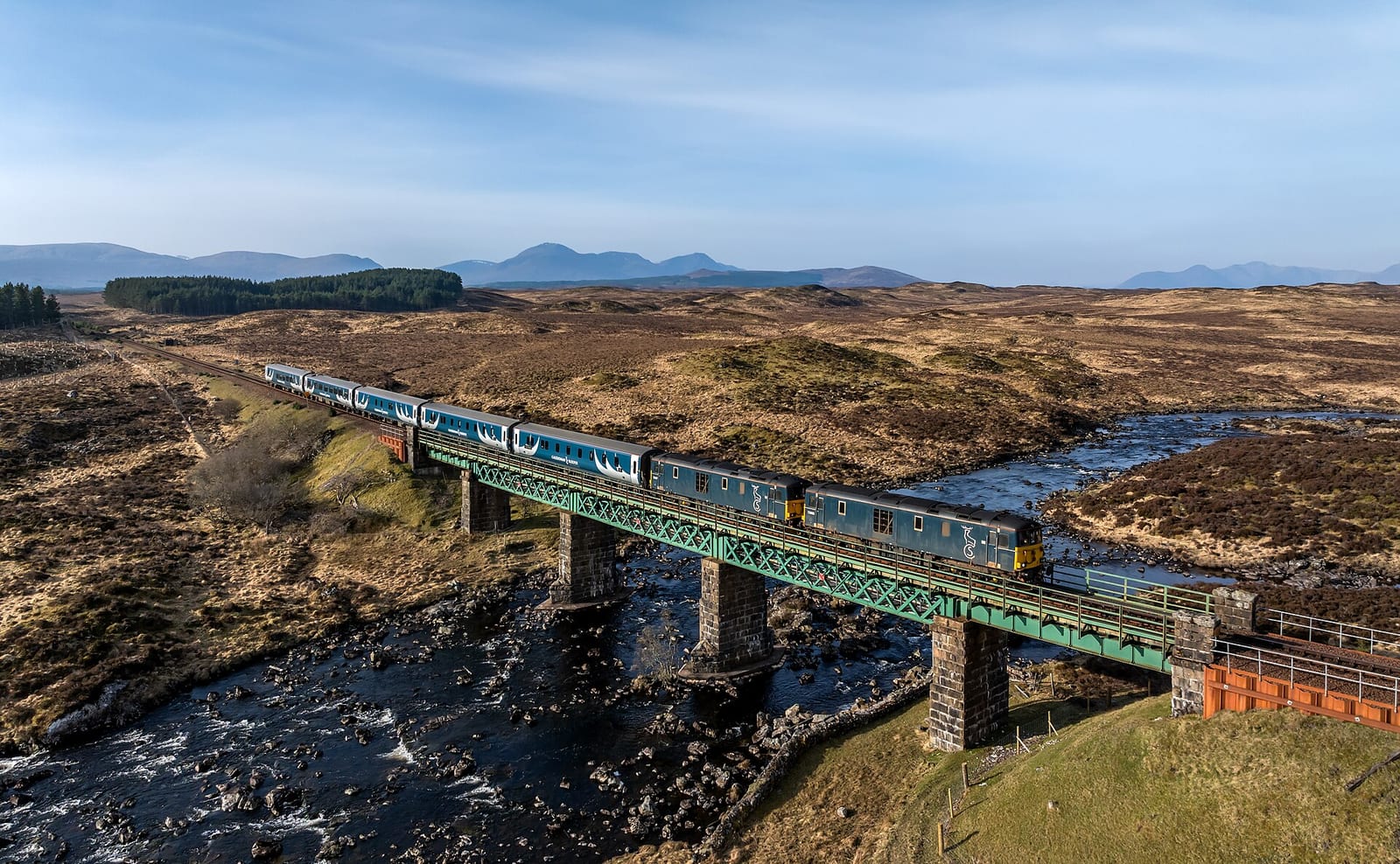
That Fort William portion — nicknamed the Deerstalker by generations of regulars — is the one that fills the daydreams. It leaves Euston at 21:15 and spends the small hours slipping up the West Coast Main Line; then, around breakfast, it turns onto the West Highland Line and everything changes. Toast and porridge arrive as the train sways across Rannoch Moor on its Victorian raft of brushwood; red deer graze past the window; at 08:58 it pauses at Corrour, the roadless summit station, and at 10:00 it eases into Fort William beneath Ben Nevis. Thirteen hours, no airports, and the best-scheduled breakfast in Britain.
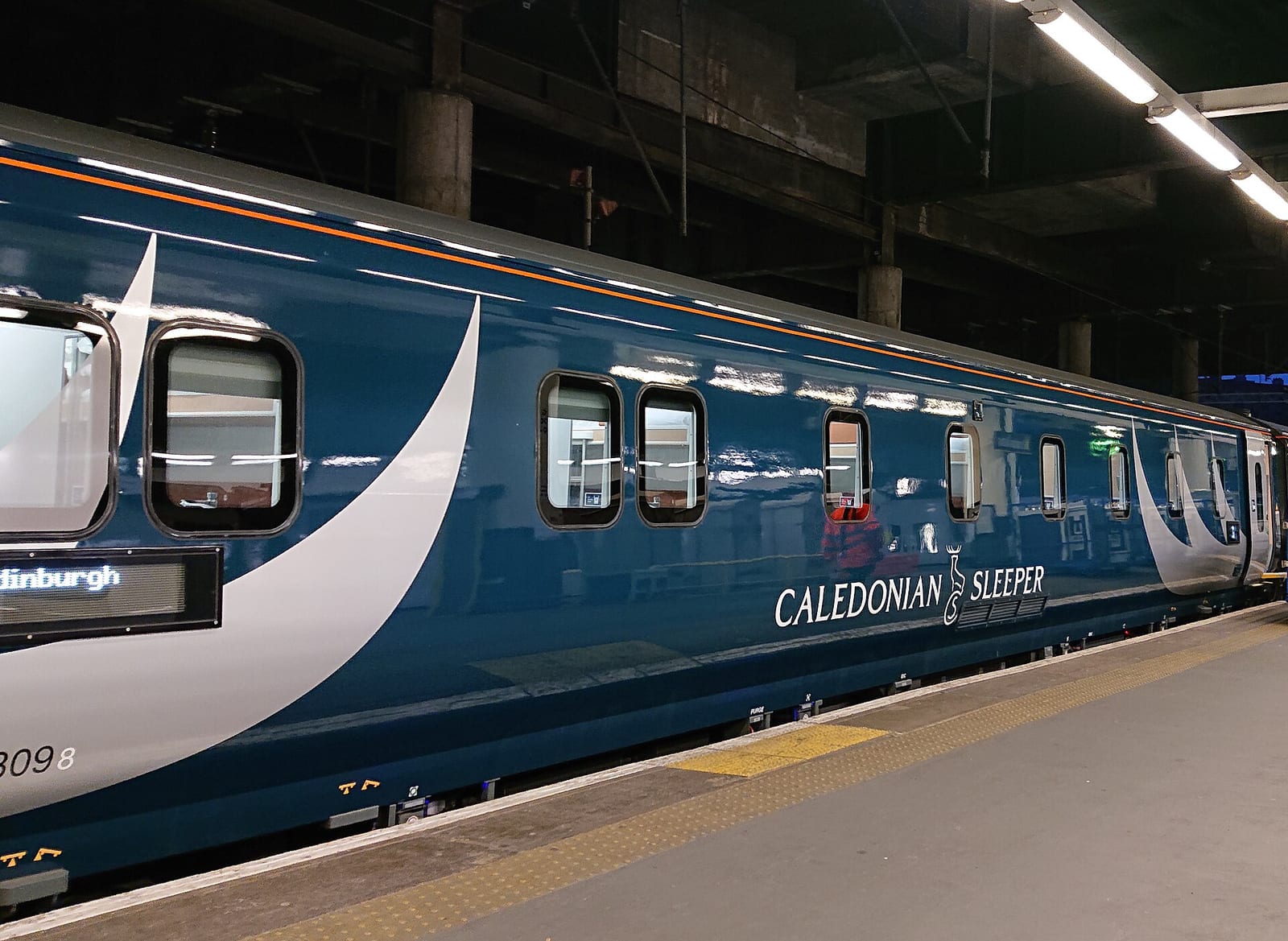
The train itself was reborn in 2019, when Spanish builder CAF delivered the Mark 5 fleet — en-suite doubles, Club rooms, a whisky-heavy Club Car — and again in June 2023, when the Scottish Government took the operation into public hands. British Rail tried to kill the Fort William sleeper in the 1990s; the Highlands took them to court and won. Ride it once and you will understand what they were defending.
The Journey
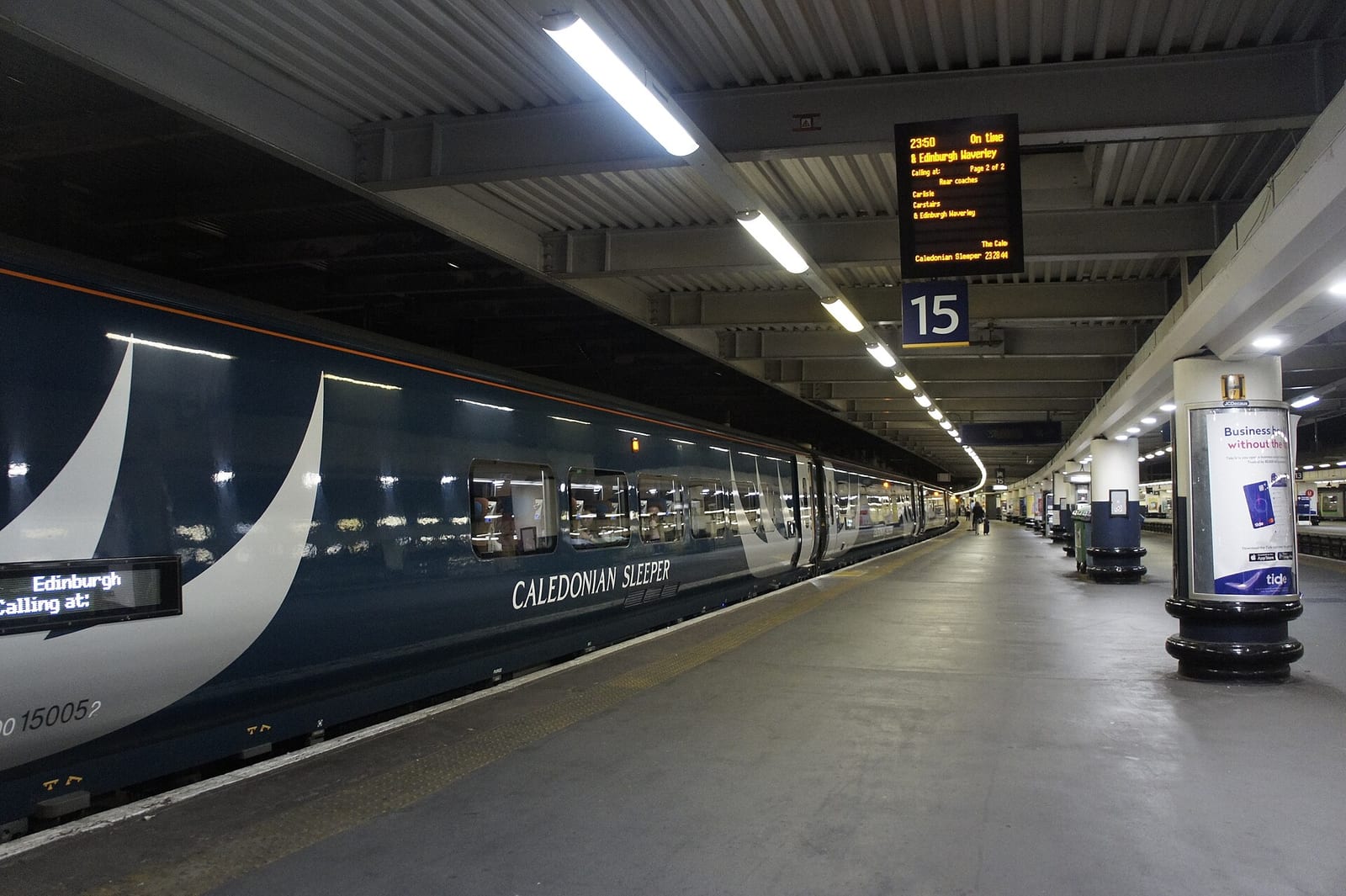
The sleeper's theatre begins on the platform at Euston, where the long midnight-teal train waits with a host at every carriage door. Room guests can settle in well before departure — find your berth, order your breakfast time, and walk up to the Club Car, where the tables fill early and the whisky list runs long. At 21:15 (Highland) or 23:45 (Lowland) the train draws out through the London suburbs, and the great trick of sleeper travel takes over: the miles happen to someone else.
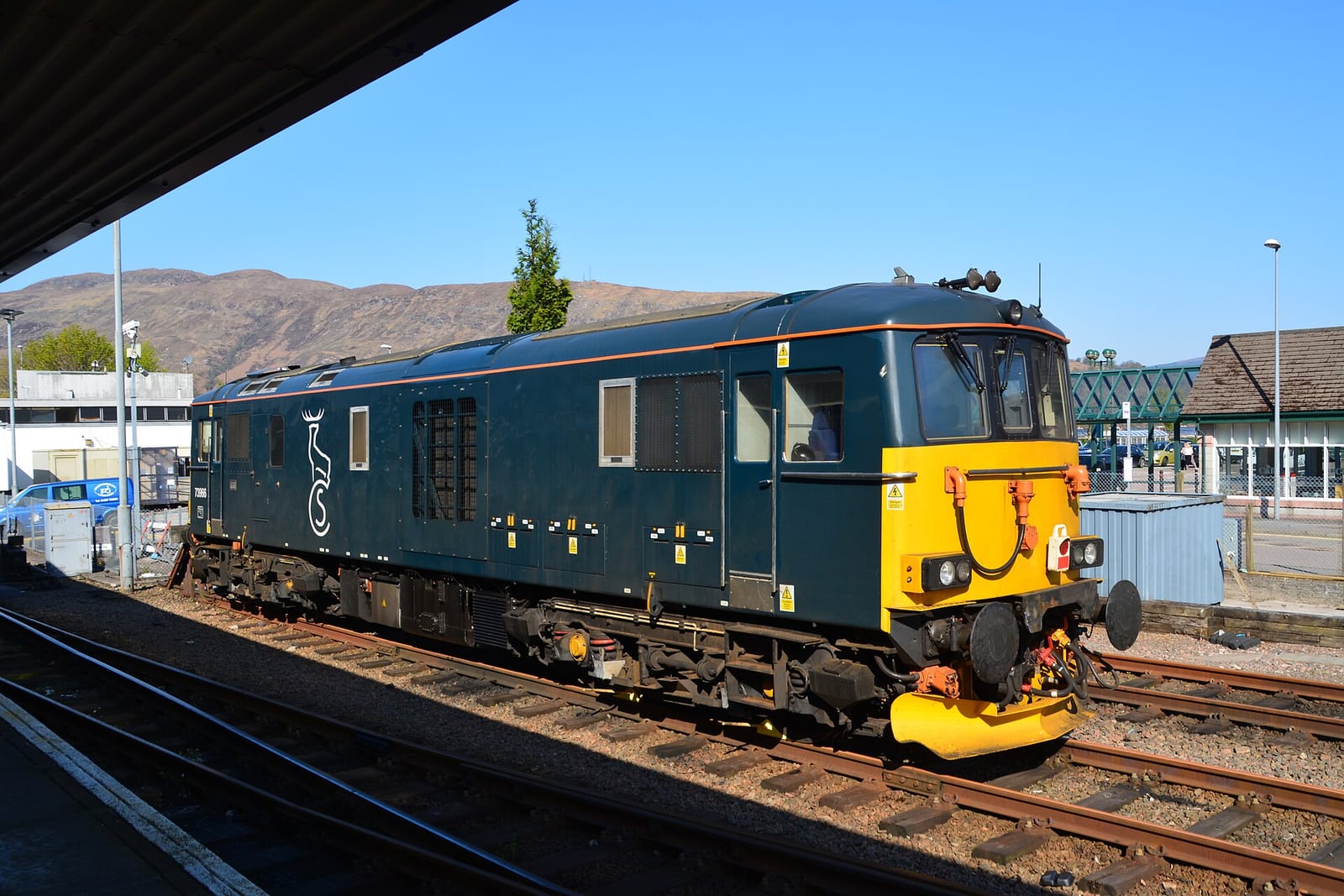
In the small hours the train calls quietly at Crewe and Preston to pick up late joiners, and somewhere in the dark it divides — the Lowland train at Carstairs into Glasgow and Edinburgh halves, the Highland train into its three portions for Aberdeen, Inverness and Fort William, each collecting its own locomotive. Aberdeen's coaches run up the coast through Dundee and Stonehaven for a 07:50 arrival; Inverness's climb through the Cairngorm country of Aviemore to arrive at 08:45; Glasgow and Edinburgh both land at 07:30, in time for a working day.
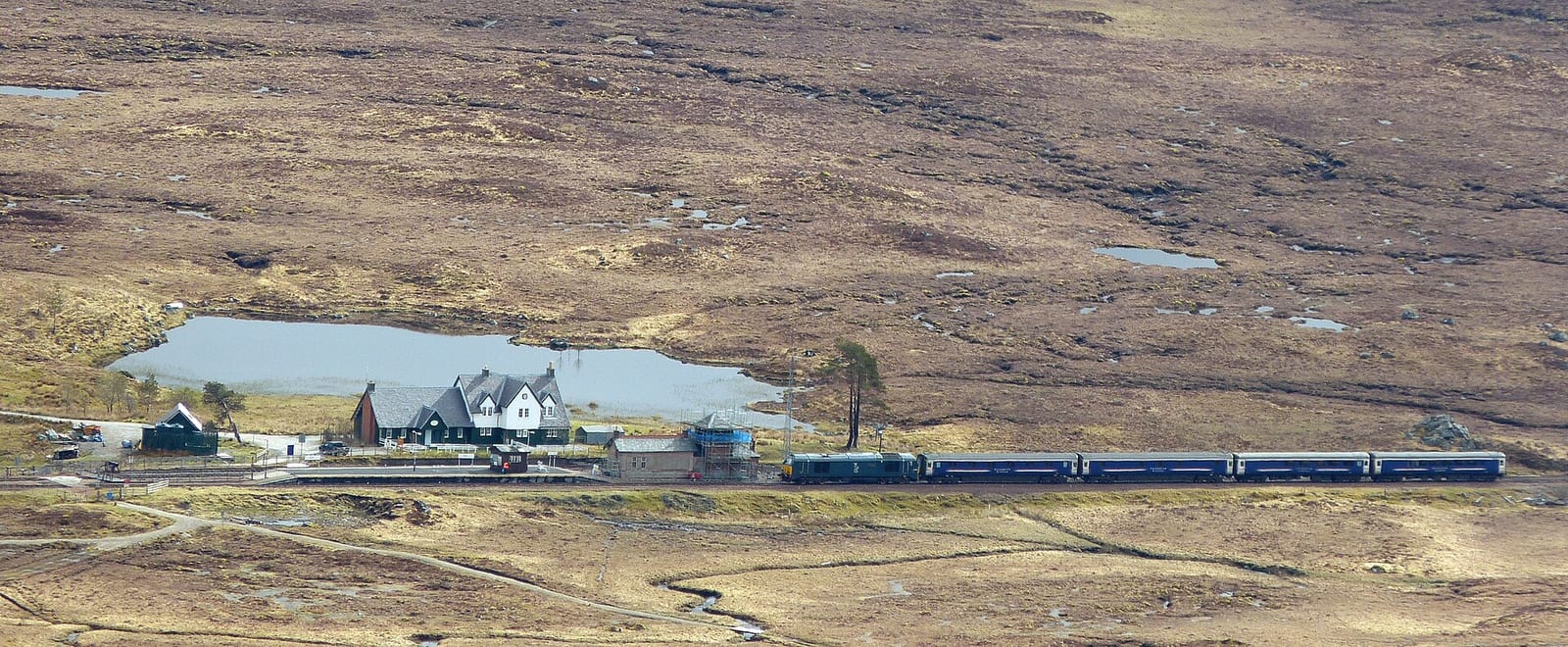
The Fort William portion gets the encore. From first light it is in the Highlands proper: up Loch Long and Loch Lomond-side, then out onto the West Highland Line's wildest stretch as breakfast is served. The train crosses the floated track of Rannoch Moor at 08:44, pauses at Corrour — highest mainline station in Britain, no road in any direction — at 08:58, and skirts Loch Treig down into the Great Glen, arriving Fort William at 10:00. Southbound the ritual reverses: leave Fort William at 19:50 with the evening sun on the moor, dine as the Highlands go by, and wake at Euston at 08:00.
Either direction, the advice is the same: book a room on the left side heading north, wake for the moor even if you love your bed, and don't plan anything important for the hour after arrival — you will want to stand on the platform and grin for a while.
Along the route
Colin MacInnes / Wikimedia Commons · CC BY-SA 4.0One train becomes three
The Highland sleeper leaves Euston at 21:15 as one long train and quietly divides in the small hours — portions going their own ways to Fort William, Inverness and Aberdeen, each with its own locomotive for the final act. Fall asleep in a London suburb; the railway sorts out the geography while you dream.Kabelleger / Wikimedia Commons · CC BY-SA 4.0Breakfast on Rannoch Moor
The Fort William portion — known to regulars as the Deerstalker — saves the show for daylight: from about 08:00 the train is climbing through the West Highlands, and breakfast is served as it crosses Rannoch Moor and pauses at roadless Corrour at 08:58. Porridge, tea, and red deer on the bog outside the window.Colin MacInnes / Wikimedia Commons · CC BY-SA 4.0Rooms with a destination
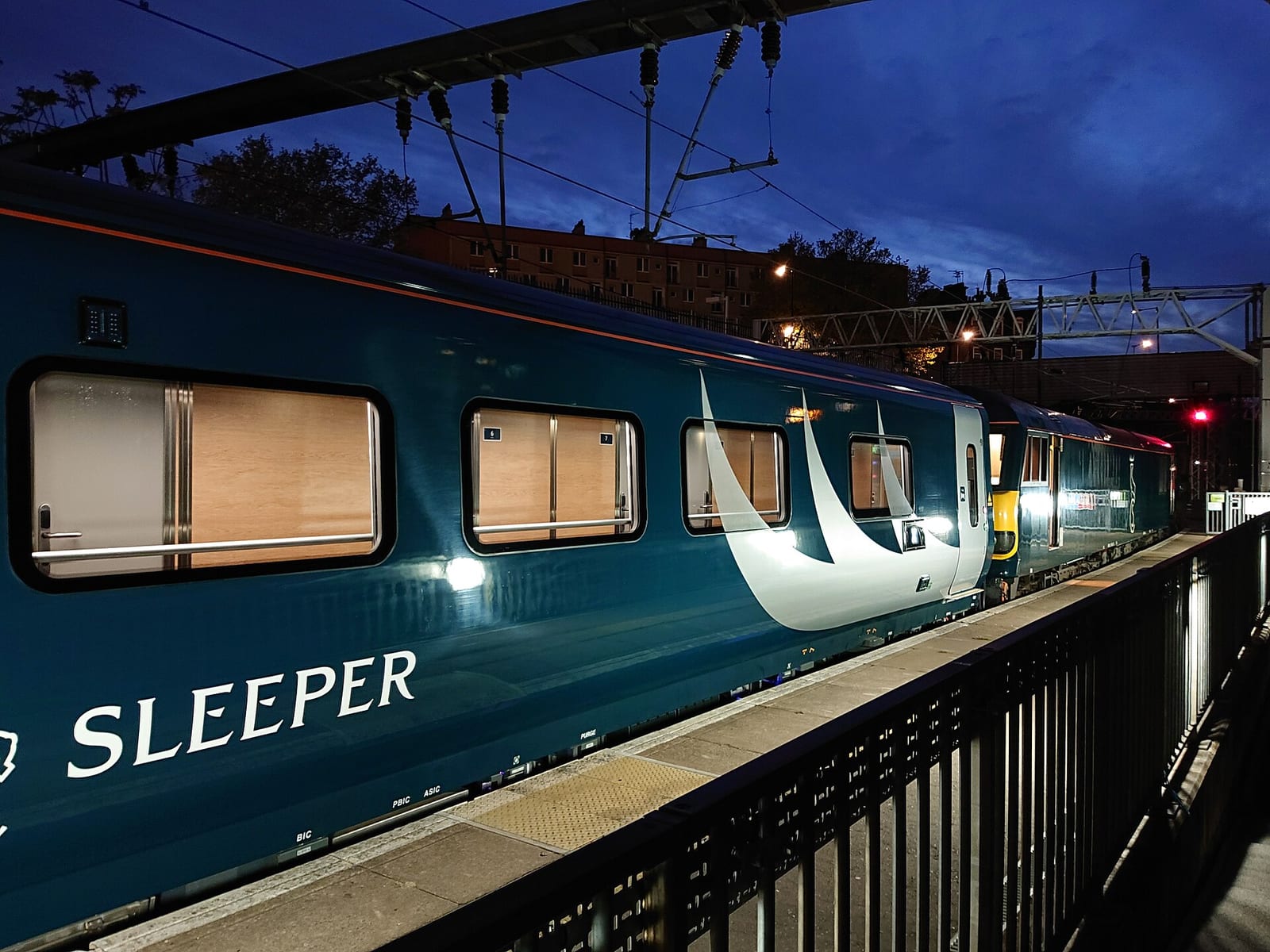
The 2019 CAF-built Mark 5 fleet brought hotel manners to the night train: Caledonian Double rooms with en-suite showers and proper beds, Club rooms with en-suites, simpler Classic twins, and a reclining Seated Coach for the budget-minded — plus a Club Car where the whisky list outlasts most bars'.A bit of history
Culture & experiences along the way
Jaymyang / Wikimedia Commons · CC BY-SA 4.0Choosing your night
Remember the one blank in the diary: no trains on Saturday nights in either direction. Sunday departures run earlier than weekdays — check your date. In June, first light comes absurdly early in the Highlands and the moor crossing glows; in winter you may wake to snow at Corrour with the carriage still warm as toast.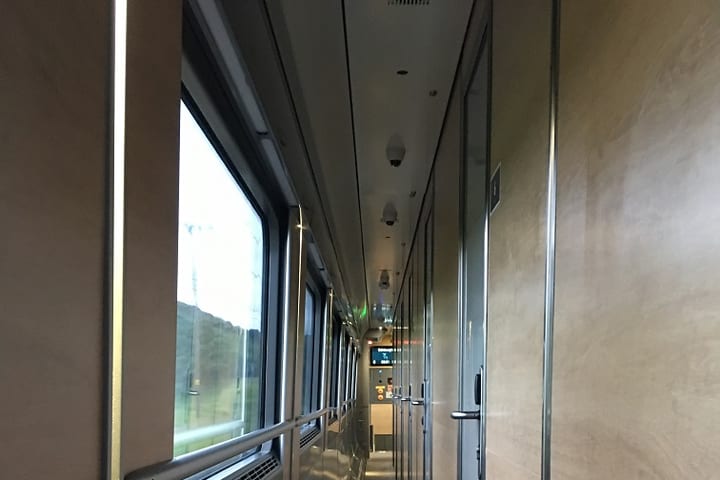 Jaymyang / Wikimedia Commons · CC BY-SA 4.0 · cropped
The corridor life
Sleeper travel keeps its rituals: the host who greets you at the carriage door and takes your breakfast order, the narrow corridor walked in socks, the click of doors as stations pass unseen. Rooms interconnect for families, luggage rides with you, and lounges at the main stations open to room guests before departure.IanKMantel / Wikimedia Commons · CC BY-SA 4.0The train they couldn't kill
In the mid-1990s British Rail moved to axe the Fort William sleeper as an uneconomic oddity — and Highland Regional Council took them to court and won a stay. Thirty years on, the "oddity" is one of the most sought-after train journeys in Europe, run since 2023 by the Scottish Government's own operator. Book it and vindicate the verdict.Timetables
Two sleepers run each way every night except Saturday night. Times below are the current national timetable (Table 220, 17 May – 12 December 2026), as of July 2026.
Northbound — London Euston departures
| Train | Euston dep (Mon–Fri) | Euston dep (Sun) | Arrivals |
|---|---|---|---|
| Highland sleeper | 21:15 | 21:00 | Aberdeen 07:50 · Inverness 08:45 · Fort William 10:00 |
| Lowland sleeper | 23:45 | 23:30 | Glasgow Central 07:30 · Edinburgh 07:30 |
The Fort William portion runs down the West Highland Line in daylight, calling at Crianlarich 07:45, Rannoch 08:44, Corrour 08:58 and Spean Bridge 09:38 among others. Northbound trains also pick up at Watford Junction (Lowland), Birmingham International 22:42, Crewe 23:45 and Preston 00:30 (Highland).
Southbound — arrivals into London Euston
| From | Departure (Mon–Fri) | Departure (Sun) | Euston arr |
|---|---|---|---|
| Fort William | 19:50 | 19:00 | 08:00 |
| Inverness | 20:45 | 20:25 | 08:00 |
| Aberdeen | 20:26 (Fri 21:43) | 20:36 | 07:15 / 08:00 |
| Glasgow Central | 23:40 | 23:15 | 07:15 |
| Edinburgh | 23:40 | 23:15 | 07:15 |
Early-summer Sundays carry slightly different times (in spring 2026 the Sunday Highland train left as early as 20:20), so always check your specific date. There is no service on Saturday nights in either direction, and engineering diversions occasionally retime weekends.
Full current timetables, live updates and the booking horizon are at sleeper.scot (opens in a new tab).
Tickets
Book directly with Caledonian Sleeper (opens in a new tab) — the operator's own site sells the full range of rooms and releases inventory furthest ahead. Prices are dynamic, so the same room varies widely with date and demand, and summer Fort William departures are the first to go, often weeks out. The ladder runs from the Caledonian Double en-suite through Club en-suite and Classic rooms to the Seated Coach, still the cheapest way to cross Britain in your sleep.
Room fares include breakfast and access to the Club Car; solo travellers can book sole occupancy rather than share with a stranger. One structural tip: the Highland train divides in the night, so make sure you board the correct portion. And on a budget, remember the seated fare buys exactly the same Rannoch Moor breakfast view as the double bed.
Book your tickets
Rooms — Caledonian Double, Club & Classic
Beds, en-suites and breakfast
The full sleeper experience: a made-up bed, your own room, breakfast served as the Highlands slide past, and Club Car access. Caledonian Double and Club rooms add en-suite showers; Classic rooms keep it simple. Prices are dynamic and rooms sell out weeks ahead for summer — book direct as early as you can.
Book Tickets (opens in a new tab, on Caledonian Sleeper)via Caledonian Sleeper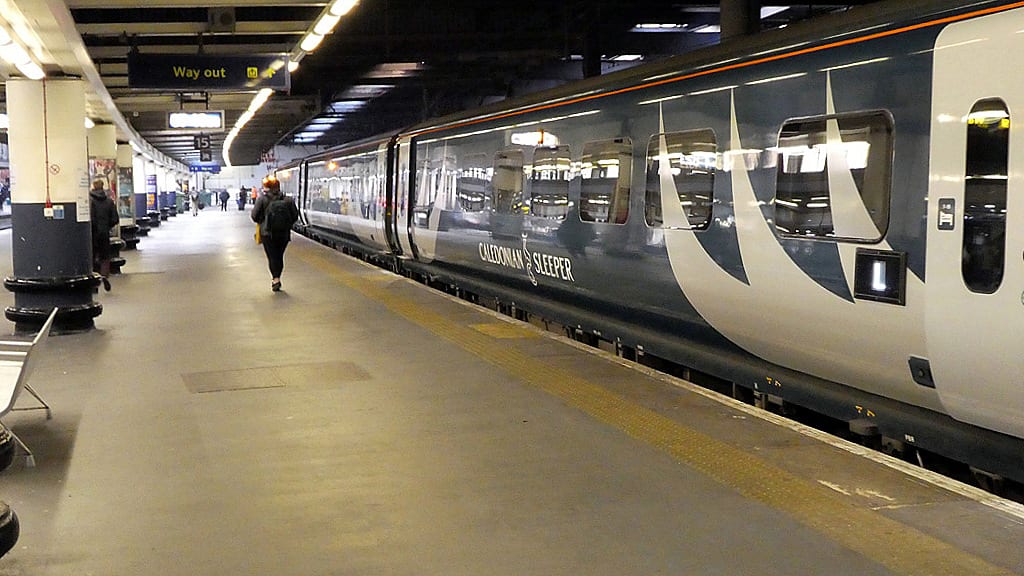
Seated Coach
The budget berth
A wide reclining seat, luggage space and the same overnight geography for a fraction of the room fare — the Seated Coach is how students and mountaineers have always ridden the sleeper. Bring an eye mask, claim your breakfast in the Club Car if there's space, and you still wake up crossing Rannoch Moor.
Book Tickets (opens in a new tab, on Caledonian Sleeper)via Caledonian SleeperRail Passes
Interrail passes are valid, and a seat costs nothing extra. Interrail's table of railway companies lists the Caledonian Sleeper as included in Great Britain. Reservations are compulsory. A seat is reserved at no additional charge through the Guest Service Centre; a room carries a supplement on top of the pass:
| Room | Supplement with an Interrail Pass |
|---|---|
| Classic Room, solo | £145 |
| Classic Room, twin | £175 |
| Club Room En-suite, solo | £195, 1st class pass only |
| Club Room En-suite, twin | £235, 1st class pass only |
| Caledonian Double En-suite | Not available to pass holders |
A solo traveller on a 2nd class pass can book only a Classic Room, and may share it with a guest of the same sex when the train is full.
Visitors who do not live in the UK can also use a BritRail Great Britain Pass, which is valid on the Caledonian Sleeper. The berth must be booked before you travel, through the sleeper's call centre, and only the full BritRail Great Britain Pass qualifies: the Spirit of Scotland Pass is not valid on the sleeper at all. On a BritRail Pass an overnight train takes the next day's date.
Whether a pass pays depends on where you sleep. In a seat, the sleeper costs nothing beyond one travel day of a longer pass trip. In a room, add the supplement to that travel day and compare the total with the fare Caledonian Sleeper quotes for your date before choosing.
Checked October 2026 against interrail.com (opens in a new tab), britrail.com (opens in a new tab) and BritRail's reservations page (opens in a new tab).
Places to Visit
The sleeper's five destinations are five different Scotlands, and the train's timing hands you a full first day in each — which is the whole argument for taking it. An arrival between 07:30 and 10:00 is a day you did not have to spend getting there.
The Fort William portion is the one that goes furthest from ordinary life, and it has two journeys of its own waiting at the end of it. It puts you at the foot of Ben Nevis at 10:00, in time for Glen Nevis, the Jacobite steam train to Mallaig, or the onward West Highland Line to the coast and the Skye ferries beyond. Bolder still: leave the train at Corrour at 08:58 and step out of a station with no road to it, with the whole of Rannoch Moor for company.
The intermediate calls are worth a thought too. The North Coast 500 starts at the door of Inverness station, and the Kyle Line to the west coast leaves from the same platforms you arrive on — a very good second morning. Culloden is minutes from the city. And on the Fort William train the string of West Highland halts — Bridge of Orchy, Rannoch, Tulloch — turns the whole thing into a walkers' bus with beds.
 John Lord / Geograph Britain and Ireland / Wikimedia Commons · CC BY-SA 2.0 · cropped
Edinburgh
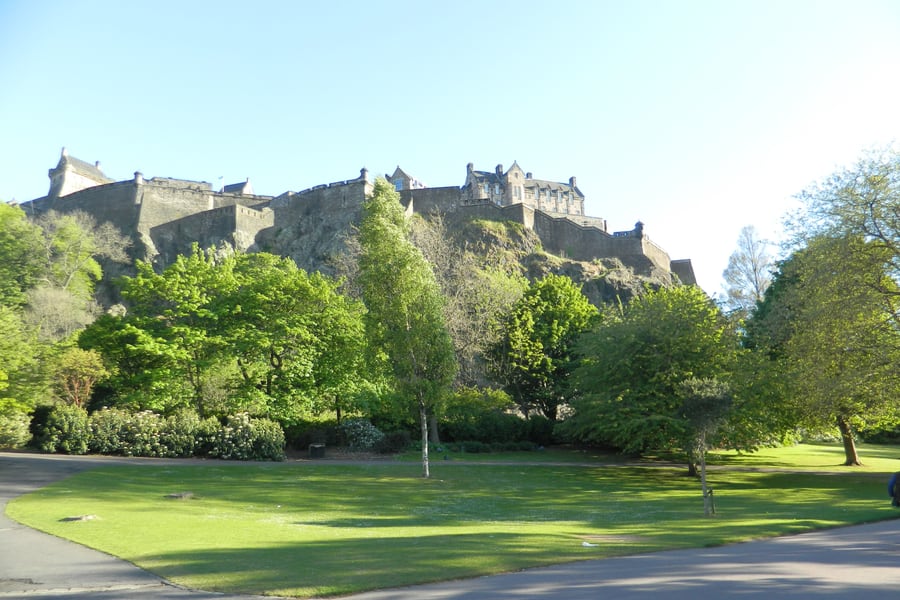
Waverley is the best-placed station in Britain: you step off the Lowlander into the trench between the Old Town and the New, with the castle directly overhead and Princes Street at the top of the steps. Everything worth seeing on a first visit — the Royal Mile, Holyrood, the National Museum, Arthur's Seat — is walkable from the concourse, which is exactly what a seven-thirty arrival is for.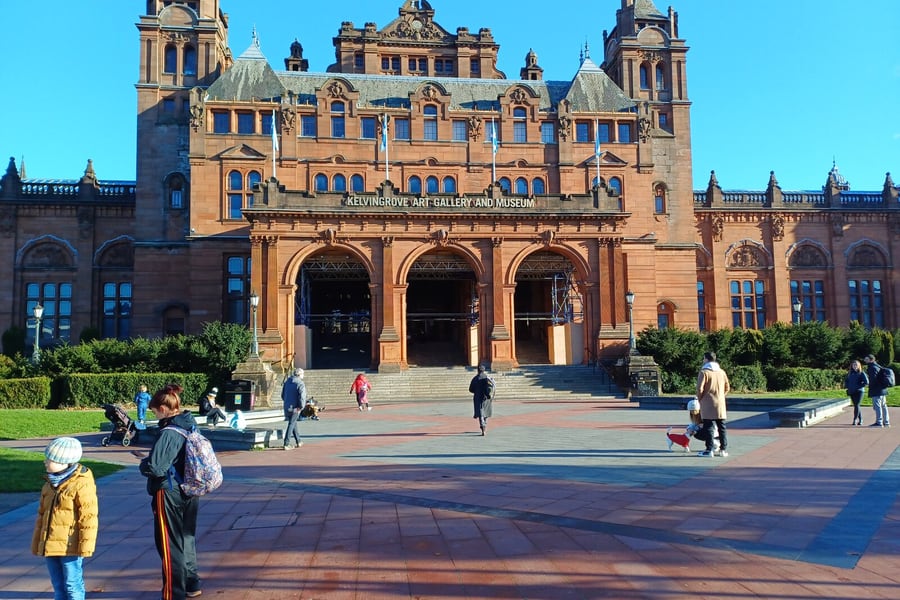 Rich Tea / Geograph Britain and Ireland / Wikimedia Commons · CC BY-SA 2.0 · cropped
Glasgow
Where Edinburgh has views, Glasgow has collections — and gives them away. Kelvingrove, built for the 1901 International Exhibition and open to the public since October 1902, holds 8,000 objects in 22 galleries and charges nothing: Dalí's Christ of St John of the Cross, a Spitfire hanging in the West Court, and recitals on the 1901 organ most days. It was the most visited museum in the UK outside London in 2007.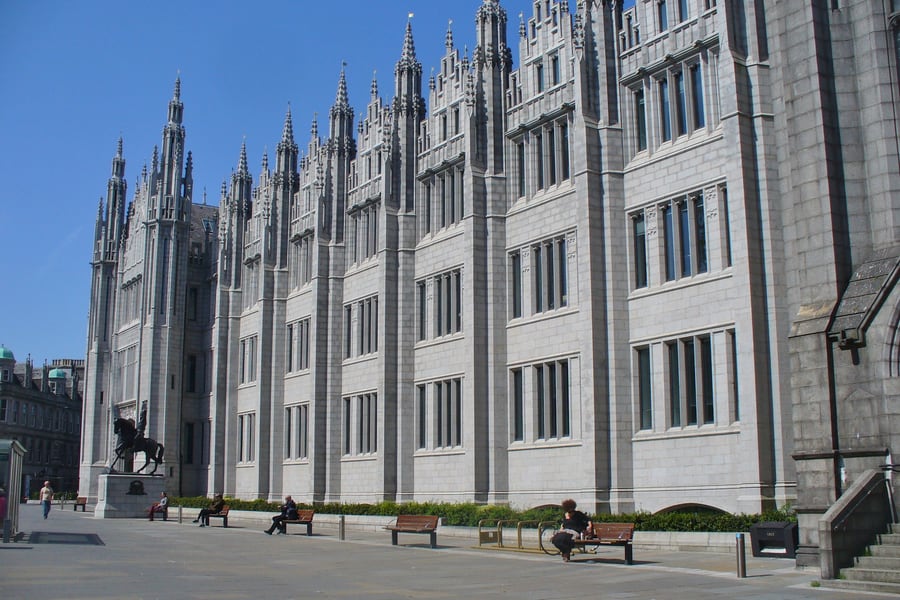 Colin Smith / Geograph Britain and Ireland / Wikimedia Commons · CC BY-SA 2.0 · cropped
Aberdeen
The 07:50 arrival puts you in a city built almost entirely from one rock, which glitters when it rains. Marischal College is the showpiece — a spiked and pinnacled granite front raised by Alexander Marshall Mackenzie between 1893 and 1905, and the second largest granite building in the world after the Escorial. Royal Deeside and the Speyside distilleries both run inland from here.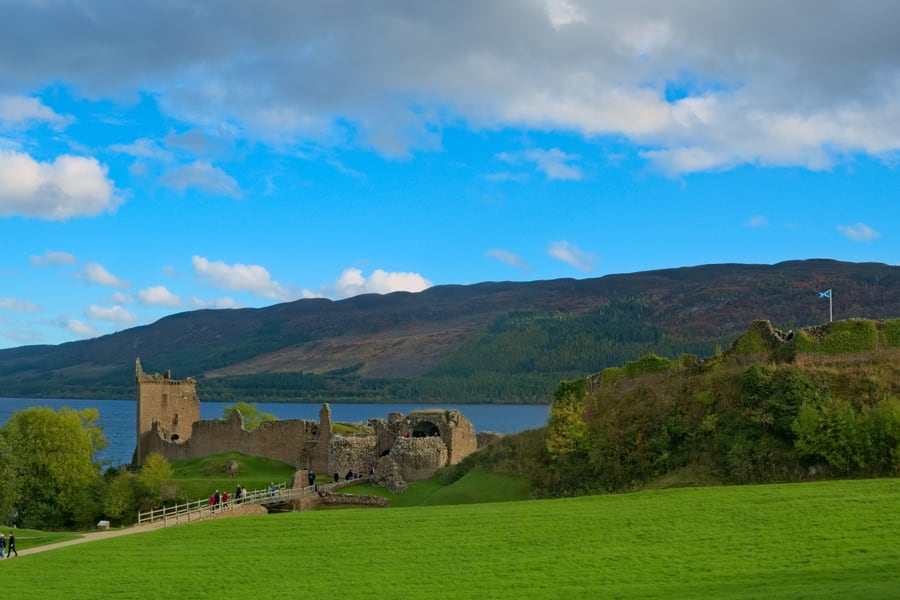 Daniel Kraft / Wikimedia Commons · CC BY-SA 3.0 · cropped
Loch Ness and Urquhart Castle
The Highlander reaches Inverness at 08:45 and the loch is a short bus ride down the Great Glen. Urquhart Castle is the classic vantage point — a ruin of the 13th to 16th centuries on a promontory, with the five-storey Grant Tower still standing. It was blown up in 1692 so the Jacobites could not use it, and now draws over half a million visitors a year.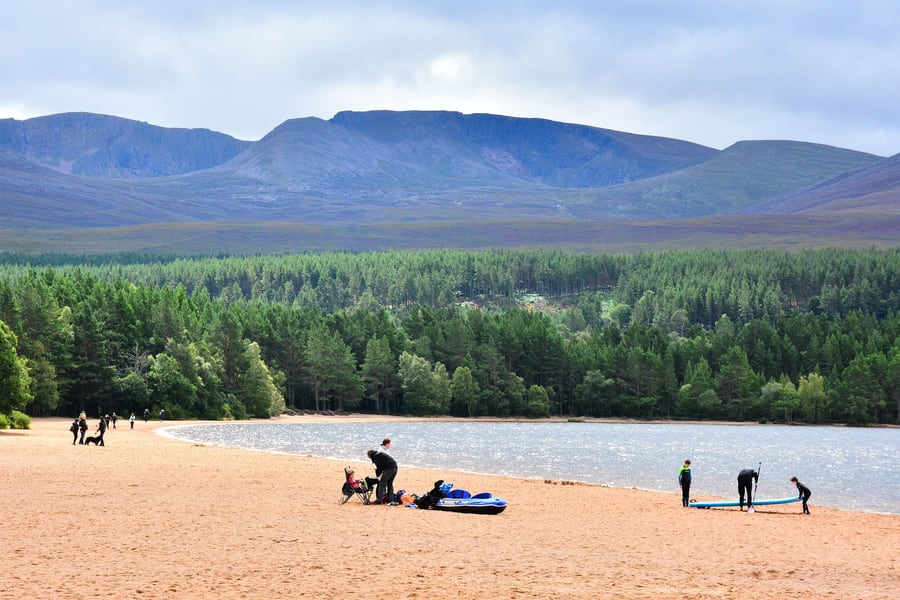 Mike McBey / Wikimedia Commons · CC BY 2.0 · cropped
Aviemore and the Cairngorms
The Highlander stops here, and it is the best reason to get off before the end. Loch Morlich sits at 300 metres under the Cairngorm plateau with a genuine sand beach — in 2009 it became the first freshwater loch in Britain to win a Seaside Award, and the highest beach ever to get one. There is a watersports centre on the shore, Glenmore Forest Park around it, and the funicular and the reindeer herd above.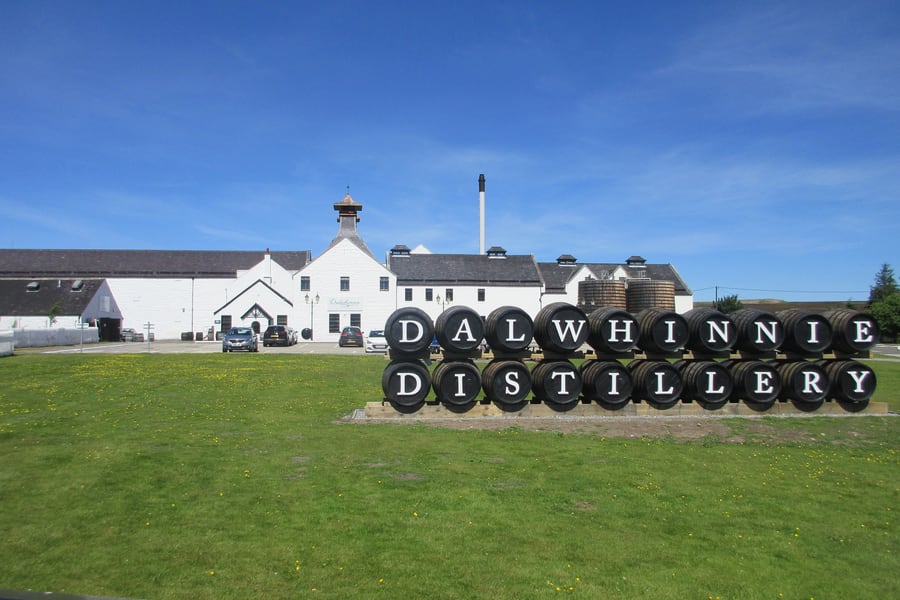 Scott Cormie / Geograph Britain and Ireland / Wikimedia Commons · CC BY-SA 2.0 · cropped
Dalwhinnie
A request stop in the middle of nowhere with a distillery beside the platform — and at 326 metres, the highest distillery in Scotland. It has been working since 1898, which at this altitude has never been easy: when fire damage was being repaired in 1937, snowdrifts twenty feet deep held up the builders. The visitor centre has been running since 1991, and the whisky is the gentlest of the Highland malts.Where to Sleep
The point of this journey is that the train is the hotel — but the nights either side deserve planning too.
Before departure in London, remember that boarding at Euston opens comfortably before the train leaves, and room guests can use the departure lounge — so a relaxed dinner nearby beats an airport-style sprint. Hotels around Euston, King's Cross and Bloomsbury put you ten minutes from the platform if you are coming off a long day.
At the Fort William end, the town's lochside hotels and guesthouses make an easy first night, with Glen Nevis campsites and hostels for the outdoor-minded; many riders continue straight up the line and sleep at Mallaig or out at Corrour's station house and Loch Ossian hostel — the latter pair being among the most remote beds in Britain, and best booked long before the train.
In Inverness, riverside hotels cluster ten minutes' walk from the station; Aviemore, an earlier stop on the same portion, swaps them for Cairngorm lodges and bunkhouses. Edinburgh and Glasgow offer everything from grand station hotels — literally above the platforms — to hostels, and the early arrival means you can drop bags before the city wakes.
Heading south, the trick is to keep the last evening Scottish: dinner in Fort William or a final dram in the Club Car, bed as the train rolls over the moor in the dusk, and London by breakfast with the holiday still on your skin.
Questions or corrections
Planning this trip and stuck on something, or spotted a time, fare or detail that has changed? Send us a message about The Caledonian Sleeper. We read every one, and we update this page when something has changed.