Glacier Express
© Glacier Express AG / Stefan Schlumpf
- Distance291 km
- Duration~8 hours
- Best seasonYear-round; summer for green passes, winter for snow
Introduction
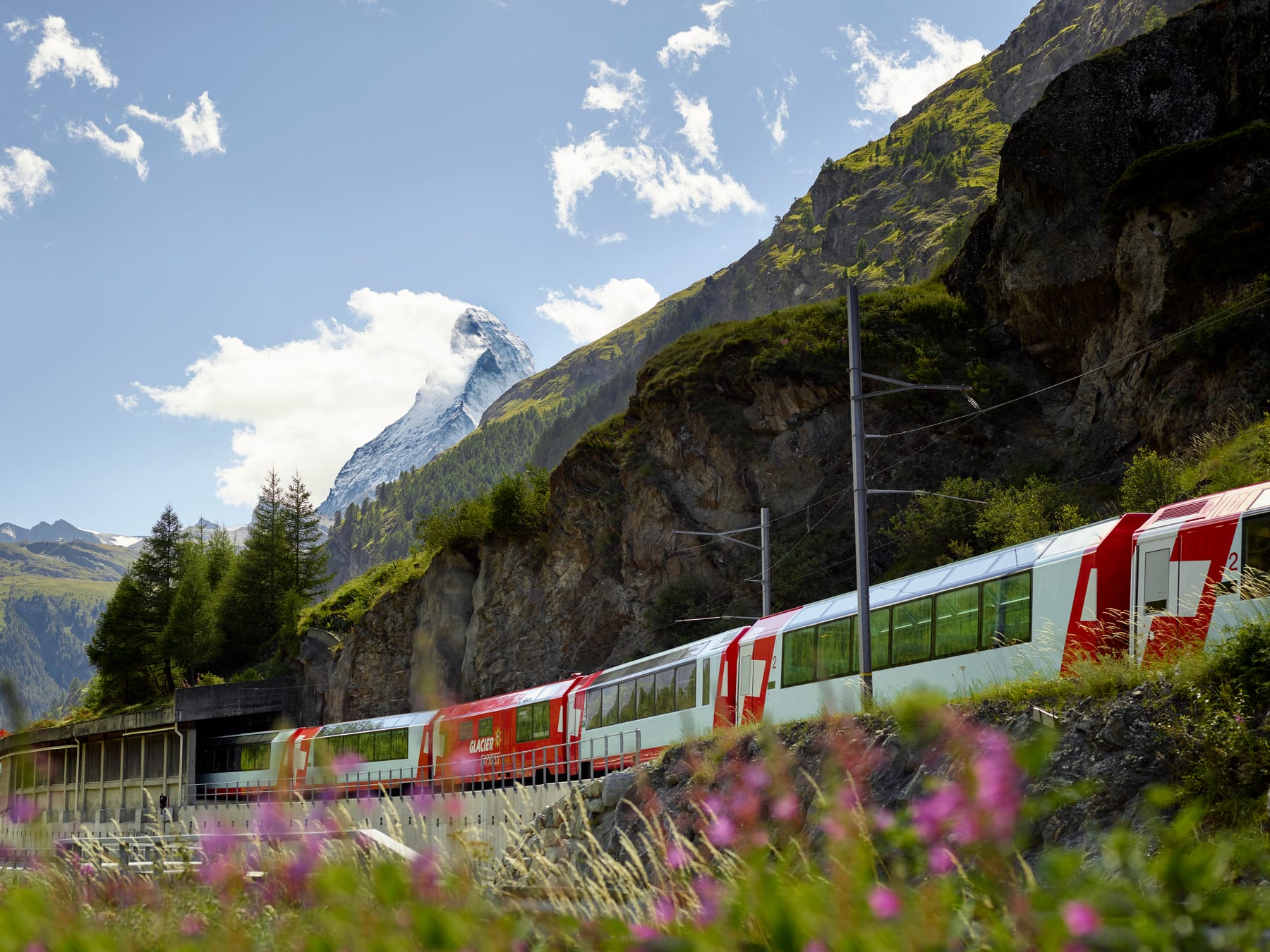
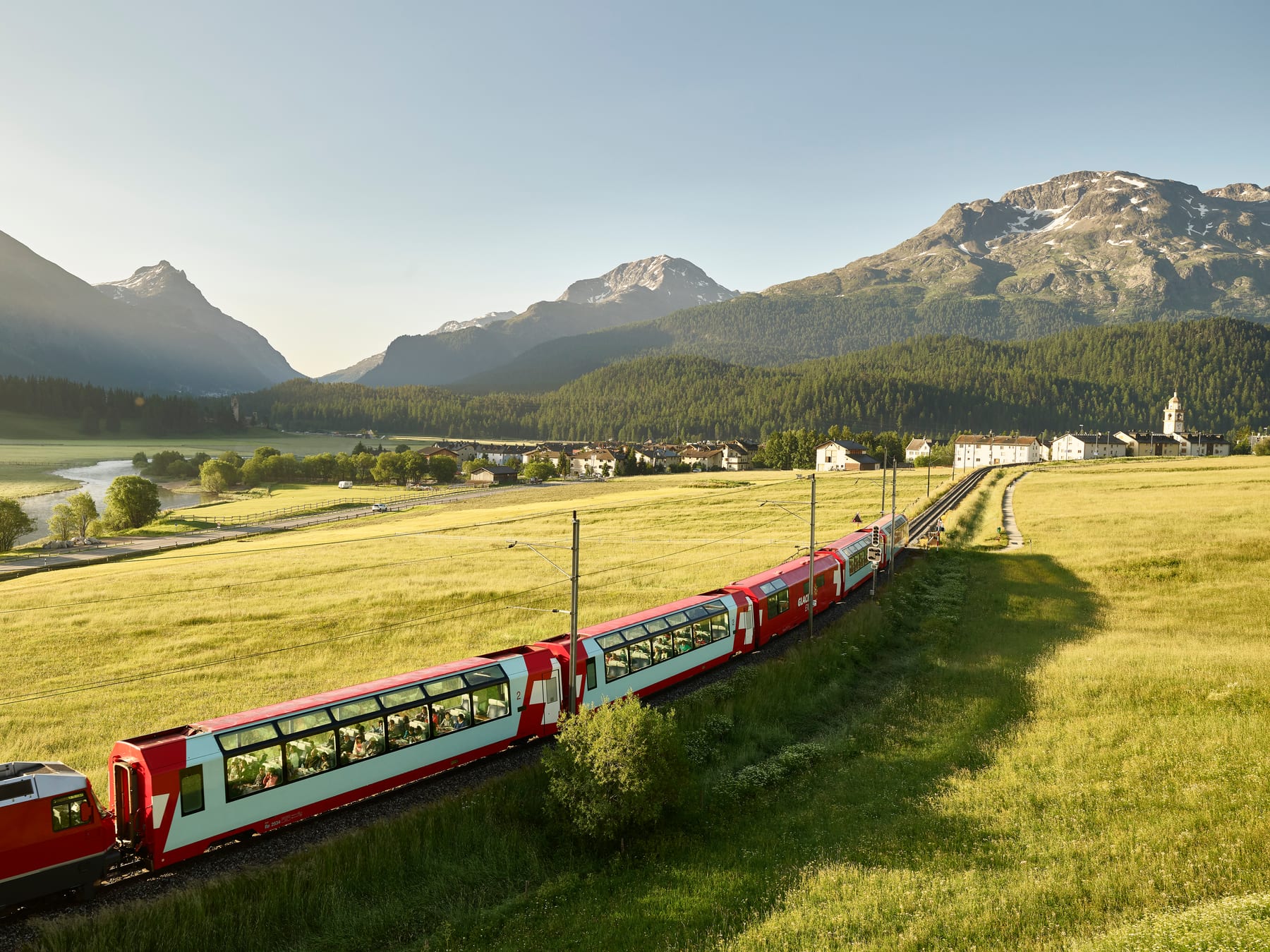
The Glacier Express bills itself as the slowest express train in the world — and it wears the title with pride. Over roughly eight unhurried hours it links two of the Alps' most famous mountain resorts, Zermatt, at the foot of the Matterhorn, and St. Moritz, in the Engadine — and the whole point is that you should never want it to go faster.
This is not a train you take to get somewhere quickly. It is a train you take because the journey is the destination: a slow, panoramic drift through the heart of the Swiss Alps, past glaciers, deep gorges, high passes and storybook villages, all seen through the great curved windows of its panoramic coaches.
The Journey
The route runs for 291 kilometres between Zermatt and St. Moritz, crossing 291 bridges and threading 91 tunnels on its way — a reminder that this is as much a feat of mountain engineering as it is a scenic ride.
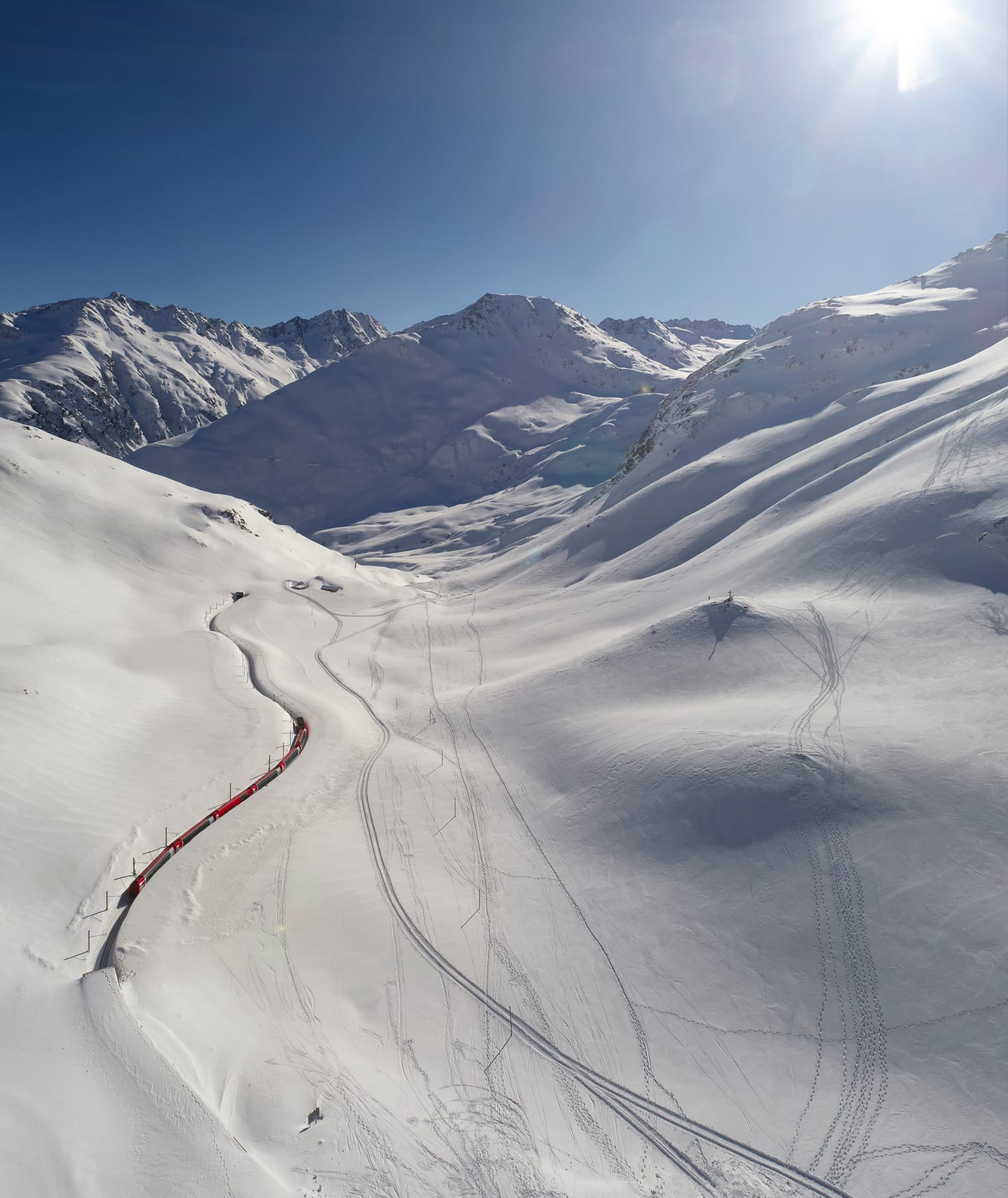
Leaving Zermatt, the train descends the Matter valley to Brig before beginning the long climb through the Goms valley toward the Oberalp Pass, the highest point of the line at 2,033 metres. This first half is worked by the Matterhorn Gotthard Bahn, including rack-and-pinion sections where the gradient is too steep for adhesion alone.
From the pass the line drops toward Andermatt and the Urseren valley, then joins the metre-gauge network of the Rhaetische Bahn for the eastern half of the journey. The scenery now becomes almost theatrical:
- The Rhine Gorge (Ruinaulta), a chalk-white canyon carved by the young Rhine and often called the "Swiss Grand Canyon."
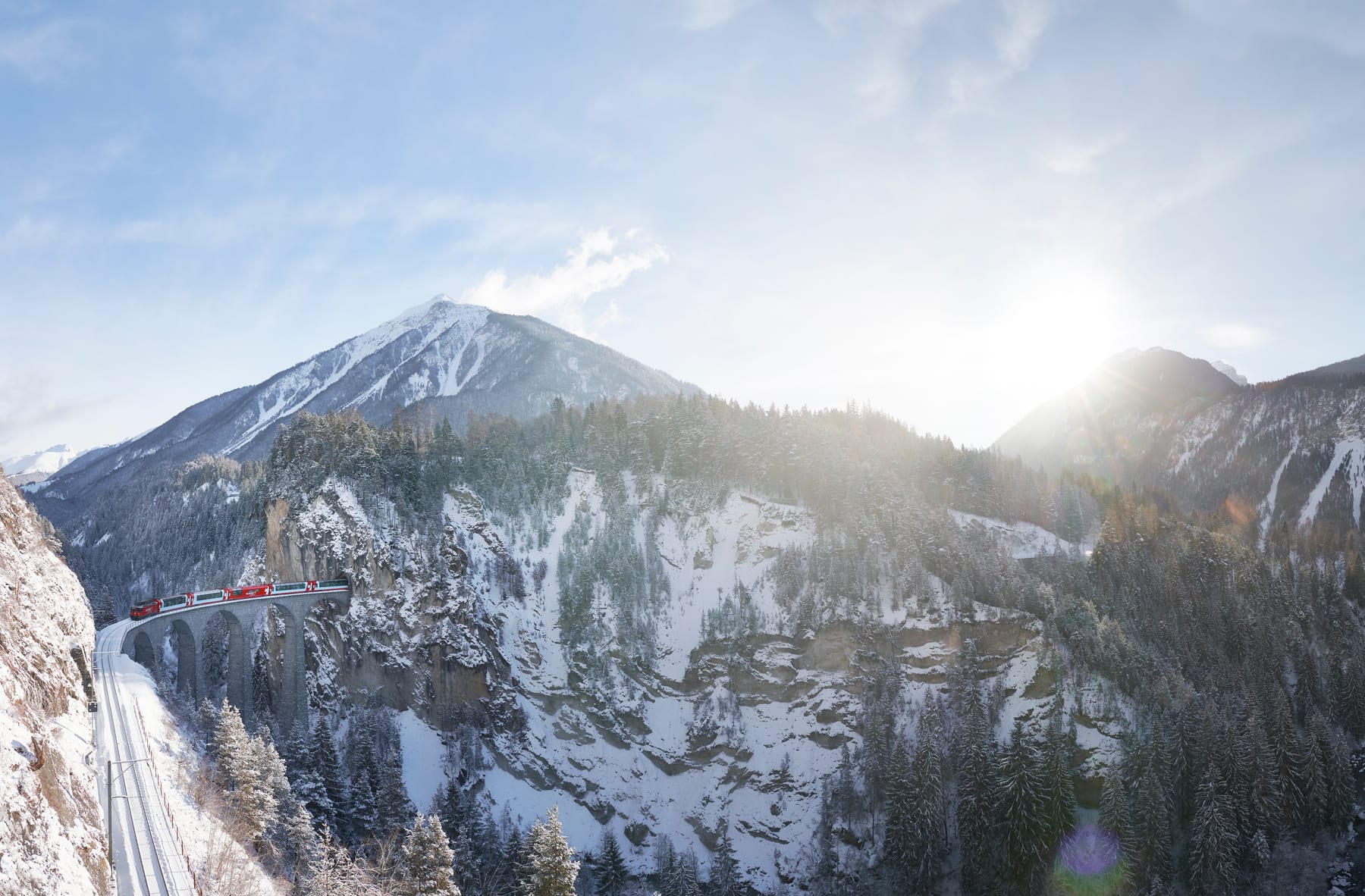
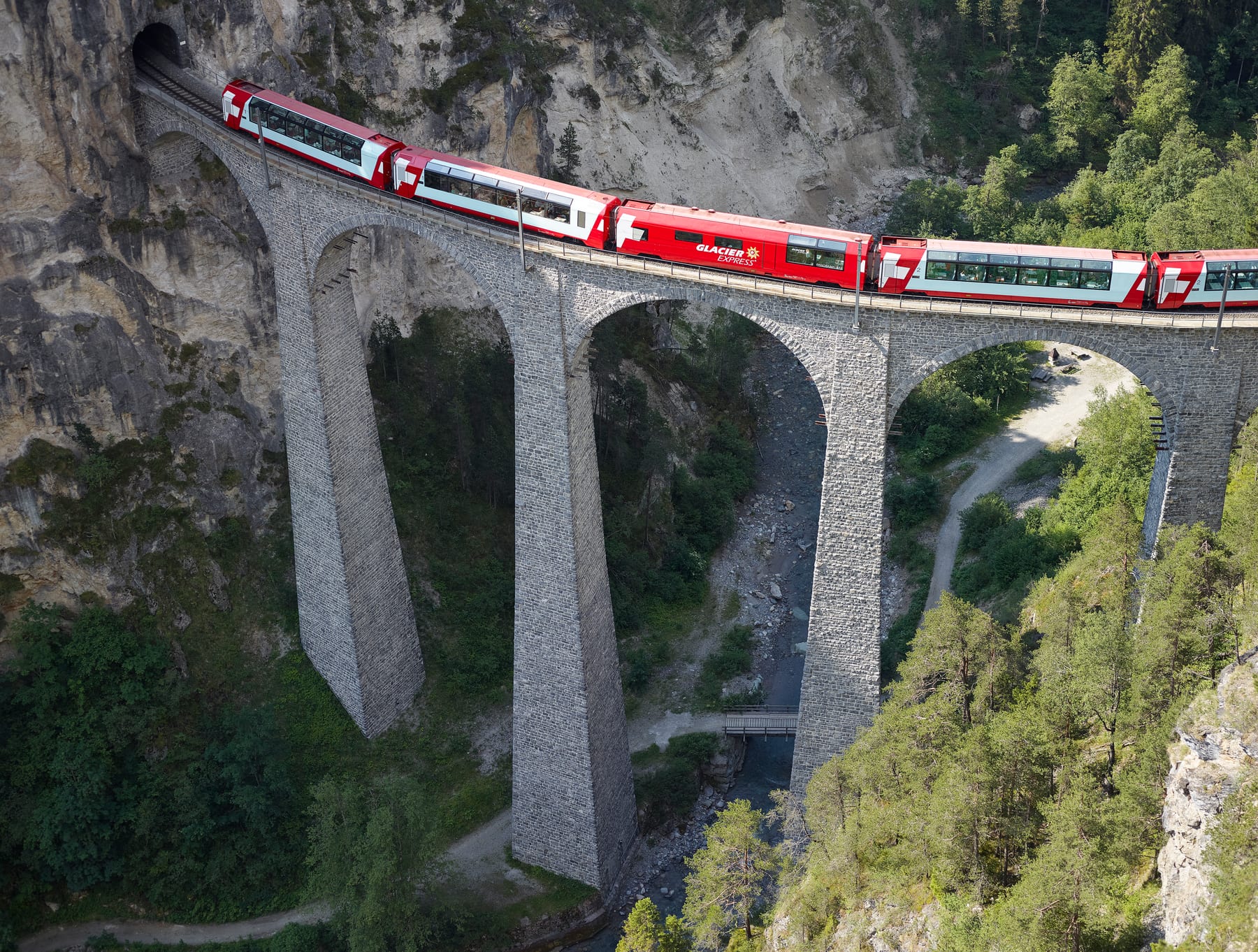
- The Landwasser Viaduct, a curved six-arch bridge that sweeps out of a rock face straight into a tunnel — the single most photographed structure on the whole route.
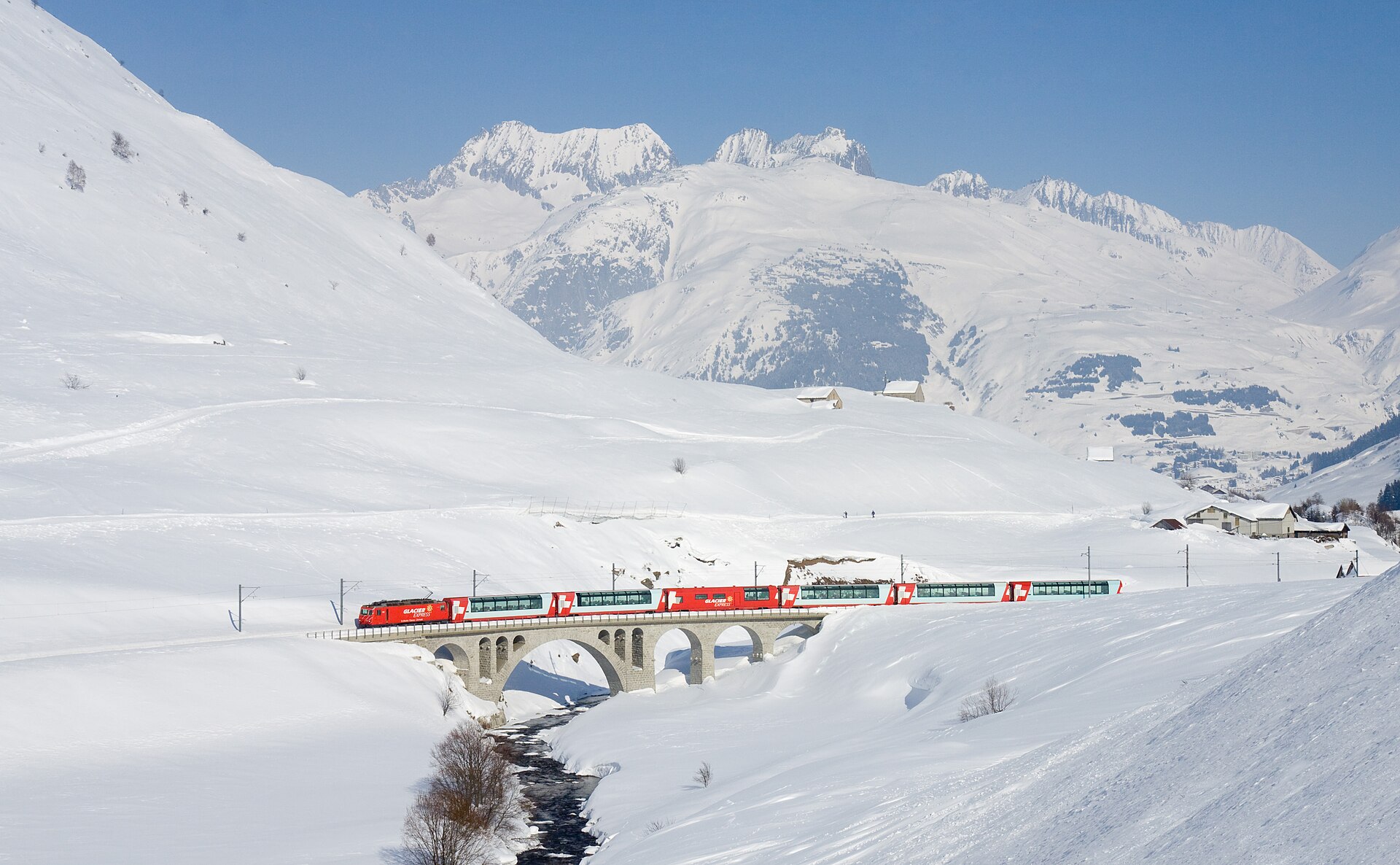
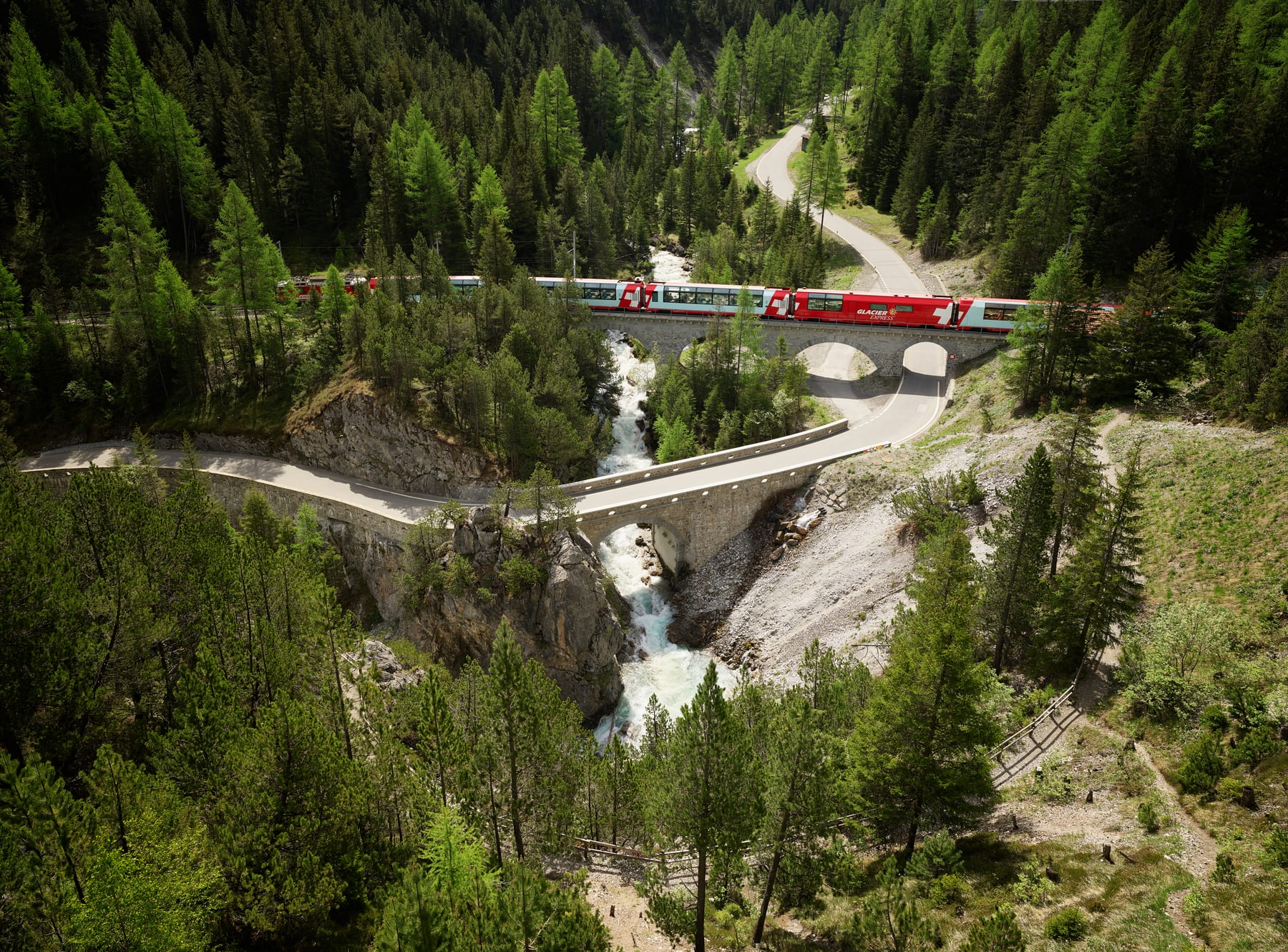
- The Albula line (Thusis–St. Moritz), part of the UNESCO World Heritage "Rhaetian Railway in the Albula / Bernina Landscapes" — a stretch of spiral tunnels and viaducts that gains height in a series of loops through the mountainside.
By the time the train climbs into the Engadine and rolls into St. Moritz, you have crossed the spine of the Alps in a single sitting — slowly, deliberately, and with a window seat the entire way.
Along the route
© Glacier Express AG / Stefan SchlumpfLandwasser Viaduct
A curved six-arch bridge that sweeps straight into a cliff-face tunnel.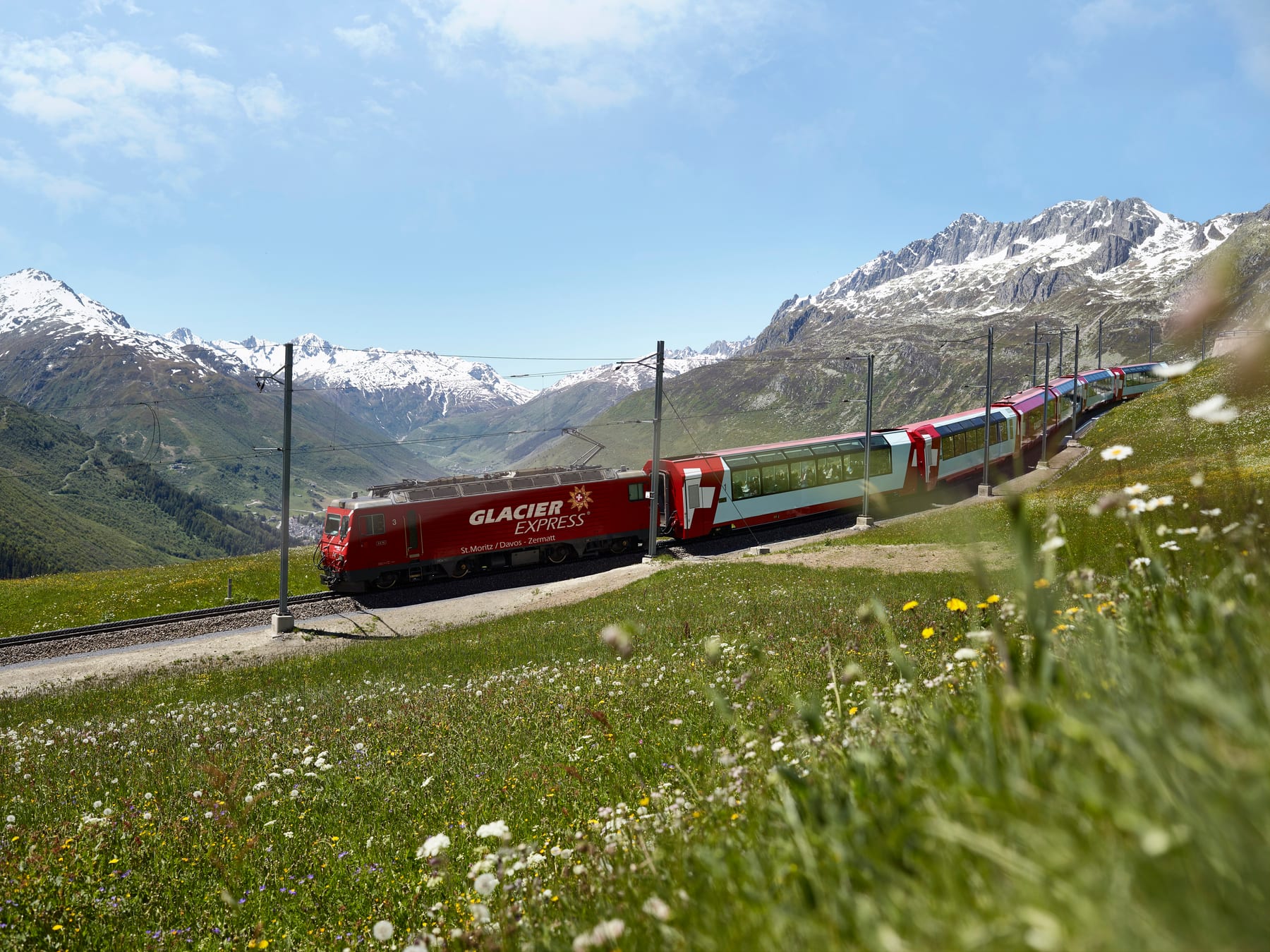 © Glacier Express AG / Stefan Schlumpf
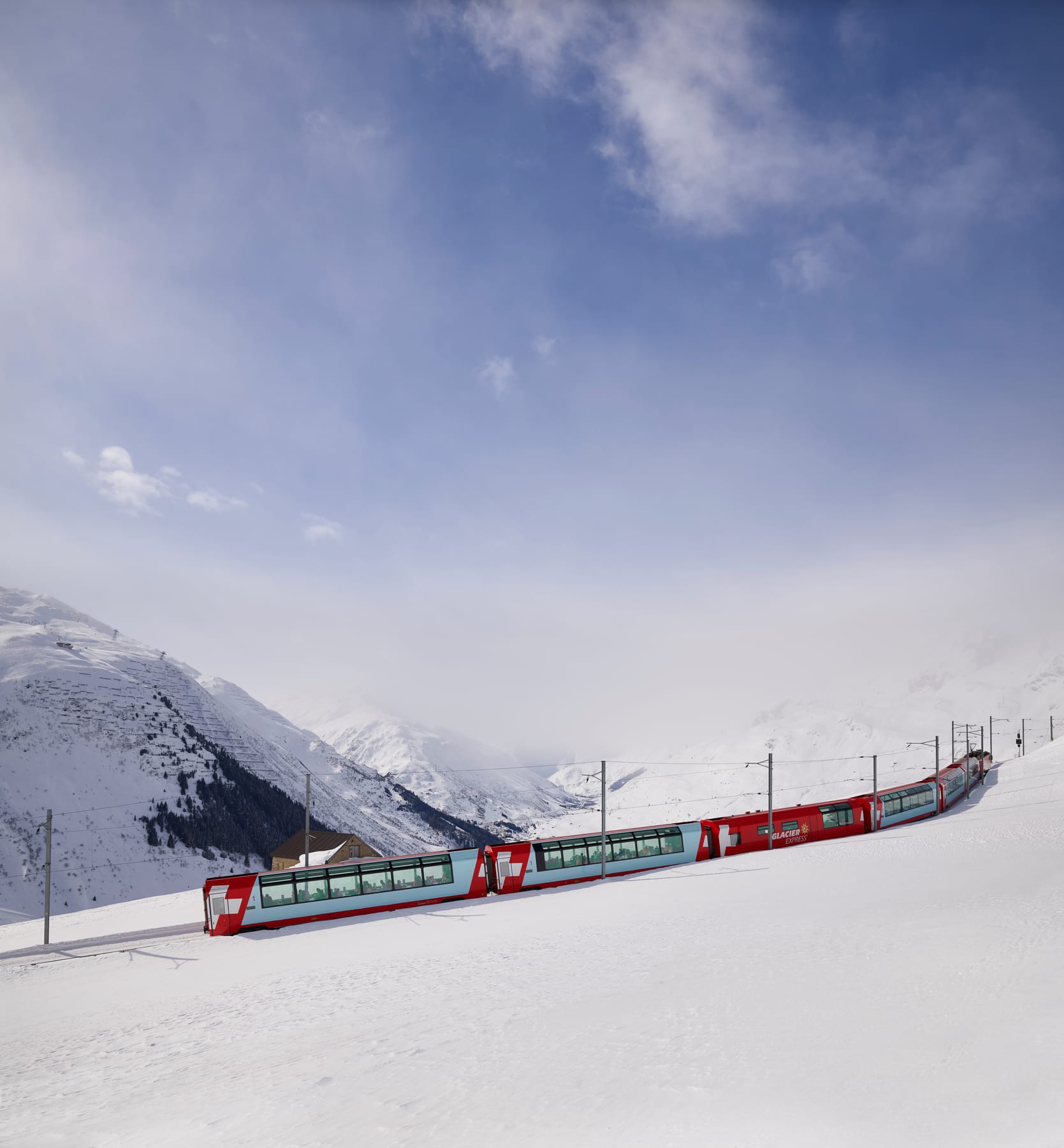
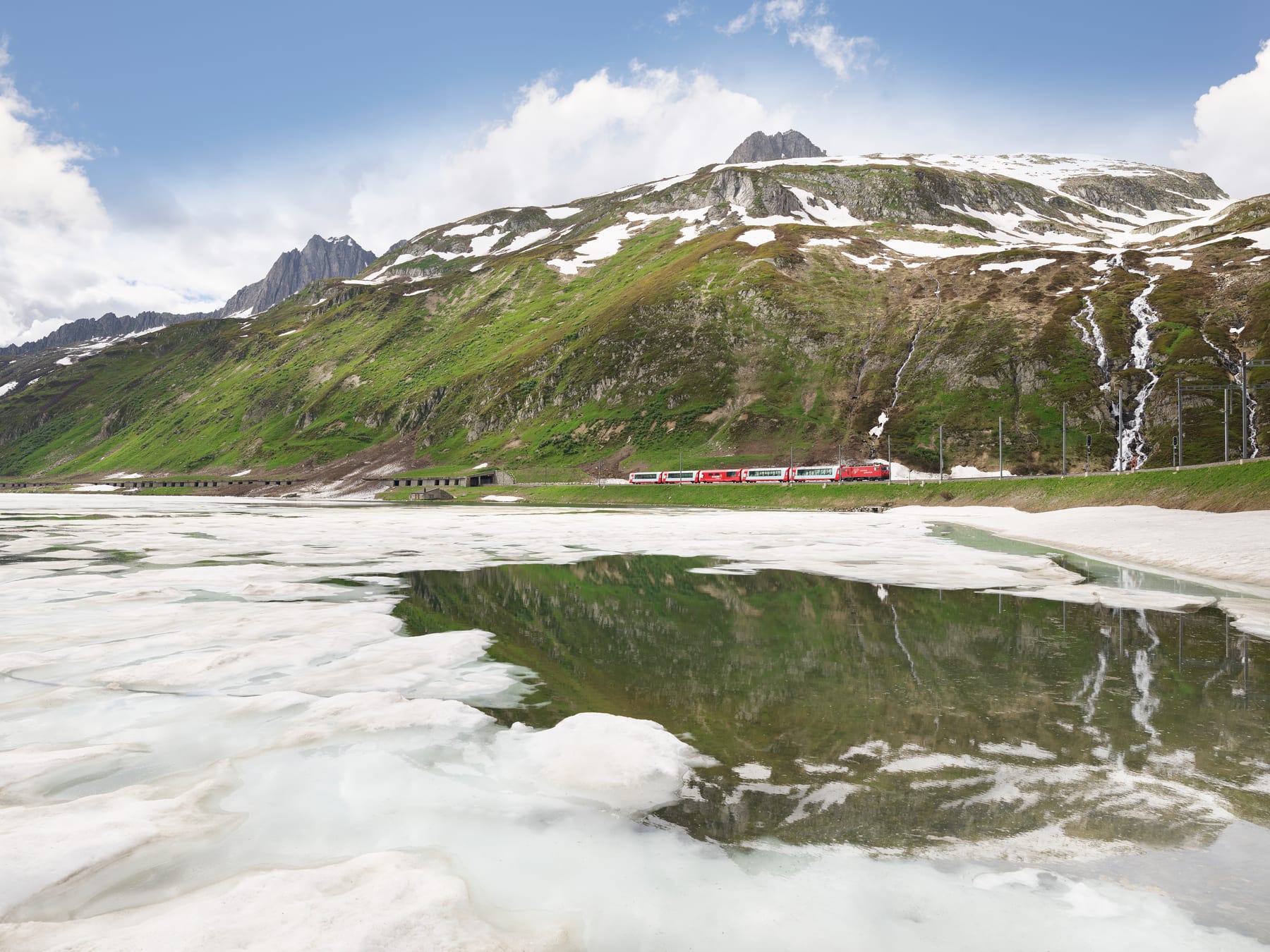
The Oberalp Pass
The 2,033 m high point of the line, above the Urseren valley.© Glacier Express AG / Stefan SchlumpfUNESCO Albula line
Spiral tunnels and viaducts that loop up the mountainside — a World Heritage stretch.A bit of history
Culture & experiences along the way
 © Glacier Express AG / Stefan Schlumpf
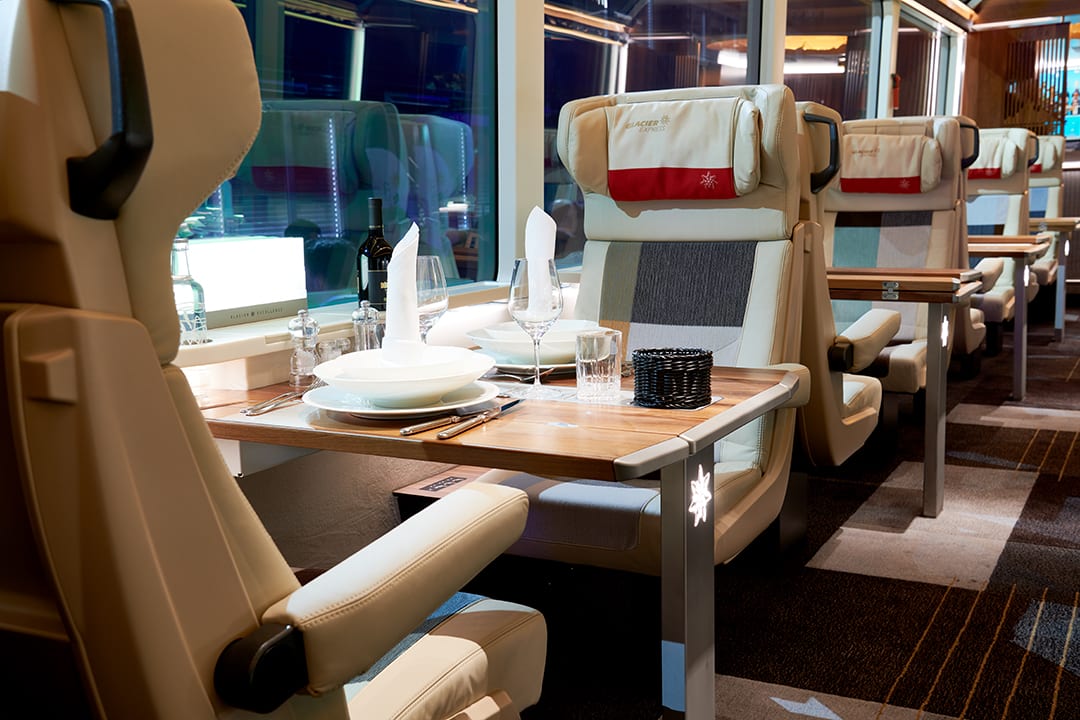
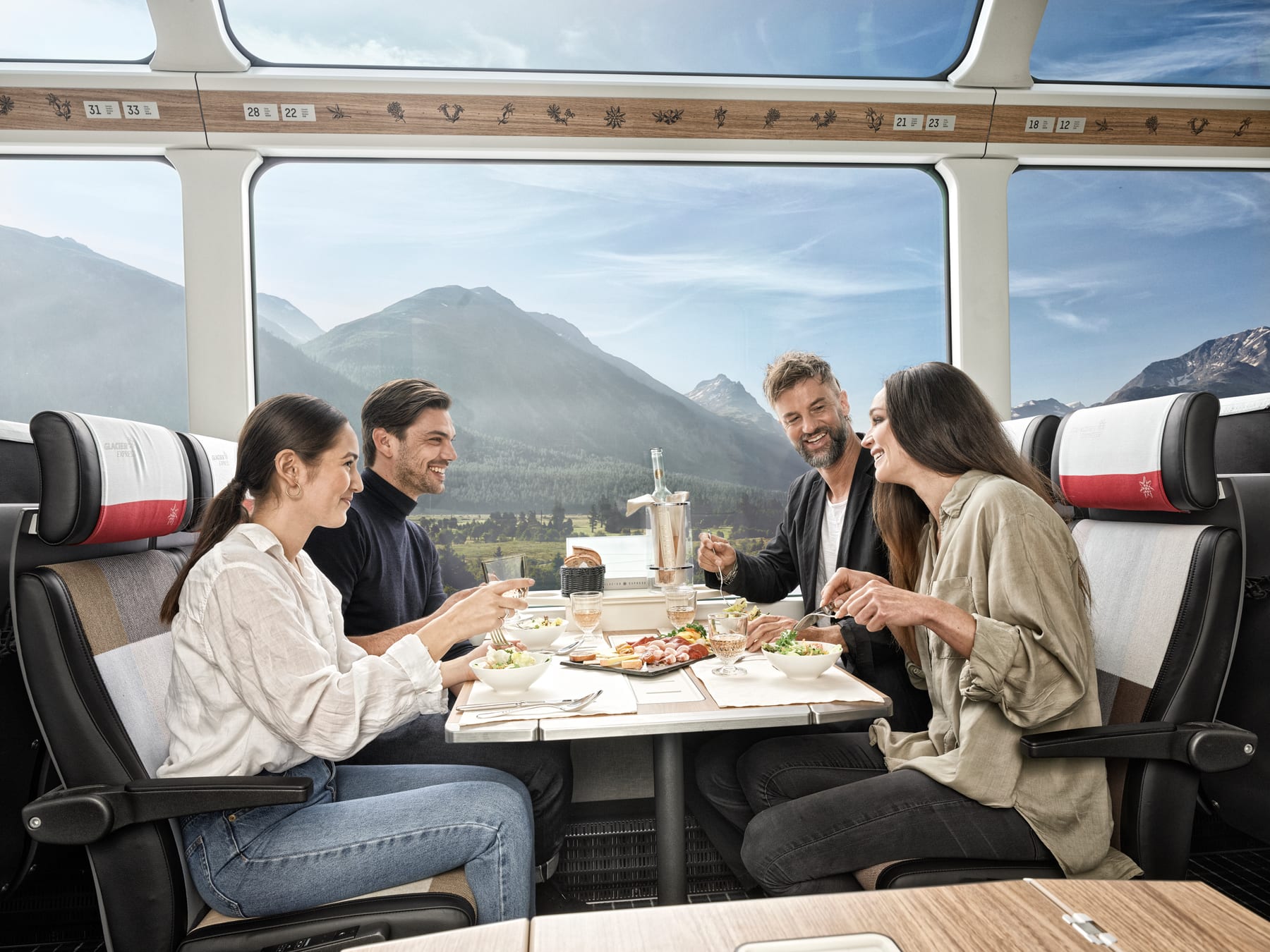
Excellence Class
A five-course menu and a guaranteed window seat the whole way.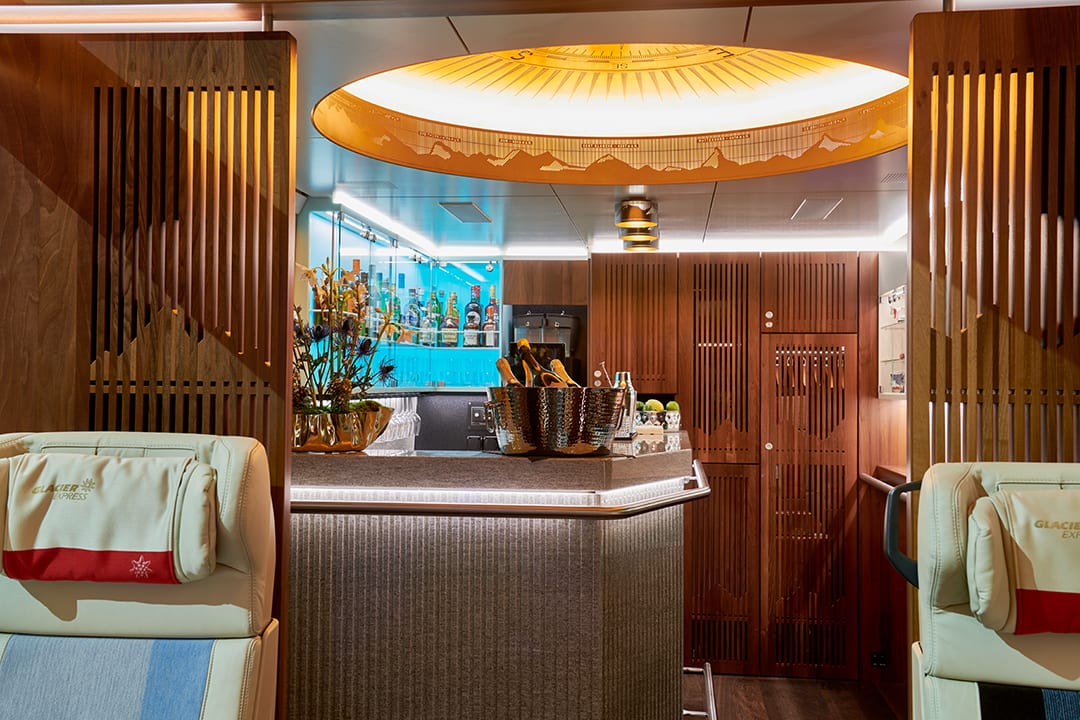 © Glacier Express AG / Stefan Schlumpf
The Glacier Bar
Cocktails and Swiss wines served from the bar in the Excellence Class car.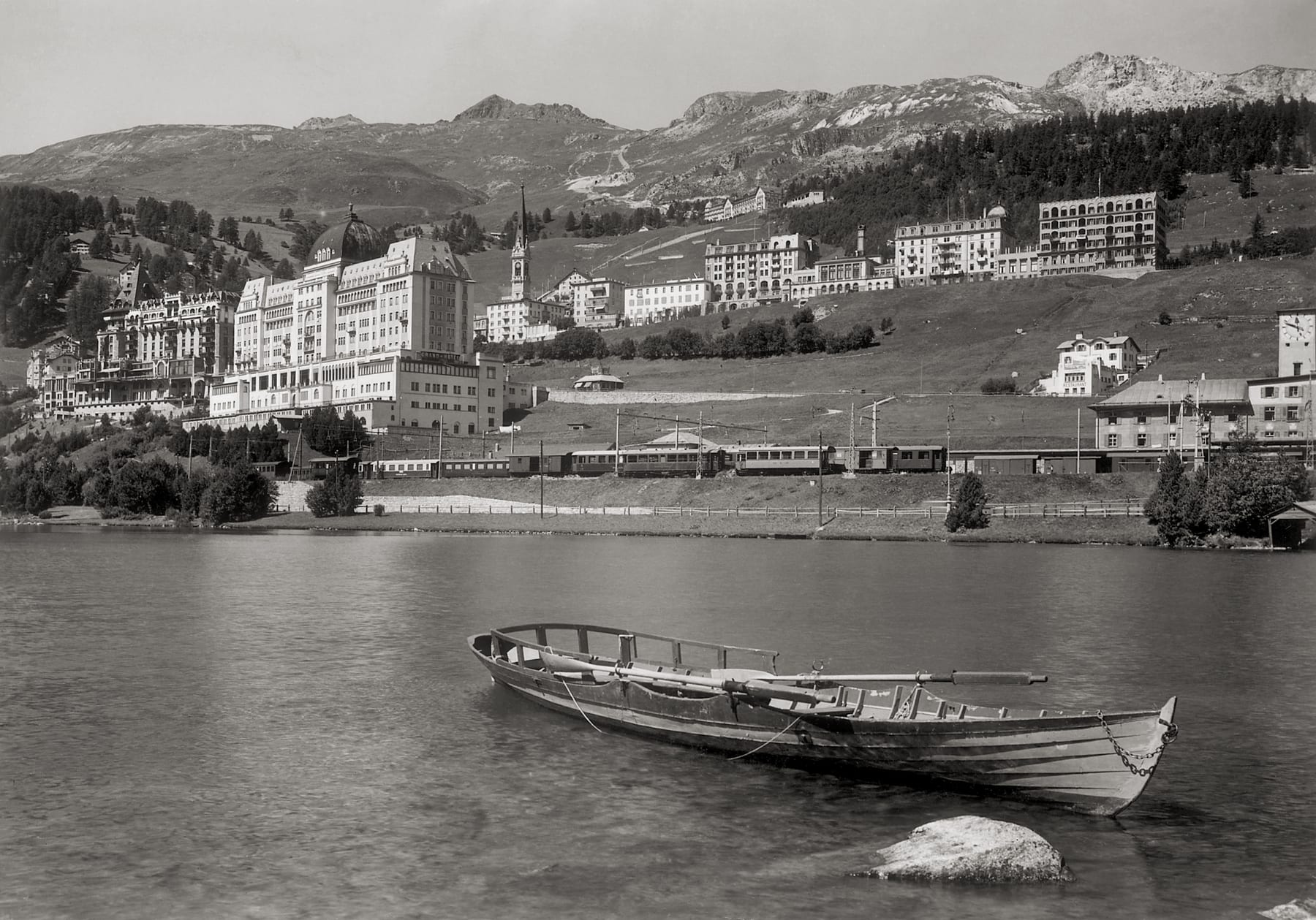 © Archiv RhB
Nearly a century of history
The Glacier Express has linked Zermatt and St. Moritz since 1930.Timetables
Through the winter season the Glacier Express runs two trains a day in each direction, and the whole point is that it takes its time — between about 7¾ and 8½ hours for the 291 km, filling a full day. A seat reservation is compulsory on top of your ticket or rail pass.
Both trains run the full length of the line, but only one in each direction runs every day of the season. Times below are the operator's winter 2026/27 timetable, 5 December 2026 – 7 May 2027.
Zermatt → St. Moritz
| Train | Zermatt | Brig | Andermatt | Disentis | Chur | St. Moritz |
|---|---|---|---|---|---|---|
| PE 920 | 07:50 | 09:14 | 11:00 | 12:14 | 13:34 | 15:37 |
| PE 902 | 08:50 | 10:14 | 12:00 | 13:14 | 14:34 | 16:37 |
St. Moritz → Zermatt
| Train | St. Moritz | Chur | Disentis | Andermatt | Brig | Zermatt |
|---|---|---|---|---|---|---|
| PE 903 | 08:38 | 11:05 | 12:30 | 14:08 | 15:48 | 17:04 |
| PE 905 | 09:38 | 12:05 | 13:30 | 15:08 | 16:48 | 18:04 |
Intermediate figures are departure times. PE 920 and PE 905 run only over the peak weeks — 12 December 2026 to 3 January 2027, and again from 30 January to 7 May 2027 — so from 5 to 11 December and from 4 to 29 January there is one train each way. All four also call at Samedan, and some at Tiefencastel or Filisur, at some only to set down or pick up.
Excellence Class runs on PE 902 and PE 903 only — the premium coach with the guaranteed window seat and the five-course menu — except on PE 903 from 16 April to 2 May 2027 and on PE 902 from 17 April to 3 May 2027. The other two trains carry 1st and 2nd class.
When the line shuts, and in summer
Between the two seasons the railway closes altogether. There is no Glacier Express between 11 October and 4 December 2026.
Summer is busier: in 2026 four trains ran each way between 2 May and 10 October, two of them starting or finishing part-way along the line at Chur or Brig. The 2027 summer times had not been published when this page was last checked.
Worth knowing before you book
- The reservation is separate from the ticket, and from any rail pass. Seats in 1st and 2nd class go on sale 93 days before the date of travel; Excellence Class can be booked for the whole timetable period. Journeys from December onwards can be booked from mid-October. Summer departures and the Christmas weeks sell out well ahead.
- Davos is a change, not a through coach. Trains marked for Davos connect there at Filisur — no portion is worked through.
- Dogs and other animals are not carried on the Glacier Express.
Times as of the winter 2026/27 timetable, read from the operator in October 2026 — glacierexpress.ch (opens in a new tab). They change with each season, so it is worth a look before you travel.
Tickets
A Glacier Express fare has two parts: the rail ticket for the route and a compulsory seat reservation in a panoramic coach. Rail passes such as the Swiss Travel Pass and Eurail/Interrail are widely accepted for the journey itself, but you still need to pay and book the reservation separately, and popular summer departures sell out well ahead.
If you want the full experience, Excellence Class adds a guaranteed window seat, a five-course menu served at your table and a welcome glass of Champagne. The options below show the full Zermatt–St. Moritz route by class, with the ticket and its compulsory reservation combined into one indicative price. Fares checked October 2026 against the operator's price page (opens in a new tab).
Book your tickets
2nd Class Panoramic
Zermatt – St. Moritz, full route
A reserved 2nd-class panoramic seat for the full 8-hour scenic route.
Book Tickets (opens in a new tab, on Glacier Express)via Glacier Express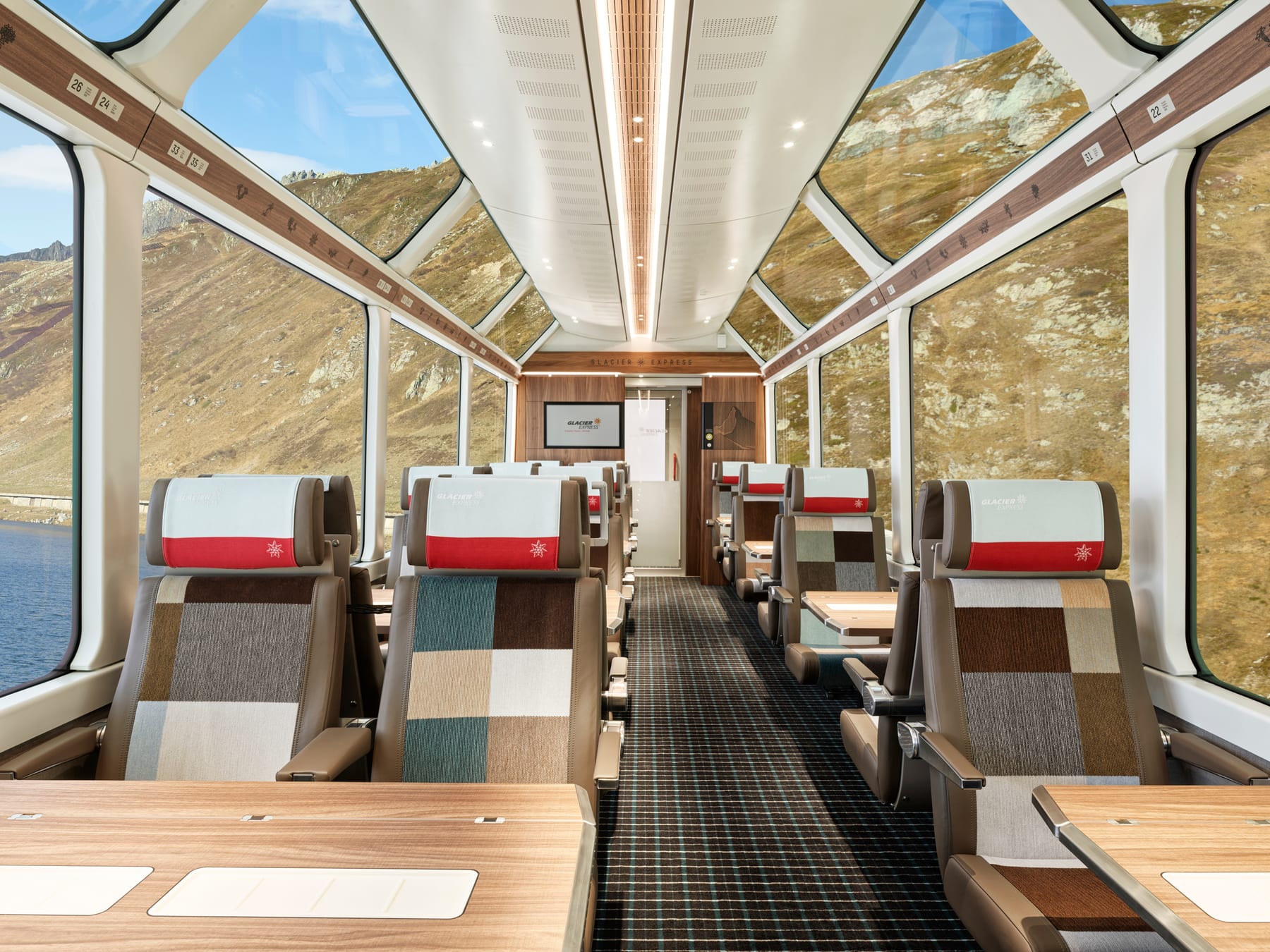
1st Class Panoramic
Zermatt – St. Moritz, full route
A reserved 1st-class panoramic seat, with more space and larger windows.
Book Tickets (opens in a new tab, on Glacier Express)via Glacier ExpressExcellence Class
Full route, at-seat fine dining
The premium carriage — guaranteed window seat, 5-course menu and concierge.
Book Tickets (opens in a new tab, on Glacier Express)via Glacier ExpressRail Passes
A pass covers the ticket for the Glacier Express but never the reservation, and on this train the reservation is the expensive half of the deal. That one fact decides whether a pass is worth buying for the journey.
What the operator accepts
Glacier Express AG lists the travel cards it takes, and the list is generous: the Swiss Travel Pass and Swiss Travel Pass Flex, Eurail and Interrail passes, the Half Fare Travelcard, the GA travelcard, the Saver Day Pass, the Swiss Transfer Ticket, the Swiss Half Fare Card, the Junior Travelcard and the Swiss Family Card. Children under 6 travel free; those from 6 to 16 pay half.
Against all of that sits a single sentence from the operator: the seat reservation is obligatory for every passenger and is not covered by any travel card.
The arithmetic
The full 2nd-class fare from Zermatt to St. Moritz is CHF 166, and the reservation CHF 54 — CHF 220 in total. A pass removes the CHF 166 and leaves the CHF 54. So the Glacier Express is worth roughly CHF 166 of value on the day you ride it, which is a substantial part of what a three-day Swiss Travel Pass costs but not the whole of it. As one day inside a longer trip, that is excellent value. As the reason for buying a pass on its own, it does not quite get there.
There is a catch that pass holders in particular run into. The reservation is CHF 54 whether you ride the whole line or one section of it. The operator's own fare table prices Andermatt–Brig at CHF 39 in 2nd class — so a pass holder taking that shorter leg pays more for the reservation than the ticket would have cost outright. The Glacier Express repays a full day; it is poor value as a short hop on a pass.
For Excellence Class the reservation is CHF 590 and requires a 1st-class ticket underneath it. A pass covers that underlying ticket, which makes the pass a meaningful saving in relative terms and a rounding error in absolute ones.
Which pass, in practice
The Swiss Travel Pass is the natural fit for a visitor: 3, 4, 6, 8 or 15 consecutive days, or the same number of freely chosen days within a month on the Flex version, covering trains, buses and boats across the country, public transport in more than 90 towns and cities, free entry to over 500 museums, and 50% off most mountain railways. It is sold only to people living outside Switzerland and Liechtenstein, is bookable up to 11 months ahead, and is checked against a passport or ID card on the train. Travellers under 25 pay about 30% less.
An Interrail or Eurail pass works just as well for the ride itself if you are already crossing Europe on one. One caution on the Swiss One Country Pass: Interrail's own conditions say it cannot be used to travel to or from the country it covers, so it does not help with getting into Switzerland in the first place.
Whichever you hold, the reservation is booked separately with Glacier Express AG — 1st and 2nd class open 93 days before departure, Excellence Class for the whole timetable period.
Pass conditions read from glacierexpress.ch (opens in a new tab), sbb.ch (opens in a new tab) and Interrail in August 2026; fares checked October 2026.
Places to Visit
The Glacier Express strings together some of Switzerland's most rewarding places to stop, so it pays to break the journey rather than ride it end to end in one go. Any of the stops below makes a natural place to spend a night and see the region beyond the train window.
 Deralpinbergsteiger / Wikimedia Commons · CC BY-SA 4.0 · cropped
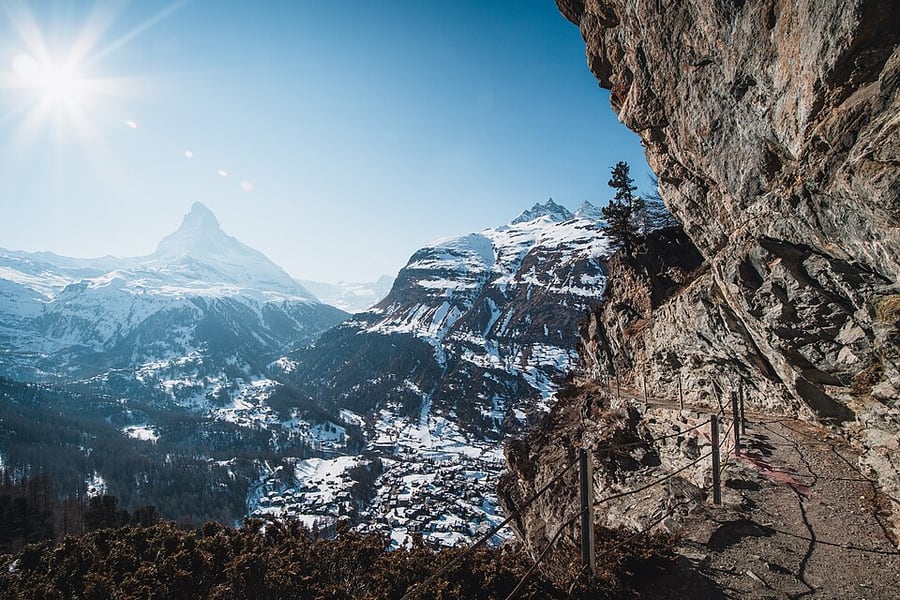
Zermatt
The car-free resort at the end of the line, in the shadow of the Matterhorn. Nothing with a combustion engine gets in — you arrive by train from Täsch or not at all. Cogwheel trains and cable cars fan out from the village to the Gornergrat and the high trails.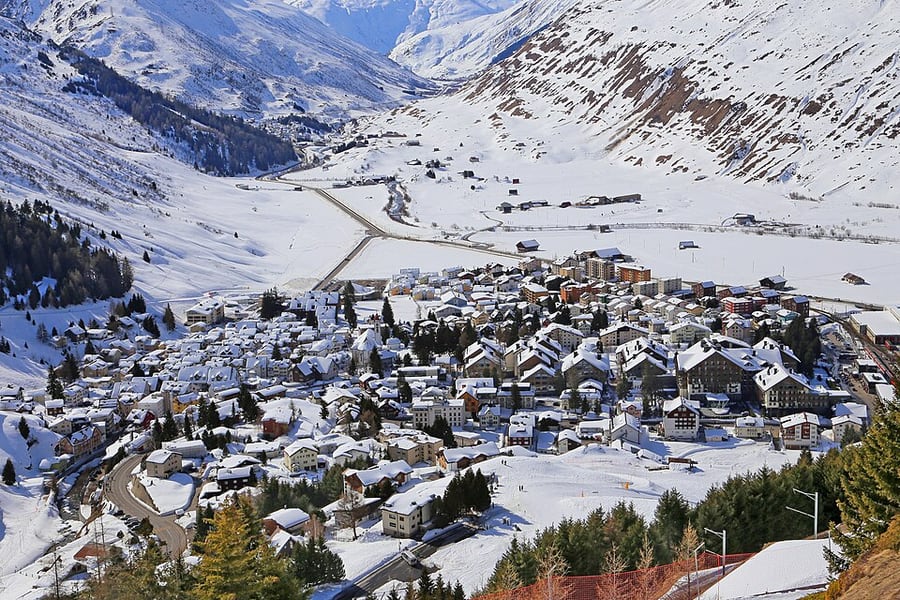 W. Bulach / Wikimedia Commons · CC BY-SA 4.0 · cropped
Andermatt
A reborn alpine village in the Ursern valley, just below the Oberalp Pass and the highest point of the whole journey. Walking country in summer, skiing in winter, and the junction where the Glacier Express meets the line down to Göschenen.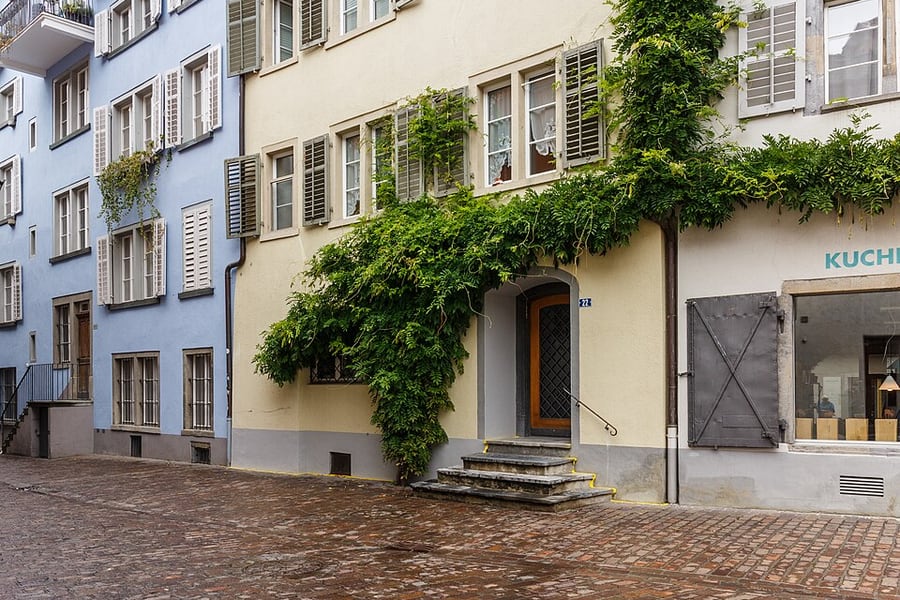 Agnes Monkelbaan / Wikimedia Commons · CC BY-SA 4.0 · cropped
Chur
Settled for around five thousand years and the hub of the entire Rhaetian Railway network. The old town is small, arcaded and genuinely lived-in rather than preserved, which makes it the most characterful place on the route to break the journey overnight.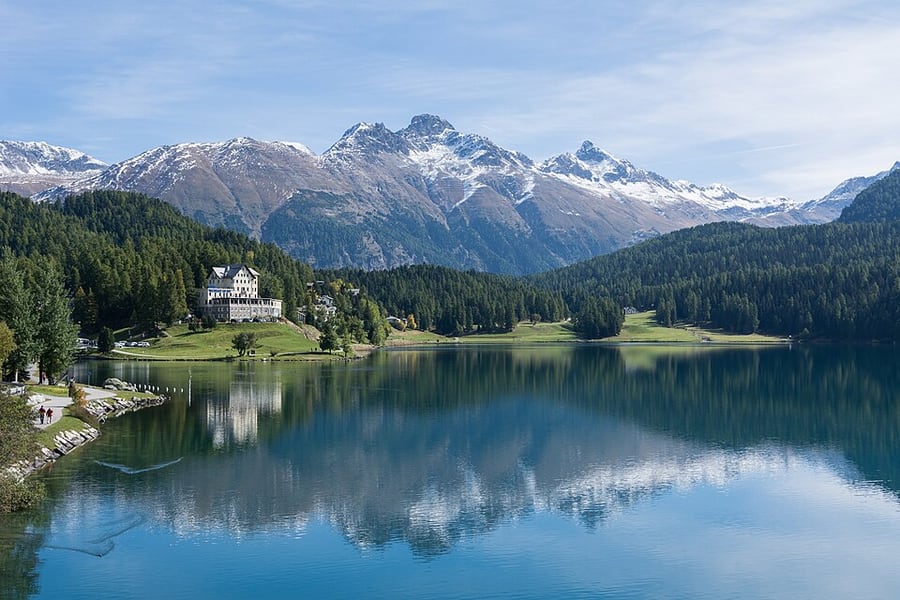 Isiwal / Wikimedia Commons · CC BY-SA 4.0 · cropped
St. Moritz
The Engadine resort at the far end, where alpine winter tourism was invented in 1864 on a bet. Lakes, spas and high-mountain excursions on the doorstep — and the Bernina Express starts here too, if you want to carry on south into Italy.Where to Sleep
Because the route rewards an overnight stop or two, it's worth choosing accommodation at the ends of the line or along the way. The picks below range from grand five-star landmarks in Zermatt and St. Moritz to a wellness retreat in the Rhine Gorge and a Belle Époque classic near Davos.
Where to stay
Deralpinbergsteiger / Wikimedia Commons · CC BY-SA 4.0 · croppedGrand Hotel Zermatterhof
Five-star, in the village centre
Built by the parish of Zermatt in 1879, a few minutes' walk from the Glacier Express terminus.
Check Availability (opens in a new tab, on zermatterhof.ch)via zermatterhof.chIsiwal / Wikimedia Commons · CC BY-SA 4.0 · croppedKulm Hotel St. Moritz
Where alpine winter tourism began
The hotel whose owner bet four English summer guests in 1864 that they would enjoy a Swiss winter.
Check Availability (opens in a new tab, on kulm.com)via kulm.com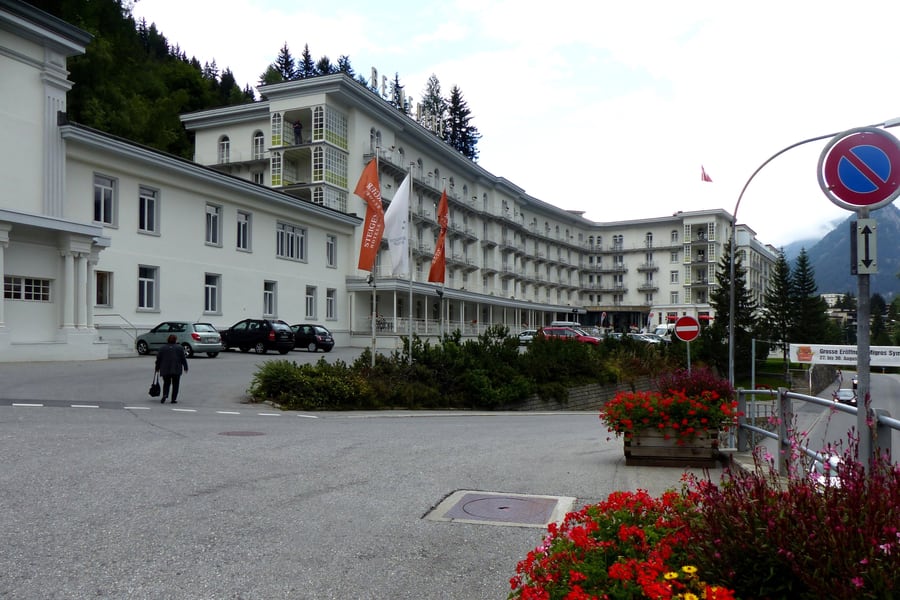 giggel / Wikimedia Commons · CC BY 3.0 · cropped
Steigenberger Icon Grandhotel Belvédère
Belle Époque grande dame in Davos
Opened in 1875 as the Grand Hotel Davos, a short detour from the route via Landquart or Filisur.
Check Availability (opens in a new tab, on hrewards.com)via hrewards.comQuestions or corrections
Planning this trip and stuck on something, or spotted a time, fare or detail that has changed? Send us a message about Glacier Express. We read every one, and we update this page when something has changed.