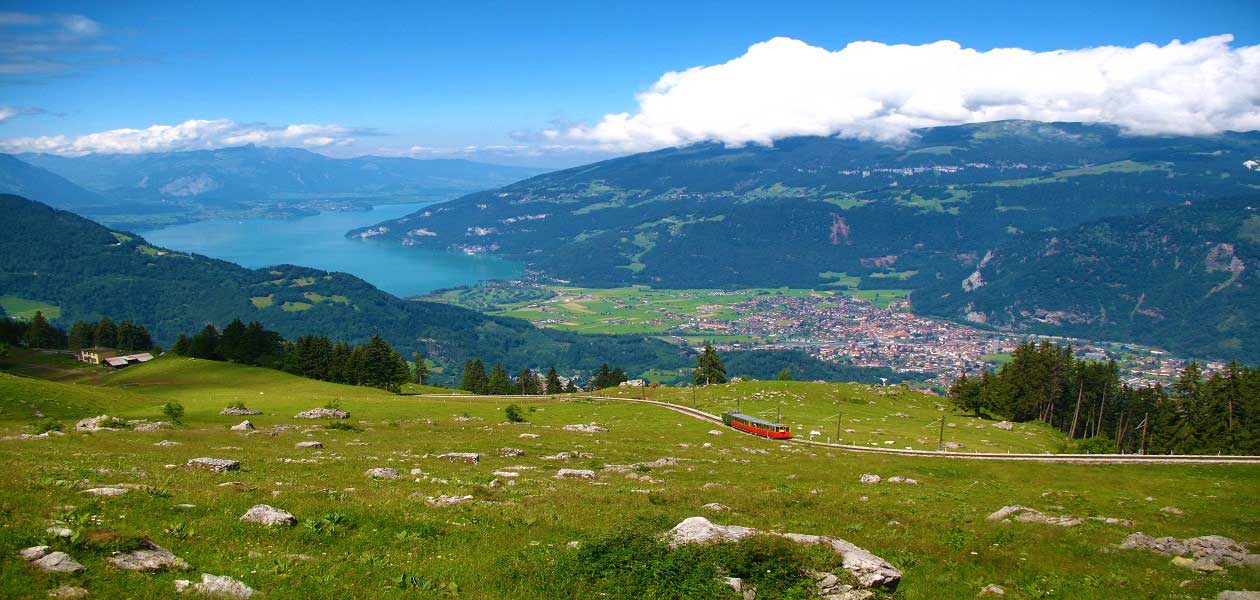
Switzerland
Switzerland is a landlocked country of about 9.1 million people at the meeting point of central, western and southern Europe, bordered by Germany, France, Austria, Liechtenstein and Italy. It divides into three: the Alps, which cover most of its territory; the Jura mountains along the French border; and the plateau between them, where most Swiss actually live and where Zurich, Geneva, Basel, Bern, Lausanne and Lucerne all sit.
That split is the whole shape of Swiss railways. Across the plateau the federal railway — whose name, SBB CFF FFS, is simply the same name in three of the country's languages — runs a dense, frequent, famously punctual network between the cities. Off the plateau, the lines climb: rack railways, narrow-gauge mountain routes and cable-worked ascents, a great many of them operated by companies other than the federal one, reaching passes and glaciers that most countries would leave to the road. The two halves are sold as one system: SBB issues tickets for public transport journeys across the whole of Switzerland, and day passes that cover a day's unlimited travel, so getting from a city to a mountain is a matter of connections rather than arrangements.
Rail journeys in Switzerland
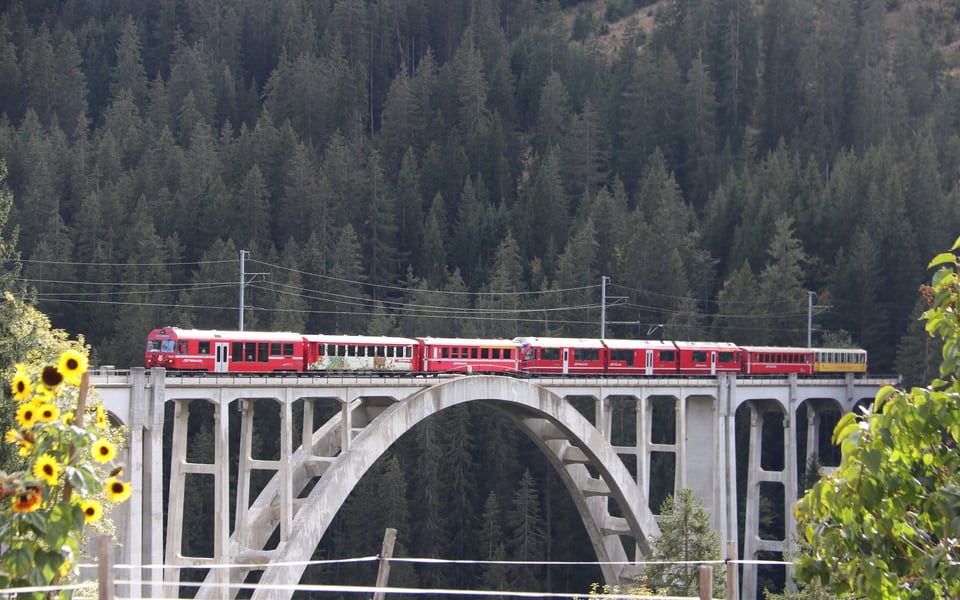
Arosa Line
A hundred-metre concrete arch built in 1914 because the only road into the valley could carry nothing heavier — on a railway that leaves Chur down a street.
View journey →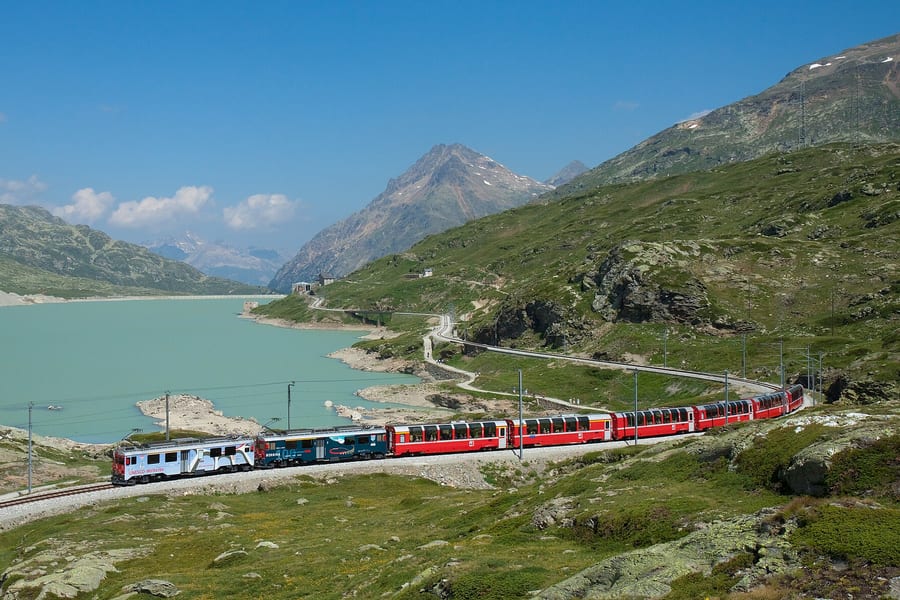
Bernina Express
The most spectacular way across the Alps — a little red train that climbs to 2,253 metres without a single cog, then spirals down to the palms of Italy.
View journey →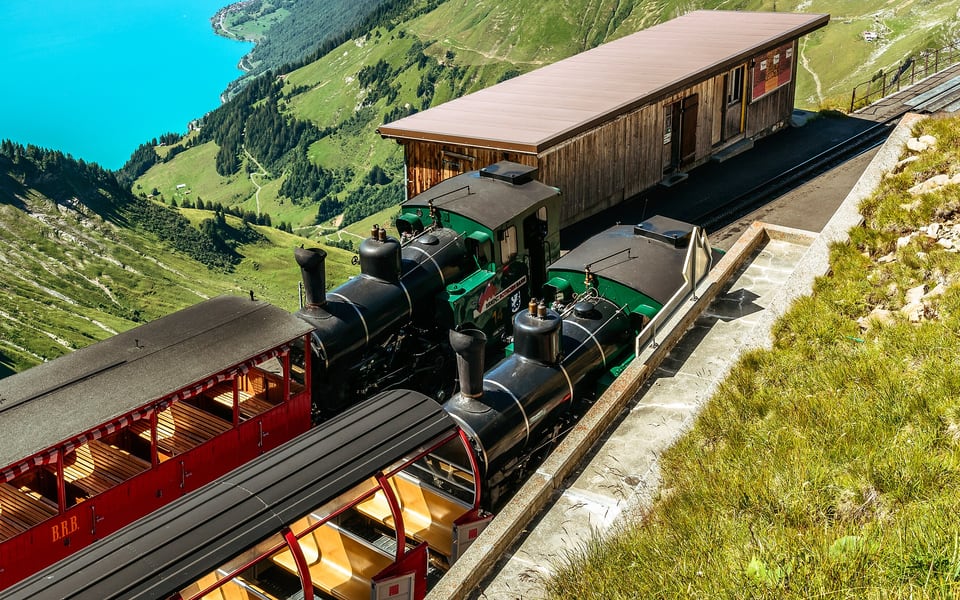
Brienz Rothorn Bahn
An hour of steam from Lake Brienz to a ridge at 2,244 metres.
View journey →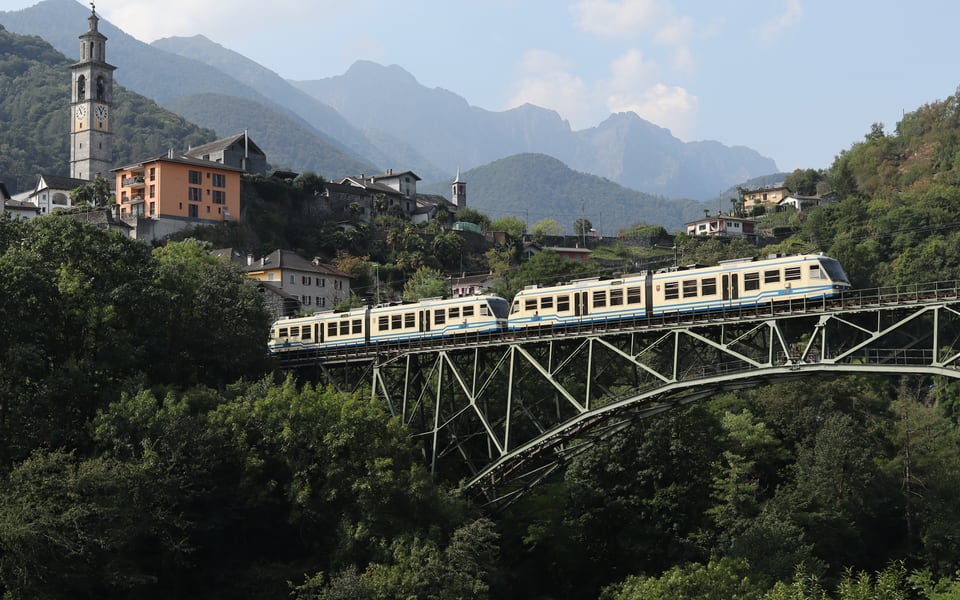
Centovalli Railway
Fifty-two kilometres of metre gauge over 83 bridges and through 31 tunnels, from a Swiss lakeside town to an Italian market town, on two companies' rails.
View journey →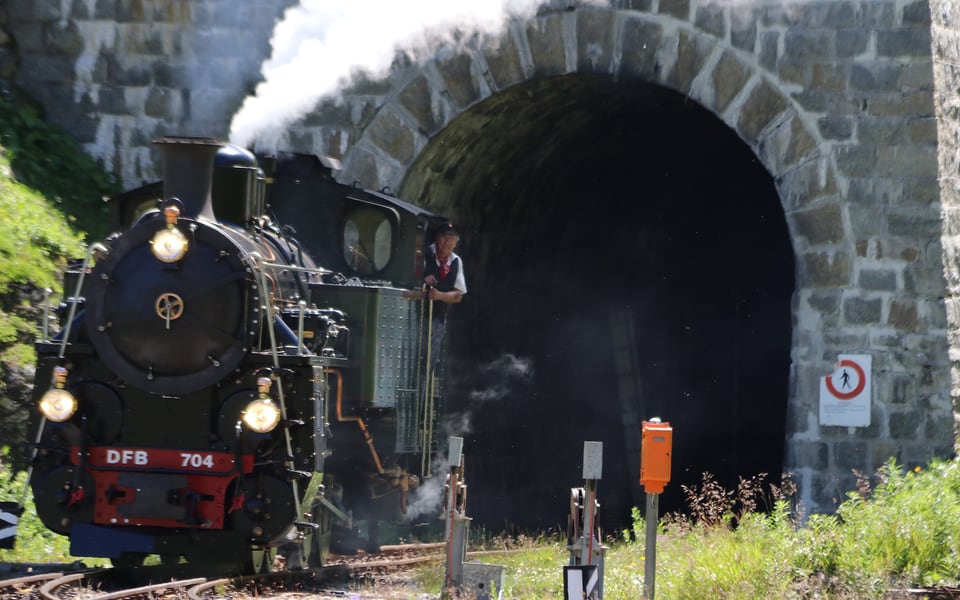
Furka Steam Railway
A railway that is taken to pieces every autumn so the avalanches cannot have it.
View journey →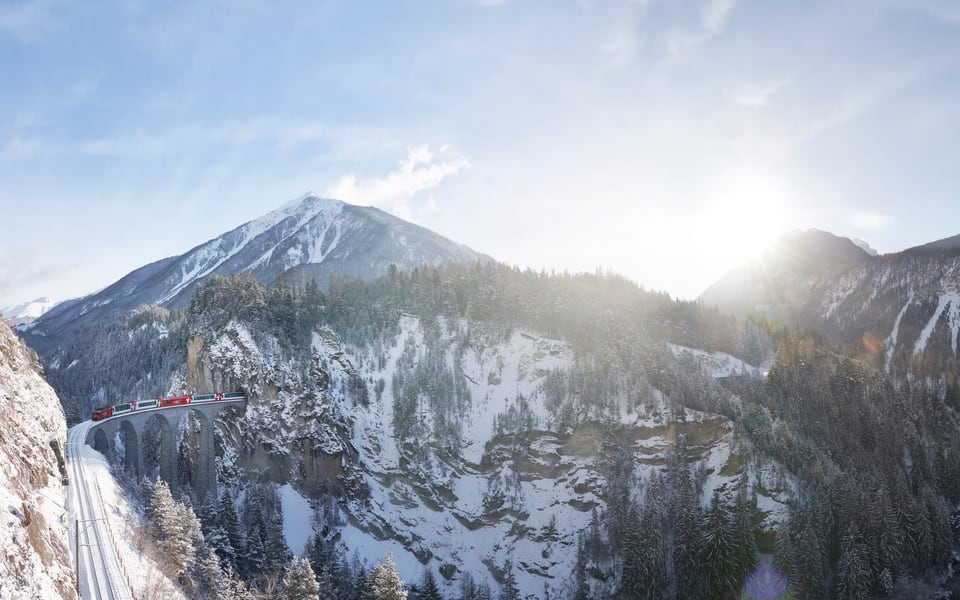
Glacier Express
The slowest express train in the world — and with good reason.
View journey →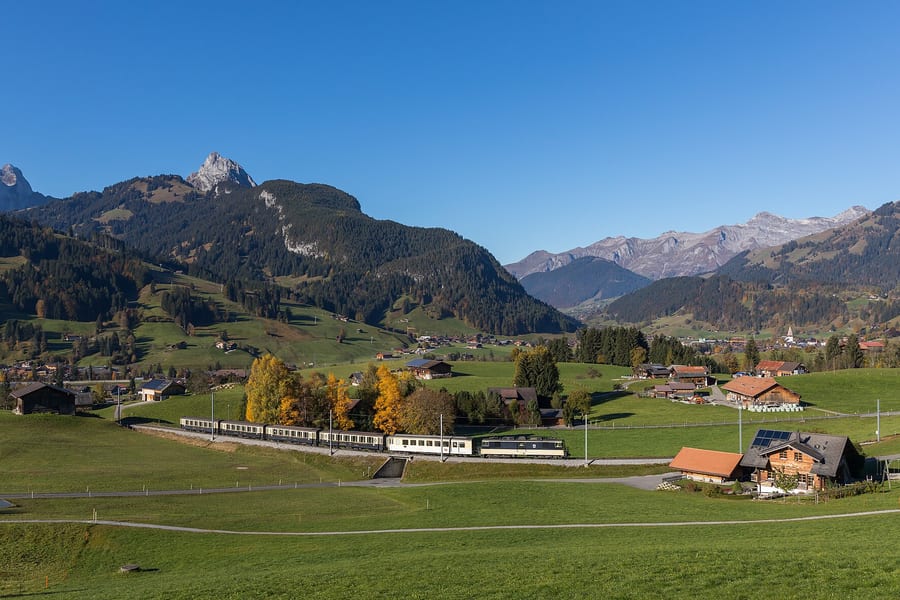
GoldenPass Line
Lake Geneva to Lake Lucerne in a single golden thread, on a world-first train that changes the gauge under its own wheels so you never change seats.
View journey →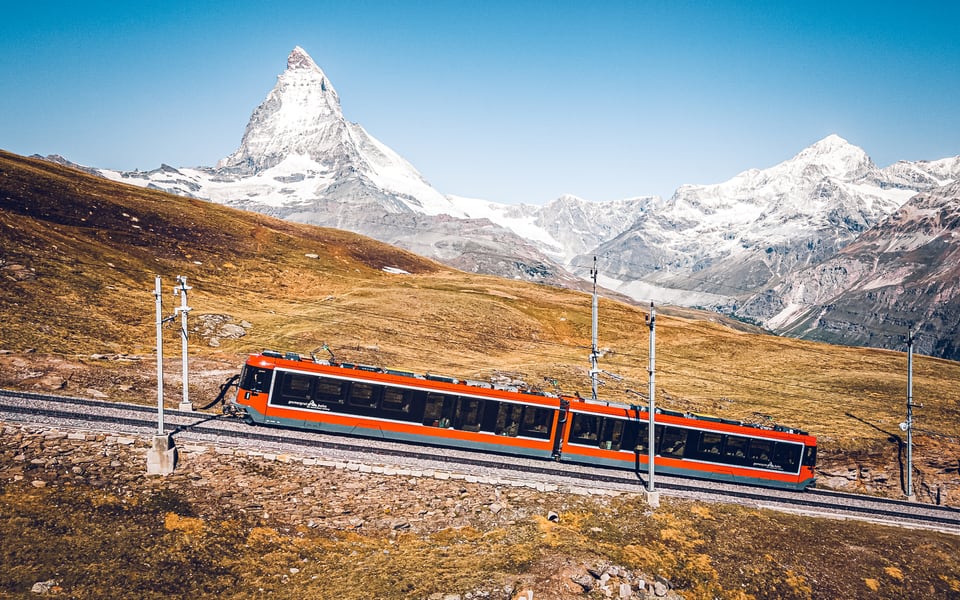
Gornergrat Railway
Thirty-three minutes of rack railway to a ridge at 3,089 metres.
View journey →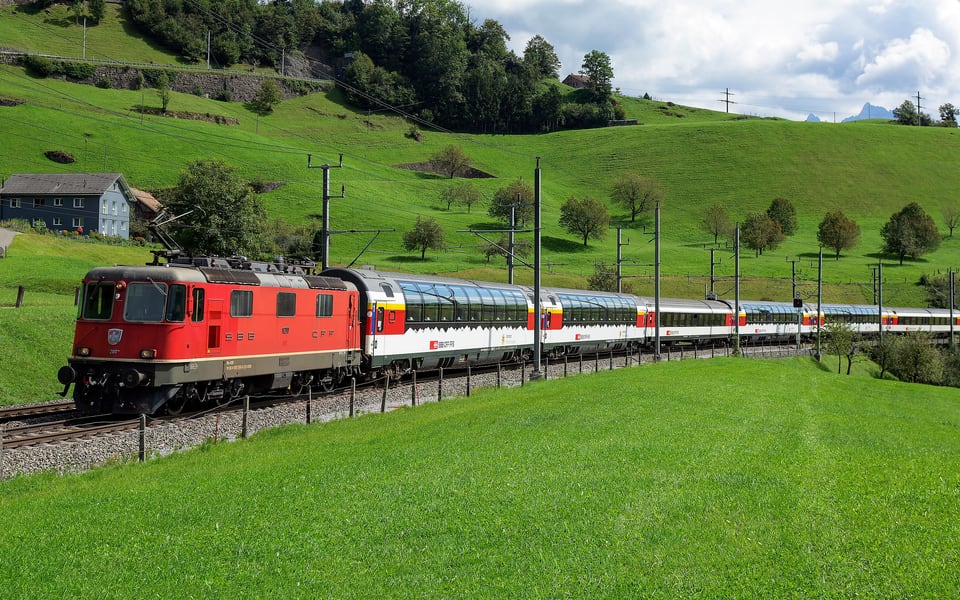
Gotthard Panorama Express
A first-class panorama train, and a paddle steamer to reach it.
View journey →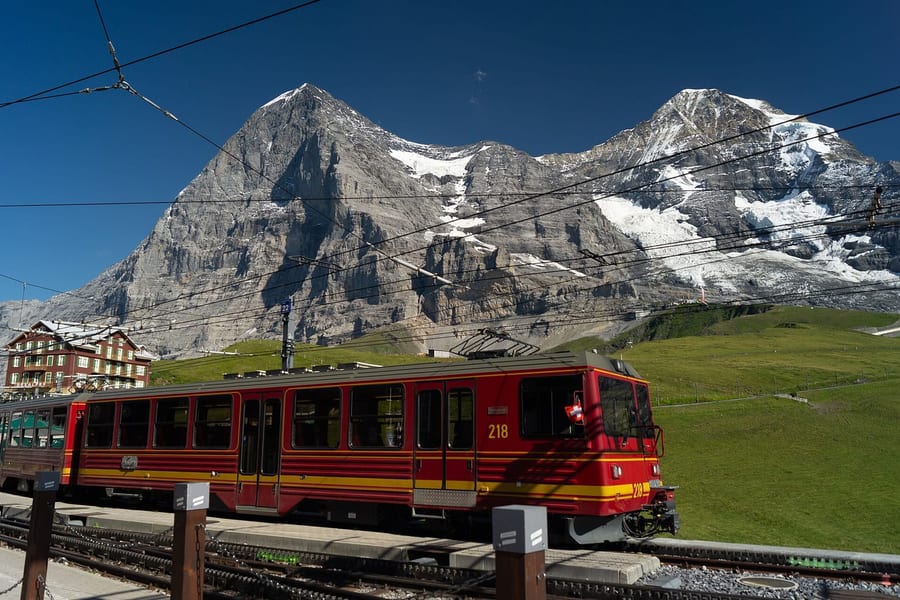
Jungfrau Railway
The cog railway to the Top of Europe — burrowing through the Eiger to Jungfraujoch at 3,454 metres, the highest railway station on the continent.
View journey →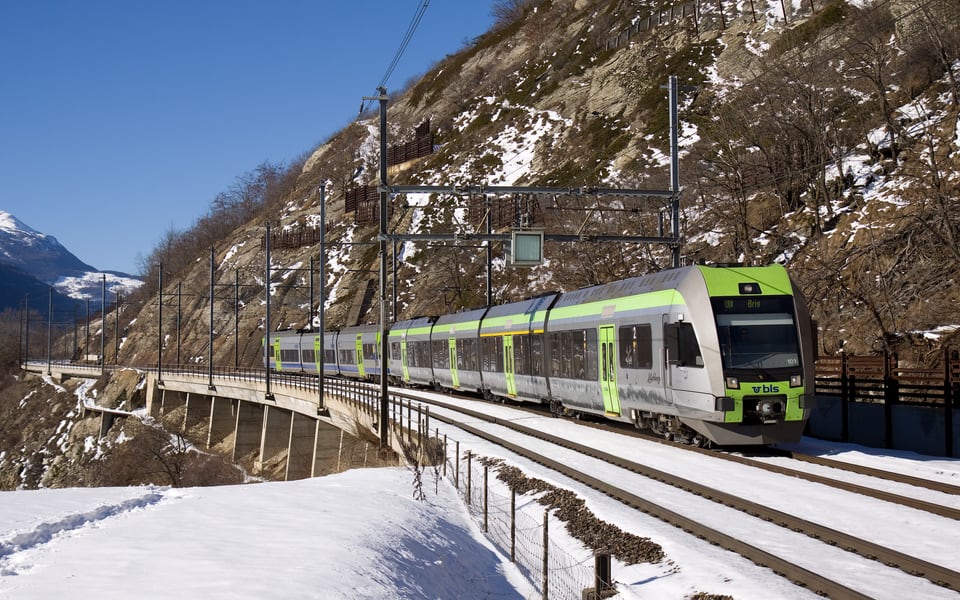
Lötschberg Mountain Line
Switzerland's highest standard-gauge Alpine crossing tops out at 1,240 metres in the dark — and since 2007 the hourly train over the top has it to itself.
View journey →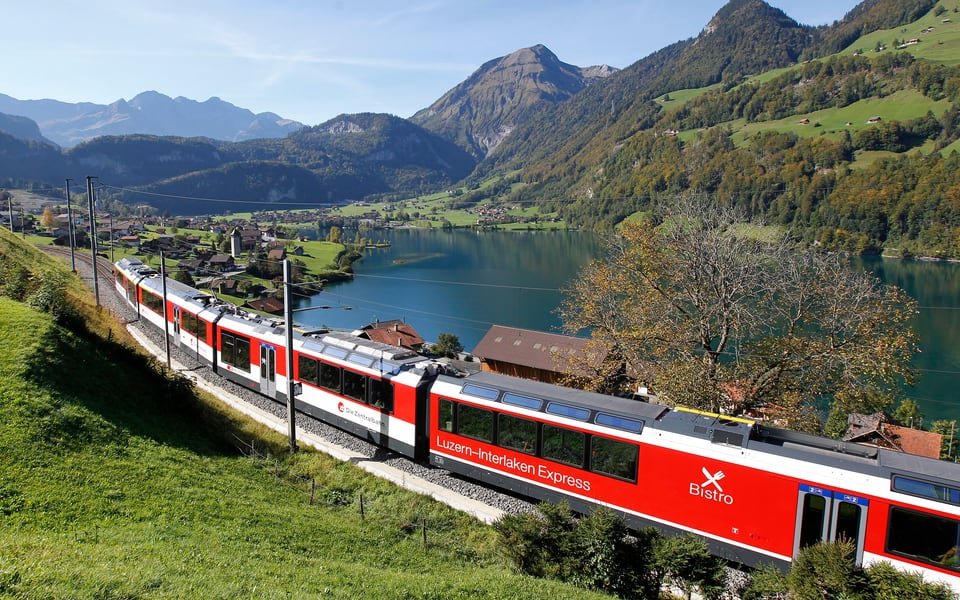
Luzern – Interlaken Express
Seventy-four kilometres, three rack sections and a pass, on an ordinary hourly ticket.
View journey →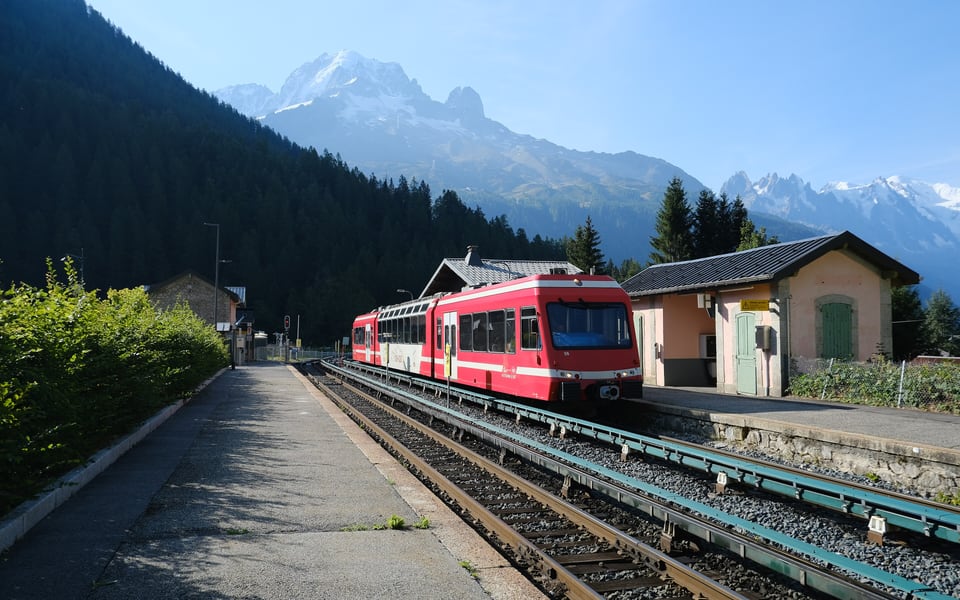
Mont-Blanc Express
Thirty-eight kilometres of metre gauge from the Rhône orchards to Chamonix, an hour of it on a ledge above a gorge — with two night trains run on request.
View journey →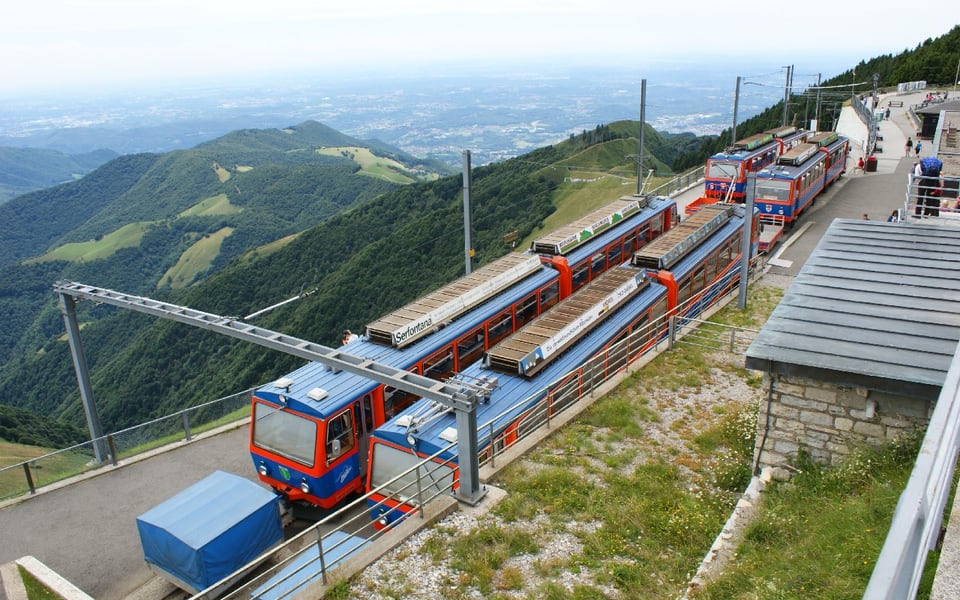
Monte Generoso Railway
The mountain railway a grocer bought in 1941 to stop it being scrapped, then saved by cutting the fare — 1,328 metres of rack above Lake Lugano.
View journey →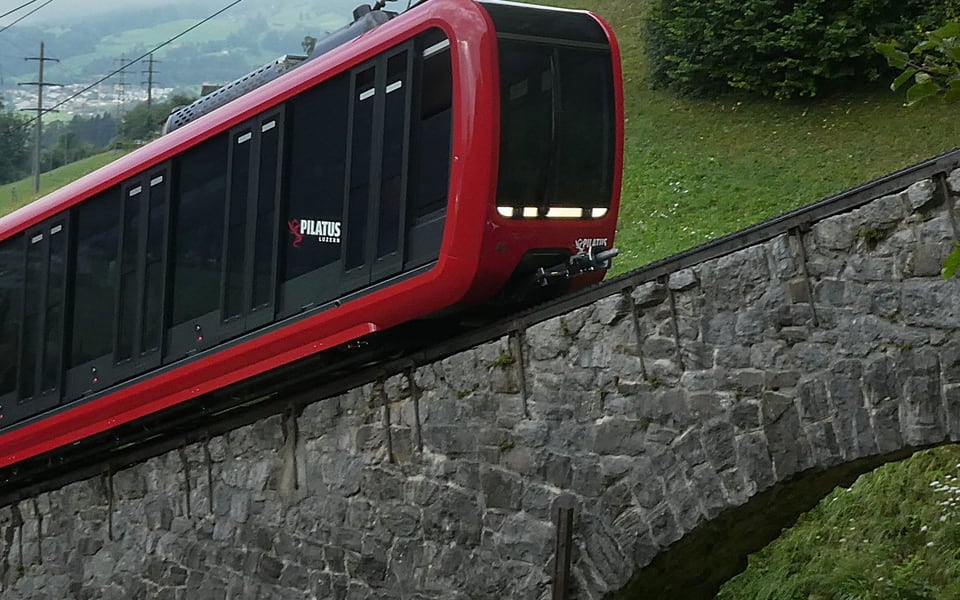
Pilatus Railway
Twenty-seven minutes up a forty-eight per cent gradient, on a rack no one has built steeper.
View journey →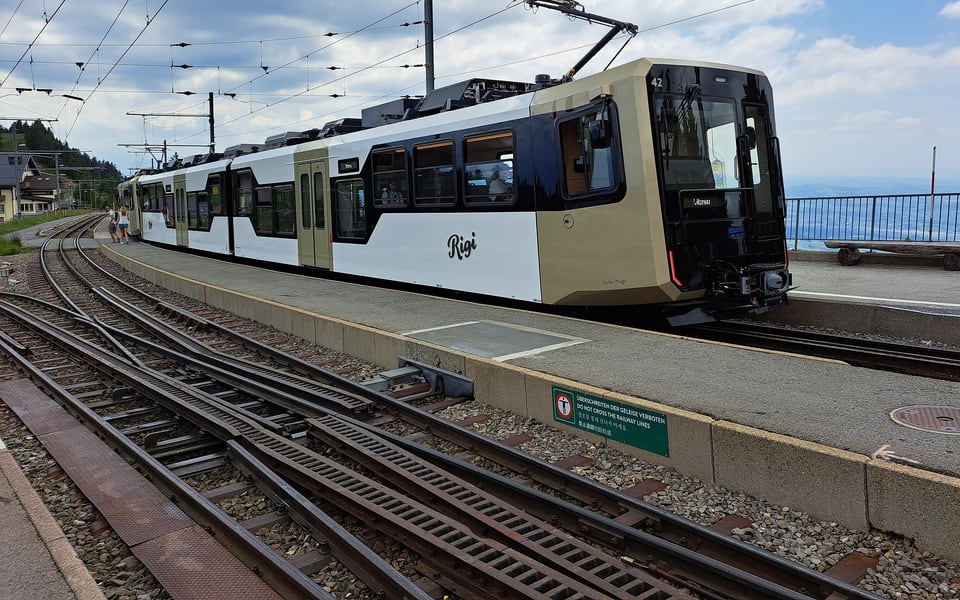
Rigi Railway
Europe's first mountain railway, 1,300 metres up from a lake pier on standard-gauge rack.
View journey →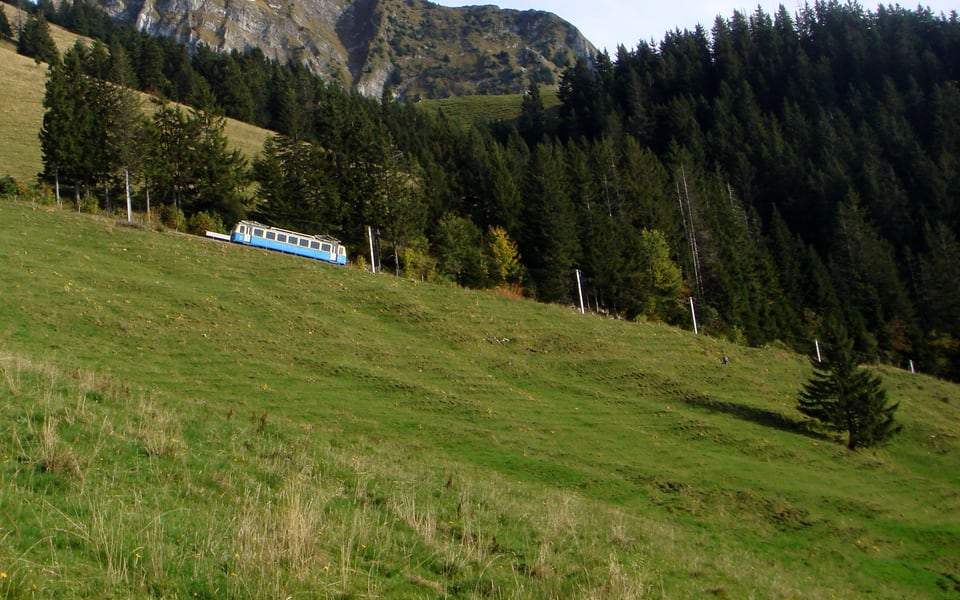
Montreux – Rochers-de-Naye
Forty-eight minutes and fifteen hundred metres, from Lake Geneva to the ridge above it.
View journey →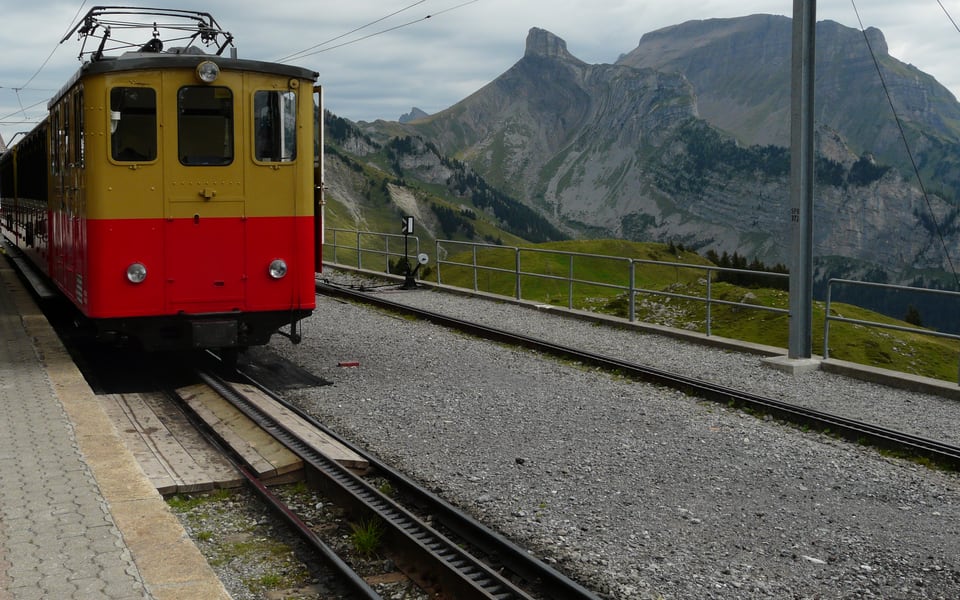
Schynige Platte Railway
Edwardian locomotives pushing wooden coaches up a mountain, because the one modern train the line tried did not survive the year.
View journey →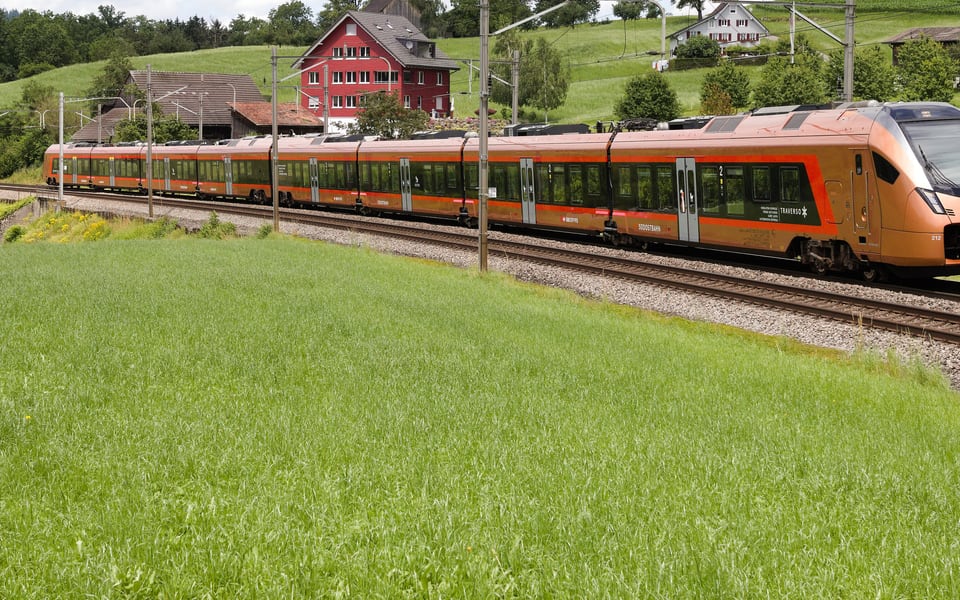
Voralpen-Express
The express that refuses the hub — Lucerne to St. Gallen without touching Zurich, over a raised bog at 933 metres and Switzerland's highest rail bridge.
View journey →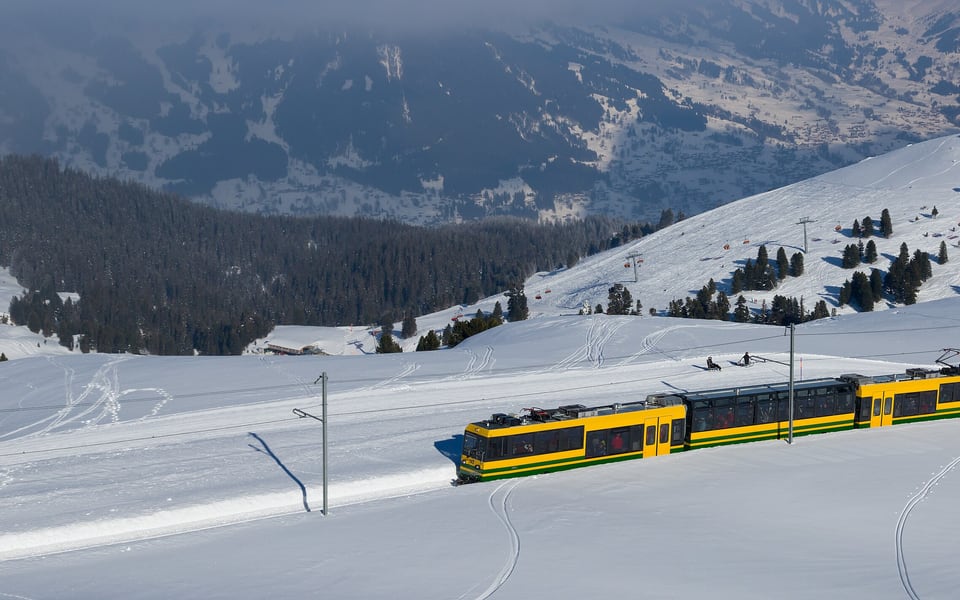
Wengernalpbahn
The longest continuous rack railway in the world, over a pass no train can cross in one go.
View journey →Good to know
Which Swiss scenic train should I take?
It depends on the scenery you're after. The Glacier Express links Zermatt and St. Moritz as "the slowest express in the world"; the Bernina Express makes the boldest Alpine crossing, over the 2,253 m Bernina Pass to Italy without a rack; the GoldenPass Line runs right across the country from Lake Geneva to Lucerne; and the Jungfrau Railway climbs to the "Top of Europe" at 3,454 m.
Do I need to reserve seats on the scenic trains?
On the Glacier Express and the Bernina Express a seat reservation is compulsory, and it is separate from your ticket or rail pass — CHF 54 on the Glacier Express, CHF 32 to CHF 44 on the Bernina Express depending on route and season. The GoldenPass Express is the exception: the MOB does not require a reservation, only recommends one, and charges CHF 20 for it. Ordinary intercity trains need no reservation; just hop on.
Is a Swiss Travel Pass worth it?
If you're taking several journeys it usually pays for itself: it covers most trains, buses and boats — including the scenic lines — plus a discount on mountain railways like the Jungfrau Railway. You still pay the panoramic-train seat reservations on top.
When is the best time to travel?
May to October for green valleys and clear passes; December to March for snow. The Bernina Express and Jungfraujoch run all year, but high summer and the Christmas period are busiest, so book the scenic trains well ahead.