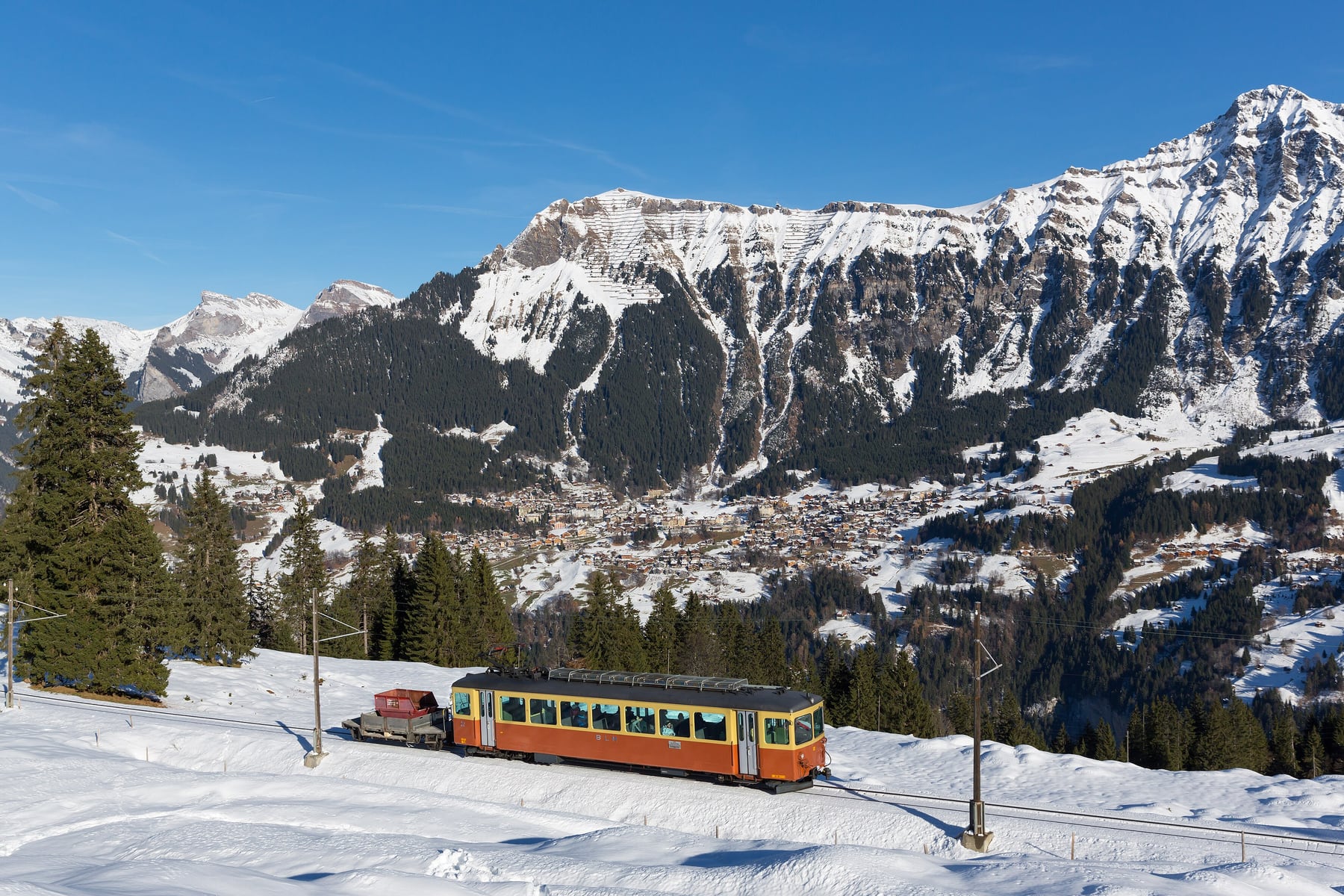
Lauterbrunnen to Mürren
Kabelleger / David Gubler / Wikimedia Commons · CC BY-SA 3.0 · cropped
- Distance1.4 km by cableway and 4.27 km by rail, Lauterbrunnen to Mürren
- DurationAbout 20 minutes · every 15 or 30 minutes
- Best seasonAll year · winter for the snow and the Inferno, summer for the walks
Introduction
For almost twenty years the railway to Mürren ran in summer only. Henry Lunn tried to open the village to winter sport in 1909, and a quarrel between the hotels and the railway held the season up; when the trains finally ran through the winter of 1910–11, the British came for the snow. Within twenty years Mürren had given ski racing the slalom and one of its oldest races. Henry's son Arnold Lunn set the first slalom on its nursery slopes in January 1922, founded the Kandahar Ski Club there in 1924, and in 1928 started the Inferno, a race from the summit of the Schilthorn whose first course ran along the railway for a stretch. In 1931 the first Alpine World Ski Championships were held in Mürren.
The village is still reached the way those skiers came. From Lauterbrunnen, a cableway climbs almost 700 metres up the cliff to Grütschalp, and a metre-gauge railway of 4.27 kilometres runs on along the top of the cliffs to car-free Mürren, facing the Eiger, Mönch and Jungfrau the whole way. It is also the village's supply line: about 5,000 tonnes of goods a year ride up on low wagons that the trains push ahead of them.
Trains run every 15 or 30 minutes and the ride takes about 20 minutes. A single costs CHF 11.80, no reservation is needed, and the Swiss Travel Pass covers it in full. The line closes for maintenance twice a year.
The Journey
The journey starts in Lauterbrunnen, at the valley station opposite the platforms of the Berner Oberland-Bahn from Interlaken and the Wengernalpbahn to Wengen and Kleine Scheidegg. A single cabin, painted in the railway's colours since its renewal in 2026, carries up to 135 passengers on its upper deck and up to six tonnes of goods below them, and climbs 686 metres to Grütschalp in four minutes. Below it are the remains of the funicular it replaced in 2006: the slope beneath that track had slid about two and a half metres sideways and three metres downhill since it was built, and the cableway was planned so that its pylons stand on stable ground.
The goods and the train
At Grütschalp the passengers walk across to the train, and the freight takes its own route. An electric transfer machine lifts each load from the cabin onto the railway's low goods wagons, which the trains push ahead of them to Mürren. Goods of every kind travel this way: on average about 5,000 tonnes a year, and more when Mürren is building.
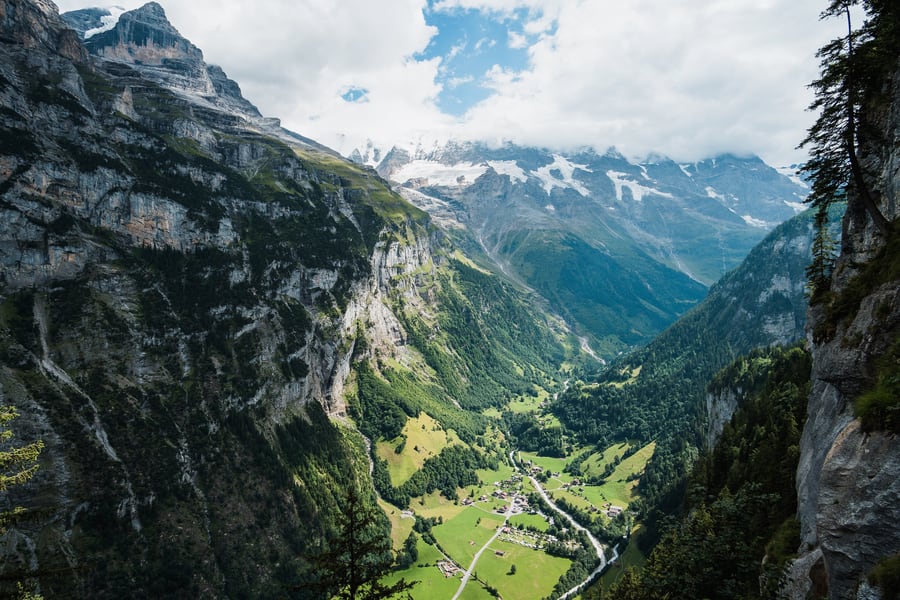
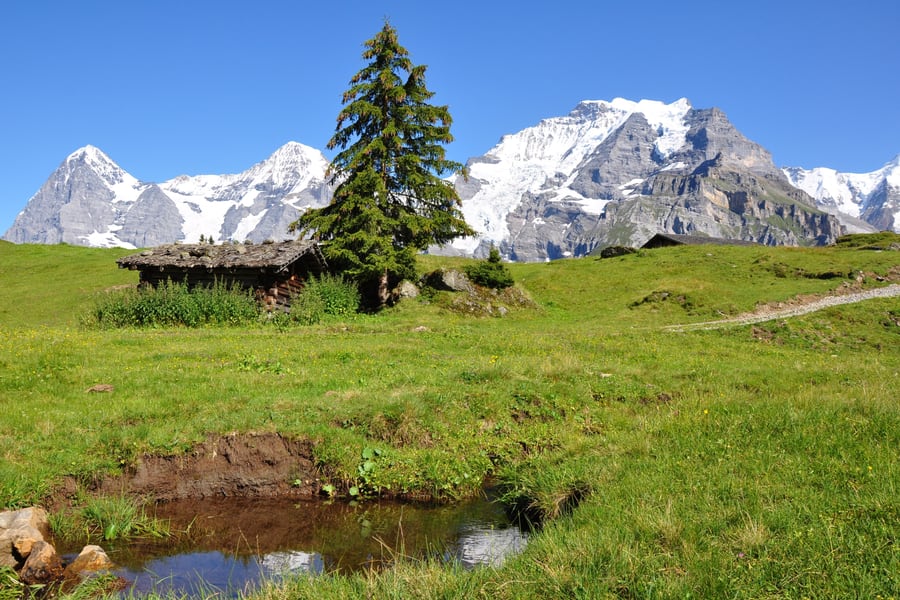
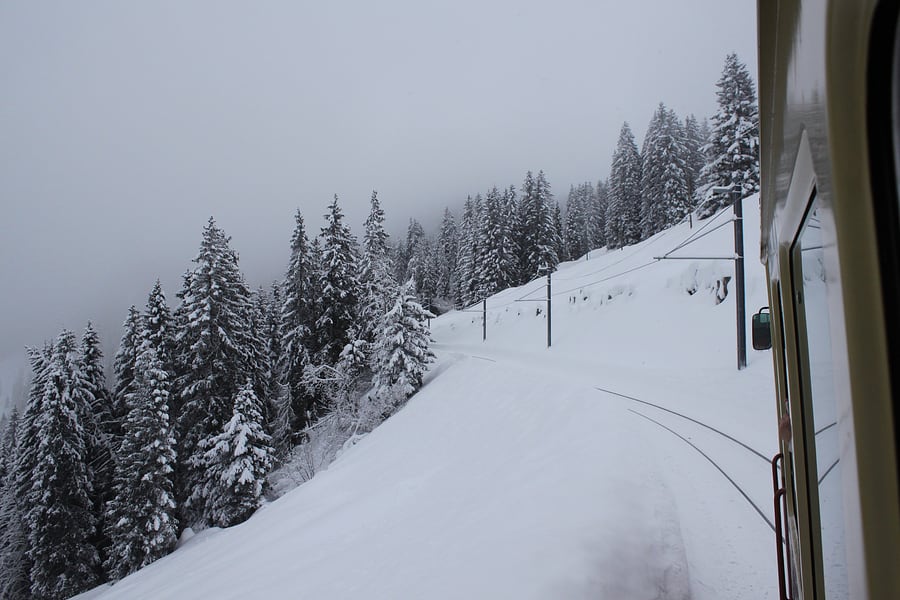
The railway itself is a single track of 4.27 kilometres, never steeper than 50 per mille and worked by adhesion alone, with no rack. It runs almost level along the top of the cliffs, through woods and across open alp, with the Lauterbrunnen valley below and the Eiger, Mönch and Jungfrau facing the train the whole way. Trains cross at Winteregg, the one intermediate station, and reach Mürren eleven minutes after leaving Grütschalp.
Three generations of trains
When the line opened on 14 August 1891 it was one of the first electric railways in Switzerland. Each train was a small locomotive and one coach, and the trains left both ends at once and crossed at Winteregg, much as the cars of a funicular do. Motor coaches took over before the First World War, and from 1967 three Be 4/4 railcars in red and cream worked the line for well over half a century. Between 2020 and 2024 the railway was renewed from end to end: new track, enlarged stations at Grütschalp, Winteregg and Mürren, and three low-floor Stadler Be 4/6 trains, with low-floor goods wagons to match.
Beyond Mürren
Mürren is the start of more mountain transport. A funicular climbs to the Allmendhubel in four minutes, and the cableway from Stechelberg continues up through Birg to the Schilthorn, where the Inferno starts. On the far side of the valley, the Jungfrau Railway climbs through the Eiger to the Jungfraujoch, and from Wilderswil, near Interlaken, the Schynige Platte Railway climbs to its alpine garden.
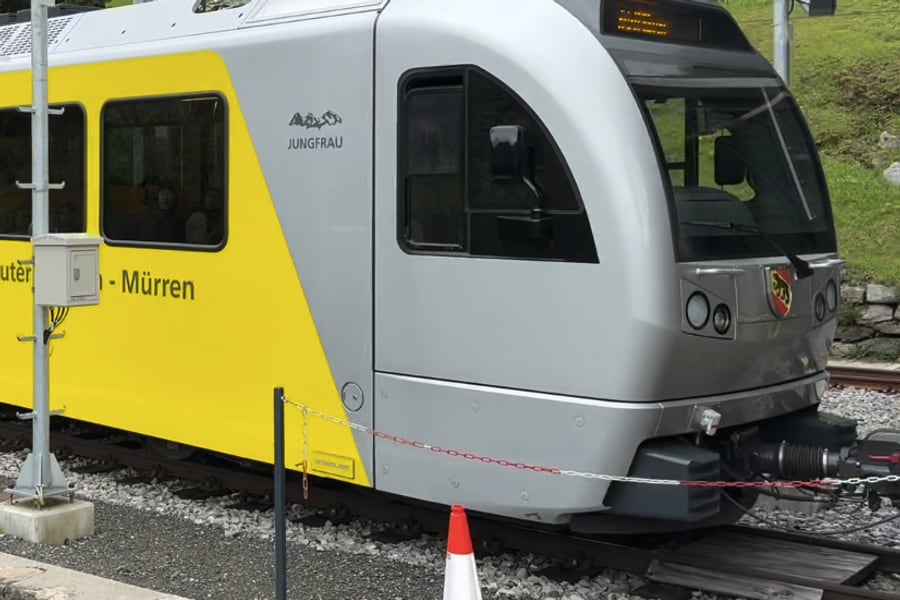
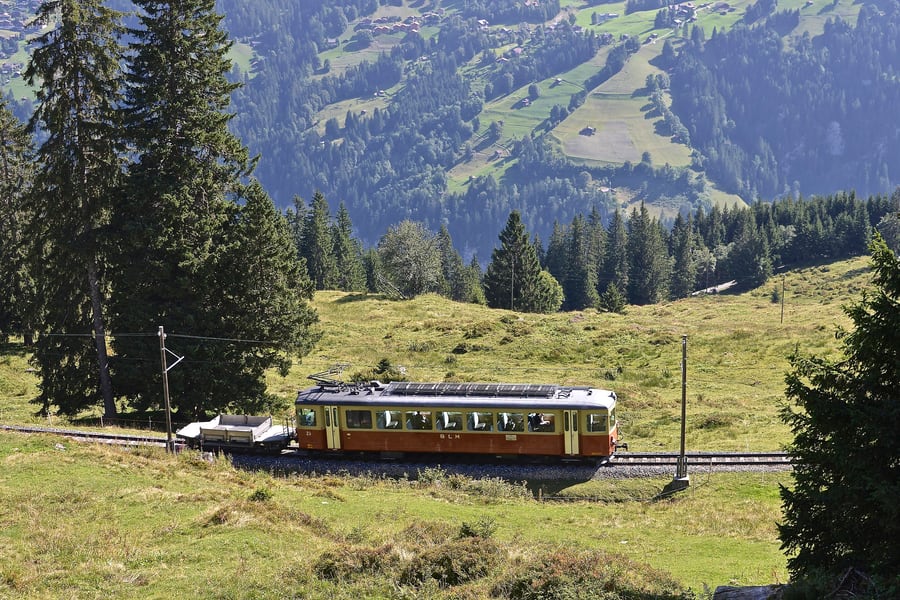
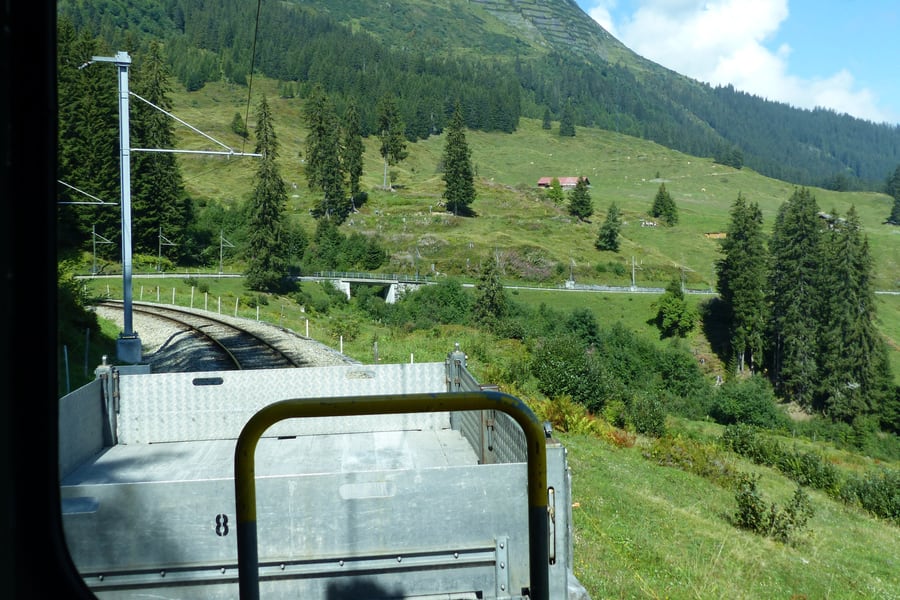
Along the route
 Chensiyuan / Wikimedia Commons · CC BY-SA 4.0 · cropped
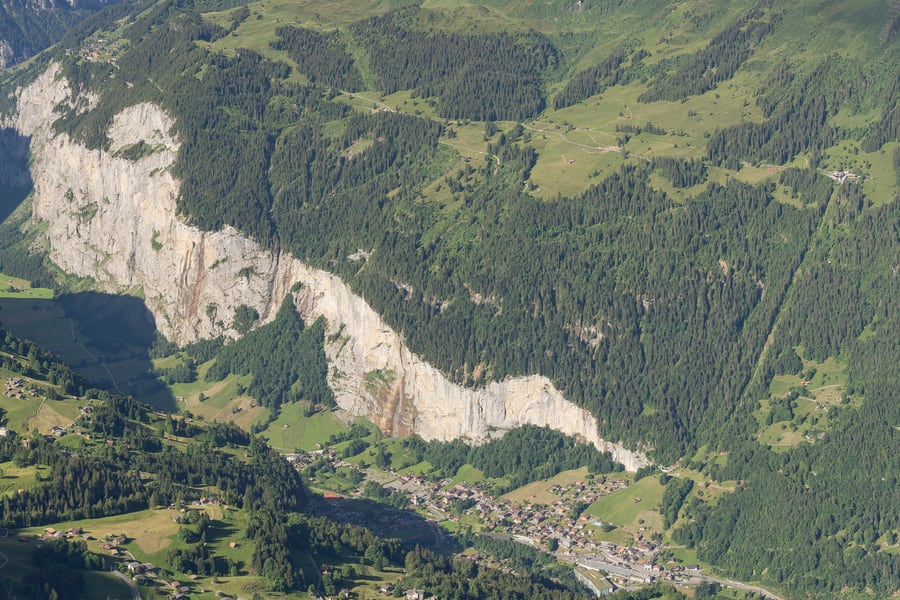
Up the cliff to Grütschalp
From the valley station opposite Lauterbrunnen's main platforms, a cableway climbs 686 metres to Grütschalp in four minutes. It replaced a funicular in 2006, after the slope beneath the old track had started to slide.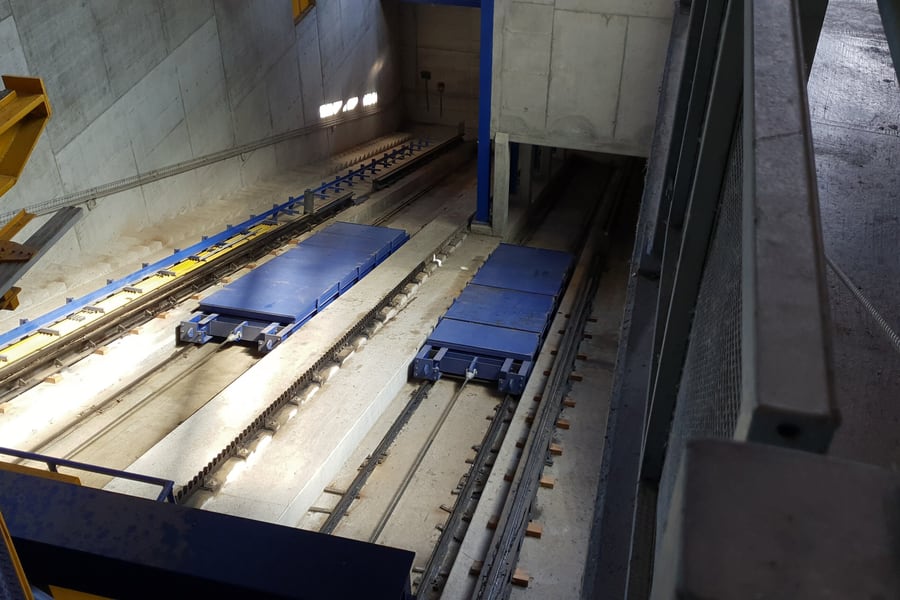 Chris j wood / Wikimedia Commons · CC BY-SA 4.0 · cropped
The goods transfer
The cabin's lower deck carries up to six tonnes of freight. At Grütschalp an electric machine lifts each load onto the railway's low goods wagons, about 5,000 tonnes a year, bound for a village without cars.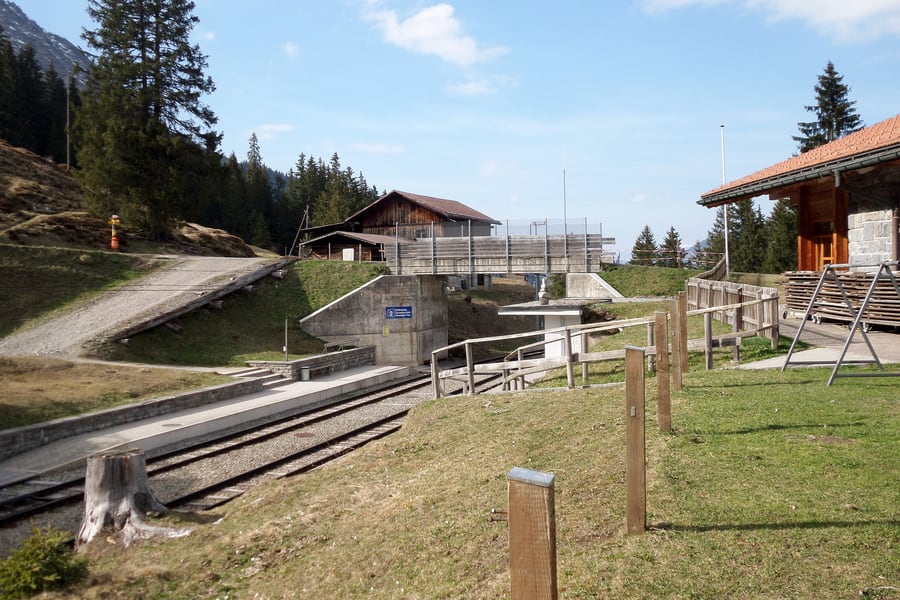 Rosser1954 / Wikimedia Commons · CC BY-SA 4.0 · cropped
Along the edge to Winteregg
The single track runs along the top of the cliffs, with the Eiger, Mönch and Jungfrau across the valley. Trains cross at Winteregg, the only intermediate station, beside a restaurant and a playground.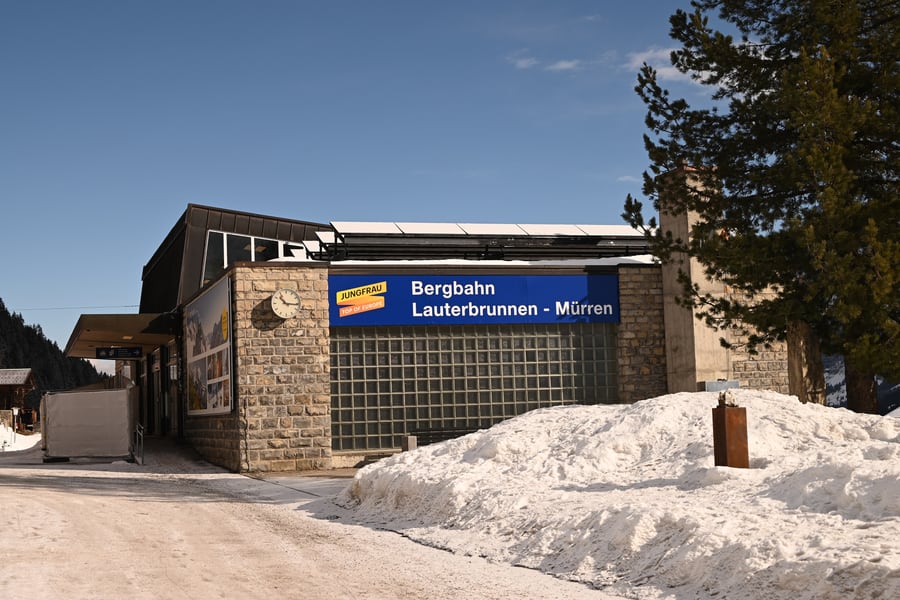 Pccoops / Wikimedia Commons · CC BY 4.0 · cropped
Into Mürren
Eleven minutes after Grütschalp the train runs past the goods depot and into Mürren station, renovated and enlarged when the line was renewed between 2020 and 2024.A bit of history
Culture & experiences along the way
 Gdr / Wikimedia Commons · CC BY-SA 3.0 · cropped
The first slalom
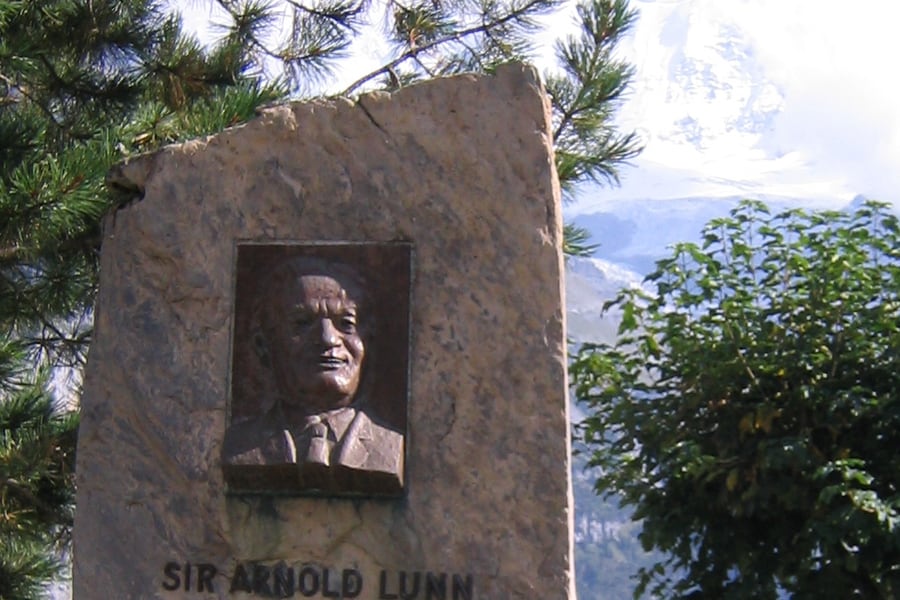
On 21 January 1922 Arnold Lunn set pairs of flags on Mürren's nursery slopes and timed the skiers through them: the first slalom. He founded the Kandahar Ski Club here in 1924 and brought the first Alpine World Ski Championships to Mürren in 1931. A stone with his portrait stands in the village.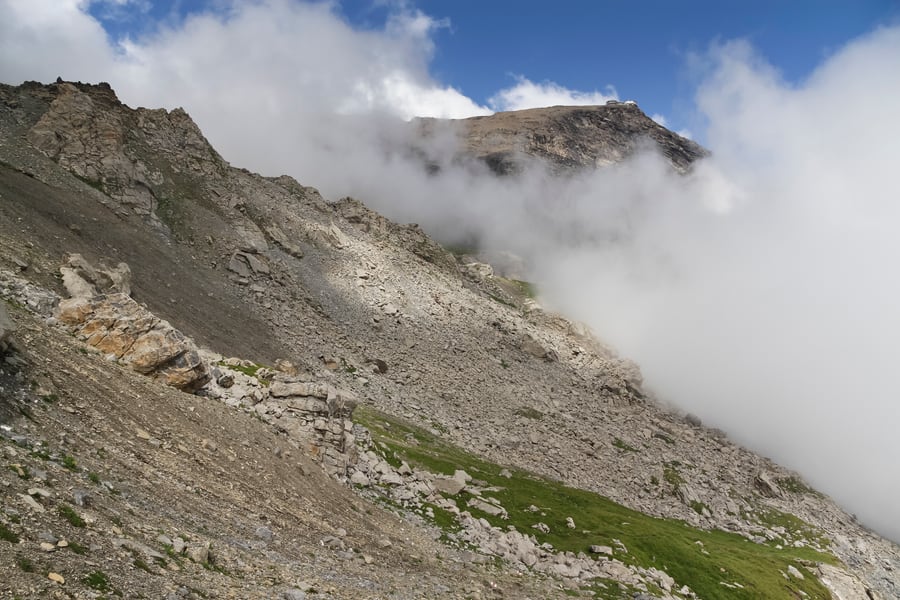 Ximonic (Simo Räsänen) / Wikimedia Commons · CC BY-SA 3.0 · cropped
The Inferno
Each January about 1,850 amateurs race down from the Schilthorn in the Inferno, first run on 29 January 1928 by seventeen skiers who set off together from the summit. That first course included a cross-country stretch along the railway. The 83rd race is on 20–23 January 2027.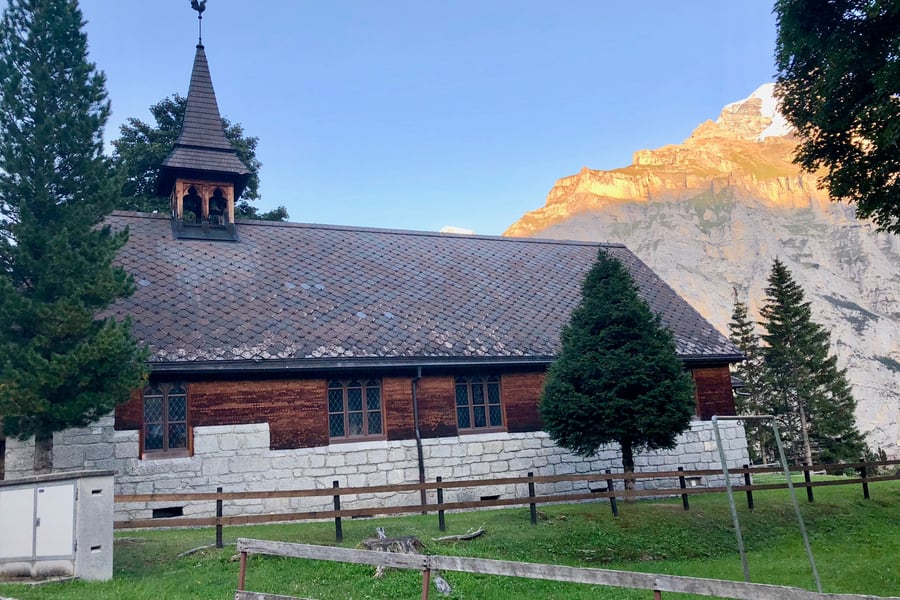 Frank Reeder / Wikimedia Commons · CC BY-SA 4.0 · cropped
The English church
British visitors filled Mürren's hotels long before the railway, and in 1878 they were given a church of their own, designed by the London architect G. E. Street in local stone and wood. It never had a patron saint. Since 1982 it has belonged to the Swiss Reformed Church.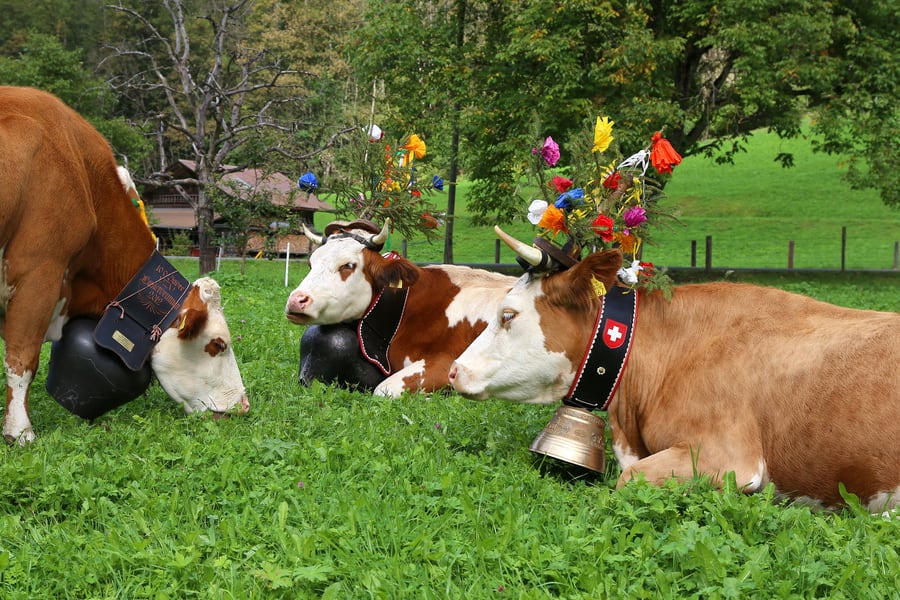 Evelyscher / Wikimedia Commons · CC BY-SA 4.0 · cropped
The cows come down
In mid-September the herds return from the summer pastures above Mürren in the Alpabzug, the cows decorated with flowers, ribbons and big bells, and driven down the mountain to the village. In the first weekend of August the village festival has its own procession.Timetables
The cableway and the train run as one service, timed to connect at Grütschalp, every 30 minutes in the early morning and evening and every 15 minutes from about 09:00 to 17:00. The same timetable runs on weekdays and at weekends, and it is unchanged in the timetable that starts on 13 December 2026. There is one class, and no reservations: buy a ticket and get on. Allow about 20 minutes from Lauterbrunnen to Mürren, including the change of vehicle.
The line closes for maintenance twice a year. In 2026 it was shut from 13 April to 10 July, while the cableway was renewed, and from 26 October to 6 November. During a closure, and after the last train, Mürren is reached from Lauterbrunnen by bus to Stechelberg and the Schilthorn cableway, at a higher fare.
Times below are for the 2026 and 2027 timetables, read from the Swiss national timetable in November 2026. Check them before travelling on the Jungfrau Railways (opens in a new tab) site or at sbb.ch (opens in a new tab).
Lauterbrunnen to Mürren
| Lauterbrunnen | Grütschalp | Winteregg | Mürren |
|---|---|---|---|
| 06:06 | 06:10 / 06:13 | 06:18 | 06:24 |
| 08:36 | 08:40 / 08:43 | 08:48 | 08:54 |
| 09:06 | 09:10 / 09:13 | 09:18 | 09:24 |
| …every 15 minutes… | |||
| 17:06 | 17:10 / 17:13 | 17:18 | 17:24 |
| 18:36 | 18:40 / 18:43 | 18:48 | 18:54 |
| 20:30 | 20:34 / 20:36 | 20:41 | 20:48 |
Cableways leave Lauterbrunnen at :06 and :36 past the hour all day, with extra ones at :21 and :51 between 09:00 and 17:00. The 20:30 is the last.
Mürren to Lauterbrunnen
| Mürren | Winteregg | Grütschalp | Lauterbrunnen |
|---|---|---|---|
| 05:58 | 06:04 | 06:09 / 06:13 | 06:17 |
| 08:58 | 09:04 | 09:09 / 09:13 | 09:17 |
| 09:28 | 09:34 | 09:39 / 09:43 | 09:47 |
| …every 15 minutes… | |||
| 17:28 | 17:34 | 17:39 / 17:43 | 17:47 |
| 18:58 | 19:04 | 19:09 / 19:13 | 19:17 |
| 19:28 | 19:34 | 19:39 / 19:43 | 19:47 |
Trains leave Mürren at :28 and :58 past the hour, and every 15 minutes from 09:28 to 17:28. The last is the 19:28, or the 19:58 from 20 December to 12 April and from 11 July to 25 October.
Connections
Lauterbrunnen is reached from Interlaken Ost on the Berner Oberland-Bahn, and an underpass leads from its platforms to the cableway station. From Mürren the cableway runs on to Birg and the Schilthorn, and down through Gimmelwald to Stechelberg, for a round trip back to Lauterbrunnen by bus.
Tickets
The line is part of the Swiss national fare network, so one ticket covers the cableway and the train. Lauterbrunnen to Mürren costs CHF 11.80 single, or CHF 5.90 with a Half Fare Travelcard; there is one class, no reservation and no supplement. Tickets are sold at the valley station, from machines and in the SBB app, and through tickets from anywhere in Switzerland include the line.
For a few days in the region, the Jungfrau Travel Pass covers this line together with the Schynige Platte Railway, Grindelwald-First, Harder Kulm and the lake steamers, from CHF 210 for three days. Fares read from sbb.ch (opens in a new tab) and jungfrau.ch (opens in a new tab) in November 2026.
Book your tickets
Lauterbrunnen – Mürren single
CHF 11.80 · CHF 5.90 with a Half Fare Travelcard · free with a Swiss Travel Pass or GA
Cableway and train on one ticket, one class only, with no reservation.
Book Tickets (opens in a new tab, on sbb.ch)via sbb.chJungfrau Travel Pass
3 to 8 days · from CHF 210, or CHF 165 with a Half Fare Travelcard
Unlimited travel on the region's railways, cableways and lake steamers, Lauterbrunnen–Mürren included.
Compare Passes (opens in a new tab, on jungfrau.ch)via jungfrau.chRail Passes
Unlike most mountain lines in the Jungfrau region, this one is covered in full by the national passes. The cableway and the railway are public transport ordered by the canton of Bern for a village without cars, so they sit inside the national network.
Swiss Travel Pass and GA Travelcard
Free. The Jungfrau Railways state that the Swiss Travel Pass gives free travel to Wengen, Mürren and Grindelwald, and that the GA Travelcard is valid from Interlaken Ost to Mürren via Grütschalp. A Swiss Travel Pass Flex must have a travel day validated. A Half Fare Travelcard or Swiss Half Fare Card halves the fare.
Interrail and Eurail
Included. The Jungfrau Railways list Lauterbrunnen–Grütschalp–Mürren among the public-transport routes that need either a separate ticket or one validated day of an Interrail or Eurail pass. With a travel day in use, the ride is covered.
Is a pass worth it here?
Not for this journey alone: the single fare is CHF 11.80. A Swiss Travel Pass earns its keep on the way to Lauterbrunnen and on the region's other lines, where it usually gives a discount rather than free travel. For several days around Lauterbrunnen, the Jungfrau Travel Pass covers far more of the region's mountain railways.
Pass conditions checked in November 2026 against the Jungfrau Railways' own pages. Conditions change with each season, and the pass issuer's page is the one that binds.
Places to Visit
The line links a valley of waterfalls with a village of skiers' history, and Mürren is the start of more: a funicular to its own small mountain, a walk down to a smaller car-free village, and a cableway to a summit restaurant above the clouds.
 JoachimKohler-HB / Wikimedia Commons · CC BY-SA 4.0 · cropped
Lauterbrunnen
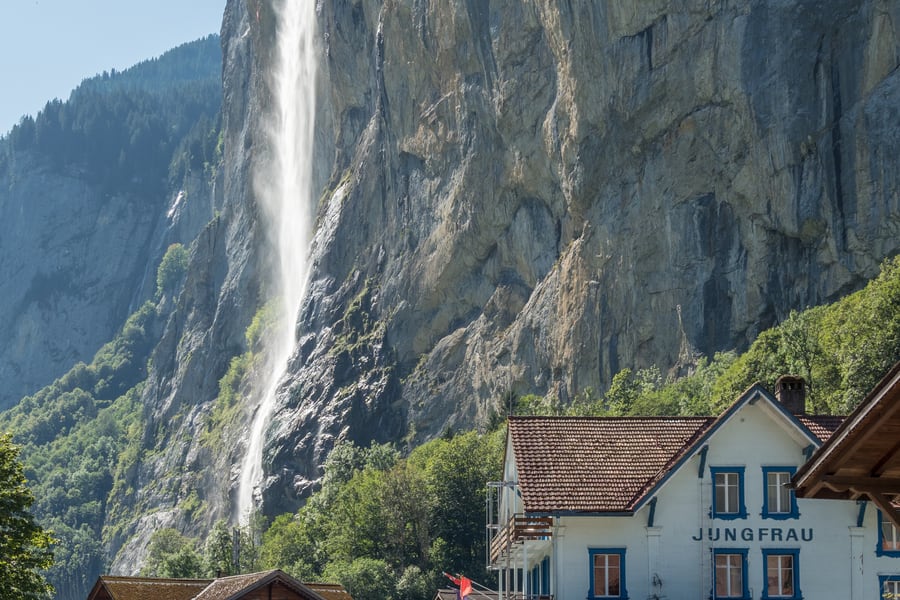
The village lies on the floor of a glacial valley of sheer cliffs, with the Staubbach Falls dropping about 300 metres behind its houses, a fall that inspired Goethe. From May to October a gallery leads up behind the water. The Wengernalpbahn to Wengen and Kleine Scheidegg leaves from the main station, opposite the cableway.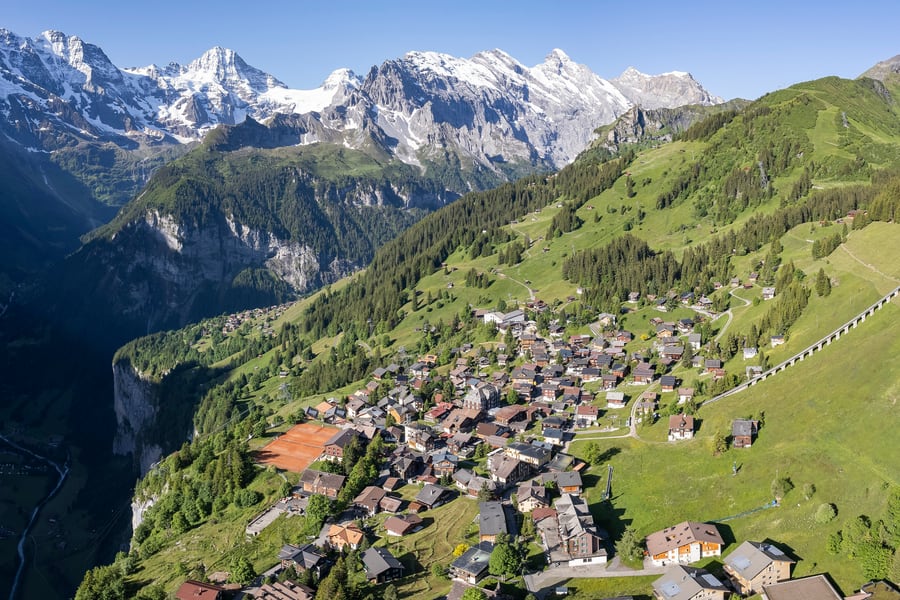 Chensiyuan / Wikimedia Commons · CC BY-SA 4.0 · cropped
Mürren
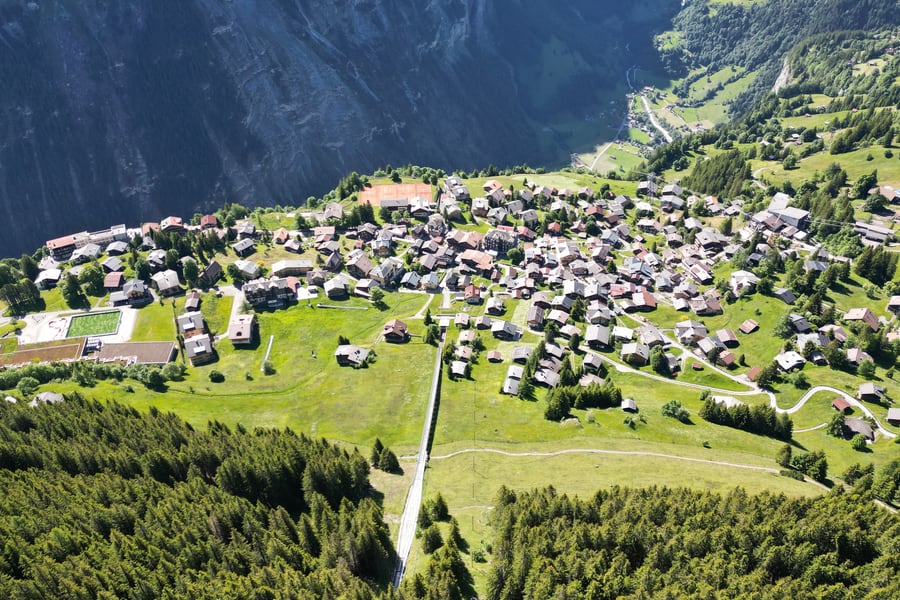
Mürren spreads along a sunny terrace above the cliffs, a village of chalets and hotels without cars, facing the Eiger, Mönch and Jungfrau across the valley. Its first hotel opened in the 1850s, and the British came in summer for decades before the trains ran in winter.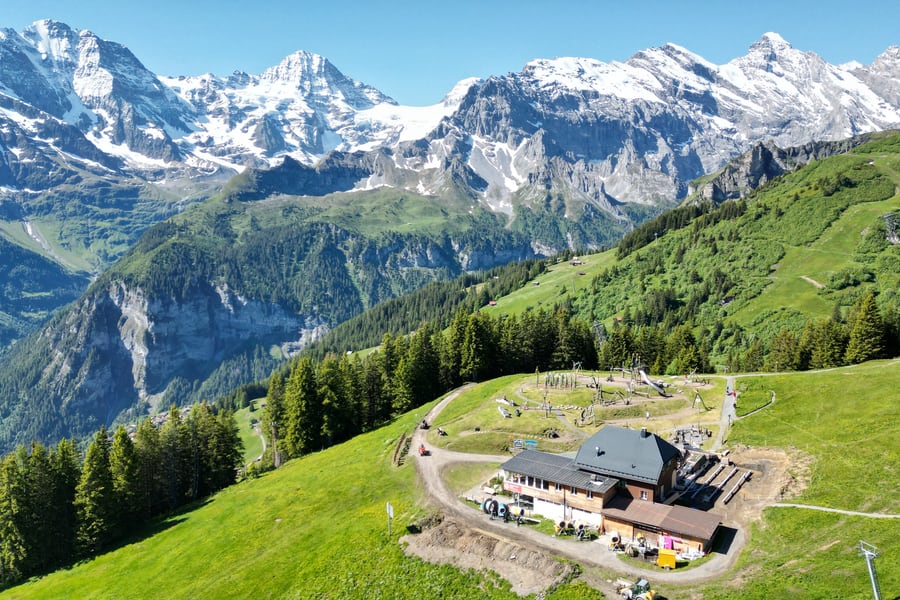 Bob Tan / Wikimedia Commons · CC BY-SA 4.0 · cropped
Allmendhubel
A funicular climbs from the top of the village to the Allmendhubel, Mürren's own mountain, with a panorama restaurant, the Flower Park adventure playground and the start of many walks. It closes for maintenance from 19 October to 11 December 2026.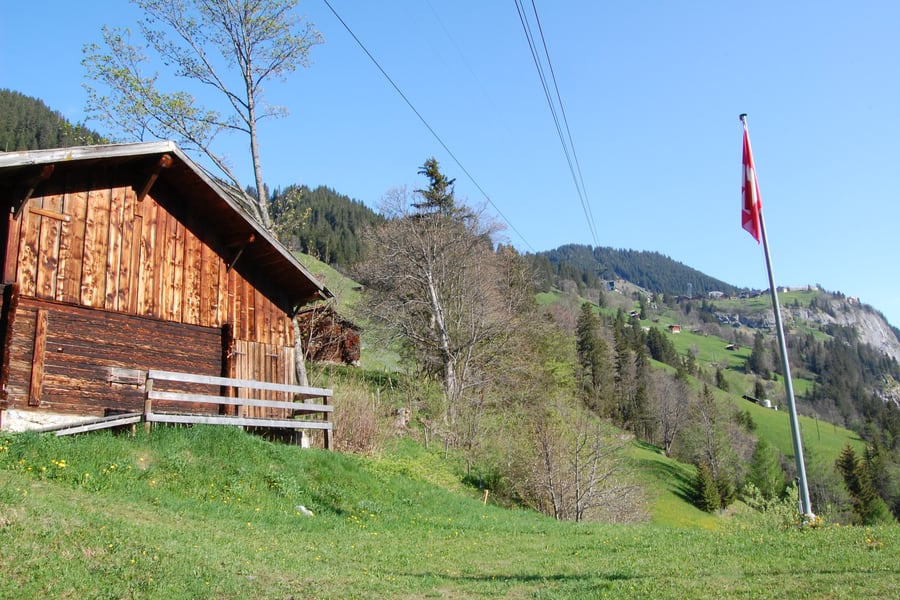 edwin.11 / Wikimedia Commons · CC BY 2.0 · cropped
Gimmelwald
Like Mürren, Gimmelwald has no cars. The smaller village sits at 1,367 metres among flower-hung chalets, cheese stores and grazing cattle, at the middle station of the cableway from Stechelberg to Mürren. Walk down from Mürren and ride back up. Leonhard Lenz / Wikimedia Commons · CC0 · cropped
The Schilthorn
The cableway from Mürren continues to the Schilthorn, opened in 1967 as the longest aerial cableway in the world. At the top, Ernst Feuz of Mürren built the first revolving restaurant in the world at 3,000 metres, Piz Gloria, which later appeared in a James Bond film. The Inferno starts here.Where to Sleep
Lauterbrunnen, on the valley floor, has the most choice and the easiest connections to Interlaken, Wengen and Grindelwald. To wake up opposite the Eiger, Mönch and Jungfrau, stay in Mürren: the village is quiet once the last train has gone down, and several of its hotels close between the summer and winter seasons.
The places below keep their own websites and take direct bookings.
Where to stay
Hotel Silberhorn
In Lauterbrunnen, near the station
A hotel in a quiet spot off the main road, about 150 metres from the station.
Check Availability (opens in a new tab, on silberhorn.com)via silberhorn.comHotel Eiger
In Mürren, facing the Eiger, Mönch and Jungfrau
A hotel with mountain views from its rooms, its restaurant and its indoor pool, closed between seasons.
Check Availability (opens in a new tab, on hoteleiger.com)via hoteleiger.comHotel Alpenruh
In Mürren, beside the Schilthorn cableway
A hotel of 26 rooms and a restaurant seating 100, next to the station of the Schilthorn cableway.
Check Availability (opens in a new tab, on alpenruh-muerren.ch)via alpenruh-muerren.chQuestions or corrections
Planning this trip and stuck on something, or spotted a time, fare or detail that has changed? Send us a message about Lauterbrunnen to Mürren. We read every one, and we update this page when something has changed.