Jungfrau Railway
Maria Feofilova / Wikimedia Commons · CC BY-SA 4.0
- Distance9.3 km
- DurationAbout 35 minutes each way
- Best seasonYear-round — go on a clear day for the views
Introduction
The Jungfrau Railway climbs to a place that sounds made up: the "Top of Europe," a railway station at 3,454 metres, drilled into a saddle of rock and ice between two of the most feared mountains in the Alps. It is the highest railway in Switzerland and in Europe, and getting there is one of the great feats of mountain engineering — because for most of the way, the train is inside the Eiger.
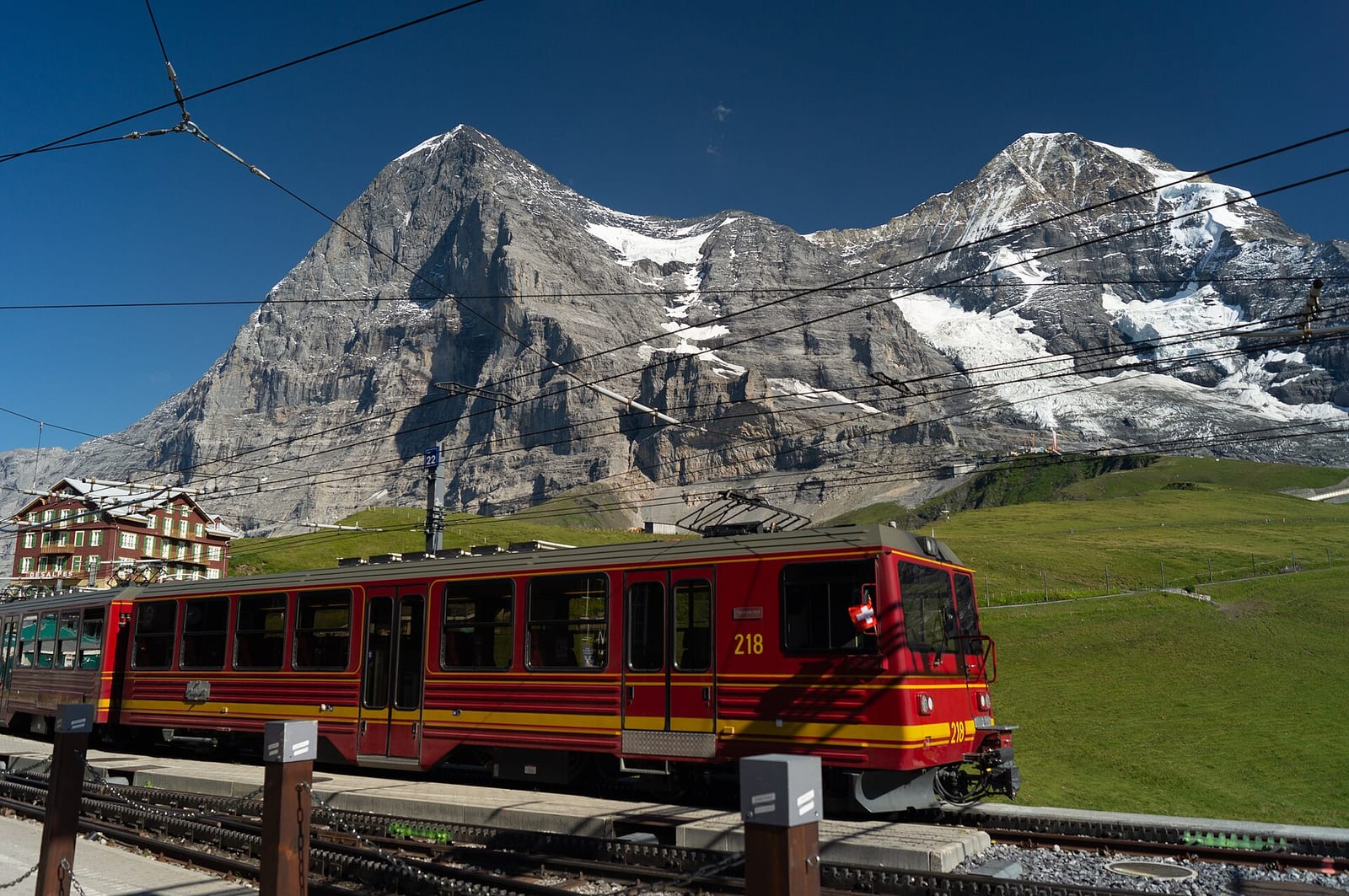
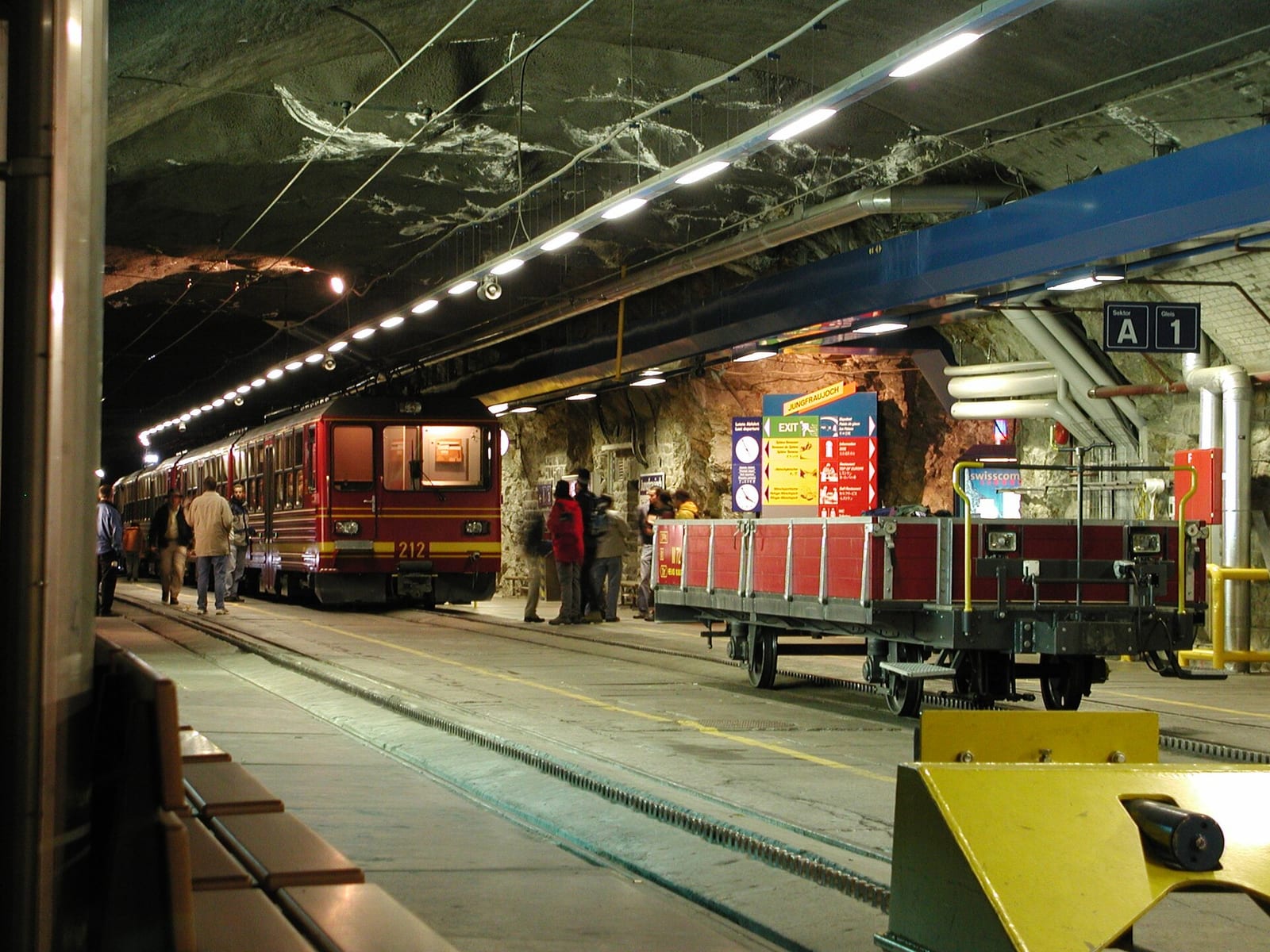
From the base station at Kleine Scheidegg, itself already the highest railway starting point in Europe, the little cog train sets off across an open alpine meadow beneath the notorious north face of the Eiger. Then it dives into the mountain and spends the next twenty-odd minutes climbing through a tunnel bored straight through the Eiger and the Mönch, before surfacing at the Jungfraujoch into a world of glaciers, snow and thin, dazzling air — even in the middle of summer.
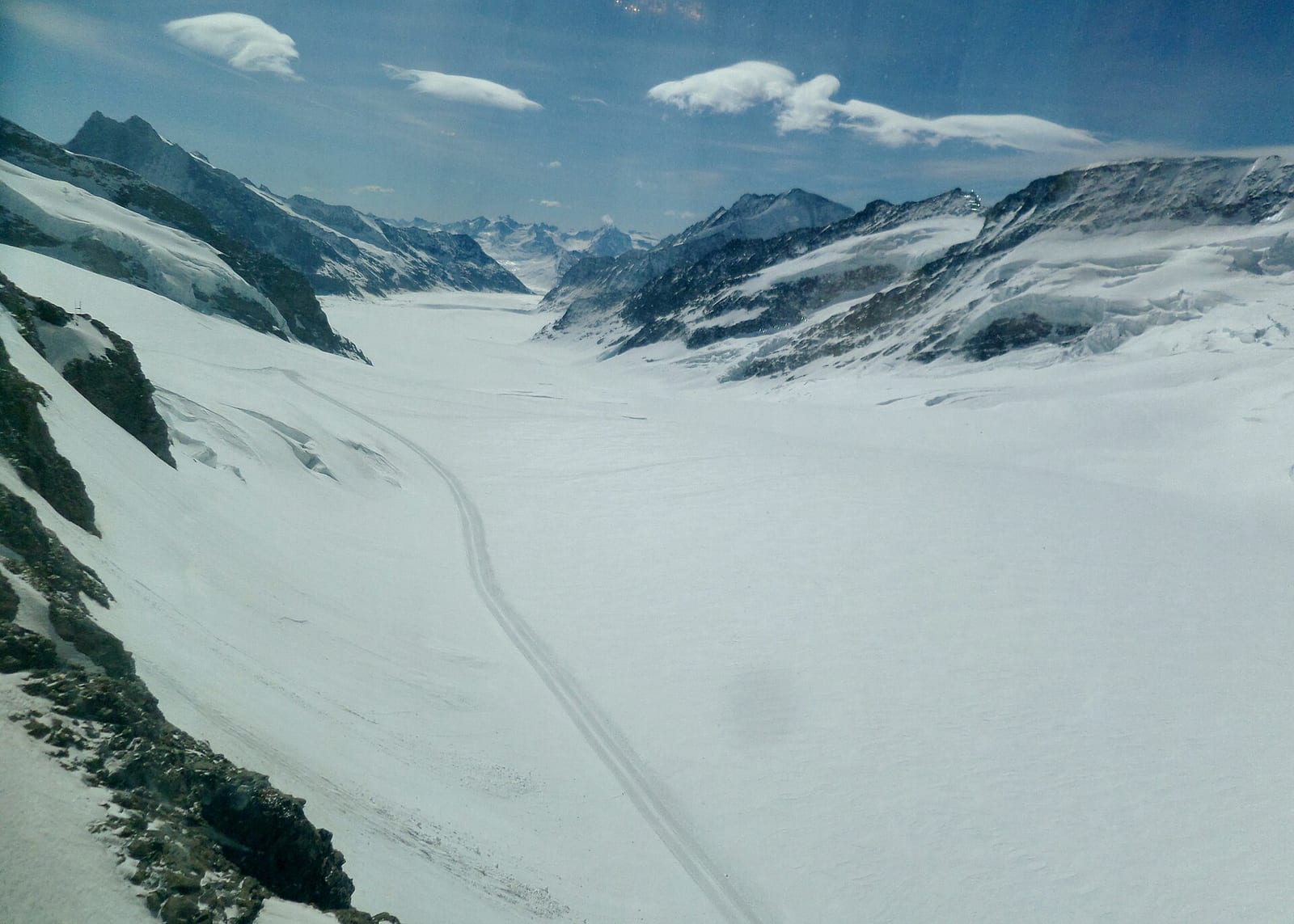
At the top wait the Sphinx viewing terrace, an ice palace carved into the glacier, and the astonishing sweep of the Great Aletsch Glacier, the largest in the Alps.
The Journey
The Jungfrau Railway is short — just 9.3 kilometres — but it climbs nearly 1,400 metres on the way, on a metre-gauge Strub rack with gradients of up to 25%. It is one of only a handful of railways in the world powered by three-phase current, which is why its trains carry two pantographs on the roof.
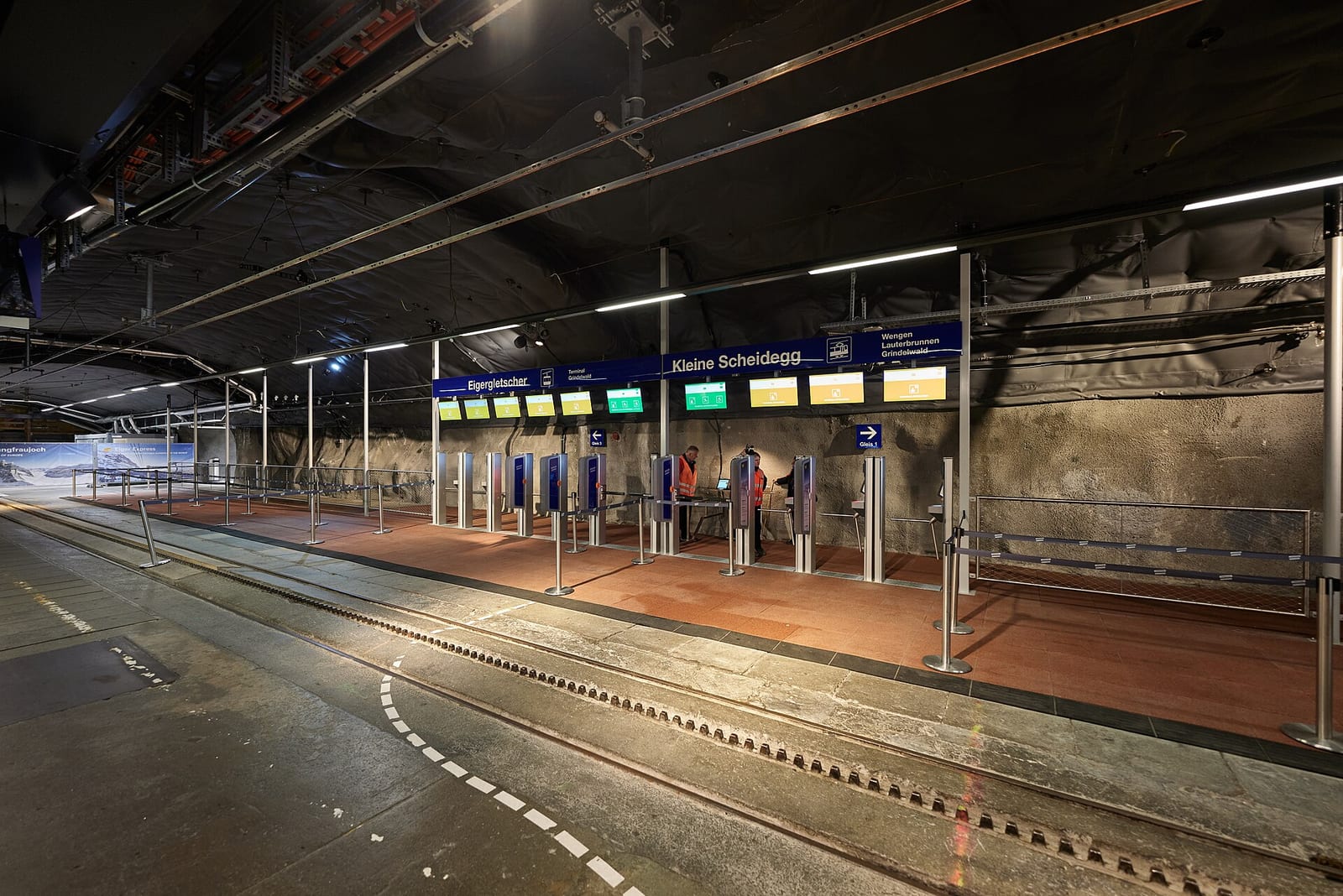
The journey begins at Kleine Scheidegg (2,061 m), where the Jungfrau Railway connects with the Wengernalp cog trains that grind up from Grindelwald and Lauterbrunnen. From here the line runs briefly in the open — the best chance to see the Eiger, Mönch and Jungfrau lined up above you — before entering the Jungfrau Tunnel at Eigergletscher. From that point on, roughly 80% of the whole railway is underground.
Two things break the long climb through the rock:
- Eismeer (3,158 m) — a station deep inside the tunnel, where windows were blasted into the east face of the Eiger. Trains pause here so passengers can step out and look across a frozen "sea of ice."
- The breakthrough of 1912 — it took sixteen years to build, and the industrialist behind it, Adolf Guyer-Zeller, died in 1899 without seeing his tunnel finished. The crew finally broke through to the Jungfraujoch on 21 February 1912.
At the top, the Jungfraujoch station opens onto a research station, the Sphinx Observatory (reached by a fast lift), the Ice Palace, and terraces looking down the Great Aletsch Glacier. Since a change of rolling stock in 2016, the climb from Kleine Scheidegg takes about 35 minutes — a remarkably quick way to reach the roof of the continent.
Along the route
Roy Egloff / Wikimedia Commons · CC BY-SA 4.0Jungfraujoch — Top of Europe
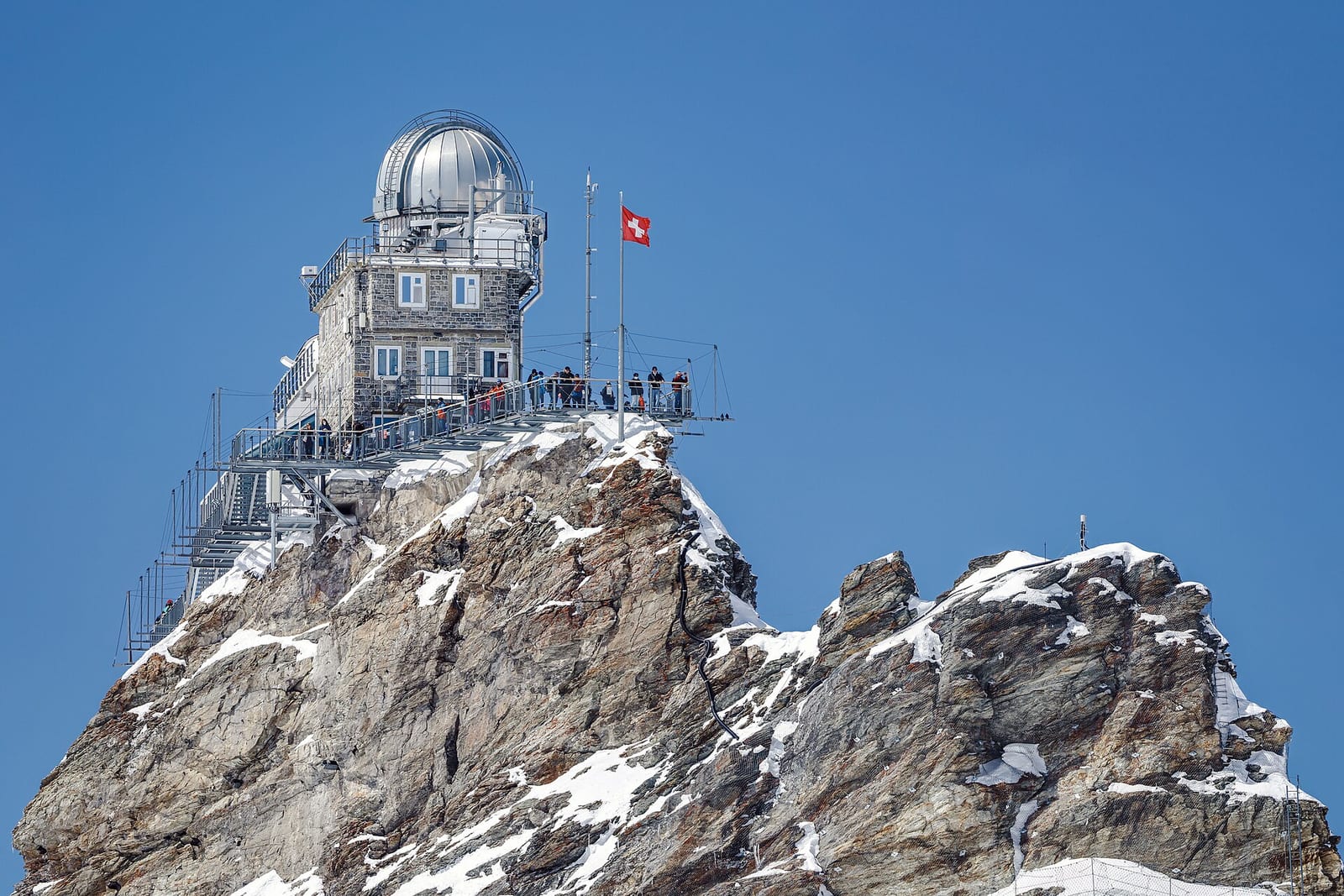
The end of the line is a station at 3,454 metres, a lift up to the Sphinx viewing terrace, an Ice Palace carved into the glacier and a snow plateau — all well above the perennial snow line, on the saddle between the Mönch and the Jungfrau.Rosser1954 / Wikimedia Commons · CC BY-SA 4.0The Great Aletsch Glacier
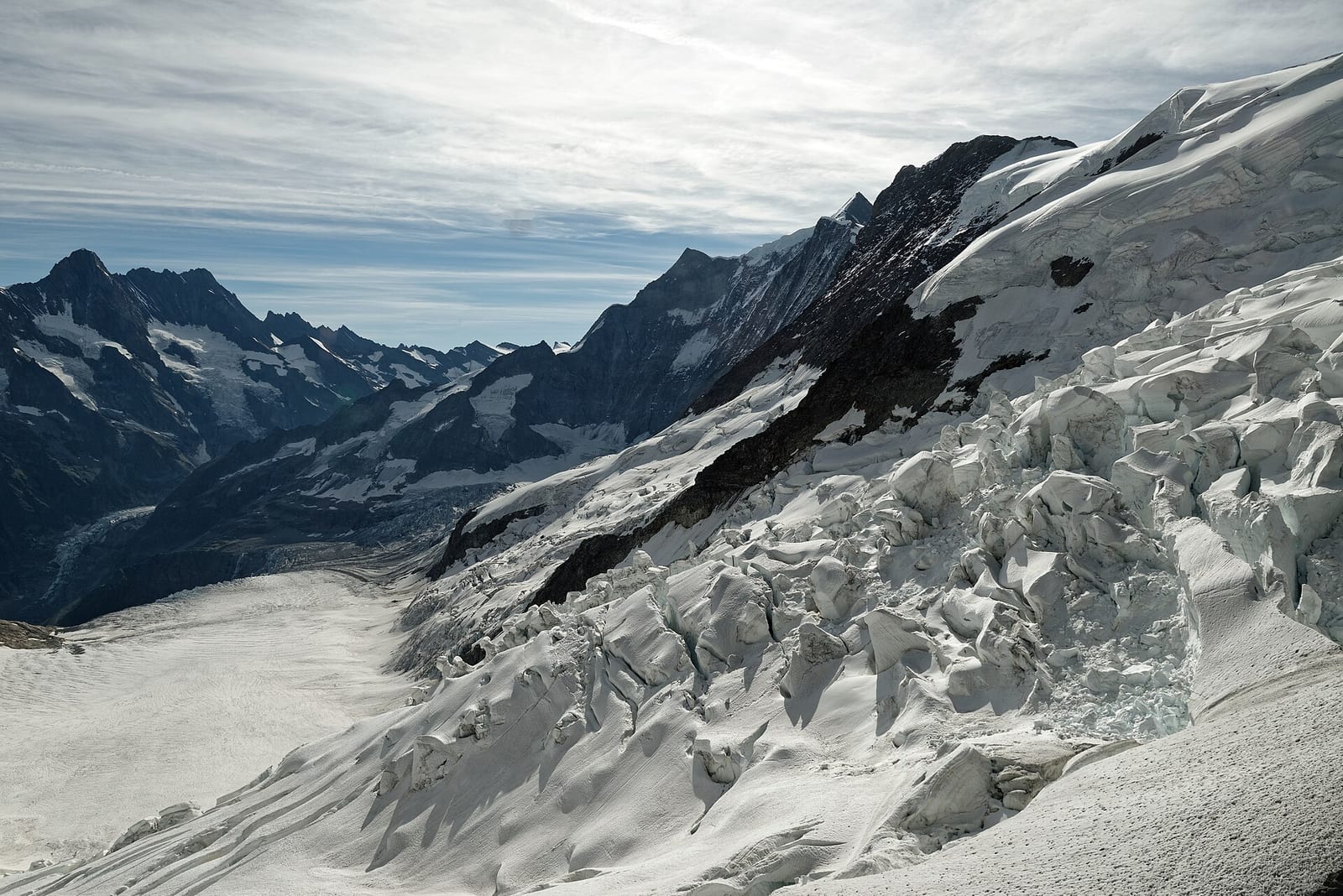
From the top the largest glacier in the Alps unrolls to the south — a 20-kilometre river of ice, part of a UNESCO World Heritage region, that you look straight down onto from the terraces.Marie-Lan Nguyen / Wikimedia Commons · CC BY 4.0The Eismeer window stop
Halfway up the tunnel the train pauses at Eismeer, where windows were blasted into the east face of the Eiger so passengers can step out and look across a frozen "sea of ice."A bit of history
Culture & experiences along the way
Adrian Sulc / Wikimedia Commons · CC BY-SA 3.0Boring through the Eiger
For most of the climb the train is inside the Jungfrau Tunnel, driven straight through the Eiger and Mönch — 80% of the line is underground — before emerging into a world of rock and ice at the top.Leonhard Lenz / Wikimedia Commons · CC0A century-old feat of engineering
It took sixteen years and cost the life of its visionary, Adolf Guyer-Zeller, before the tunnelling crew finally broke through to the Jungfraujoch in 1912. The line has climbed to the roof of Europe ever since.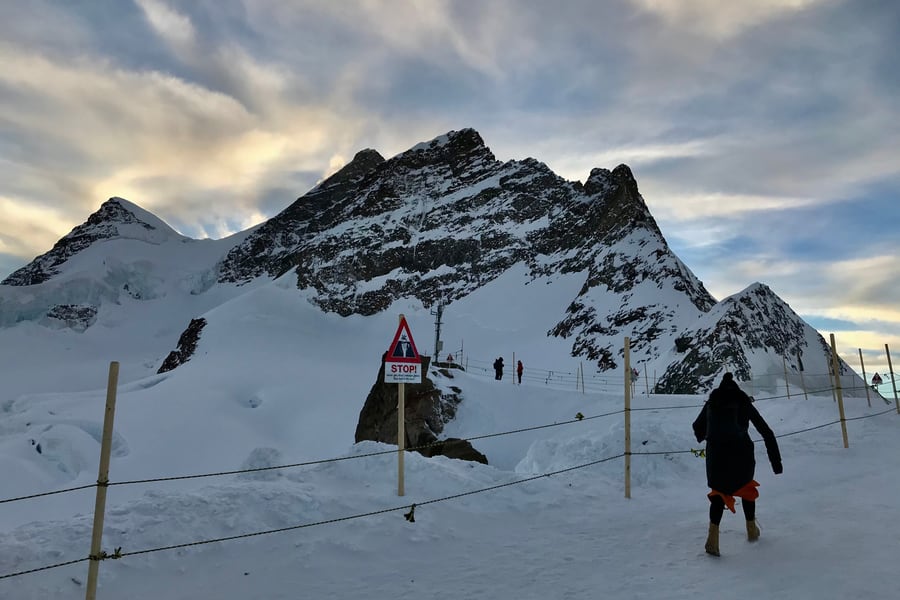 Ank Kumar / Wikimedia Commons · CC BY-SA 4.0 · cropped
Snow and ice, any month
The Jungfraujoch is open 365 days a year and lies above the snow line all year round, so even in high summer you step off the train into a glittering world of glacier and frost.Timetables
The Jungfraujoch is open 365 days a year, and trains climb at regular intervals — about every 30 minutes in the busy months. The first train leaves Interlaken Ost around 06:30, and the full trip up (via Grindelwald and the Eiger Express, or via Lauterbrunnen and Wengen) takes about 2 hours 7 minutes each way. Because everything depends on the weather at the top, check the live webcams and forecast, and go up early before cloud builds.
| Section | Mode | Approx. time |
|---|---|---|
| Grindelwald Terminal → Eigergletscher | Eiger Express gondola | ~15 min |
| Kleine Scheidegg → Jungfraujoch | Jungfrau Railway (cog) | ~35 min |
| Interlaken Ost → Jungfraujoch | combined | ~2 h 07 |
Good to know (2026):
- Seat reservations are compulsory from 1 May to 31 October 2026 — book a time slot.
- The Eiger Express is out of service 20–24 April and 9–20 November 2026 for maintenance; travel is then via Lauterbrunnen/Wengen.
- The last train down leaves the Jungfraujoch in the late afternoon — check the day's final descent before you go up.
Times and closures as of the 2026 timetable. Confirm current schedules and mountain conditions with the operator — see the Tickets section below.
Tickets
A trip to the Jungfraujoch is a mountain excursion rather than a point-to-point train fare, and it isn't cheap: a return ticket to the top starts at around CHF 120 and rises with distance and season. The Swiss Travel Pass and some regional passes give a useful discount on the upper sections rather than free travel all the way, so it pays to check what your pass covers before buying.
There are two ways up. The quickest is the Eiger Express tricable gondola from Grindelwald Terminal to the Eiger Glacier, then the Jungfrau Railway to the summit — about 45 minutes. The more classic route stays on rails the whole way, up the Wengernalp cog railway to Kleine Scheidegg and on through the Eiger. Both are booked through the Jungfrau Railways, and it's wise to reserve a timed departure in high season. Fares checked July 2026 against jungfrau.ch (opens in a new tab).
Book your tickets
Jungfraujoch return — via the Eiger Express
Grindelwald Terminal – Jungfraujoch
The fast way up: the Eiger Express tricable gondola from Grindelwald Terminal to the Eiger Glacier, then the Jungfrau Railway to the summit — about 45 minutes each way. Booked through the Jungfrau Railways.
Book Tickets (opens in a new tab, on Jungfrau Railways)via Jungfrau RailwaysJungfraujoch return — the classic railway
All the way by cog railway
Ride up entirely by rail — the Wengernalp cog railway to Kleine Scheidegg, then the Jungfrau Railway through the Eiger to the top. Slower, and the more romantic way to reach the Top of Europe.
Book Tickets (opens in a new tab, on Jungfrau Railways)via Jungfrau RailwaysRail Passes
No rail pass takes you to the Jungfraujoch for free. Every one of them stops at the foot of the mountain and turns into a discount for the climb — so the question is not whether to hold a pass, but which one, and whether a plain discounted ticket beats both.
Where the Swiss Travel Pass stops being free
The Swiss Travel Pass covers trains, buses and boats across Switzerland, which gets you to Interlaken, and on to Lauterbrunnen or Grindelwald, at no extra cost. Above that it changes character. SBB names only three mountains as included outright — Rigi, Stanserhorn and Stoos — and everything else, the Jungfraujoch included, becomes a discounted mountain excursion, quoted by SBB and by Switzerland Tourism as up to 50% off most mountain railways.
That is still worth having, because the mountain section is where the money is. But it is a different proposition from the Glacier Express or the GoldenPass, where a pass covers the whole ride.
The pass itself comes as 3, 4, 6, 8 or 15 consecutive days, or the same number of freely chosen days within a month on the Flex version. It is sold only to people living outside Switzerland and Liechtenstein, is checked against an original passport or ID card, and can be bought up to 11 months ahead. It also includes free entry to more than 500 museums and public transport in over 90 towns and cities. Under-25s pay about 30% less, and accompanied children aged 6 to under 16 travel free on the complimentary Swiss Family Card.
The regional pass, which is more specific and often better
If the Jungfrau region is where you are actually spending your time, the Jungfrau Travel Pass is built for it: unlimited travel on the region's trains, buses, boats and mountain railways for 3 to 8 days, from CHF 165, with extra days at CHF 45 (CHF 35 reduced) and children at CHF 30.
It handles the Jungfraujoch through a connecting ticket rather than including it — a 50% discount, which works out at from CHF 63 in the winter months and from CHF 89 between 1 May and 31 October, the summer figure including the CHF 10 seat reservation that is mandatory in that season. Children under 16 holding a Jungfrau Travel Pass get the connecting ticket free.
Two limits are worth knowing before buying. The local GrindelwaldBus routes are included, but the mountain services to Bussalp, Waldspitz and Grosse Scheidegg — lines 126, 127 and 128 — are not. And the pass covers the railways only, not the ski infrastructure, so it is not a substitute for a ski pass in winter.
When no pass is the answer
For a single visit with no other Swiss travel around it, the arithmetic often favours a discounted ticket over any pass. A return to the Jungfraujoch starts at CHF 129.60, and the Jungfrau Railways' own Good Morning Ticket takes 20% off for travellers on one of the first two connections of the day — which also happens to be when the summit is quietest and the Aletsch Glacier clearest.
Pass terms and fares read from jungfrau.ch (opens in a new tab) and sbb.ch (opens in a new tab) in August 2026.
Places to Visit
The Jungfrau Railway is the climax of a whole region of mountain railways and villages in the Bernese Oberland, and most people base themselves in the valley and make the summit a day trip. Any of the places below makes a good base for a day or two, with the Jungfraujoch as the centrepiece and gentler walks and lake trips around it.
 Leonhard Lenz / Wikimedia Commons · CC0 · cropped
Grindelwald
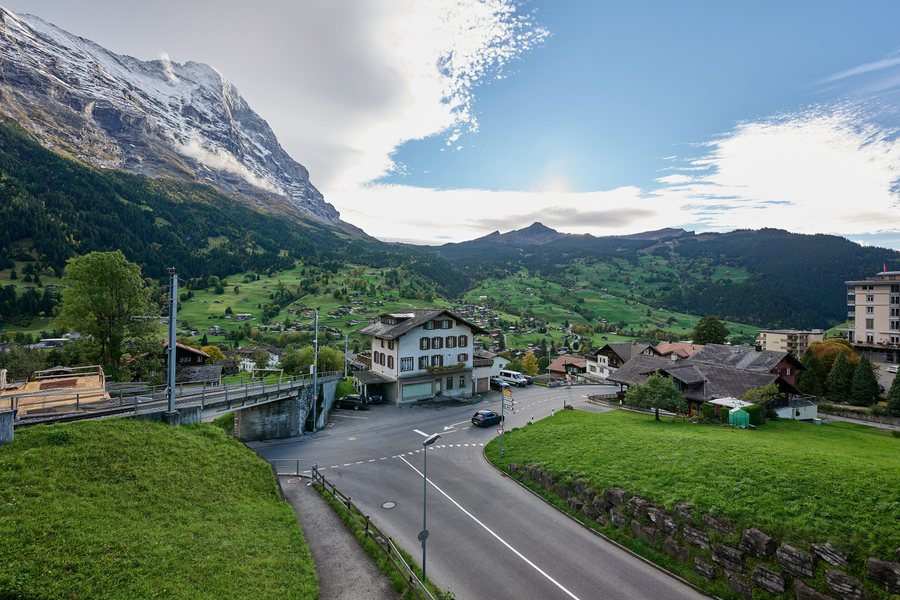
The busiest and most dramatic of the valley bases, cupped in a green bowl directly beneath the north face of the Eiger. The Grindelwald Terminal on the edge of the village is the lower station of the Eiger Express, a tricable gondola that reaches Eigergletscher and the Jungfrau Railway in fifteen minutes; the village itself has everything from grand hotels to climbers' guesthouses.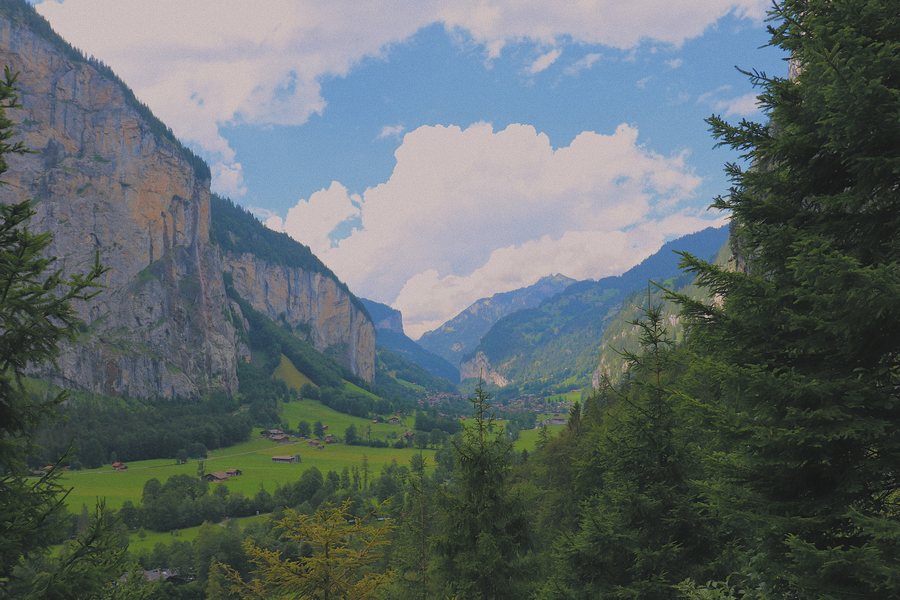 He Wenting / Wikimedia Commons · CC BY-SA 4.0 · cropped
Lauterbrunnen
A deep, flat-floored trough walled in by cliffs, with waterfalls dropping straight off the rim — the Staubbach falls around 300 metres in a single plume, and the Trümmelbach falls run inside the rock itself. It is said to have been the inspiration for Tolkien's Rivendell, and on the valley floor it is easy to see why.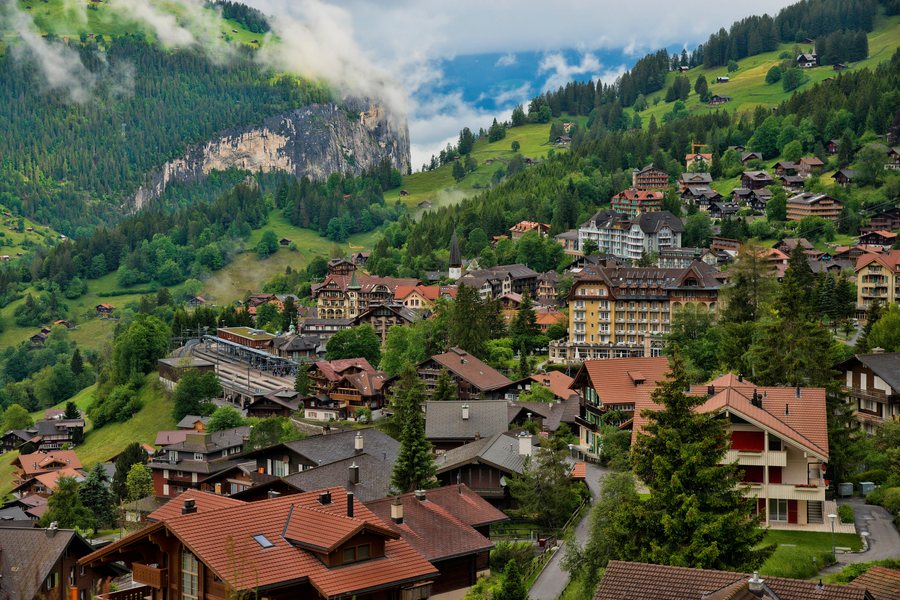 chensiyuan / Wikimedia Commons · CC BY-SA 4.0 · cropped
Wengen & Mürren
Two villages perched on opposite shoulders of the Lauterbrunnen valley, reached only by rail or cable car and closed to through traffic. Wengen sits on the Wengernalp line up to Kleine Scheidegg; Mürren faces it across the gap. Both trade convenience for silence and a grandstand view of the Eiger, Mönch and Jungfrau.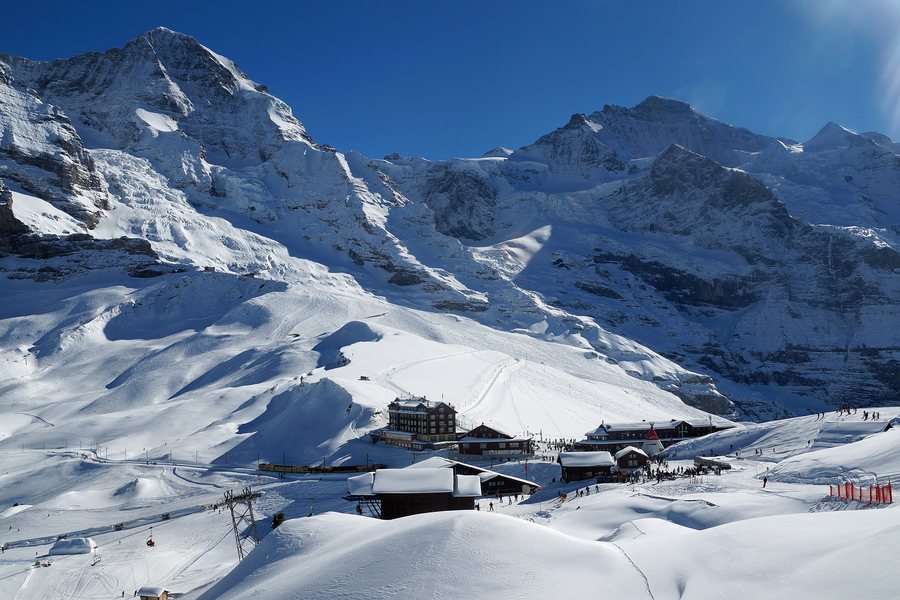 Albinfo / Wikimedia Commons · CC BY-SA 3.0 · cropped
Kleine Scheidegg
The pass station itself, at 2,061 metres — the highest railway starting point in Europe and where the Jungfrau Railway begins. There is no village, just a cluster of hotels and the junction where the cog lines from Grindelwald and Lauterbrunnen meet. A fine place to walk, and to watch climbers on the Eiger through a telescope.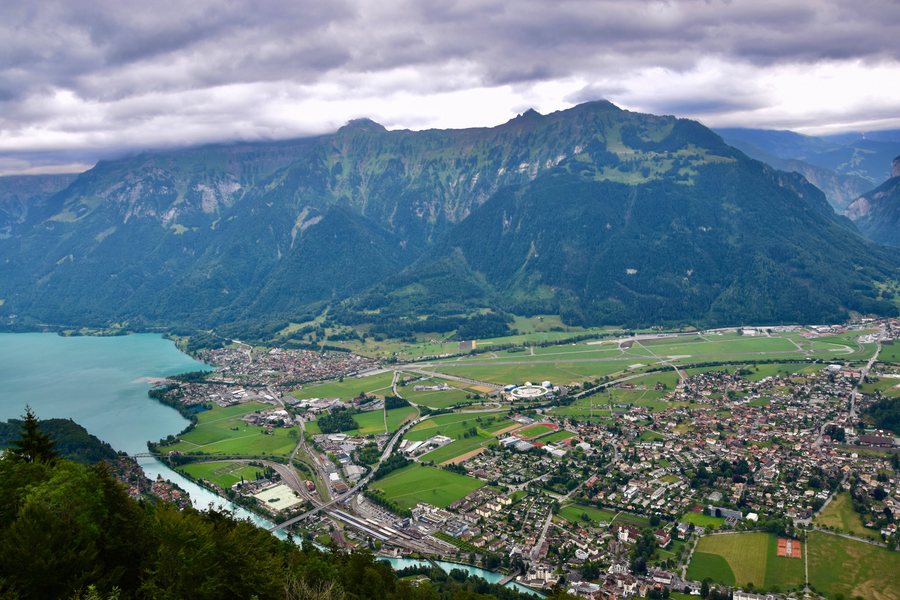 Ank Kumar / Wikimedia Commons · CC BY-SA 4.0 · cropped
Interlaken
The lakeside resort town between Lake Thun and Lake Brienz where the whole excursion usually begins. It has the widest choice of hotels in the Oberland and the easiest onward connections, and it is also the midpoint of the GoldenPass Line if you are arriving from Montreux or Lucerne.Where to Sleep
Almost everyone sleeps in the valley and rides up to the Jungfraujoch for the day, so the question is really which base suits you. Grindelwald puts you directly beneath the Eiger and at the foot of the Eiger Express, with everything from grand hotels to climbers' guesthouses. Car-free Wengen and Mürren, high on the valley shoulders, trade convenience for silence and enormous views. Lauterbrunnen sits among the waterfalls on the valley floor, and Interlaken offers the widest choice of hotels and the easiest onward connections. A rare handful of travellers spend the night on the mountain, at Kleine Scheidegg or even the Jungfraujoch itself, to catch the peaks at dawn before the day-trippers arrive. Book well ahead in summer and over the ski season.
Questions or corrections
Planning this trip and stuck on something, or spotted a time, fare or detail that has changed? Send us a message about Jungfrau Railway. We read every one, and we update this page when something has changed.