Schynige Platte Railway
Whgler / Wikimedia Commons · CC BY-SA 3.0 · 2011 · cropped
- Distance7.26 km
- Duration52 min each way
- Best season13 June – 25 October · every 40 minutes
Introduction
In 2005 the Schynige Platte Railway tried a modern train. It did not last the year, and the locomotives it came to replace are still in this summer's timetable.
The experiment was reasonable enough: a railcar borrowed from the Wengernalpbahn might have worked the quiet shoulder months more cheaply than a locomotive and two coaches with a crew aboard. The answer came back twice. The tunnel profiles would have had to be cut back to let it through, and the gradient, which never once eases across seven kilometres, punished a machine built for a line with flat stretches to recover on. Then in late August the Lütschine came out of its bed in the Bernese Oberland floods, filled the valley station at Wilderswil and wrecked it. In spring 2006 it went to Kaiseraugst and was cut up with its driving trailer. What it had been sent to replace stayed where it was — the four locomotives bought for the electrification of 1914, still working scheduled trains a hundred and twelve years later, alongside eight more of 1909 to 1912 bought second-hand and a newest locomotive of any kind dating from 1926.
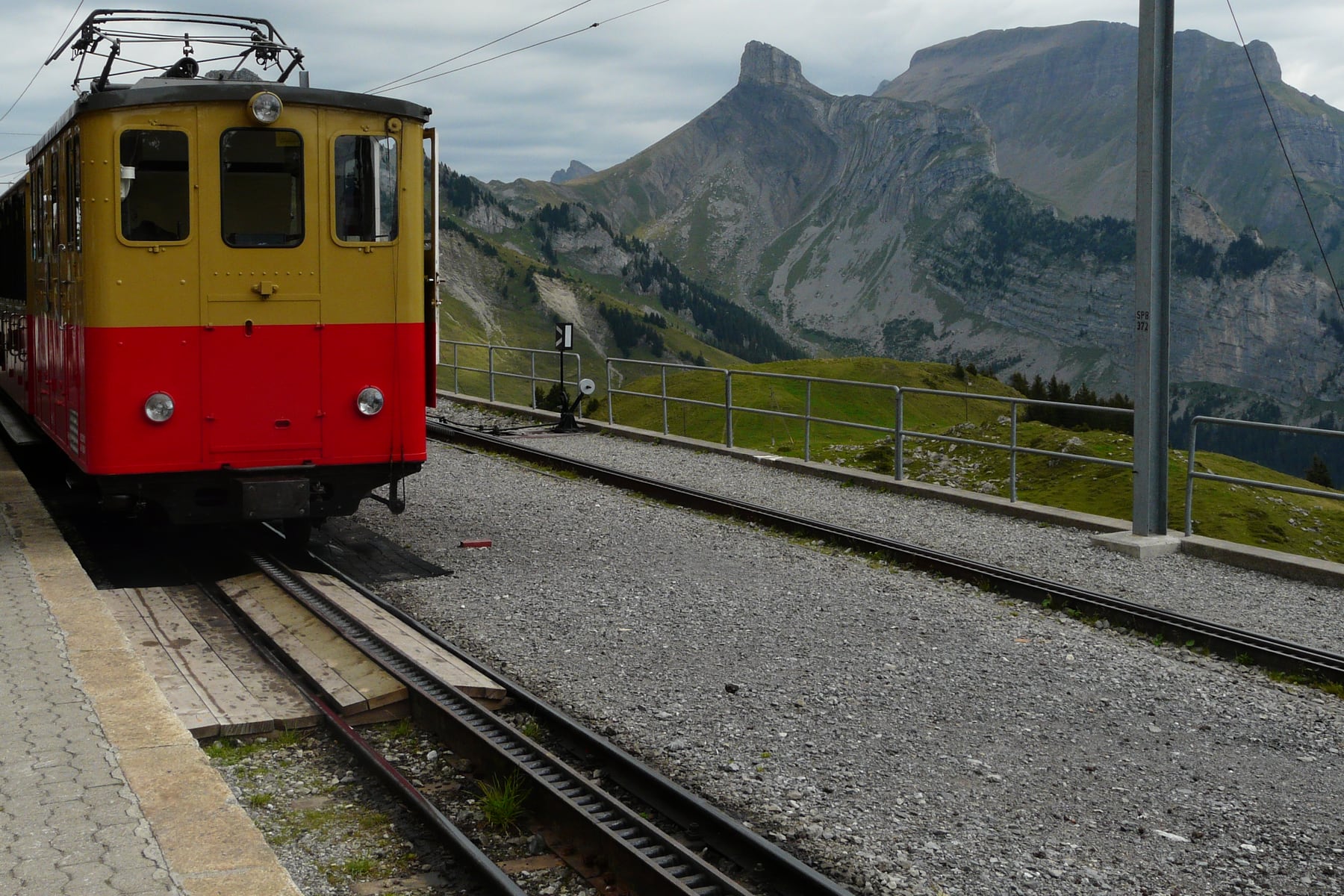
The effect on a passenger is unusual. This is not a preserved railway running heritage trains alongside a modern service; there is no modern service. The summer timetable is worked by Edwardian electric locomotives pushing wooden-framed coaches up a mountain at nine or ten kilometres an hour, because that is what the railway owns and what the line will take.
The Journey
The line begins in the forecourt of Wilderswil station, five minutes out of Interlaken Ost on the Berner Oberland-Bahn, and it does not look like much from the platform: a short train of red and cream coaches with a small green or brown locomotive at the downhill end, and a fan of rack turnouts leading back into a shed. Seven and a quarter kilometres later the same train is standing at 1,967 metres with the Bernese Alps across the valley in front of it. The climb is 1,383 metres and it takes fifty-two minutes.
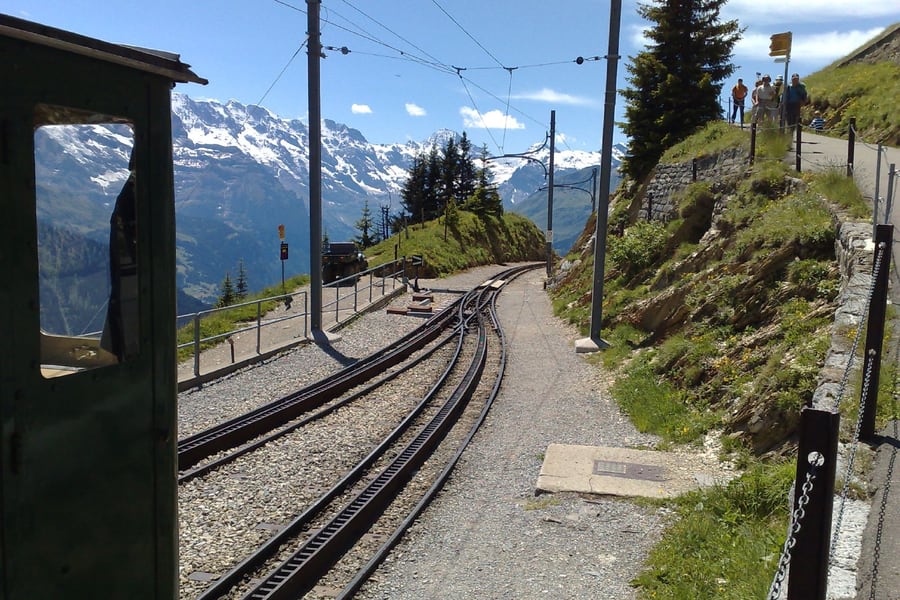
The locomotive is at the bottom of the train and stays there. It pushes the coaches up and holds them coming down, which is standard practice on a Swiss rack line and is the reason the front window of the leading coach is the best seat on the railway — there is nothing in front of it but track. The rack itself is Riggenbach's ladder as modified by Arnold Pauli, with a Von Roll section in places: two steel channels with round rungs pinned between them, laid to a minimum radius of sixty metres. The average gradient is 190 ‰ and the maximum is 250 ‰, one in four, and there is no adhesion-worked stretch anywhere. The gauge is 800 millimetres and the overhead is 1,500 volts direct current, which is the 1914 installation.
The climb
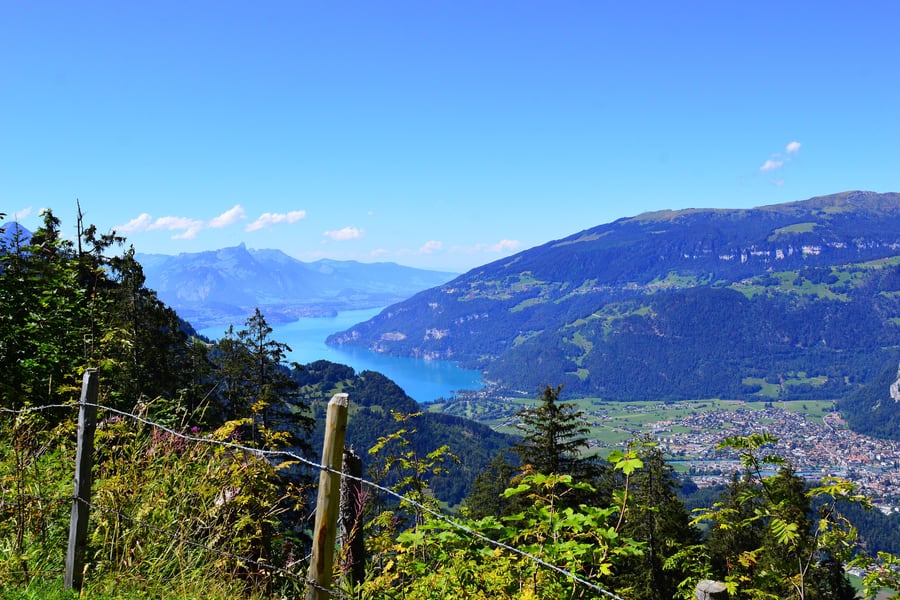
Out of Wilderswil the line turns immediately into forest and starts to gain height in a way that feels less like a railway than a staircase. It doubles back through the Rotenegg spiral tunnel, 168 metres long, and passes the short Stollfluh bore before reaching Rotenegg itself at 886 metres, which is a passing loop rather than a station and has no platform. Above it the trees begin to thin and the Lütschine valley opens out below on the right, with Interlaken laid flat between its two lakes.
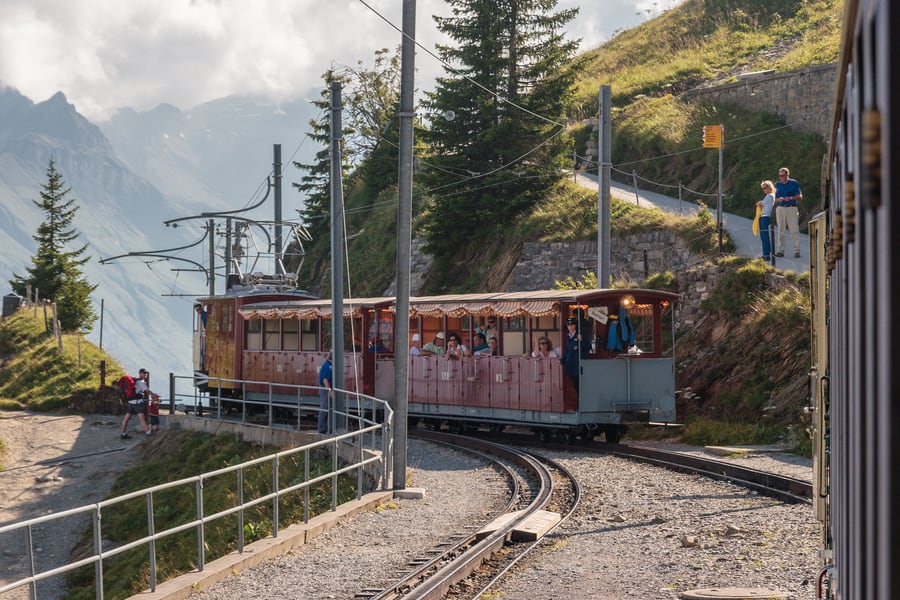
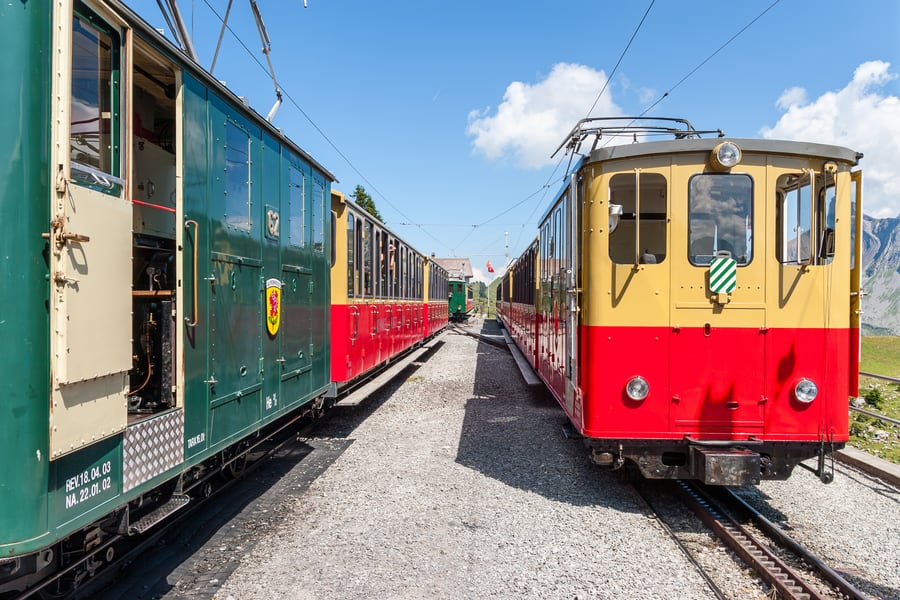
Wasserstation, at 1,388 metres, is a name on the route diagram and nothing else now; it was where the steam engines took water before 1914. Breitlauenen, at 1,542 metres, is the only intermediate station worth the name, and it is the halfway point in altitude if not in distance. The station building and its separate outdoor privy survive largely as they were built, and there is a bistro whose fruit tart the station manager bakes every morning. Trains cross here, and because the whole railway is single track with two passing places, this is where a passenger gets a good look at another train from a few feet away.
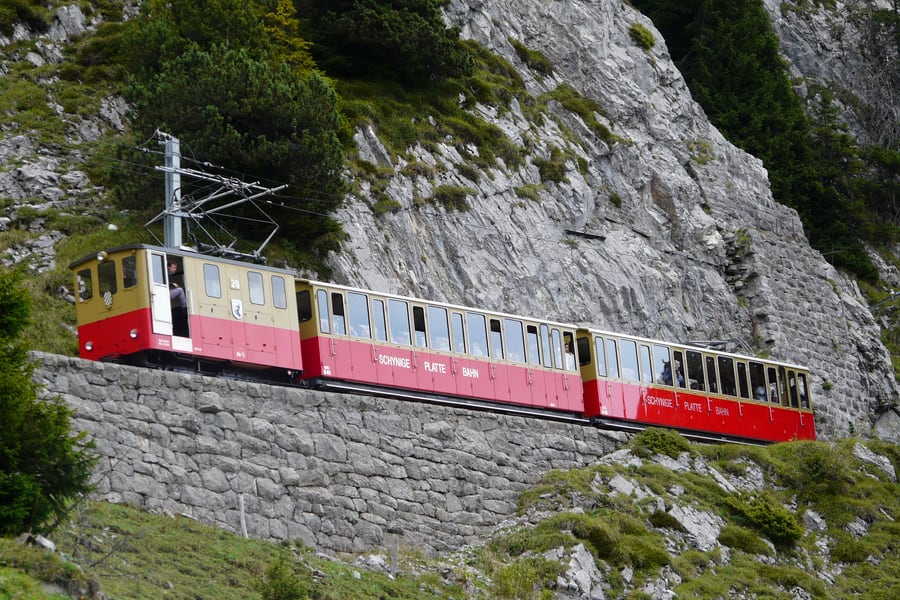
Above Breitlauenen the line turns through the Grätli spiral tunnel — 157 metres, rebuilt in 1982 — and comes out on the open mountainside for the last stretch, running along a ledge with a stone retaining wall below it and limestone above. This is the section that has to be taken apart every autumn: the overhead wire on the upper part of the line is dismantled before the snow comes, because it sits in avalanche ground, and it goes back up in the spring once the snow has gone. Until it does, there is no railway.
How ten trains share one track
The line's operating method is worth understanding because it is visible from the seat. Trains run at nine to ten kilometres an hour and take about twenty minutes between the two passing loops, which sets the interval at forty minutes. In quiet weather three trains can hold that timetable. When the forecast is good and the queue at Wilderswil is long, the railway puts all ten of its trains into service at once and runs them nose to tail in groups of two, three or four on the same section — following-train working, with the leading locomotive carrying a board to say what is behind it. Nothing about the infrastructure changes; the railway simply stops pretending that one train per section is the only way to do it.
What the fleet actually is
The register the operator publishes runs to two pages and almost nothing on it is modern. The thirteen electric locomotives were built between 1909 and 1926: numbers 11 to 14 for the 1914 electrification, and numbers 16, 18, 19, 20, 51, 61, 62 and 63 second-hand from the Wengernalpbahn, which sold them on in batches from 1963 onwards. Several carry names — Anemone, Flühblume, Enzian, Alpenrose for alpine flowers, Gündlischwand and Gsteigwiler for the communes the line runs through. Each is rated at 220 kilowatts, or 236 for the youngest, and limited to twelve kilometres an hour.
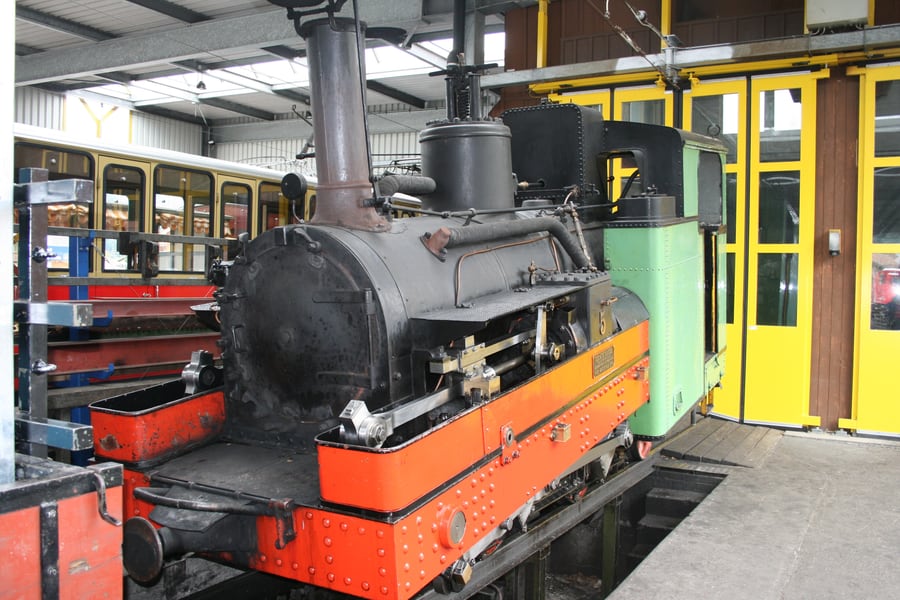
The coaches are older still in places. Number 6 dates from 1894 and number 3 from 1893, the year the railway opened; the newest coach body on the line was built in 1931. A dozen more were given new steel bodies between 1992 and 2002 on underframes dating from 1893 to 1926. There is a snowplough of 1925, open wagons of 1893 that run in front of passenger trains, and a steam locomotive — H 2/3 number 5, built by SLM in 1894 — that the register still lists.
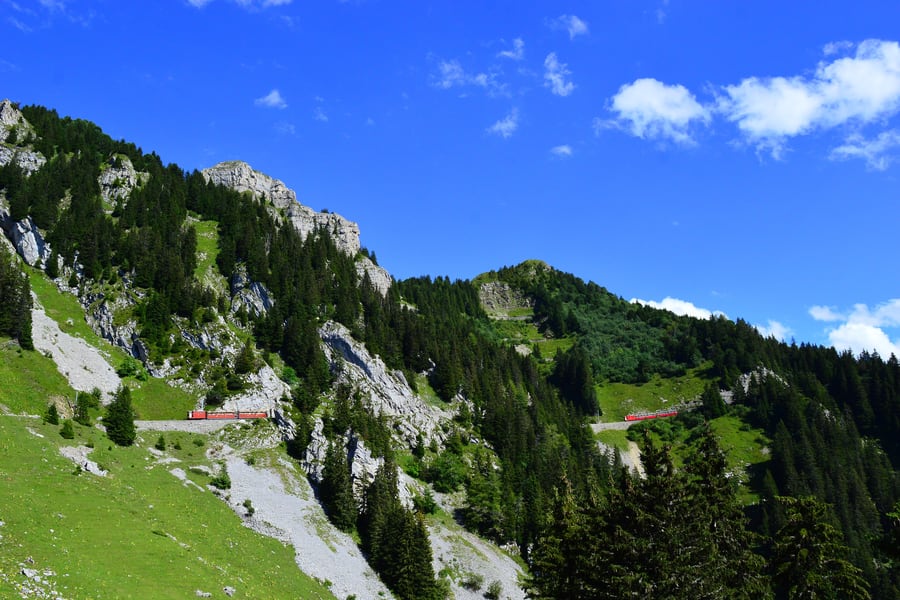
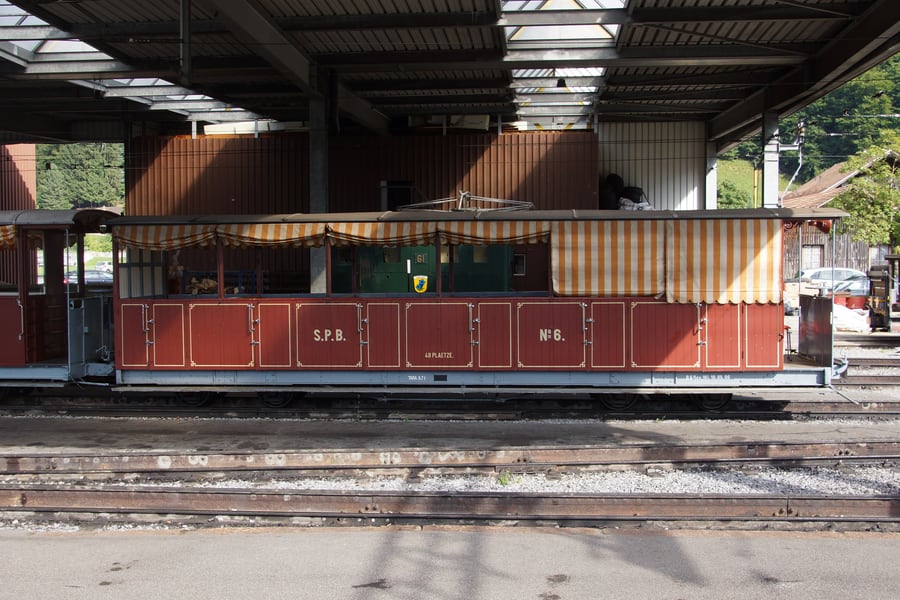
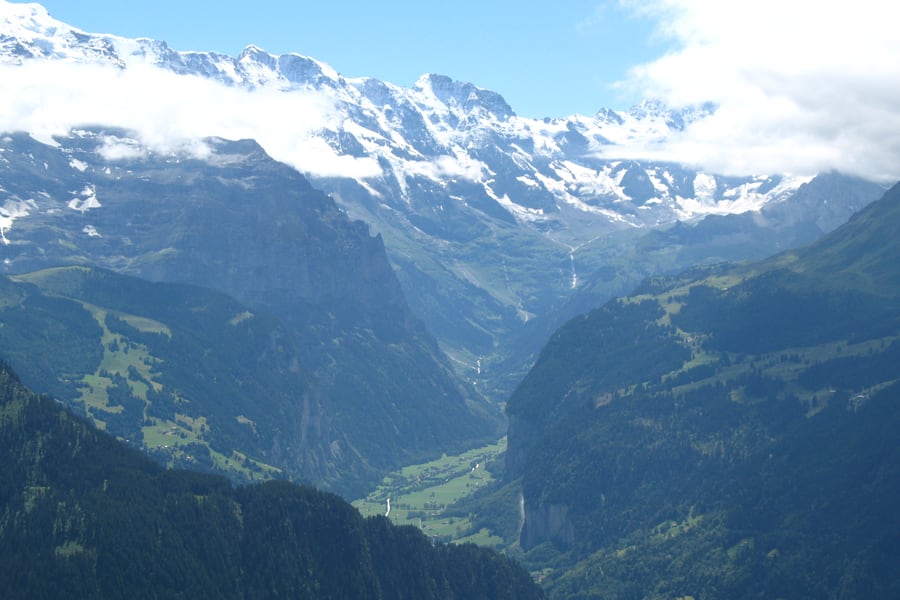
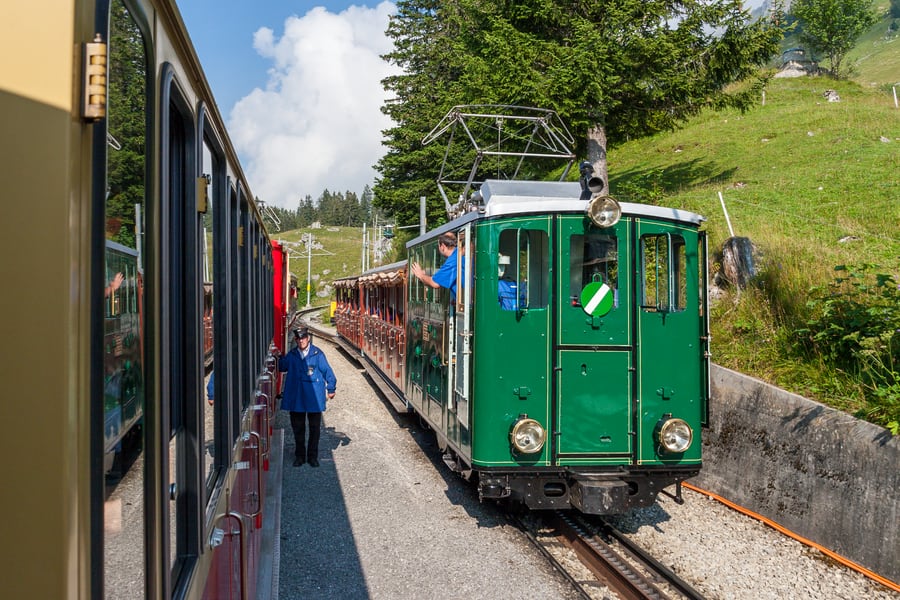
Along the route
 JoachimKohler-HB / Wikimedia Commons · CC BY-SA 4.0 · cropped
The locomotives that outlived their replacement
He 2/2 numbers 11 to 14 were bought for the electrification of 1914 and are still working scheduled trains. Eight more came second-hand from the Wengernalpbahn and date from 1909 to 1912; the newest locomotive on the line is from 1926. Several carry the names of alpine flowers.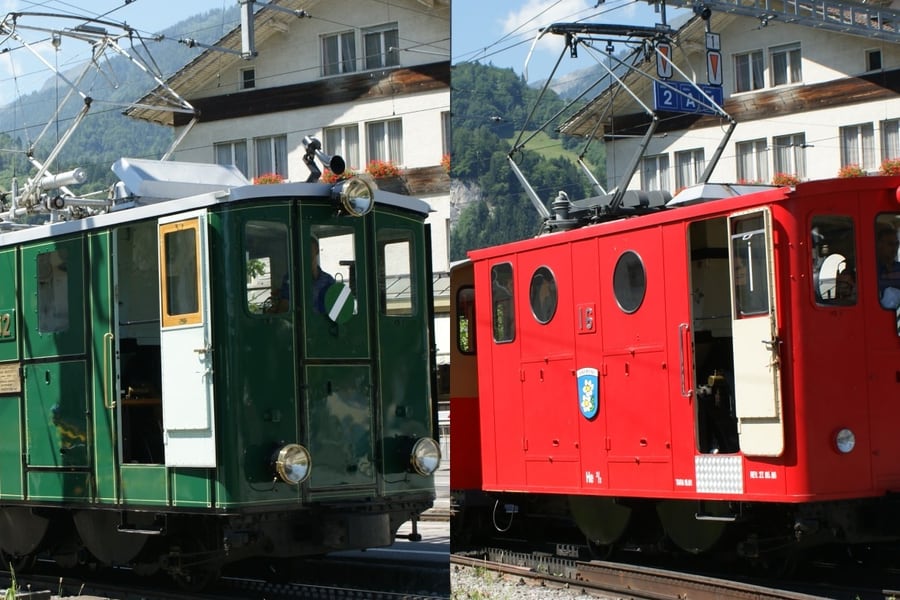 Markus Giger / Wikimedia Commons · CC BY-SA 4.0 · cropped
Ten trains, one track, no extra infrastructure
Two passing loops fix the interval at forty minutes. When the forecast is good the railway runs all ten sets nose to tail in groups on the same section, the leading locomotive carrying a board to say what is following — capacity gained by abandoning one train per section rather than by building anything.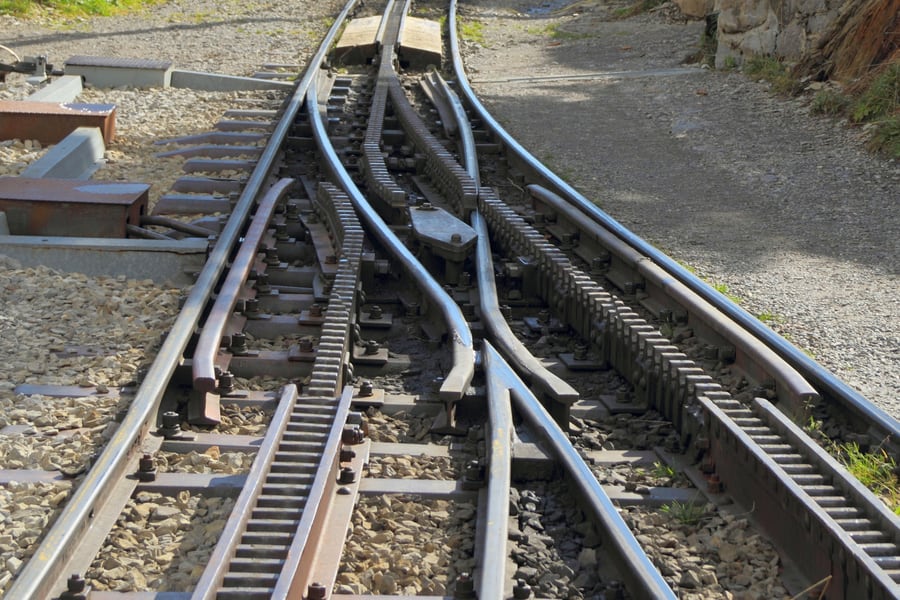 Kevin Hadley / Wikimedia Commons · CC BY-SA 3.0 · cropped
Rack for every metre of it
There is no adhesion-worked stretch anywhere on the line. The rack runs from the buffer stop at Wilderswil to the buffer stop at the summit, at an average of 190 ‰ and a steepest of 250 ‰. The gauge is 800 mm and the overhead is the 1,500 volts DC installed in 1914.A bit of history
Culture & experiences along the way
 Hans Hillewaert / Wikimedia Commons · CC BY-SA 3.0 · cropped
The alphorn players at the top
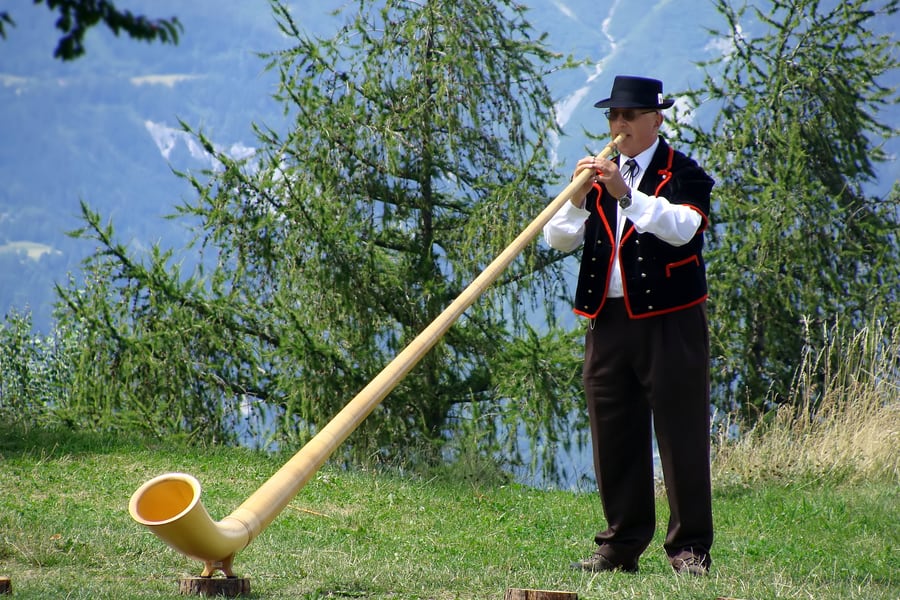
Between 11am and 2pm every day the railway runs, alphorn players stand out in front of the mountain hotel and play for nothing — indoors if the weather closes in. The instrument has no valves and no slide and reaches 3.9 metres, and afterwards you are welcome to pick one up.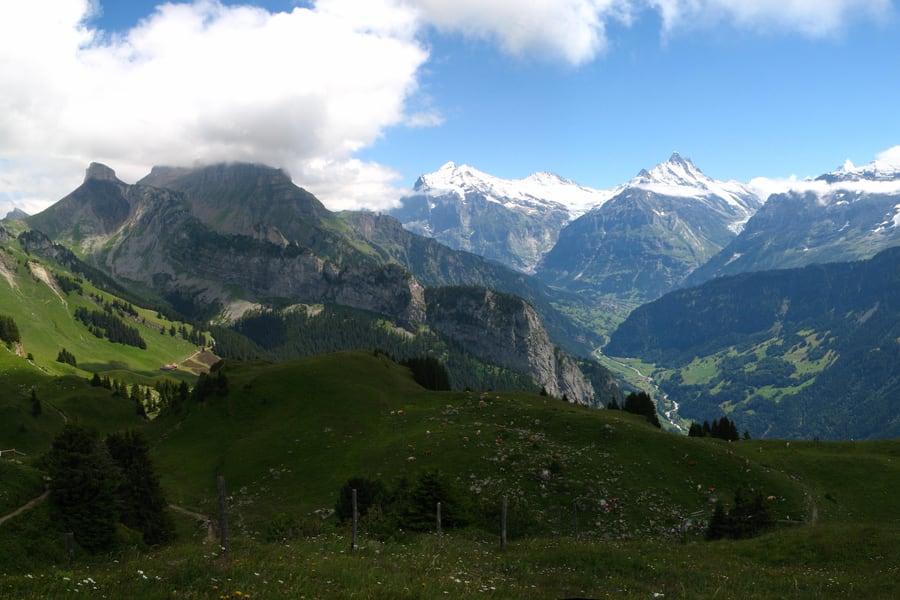 Andrew Bossi / Wikimedia Commons · CC BY-SA 2.5 · cropped
The high-level walk to Grindelwald-First
One of the best-known ridge walks in Switzerland starts at the summit station and runs about six hours over the Faulhorn to the Bachalpsee and Grindelwald-First, where a gondola drops down into Grindelwald.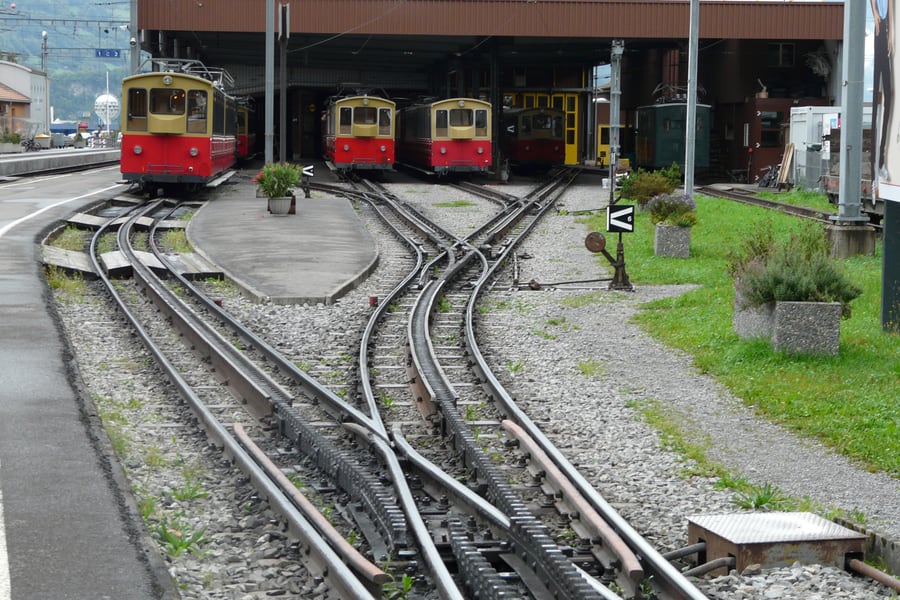 Whgler / Wikimedia Commons · CC BY-SA 3.0 · cropped
The depot at Wilderswil
The shed and workshop sit beside the bottom station behind a fan of rack turnouts, and the whole fleet lives there. It is visible from the platform, and in the shoulder months more of the railway is standing in it than out on the mountain.Timetables
The Schynige Platte-Bahn runs in summer only. In 2026 the season is 13 June to 25 October, and within it the service is identical every day — no weekday and weekend distinction, and no public holiday variation. Trains leave every forty minutes in both directions, fifteen each way.
Times below are the Swiss national timetable for timetable year 2026 — table 314, valid 14 December 2025 to 12 December 2026 — checked against the SBB timetable in August 2026, which agrees departure for departure.
Wilderswil → Breitlauenen → Schynige Platte
The climb takes 52 minutes and gains 1,383 metres.
| Wilderswil | Breitlauenen | Schynige Platte |
|---|---|---|
| 07:25 | 07:59 | 08:17 |
| 08:05 | 08:39 | 08:57 |
| 08:45 | 09:19 | 09:37 |
| 09:25 | 09:59 | 10:17 |
| 10:05 | 10:39 | 10:57 |
| 10:45 | 11:19 | 11:37 |
| 11:25 | 11:59 | 12:17 |
| 12:05 | 12:39 | 12:57 |
| 12:45 | 13:19 | 13:37 |
| 13:25 | 13:59 | 14:17 |
| 14:05 | 14:39 | 14:57 |
| 14:45 | 15:19 | 15:37 |
| 15:25 | 15:59 | 16:17 |
| 16:05 | 16:39 | 16:57 |
| 16:45 | 17:19 | 17:37 |
Schynige Platte → Breitlauenen → Wilderswil
The descent takes 52 to 57 minutes, the difference depending on where the train crosses another.
| Schynige Platte | Breitlauenen | Wilderswil |
|---|---|---|
| 08:21 | 08:39 | 09:18 |
| 09:01 | 09:19 | 09:53 |
| 09:41 | 09:59 | 10:38 |
| 10:21 | 10:39 | 11:18 |
| 11:01 | 11:19 | 11:53 |
| 11:41 | 11:59 | 12:38 |
| 12:21 | 12:39 | 13:18 |
| 13:01 | 13:19 | 13:53 |
| 13:41 | 13:59 | 14:38 |
| 14:21 | 14:39 | 15:18 |
| 15:01 | 15:19 | 15:53 |
| 15:41 | 15:59 | 16:38 |
| 16:21 | 16:39 | 17:18 |
| 17:01 | 17:19 | 17:53 |
| 17:53 | 18:11 | 18:45 |
Anyone walking on the ridge and coming back late is working to that last departure, and the gap before it is nearly an hour rather than the usual forty minutes.
Getting to the bottom station
Wilderswil is five minutes from Interlaken Ost on the Berner Oberland-Bahn, which runs every half hour all year; the two railways share the station, so the connection is a walk across the platform. A start from Interlaken Ost at 09:04 reaches the Schynige Platte at 10:17.
The timetable carries a standing note that in poor weather the service may be reduced and the times
are not guaranteed; the operator's information line is +41 33 828 73 51. Groups of ten or more
are asked to reserve at least two days ahead, through reservation@jungfrau.ch.
Tickets
One thing is worth saying plainly, because the operator's own pages do not. Jungfraubahnen advertise this railway as "from CHF 34", and that figure is the return at the reduced rate — what someone with a Swiss Half Fare Card or Swiss Travel Pass pays. At the full adult fare the return is CHF 68.00, and CHF 34.00 is the one-way price. The SBB checkout compounds it by opening with a Half Fare Travelcard already assumed. From Interlaken Ost, which is the ticket most visitors actually want, a single is CHF 37.80.
Entry to the Botanical Alpine Garden at the summit is included and has been since 2008. No seat reservation exists on this railway and none is needed: a ticket is valid on any train, and in good weather the railway puts sets on until all ten are running rather than turning people away. Fares read off the SBB checkout in August 2026.
Book your tickets
Wilderswil – Schynige Platte, return
CHF 68.00 full fare · CHF 34.00 with a Half Fare Card, a Swiss Travel Pass or Interrail
The whole railway and back, 52 minutes each way, with entry to the botanical garden at the summit included. Valid on any train — there are no seat reservations on this line.
Book Tickets (opens in a new tab, on Jungfraubahnen)via JungfraubahnenWilderswil – Schynige Platte, single
CHF 34.00 full fare · CHF 17.00 reduced
One way, for anyone walking off the ridge to Grindelwald-First rather than coming back down the way they came up.
Book Tickets (opens in a new tab, on Jungfraubahnen)via Jungfraubahnen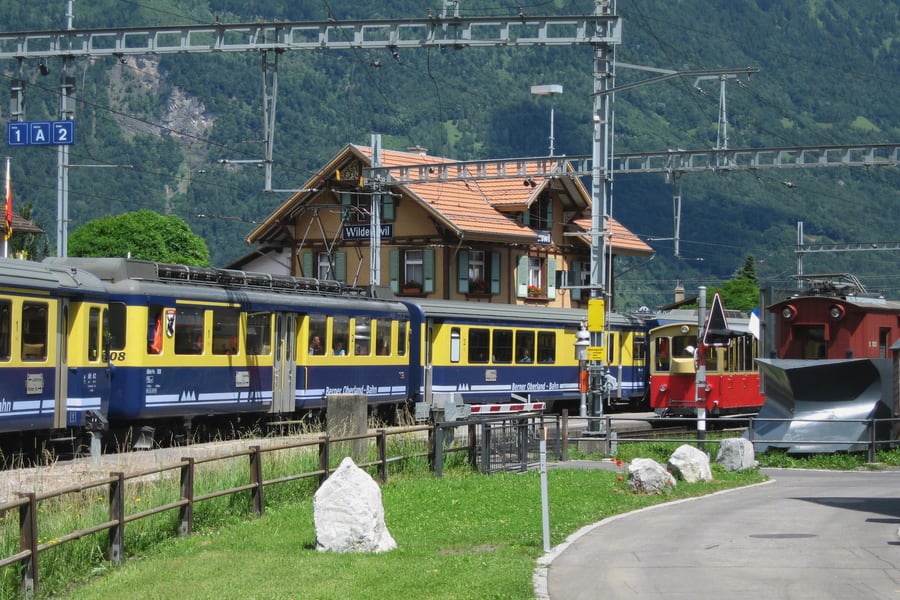
Interlaken Ost – Schynige Platte, single
CHF 37.80 full fare · CHF 18.90 reduced
Adds the Berner Oberland-Bahn leg from Interlaken, five minutes and a walk across the platform at Wilderswil. This is the ticket most visitors actually want.
Book Tickets (opens in a new tab, on Jungfraubahnen)via JungfraubahnenRail Passes
No national pass carries a passenger up the Schynige Platte for nothing. What they all do is halve the fare, and the useful thing to know is that on this particular line they all halve it by the same amount — which makes the choice between them turn on the rest of the trip, not on this journey.
The 50 per cent that everything gives
The SBB and Switzerland Tourism Area of Validity Map 2026 marks the Schynige Platte-Bahn as a line with reductions, and its footnote naming the lines cut to 25 per cent covers only Grindelwald–Kleine Scheidegg, Wengen–Kleine Scheidegg, Kleine Scheidegg–Jungfraujoch and Grindelwald Terminal–Eigergletscher. The Schynige Platte is not among them, so it takes the standard 50 per cent. That applies to the Swiss Travel Pass, the Swiss Travel Pass Flex and the Swiss Half Fare Card alike: the return drops from CHF 68.00 to CHF 34.00 with any of the three. Interrail and Eurail holders get the same 50 per cent, listed under bonuses rather than coverage.
This is worth pausing on, because in the rest of the Jungfrau region it is not true. On the Wengernalpbahn above Wengen and on the Jungfraubahn the national passes drop to 25 per cent while the Half Fare Card still halves the fare, so the cheap card beats the expensive pass. On the Schynige Platte the two are level. A Swiss Travel Pass bought partly for this line buys nothing here that a Half Fare Card would not.
Whether a Swiss Travel Pass is worth it
Not for this journey on its own, and the arithmetic is quick: the pass saves CHF 34 on a return here, against a three-day price well into the hundreds. The Swiss Travel Pass earns its money on the national network — trains, buses, boats, town transport in ninety-odd places and entry to more than five hundred museums — and it is free outright on only three mountains in the country: the Rigi, the Stanserhorn and the Stoos. Every other summit, this one included, is a discount. It is sold to non-residents of Switzerland and Liechtenstein only, in 3, 4, 6, 8 or 15 consecutive days or the same counts chosen freely within a month.
The Jungfrau Travel Pass
This is the regional pass, and unlike the national ones it covers Wilderswil–Schynige Platte outright — no supplement, no percentage. It runs 3 to 8 days at CHF 210, 235, 270, 290, 310 and 330, or CHF 165, 180, 210, 225, 240 and 255 at the reduced rate, with children aged 6 to 15 charged a flat CHF 30 and extra days at CHF 45, or 35 reduced. It also takes in the Wengernalpbahn, the Berner Oberland-Bahn, Harder Kulm, Grindelwald-First, Lauterbrunnen–Mürren, both Männlichen cableways, the Eiger Express, the Grindelwald buses and the Thun and Brienz steamers, with the Jungfraujoch charged separately at a connecting fare.
Against a CHF 68 return, the Schynige Platte alone comes nowhere near justifying it. It pays when the Schynige Platte is one day of several in the region — and on that reckoning it is the better buy of the two passes here, because it is the only one that makes this ride free rather than half-price.
There is also an Unlimited Jungfrau Summer Pass from CHF 449, valid 3 April to 29 November 2026, for unlimited travel in the area including the Jungfraujoch. That is a season ticket, and it suits someone staying in the valley for a week or more rather than a visitor passing through.
Pass conditions checked against the SBB and Switzerland Tourism validity map for 2026 and the operator's own pages in August 2026.
Places to Visit
There are only three stations on this railway, and two of them are the ends. That makes the Schynige Platte an unusually simple line to plan around: almost everything worth stopping for is either in Wilderswil at the bottom or on the ridge at the top, and the one place in between is a station with a bistro and a view.
The summit repays more time than most people give it. A great many visitors ride up, walk to the viewpoint, eat something and ride down inside two hours, which is enough for the panorama and not enough for anything else. The botanical garden alone takes an hour to walk properly, the circular trails add another, and the ridge path out towards the Oberberghorn is where the drop to Lake Thun opens up. The last train down leaves at 17:53, and the gap before it is the longest of the day.
Schönegg / Wikimedia Commons · public domain · croppedWilderswil
A village of about two and a half thousand people where the Lütschine comes out of its valley, five minutes from Interlaken and sharing one station between two railways. The Berner Oberland-Bahn calls on the standard-platform side and the Schynige Platte-Bahn starts from the forecourt on the other, with its shed and workshop behind. Everything on the mountain railway — locomotives, coaches, the snowplough of 1925 — lives here when it is not working.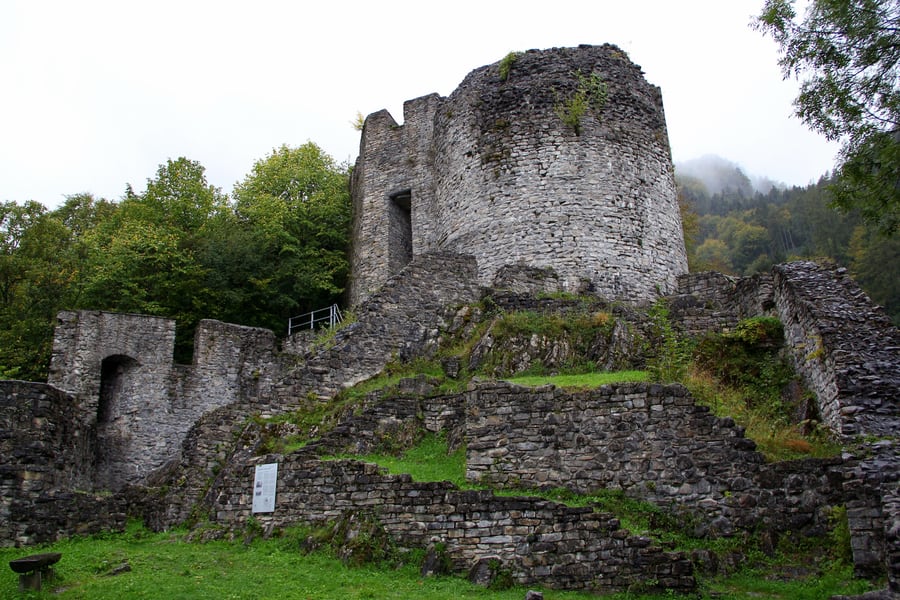 Kevin Hadley / Wikimedia Commons · CC BY-SA 3.0 · cropped
Unspunnen Castle
The ruined keep and curtain wall of a twelfth-century castle stand on a wooded knoll above the village, roofless and open to walk around. The meadow below gave its name to the Unspunnenfest, the Alpine herdsmen's festival first held here in 1805 to revive Bernese country traditions, and still held occasionally with stone-throwing, wrestling and alphorns. It is the obvious thing to do with an hour between trains.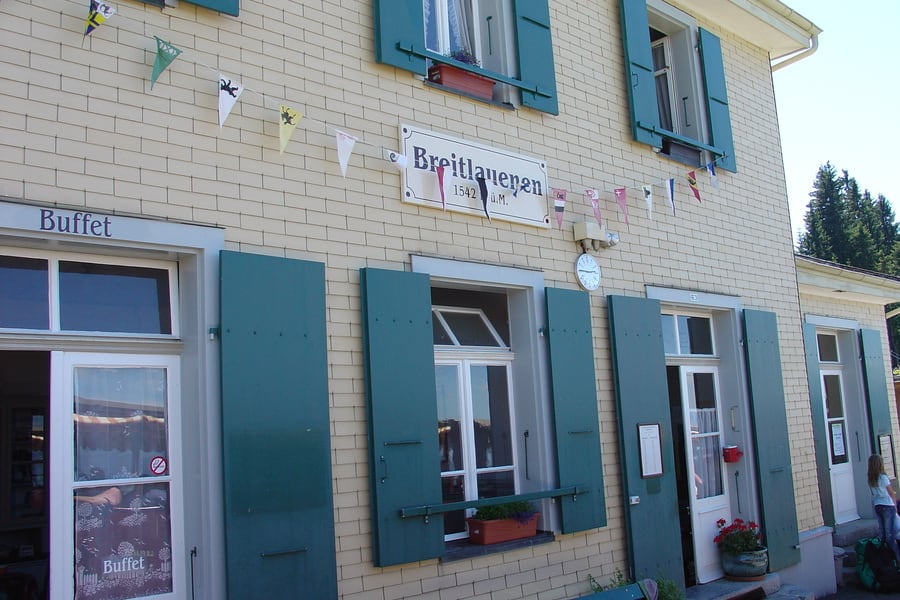 SalomonCeb / Wikimedia Commons · CC BY-SA 3.0 · cropped
Breitlauenen
A passing loop, a station building and a view, roughly halfway up. The building and its separate outdoor privy survive largely in original condition, which on this railway is less remarkable than it sounds. There is a bistro on the platform whose fruit tart the station manager bakes each morning, and because trains cross here, anyone getting off has forty minutes before the next one.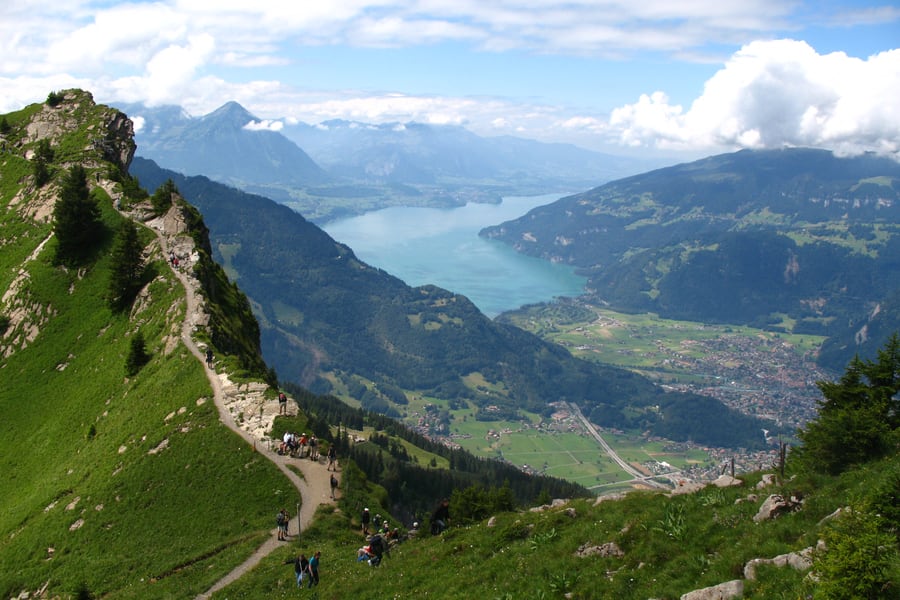 Andrew Bossi / Wikimedia Commons · CC BY-SA 2.5 · cropped
Schynige Platte
Not a summit but a shoulder, with the Eiger, the Mönch and the Jungfrau across the valley on one side and Lake Thun a vertical kilometre and a half below on the other. A viewing platform by the mountain hotel takes a few steps to reach; short circular trails lead out along the crest towards the Oberberghorn, and alphorn players give a free concert near the station between 11.00 and 14.00 every day of the season.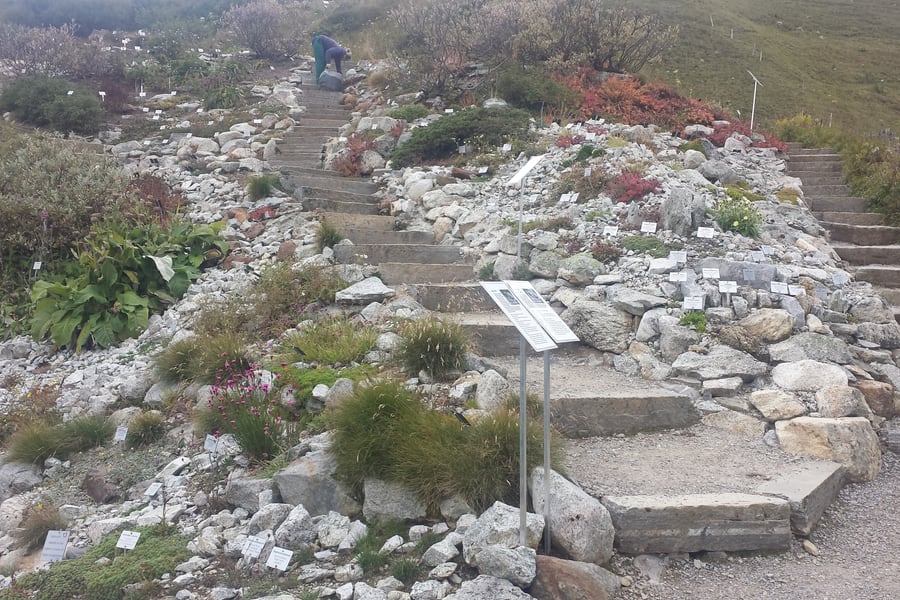 Chris j wood / Wikimedia Commons · CC BY-SA 4.0 · cropped
The Botanical Alpine Garden
A working research garden rather than a display, laid out so that around 800 Swiss alpine species grow in their natural communities across artificial screes, limestone and bog. The society behind it was founded in 1927, planting began in 1928 and the garden opened in 1929; the University of Bern has run an alpine botany course here almost every year since 1932. The walk round is about a kilometre and takes an hour to do properly.Where to Sleep
Almost nobody sleeps on this mountain, which is most of the argument for doing it. The last train down goes at 17:53 and the first up arrives at 08:17, so for something over fourteen hours the Schynige Platte belongs to the few dozen people staying at the hotel beside the station and to whoever has walked in. Sunset and sunrise over the Eiger, the Mönch and the Jungfrau are the reason the rooms exist.
Below, Wilderswil is the practical base — it is where the railway starts, and it is a village rather than a resort. Interlaken, five minutes further down the Berner Oberland-Bahn, has the range of hotels and the restaurants, at the cost of the walk to the platform in the morning.
Where to stay
Berghotel Schynige Platte
At the top station, 1,967 m
The only accommodation on the mountain, a few paces from the summit platform, run by A&L Höhenwerk AG. Its own site sells the stay as a package — arrival and departure by the cogwheel railway, a four-course dinner, the night and a regional breakfast buffet — which is the practical way to do it, since the last train down leaves at 17:53 and the first up arrives at 08:17. Sunrise and sunset over the Eiger, Mönch and Jungfrau are what the rooms are for.
Check Availability (opens in a new tab, on schynige.ch)via schynige.ch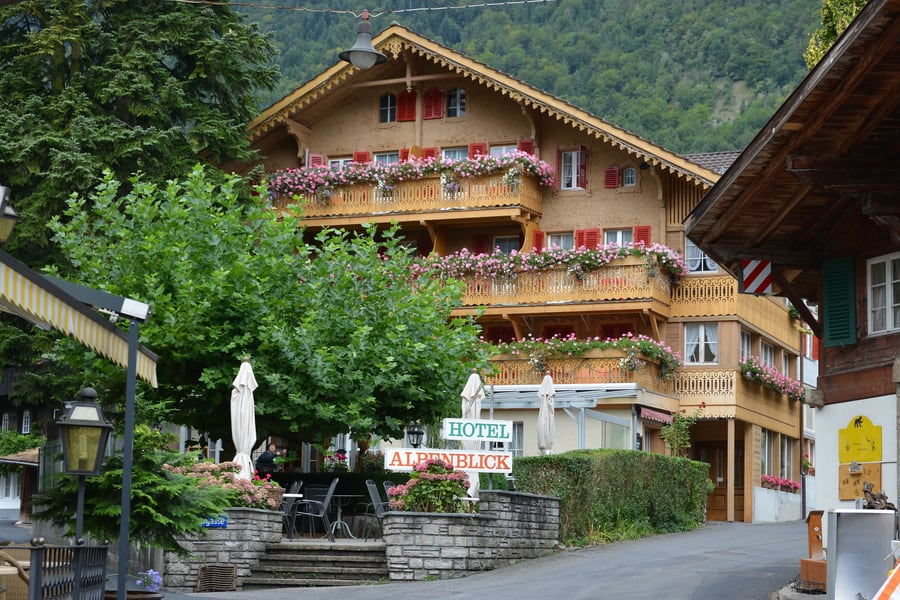 Jan Uyttebroeck / Wikimedia Commons · CC BY-SA 3.0 · cropped
Hotel Restaurant Alpenblick
In Wilderswil, by the bottom station
A timber chalet in the middle of Wilderswil, a few minutes' walk from the station where the railway begins, with a garden terrace under the trees and two restaurants. The house calls the Schynige Platte its Hausberg — its own mountain — and sells a three-night package built around the ride, which is a fair indication of how close it is.
Check Availability (opens in a new tab, on hotel-alpenblick.ch)via hotel-alpenblick.chVictoria-Jungfrau Grand Hotel & Spa
On the Höheweg in Interlaken
The grand hotel of Interlaken, facing the Jungfrau across the Höhematte, with four restaurants and a spa of 5,500 square metres. It is five minutes by Berner Oberland-Bahn from Wilderswil and rather more than five minutes' walk from Interlaken Ost, so it suits someone making the Schynige Platte one day of several in the region rather than an early start.
Check Availability (opens in a new tab, on victoria-jungfrau.ch)via victoria-jungfrau.chQuestions or corrections
Planning this trip and stuck on something, or spotted a time, fare or detail that has changed? Send us a message about Schynige Platte Railway. We read every one, and we update this page when something has changed.