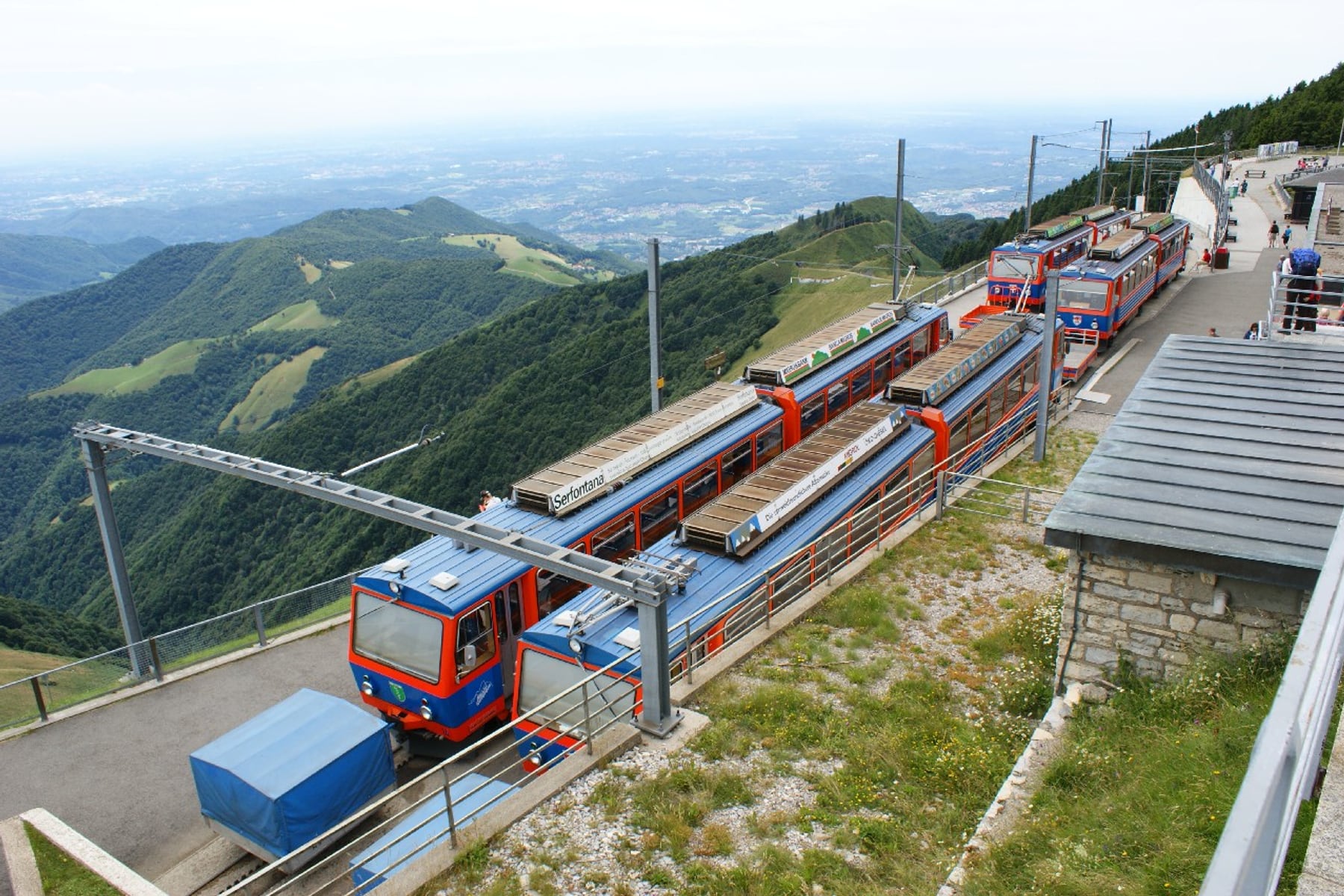
Monte Generoso Railway
Markus Giger / Wikimedia Commons · CC BY-SA 4.0 · 2008 · cropped
- Distance9 km
- Duration40 min each way
- Best seasonDaily May–Oct · weekends in winter
Introduction
In September 1939 the trains up Monte Generoso stopped, and that looked like the end of them. The company had been through liquidation, bankruptcy and two refoundings in its first fifty years, and by the spring of 1941 the proposal on the table was to lift the track and sell the iron, which the war had made valuable. Gottlieb Duttweiler heard about it in March. He had built Migros on the conviction that Swiss goods were priced beyond the people who wanted them, and he bought the railway on the spot, against the wishes of his own directors. To keep it off the company's books he put it into a cooperative, and more than three thousand people took shares at twenty-five francs each. Then he did the thing he actually knew how to do: he cut the fare by almost two thirds. Nine times as many people rode the train that first year.
Which is how an 800-millimetre rack railway in Ticino came to belong to a supermarket group, and why the twenty-two million francs that relaid its track between 2019 and 2023 came out of a cultural fund rather than a fares account. The line is older than the argument about it. It opened in June 1890, nine kilometres from the shore of Lake Lugano at Capolago to a terminus a few minutes' walk below the 1,704-metre summit, and it was built by Carl Roman Abt to the rack design that carries his name. It is still the only cogwheel railway in the canton.
The Journey
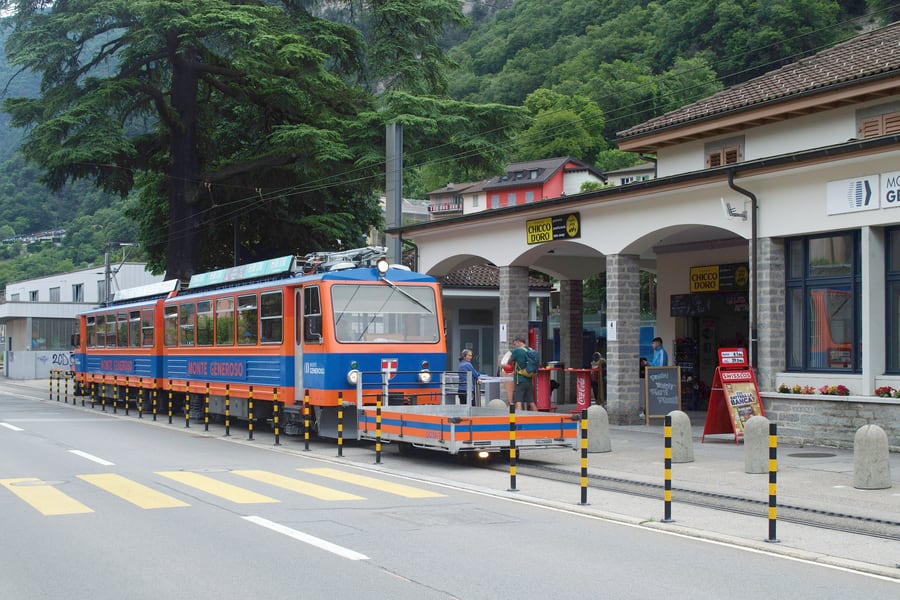
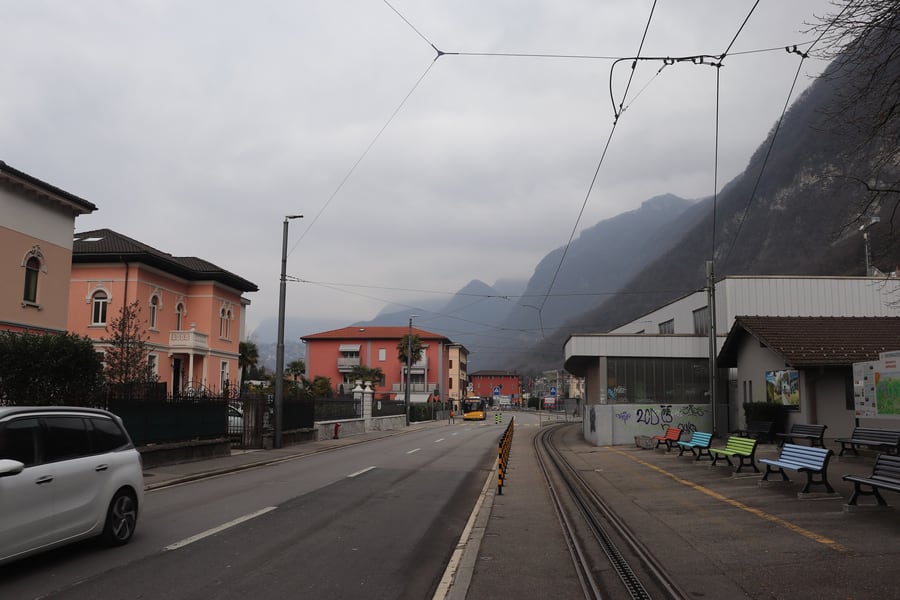
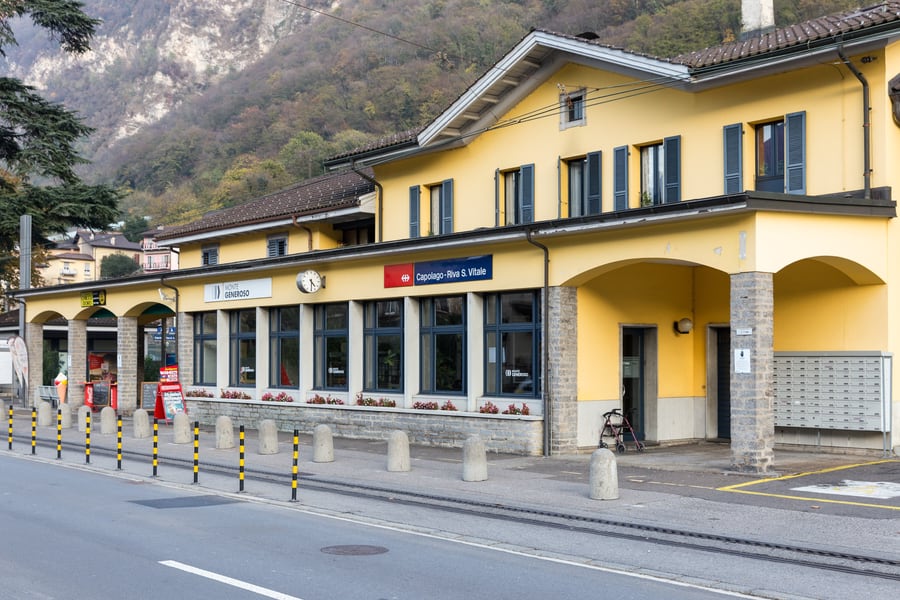
The Monte Generoso trains do not start from a platform. They start from a track laid in the road outside Capolago-Riva San Vitale station, which the rack railway shares with the Swiss Federal Railways line from Lugano to Chiasso and Milan. Capolago is a stop on the TILO S10, the half-hourly regional service between Bellinzona and Como, so a passenger walks out of the booking hall, crosses the forecourt and is at the foot of the mountain railway; the depot and workshop stand a few hundred metres down the same street, towards the lake.
The 800-millimetre track runs along the road past the houses of Capolago, then turns and climbs the hillside on a rack from the moment it leaves the town. Nothing on this railway runs on adhesion. The whole nine kilometres are fitted with the Abt rack, and the gradient reaches twenty-two per cent — a little steeper than one in five — with curves down to a sixty-metre radius. The line climbs a ramp to cross the main-line tracks, doubles back inside the 167-metre San Nicolao turning tunnel and comes out facing north, high enough already for the lake to have become a shape rather than a shoreline. S. Nicolao, at 701 metres, is the first stop: a white hut in a clearing among the chestnut woods, ten minutes up, and the start of several of the mountain's fifty-one kilometres of footpaths.
The passing loop in the beech woods
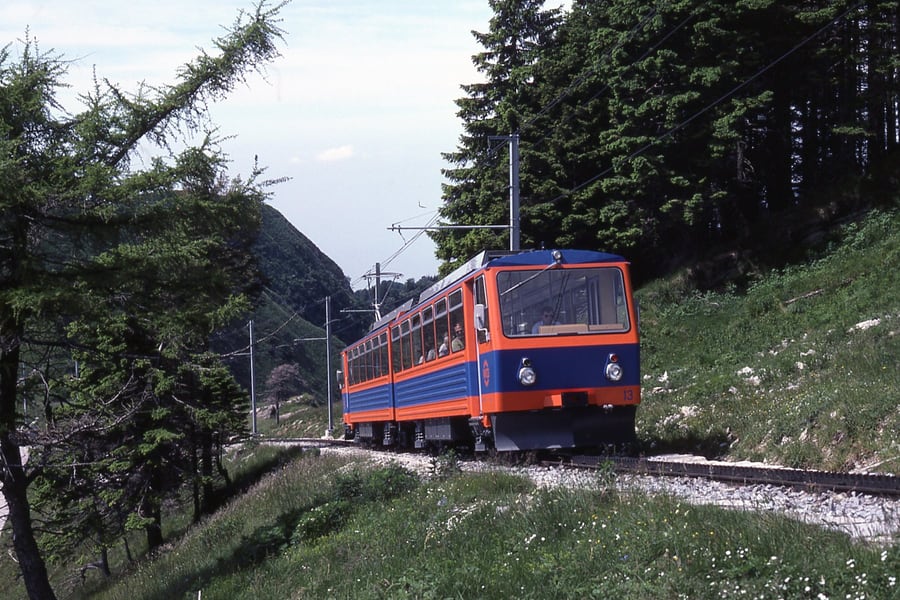
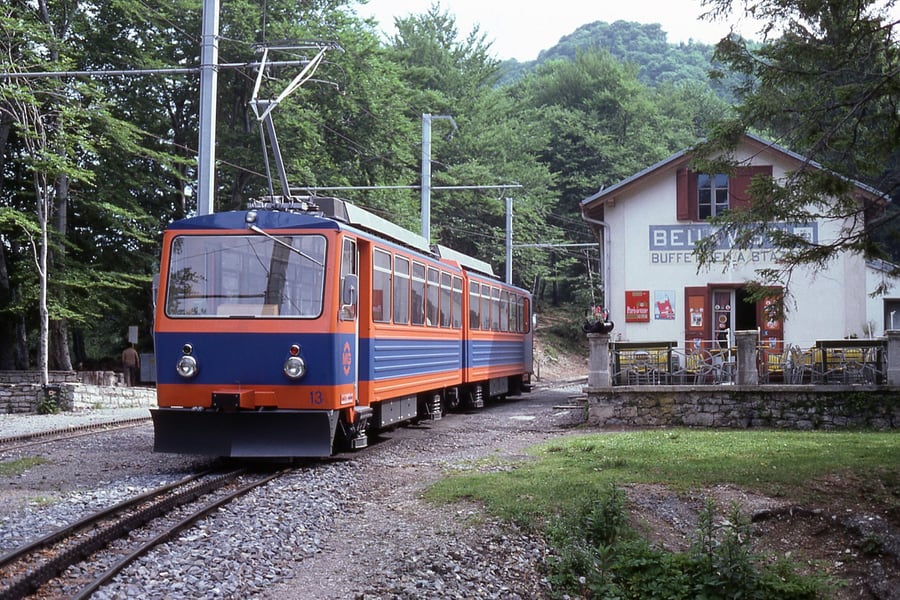
Above S. Nicolao the line stays in forest, cut into the flank of the ridge on the side away from the lake, and reaches Bellavista at 1,223 metres. This is where the ascending and descending trains cross — the loop here is the reason the timetable works at all — and it is where a good many passengers get off without going any further. The Buffet Bellavista has been feeding excursionists since the railway opened in 1890. It closed in 2014 with the rest of the mountain's catering and reopened in October 2022 after a year's rebuilding, as a grotto with about forty covers, a picnic area outside and the mountain-bike and walking routes starting at the door.
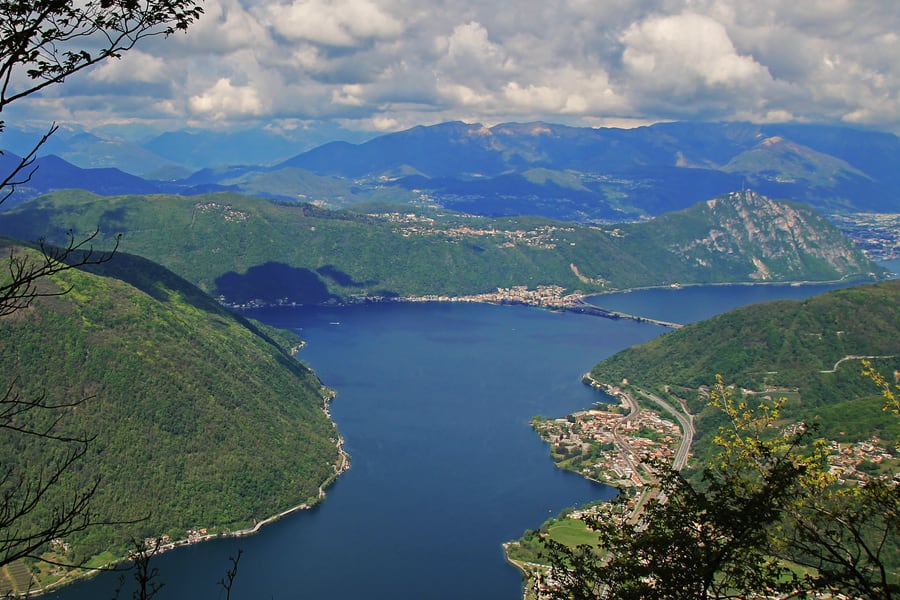
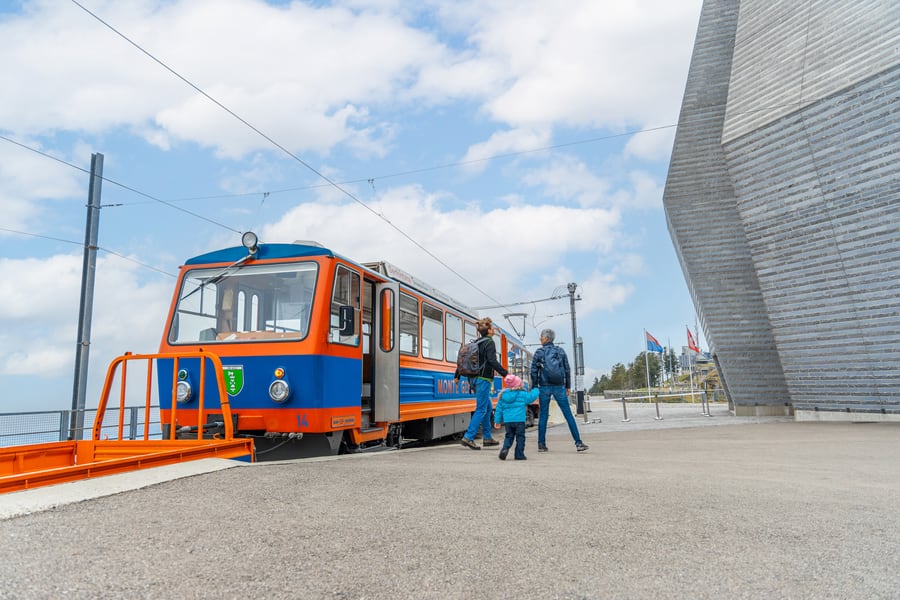
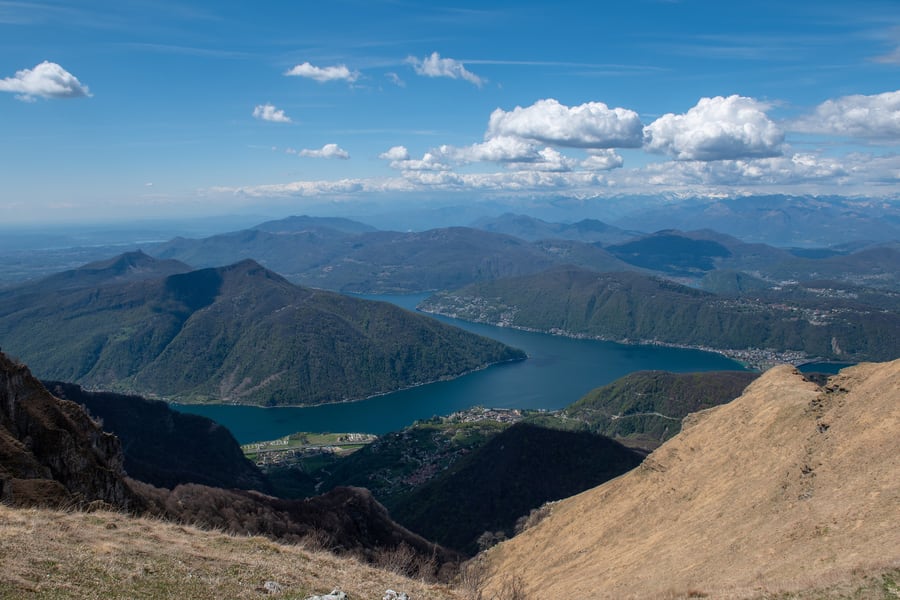
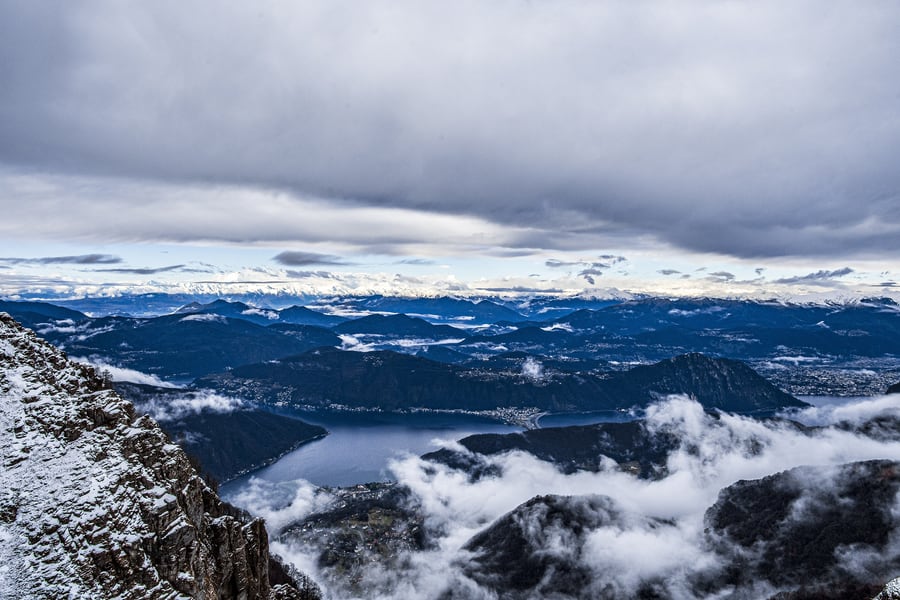
The last section is the one people remember. The trees stop, and the railway runs out onto open grassland along the western shoulder of the mountain with nothing on the downhill side but air and, more than a thousand metres below, Lake Lugano. Cows graze beside the track in summer. The colony of chamois that was released here in the 1960s now runs to three hundred and more, and they are used enough to people that they rarely move further than thirty metres away. Fifteen minutes after Bellavista the train runs into Generoso Vetta, 1,601 metres, forty minutes and 1,328 metres of climb from the lake.
The flower on top
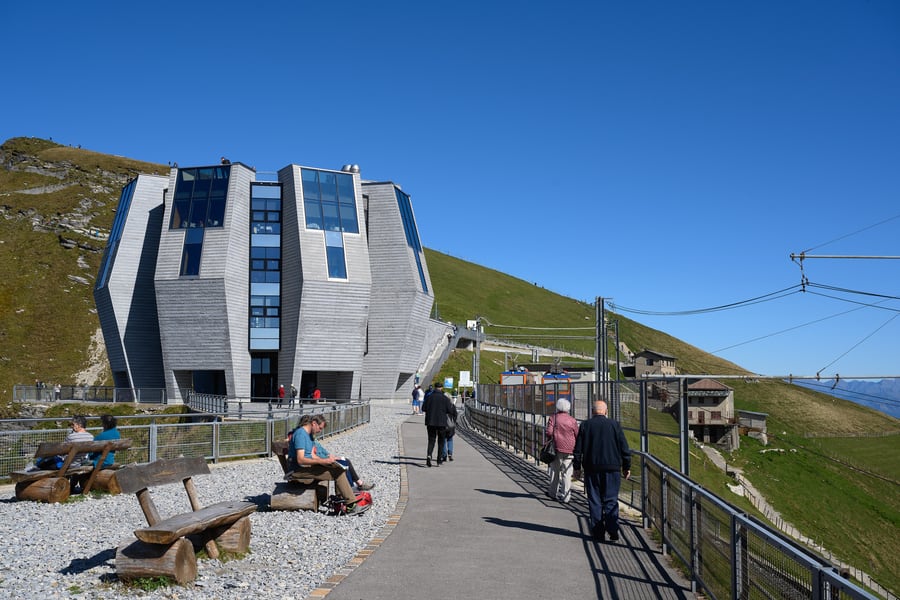
The summit building is a Mario Botta design of 2017 called Fiore di pietra, the stone flower: a faceted grey tower whose walls lean outward and then close in again at the top like petals, holding two restaurants, an exhibition about the railway on the ground floor and a roof terrace. Botta was born at Mendrisio, at the foot of the mountain, and says the shape came out of climbing up here as a boy to watch the sun rise. It replaced the Hotel Vetta of 1970, which was demolished in 2014 — the railway then spent three seasons closed to passengers, carrying cement and workmen up the mountain instead, and did not reopen to the public until the flower did. A paved path of five hundred metres, level enough for a wheelchair, runs from the station along the ridge; the Pathway of the Planets branches off it and lays the solar system out over six hundred metres at one part in ten billion, so that a stride is ten million kilometres of space. The Italian border runs across the top of the mountain.
What runs
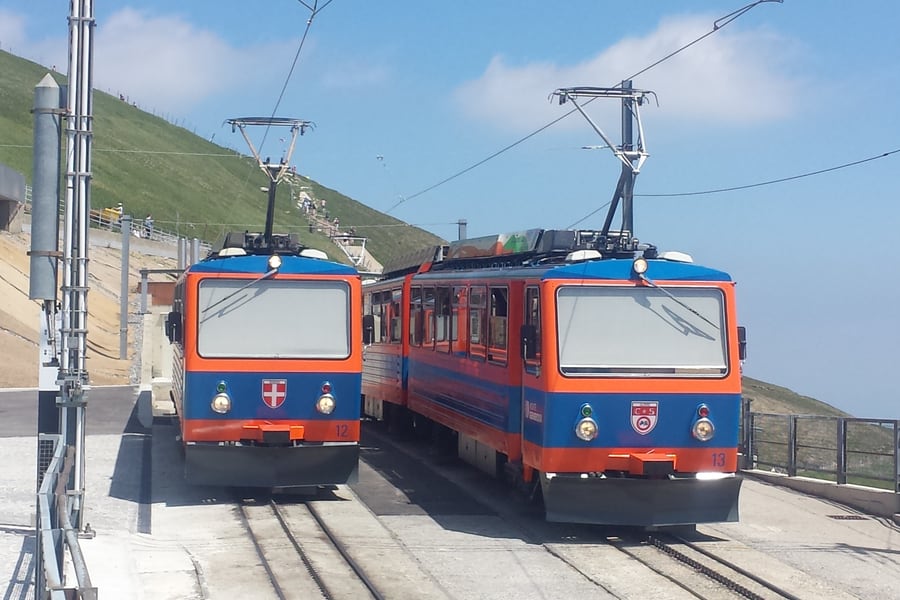
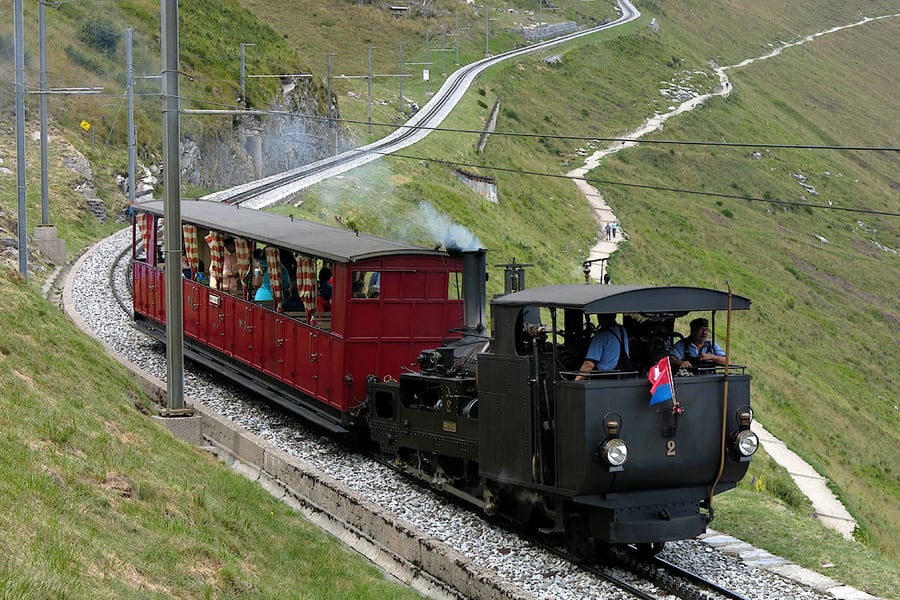
Four twin railcars do the work: Bhe 4/8 11 to 14, built by the Swiss Locomotive and Machine Works at Winterthur with Siemens equipment for the electrification of 1982, and named Mendrisio, Mendrisio, Salorino and San Gallo. They are close cousins of the sets that climb to Rochers-de-Naye above Montreux, ordered a year later to almost the same drawings. The railway also keeps H 2/3 No. 2, one of the six SLM steam locomotives delivered for the opening in 1890, with its boiler mounted horizontally across the middle of the frame, the cab at the downhill end and a small luggage compartment at the top. It was a monument on a plinth at Capolago for years, was restored to working order and has been running special trains since June 1984 — three dates in the 2026 season. One of the diesels, D8, was built by the Brienz–Rothorn railway for itself in 1973 and reached Ticino by way of Rochers-de-Naye in 2015, so three of the Swiss rack lines have had the use of it.
The track under all of it is new. Between November 2019 and March 2023 the entire superstructure was taken up in four winter phases and replaced with new rails, new rack bars and steel sleepers, at a cost of twenty-two million francs met by the Migros Culture Percentage — the share of turnover the retailer's statutes oblige it to spend on culture and leisure. It is an unusual line in a railway budget, and it is why the fare on Duttweiler's mountain has never had to carry the cost of the mountain.
Along the route
 JoachimKohler-HB / Wikimedia Commons · CC BY-SA 4.0 · 2017 · cropped
The rack that made it possible
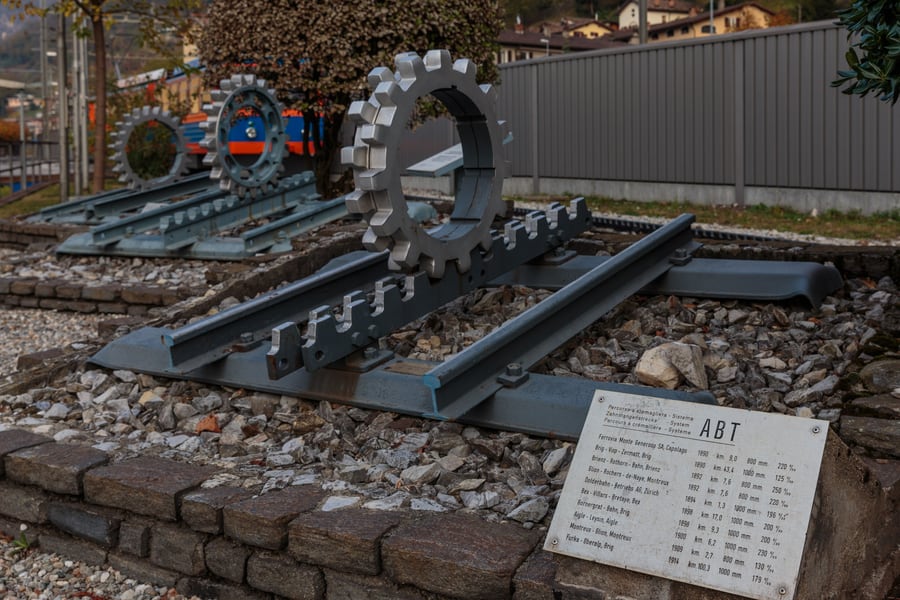
Carl Roman Abt ran the construction himself and used his own patented rack rather than the Riggenbach ladder rack of the Rigi, because it was significantly cheaper to lay and cost was the whole question in 1889. All nine kilometres are racked and the gradient reaches twenty-two per cent.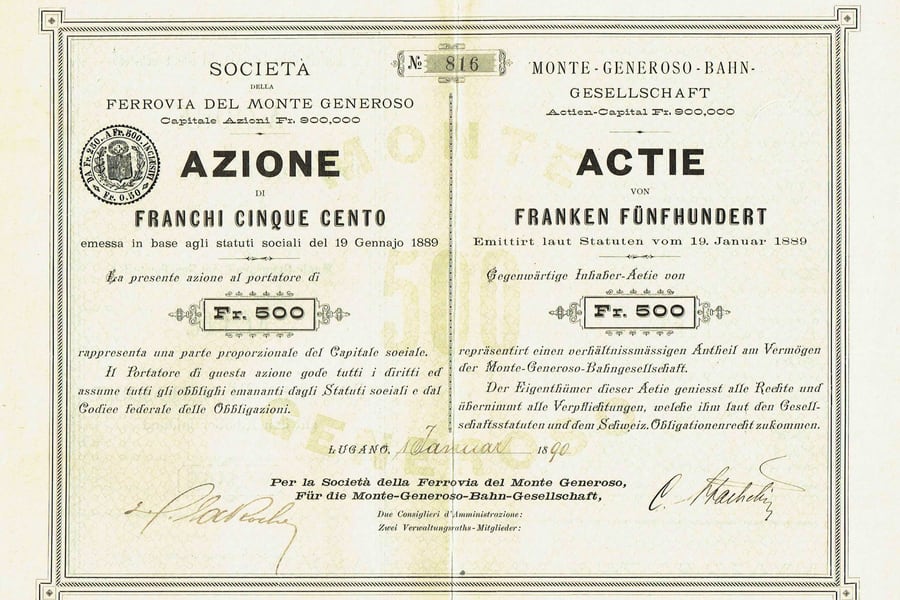 Scan by EDHAC e.V. / Wikimedia Commons · public domain · 1890
Five hundred francs, and fifty years of trouble
The company that finally built the line issued shares like this one and went into liquidation in 1904. Its successor went bankrupt in 1914, was refounded in 1916 and recapitalised in 1921. By 1941 the proposal was to lift the track and sell the iron.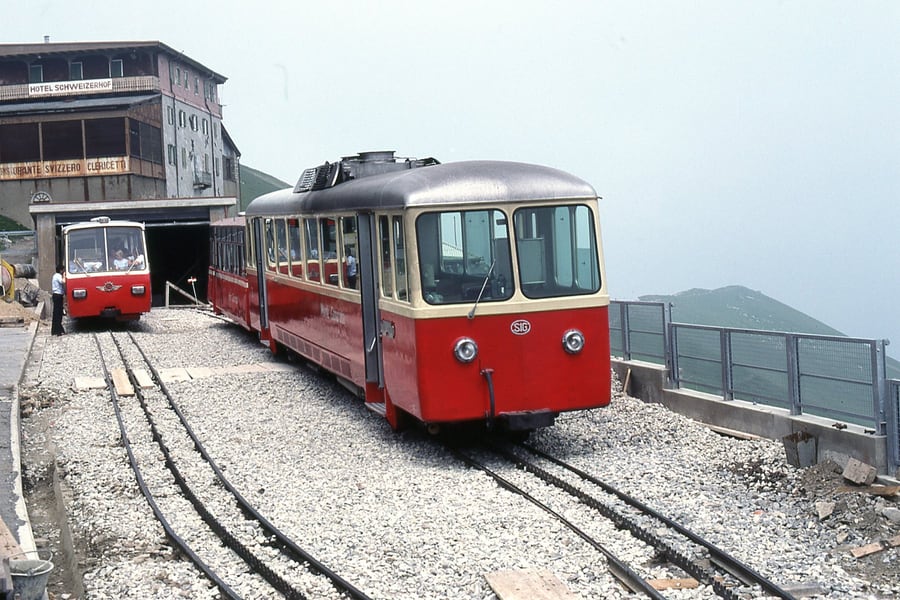 Alain Gavillet / Wikimedia Commons · CC BY 2.0 · before 1982 · cropped
The hotel that came down
The summit hotel of 1970 came down in 2014, and the railway then shut to passengers for three seasons while Mario Botta's replacement went up, carrying cement and workmen instead. This is the old summit before the 1982 electrification.A bit of history
Culture & experiences along the way
 Giorgio Stagni / Wikimedia Commons · CC BY-SA 3.0 · 2017 · cropped
Steam, three days a year
One of the six locomotives the Swiss Locomotive and Machine Works delivered for the opening in 1890 is still here. H 2/3 No. 2 stood on a plinth at Capolago for years, was restored to working order and has run special trains since June 1984. It is booked for 25 July, 15 August and 19 September 2026, and it takes its water on the way up, as it did in the 1890s. Ordinary tickets and the annual pass are not valid on it.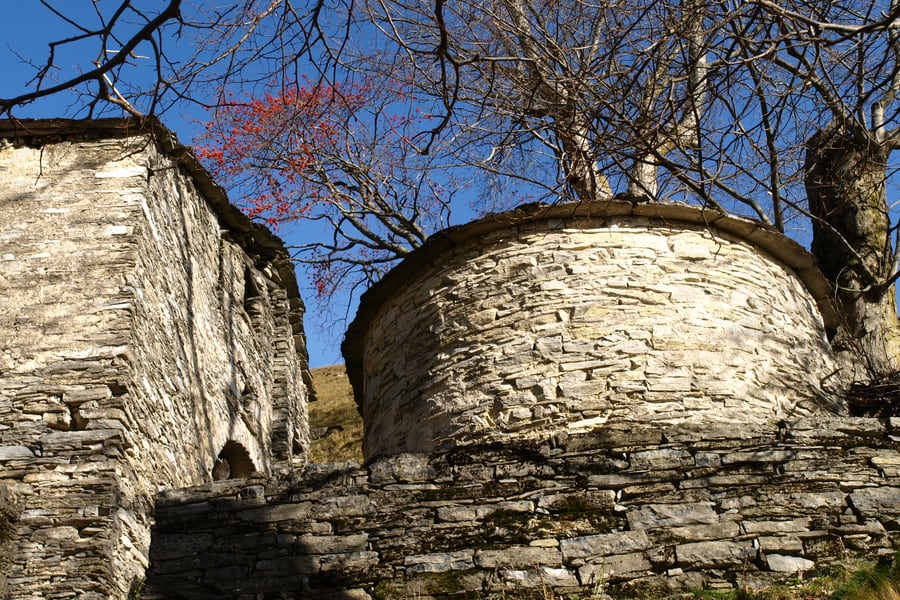 Paolo Crivelli / Wikimedia Commons · CC BY-SA 4.0 · 2009 · cropped
The nevère of the Valle di Muggio
A circular walk from the summit station over the top of the mountain to Alpe Nadigh and Alpe Génor passes eleven nevère — squat cylinders of dry stone, built over a cold spring or a snow pit, in which the alp farmers kept milk and cheese before there was any other way to keep them cold. They are the signature building of the Valle di Muggio, which the Swiss Landscape Foundation named Swiss Landscape of the Year in 2014.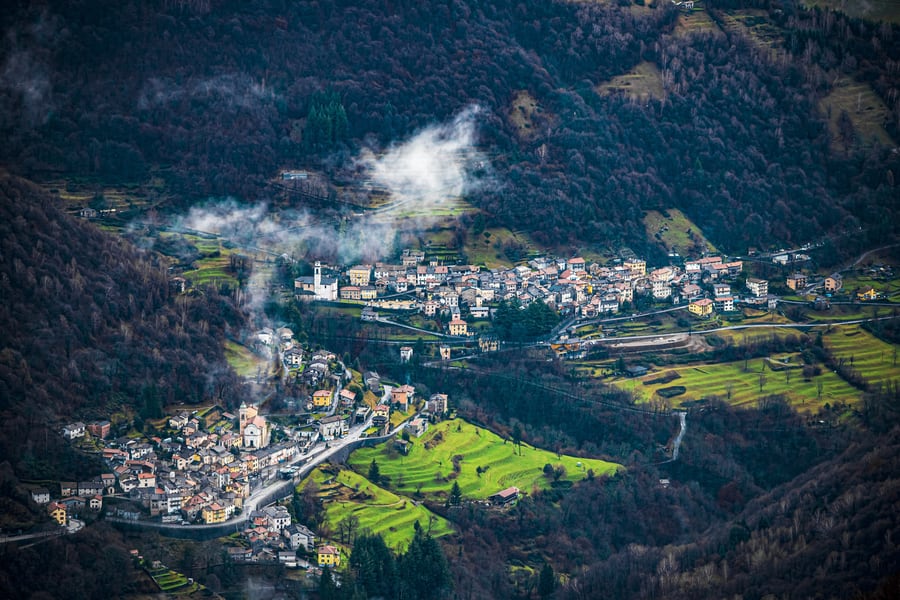 Ivo1992 / Wikimedia Commons · CC BY-SA 4.0 · 2019 · cropped
Walking down the far side
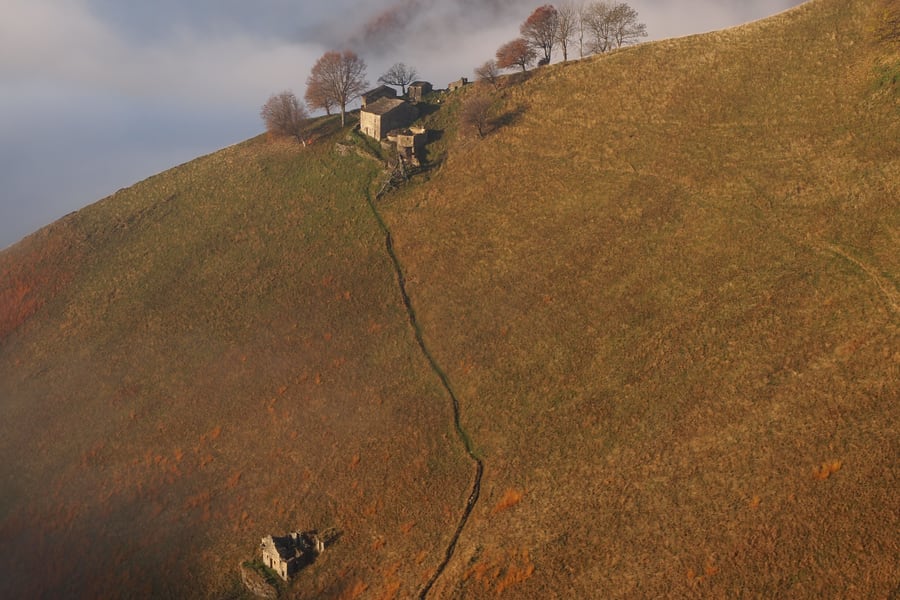
The eastern slope drops into the Valle di Muggio, the southernmost valley in Switzerland, and the paths off the summit lead down through chestnut woods to villages of stone roofs, water mills, two-storey chestnut-drying huts called graa, and the mountain's own colony of three hundred chamois, which have been here since the 1960s and rarely move more than thirty metres away from walkers.Timetables
The Ferrovia Monte Generoso publishes two timetables, and which one is running depends on the date rather than the day of the week. Both are shown below as of August 2026, taken from the operator's own pages and checked departure by departure against the Swiss national timetable database.
High season: 2 May – 25 October 2026, every day
Seven trains each way. The journey takes forty minutes in each direction, and ascending and descending trains cross at Bellavista.
Up the mountain
| Capolago | S. Nicolao | Bellavista | Generoso Vetta |
|---|---|---|---|
| 09:35 | 09:45 | 10:00 | 10:15 |
| 10:35 | 10:45 | 11:00 | 11:15 |
| 11:35 | 11:45 | 12:00 | 12:15 |
| 13:35 | 13:45 | 14:00 | 14:15 |
| 14:35 | 14:45 | 15:00 | 15:15 |
| 15:35 | 15:45 | 16:00 | 16:15 |
| 16:35 | 16:45 | 17:00 | 17:15 |
Down the mountain
| Generoso Vetta | Bellavista | S. Nicolao | Capolago |
|---|---|---|---|
| 10:45 | 11:00 | 11:15 | 11:25 |
| 11:45 | 12:00 | 12:15 | 12:25 |
| 13:45 | 14:00 | 14:15 | 14:25 |
| 14:45 | 15:00 | 15:15 | 15:25 |
| 15:45 | 16:00 | 16:15 | 16:25 |
| 16:45 | 17:00 | 17:15 | 17:25 |
| 17:45 | 18:00 | 18:15 | 18:25 |
There is no 12:35 up and no 12:45 down: the gap in the middle of the day is in the printed timetable and is not a misprint.
Low season: four trains
Up the mountain
| Capolago | S. Nicolao | Bellavista | Generoso Vetta |
|---|---|---|---|
| 10:35 | 10:45 | 11:00 | 11:15 |
| 11:35 | 11:45 | 12:00 | 12:15 |
| 13:35 | 13:45 | 14:00 | 14:15 |
| 14:35 | 14:45 | 15:00 | 15:15 |
Down the mountain
| Generoso Vetta | Bellavista | S. Nicolao | Capolago |
|---|---|---|---|
| 12:45 | 13:00 | 13:15 | 13:25 |
| 13:45 | 14:00 | 14:15 | 14:25 |
| 14:45 | 15:00 | 15:15 | 15:25 |
| 15:45 | 16:00 | 16:15 | 16:25 |
That timetable runs every day from 26 October to 8 November 2026, from 21 December 2026 to 6 January 2027, and from 29 March to 30 April 2027. From 5 December 2026 to 28 March 2027 it runs on Saturdays, Sundays and public holidays only — the operator lists 8 December 2026, 25 and 26 December 2026, 1 and 6 January 2027 and 19 March 2027 as the holidays that count.
Between 9 November and 4 December 2026 the railway does not run at all. A test query against the national database for Sunday 15 November returns no train, while the same query for Saturday 16 January 2027 returns the four winter departures, so the closed period is real and the weekend-only pattern is real.
Steam and connections
The 1890 locomotive is booked for three dates in 2026: 25 July, 15 August and 19 September. Those are separate workings, not part of the timetable above, and the annual pass is not valid on them.
Capolago-Riva San Vitale is served by the TILO S10 between Bellinzona and Como, roughly every half hour in each direction, with connections at Lugano off the Gotthard main line. Boats of the Società Navigazione del Lago di Lugano call at the Capolago landing stage, about three hundred metres from the rack-railway terminus; the railway's own platform at Capolago Lago, beside the landing, is no longer served.
In bad weather the trains do not run. The operator says so plainly on both timetable pages, and on a mountain that makes its own cloud it is worth taking at face value.
Times as published by the Ferrovia Monte Generoso in August 2026, for the 2026 season and the 2026–27 winter. Full timetable: montegeneroso.ch (opens in a new tab).
Tickets
Tickets come from the office at Capolago, from sbb.ch up to two months ahead, and in cash from the conductor on board. There is no seat reservation for individual travellers — the operator suggests being at Capolago about twenty minutes before departure — and reservation is compulsory only for groups of ten or more. A GA travelcard, Half Fare Card or Swiss Travel Pass halves every fare, as does being aged 6 to 15; under-sixes travel free. A bicycle, a dog or a paragliding bag is a flat CHF 9.00 for the day.
Two local discounts are worth knowing about. The Ticino Ticket, given to anyone staying overnight at one of the canton's 500-odd partner properties, takes 30 per cent off, and so does proof of residence in Ticino. A birthday travels free on the day, against an ID. Fares as published by the Ferrovia Monte Generoso in August 2026: montegeneroso.ch (opens in a new tab).
Book your tickets
Capolago – Generoso Vetta, return
CHF 72.00 in high season · CHF 54.00 in winter · half that with a GA, Half Fare Card or Swiss Travel Pass
The whole line and back, forty minutes each way, valid on any departure.
Book Tickets (opens in a new tab, on montegeneroso.ch)via montegeneroso.chTrain and lunch
CHF 75.00 to the summit · CHF 65.00 to Bellavista
The return trip plus a dish from the buffet, a soft drink and a hot drink.
Book Tickets (opens in a new tab, on montegeneroso.ch)via montegeneroso.chAmici del Generoso, the annual pass
CHF 150.00 · CHF 175.00 for a family of up to five
Unlimited travel for 365 days — two high-season returns already cost more.
Book Tickets (opens in a new tab, on montegeneroso.ch)via montegeneroso.chRail Passes
The short answer is that no pass carries anyone up Monte Generoso free of charge, and one widely held pass is worth nothing at all here. The railway is a private company outside the national fare system, and it says so on its own price page.
Swiss Travel Pass, Swiss Half Fare Card and the GA
All three give 50 per cent off, in both seasons and on every section. A high-season return to the summit falls from CHF 72.00 to CHF 36.00, and a return to Bellavista from CHF 48.00 to CHF 24.00. That is the whole benefit: the Ferrovia Monte Generoso lies outside the area of validity of the General Abonnement, so EasyRide does not work here and an SBB day pass is not valid — the operator states both. Day passes issued by municipalities are not accepted either.
Because the reduction is the same for all three, the Swiss Half Fare Card is the better buy for anyone whose Swiss trip is built around mountain railways rather than around long main-line journeys — it halves this fare exactly as the much more expensive Swiss Travel Pass does.
Interrail and Eurail: nothing
The Monte Generoso railway appears neither in the free-travel list nor in the bonuses list of the 2026 Swiss validity map that Interrail and Eurail publish for pass holders. The free list names the SBB network and about thirty private railways; the bonus list names the mountain railways that give 25 or 50 per cent, including the Pilatus, the Rigi, the Schilthorn and the Jungfrau group. The FMG is in neither, so an Interrail or Eurail pass buys a pass holder the S10 as far as Capolago and no further. The full adult fare applies from there.
The passes that do help
- Ticino Ticket, given to guests of the canton's partner accommodations, takes 30 per cent off — and it also covers the S10 journey to Capolago in the first place.
- Amici del Generoso, the railway's own annual pass at CHF 150.00, pays for itself on the second return trip to the summit. It is not valid on the steam trains or on special workings.
- A Disabled Passenger's ID Card entitles the holder to take a companion: if one of the two has a valid ticket, GA or half-fare ticket, the other travels free. Guide dogs travel free.
Is a pass worth buying for this journey?
Not on its own. A Swiss Half Fare Card costs more than the CHF 36.00 it would save on one return trip, so it only pays if the rest of the trip uses it too. For a stay in Ticino the arithmetic is different: the Ticino Ticket arrives with the hotel room at no extra cost, covers the train to Capolago and takes CHF 21.60 off the summit return, which is the best available answer for most visitors.
Pass conditions checked in August 2026 against the operator's own price pages and the SBB validity map for 2026 published by Interrail.
Places to Visit
Four stops in nine kilometres, and the two at the bottom are villages on the lake rather than stations in a field. The one in the middle is a grotto in the beech woods that has been feeding passengers since 1890, and the one at the top is a stone flower on a ridge with Italy on the far side. What follows is what is actually at each of them.
 JoachimKohler-HB / Wikimedia Commons · CC BY-SA 4.0 · 2017 · cropped
Capolago
A village of about eight hundred people at the head of Lake Lugano — the name means exactly that — and a quarter of Mendrisio rather than a municipality of its own. Carlo Maderno was born here in 1556 and went on to build the façade of St Peter's in Rome; the Tipografia Elvetica printed for the Italian Risorgimento from the village; and in 1891 Capolago hosted the anarchist congress attended by Malatesta, Gori, Cipriani and Merlino.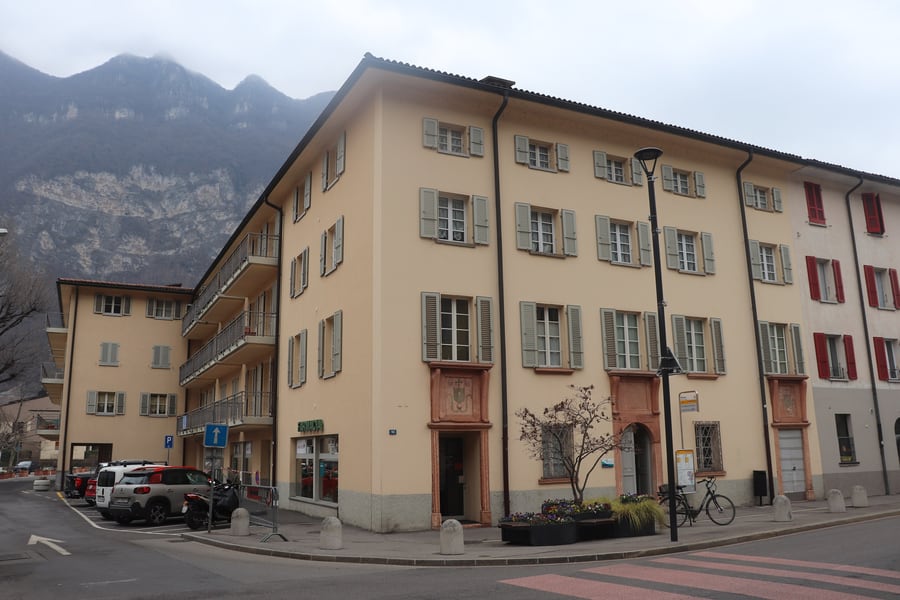 Andrzej Otrębski / Wikimedia Commons · CC BY-SA 4.0 · 2024 · cropped
Riva San Vitale
The village round the bay from Capolago, and the older of the two: first recorded in 774, a Roman settlement before that. The Baptistery of San Giovanni stands on Roman foundations and dates from about the year 500, which makes it the oldest fully preserved church in Switzerland. Santa Croce, built for the Della Croce family between 1582 and 1591, is one of the country's finest late Renaissance churches. Both are a short walk from the station.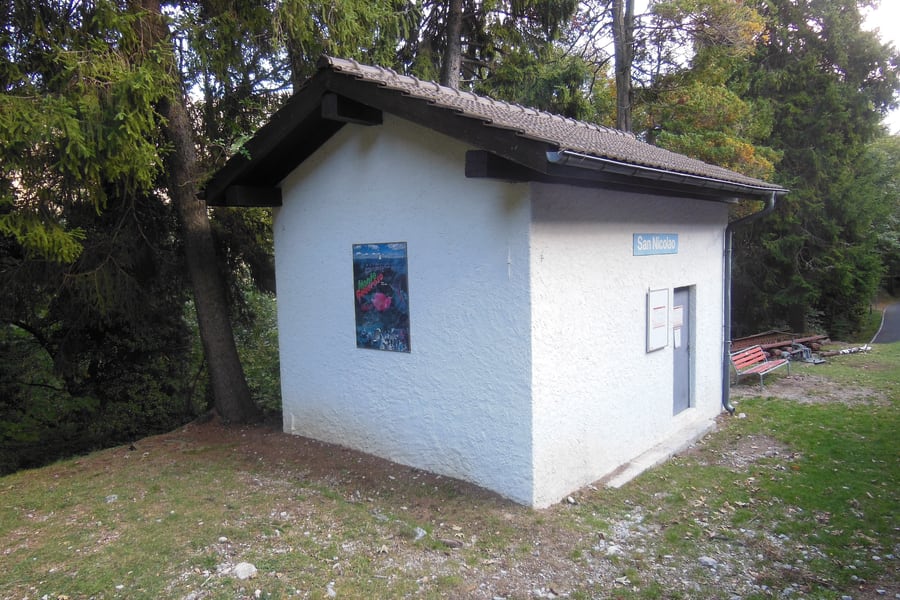 Chris j wood / Wikimedia Commons · CC BY-SA 3.0 · 2012 · cropped
S. Nicolao
A passing loop, a clearing and a small white shelter among the chestnut woods, and nothing else at all. It is the first stop, ten minutes from the lake, and it exists for the footpaths: several of the mountain's fifty-one kilometres of waymarked routes start here, including the long way up to Bellavista on foot. Tickets are sold on the platform by the conductor, in cash.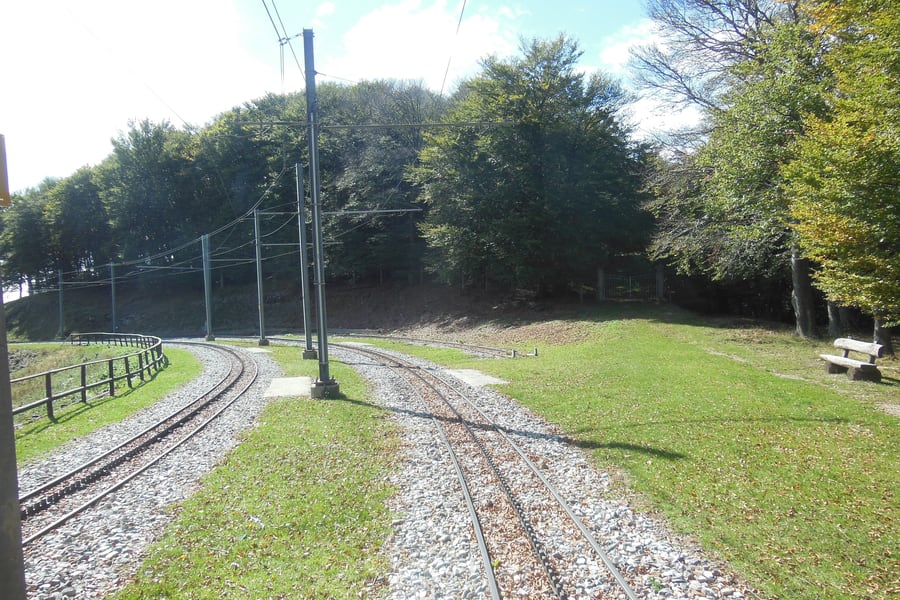 Chris j wood / Wikimedia Commons · CC BY-SA 3.0 · 2012 · cropped
Bellavista
The middle station, and a destination in its own right. Ascending and descending trains cross here, so anyone getting off has a clean hour. The Buffet Bellavista has fed excursionists since 1890 and reopened in October 2022 after a year's rebuilding as a grotto of about forty covers, with a picnic area and a playground outside. From 1891 until 1938 a 600-millimetre horse tramway ran from this platform to Doctor Pasta's hotel; the meadow it crossed is still open ground.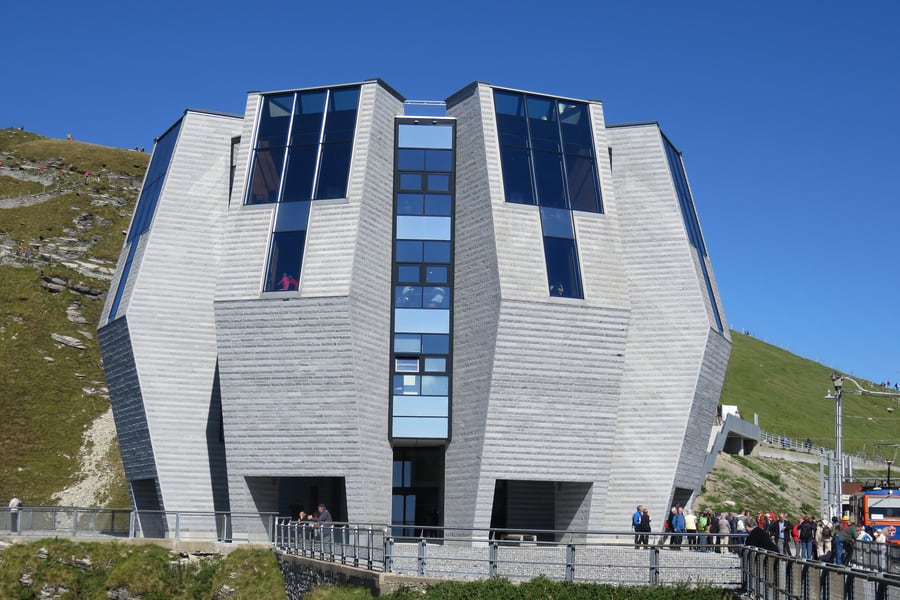 TValli / Wikimedia Commons · public domain · cropped
Generoso Vetta
The highest railway station in Ticino, a few metres from the international border and a short walk below the 1,704-metre top. Above it stands the Fiore di pietra, the stone flower Mario Botta finished in 2017: a faceted grey tower leaning outward and closing in again at the top, holding a gastronomic restaurant, a self-service one, an exhibition about the railway and a roof terrace. The path along the ridge is paved and level enough for a wheelchair, and the Pathway of the Planets runs off it.Where to Sleep
Nobody sleeps on the mountain. The Hotel Vetta at the summit was pulled down in 2014 and the Fiore di pietra that replaced it has restaurants, a shop and a conference room but no bedrooms, and the Buffet Bellavista at the middle station serves food and does not let rooms. The last train down is part of the plan, and the beds are all at the bottom, around the head of Lake Lugano.
That is not a hardship. Capolago and Riva San Vitale sit at the water's edge a few minutes' walk from the rack railway's own track, the S10 puts Lugano twenty minutes away in one direction and Como in the other, and a night anywhere in the canton brings a Ticino Ticket with it — free public transport across Ticino, and 30 per cent off the climb. The railway also runs its own campsite on the shore at Melano, one station up the main line at Maroggia-Melano, which is the closest thing to sleeping on the company's own ground.
Where to stay
Albergo Ristorante Svizzero
Across the road from the rack railway, Capolago
An eighteenth-century building a hundred metres from Capolago-Riva San Vitale station and directly opposite the point where the Monte Generoso trains start, with twenty-three rooms and family management. The restaurant runs to meat, fish and cheese fondues, charcoal-grill dishes and pizza from a wood oven, and the hotel sells its own Monte Generoso package. The public beach on Lake Lugano is a short walk away.
Check Availability (opens in a new tab, on albergoristorantesvizzero.com)via albergoristorantesvizzero.comCamping Monte Generoso
The railway's own campsite, on the shore at Melano
The Ferrovia Monte Generoso runs a lakeside campsite at Melano, one station up the main line at Maroggia-Melano, with pitches, caravans for hire, a minimarket, a bar, a pizza and grill kitchen, a playground and a boules court. Dogs are welcome. It is the closest thing there is to sleeping on the railway's own ground, since nothing on the mountain lets rooms.
Check Availability (opens in a new tab, on montegeneroso.ch)via montegeneroso.chHotel Serpiano
On Monte San Giorgio, facing the line across the lake
A hotel on the wooded shoulder of Monte San Giorgio, the fossil mountain on the far side of the lake that UNESCO inscribed as a World Heritage Site, reached by the cableway up from Brusino Arsizio. Rooms have balconies facing either the lake or the mountain, and there is an indoor pool, a sauna and a steam bath. It runs to a season and sells passes for the cableway and the spa by the year.
Check Availability (opens in a new tab, on serpiano.ch)via serpiano.chHotel Coronado
In Mendrisio, four hundred metres from the station
A conference hotel in Mendrisio, the town two of the railcars are named after, four hundred metres from the SBB station and one stop down the line from Capolago. Rooms run from standard doubles to a four-bed family room, there is a food hall and bar on the ground floor, and thirteen meeting rooms behind it — which makes it the practical choice for anyone coming to the Mendrisiotto for something other than the mountain.
Check Availability (opens in a new tab, on hotelcoronado.ch)via hotelcoronado.chQuestions or corrections
Planning this trip and stuck on something, or spotted a time, fare or detail that has changed? Send us a message about Monte Generoso Railway. We read every one, and we update this page when something has changed.