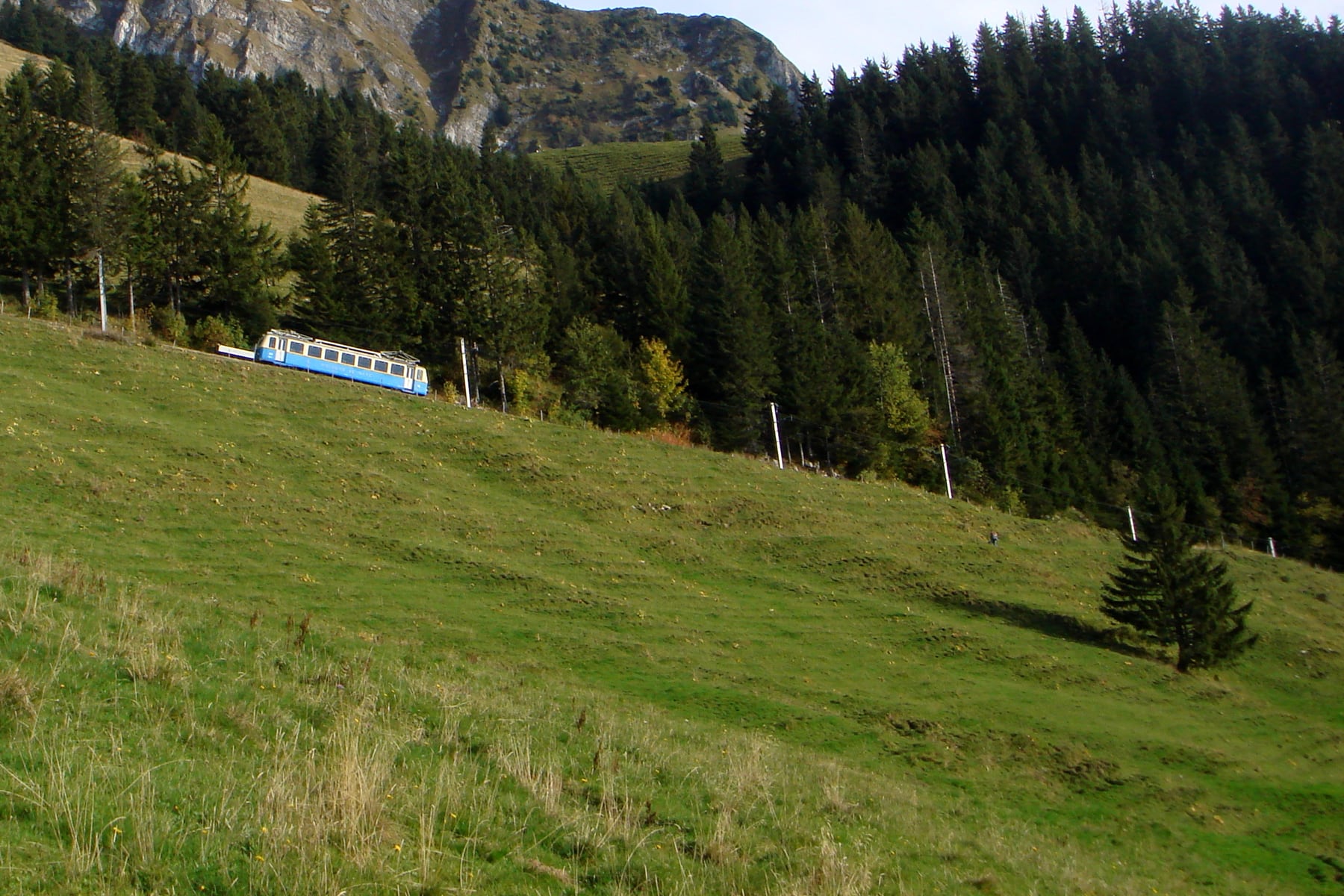
Montreux – Rochers-de-Naye
Simon LEPÊTRE / Wikimedia Commons · CC BY-SA 3.0
- Distance10.4 km
- Duration48 minutes up · 57 down
- Best seasonAll year; ten trains a day each way in summer, eight in winter
Introduction
Most mountain railways are built from the town upwards. The line to the Rochers de Naye was built the other way round. The seven and a half kilometres from Glion to the summit opened in 1892; the two and a bit from Montreux up to Glion did not open until 1909. For seventeen years the bottom of this railway simply did not exist, because it did not have to — passengers reached Glion on the funicular that had been hauling itself up from the lakeside at Territet since 1883, and changed there into a rack train.
Everything odd about the line follows from that. It was two railways with two owners, joined end to end at Glion, and they stayed two companies until the late 1980s. The upper half ran on steam and the lower half, opened later, ran on electricity from its first day, so until 1938 the train was handed over halfway up from an electric rack locomotive to a coal-fired one. The workshops are still at Glion, in the middle of the line rather than at either end. The funicular is still there too, still running to its ordinary timetable.
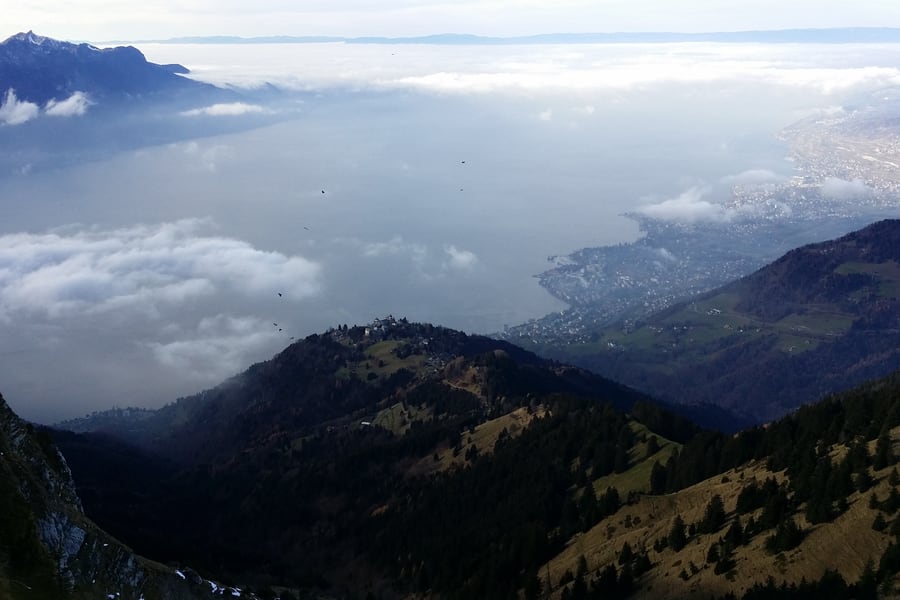
What the passenger gets is forty-eight minutes and a little over fifteen hundred metres of climbing, on rails eight hundred millimetres apart, from a platform inside Montreux station to a terminus buried under a restaurant a little below the 2,042-metre summit. Lake Geneva is on one side almost the whole way, and it keeps changing sides as the line turns.
The Journey
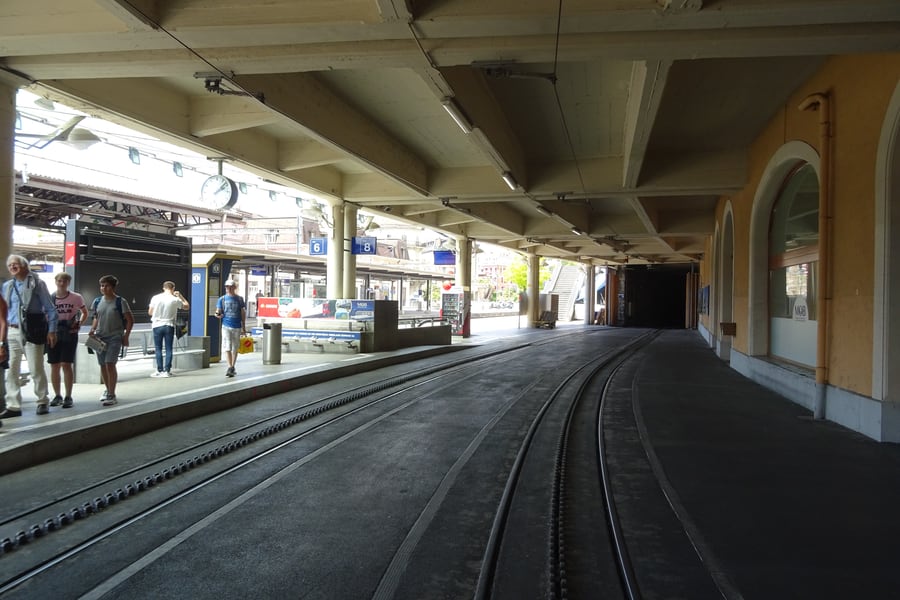
The train leaves from platform 8 at Montreux, which is not a platform at the front of the station but a slot at the side of it, under the canopy, with the rack ladder lying between the rails and a tunnel mouth a few metres ahead. Montreux carries three track gauges: the Swiss federal main line along the lake at 1,435 millimetres, the Montreux–Oberland Bernois at 1,000, and this line at 800. The narrowest of the three is the one that goes uphill.
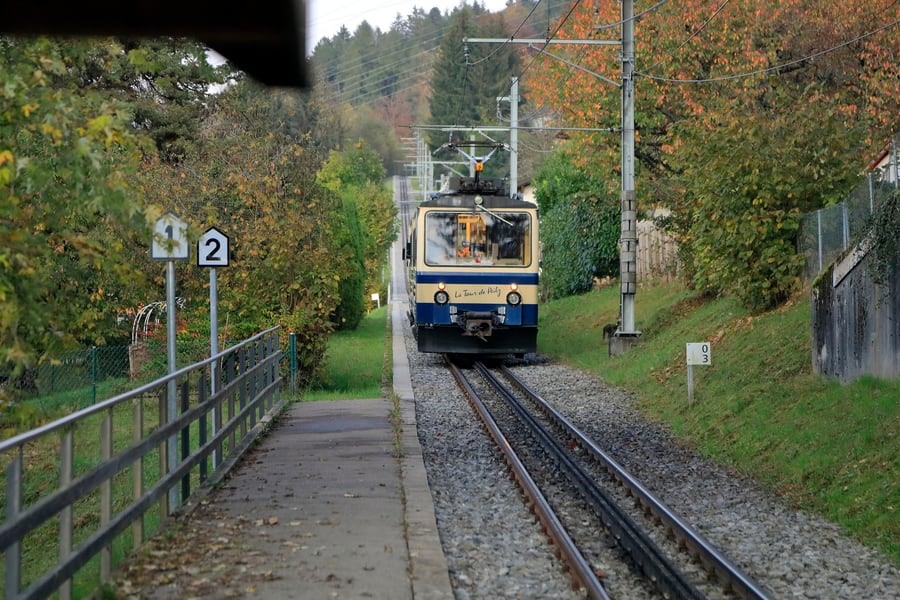
Getting in here cost the Montreux–Glion company something. The Jura–Simplon Railway, which owned the station, would not find room for a rack railway in it, so the company bought a hotel standing beside the station, pulled it down, and rebuilt on the site with its own terminus inside the new building. The climbing starts almost at once. Within a couple of hundred metres the line is in the first of its tunnels, and it then works up the wooded face above the town in a series of tight curves, so that the lake appears on the left, disappears, and comes back on the right.
Glion, where the railway was joined
Glion sits on a shelf about three hundred metres above the water, and it is where the two halves of the line meet. The workshops and the depot are here, alongside the running line as it leaves the station, and so is the top station of the Territet–Glion funicular, which opened in 1883 and was the original way up. Between 1909 and 1938 this was a working interchange of a different kind: the electric rack locomotives of the lower line pushed their carriages as far as Glion and handed them over to the steam engines of the upper one. Those steam engines were named after the places they served — Montreux, Lausanne, Vevey, Jaman, Glion, Naye, Caux, Territet — and when the upper line was electrified on 25 July 1938 they had no work left. Four of them went across the country between 1941 and 1956 to the Monte Generoso railway in Ticino, which was still steam.
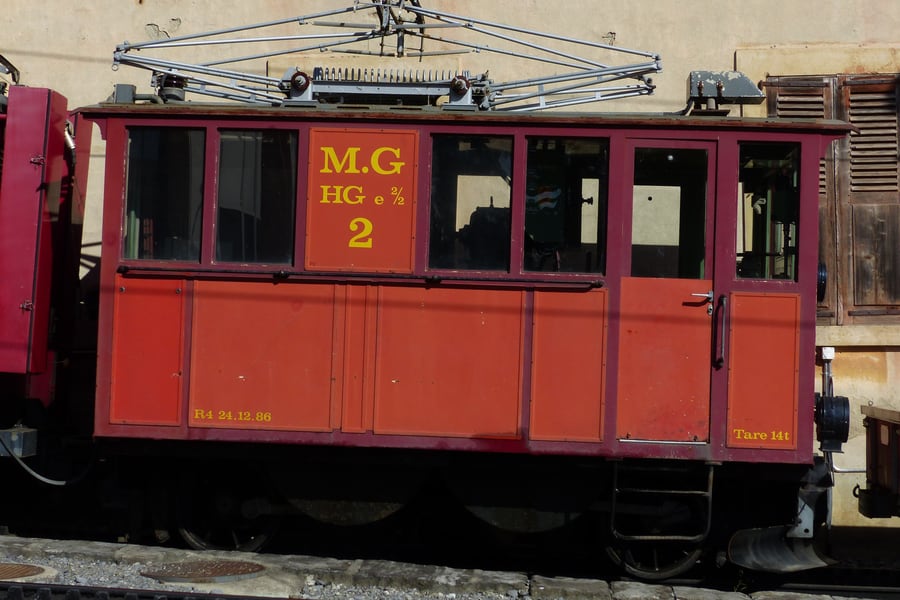
One machine from that era has stayed. HGe 2/2 No. 2, an electric rack locomotive of 1909 in a deep red livery with its number painted on the side in gold, stands in the open in front of the Glion depot. Its two sisters are gone: No. 1 was destroyed by an avalanche in 1966, and No. 3 was written off after a service train ran back down the hill and derailed in September 2011.
Above Glion
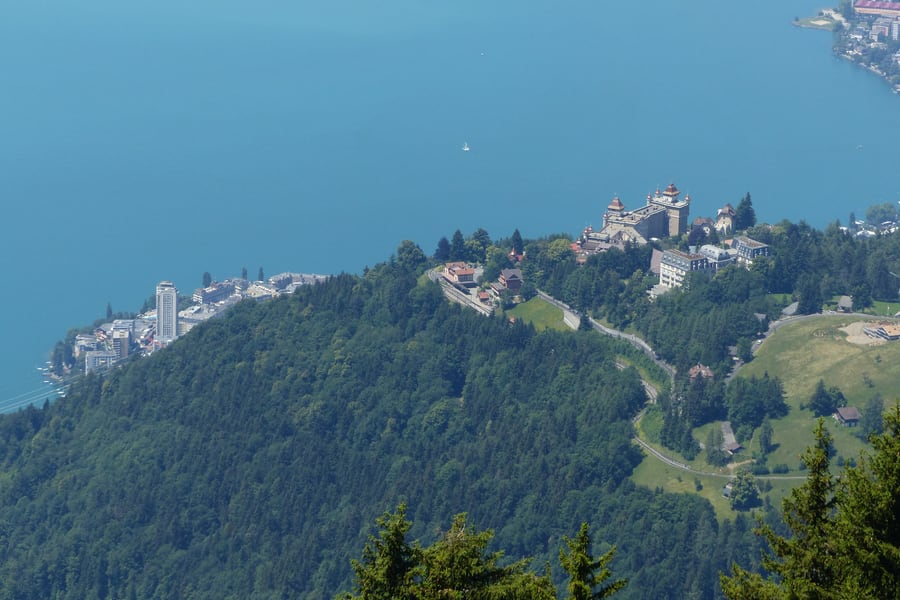
Beyond Glion the line clears the trees and the character changes. There are three more stops that count as stations rather than halts — Caux, Haut-de-Caux and Jaman — and a scatter of request halts between them with names like Le Tremblex, Les Echets, Crêt-d'y-Bau, Paccot and La Perche. Caux announces itself long before the train reaches it, because the Caux Palace stands on the hillside above the track with its turrets and steep red roofs, and there is no mistaking it for anything else.
Caux is also where the road stops. Nothing above it on this side of the mountain can be driven to, so from that point the train is not a scenic alternative to anything — it is the way up. It is also the highest railway in the canton of Vaud.
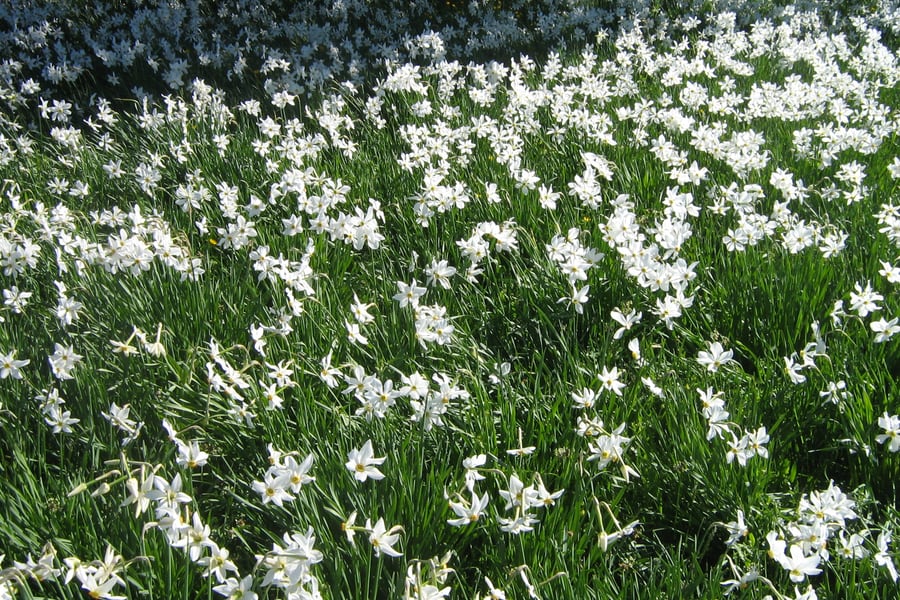
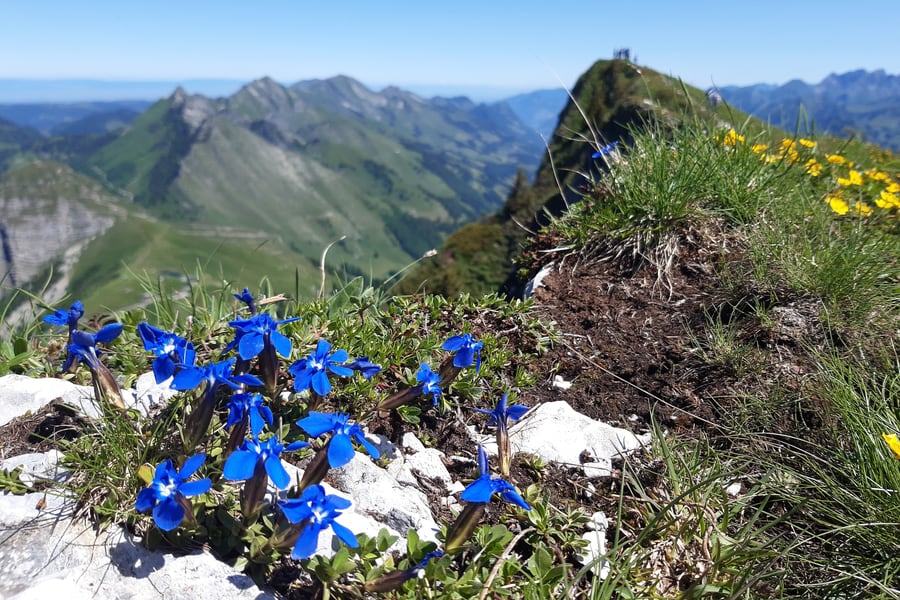
This is narcissus country. From May to the beginning of June the meadows on the heights above Montreux and Vevey turn white with wild narcissi — the operator calls it May snow — and the flowers grow right up to the fence beside the line. Later in the summer the same slopes carry gentians and alpine pinks, and by late October the larches below Jaman have turned.
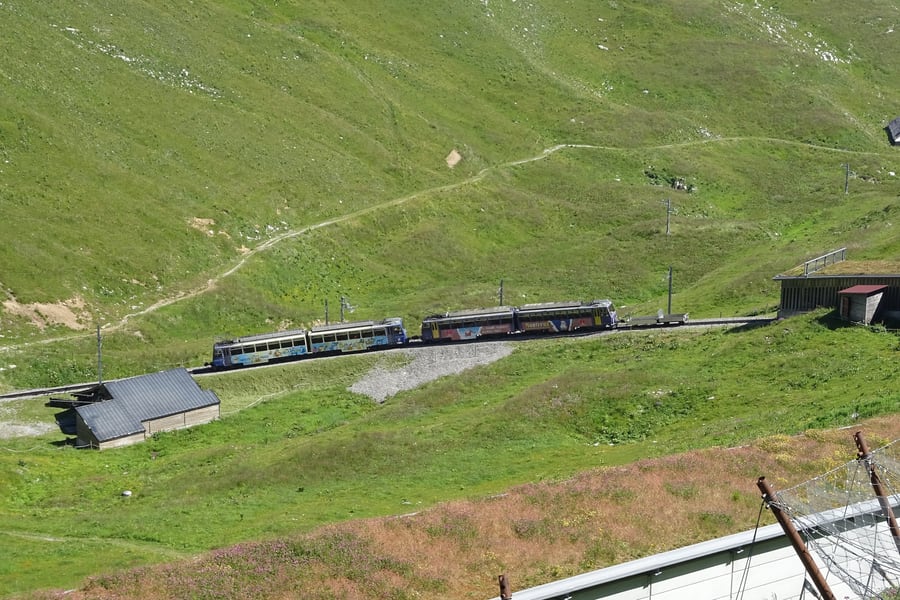
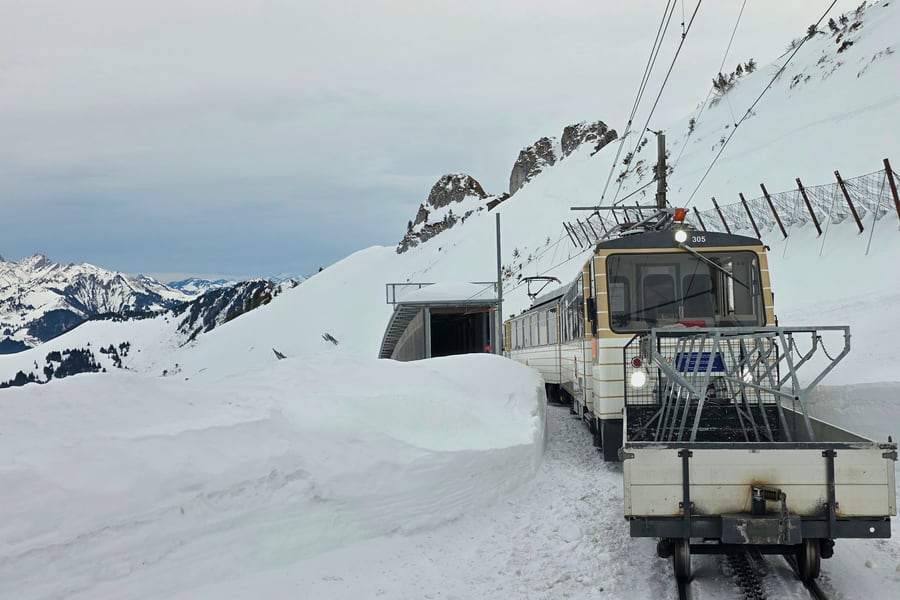
The last stretch is bare. The train crosses open pasture below the ridge, runs through a short avalanche gallery, and comes up on to the terrace at the end of the line. There are two tracks under cover, and the station is half buried, tucked in under the mountain restaurant that sits on top of it.
The trains
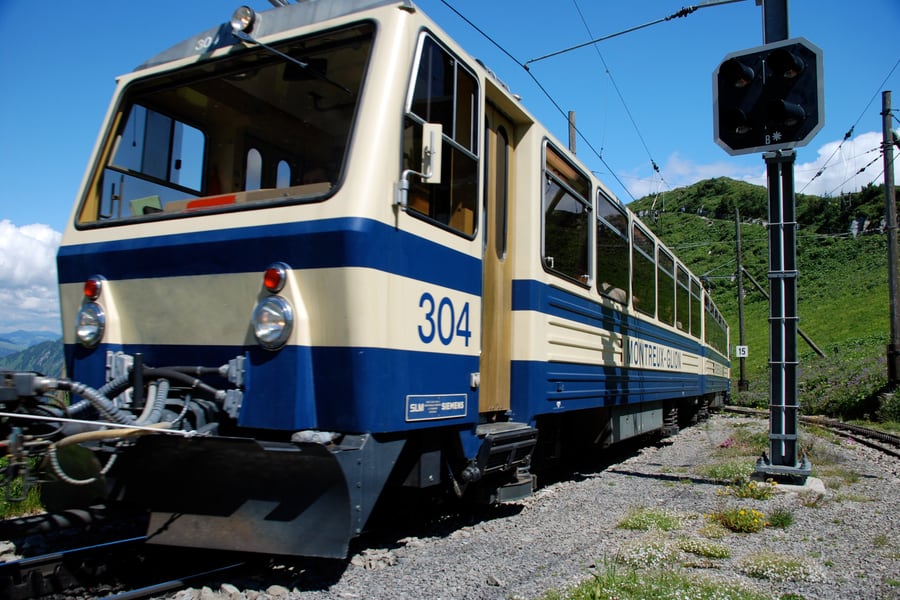
Five railcars do the work, all of them articulated Bhe 4/8 double units. Three were built in 1983 and carry the names of lakeside communes — Montreux, Veytaux, Villeneuve — a fourth, La Tour-de-Peilz, followed in 1992, and the fifth was assembled in 2010 in the company's own workshops at Chernex. A single older Bhe 2/4 railcar of 1938 survives alongside them, in a blue and cream livery with ROCHERS DE NAYE lettered along the side. Snow clearing and works trains fall to two Stadler-built Hem 2/2 machines delivered in 2013.
There is one class, and it is second. There is no seat reservation on the line, and no supplement. The trains are self-checking, with no conductor selling tickets on board. The line carried more than 113,000 passengers in 2023, its best year on record. More capable railcars are on the way; the date given for them is 2028, and they are expected to bring the run down to about forty minutes.
Along the route
 Whgler / Wikimedia Commons · CC BY-SA 4.0 · cropped
Two railways, joined at Glion
The upper line opened in 1892 and was worked by steam; the lower one opened in 1909 and was electric from its first day, so for twenty-nine years the train changed engines halfway up. This is one of the three electric rack locomotives bought for that job.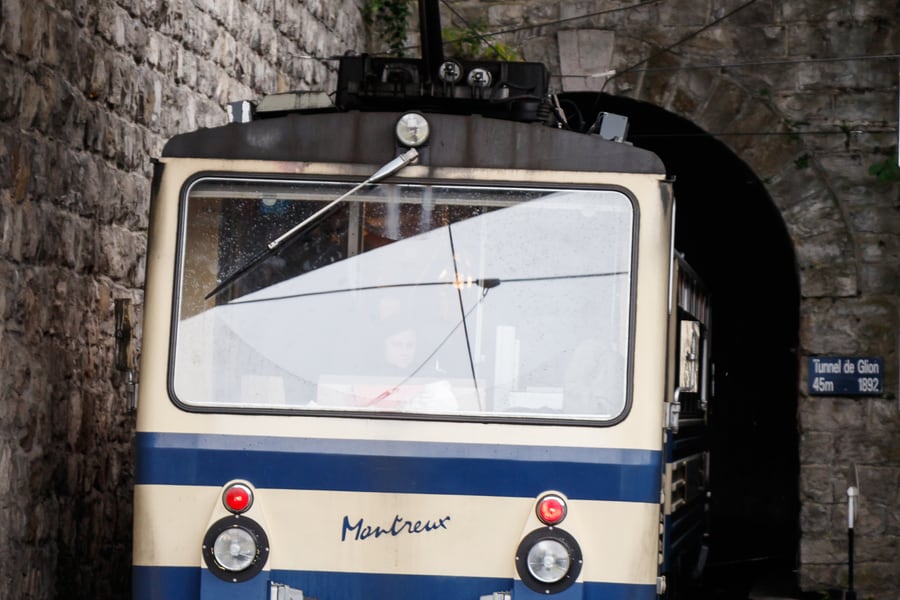 Llez / Wikimedia Commons · CC BY-SA 3.0 · cropped
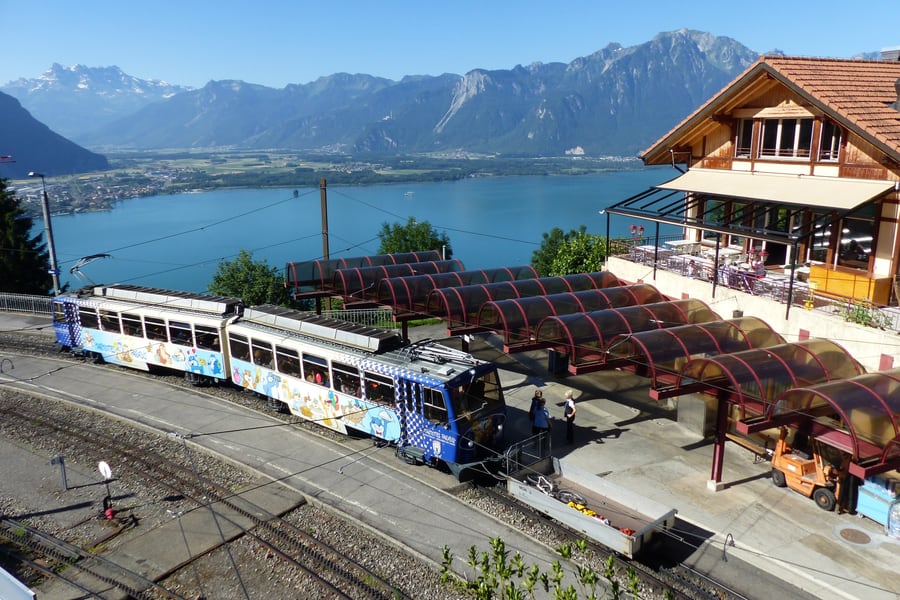
Eight hundred millimetres, and a rack all the way
The track is 800 mm wide, narrow even by mountain-railway standards, and Roman Abt's rack runs the length of it under 1,000 volts DC. The steepest grade is 220 in a thousand, and this is the highest railway in the canton of Vaud.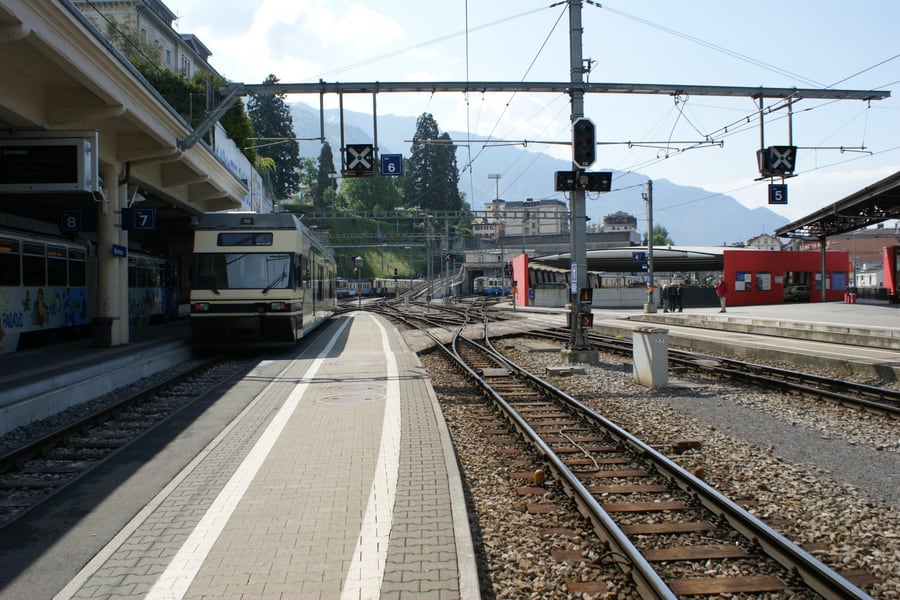 Markus Giger / Wikimedia Commons · CC BY-SA 4.0 · cropped
Three gauges in one station
Montreux holds the federal main line at 1,435 mm, the Montreux–Oberland Bernois at 1,000 and this line at 800. Getting the smallest in took some doing: the company bought the hotel next door, demolished it, and built its terminus into the replacement.A bit of history
Culture & experiences along the way
 Traumrune / Wikimedia Commons · CC BY-SA 3.0 · cropped
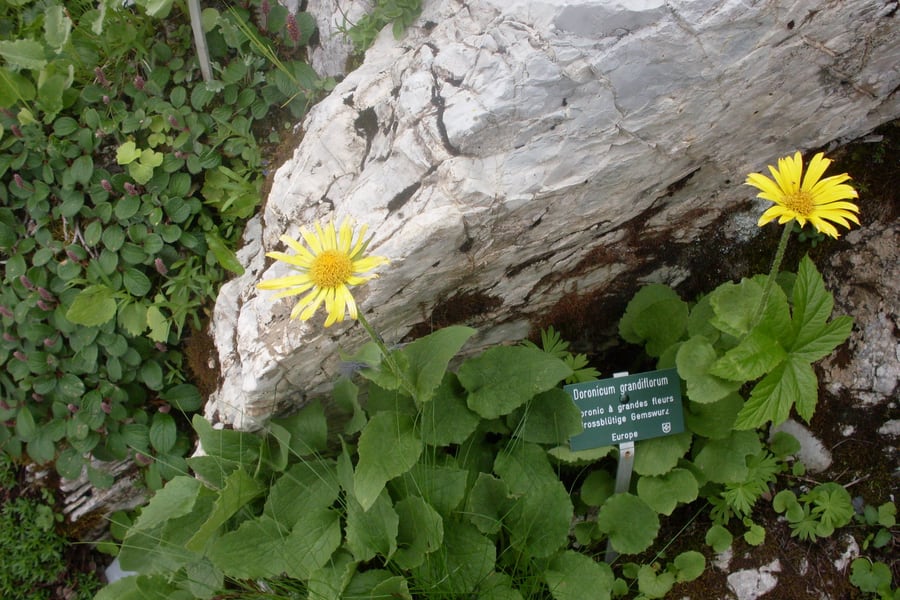
La Rambertia
An alpine garden opened in 1896 between two rock ribs at the summit, with more than a thousand high-altitude species.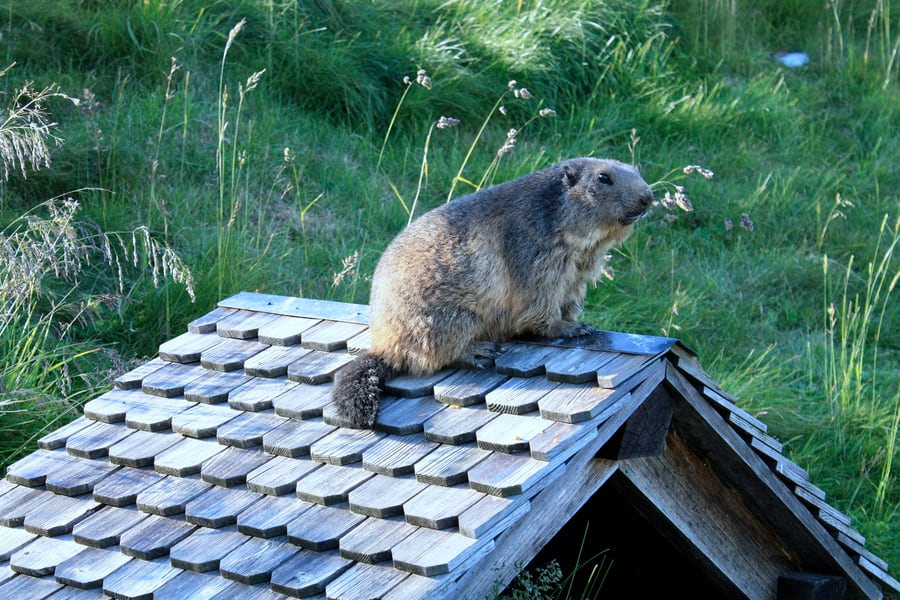 Stéphane Magnenat / Wikimedia Commons · CC BY-SA 3.0 · cropped
The marmot enclosures
Marmots from several countries live in enclosures on the open grass at the summit, this one a bobak from the steppe.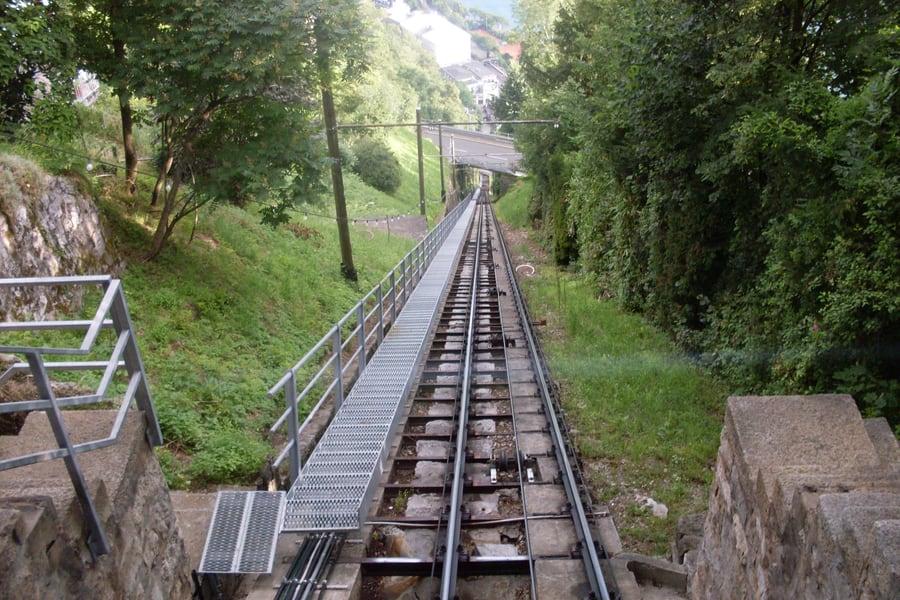 Traumrune / Wikimedia Commons · CC BY-SA 3.0 · cropped
The Territet–Glion funicular
The original way up, opened in 1883 and still running its own timetable — 600 metres of track from the lakeside to Glion.Timetables
The Rochers-de-Naye line runs all year, and it does two jobs with one timetable. Trains climb the whole way to the summit through the middle of the day; morning and evening, the same route is a local service that turns back at Haut-de-Caux for Glion and Caux, where people live. The first departure from Montreux is at 05:28 and the last at 23:34.
Times below were read from the Swiss timetable in August 2026, for travel in the 2026 timetable year. The operator publishes the current version at mob.ch (opens in a new tab).
To the summit, summer
Between spring and 25 October 2026 there are ten trains a day each way over the full line.
| Montreux | Rochers-de-Naye | Rochers-de-Naye | Montreux | |
|---|---|---|---|---|
| 08:28 | 09:14 | 09:27 | 10:24 | |
| 09:34 | 10:22 | 10:27 | 11:24 | |
| 10:34 | 11:22 | 11:27 | 12:24 | |
| 11:34 | 12:22 | 12:27 | 13:24 | |
| 12:34 | 13:22 | 13:27 | 14:24 | |
| 13:34 | 14:22 | 14:27 | 15:24 | |
| 14:34 | 15:22 | 15:27 | 16:24 | |
| 15:34 | 16:22 | 16:27 | 17:24 | |
| 16:34 | 17:22 | 17:27 | 18:24 | |
| 17:34 | 18:22 | 18:27 | 19:24 |
The pattern is hourly at 34 minutes past from Montreux and 27 minutes past from the summit. The first train of the day is the exception: it leaves at 08:28 and takes 46 minutes rather than 48. Coming down takes longer than going up — 57 minutes against 48 — because a rack train descends under brake, at a speed the brakes rather than the motors decide.
To the summit, winter
From 26 October the last two round trips are cut, and there are eight each way: up from Montreux at 08:28 and then hourly from 09:34 to 15:34, down from the summit hourly from 09:27 to 16:27. That holds through the Christmas and New Year period, Mondays included.
In January, February and March the operator takes Mondays and Tuesdays out of the upper section. The trains still run and keep their numbers, but they turn back at Haut-de-Caux, so on those two days there is no way to the top by rail. Wednesday to Sunday is unaffected. Checked against the timetable for Monday 11 and Tuesday 12 January 2027 and Monday 8 March 2027, when the summit board is empty while Haut-de-Caux keeps a full eighteen-departure day.
Below Haut-de-Caux
The local service to Glion and Caux is roughly hourly all day and well into the evening — from Montreux at 05:28, 06:28, 07:28 and then at 34 minutes past each hour until 23:34. Coming down, Haut-de-Caux has departures at 05:54, 06:54 and 07:54, then at 49 minutes past through the day, and at one minute past the hour from 20:01 to 00:01. Glion is 10 minutes from Montreux, Caux 22, Haut-de-Caux 28.
The autumn shutdown, 2026
⚠️ The whole line closes for engineering work from 00:35 on Monday 14 September 2026 until 04:30 on Saturday 17 October 2026. No train runs between Montreux and Rochers-de-Naye during that period. Buses replace the trains between Montreux and Haut-de-Caux, Glion-Alpes is not served at all, and the operator says connections at Montreux and at the Glion funicular are not guaranteed. The Territet–Glion funicular itself keeps its usual timetable. The operator's notice states that the closure does not entitle passengers to a refund.
Connections at Montreux
Montreux is on the Simplon main line, with InterRegio and RegioExpress trains along the lake from Lausanne and Geneva and EuroCity services between Geneva and Milan calling there. The GoldenPass trains for Zweisimmen and Interlaken Ost use the metre-gauge platforms in the same station. The rack-railway platform is a short walk across the concourse from both.
Tickets
There is one class on this line and it is second, so there is nothing to choose between and no supplement to pay. Montreux to Rochers-de-Naye is CHF 36.40 single and CHF 72.80 return — exactly twice — which means a one-way ticket up and a walk down costs half as much and needs no further thought. Children under 6 travel free, 6 to 16 pay half, and both the SBB Junior Card and the Children's Co-Travelcard are valid.
There is no seat reservation on this line; the operator sells them only on the GoldenPass trains, and says so plainly. The trains are self-checking — everyone must hold a ticket before boarding and none is sold on board. Fares are the operator's published list, in force since 16 December 2024 and read from mob.ch (opens in a new tab) in August 2026.
Book your tickets
Montreux – Rochers-de-Naye return
CHF 72.80 full fare · CHF 36.40 with a Half Fare Card
The whole line and back — 48 minutes up, 57 minutes down, one class, no supplement.
Book Tickets (opens in a new tab, on mob.ch)via mob.chMontreux – Rochers-de-Naye single
Half the price of the return, exactly
Up by train and down on foot, which is what the marked paths to Caux and Glion are for.
Book Tickets (opens in a new tab, on mob.ch)via mob.chHaut-de-Caux – Rochers-de-Naye return
The one section no Swiss Travel Pass covers outright
The top of the climb on its own. A Swiss Travel Pass halves this to CHF 27.60; a GA covers it.
Book Tickets (opens in a new tab, on mob.ch)via mob.chRail Passes
This is one of the Swiss mountain lines where the pass in your pocket matters, because the answer changes three stations short of the top. Everything below was read in August 2026 from the operator's own ticketing questions at mob.ch (opens in a new tab) and from the 2026 validity map that Interrail and Eurail publish for Switzerland.
Swiss Travel Pass — free to Haut-de-Caux, half fare above it
The operator's wording is unambiguous: the Swiss Travel Pass gives free travel on all its lines except between Haut-de-Caux and Rochers-de-Naye, where it gives 50 per cent. A pass holder therefore rides free as far as Haut-de-Caux and then buys a half-fare ticket for the last stretch — CHF 13.80 single, CHF 27.60 return, against the CHF 27.60 and CHF 55.20 that section costs at full price. Switzerland Tourism describes the same arrangement in the same terms. There is no surcharge of any other kind, and the Flex version of the pass works identically.
GA and Half Fare Card
The GA travelcard covers the whole line, summit included, with no ticket to buy — the exception the operator carves out for the Swiss Travel Pass does not apply to it. The Half Fare Card gives 50 per cent over the full distance, which puts Montreux–Rochers-de-Naye at CHF 18.20 single and CHF 36.40 return.
Interrail and Eurail — nothing here
The official validity map for Switzerland, version 12.2025, lists Transports Montreux–Vevey–Riviera among the companies giving pass holders free travel, but names only one of its lines: Vevey–Blonay–Les Pléiades. Montreux–Rochers-de-Naye is not on that list, and it is not on the separate list of lines that give pass holders a 25 or 50 per cent bonus either — a list that does include the Rigi, Pilatus and Schilthorn railways. A European pass therefore buys nothing on this climb, which is the usual position on Swiss mountain railways rather than an oddity of this one. Interrail and Eurail do cover the Simplon main line into Montreux, and the MOB's own Montreux–Zweisimmen–Lenk route out of the same station.
The regional pass
The operator sells a Léman–Alpes Regional Pass for the trains, boats, buses and mountain railways of its own region, in two lengths. The five-day version gives two days of unlimited travel and three at half price for CHF 110.00 second class, or CHF 89.00 with a Half Fare Card, GA or Swiss Travel Pass, and CHF 53.00 for children aged 6 to 16. The seven-day version gives three free days and four at half price for CHF 136.00, CHF 110.00 and CHF 68.00 on the same three counts. The operator's own caveat is worth repeating: at the very beginning and the very end of the season some of the operators it covers are closed, and there is no partial refund for that.
In winter
Through the ski season the Magic Pass is valid on the train, but only for journeys to and from Rochers-de-Naye itself — it is a lift pass that happens to include the ride up, not a ticket for the line. The dates it covers are set season by season alongside the opening of the ski lifts.
Is a pass worth it for this journey alone?
For the Rochers de Naye on its own, no. The full return fare is CHF 72.80, and no pass sold for a single mountain costs less than that; buying the ticket is the cheaper answer. The calculation changes entirely once the mountain is one stop in a longer Swiss itinerary. With a Swiss Travel Pass the approach along Lake Geneva and the climb as far as Haut-de-Caux are already paid for, and the summit costs CHF 27.60 return on top. With a GA there is nothing left to buy at all.
Places to Visit
The line puts six places within reach of one ticket, and they are not much alike: a lakeside resort, a medieval castle on the water, a village on a shelf, a Belle Époque palace turned conference centre, a limestone tooth on the skyline, and a summit with an alpine garden on it. The first two are at lake level, the last four are the climb.
 Florian Pépellin / Wikimedia Commons · CC BY-SA 4.0 · cropped
Montreux
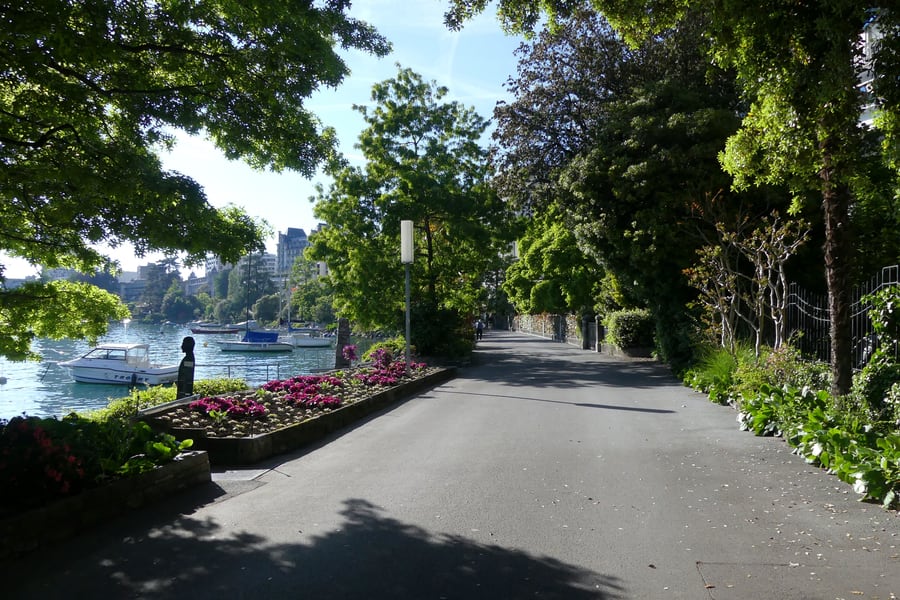
A resort on the Vaud shore of Lake Geneva, with the Quai des Fleurs running along the water below the town and the Jazz Festival filling it every July. The rack railway's platform is inside the main station, a few minutes above the promenade; the GoldenPass trains for Gstaad and Interlaken leave from the same building, and the main line along the lake calls there too.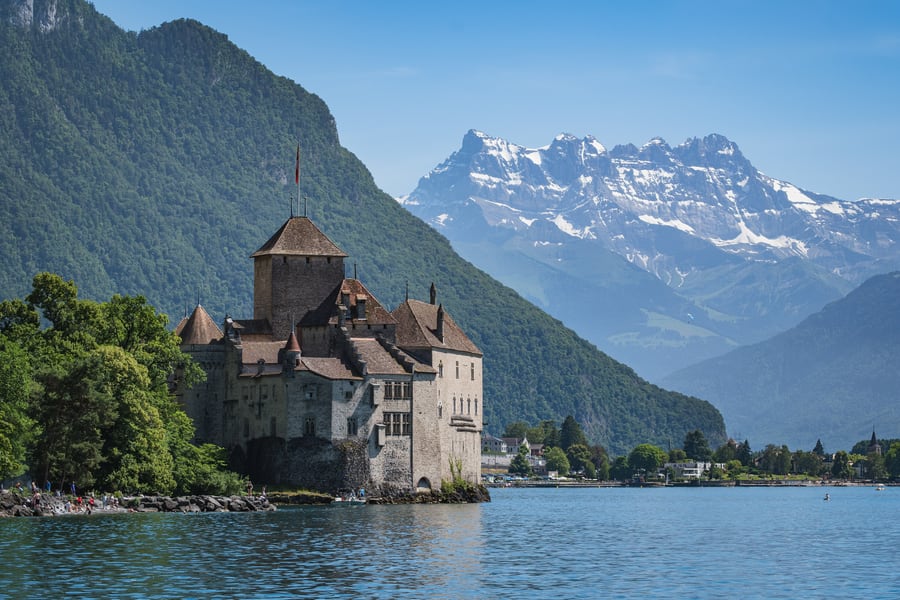 Christian David / Wikimedia Commons · CC BY-SA 4.0 · cropped
The Château de Chillon
One of the most visited medieval castles in Europe, built on its own limestone island a little east of Montreux with the Dents du Midi behind it. It belonged to the House of Savoy, then to Bern from 1536 to 1798, and to the canton of Vaud since. Rousseau set part of Julie, ou la nouvelle Héloïse here and Byron wrote The Prisoner of Chillon about it. It is a walk along the shore from Territet, at the foot of the funicular that was this railway's first way up.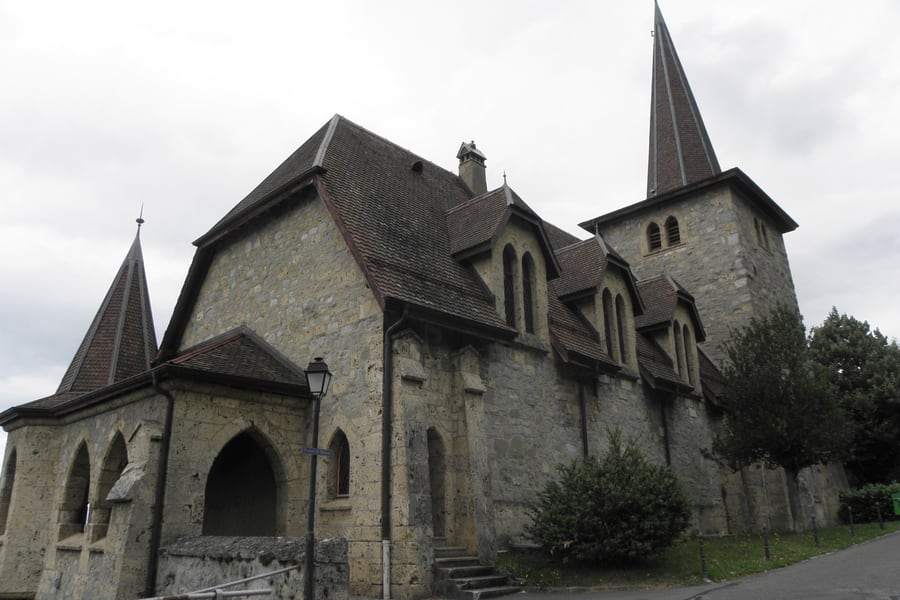 Traumrune / Wikimedia Commons · CC BY-SA 3.0 · cropped
Glion
A village on a shelf three hundred metres above the water, reached first by a zigzag road of 1850 and then by the funicular of 1883. The railway's workshops and depot are here, beside the running line, and the funicular's top station shares the interchange. The Glion Institute of Higher Education has been in the village since 1962, and the stone church stands on the edge of the terrace looking down the lake.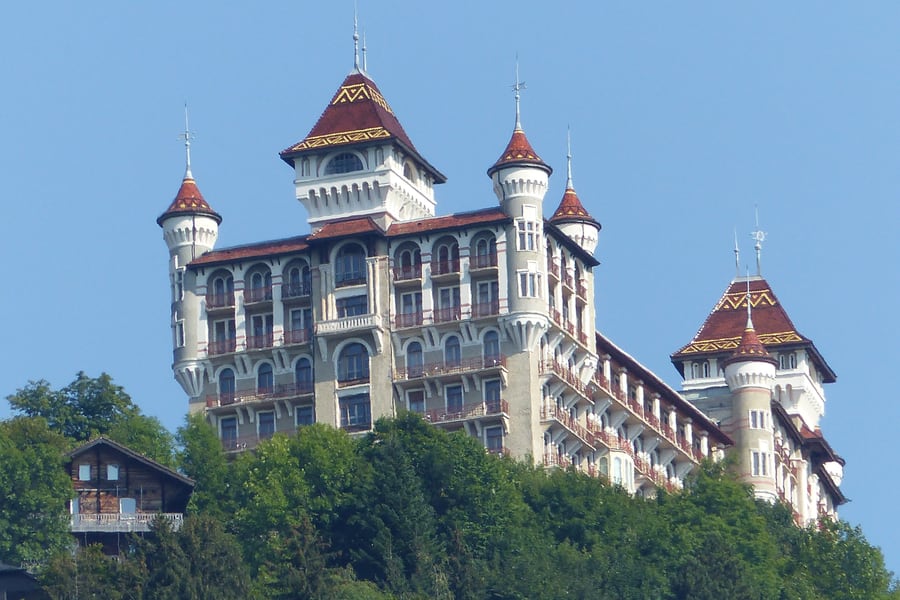 Whgler / Wikimedia Commons · CC BY-SA 4.0 · cropped
Caux
The Caux-Palace, by the Vaud architect Eugène Jost, was inaugurated on 7 July 1902 on a terrace five hundred metres long, and its turrets and glazed tiles changed the skyline of the whole Montreux basin. It stopped taking paying guests long ago: Initiatives et Changement bought it in 1946 and still runs its summer conferences there, and a Swiss hotel school shares the building. Caux is also where the road up the mountain ends.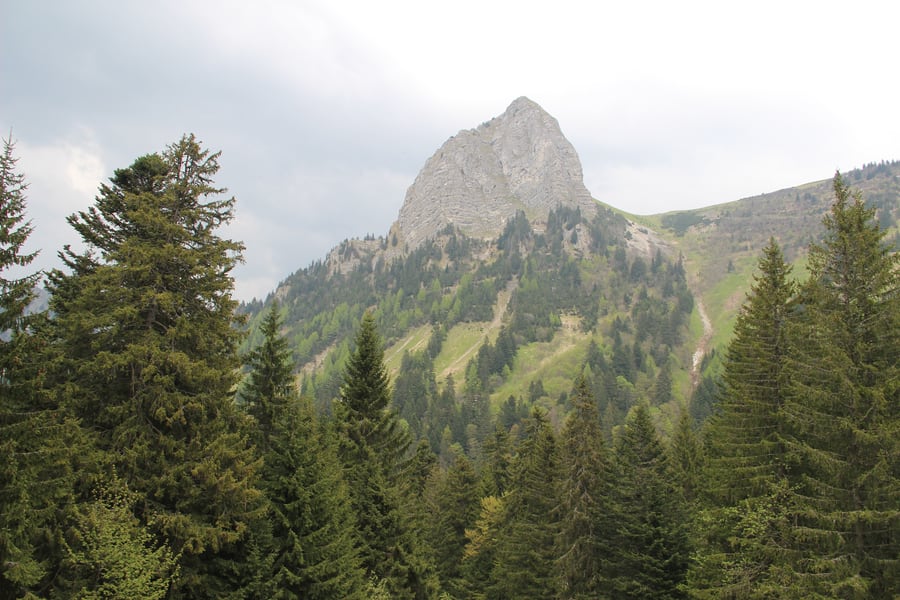 Björn S... / Wikimedia Commons · CC BY-SA 2.0 · cropped
The Dent de Jaman
A limestone tooth of 1,874 metres standing clear of the ridge, with cliffs on its western side that give it the look of a giant canine from the lake. Chamois live on its slopes. The station named after it is a passing loop, and the summit is about thirty minutes above it on a marked path; a ridge runs from there over the Merdasson to the Rochers de Naye, which is the classic way of walking one half of this journey.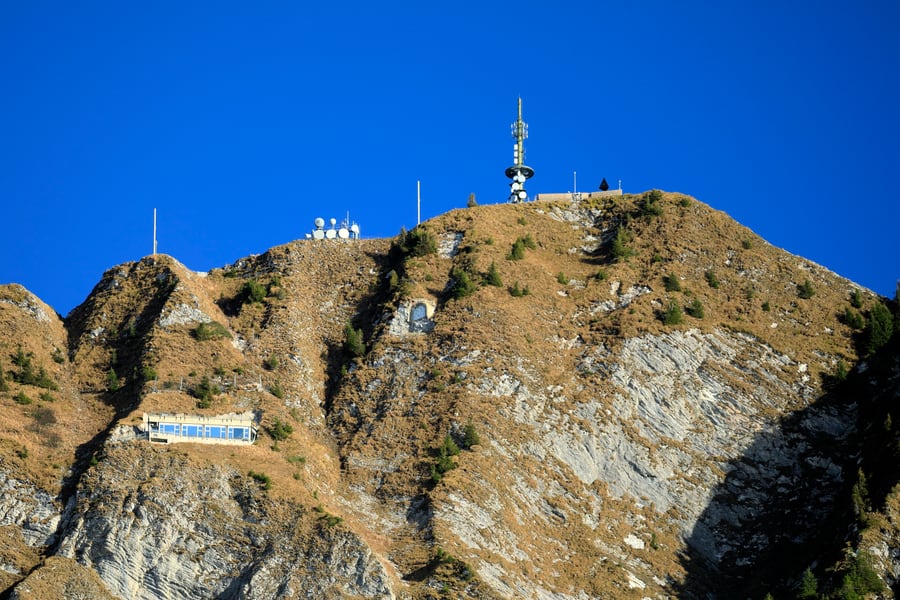 Falk2 / Wikimedia Commons · CC BY-SA 4.0 · cropped
The Rochers de Naye
A ridge on the watershed between the Rhône and the Rhine, with the Eiger at one end of the view and Mont Blanc at the other and Lake Geneva sixteen hundred metres straight down. The terminus is buried under the mountain restaurant; the Plein Roc café is cut into the cliff below it, and the summit itself is a short walk above the station.Where to Sleep
Nothing at the top of this line takes guests — the summit has two restaurants and no beds — so the choice is between the lakefront at Montreux, three minutes' walk from the rack-railway platform, and Glion, three hundred metres higher up, where the train calls in the village and the view down the lake is the one the hotel was built for.
Where to stay
Hôtel Victoria, Glion
On the line, ten minutes up from Montreux
A family-run house of 53 rooms standing in its own large garden on the Route de Caux at Glion, five minutes by road above the centre of Montreux and beside the railway to the Rochers de Naye. Rooms run from standard doubles to lake-view suites and an apartment, and the hotel keeps its own restaurant and gardens.
Check Availability (opens in a new tab, on victoria-glion.ch)via victoria-glion.ch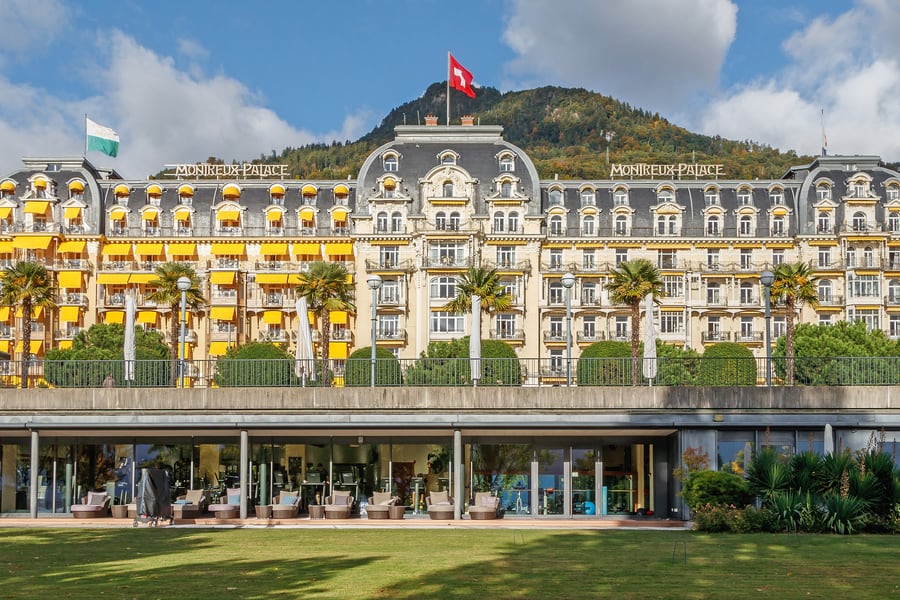 Llez / Wikimedia Commons · CC BY-SA 3.0 · cropped
Fairmont Le Montreux Palace
On the quay, a few minutes from the station
A Belle Époque hotel established in 1906 on the Montreux waterfront, with 236 rooms and suites, several restaurants and a spa of some two thousand square metres. Its Panorama suites are named for Freddie Mercury and for Claude Nobs, who founded the Montreux Jazz Festival.
Check Availability (opens in a new tab, on fairmont.com)via fairmont.com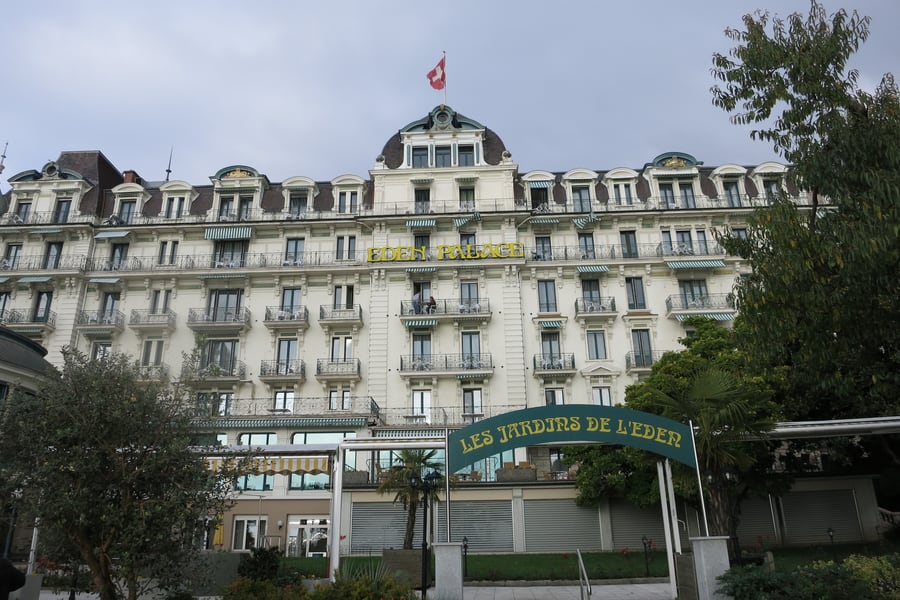 Paebi / Wikimedia Commons · CC BY-SA 4.0 · cropped
Eden Palace au Lac
Lakeside, ten minutes' walk from the rack railway
A hundred rooms in a turn-of-the-century house on the Montreux lakefront, with its own gardens between the building and the water, a breakfast room looking out at the lake and function rooms named for the Belle Époque and for Byron.
Check Availability (opens in a new tab, on edenpalace.ch)via edenpalace.chQuestions or corrections
Planning this trip and stuck on something, or spotted a time, fare or detail that has changed? Send us a message about Montreux – Rochers-de-Naye. We read every one, and we update this page when something has changed.