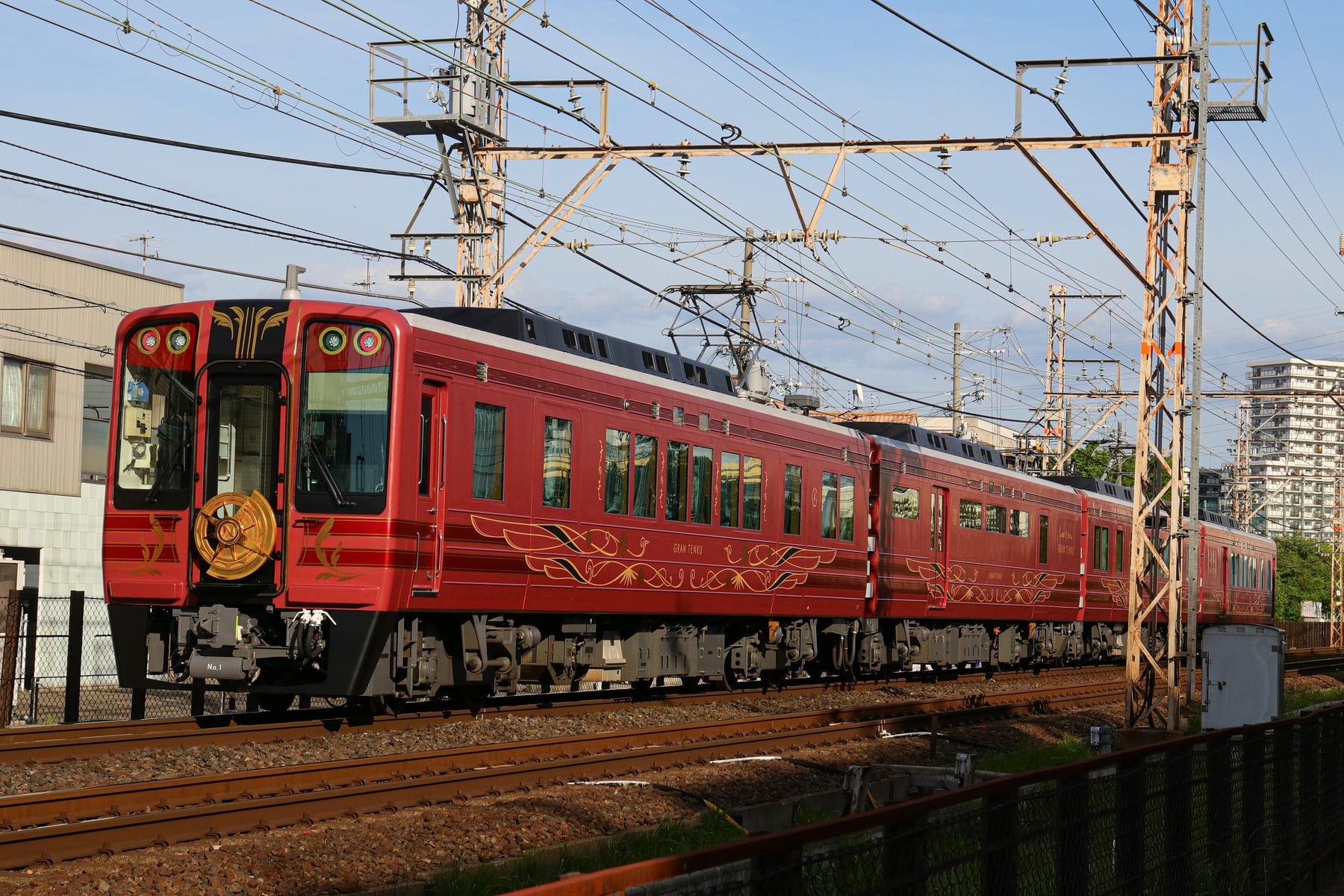
Gran Tenku
日根野 / Wikimedia Commons · CC0
- Distance63.8 km, then 0.8 km by cable car
- DurationAbout 1½ hours, then 5 minutes by cable car
- Best seasonYear-round · no trains on Wednesdays or the 2nd and 4th Thursdays
Introduction
Gran Tenku is Nankai's sightseeing limited express from Namba, in the middle of Osaka, to Gokurakubashi at the foot of Kōyasan, the mountain monastery where Kōbō Daishi founded Shingon Buddhism in the ninth century. A five-minute cable car finishes the climb to the temple town, which has been a World Heritage Site since 2004.
For its first hour the train runs as a city express through the suburbs of Osaka. Then, past Hashimoto, the railway turns into a mountain line: single track, gradients of 50 per mille, curves of 100 metres radius or less and a speed limit of 33 km/h, through two dozen tunnels and over high bridges in the forest. The 63.8 km take about an hour and a half.
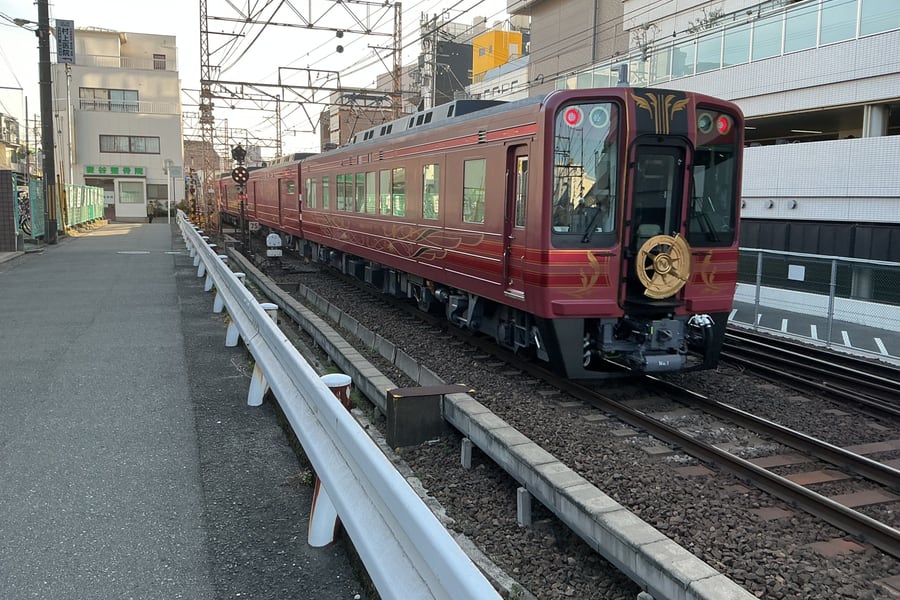
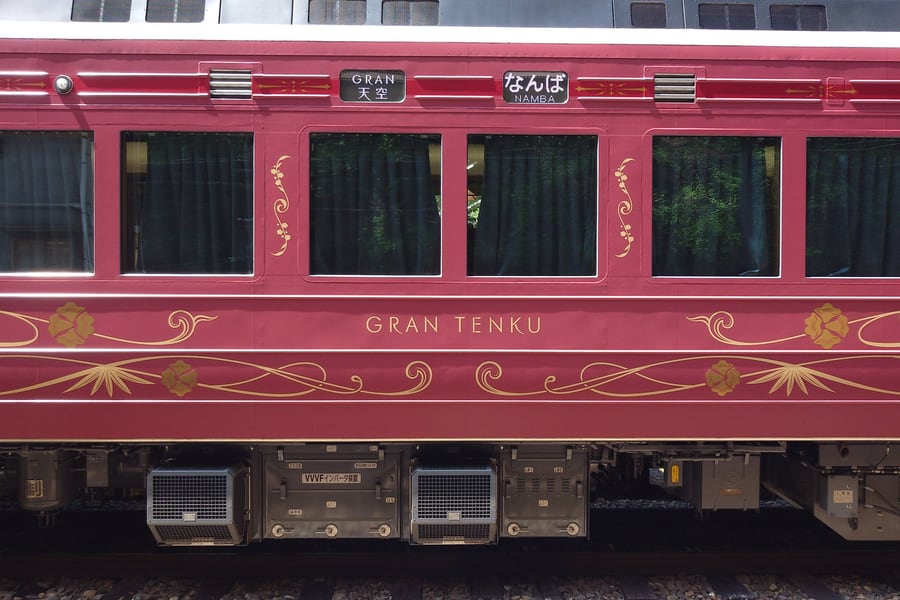
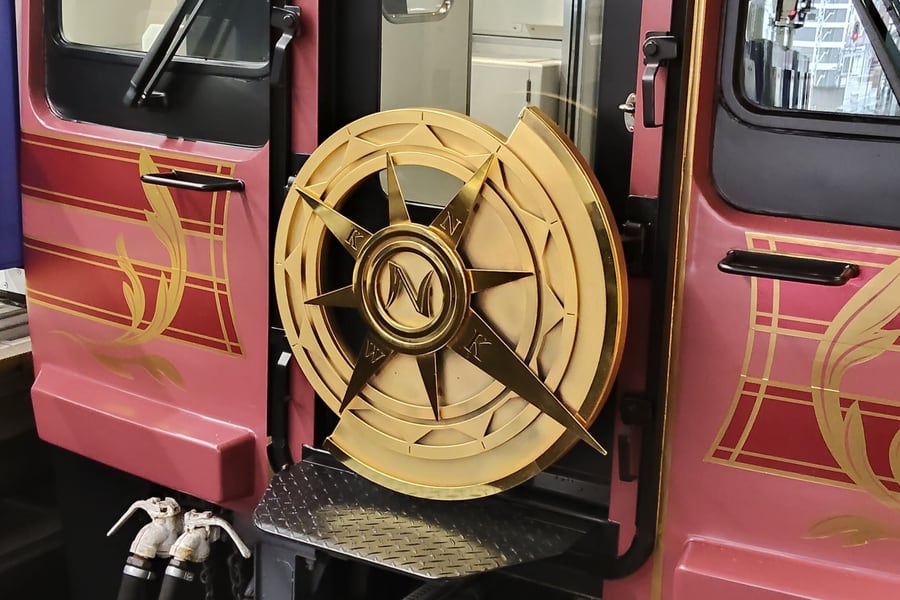
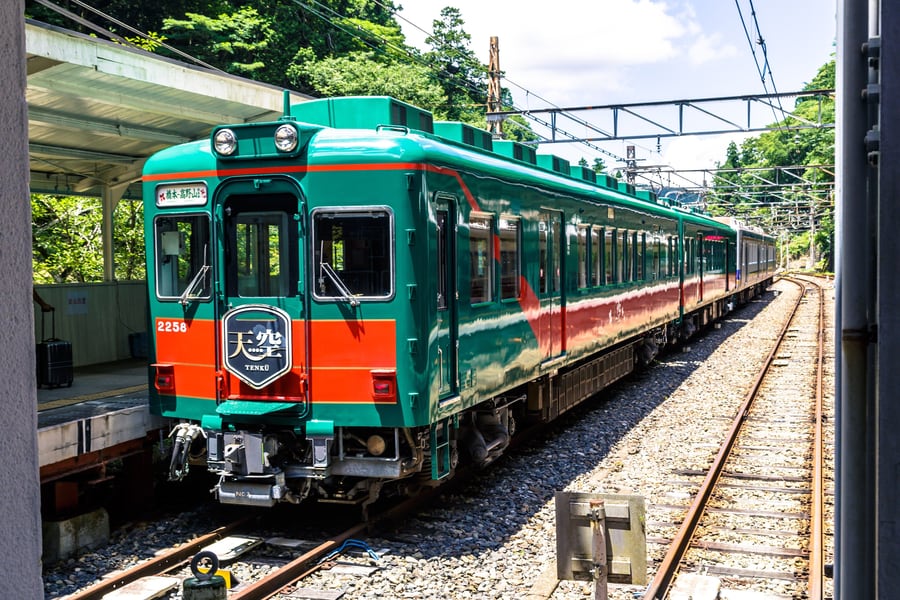
The train is a four-car set rebuilt in deep crimson and fitted out with crafts from along the line. It replaced the green Tenku on 24 April 2026, runs two round trips on most days, and every seat is reserved.
The Journey
The train leaves from Platform 0 at Namba, a platform rebuilt for it alone, and runs south through Shin-Imamiya and Tengachaya onto the Kōya Line. For the next hour it is a fast suburban run: Sakaihigashi, Kongō, Kawachinagano and Rinkan-den'entoshi, climbing gently through the hills on the Osaka–Wakayama border to Hashimoto, where the double track ends.
Into the mountains
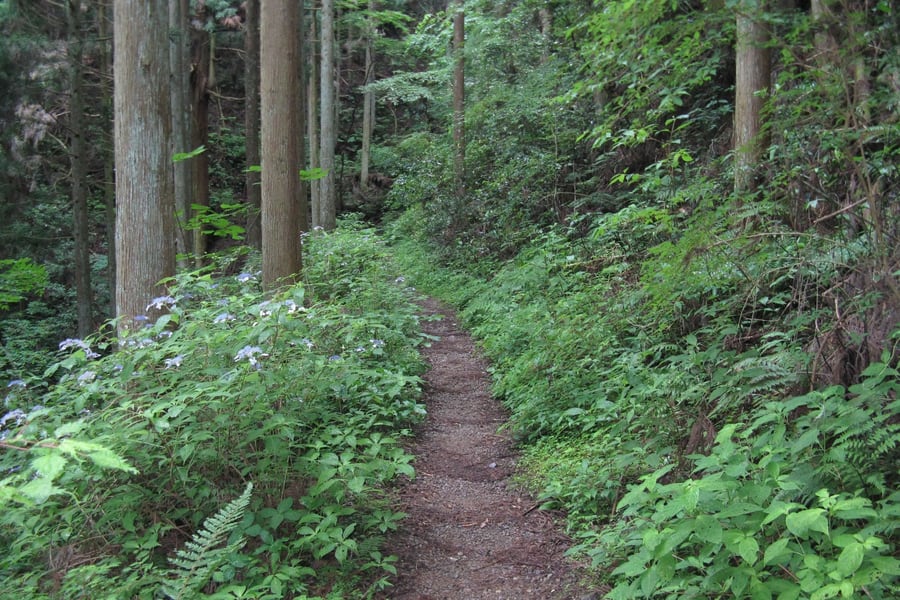
Beyond Hashimoto the train crosses the Kinokawa on a red truss bridge and stops at Kudoyama, the town where the samurai Sanada Yukimura lived in exile. Past Kōyashita the climb begins in earnest. The line follows the narrow valley of the Fudōdani River on gradients of 50 per mille and curves of 100 metres radius or less, at no more than 33 km/h, and between Kōyashita and Gokurakubashi it passes through 23 numbered tunnels. Villages give way to forest; after Kamikosawa the train crosses the high Kasagi Bridge and soon enters the town of Kōya. Just before the terminus, the vermilion bridge that gives Gokurakubashi, "the bridge to paradise", its name appears on the right.
From Hashimoto to Gokurakubashi the railway climbs 443 metres. The cable car from Gokurakubashi climbs another 328 metres in 0.8 km, on gradients up to 568 per mille, to Kōyasan station. Its cars, the fourth generation since the line opened in 1930, entered service in March 2019.
The train
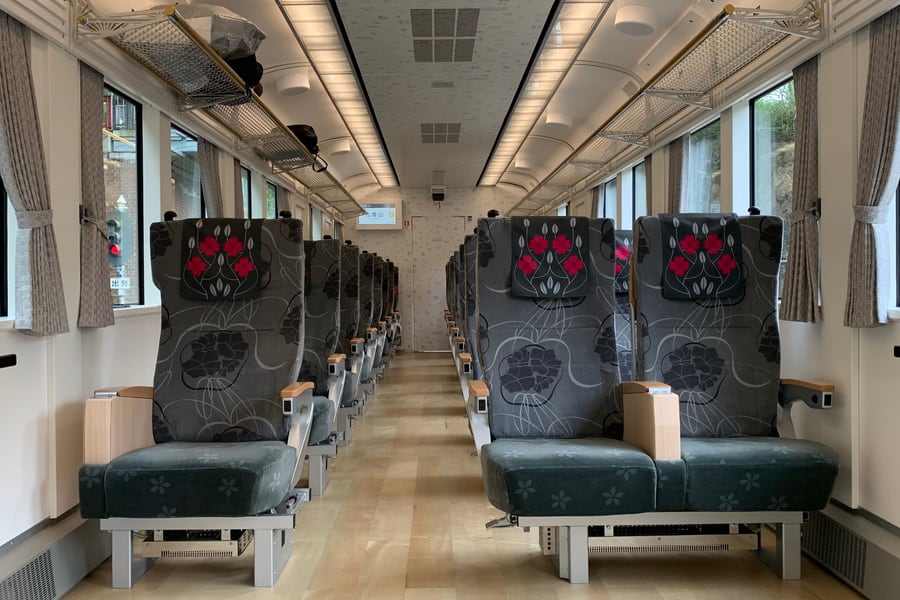
Gran Tenku is set 2001 of Nankai's 2000 series, a "zoom car": a 17-metre type built for the Kōya Line, fast on the plain and strong on the mountain grades. Nankai rebuilt it for this service, panelling over some of its doors. Car 1 has reclining seats, two and one across the aisle; Car 2 faces a row of seats onto the windows, with tables; Car 3 is a lounge with a counter selling drinks, sweets and souvenirs; Car 4 has sofa seats for four, where meals are served. Seats 2, 4, 23 and 27 in Car 1 have no side window. Commentary on the sights is in Japanese only. The handrails are made from rails of the forest railway that once ran in these mountains.
Along the route
 Olegushka / Wikimedia Commons · CC BY-SA 4.0 · cropped
The Kinokawa Bridge
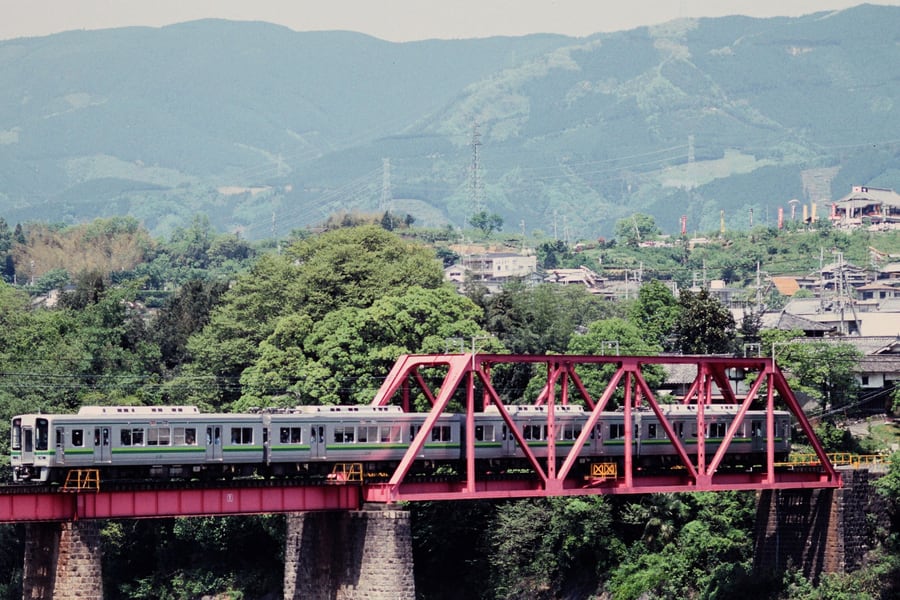
Just past Hashimoto the train crosses the Kinokawa on a red truss bridge. In the story of Kōyasan's founding, Kōbō Daishi crossed this river following two dogs, a black and a white, to find his mountain.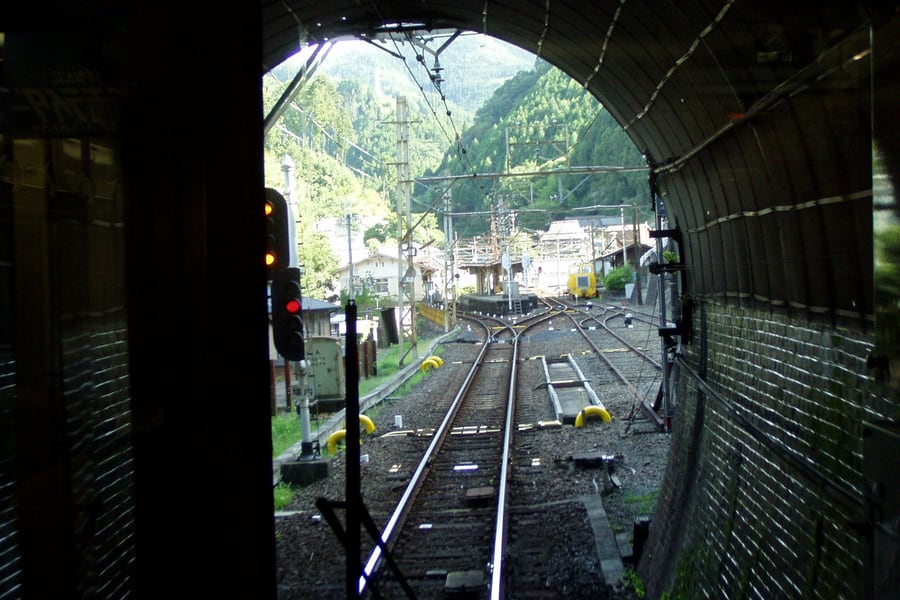 Electroliner / Wikimedia Commons · CC BY-SA 3.0 · cropped
Fifty per mille
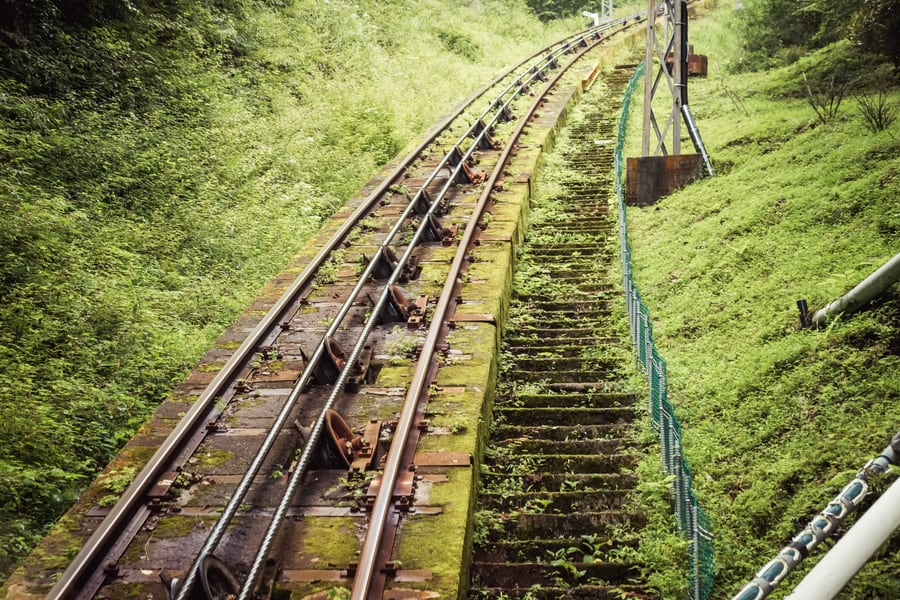
At Kōyashita the climb begins: gradients of 50 per mille, curves of 100 metres radius or less, and a limit of 33 km/h. From here to Gokurakubashi the tunnels are numbered, 1 to 23.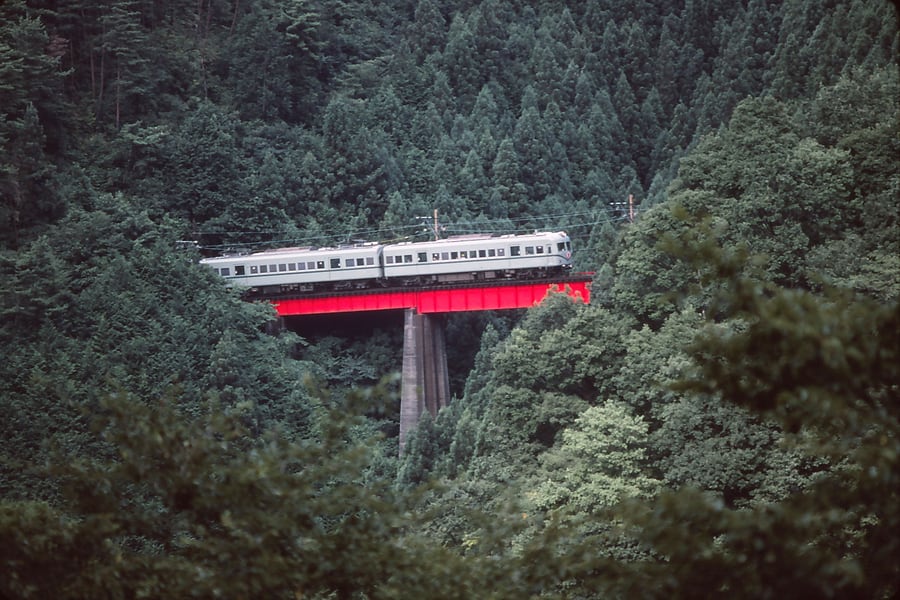 Gohachiyasu1214 / Wikimedia Commons · CC BY-SA 4.0 · cropped
The Kasagi Bridge
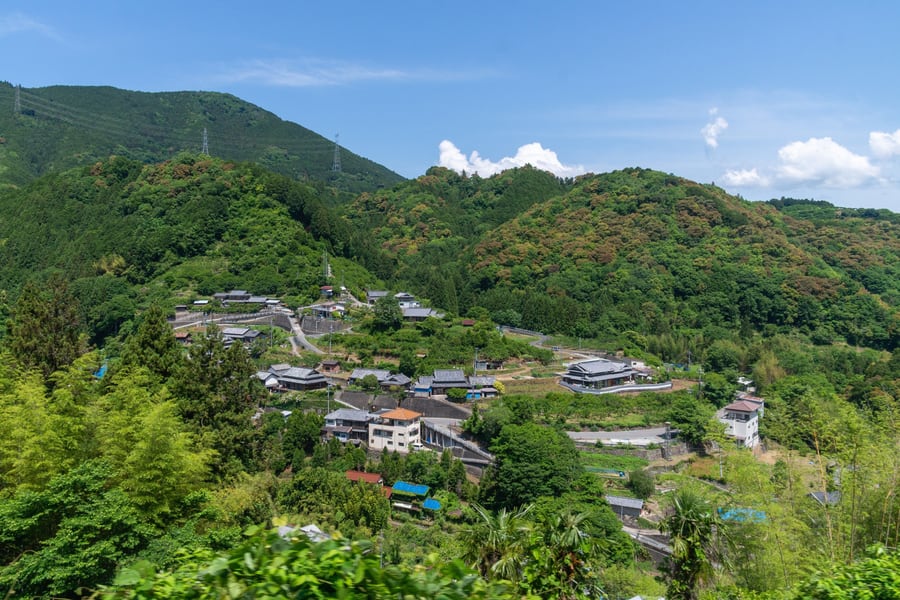
Between Kamikosawa and Kii-Hosokawa the line crosses a forested ravine high on the Kasagi Bridge, one of the stretches where the villages fall away and only the mountain is left.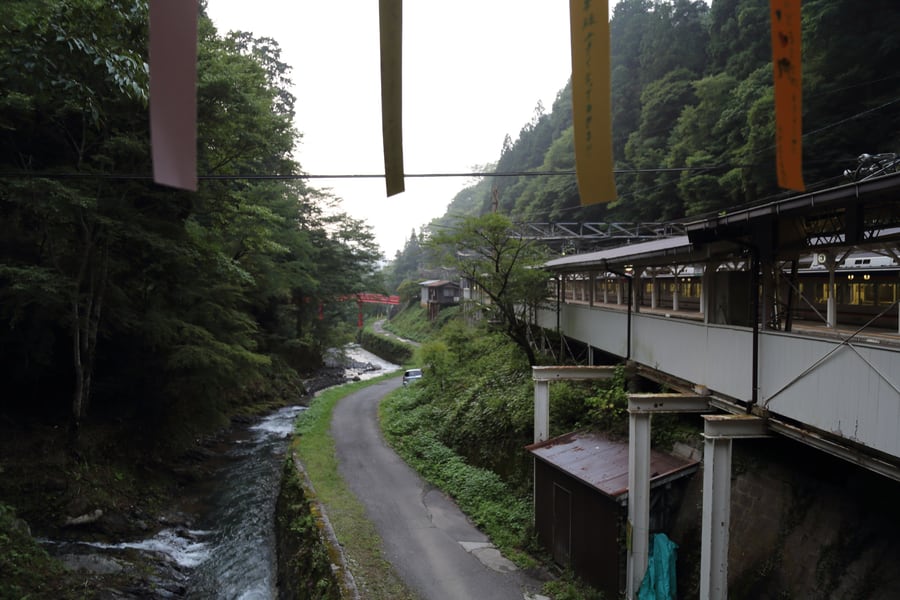 nobu3withfoxy / Wikimedia Commons · CC BY 2.0
Gokurakubashi
The terminus, at 539 metres, is named for the vermilion bridge on the right as the train comes in: Gokurakubashi, "the bridge to paradise". The cable car leaves from the end of the platform.A bit of history
Culture & experiences along the way
 TRJN / Wikimedia Commons · CC BY-SA 4.0 · cropped
Sanada's town
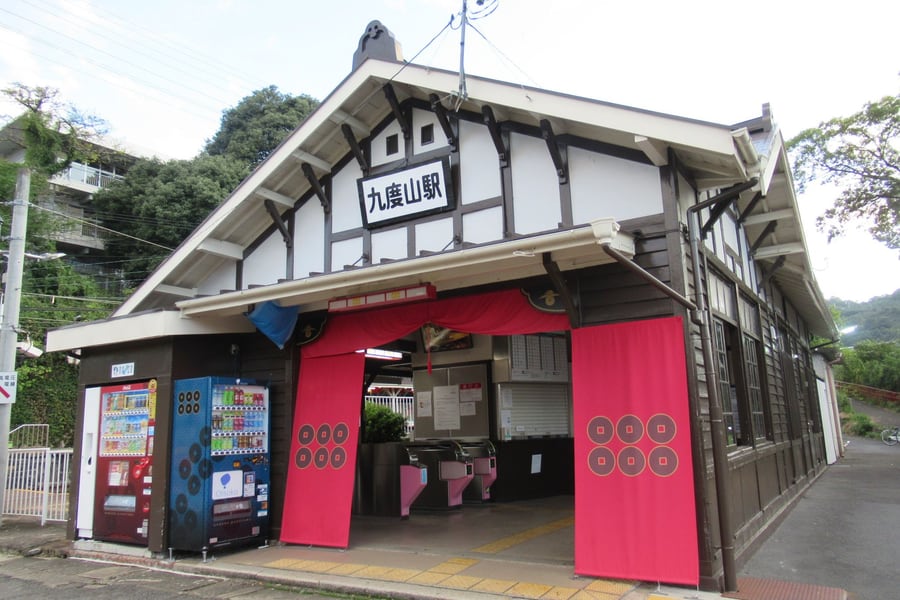
The samurai Sanada Yukimura and his father Masayuki were exiled to Kudoyama; Yukimura later led the defence at the siege of Osaka. The town still claims him: its station has hung curtains with the Sanada crest of six coins since 2015, and Car 4's partitions are woven from Sanada himo, a flat cord said to trace back to his years there.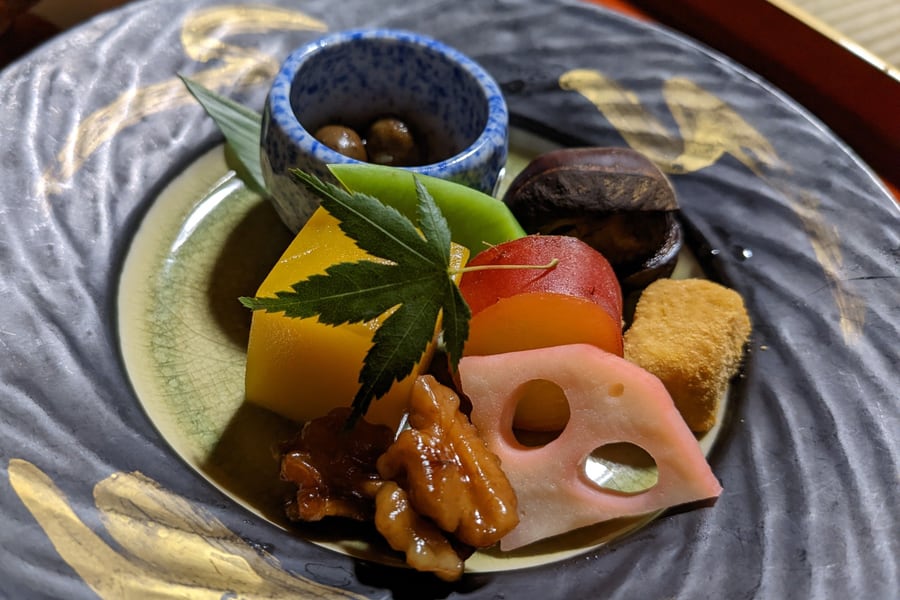 Jpatokal / Wikimedia Commons · CC BY-SA 4.0 · cropped
Shōjin ryōri
Fifty-two of Kōyasan's temples take overnight guests, and the temple lodgings serve shōjin ryōri, the vegetarian cooking of Buddhist monks, built on vegetables, beans and tofu. Guests may join the temple's morning service, and some temples also hold a fire ritual.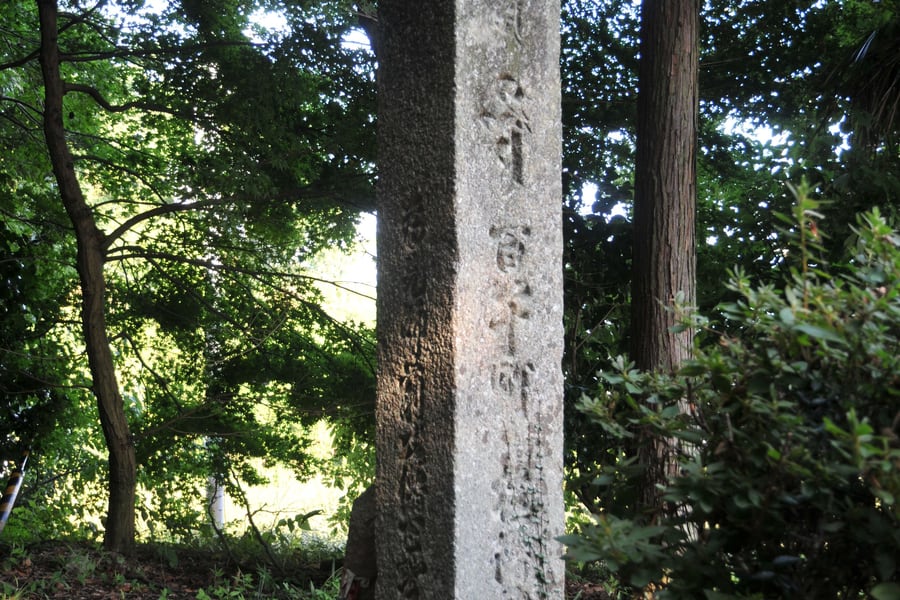 Reggaeman / Wikimedia Commons · CC BY-SA 3.0 · cropped
The Chōishi-michi
Before the railway, pilgrims walked. The Chōishi-michi climbs about 24 km from Jison-in at Kudoyama to Okunoin, with a stone marker about three metres tall every 109 metres; most of the 180 below the Great Pagoda date from the Kamakura period. The whole path takes seven or eight hours.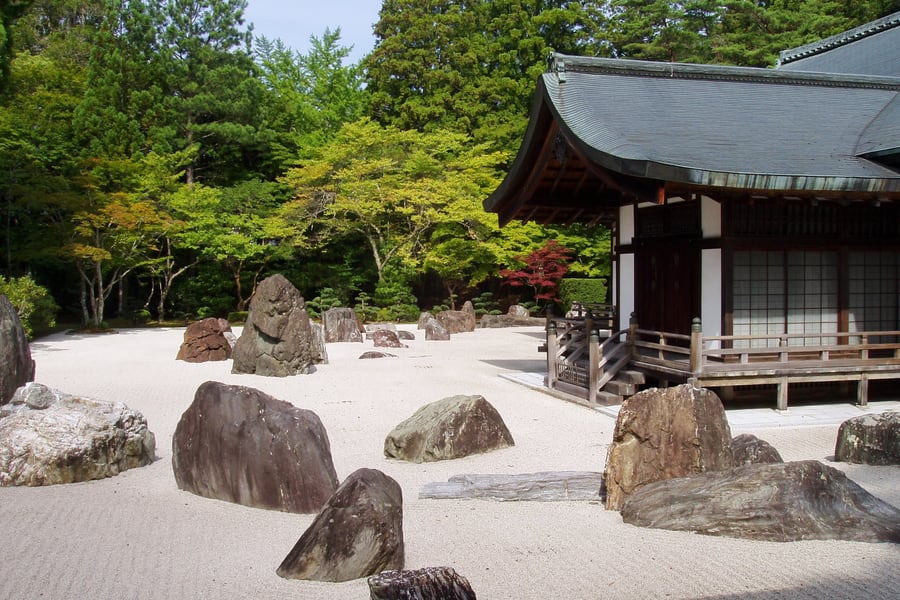 Daderot / Wikimedia Commons · CC BY-SA 3.0 · cropped
Ajikan meditation
Kongōbu-ji holds sessions of ajikan, the breathing meditation of Shingon Buddhism, at the Banryūtei, Japan's largest rock garden, which is ordinarily closed to the public. Sessions run on Fridays, weekends and holidays from April to November, in Japanese; sign up at the temple.Timetables
Two round trips run every day except Wednesdays and the second and fourth Thursdays of the month. When a Wednesday is a public holiday the train runs and the Thursday is the day off; a second or fourth Thursday that is a holiday runs as normal. Every seat is reserved.
Namba to Gokurakubashi
| Train | Namba | Sakaihigashi | Kawachinagano | Hashimoto | Kudoyama | Gokurakubashi |
|---|---|---|---|---|---|---|
| No. 1 | 9:00 | 9:14 | 9:31 | 9:47 | 9:58 | 10:30 |
| No. 3 | 12:45 | 12:58 | 13:14 | 13:31 | 13:45 | 14:20 |
Gokurakubashi to Namba
| Train | Gokurakubashi | Kudoyama | Hashimoto | Kawachinagano | Sakaihigashi | Namba |
|---|---|---|---|---|---|---|
| No. 2 | 10:46 | 11:18 | 11:30 | 11:46 | 12:00 | 12:13 |
| No. 4 | 14:58 | 15:33 | 15:46 | 16:01 | 16:16 | 16:28 |
Good to know:
- Weekdays are shown. At weekends and on holidays some calls along the way are one to four minutes earlier, No. 2 leaves Gokurakubashi at 10:47 and No. 4 reaches Namba at 16:26; the other end times do not change.
- All trains also stop at Shin-Imamiya, Tengachaya, Kongō and Rinkan-den'entoshi.
- The cable car to Kōyasan station meets every train and takes about five minutes.
Times as of November 2026, from Nankai's Gran Tenku timetable (opens in a new tab).
Tickets
In Cars 1 and 2 you pay the ordinary fare, ¥1,430 from Namba to Kōyasan including the cable car, plus a Gran Tenku ticket: ¥1,700 from Namba to Gokurakubashi, ¥300 more if bought on board. Tickets go on sale at midnight 30 days ahead on Nankai's booking site, which takes credit cards only; on the day, the Namba service centre and the Gokurakubashi and Kōyasan stations also take bookings.
Car 4 is sold as a package for groups of two or more, the fare to Kōyasan included, from ¥11,230 a person with breakfast or afternoon tea and ¥13,430 with lunch, for a group of four. Cancelling is free until midnight on the day you buy. Fares checked November 2026 on Nankai's Gran Tenku pages; Japanese yen.
Book your tickets
Car 1 or Car 2
Gran Tenku ticket, adult · Namba to Gokurakubashi
A reserved seat in the reclining car or the scenic car; the ordinary fare, ¥1,430 to Kōyasan, is extra.
Book Tickets (opens in a new tab, on Nankai)via NankaiCar 4 with a meal
Grand Seat, per person in a group of four
A sofa seat with breakfast, lunch or afternoon tea and drinks, the fare to Kōyasan included.
Book Tickets (opens in a new tab, on Nankai)via NankaiRail Passes
Gran Tenku is a Nankai train, and the Japan Rail Pass does not cover it: the pass is for JR lines, and a private railway such as Nankai charges its own fare.
Nankai's own Kōyasan World Heritage Digital Ticket costs ¥3,980 for an adult. It covers the return fare to Kōyasan station, cable car included, two days on the Nankai Rinkan buses that link the temples on the mountain, and discounts at temples and shops, valid for two consecutive days. It does not include the Gran Tenku ticket, so add the ¥1,700 seat; the dearer ¥4,910 version adds an outbound seat on the ordinary limited express Kōya, not on Gran Tenku.
For a visit to Kōyasan it is usually worth having. Two single fares cost ¥2,860, so the extra ¥1,120 buys two days of buses, and on the mountain the cable car station, the Daimon gate and Okunoin are a bus ride apart.
Checked November 2026 against Nankai's World Heritage ticket (opens in a new tab) page and the Japan Rail Pass route guide (opens in a new tab).
Places to Visit
Kōyasan is a town of 117 temples on a high basin in the forest, and 52 of them take overnight guests. Buses from Kōyasan station run the length of the town, from the Daimon gate at the western end to Okunoin at the eastern. A day trip on Gran Tenku No. 1 and No. 4 gives about four hours on the mountain; a night in a temple gives the morning service as well.
 Reggaeman / Wikimedia Commons · CC BY-SA 3.0 · cropped
Kudoyama
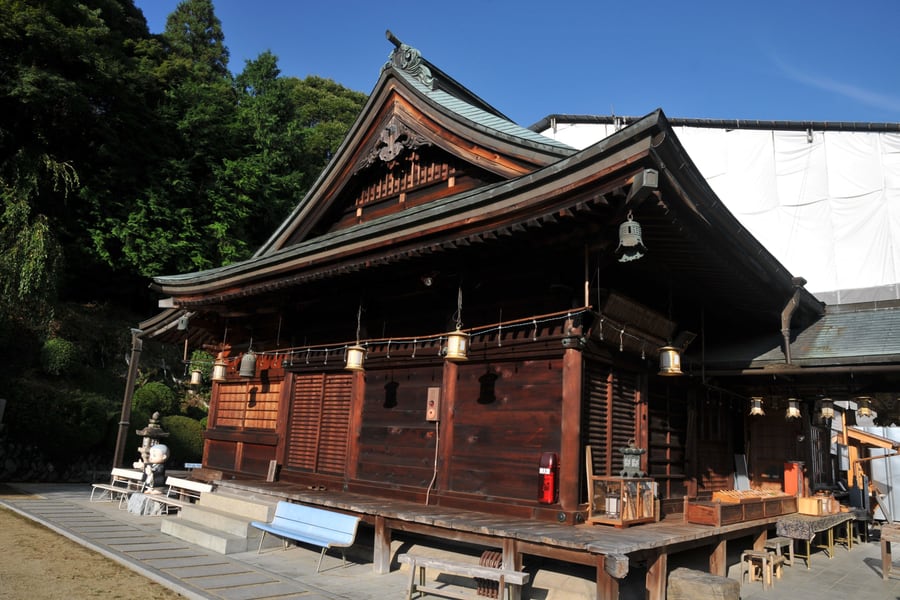
Jison-in is where the Chōishi-michi starts its climb to Kōyasan. Women were barred from the mountain, and legend says Kōbō Daishi's mother spent her last years here while her son came down to visit her. The temple is part of the World Heritage Site.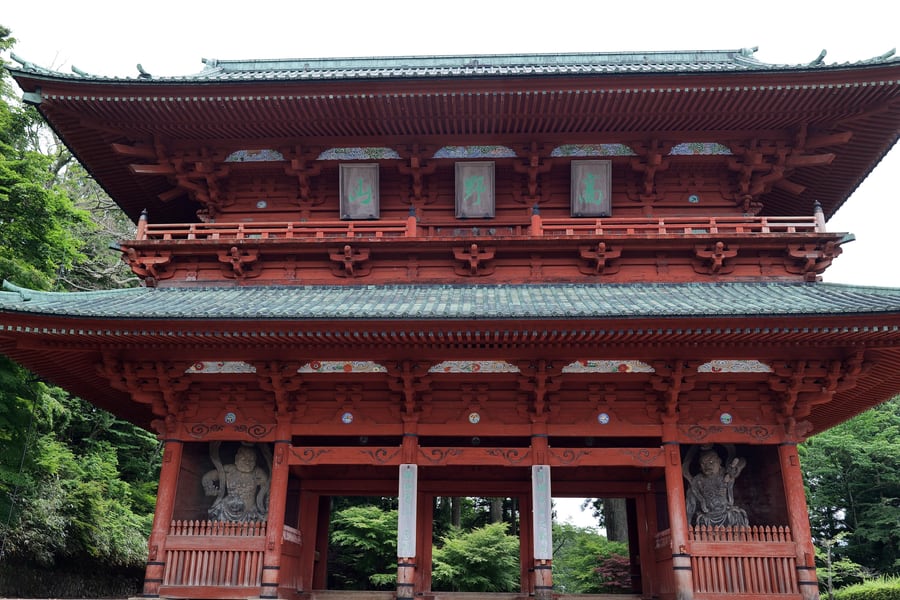 Hyppolyte de Saint-Rambert / Wikimedia Commons · CC BY 4.0 · cropped
Kōyasan
The great gate at the western edge of the town marks the entrance to Kōyasan. The first gate stood lower in the valley; after fire and lightning destroyed it, it was rebuilt here in 1705, two storeys and 25.1 metres high. The guardian figures in its niches are said to be the second largest of their kind in Japan, after those at Tōdai-ji in Nara.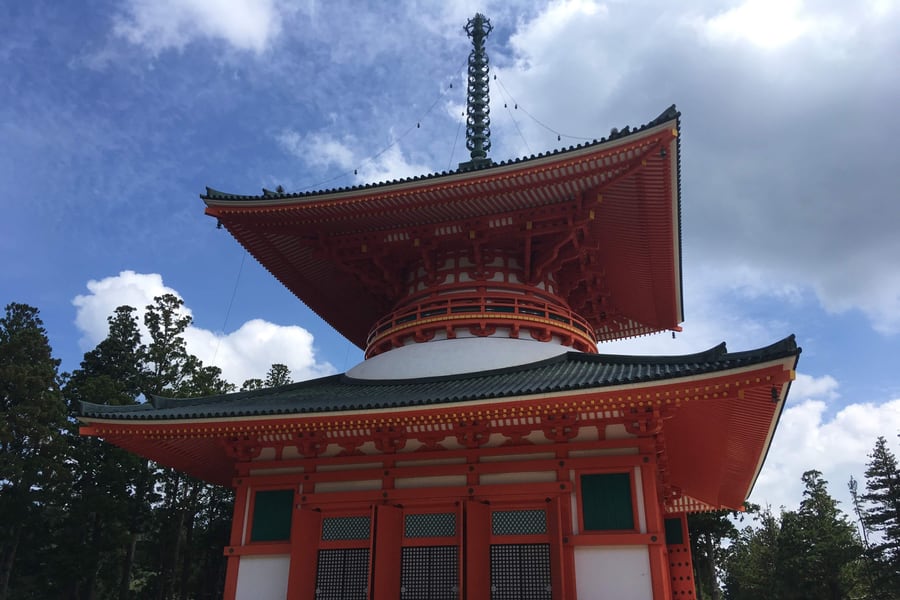 Christophe95 / Wikimedia Commons · CC BY-SA 4.0 · cropped
Kōyasan
The Danjō Garan was the first ground Kōbō Daishi cleared on the mountain. Its centre is the vermilion Konpon Daitō, the Great Pagoda, begun in 816 and finished in 887 and believed to be Japan's first square two-storied pagoda; inside, its sixteen pillars are painted with bodhisattvas. In the Garan, the Koyashiro bell still rings five times a day.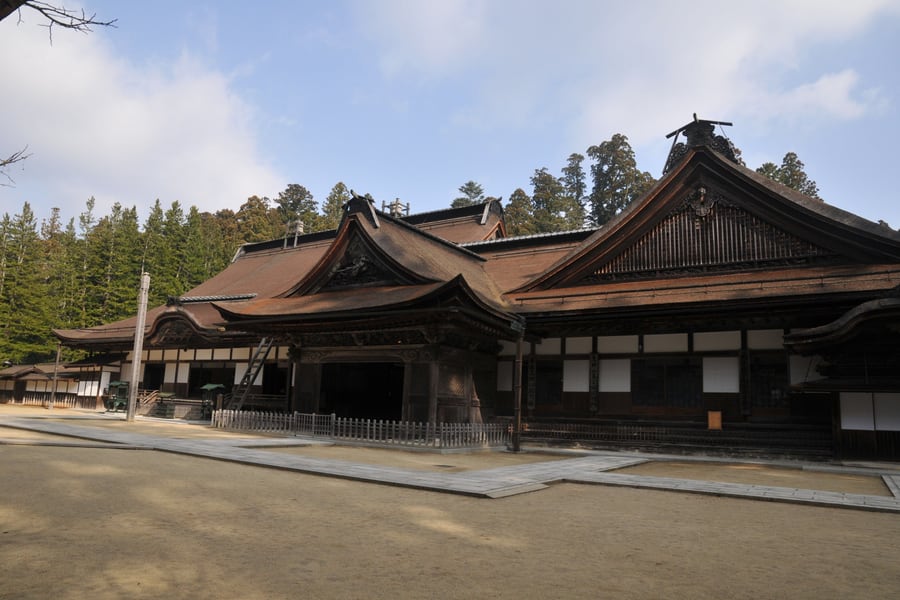 Reggaeman / Wikimedia Commons · CC BY-SA 3.0 · cropped
Kōyasan
Kongōbu-ji is the head temple of Kōyasan Shingon Buddhism, though the temple counts the whole mountain as its grounds. Beside its main hall is the Banryūtei, Japan's largest rock garden, where stones rise from raked white sand. It opens 8:30 to 17:00, and admission is ¥1,000.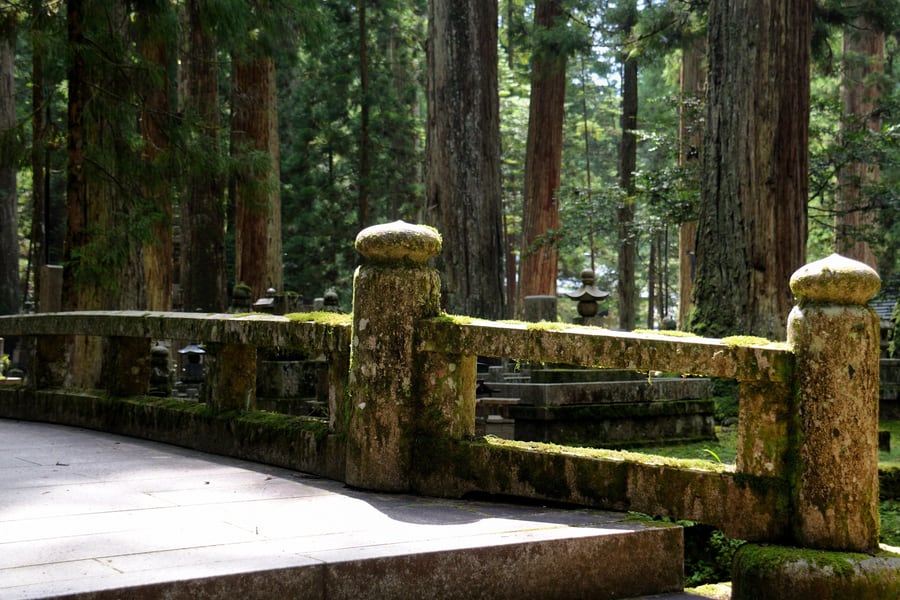 Josep M. Gracia / Wikimedia Commons · CC BY-SA 4.0 · cropped
Kōyasan
At the eastern end of the town, an approach lined with ancient cedars and the tomb markers of the great warlords leads to the mausoleum where Kōbō Daishi is believed to remain in meditation. In the Tōrōdō, the Hall of Lanterns, lamps given by an emperor and, legend says, by a poor woman who sold her hair are kept always lit; it opens 6:00 to 17:00.Where to Sleep
On Kōyasan the place to sleep is a shukubo, a temple that takes guests: a Japanese-style room, Buddhist vegetarian cooking, and a place at the temple's morning service. In Osaka, a hotel above Namba station puts the 9:00 departure a lift ride away.
Where to stay
Swissôtel Nankai Osaka
Namba · above Nankai Namba station
A 36-storey tower of 546 rooms built over the station Gran Tenku leaves from.
Check Availability (opens in a new tab, on swissotel.com)via swissotel.comEkō-in
Kōyasan · a temple lodging
A shukubo whose guests may join the morning service and fire ritual, with ajikan and sutra copying on offer.
Check Availability (opens in a new tab, on ekoin.jp)via ekoin.jpQuestions or corrections
Planning this trip and stuck on something, or spotted a time, fare or detail that has changed? Send us a message about Gran Tenku. We read every one, and we update this page when something has changed.