Havana to Santiago de Cuba
Hans-Peter Bärtschi / Wikimedia Commons · CC BY-SA 4.0
- DistanceHavana–Santa Clara–Camagüey–Santiago · 854 km
- Duration~15 h overnight (when running)
- Best seasonNovember to April — Cuba's dry season
Introduction
Begin with the fact that reorders everything you thought you knew about railway history: Cuba had a train before Spain did. On 19 November 1837, a locomotive steamed out of Havana toward Bejucal, 27.5 kilometres away — the first railway in Latin America, opened while the imperial motherland had yet to lay a single rail. Sugar demanded it, sugar paid for it, and sugar drove the rails on down the island until a standard-gauge spine ran the whole length of Cuba: 854 kilometres from Havana to Santiago, the country's grand main line.
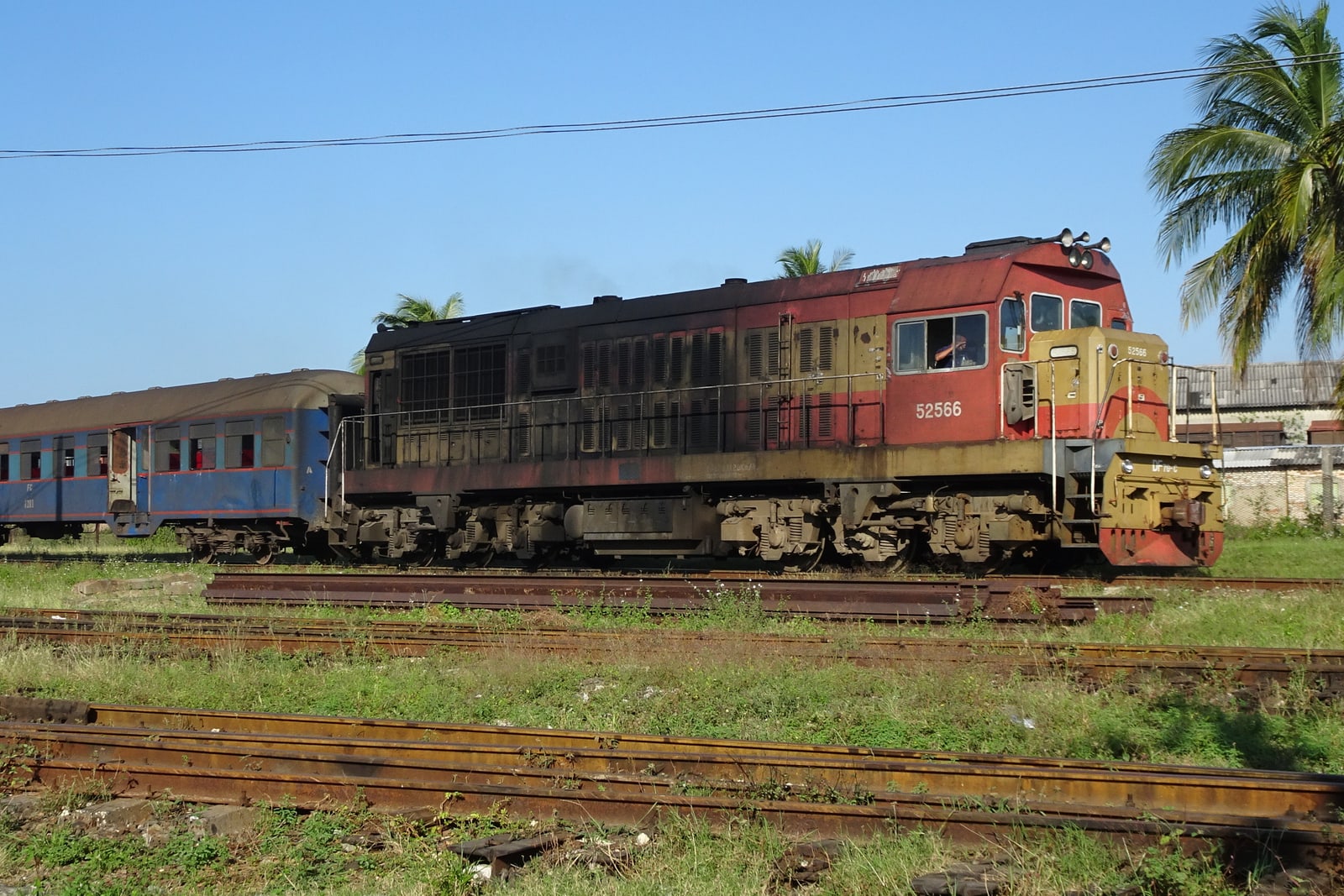
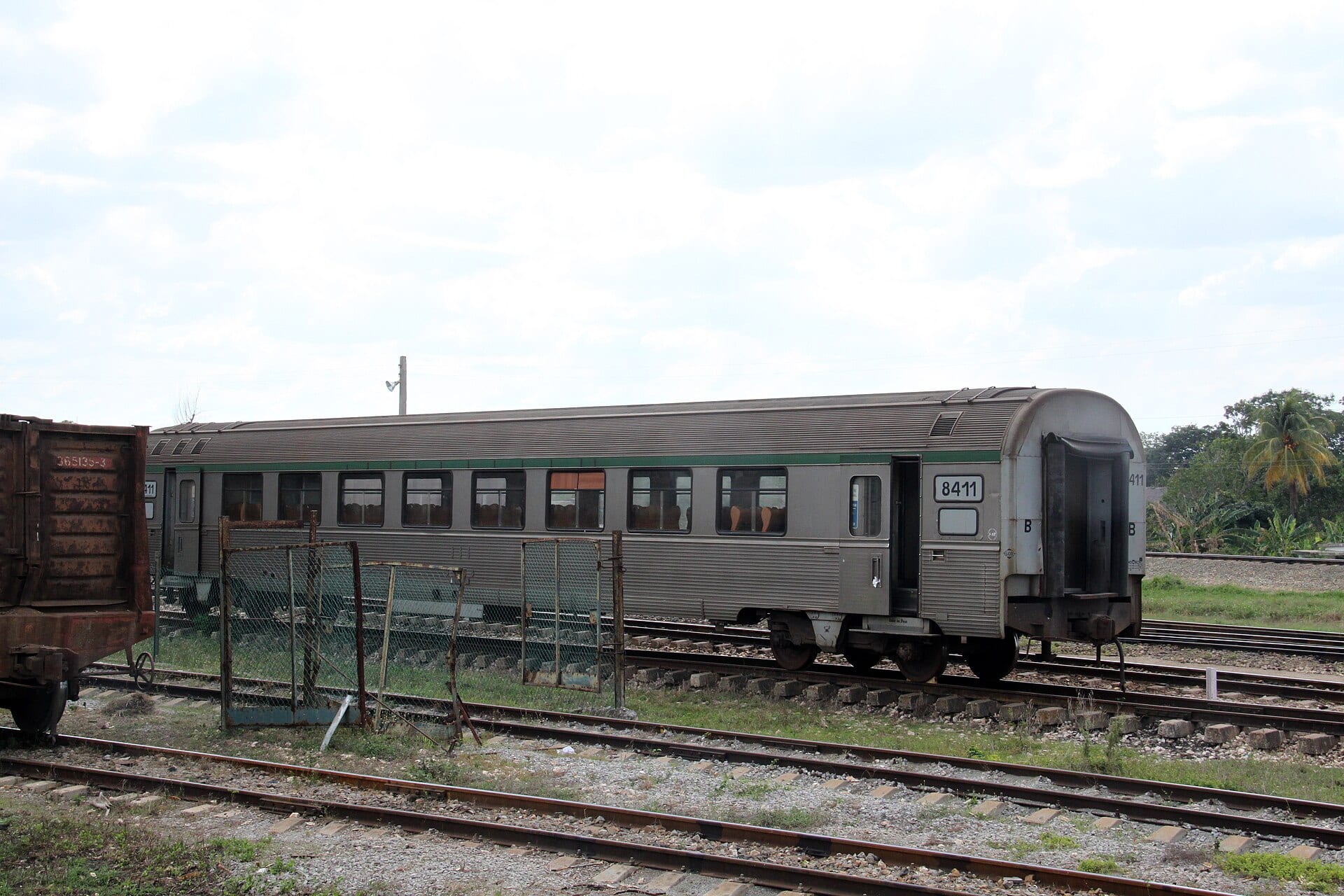
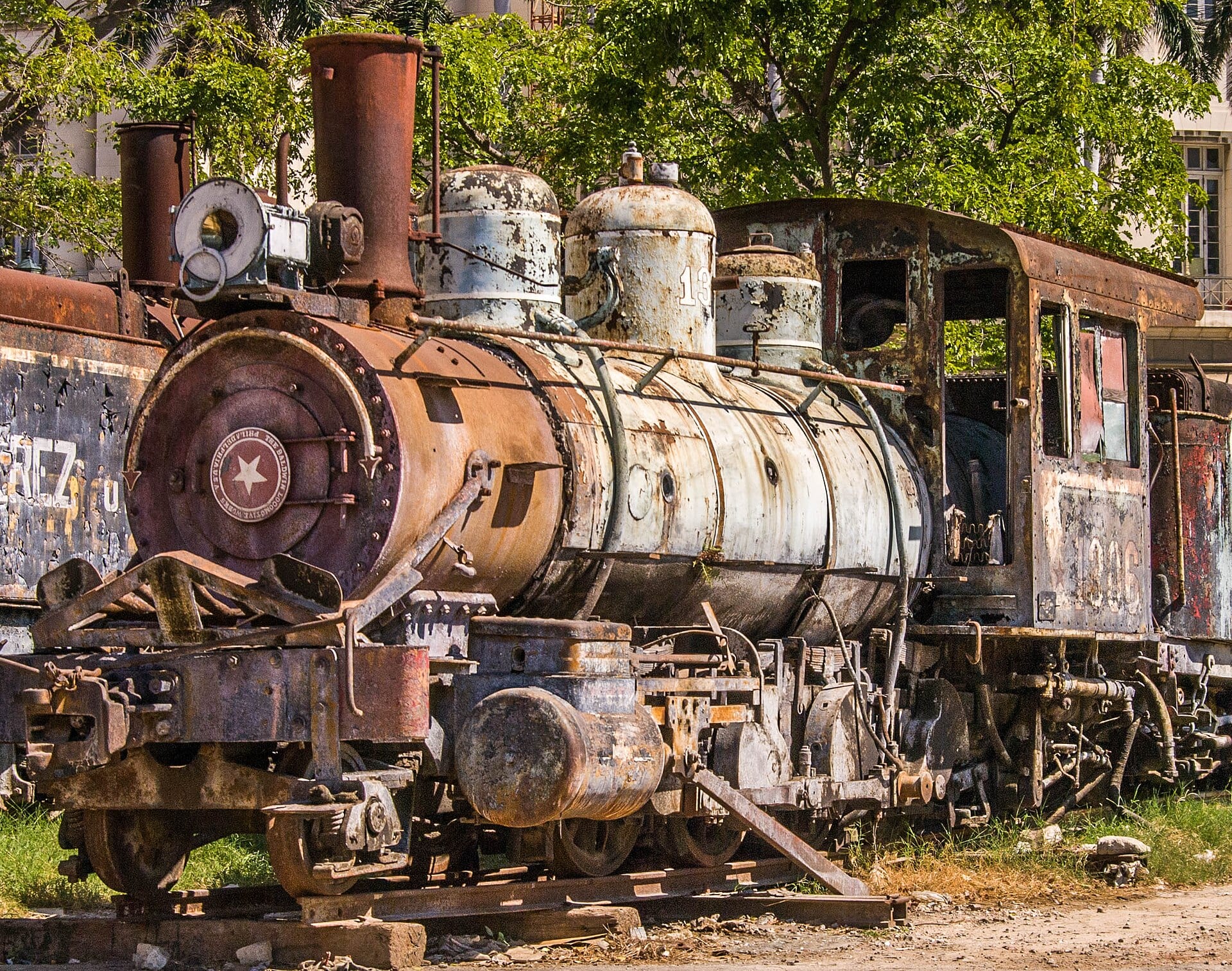
Every era of Cuban history has ridden it since, and the rolling stock tells the story better than any museum. For two decades the night train south was the legendary Tren Francés — actual Trans Europ Express coaches, bought from French Railways in 2000, that had spent their first lives gliding between Paris, Amsterdam and Nice and their second rumbling through the cane fields behind a Chinese diesel. In 2019 they gave way to new Chinese-built coaches, air-conditioned in first class, and the old TEE stock was retired to sidings — one more improbable layer in the island's railway archaeology.
And the honest present: Cuba's fuel crisis has brought the main line to its knees. The Havana–Santiago train, nominally running every four days, has lately managed more like every sixteen, under heavy boarding restrictions — as of mid-2026 it is not a journey a visitor can simply plan and take. This page tells the story of Latin America's oldest railway tradition plainly: what it was, what it is, and why it will be worth boarding again the moment better days return.
The Journey
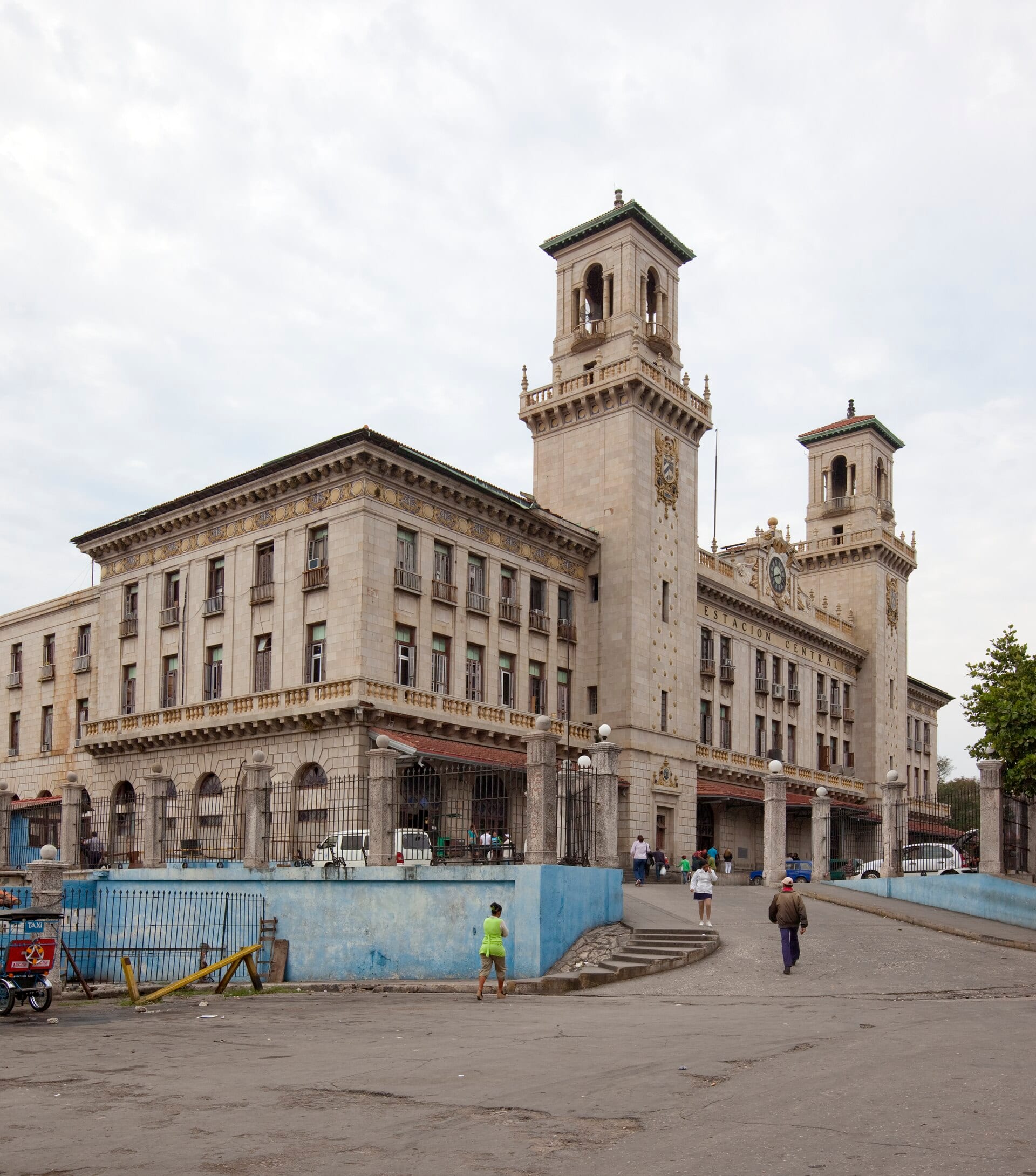
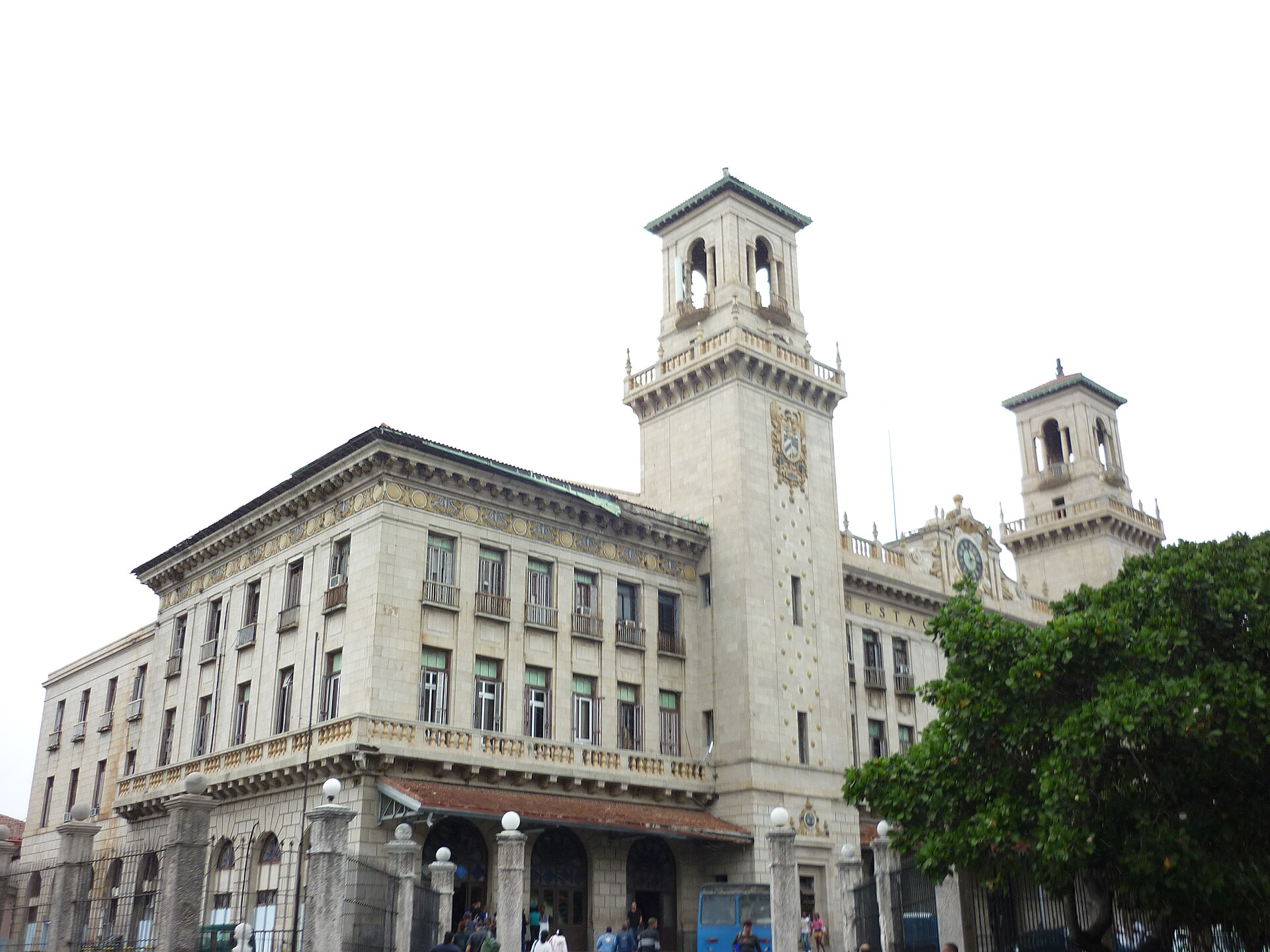
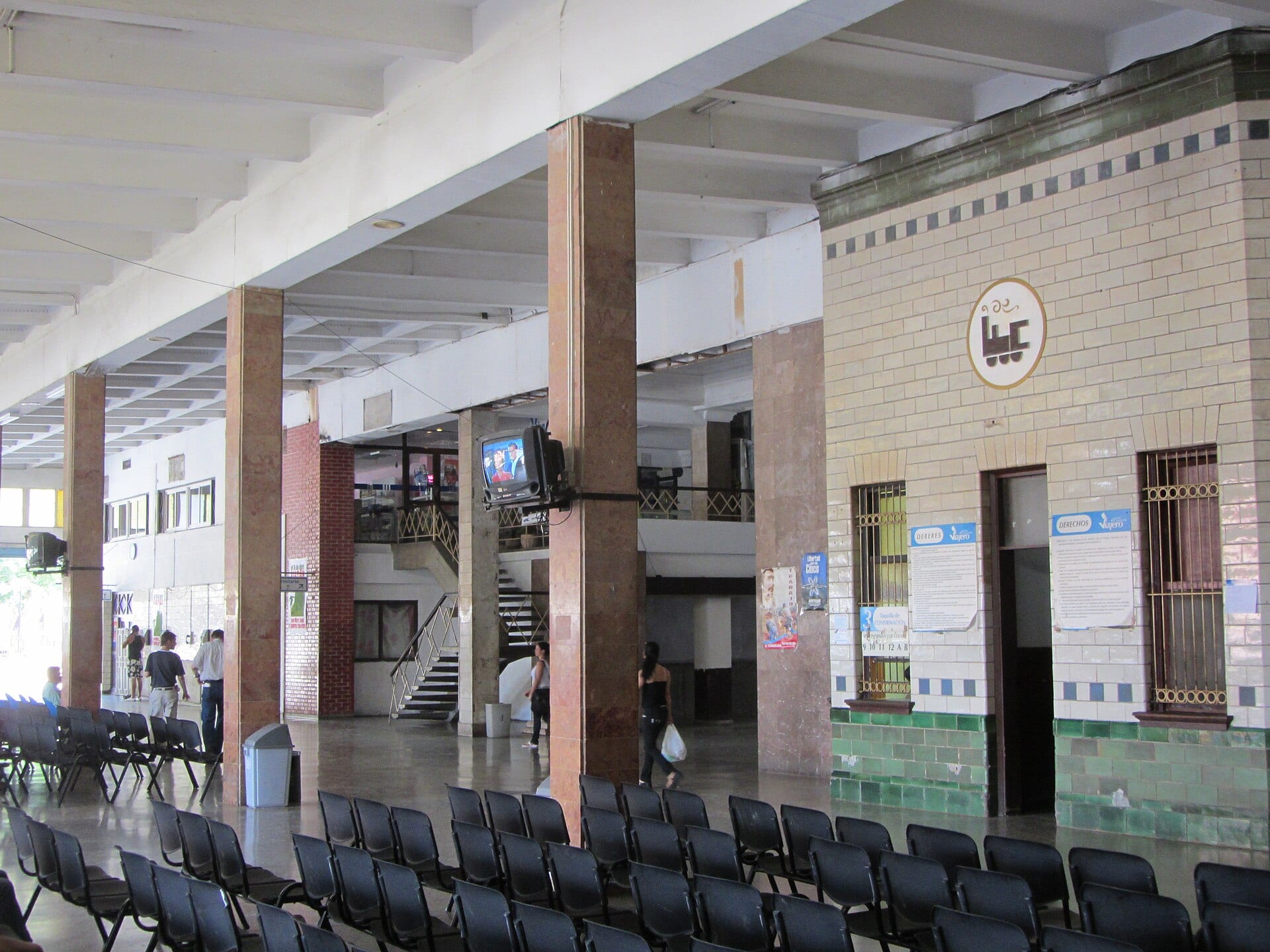
The journey begins beneath the twin towers of Havana's Estación Central, the palatial terminal of 1912 whose Spanish-revival tilework announces that railways were once Cuba's pride — though in recent years the long-distance trains have actually loaded at the adjacent La Coubre platforms while the great building awaits its restoration. Boarding is a ritual: the ticket bought days ago at a Viajero office, the passport check, the reconfirmation an hour before departure, and then the slow shuffle to a seat as the evening light goes amber over the harbour.
The train pulls out in the dusk and settles into its long southeastern amble. Cuba by rail is Cuba from the inside: backyards and banana groves, cane fields silvering in the last light, horse carts waiting at crossings, whole villages assembled on platforms for the event of the train. The Chinese coaches ride smoothly enough; the pace is stately; nobody aboard is in a hurry, because hurrying is not what this railway has ever been for.
In the small hours comes Santa Clara, forever the city of the Revolution's turning point — it was here, on 29 December 1958, that Che Guevara's guerrillas derailed Batista's armoured train, and the wagons still stand where they came to rest, as a national monument beside the line. Then the long agricultural middle of the island rolls by in darkness until Camagüey, the maze city, its UNESCO-listed lanes twisted — so one story goes — to confound raiders.
Morning brings the east: royal palms against a harder blue sky, the land creasing toward the Sierra Maestra, the temperature and the music both rising. And then, some fifteen hours from Havana, the train eases into Santiago de Cuba — cradle of the Revolution, birthplace of son, the island's hot-blooded second capital. Arriving overland, with the whole length of Cuba behind you, is the only way to properly feel what Santiago is: not a stop on an itinerary but the far pole of an island world.
That is the journey as it runs when it runs. Ride it if the timetable and the times allow; hold the ambition if they do not. Railways this storied do not stay down forever.
Along the route
Brooksbank / Wikimedia Commons · CC BY-SA 4.0Before Spain had a single rail
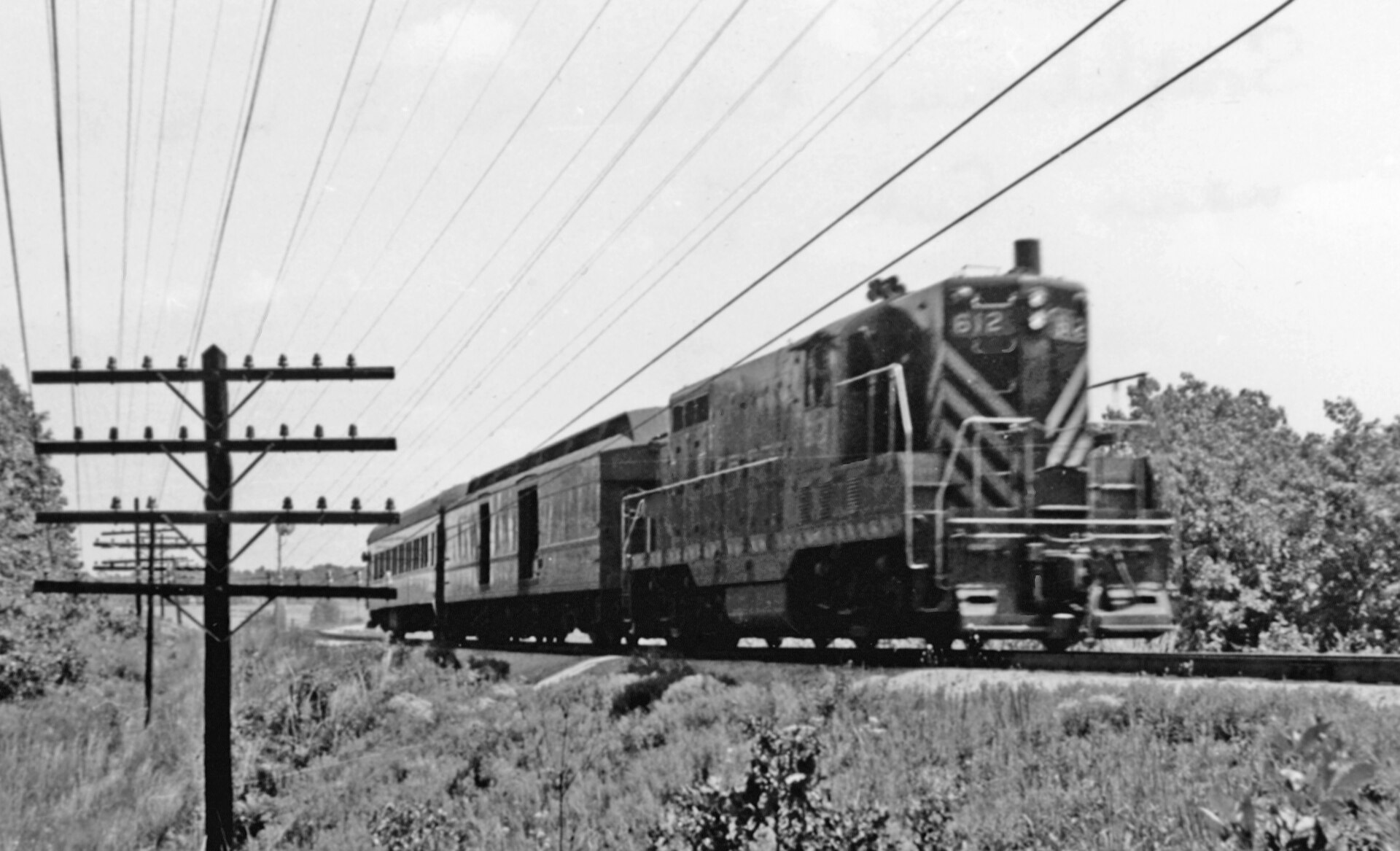
Cuba's main line descends from an astonishing first: the Havana–Bejucal railway of November 1837, the first in Latin America, built to rush sugar to the docks while Spain itself had no railway at all.Maurits90 / Wikimedia Commons · CC0The Tren Francés
For two decades the night train south was the Tren Francés, a rake of genuine Trans Europ Express coaches bought from French Railways in 2000, which had once glided between Paris and Nice. European luxury re-tropicalised behind a Chinese diesel, retired in 2019.Tina Li / Wikimedia Commons · CC BY-SA 2.0Santiago, the other capital
Journey's end is Santiago de Cuba, the island's fiery second city, cradle of the Revolution and of son, the music that became salsa. Wedged between the Sierra Maestra and its bay, it is hotter and more Caribbean than Havana in every sense.A bit of history
Culture & experiences along the way
Stephen Colebourne / Wikimedia Commons · CC BY 2.0The hard truth about today
Cuba's fuel crisis has hollowed out the timetable: the Havana–Santiago train, nominally every four days in its Chinese-built coaches, has lately run more like every sixteen, with heavy restrictions on boarding. As of mid-2026 it is not a service a visitor can plan around. We say so plainly — and keep this page ready for the better days the island is owed.Alabrada / Wikimedia Commons · CC BY-SA 3.0How booking works (when it works)
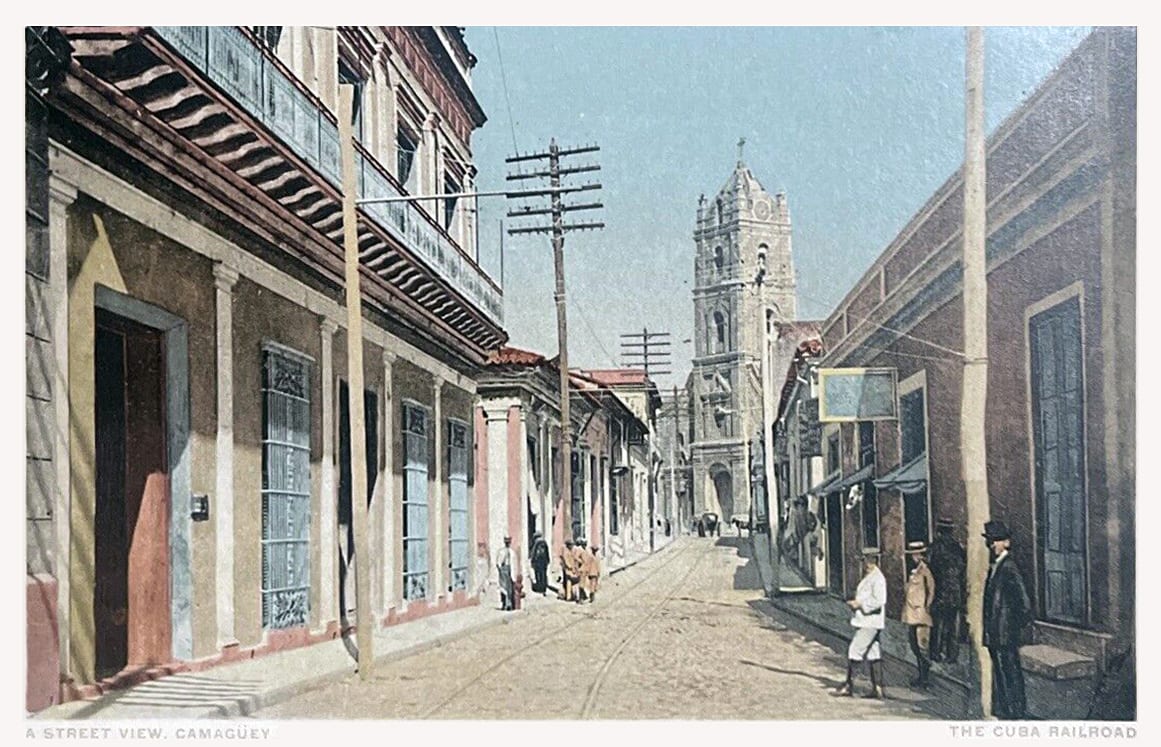
There is no online booking in Cuba. Long-distance tickets sell in person through Viajero agency offices, opening about thirty days ahead — passport required — and you must reconfirm at the station roughly an hour before departure. Fares are charged in pesos and are very low by international standards. Build in slack: delays and cancellations are part of the system.The Cuba Railroad / Wikimedia Commons · Public domainBreak the journey
The classic stops divide the island neatly: Santa Clara, where Che Guevara's guerrillas derailed an armoured train on 29 December 1958 — its wagons stand there still, as a national monument; and Camagüey, a UNESCO-listed maze of colonial lanes said to have been laid out to baffle raiders. Riding the main line in stages turns it into a full Cuban grand tour.Timetables
Read this first. Cuba's fuel shortage has cut the national timetable to a skeleton. The Havana–Santiago trains, nominally on an every-four-days cycle, have in 2026 been running closer to every sixteen days, with boarding restricted — a service that cannot currently be planned around from abroad. The pattern below is the nominal one, given for the record, as of mid-2026:
| Service | Pattern (nominal) |
|---|---|
| Havana (La Coubre) → Santiago de Cuba | Departures in the late afternoon/evening, roughly between 16:15 and 22:20 depending on the train |
| Arrival Santiago | The following morning, roughly 06:50–10:40 |
| Journey time | About 15 hours |
| Frequency | Every 4 days per route in principle — severely reduced in practice |
| Principal calls | Santa Clara · Camagüey (plus others by train) |
Good to know:
- Which station: long-distance trains in Havana have been using La Coubre, beside the historic Central terminal.
- Fares (as of mid-2026 reporting): roughly 670–820 Cuban pesos Havana–Santiago depending on class — first class is air-conditioned in the Chinese coaches, second is not.
- Reconfirm one hour before departure at the station — unclaimed seats are resold. Take water, food and toilet paper; delays and breakdowns are routine.
- The buses run when the trains don't. The long-distance coach network is currently the practical overland fallback, and no shame in it.
Nominal pattern and fares as reported to mid-2026; the real state of service changes week to week. Confirm in person in Havana — nowhere else will know.
Tickets
Cuban rail ticketing is an entirely offline, in-person affair — treat it as part of the experience. Long-distance tickets are sold through Viajero agency offices, with booking opening about thirty days before departure. You need your passport, because the ticket carries your name, and fares are payable in Cuban pesos at rates that remain remarkably low by any international standard.
Two rules matter more than any others. Reconfirm at the station about an hour before departure — this is not optional, and unclaimed reservations are resold to the queue. And hold your plans loosely: in the current fuel crisis a booked train is a hope rather than a promise, so keep the bus or a shared taxi in reserve for every leg. There is no online booking and no official English-language sales channel; any site claiming to sell Cuban train tickets is a middleman at best.
Book your tickets
Havana – Santiago de Cuba
The national train, in Chinese-built coaches
Cuba's flagship long-distance service, worked since July 2019 by new Chinese-built coaches with air-conditioned first class. Currently running a severely reduced, restricted timetable due to the fuel crisis — check the current situation before planning. Tickets are sold in person through Viajero offices; there is no online booking.
Book Tickets (opens in a new tab, on Ferrocarriles de Cuba)via Ferrocarriles de CubaBreak-of-journey tickets
Santa Clara · Camagüey
The same national trains call at Santa Clara and Camagüey, and separate tickets let you ride the main line in stages — the most rewarding way to cross the island when services permit. Book each leg in person, and keep plans flexible enough to switch to the bus network, which currently runs far more reliably.
Book Tickets (opens in a new tab, on Ferrocarriles de Cuba)via Ferrocarriles de CubaRail Passes
No rail pass covers this journey. Interrail and Eurail are European schemes, and Cuba is not among the 33 countries in Interrail's list of covered railway companies (opens in a new tab). Long-distance tickets are sold in person through Viajero offices, with your passport.
Checked October 2026 against Interrail's list of covered railway companies (opens in a new tab).
Places to Visit
Eight hundred and fifty-four kilometres is a long way to sit, and the cities strung along the line are the reward. Break the journey rather than riding it end to end — the classic stops are Santa Clara, Camagüey and Santiago itself, and each is worth an overnight rather than a glance.
Before you leave Havana, give the Estación Central a look even between trains: the 1912 terminal's twin tiled towers are one of the Caribbean's great railway façades, though long-distance departures in recent years have used the adjacent La Coubre platforms while the old building awaits restoration.
At the far end, Santiago is the most Caribbean of Cuban cities — closer to Haiti than to Havana in distance and in spirit — and its musical pedigree as the cradle of son means the best evenings are simply found wherever a band happens to be playing.
 Burkhard Mücke / Wikimedia Commons · CC BY-SA 4.0 · cropped
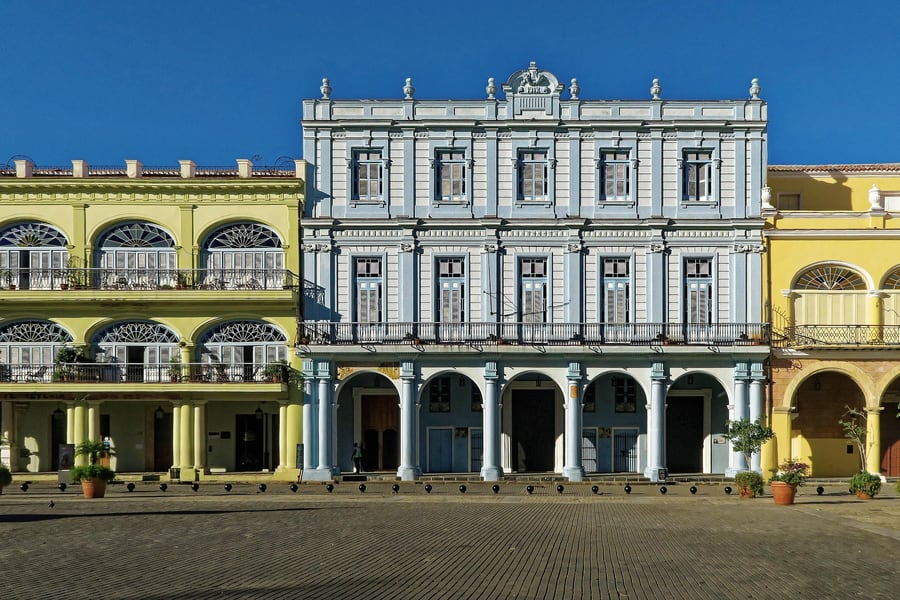
Old Havana
The UNESCO-listed old town — inscribed in 1982 — is walkable from the Estación Central, and its four great squares are the point. Plaza Vieja, laid out in 1559, is the most eclectic: Cuban baroque beside Gaudí-inflected art nouveau. It was very nearly lost — an underground car park was sunk into it in 1952 and only demolished in 1996, after which the cobbles were relaid and the marble fountain rebuilt.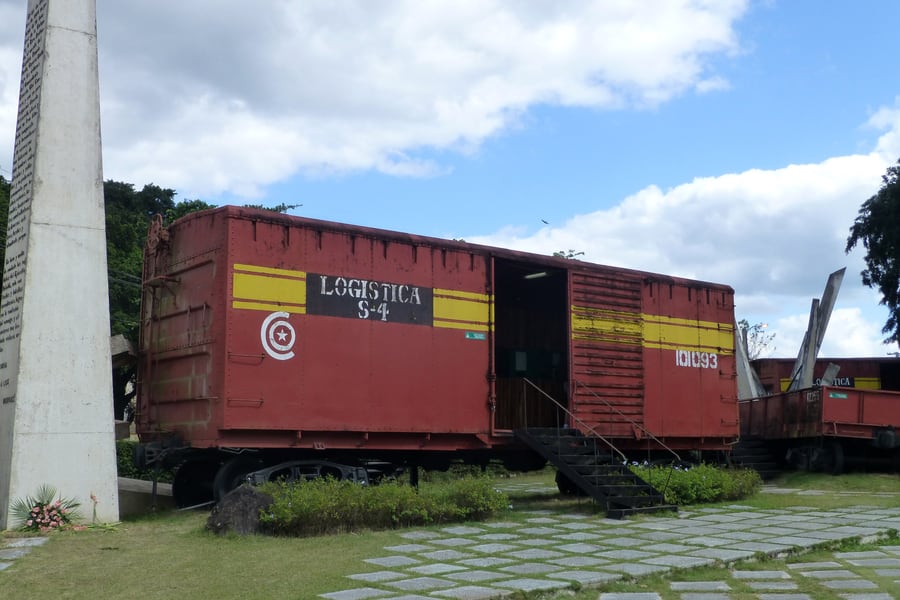 Ji-Elle / Wikimedia Commons · CC BY-SA 4.0 · cropped
Tren Blindado, Santa Clara
On 29 December 1958 eighteen guerrillas under Che Guevara bulldozed thirty metres of track and derailed Batista's armoured train. Within days the dictator had fled. The wagons still lie where they came off, converted into museum rooms, among an open-air memorial park of concrete obelisks pitched at angles to suggest the blast — the work of the Cuban sculptor José Delarra. The bulldozer is up on a plinth of its own.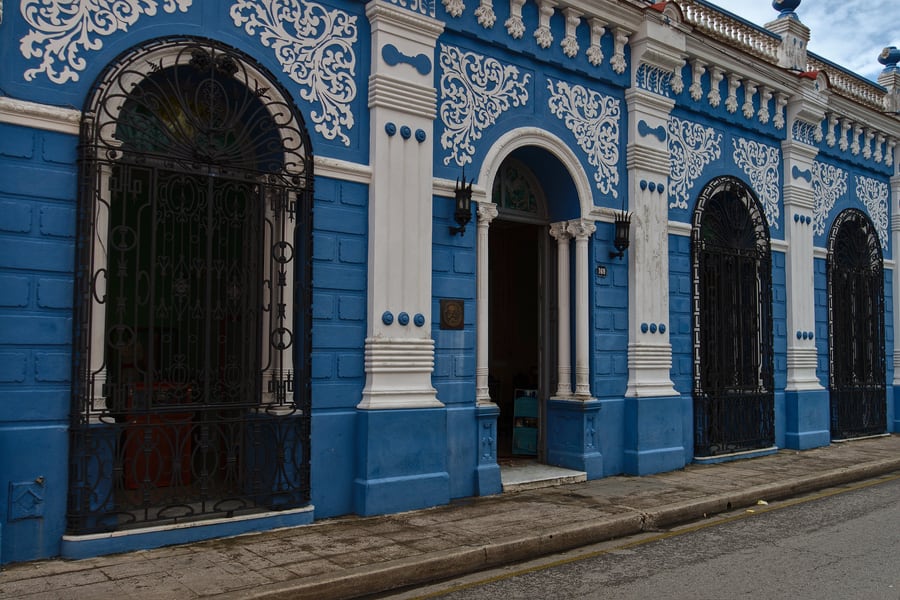 Rob Oo / Wikimedia Commons · CC BY 2.0 · cropped
Camagüey
Founded as Santa María del Puerto del Príncipe on 2 February 1514 and moved inland in 1528, Camagüey was listed by UNESCO in July 2008 for a street plan like no other in Cuba — winding alleys, forked streets and dead ends. Locals say the town simply grew around its churches; the better story is that it was rebuilt as a maze after Henry Morgan sacked it. Getting lost is the correct way to see it.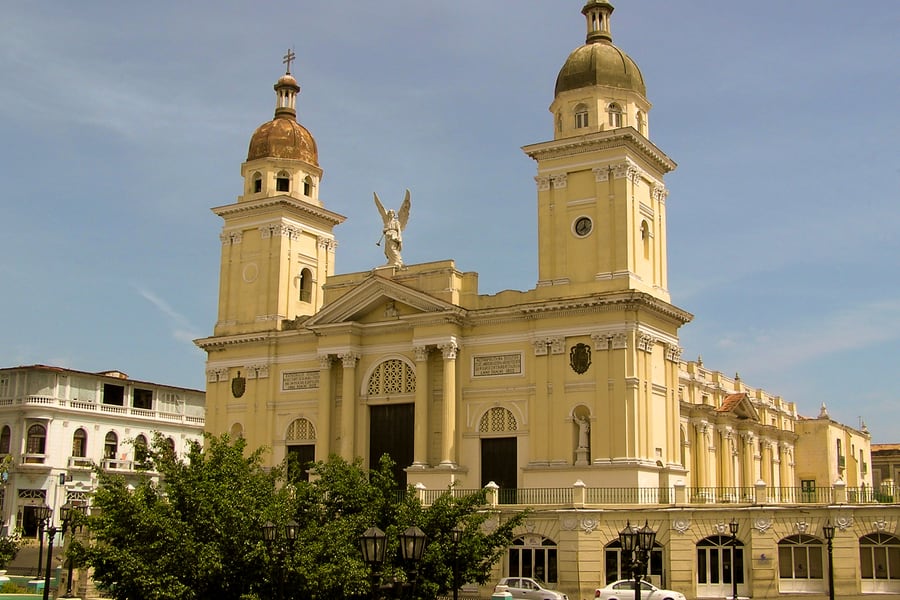 BluesyPete / Wikimedia Commons · CC BY-SA 3.0 · cropped
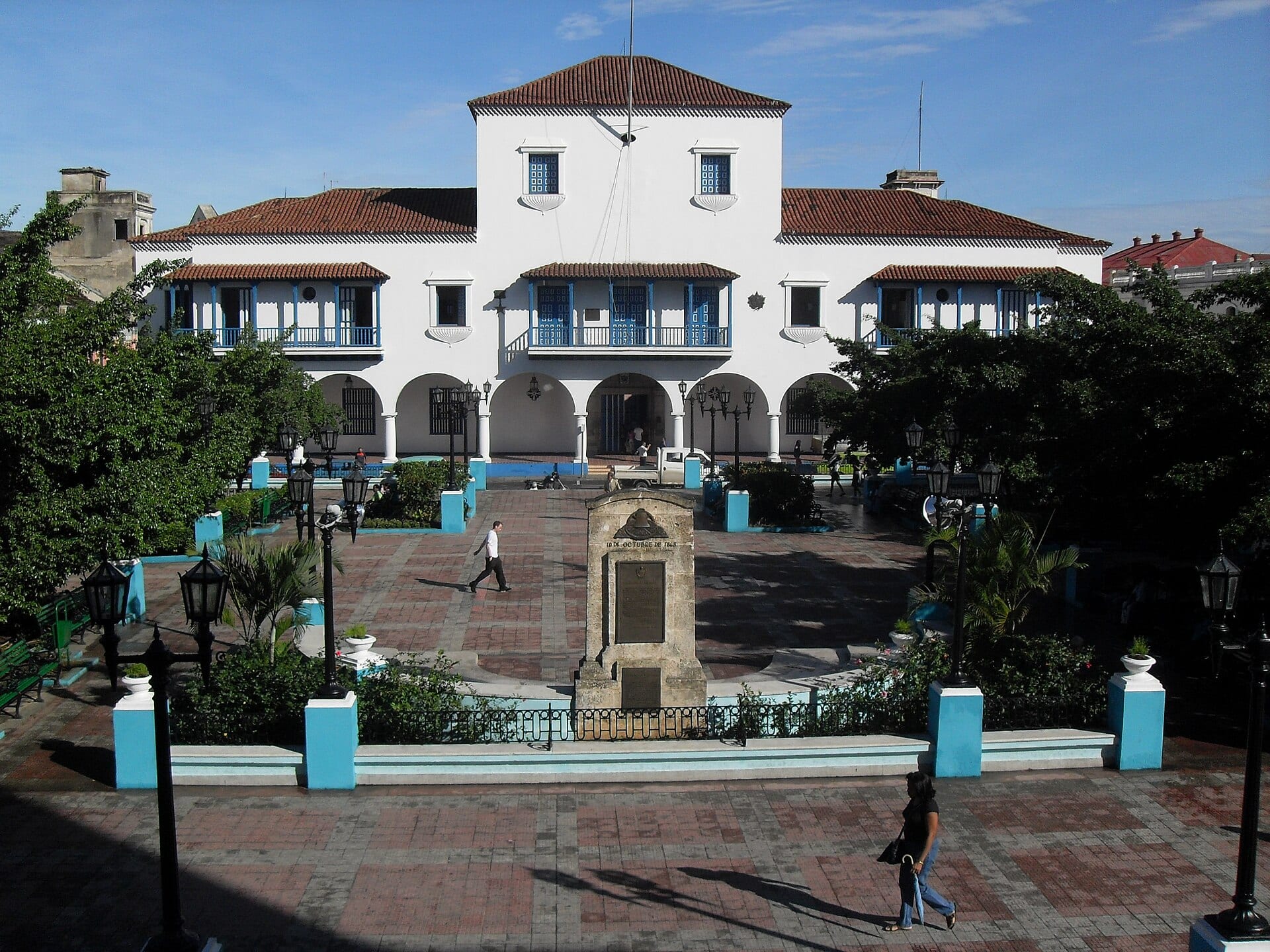
Santiago's cathedral
A cathedral has stood on this spot since 1522, and earthquakes have taken it down four times — 1678, 1766, 1852 and 1932. The present building was begun in 1810 and finished on 24 April 1818; the storey on each tower and the angel between them were added in 1922. Inside are 19th-century carved choir stalls and the tomb of Diego Velázquez, who founded the city and asked to be buried beneath the altar steps.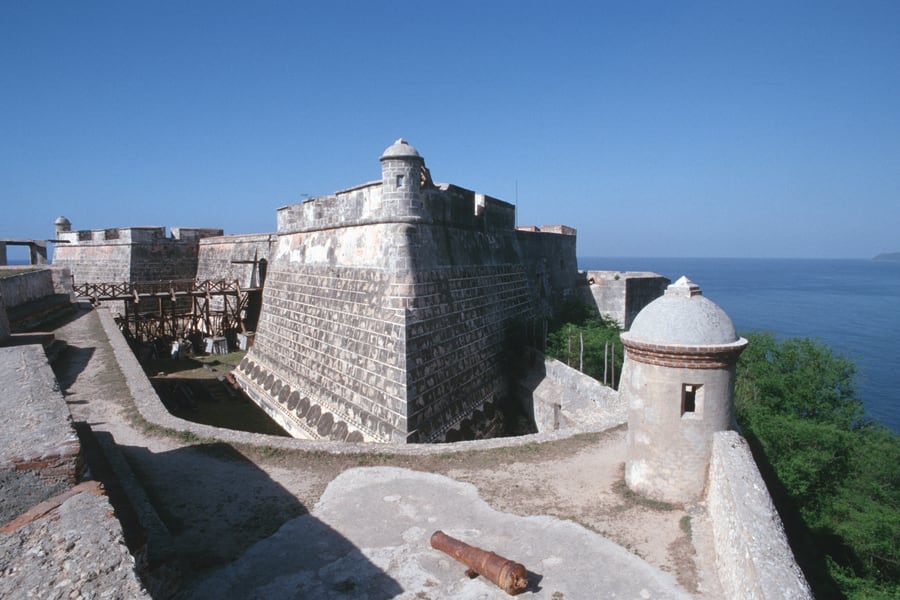 Peter Glogg / Wikimedia Commons · CC BY 2.0 · cropped
Castillo del Morro
The Castillo de San Pedro de la Roca guards the narrow mouth of Santiago's bay from a promontory six miles from the centre. The Milanese military engineer Giovanni Battista Antonelli laid it out in 1638, and building went on in fits until about 1700; by 1775 parts of it were holding political prisoners. UNESCO listed it in 1997 as the most complete surviving example of Spanish-American military architecture.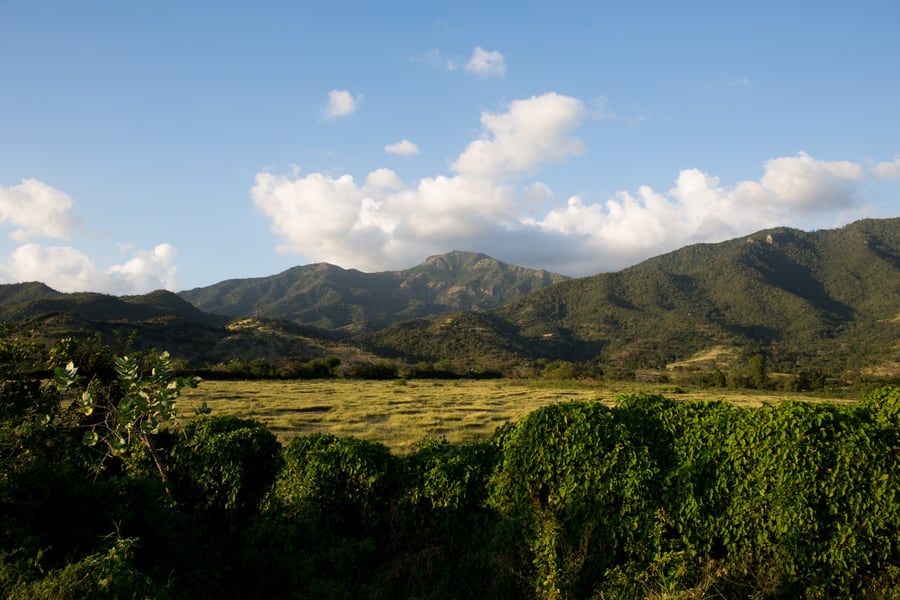 Christian Pirkl / Wikimedia Commons · CC BY-SA 4.0 · cropped
The Sierra Maestra
Cuba's great range rises straight out of the sea west of Santiago and runs 240 kilometres along the coast, up to 30 wide. Pico Turquino, at 1,974 metres, is the country's highest point and can be climbed with a guide from the national park that bears its name. This is the country Fidel Castro's column disappeared into after 1956 and came down from on 1 January 1959 — the mountains are inseparable from the story.Where to Sleep
The joy of sleeping your way down the main line is Cuba's institution of the casa particular — the licensed private homestay. Every city on the route has them in depth, they cost a fraction of the state hotels, and they come with the two things no hotel can supply: a family's local knowledge (invaluable when train plans wobble) and breakfasts of fruit, eggs and coffee that outclass most resorts.
In Havana, choose a casa in Habana Vieja or Centro for atmosphere and walkability to the station quarter. In Santa Clara and Camagüey, casas cluster in the old centres, often in high-ceilinged colonial houses around courtyards — Camagüey's, hidden in the maze, are particularly lovely. In Santiago, look around the historic core near Parque Céspedes, and prize a roof terrace: the evening view over the bay to the mountains, with music drifting up from the streets, is the reward for the whole journey.
Practicalities for the times: book directly or through an established Cuba specialist (the big international platforms work patchily), carry cash, and pack patience for power cuts — your hosts will handle them with a shrug and a candle, and so should you. If a missed or cancelled train strands you somewhere unplanned, ask your casa host; there is always a cousin with a room in the next city, and that improvised network is the most reliable infrastructure in Cuba.
Questions or corrections
Planning this trip and stuck on something, or spotted a time, fare or detail that has changed? Send us a message about Havana to Santiago de Cuba. We read every one, and we update this page when something has changed.