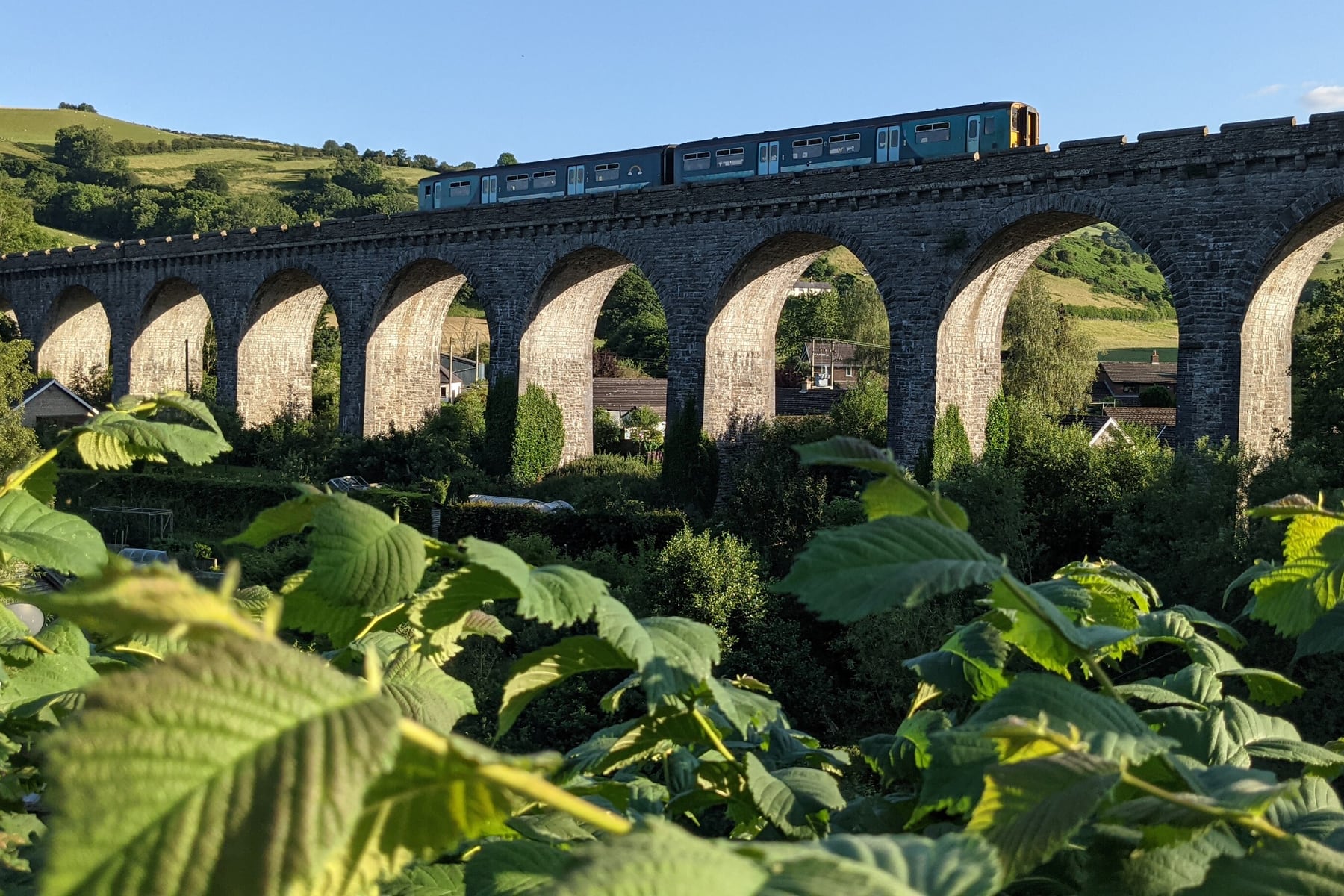
The Heart of Wales Line
Fabian Musto / Wikimedia Commons · CC BY-SA 2.0
- DistanceAbout 121 miles, Shrewsbury to Swansea
- DurationAbout 4 h
- Best seasonEvery day · two trains each way on Sundays
Introduction
The Heart of Wales Line is a 121-mile rural railway from Shrewsbury to Swansea, through the hills of south Shropshire, Powys and Carmarthenshire. It leaves the main line at Craven Arms, crosses into Wales at Knighton, climbs to two summits, the higher about 300 metres up, and calls at the old spa towns of Llandrindod Wells and Llanwrtyd Wells before following the Tywi valley down to the Loughor estuary and the sea.
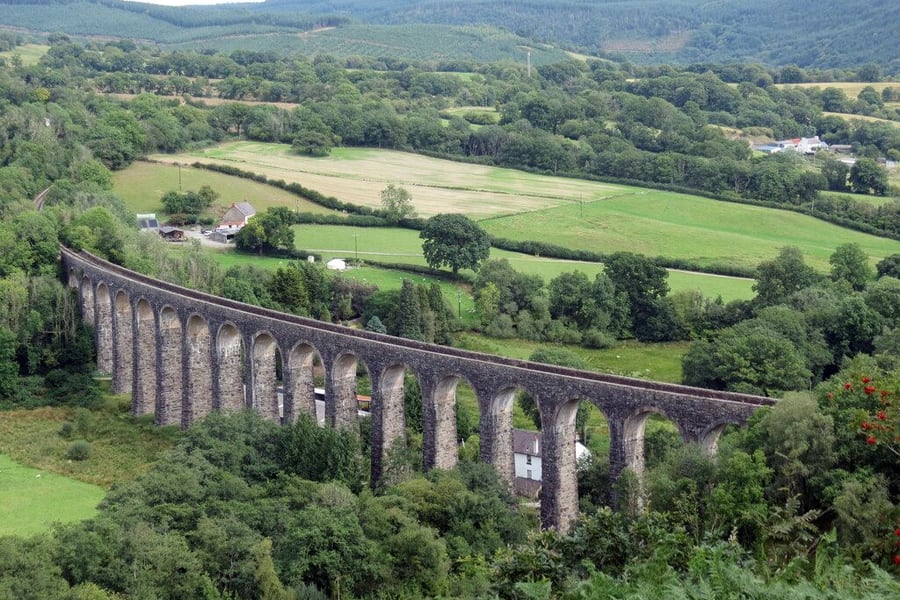
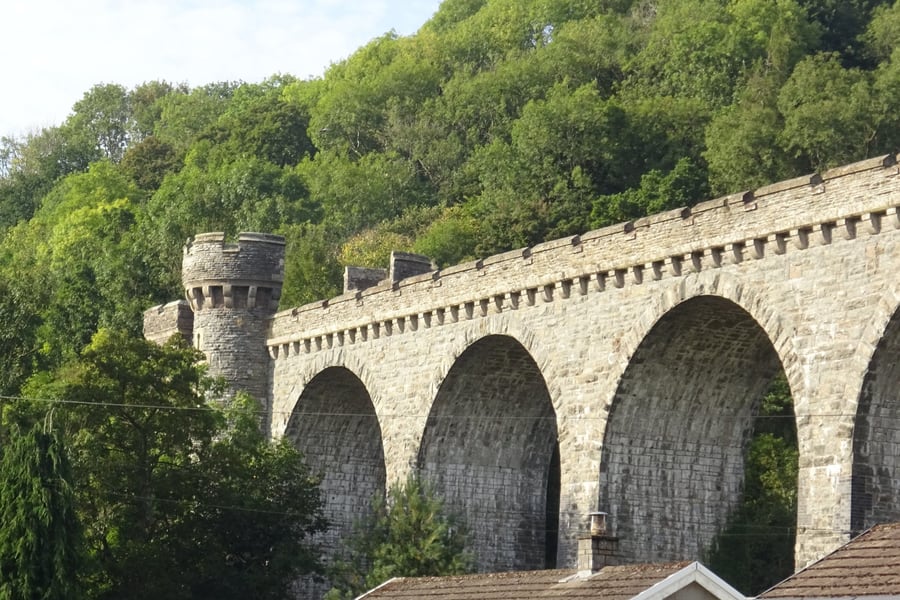
The line was built in stages in the 1860s, and it is single track almost all the way. Its two great structures are viaducts: at Knucklas the railway crosses the valley on thirteen stone arches with castle turrets at each end, and at Cynghordy it curves across the Afon Brân on eighteen. In between, the train runs through a tunnel under the summit at Sugar Loaf, where the station is the most remote in Wales.
Transport for Wales runs five trains a day from Shrewsbury to Swansea on weekdays and four back, and two each way on Sundays; the whole journey takes about four hours. Many of the stations are small halts with a shelter and a lane, and a long-distance footpath, the Heart of Wales Line Trail, links them, so the train is as much a way of getting to a walk as it is a ride.
The Journey
Trains leave Shrewsbury southwards on the Welsh Marches main line and turn off it at Craven Arms, a town that grew up around its railway junction. From here the single track follows the valleys of the Clun and the Teme past Broome, Hopton Heath and Bucknell to Knighton, where the station stands in England and the town it serves is in Wales: the border runs through the car park.
Knighton to Llandrindod Wells
Beyond Knighton the line climbs at up to 1 in 60. At Knucklas it crosses the valley on its castellated viaduct, then reaches its highest point, about 300 metres above sea level, beside the tunnel at Llangynllo. Some stations on the run across old Radnorshire are among the least used in Wales, and some stand well away from their villages: Llanbister Road is about five miles from the one it is named after. The train reaches Llandrindod Wells, the largest town between Craven Arms and Llanelli, which grew as a spa once the railway arrived.
Llandrindod Wells to Llandovery
South of Llandrindod the line passes Builth Road, where it once crossed the Mid Wales Railway (closed in 1962), and follows the Irfon to the old spa towns of Llangammarch Wells and Llanwrtyd Wells. Then comes the long climb to Sugar Loaf, 250 metres up, where the train enters a 1,001-yard tunnel under the hills and comes out in Carmarthenshire. The descent is steep and the views open out at once: the line curves across Cynghordy Viaduct and drops to Llandovery.
Llandovery to Swansea
The last stretch follows the Tywi through Llandeilo and crosses the river at Glanrhyd, on a bridge built in 1988 after the old one was swept away by floods in 1987. Past Ammanford and Pantyffynnon, where the whole line is supervised, a short tunnel before Pontarddulais dates from 1839 and is the oldest still in use in Wales. The line reaches the Loughor estuary, and at Llanelli the train reverses for the final run east along the coast to Swansea.
How the line is worked
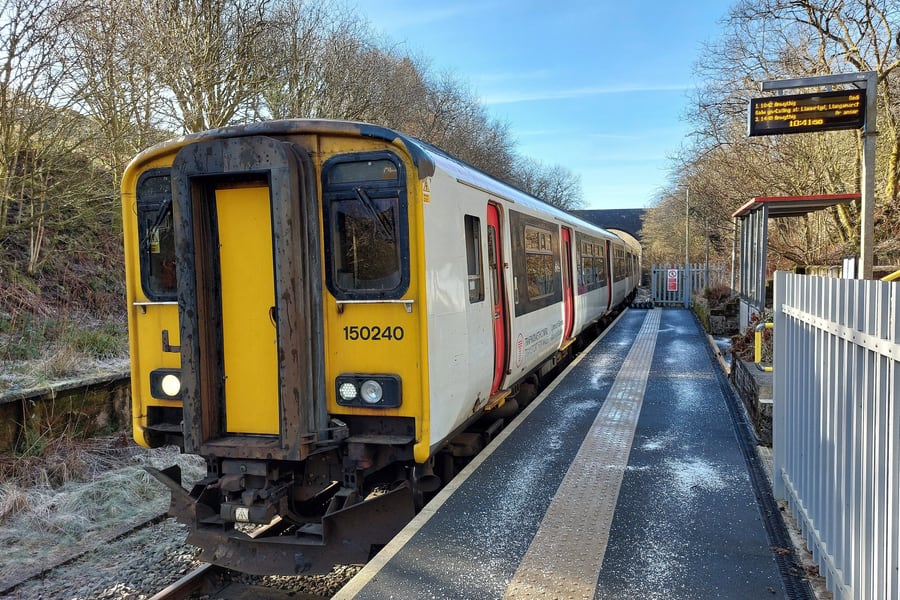
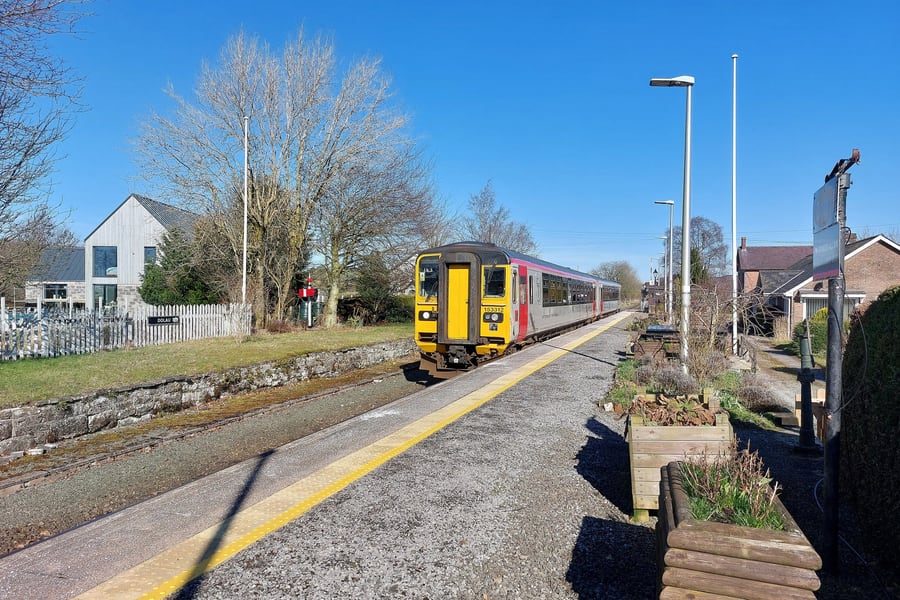
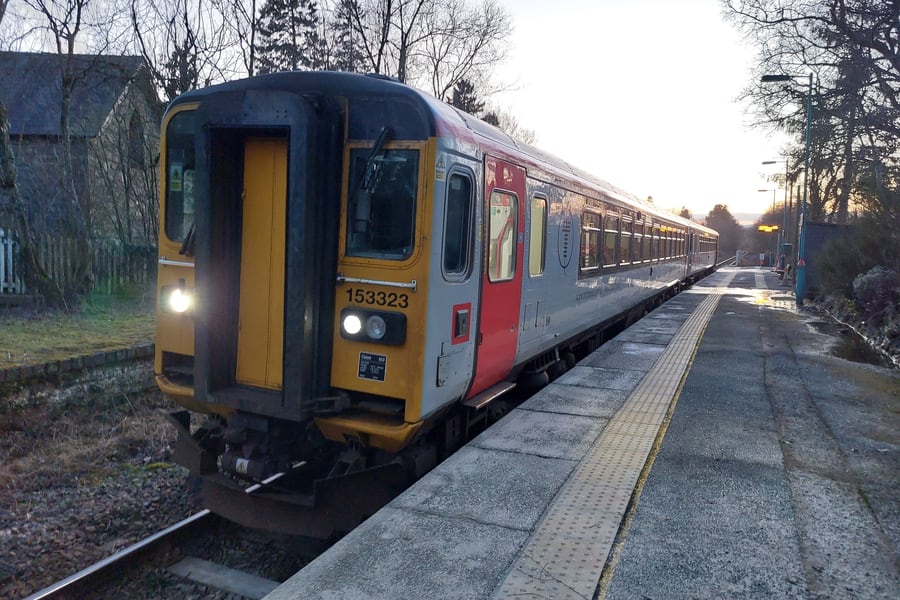
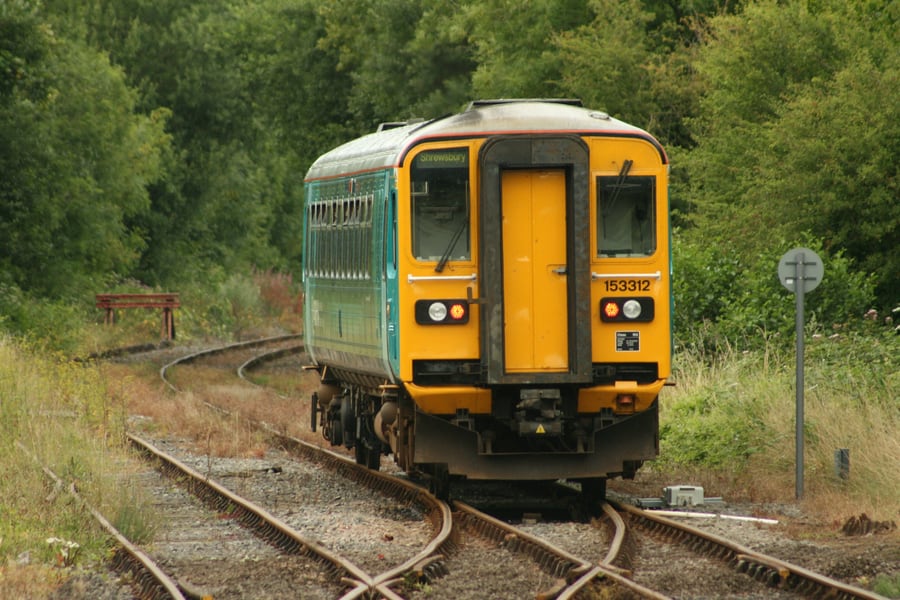
The railway is single track, with five passing loops, and has run under a light railway order since 1972. There are no signal boxes along the way: since 1986 it has used a token system in which the train crew operate the token instruments themselves at each loop, overseen by the signaller at Pantyffynnon. Trains are Class 150 Sprinters, built by British Rail at York between 1984 and 1987, and single-car Class 153s, converted from two-car Class 155 units in 1991–92. See also the Cambrian Coast Line, the other long rural Transport for Wales line on this site.
Along the route
 Rosser1954 / Wikimedia Commons · CC BY-SA 4.0 · cropped
Knucklas Viaduct
Thirteen stone arches carry the line about 75 feet above the valley, with castle turrets at each end. It is said that the owner of the ruined castle above let its stone be used only if the viaduct looked like a castle too.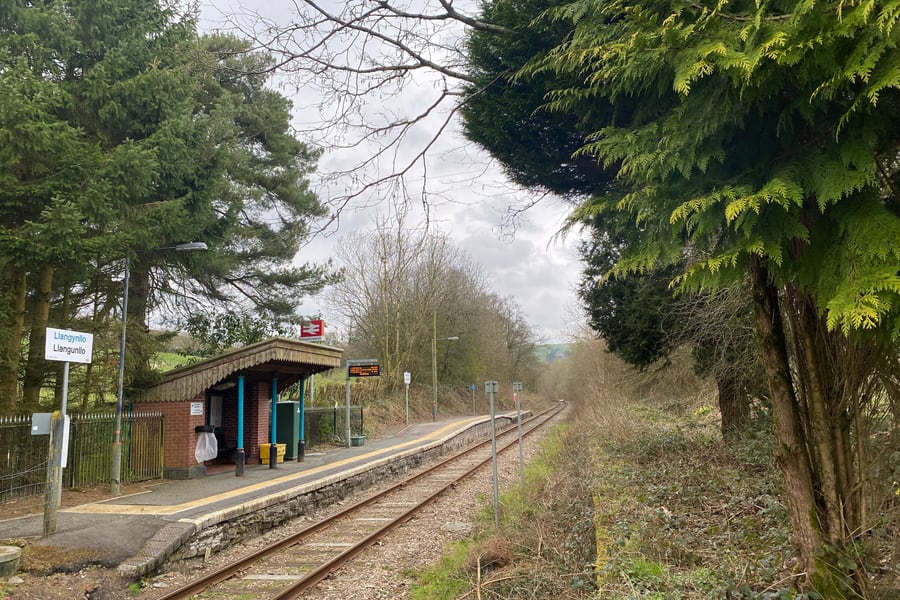 Alan Hughes / Wikimedia Commons · CC BY-SA 2.0 · cropped
The top of the line
Just north of Llangynllo the railway reaches its highest point, about 980 feet up, by the mouth of a 647-yard tunnel. The station is a request stop, and one of the least used in Wales.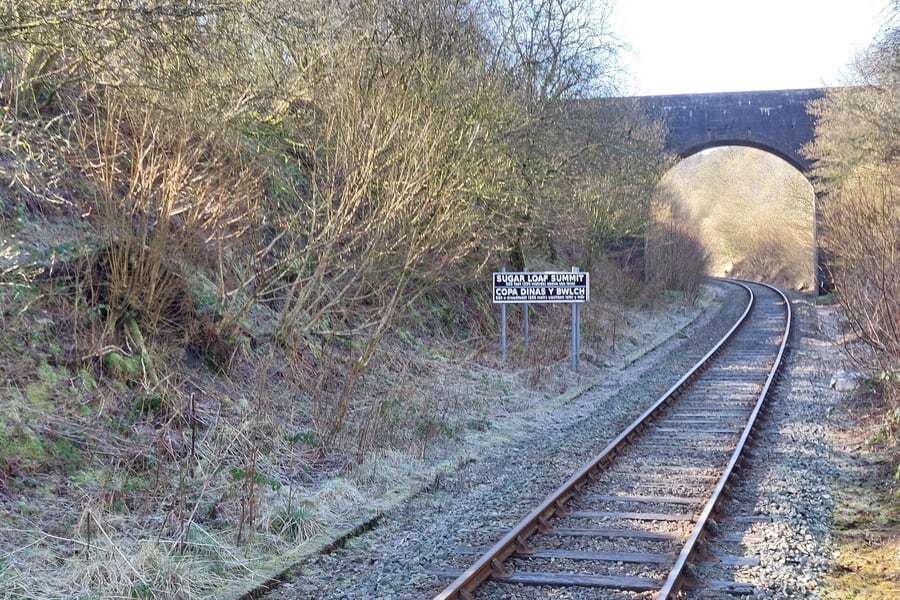 Railwayfan2005 / Wikimedia Commons · CC BY-SA 4.0 · cropped
Sugar Loaf summit
After a long climb from Llanwrtyd the train enters a 1,001-yard tunnel under the summit and comes out in Carmarthenshire. The halt by the tunnel was built for railway workers' cottages and is now a request stop.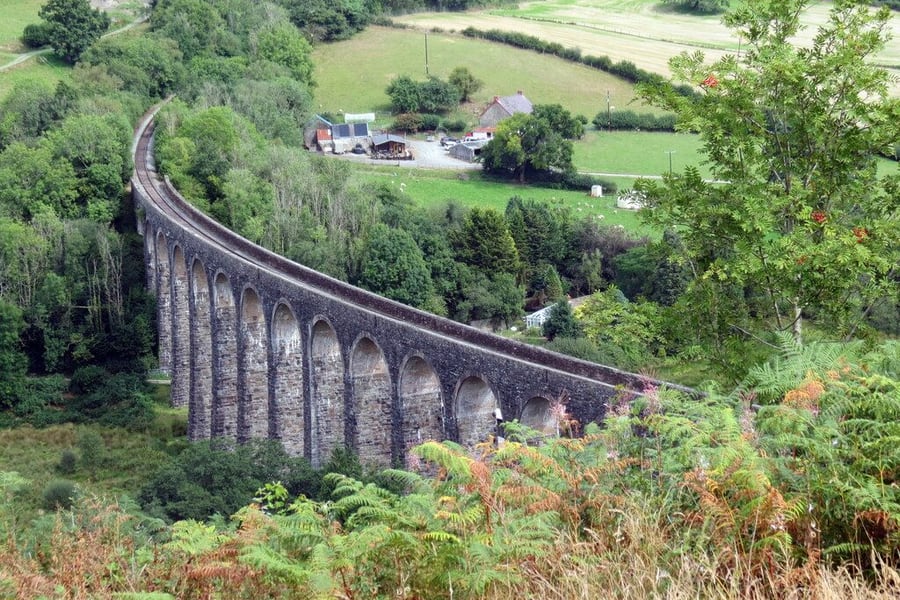 Alan Richards / Wikimedia Commons · CC BY-SA 2.0 · cropped
Cynghordy Viaduct
On the descent to Llandovery the line curves across the Afon Brân on eighteen arches of sandstone and brick, built in 1867–68. In 2017 Network Rail strengthened it with stainless steel bars hidden in the masonry.A bit of history
Culture & experiences along the way
 Alan Hughes / Wikimedia Commons · CC BY-SA 2.0 · cropped
Walk the Heart of Wales Line Trail
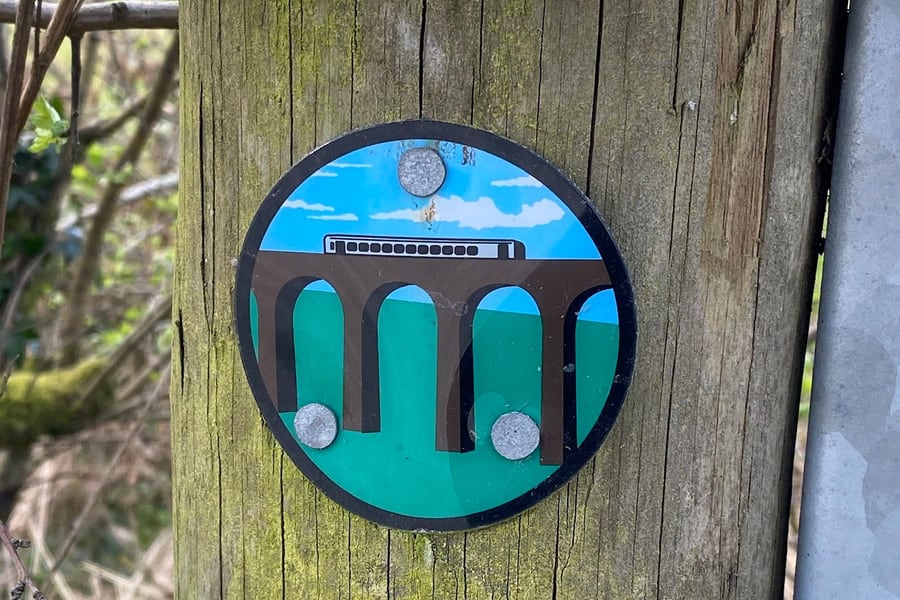
Opened in 2019, this 141-mile footpath runs from Craven Arms to Llanelli, weaving between the stations so that you can walk a stage and take the train back. Its waymarks show a train crossing Cynghordy Viaduct, and short "station links" reach the stations it does not pass.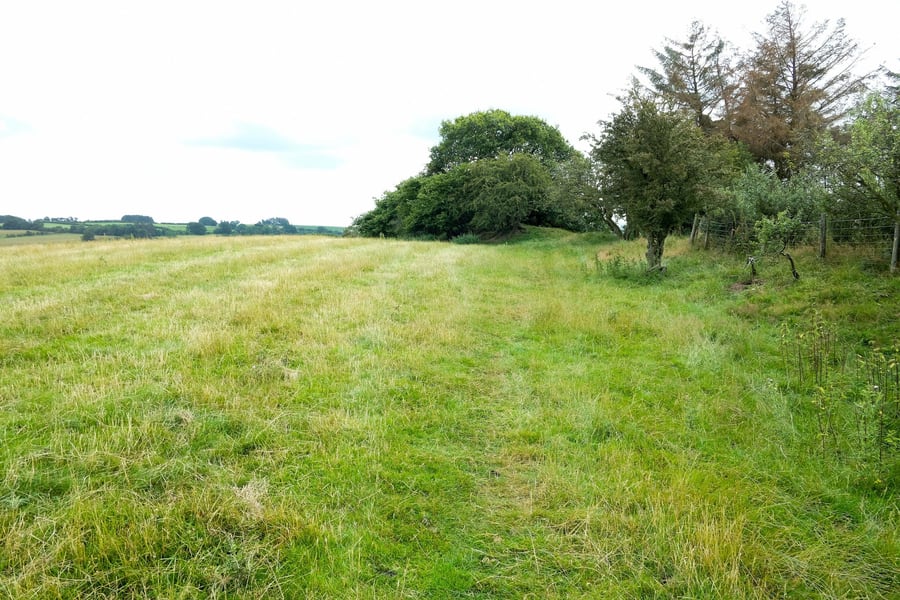 Jeff Buck / Wikimedia Commons · CC BY-SA 2.0 · cropped
Offa's Dyke at Knighton
Knighton's Welsh name, Tref-y-clawdd, means "the town on the dyke": the earthwork that King Offa of Mercia had built in the 8th century passes through the town. The Offa's Dyke Centre has an exhibition on it, and some of the best stretches of bank are a short walk away.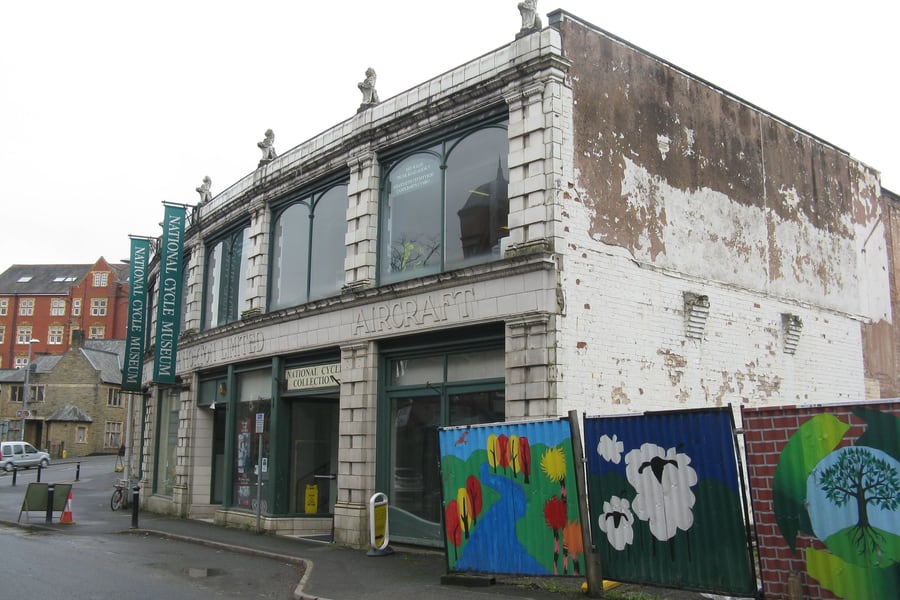 M J Richardson / Wikimedia Commons · CC BY-SA 2.0 · cropped
The National Cycle Museum
In the Automobile Palace, a former garage in Llandrindod Wells, the National Cycle Museum shows more than 260 cycles, from a hobby horse of 1818 to the latest carbon-fibre designs. It opens on Mondays, Tuesdays and most Saturdays from April to October.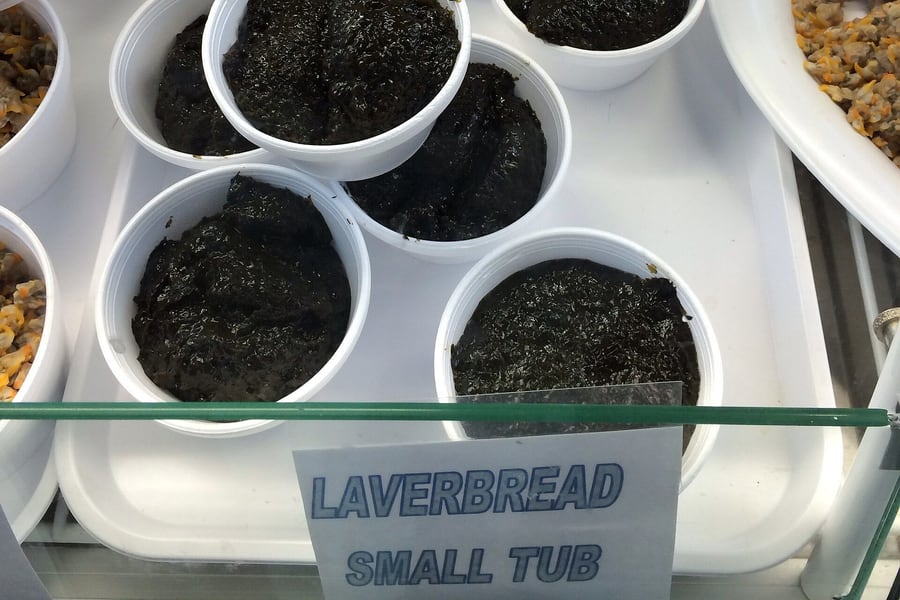 Vouliagmeni / Wikimedia Commons · CC BY-SA 4.0 · cropped
Laverbread at Swansea Market
At the end of the line, Swansea Market, the largest indoor market in Wales, sells Penclawdd cockles and laverbread, a dark purée of boiled seaweed. It is traditionally fried with bacon and cockles for a Welsh breakfast.Timetables
Transport for Wales runs five trains a day from Shrewsbury to Swansea on weekdays and four back, and two each way on Sundays. The journey takes about four hours, a little longer on trains that wait to pass another at Llandrindod.
Southbound, Monday to Friday
| Shrewsbury | Knighton | Llandrindod | Llanwrtyd | Llandovery | Llanelli | Swansea |
|---|---|---|---|---|---|---|
| 05:54 | 06:45 | 07:29 | 07:58 | 08:23 | 09:26 | 09:51 |
| 08:35 | 09:26 | 10:24 | 10:53 | 11:18 | 12:37 | 13:03 |
| 11:31 | 12:22 | 13:24 | 13:54 | 14:23 | 15:30 | 16:00 |
| 16:00 | 16:52 | 17:33 | 18:03 | 18:29 | 19:38 | 20:05 |
| 18:35 | 19:26 | 20:27 | 20:57 | 21:23 | 22:34 | 22:58 |
Northbound, Monday to Friday
| Swansea | Llanelli | Llandovery | Llanwrtyd | Llandrindod | Knighton | Shrewsbury |
|---|---|---|---|---|---|---|
| 07:29 | 07:50 | 09:09 | 09:34 | 10:12 | 10:49 | 11:42 |
| 10:39 | 11:00 | 12:07 | 12:32 | 13:12 | 13:49 | 14:42 |
| 14:49 | 15:10 | 16:16 | 16:41 | 17:38 | 18:14 | 19:09 |
| 17:47 | 18:08 | 19:14 | 19:39 | 20:25 | 21:01 | 21:55 |
Good to know:
- Early trains. On weekdays a train also leaves Shrewsbury at 04:30 for Llandrindod, and early trains run to Shrewsbury from Llandrindod at 06:05 and from Llandovery at 06:17.
- Saturdays have the same southbound trains (the late-morning one leaves Shrewsbury at 11:30). Northbound, trains leave Swansea at 04:50, 07:30, 10:38, 14:59 and 17:48, all running through to Shrewsbury.
- Sundays have two trains each way: from Shrewsbury at 12:08 and 16:20, reaching Swansea at 16:16 and 20:30, and from Swansea at 11:10 and 15:18, reaching Shrewsbury at 15:16 and 19:36.
- Request stops. Several of the small stations, among them Llangynllo, Sugar Loaf and Cynghordy, are request stops: tell the conductor where you want to get off, and signal to the driver to be picked up.
- On board. There is usually no trolley service, so take food and drink with you.
Times as of October 2026, from the National Rail journey planner for Tuesday 13, Saturday 17 and Sunday 18 October; at Llandrindod the times are departures. Check your date on tfw.wales (opens in a new tab).
Tickets
The Heart of Wales Line is part of the National Rail network, so tickets are ordinary National Rail fares, in Standard class only. Sampling the National Rail journey planner for one adult from Shrewsbury to Swansea on Tuesday 13 October 2026, the lowest single on a Heart of Wales train was £28.10, and the lowest return £36.80. Ticket offices are at Shrewsbury, Llandrindod, Llanelli and Swansea; elsewhere, buy on the train, online or in the Transport for Wales app.
For a day out, the Heart of Wales Circular Day Ranger covers a loop in either direction from Cardiff by way of Craven Arms, Shrewsbury, Llandrindod, Llanelli and Swansea, for £53, or £26.50 for a child. Fares checked October 2026 on the National Rail journey planner (opens in a new tab) and tfw.wales (opens in a new tab); pounds sterling.
Book your tickets
Single, Shrewsbury to Swansea
Standard class · direct train
The lowest single fare offered on a Heart of Wales train on the date sampled.
Book Tickets (opens in a new tab, on tfw.wales)via tfw.walesHeart of Wales Circular Day Ranger
One day · a loop by way of Cardiff
A day's travel round the circuit of Cardiff, Shrewsbury, Llandrindod and Swansea, in either direction.
Book Tickets (opens in a new tab, on tfw.wales)via tfw.walesRail Passes
Interrail passes are valid. Interrail's own table of railway companies for Great Britain lists Transport for Wales as included, so the line is covered by a one-country Interrail Great Britain Pass or a Global Pass. Seat reservations are not offered on Transport for Wales trains, so there is nothing to book.
Visitors who do not live in the UK can also buy a BritRail Great Britain Pass, which is valid on National Rail services across England, Scotland and Wales. Note that the regional BritRail South West & South Wales Pass does not cover Transport for Wales trains.
For this journey alone, a pass is not worth buying. A single from Shrewsbury to Swansea sampled at £28.10, and the Heart of Wales Circular Day Ranger costs £53. A pass pays only when the line is one day of a longer trip around Britain.
Checked October 2026 against interrail.com (opens in a new tab) and britrail.com (opens in a new tab).
Places to Visit
With five trains a day, the line rewards an overnight stop more than a quick hop: get off in the morning, look round or walk to the next station, and catch the afternoon train on. The places below run from north to south, from Craven Arms to Swansea.
 Philip Pankhurst / Wikimedia Commons · CC BY-SA 2.0 · cropped
Craven Arms and Stokesay Castle
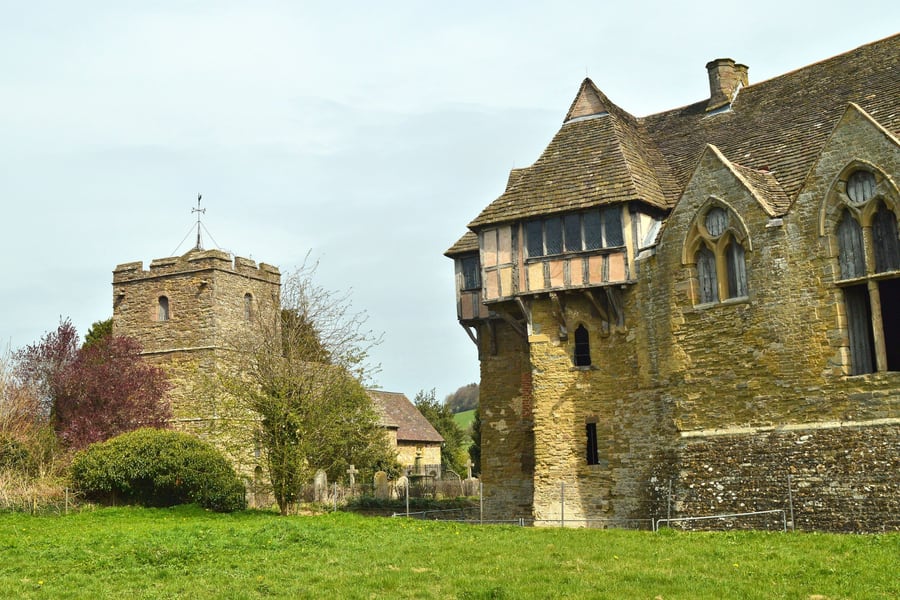
Craven Arms grew up around its railway junction and takes its name from a hotel named after the Earls of Craven. Just south of the town is Stokesay Castle, one of the finest surviving fortified manor houses in England, built in the late 13th century by Laurence of Ludlow, one of the leading wool merchants of his day. It stands beside the village church, and survived a Civil War siege in 1645 almost undamaged.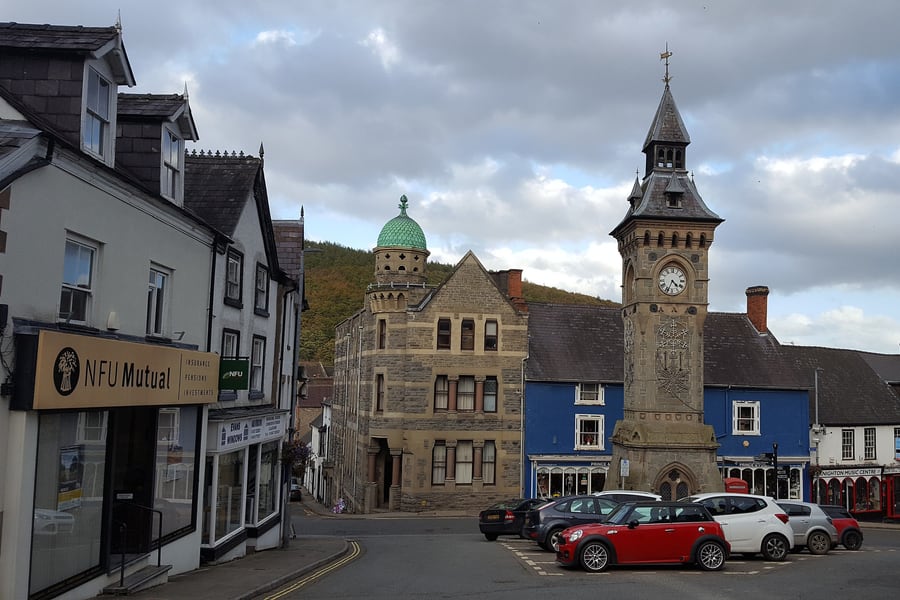 Christine Matthews / Wikimedia Commons · CC BY-SA 2.0 · cropped
Knighton
A market town on the River Teme, Knighton is in Wales, but its station is in England: the border runs through the station car park. The town was a Norman stronghold, received its charter in 1203 and was destroyed by Owain Glyndŵr in 1402. Its clock tower stands where the main streets meet, and Glyndŵr's Way, a National Trail, starts here.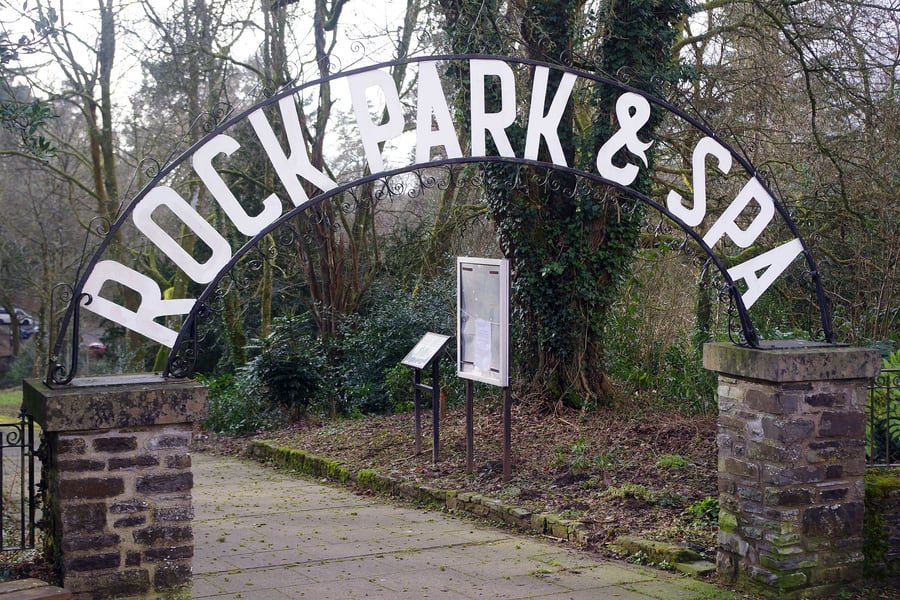 Stephen McKay / Wikimedia Commons · CC BY-SA 2.0 · cropped
Llandrindod Wells
The healing springs drew visitors in the 18th century, but the town boomed only after the railway arrived in the 1860s. In the season, visitors took the waters at the pump rooms in Rock Park, entertained by orchestras, and an ornamental lake was dug in the 1870s. Every Archbishop of Wales since 1920 has been elected here.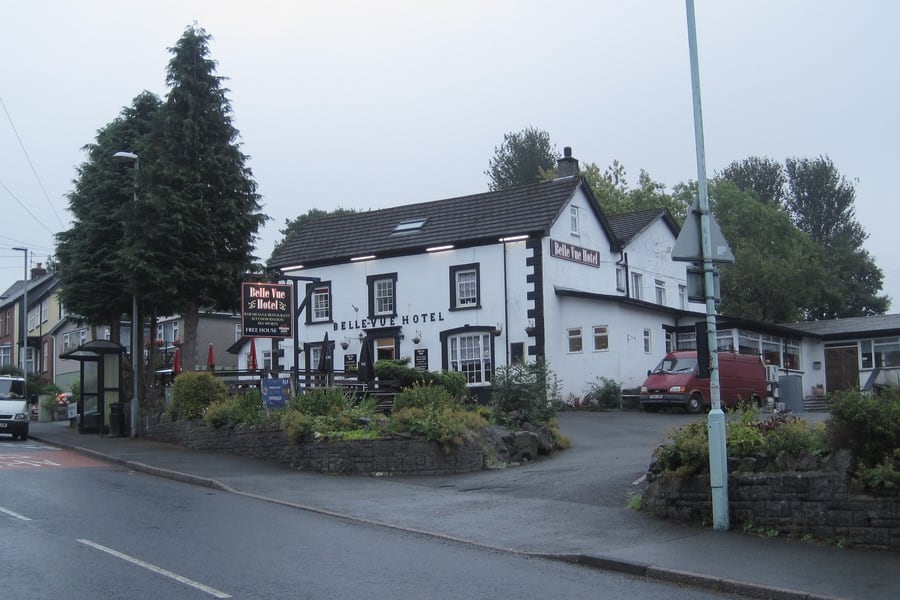 Llywelyn2000 / Wikimedia Commons · CC BY-SA 3.0 · cropped
Llanwrtyd Wells
With about 850 people, Llanwrtyd claims to be the smallest town in Britain. It grew as a spa after a clergyman found a sulphur spring here in 1732, the Ffynnon Ddrewllyd or "stinking well", and the Belle Vue Hotel of 1843 was built for the visitors. Today the town is known for the Man versus Horse Marathon and the World Bog Snorkelling Championship.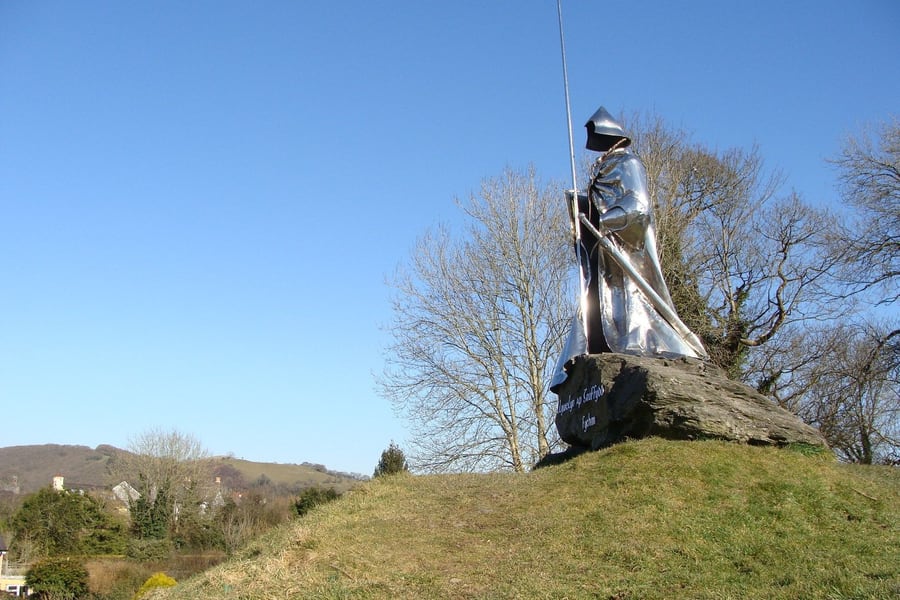 Ruth Sharville / Wikimedia Commons · CC BY-SA 2.0 · cropped
Llandovery
On the castle mound above the market place stands a 16-foot stainless-steel statue of Llywelyn ap Gruffydd Fychan, unveiled in 2001, six hundred years after Henry IV had him executed here for leading the king's army astray during Glyndŵr's rising. Llandovery was a resting place for cattle drovers, and one of the first Welsh banks, the Bank of the Black Ox, was founded by a drover in what became the King's Head Inn.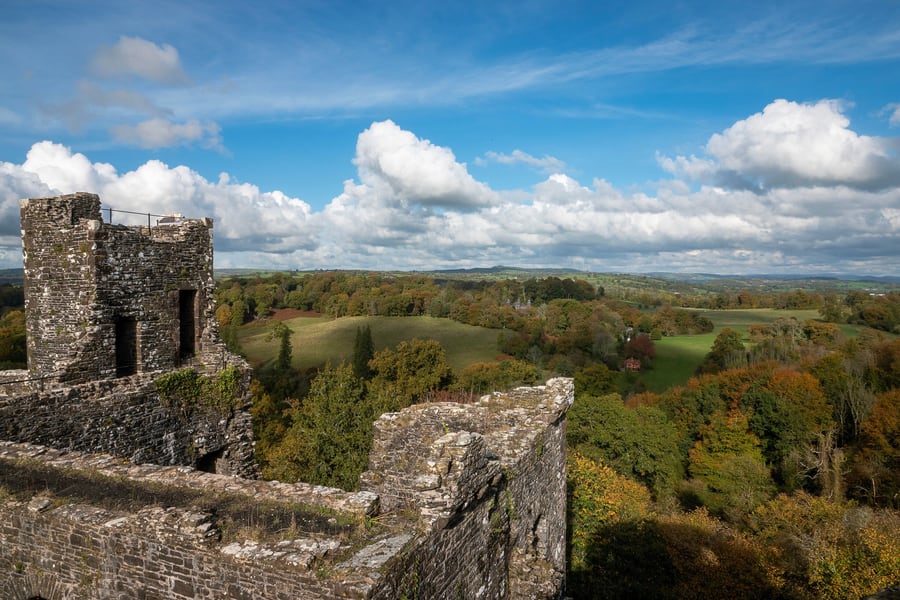 Bob Jenkin / Wikimedia Commons · CC BY 2.0 · cropped
Llandeilo
A small, colourful town named after Saint Teilo, whose church stands at its centre; in 2021 The Sunday Times counted it among the six best places to live in Wales. Just outside it, on a ridge above the River Tywi, Dinefwr Castle was the chief seat of the kingdom of Deheubarth. From its towers you look over the deer park of Dinefwr and down the valley the railway follows.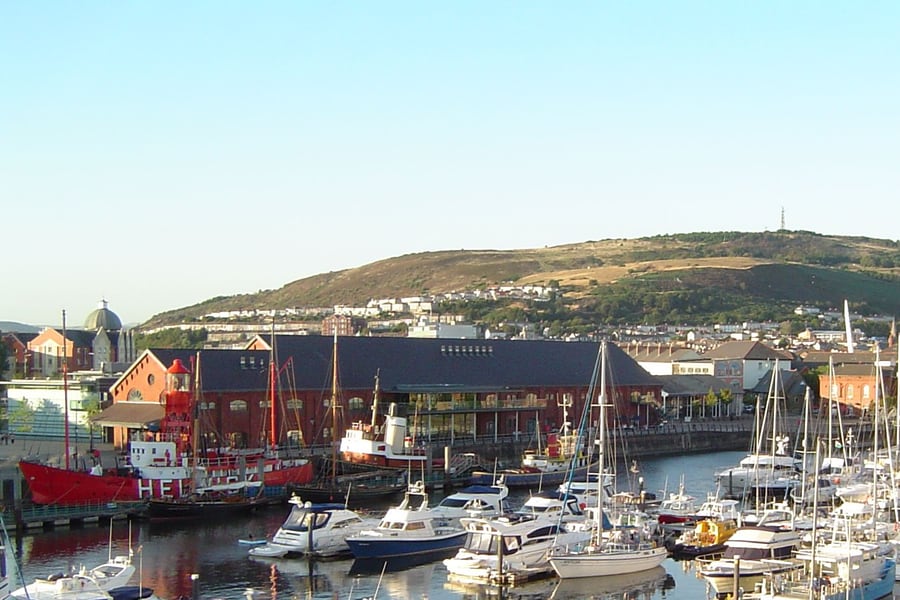 Simon Morrison / Wikimedia Commons · CC BY-SA 2.5 · cropped
Swansea
The second-largest city in Wales stands on Swansea Bay. Its National Waterfront Museum tells the story of Welsh industry with a replica of the world's first steam locomotive and one of the very few surviving coal wagons. You can walk round the bay to Mumbles, and buses run out to the beaches of the Gower Peninsula.Where to Sleep
Two hotels in the spa towns make good halfway stops. The Metropole is the big hotel of Llandrindod Wells, and the Neuadd Arms stands on the square in Llanwrtyd Wells, a few stops further south.
Where to stay
 Michael Garlick / Wikimedia Commons · CC BY-SA 2.0 · cropped
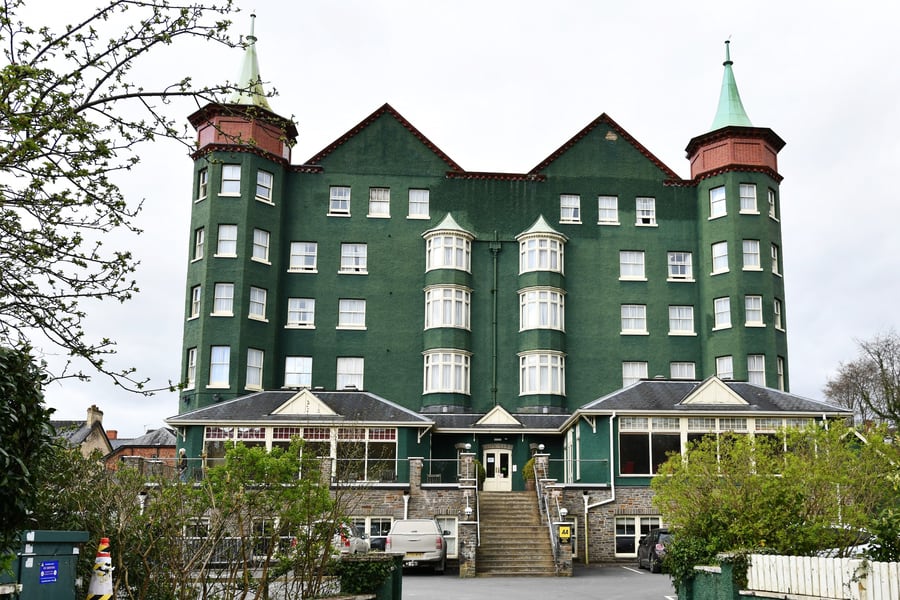
The Metropole
Llandrindod Wells · 109 bedrooms and a spa
The spa town's big hotel, run by one family from 1897 until 2022, with its own Rock Spa and pool.
Check Availability (opens in a new tab, on metropole.co.uk)via metropole.co.uk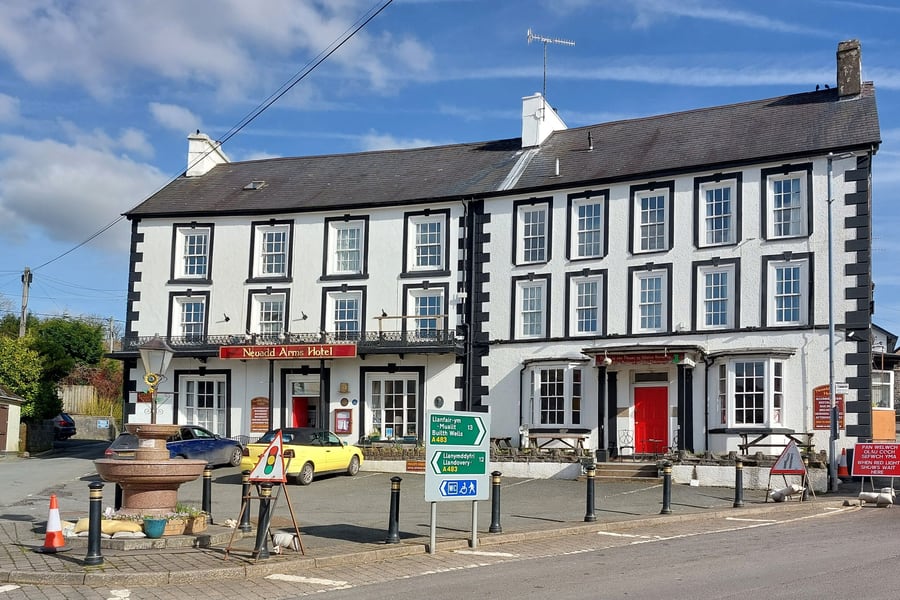 Railwayfan2005 / Wikimedia Commons · CC BY-SA 4.0 · cropped
The Neuadd Arms Hotel
Llanwrtyd Wells · on the square
A hotel on the square of Britain's self-styled smallest town, with real ales brewed on the premises.
Check Availability (opens in a new tab, on neuaddarmshotel.co.uk)via neuaddarmshotel.co.ukQuestions or corrections
Planning this trip and stuck on something, or spotted a time, fare or detail that has changed? Send us a message about The Heart of Wales Line. We read every one, and we update this page when something has changed.