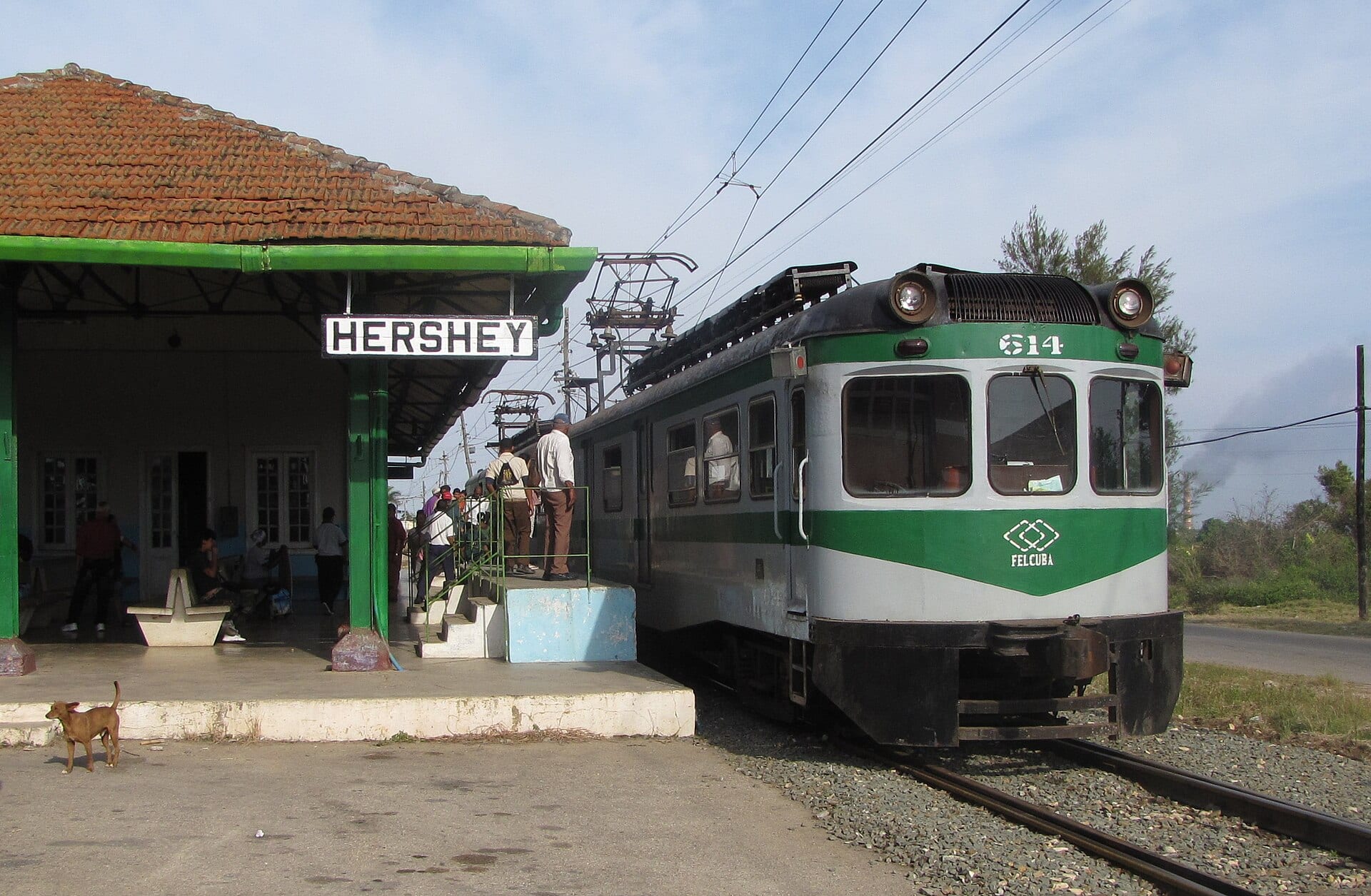
The Hershey Train
Jezhotwells / Wikimedia Commons · CC BY-SA 3.0
- DistanceCasablanca (Havana)–Hershey–Matanzas · ~92 km
- Duration~3½ h end-to-end (when the full line ran)
- Best seasonNovember to April — Cuba's dry season
Introduction
Of all the ways a chocolate bar has changed the world, this may be the strangest: an electric railway in the Cuban countryside. In the 1910s Milton S. Hershey — the Pennsylvania chocolate magnate — bought land east of Havana, raised a vast sugar mill and a model town he named after himself, and then, to move his sugar to the port, built a 92-kilometre railway from Havana's harbour to Matanzas. He electrified it with 1,200-volt overhead wire, American-interurban style, and opened it in 1917–18. More than a century later it is still the only electric railway in Cuba.
Nearly everything about the line is improbable. The town of Hershey was renamed Camilo Cienfuegos after the Revolution, but the railway never stopped being called Hershey — the name survives on the station sign. The original Philadelphia-built Brill cars wore out and were replaced in the 1990s by electric units bought secondhand from Catalonia, themselves already sixty years old: pre-war Spanish commuter cars, repainted green, clattering past royal palms. The classic journey began with a ferry ride across Havana's harbour to the tin-roofed terminus at Casablanca, and ended three and a half unhurried hours later beside the bay of Matanzas.
Then came Hurricane Irma. The storm of September 2017 wrecked the overhead line, and the through service has never returned; only the short Hershey–Jaruco branch has run trains since, a handful a day for the villages. In June 2025 the government announced a revival — with diesel traction, of all things, "when conditions allow". So this page is a portrait of a railway in suspension: partly a working country branch line, partly a promise, and entirely one of the most endearing railways in the Americas.
The Journey
The journey — as it ran for a century, and as it is promised again — begins not at a grand terminus but at a ferry dock. From beside Old Havana you cross the harbour on the little passenger launch to Casablanca, the fishing quarter under the great Christ statue, where the railway's wooden platform sits almost on the water. A green electric car hums at the head of the line, Spanish-built in the 1930s, Catalan by upbringing, Cuban by long adoption.
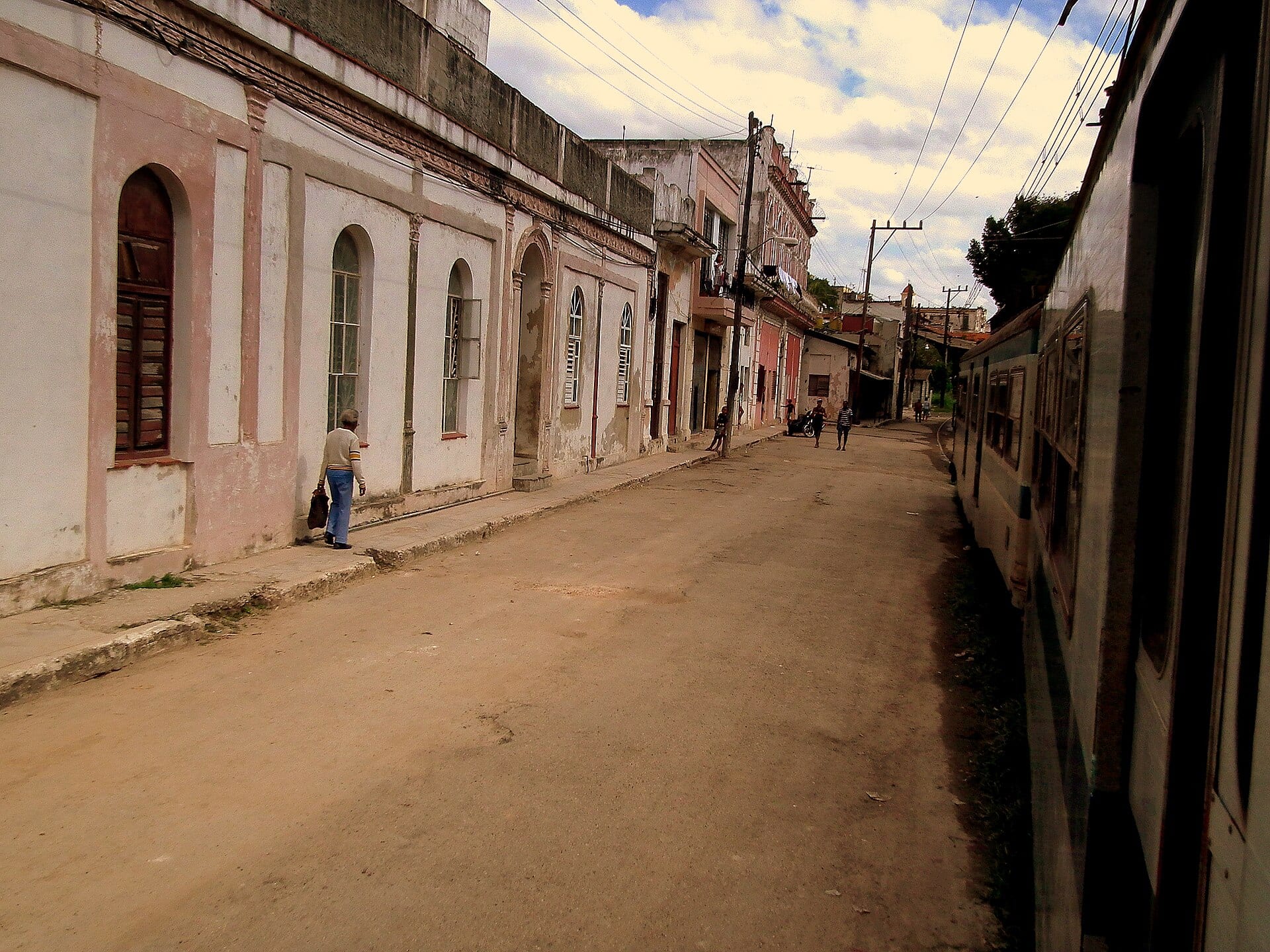
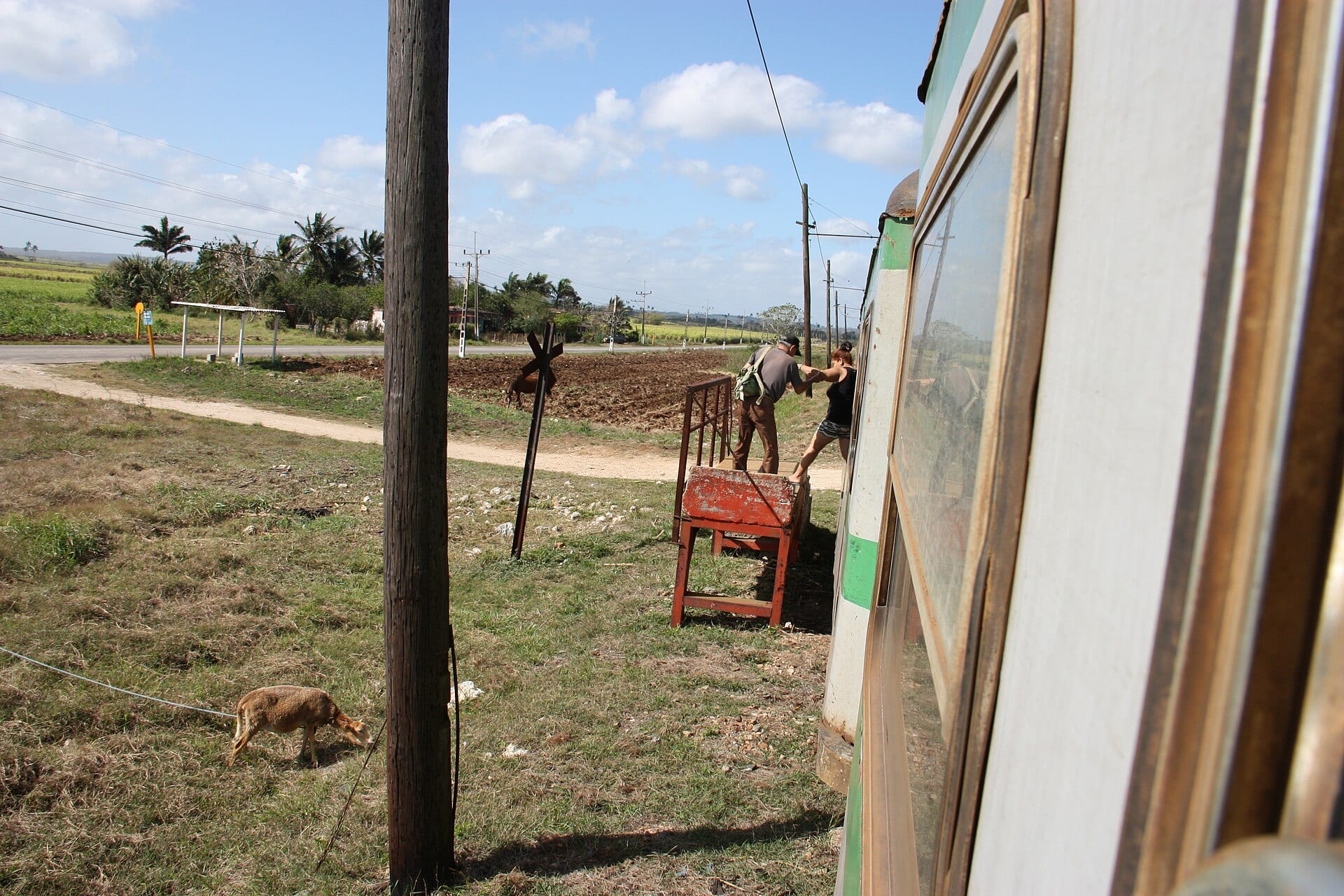
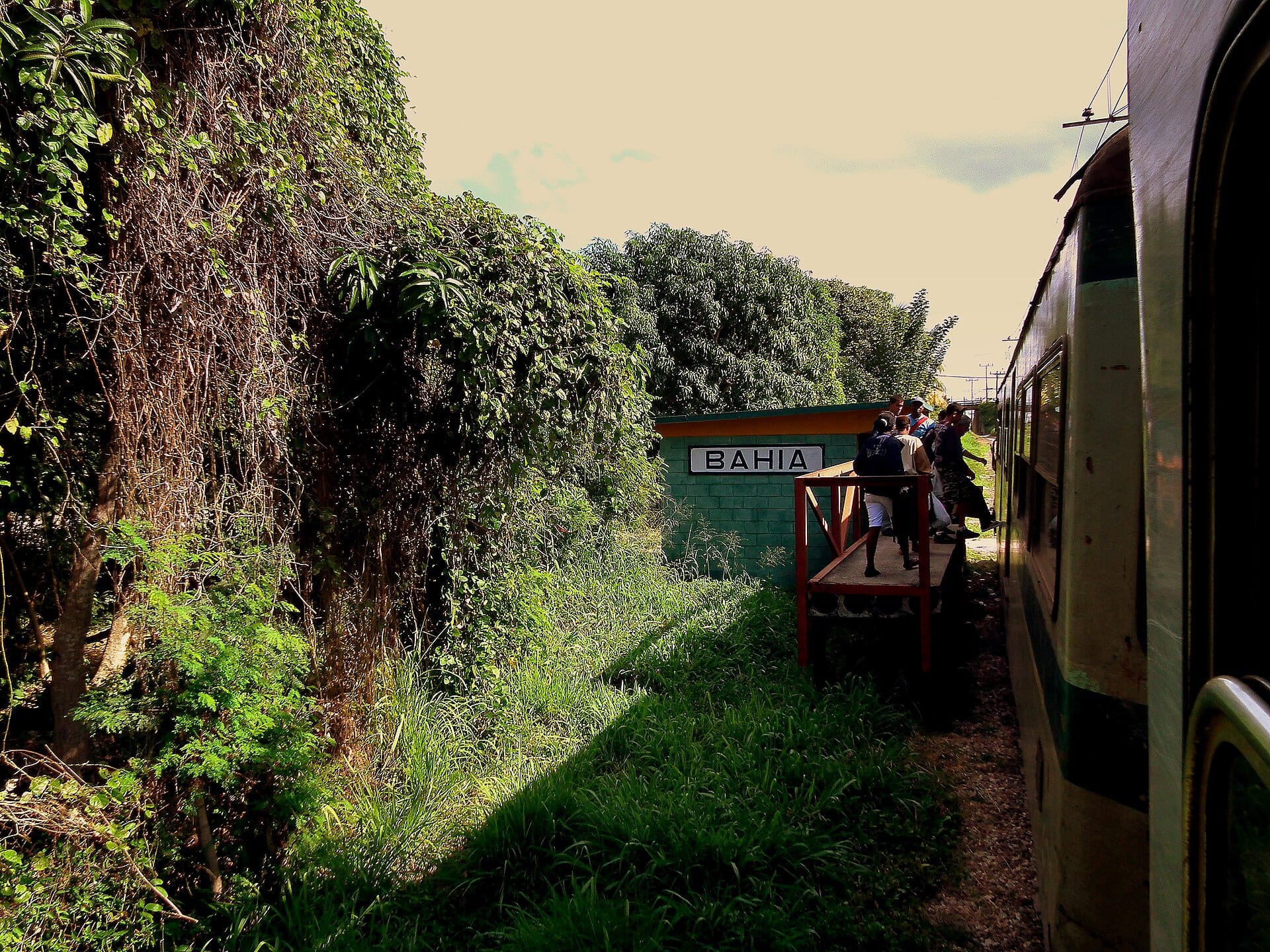
The car pulls away and immediately gets to work, grinding up from the harbour and out through Guanabacoa into open country. This was never a railway in a hurry. It stops everywhere — concrete halts with peeling names, village platforms where the train doubles as the local bus — and in places it runs straight down the street, close enough to the doorways to trade greetings. Passengers board with shopping bags, chickens, bicycles; the driver collects gossip along with the tokens of single-line working.
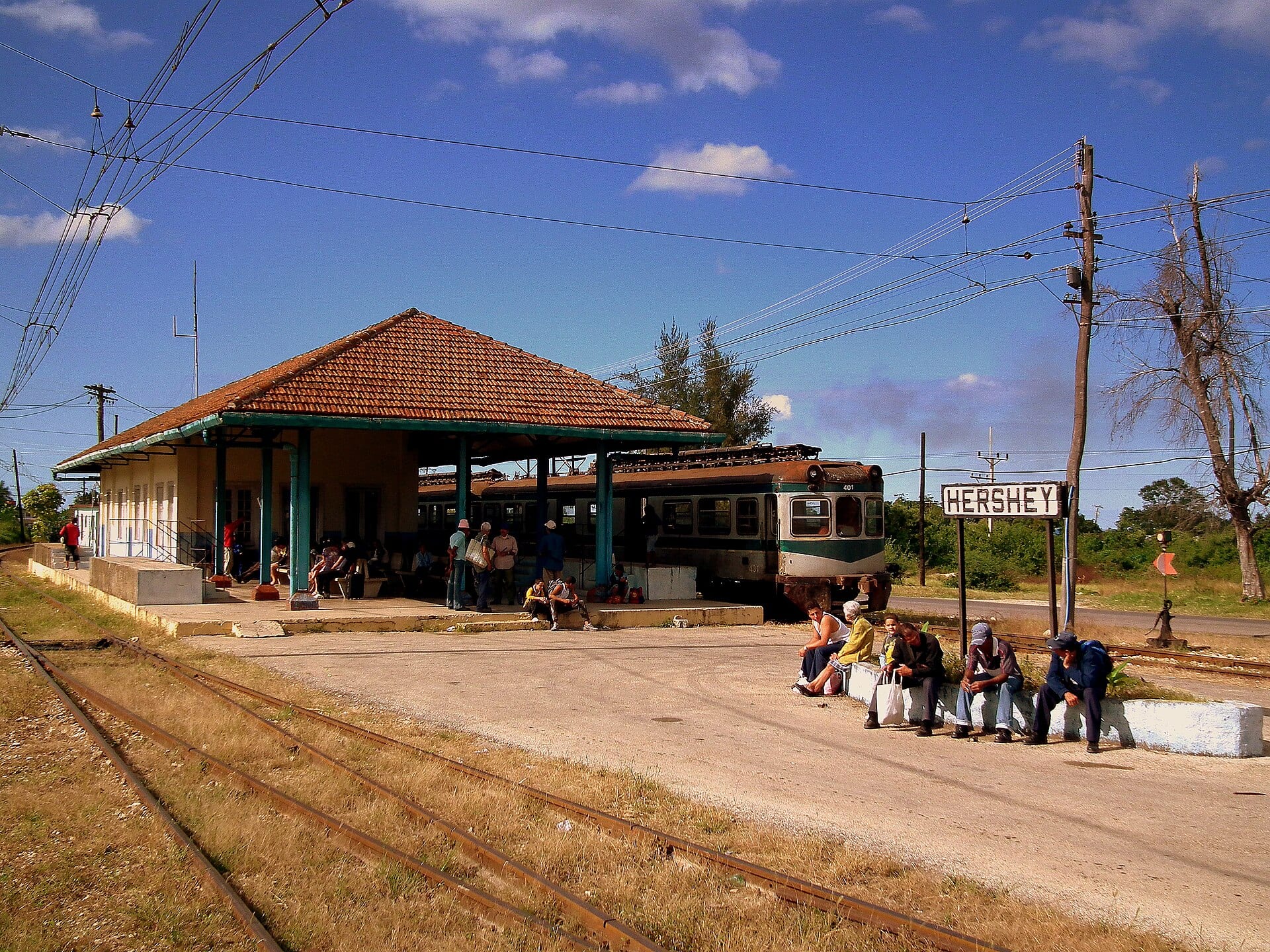
Halfway comes Hershey itself — Camilo Cienfuegos on the map, Hershey on every tongue. The great sugar mill that justified all this is silent now, but the railway town remains: workshops, the junction for the Jaruco branch (the one piece of the line that has kept its trains), and the station where the surviving service turns. In running days the electric cars met here, mid-line, exchanging staffs beneath the wires their builder strung in 1917.
Beyond Hershey the old main line loafed east through Santa Cruz and Canasí, the country opening toward the sea, until the final descent brought it along the coast and into Matanzas — the bay spread blue below, the royal palms of the Yumurí Valley rising inland. Three and a half hours for ninety-two kilometres: a pace not of inefficiency but of intimacy, a railway that belonged to every village it touched.
That through journey is suspended — the wires beyond Hershey have been silent since Hurricane Irma — and whether the promised revival arrives with pantographs or diesel engines remains to be seen. But the Hershey Train has outlived its mill, its founder, and several eras of Cuban history. It would be unwise to bet against it.
Along the route
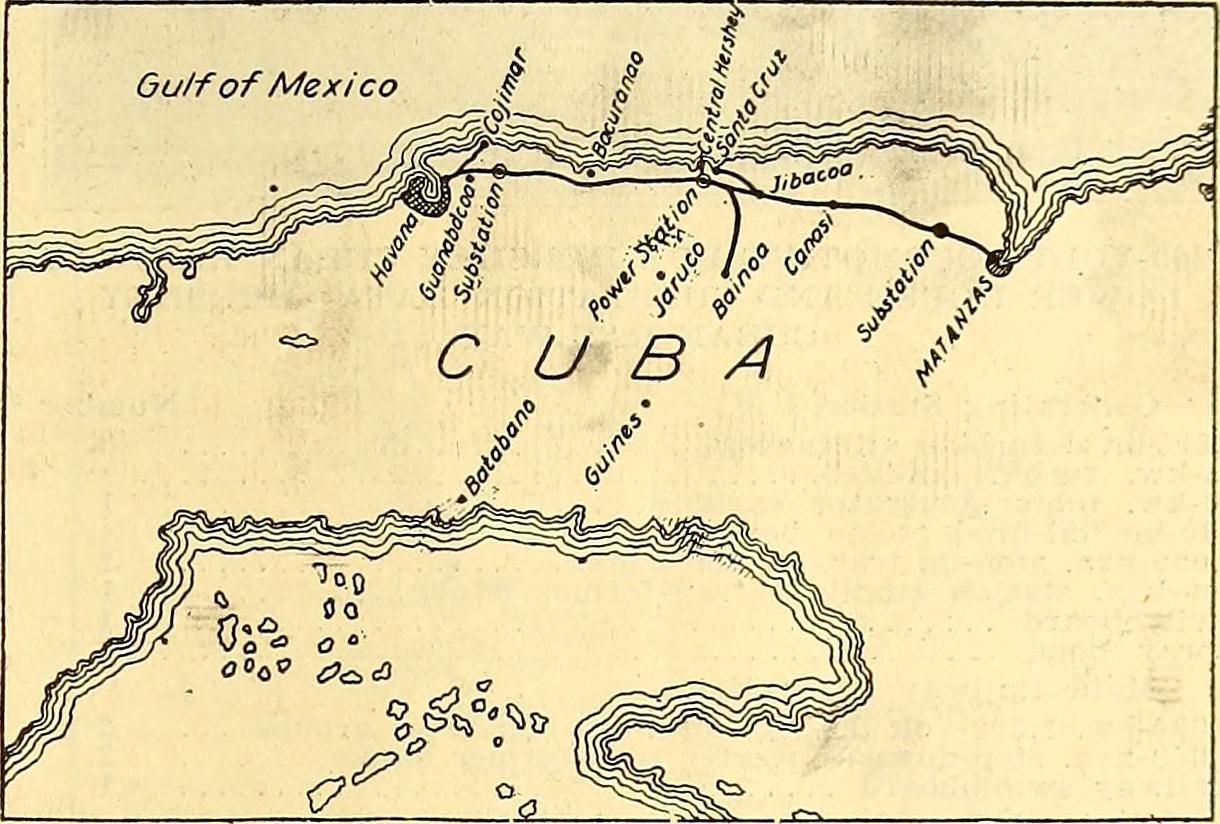
Electric Railway Journal (1920), via Internet Archive / Wikimedia CommonsThe chocolate king's railway
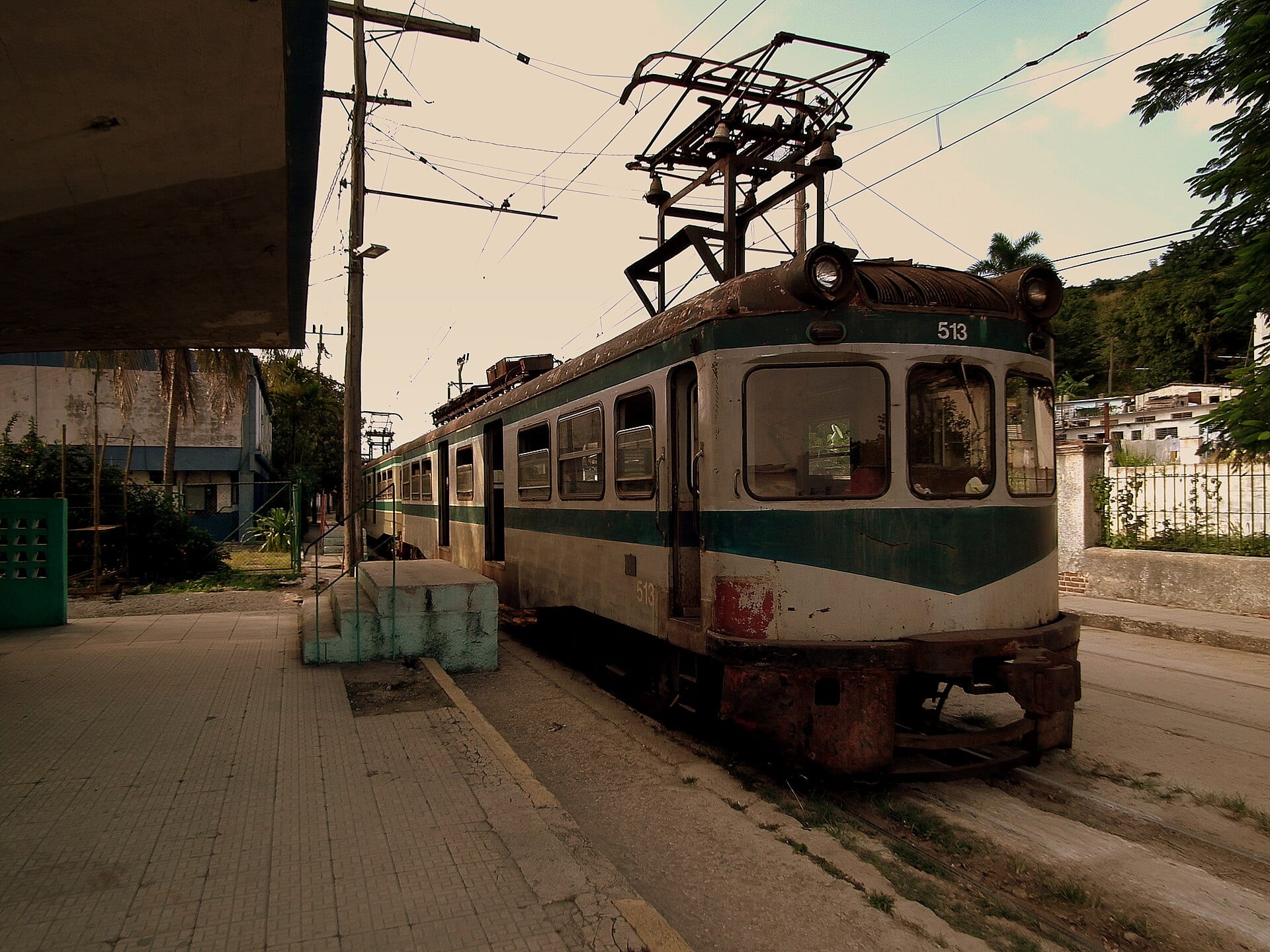
Milton Hershey built more than a chocolate empire: in Cuba his company raised a whole sugar town and, in 1917, strung 1,200-volt wire over a railway to carry its sugar to Havana. The mill is gone and the town renamed, but everyone still calls the railway Hershey.Jezhotwells / Wikimedia Commons · CC BY-SA 3.0Cuba's only electric railway
Everything else on the island runs on diesel; the Hershey line alone kept its wires. The green railcars came secondhand from Catalonia in the 1990s, already sixty years old. Riding one is time travel twice over.calflier001 / Wikimedia Commons · CC BY-SA 2.0Harbour ferry to country halt
The classic journey began with the little passenger ferry across Havana's harbour to Casablanca, where the electric cars waited at a wooden platform. From there the line ambled 92 kilometres east to Matanzas in a gloriously unhurried three and a half hours.A bit of history
Culture & experiences along the way
 calflier001 / Wikimedia Commons · CC BY-SA 2.0
What actually runs today
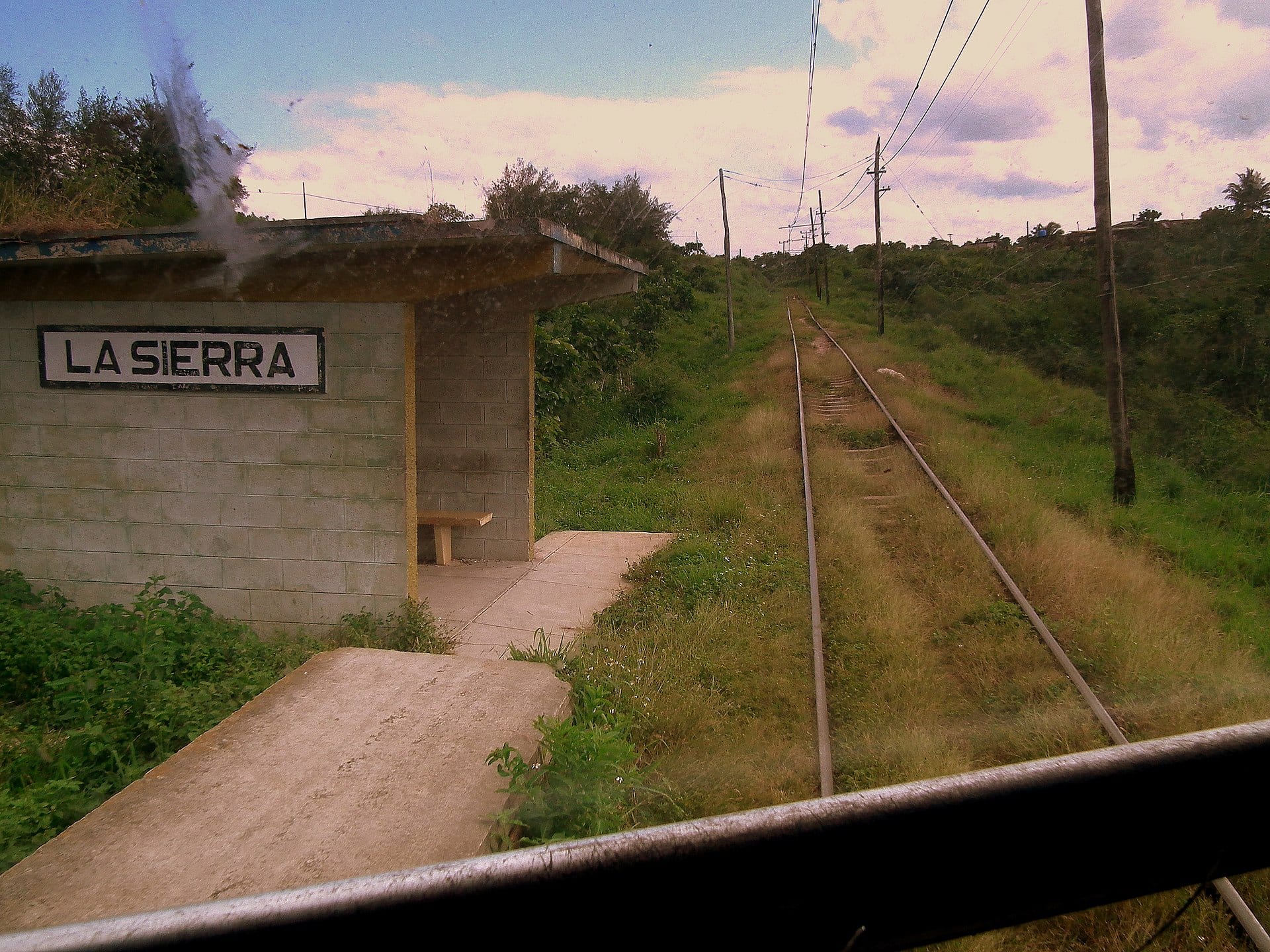
Be clear-eyed: since Hurricane Irma (2017) wrecked the overhead line, the through route has been suspended. Only the short Hershey–Jaruco section has run — a handful of local trains a day for the villages — and even that intermittently. The famous Casablanca–Matanzas ride is, for now, a memory. Check locally in Havana before building plans around it.calflier001 / Wikimedia Commons · CC BY-SA 2.0A revival — without the wires?
In June 2025 Cuba's transport ministry announced a rehabilitation of the line and of Matanzas station — but using diesel traction "when conditions allow". Cuba's only electric railway may thus return without its electricity. No date has been set, and sceptics call it a public-relations gesture; we record the promise here and will believe it when the first car moves.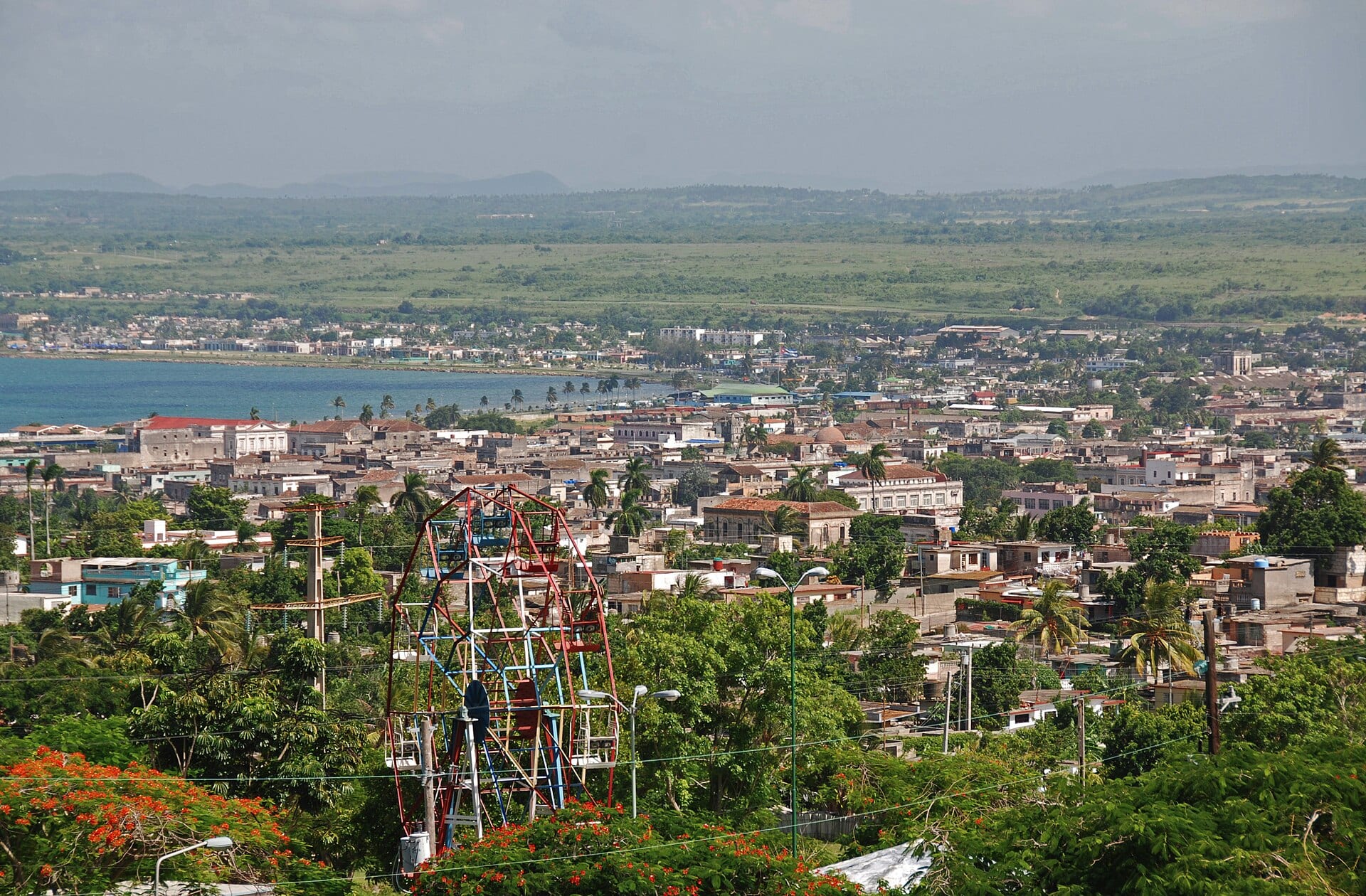 Jerome Ryan / Wikimedia Commons · CC BY 3.0
The Matanzas connection
At the far end lies Matanzas — the "Athens of Cuba", city of poets, bridges and the birthplace of danzón — spread around its deep blue bay beneath the Yumurí Valley. When the through trains ran, the final approach along the coast and into Matanzas was the scenic crown of the ride. The city is still worth the road trip while the rails wait.Timetables
Read this first. The Hershey line's through service — Casablanca (Havana) to Matanzas — has been suspended since Hurricane Irma in September 2017, when the storm wrecked the overhead electrification. No through trains run, and no reopening date has been set.
What has run since, as of the most recent reporting:
| Section | Service |
|---|---|
| Hershey (Camilo Cienfuegos) – Jaruco | Local trains — about 7 a day were reported in 2023 |
| Casablanca – Hershey | Suspended |
| Hershey – Matanzas | Suspended |
Even the Jaruco branch runs intermittently — Cuban rail services in the current crisis can stop and start with no notice, so treat the pattern above as indicative and confirm locally (at Casablanca station, or through any Havana travel desk) before making plans.
The promised revival. In June 2025 Cuba's transport ministry announced a rehabilitation of the line, restoration of the Matanzas station building, and an eventual return of passenger service — using diesel traction rather than the historic electric cars, "when conditions allow". No timetable, no date. We will update this page when — if — the first revived service runs.
For reference, the classic electric through journey took about 3½ hours end to end, with the cars crossing at Hershey mid-route.
Status as reported to mid-2026. On the Hershey line, more than most places on earth, the only timetable that counts is the word at the station on the day.
Tickets
Ticketing on the Hershey line has always been beautifully simple, and remains so on the surviving section: buy at the station, in cash, in Cuban pesos, shortly before the train leaves. There is no online booking anywhere on the Cuban railway system, no reservations on the Hershey line, and no meaningful queue — the branch trains serve villagers, and fares are set at everyday local levels. We deliberately quote no prices: the Cuban peso's value shifts too quickly for any figure printed here to stay honest.
If the through service returns under the announced rehabilitation, expect the same station-window arrangement — most likely at Casablanca, reached by the harbour ferry from Old Havana, and at the restored Matanzas station.
Two practical cautions. First, carry small notes — change is a chronic problem in Cuba. Second, remember that the situation described on this page is fluid: before travelling any distance to ride the line, have someone confirm in Havana that trains are actually running that day. The ticket cards below link to Cuba's transport ministry, the closest thing to an official source of announcements about the line's future.
Book your tickets
Hershey–Jaruco local train
The surviving section
The only part of the line with service in recent years — local trains between Hershey (Camilo Cienfuegos) and Jaruco, used by the villages along the branch. Tickets are bought at the station, in pesos, before travel. There is no online booking anywhere on Cuban railways; confirm times locally on the day.
Book Tickets (opens in a new tab, on Ferrocarriles de Cuba)via Ferrocarriles de CubaCasablanca–Matanzas through ride
Suspended — awaiting revival
The full 92-kilometre electric journey has been suspended since Hurricane Irma in 2017. A government rehabilitation plan announced in June 2025 promises an eventual return of passenger service — with diesel traction. We keep this card as a record of the classic ride, and will update it the day the line reopens.
Book Tickets (opens in a new tab, on Ferrocarriles de Cuba)via Ferrocarriles de CubaRail Passes
No rail pass covers the Hershey train. Interrail and Eurail are European schemes, and Cuba is not among the 33 countries in Interrail's list of covered railway companies (opens in a new tab). Tickets are bought at the station, in cash, shortly before the train leaves.
Checked October 2026 against Interrail's list of covered railway companies (opens in a new tab).
Places to Visit
This is a short line through a small corner of Cuba, and almost everything worth seeing sits within reach of one of its stops — with Old Havana at one end and Matanzas at the other.
The one place the cards below leave out is the middle of the line itself. Hershey, renamed Camilo Cienfuegos after the Revolution but still known by its old name, is one of Cuba's strangest places: a Pennsylvania-model company town of ruler-straight streets and workers' houses dropped into the cane country, with the carcass of the great sugar mill beside it. There is no museum and nothing is signposted; for anyone interested in industrial history it is quietly fascinating all the same — an American company town, frozen and Cubanised.
Old Havana itself needs no introduction: the UNESCO-listed colonial core of plazas, arcades and pastel façades lies on the far side of the water from the Casablanca terminus, with the harbour ferry stitching the two shores together. Any Hershey line plan starts and ends there.
 Kate Perez / Wikimedia Commons · CC BY-SA 4.0 · cropped
The Christ of Havana
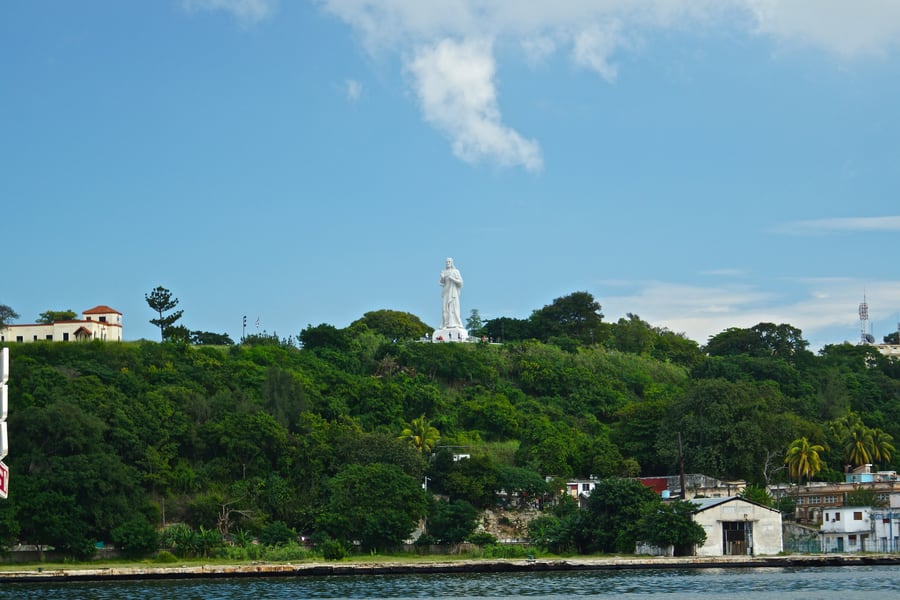
The ferry from Old Havana lands at Casablanca, and the climb from the platform ends at a 20-metre figure of Christ in white Carrara marble, carved in 67 blocks and weighing some 320 tons. The Cuban sculptor Jilma Madera won the commission in 1953; it was unveiled on 24 December 1958, days before the Revolution swept in. The terrace beside it gives the best free view in the city, right down the harbour.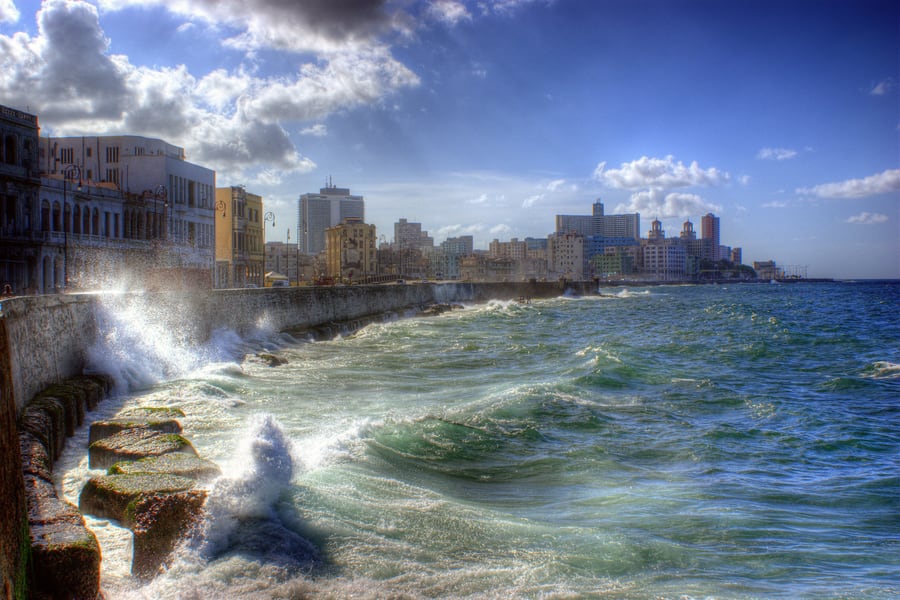 Martin Abegglen / Wikimedia Commons · CC BY-SA 2.0 · cropped
The Malecón
Eight kilometres of seawall, roadway and esplanade running from Old Havana to the mouth of the Almendares. The Americans began it in 1901 to stop the Atlantic knocking the houses of San Lázaro about, and when a frente frío blows in the waves still come clean over the parapet and across the road. In the evening the whole city sits on it — anglers, guitars, courting couples, and rum out of a paper cup.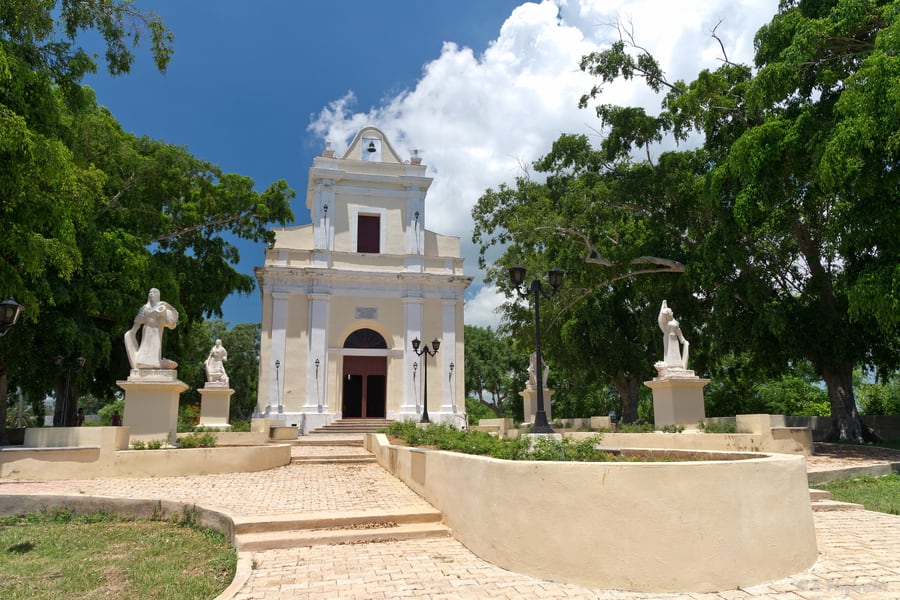 Emmanuel Huybrechts / Wikimedia Commons · CC BY 2.0 · cropped
Ermita de Monserrate
The hermitage on the hill north of Matanzas was founded on 8 September 1875 by the city's Catalan community, who named it for the Virgin of Montserrat above Barcelona. It fell into ruin and was rescued in 2010, when the paintings, windows, timber stairs, courtyard and viewing terrace were all restored. Come for the terrace: the whole city, its bay and the Yumurí valley lie below it in one sweep.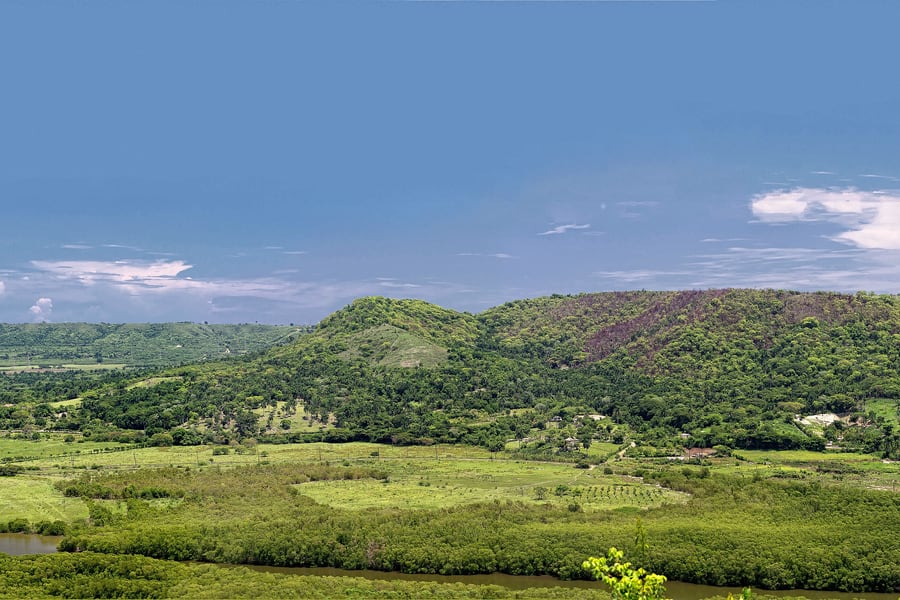 Emmanuel Huybrechts / Wikimedia Commons · CC BY 2.0 · cropped
The Yumurí Valley
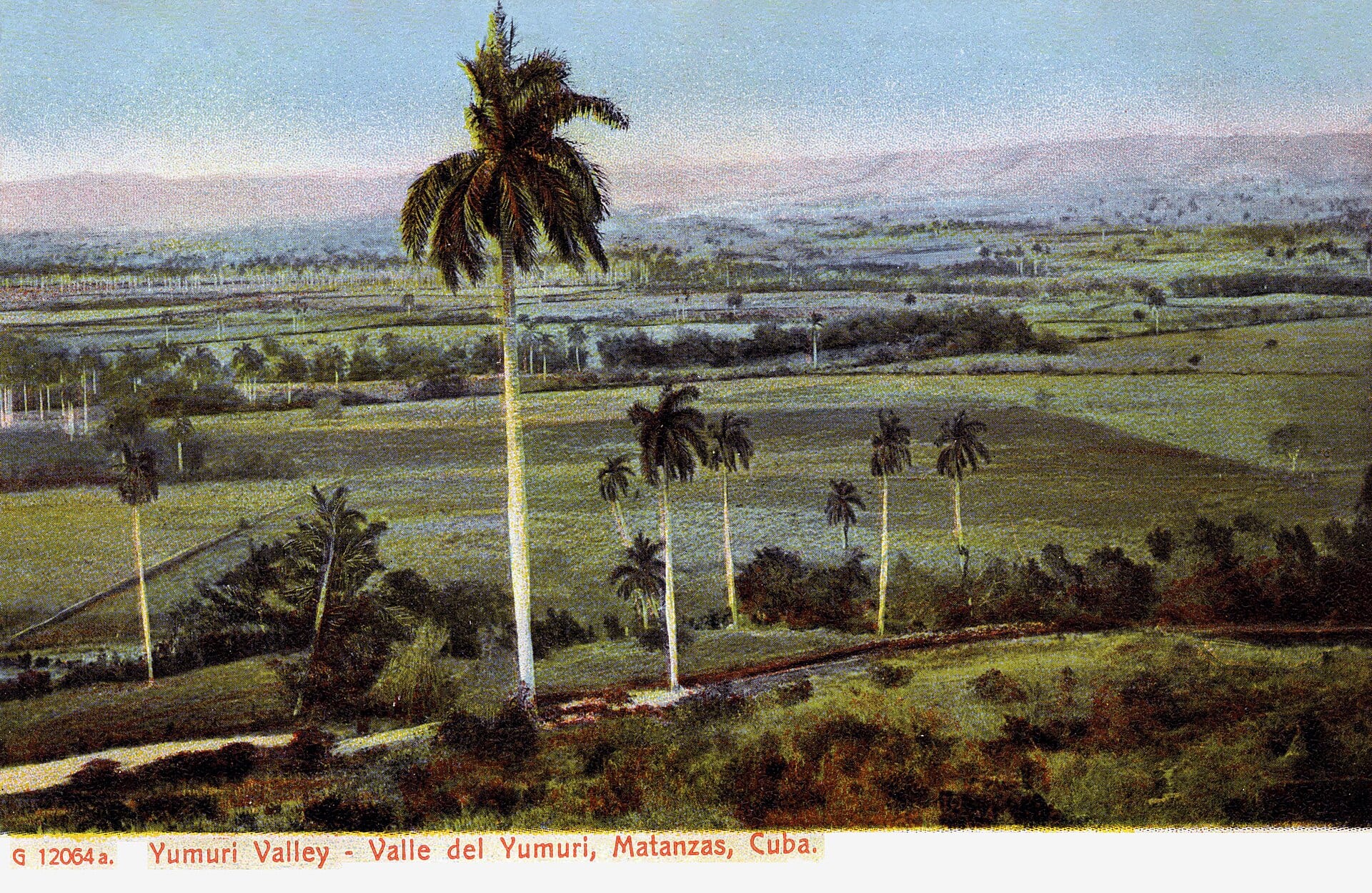
The green bowl inland from Matanzas is the landscape the old postcards sold Cuba on — royal palms standing singly across a floor of pasture and cane, hemmed in by the coastal ridge and the hill called Pan de Matanzas. The Río Yumurí is one of three rivers that cut through the city; the seventeen bridges over them are why Matanzas is called the City of Bridges. Best seen from the Monserrate terrace above.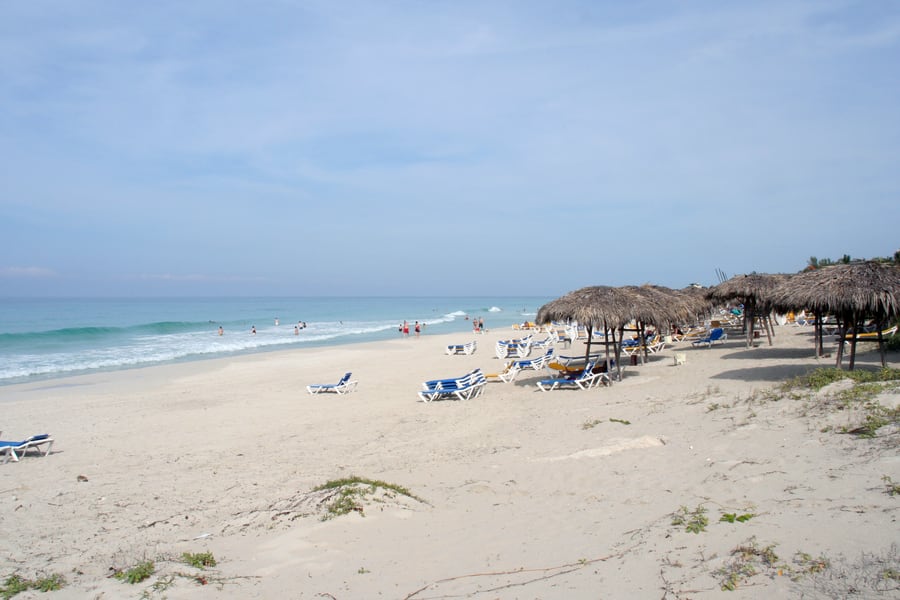 Tony Hisgett / Wikimedia Commons · CC BY 2.0 · cropped
Varadero
The Hicacos peninsula runs out into the Atlantic east of Matanzas with more than 20 kilometres of white sand along it — one of the largest resort strips in the Caribbean. Cubans have holidayed here since the 1880s, long before the hotels: the du Pont mansion Xanadu went up in the early 1930s and still stands. It is a short hop from Matanzas, and a fair consolation on a day when the Hershey cars are not running.Where to Sleep
Base yourself in Havana. The whole western half of the Hershey story — the ferry, Casablanca, the start of the line — sits within sight of the old city, and Havana's accommodation scene is Cuba's deepest: everything from state-run grand hotels to the far more characterful casas particulares, the licensed private homestays that are the best way to sleep (and eat) in Cuba. A casa in Old Havana or Centro puts the harbour ferry within walking distance.
Matanzas, at the far end, has a modest but growing set of casas particulares in its old centre — a genuinely untouristed alternative to the resort strip — and the hotels of Varadero, Cuba's biggest beach destination, are a short ride away for those who want the fly-and-flop finish.
There is nowhere meaningful to stay in Hershey/Camilo Cienfuegos itself; it is a half-day visit, not an overnight.
A practical note that applies to all Cuban travel just now: book casas directly or through established Cuba specialists rather than the big international platforms, carry cash (euros or dollars to exchange, pesos to spend), and expect electricity and water interruptions with good grace — your hosts endure them daily. The warmth of a good casa particular is the constant that survives every crisis; count on it more than on any timetable.
Questions or corrections
Planning this trip and stuck on something, or spotted a time, fare or detail that has changed? Send us a message about The Hershey Train. We read every one, and we update this page when something has changed.