The Inlander
Ridiculopathy / Wikimedia Commons · CC0 · cropped
- Distance977 km, Townsville to Mount Isa
- DurationAbout 21 hours each way
- Best seasonYear-round; two trains a week each way
Introduction
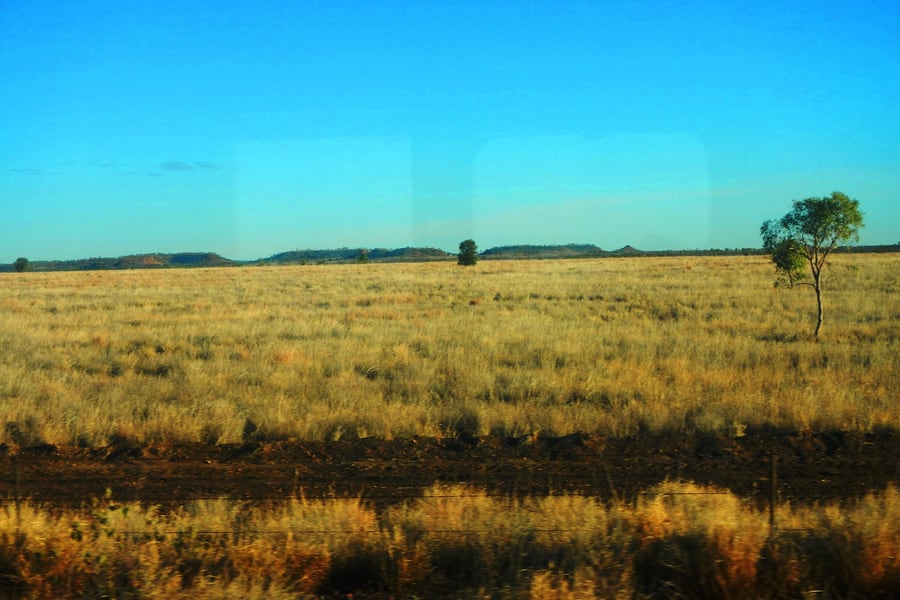
The Inlander runs 977 kilometres from Townsville, on the tropical coast of north Queensland, to the mining city of Mount Isa, in about 21 hours. It climbs inland past the gold-rush city of Charters Towers, crosses the grasslands of the north-west by night through Hughenden, Richmond and Julia Creek, and comes out at dawn among the red ridges of the Selwyn Range.
When it first ran, in February 1953, it was Queensland's first air-conditioned train, with the first air-conditioned sleeping cars in Australia — a new kind of comfort in a hot and dusty corner of the state. The line it runs on had taken half a century to build, a stretch at a time, for gold, then wool, then copper. Its last section reached Mount Isa in 1929 only because the mining company agreed to cover any losses.
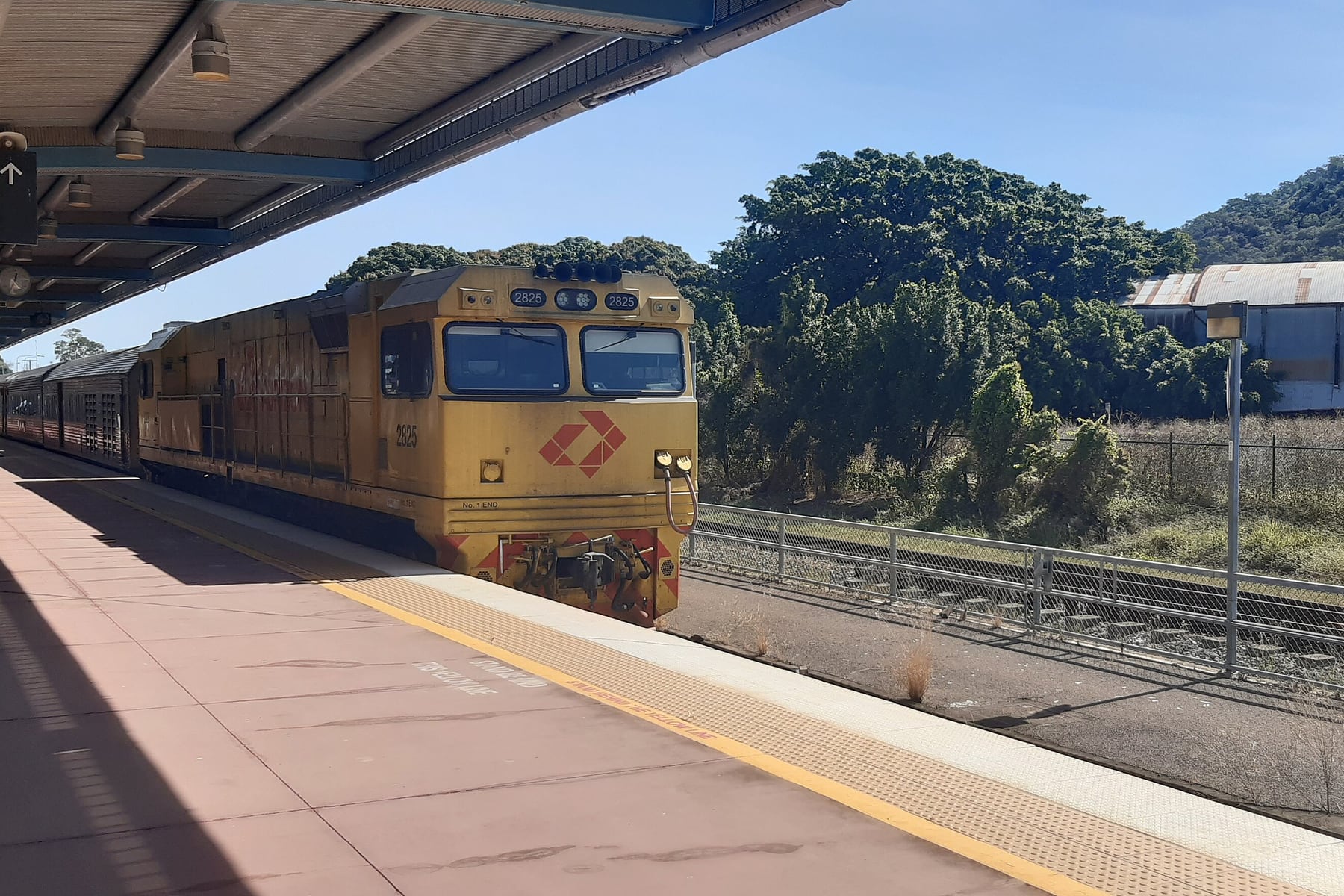
Today's train is three carriages, two of Economy Seats and a lounge car, with a snack pack brought to every seat at meal times. It runs twice a week in each direction.
The Journey
Townsville to Charters Towers
Westbound trains leave Townsville at 12:40 on Wednesdays and Saturdays, from the station on Charters Towers Road. The line runs south, then turns west and climbs the Haughton Range, crossing the Burdekin River near Macrossan beside the old steel bridge of 1899. Charters Towers, reached at 15:30, is a ten-minute halt and the only intermediate stop the train always makes; every other station on the line is served only when a passenger has booked to or from it.
Through the night
Beyond Charters Towers the train runs west through Pentland and Torrens Creek as the light goes. Hughenden comes at about eight in the evening, Richmond just before eleven and Julia Creek at two in the morning, all across open grazing country, and the train reaches Cloncurry at five.
Into the Selwyn Range
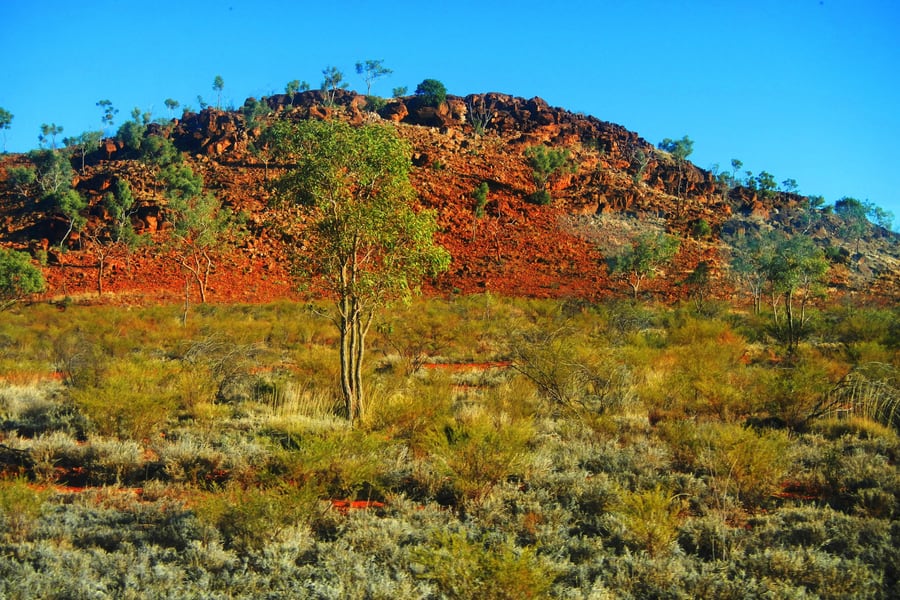
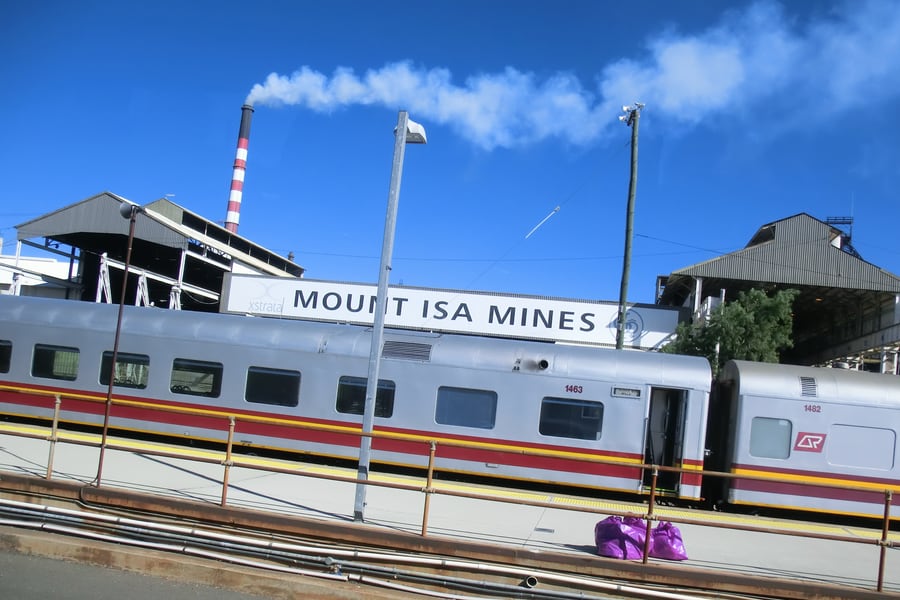
The last stretch, by daylight, is the best of the journey. From Cloncurry the line runs south and then south-west into the Selwyn Range, through red ground, spinifex and rocky ridges, past the hamlet of Duchess, and turns north for Mount Isa, arriving at 09:35 under the stack of the lead smelter. Eastbound trains leave Mount Isa at 13:30 on Thursdays and Sundays, so the ranges pass in the afternoon, and are back in Townsville at 10:10 the next morning.
The train
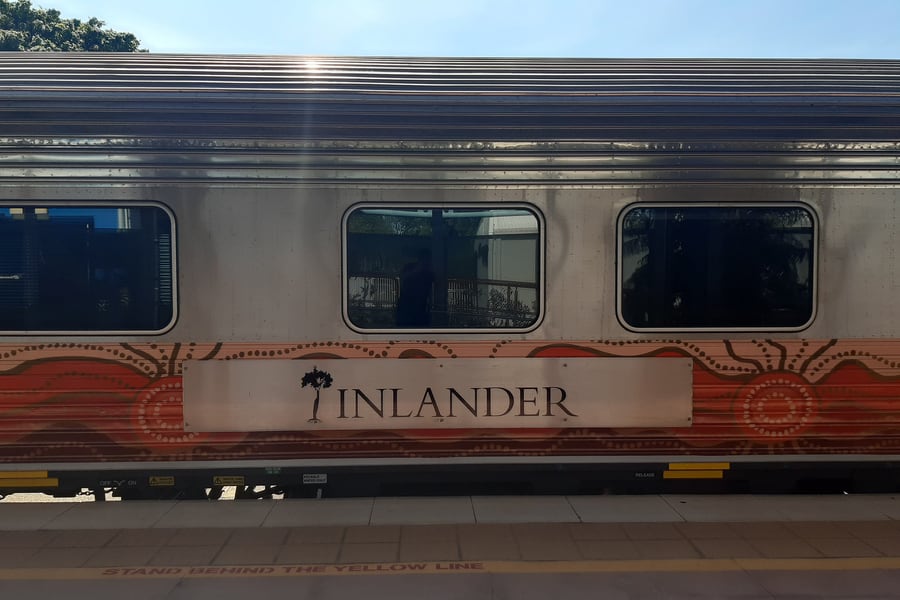
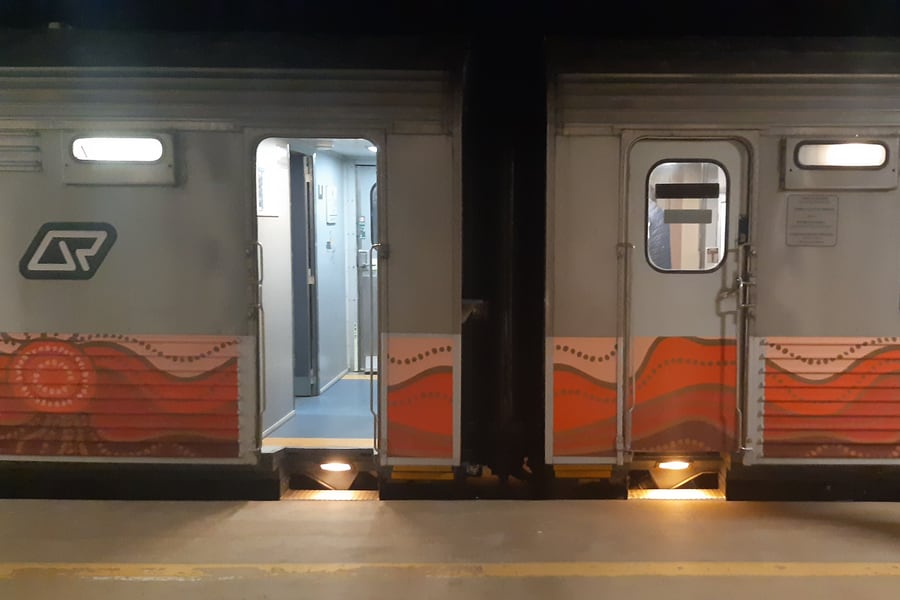
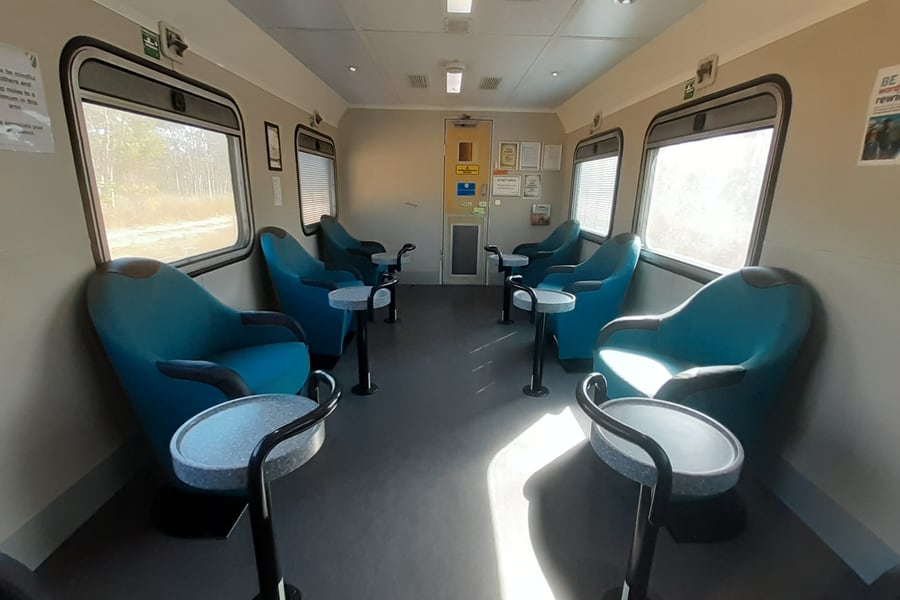
The Inlander is hauled by diesel locomotives, among them the 2800 class, built in Townsville in the 1990s for this line. It carries Economy Seats only: one carriage of 36 seats, two and one across the aisle, and another of 48, two and two. The seats recline and all face the direction of travel, with a footrest, a fold-down table and a reading light. Each carriage has two toilets and a shower. There is no buffet car: a snack pack is brought to every seat at meal times, and more snacks and drinks are sold by the crew. At the back of the lounge carriage, eight armchairs and a self-service tea and coffee station are open to everyone. The sleepers and dining car of the original train were withdrawn at the end of 2014.
Along the route
 Lobster1 / Wikimedia Commons · CC BY-SA 3.0 · cropped
The Burdekin River
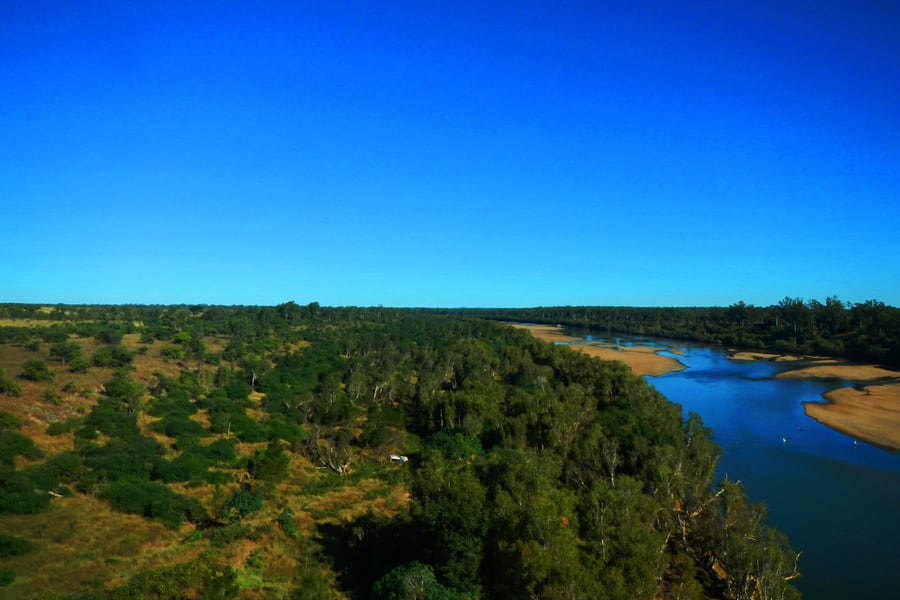
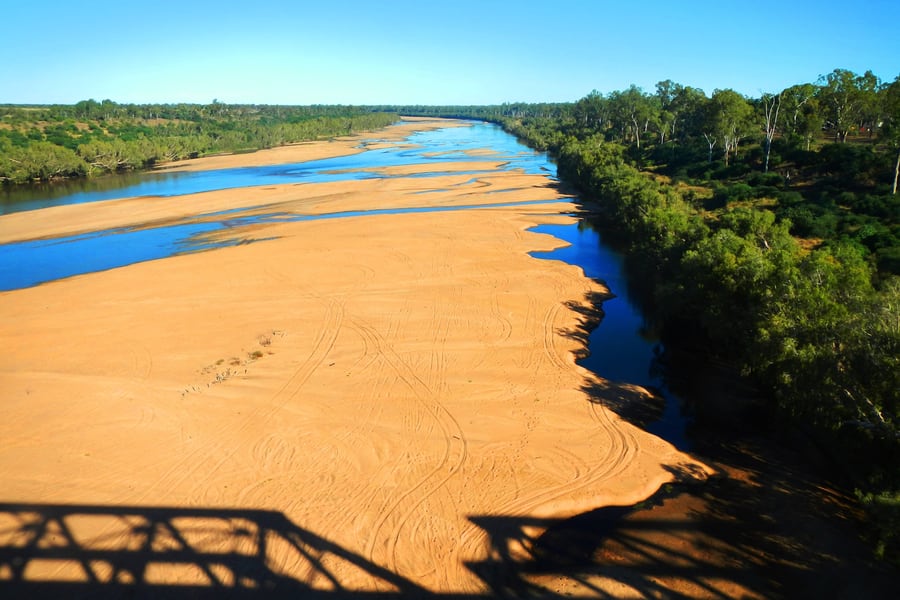
Near Macrossan the train crosses the Burdekin River. Beside the line stands Henry Stanley's steel truss bridge of 1899, built after a flood in 1890 covered the first, low bridge 17 metres deep. It is heritage listed.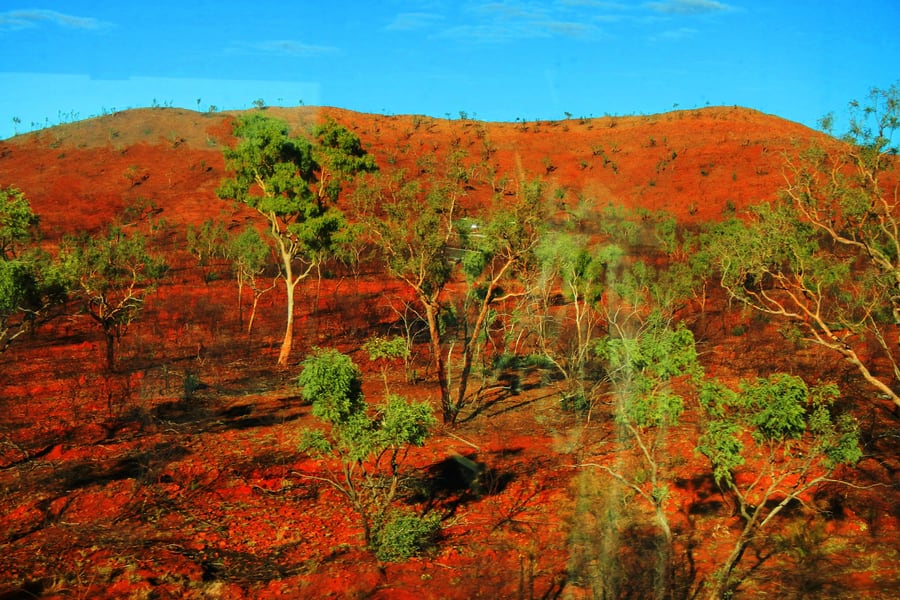 Lobster1 / Wikimedia Commons · CC BY-SA 3.0 · cropped
The Selwyn Range
Between Cloncurry and Mount Isa the line crosses the Selwyn Range, rugged hills of ancient metamorphic rock rich in copper, gold, lead and zinc, under low eucalypts and spinifex. Westbound, this is the morning, and the light falls on red ground.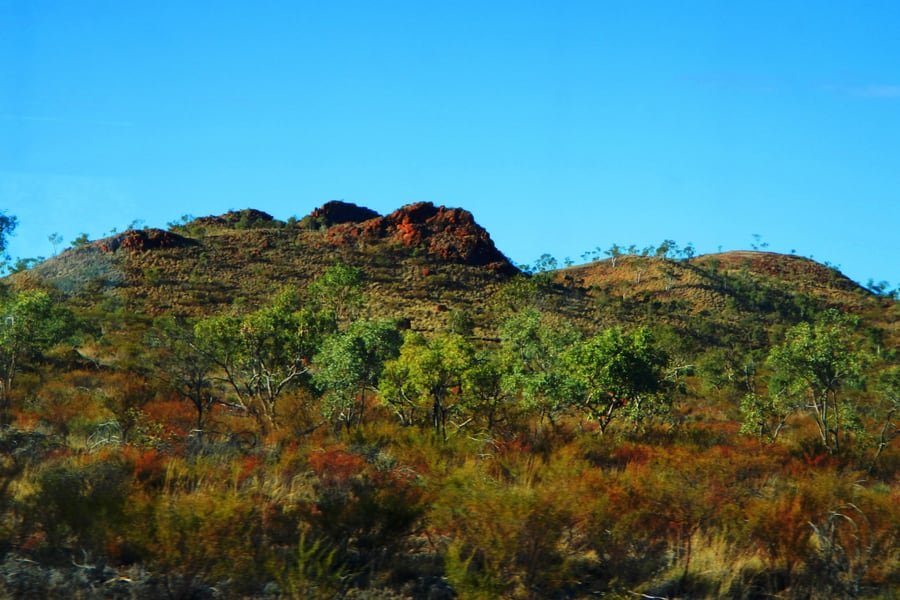 Lobster1 / Wikimedia Commons · CC BY-SA 3.0 · cropped
Duchess and the divide
Duchess grew around a copper find of 1897. North of the town the waters part three ways: to the Gulf of Carpentaria by the Leichhardt, to the Gulf again by the Malbon and the Flinders, and south towards Lake Eyre, which they rarely reach.A bit of history
Culture & experiences along the way
 Jim Bendon / Wikimedia Commons · CC BY-SA 2.0 · cropped
The Venus Battery
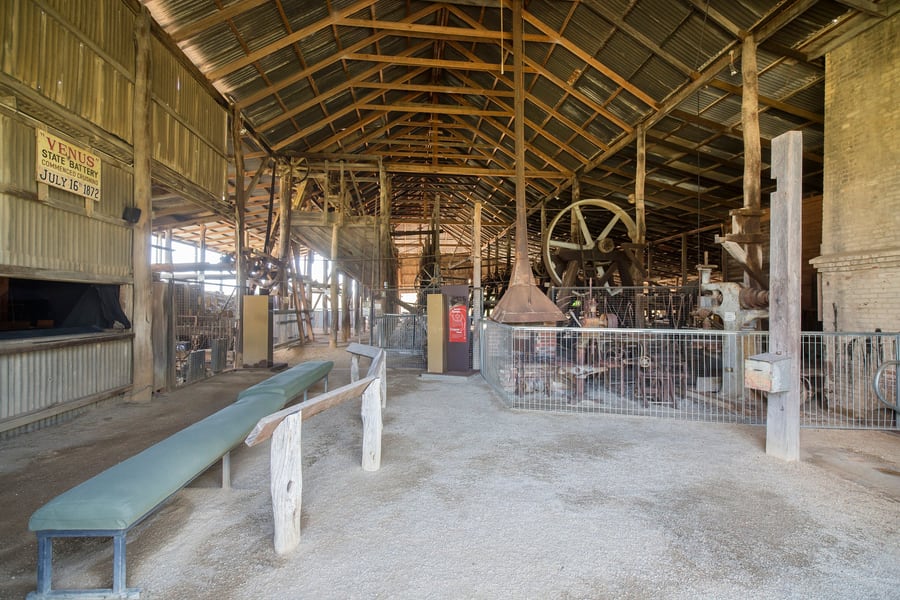
Edmund Plant and George Jackson built this stamp mill in 1872 to crush the field's gold ore. It is the oldest surviving battery in Queensland, with 20 stamps, more than any other, and the only intact battery and cyanide plant left in the Charters Towers district.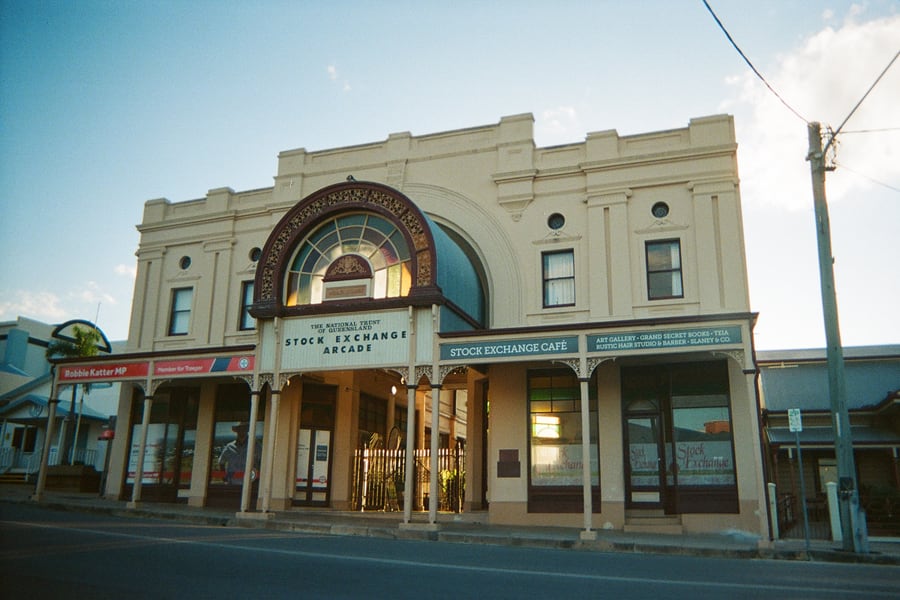 Ridiculopathy / Wikimedia Commons · CC0 · cropped
The Stock Exchange Arcade
At the height of the gold rush Charters Towers had 27,500 people, its own stock exchange and the nickname "The World". The arcade that housed the exchange was built in 1888 and 1889 for Alexander Malcolm, and it is heritage listed.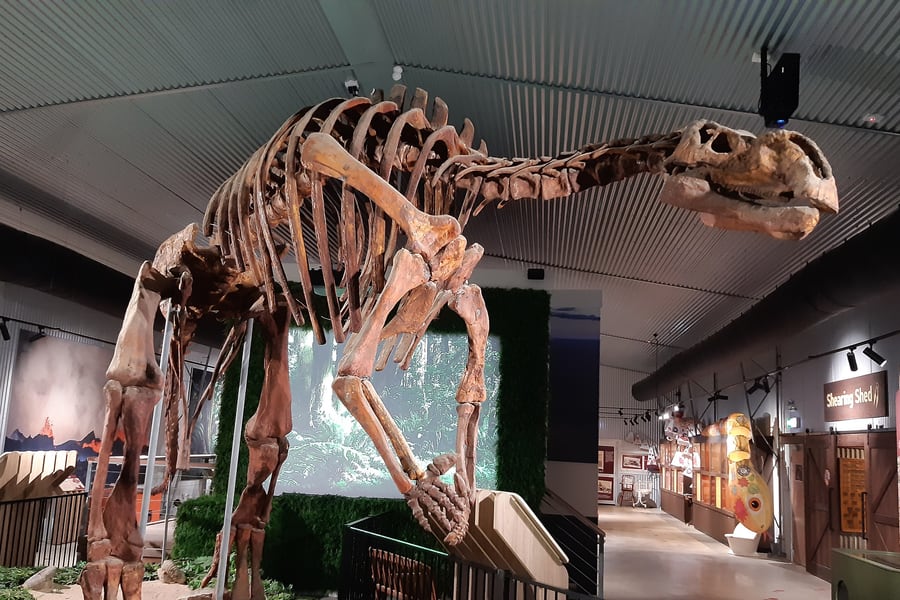 Ridiculopathy / Wikimedia Commons · CC0 · cropped
The Flinders Discovery Centre
Hughenden's museum on Gray Street is built around a life-size skeleton of Muttaburrasaurus, a plant-eating dinosaur found in central Queensland in 1963 and now the state's fossil emblem. There are local fossils, a shearing display and a film on how Porcupine Gorge was formed.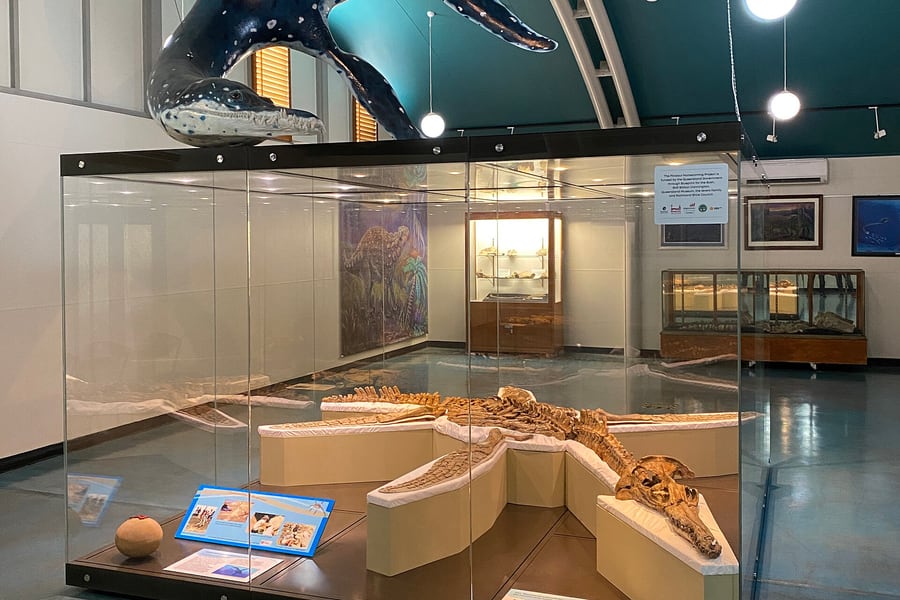 Allan Henderson / Wikimedia Commons · CC BY 2.0 · cropped
Kronosaurus Korner
Richmond's fossil museum holds nearly 1,150 specimens from the inland sea that covered this country 100 to 115 million years ago: marine reptiles, fish, pterosaurs and even dinosaurs, many found by graziers mustering cattle. About a fifth are on display.Timetables
The Inlander runs twice a week in each direction, all year. Westbound trains leave Townsville on Wednesday and Saturday at midday; eastbound trains leave Mount Isa on Thursday and Sunday afternoons. Every seat must be booked.
| Westbound | Wednesday, Saturday | Eastbound | Thursday, Sunday | |
|---|---|---|---|---|
| Townsville | 12:40 | Mount Isa | 13:30 | |
| Charters Towers | 15:30 | Duchess | 15:05 | |
| Pentland | 17:35 | Cloncurry | 17:35 | |
| Torrens Creek | 18:35 | Julia Creek | 20:55 | |
| Hughenden | 20:05 | Richmond | 23:58 | |
| Richmond | 22:35 | Hughenden | 02:25 | |
| Julia Creek | 01:55 | Torrens Creek | 04:05 | |
| Cloncurry | 05:00 | Pentland | 05:00 | |
| Duchess | 07:45 | Charters Towers | 06:55 | |
| Mount Isa | 09:35 | Townsville | 10:10 |
Westbound the journey takes 20 hours 55 minutes; eastbound, 20 hours 40 minutes. Times at the larger stations are arrivals, and the train waits at most of them for 10 to 20 minutes. Charters Towers is the only intermediate station where the train always stops: Pentland, Torrens Creek, Hughenden, Richmond, Julia Creek, Cloncurry and Duchess are served only if a passenger has booked to or from them.
The booking system shows no westbound train on Wednesday 23 December 2026. Check the date of your own train when booking.
Times are from Queensland Rail Travel's timetable, checked against its booking system for every westbound departure from mid-November 2026 to mid-March 2027 — as of October 2026. Fares are published to 31 March 2027. Check the Inlander timetable (opens in a new tab) before travelling.
Tickets
Tickets are sold by Queensland Rail Travel, online, by phone or through travel agents, one way and for a seat on a named train. The cheapest are BQuick advance fares, limited in number and paid at once; AChoice is the standard fare. Shorter journeys cost less: BQuick fares start at A$22 to Charters Towers, A$76 to Julia Creek and A$93 to Cloncurry.
From 1 November 2026 to 31 March 2027 the 2 for 1 Outback Rail offer lets two people travel together for one fare on the Inlander, or a single traveller for half the AChoice fare. It cannot be booked online: call 1800 872 467 or go to a Queensland Rail Travel Centre. The prices below are for travel until 31 March 2027.
Book your tickets
Ridiculopathy / Wikimedia Commons · CC0 · croppedEconomy Seat, Townsville to Mount Isa
Reclining seat · about 21 hours
One way from A$111 on a BQuick advance fare, A$185 on the flexible AChoice fare, with a snack pack at meal times.
Book Tickets (opens in a new tab, on queenslandrailtravel.com.au)via queenslandrailtravel.com.auLobster1 / Wikimedia Commons · CC BY-SA 3.0 · cropped2 for 1 Outback Rail
November 2026 to March 2027
Two travel for the price of one on the Inlander, or half the AChoice fare alone; booked by phone, not online.
Book Tickets (opens in a new tab, on queenslandrailtravel.com.au)via queenslandrailtravel.com.auRail Passes
Queensland Rail Travel's Queensland Explorer Pass covers the Inlander. Sold to international visitors, it costs A$299 for a month or A$389 for two, and gives unlimited Economy Seat travel on the Inlander, the Spirit of Queensland, the Tilt Train, the Spirit of the Outback and the Westlander. Every journey must still be reserved, and no more than two trips may be made between the same two stations.
Is it worth it? Not for Mount Isa and back alone: two BQuick fares come to A$222, less than the pass. It pays when the Inlander is joined to another train — up the coast from Brisbane to Townsville on the Spirit of Queensland, say. Between November and March, two people travelling together do better with the 2 for 1 Outback Rail fare.
Checked October 2026 against Queensland Rail Travel's Queensland Explorer Pass page (opens in a new tab).
Places to Visit
Charters Towers is the one stop the train always makes. Hughenden, Richmond and Cloncurry are request stops, booked with the ticket, and the westbound train reaches them at night — so seeing any of them means breaking the journey, and with two trains a week each way, a stay of three or four days.
 Kgbo / Wikimedia Commons · CC BY-SA 4.0 · cropped
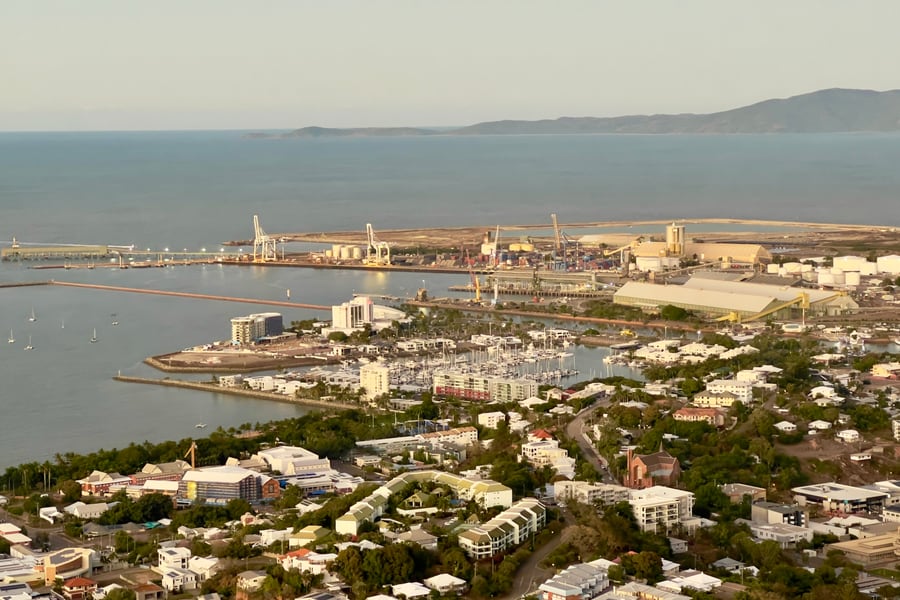
Townsville
The largest city in northern Australia sits on the dry tropical coast beside the Great Barrier Reef. Castle Hill, once called Cootharinga, rises above the centre, and its lookout faces the port and Magnetic Island, most of which is national park. The Strand runs along the shore below, and the Museum of Tropical Queensland is built around relics of HMS Pandora.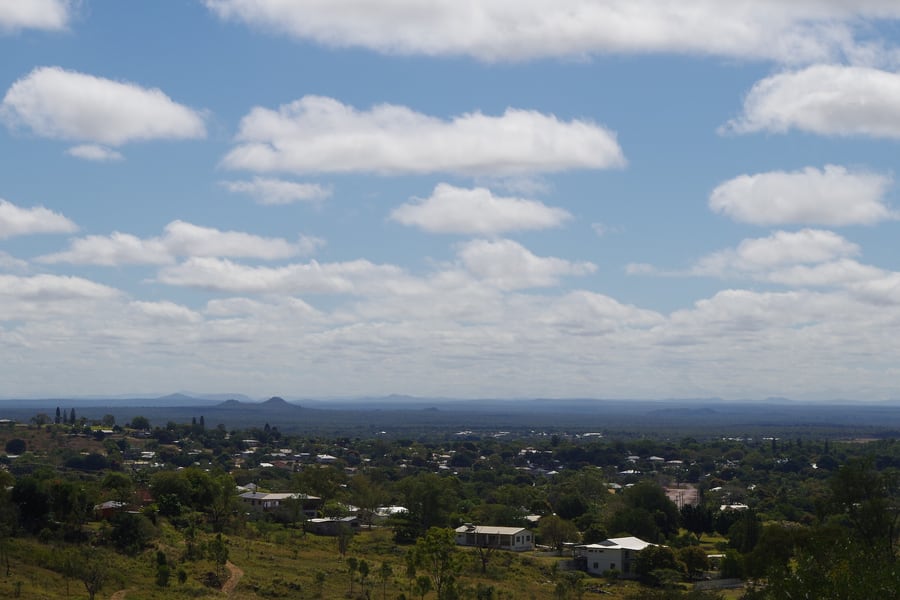 Greditdesu / Wikimedia Commons · CC BY-SA 4.0 · cropped
Charters Towers
Gold was found here at Christmas 1871 by Jupiter Mosman, a twelve-year-old Aboriginal boy looking for his party's bolted horses. The field proved Australia's richest by grade, and in its boom the town was the largest in Queensland outside Brisbane. The railway arrived in December 1882; its station is at Queenton, between the town and the old mining settlement of Millchester.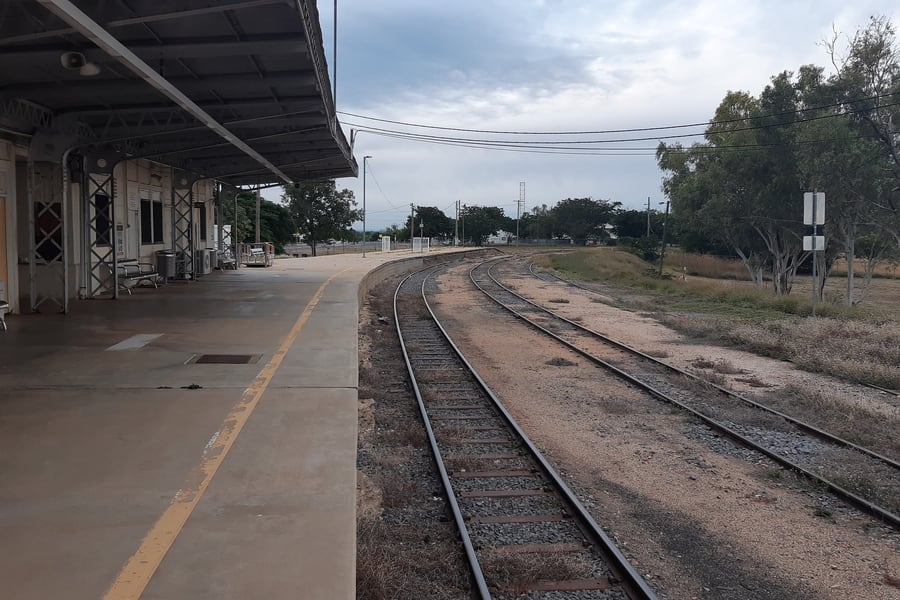 Ridiculopathy / Wikimedia Commons · CC0 · cropped
Hughenden
A pastoral town on the Flinders River, named after Disraeli's house in Buckinghamshire, where the line ended from 1887 until it pushed on west. In 1959 Eddie Mabo worked here on a railway construction gang, where, he said, he learnt about trade unionism. Porcupine Gorge, a national park of layered sandstone, is 60 kilometres north.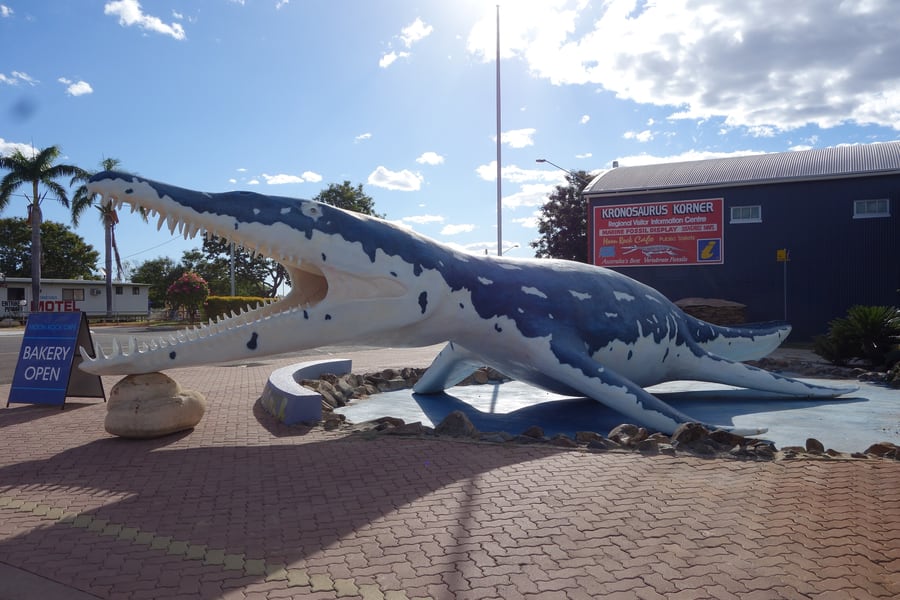 peter boer / Wikimedia Commons · CC BY 2.0 · cropped
Richmond
The railway reached Richmond in June 1904, built cheaply with packed earth in place of ballast and expected to run at 15 miles an hour. Sheep and cattle are still the town's living, but the fossils of the old inland sea brought a museum, Kronosaurus Korner, and fossil-hunting sites where visitors can dig for themselves.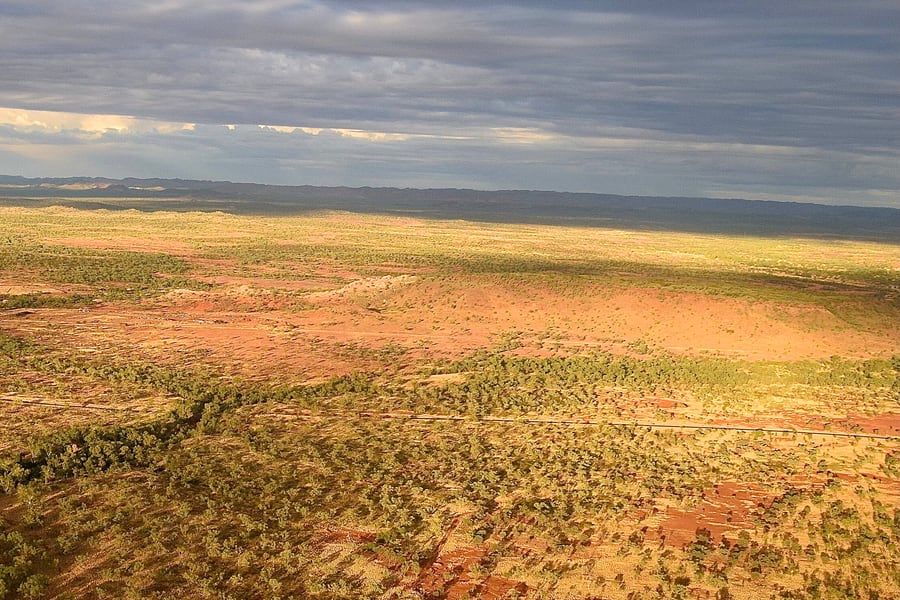 Jellyhelmetfishing / Wikimedia Commons · CC BY-SA 4.0 · cropped
Cloncurry
Copper was found here in 1867, and Burke and Wills had named the river after a cousin of Burke's. On 15 May 1928 the first flight of the Royal Flying Doctor Service took off from Cloncurry in a de Havilland DH.50 hired from Qantas, and a museum in the town tells the story. The train calls only if someone has booked.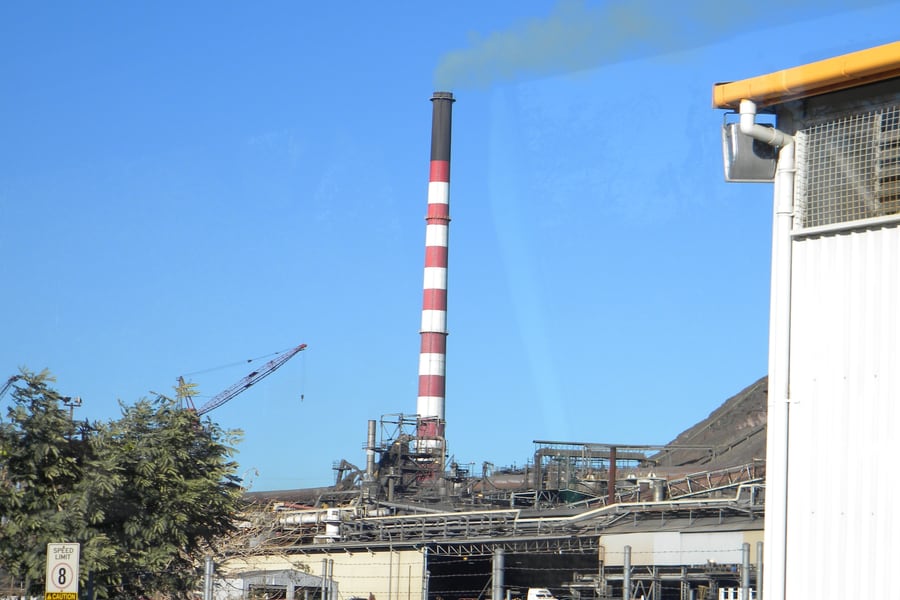 Lobster1 / Wikimedia Commons · CC BY-SA 3.0 · cropped
Mount Isa
In 1923 the prospector John Campbell Miles found rocks here that reminded him of Broken Hill, and named his claim after a Western Australian goldfield. The mine became one of the most productive in history, and its lead smelter's stack, 270 metres tall, is seen from everywhere in the city. Outback at Isa runs tours into the Hard Times Mine.Where to Sleep
The night is spent in an Economy Seat, so a bed at the far end is welcome. Both places below are in the centre of Mount Isa.
Where to stay
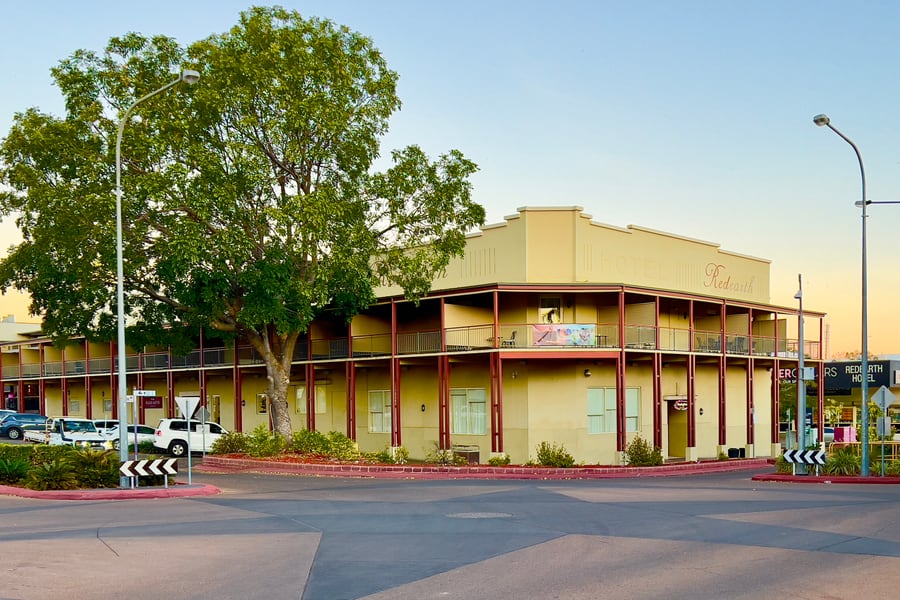 Kgbo / Wikimedia Commons · CC BY-SA 4.0 · cropped
Redearth Boutique Hotel
West Street, Mount Isa
Thirty rooms behind long verandas in the centre of town, with a cocktail lounge and restaurant.
Check Availability (opens in a new tab, on redearthhotel.com.au)via redearthhotel.com.au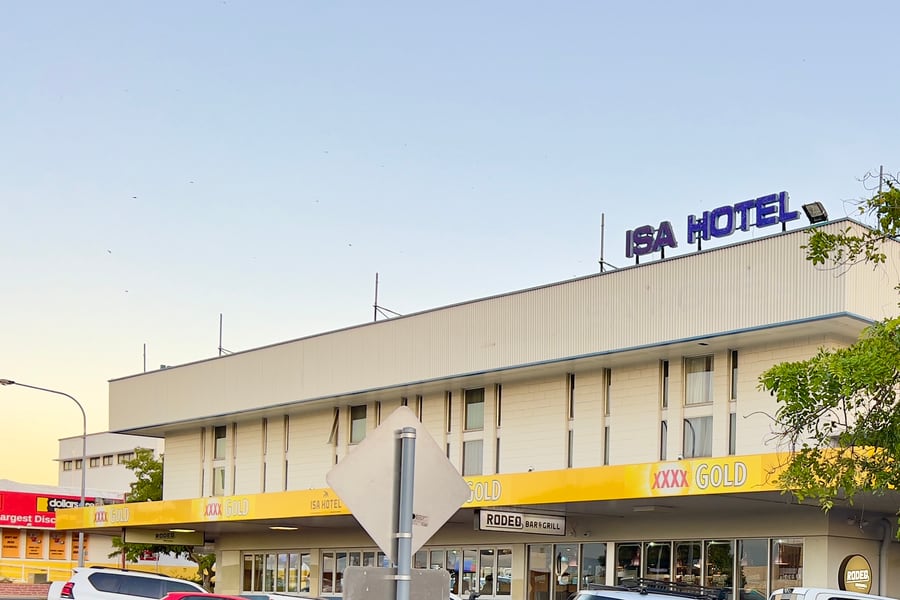 Kgbo / Wikimedia Commons · CC BY-SA 4.0 · cropped
Isa Hotel
Miles Street, Mount Isa
Forty rooms above a busy town pub on Miles Street, run by the same owners as the Redearth.
Check Availability (opens in a new tab, on isahotel.com.au)via isahotel.com.auQuestions or corrections
Planning this trip and stuck on something, or spotted a time, fare or detail that has changed? Send us a message about The Inlander. We read every one, and we update this page when something has changed.