Night Train to Palermo
Patrick1977 / Wikimedia Commons · CC BY-SA 4.0 · cropped
- DistanceRome to Palermo, with the Strait of Messina crossed by train ferry
- Duration12 h 34 to 12 h 55 southbound · 12 h 36 to 13 h 53 northbound
- Best seasonAll year, every night in both directions
Introduction
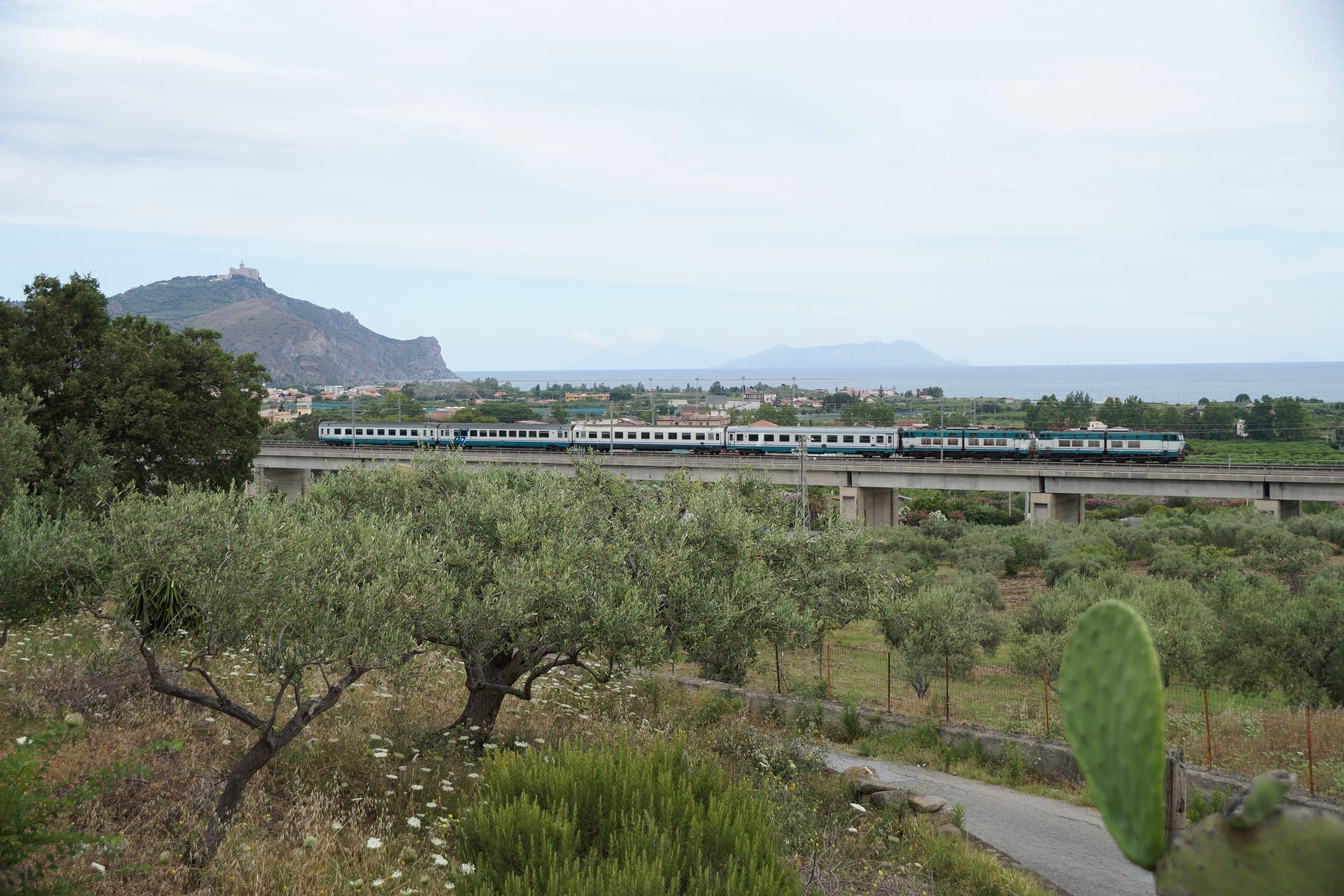
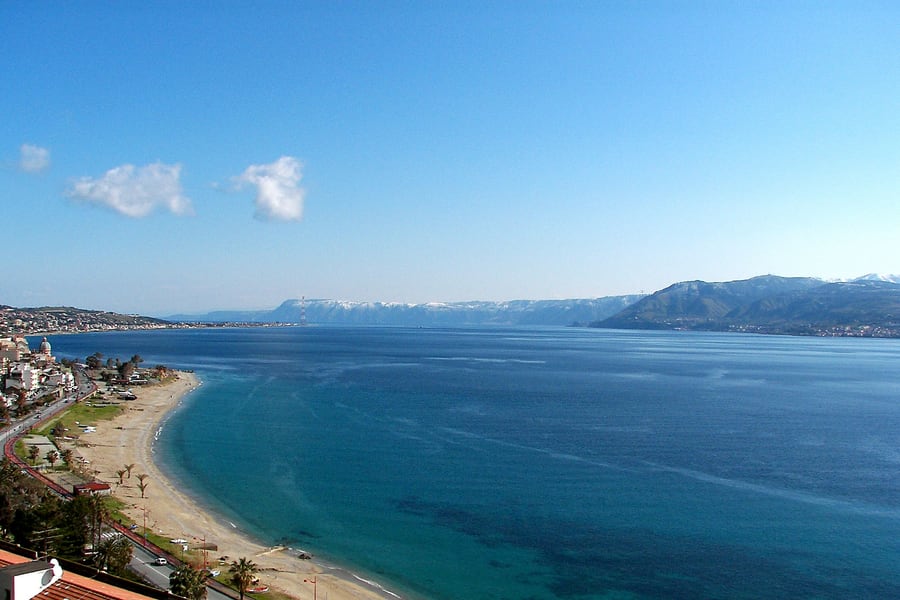
Two night trains leave Rome for Palermo every evening, and the slower one is the one to take. The 20:31 is pushed onto a ship at Villa San Giovanni at about four in the morning and crosses the Strait of Messina before sunrise, in every season of the year. The 23:00 reaches the strait three hours later, at breakfast time: it arrives at Messina at 08:05, after sunrise even in December, and then runs the whole north coast of Sicily to Palermo in daylight, past Milazzo, the headland of Tindari and the rock of Cefalù.
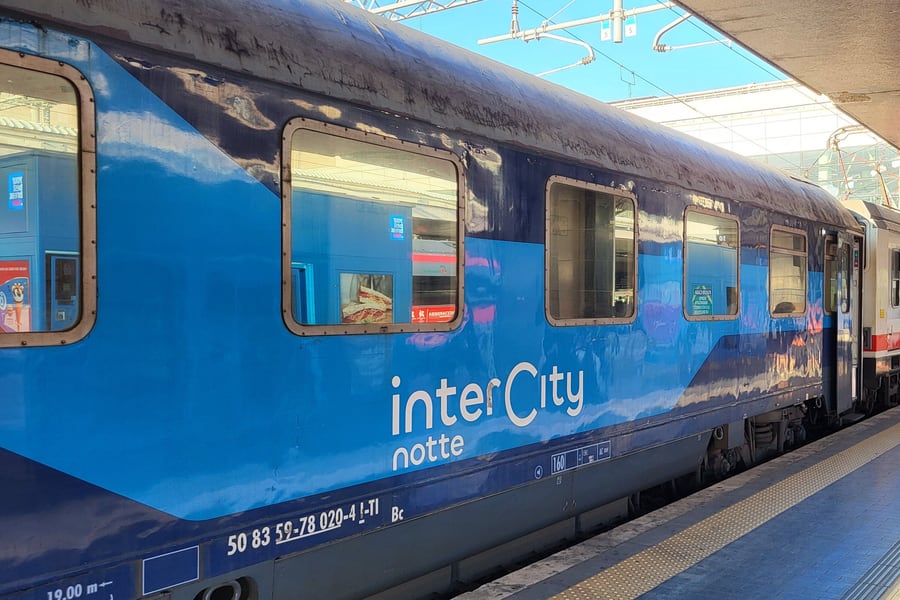
Both are Trenitalia's Intercity Notte, ordinary night trains with couchettes and sleeping cars, sold like any other Italian ticket. The coaches leave Rome joined to a locomotive and reach Palermo the same way; in between, the train is divided into sections, loaded onto the deck tracks of a railway ship and carried across the strait in about half an hour, as passenger coaches have been since 1901. While the ship is at sea, passengers may leave the train and go up on deck.
From Messina the line follows the Tyrrhenian shore for 224 kilometres, with the Aeolian Islands out to sea, and ends at Palermo Centrale: 12 hours 34 minutes from Rome on the early train, 12 hours 55 on the late one.
The Journey
Both trains leave from Roma Termini. The 20:31 heads south through Latina and Formia and picks up at Naples at 23:06 and Salerno at 23:49; the 23:00 makes fewer stops and runs through Calabria in the small hours. The mainland is the part of the journey you sleep through: the length of Campania and Calabria, down the Tyrrhenian line to the toe of Italy.
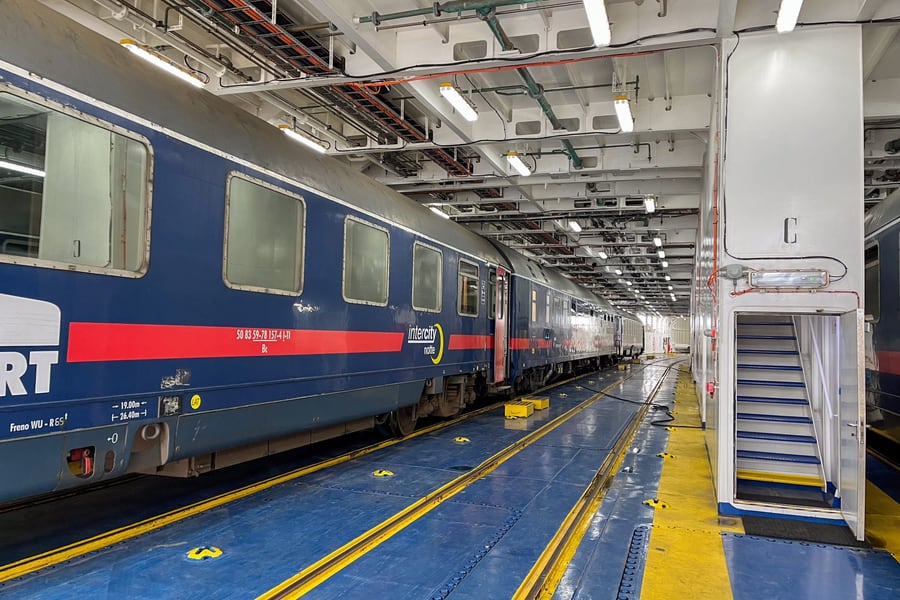
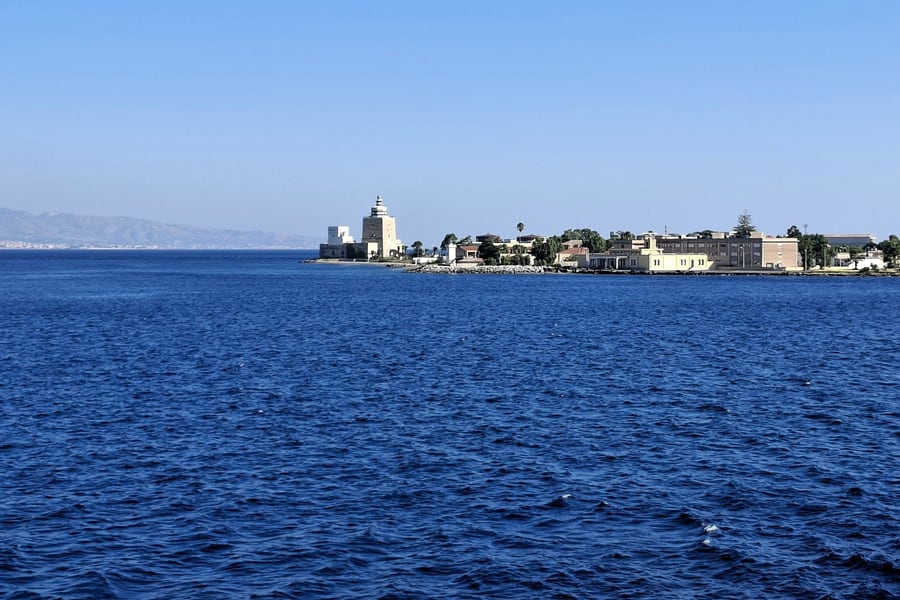
At Villa San Giovanni the train stops for longer. The ship's bow opens onto a berth with rails on it, and a shunting locomotive pushes the coaches aboard in sections, loading them evenly across the deck tracks so the ship does not list. The ships belong to RFI, the company that runs Italy's railway lines, and the crossing to Messina takes about thirty minutes. Passengers may stay in their compartments or get off the train and climb to the deck, where there are refreshment counters selling arancini and cannoli.
The Sicilian coast
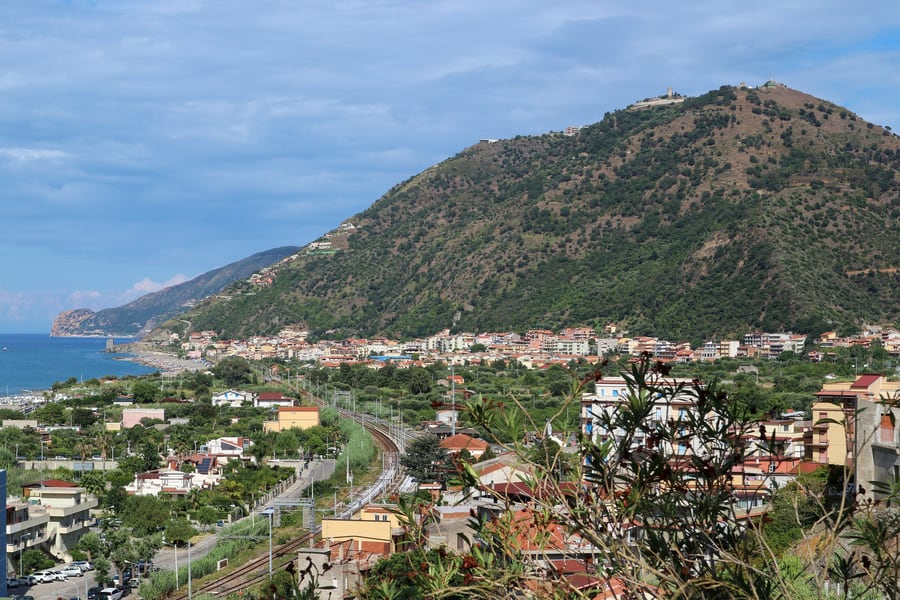
At Messina the coaches for Palermo are made up into a train again and set off west, through the Peloritani mountains and out onto the north coast. On the 23:00 this is the morning: Milazzo at 08:57, for the boats to the Aeolian Islands; Patti, below the headland of Tindari; Capo d'Orlando at 09:39; then the long stretch where the mountains come down to the sea, completed in 1895, when the last 49 kilometres between Capo d'Orlando and Tusa opened. Cefalù comes at 10:49, the town at the foot of its rock, and Termini Imerese at 11:19. The train reaches Palermo Centrale at 11:55.
The 20:31 covers the same coast between 05:40 and 09:05. In winter much of that is in the dark; in summer it too runs the coast in daylight, and gets to Palermo nearly three hours sooner.
The trains
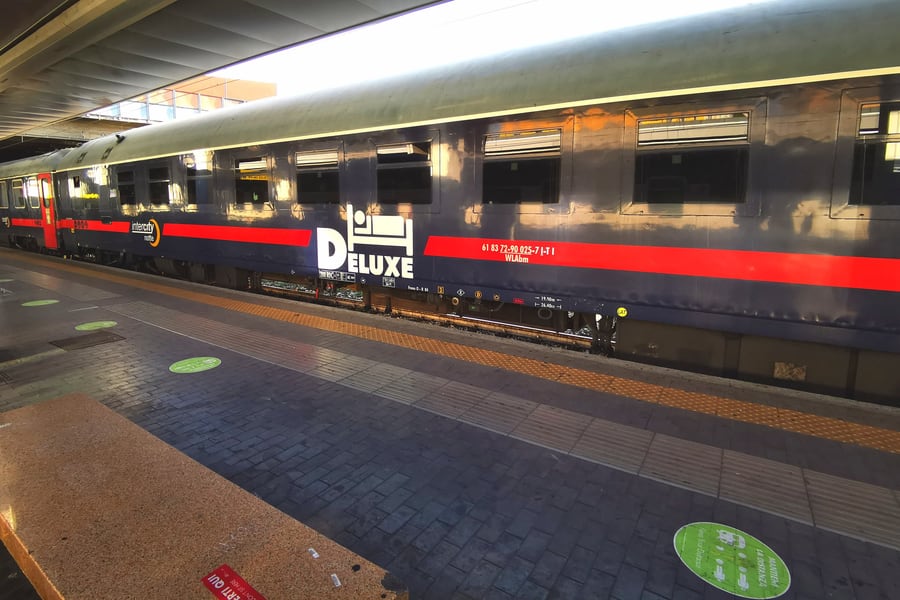
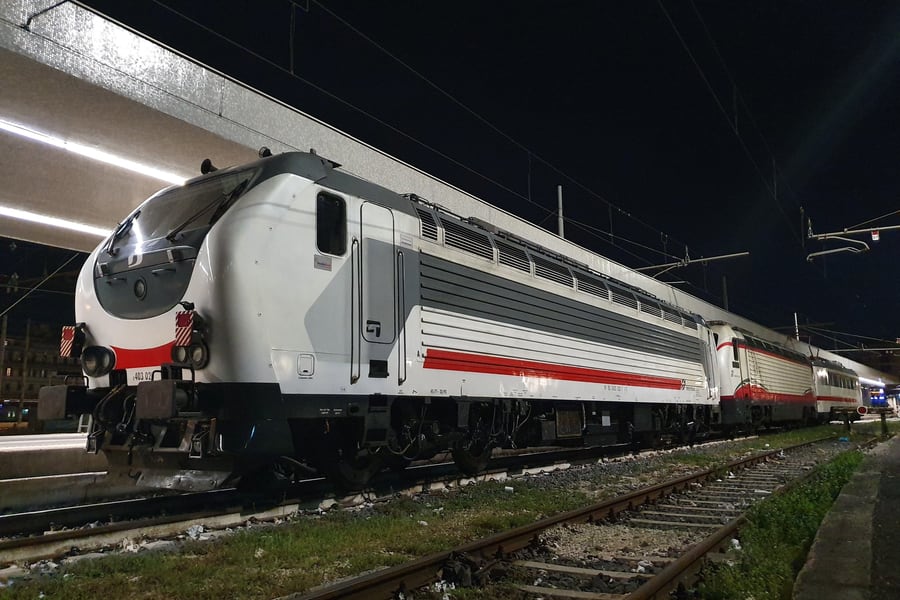
The couchettes ride in UIC-X coaches, the standard European design built in Italy between 1964 and 1985, many of them since refurbished and repainted in Intercity Notte blue. Each compartment has four berths, and there are women-only compartments. The sleeping cars, Trenitalia's Vagone Letto Relax, have cabins sold for one or two, with a washbasin and a made-up bed. Both include breakfast; otherwise, food on board is a trolley selling drinks and snacks.
Along the route
 Gianluca Detti / Wikimedia Commons · CC BY-SA 2.0 · cropped
Roma Termini
Both trains start from Rome's main station, at 20:31 and 23:00. The earlier one picks up again at Naples at 23:06 and Salerno at 23:49; after that, the mainland passes in the night.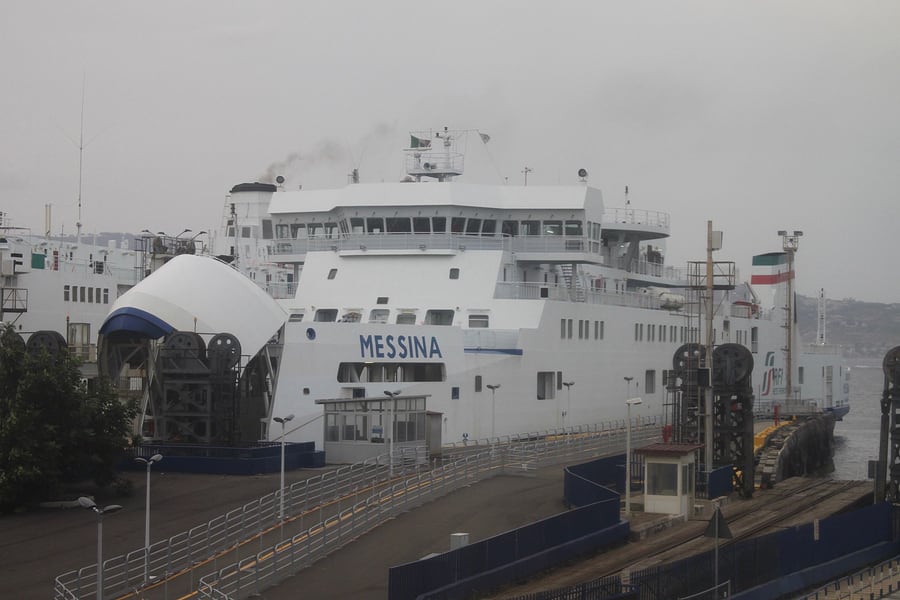 NAC / Wikimedia Commons · CC BY-SA 4.0
Villa San Giovanni
At the toe of Italy the train is pushed aboard an RFI ship in sections, among them the Messina, in service since 2013. The crossing takes about thirty minutes, and passengers may go up on deck.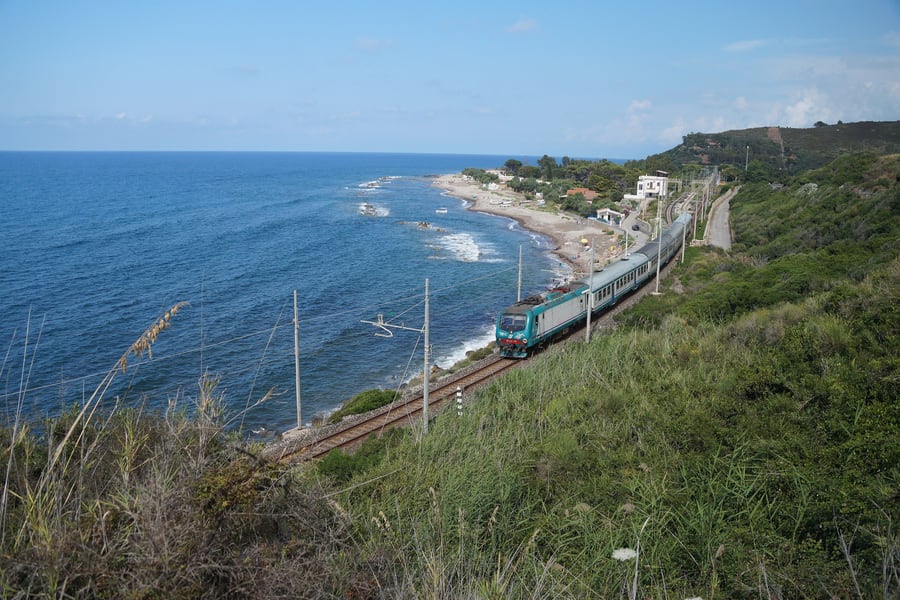 Patrick1977 / Wikimedia Commons · CC BY-SA 4.0
The Tyrrhenian coast
From Messina the line follows Sicily's north shore for 224 kilometres. Beyond Capo d'Orlando the mountains come down to the sea, and the track runs on a ledge between them, completed in 1895.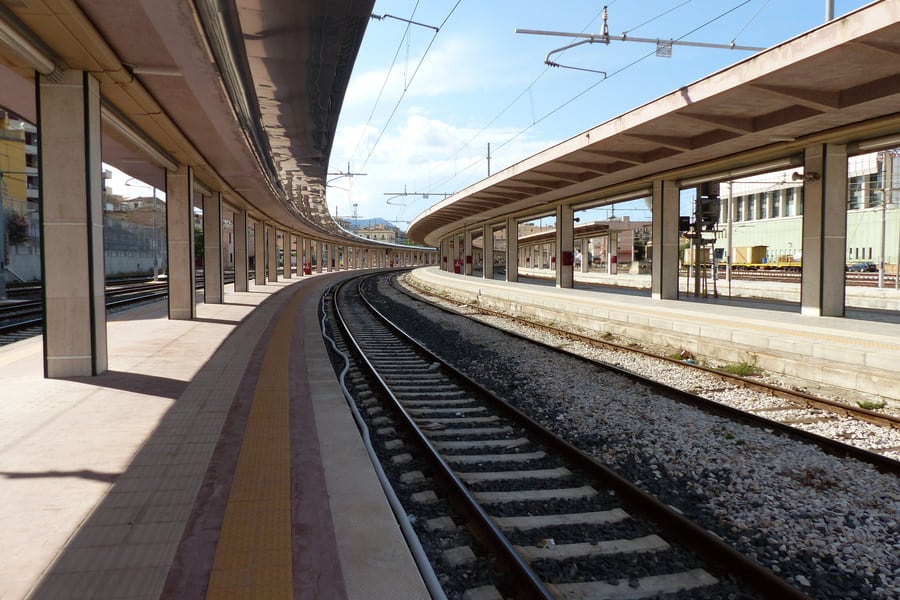 Benjamín Núñez González / Wikimedia Commons · CC BY-SA 4.0 · cropped
Palermo Centrale
The end of the line, reached at 09:05 or 11:55. The northbound trains leave from here at 18:48 and 19:58, in time for a last evening in Palermo before the night back to Rome.A bit of history
Culture & experiences along the way
 Gmelfi / Wikimedia Commons · Public domain · cropped
Arancini on the ferry
During the crossing, the refreshment counters on the ship sell arancini: balls or cones of rice, breadcrumbed and fried, usually filled with ragù, peas and caciocavallo cheese. Palermo calls them arancine and makes them round; in the east of the island they are more often conical.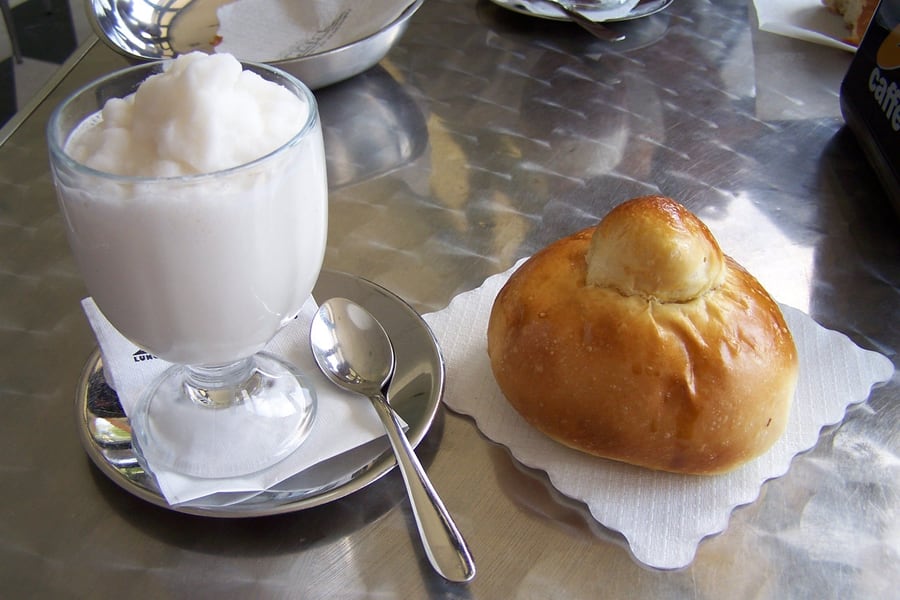 Sebastian Fischer / Wikimedia Commons · CC BY-SA 3.0 · cropped
Granita with brioche
The Sicilian breakfast, especially on the coast in summer: a glass of granita, lemon, almond, coffee or mulberry, with a soft Sicilian brioche. Messina's softer, creamier granita has been a protected local speciality of the city since 2016.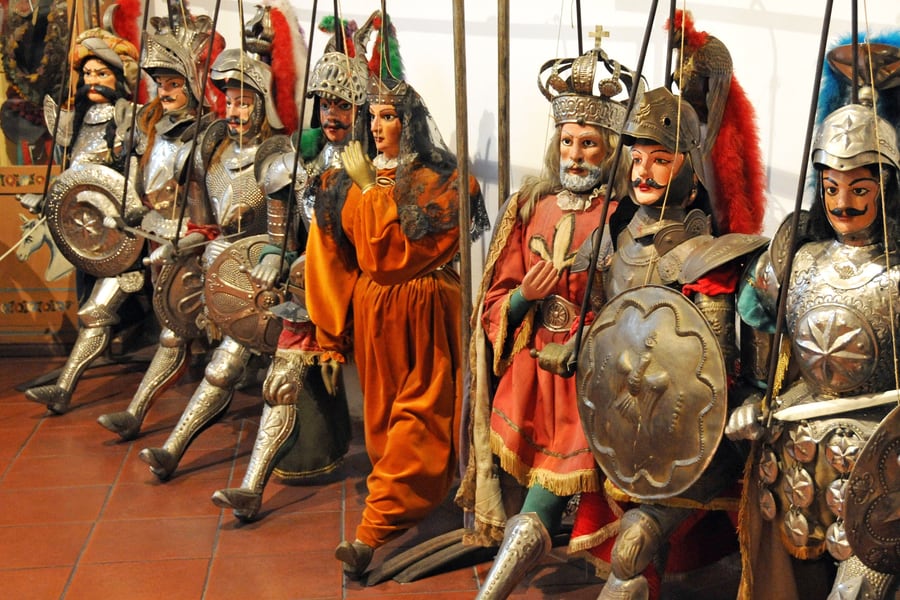 Dennis G. Jarvis / Wikimedia Commons · CC BY-SA 2.0
The Opera dei Pupi
Sicily's puppet theatre, born early in the 19th century: armoured knights, carved and painted by family workshops, act out tales of chivalry, saints and bandits. Palermo's puppets differ from Catania's in size, shape and how they are worked. UNESCO lists it as intangible heritage.Timetables
Two trains run every night in each direction, all year. They carry couchettes and sleeping cars only, and every place is reserved.
Rome to Palermo
| Train | Roma Termini | Naples | Messina | Milazzo | Capo d'Orlando | Cefalù | Palermo Centrale |
|---|---|---|---|---|---|---|---|
| NI 1955 | 20:31 | 23:06 | 05:40 | 06:33 | 07:16 | 08:17 | 09:05 |
| NI 1959 | 23:00 | — | 08:05 | 08:57 | 09:39 | 10:49 | 11:55 |
On many nights in December and January the 1955 leaves Rome at 20:16, and the 1959 at 23:25 or 23:30, reaching Palermo at 13:12 instead of 11:55; the booking page shows the times for each date.
Palermo to Rome
| Train | Palermo Centrale | Cefalù | Capo d'Orlando | Milazzo | Roma Termini |
|---|---|---|---|---|---|
| NI 1956 | 18:48 | 19:36 | 20:37 | 21:28 | 07:24 |
| NI 1958 | 19:58 | 20:58 | 22:08 | 22:49 | 09:51 |
The 1958 leaves Palermo at 20:35 on some nights, mostly at weekends, and still reaches Rome at 09:51. It calls at Naples at 07:23.
Times for January 2027, read from Trenitalia's booking engine in November 2026; tickets were on sale to 10 January 2027. Check your date on trenitalia.com (opens in a new tab).
Tickets
Tickets are sold by Trenitalia, online, in its app and at stations, and the price includes the berth. Fares move with demand: the full fare for a couchette is €102.30, and the Economy and Super Economy fares bring it down to €70.90 and €54.90 to €60.90 on the nights they are offered. A single-occupancy sleeper costs €216.90 at the full fare and from €108.90 on Super Economy; a two-berth cabin is €305.80 for the pair at the full fare. Young and senior fares are cheaper too.
The cheaper fares are not offered on every night or every train, so compare both departures before booking. Fares read from Trenitalia's booking engine for December 2026 and January 2027, in November 2026.
Book your tickets
Couchette, four berths
From €54.90 · full fare €102.30
A berth in a mixed or women-only compartment, with sealed linen and a light breakfast.
Book Tickets (opens in a new tab, on Trenitalia)via TrenitaliaSleeper, single cabin
From €108.90 · full fare €216.90
A private cabin with a made-up bed, a washbasin and breakfast.
Book Tickets (opens in a new tab, on Trenitalia)via TrenitaliaSleeper, double cabin
€305.80 for two at the full fare
The same cabin with two beds, sold to a pair travelling together.
Book Tickets (opens in a new tab, on Trenitalia)via TrenitaliaRail Passes
Interrail and Eurail passes cover these trains, but not the bed. Interrail's table of railway companies lists Trenitalia's Intercity Notte in both the Global Pass and the One Country Pass for Italy, with a reservation compulsory. The reservation is what buys the berth: €41 for a place in a four-berth couchette, €58 in a double sleeper and €122 for a single.
For this journey alone, a pass is not worth buying. A couchette ticket costs from €54.90 without one, barely more than the €41 reservation a pass holder pays on top of the pass. A pass pays only as part of a longer trip around Italy, with the night train as one of its travel days.
Checked November 2026 against Interrail's railway companies (opens in a new tab) page (last updated 21 October 2026) and its night train reservation fees (opens in a new tab).
Places to Visit
The night train's stops in Sicily are a string of places worth getting off for: Milazzo for the islands, Patti for Tindari, Cefalù, and Palermo itself, with Monreale on the hill above it.
 Patrick1977 / Wikimedia Commons · CC BY-SA 4.0
Cefalù
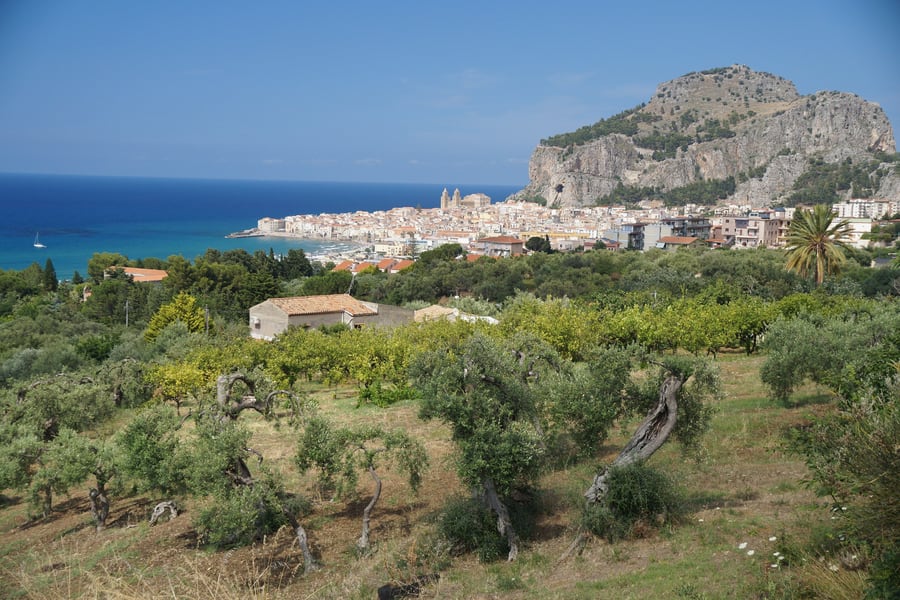
A town beneath a great rock, the Rocca, refounded by the shore by the Norman king Roger II in 1131. Its cathedral, dated to the same year, is one of the nine monuments of Arab-Norman Sicily that UNESCO listed together in 2015. The old centre keeps its medieval plan of narrow streets paved with stones from the beach and the Rocca.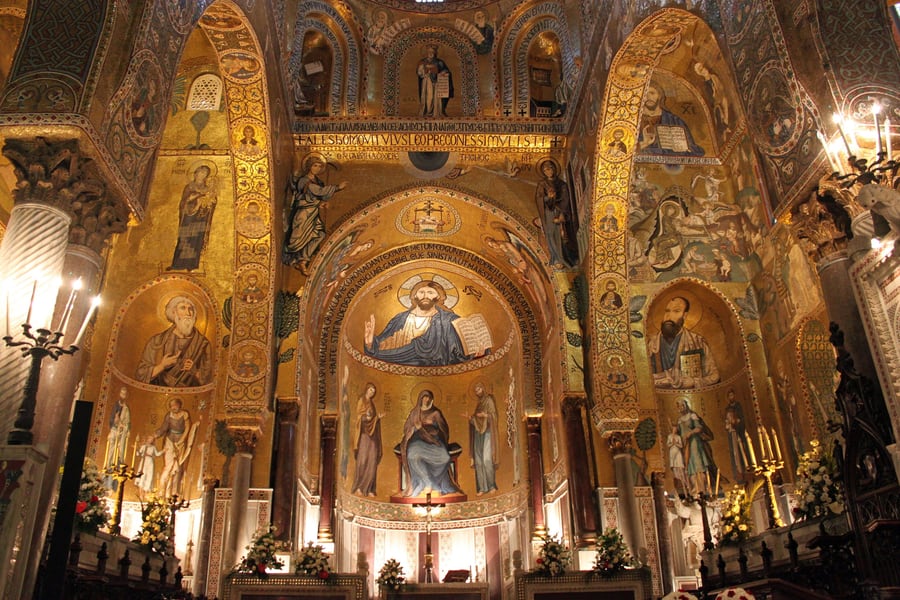 Liilia Moroz / Wikimedia Commons · CC BY-SA 4.0
The Palatine Chapel, Palermo
The chapel of the Norman kings in their palace at Palermo, covered in gold-ground mosaics. It is the best-known piece of a World Heritage Site that UNESCO describes as a meeting of Western, Islamic and Byzantine art under the Norman kingdom of Sicily, between 1130 and 1194, a mixing of cultures that produced new ideas of space, structure and decoration.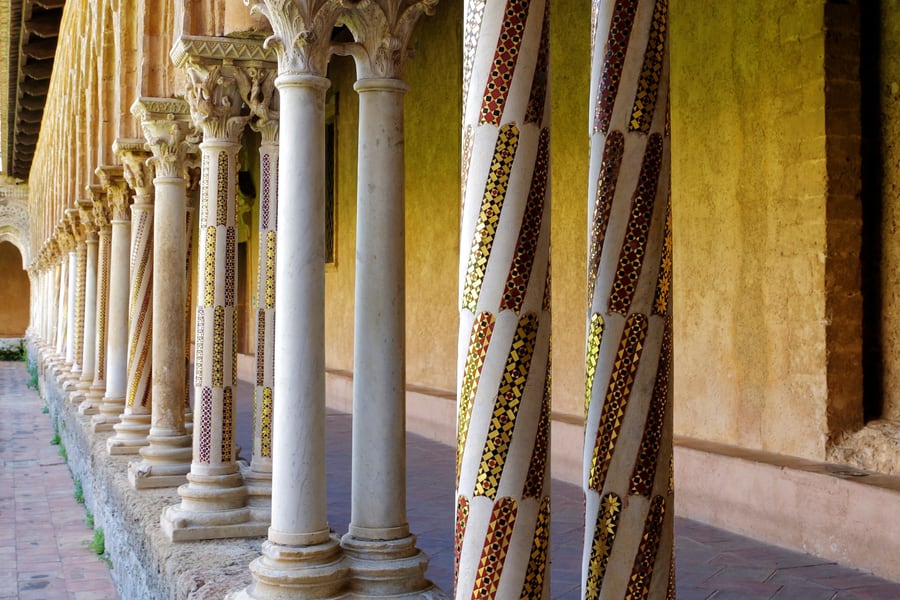 Berthold Werner / Wikimedia Commons · CC BY-SA 4.0 · cropped
Monreale
The cathedral on the hill above Palermo was begun in 1172 by William II, king of Sicily, as the church of a Benedictine abbey, and is famous for the Byzantine mosaics that cover its interior. It joined the same Arab-Norman World Heritage listing as Cefalù and the Palatine Chapel in 2015. The abbey's cloister lies beside it.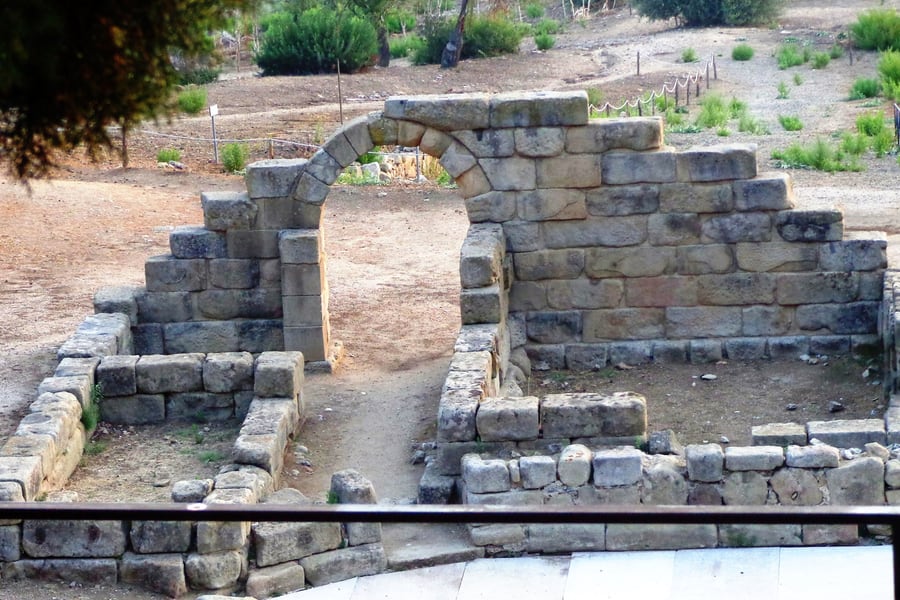 Effems / Wikimedia Commons · CC BY-SA 4.0 · cropped
Tindari
A promontory 268 metres above the sea, where Dionysius I of Syracuse founded the city of Tyndaris in 396 BC. Its theatre was built in Greek form late in the 4th century BC and remodelled by the Romans. The sanctuary at the top keeps a Black Madonna carved in cedar wood, and below lie the lagoons and sandbars of Marinello.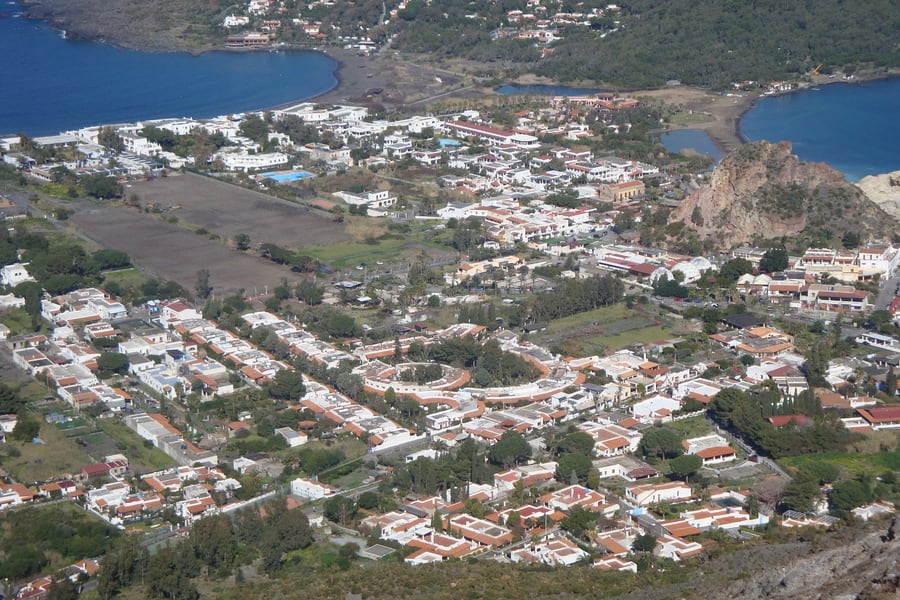 Salvo Cannizzaro / Wikimedia Commons · CC BY-SA 3.0 · cropped
The Aeolian Islands
A volcanic archipelago less than twelve nautical miles off Capo Milazzo, with two active volcanoes, Stromboli and Vulcano, and a World Heritage Site since 2000. Up to 600,000 visitors come each year. Ferries and hydrofoils leave Milazzo for the islands; the 23:00 calls there at 08:57, and the earlier train at 06:33.Where to Sleep
The train is the night's lodging, so a hotel matters at either end: in Rome before an evening departure from Termini, and in Palermo after a morning arrival.
Where to stay
Hotel Quirinale
In the centre of Rome
Built in the second half of the 19th century together with the Teatro dell'Opera, to which it is joined by a private passage.
Check Availability (opens in a new tab, on hotelquirinale.it)via hotelquirinale.itGrand Hotel Wagner
Between the Teatro Massimo and the Politeama, Palermo
A hotel in an early 20th-century Liberty-style palazzo in the centre of Palermo, its interiors since renovated.
Check Availability (opens in a new tab, on grandhotelwagner.it)via grandhotelwagner.itQuestions or corrections
Planning this trip and stuck on something, or spotted a time, fare or detail that has changed? Send us a message about Night Train to Palermo. We read every one, and we update this page when something has changed.