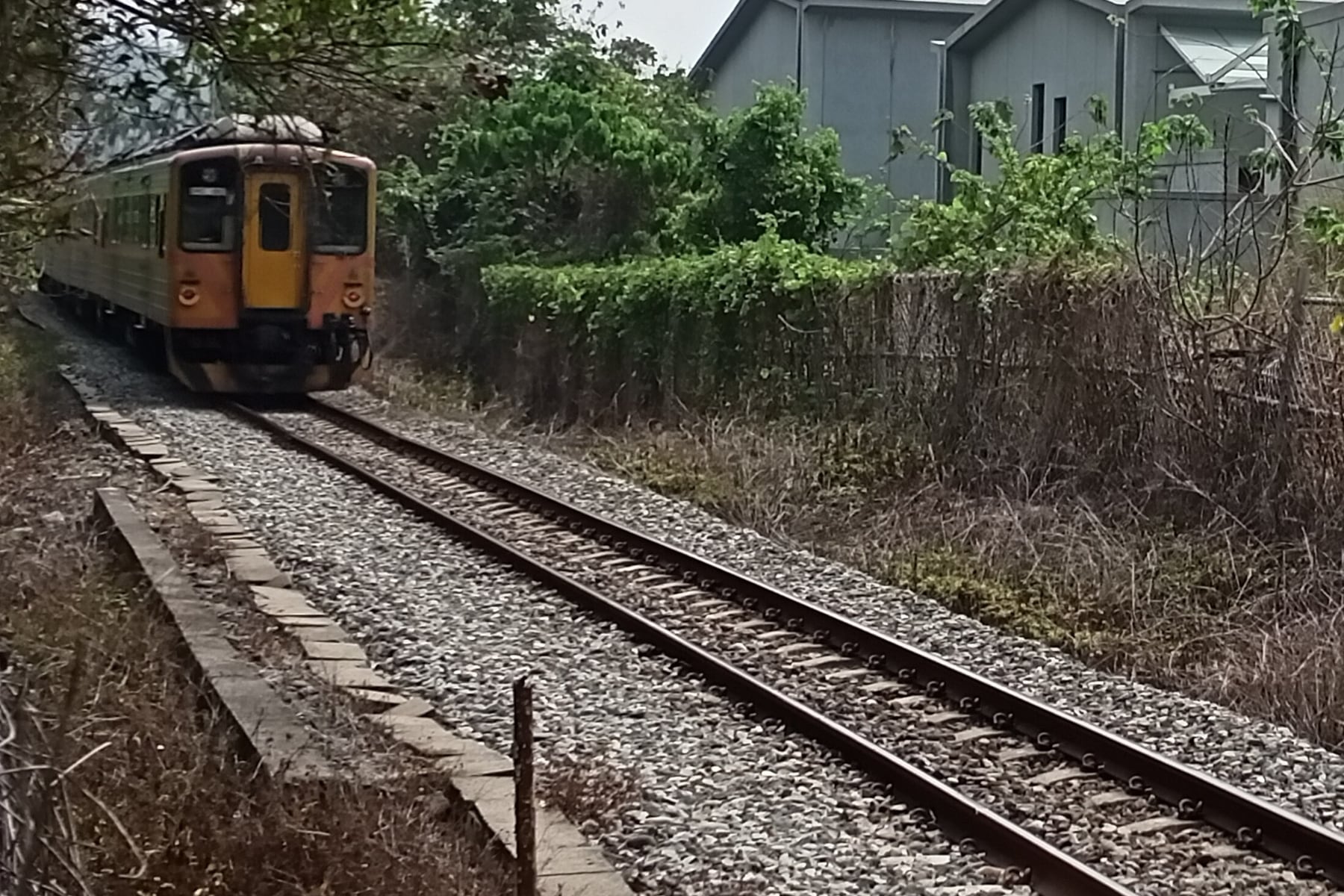
The Jiji Line
Kai3952 / Wikimedia Commons · CC BY-SA 4.0 · 2021 · cropped
- Distance29.7 km · 7 stations
- Duration48 to 53 minutes end to end
- Best season11 trains a day each way, every day, all year
Introduction
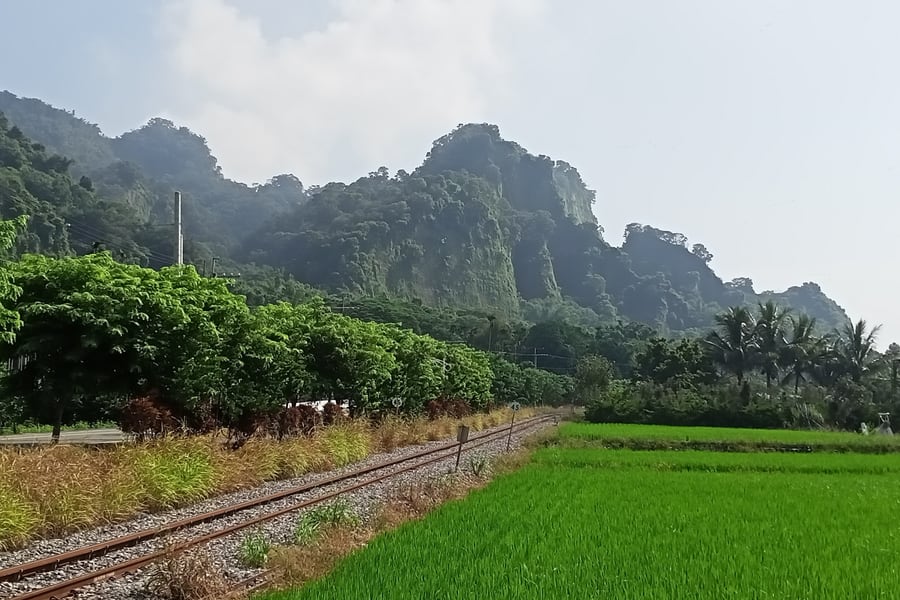
Nantou is the only county in Taiwan with no coastline, and the Jiji Line is the only railway it has. Twenty-nine and a half kilometres run east from Ershui on the western trunk line, up the north bank of the Zhuoshui River, through seven stations to Checheng — a timber village in a bowl of hills below Sun Moon Lake. It is the longest branch line the national operator still works, and the least like the rest of the network: single track, no overhead wires, one diesel railcar at a time, and a brass tablet handed to the driver at the station window as the authority to enter the section ahead.
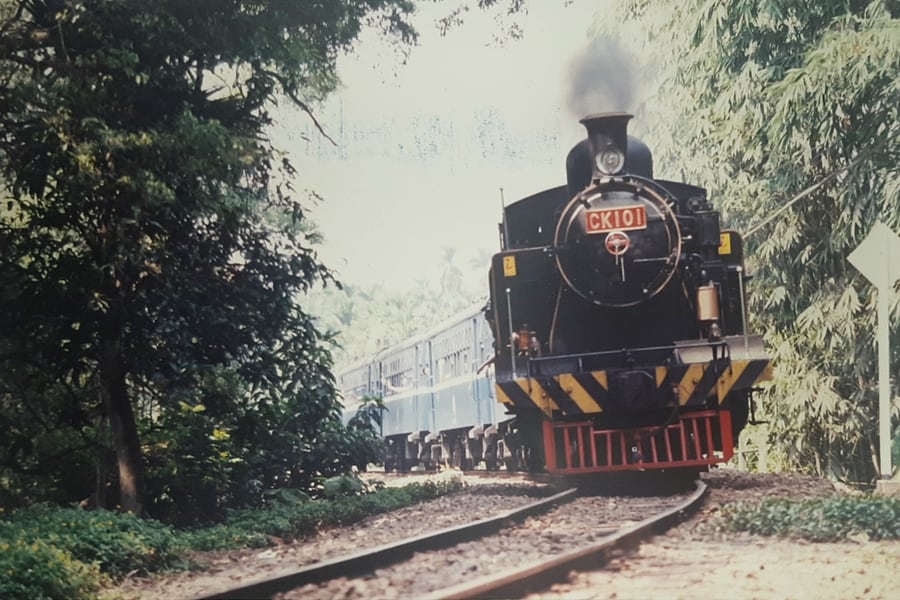
It was not built for passengers. In 1919 the Taiwan Power Company needed to move cement and machinery up to the Sun Moon Lake hydroelectric scheme, and laid a railway along the course of an existing push-car track. Construction finished in 1921 and the line opened to the public on 14 January 1922; the colonial railway bureau bought it in 1927. Then came the timber. Checheng became a logging town, the cypress off Mount Danda went out by rail, and the bananas of the Jiji basin went with it. When the logging was banned and the road took the freight, the railway ran at a loss, and in 1986 the operator announced that it would close. The towns along it refused, and in 1994 the line was relaunched as a tourist railway — the first in Taiwan.
What has happened since is the reason to go now. The 1999 Chichi earthquake, whose epicentre was at Jiji, twisted the track and tilted the station; the line reopened in January 2001. A hillside came down on a tunnel in August 2021 and took the far end of the branch out of service for nearly five years. Trains ran the whole way again from 25 June 2026.
The Journey
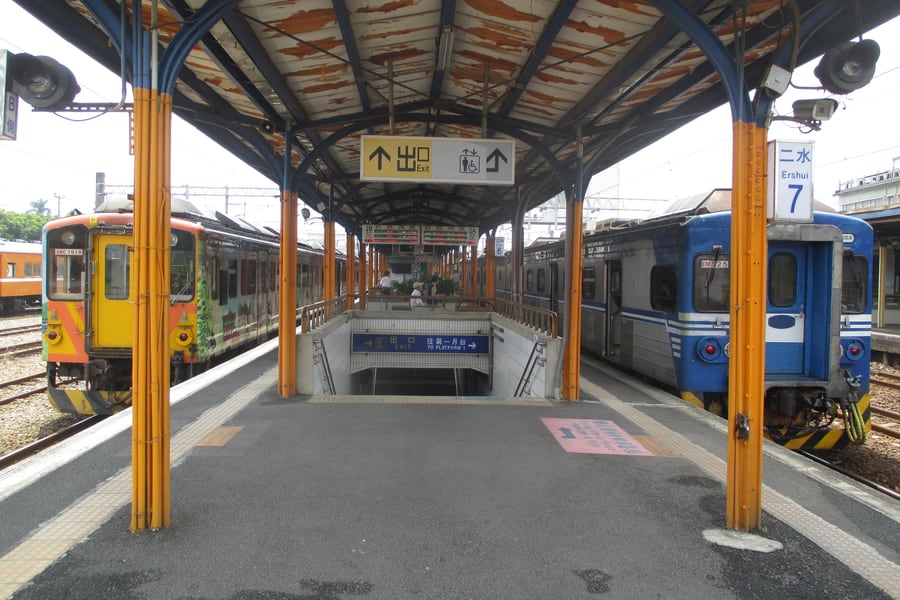
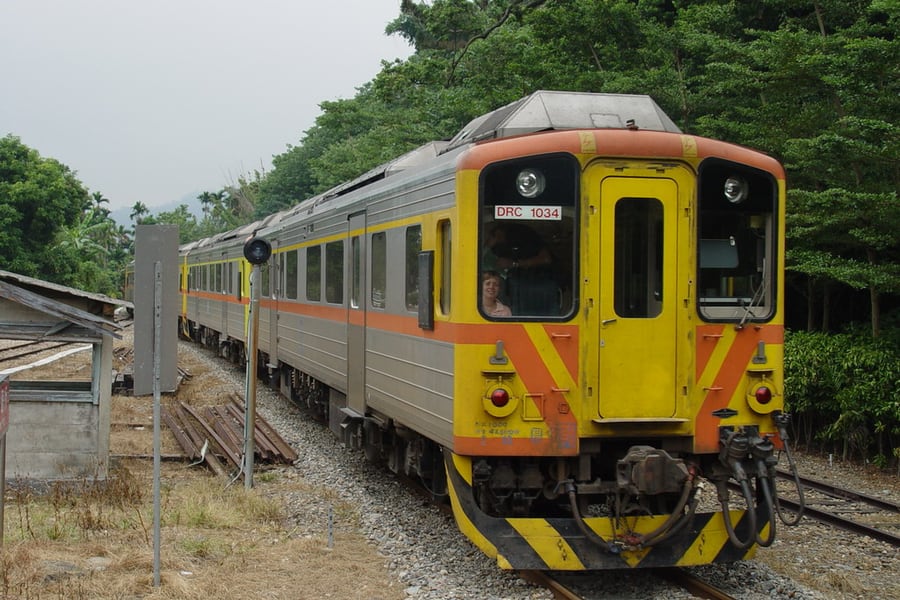
The branch begins at platform 2 of Ershui, a junction town on the Changhua plain where the main line from Taipei runs south under its wires towards Chiayi and Kaohsiung. The railcar waiting on the far face is not part of that world. It is a 45DR1000 — a two-to-four-car diesel unit in orange and cream, designed by Nippon Sharyo, the first two built in Japan and the other thirty-four assembled at the Tang Eng ironworks in Kaohsiung, in traffic since 2 December 1998 and based at Changhua depot. Three hundred and eighty-five horsepower, air-conditioned, good for 110 km/h and never anywhere near it. There is no third rail and no catenary over the branch; from here to Checheng the engine under the floor is the whole power supply.
Where two trains meet
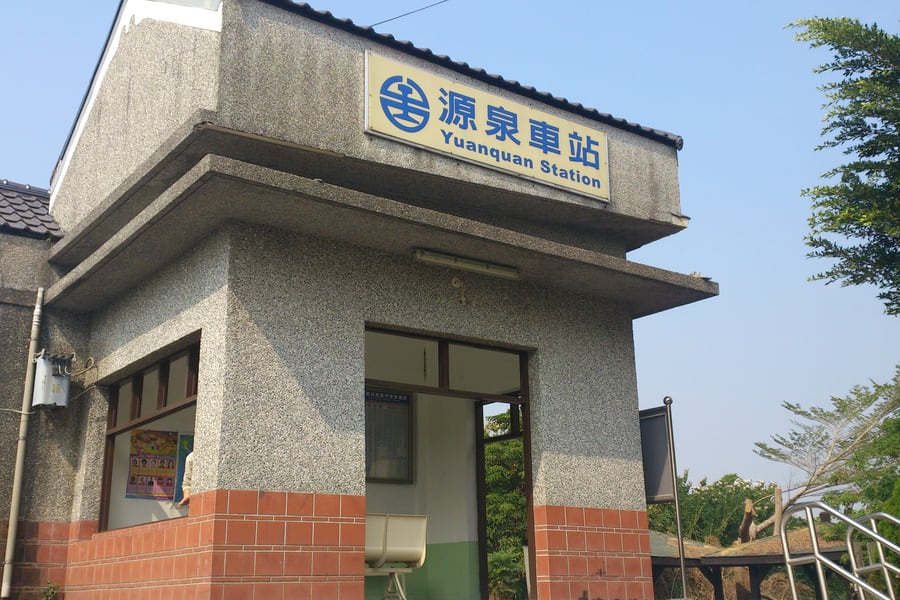
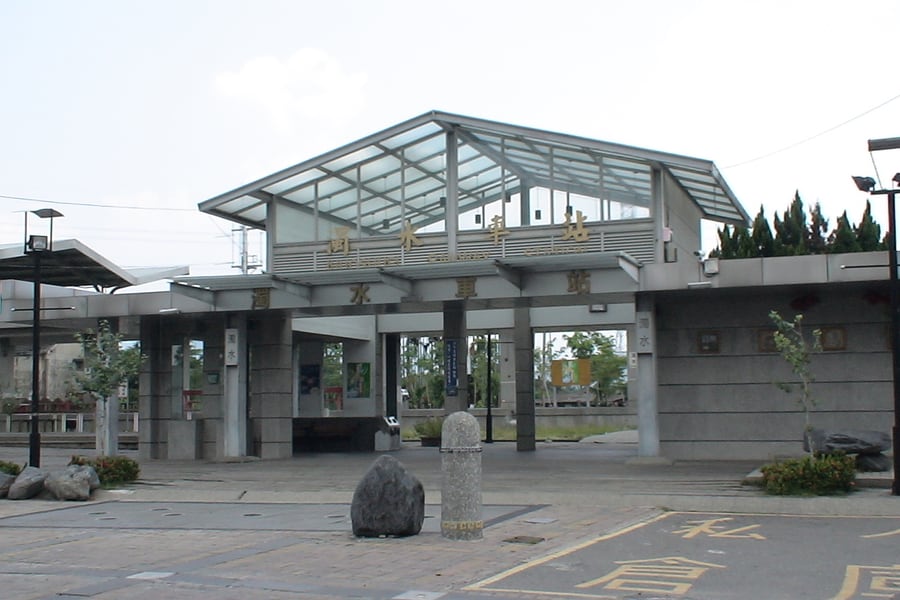
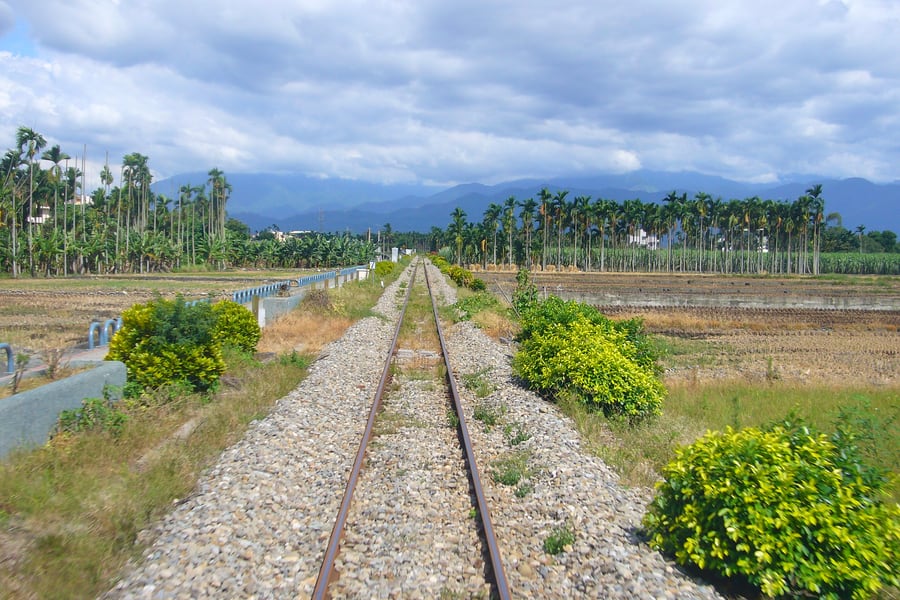
Yuanquan, 2.9 kilometres out, is an unstaffed halt beside the paddy. Then the line swings inland along the Zhuoshui River — the longest in Taiwan, and the reason everything here is called after muddy water — and at kilometre 10.8 reaches Zhuoshui, which is the hinge of the whole operation.
The Jiji Line is single track from end to end and has exactly one passing loop, at Zhuoshui. Every train stops there for two to five minutes whether or not anyone gets off, because that is where the up train and the down train pass each other, and because that is where the tablet changes hands. Block working here is still done with the electric train tablet: a brass disc in a hooped carrier, withdrawn from a cabinet that the station masters at the two ends of the section must operate together, handed to the driver, and surrendered at the far end. Only one tablet can be out of the pair of instruments at a time, so only one train can be in the section. Different sections use tablets with differently shaped centres, so a driver cannot be given the wrong one. The operator's own engineering pages name the Jiji and Pingxi lines as the last two places it is still worked.
Camphors, and an army siding
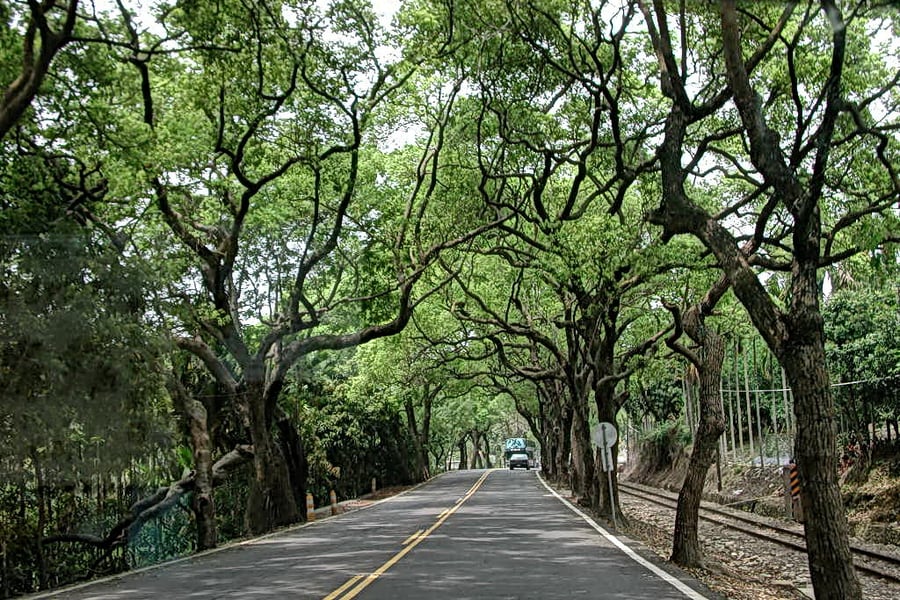
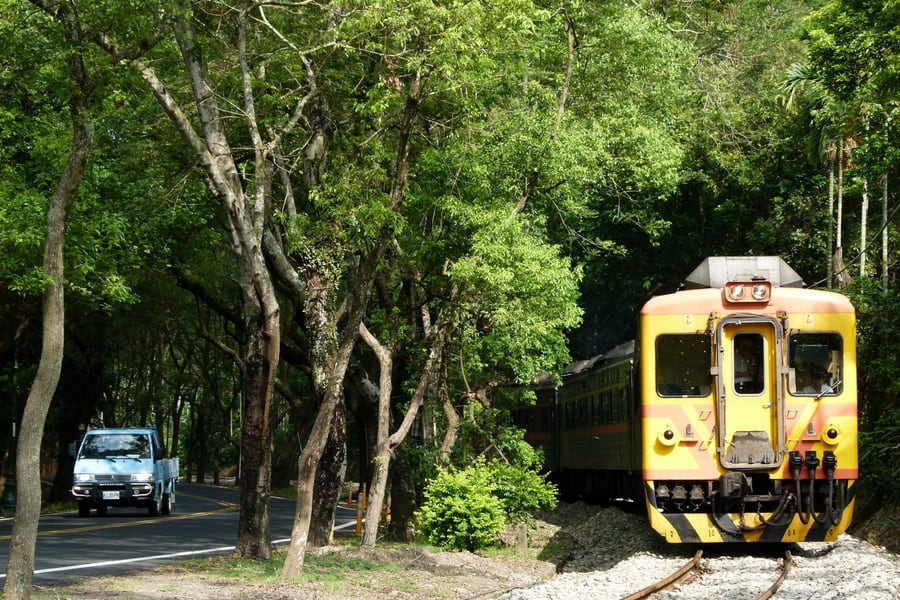
From Zhuoshui to Longquan the railway runs beside County Road 152 for four and a half kilometres under an avenue of camphor trees — the Green Tunnel, more than a thousand of them, planted in the Japanese period and kept alive, the scenic-area authority records, by villagers who carried water to them daily. The road and the railway share the shade; the train is slow enough that cyclists on the parallel path keep pace with it.
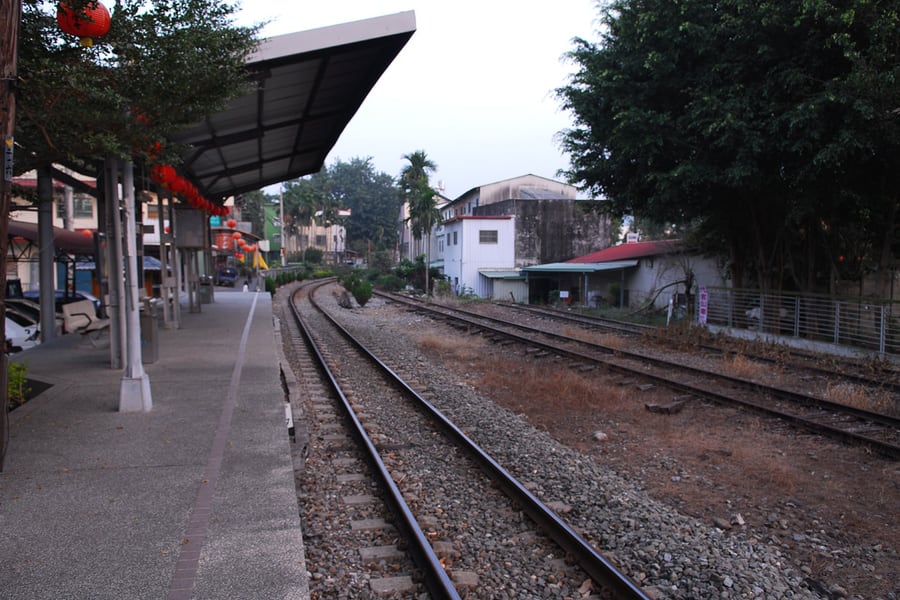
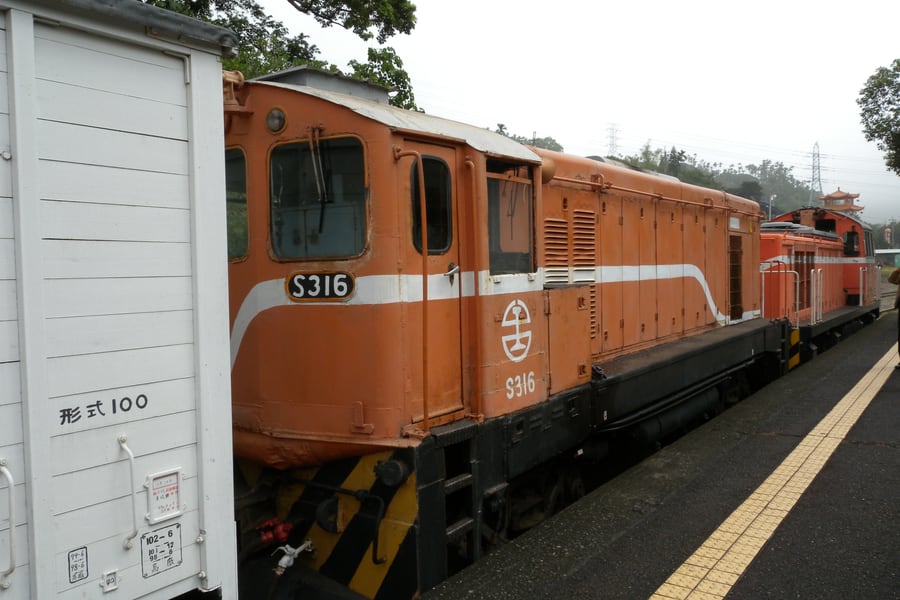
Longquan itself is a halt with a shelter, a lawn and a row of red lanterns. Just before it a siding curves away into the trees to the army's ordnance readiness centre — the only freight connection left on the branch, and worked occasionally at night.
Jiji, and the tunnels that shut the line
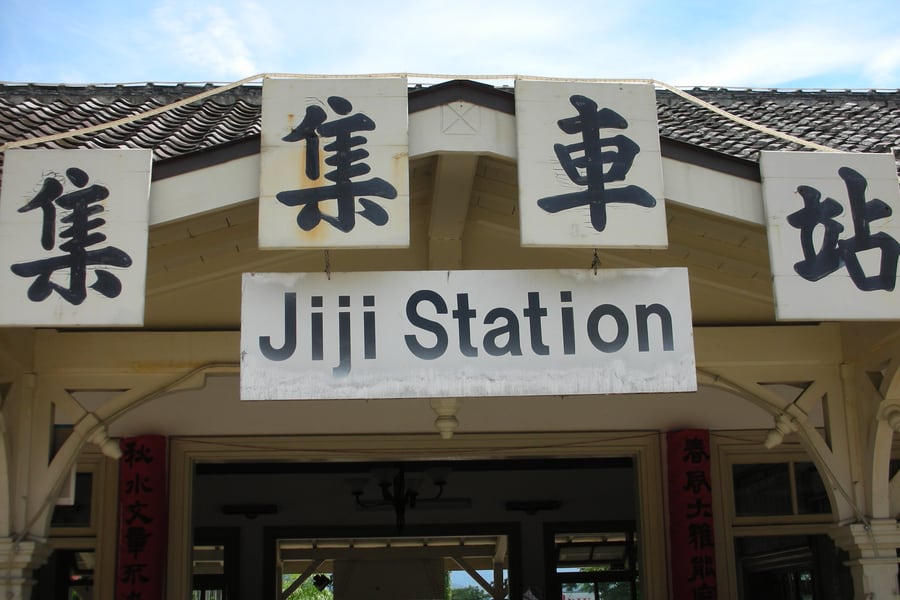
Jiji is the middle of the line and the reason most people come. The wooden station, rebuilt in 1933 in the Japanese style, is one of very few of its kind left in Taiwan and is listed as a historic building; the 1999 earthquake left it leaning, and it was restored. The earthquake is named after this town.
East of Jiji the line enters the hills, and the seven tunnels through them are the branch's weak point. Six were bored in 1925 and a seventh added in 1960; the 1999 earthquake cracked them and let water in, and the repairs of 2010–11 lined them in steel and widened them by a hand's breadth. It was not enough. In August 2021 a slope above tunnel No. 2 slid and deformed the lining, and the section beyond Jiji closed. Five landslides followed. The eventual answer was a wholesale rebuild of the tunnels and the slopes above them, and for two of those years the trains terminated at Zhuoshui and a bus ran the rest.
The end of the line
Shuili, 27.4 kilometres out, is the largest town on the branch and the place to change for the bus to Sun Moon Lake or to the Yushan trailheads. Then the line leaves the Zhuoshui for a tributary, climbs a little, runs through the last tunnel and stops.
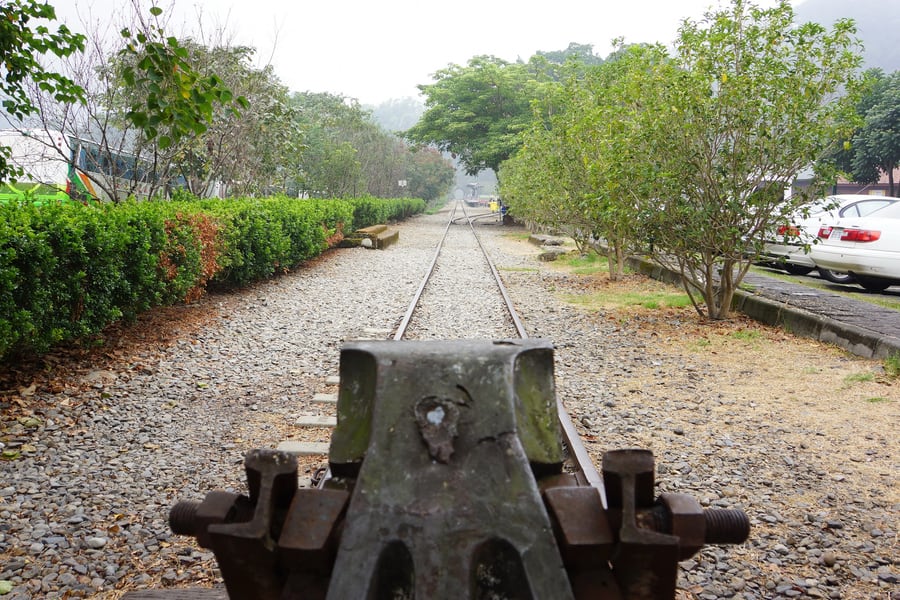
Checheng is a basin ringed by wooded hills, and the railway ends at a set of buffers with a timber yard behind it. The concrete water tower and the coaling stage from the steam years are still standing at the end of the platform. Fifty minutes and twenty-nine kilometres from the plain, it is about as far into Taiwan as a train will take you.
Along the route
 Cheng-en Cheng / Wikimedia Commons · CC BY-SA 2.0 · 2011 · cropped
Four and a half kilometres of camphor
Between Zhuoshui and Longquan the railway and County Road 152 run side by side under more than a thousand camphor trees, planted in the Japanese period and kept alive by villagers who carried water to them. The train is slow enough for cyclists to keep pace.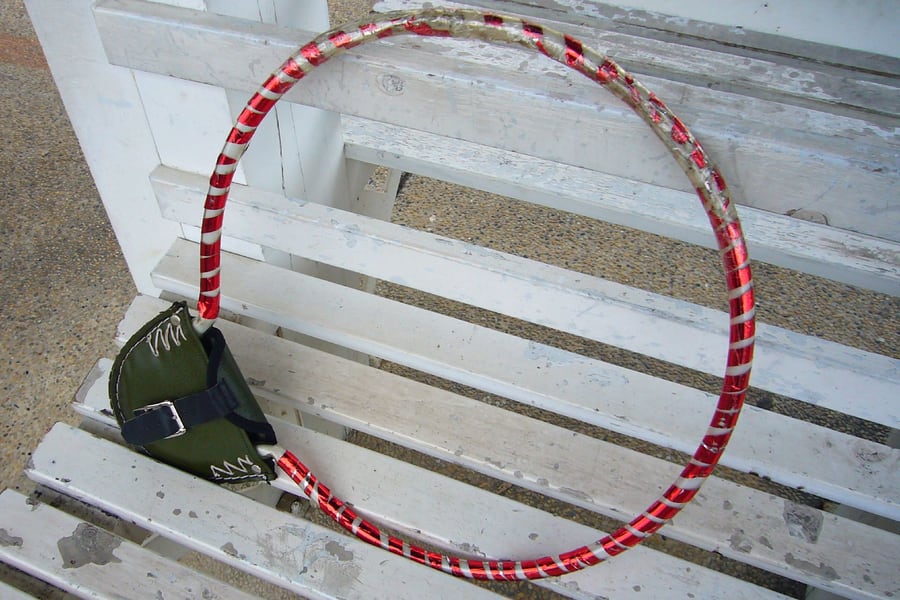 Cheng-en Cheng / Wikimedia Commons · CC BY-SA 2.0 · 2007 · cropped
A brass disc, and only one train
Block working here is still done with the electric train tablet. Station masters at each end of a section work paired cabinets to release one brass disc; the driver carries it as the authority to proceed and gives it up at the far end. Only one can be out at a time, so only one train can be in the section.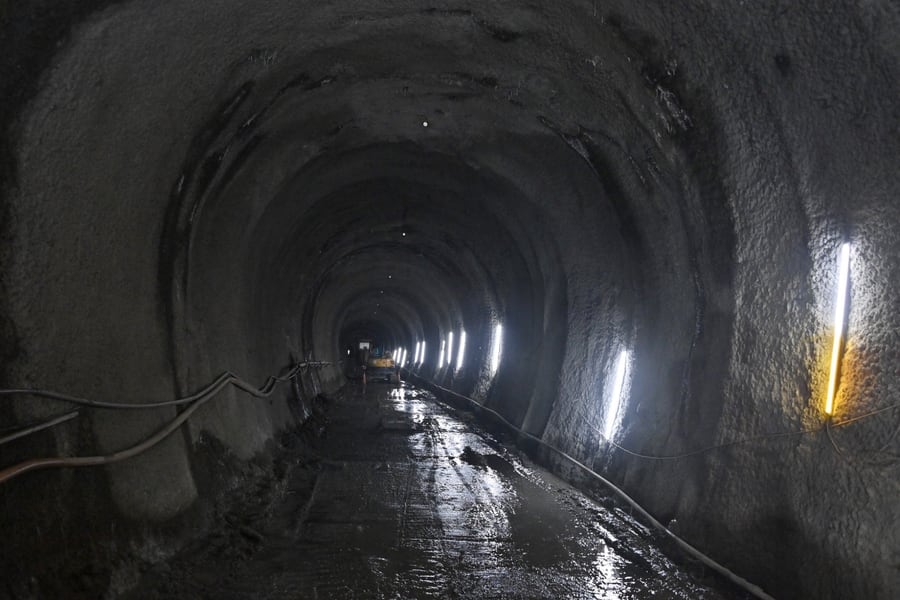 Executive Yuan / Wikimedia Commons · Government Website Open Information Announcement · 2024 · cropped
The seven tunnels that closed it
Six were bored in 1925, a seventh in 1960. The 1999 earthquake cracked them, the repairs of 2010–11 lined them in steel, and in August 2021 a hillside above tunnel No. 2 slid and deformed it anyway. The east end shut for nearly five years.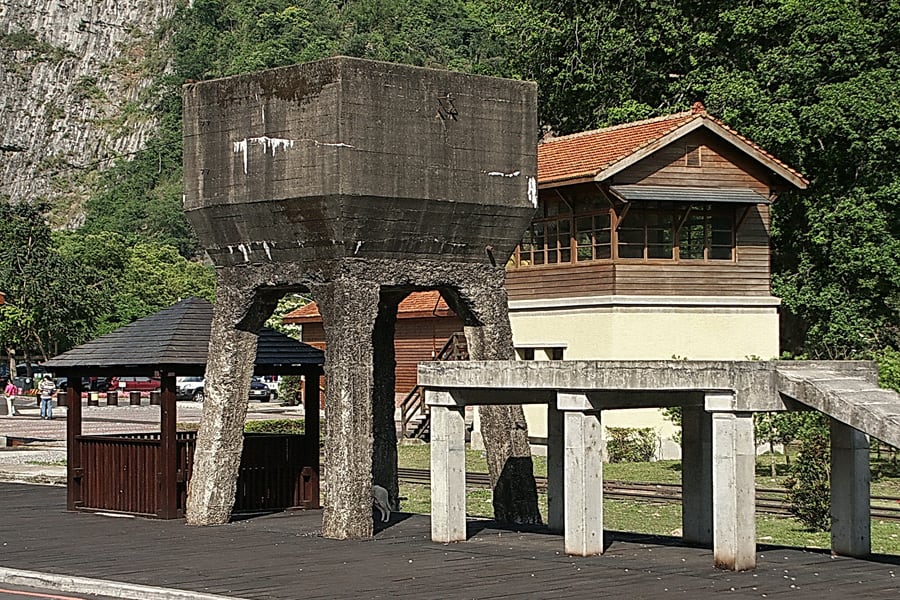 lienyuan lee / Wikimedia Commons · CC BY 3.0 · cropped
A water tower with nothing to fill
The concrete water tower and the coaling stage at the end of the Checheng platform were built for steam and have stood idle for half a century. Nothing was pulled down; they now overlook a village that has turned its timber past into an afternoon out.A bit of history
Culture & experiences along the way
 Zairon / Wikimedia Commons · CC BY-SA 4.0 · 2016 · cropped
The temple the earthquake stopped
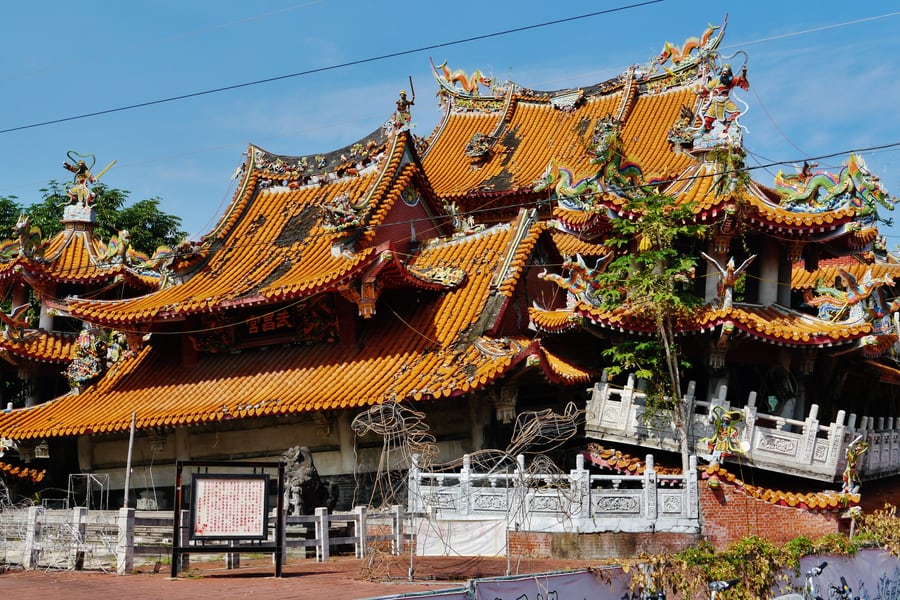
The old Wuchang Temple at Jiji dropped straight down in the 1999 earthquake and was left exactly as it fell, its tiled roofs now at ground level, dragons and all. A new temple to the same god was consecrated in front of it in 2013; the ruin behind is a registered historic site, open to walk round at any hour.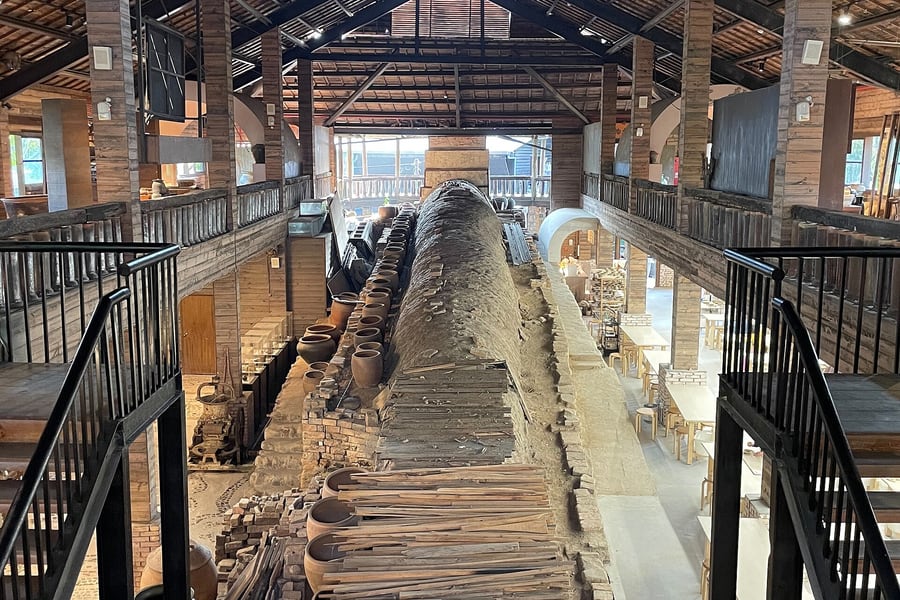 Kumokumo0310 / Wikimedia Commons · CC BY-SA 4.0 · 2022 · cropped
A kiln shaped like a snake
A snake kiln is a wood-fired tunnel of earth brick laid up a slope. Shuili's, built in 1931 and over a hundred Taiwanese feet long, is the oldest still working in the country: it made the big water jars the island stored everything in, and air-raid jars during the war. A ceramics park since 1993.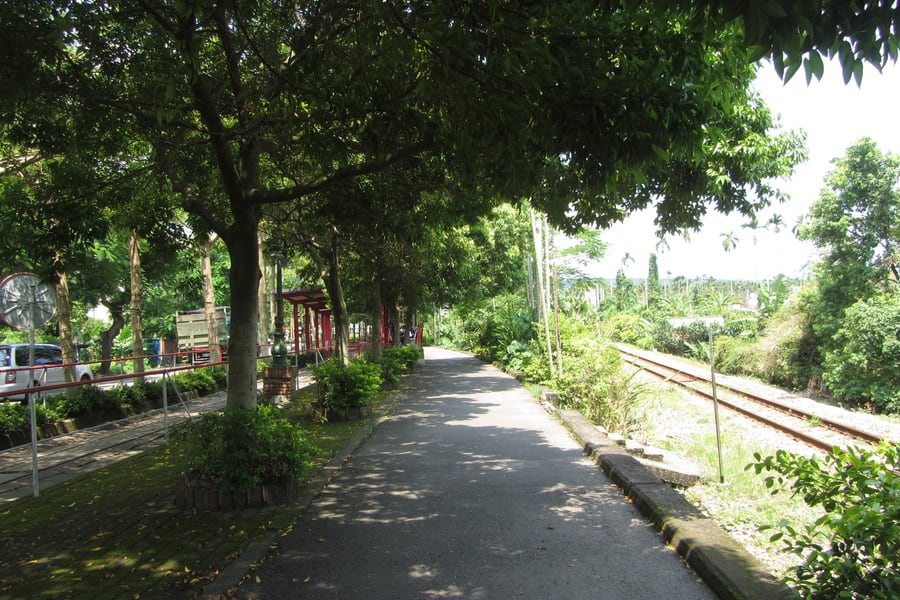 SSR2000 / Wikimedia Commons · CC BY-SA 3.0 · 2013 · cropped
Riding the railway from the outside
Jiji built a bicycle route round its own town beside the railway, and a second runs the length of the Green Tunnel. Hire shops sit outside the station, the gradients are gentle, and the line is never more than a field away — which is how most Taiwanese visitors actually see this branch.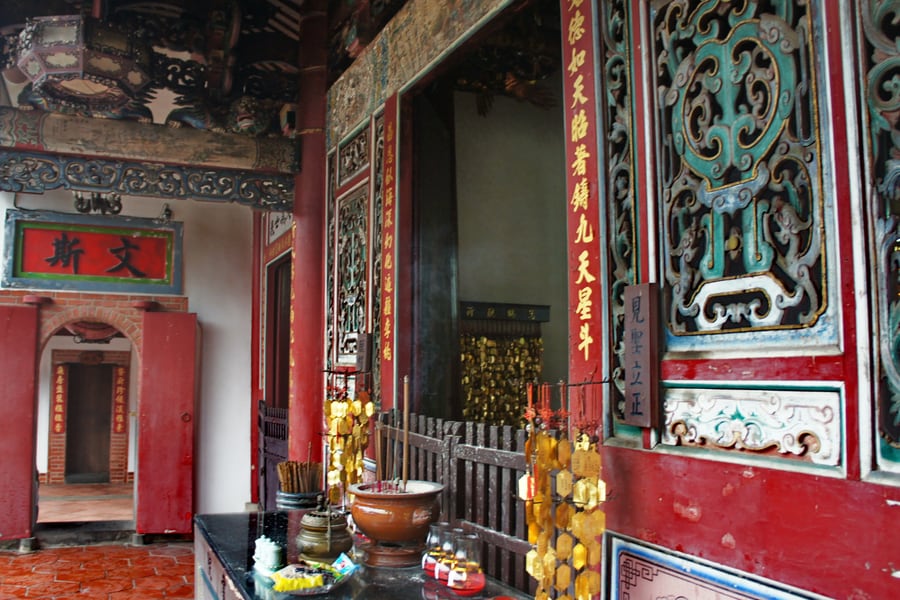 Mk2010 / Wikimedia Commons · CC BY-SA 3.0 · 2013 · cropped
A school, and a god of examinations
Mingxin Academy was finished in 1885, paid for with 1,800 silver dollars raised after a Zhuoshui River flood washed driftwood into the town. It was always as much a temple to Wenchang, god of examinations, as a school, and it is still worshipped at. It shares a wall with the school built on land it gave up in 1902.Timetables
Eleven trains a day run each way between Ershui and Checheng, and the timetable is the same every day of the week — weekday, Saturday or Sunday. There is no fast train and no slow train: every working calls at all seven stations, and the whole branch takes between forty-eight and fifty-three minutes. Two morning trains and one late-evening train run through to and from Changhua, which saves the change at Ershui.
Times and fares below were read from the operator's own English journey planner on 15 September 2026, for Wednesday 16 and Saturday 19 September 2026. This is the timetable that took effect on 1 July 2026, after the line reopened throughout.
Down the line — Ershui to Checheng
| Train | Ershui | Checheng |
|---|---|---|
| 2703 (from Changhua 05:16) | 05:54 | 06:46 |
| 2705 | 08:00 | 08:49 |
| 2707 (from Changhua 08:38) | 09:15 | 10:08 |
| 2711 | 10:40 | 11:29 |
| 2713 | 11:57 | 12:49 |
| 2715 | 13:20 | 14:09 |
| 2717 | 14:40 | 15:29 |
| 2721 | 16:05 | 16:54 |
| 2723 | 17:28 | 18:18 |
| 2725 | 18:52 | 19:40 |
| 2727 | 20:20 | 21:09 |
Back up — Checheng to Ershui
| Train | Checheng | Ershui |
|---|---|---|
| 2704 | 07:00 | 07:50 |
| 2706 | 09:00 | 09:50 |
| 2708 | 10:20 | 11:11 |
| 2712 | 11:40 | 12:29 |
| 2714 | 13:00 | 13:51 |
| 2716 | 14:20 | 15:11 |
| 2718 | 15:45 | 16:36 |
| 2722 | 17:10 | 18:00 |
| 2724 | 18:30 | 19:23 |
| 2726 | 20:00 | 20:51 |
| 2728 (on to Changhua 22:45) | 21:20 | 22:12 |
Station by station
Two examples, one in each direction. Note the stand at Zhuoshui in both: that is the passing loop, and the up train and the down train are waiting for each other.
| Station | 2707 (down) | 2704 (up) |
|---|---|---|
| Changhua | 08:38 | — |
| Tianzhong | 09:04 arr · 09:05 dep | — |
| Ershui | 09:11 arr · 09:15 dep | 07:50 arr |
| Yuanquan | 09:19 arr · 09:20 dep | 07:44 arr · 07:45 dep |
| Zhuoshui | 09:29 arr · 09:34 dep | 07:33 arr · 07:35 dep |
| Longquan | 09:41 arr · 09:42 dep | 07:25 |
| Jiji | 09:49 arr · 09:51 dep | 07:16 arr · 07:18 dep |
| Shuili | 10:02 arr · 10:03 dep | 07:04 arr · 07:05 dep |
| Checheng | 10:08 arr | 07:00 dep |
Getting to Ershui
Ershui is on the main west coast line and has a frequent local service. From Taichung it is about an hour by Local Train, NT$109. From Taipei the quickest option is a Puyuma Express, about three hours fifteen minutes and NT$634; the all-stations alternative takes nearly four hours for NT$408. Tianzhong, one stop north, is the railhead for the bus to the high-speed line at Changhua.
Check before you travel on the operator's own English pages: Taiwan Railway Corporation (opens in a new tab).
Tickets
Nothing on this branch is reserved and nothing needs booking. Every train is an unreserved Local Train: you buy at the window and you get on. Ershui to Checheng was NT$64 in September 2026, with the concession fare for children, seniors and disabled passengers at NT$32; Ershui to Jiji, the most common short hop, was NT$43. The two morning through workings from Changhua cost NT$134 for the whole run.
There is no day pass for this line — the operator sells one for the Pingxi and Neiwan branches and not for this one — so getting off at three or four stations means buying three or four tickets. Ershui is the only station on the branch the railway staffs itself. Checheng's ticket window is run by the local community association and opens 08:00 to 17:00, Jiji's by the township office, and Yuanquan and Longquan are unstaffed halts where you simply board and pay at the far end.
Book your tickets
thinkcat / Wikimedia Commons · CC BY 2.0 · 2004 · croppedErshui to Checheng
NT$64 one way · NT$32 concession
The whole branch, unreserved, about fifty minutes, eleven trains a day.
Book Tickets (opens in a new tab, on railway.gov.tw)via railway.gov.twCheng-en Cheng / Wikimedia Commons · CC BY-SA 2.0 · 2007 · croppedErshui to Jiji
NT$43 one way · NT$22 concession
Half the branch and the most common hop, about thirty minutes.
Book Tickets (opens in a new tab, on railway.gov.tw)via railway.gov.twKazehayashi / Wikimedia Commons · CC BY-SA 4.0 · 2016 · croppedChanghua to Checheng
NT$134 one way · NT$67 concession
The through working, no change at Ershui, an hour and a half.
Book Tickets (opens in a new tab, on railway.gov.tw)via railway.gov.twRail Passes
The operator's island-wide ticket is TR-PASS, and the general version comes in two lengths: NT$2,400 for three consecutive days and NT$3,200 for five, with children, seniors, disabled passengers and their companions at half — NT$1,200 and NT$1,600. There are longer student versions. Within the validity it covers every class of train, with no limit on zones or trips, and it is sold at Ershui and at Tianzhong, the two stations you are most likely to arrive at.
For this journey alone it is emphatically not worth buying. The whole branch costs NT$64 one way: a three-day pass would have to cover nearly forty end-to-end rides before it paid, and there are only eleven trains a day. What it is worth buying for is the getting here. Ershui is halfway down the west coast, and if the Jiji Line is one stop on a longer trip — Taipei, Taichung, Chiayi, a lap of the island — a pass earns its keep on the trunk line and lets you ride the branch as often as you like on top.
⚠️ There is no local day pass on this line. The operator publishes exactly two branch-line day passes, for Pingxi and for Neiwan, and the Jiji Line is not among them. Older guidebooks and blogs still mention an NT$80 Jiji round-trip pass; it is not on the operator's ticket pages today.
Three conditions matter. The pass has been sold under real-name registration since 15 October 2024, so you buy it in person with a passport or ID card and carry that document with you; a conductor who cannot match the two treats it as travelling without a ticket. You choose the start date when you buy, any day within thirty days of purchase, it runs on consecutive days from there, and it cannot be changed or refunded once that date has begun. And reserved-seat trains still need a reservation — Puyuma, Taroko, Tze-Chiang Limited Express EMU3000 and group trains — which matters for getting to Ershui, not for the branch itself, where nothing is reserved.
Pass prices and conditions were read on the operator's own pages on 15 September 2026, where the conditions were last updated on 4 September 2026: TR-PASS (opens in a new tab).
Places to Visit
Thirty kilometres, seven stations and a train every hour and a half or so: this is a branch you can actually work your way along in a day, which is not true of most of the lines on this site. The sensible shape is to ride straight through to Checheng first, then come back westwards stopping where you like, because the far end is the one place worth a couple of unhurried hours and the light is better there in the afternoon.
The stops below run west to east, in the order the down train reaches them.
 Outlookxp / Wikimedia Commons · CC BY-SA 4.0 · 2017 · cropped
Ershui
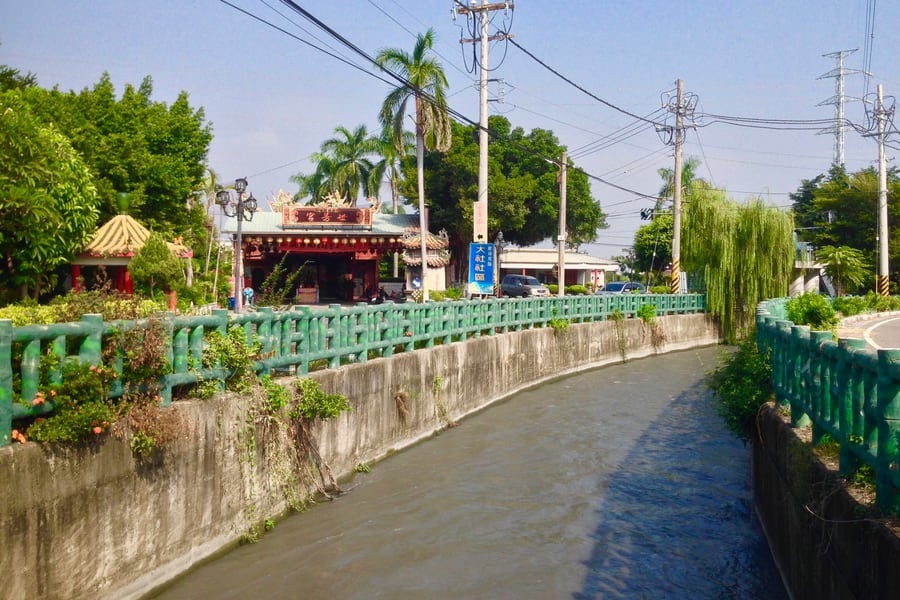
A small town on the Changhua plain where the branch leaves the main line, and the head of the Babao Canal — begun in 1709, finished in 1719, the earliest canal dug in Taiwan and still watering the plain. Its intake is a listed historic structure, and the canal runs green-railed past the temples in the middle of town with a cycle path beside it. There is a macaque education centre in the hills behind. This is the only station on the branch the railway staffs itself.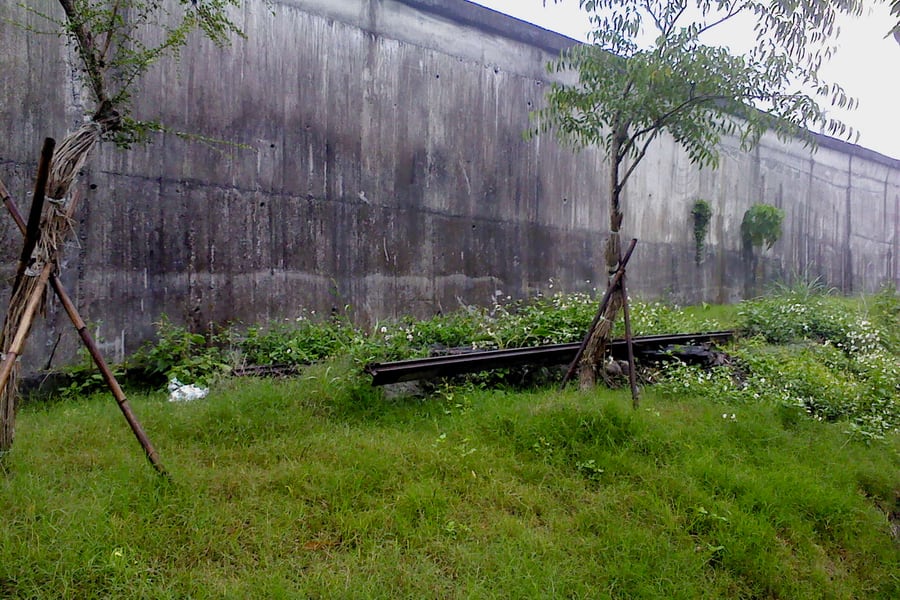 張氏 / Wikimedia Commons · CC BY-SA 3.0 · 2012 · cropped
Zhuoshui
The operating heart of the line and, five minutes' walk from the platform, the plainest earthquake memorial in Taiwan. When the ground moved in 1999 the track east of the station heaved three and a half metres and a Taipower transmission pylon tilted north; the railway was realigned around the damage and the twisted rails were left where they lay, in the grass under a concrete wall. The leaning pylon is still standing, kept on purpose.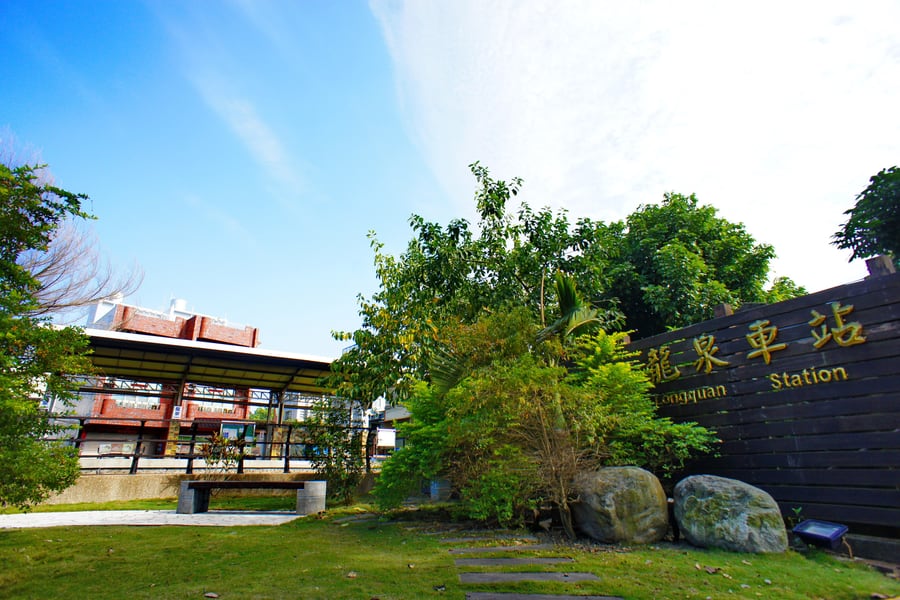 Mk2010 / Wikimedia Commons · CC BY-SA 3.0 · 2013 · cropped
Longquan
An unstaffed halt with a lawn, a shelter and a stone sign, and the reason to get off is immediately outside it: the eastern end of the four-and-a-half-kilometre camphor avenue, with a cycle path running the length of it. The army's ordnance readiness centre is behind the trees on the other side, served by the only goods siding left on the branch.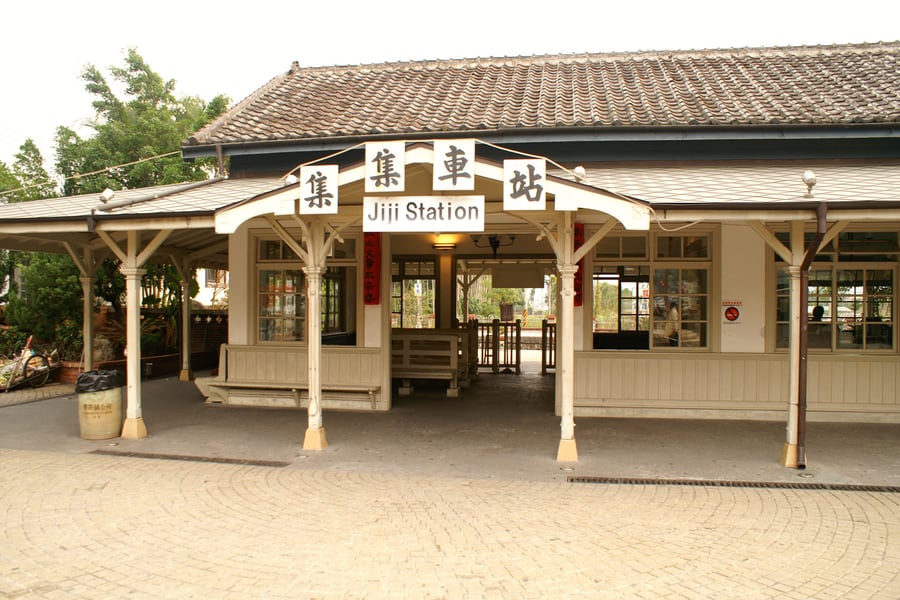 Takoradee / Wikimedia Commons · CC BY 2.5 · 2006 · cropped
Jiji
The town that gave the 1999 earthquake its name, and the station that a 1990s advertisement made famous. The building dates from 1933, is one of the last Japanese-era wooden stations in Taiwan and is listed as a historic building; it was restored after the quake left it leaning. Around it are an old street, a night market, a Qing academy and the ruins of the Wuchang Temple. Bicycles are for hire at the door.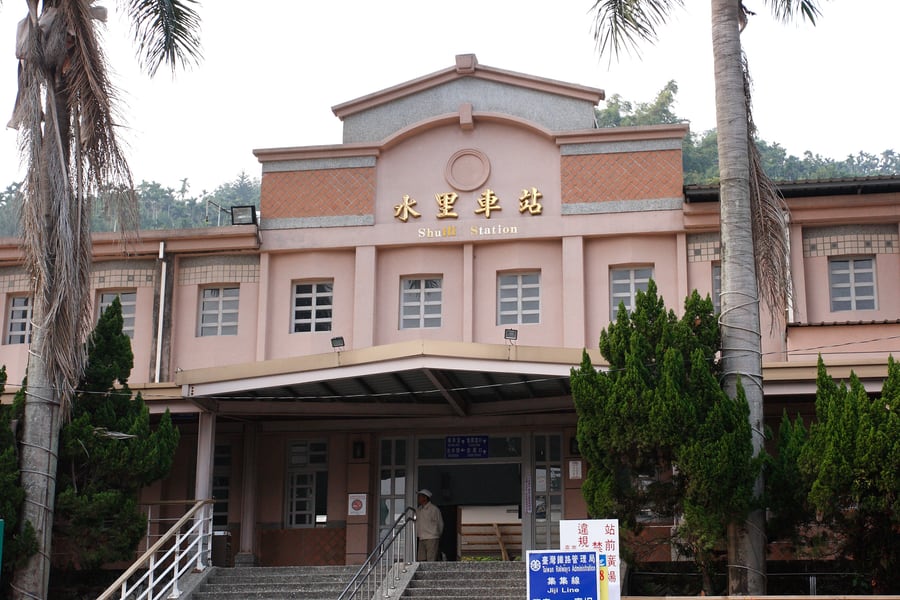 MiNe / Wikimedia Commons · CC BY 2.0 · 2010 · cropped
Shuili
The largest town on the branch and the one that feels least like a tourist stop. Buses leave the forecourt for Sun Moon Lake, for Dongpu hot springs and for the Yushan National Park trailheads, which makes Shuili the practical reason a good many passengers are on this train at all. The snake kiln is a few minutes away by road, and the Shuili River runs through the town under a string of bridges.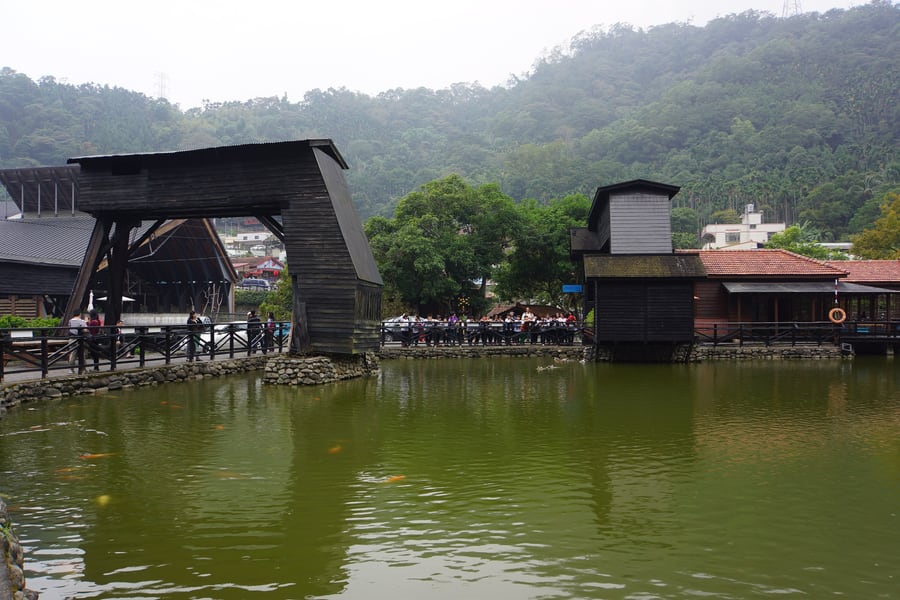 lienyuan lee / Wikimedia Commons · CC BY 3.0 · cropped
Checheng
A village in a bowl of wooded hills that was once a timber town employing most of the people in it. The cypress off Mount Danda came down to it and went out by rail, and some of it ended up in the torii at Tokyo's Meiji Shrine. The log pond where the timber was floated is still there under its black gantry, ringed by a boardwalk, and the old mill buildings are a wood museum. Twenty minutes' walk covers all of it.Where to Sleep
Most people ride this line as a day trip from Taichung or from Sun Moon Lake, and it works perfectly well that way — the first train down leaves Ershui before six and the last one back reaches Changhua at a quarter to eleven. But the branch rewards a night on it, because the two ends are three-quarters of an hour apart and the places worth walking around are at opposite ends of that.
Jiji is where the accommodation is: a small town with an old street, a night market and several places to stay within a few minutes of the station. Shuili has more of a working-town feel and is the base for Sun Moon Lake and the Yushan trailheads. Checheng has very little, and what it has is a handful of family guesthouses around the log pond — which is exactly why the village goes quiet once the last train has gone.
Where to stay
Hotel Jiji Plus
Jiji — 300 metres from the station
A railway-themed hotel three hundred metres from Jiji station, in a cream-rendered building with a faintly European look that its owners set against the century-old wooden station down the road. Its own site publishes room types, a rate card and direct booking, and it has not supplied single-use toiletries since January 2025 — bring a toothbrush.
Check Availability (opens in a new tab, on hoteljijiplus.com.tw)via hoteljijiplus.com.twFonglin Villa
Shuili — registered homestay no. 254, Nantou County
A homestay in a garden outside Shuili, within reach of Jiji, Checheng, Puli and Sun Moon Lake, with two- to four-person suites and a small timber museum of its own in the main building. It publishes its licence number, its rooms and a booking form, and is the kind of place that exists on this line and nowhere near the big lake hotels.
Check Availability (opens in a new tab, on fonglin.com.tw)via fonglin.com.twChecheng Homestay
Checheng — one minute from the old street
A newly built licensed homestay in Checheng village itself, a minute's walk from the old street and the log pond, with its own parking. Four rooms sleeping two to four, and the quietest bed on the branch once the last train has gone back down the valley.
Check Availability (opens in a new tab, on twstay.tw)via twstay.twQuestions or corrections
Planning this trip and stuck on something, or spotted a time, fare or detail that has changed? Send us a message about The Jiji Line. We read every one, and we update this page when something has changed.