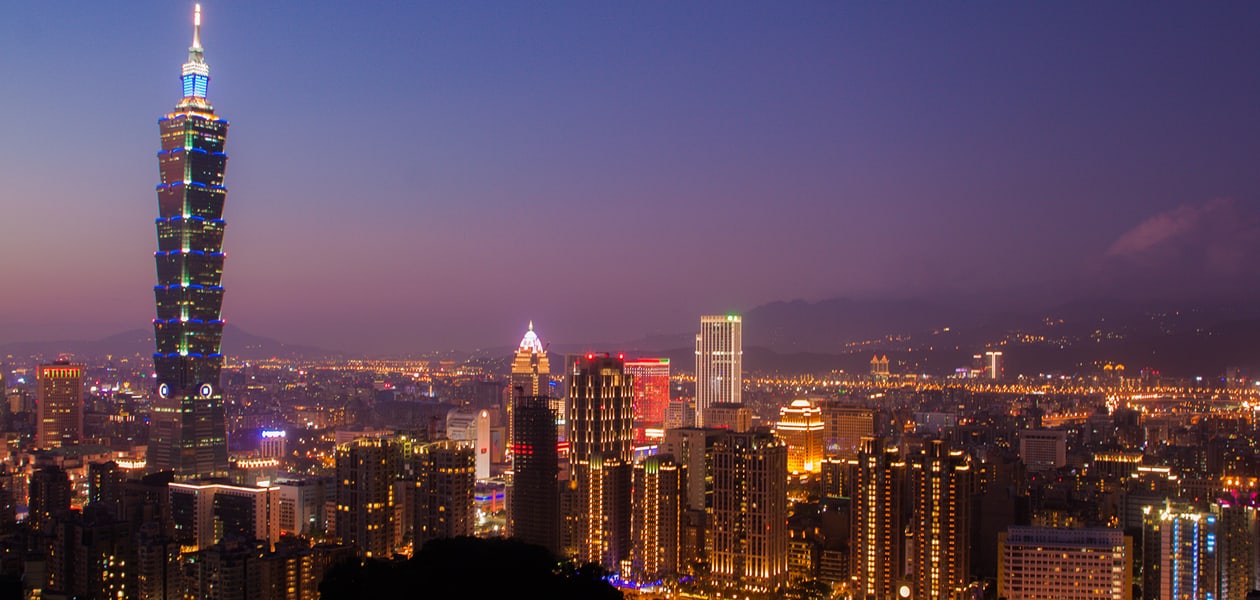
Taiwan
shengbo wu / Wikimedia Commons · CC0 · cropped

Taiwan is an island in the north-western Pacific between the East and South China Seas, with 36,193 km² of territory across 168 islands and about 23.3 million people. Mainland China lies to the north-west, Japan to the north-east and the Philippines to the south. Mountain ranges take up the eastern two-thirds of the main island — several peaks above 3,500 m, and Yu Shan at 3,952 m, the fourth-highest island summit in the world — which pushes almost the whole population into the plains of the west. The Tropic of Cancer crosses the island, and Taipei anchors the largest metropolitan area.
That geography makes Taiwan one of the most rail-dependent places in Asia. There are about 2,025 km of railway, and in 2016 they carried over 1.09 billion passenger journeys — an average of 2.99 million a day. The mix is unusually varied for a small island: a conventional round-island network, a high-speed line down the western corridor, city metros, and specialised mountain and industrial lines, including the 762 mm Alishan Forest Railway. Rail arrived in 1891, under the late Qing.
Rail journeys in Taiwan
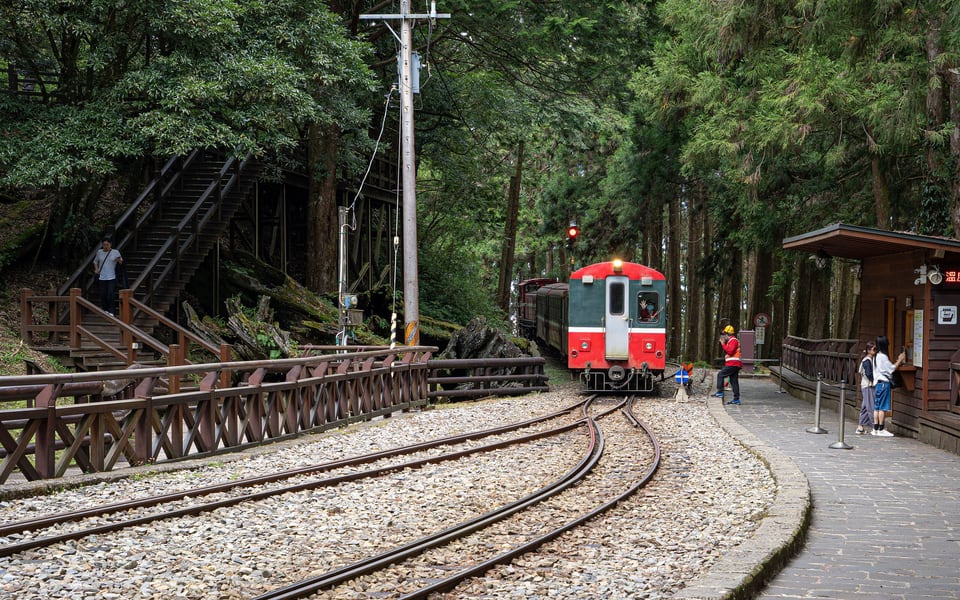
The Alishan Forest Railway
Seventy-one kilometres of 762 mm gauge up to 2,216 metres — three circles around one hill, fifty tunnels, four reversals, and a summit regained in 2024.
View journey →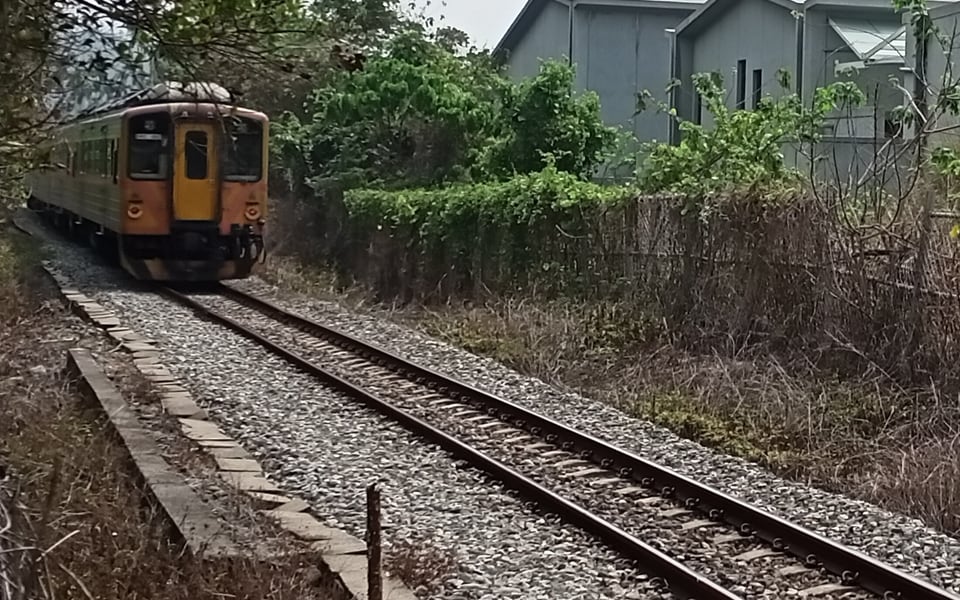
The Jiji Line
Taiwan's longest branch line, shut for five years when a hillside crushed a tunnel above Jiji — running end to end again since June 2026.
View journey →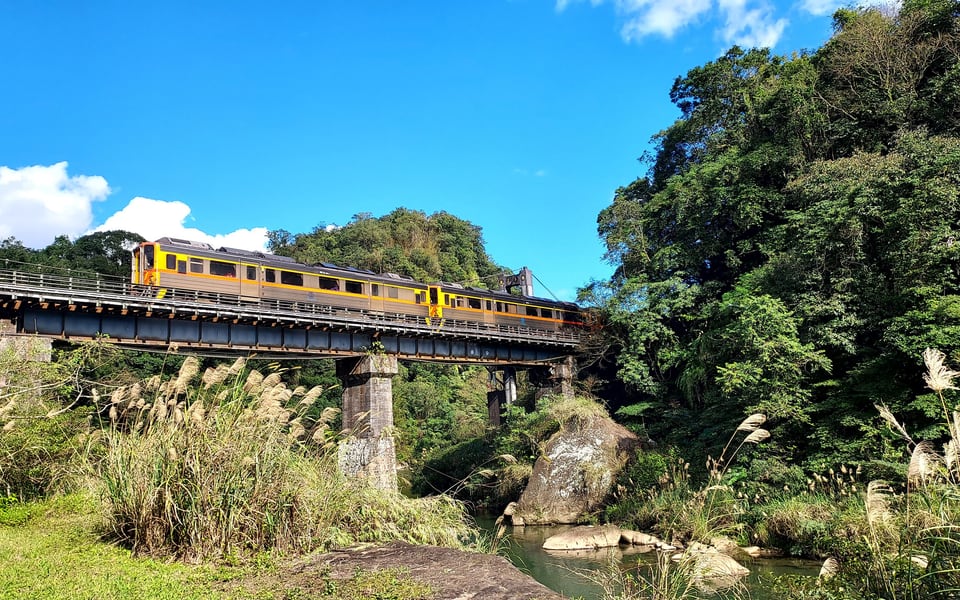
The Pingxi Line
A coal branch up a gorge to the sky-lantern towns, still worked by a brass tablet handed to the driver at every station.
View journey →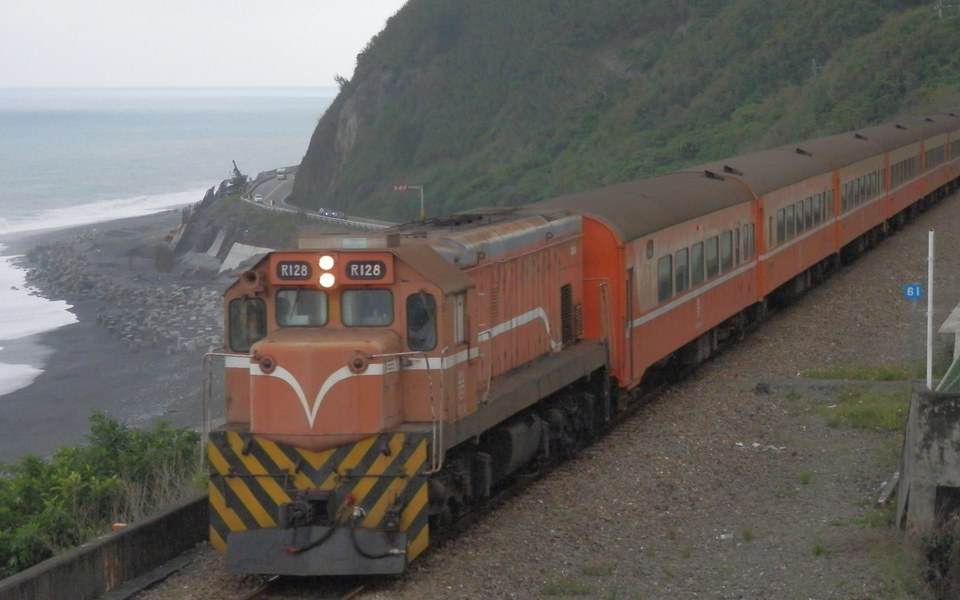
The South-Link Line
The last main line Taiwan built, tunnelled under the mountains to the Pacific — and one train a day still crosses it with the windows open.
View journey →Good to know
What is the Alishan Forest Railway?
A 762 mm narrow-gauge mountain line from Chiayi on the western plain up into the Alishan range, built by the Japanese colonial government from 1906 to bring cypress and Taiwania timber down the mountain. It climbs through several climate zones by way of Z-shaped switchbacks, a spiral, tunnels and timber bridges, and it is run today by a forestry agency rather than the national railway — with its own English timetable.
Do the outlying islands have railways?
No. Every railway service in Taiwan is on the main island. Penghu, Kinmen and Matsu have none, and are reached by air or ferry.
When did railways arrive in Taiwan?
In 1891, during the island's late Qing period — before Japanese rule began in 1895. Under the Japanese the network was greatly extended, and push-car railways, worked by hand, were in general service from 1895 until the late 1940s, which is a form of rail transport almost nowhere else kept for so long.
Are there rail passes for Taiwan?
Nothing of the European kind covers the island as a whole. Taiwan's railways are several separate systems — the conventional round-island network, the high-speed line, the city metros and the mountain and forest lines — and each sells its own tickets through its own channels. Station signage and announcements are bilingual, so the network is straightforward to use without reading Chinese.