The Jindřichův Hradec Narrow Gauge
Falk2 / Wikimedia Commons · CC BY-SA 4.0
- DistanceNová Bystřice 33 km · Obrataň 46 km
- DurationA day for either line, with time at the far end
- Best seasonMay–September · steam runs four days a week
Introduction
In 1998 a group of railway enthusiasts and a few businessmen bought two narrow-gauge railways in southern Bohemia from the Czech state for one koruna — about three pence.
In October 2022 the company they had built went bankrupt owing more than 360 million crowns, and the trains stopped.
In September 2025, after three years of silence, a train ran again.
That is the shape of this story, and it is the reason to write about the Jindřichův Hradec narrow gauge rather than any of the prettier heritage lines in central Europe.
What it is
Two lines of 760-millimetre gauge — the bosenský rozchod, Bosnian gauge, the narrow standard of the old Austro-Hungarian empire — radiating from Jindřichův Hradec in South Bohemia:
- South-east to Nová Bystřice, 33 kilometres, opened in 1897, through the pine forest, granite boulders and fishponds of a landscape the Czechs call Česká Kanada — Czech Canada — because it looks like somewhere much further away.
- North to Obrataň, 46 kilometres, into the Vysočina highlands.
Together they are one of the largest surviving narrow-gauge networks in the country, and they were built as ordinary local railways, not as attractions.
The one-crown railway
By the mid-1990s Czech Railways wanted rid of them. Services to Nová Bystřice stopped on 25 January 1997; the government approved privatisation; and Jindřichohradecké místní dráhy — JHMD, founded in 1994 — bought both lines for a symbolic 1 Kč, taking physical possession on 28 February 1998.
It never made money. What kept it alive at first was freight: the line was still needed to move uranium ore from the mine at Okrouhlá Radouň.
But JHMD did some lovely things. In 1999 it bought the machinery of the only cardboard-ticket printing works in the Czech Republic and set it up at Kamenice nad Lipou, printing genuine Edmondson tickets — a third for its own trains, the rest sold to Czech Railways for nostalgic runs and to museum lines across the country. It ran scheduled steam trains. It was the first Czech railway operator to join the national seat-reservation system.
And then it fell apart
The signs were there. In October 2017 operation was suspended outright when the company's safety certificate expired. After an accident the previous year the railway inspectorate found that traffic on JHMD's lines had been controlled contrary to the Railways Act, and from 16 October 2017 the state took over signalling. There were unpaid bills, shareholder litigation and a long argument with the regions about track access charges.
In October 2022 the court declared bankruptcy. The lines went quiet.
Thousands of people
What happened next is the part worth telling properly, and the railway's own account of it is the best source.
In September 2025, after three years of silence, the first train ran. Behind it, in the operator's words, were hundreds of hours of volunteer work and thousands of volunteers from across the country — "students, families, railwaymen and complete amateurs" — plus the support of the local towns and of two regional governments, the South Bohemian and Vysočina.
The railway is now in the hands of Gepard Express, with Gepard Infra holding the infrastructure. And in 2026 it is, in its own headline, "opět v pravidelném provozu" — in regular service again.
What runs
- Steam: Wednesdays, Fridays and Saturdays toward Nová Bystřice; Thursdays to Kamenice nad Lipou. Seat reservations needed.
- Diesel: on both lines, three times a day each way, every day. No reservations — the crew sells tickets on board and takes everyone while there is room.
The ticket press at Kamenice nad Lipou has been running again since January 2024, and will print you an Edmondson ticket with whatever you like on it.
Railways that come back from the dead do not always stay back, which is the argument for riding this one sooner rather than later.
The Journey
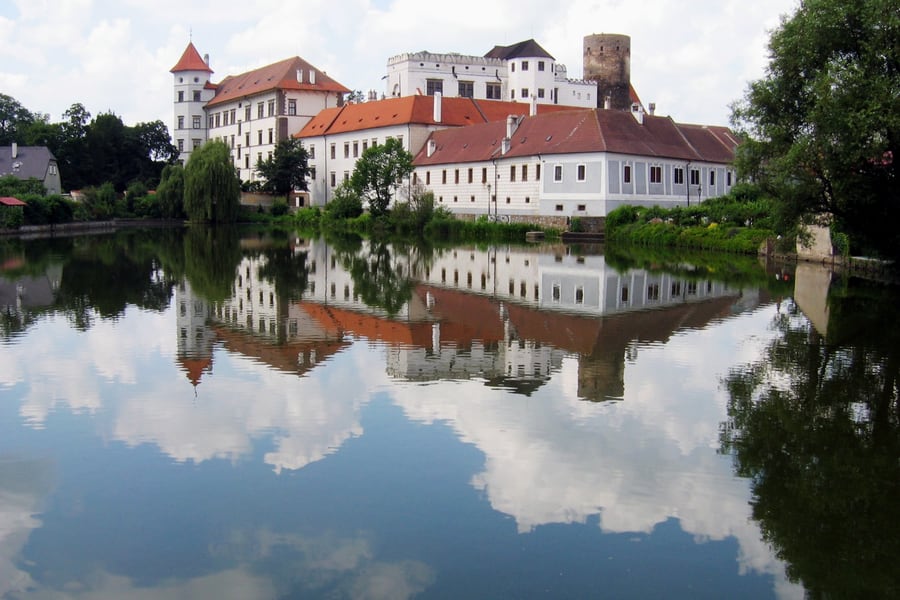
Everything starts at Jindřichův Hradec, a handsome South Bohemian town with one of the largest castle complexes in the country and, beside the standard-gauge station, a separate narrow-gauge yard where both lines begin.
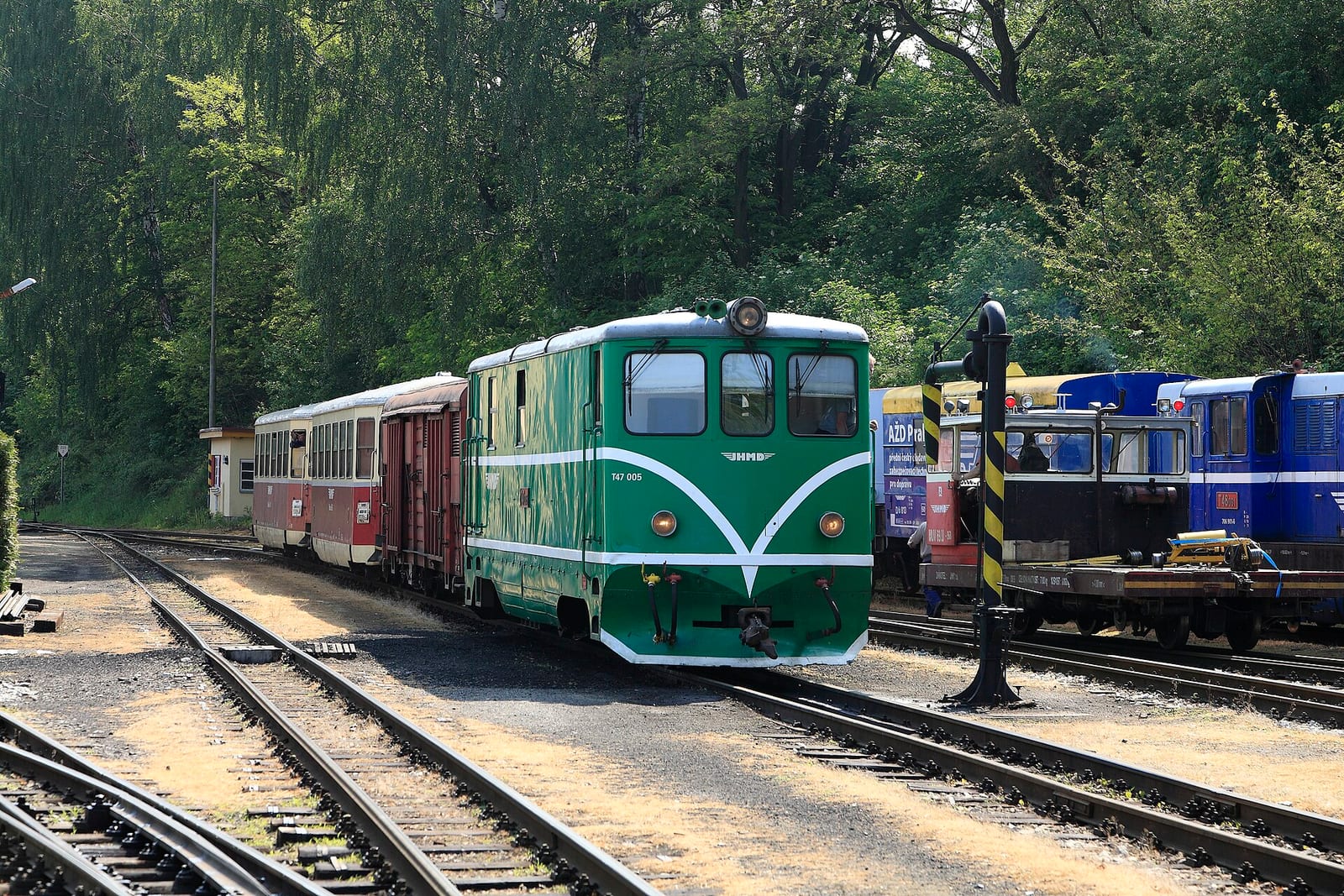
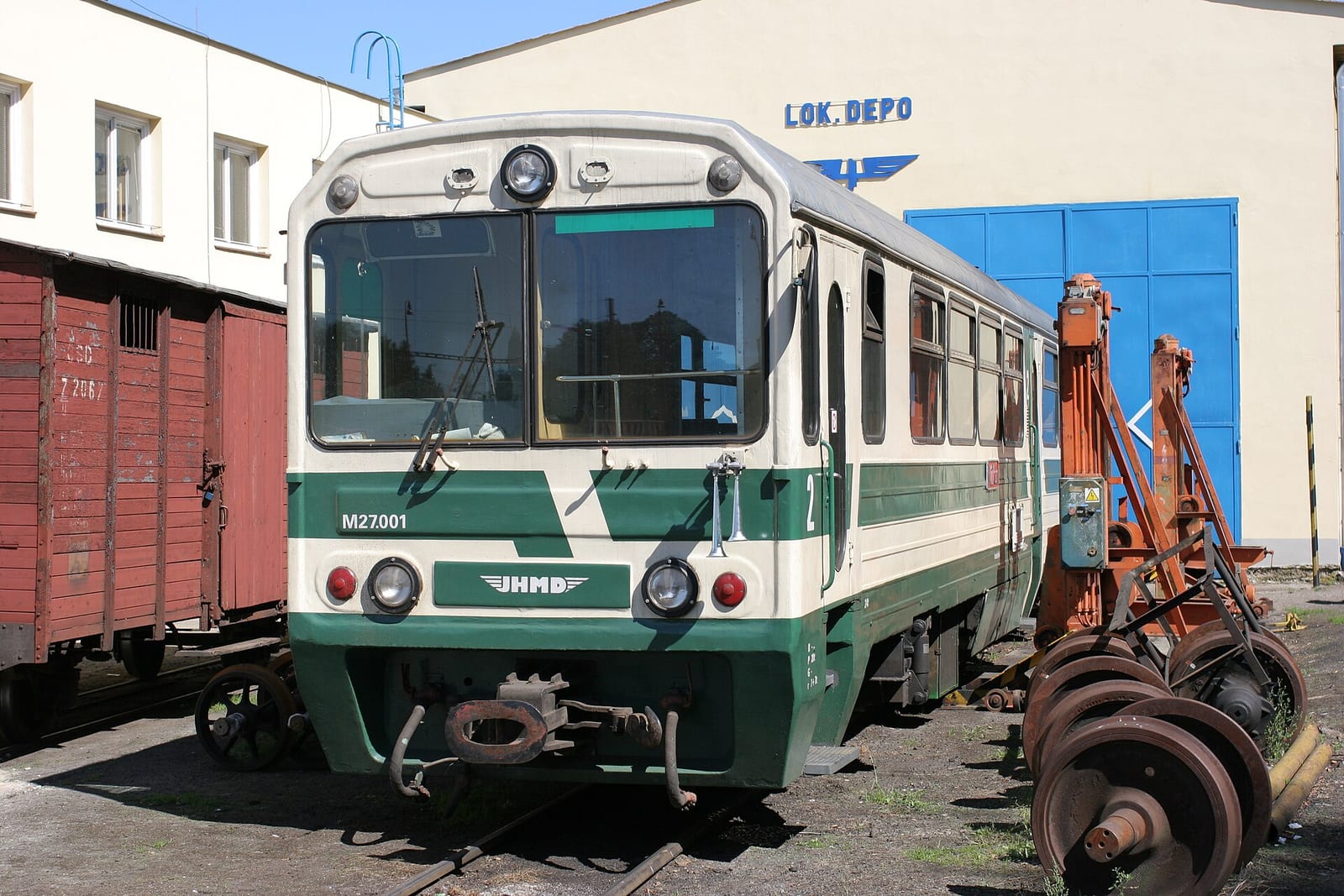
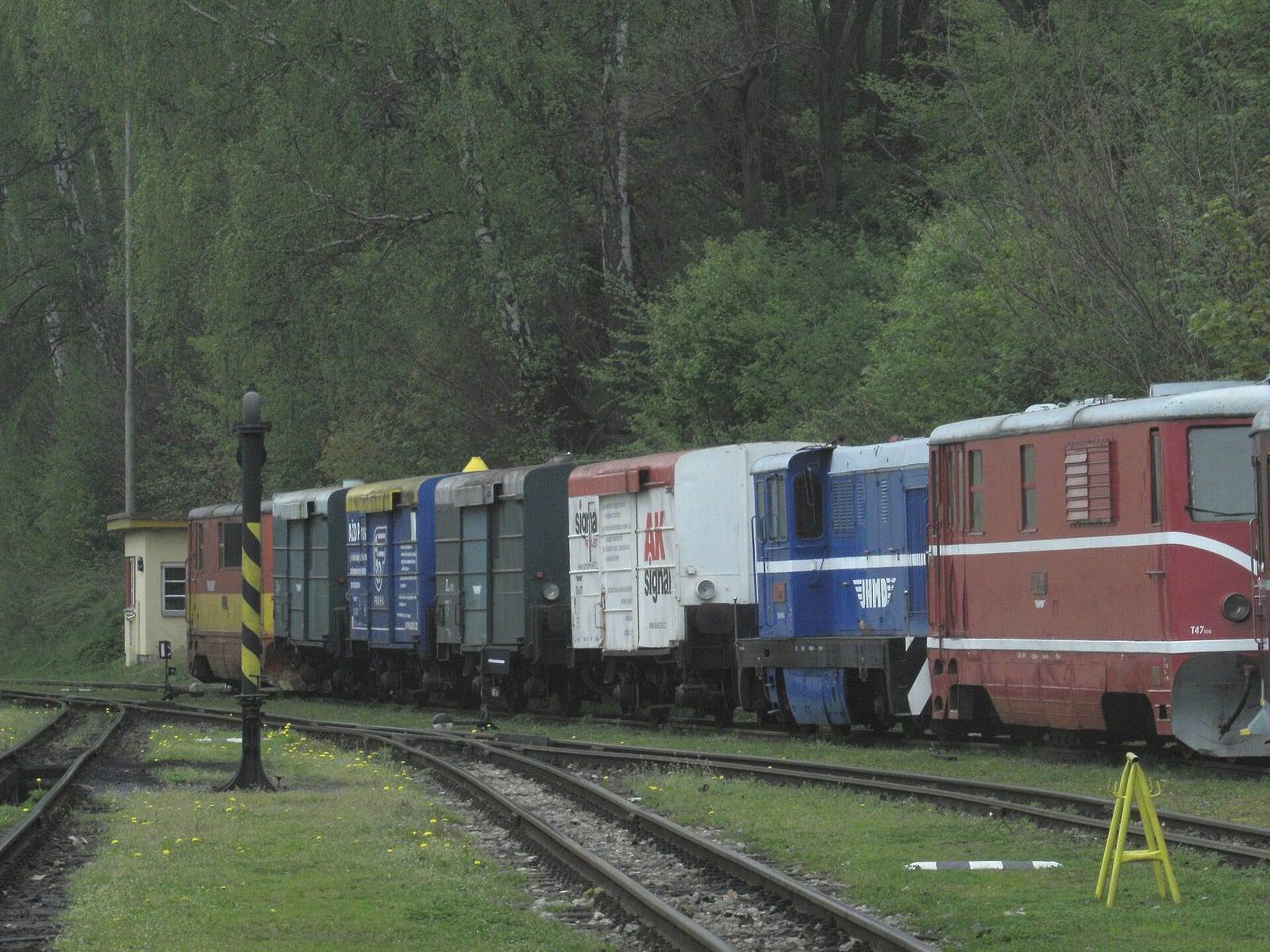
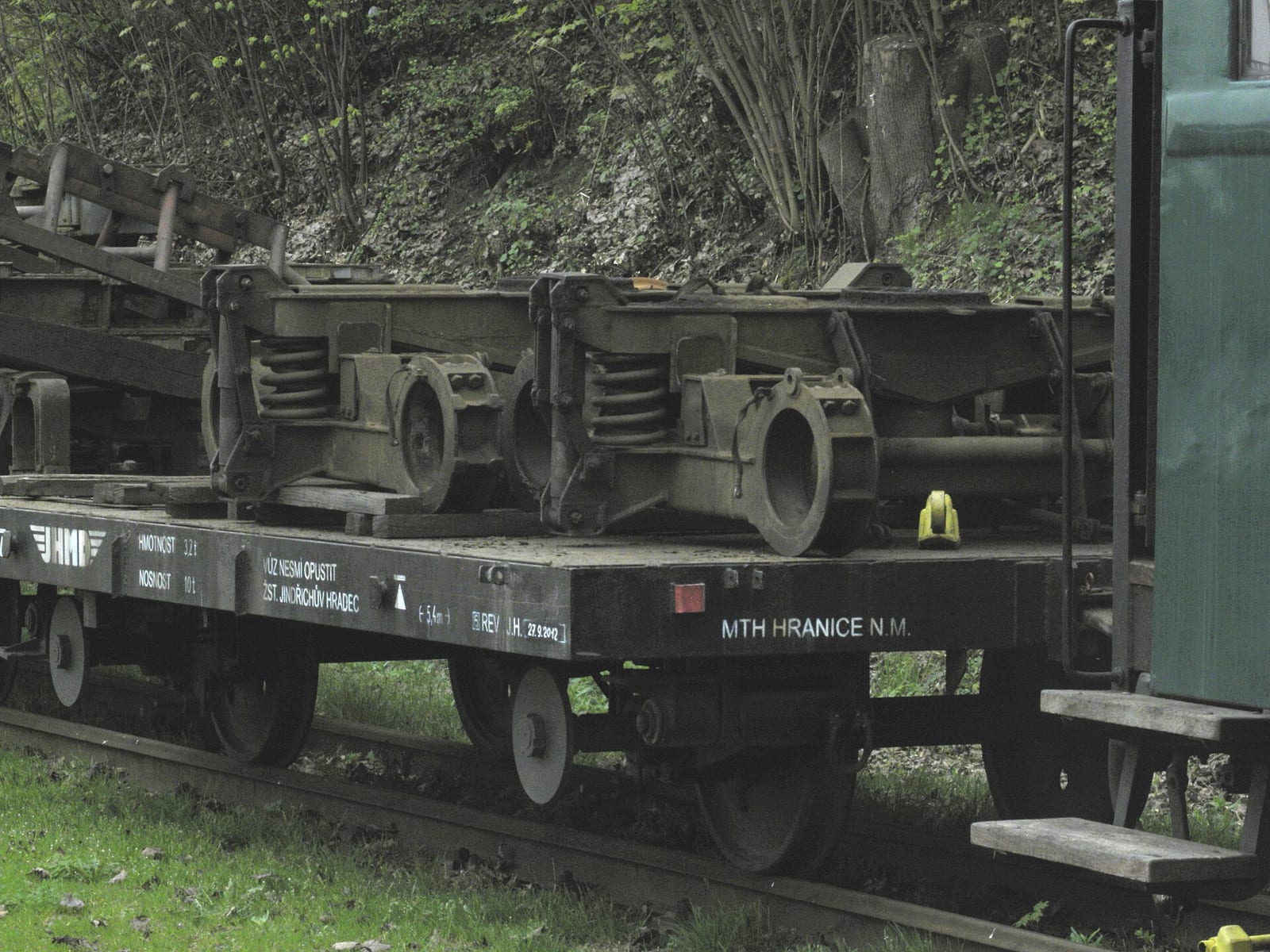
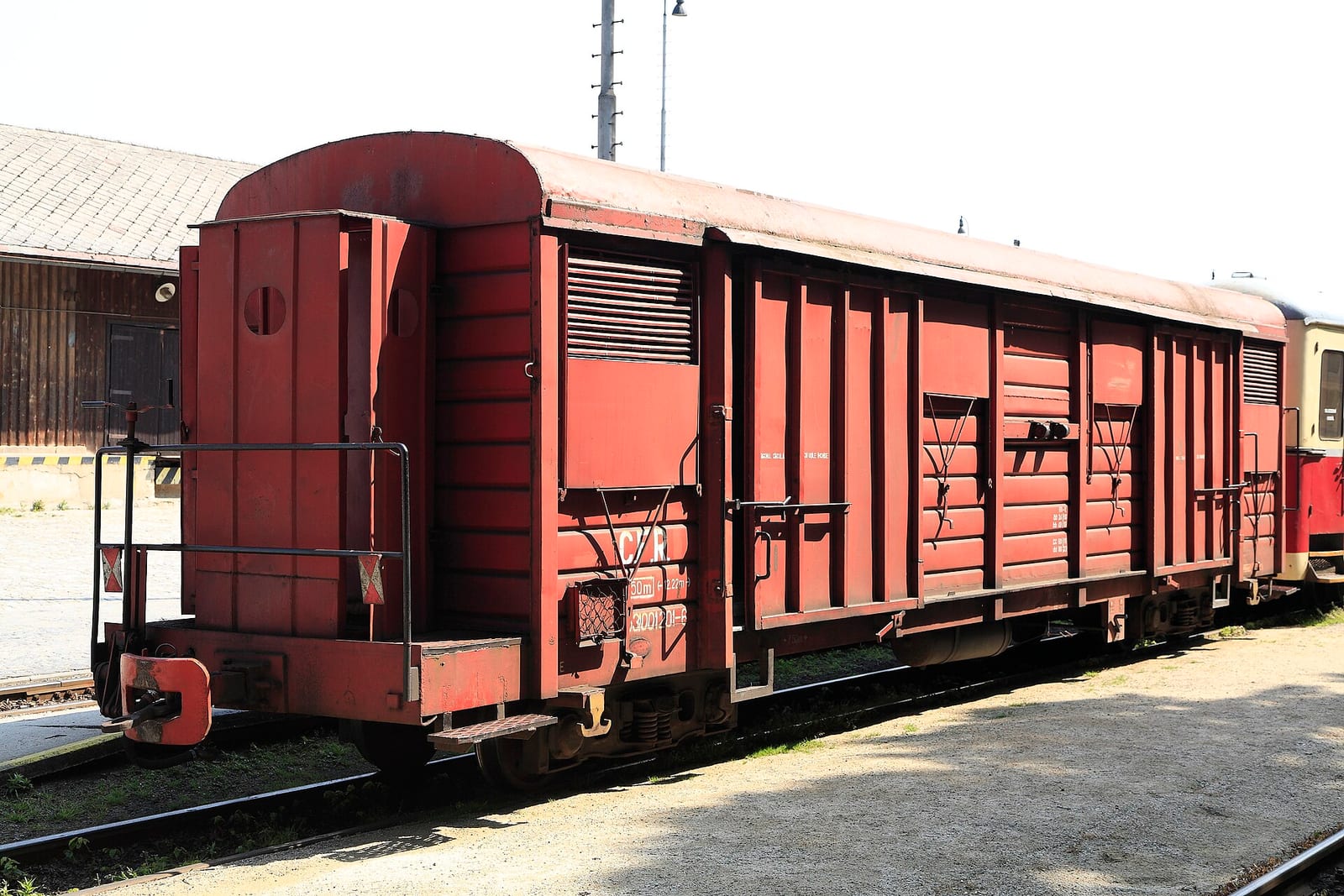
The yard is worth arriving early for. There are M27 railcars — originally Polish, Romanian-built, rebuilt in 2013–14 and nicknamed the ponorka, the submarine, for their looks — green T47 diesel-electrics from the 1950s, transporter wagons that carry standard-gauge vehicles piggyback on the narrow gauge, and, if you are lucky, a steam locomotive being prepared. Depot tours can be arranged on request, and there is a buffet car on the platform in summer.
South-east to Nová Bystřice
Thirty-three kilometres, opened in 1897, and the line most visitors take.
It runs out of town through farmland and then into Česká Kanada — "Czech Canada" — which is not a marketing invention but what Czechs have long called this corner of the country: rolling pine and spruce forest, granite outcrops and boulder fields, and fishponds everywhere. South Bohemia has been farming carp in artificial ponds since the fifteenth century, and the landscape is more engineered than it looks.
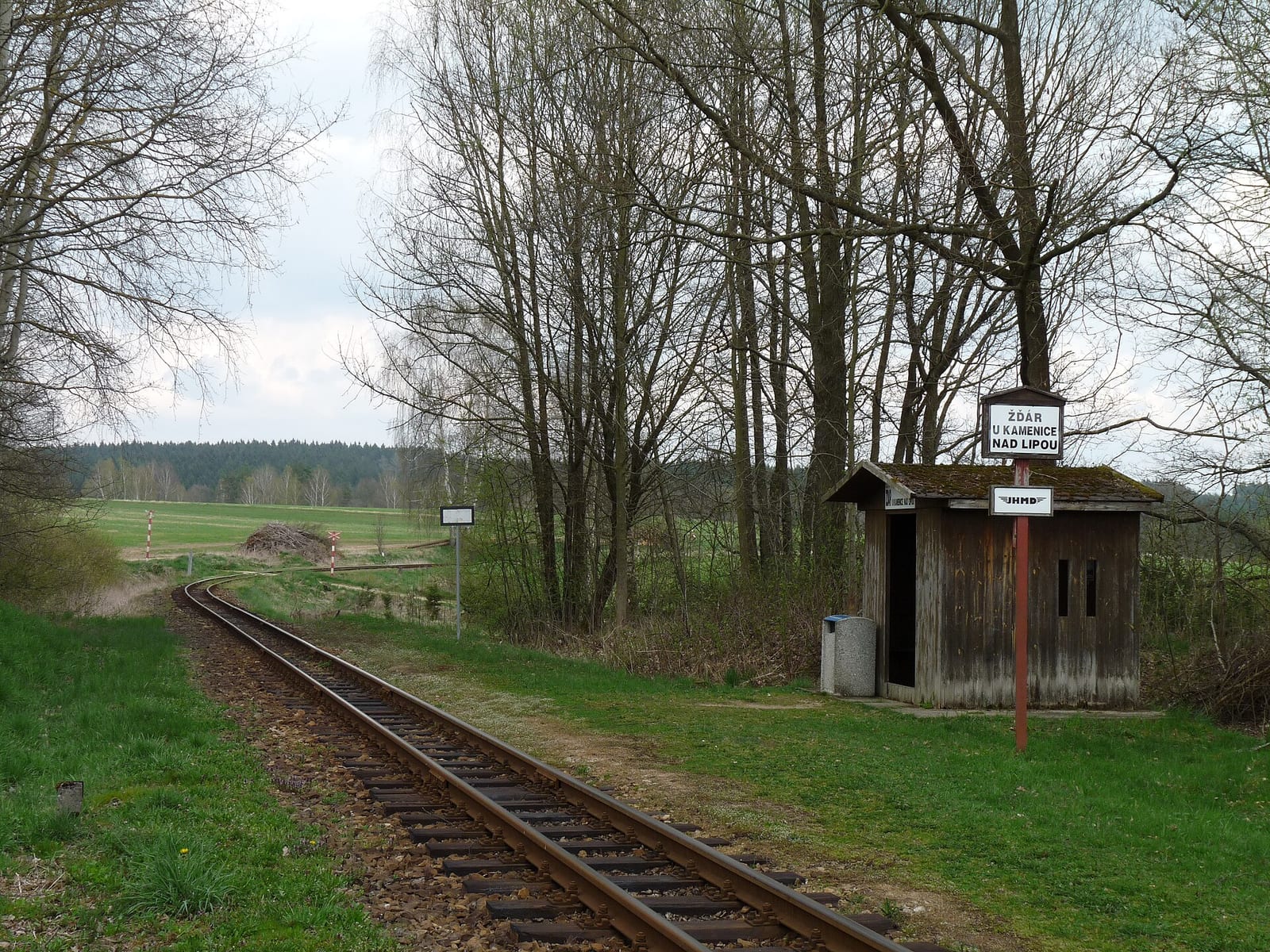
The halts are tiny. Střížovice, Kunžak–Lomy, Albeř — a nameboard, a hut, a single track, and often nobody there. Several of the station buildings now let rooms, which is the single best thing this railway has thought of.
Nová Bystřice at the end is a small town three kilometres from the Austrian border, with a square, a church and a bistro at the station. It was in the border zone during the Communist years and has the slightly time-stopped feeling of places that were closed for forty years.
North to Obrataň
Forty-six kilometres, longer and less visited, running up out of South Bohemia into the Vysočina — the Bohemian-Moravian Highlands.
Kamenice nad Lipou is the place to stop. This is where the Edmondson ticket press lives — the machinery of the last cardboard-ticket printing works in the country, bought in 1999 and working again since January 2024. If you write ahead they will print tickets to your own wording; people order them as wedding invitations.
The Thursday steam working comes here. At the far end, Obrataň is a junction with the standard-gauge line, which means you can arrive or leave that way rather than doubling back.
What the trains are like
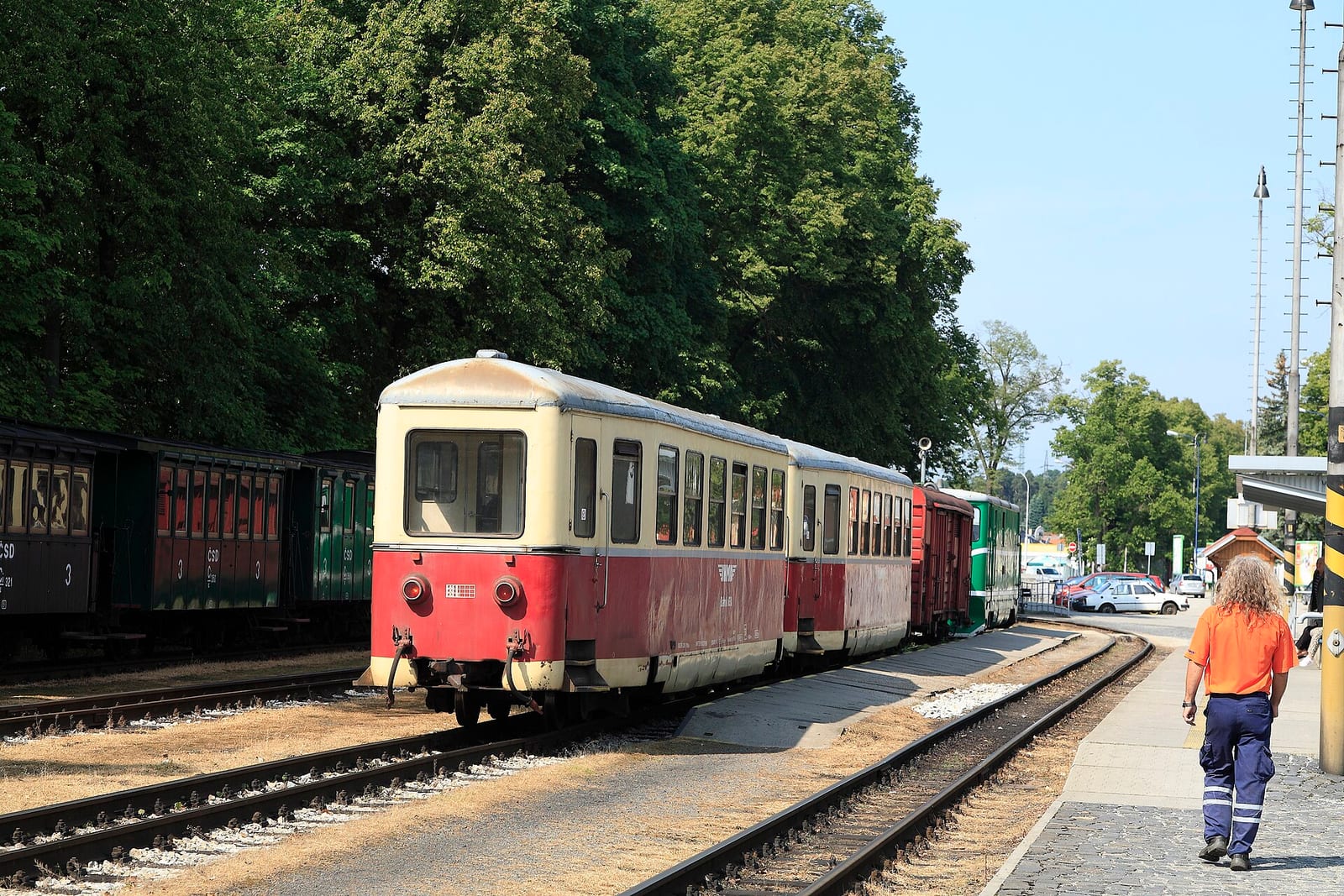
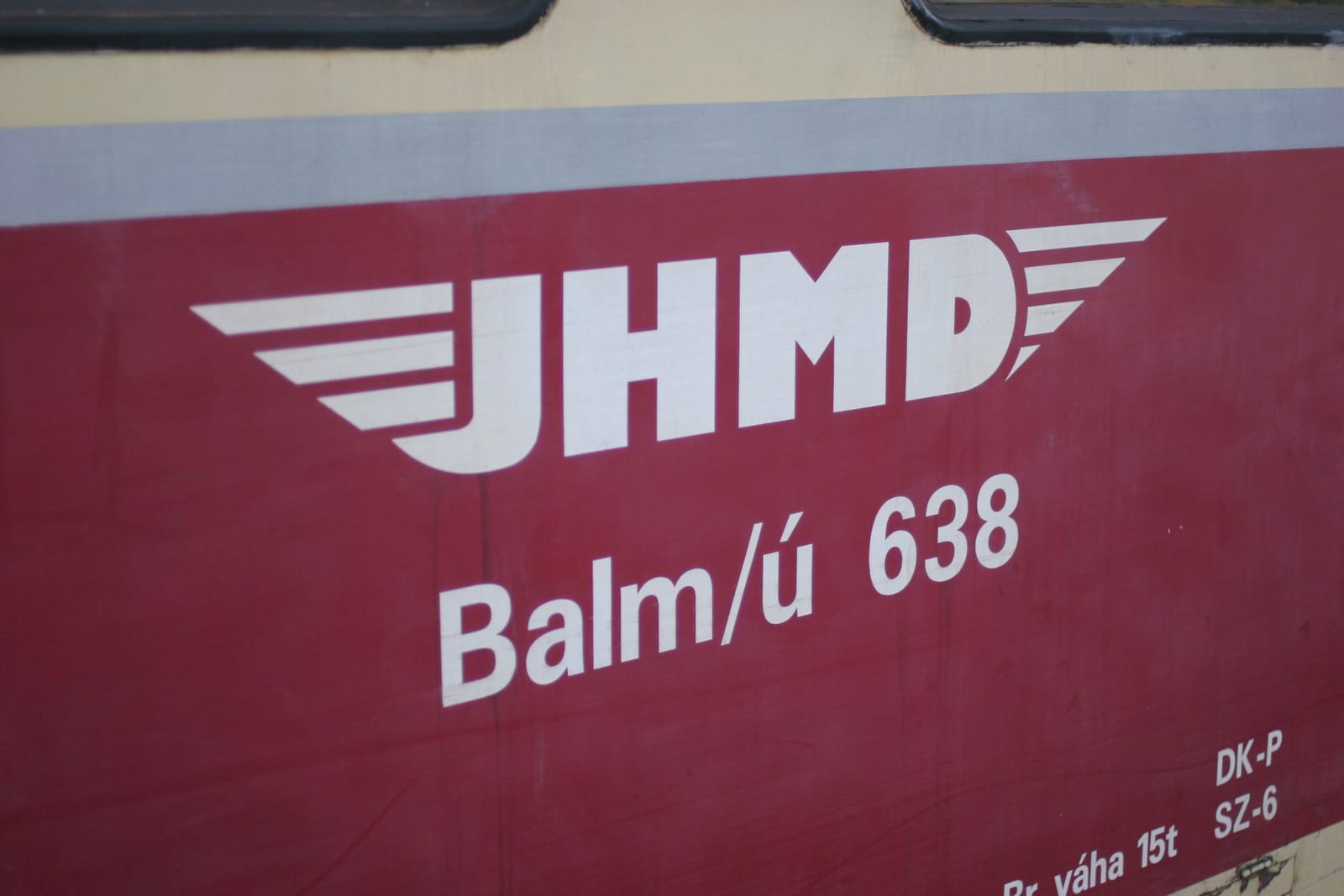
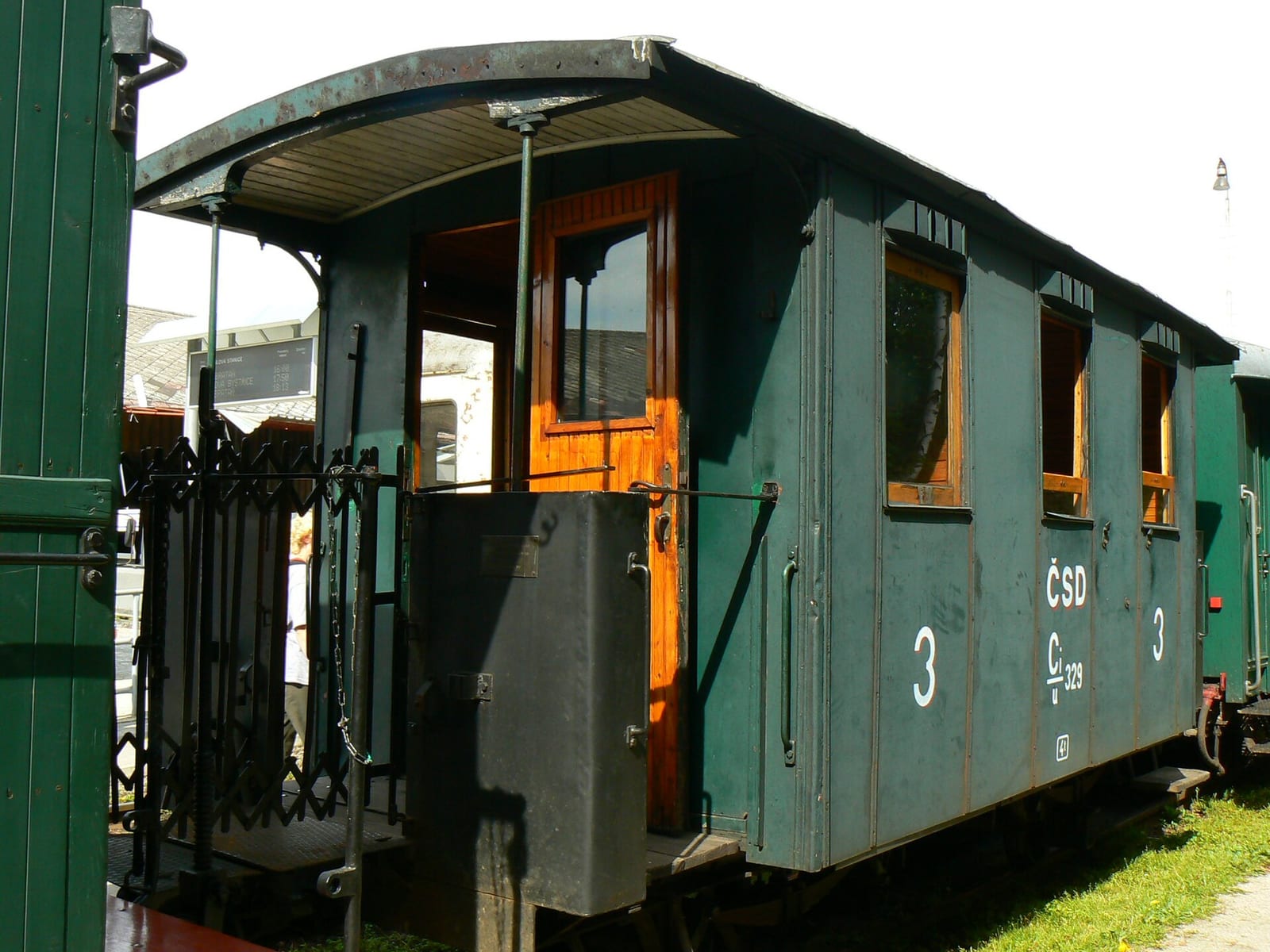
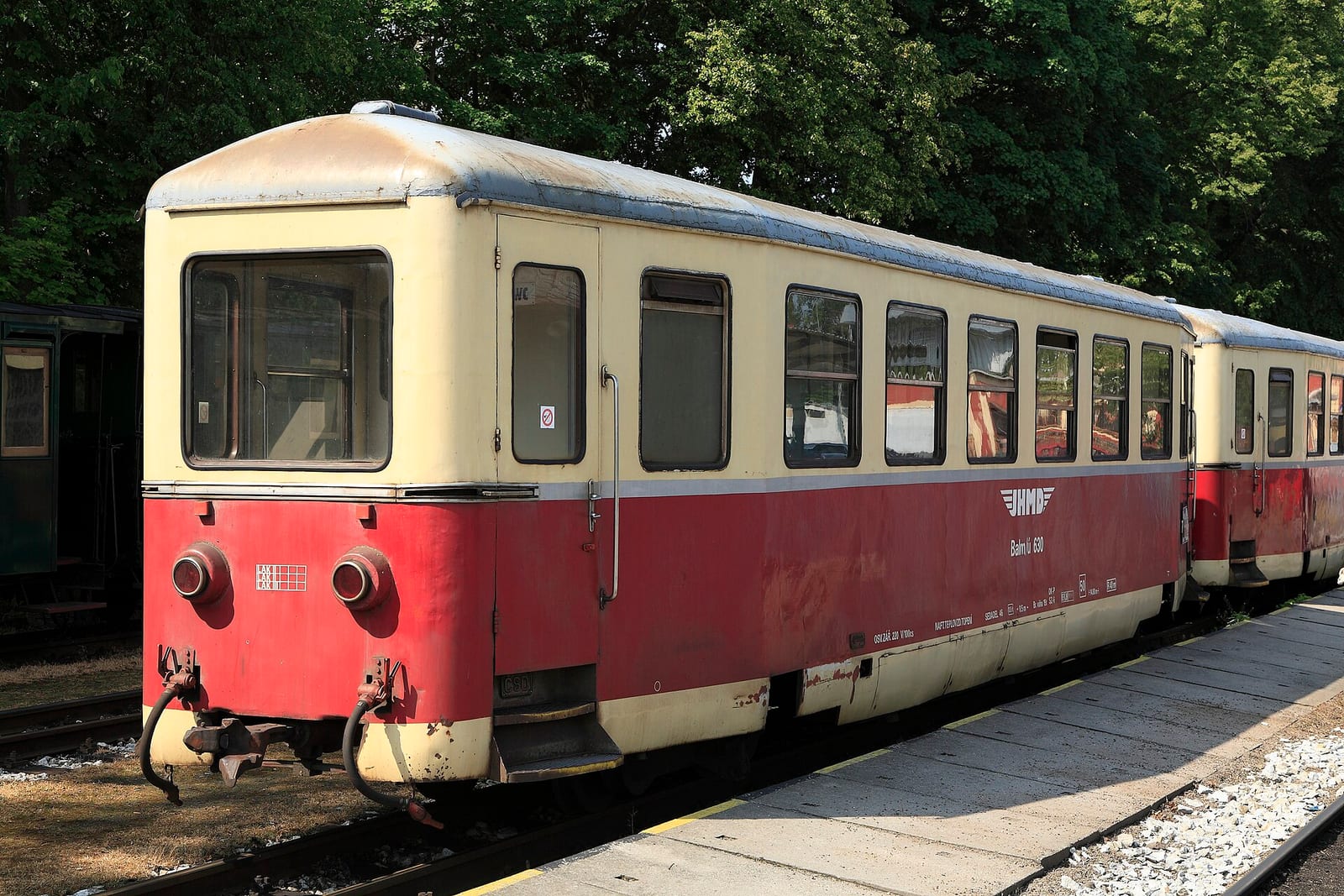
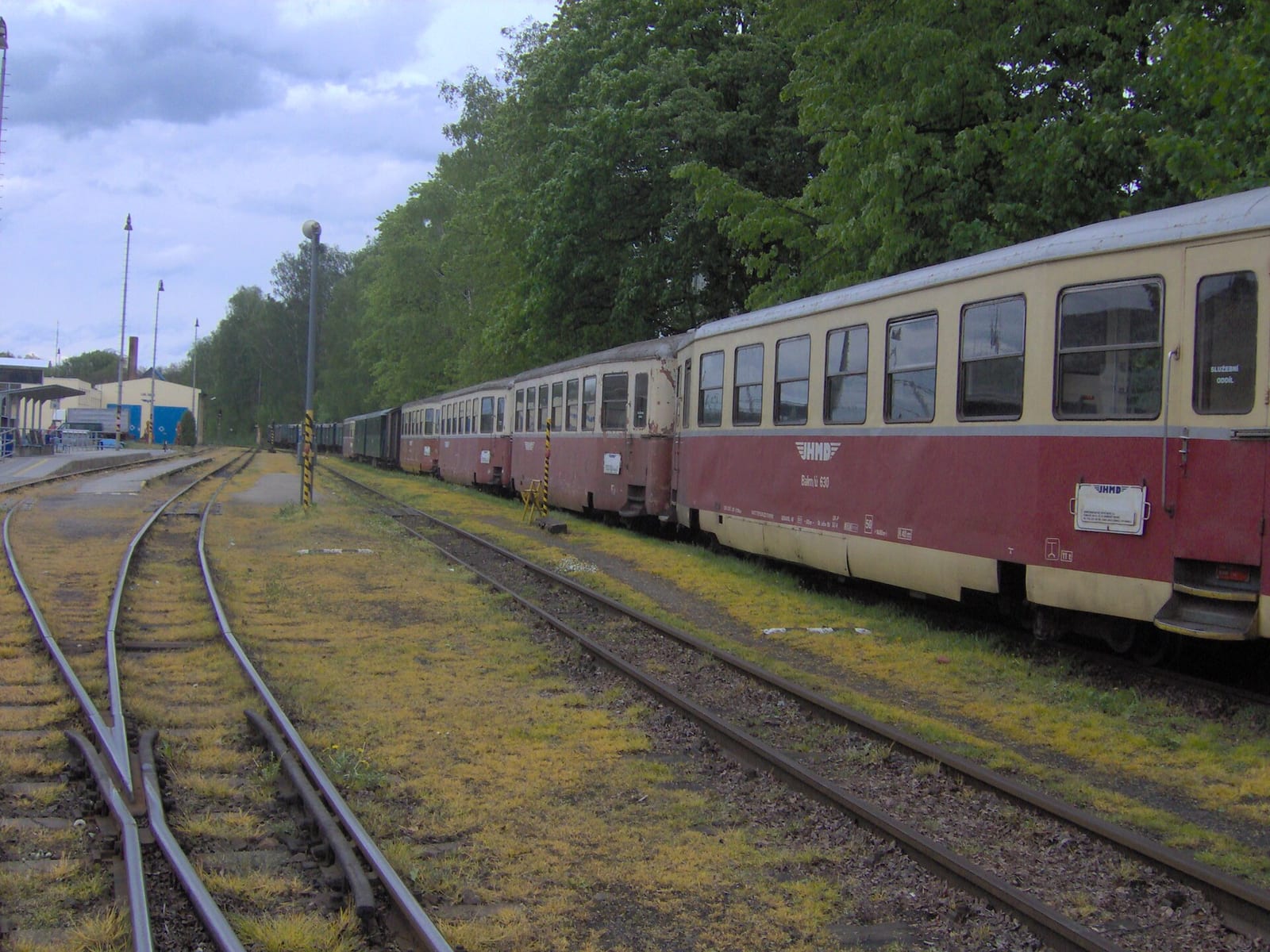
Small, slow, wooden-floored and entirely unpretentious. The diesel services are worked by railcars or by a T47 and a rake of red-and-cream coaches; the steam trains bring out the historic set. There is no catering on board, but there are bistros at Nová Bystřice and Hůrky and the buffet car at Jindřichův Hradec.
Tickets are sold by the crew, on the train. The diesels take no reservations at all and are obliged to carry everyone while there is capacity — which on a summer Saturday with bicycles can mean a squeeze.
Bicycles, dogs and prams
All carried, which matters here: the lines run through walking and cycling country and a great deal of the traffic is people taking a bike out one way and riding back. Ask about the bicycle charge when you board.
Practical notes
- Steam needs booking; the diesels do not.
- Check the day. Steam is Wednesday, Friday and Saturday to Nová Bystřice, Thursday to Kamenice nad Lipou.
- Three diesel trains a day each way, every day, on both lines.
- Timetable and fares are published on the operator's site and change with the season — the current ones apply from 1 July.
- Bring cash as well as a card for the small stations and bistros.
- Sleep in a station if you can — Střížovice, Kunžak–Lomy, Albeř or Nová Bystřice.
Along the route
Falk2 / Wikimedia Commons · CC BY-SA 4.0Bought for one crown
When services stopped in January 1997 the government approved privatisation and JHMD bought both lines for a symbolic one koruna — about three pence. It was loss-making from the start, and survived partly because it was still needed to move uranium ore.Dikke Diesel / Wikimedia Commons · CC BY-SA 2.0Three years of silence
It did not end well. JHMD went insolvent in October 2022 owing more than 360 million crowns, and the trains stopped. There had been warnings — operation was suspended once in 2017 when the safety certificate lapsed. For three years the lines lay quiet.Falk2 / Wikimedia Commons · CC BY-SA 4.0And then thousands of people turned up
In September 2025 a train ran again, and the railway's own account of how is worth repeating: thousands of volunteers from across the country — students, families, railwaymen and complete amateurs — came to put life back on the rails.A bit of history
Culture & experiences along the way
Wikimedia Commons · CC BY-SA 3.0Take the steam train to Nová Bystřice
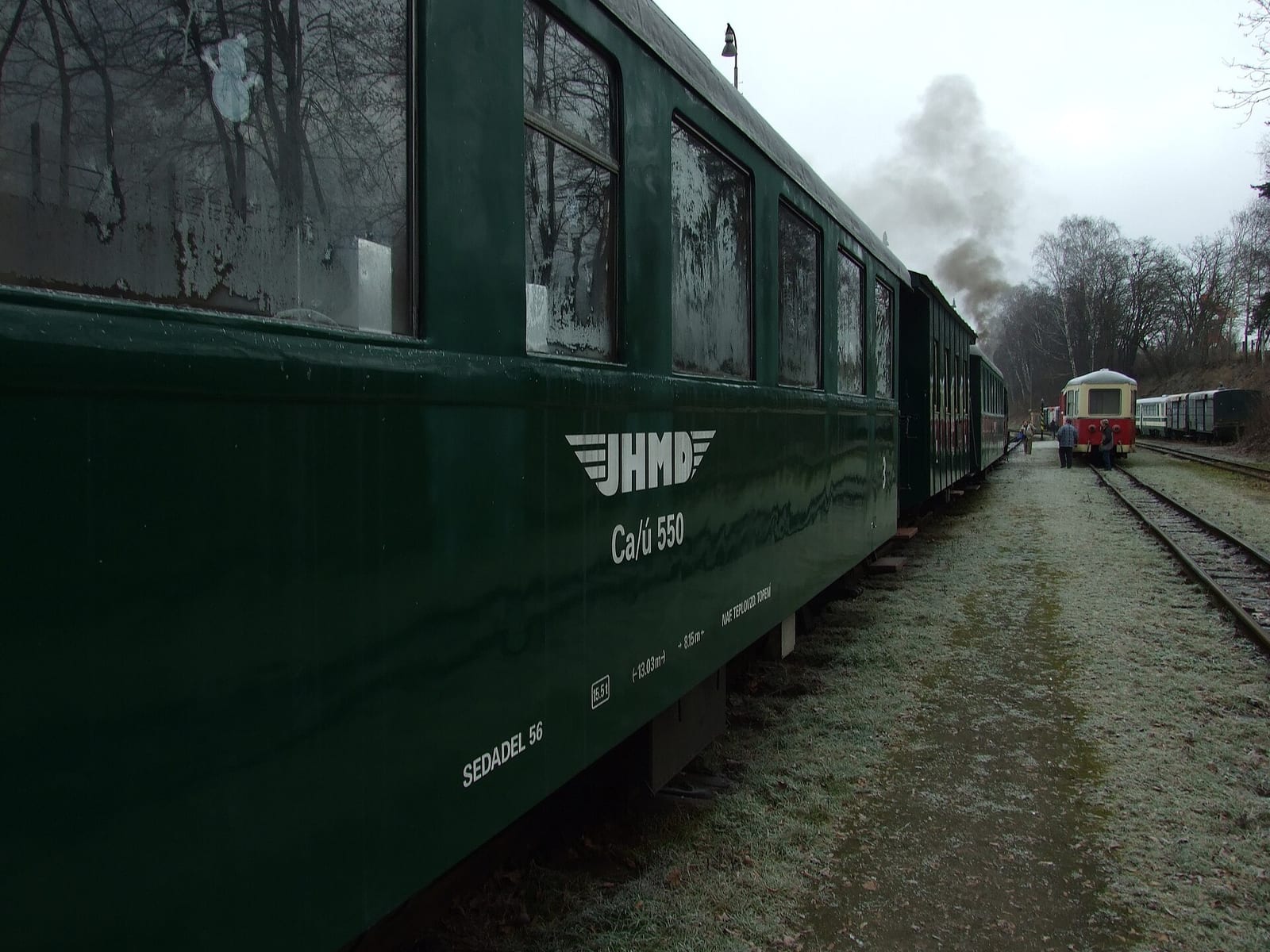
Steam runs Wednesdays, Fridays and Saturdays toward Nová Bystřice, and Thursdays to Kamenice nad Lipou. Unlike the diesels, the steam trains take seat reservations, and you should book. The line runs through Česká Kanada — "Czech Canada" — a landscape of pine forest, granite boulders and fishponds that got its nickname for looking like somewhere else entirely.Falk2 / Wikimedia Commons · CC BY-SA 4.0Get a ticket printed for you
In 1999 JHMD bought the machinery of the only cardboard-ticket printing works in the country and set it up at Kamenice nad Lipou. It has been running again since January 2024, and it will print you genuine Edmondson tickets to your own wording — people use them for wedding invitations. It is a very small thing and it tells you exactly what kind of railway this is.Czeva / Wikimedia Commons · CC BY-SA 3.0Sleep in a station
The railway lets rooms in its own station buildings — at Střížovice, Kunžak–Lomy, Albeř and Nová Bystřice. You get a country halt on a narrow-gauge line in southern Bohemia to yourself overnight, with the last train gone and the next one in the morning. There are bistros at Nová Bystřice and Hůrky and a buffet car at Jindřichův Hradec.Timetables
Check the operator's own site before you travel. This railway was bankrupt and silent from October 2022 until September 2025, and the timetable is rebuilding season by season.
What is running (as of July 2026)
The operator's headline is unambiguous: "Úzkokolejka je opět v pravidelném provozu" — the narrow gauge is in regular service again. It is run by Gepard Express, with Gepard Infra holding the infrastructure.
Steam trains
| Wednesday, Friday, Saturday | toward Nová Bystřice |
| Thursday | to Kamenice nad Lipou (Obrataň line) |
| Reservations | Required — booked via gepard.com |
Diesel trains
| Jindřichův Hradec – Nová Bystřice | 3 times a day each way |
| Jindřichův Hradec – Obrataň | 3 times a day each way |
| Days | Every day |
| Reservations | None — the crew must carry everyone while there is capacity |
The exact departure times and the fare table are published by the operator and apply from 1 July. We are not reproducing them here because this railway's timetable has been rebuilt repeatedly since the restart and any figure we print risks being out of date before you read it. Go to uzkokolejky.cz (opens in a new tab).
The lines
| Jindřichův Hradec – Nová Bystřice | 33.0 km · opened 1897 · timetable line 229 |
| Jindřichův Hradec – Obrataň | 46.0 km |
| Gauge | 760 mm — the bosenský rozchod, Bosnian gauge |
Tickets
Sold by the train crew on board. There is no ticket office queue and no online purchase for the diesel trains — only the steam trains take reservations, through gepard.com.
Reductions apply for seniors, children and disabled passengers; there are charges for bicycles; prams and dogs are carried. Larger groups are asked to give notice.
Why you must check
The recent record, briefly:
- October 2017 — operation suspended when the safety certificate expired; the state took over traffic control after an accident the previous year.
- October 2022 — JHMD declared bankrupt, owing over 360 million crowns. Trains stopped.
- September 2025 — after three years of silence, the first train ran, following what the operator describes as hundreds of hours of work by thousands of volunteers.
- 2026 — regular service on both lines, steam four days a week.
A railway restored by volunteers and a new owner within the last year is not a fixture yet. Confirm your date.
Getting to Jindřichův Hradec
The town is on the standard-gauge network, about two and a half hours from Prague with a change, and reachable from České Budějovice, Veselí nad Lužnicí and Jihlava. The narrow-gauge yard is beside the main station.
The Obrataň line's far end connects to the standard gauge at Obrataň, so it is possible to travel in one way and out the other rather than doubling back.
Operator: Gepard Express — uzkokolejky.cz (opens in a new tab); steam reservations at gepard.com. Position as of July 2026.
Tickets
Two quite different arrangements, depending on whether you want steam. The diesel trains take no reservations: tickets are sold by the crew on board, three trains a day each way on both lines, every day, and the operator must carry everyone while there is capacity. The steam trains do, booked through gepard.com — Wednesdays, Fridays and Saturdays towards Nová Bystřice, Thursdays to Kamenice nad Lipou — and those are the ones that fill on summer Saturdays.
No fares are printed here: this railway's tariff and timetable have been rebuilt repeatedly since it restarted in September 2025, and the operator's own page is the only reliable source. Check the service is running for your date, and carry cash as well as cards for the small stations. Bicycles are a large part of the traffic, so expect company in summer.
Book your tickets
Steam to Nová Bystřice
Wednesdays, Fridays and Saturdays
The steam-hauled service through Česká Kanada. Unlike the diesel trains these take seat reservations, booked through gepard.com, and they are the ones that sell out. There is also a Thursday steam working to Kamenice nad Lipou on the Obrataň line.
Book Tickets (opens in a new tab, on Gepard Express)via Gepard ExpressThe everyday diesel trains
Both lines, three times a day
Diesel services run on both routes — Jindřichův Hradec to Nová Bystřice and to Obrataň — three times a day each way, every day. No reservations: the crew sells tickets on board and must take everyone while there is room. The ordinary way to use the railway.
Book Tickets (opens in a new tab, on Gepard Express)via Gepard ExpressRail Passes
No rail pass covers the Jindřichův Hradec lines. They are now run by Gepard Express, which Interrail's table of railway companies names among the trains excluded in Czechia. Diesel tickets are sold by the crew on board, and steam seats are booked with the operator.
A pass still brings you to Jindřichův Hradec. České dráhy's trains are included in Czechia, so a pass covers the main line to the junction.
Checked October 2026 against interrail.com (opens in a new tab).
Places to Visit
This is one of the quietest corners of the Czech Republic, and the railway is the best way into it. Two lines run out of one town, through pine forest, granite and fishponds, into country that was border zone until 1989 and was never redeveloped afterwards.
Beyond the six places carded here, the Museum of South Bohemia at Jindřichův Hradec holds the Krýza Nativity, the largest folk-art mechanical nativity scene in the world: some 1,400 figures, a third of them moving, built by one stocking-maker over sixty years. On the Obrataň line, Kamenice nad Lipou is home to the Edmondson ticket press, the last cardboard-ticket printing works in the country, working again since January 2024; the town also has a château with a museum of toys and cycles.
Nová Bystřice, at the far end of the southern line, sits three kilometres from Austria and has the slightly suspended atmosphere of a town that spent forty years behind a closed frontier.
Český Krumlov, České Budějovice and the Hluboká château are all within reach to the west — and Vienna is closer than Prague.
 Herbert Ortner / Wikimedia Commons · CC BY 2.5 · cropped
The château
At three and a half hectares this is the third largest château complex in the country, after Prague Castle and Český Krumlov. It stands where the Nežárka meets the Hamerský potok, founded probably by Přemysl Otakar I in the early 13th century and held by the lords of Hradec until 1604. A great fire in 1773 ended its life as a residence. National cultural monument since 1995, and the free-standing Renaissance rondel in the grounds is the set piece.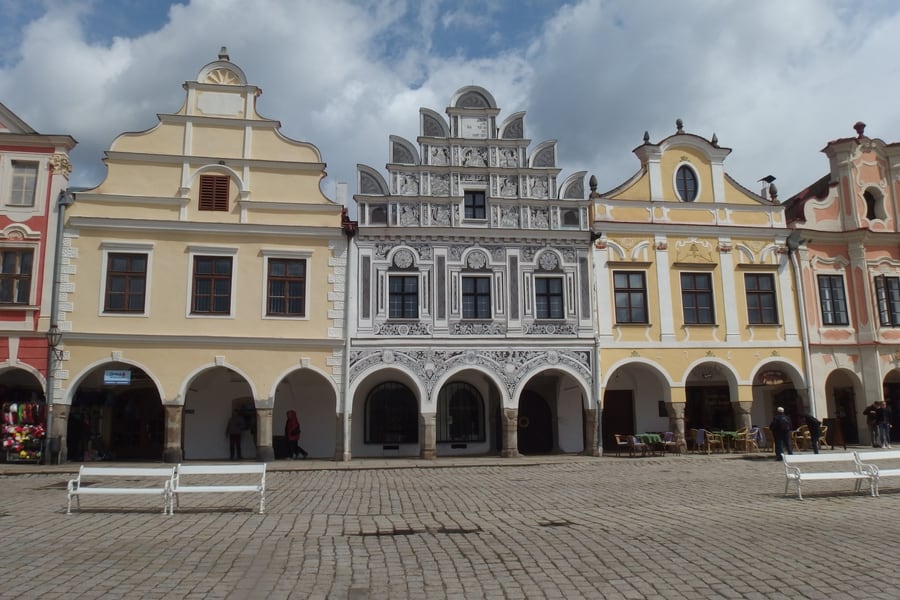 Palickap / Wikimedia Commons · CC BY-SA 4.0 · cropped
Telč
An hour away and almost too perfect: a complete Renaissance townscape of arcaded, pastel-coloured, gabled houses around a long triangular market place, with a fishpond system wrapped around the edges. A UNESCO World Heritage Site, and the Renaissance castle at the top of the square is a national cultural monument in its own right. The town has about 5,100 inhabitants and lives on visitors.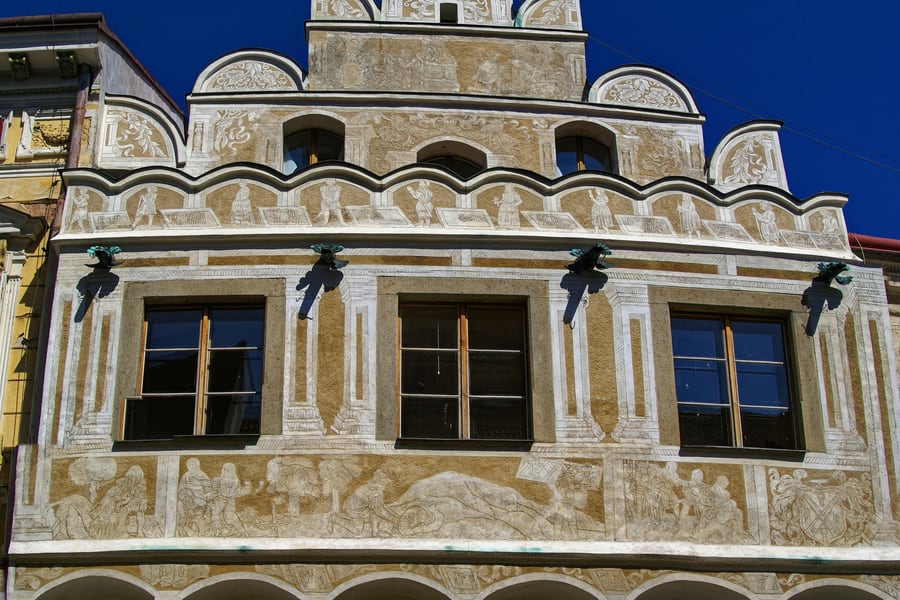 Txllxt TxllxT / Wikimedia Commons · CC BY-SA 4.0 · cropped
Slavonice
A town of 2,200 people hard against the Austrian border, founded in the 12th century and at its richest in the 16th, which is the century its houses are still wearing. The gables on the two squares carry extraordinarily well-preserved sgraffito — plaster scratched back to a dark underlayer, here worked into Old Testament scenes. It survived because the town spent forty years stuck in a closed frontier zone. There are medieval passages underneath, too.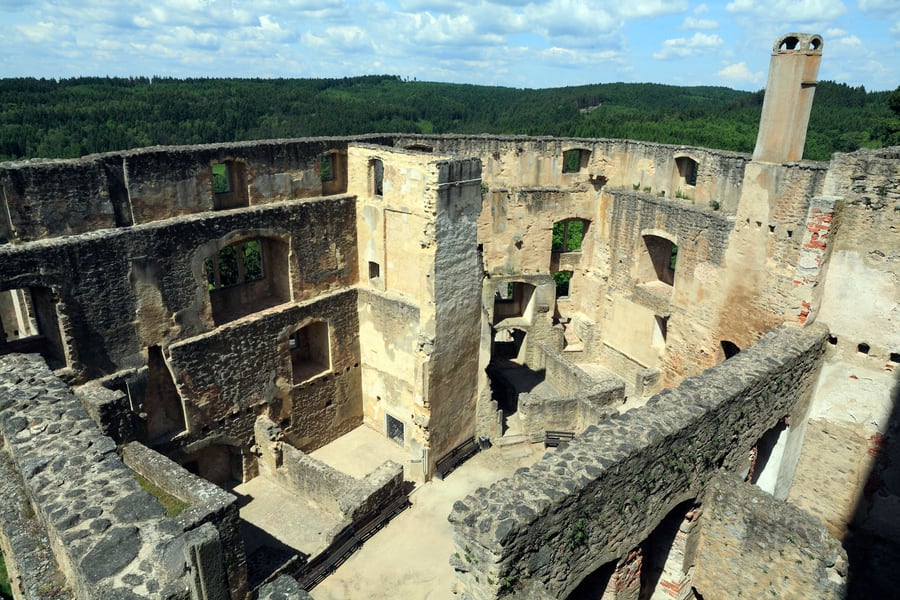 Falk2 / Wikimedia Commons · CC BY-SA 4.0 · cropped
Landštejn
A gaunt Romanesque ruin above the forest, first recorded in 1231, when it was the largest Romanesque castle in the Czech lands — and it is still one of the oldest and best preserved anywhere in Europe. Two great towers are joined by the wall that encloses the upper courtyard; the six-storey southern tower survives complete, gate and all. Reachable from the Nová Bystřice line.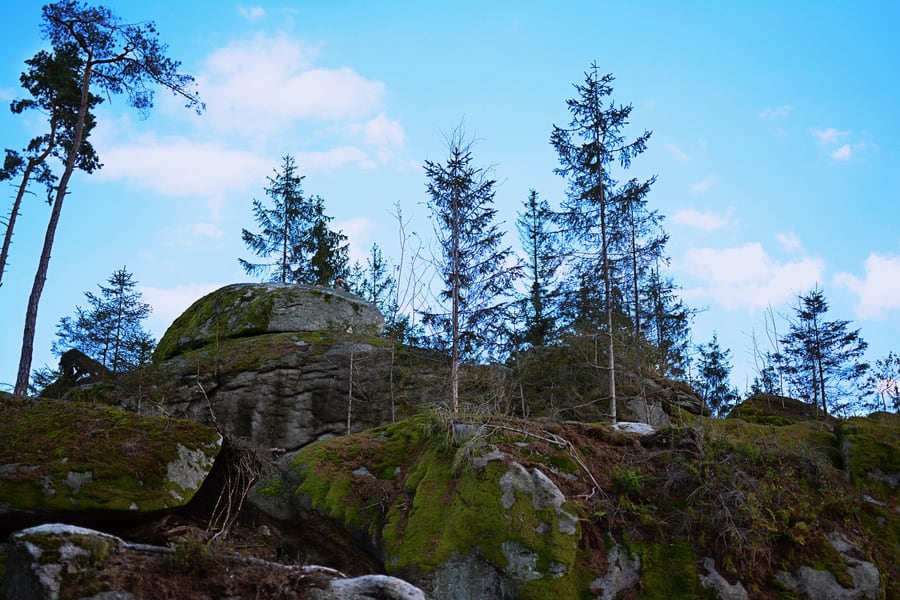 Matyška / Wikimedia Commons · CC BY-SA 4.0 · cropped
Česká Kanada
The landscape the Nová Bystřice line runs through, between Slavonice, Nová Bystřice and Kunžak: pine and spruce, granite boulder fields — the ones in the woods around Valtínov are the famous ones — and fishponds. A nature park of 283 km² was declared over it in 1994. It is a walking and cycling region rather than a sightseeing one, and it is genuinely empty, because this was border zone until 1989 and nobody redeveloped it.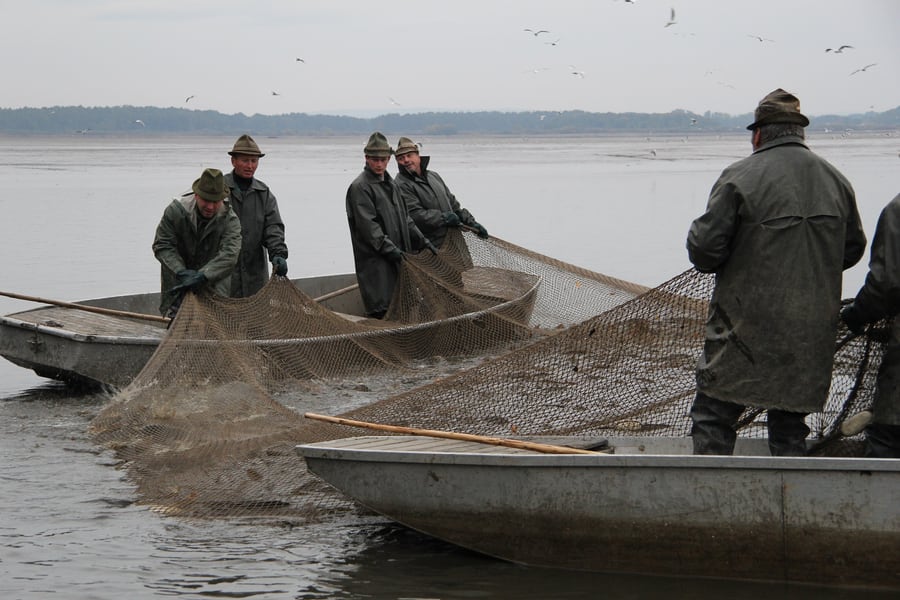 Přemysl Otakar / Wikimedia Commons · CC BY-SA 4.0 · cropped
Rožmberk and the fishponds
West of Jindřichův Hradec, Třeboň sits inside a five-hundred-year-old system of artificial lakes dug by Jakub Krčín in the 16th century. Rožmberk is the biggest of them at 4.89 km² — the largest fish pond in the world. Each autumn the ponds are drained and seine-netted in the výlov, a public spectacle of waders, nets and gulls that supplies the Czech Christmas carp.Where to Sleep
There is one obvious answer here and it is unusual enough to lead with.
Sleep in a station
The railway lets rooms in its own station buildings — at Střížovice, Kunžak–Lomy, Albeř and Nová Bystřice. You get a country halt on a 760-millimetre railway in the middle of Czech Canada, with the last train gone and the next one in the morning, and nobody else about.
There are very few rooms and they are popular. Book as early as you can.
Jindřichův Hradec
The practical base, and a good town to spend a night in: hotels and penziony around the arcaded square and beneath the château, all inexpensive by western European standards. The narrow-gauge yard is beside the main station, which matters if you are catching an early steam train.
Nová Bystřice
At the end of the southern line, with a handful of guesthouses and the station rooms. Quiet to the point of silence, three kilometres from the Austrian border, and a good base for walking in Česká Kanada or visiting Landštejn.
Kamenice nad Lipou
On the Obrataň line, small, with a château and the ticket printing works. A couple of penziony. Sensible if you are riding the northern line and want to see the press.
Třeboň
Forty minutes west and the most comfortable option in the region: a walled spa town among the fishponds, with proper spa hotels, peat baths and a great deal of carp on the menus. Worth two nights on its own account, and an easy base for the railway.
Telč or Slavonice
Both within reach, both extraordinary to look at, and both with small hotels in historic houses on the square. If you want the region rather than only the railway, either makes a better week than Jindřichův Hradec.
When to come
May to September is the season: steam runs four days a week, the diesels run daily, and the bistros and buffet car are open. July and August are busiest, and the diesels — which take no reservations — can be crowded with cyclists on a Saturday.
Autumn is beautiful and quieter, but check what is still running. Winter service is thin; this is a railway rebuilding itself, and the winter timetable is not the summer one.
Whatever you choose, confirm the trains with the operator first. It has only been running again since September 2025.
Questions or corrections
Planning this trip and stuck on something, or spotted a time, fare or detail that has changed? Send us a message about The Jindřichův Hradec Narrow Gauge. We read every one, and we update this page when something has changed.