Jose Cuervo Express
Guadalajara Oficina de Visitantes y Convenciones · Public Domain
- Distance60 km
- Duration2 h by rail · 11 h round trip
- Best seasonNovember–April · dry and warm, before the May heat
Introduction
Mexico switched off its passenger trains in 1997. Ferrocarriles Nacionales de México was being broken up for privatisation, the long-distance services were suspended as part of the restructuring, and the terminal in Guadalajara — a station that had been dispatching trains to Nogales and to Mexico City since the 1880s — went quiet. It is not quiet on Saturdays. On Saturday mornings a rake of dark-blue cars with gold lettering stands at the platform, a Ferromex diesel on the front, and at 09:00 it leaves for a distillery.
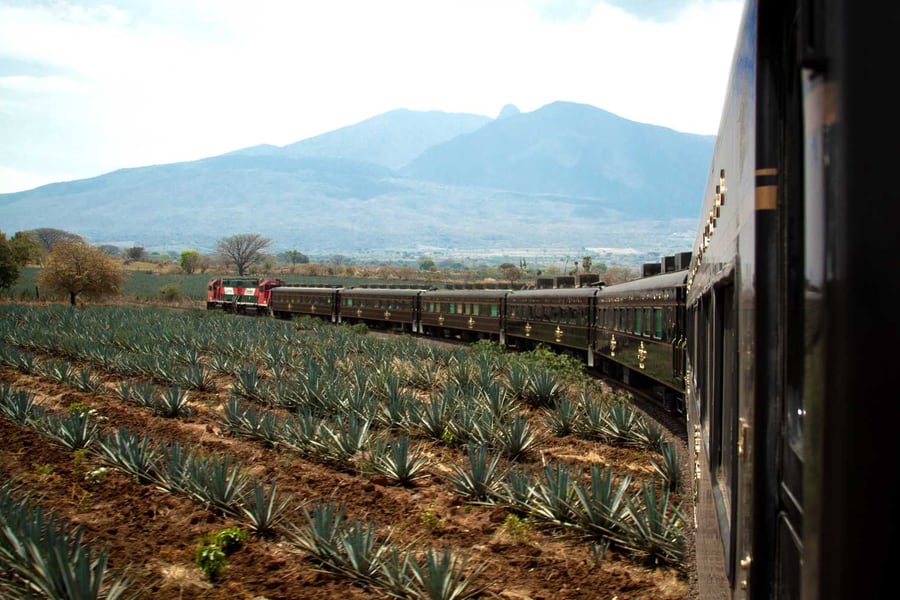
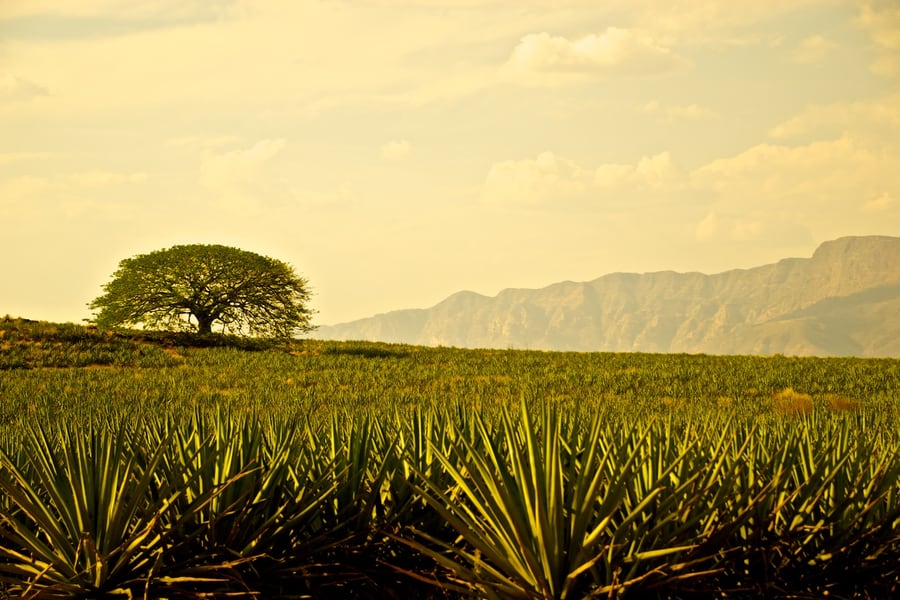
The Jose Cuervo Express runs 60 kilometres northwest to Tequila and takes two hours to do it. The pace is deliberate, because the point of the journey is what is outside the window. Twenty minutes out of the city the land turns to blue agave and stays that way: rank after rank of Agave tequilana Weber azul on red volcanic soil, with the Volcán de Tequila standing over it at 2,920 metres. This is a UNESCO World Heritage site — some 35,000 hectares of working agave country between the volcano and the canyon of the Río Grande de Santiago, listed in 2006, with the towns of El Arenal, Amatitán and Tequila inside it and sixty distilleries counted within the boundary. The railway crosses the middle of it.
What the fare buys is a day rather than a train ride. There is a guided tasting on board, a tour of La Rojeña — the distillery the Cuervo family has run in the middle of the town since 1812, on a licence granted by Carlos IV in 1795 — free hours in Tequila itself, a mariachi and folk-dance show in the afternoon, and a demonstration of the jima, the agave harvest, out in the fields. One leg is by train and the other by coach, and which way round depends on the itinerary you buy.
The Journey
Boarding is at the Estación de Ferrocarriles Mexicanos on Avenida Washington, the 1960 terminal that replaced the station of 1888 on the same ground. A steam locomotive that once worked the Guadalajara–Chapala line stands on a cantera plinth outside it, and the waiting hall was built for a country that still had a timetable: the Ferrocarril del Pacífico left here for Nogales and the Arizona border, and El Tapatío left for Buenavista in Mexico City. Both are long gone. Registration opens an hour before departure and boarding closes twenty minutes before it, which the operator enforces.
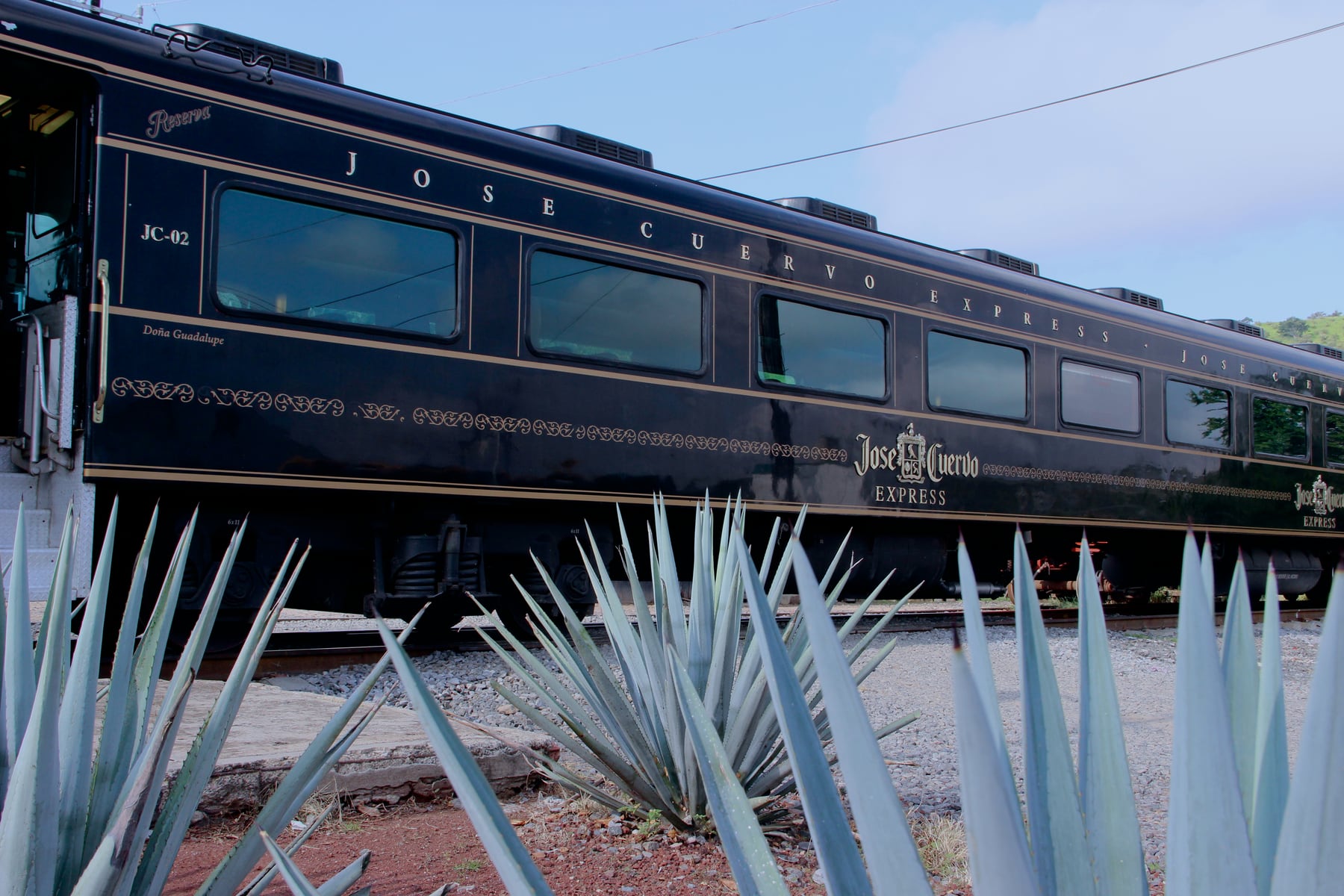
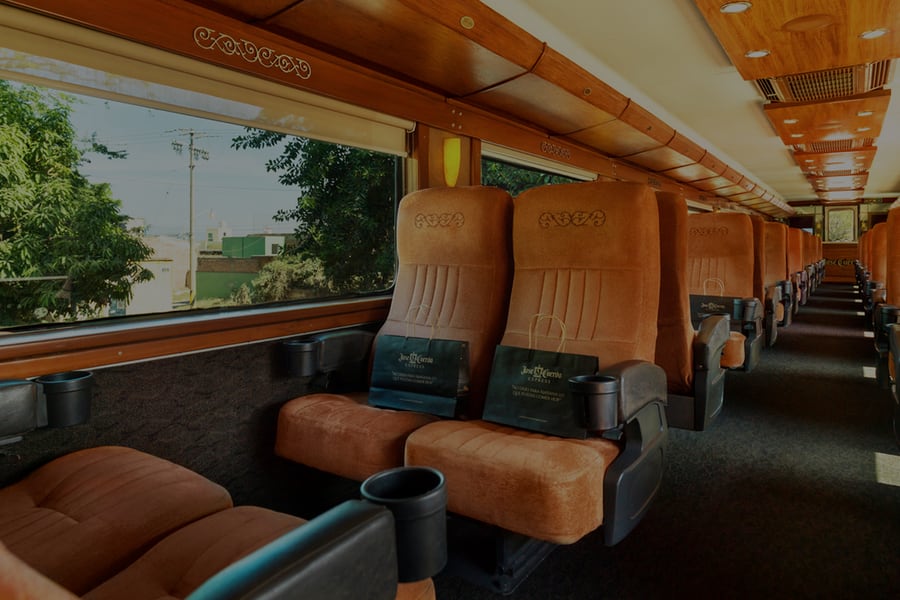
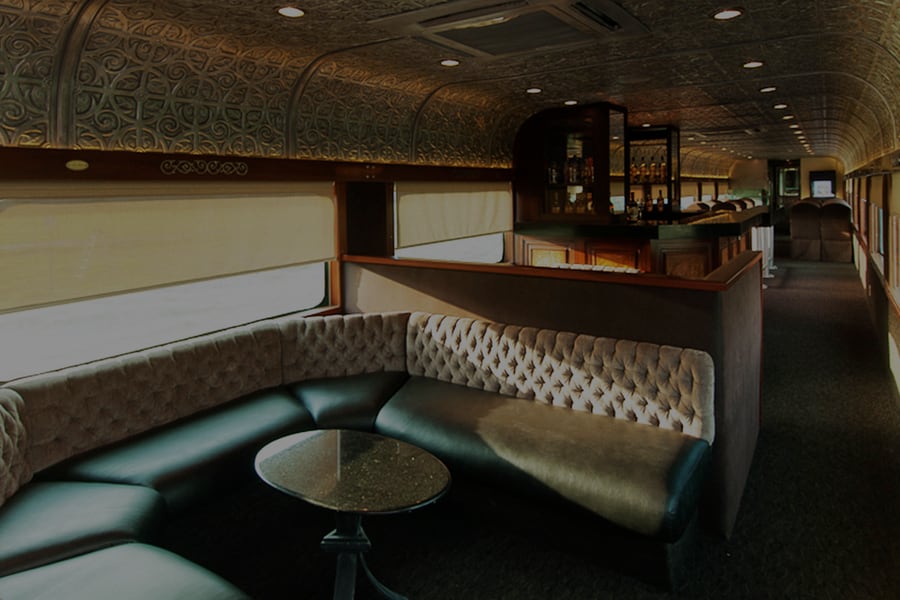
The train is seven cars, dark blue with gold lining and gold script along the waist. Each one carries its grade above the window line — Reserva, Platino — a name below it (Doña Guadalupe rides on JC-02) and a fleet number on the end panel. The operator's current terms count three passenger cars and four service cars; when the train first ran in 2012 it was the other way round, four seated cars of 62 and three service cars — a bar, a dining car and a club bar — for 395 people in all. A Ferromex diesel does the work at the front.
The line
This is Line T, Guadalajara to Nogales — the southern end of what the Southern Pacific built as its West Coast Route, running through to the Arizona border from April 1927, sold to the Mexican government in 1951 and held under concession by Ferromex since 1998. It is a freight railway now. The train leaves through the Agua Azul yards among grain cars and container flats, crosses the western suburbs, and is out in open country within half an hour.
There is no booked stop between the two ends. El Arenal and Amatitán go by without the train pausing, and both are worth knowing: they are the other two towns inside the World Heritage boundary, agave towns with large distilleries of their own, and Amatitán looks out over the barranca that the Río Grande de Santiago has cut through this corner of Jalisco. Maize and sorghum give way to agave somewhere before El Arenal, and the fields do not really stop again until the train is inside Tequila.
The Volcán de Tequila is the fixed point of the whole run: a stratovolcano of 2,920 metres, inactive for some 220,000 years, with a lava spire called La Tetilla on the summit. It is also the reason any of this is here. Its flows left the soil the agave grows in, and the obsidian in it made this valley worth settling long before anyone distilled anything.
Arrival
Tequila has its own station, on Héroe de Nacozari in the Colonia La Estación, a few streets below the plaza, and a mariachi meets the train on the platform. From there the day belongs to Mundo Cuervo: the Centro Cultural Juan Beckmann Gallardo, the La Rojeña distillery, lunch, free time in the town, the show at the Foro Cuervo in the late afternoon, and the agave fields after it. The return leg — coach or train, depending on the itinerary — is back in Guadalajara around 20:00.
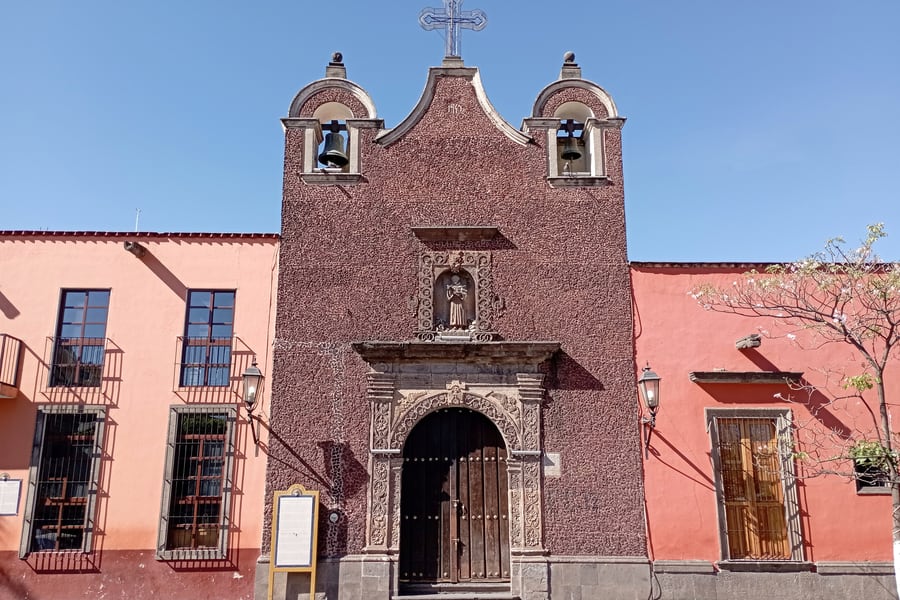
Along the route
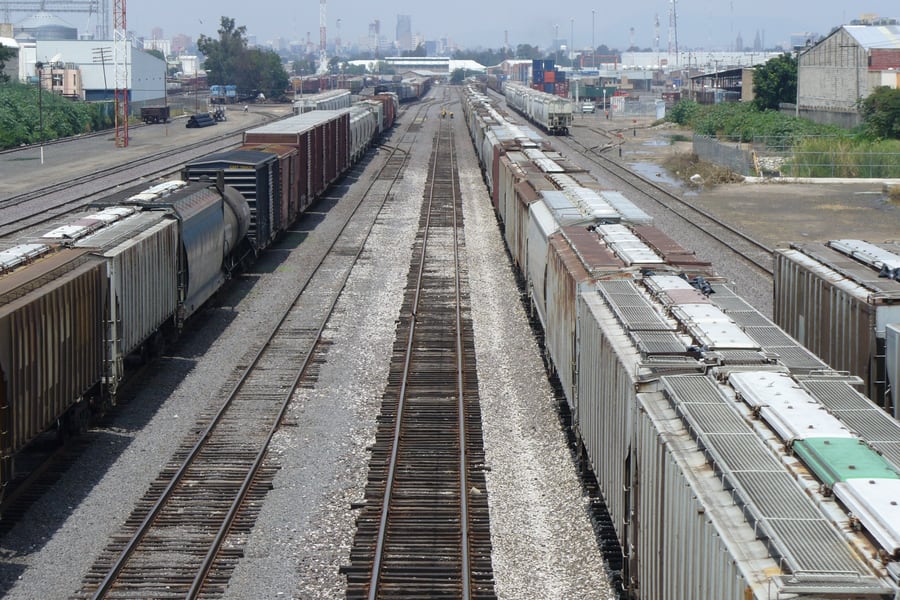 gpinedi / Wikimedia Commons · CC BY-SA 3.0 · cropped
Out through the Agua Azul yards
The first ten minutes are a working freight railway: grain cars, container flats and Ferromex power standing either side of the road out. This is what Line T does for a living the other six days of the week.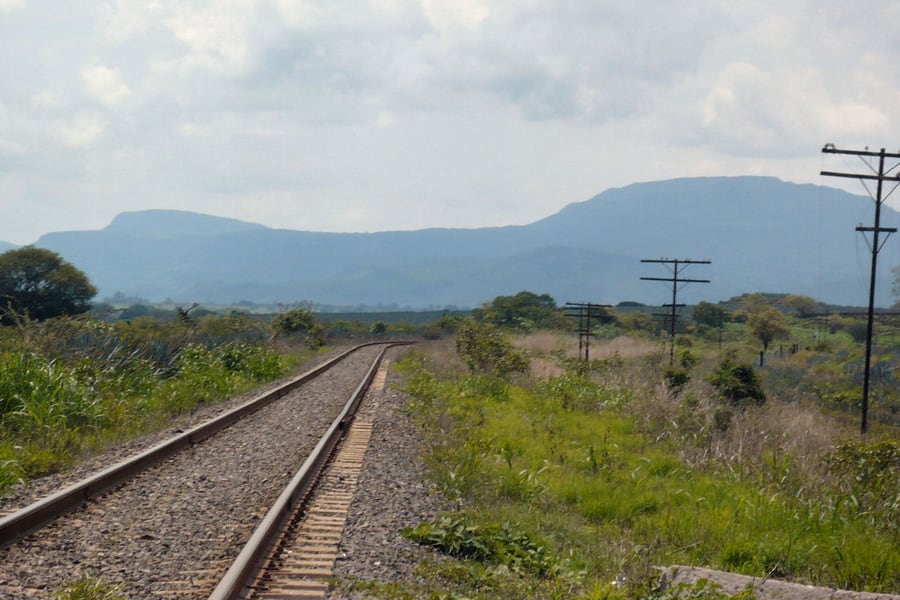 Alejandro Vega Rdz. / Wikimedia Commons · CC BY-SA 3.0 · cropped
El Arenal
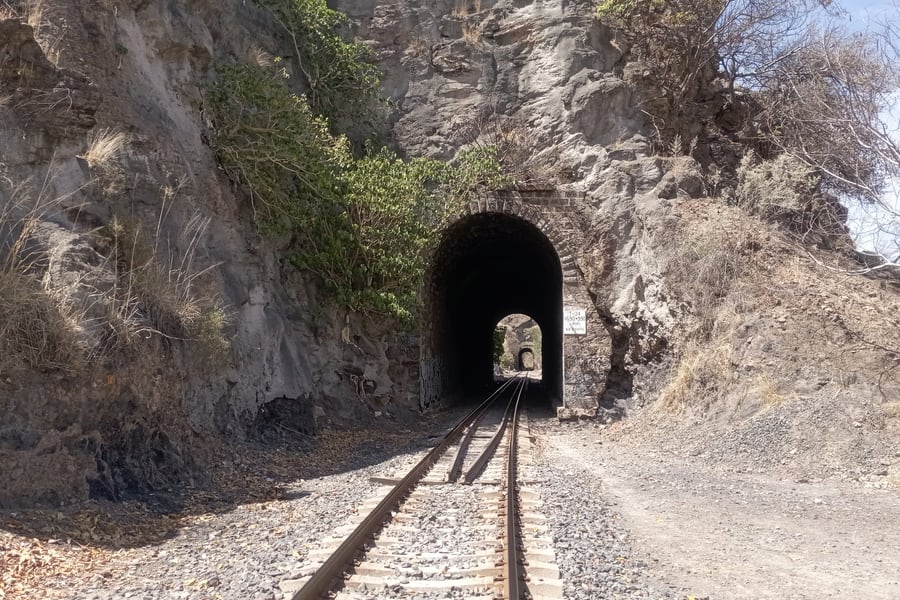
The first of the two agave towns the train passes without stopping, about half way out. Outside it the line is single track on ballast through open scrub, pole route beside it, running dead straight at the tableland that closes the valley's northern side.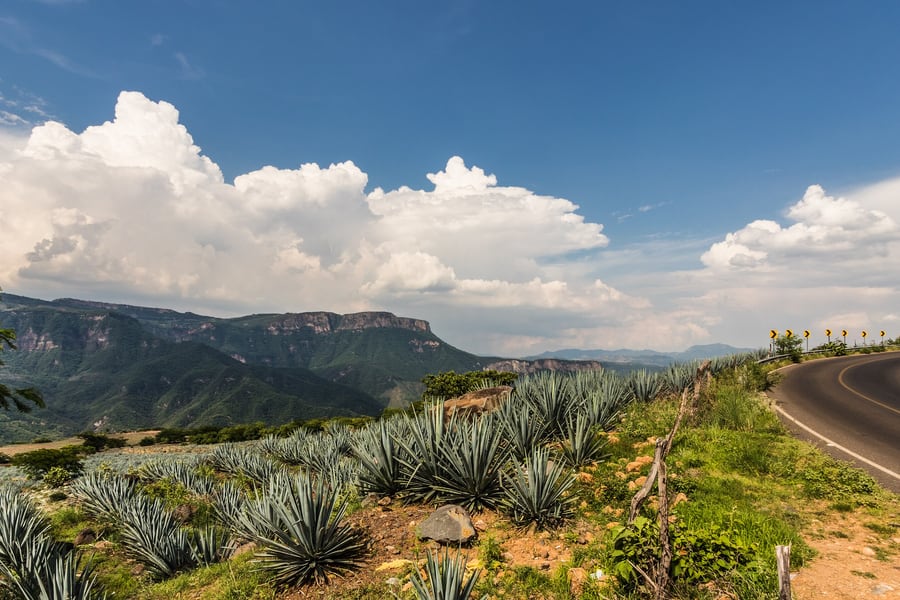 Alejandro Hernández Osuna / Wikimedia Commons · Public Domain Mark · cropped
Amatitán and the barranca
The second town, and the edge of the country: beyond it the ground drops away into the barranca of the Río Grande de Santiago. Amatitán is inside the World Heritage boundary and is home to one of the world's largest tequila distilleries.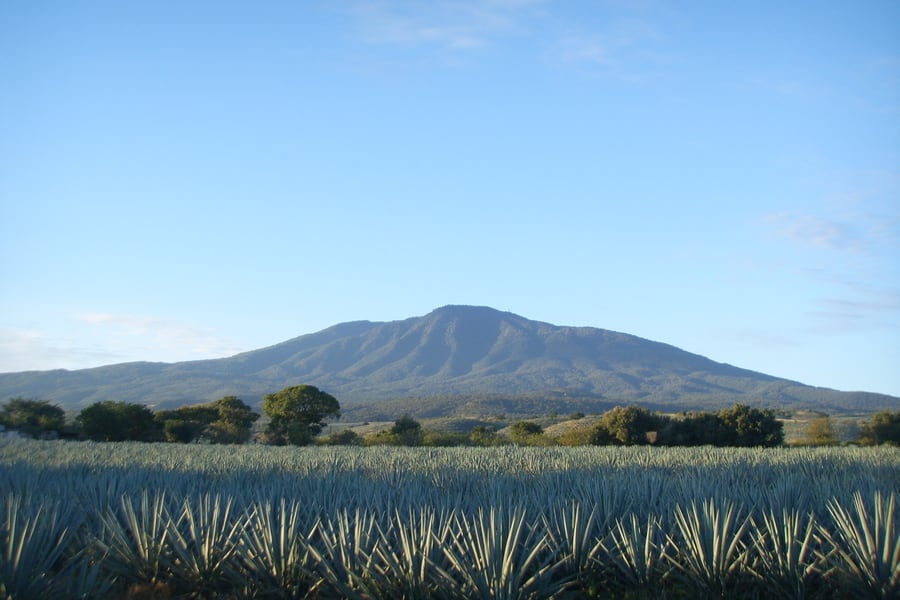 México en Fotos, A.C. / Wikimedia Commons · CC BY-SA 2.0 · cropped
The volcano
It is in the window for most of the run and it gets closer all the way: 2,920 metres, a lava spire called La Tetilla on the summit, and the source of both the soil the agave grows in and the obsidian that first made this valley worth settling.A bit of history
Culture & experiences along the way
 Guadalajara Oficina de Visitantes y Convenciones · Public Domain · cropped
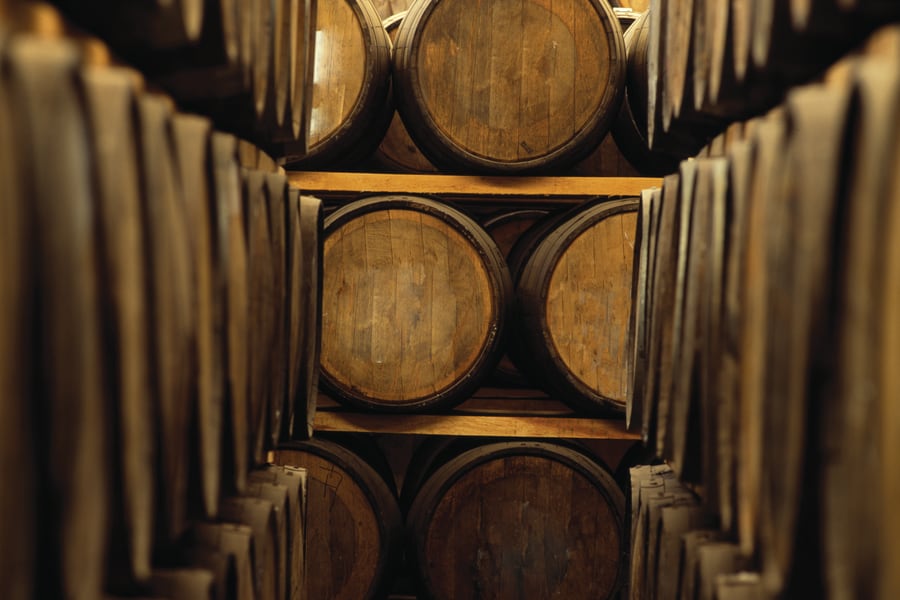
The cellar, and what is kept in it
At La Rojeña the tequila rests in stone-walled cellars whose thickness holds the temperature without help. Reserva de la Familia, made here, was launched in 1995 — two centuries to the year after the licence — as an extra-añejo aged at least three years in oak. On the Diamante and Elite grades the cellar and a glass of it come with the ticket.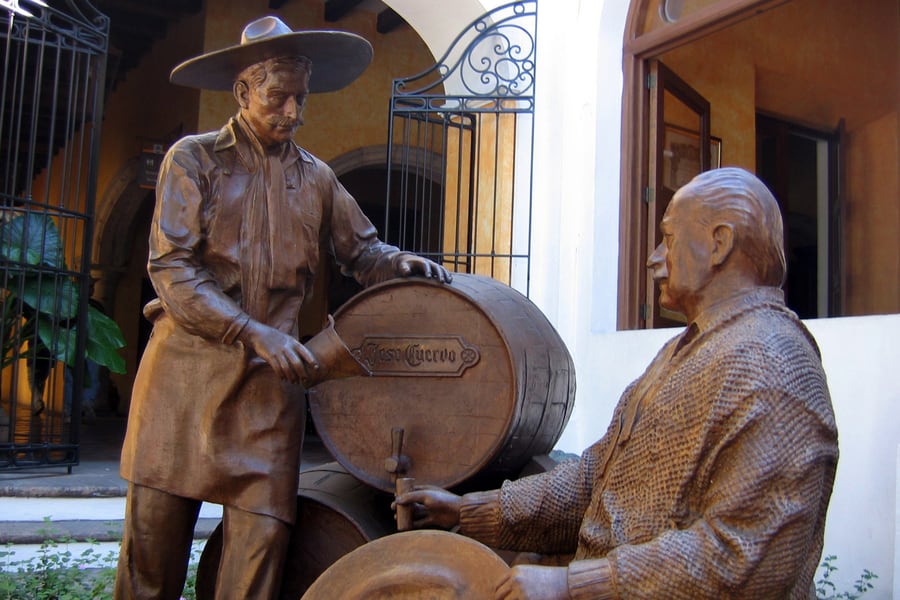 Guadalajara Oficina de Visitantes y Convenciones · Public Domain · cropped
The jima
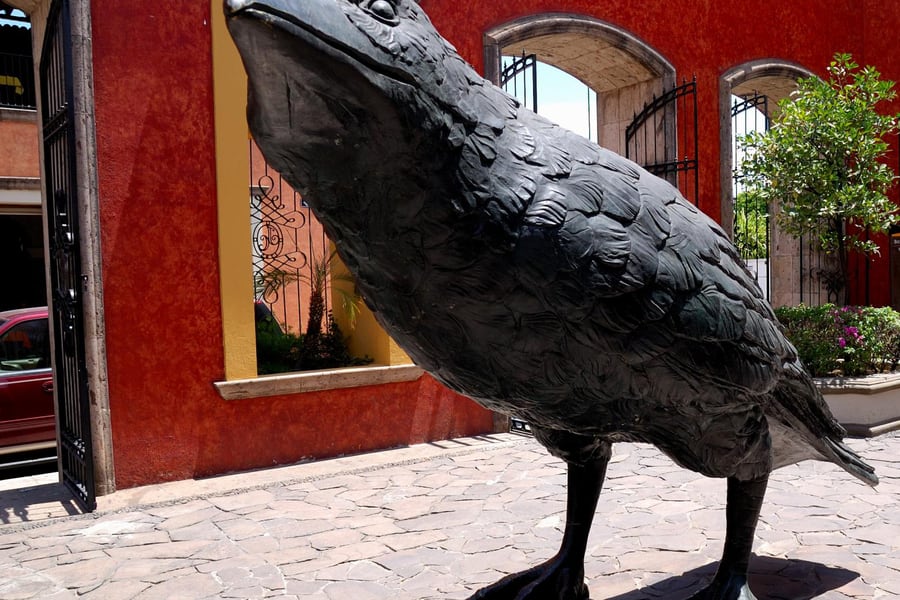
The day ends in the fields, watching a jimador work. The tool is the coa, a flat circular blade on a long shaft, and the job is to strip a mature plant of its leaves down to the heart — the piña — which can weigh more than the man carrying it. The bronze pair at the Mundo Cuervo gate shows the trade.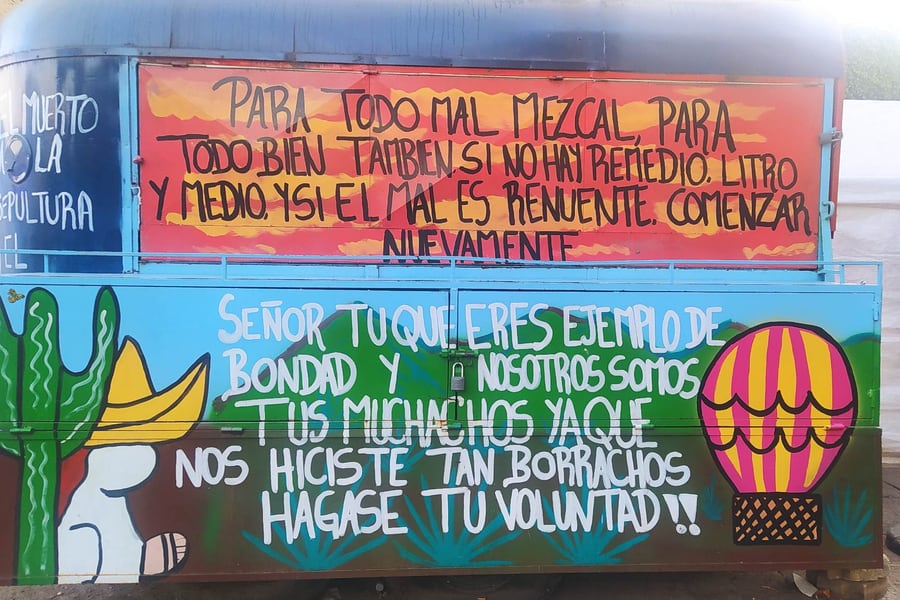 Pequeño mar / Wikimedia Commons · CC BY-SA 4.0 · cropped
Cantaritos
Tequila's own drink, and not the one the distilleries sell: tequila with grapefruit, orange and lime in an unglazed clay pot, which cools it and gives it a taste of earth. The stalls that sell them near the plaza paint their own signage, and the sayings on it are half the pleasure.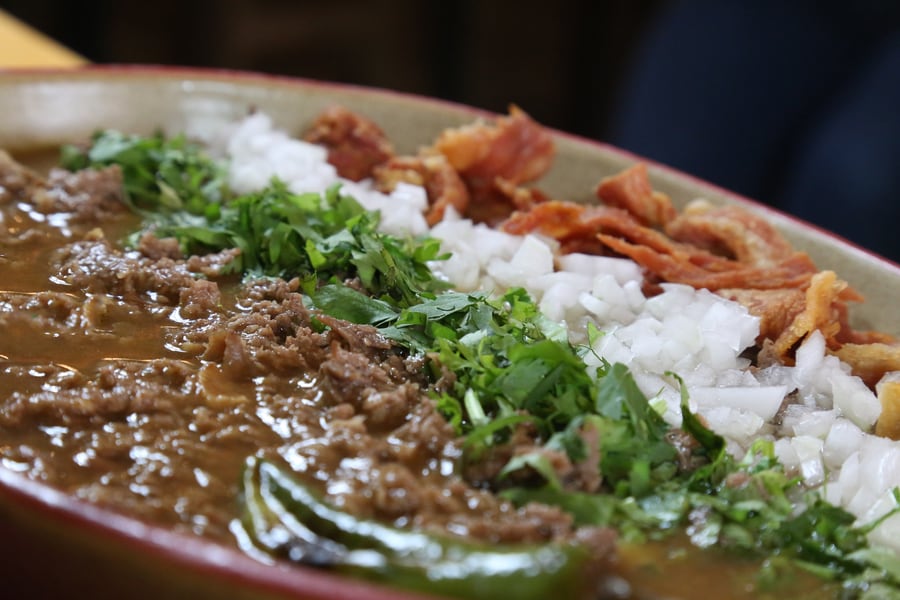 Pablo Villaseñor / Wikimedia Commons · CC BY-SA 4.0 · cropped
What to eat in the free hours
Jalisco's two dishes travel the 60 km. Carne en su jugo is chopped beef cooked in its own juices with beans from the pot and browned bacon, scattered with onion and coriander and served in an earthenware bowl. The torta ahogada is a crusty birote salado roll of pork drowned in a sauce of vinegar, cumin and chile de árbol. Both are lunch.Timetables
The train runs on Saturdays, one departure a week, and the day is eleven hours end to end. Times below are the operator's own, as of September 2026, taken from the published itineraries and confirmed in the booking engine on every sellable date it offered.
Two itineraries are sold for the same Saturday, and they are the same day run in opposite directions. On Amanecer (sunrise) the train takes you out and a coach brings you back; on Atardecer (sunset) a coach takes you out and the train brings you back. Both start at 09:00 and both finish at 20:00.
| Itinerary | Out to Tequila | Back to Guadalajara | Rail leg |
|---|---|---|---|
| Amanecer | 09:00 train from the Ferromex station, arrive 11:00 | 18:45 coach, arrive 20:00 | Guadalajara → Tequila |
| Atardecer | 09:00 coach from Casa Cuervo – EDISA, fields at 10:30 | 18:00 train, arrive 20:00 | Tequila → Guadalajara |
⚠️ The two itineraries leave from different addresses. Amanecer boards at the Ferromex station on Avenida Washington; Atardecer boards a coach at Casa Cuervo – EDISA in San Pedro Tlaquepaque, and only meets the train in Tequila for the evening run. Check which one your ticket is for before setting out.
The day, hour by hour
The Amanecer running order, from the operator's itinerary:
| 09:00 Depart Guadalajara | 10:00 Guided tasting on board |
| 11:00 Arrive Tequila | 11:35 Centro Cultural and La Rojeña |
| 13:00 Free time in the town | 16:15 Mexican show |
| 17:10 Leave for the agave fields | 17:45 Jima demonstration |
| 18:45 Board the coach | 20:00 Arrive Casa Cuervo – EDISA |
Atardecer inverts it: coach out at 09:00, the jima at 10:30, Mundo Cuervo at 12:45, free time from 14:00, the show at 16:15, the train from Tequila at 18:00 and the tasting on board at 19:00.
Which Saturdays
The operator's itinerary sheet says simply every Saturday, and the booking engine bears that out for the Express grade. The higher grades run less often. Read on 14 September 2026, the engine had Express and Premium Plus open on 19 and 26 September and on 3, 10, 17, 24 and 31 October, and Diamante and Elite open on only some of those dates. Seasonal variants appear as well — through September 2026 the operator was running its themed El Vagón Más Mexicano carriage on the same two itineraries, with its own four-course menu.
Dates, prices and the itinerary itself are published at mundocuervo.com (opens in a new tab), and the operator states plainly that times are approximate and itineraries subject to change.
Tickets
There is one price per grade and it covers the whole day — both legs, the distillery tour, the meal or snacks that go with the grade, the show, the fields and the drinks on board. Fares are in Mexican pesos and include IVA. Only Express carries under-18s, and then only in the seated cars, with no alcohol and an adult alongside; under-sixes travel free without a seat. The other three grades are adults only.
Prices below were read from the operator's own checkout on 14 September 2026, for a Saturday departure. Seats are assigned by the operator, not chosen. There are no refunds for a passenger cancellation, and changing the date costs between 10 % and 50 % of the fare depending on how late you ask.
Book your tickets
Express
The only grade that takes under-18s
Light food, cocktails on board, a three-glass tasting and the La Rojeña tour; 2,680 for 6- to 17-year-olds.
Book Tickets (opens in a new tab, on mundocuervo.com)via mundocuervo.comPremium Plus
Adults only
A premium bar on top of the Express day, with Reserva de la Familia Platino poured alongside the Tradicional.
Book Tickets (opens in a new tab, on mundocuervo.com)via mundocuervo.comDiamante
Adults only
Signature cocktails, a Reserva de la Familia tasting and access to the private cellar at La Rojeña.
Book Tickets (opens in a new tab, on mundocuervo.com)via mundocuervo.comElite
Adults only
The top grade — its own carriage, a full meal, international mixology, the Reserva tasting and the cellar.
Book Tickets (opens in a new tab, on mundocuervo.com)via mundocuervo.comRail Passes
No rail pass covers this journey, and none exists that could. Mexico has no national multi-journey pass; Interrail and Eurail are European products that do not reach the Americas; and the Jose Cuervo Express is not a scheduled railway service at all but a packaged day out sold by the distillery's own company, Tequila, Espíritu de México. The fare is the whole product, and there is nothing to add a pass to.
The only choice worth making is which grade, and it is a choice about the day rather than the seat. Express is the one that takes families — it is the only grade that admits 13- to 17-year-olds, and the only one with a children's fare — and it comes with light food, a three-glass tasting and the La Rojeña tour. Premium Plus, Diamante and Elite are adults only and add, in that order, a premium bar, the Reserva de la Familia cellar and a full meal with international mixology. The route, the timings and the show are identical on all four.
If the fares look steep against a bus ticket, it is because they are not the same purchase: a scheduled coach covers the same 60 kilometres for a small fraction of the money and leaves you to arrange the rest of the day yourself. Buy the train for the day it is wrapped around, not for the transport. Checked against the operator's booking engine in September 2026.
Places to Visit
The itinerary hands you the middle of the day and takes it back at a quarter past four, so Tequila is a town to walk rather than tour. The first five below are within a few streets of the plaza, and two of them — the distillery and the cultural centre — are already in the fare. The sixth stands over the lot and needs a separate day.
 Gzzz / Wikimedia Commons · CC BY-SA 4.0 · cropped
Destilería La Rojeña
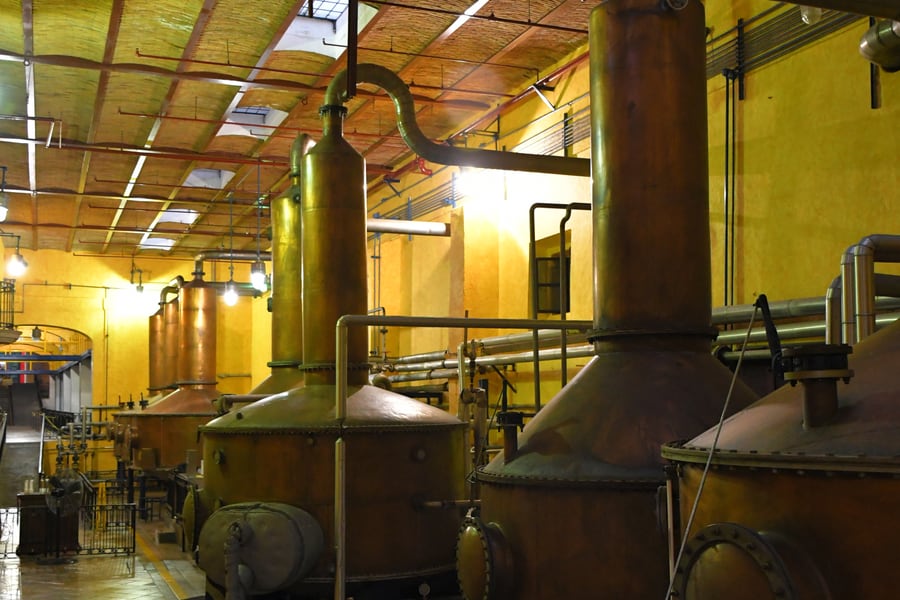
The distillery at the centre of the town and of the day. José Antonio de Cuervo bought land with a working taberna on it in 1758; Carlos IV granted the family the first licence to make and sell vino mezcal in 1795; and in 1812 Vicente Albino Rojas, who had married into it, built the distillery that still carries his name. Masonry ovens, copper stills and stone cellars, all of it still in production.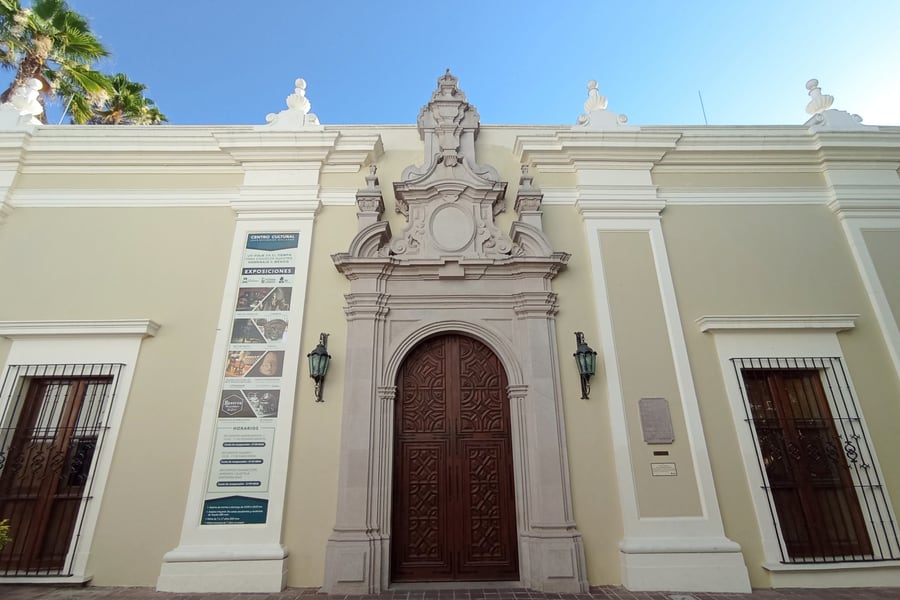 Juan Carlos Fonseca Mata / Wikimedia Commons · CC BY-SA 4.0 · cropped
Centro Cultural Juan Beckmann Gallardo
Six exhibition halls behind a carved stone portal on Calle José Cuervo, holding the family's own collection — documents, tools, art and the long history of the trade — and a garden that is toured separately. The train fare includes it, and the itinerary reaches it before the distillery, which is the right order — the halls explain what the stills are doing. It can also be visited on its own, guided or unguided, and it has its own shop.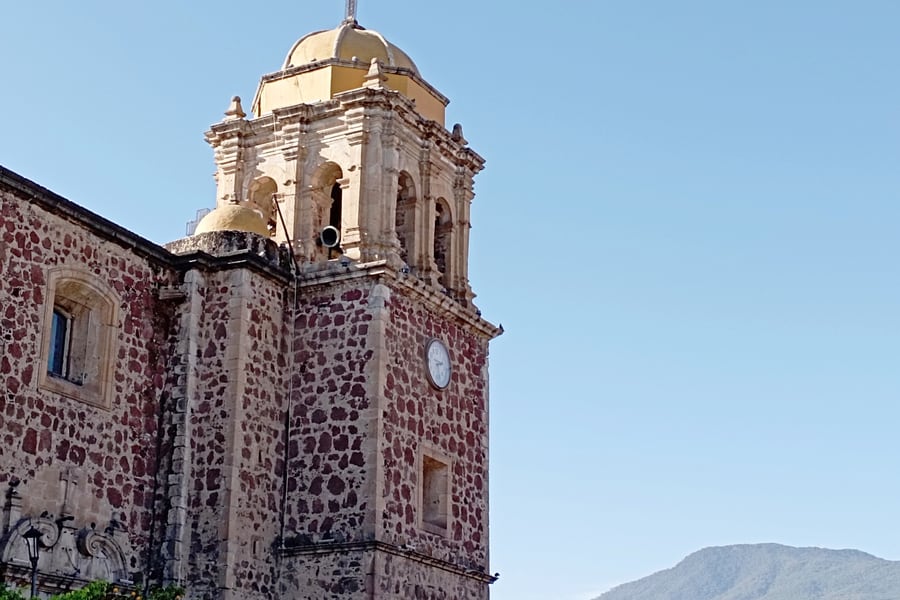 Juan Carlos Fonseca Mata / Wikimedia Commons · CC BY-SA 4.0 · cropped
Parroquia de Santiago Apóstol
The parish church on the plaza, eighteenth-century, built of the dark volcanic stone the valley is made of, with a pale carved portal set into it, estípite pilasters either side of the door and a bell tower under a yellow-tiled cupola. Stand back far enough on the square and the volcano lines up behind it, which is the photograph everyone takes and deserves to.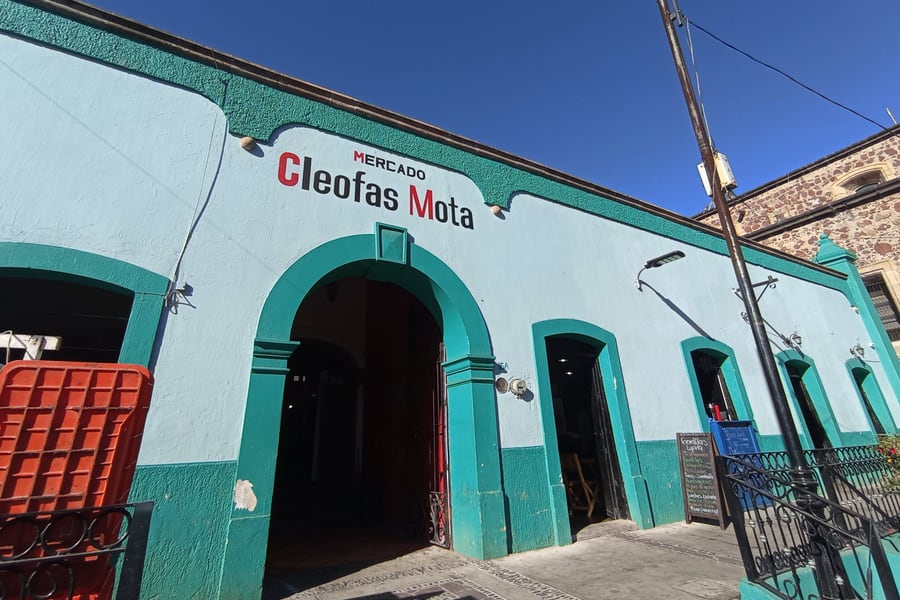 Juan Carlos Fonseca Mata / Wikimedia Commons · CC BY-SA 4.0 · cropped
Mercado Cleofas Mota
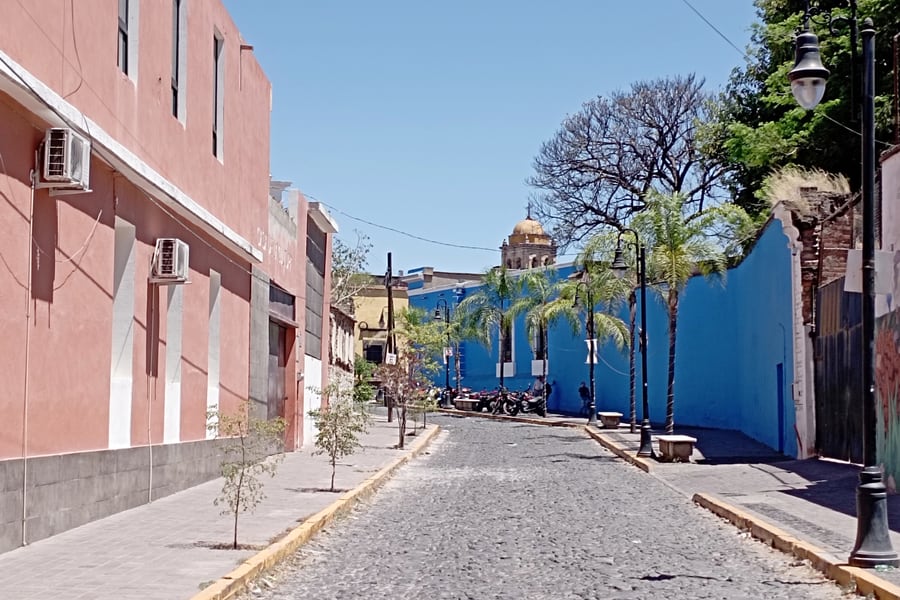
The town market, behind a turquoise-and-white front a block off the plaza, and the part of Tequila the itinerary does not manage. Produce, cooked food and the cheap end of lunch; stalls selling clay pots, agave-fibre work and bottles from distilleries whose names are on nobody's tour. The free hours in the middle of the day are long enough to eat here and still be back at the Foro Cuervo for the show, and this is where the town eats rather than where the town sells.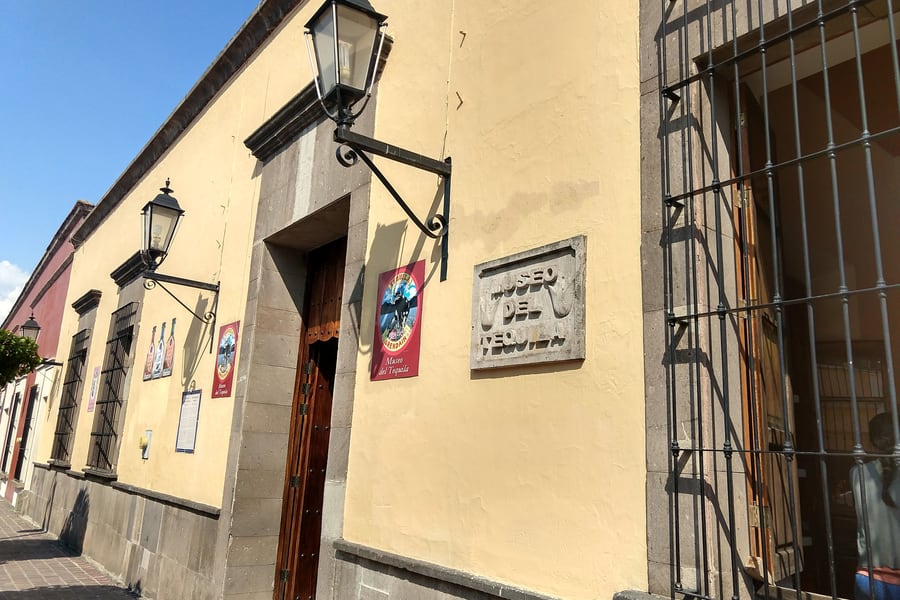 JosGarAg / Wikimedia Commons · CC BY-SA 4.0 · cropped
Museo Nacional del Tequila
A nineteenth-century house in the middle of the town, opened as a museum in January 2000 and given over to the drink itself rather than to any one brand. Five permanent halls trace how tequila was made and how it changed, with a sixth for temporary exhibitions — usually Mexican painting, photography or sculpture — plus an auditorium and a shop.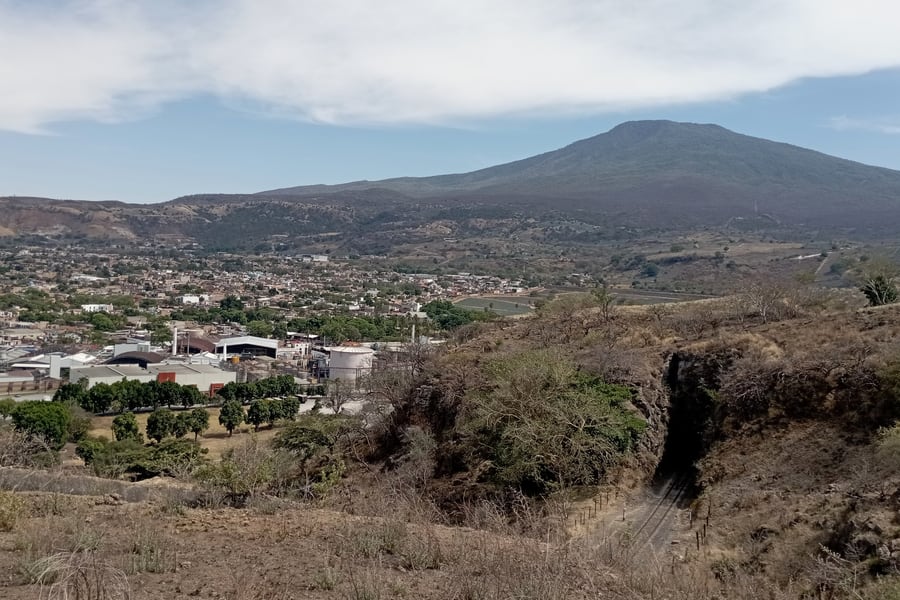 Juan Carlos Fonseca Mata / Wikimedia Commons · CC BY-SA 4.0 · cropped
Volcán de Tequila
The mountain over the town, 2,920 metres, with the rock spire of La Tetilla on the crown. It has been inactive for some 220,000 years, it is wooded to the top, and a road goes all the way up to the crater, which makes it one of the easiest big volcanoes in Mexico to stand on. Allow a day rather than an afternoon: this one belongs to a return visit, not to the train.Where to Sleep
The train is a round trip that ends back in Guadalajara at eight in the evening, so strictly speaking you need nowhere to sleep at all. Two things argue against that. The first is the 08:00 registration: the Ferromex station is south of the Guadalajara centre, boarding closes twenty minutes before departure, and an early cross-city taxi is a poor start to an eleven-hour day. The second is that the itinerary walks you past most of Tequila at speed, and the town is worth a slow morning it never gives you.
So: a night in Guadalajara before, and — if you can spare it — a night in Tequila afterwards, reached by road rather than by rail, since the train does not run on consecutive days.
Where to stay
Hotel Morales
Guadalajara, in the historic centre
A historic hotel of ninety-eight rooms on Avenida Ramón Corona, a short walk from the cathedral and the Hospicio Cabañas.
Check Availability (opens in a new tab, on hotelmorales.com.mx)via hotelmorales.com.mxHotel Solar de las Ánimas
Tequila, beside the parish church
Ninety-three rooms built in the manner of a viceregal house, with a rooftop bar facing the volcano.
Check Availability (opens in a new tab, on hotelsolardelasanimas.com)via hotelsolardelasanimas.comCasa Salles Hotel Boutique
Tequila, next to a working distillery
Twenty-five rooms in grounds adjoining the El Tequileño distillery, with a restaurant, a pool and a spa.
Check Availability (opens in a new tab, on casasalles.com)via casasalles.comQuestions or corrections
Planning this trip and stuck on something, or spotted a time, fare or detail that has changed? Send us a message about Jose Cuervo Express. We read every one, and we update this page when something has changed.