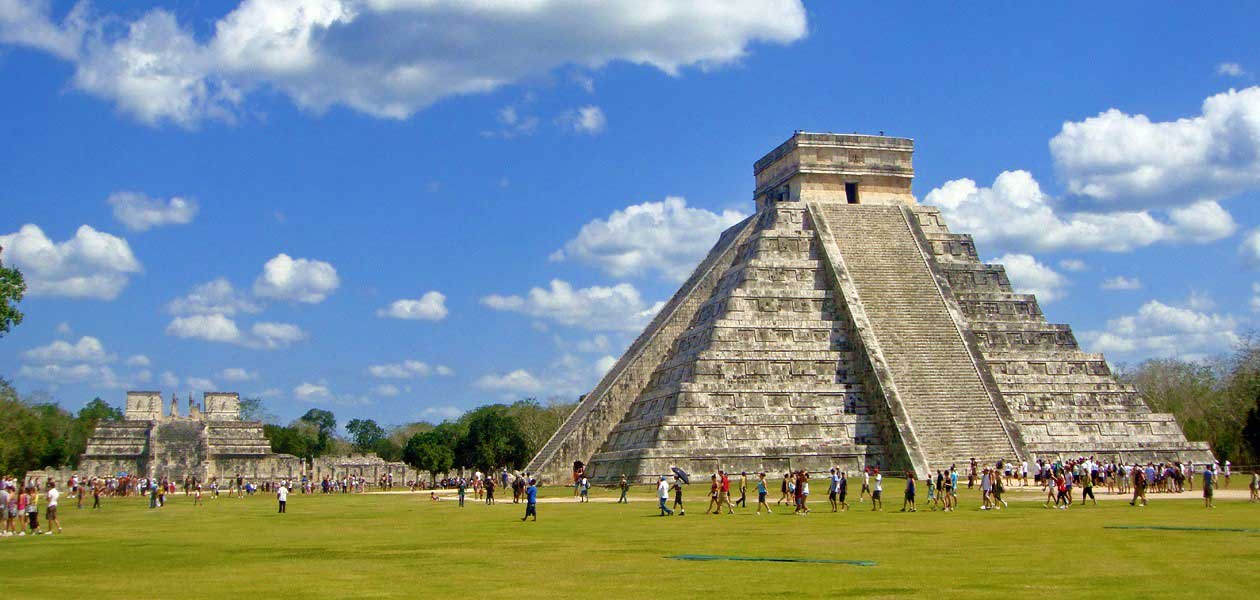
Mexico
Mexico covers 1,972,550 km², the thirteenth-largest country on earth, and holds some 132 million people — more native speakers of Spanish than anywhere else. It borders the United States along its whole north and Guatemala and Belize in the southeast, with the Pacific on one flank and the Gulf of Mexico and the Caribbean on the other. Between those coasts the ground climbs to a high central plateau held between two mountain chains, the Sierra Madre Occidental and the Sierra Madre Oriental, and Mexico City stands on it.
The railways here are a story of loss and rebuilding. By 1910 the country had some 24,720 km of track in service, most of it laid with American, British and French money; in 1997, as the national operator was broken up for privatisation, scheduled passenger services were suspended almost everywhere. The lines stayed busy — the state still owns the network and private concessionaires run freight over it — but for a quarter of a century a traveller's options came down to a handful of tourist trains. That has changed fast: new state passenger railways have opened since 2023 in the Yucatán, across the Isthmus of Tehuantepec and between Mexico City and Toluca, with more under construction.
Rail journeys in Mexico
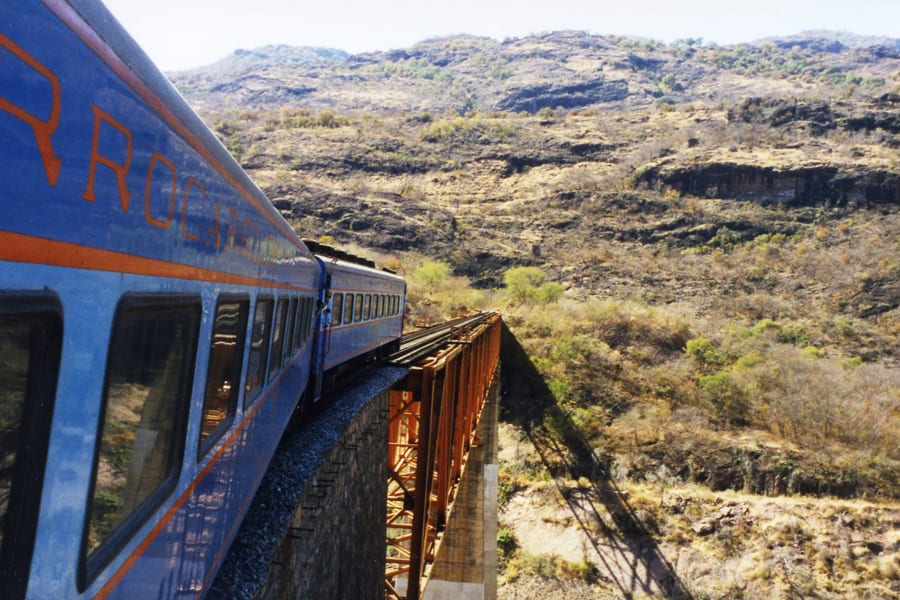
Copper Canyon Railway
El Chepe — the survivor of Mexico's old long-distance network, over the Sierra Madre and through the Copper Canyon on 37 bridges and 86 tunnels.
View journey →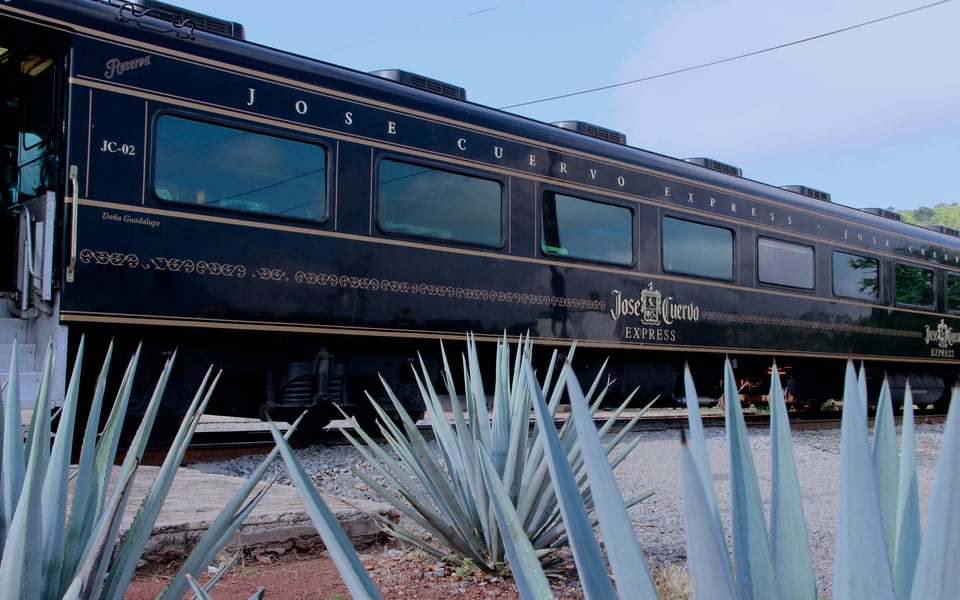
Jose Cuervo Express
A Saturday out of Guadalajara: two hours through World Heritage agave fields to Tequila, and the distillery the train is named after.
View journey →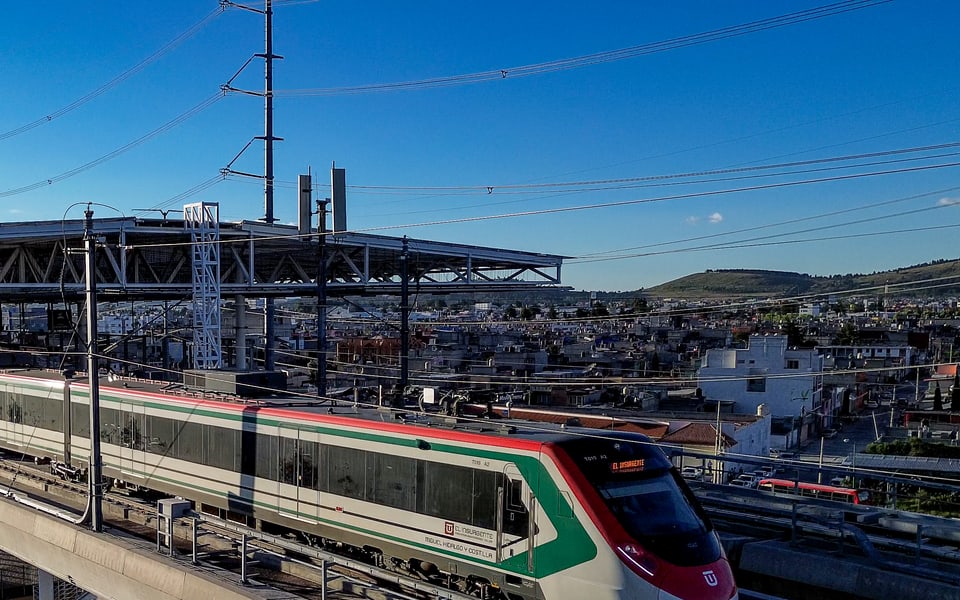
Tren El Insurgente
Mexico City to Toluca in an hour on a new electric railway, tunnelling under the sierra where Hidalgo won and turned back.
View journey →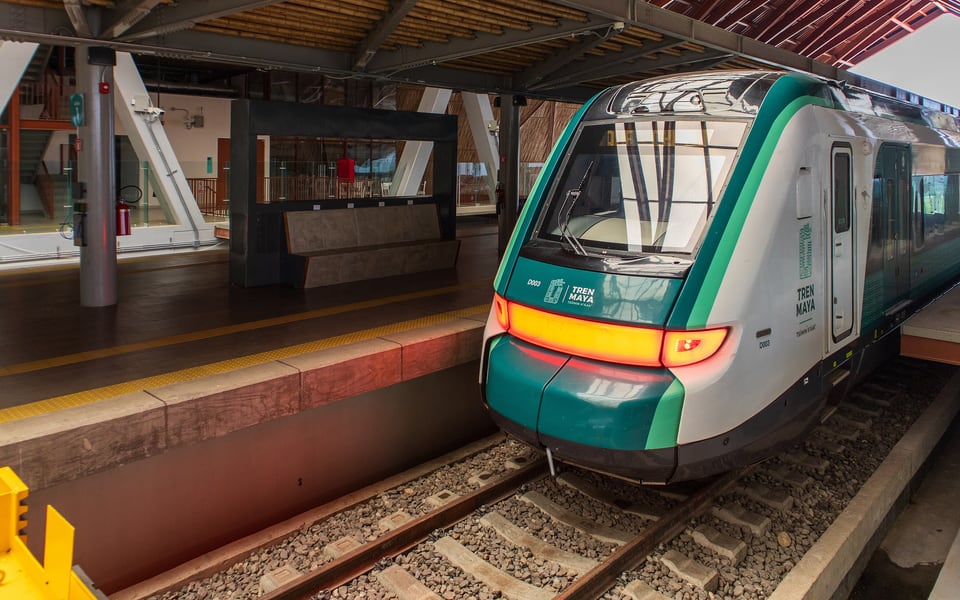
Tren Maya
Eleven hours across the Yucatán, Palenque to Cancún, on a railway built for it — three World Heritage sites, twenty stops and one vanishing hour.
View journey →Good to know
Can you travel around Mexico by train?
Not yet as a network, but no longer as a museum piece either. Scheduled intercity passenger services were suspended in 1997 when the national railway was broken up, and the lines have carried freight ever since. Since 2023 the state has been building passenger railways again — the Tren Maya across the Yucatán, the Tren Interoceánico over the Isthmus of Tehuantepec, the Tren El Insurgente between Mexico City and Toluca — alongside survivors like El Chepe and a few privately run tourist trains. Plan route by route rather than country-wide, and check each operator, because some of the new lines have opened in stages.
What is El Chepe, and the Copper Canyon?
El Chepe (the Chihuahua al Pacífico) is the one long-distance passenger train that survived the 1990s, running some 673 km between Los Mochis and Chihuahua through the Copper Canyon — Barrancas del Cobre — a system of six great canyons in the Sierra Tarahumara. Its finest viewpoint is Divisadero, on the canyon rim at around 2,400 m.
When is the best time to visit Mexico?
The dry season, roughly November to April, is the most reliable across most of the country and ideal for the Copper Canyon. The summer rains (June–September) bring greener landscapes but wetter, warmer conditions; the high canyon country is cool year-round, so pack layers.
Who are the Rarámuri?
The Rarámuri (or Tarahumara) are the indigenous people of the Copper Canyon country, famous worldwide for their extraordinary long-distance running — a culture made famous by the book "Born to Run". You'll meet Rarámuri selling woven baskets and crafts at Divisadero and along the line.