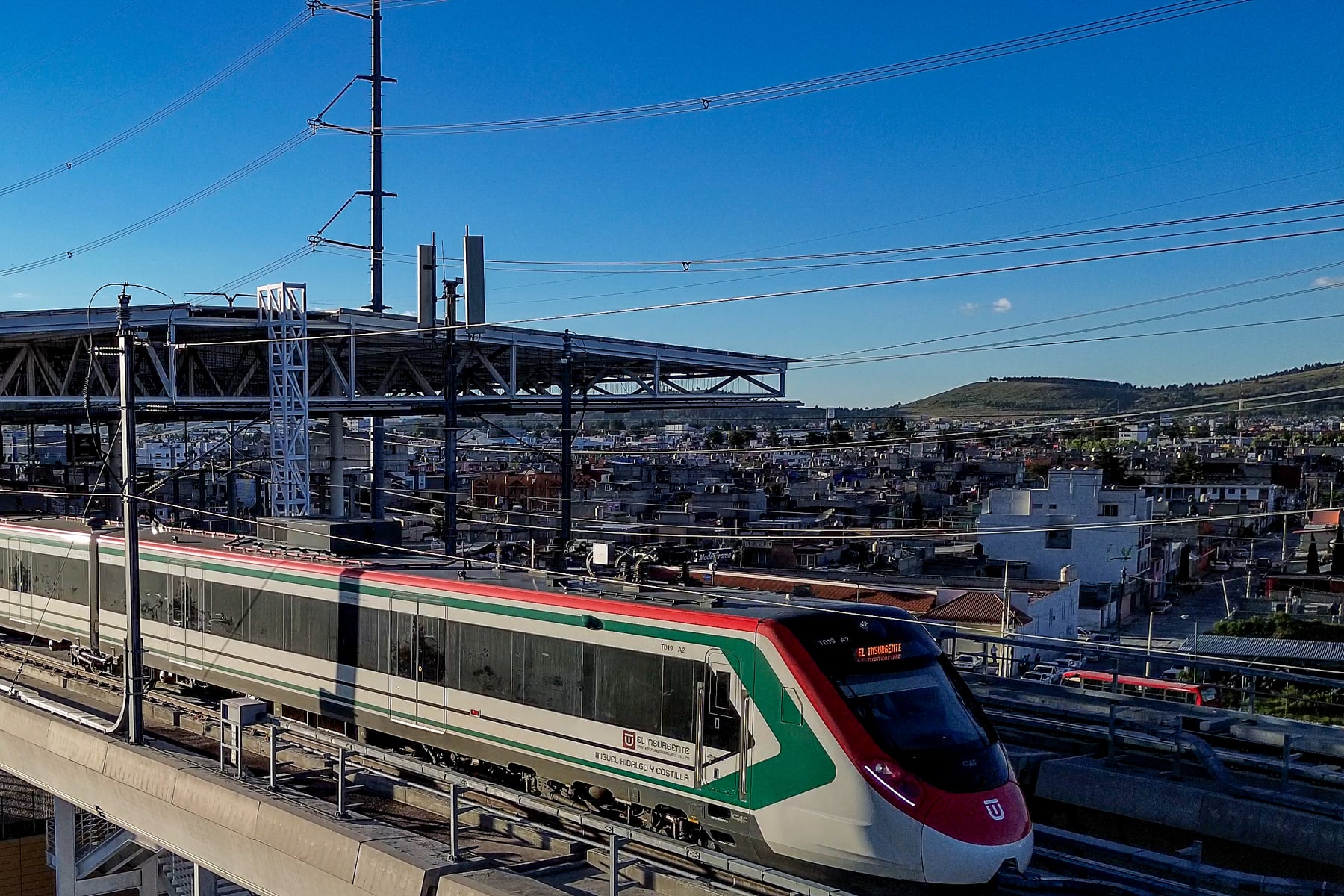
Tren El Insurgente
ProtoplasmaKid / Wikimedia Commons / CC-BY-SA 4.0
- Distance58 km
- Duration1 h
- Best seasonNovember–April · the dry season, clear over the sierra
Introduction
Mexico City and Toluca sit an hour apart and half a kilometre of altitude apart, with a wooded volcanic range in between. For most of the last century the only way across was the road over the Sierra de las Cruces, one of the most congested corridors in the country. Since 2 February 2026 there has been a railway: 58 kilometres of double track, electrified at 25,000 volts, almost all of it carried on viaduct above the traffic, running from the Metro at Observatorio to a terminus at Zinacantepec on the western edge of the Toluca valley.
It is called El Insurgente, and the name is not decoration. The mountain the line tunnels under is Monte de las Cruces, where on 30 October 1810 Miguel Hidalgo y Costilla's insurgent army beat the royalist force blocking the road to Mexico City — and where Hidalgo, having won, turned back rather than march on the capital. The battlefield is a national park named after him. The trains carry insurgents' names on their flanks; the set in the photograph above is Miguel Hidalgo y Costilla.
What that buys a traveller is unusual. This is a commuter railway by timetable — turn up, tap in, ten minutes to the next train — but the run itself is a mountain crossing. Toluca is the highest state capital in North America at about 2,660 metres; Mexico City sits at 2,240. Between them the line climbs out of one high valley, bores 4.9 kilometres through the range in a twin-bore tunnel, and comes down into the other at rooftop height on concrete. End to end it costs 100 pesos.
The Journey
Trains start from either end and the run is symmetrical, so this describes it west to east, from Zinacantepec down to Observatorio — the direction that gains the mountain and ends in Mexico City.
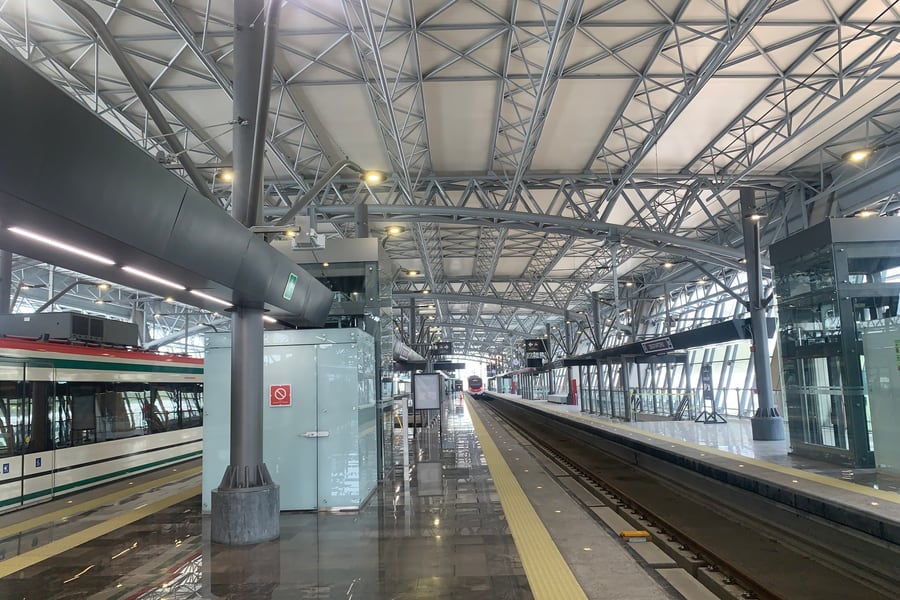
Zinacantepec is the outer terminus, a long island platform under a shallow roof on a viaduct beside Boulevard Solidaridad Las Torres, with the depot and workshops immediately beyond it. Board here and you can watch the whole fleet at rest: sixteen sets in service, each five cars and 99 metres long, built by the Spanish manufacturer CAF on its Civity platform and assembled for 719 passengers apiece. There are 326 seats. The rest stand, and on a weekday morning most of them do.
Out of the platform the line runs dead straight for kilometres, 20 metres above the roofs of Toluca, the sierra closed across the far end of the valley and the Nevado de Toluca — a 4,680-metre volcano, the fourth highest mountain in Mexico — off to the south. Toluca Centro comes first, the station for the city's downtown and its intercity bus terminal; then Metepec, the nearest station to Toluca's airport and the one the potters of Metepec wanted named after their trade.
The climb and the tunnel
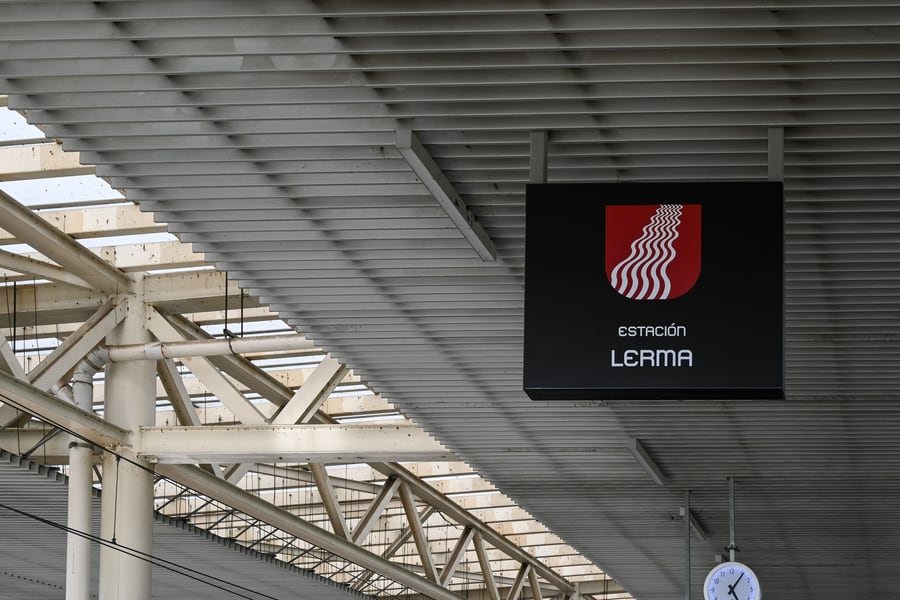
Beyond Metepec the elevated track drops to ground level for a stretch and the valley floor opens out. Lerma is the last station in the State of Mexico, set where the Lerma river rises and the industrial belt along the highway begins. It is also where the railway stops being flat. From here the line runs into the Sierra de las Cruces and enters the bitúnel — two bores, 4.9 kilometres long, driven under the range on a gradient steep enough that the trains carry three separate braking systems, one of them magnetic, specifically for it.
There is nothing to see inside, which is the point: the tunnel exists so that the railway does not cross the Desierto de los Leones and La Marquesa forests on the surface. You go in under the Toluca valley and come out in Mexico City, and the four minutes in between are the reason the whole thing took twelve years to build.
Down into Santa Fe
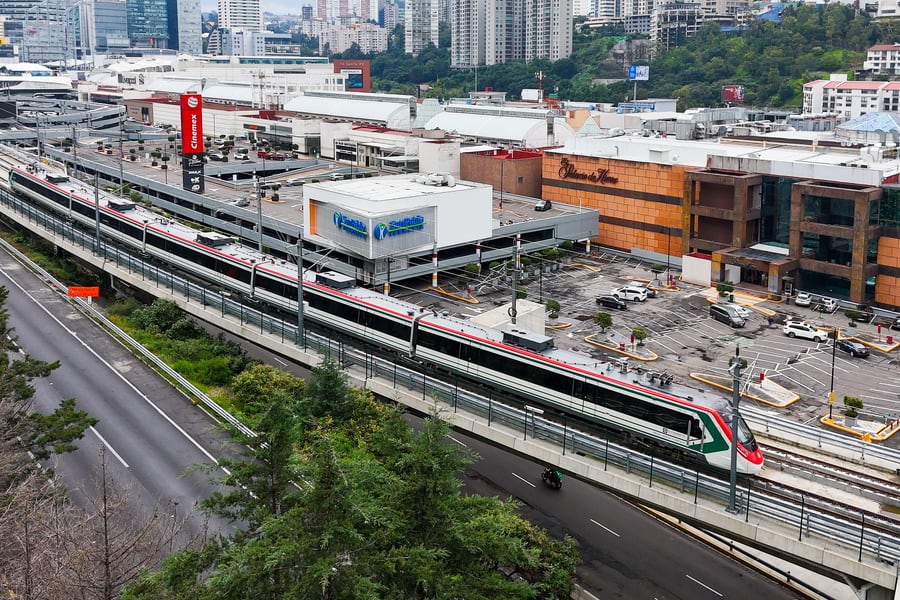
The eastern portal delivers the line into the ravines above Santa Fe, the high-rise business district built on what used to be the city's rubbish tips. The station stands on stilts beside the motorway with the towers behind it. Then comes the piece of engineering the project is proudest of: a cable-stayed bridge on a curve, roughly half a kilometre long with a 200-metre central span, hung from two V-shaped piers of 65 and 75 metres by eight fans of thirteen stays each. It was built that way to vault a spring in the fourth section of Chapultepec park rather than pile through it. Sit on the left going east and you can see the whole curve of it.
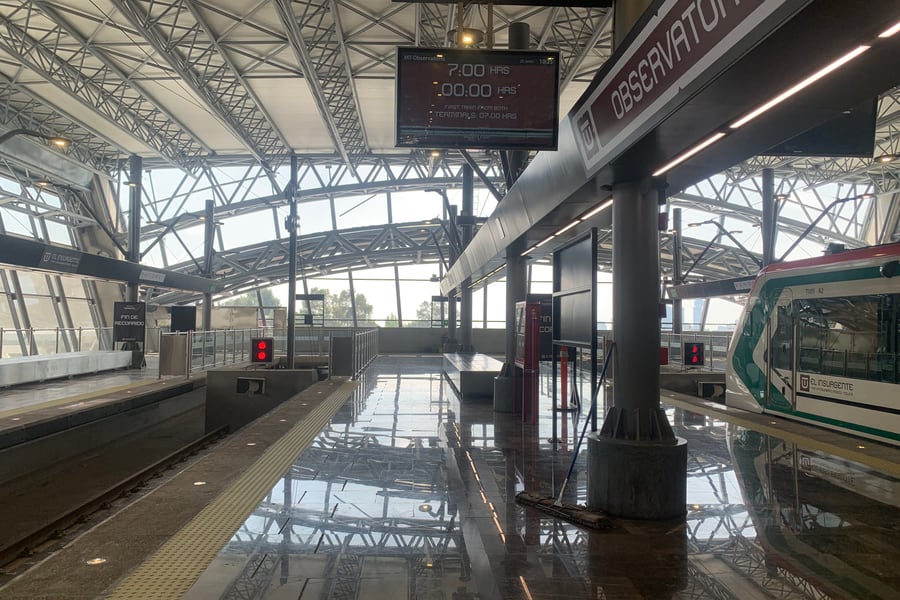
Vasco de Quiroga follows, a station with no drop-off bay at all — you walk in, or you arrive on the Cablebús cable car whose station shares the name. And then Observatorio, where the line ends under a great trussed roof alongside Line 1 of the Mexico City Metro, the western intercity bus terminal and one of the city's biggest transfer yards. Sixty minutes, seven stations, and a mountain range behind you.
Along the route
 ProtoplasmaKid / Wikimedia Commons / CC-BY-SA 4.0 · cropped
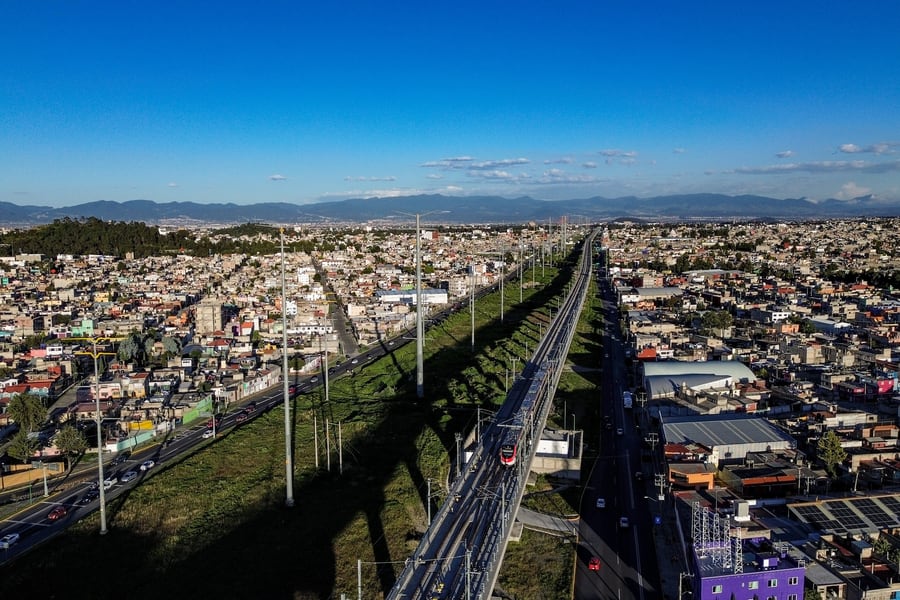
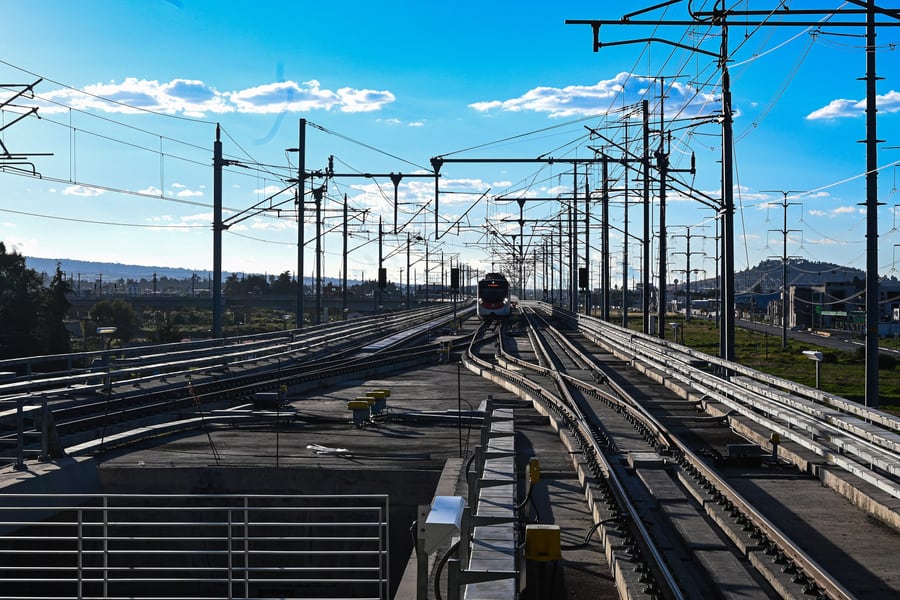
Zinacantepec and the valley run
The western terminus, its depot and the first twenty kilometres: dead straight, twenty metres up, past Toluca Centro and Metepec with the Nevado de Toluca off to the south.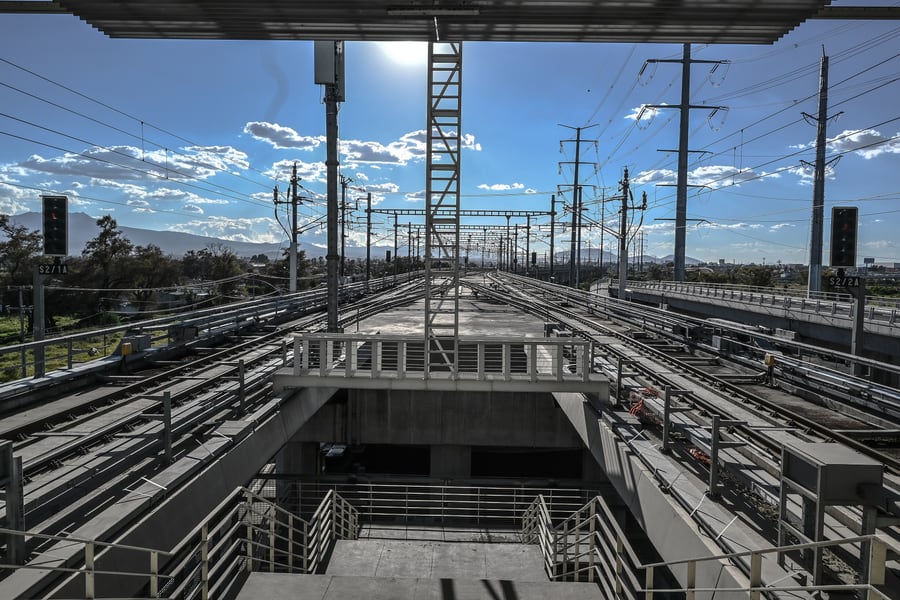 ProtoplasmaKid / Wikimedia Commons / CC-BY-SA 4.0 · cropped
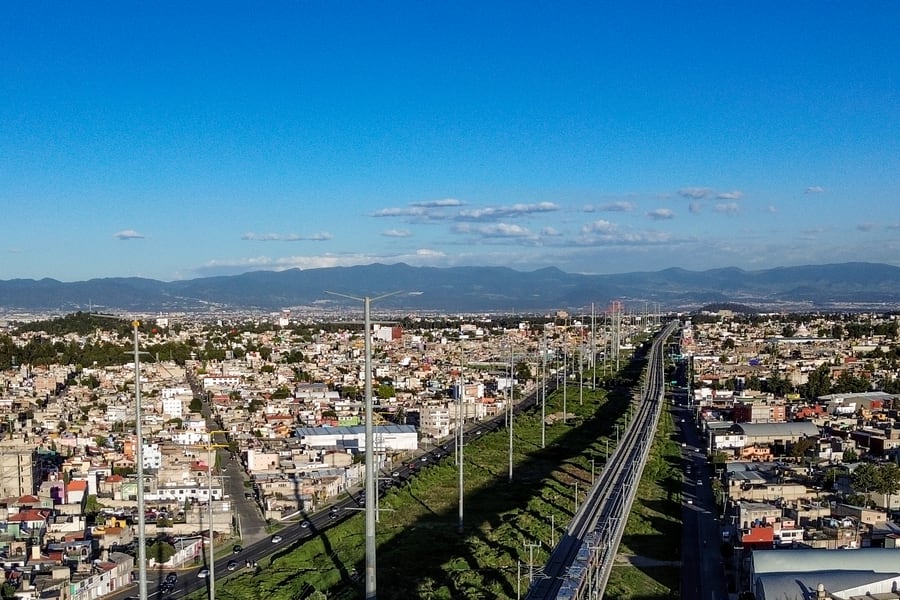
Lerma, and the end of the flat
The last station in the State of Mexico, where the Lerma river rises. Beyond it the viaduct comes down to ground level, the industrial belt thins out and the line turns for the mountains.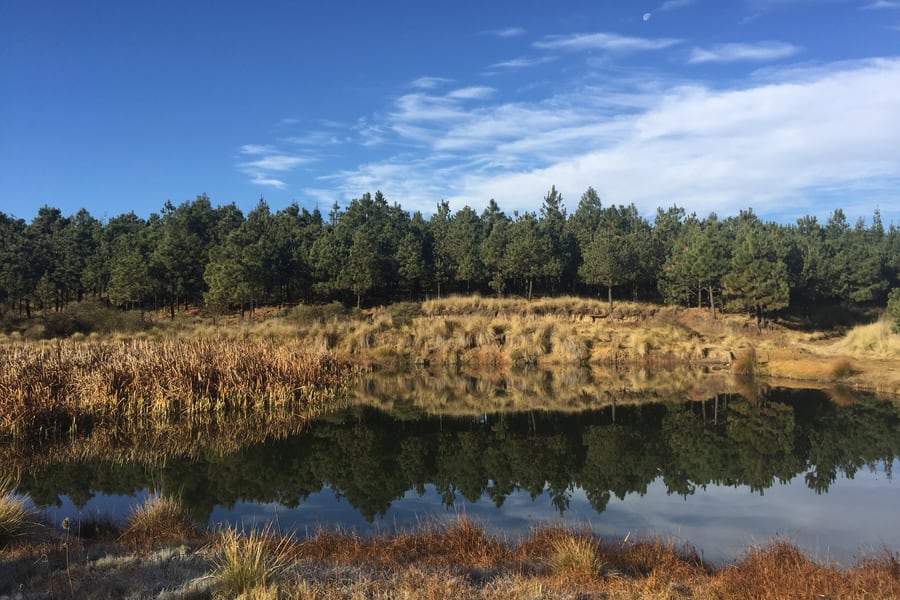 Omar David Sandoval Sida / Wikimedia Commons · CC BY-SA 4.0 · cropped
The bitúnel under the sierra
Two bores, 4.9 kilometres, driven under the Sierra de las Cruces so the railway need not cross the Desierto de los Leones and La Marquesa forests on the surface. Four minutes in the dark, and the gradient is why the trains carry magnetic brakes.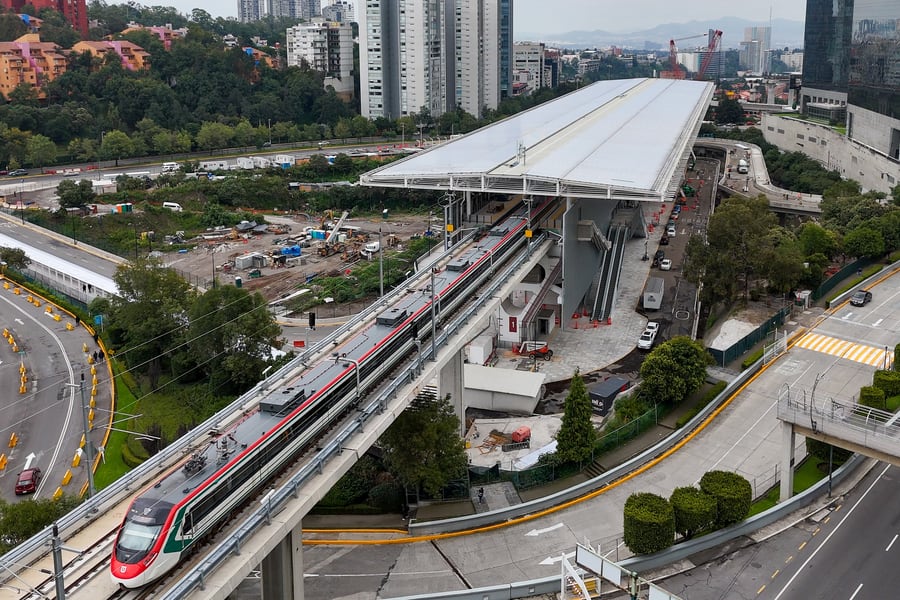 ProtoplasmaKid / Wikimedia Commons / CC-BY-SA 4.0 · cropped
Santa Fe and the cable-stayed curve
Out of the tunnel into the ravines above Santa Fe, then the bridge: half a kilometre on a curve, a 200-metre central span, eight fans of thirteen stays off two V-shaped piers, built to vault a spring rather than pile through it.A bit of history
Culture & experiences along the way
 Mariana Rentería / Wikimedia Commons · CC BY-SA 3.0 · cropped
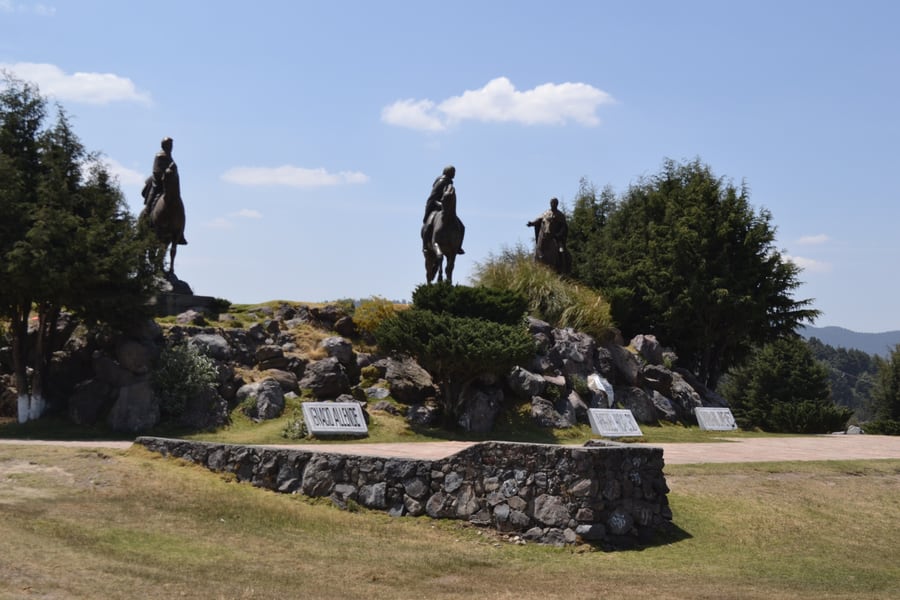
The mountain the train is named for
On 30 October 1810, on the ground the tunnel now runs under, Miguel Hidalgo y Costilla's insurgents broke the royalist line holding the road to Mexico City — and then turned back rather than take the capital. The bronzes stand at La Marquesa, in the national park that carries his name, above the eastern portal.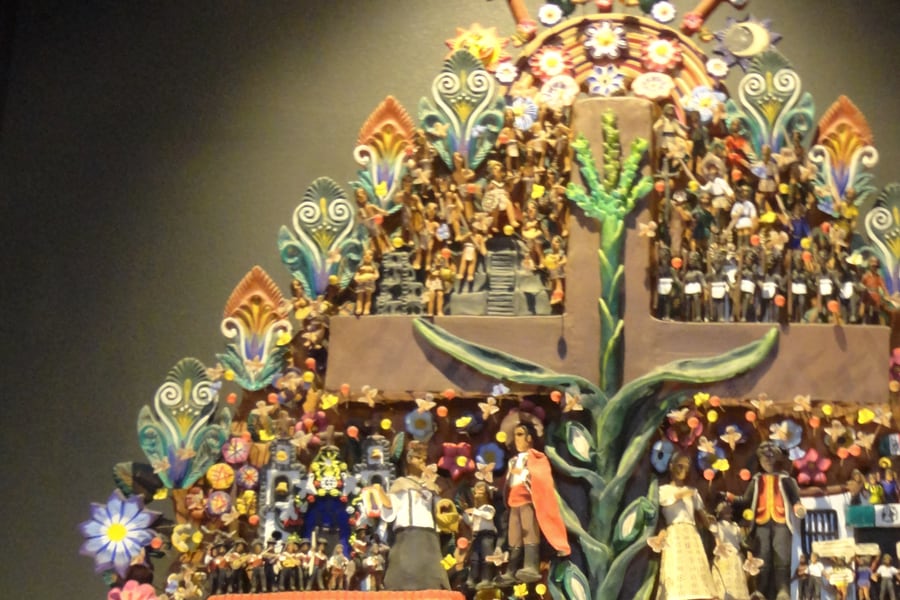 Juan Carlos Fonseca Mata / Wikimedia Commons · CC BY-SA 4.0 · cropped
Metepec's trees of life
The árbol de la vida is Metepec's own craft: a clay tree hung with painted figures — Adam and Eve, saints, animals, whole scenes — built up piece by piece and fired. The workshops are a short walk from Metepec station, and a state deputy once asked for the station itself to be renamed after them.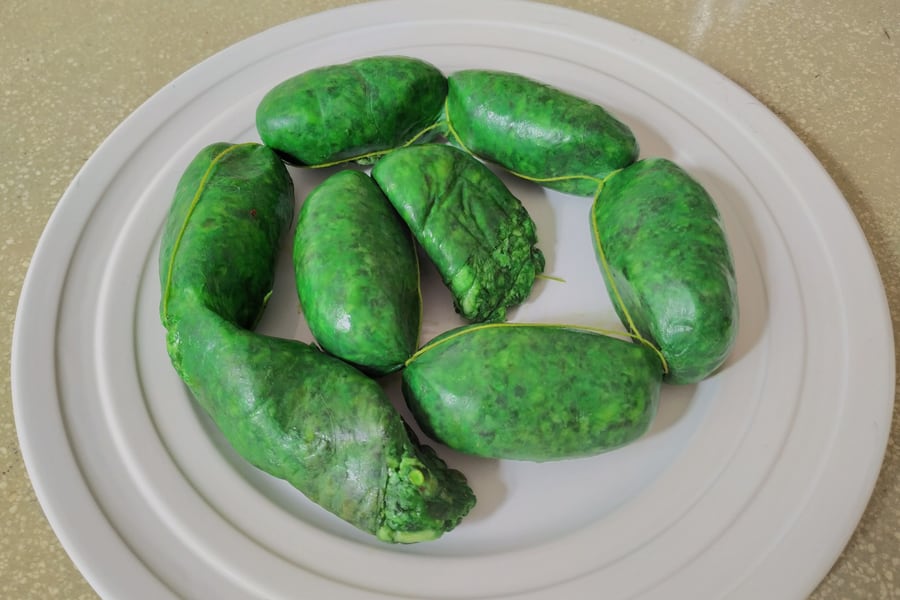 El Mono Español / Wikimedia Commons · CC BY-SA 4.0 · cropped
Green chorizo
Toluca's contribution to Mexican cooking, and it really is that colour: pork sausage bound with tomatillo, coriander, parsley, chilli and — depending on whose recipe — peanuts, pumpkin seed or spinach. Eat it in tacos at the market. No food or drink is allowed on the train, so do it before you tap in.Timetables
El Insurgente is turn-up-and-go. There is no seat reservation, no numbered train and no printed departure list: trains run about every ten minutes in each direction, all day, and the end-to-end run takes 60 minutes.
Hours of service
The operator cut the evening back on 10 August 2026 for scheduled maintenance, "until further notice". These are the hours in force as of September 2026:
| Day | First train | Last train from either terminus |
|---|---|---|
| Monday–Friday | 05:00 | 22:30 |
| Saturday | 06:00 | 22:30 |
| Sunday and public holidays | 07:00 | 22:30 |
The Reglamento — the operating rules, which have not changed — still give the normal hours as 05:00 to midnight on weekdays, 06:00 to midnight on Saturdays and 07:00 to midnight on Sundays and holidays. Expect the late trains back when the maintenance ends, and check before planning a night return.
Getting the current position
The banner across the top of trenelinsurgente.mx (opens in a new tab) carries any change to the hours, and the operator's Sala de Prensa posts the notices. Both were read on 14 September 2026 for the times above.
Journey times
There is no published station-by-station timetable, because at a ten-minute headway there is no need for one. Work on 60 minutes Zinacantepec to Observatorio, and roughly a sixth of that between each pair of adjacent stations. The line was designed for a 39-minute run at up to 160 km/h; in service the trains are held to 120 km/h and the hour, which is still about half what the same trip takes on the highway at any busy hour.
Tickets
There is one fare structure and it is charged by distance. You enter with the Tarjeta Única de Movilidad Integrada (TUMI), the contactless card used across Mexico City's transport, or with a QR code bought at the machines inside each station. Both are single-journey, and you must tap in at the origin and out at the destination — the gate at the far end is what sets the price.
The operator states plainly that there are no concessions, discounts or exemptions. The one exception is height: anyone under 115 cm travels free. Luggage is capped at 80 × 60 × 30 cm, so a full-size suitcase is a problem. Fares confirmed against the operator's own table, September 2026.
| From Observatorio to | MXN |
|---|---|
| Vasco de Quiroga | 15 |
| Santa Fe | 25 |
| Lerma | 70 |
| Metepec | 80 |
| Toluca Centro | 90 |
| Zinacantepec | 100 |
Within the Toluca valley a single station hop is 15 pesos and two or three stations 20.
Book your tickets
Tarjeta Única de Movilidad Integrada
The contactless card, reloadable at every station
The same card works on the Metro, Metrobús, Cablebús and trolleybus in Mexico City; tap in and out and the gate charges the distance.
Book Tickets (opens in a new tab, on trenelinsurgente.mx)via trenelinsurgente.mxSingle-journey QR code
Bought at the machines inside each station
Valid for one trip between the two stations named when you buy it, so keep it readable until you are through the exit gate.
Book Tickets (opens in a new tab, on trenelinsurgente.mx)via trenelinsurgente.mxRail Passes
No rail pass covers El Insurgente, and none needs to. Mexico has no national rail pass — the country's inter-city passenger network was wound down in 1997 and the trains that run today are each sold separately. There is no Interrail or Eurail equivalent here.
Nor is a pass worth wanting on this line. The longest possible journey, Zinacantepec to Observatorio, costs 100 pesos, and there is no return, day or period ticket that beats paying twice. The only thing worth carrying is the Tarjeta Única de Movilidad Integrada, and that is a stored- value card rather than a pass: load it once and the same card works on the Metro, the Metrobús, the Cablebús and the trolleybus at the Mexico City end. If you are connecting at Observatorio, it saves you a second queue.
Checked September 2026.
Places to Visit
Every station on the line is elevated and every one of them sits on a main road, so what follows is organised by the stop you get off at rather than by any notion of a scenic detour. Two of the six are worth a day in themselves; the rest are an afternoon each.
One caution worth stating plainly: the Nevado de Toluca, the volcano that fills the southern skyline for the whole Toluca valley stretch, has been closed to visitors since August 2025 after a fatal accident on the access road, and no reopening date has been set. When it reopens, the published plan is foot access only from the Parque de los Venados. Admire it from the train.
 Jesús Mendoza / Secretaría de Cultura EDOMEX / Wikimedia Commons · CC BY-SA 4.0 · cropped
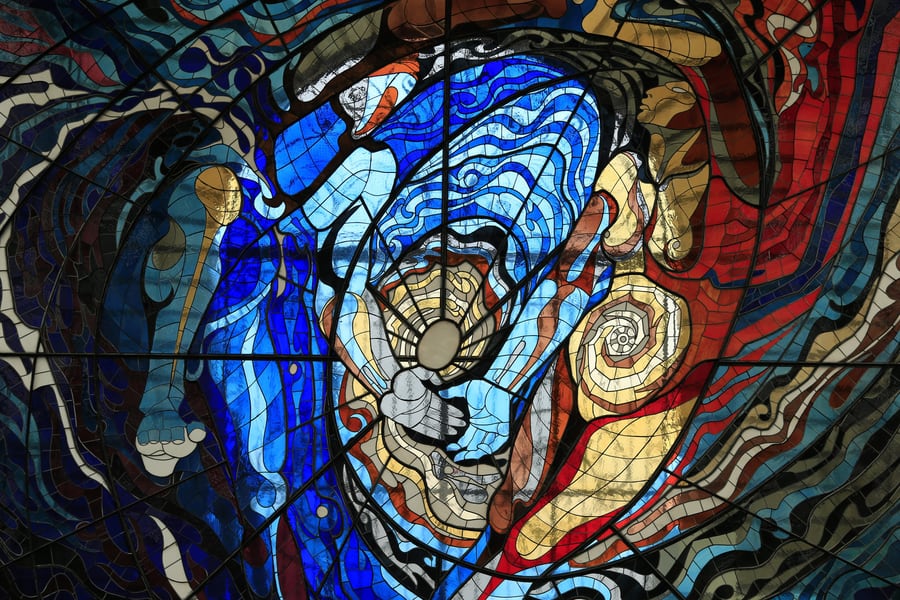
Cosmovitral, Toluca
Toluca's one unmissable thing, ten minutes from Toluca Centro station. An Art Nouveau iron-and-glass market hall of 1910 — it was built to look like a railway station — that stopped trading in 1975 and was turned over to the artist Leopoldo Flores, who filled its windows and roof with stained glass and put a botanical garden on the floor beneath. The centrepiece is Hombre Sol, a figure in the middle of a detonating sun.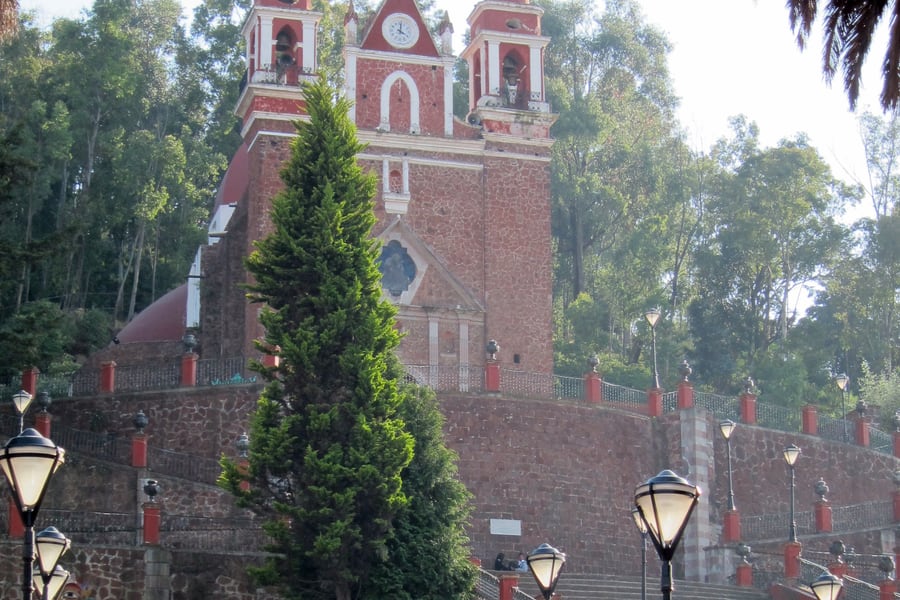 Nheyob / Wikimedia Commons · CC BY-SA 3.0 · cropped
Metepec
A designated Pueblo Mágico that Toluca's sprawl has swallowed without taking its centre. The Cerro de los Magueyes rises straight out of the town with the sixteenth-century Franciscan Ex-Convento de San Juan Bautista at its foot and the red Capilla del Calvario above, reached by a stair. The potters' workshops are the other reason to come.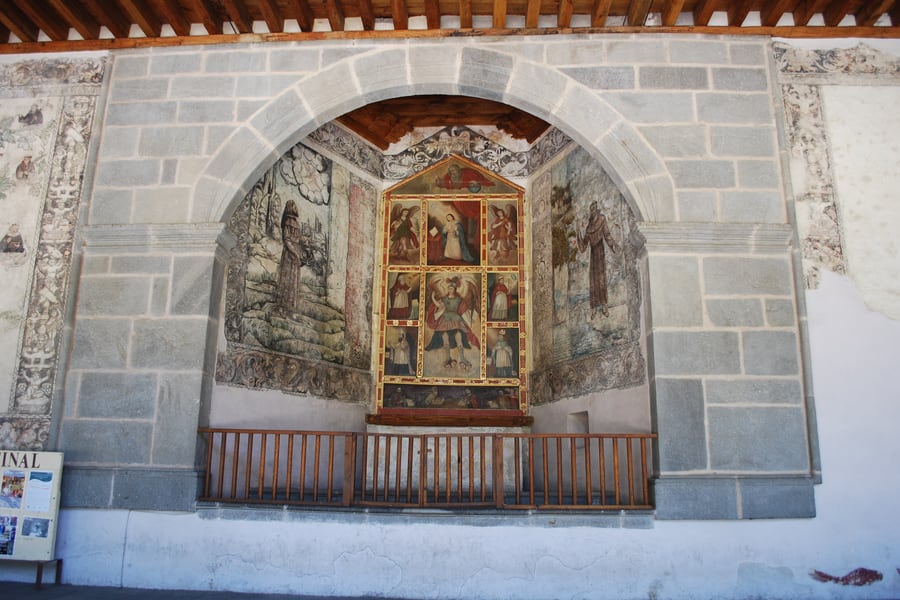 Thelmadatter / Wikimedia Commons · CC BY-SA 3.0 · cropped
Ex-Convento de San Miguel, Zinacantepec
Fifteen minutes from the western terminus, a Franciscan house begun in 1526 and now the Museo Virreinal de Zinacantepec. Its open chapel — a vaulted recess facing the courtyard, so a congregation could stand outside — keeps sixteenth-century wall paintings and a small gilt retablo of St Michael. The cloister above it is two storeys of plain volcanic stone.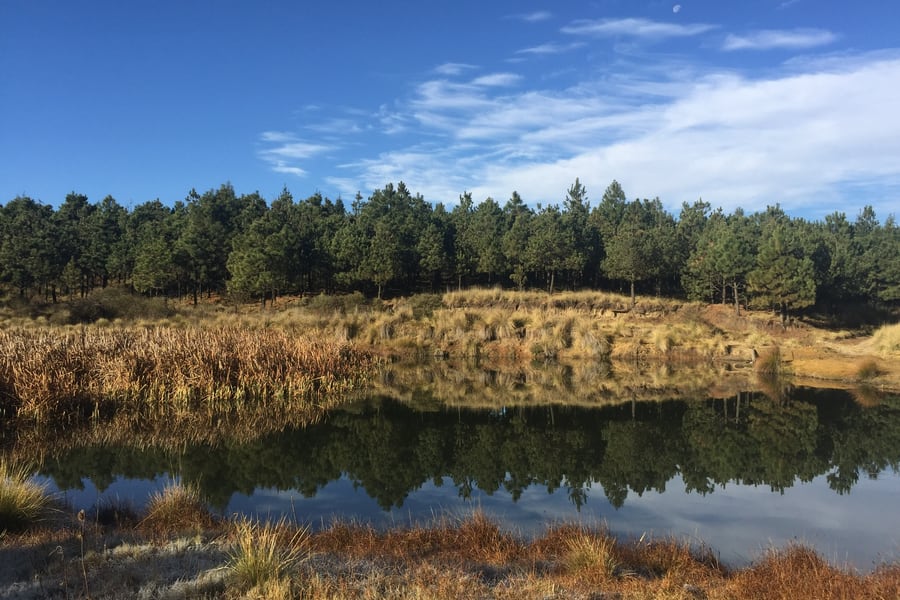 Omar David Sandoval Sida / Wikimedia Commons · CC BY-SA 4.0 · cropped
La Marquesa
Properly the Parque Nacional Insurgente Miguel Hidalgo y Costilla: pine forest, cold mountain lakes and high meadow on the crest of the Sierra de las Cruces, directly above the tunnel. It is the battlefield of 1810 and it is also where Mexico City goes at weekends to ride horses and eat trout. No station serves it — take a bus from Lerma or drive the old highway.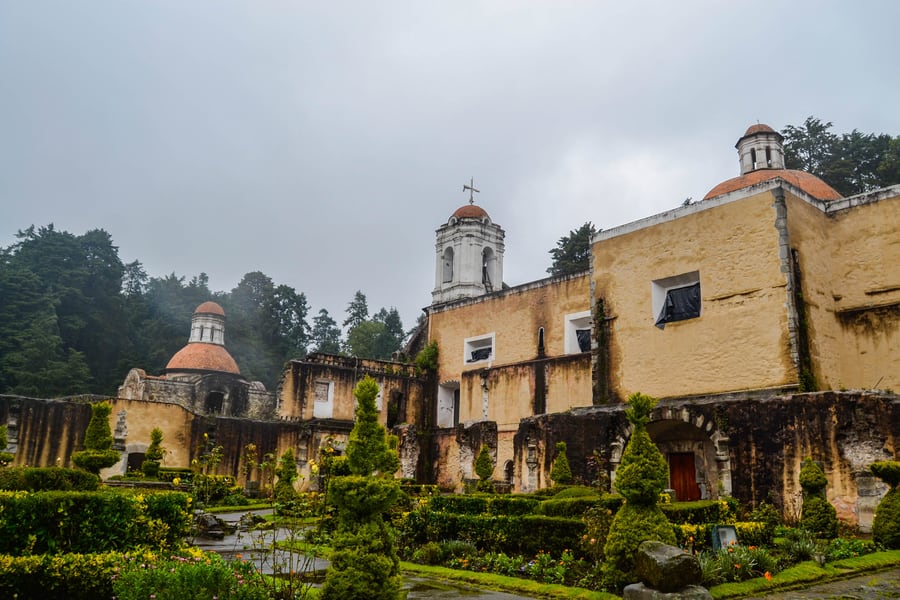 Sisnisanti / Wikimedia Commons · CC BY-SA 4.0 · cropped
Desierto de los Leones
The other forest the tunnel spares, and Mexico's first protected area — a reserve from 1876, a national park from 1917. At its centre stands a walled Carmelite monastery of 1606, rebuilt in 1814 and abandoned when the war of independence began, with gardens replanted around the ruins. Reachable from Observatorio or Vasco de Quiroga.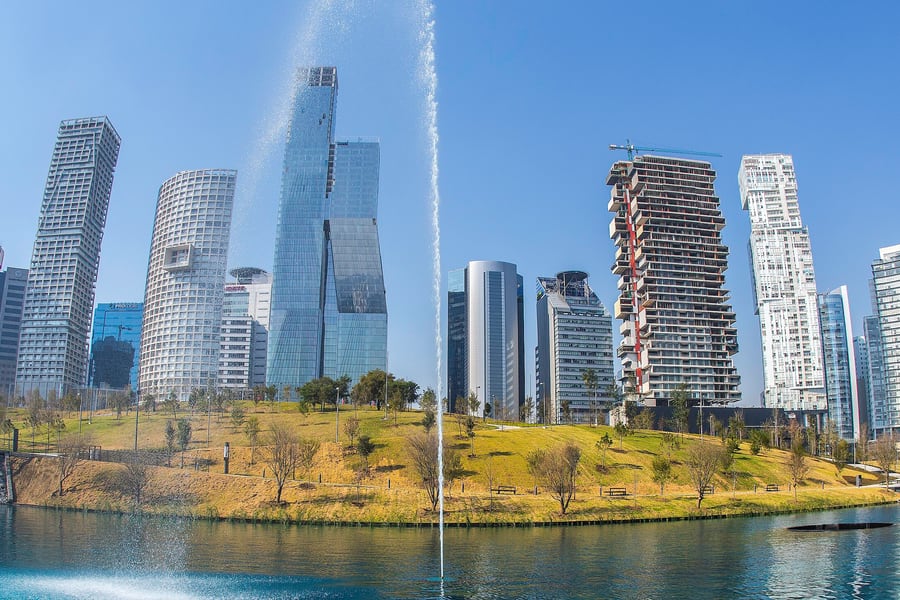 Gobierno CDMX / Wikimedia Commons · CC0 · cropped
Santa Fe
Two stations serve it and it is unlike anywhere else on the line: a district of glass towers, university campuses and the largest shopping centre in Latin America, built since the 1990s on ground that was a sand quarry and then the city's rubbish dump. Worth an hour for the strangeness of the skyline, and for the fourth section of Chapultepec park next door — the ground the bridge was built to clear.Where to Sleep
Nobody stays overnight to ride El Insurgente — it is an hour, and the last train back leaves at half past ten. The reason to book a bed is the other end of the trip: Toluca is a genuine city with a cathedral, a market and the Cosmovitral, and Santa Fe is where a lot of business in Mexico City actually happens.
Toluca's hotels cluster in the historic centre, within walking distance of Toluca Centro station, and along Paseo Tollocan towards Metepec. Santa Fe's are business hotels, priced for the corporate week and often cheapest at weekends — which is also when the train is quietest. All three below were checked in September 2026; none of them has a rate quoted here, because we have not verified one.
Where to stay
Fiesta Inn Toluca Centro
Toluca, in the historic centre
On Calle Allende Sur a few minutes' walk from the cathedral and the Cosmovitral, with a restaurant, gym and business centre.
Check Availability (opens in a new tab, on fiestamericanatravelty.com)via fiestamericanatravelty.comCrowne Plaza Toluca-Lancaster
Metepec, on Paseo Tollocan
Between Toluca and Metepec on the main avenue, with a restaurant, lobby bar, fitness centre and meeting rooms.
Check Availability (opens in a new tab, on ihg.com)via ihg.comRamada by Wyndham Mexico City Santa Fe
Santa Fe, in the business district
A non-smoking business hotel near the Centro Santa Fe and Patio Santa Fe malls, with breakfast, parking, a gym and a sauna.
Check Availability (opens in a new tab, on wyndhamhotels.com)via wyndhamhotels.comQuestions or corrections
Planning this trip and stuck on something, or spotted a time, fare or detail that has changed? Send us a message about Tren El Insurgente. We read every one, and we update this page when something has changed.