Tren Maya
ProtoplasmaKid / Wikimedia Commons / CC-BY-SA 4.0 · cropped
- Duration11 h 13 m · daily
- Best seasonNovember–April · drier and cooler
Introduction
Mexico spent five years building a railway across the Yucatán Peninsula, and since the first day of 2024 you have been able to ride the length of it. Train 101 leaves Palenque at 08:40, in the rainforest of eastern Chiapas, and reaches Cancún at 20:53 — twenty intermediate stops, two ten-minute pauses, and a little over eleven hours of flat, fast running through five states and several thousand years of Maya history. Train 102 does the same in reverse. Both run every day.
The train is new in every sense. The X'Trapolis Tsíimin K'áak sets were built by Alstom for this railway and for nothing else; the name is Yucatec Maya for fire horse, which is what the peninsula called the first steam locomotives it saw. The line is standard gauge, laid for 160 km/h, and much of it runs beside a highway on ground so level that the most dramatic thing that happens all day is a change of clock: between Valladolid and Nuevo Xcán the train crosses from the Zona Centro into the Zona Sureste and loses an hour, which is why the timetable looks briefly impossible.
What makes it a journey rather than a transfer is what stands within a few kilometres of the stations. Palenque and Chichén Itzá are both UNESCO World Heritage sites; so is the walled city of Campeche. Mérida, Izamal and Valladolid are colonial towns built out of Maya stone, and Edzná — a station in its own right — is a Maya city that most visitors to the peninsula never reach. The railway did not invent any of this. It simply made it possible to see the lot from one seat, in one day, for the price of a bus ticket and not much more.
The Journey
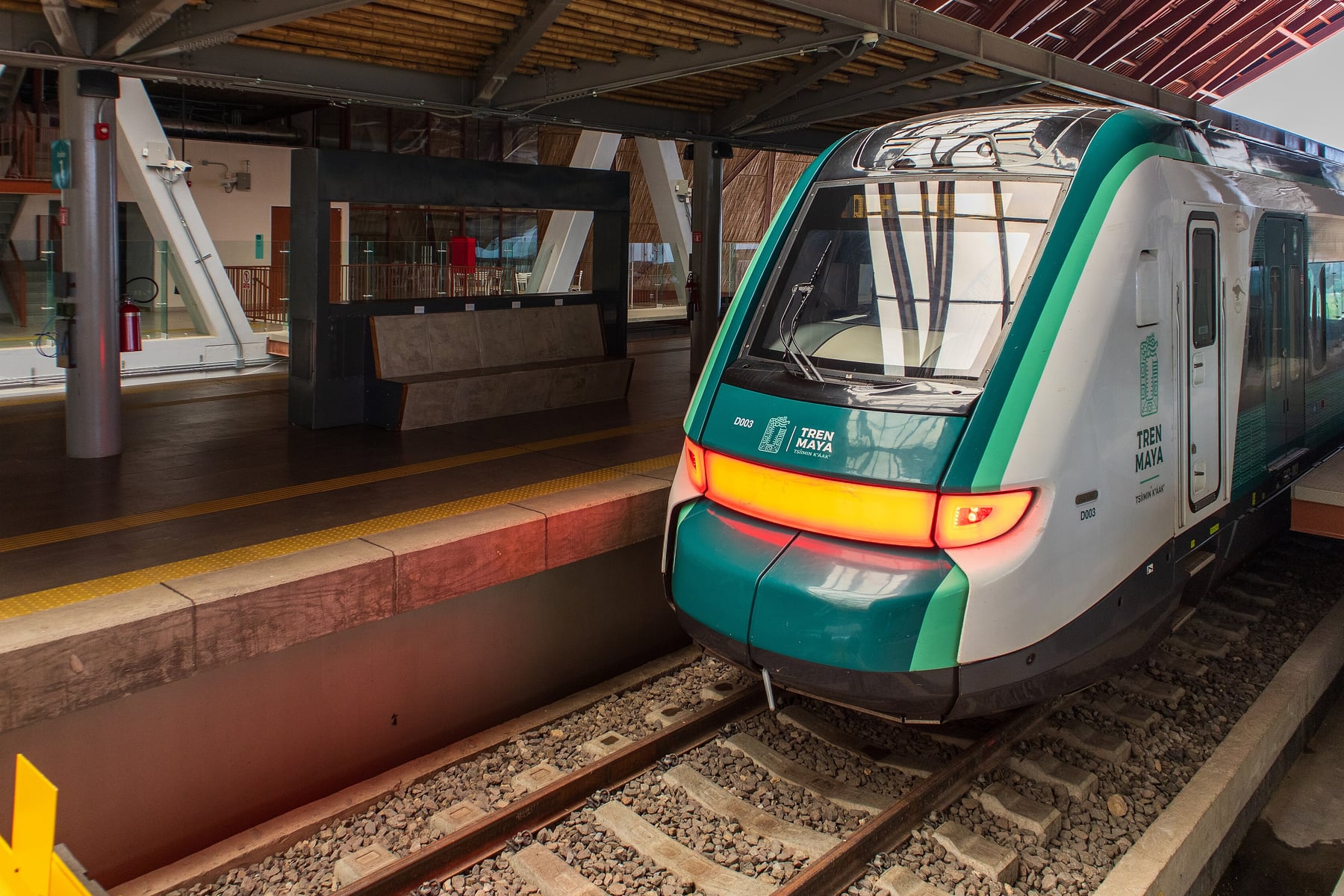
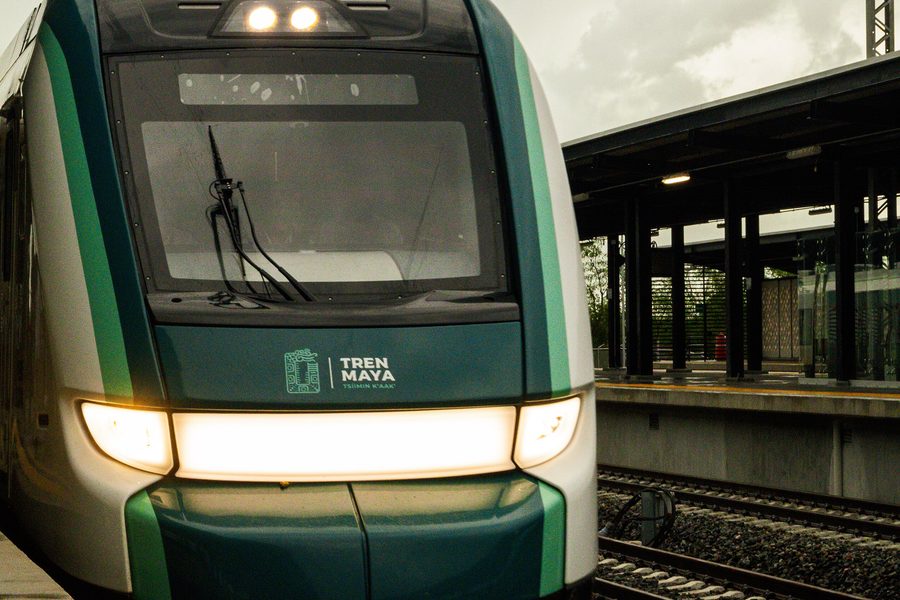
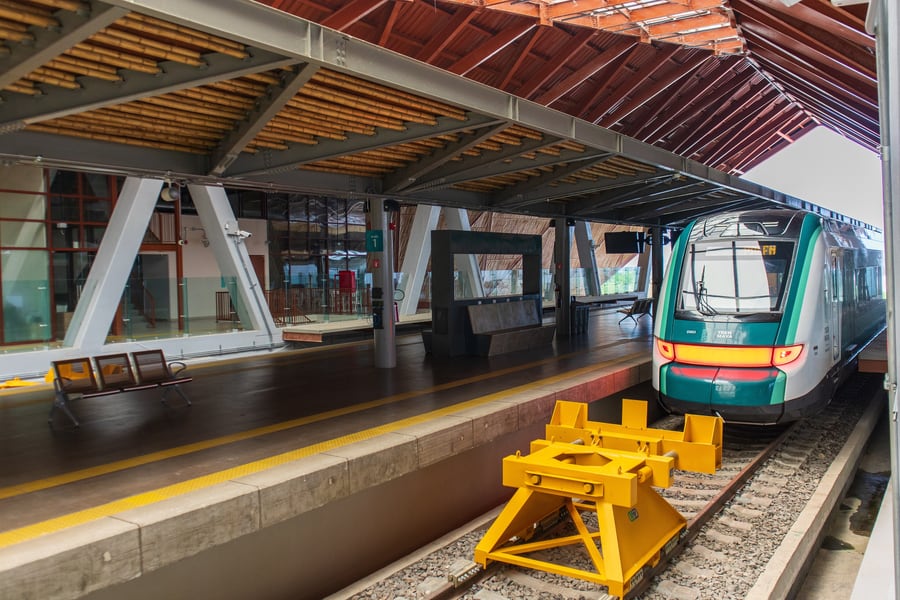
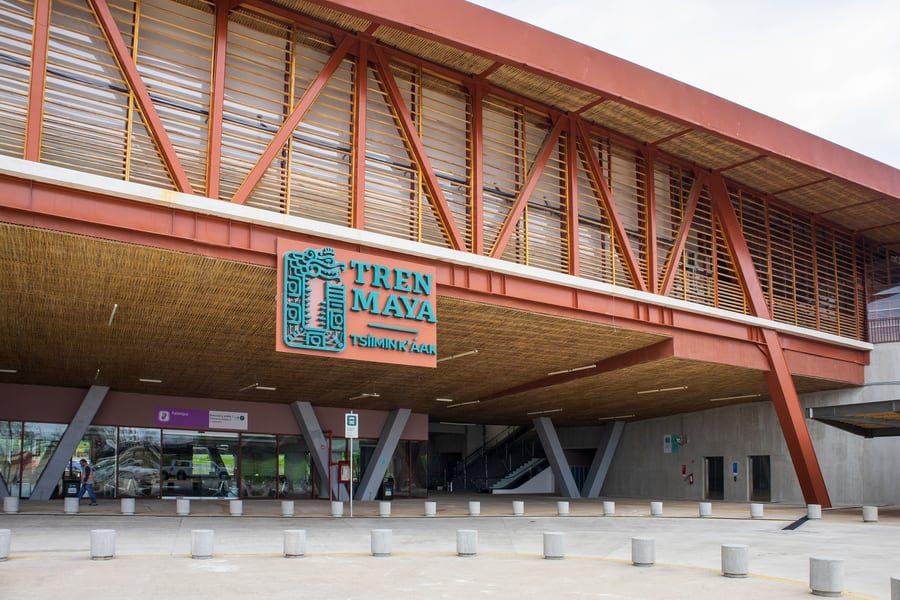
Palenque station stands a few kilometres from the ruins, under a roof of red steel trusses and timber slats that filters the Chiapas light into stripes. The train is already at the platform when boarding opens: a low, blunt-nosed set in cream and two greens, with the Tren Maya glyph on the nose. At 08:40 it pulls out through cattle country towards the Usumacinta, the river that divides Mexico from Guatemala, and stops almost at once at Boca del Cerro, where the river leaves its gorge.
The first three hours are the least Yucatecan part of the day. This is Tabasco and southern Campeche — tall forest, palm plantations, low cloud — and the stations are small: Tenosique, El Triunfo, Candelaria. At Escárcega the Chetumal line joins from the south-east, and the next stop but one is named Edzná, for the Maya city whose five-storey palace stands on an acropolis a short drive away. By midday the forest has shrunk to scrub and the Gulf is somewhere off to the left.
Ten minutes at Campeche, ten at Mérida
San Francisco de Campeche is the first of the two long stops, at 13:24. The walled town is a few minutes away by road: a grid of lime-washed houses inside a Spanish sea rampart, painted in the sherbet colours that got it onto the World Heritage list in 1999. The train waits ten minutes and then turns inland across the henequén country, past Tenabo, Hecelchakán and Calkiní, small towns whose wealth came and went with a fibre crop.
Mérida Teya, at 16:12, is the second ten-minute stop and the busiest station on the route — the capital of Yucatán is a twenty-minute drive west. After it the train runs through the flattest landscape in Mexico: limestone shelf a few metres above sea level, scrub forest, no rivers at all because the water on this peninsula runs underground. Izamal passes at 17:00, Chichén Itzá at 17:45, Valladolid at 18:12.
The hour that disappears
Somewhere between Valladolid and Nuevo Xcán the train crosses the Yucatán–Quintana Roo state line and, with it, a time zone. Yucatán keeps UTC−6; Quintana Roo has been on UTC−5 since 2015 and does not change for summer. The next-station display simply jumps an hour. On paper the leg takes 1 h 44 m; in reality it takes forty-four minutes, and every arrival time after it is an hour later than the running times suggest. The operator's printed timetable quietly sidesteps the problem by listing the whole journey in Campeche time; the booking engine gives each station its own local clock. Both are right.
Cancún is reached at 20:53, at the airport rather than in the town — the station sits beside the terminals, twenty kilometres south of the hotel zone. In the other direction, train 102 leaves Cancún at 09:30 and is back in Palenque at 19:51.
On board
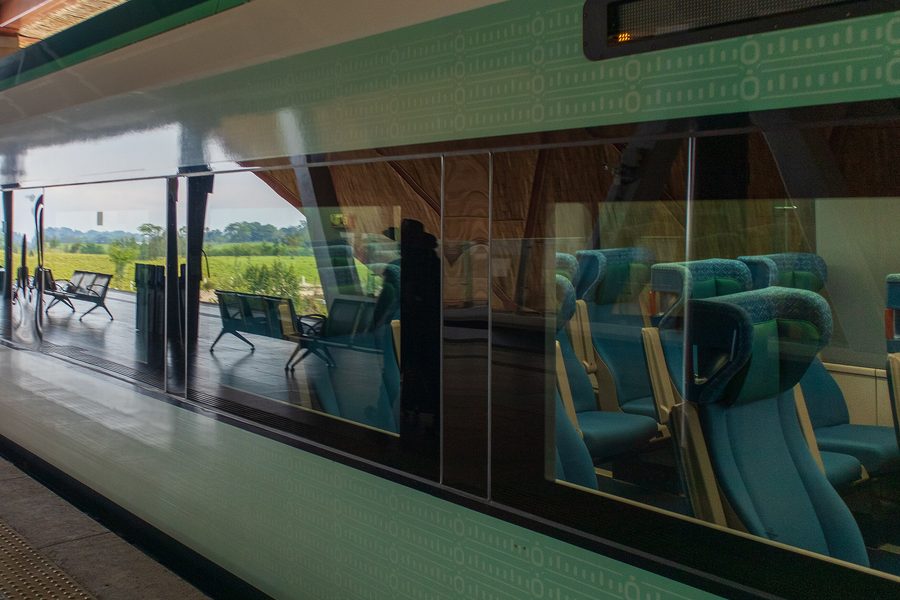
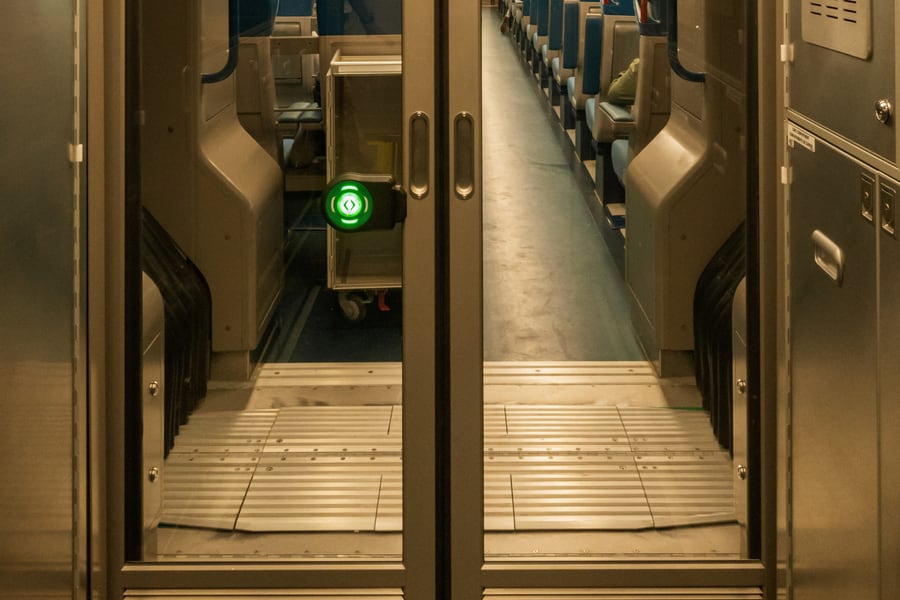
Two classes are sold on this train, Turista and Premier, and the booking engine prices them separately for every station pair. The saloons are open, air-conditioned and glazed from armrest to luggage rack, with teal seating in twos either side of the aisle and a screen at each vestibule giving the next station and the time.
The fleet is worth knowing about before you book, because it is not uniform. Alstom built 42 sets in three variants, each with a Maya name: 31 Xiinbal for ordinary service, 8 Janal with a restaurant car, and 3 P'atal for long-distance work with sleeping accommodation. Which variant runs which service is not published, and the operator's own news page treats the first outing of a Janal restaurant car as an event, so a day's food and water is worth carrying aboard rather than counting on.
Along the route
 ProtoplasmaKid / Wikimedia Commons / CC-BY 4.0 · cropped
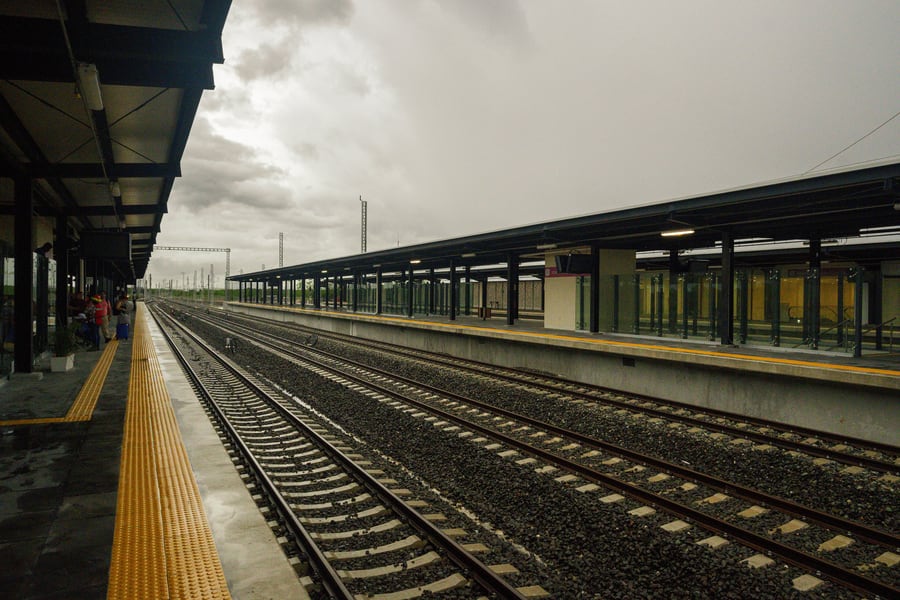
Palenque, under the red roof
The western terminus is a timber-and-steel hall on the edge of the rainforest, a few kilometres from the ruins. Train 101 boards here for 08:40 and the whole eleven hours begins in Chiapas, in country that looks nothing like the Yucatán it ends in.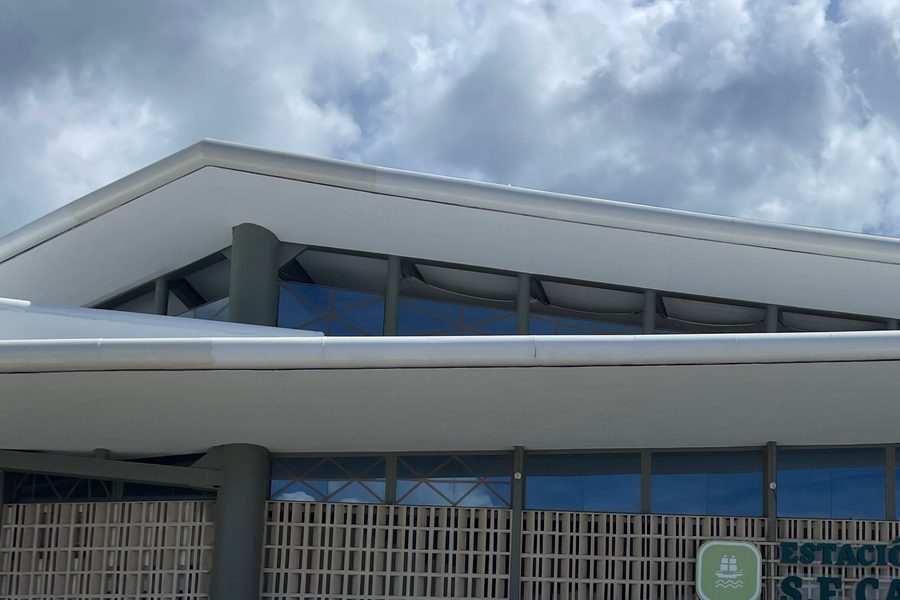 Park1996 / Wikimedia Commons · CC BY-SA 4.0 · cropped
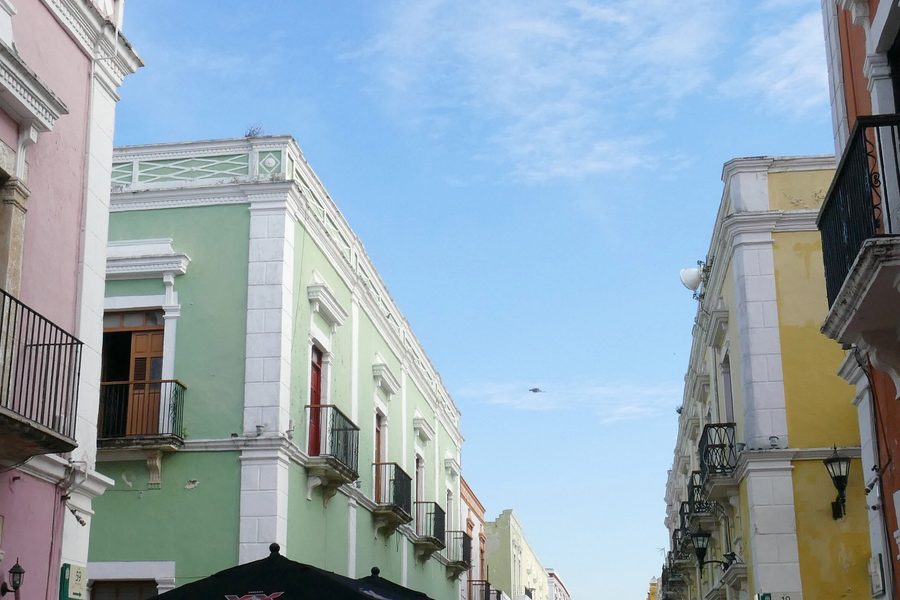
Ten minutes at Campeche
At 13:24 the train stops for ten minutes at San Francisco de Campeche, the only walled city on the Gulf of Mexico and a World Heritage site since 1999. It is the natural place to break the run in two.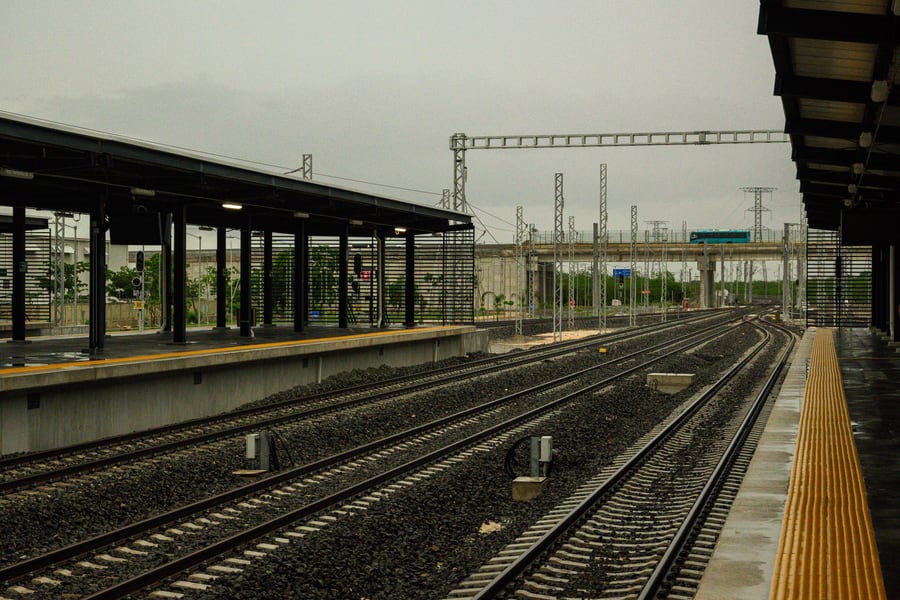 ProtoplasmaKid / Wikimedia Commons / CC-BY-SA 4.0 · cropped
Mérida Teya
The second ten-minute stop, at 16:12, and the busiest station on the line. The Yucatán capital is a drive to the west; east of here the country flattens to limestone shelf and scrub with no rivers at all.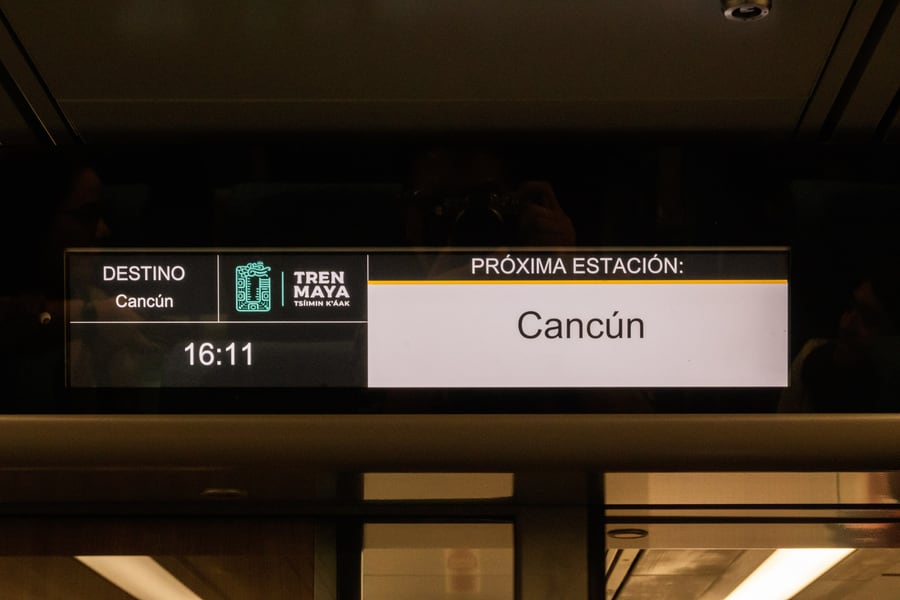 ProtoplasmaKid / Wikimedia Commons / CC-BY-SA 4.0 · cropped
The hour that disappears
Between Valladolid and Nuevo Xcán the train crosses into Quintana Roo, which has kept UTC−5 all year since 2015 while the rest of the route keeps UTC−6. The leg reads as 1 h 44 m and takes forty-four minutes.A bit of history
Culture & experiences along the way
 Popo le Chien / Wikimedia Commons · CC BY-SA 3.0 · cropped
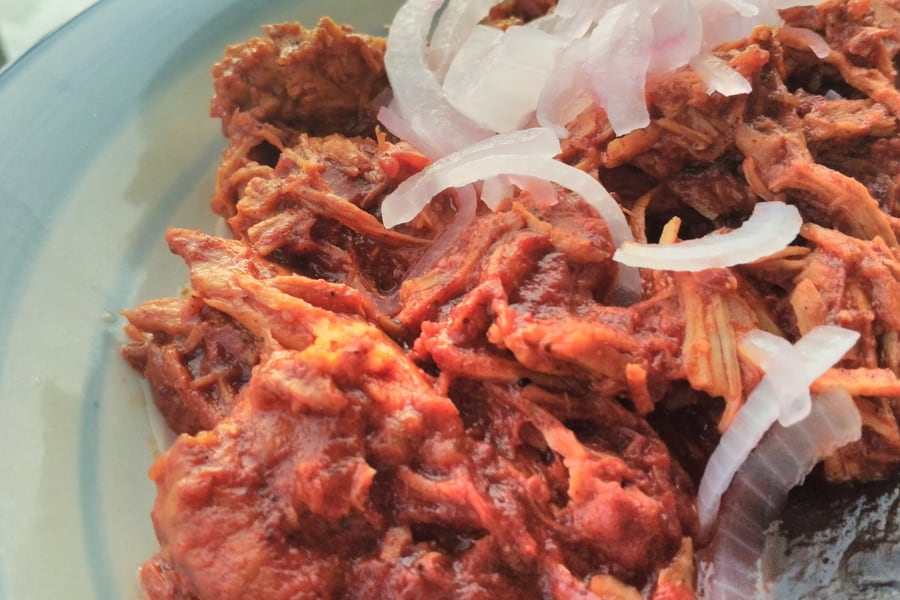
Cochinita pibil
The Yucatán's defining dish and the one to eat at either end of the day: pork marinated in sour orange and achiote, wrapped in banana leaf and cooked in a pit oven — pib — until it shreds. Served with pickled red onion and habanero, in Mérida and Valladolid it is a breakfast as often as a dinner.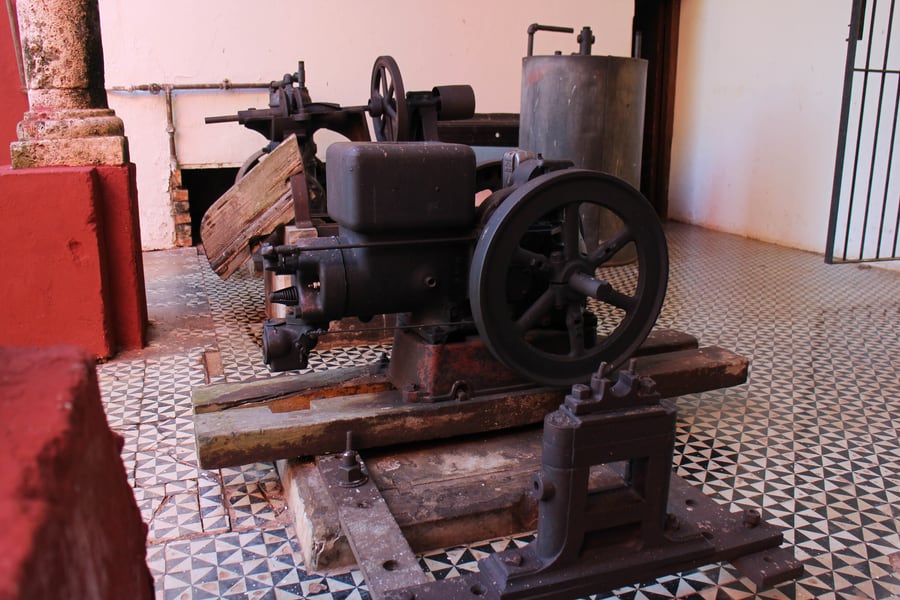 Gildardo Sánchez / Wikimedia Commons · CC BY 2.0 · cropped
The green gold that built Mérida
Between Campeche and Mérida the train crosses henequén country. The fibre of that agave rigged the world's shipping in the late nineteenth century and paid for the mansions along Mérida's Paseo de Montejo; the haciendas that rasped it still stand along the line, some of them ruins and some of them hotels.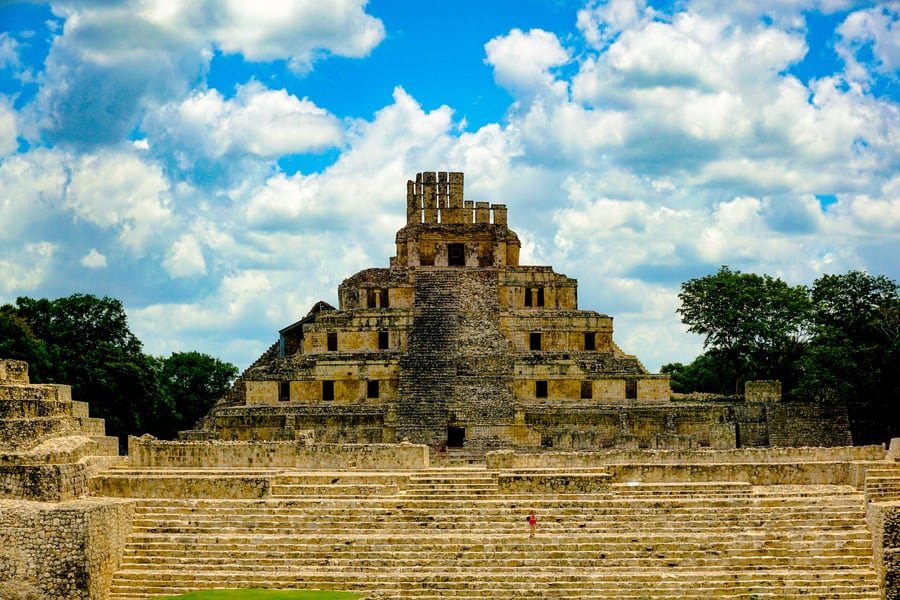 Patrickrichaud / Wikimedia Commons · CC BY-SA 4.0 · cropped
Edzná, the Maya city with a station
Most visitors to the peninsula never reach Edzná, and the train stops there at 12:56. Its Edificio de los Cinco Pisos rises five storeys from a raised acropolis above a plaza built over a drainage system that stored the rainy season for the dry one.Timetables
One through train runs each way every day. Times are as of September 2026, taken from the operator's own timetable page and confirmed against its booking engine on fourteen consecutive dates, on which the pattern did not vary.
| Train | Route | Departs | Arrives | Journey |
|---|---|---|---|---|
| 101 | Palenque → Cancún | 08:40 | 20:53 | 11 h 13 m |
| 102 | Cancún → Palenque | 09:30 | 19:51 | 11 h 21 m |
⚠️ Both times above are local times at each end, and the ends are in different time zones. Yucatán, Campeche, Tabasco and Chiapas keep UTC−6; Quintana Roo, which contains Nuevo Xcán, Leona Vicario and Cancún, has kept UTC−5 all year since 2015. Tren Maya's printed timetable lists the whole run in Campeche time and so gives the arrival at Cancún as 19:53; the booking engine gives each station its own clock and says 20:53. They describe the same train.
Train 101, Palenque to Cancún
Times as sold by the operator, local at each station. The two ten-minute stops are marked.
| Palenque 08:40 | Boca del Cerro 09:35 | Tenosique 09:44 | El Triunfo 10:22 |
| Candelaria 10:48 | Escárcega 11:29 | Carrillo Puerto (Camp.) 12:12 | Edzná 12:56 |
| San Fco. Campeche 13:24 (10 min) | Tenabo 14:34 | Hecelchakán 14:49 | Calkiní 15:05 |
| Maxcanú 15:24 | Umán 15:50 | Mérida Teya 16:12 (10 min) | Tixkokob 16:36 |
| Izamal 17:00 | Chichén Itzá 17:45 | Valladolid 18:12 | Nuevo Xcán 19:56 |
| Leona Vicario 20:25 | Cancún 20:53 |
Shorter journeys on the same route
The through train is not the only way to use this railway, and for most travellers it is not the obvious one. The operator's timetable also lists 201/202 between Campeche, Mérida and Cancún, 301–308 between Mérida, Cancún and Tulum Aeropuerto, 501/502 between Palenque, Campeche and Mérida, 601–604 between Cancún and Chetumal, and 701–704 between Chetumal, Escárcega and Palenque. Every station pair is sold separately, so Mérida to Chichén Itzá or Campeche to Palenque can be bought as a single leg.
Booking
Seats are sold on the operator's own platform at reservas.ventaboletostrenmaya.com.mx (opens in a new tab); the timetable is published at trenmaya.gob.mx (opens in a new tab). Booking runs origin, destination, date, train, fare, then a seat — the seat is chosen at purchase, so travel on a specific train means buying for that train.
⚠️ Check the operator's notices before travelling. On 31 August 2026 the operator reported a track incident affecting the rear car of a Cancún–Palenque working just outside San Francisco de Campeche; no one was hurt, the 123 passengers completed their journey on another train, and the bulletin stated that other services were running normally. Notices of this kind are posted on the operator's own site.
Tickets
Tren Maya prices by residency as well as by class, and the ladder is steep: a foreign visitor pays roughly a third more than a Mexican national in the same seat, and a resident of one of the five states the line crosses pays a third less again. The tier is checked at boarding against the document it is named for — an INE card, or a passport — and the operator states plainly that a ticket bought on a tier you do not qualify for is neither honoured nor refunded.
Fares below are the operator's own, read from the checkout for train 101, Palenque to Cancún, in September 2026. Shorter legs cost proportionately less, and every station pair is priced separately.
Book your tickets
Turista — international
Palenque to Cancún, passport fare
The standard fare for a foreign visitor, sold on production of a passport at boarding.
Book Tickets (opens in a new tab, on ventaboletostrenmaya.com.mx)via ventaboletostrenmaya.com.mxPremier — international
Palenque to Cancún, passport fare
The upper class on the same train, again at the visitor tier.
Book Tickets (opens in a new tab, on ventaboletostrenmaya.com.mx)via ventaboletostrenmaya.com.mxTurista — Mexican national
Palenque to Cancún, on an INE card
The national fare, checked against a Mexican voter card at boarding.
Book Tickets (opens in a new tab, on ventaboletostrenmaya.com.mx)via ventaboletostrenmaya.com.mxTurista — local & concession
Residents of the five states, INAPAM, students, teachers
From 1,113.50 for a resident of a state on the line, and 835.00 on the concession tier.
Book Tickets (opens in a new tab, on ventaboletostrenmaya.com.mx)via ventaboletostrenmaya.com.mxRail Passes
No rail pass covers this journey, and none is worth looking for. Mexico has no national multi-journey pass, the Tren Maya is not part of any international scheme, and Interrail and Eurail are European products that do not reach the Americas.
What the operator does run instead is a residency-based fare ladder, and that is the only discount structure on the line. A Mexican national pays less than a foreign visitor; a resident of Campeche, Chiapas, Quintana Roo, Tabasco or Yucatán pays less again on production of an INE card issued in one of those states; and a further reduced fare applies to older travellers registered with INAPAM, to students and teachers, and to passengers with a disability. Every tier is checked against a document at boarding, so the saving is only available to people who can produce the card the fare is named for.
For visitors that leaves one practical decision: whether to buy Turista or Premier, and whether to book the whole run or break it. Every station pair is priced on its own, so the eleven-hour day can be split into two or three legs with nights in between — price the combination you want in the booking engine before deciding, since the sum of the legs and the through fare are set separately. Checked against the operator's booking engine in September 2026.
Places to Visit
Six of the twenty-two stops on this line are worth a night of their own, and three of them are UNESCO World Heritage sites. What follows runs west to east, in the order train 101 reaches them.
 Bernard DUPONT / Wikimedia Commons · CC BY-SA 2.0 · cropped
Palenque
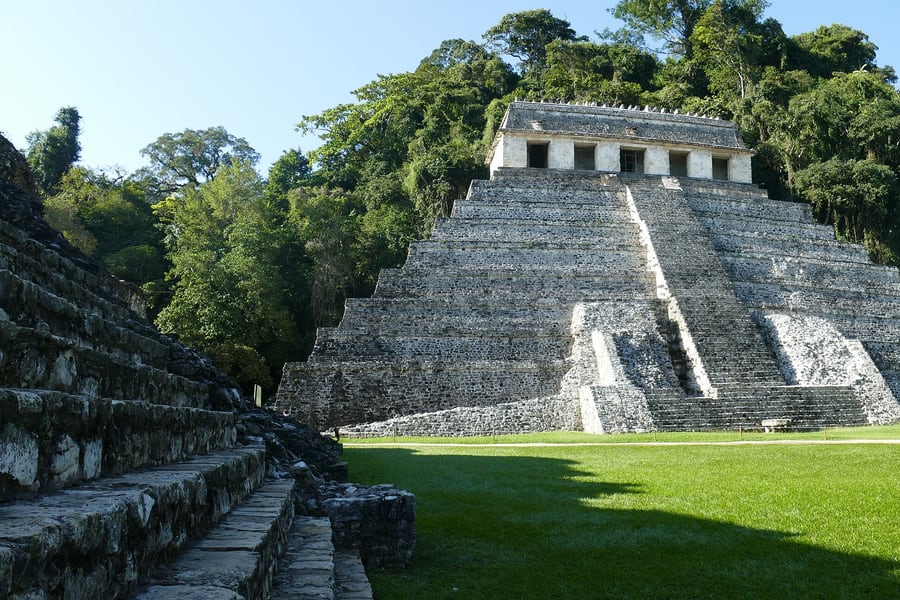
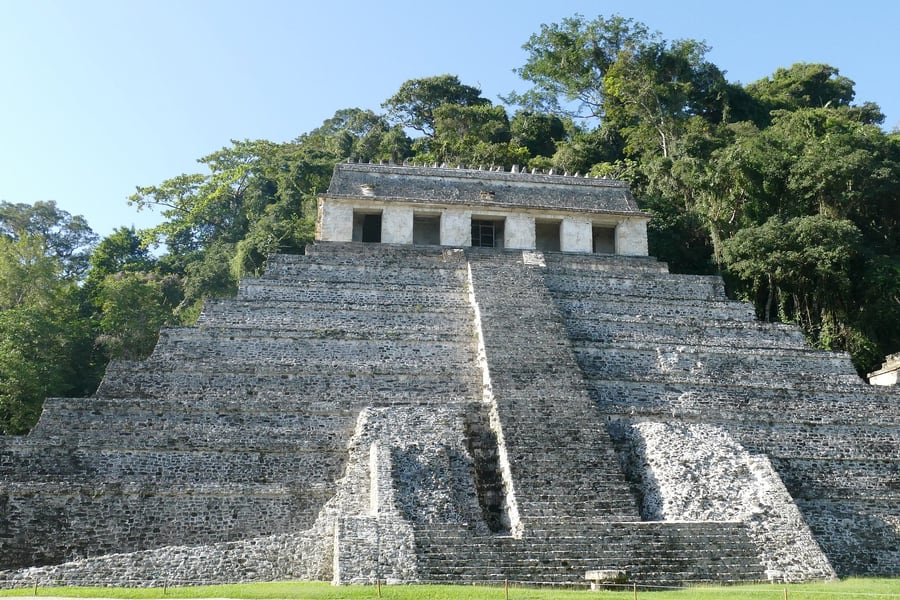
A Maya city at the foot of the Chiapas hills, abandoned in the tenth century and held by forest until the eighteenth. The Temple of the Inscriptions is the tomb of K'inich Janaab' Pakal, whose sarcophagus lid is the most reproduced Maya carving there is, and the Palace beside it carries a four-storey tower. UNESCO-listed since 1987; the station is a few kilometres from the gate.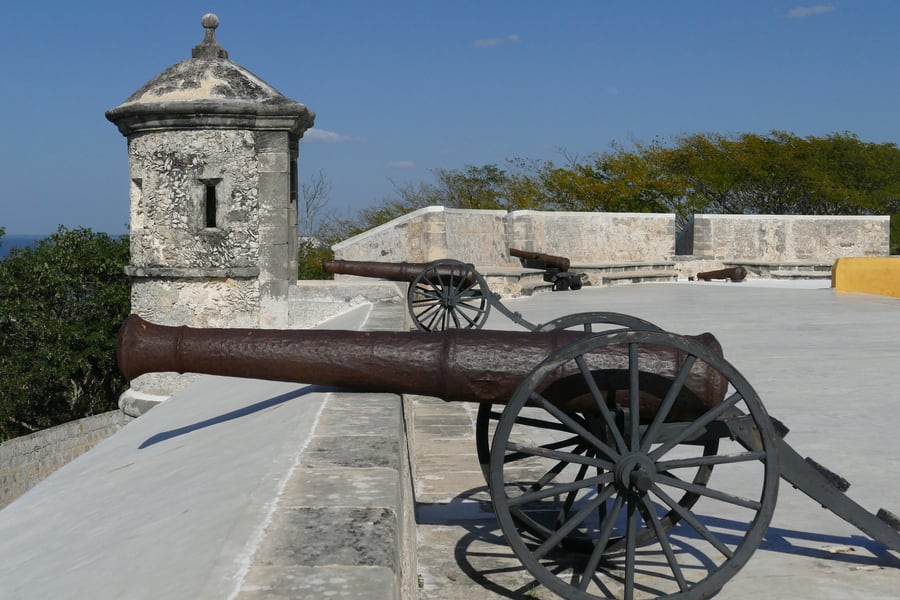 Bernard DUPONT / Wikimedia Commons · CC BY-SA 2.0 · cropped
San Francisco de Campeche
The only walled city on the Gulf coast, fortified against buccaneers in the seventeenth century and painted since in ochre, rose and pistachio. Two of the eight bastions and a long stretch of rampart survive, and the Fuerte de San Miguel on the hill above the town keeps its cannon, its drawbridge and a Maya archaeology museum. World Heritage since 1999.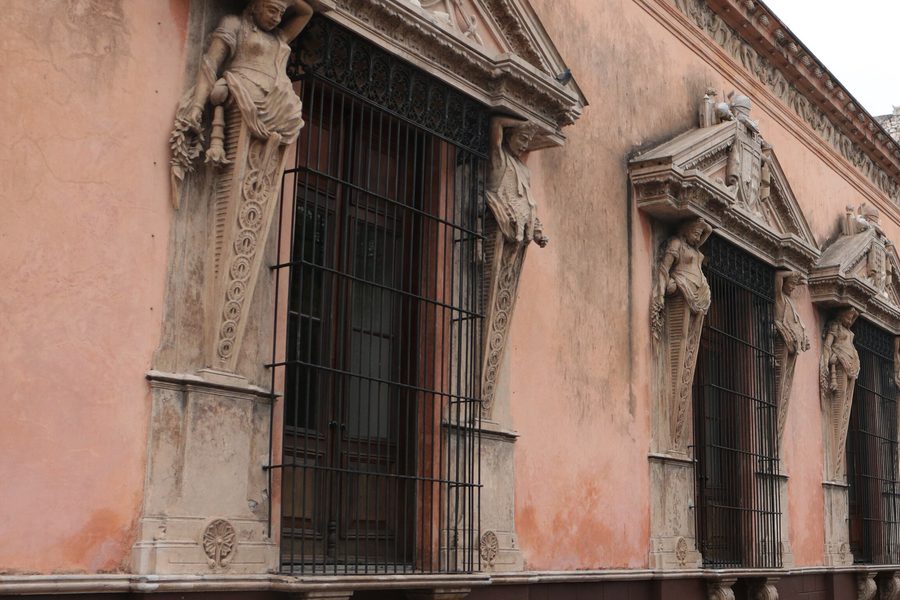 Cecilia Ortiz / Wikimedia Commons · CC BY 2.0 · cropped
Mérida
The Yucatán capital, laid out in 1542 on the Maya city of T'hó and built largely from its stones — the Casa de Montejo still carries conquistadors standing on the heads of the defeated over its doorway. North of the centre, Paseo de Montejo is a boulevard of henequén mansions from the years when this was reputedly the richest city in Mexico.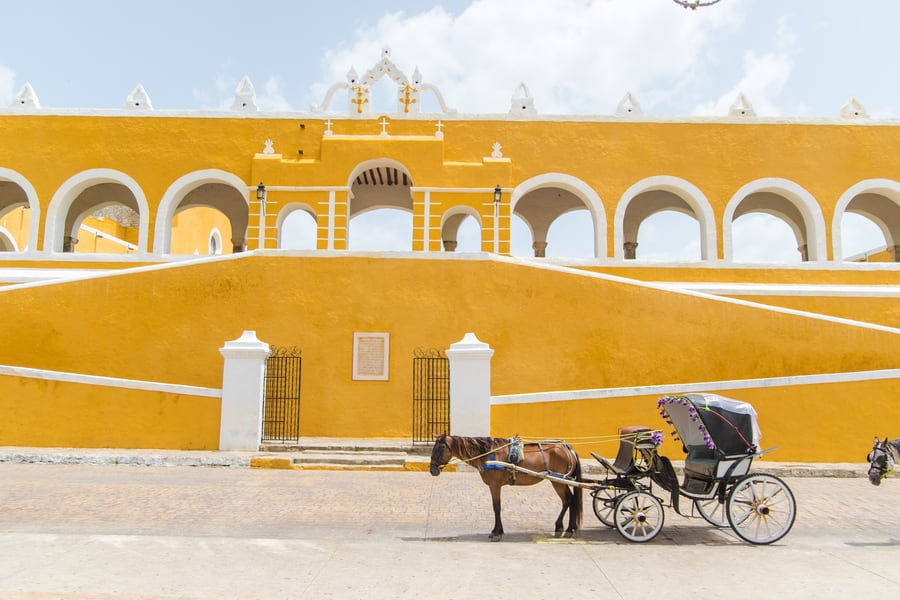 Eneas De Troya / Wikimedia Commons · CC BY 2.0 · cropped
Izamal
A town painted yellow and white throughout, built on and out of a Maya ceremonial centre. The Franciscan convent of San Antonio de Padua stands on a levelled pyramid platform and its atrium is among the largest in the Americas; the Kinich Kak Moo pyramid, three streets away, is still bigger. Horse-drawn calesas wait in the square.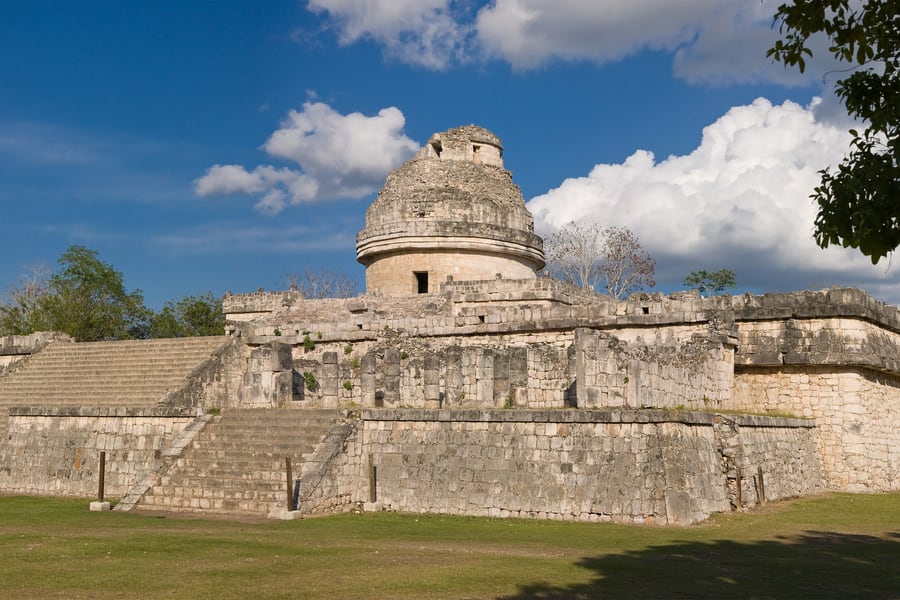 Fcb981 / Wikimedia Commons · CC BY-SA 3.0 · cropped
Chichén Itzá
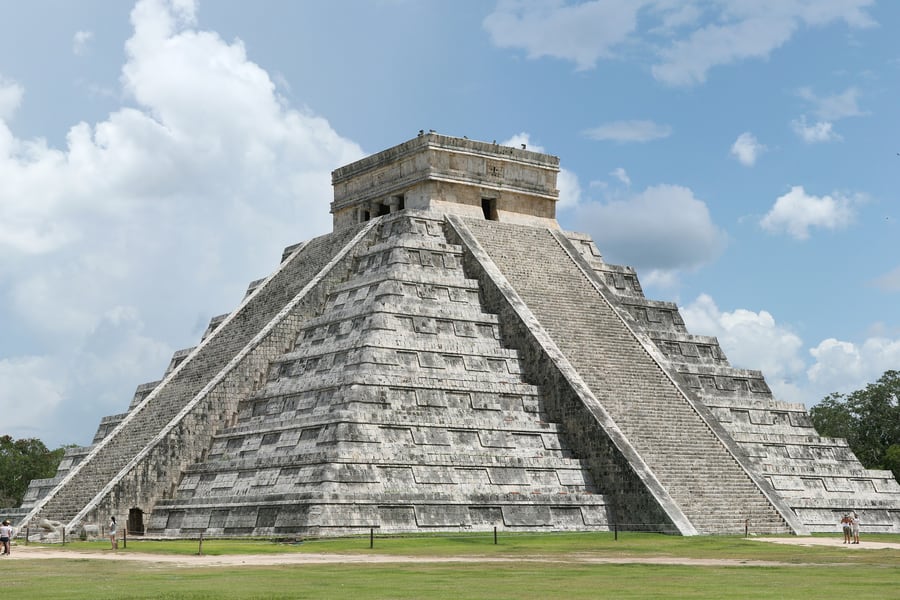
The best known Maya site anywhere, and a station on this railway — the train stops at 17:45 eastbound. Beyond El Castillo, the stepped pyramid whose equinox shadow forms a serpent down the balustrade, stands El Caracol, a round tower whose windows align on Venus, and a ball court 168 metres long with stone rings set high in its walls. World Heritage since 1988, and busiest in the middle of the day.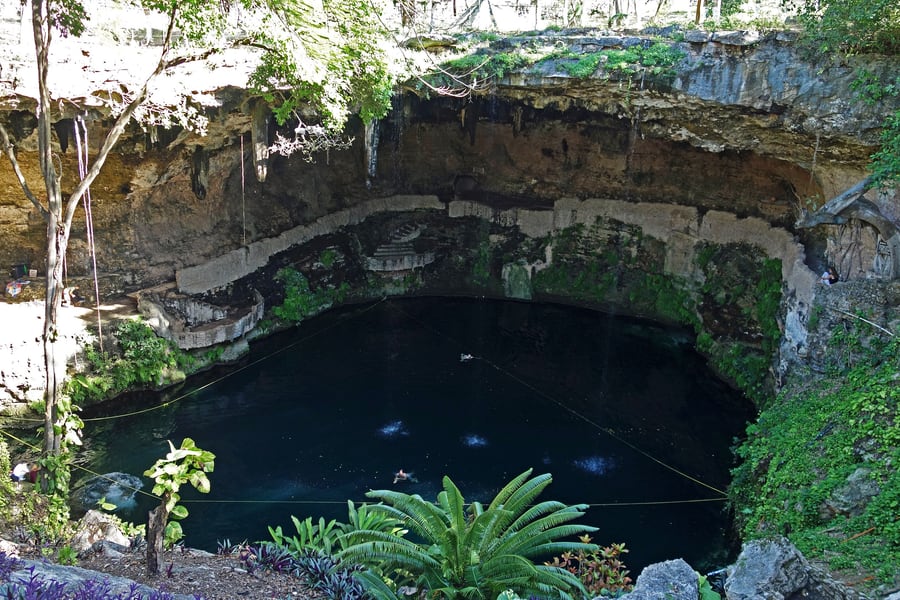 Haakon S. Krohn / Wikimedia Commons · CC BY 4.0 · cropped
Valladolid
A colonial town of low pastel streets that makes the easiest base for Chichén Itzá and Ek Balam. Cenote Zací opens in the middle of it — a collapsed limestone sinkhole with a swimmable pool at the bottom, of the kind that supplied the whole peninsula with water, since no river runs on the surface of the Yucatán at all.Where to Sleep
Doing the whole line in one sitting means an 08:40 start at one end and an eight-o'clock arrival at the other, so a night at each end is the difference between a journey and an ordeal. Splitting the run is easier still: every station pair is sold separately, so Campeche, Mérida and Valladolid can each be an overnight stop rather than a ten-minute pause. None of the three stations is in the old town it serves — Mérida's is at Teya, out to the east — so allow for a taxi at both ends.
Where to stay
Chan-Kah Resort Village
Palenque, on the road to the ruins
Cabañas in the forest between the town and the archaeological park, with a stone-edged pool and a regional restaurant.
Check Availability (opens in a new tab, on chan-kah.mx)via chan-kah.mxRosas & Xocolate
Mérida, on Paseo de Montejo
Seventeen rooms in a pair of converted mansions on the city's henequén-era boulevard, with a restaurant and spa.
Check Availability (opens in a new tab, on rosasandxocolate.com)via rosasandxocolate.comHotel Mesón del Marqués
Valladolid, on the main square
Eighty-five rooms in a seventeenth-century casona facing the plaza, with two restaurants and a courtyard pool.
Check Availability (opens in a new tab, on mesondelmarques.com)via mesondelmarques.comQuestions or corrections
Planning this trip and stuck on something, or spotted a time, fare or detail that has changed? Send us a message about Tren Maya. We read every one, and we update this page when something has changed.