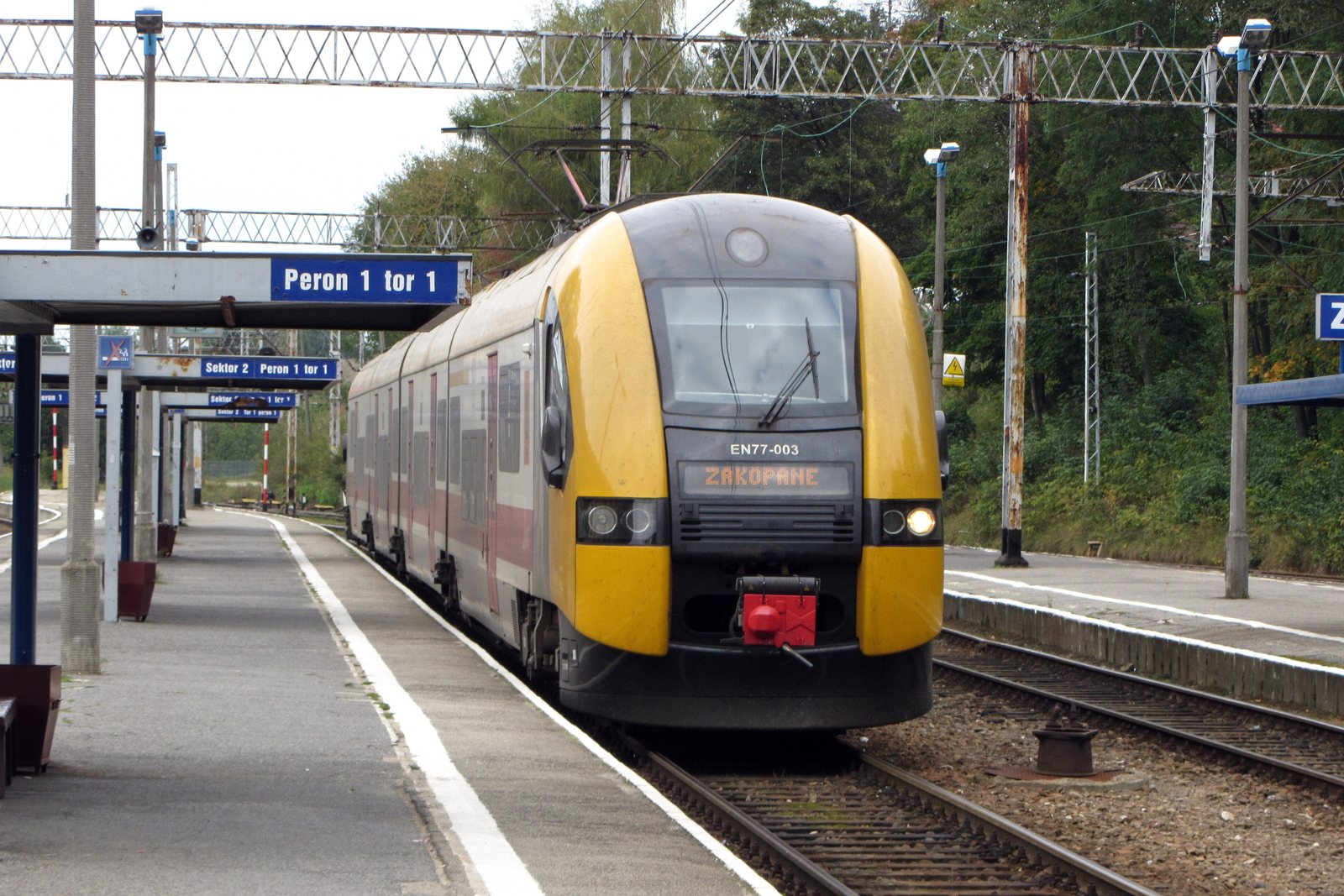
Kraków to Zakopane
Falk2 / Wikimedia Commons · CC BY-SA 4.0
- DistanceKraków–Zakopane · about 147 km
- Duration2 h 48 southbound · 2 h 36 back
- Best seasonWinter for the Tatras under snow · September for walking
Introduction
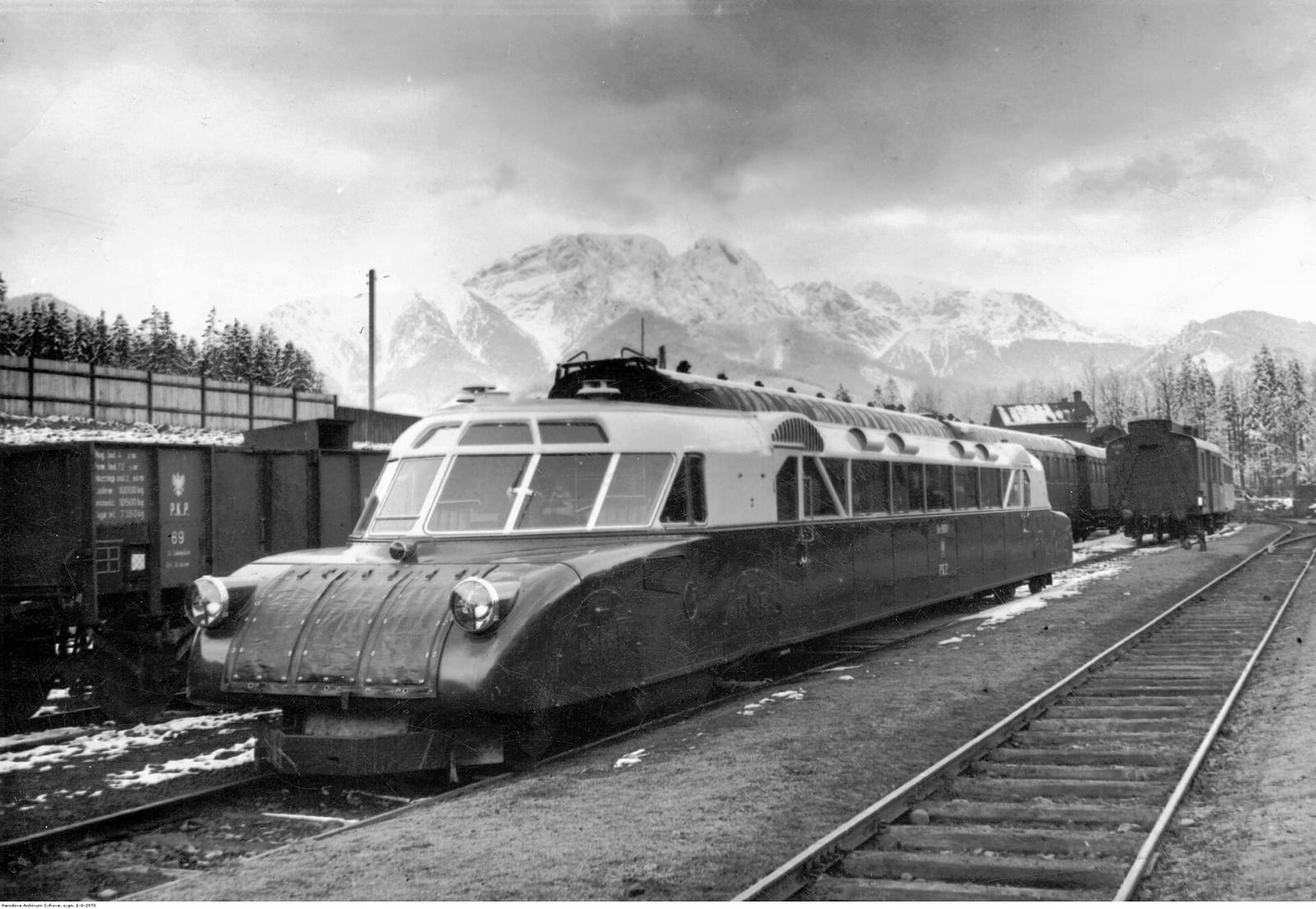
In 1936, a streamlined railcar left Kraków and reached Zakopane, 147 kilometres away at the foot of the Tatras, in two hours and eighteen minutes.
It was called the Luxtorpeda — the luxury torpedo — and it was one of a small class of fast diesel railcars built at Chrzanów in southern Poland, in a country that had existed again for less than twenty years and was determined to look modern.
Nobody beat that time for eighty-eight years.
The eighty-eight years
Poland's railways went through a war, a reconstruction, forty years of state socialism and a transition, and through all of it the run to Zakopane got slower rather than faster. The line twists: reverse curve after reverse curve, steep grades, and a route that was laid where the valleys allowed rather than where the engineers would have chosen.
Polish State Railways made a point of trying to beat the record. One attempt failed — the Ekspres "Tatry" arrived three minutes late, and the newspapers enjoyed it enormously. Then, in March 2024, a Tatry made it in two hours seventeen.
One minute. After eighty-eight years.
The honest asterisk
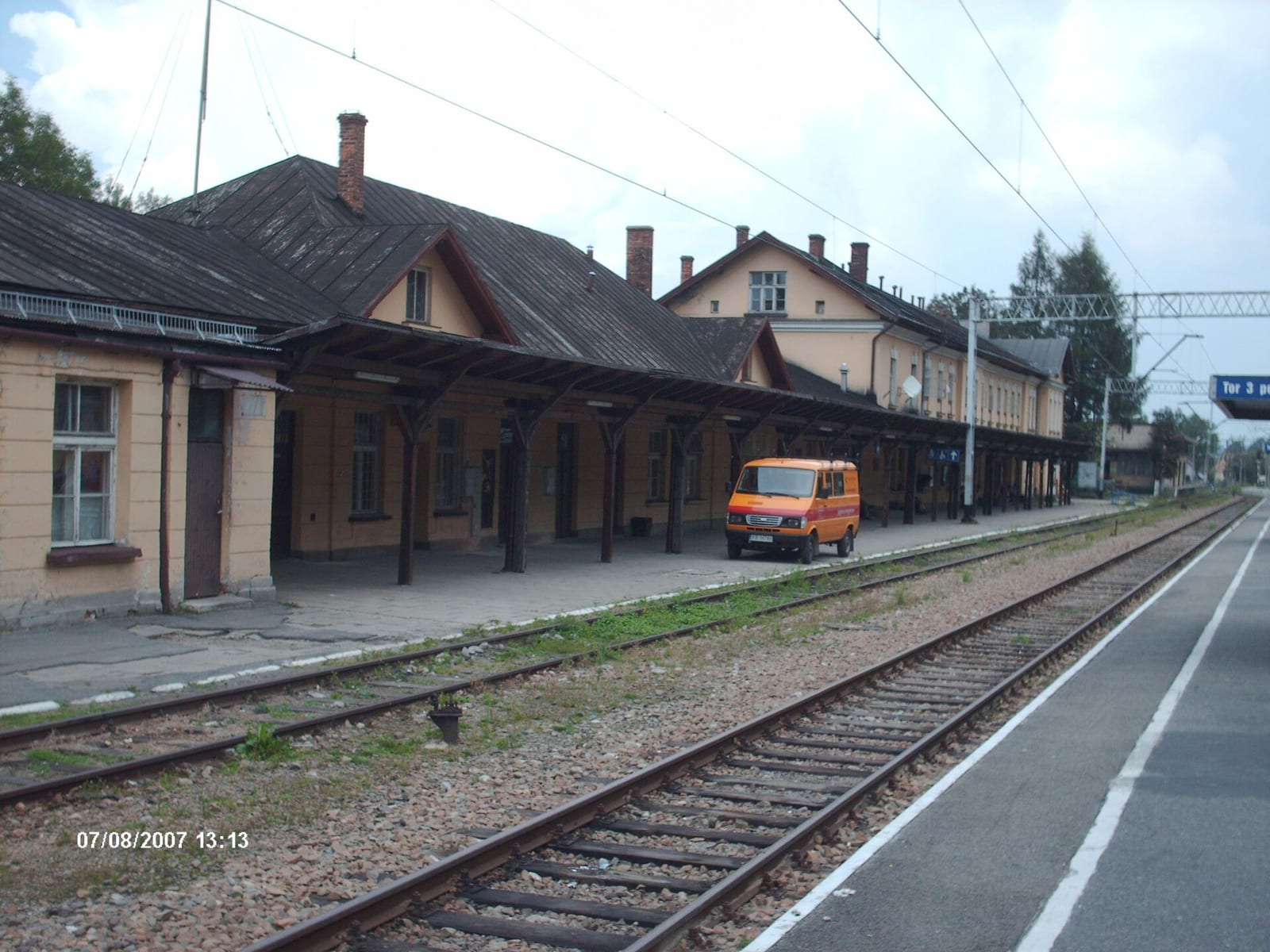
There is a catch, and the Polish press has been fair about it. The 1936 run was a test. It carried no passengers and it stopped nowhere. A scheduled public train calling at thirteen stations was never going to be a like-for-like comparison, and measuring one against the other was always a bit of theatre.
Which does not make it less enjoyable. And it sets up the genuinely lovely fact about this journey today.
The train called Luxtorpeda
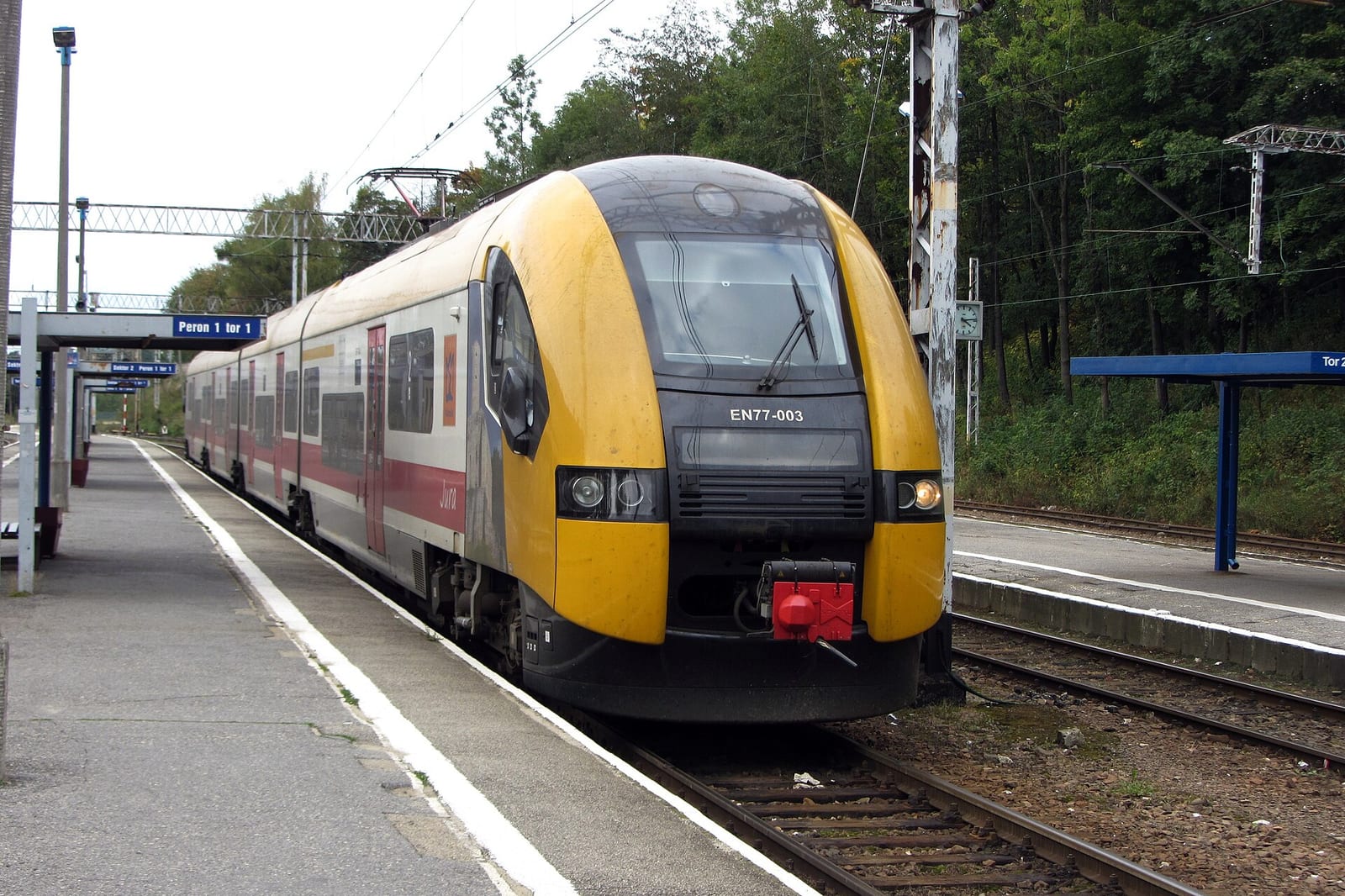
Koleje Małopolskie, the regional operator for the Kraków region, runs a weekend and holiday service to Zakopane, and it has named it — with a completely straight face — the Luxtorpeda.
It leaves Kraków Główny at 06:22 and reaches Zakopane at 09:10. That is two hours and forty-eight minutes: a full half-hour slower than the railcar it is named after, ninety years on.
And it is the better train, because it goes the long way. Rather than taking any direct route it runs south-west through Skawina, Kalwaria Zebrzydowska, Sucha Beskidzka, Maków Podhalański and Chabówka, curving through the Beskids — wooded hills, timber villages, small stations — before turning south into the Podhale and running up to the mountains through Nowy Targ and Poronin.
It costs 25 złoty.
And in a few years, ninety minutes
Poland is now spending real money on this. The Podłęże–Piekiełko scheme — at around €2.7 billion, the largest railway investment in the country — will modernise and electrify 75 kilometres of the Chabówka–Nowy Sącz route and build 58 kilometres of new line, for running at 160 km/h, with a stated target of Kraków to Zakopane in about ninety minutes.
None of it is built yet. Construction is planned for 2027 to 2029. So for the moment the position stands: a country that has been trying for ninety years to get to its own mountains faster than it managed in 1936, and has so far won by sixty seconds.
The Journey
The Luxtorpeda leaves Kraków Główny at 06:22, which is early, and worth it.
Out of Kraków
The first ten minutes are a tour of the city's inner stations that most visitors never see: Grzegórzki, Zabłocie — beneath Schindler's factory and the Podgórze ghetto — Podgórze, and Łagiewniki. Then Skawina at 06:42 and out into open country.
Into the Beskids
At Kalwaria Zebrzydowska Lanckorona (06:59) the hills begin. The town's Mannerist monastery and its calvary — a set of chapels laid out across a hillside as a scale representation of Jerusalem — are a UNESCO World Heritage Site, and this was Karol Wojtyła's local pilgrimage before he became Pope John Paul II.
From here the railway works its way south through the Beskids: Sucha Beskidzka Zamek (07:22), with its Renaissance castle known as the "little Wawel", and Maków Podhalański (07:30). This is wooded, folded, thinly populated country — timber houses, small orchards, streams — and the line curves continuously, which is exactly why it has never been fast.
Chabówka
07:54, and the stop railway travellers should care about.
Chabówka is a country junction with one of Poland's great railway collections beside it: the Skansen Taboru Kolejowego, an open-air heritage park with steam locomotives, historic carriages, wagons and a turntable. It is a short walk from the station and it is superb, and almost nobody on the train gets off.
Chabówka is also where the Podłęże–Piekiełko works will bite: this is the junction from which 75 kilometres of line toward Nowy Sącz are to be modernised and electrified.
Podhale
Beyond Chabówka the country changes. You are in the Podhale now — the highland region of the Górale, the Polish highlanders, with their own dialect, music, dress and architecture. The valleys open out and, ahead and to the south, the Tatras appear: a short, sharp, genuinely alpine wall on the Slovak border.
Nowy Targ at 08:37 is the region's market town — its Thursday market is one of the largest in Poland. Then Bańska Niżna, Poronin at 09:04, and down into Zakopane at 09:10.
Zakopane
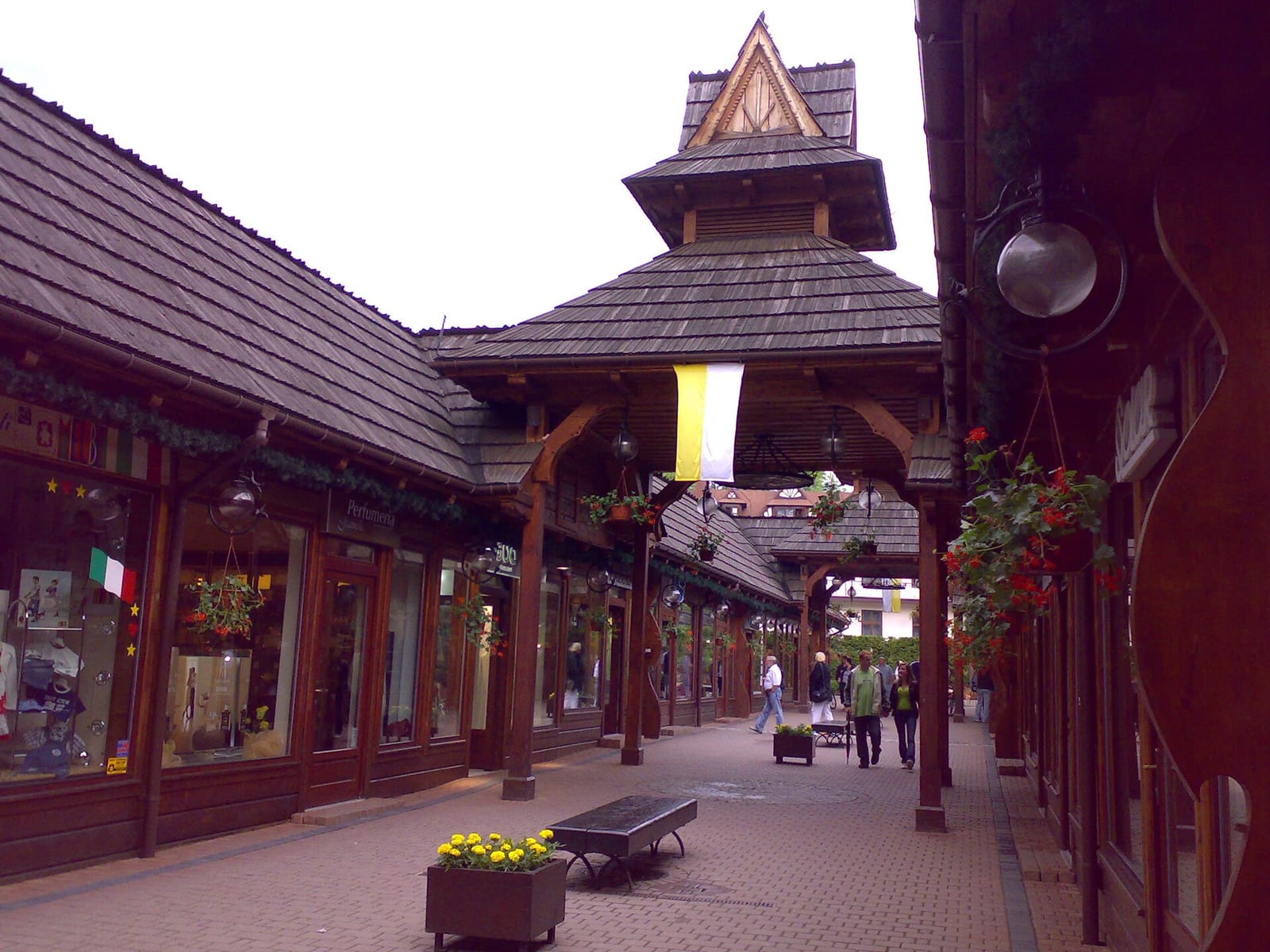
The station is a short walk from Krupówki, the main street, and the town is unlike anywhere else in Poland: timber buildings in the Zakopane style, invented here in the 1890s by Stanisław Witkiewicz out of Górale vernacular architecture as a deliberate attempt to create a national Polish style at a moment when Poland did not exist as a state.
It is also, frankly, a resort — busy, commercial and full of people selling smoked sheep's cheese. Walk out of it and the Tatras start immediately.
Coming back
The return, train 39146, leaves Zakopane at 20:22 and reaches Kraków Główny at 22:58 — two hours thirty-six. That gives you eleven hours in the mountains, which is a full day's walking with time for lunch, and gets you back to Kraków for a late dinner.
Practical notes
- Weekends and public holidays only for the Luxtorpeda, and the timetable above is the summer one.
- PKP Intercity runs faster services on this corridor all week — IC, EIC and Pendolino. Use those if you are pressed.
- Sit on the right going south for the first sight of the Tatras after Nowy Targ.
- 25 złoty one way on the regional train, which is remarkable value for nearly three hours.
- Winter is the busiest season. Zakopane is Poland's ski town and the trains fill; book ahead between Christmas and March.
Along the route
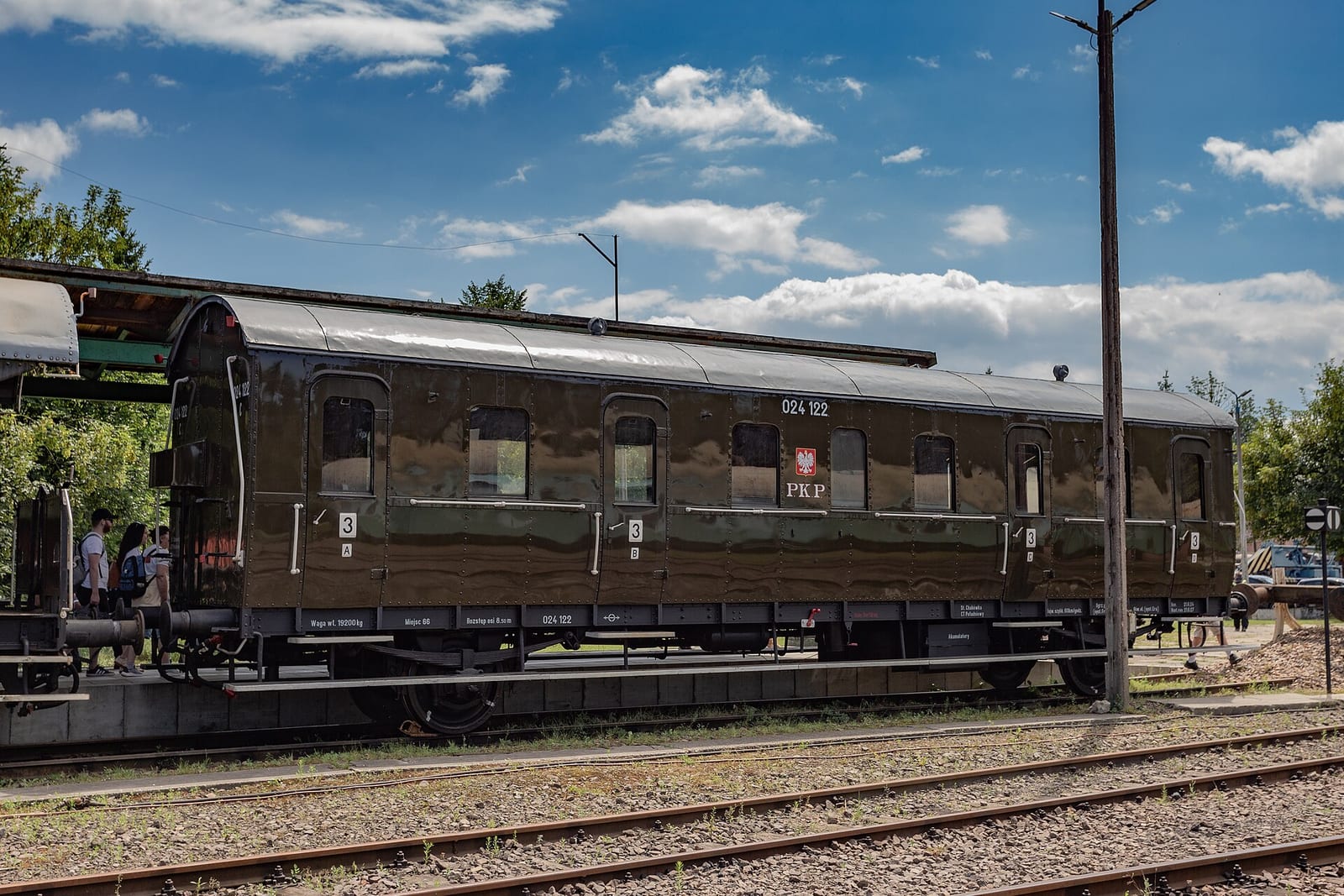
Wikimedia Commons · Public domainA record that stood for eighty-eight years
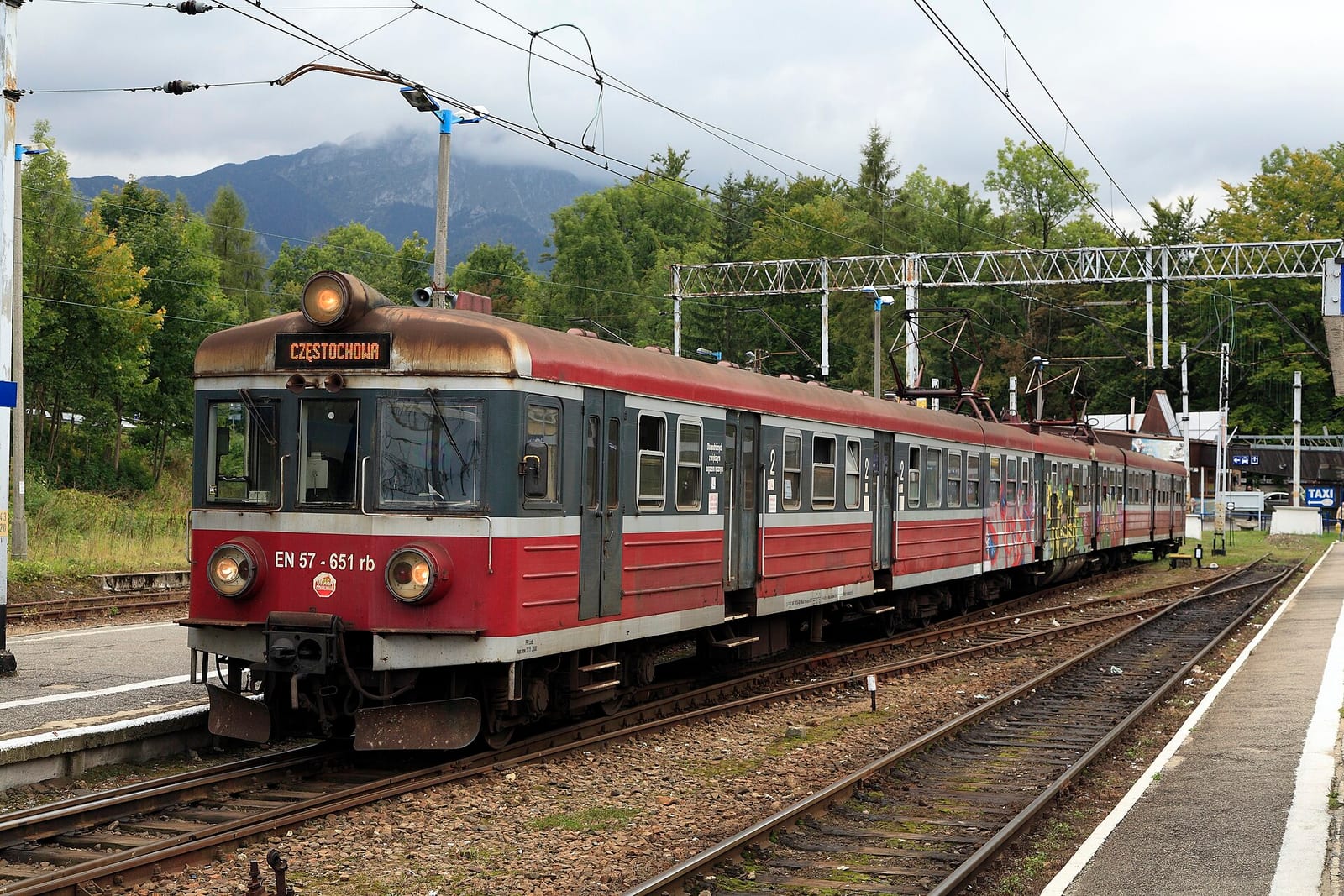
In 1936 a streamlined Polish railcar, the Luxtorpeda, ran the 147 kilometres from Kraków to Zakopane in 2 hours 18. Nobody beat it until March 2024, when an express managed 2 hours 17 — one minute inside, eighty-eight years later.Falk2 / Wikimedia Commons · CC BY-SA 4.0The catch nobody mentions
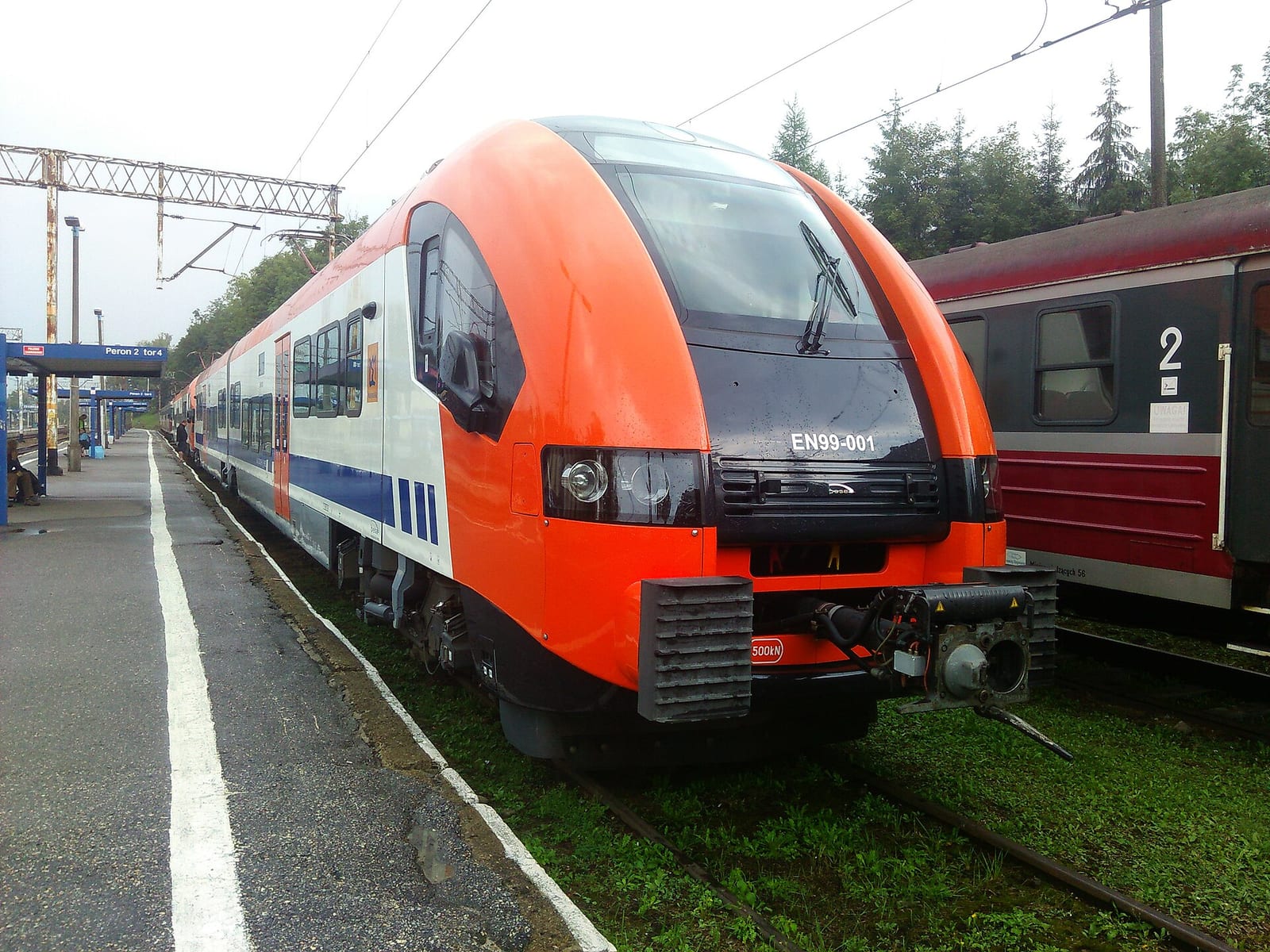
The 1936 run was a test. It carried no passengers and stopped nowhere. Against a public service calling at thirteen stations it was never a fair comparison — which makes the eighty-eight years less embarrassing and rather more interesting.Bismarck / Wikimedia Commons · CC BY-SA 3.0Ninety minutes, eventually
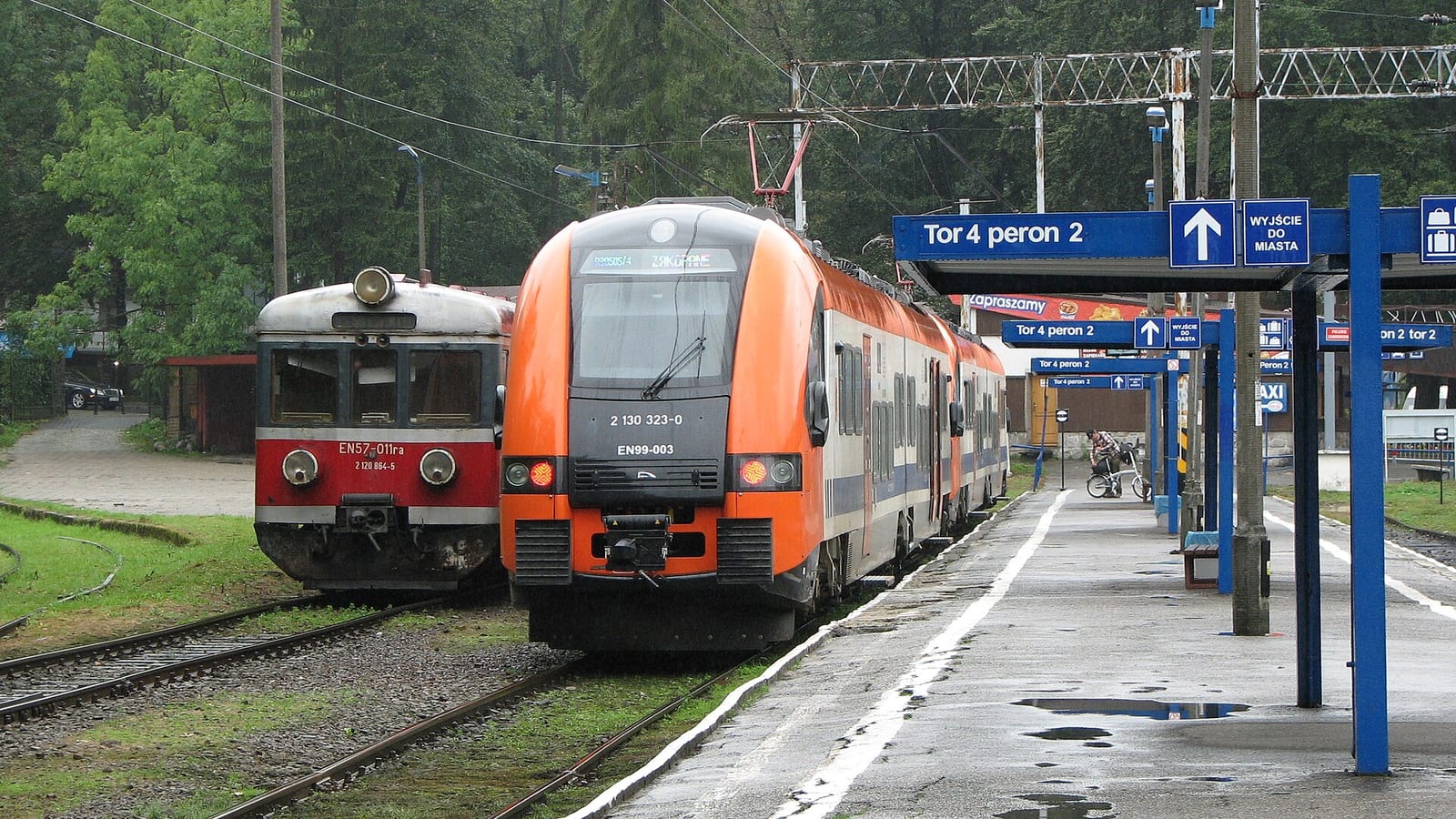
Poland is spending €2.7 billion on a scheme to bring Kraków–Zakopane down to about ninety minutes: 75 kilometres modernised and 58 of entirely new line. None of it is built. Construction is planned for 2027–2029.A bit of history
Culture & experiences along the way
Zarazbedzieciemno / Wikimedia Commons · CC BY-SA 4.0Take the slow one on purpose
The Koleje Małopolskie weekend train — the one actually called Luxtorpeda — goes the long way, through Kalwaria Zebrzydowska, Sucha Beskidzka, Maków Podhalański and Chabówka, deep into the Beskids. It is half an hour slower than the express and considerably better looking, it costs 25 złoty, and it leaves Kraków at 06:22, which is the price of a good day.Piotr Borowiak / Wikimedia Commons · CC BY 4.0Break at Chabówka for the locomotives
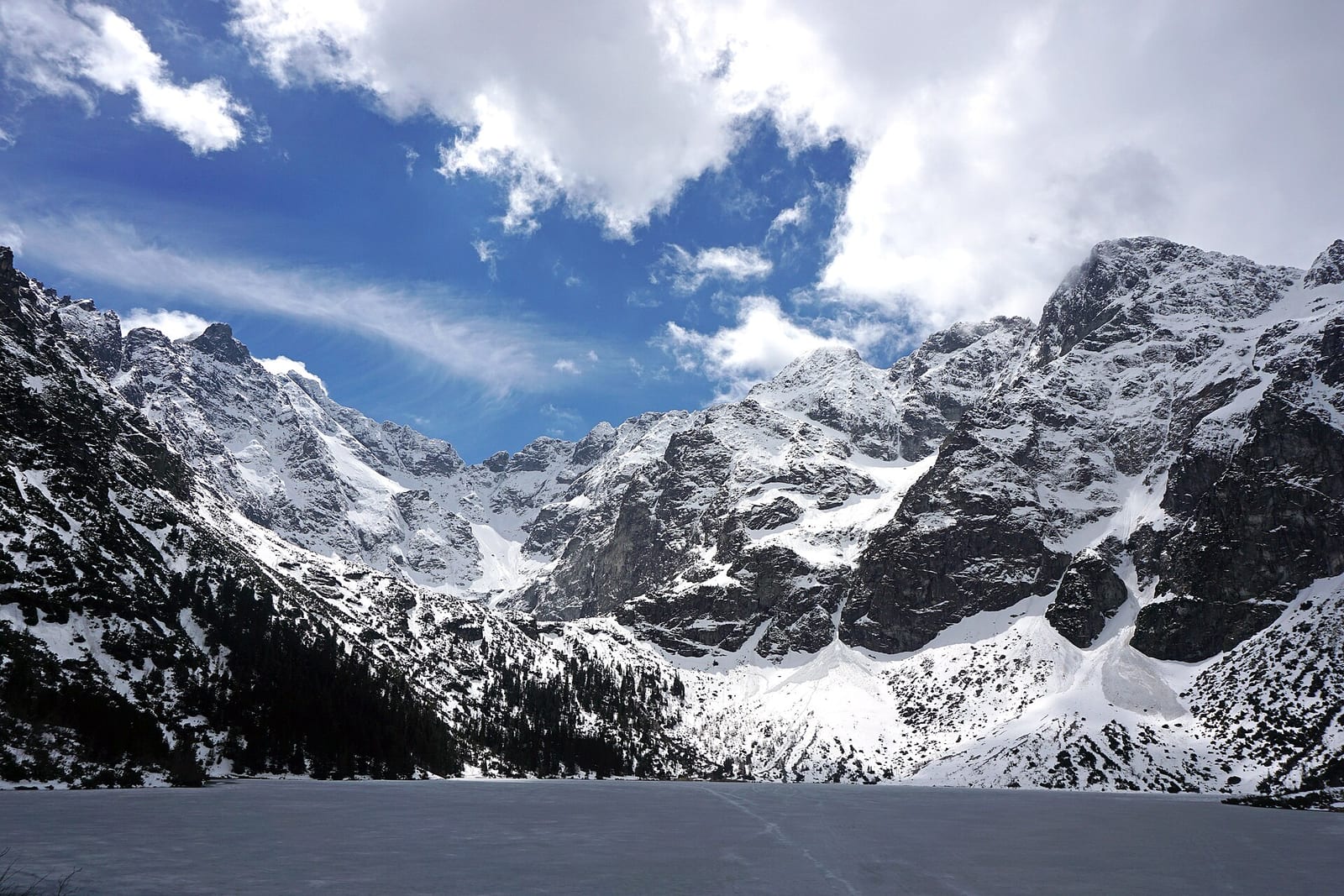
The train calls at Chabówka Stadion, and a short walk away is the Skansen Taboru Kolejowego — one of Poland's great railway collections, with steam locomotives, historic carriages and a working turntable, in the open air at a country junction in the Beskids. If you have come to Poland for the Wolsztyn steam, come here too.kallerna / Wikimedia Commons · CC BY-SA 4.0Walk to Morskie Oko
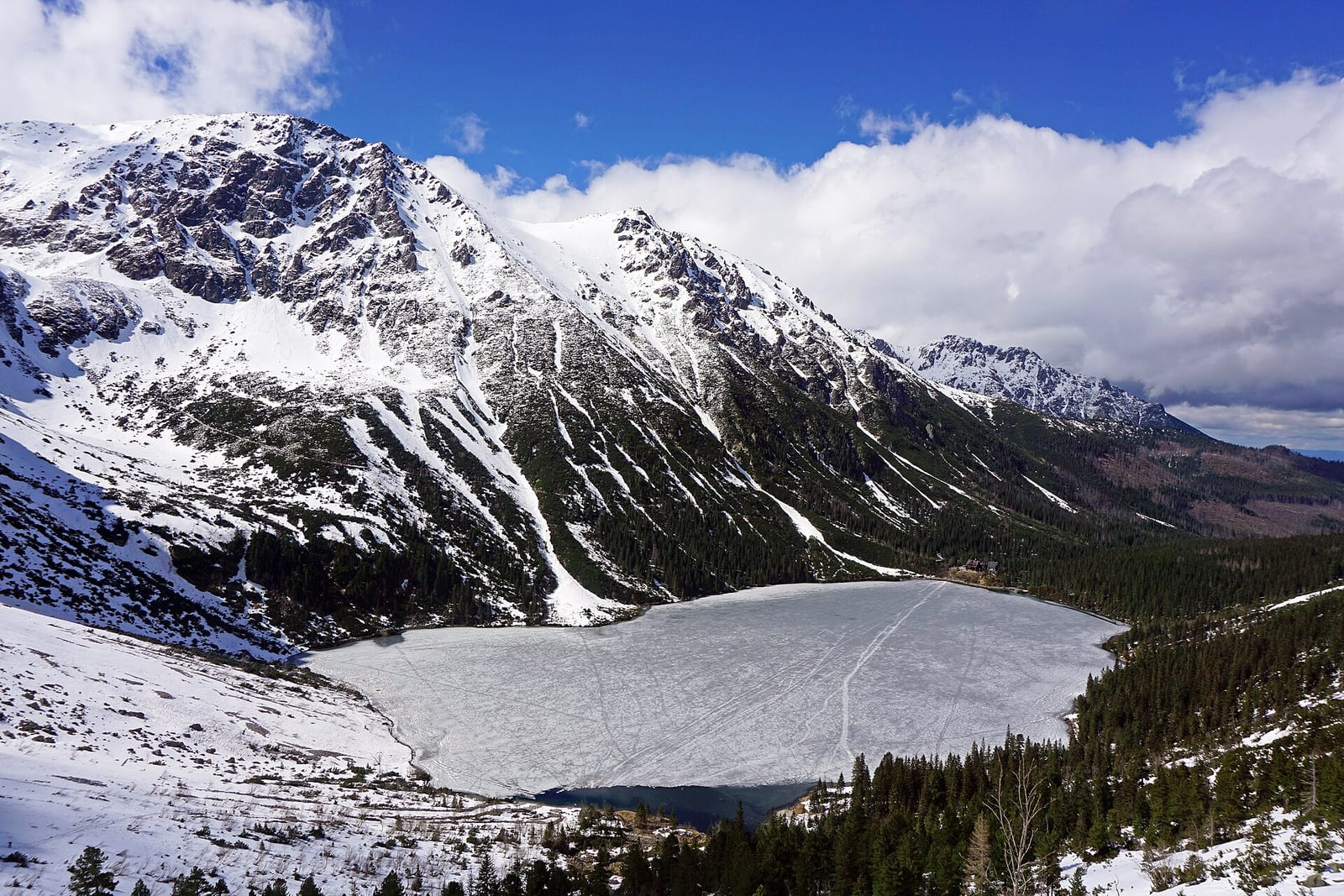
The reason the railway was built. Morskie Oko — the Eye of the Sea — is the largest lake in the Polish Tatras, in a bowl of granite peaks, and the walk up to it from the road head is the most popular mountain outing in Poland. Go early, go midweek, and in winter go prepared: this is a genuinely alpine range, small but serious.Timetables
Two quite different ways to make this journey: the regional train that is named after the Luxtorpeda, and the faster PKP Intercity services.
The Luxtorpeda — Koleje Małopolskie, service K5
Times below are from Koleje Małopolskie's own published timetable, valid 14 June to 29 August 2026. The service runs Saturdays, Sundays and public holidays.
Train 39145 — Kraków to Zakopane
| Station | |
|---|---|
| Kraków Główny | 06:22 |
| Kraków Grzegórzki | 06:24 |
| Kraków Zabłocie | 06:26 |
| Kraków Podgórze | 06:28 |
| Kraków Łagiewniki | 06:32 |
| Skawina | 06:42 |
| Kalwaria Zebrzydowska Lanckorona | 06:59 |
| Sucha Beskidzka Zamek | 07:22 |
| Maków Podhalański | 07:30 |
| Chabówka Stadion | 07:54 |
| Nowy Targ | 08:37 |
| Bańska Niżna | 08:54 |
| Poronin | 09:04 |
| Zakopane | 09:10 |
2 hours 48 minutes.
Train 39146 — Zakopane to Kraków
| Station | |
|---|---|
| Zakopane | 20:22 |
| Poronin | 20:32 |
| Bańska Niżna | 20:38 |
| Nowy Targ | 20:44 |
| Chabówka Stadion | 21:18 |
| Maków Podhalański | 21:42 |
| Sucha Beskidzka Zamek | 21:47 |
| Kalwaria Zebrzydowska Lanckorona | 22:19 |
| Skawina | 22:39 |
| Kraków Łagiewniki | 22:48 |
| Kraków Podgórze | 22:52 |
| Kraków Zabłocie | 22:54 |
| Kraków Grzegórzki | 22:56 |
| Kraków Główny | 22:58 |
2 hours 36 minutes, and about eleven hours in Zakopane between the two.
Fare: 25.00 zł one way.
The faster option
PKP Intercity runs this corridor all week with IC, EIC and EIP (Pendolino) services, generally quicker than the regional train and correspondingly dearer. Book at intercity.pl (opens in a new tab).
It was one of these — the Ekspres "Tatry" — that finally beat the Luxtorpeda's 1936 record in March 2024, with 2 hours 17 minutes.
For context: the record
| 1936 | Luxtorpeda railcar, 2 h 18 — a test run, no passengers, no stops |
| 2024 | Ekspres "Tatry", 2 h 17 — after an earlier attempt failed by three minutes |
| Today | The regional "Luxtorpeda", 2 h 48 |
What is coming
The Podłęże–Piekiełko project — around €2.7 billion, the largest railway investment in Poland, co-financed through the National Recovery and Resilience Plan — will modernise and electrify 75 km of the Chabówka–Nowy Sącz route and build 58 km of new line, allowing 160 km/h and targeting Kraków–Zakopane in about 90 minutes.
Construction is planned for 2027–2029. Nothing has changed on the ground yet, and journey times today are as above.
Seasons
Winter is the busy season — Zakopane is Poland's ski resort and trains fill between Christmas and March. September is the best month for walking: clear, quiet and still warm.
Operators: Koleje Małopolskie — kolejemalopolskie.com.pl (opens in a new tab); PKP Intercity — intercity.pl (opens in a new tab). Times as of July 2026, from the operator's summer timetable.
Tickets
Two operators run this route and they are booked separately. Koleje Małopolskie runs the weekend Luxtorpeda for 25.00 zł one way, with no reservation and no seat allocation — at twenty-five złoty for nearly three hours through the Beskids it is one of the better bargains in European travel. PKP Intercity runs faster IC, EIC and Pendolino services all week; these are reserved, priced by class and booking date, and rise steeply in the ski season.
Book ahead from Christmas to March, when Zakopane genuinely fills, and on long weekends. Two stops cost nothing extra on a regional ticket and are worth a day each: Kalwaria Zebrzydowska for the UNESCO monastery, and Chabówka for the open-air railway heritage park a short walk from the station. Sit on the right going south for the Tatras after Nowy Targ.
Book your tickets
The Luxtorpeda · Kraków to Zakopane
Weekends and holidays, the scenic way
Koleje Małopolskie's K5 service, named after the 1936 railcar, running Saturdays, Sundays and public holidays through the Beskids via Kalwaria and Chabówka. About 2 hours 48 southbound, 2 hours 36 back, for 25 złoty one way. Slower than the express and much the better ride.
Book Tickets (opens in a new tab, on Koleje Małopolskie)via Koleje MałopolskiePKP Intercity to Zakopane
The faster services
PKP Intercity also works this corridor with IC, EIC and Pendolino services, generally quicker than the regional train and more expensive. Worth it if you are short of time — and it was one of these, the Ekspres "Tatry", that finally beat the Luxtorpeda's 1936 record in March 2024.
Book Tickets (opens in a new tab, on PKP Intercity)via PKP IntercityRail Passes
Interrail passes are valid. Interrail's table of railway companies lists PKP Intercity and Koleje Małopolskie, which runs the weekend Luxtorpeda, as included in Poland. Koleje Małopolskie's regional trains need no reservation. On PKP Intercity a reservation costs €0.70 on IC and EIC trains, and €10 on the EIP Pendolino, where it is compulsory.
For this journey alone, a pass is not worth buying. The Luxtorpeda costs 25 zł. A pass pays on a longer trip through Poland.
Checked October 2026 against interrail.com (opens in a new tab), Interrail's Poland page (opens in a new tab) and its reservation fees (opens in a new tab).
Places to Visit
This is one of the few railway journeys where the two ends and the middle are all worth a day — Poland's old royal capital at one end, a genuinely alpine range at the other, and a run of Beskid market towns in between that most people simply ride past.
Beyond the six places carded here, Auschwitz-Birkenau is about ninety minutes west of Kraków and the Wieliczka salt mine — chapels and chandeliers carved from rock salt, worked since the thirteenth century — twenty minutes south. On the line itself, Chabówka has one of the best railway collections in Poland a short walk from the station, and Nowy Targ, capital of the Podhale, holds one of the country's biggest Thursday markets.
At the top end, skip Krupówki and look instead for the Zakopane style — timber houses in a manner invented here in the 1890s by Stanisław Witkiewicz, who took Górale highlander building and turned it into a deliberate national style at a time when Poland was not on the map. The Villa Koliba and the Church of the Holy Family are the set pieces, and the old Pęksowy Brzyzek cemetery is full of carved wooden grave markers. Buy oscypek, smoked ewe's-milk cheese, and eat it grilled with cranberry.
For the mountains themselves, Morskie Oko is the classic walk and extremely popular; Kasprowy Wierch is reachable by cable car from Kuźnice; Gubałówka gives the postcard view of the whole range. Treat them as mountains. People die in the Tatras every year, and winter conditions are serious.
 Minderbinder / Wikimedia Commons · CC BY-SA 4.0 · cropped
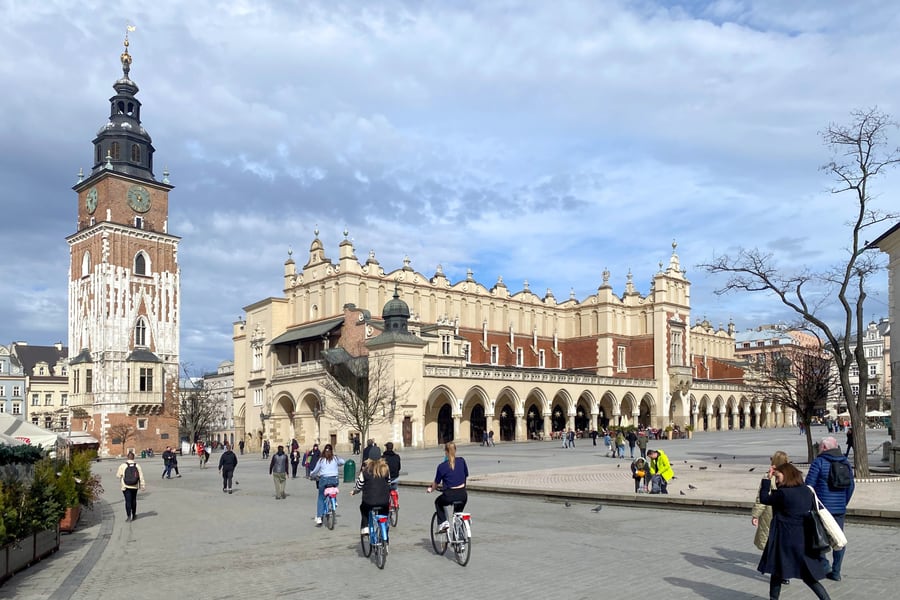
Rynek Główny
At 3.79 hectares this is one of the largest medieval market squares in Europe, laid out in the 13th century and never rebuilt, because Kraków came through the war largely undamaged. The Cloth Hall stands in the middle, given its present Renaissance form in 1555 and topped with a carved parapet; the Town Hall Tower beside it is all that survives of a town hall that does not. A trumpeter breaks off mid-note from St Mary's every hour.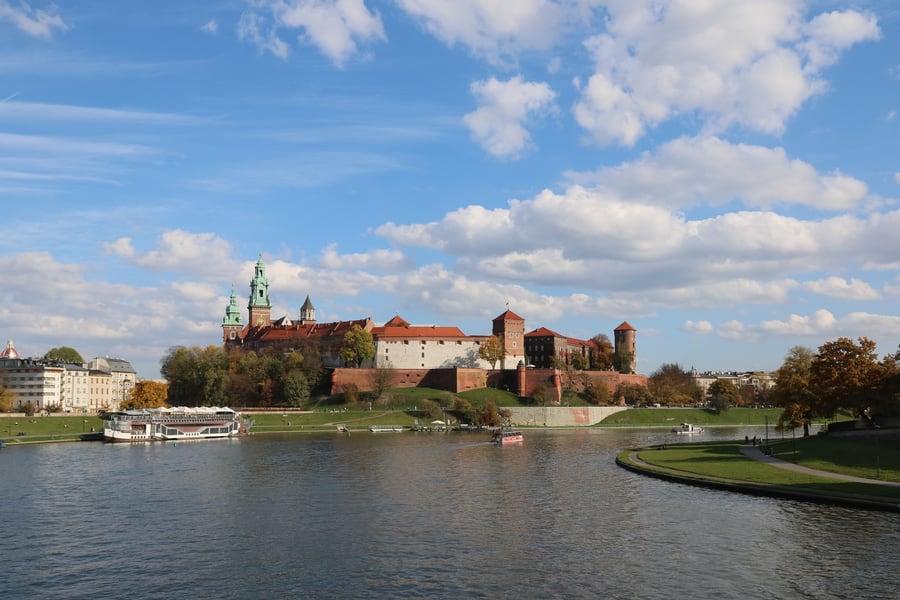 Ingo Mehling / Wikimedia Commons · CC BY-SA 4.0 · cropped
Wawel
The limestone bluff above the Vistula is the most freighted site in Poland. Its oldest stonework goes back to about 970; the castle you see is 14th-century and later, arranged around a Renaissance courtyard, and the cathedral is where Polish monarchs were crowned and buried. It went onto the very first UNESCO World Heritage list in 1978, and with 3.47 million visitors in 2025 it is the most visited museum in the country.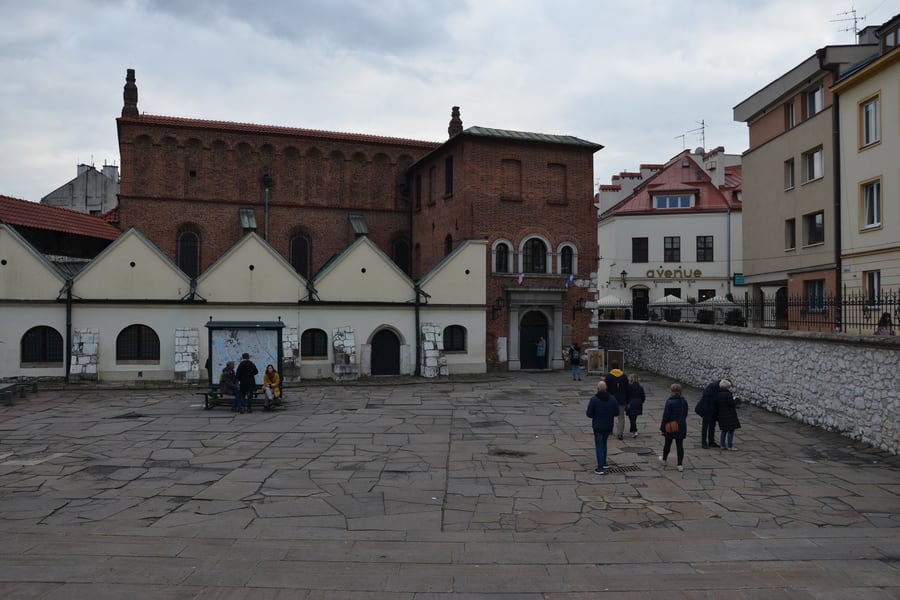 Steven Lek / Wikimedia Commons · CC BY-SA 4.0 · cropped
Kazimierz
The old Jewish quarter is now Kraków's best eating and drinking district, but the Old Synagogue on Szeroka Street is the reason to slow down. Gothic and Mannerist, built somewhere between 1407 and 1570 — the estimates genuinely differ that much — it is the oldest surviving synagogue building in Poland. The Nazis desecrated it in 1939; since 1958 it has been a branch of the city museum.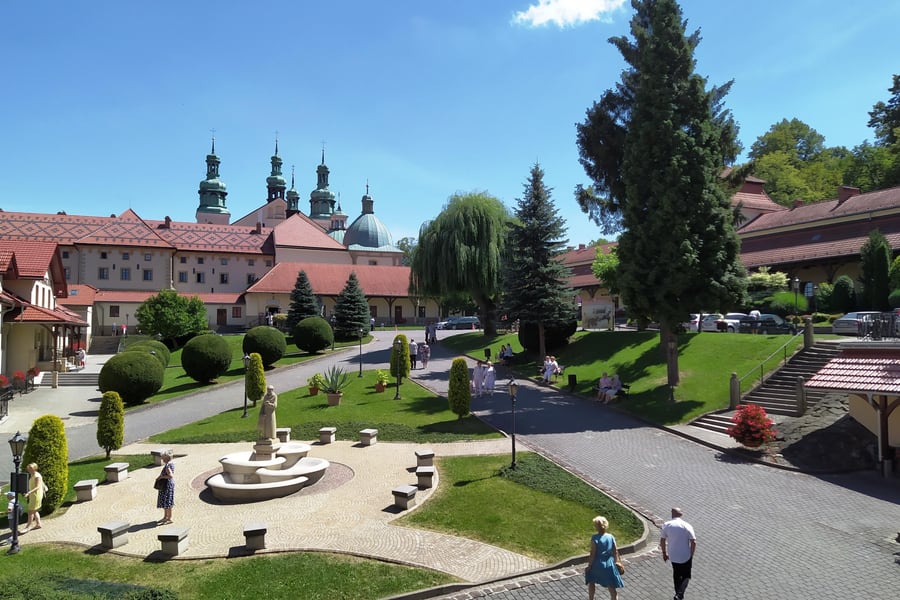 Radosław Botev / Wikimedia Commons · CC BY 3.0 PL · cropped
Kalwaria Zebrzydowska
A 17th-century Mannerist monastery with something stranger attached: a calvary laid out across the surrounding hills as a topographical model of Jerusalem, some forty chapels linked by paths through the woods. It went on the UNESCO list in 1999 and was made a Polish national Historic Monument on 17 November 2000. Still a working pilgrimage site, and it was Karol Wojtyła's local one.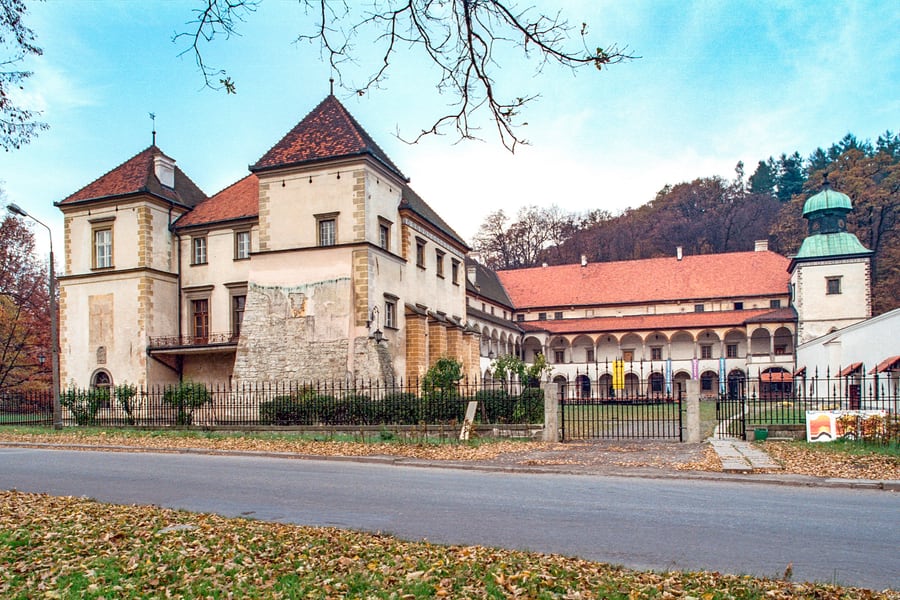 Jerzy Strzelecki / Wikimedia Commons · CC BY-SA 3.0 · cropped
Sucha Beskidzka
Another stop, at the foot of Mount Jasień where the Stryszawka runs into the Skawa. The Renaissance castle here is nicknamed the "little Wawel" for its arcaded courtyard, which really does echo the royal one in Kraków. It passed through the Komorowski, Wielopolski, Branicki and Tarnowski families and now holds the town museum. There is also a 17th-century inn that Polish tradition improbably connects with the devil.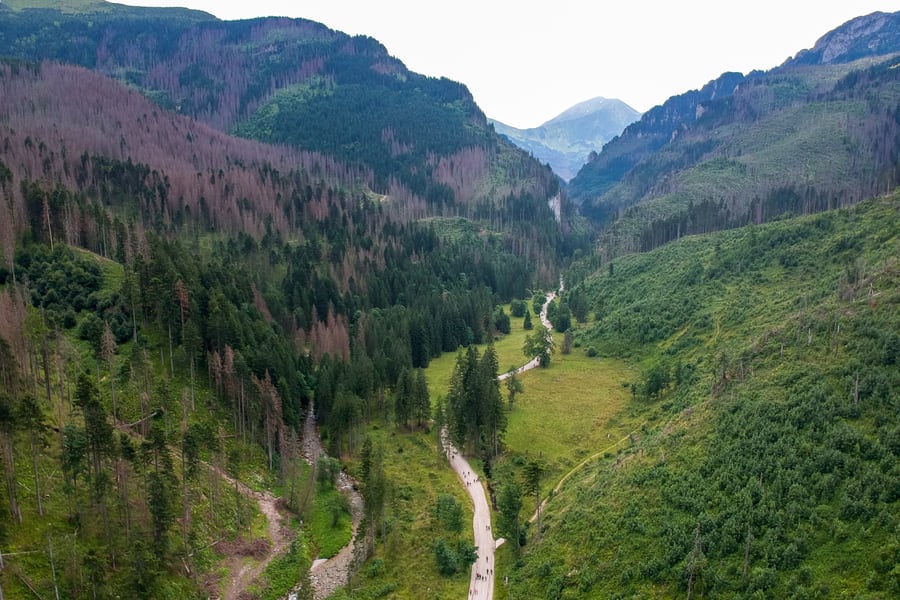 Maksym Kozlenko / Wikimedia Commons · CC BY-SA 4.0 · cropped
Dolina Kościeliska
Everyone walks to Morskie Oko, which is why you should walk here instead. The valley runs about 9 km from the hamlet of Kiry right up to the main ridge, and the road in from Zakopane is only 7 km. It is gentler than the lake path and far emptier, with the Ornak refuge — built in 1948 — halfway along for a break. Sheep are still grazed on the meadows, which is where the smoked oscypek comes from.Where to Sleep
The 06:22 departure and the 22:58 return between them shape this: sleep in Kraków near the station, or make Zakopane the base and come back another day.
Kraków — near the station
If you are taking the Luxtorpeda, this is the practical answer. The area around Kraków Główny and the Grzegórzki district has a good spread of business and mid-range hotels, and the station is under the Galeria Krakowska shopping centre — five minutes from platform to bed.
Kraków — the Old Town
Stare Miasto, inside the Planty ring: hotels in restored townhouses, some of them on the market square itself. Beautiful, central, expensive, and about fifteen minutes' walk from the station.
Kraków — Kazimierz
The old Jewish quarter, and the most enjoyable part of the city to stay in — smaller hotels and apartments, the best restaurants and bars in Kraków, and a completely different atmosphere from the Old Town. Twenty minutes' walk or a short tram from the station.
Zakopane
If the mountains rather than the railway are the point, stay up there. Zakopane has more beds than anywhere else in the Polish mountains, from large spa hotels to pensjonaty and rooms in private houses — the last being a Podhale institution, cheap and often in a timber house with a view of the Tatras.
Prices double in the ski season and over the New Year. Book months ahead for Christmas and for the long August weekends.
The Podhale villages
Poronin, Biały Dunajec, Bukowina Tatrzańska and Białka Tatrzańska are all within half an hour of Zakopane and considerably quieter, with guesthouses, thermal baths and the same mountain views. Poronin and Biały Dunajec are on the railway.
Chabówka and the Beskids
If you break the journey for the railway heritage park, Rabka-Zdrój is a few minutes away — a small spa town with saline springs, traditionally a children's health resort, and a pleasant, unhurried place to spend a night in the middle of the Beskids.
When to come
- September — the best month. Warm, clear, the crowds gone, the walking at its best.
- December to March — ski season. Zakopane is full, trains are busy, prices are at their peak.
- July and August — hot, and Morskie Oko can have a queue on the path.
- May and June — green, wet, and the quietest of the warm months.
The Luxtorpeda runs at weekends and on public holidays year-round, so the season is yours to choose.
Questions or corrections
Planning this trip and stuck on something, or spotted a time, fare or detail that has changed? Send us a message about Kraków to Zakopane. We read every one, and we update this page when something has changed.