Copenhagen to Helsingør: Denmark's Coast Line
Wikimedia Commons · CC0
- Distance46 km · 14 stations
- Duration55 minutes end to end
- Best seasonAll year · four trains an hour, five at peak
Introduction
Denmark calls this line the Kystbanen — the Coast Line — and for most of its forty-six kilometres it stays out of sight of the coast. That is not an accident of surveying. It is a condition the army imposed before a single sleeper was laid.
A bill for a state railway from Klampenborg to Helsingør went to parliament in 1890. Four years then went by in negotiation, and the parties on the other side of the table were not landowners but the War Ministry and the forestry service. The soldiers would accept a railway along the Øresund on two conditions: that it was not laid so close to the water that a hostile fleet in the Sound could command it, and that it could be taken up again quickly if it ever had to be. The foresters raised no objection at all, so long as not one tree came down. The surveyors finished staking the route out in September 1894, and the first through train from Østerport to Helsingør ran on 2 August 1897.
The result is a railway that spends most of its life a few hundred metres inland, in cuttings and behind hedges and back gardens, and then lets the water in three or four times as if by permission: at Skodsborg, along the edge of the deer park at Eremitagesletten, and on the last run north from Snekkersten, where the Swedish shore is close enough to read.
What the army did not anticipate, and nor did anyone else, was the traffic. The line was expected to carry people between Copenhagen and Helsingør faster than the old inland route via Hillerød, which it immediately did. Nobody had believed there would be much demand for the villages in between. Within a few years Copenhageners had worked out that they could keep a family out on the coast through the summer and still go in to town every morning, and the whole shore between Klampenborg and Snekkersten filled in behind the stations. Two places had been left off the plan altogether — Espergærde and Kokkedal — and both ended up buying their way onto it with local money.
It is still doing that job, harder than ever. Four trains an hour run all day in each direction, five in the morning peak, and the last one leaves Copenhagen after midnight. The journey takes fifty-five minutes and costs the price of an ordinary zone ticket. There is no special train, no season, and nothing to book. What there is, on the way, is Karen Blixen's house, one of the great museums of modern art in Europe, a thousand hectares of royal hunting forest with deer in it, the oldest amusement park in the world, and, at the far end, Hamlet's castle with the ferries to Sweden tied up alongside the platforms.
The Journey
Trains start from København H, run under the city on the Boulevard Line to Nørreport and Østerport, and reach open air at Hellerup. Østerport was the terminus for the first twenty years: the Coast Line did not reach the main station until the Boulevard Line opened on 1 December 1917, and Nørreport followed on 1 July 1918. Hellerup is older than either, opened on 22 July 1863 where the Copenhagen–Hillerød line and the Klampenborg branch divided, and it is in Østerbro rather than in Hellerup, which is one of several places on this railway where the name on the platform is a courtesy rather than a fact.
Out along the deer park
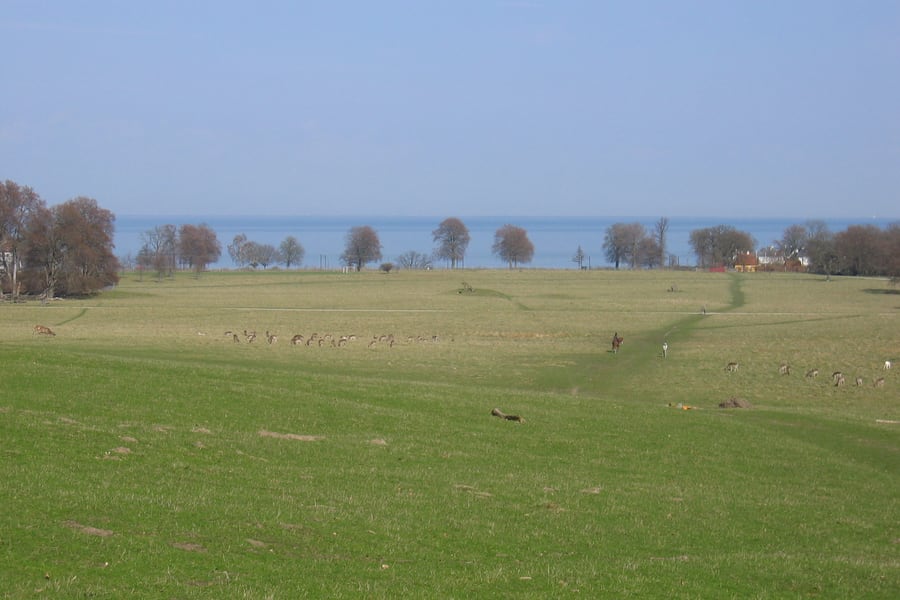
At Klampenborg the suburbs stop. The station has seven tracks and is the end of S-tog line C, and its northern exit gives directly onto Jægersborg Dyrehave — eleven hundred hectares of oak and open grass that were the Danish kings' hunting ground, laid out on a grid of numbered roads radiating from a single point. The railway skirts the eastern edge of it. For a few minutes north of Klampenborg the window fills with the Eremitage plain: fallow deer in herds of a hundred and more, the little baroque hunting lodge of 1734-36 on the skyline, and beyond the last line of trees, the Sound.
This is the one stretch where the geography argues with the name. The line is up on the inland side of the plain, several hundred metres back from the beach, exactly as the War Ministry required, and the water is a strip of grey-blue at the top of the frame rather than something you run beside.
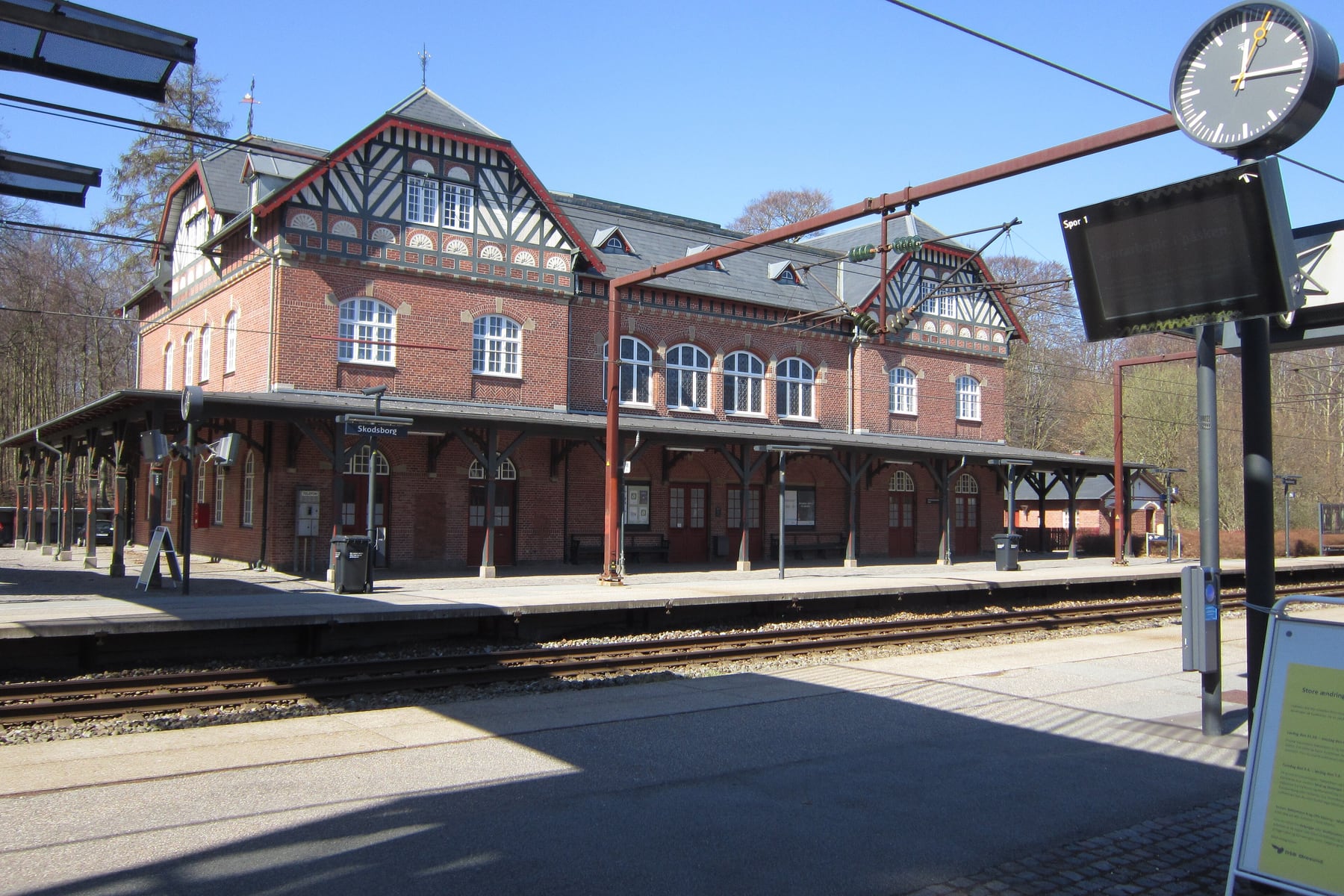
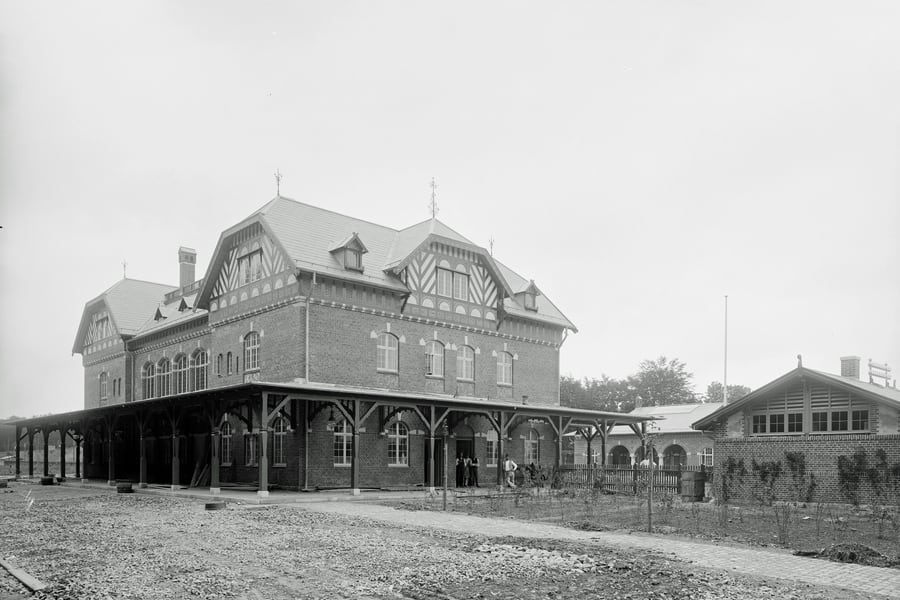
Skodsborg comes next, and here the line does touch the shore. The station is one of Heinrich Wenck's — DSB's chief architect designed most of the buildings on this railway, in red brick with half-timbered gables, and there is a photograph of this one half-built in 1897 in the gallery above. Skodsborg was a bathing place: the sanatorium that the physician Carl Ottosen founded here in 1898 is still in business as a spa hotel, a few minutes from the platform. Then Vedbæk, which had two Wenck buildings and, from 1900 to 1923, a branch line of its own to Nærum.
The Whisky Belt
From Rungsted Kyst to Nivå the train runs through the richest strip of housing in Denmark, and it is largely responsible for it. Karen Blixen's Rungstedlund is a few minutes uphill from Rungsted Kyst. Kokkedal, the next stop, began in 1906 as a ticket office opened for the convenience of the owners of Kokkedal Slot and was only promoted to a real station in 1916.
Humlebæk is the stop for the Louisiana, and the station knows it: a brick sculpture by Per Kirkeby was put up outside in 1994 to point the way, and the destination is written under the station name on the platform boards. The building itself is Wenck at his best, red brick on a plinth of Bornholm granite, with the original beamed ceiling, five original chandeliers and a terrazzo floor in the waiting room, and the woodwork in his usual Swedish red and bottle green.
The last ten kilometres
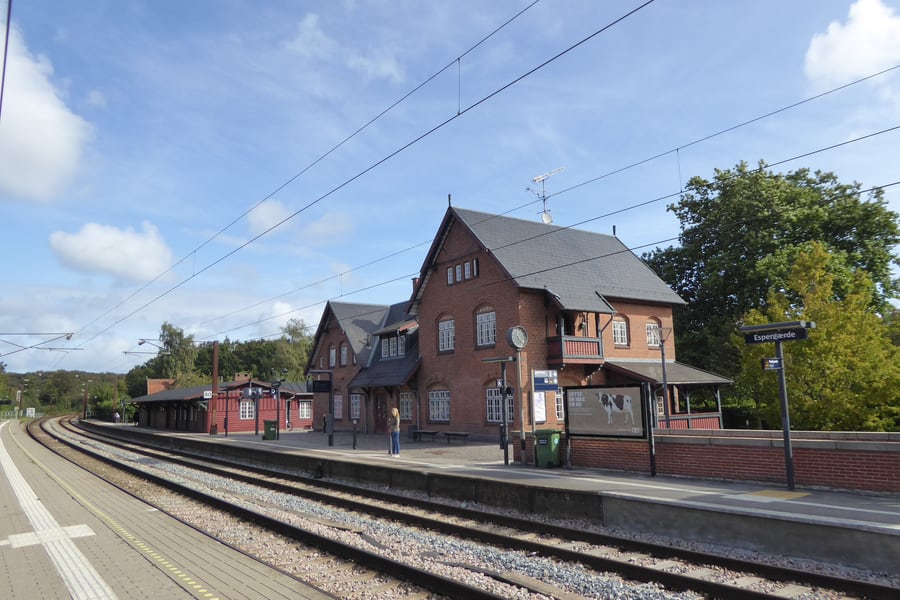
Espergærde was an afterthought. It opened in May 1898, almost a year after the rest of the line, because the neighbourhood raised the money, and it stands in the village of Mørdrup while carrying the name of a fishing hamlet down on the shore. The original red wooden station building is still there on the east side, with the brick one of 1904 beside it.
Snekkersten, forty-two kilometres out, is older than the Coast Line — it opened in 1879 on the inland route — and it is where the Kystbanen and the line from Hillerød meet. It is also where the railway finally comes down to the water for good. The last few kilometres into Helsingør run along the top of the beach with Sweden a few kilometres off, close enough to pick out the buildings along the Helsingborg waterfront.
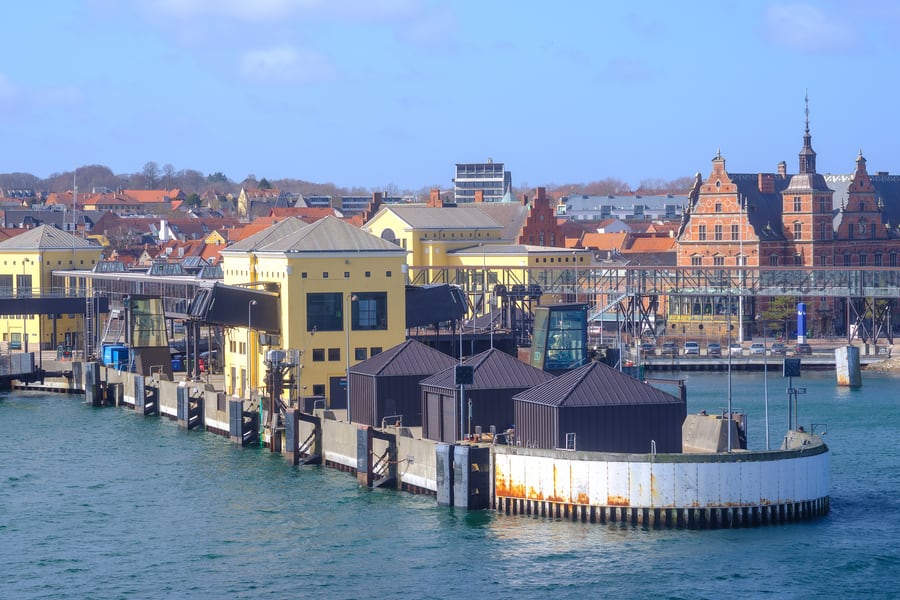
Helsingør station is older than the line it terminates, opened on 24 October 1891 by N.P.C. Holsøe and Wenck to replace an earlier station further inland, and moved to the harbour precisely so that trains could meet the ferries. Its main building and platform roofs were listed in 1990. Outside the concourse the Helsingborg boats are on the left and Kronborg is on the right, and the whole point of putting a railway up this coast is in front of you at once.
Along the route
Thomas Hindsgaul / Wikimedia Commons · CC BY 2.5 DK · croppedThe army drew the line
Four years passed negotiating this railway — not with landowners but with the War Ministry, which would accept it provided it was not close enough to the water for a hostile fleet to command, and could be taken up again quickly. The foresters agreed so long as not one tree came down.Leif Jørgensen / Wikimedia Commons · CC BY-SA 4.0 · croppedNobody expected the passengers
The first through train ran in August 1897 and took the Helsingør traffic off the older route within weeks. What nobody foresaw was the traffic to the small places between: Copenhageners found they could summer out of town and still go in each morning.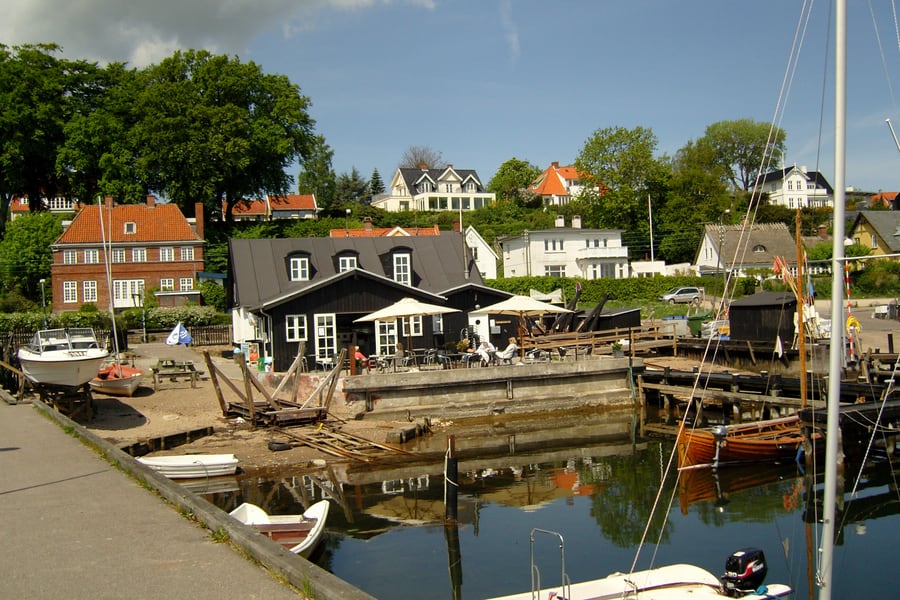 Casper Moller / Wikimedia Commons · CC BY 2.0 · cropped
October 1943, from Snekkersten
When the arrest of Denmark's Jews was ordered, the crossing points were the fishing harbours this railway serves. Four men from Helsingør bought a boat and ran it under the cover name the Sewing Club. Of about 8,000 Danish Jews, 7,500 reached Sweden.A bit of history
Culture & experiences along the way
 Johan Wessman / News Øresund via Wikimedia Commons · CC BY 2.0 · cropped
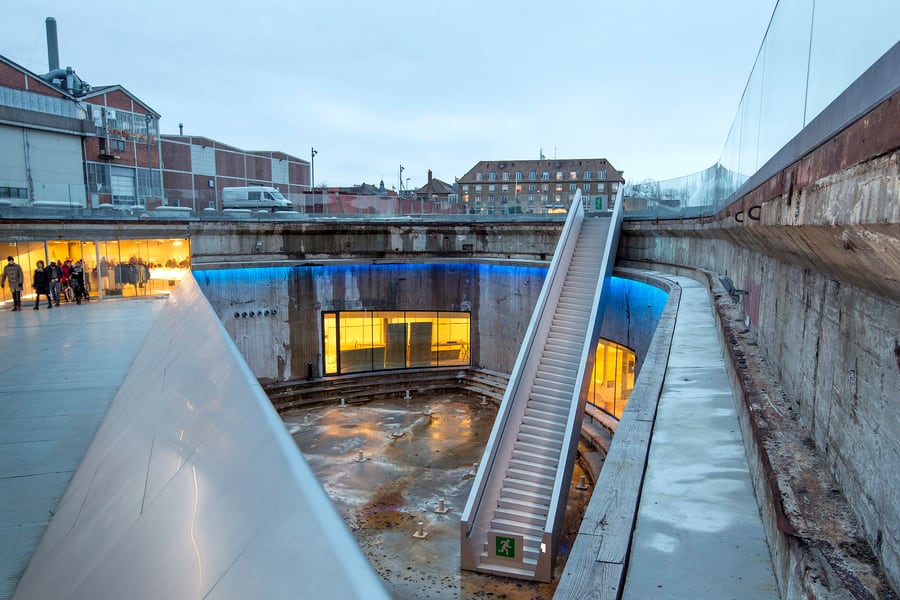
A museum with no building above ground
Beside Kronborg, the Maritime Museum of Denmark was built into the walls of the old Elsinore shipyard's dry dock and left as a hole in the ground, because nothing was allowed to compete with the castle. Bridges cross the empty dock and the galleries run round it, below the grass.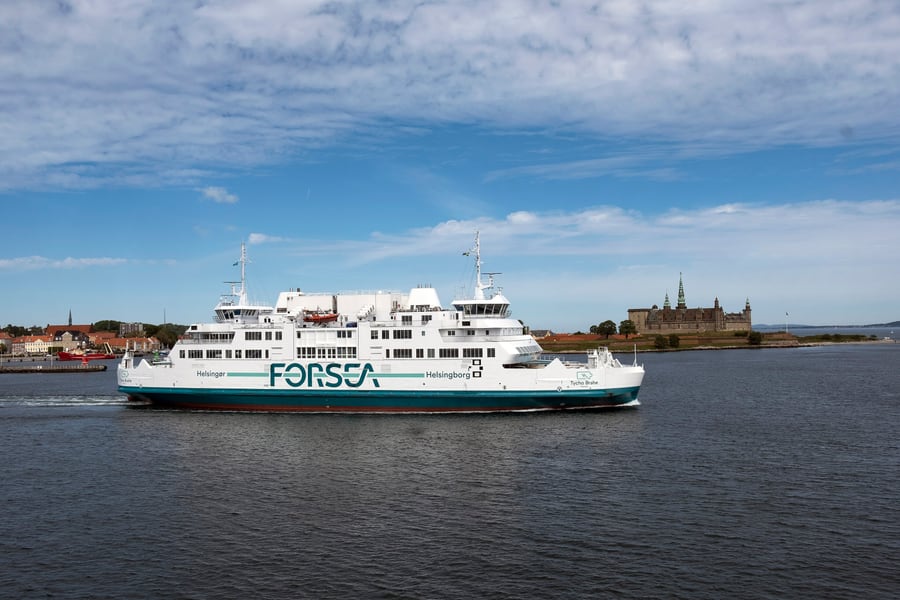 Johan Wessman / News Øresund via Wikimedia Commons · CC BY 2.0 · cropped
Twenty minutes to another country
The ferries to Helsingborg leave from beside Helsingør station every twenty minutes or so and take about as long to cross. Danes ride over for the cheap beer, Swedes ride back for the food, and everyone else goes for the view of Kronborg from the water, which is the one Shakespeare never saw.Timetables
The Kystbanen is a turn-up-and-go railway. Nothing on it needs booking, nothing runs seasonally, and the interval is short enough that most people do not consult a timetable at all. Times below were checked against the live DSB timetable for Thursday 27 and Saturday 29 August 2026, and are as of August 2026.
End to end
Every train calls at all fourteen stations, and every train takes 55 minutes in each direction. There is no fast option in the ordinary timetable; the only quicker trains are two peak workings an hour that miss stops between Helsingør and Espergærde and again between Kokkedal and Hellerup, and they save five minutes.
| København H | Helsingør |
|---|---|
| 09.55 | 10.50 |
| 10.07 | 11.02 |
| 10.25 | 11.20 |
| 10.37 | 11.32 |
| Helsingør | København H |
|---|---|
| 13.58 | 14.53 |
| 14.13 | 15.08 |
| 14.28 | 15.23 |
| 14.43 | 15.38 |
Those are representative hours rather than the whole day. The pattern repeats: four trains an hour in each direction through the middle of the day and at weekends, at roughly a quarter of an hour apart.
Peak, evening and night
In the morning peak there are five departures an hour from Helsingør towards Copenhagen — typically at xx.13 and xx.43 for Holbæk, xx.24 for København H, and xx.28 and xx.58 for Næstved. Most Kystbanen trains do not terminate at København H at all: they run straight through and out the other side of Zealand, alternately to Næstved by way of Roskilde or Køge Nord, with the peak extras going to Holbæk.
The first train of the day leaves København H at 05.07 and reaches Helsingør at 06.02. The last leaves at 00.37 and arrives at 01.32; on Friday and Saturday nights the service continues right through. From Helsingør, Lokaltog's own trains leave the same station for Hillerød and for Gilleleje roughly hourly, which makes a circular trip back to Copenhagen by the inland route straightforward.
Rolling stock
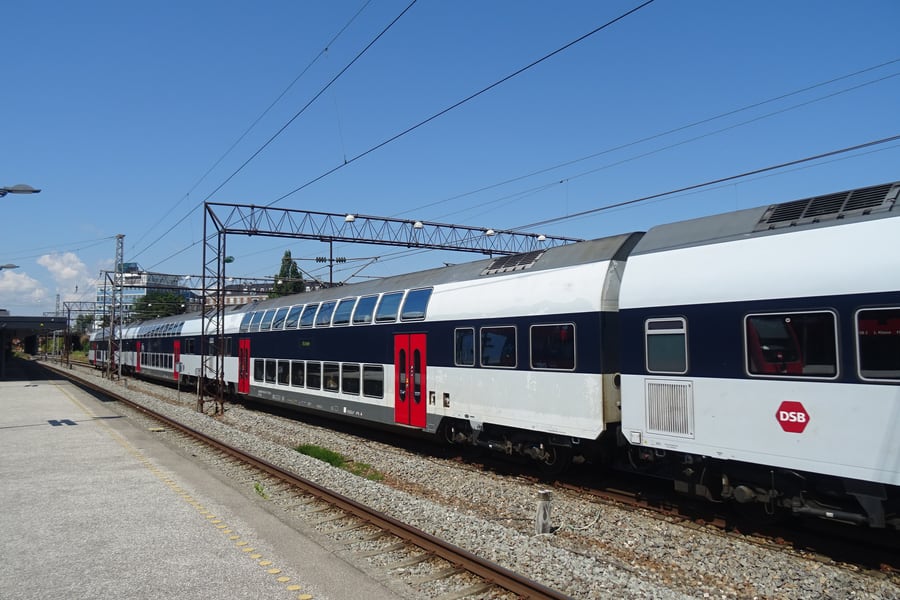
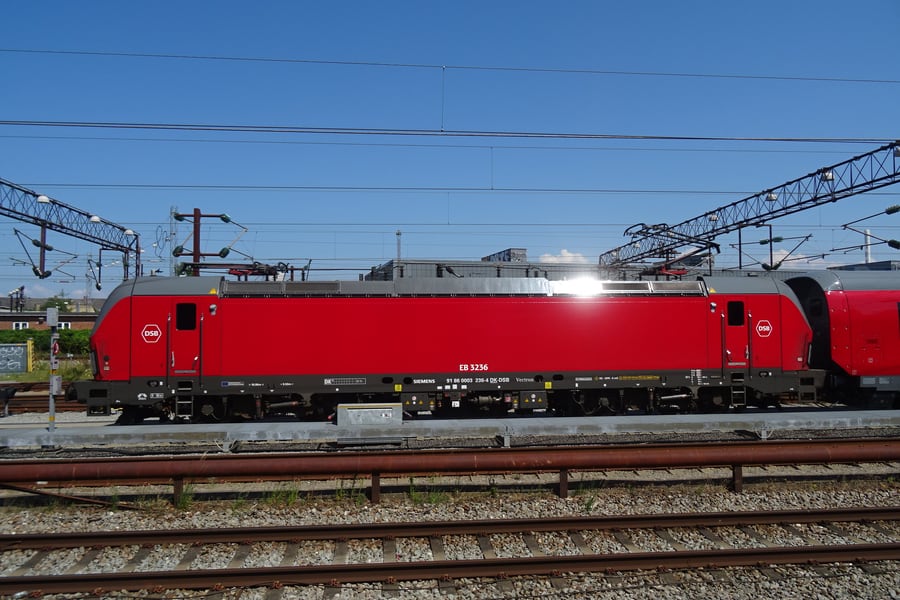
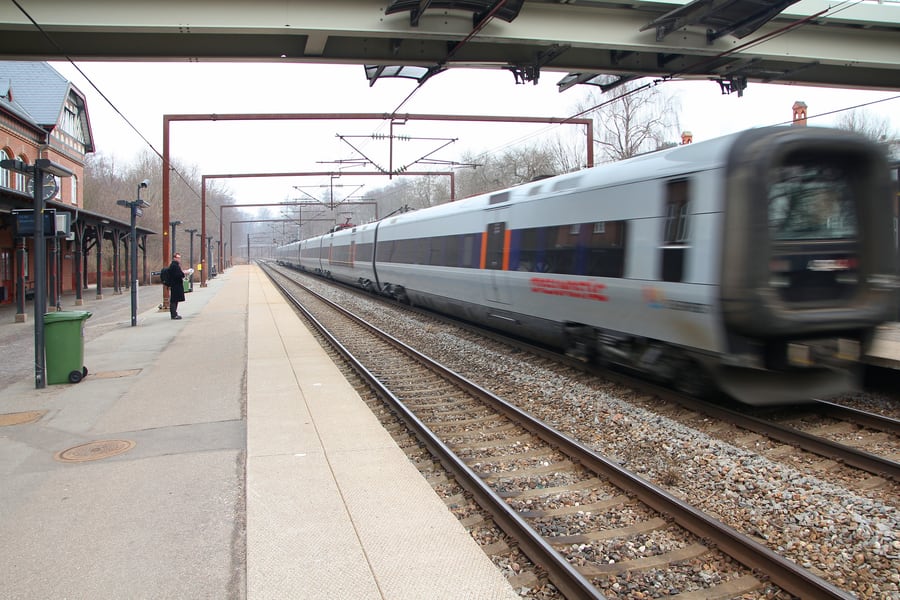
Since December 2021 the northern end of the line has been worked by Siemens Vectron electric locomotives — DSB's litra EB — hauling up to six double-deck coaches, and from the 2023 timetable those trains cover most departures. IR4 electric units appear at weekends and in the evenings, and the peak trains to Holbæk are diesel IC3 and IC4 sets. The Øresundstog units that were the face of this line from 2001 have gone: DSB sold its entire fleet of them to Skånetrafiken in Sweden in December 2023.
Live times and any engineering alterations are published by DSB (opens in a new tab).
Tickets
There is no such thing as a Kystbanen ticket. The whole line lies inside the capital region's common fare system, run jointly by DSB, Movia and the Metro under the name DOT, and one ticket covers train, bus, S-tog, light rail and metro without distinction. Fares go by the number of zones crossed rather than by distance or operator: an adult single is 24 kr for two zones and rises in steps to 110 kr for sixteen, with children at half price. A Rejsekort is cheaper at every step.
For a day out along this railway the simplest answer is usually a City Pass, a flat fare that removes the zone arithmetic — 100 kr for 24 hours inside Copenhagen and the airport, 200 kr for greater Copenhagen. Nothing on this line needs a reservation and there are no supplements. Prices from DOT's 2026 fare table, valid from 18 January 2026.
Book your tickets
City Pass Small
100 kr for 24 hours · zones 1–4
Copenhagen and the airport, on every bus, train, metro and harbour bus.
Book Tickets (opens in a new tab, on dinoffentligetransport.dk)via dinoffentligetransport.dkCity Pass Large
200 kr for 24 hours · 320 kr for 48 · zones 1–99
Greater Copenhagen, which is what reaches the far end of this line.
Book Tickets (opens in a new tab, on dinoffentligetransport.dk)via dinoffentligetransport.dkSingle ticket
From 24 kr for two zones, children half price
Priced by zones crossed, and cheaper again if paid for with a Rejsekort.
Book Tickets (opens in a new tab, on dinoffentligetransport.dk)via dinoffentligetransport.dkRail Passes
The Kystbanen is worked by DSB, and Interrail's own country page for Denmark, checked in August 2026, lists DSB as fully included in the pass along with S-Tog, Nordjyske Jernbaner and Lokaltog. A Global Pass or a Denmark One Country Pass therefore carries you from København H to Helsingør and back with nothing else to buy and nothing to reserve — seat reservations are optional on every Danish domestic train, and there is no reservation facility on this service at all.
Whether it is worth using a pass day on it
Usually not, on its own. This is a commuter railway priced as one: a return down the whole line costs a fraction of what a pass day is worth, and a City Pass Large at 200 kr covers 24 hours of unlimited travel on the trains, the buses and the metro as well. Spending a travel day of a Global Pass on a 55-minute regional trip is poor value unless the day already has a long-distance leg in it.
Where a pass does earn its keep here is as part of a longer day. Copenhagen to Helsingør, the ferry across to Helsingborg, and onward into Sweden is a natural through route, and Interrail covers the Danish and Swedish trains at either end of it. The crossing itself is a commercial ferry and is not part of the pass.
A Denmark Pass stops at the water, because a one-country pass cannot be used outside its country. Interrail also sells the Nordic Pass (opens in a new tab), valid in Denmark, Norway, Sweden and Finland and across the borders between them: €218 for 3 travel days in a month for an adult in second class, against €137 for the Denmark Pass. It cannot be used in the country you live in, only in the other three. With it, or a Global Pass, the Swedish trains from Helsingborg ride on the same pass. Checked October 2026.
The local trains at Helsingør
Two other railways start from Helsingør station: Lokaltog's line inland to Fredensborg and Hillerød, and its Hornbæk line north-west to Gilleleje. Interrail lists Lokaltog among the operators fully included, so a pass covers the round trip out along the coast and back through the middle of North Zealand without a separate ticket.
Places to Visit
Very few railways this short have this much hung along them. Some of it was already here and is the reason the line goes where it goes — the castle at the end, the royal hunting forest at Klampenborg, Karen Blixen's house above Rungsted harbour. Some of it arrived because the trains did: the Louisiana opened at Humlebæk in 1958, a few minutes' walk from the platform, and the station's own signs have pointed at it ever since.
All four below are a few minutes' walk from a platform, and a single day ticket covers them with time to spare.
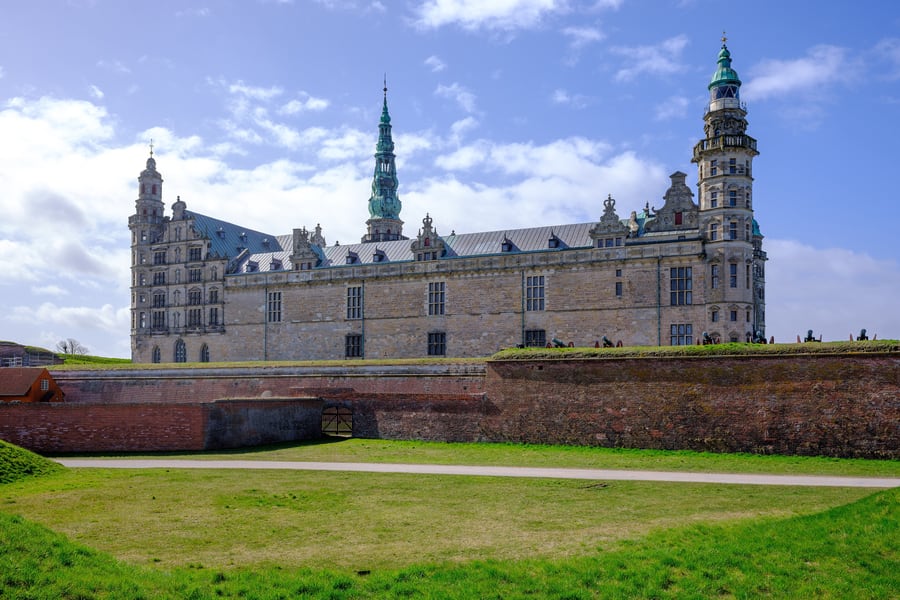 ArildV / Wikimedia Commons · CC BY-SA 4.0 · cropped
Kronborg
A castle and a star fortress at the narrowest point of the Øresund, built to make passing ships pay for the privilege, and one of the most important Renaissance buildings in northern Europe. Shakespeare called it Elsinore and never saw it. It went on the UNESCO World Heritage List in 2000, and it is a ten-minute walk from Helsingør station along the harbour front — the ramparts are visible from the platform end.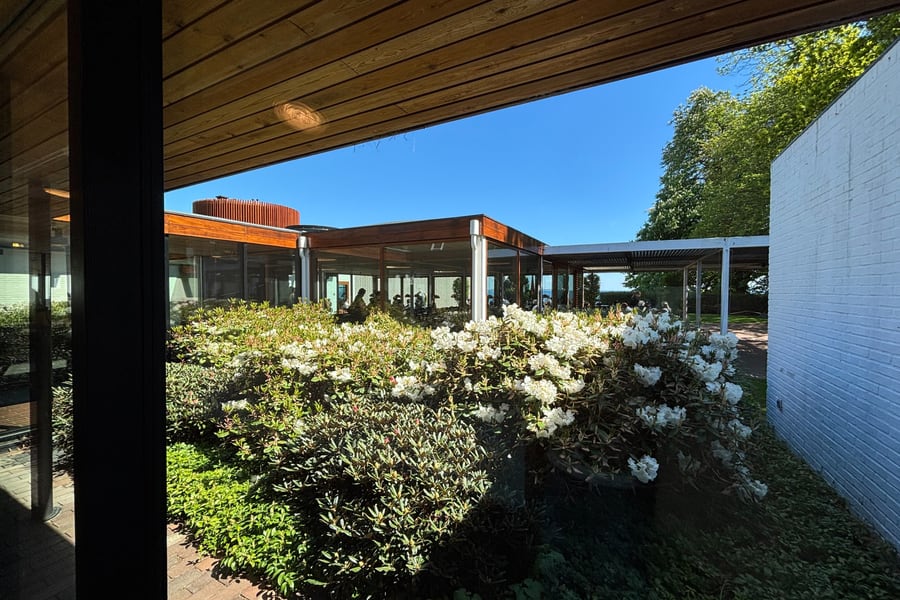 kallerna / Wikimedia Commons · CC BY-SA 4.0 · cropped
Louisiana, at Humlebæk
Scandinavia's most visited museum of modern and contemporary art, with over 700,000 visitors a year, laid out so that the galleries, the sculpture park and the view over the Sound are one continuous thing. Knud W. Jensen founded it in 1958 and had Jørgen Bo and Vilhelm Wohlert build around a villa of 1855 whose owner had named it after his three wives, all called Louise. A brick sculpture by Per Kirkeby outside Humlebæk station points the way.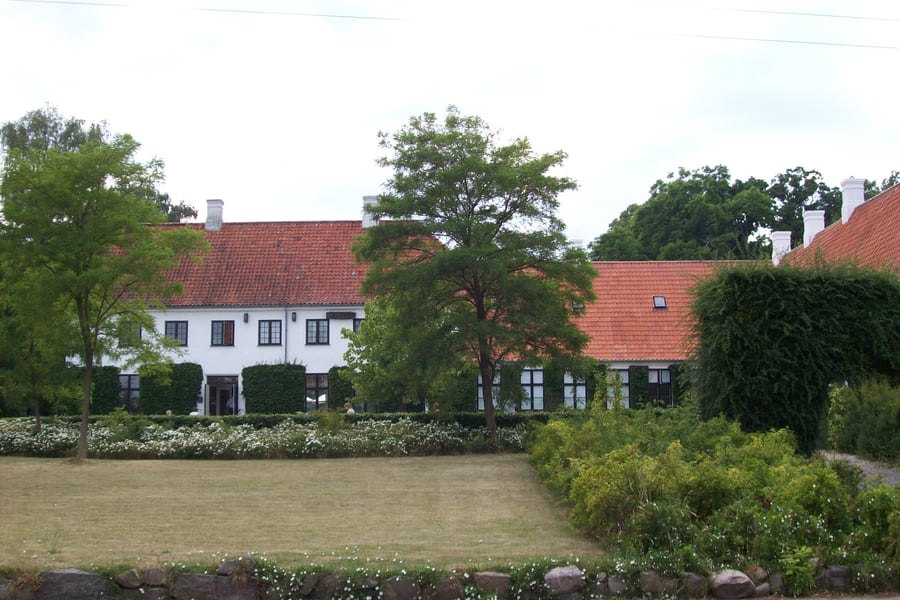 Niels Elgaard Larsen / Wikimedia Commons · CC BY-SA 3.0 · cropped
Rungstedlund
The house where Karen Blixen was born and died, a few minutes uphill from Rungsted Kyst station. The oldest part dates from 1680, when it was an inn; it is now her museum, and it has been the home of Det Danske Akademi since her death in 1962. The grounds are protected as a bird reserve, and she is buried, by her own wish, under the big copper beech at the bottom of the park.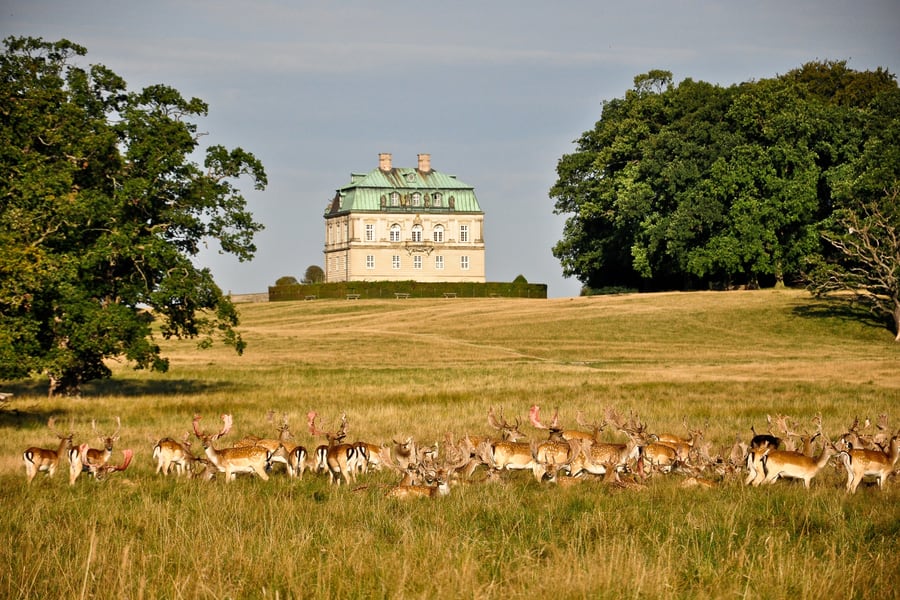 .bastian / Wikimedia Commons · CC BY-SA 2.0 · cropped
Dyrehaven and Bakken
Klampenborg station opens straight into Jægersborg Dyrehave, a royal hunting forest of about 1,100 hectares on a star grid of numbered roads, inscribed by UNESCO in 2015 as part of the par force hunting landscape of North Zealand. Fallow deer graze the Eremitage plain below Eremitageslottet, built for Christian VI in 1734–36. At its southern edge is Bakken, which began in 1583 as the market around a spring and is the oldest amusement park still running anywhere.Where to Sleep
Nobody needs to stay the night to ride this line — it is an hour from the middle of Copenhagen and the last train back leaves after midnight. But the coast the railway opened up was a resort coast before it was a commuter one, and two of the places that made it are still hotels, both of them within reach of a platform.
Where to stay
 Ramblersen / Wikimedia Commons · CC BY-SA 4.0 · cropped
Kurhotel Skodsborg
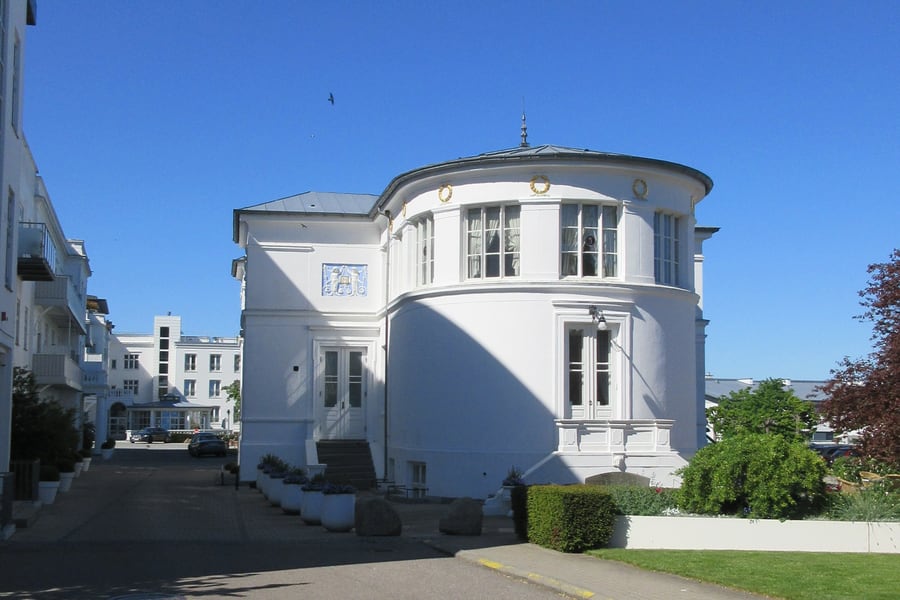
Above the shore at Skodsborg, on the line
The country house at Skodsborg where the physician Carl Ottosen founded the Skodsborg Badesanatorium in 1898, when this coast was where Copenhagen came to take the cure. It is a spa hotel today, with two restaurants, a spa and a gym, looking out over the Øresund. Skodsborg station is a few minutes away.
Check Availability (opens in a new tab, on skodsborg.dk)via skodsborg.dk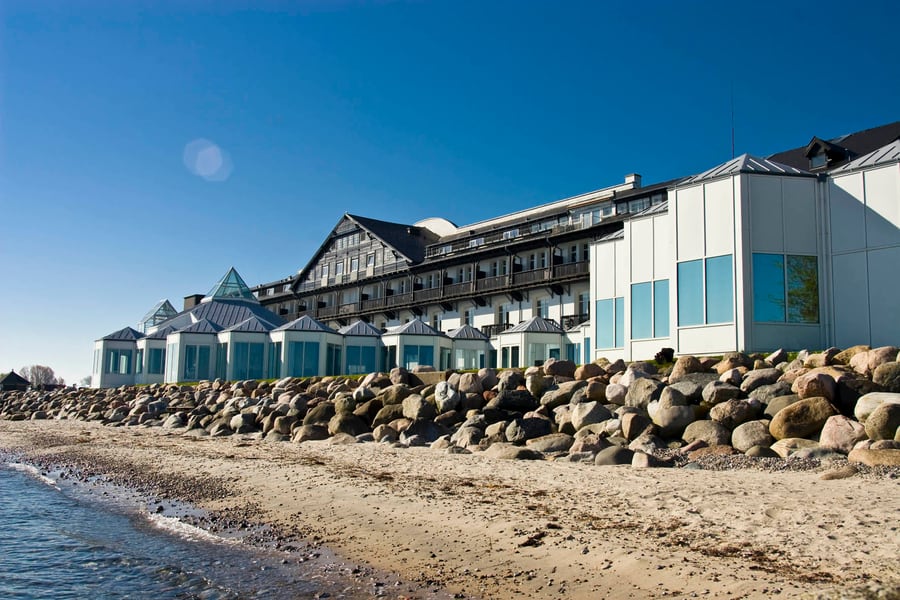 EHRENBERG Kommunikation / Wikimedia Commons · CC BY-SA 2.0 · cropped
Marienlyst Strandhotel
On the beach north of Kronborg
A seaside hotel on the shore just north of the castle, founded in 1859 and named after Marienlyst House, the former royal summer retreat next door that belonged to it until 1896. There is a pool club and spa, and the beach is on the other side of the windows. It is a walk north from Helsingør station, past Kronborg.
Check Availability (opens in a new tab, on marienlyst.dk)via marienlyst.dkQuestions or corrections
Planning this trip and stuck on something, or spotted a time, fare or detail that has changed? Send us a message about Copenhagen to Helsingør: Denmark's Coast Line. We read every one, and we update this page when something has changed.