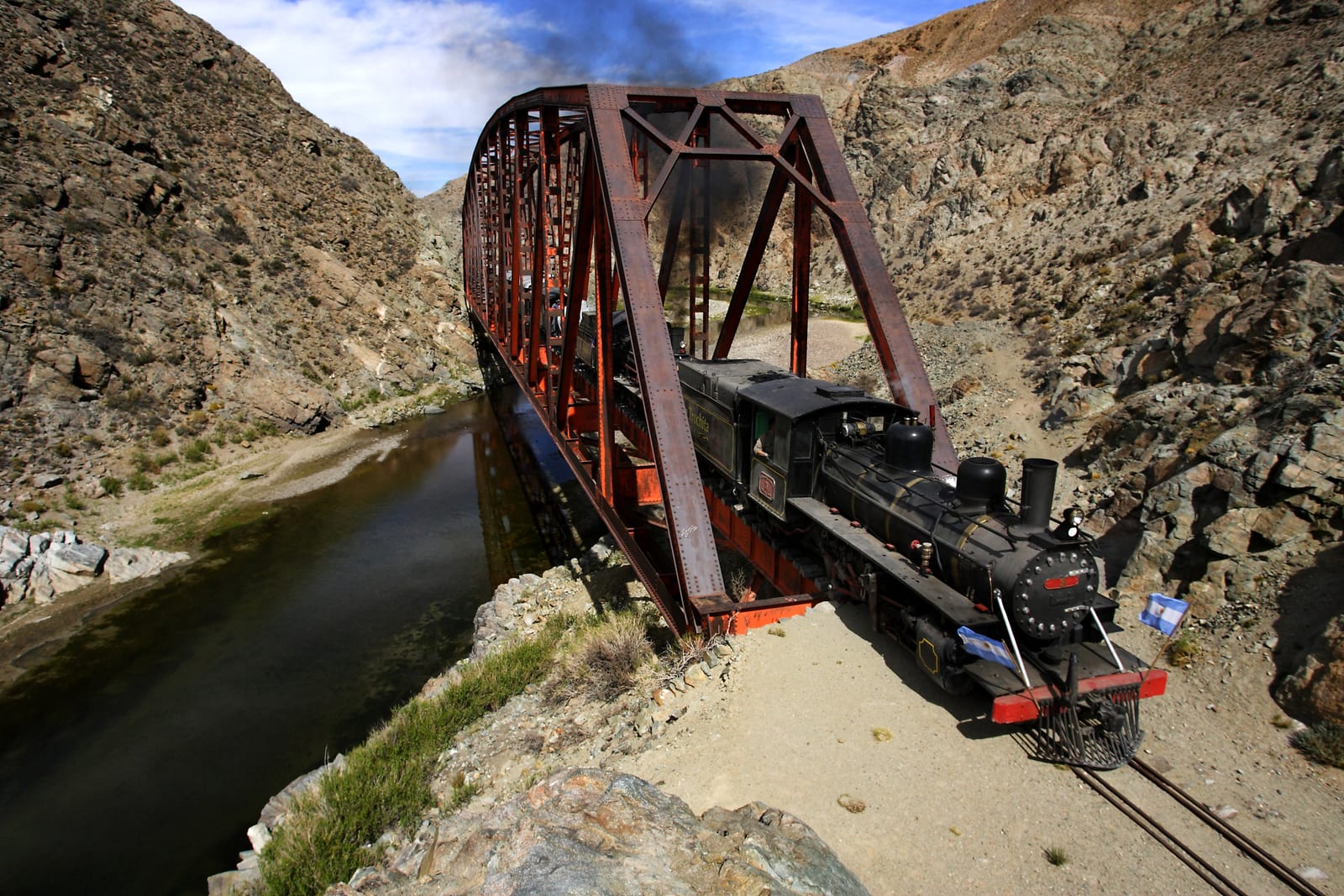
La Trochita
Juan Macri / Wikimedia Commons · CC BY-SA 3.0
- Distance402 km (Ingeniero Jacobacci–Esquel)
- DurationA morning, on the surviving stubs
- Best seasonDec–Mar (southern summer)
Introduction
Somebody once decided to build a railway across Patagonia on track seventy-five centimetres wide. Not for a mine, not for a garden — four hundred and two kilometres of it, across open steppe, from Ingeniero Jacobacci to Esquel. And then they bought locomotives to run on it, and those locomotives are still running today, a hundred and four years after they were built.
That is La Trochita — "the little gauge" — and there is nothing else quite like it left.
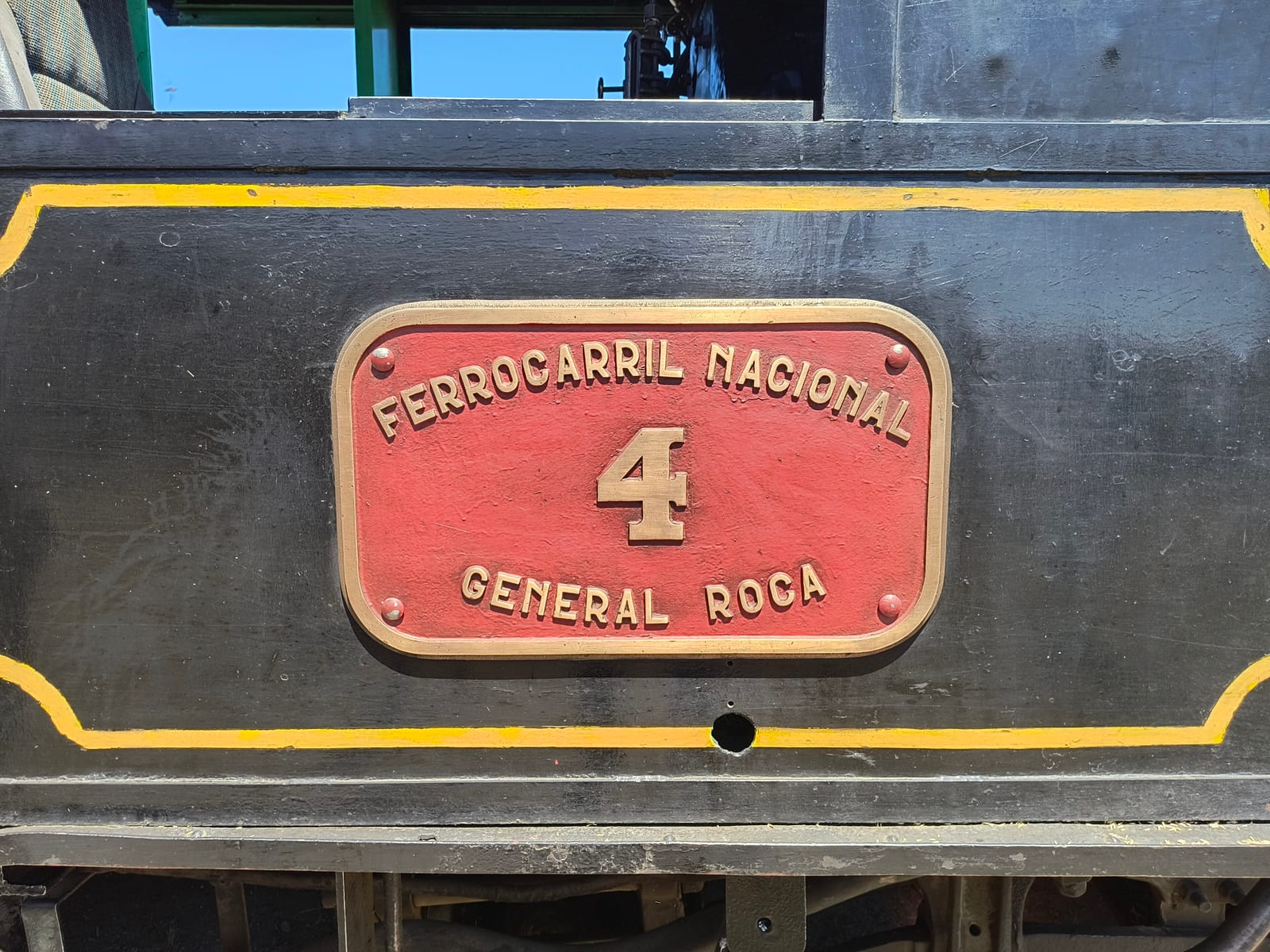
The numbers are the story. 750 mm between the rails, which is toy-train territory. 402 kilometres of it. Twenty-two steam locomotives: eleven Henschels from Germany and eleven Baldwin Mikados from Philadelphia, every single one built in 1922. They burn oil rather than coal, and there is not one diesel on the railway. Seven of the twenty-two are still in steam.
It took a long time to arrive. Trains were running on finished sections by 1935, but the rails did not reach Esquel until 25 May 1945, and the through passenger service to Buenos Aires — via Jacobacci, where you changed onto a grown-up train — only started in 1950. For forty-odd years it was simply how you got out of this corner of Chubut. Then, in 1993, the long run to Jacobacci stopped, and that was very nearly that.
What saved it was Paul Theroux, more or less by accident. The Old Patagonian Express, published in 1978, is a book about travelling from Boston to here by train, and this railway is the thing at the end of it — "the railway almost at the end of the world". The name stuck in English, the tourists came, and in 1999 Argentina declared the whole thing a National Historic Monument.
Be clear about what survives, though. You cannot ride to Jacobacci. Two stubs run: a tourist train from Esquel to Nahuel Pan, under its volcano, and another from El Maitén, where the workshops are, out to Desvío Thomae. The rest of the line is still there, and every so often a locomotive is walked the 165 kilometres between the two towns, which tells you it hasn't quite given up.
So it is a fragment. But it is a fragment that runs on 1922 steam over 750 mm track through some of the emptiest country on earth, and there is no other way to say it: go now.
The Journey
Esquel is a small town in north-west Chubut, founded on 25 February 1906, hard up against the Andes. The name is Tehuelche and means something like marsh, or land of burrs, depending who you ask — which gives you a fair sense of the place. It is the end of the line in every direction, and its railway station is the original one.
You are asked to check in an hour before departure, which sounds like airline nonsense and isn't: an hour before departure, the locomotive is being prepared, and watching that happen is a real part of the morning. These are 1922 machines. Nothing about starting one is quick or quiet or clean. Oil smoke, hissing, a lot of clanking, and a smell that people who grew up with steam find unreasonably moving.
Then the train pulls out onto the steppe, and the scale of the thing lands.
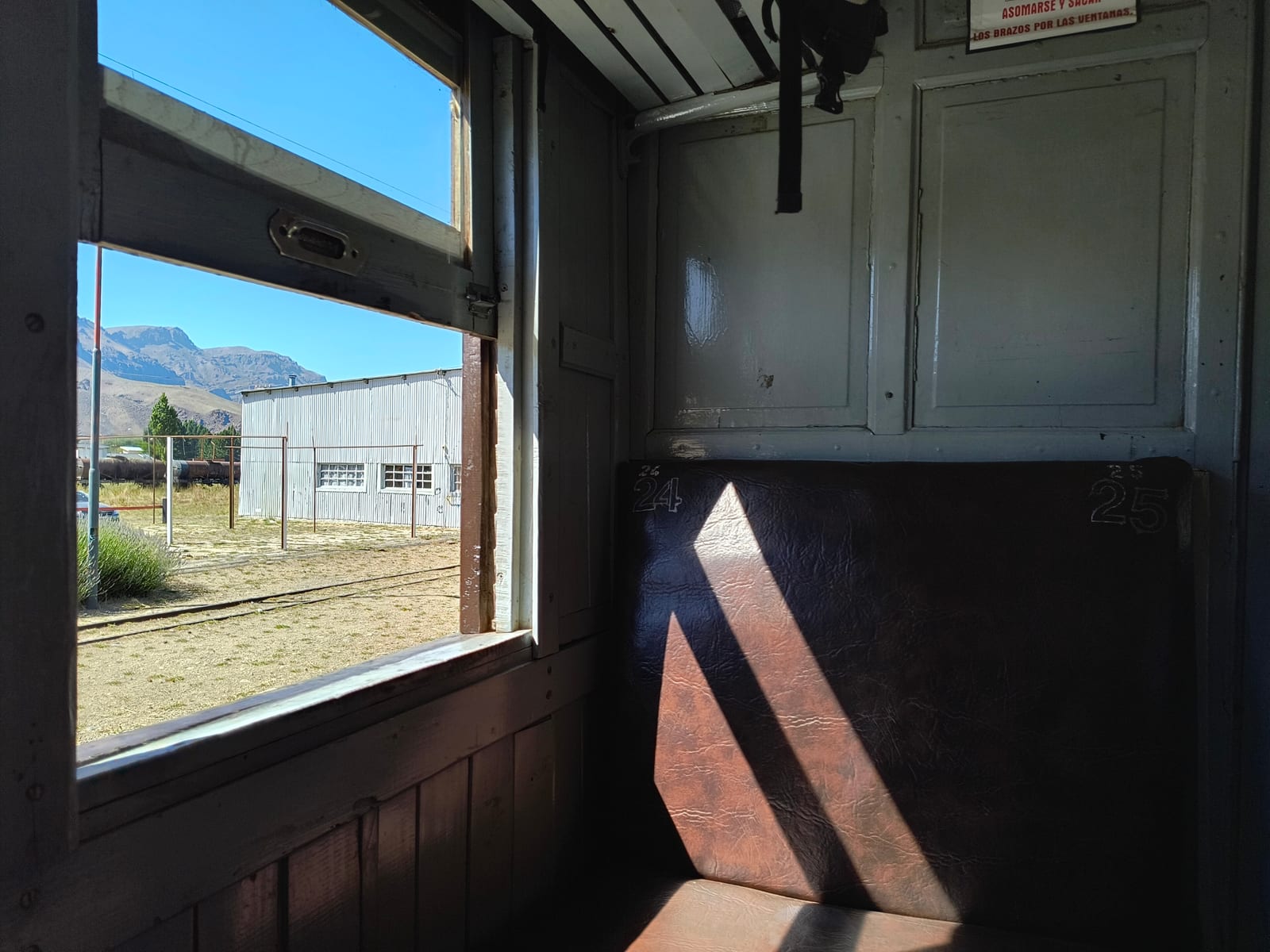
The carriages are narrow — they have to be, on 750 mm track — wooden, with small windows and a platform at each end. They roll. Not alarmingly, but continuously, the whole train working over jointed rail like a boat in a light swell, at a speed you could comfortably jog alongside. Standing out on the end platform with the wind and the noise and the smoke going past is the single best thing on this railway, and everybody ends up doing it.
Outside there is essentially nothing. Grey-green scrub, gravel, wind, an enormous sky, and the Andes as a blue line off to the west. Patagonia does not put on a show. It simply continues, and continues, until the emptiness stops being scenery and becomes the point. Every so often the line crosses a river on a spindly truss bridge, and the sound changes for six seconds, and then it's back to the steppe.
Nahuel Pan is the far end of the Esquel run: a small settlement at the foot of the volcano it's named after, with a Mapuche-Tehuelche community, craft stalls and a little museum. The locomotive uncouples and runs round the train for the trip back, which is a piece of theatre you'll want to watch, and then you rattle home the way you came.
The other half of the railway is at El Maitén, 165 kilometres up the line, and it is where La Trochita actually lives. The workshops are there — a genuine working steam shed, full of 1922 ironwork and the lathes and the people that keep it turning. A short train runs from there too, to Desvío Thomae. Fewer visitors make it. It is arguably the better end, and certainly the more honest one: this is the place that explains why the railway is still here at all.
Along the route
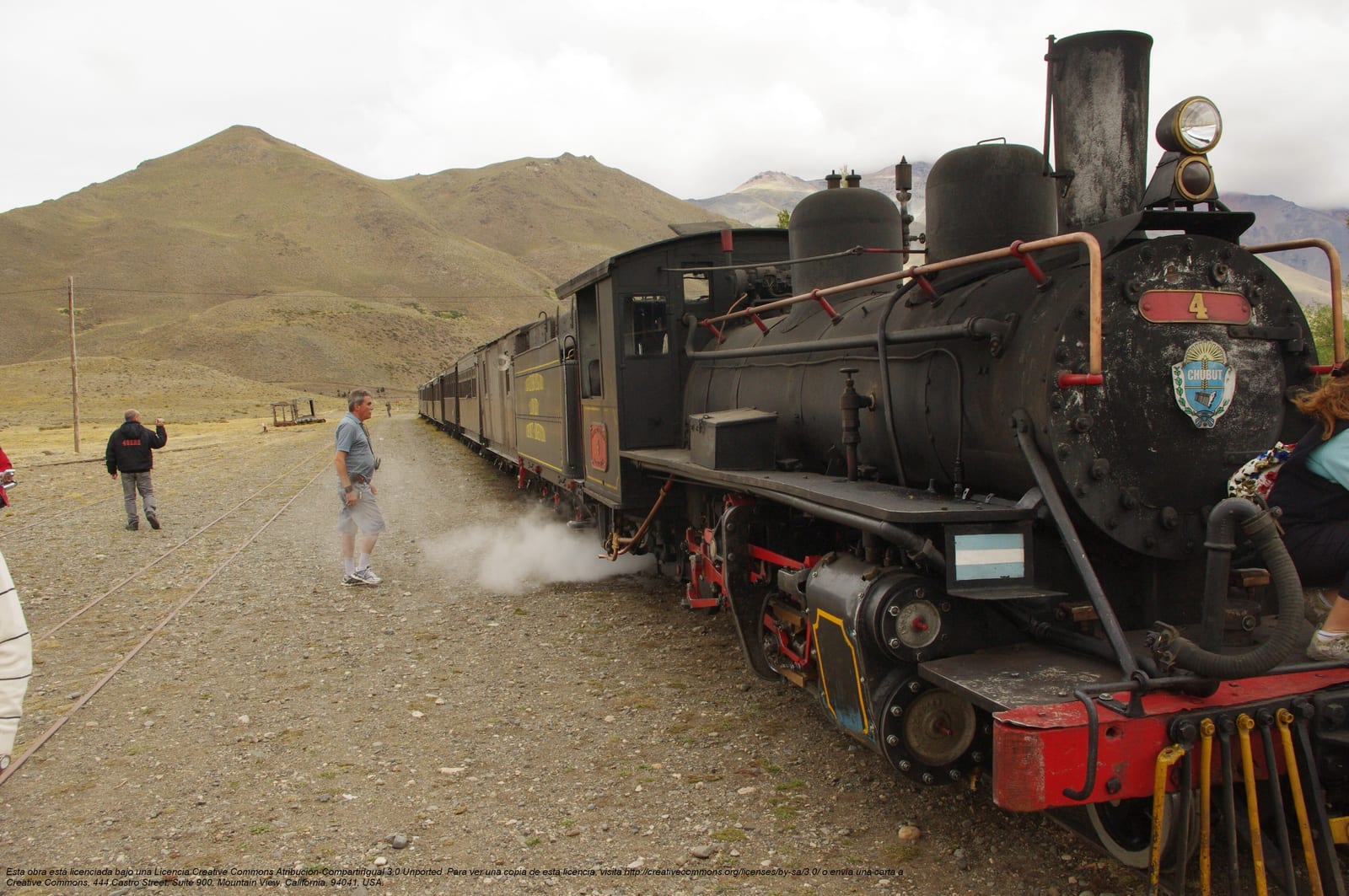
PatagoniaArgentina / Wikimedia Commons · CC BY-SA 3.0 · 2007 · croppedLocomotives from 1922, still working
Not replicas, not restorations of something newer — the actual engines. Eleven Henschels from Germany and eleven Baldwin Mikados from Philadelphia, every one of them built in 1922, oil-fired, with no diesels on the railway at all. Seven are still in steam.Juan Macri / Wikimedia Commons · CC BY-SA 3.0Seventy-five centimetres wide
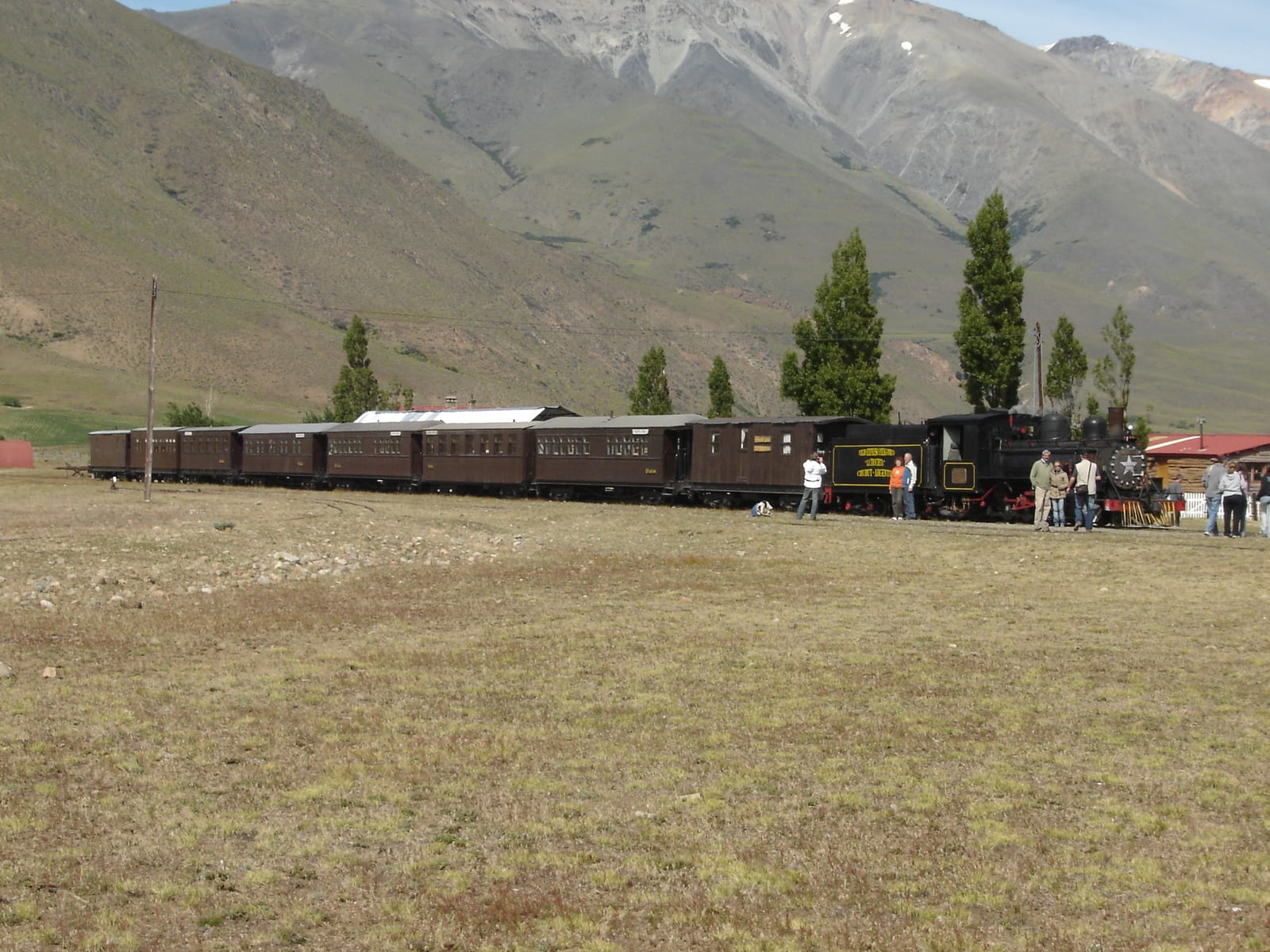
The gauge is 750 mm — that's the joke in the name, la trochita, the little gauge. A toy-sized track laid across 402 kilometres of open Patagonia, which is a bit like building a garden railway and then not stopping for four hundred kilometres.PatagoniaArgentina / Wikimedia Commons · CC BY-SA 3.0The steppe
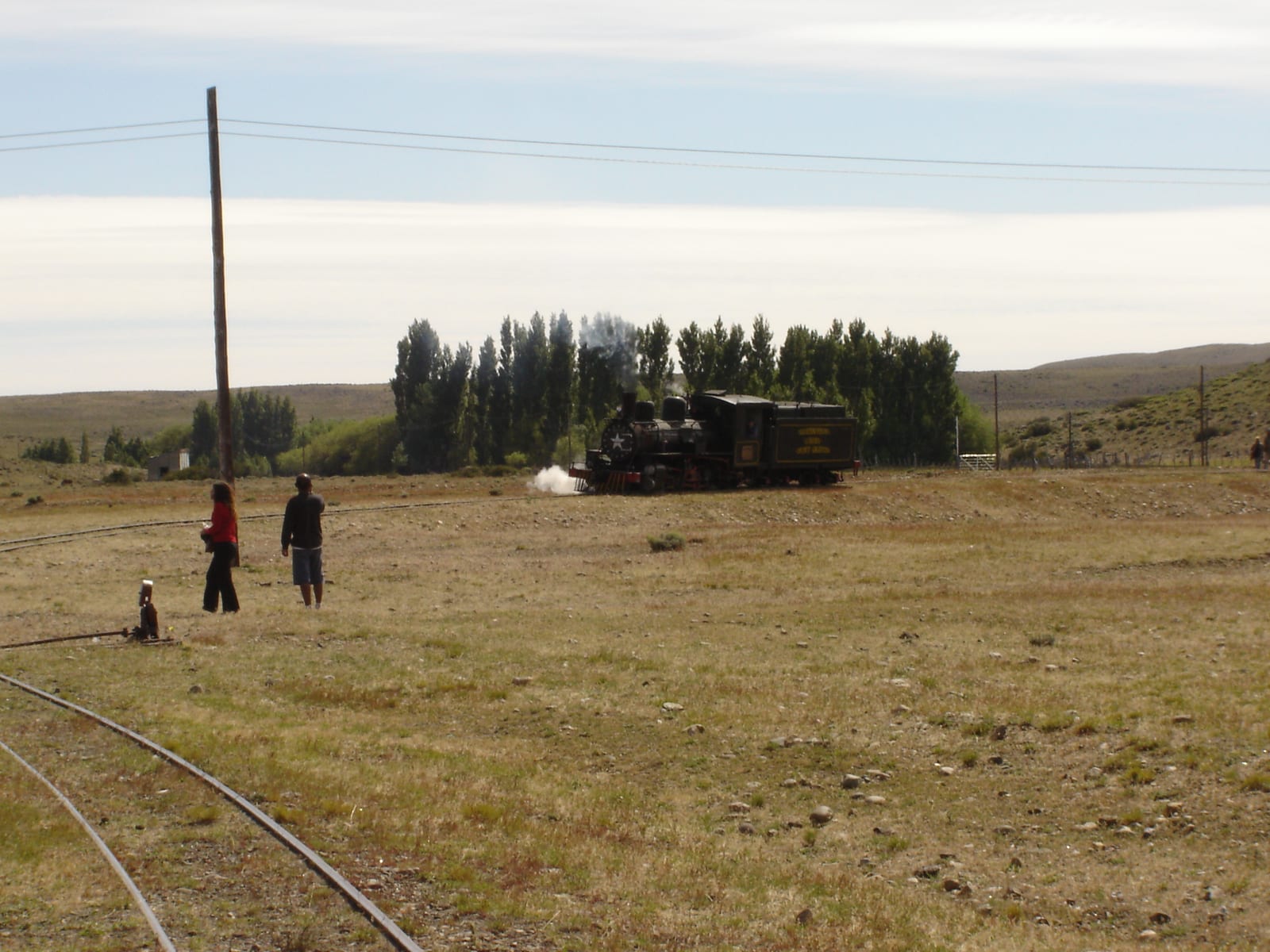
There is nothing out here, and that is the experience. Wind, scrub, gravel, the Andes somewhere off to the west, and a small train making a great deal of noise about crossing it. Patagonia does not perform for you. It just goes on.A bit of history
Culture & experiences along the way
PatagoniaArgentina / Wikimedia Commons · CC BY-SA 3.0Nahuel Pan
The end of the Esquel run: a tiny settlement under its volcano, with a Mapuche-Tehuelche community, a small museum and craft stalls, and time to walk about while the locomotive runs round the train for the trip home.Vlasta x / Wikimedia Commons · CC BY-SA 4.0El Maitén and the workshops
165 km up the line, El Maitén is where the railway is kept alive — a working steam shed full of 1922 machinery, lathes and men who know these engines personally. It runs its own short train. For anyone who cares about how this survives, it is the better half.Vlasta x / Wikimedia Commons · CC BY-SA 4.0Riding the little carriages
Narrow wooden coaches on 750 mm track, rolling and lurching over jointed rail at the sort of speed you could jog. Get out on the platform between the cars and listen to it — this is what all trains sounded like once.Timetables
La Trochita runs as a heritage excursion, not a transport service, and the schedule is seasonal and changeable. Check the operator for your dates — this is not a railway you turn up at on spec.
Real times (2026 — confirm before travelling):
| Run | Days | Depart | Return |
|---|---|---|---|
| Esquel ⇄ Nahuel Pan | typically Tue, Thu, Sat | 10:00 | 12:45 |
| El Maitén ⇄ Desvío Thomae | occasional / groups | — | ~2½ h round trip |
In the January–February peak there may be extra departures (a 14:00, and some on other days except Sunday); Saturday morning at Esquel is the most reliable. Check-in is one hour before departure — the locomotive prep is half the experience.
| Detail | |
|---|---|
| The historic line | Ingeniero Jacobacci ⇄ Esquel · 402 km · 750 mm gauge |
| What actually runs | the two stubs above; scheduled Jacobacci service ended 1993 |
| Traction | oil-fired steam — Henschel & Baldwin, all built 1922 |
Good to know:
- You cannot ride the whole 402 km — nobody has since 1993.
- Departures are sparse and move — in quiet months roughly one a week; the operator publishes the calendar a month or two ahead and it does change.
- Wind, not cold, is the enemy — bring a windproof layer for the open end platform.
- Steam breaks — cancellations happen on a railway this old; leave slack in the plan.
Times as of the 2026 season. Confirm current schedules with the operator — see the Tickets section below.
Tickets
Tickets come from La Trochita — the Viejo Expreso Patagónico — online through their sales portal or at the stations, though El Maitén's office takes cash only. Two trains run at opposite ends of the same railway: the classic Esquel to Nahuel Pan, steam out of the original station and across the steppe, and the quieter El Maitén to Desvío Thomae, at the workshop end where the machinery is actually maintained.
No fares are printed here, because Argentine pricing moves faster than any travel site can follow. Expect separate rates for non-residents, residents, students and pensioners — the discounts are real and clearly posted. Check the calendar before anything else: departures are sparse, seasonal and confirmed only a month or two out. Arrive an hour early, and have a fallback date, because steam engines built in 1922 do not always cooperate.
Book your tickets
Esquel – Nahuel Pan
The classic run
The excursion most people ride: steam out of Esquel's original station across the steppe to Nahuel Pan, time at the far end, and back. Sold by the operator online or at the station; check-in is an hour before departure.
Book Tickets (opens in a new tab, on La Trochita (Viejo Expreso Patagónico))via La Trochita (Viejo Expreso Patagónico)El Maitén – Desvío Thomae
The workshop end
The other surviving stub, running out of El Maitén, where the railway's workshops are. Fewer visitors, and the place the machinery actually lives. Cash is accepted at the El Maitén ticket office.
Book Tickets (opens in a new tab, on La Trochita (Viejo Expreso Patagónico))via La Trochita (Viejo Expreso Patagónico)Rail Passes
No rail pass covers La Trochita. Interrail and Eurail are European schemes, and Argentina is not among the 33 countries in Interrail's list of covered railway companies. Each excursion is sold by the operator, online or at the station.
Checked October 2026 against Interrail's list of railway companies (opens in a new tab).
Places to Visit
Esquel is a long way from anywhere, so make the journey earn its keep. This corner of Chubut is one of the best parts of Argentine Patagonia and the train is only a morning of it.
One stop does not appear below because it belongs to the railway rather than the road: Nahuel Pan, the far end of the Esquel run, where there is a Mapuche-Tehuelche community museum and a few craft stalls under the mountain that gives the place its name. Everything else here is within a few hours of Esquel, and most of it deserves longer than you will give it.
 Banfield / Wikimedia Commons · CC BY-SA 2.5 AR · cropped
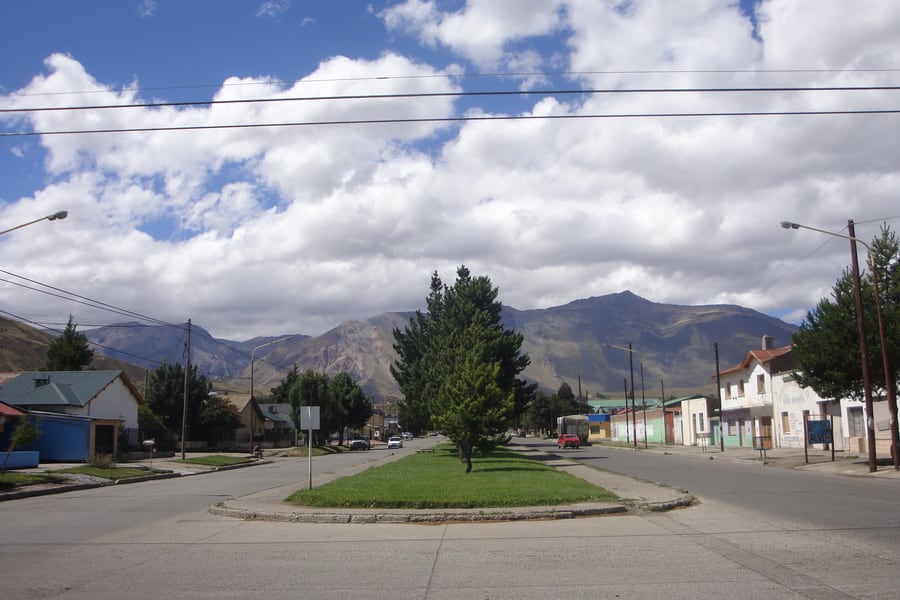
Esquel
A plain, likeable Andean town of about thirty-seven thousand people at 593 metres, founded on 25 February 1906 — the date of its first telegraph message. It is not a beauty: wide streets, low houses, and the Andes at the end of every one of them. But it has the station, the outfitters and the restaurants, and it is the only sensible base for this corner of Chubut. Everything else is a drive away.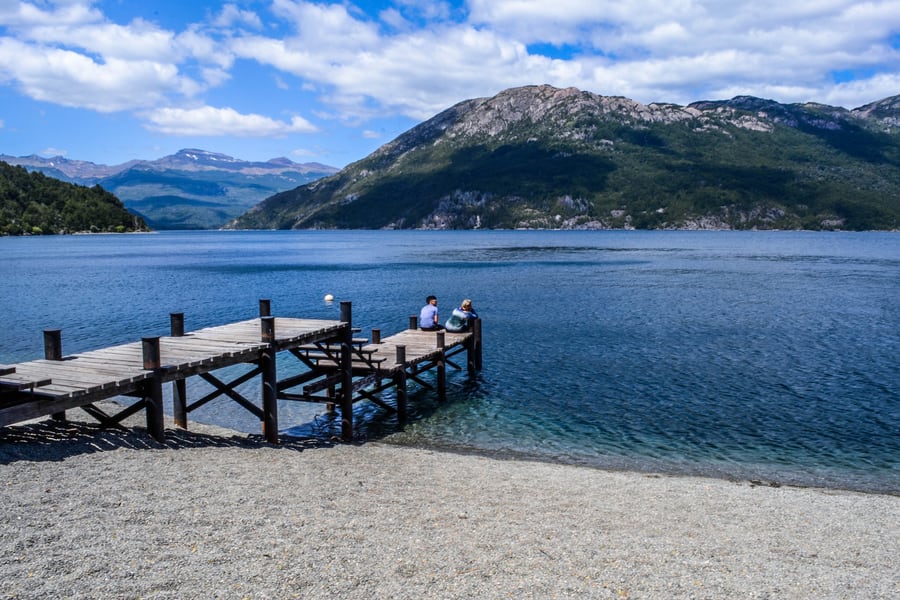 TitiNicola / Wikimedia Commons · CC BY-SA 4.0 · cropped
Los Alerces National Park
About 50 km north-west: 259,570 hectares of lake and beech forest, a national park since 1937 and UNESCO-listed in 2017. The draw is the alerces, Patagonian cypress. The oldest, at Puerto Sagrario on Lago Menéndez, stands 57 metres tall and is roughly 2,600 years old — a seedling around 600 BC. Boats run to the grove; Lago Futalaufquen holds the road and the park headquarters.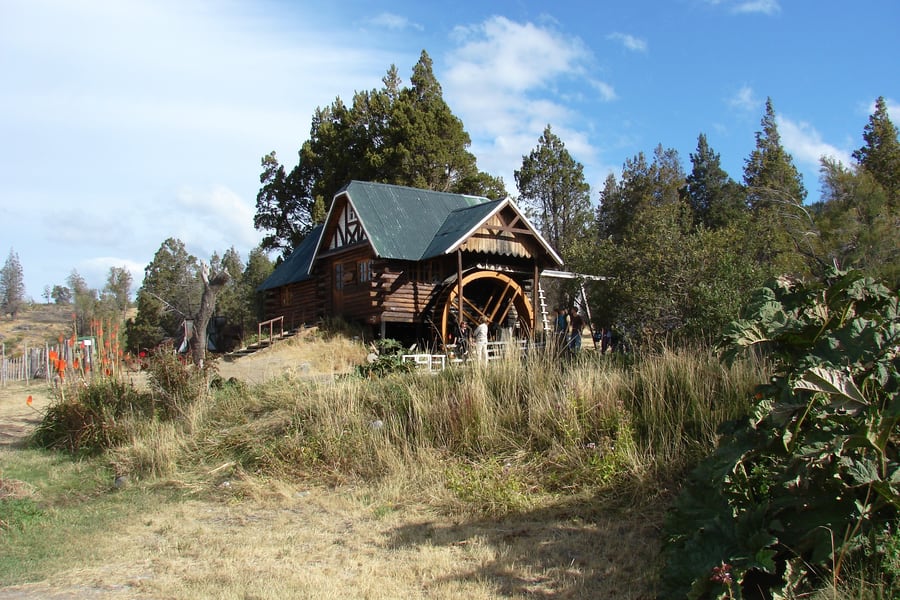 CarlosA.Barrio / Wikimedia Commons · CC BY-SA 4.0 · cropped
Trevelin
Half an hour south, and genuinely odd: a Welsh town in Patagonia. The Welsh landed on the Atlantic coast in 1865, but only crossed to this valley in October 1885; the settlement dates from 25 November 1885. Tre and felin give "town of the mill" — and two mills carry the story, the three-storey Molino Andes of 1918, now the regional museum, and a wooden replica out on Route 259. Welsh tea, with far too much cake.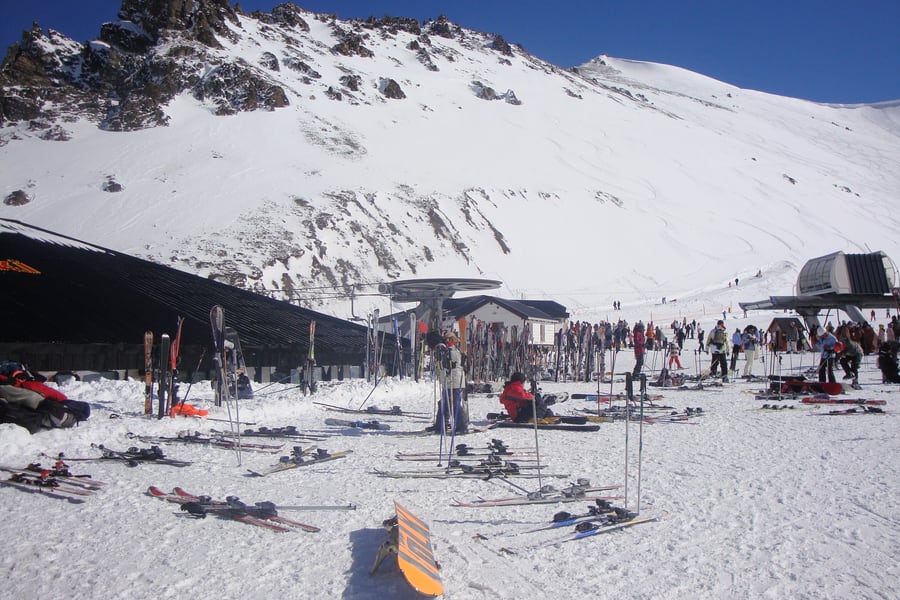 Lowidpr / Wikimedia Commons · CC BY-SA 4.0 · cropped
La Hoya
The ski centre in the mountains above Esquel, running since 1974, and the reason a good many Argentines come to this town at all. Its snow is reliable late — the season holds well into spring, when most of the country has given up. It is small and unpretentious next to Bariloche, which is precisely the appeal, and it is close enough to town to ski on a whim.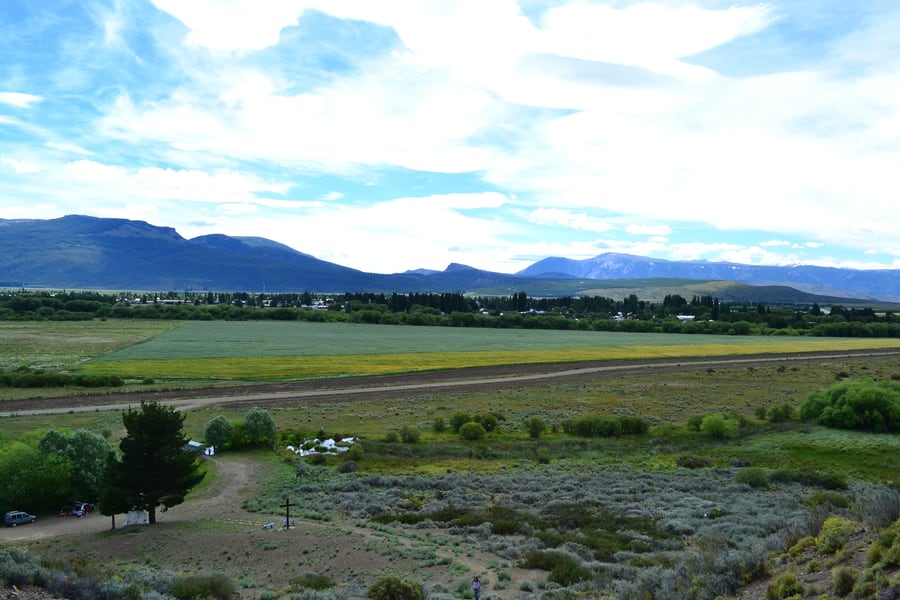 watsilchum / Wikimedia Commons · CC BY-SA 3.0 · cropped
El Maitén
165 kilometres up the line, a small town in a wide green valley that exists because the railway put its workshops here. The sheds still hold the lathes and the 1922 machinery, and El Maitén runs its own short train out to Desvío Thomae. Far fewer visitors than Esquel. For anyone who cares how a railway like this stays alive, it is the better half of the trip.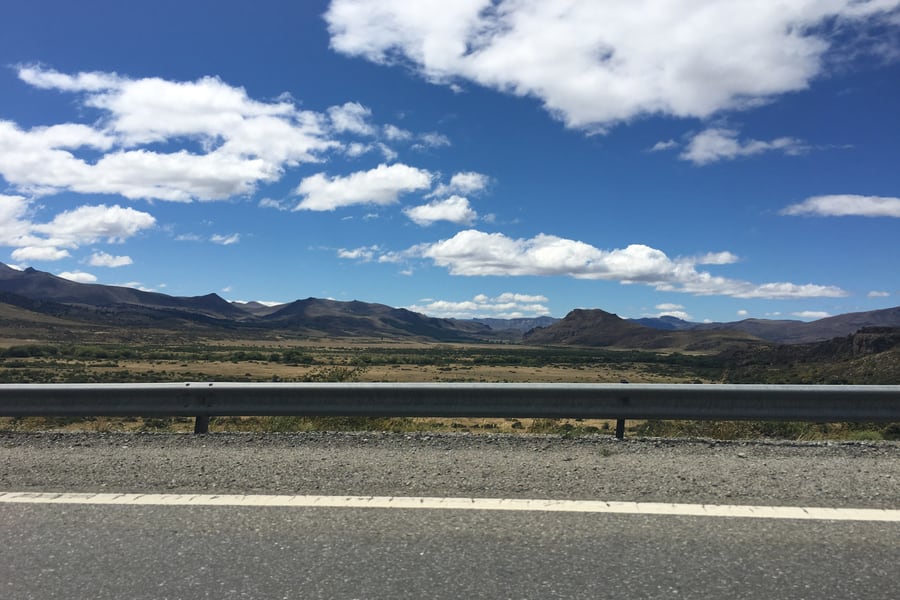 Thomas Woodtli / Wikimedia Commons · CC BY-SA 2.0 · cropped
The Ruta 40
Argentina's spine runs straight past. 5,194 kilometres from Cabo Vírgenes in Santa Cruz to La Quiaca on the Bolivian border, across eleven provinces, topping out at 5,061 metres at the Abra del Acay. South from Esquel it heads eventually for the glaciers; north it runs to Bariloche and the lakes, about four hours away, which is how most people arrive. Long stretches are still gravel.Where to Sleep
Esquel is where you stay, and it is a straightforward place to do it. The town has small hotels, cabañas, and a good few hostels serving the walkers and skiers — nothing grand, and nothing you need to book six months out except in the peak summer weeks and the ski season. Anywhere central is within walking distance of the station, which matters when check-in is an hour before a morning departure.
If you would rather trade convenience for setting, two alternatives are worth it:
- Trevelin, half an hour away, is prettier than Esquel and quieter, and you can have Welsh tea for dinner, which is a strange and delightful thing to do in Patagonia. You'd need a car for the early start.
- Los Alerces National Park has campsites, hosterías and cabins on the lakes. This is the one to build the trip around: stay in the park for a couple of nights, come into Esquel for the train, and you've had the region rather than just the railway.
At the other end of the line, El Maitén is a small railway town with simple accommodation — enough to let you catch its train without a long drive, if you're doing both ends properly.
One planning note. The train's calendar is sparse and it shifts, so book the beds around the train rather than the other way round — and if you can, leave yourself a spare day in Esquel. Los Alerces will happily absorb it, and if a 1922 locomotive decides not to cooperate on your chosen morning, you'll still get your ride.
Questions or corrections
Planning this trip and stuck on something, or spotted a time, fare or detail that has changed? Send us a message about La Trochita. We read every one, and we update this page when something has changed.