Argentina

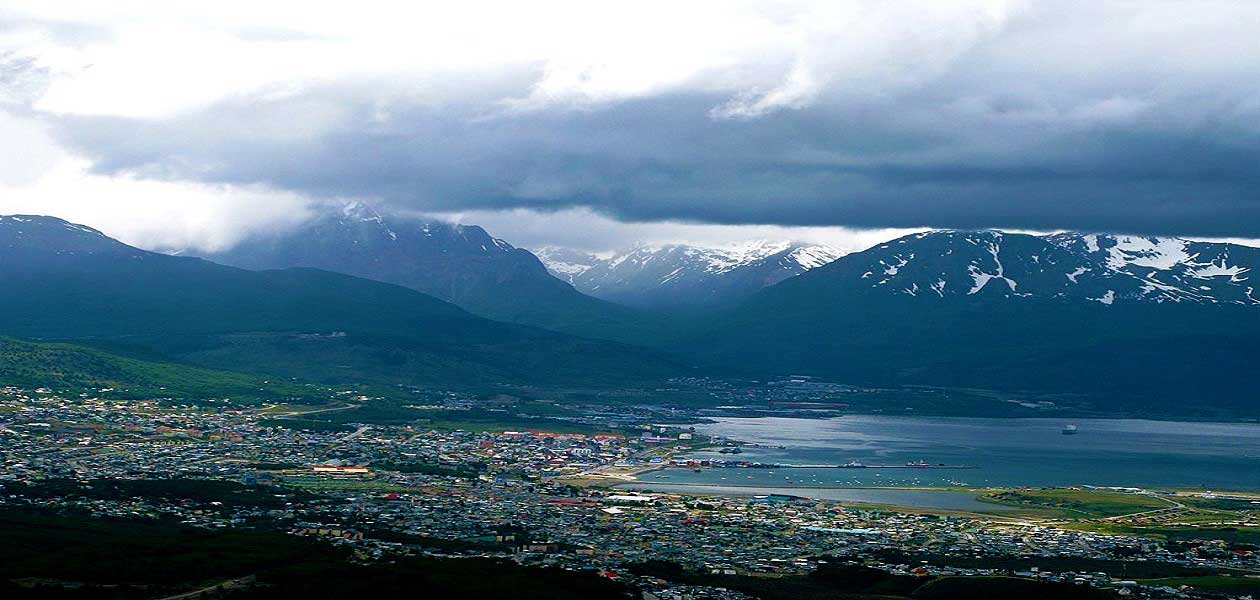
Argentina runs almost the length of South America's southern cone: 2.78 million square kilometres, the second-largest country on the continent and the eighth-largest in the world, with Chile and the Andes along its entire western edge and Bolivia, Paraguay, Brazil and Uruguay to the north and east. About 47 million people live there, in twenty-three provinces plus the autonomous city of Buenos Aires, which is the federal capital and much the largest city. Between them lie pampas, Andean desert, wine country and Patagonian steppe.
Argentina once had one of the largest railway systems outside Europe and North America, laid to carry grain and beef to the ports. Long-distance passenger services are now a shadow of that, and what survives for the traveller is a handful of remarkable individual lines — on three different track gauges, thousands of kilometres apart, and none of them a practical way of getting anywhere. They are ridden for what they are rather than for where they go, which is its own kind of story.
Rail journeys in Argentina
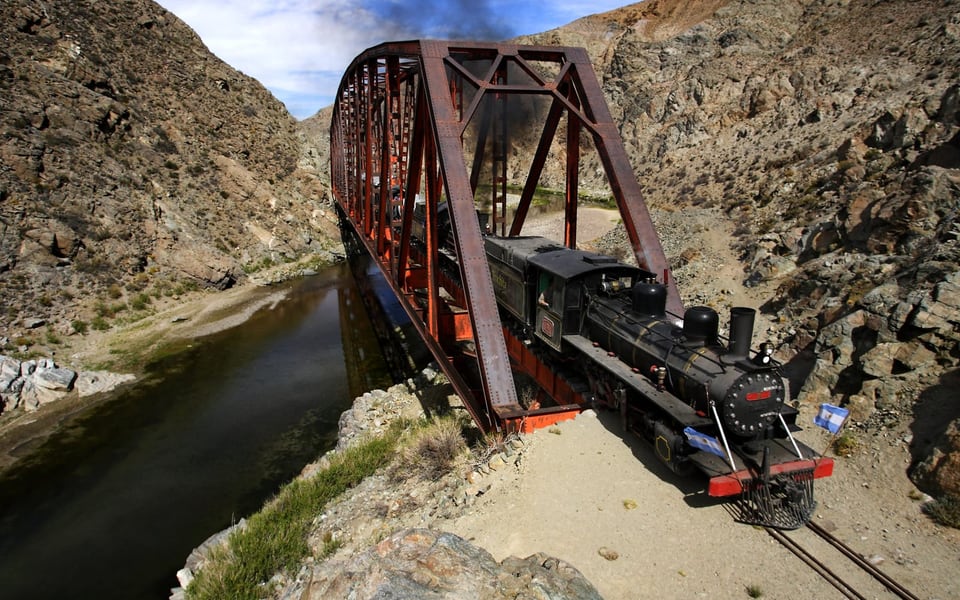
La Trochita
The Old Patagonian Express — 750 mm track, oil-fired steam locomotives of 1922, and 402 kilometres of Patagonian steppe. Still running, just.
View journey →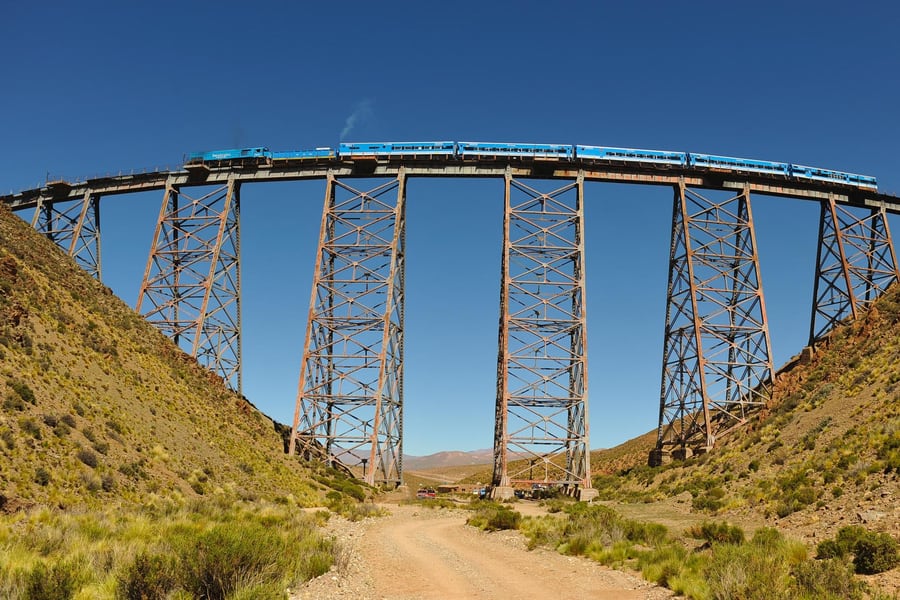
Tren a las Nubes
The Train to the Clouds — a viaduct on stilts at 4,220 metres in the Argentine puna, on a line that climbs the Andes with no rack at all.
View journey →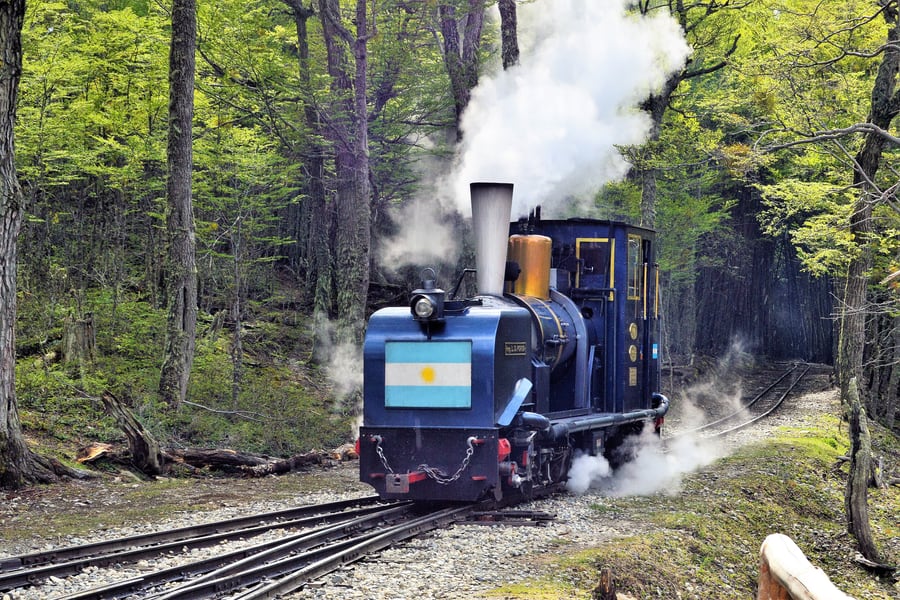
Tren del Fin del Mundo
The southernmost working railway on earth — seven kilometres of 500 mm track on a line the convicts of Ushuaia built to drag timber out of the forest.
View journey →Good to know
What are Argentina's best train journeys?
Three, and they are spread across the whole country. The Tren a las Nubes in Salta province climbs to the La Polvorilla viaduct at 4,220 m and is the famous one. La Trochita, in Chubut, is a genuine narrow-gauge steam railway running locomotives built in 1922 across the Patagonian steppe. The Tren del Fin del Mundo at Ushuaia is the southernmost working railway on earth, and rides the trackbed the penal colony's prisoners laid. They are all short, and all worth it.
Can you travel around Argentina by train?
Not really, and it is worth knowing that before you plan. Argentina once had one of the largest rail networks in the world; most of the long-distance passenger services were cut in the 1990s and never came back. Trenes Argentinos runs some long routes out of Buenos Aires — including the long haul to Tucumán — but for getting between regions, Argentines fly or take the (genuinely excellent) long-distance buses. The three journeys here are destinations in themselves, not transport.
When is the best time to visit Argentina by rail?
It depends entirely which end you are at. For Patagonia — La Trochita and Ushuaia — the southern summer, roughly December to March, gives you the long days and the mildest weather, though the Tren del Fin del Mundo runs all year and the park under snow is a real thing to see. For Salta and the Tren a las Nubes, the high, dry winter months are clearer than the summer rains — and at 4,220 m the season matters far less than the altitude.
Do I need to worry about the altitude on the Tren a las Nubes?
Take it seriously. The viaduct stands at 4,220 metres and San Antonio de los Cobres, where you board, is already at 3,774 m — you go from Salta at around 1,200 m to the high puna inside a morning, which is a fast ascent by any measure. Thin air makes people breathless, headachy and tired. Spend a couple of days in Salta first if you can, go gently at the top, and don't treat it as a joke because it comes with a ticket.