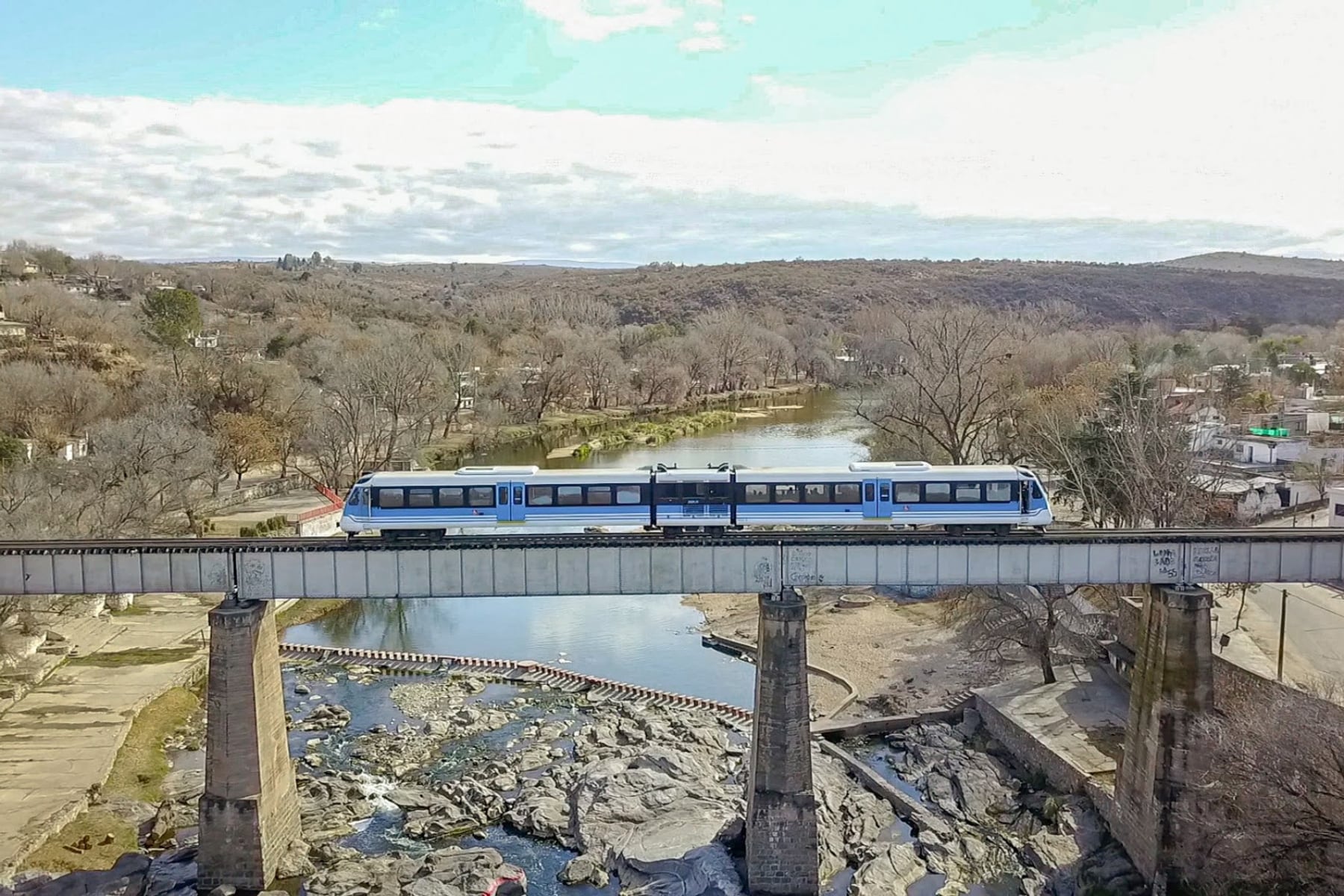
Tren de las Sierras
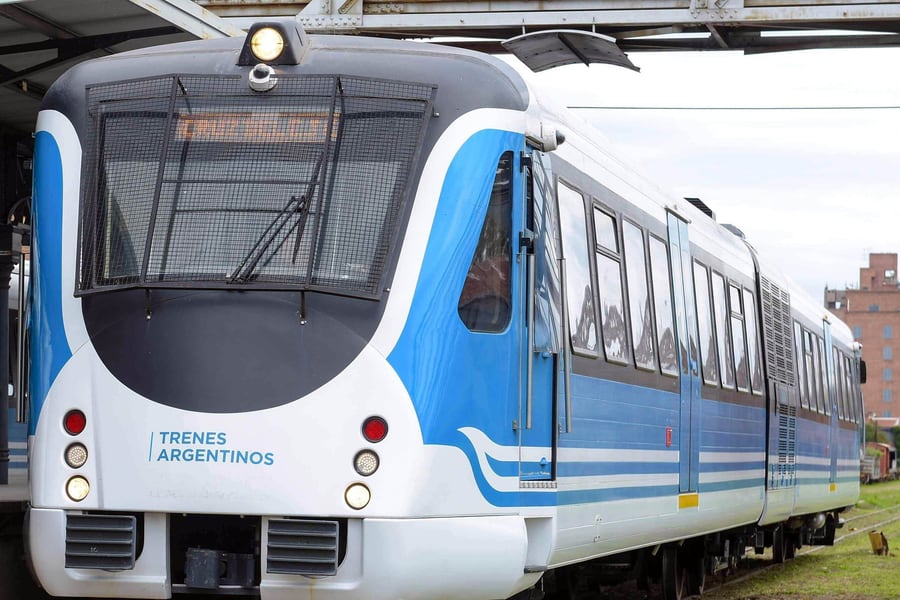
Argentina.gob.ar / Wikimedia Commons · CC BY 4.0 · 2021 · cropped
- DistanceAbout 150 km (Córdoba–Capilla del Monte)
- Duration5 hr 41 min to 5 hr 54 min end to end
- Best seasonDaily, all year; autumn (April to June) turns the hills gold
Introduction
West of the city of Córdoba the land rises into the Sierras de Córdoba, and between two of their ranges, the Sierras Grandes and the Sierras Chicas, lies the Valle de Punilla, a long valley of resort towns, rivers and wooded hills. A railway has climbed into it for more than 130 years. The Tren de las Sierras, the train of the hills, leaves Córdoba's Mitre station, follows the Río Suquía into its gorge, runs along the shore of Lake San Roque and climbs the valley to Capilla del Monte, below the Cerro Uritorco.
It is a regional service rather than a tourist train, run by the state's Trenes Argentinos with diesel railcars, and the whole line costs 7,000 pesos. The full run takes about six hours and calls at more than twenty stations, among them Cosquín, home of Argentina's most important folk festival, La Falda and its grand hotel, and La Cumbre, which the railway named for being the highest village on the line.
The valley's passenger trains stopped in 1977 and came back in stages from 2007: through the gorge to Cosquín in 2008, and all the way to Capilla del Monte again in November 2023. Two trains a day now make the whole journey from Córdoba, and one makes it back.
The Journey
The morning train leaves Córdoba's Mitre station at 06:40 on weekdays and 07:16 at weekends. For its first hour and a half it is a suburban train, calling at Hospital Neonatal, Rodríguez del Busto, La Tablada, Argüello, Tristán Narvaja and Dumesnil, until it reaches La Calera, where the plain ends and the hills begin.
Into the gorge
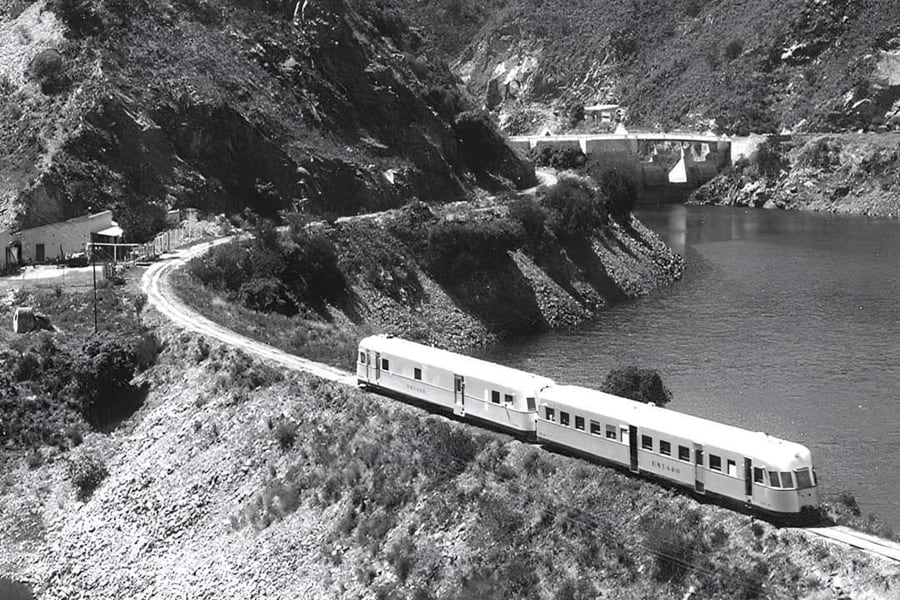
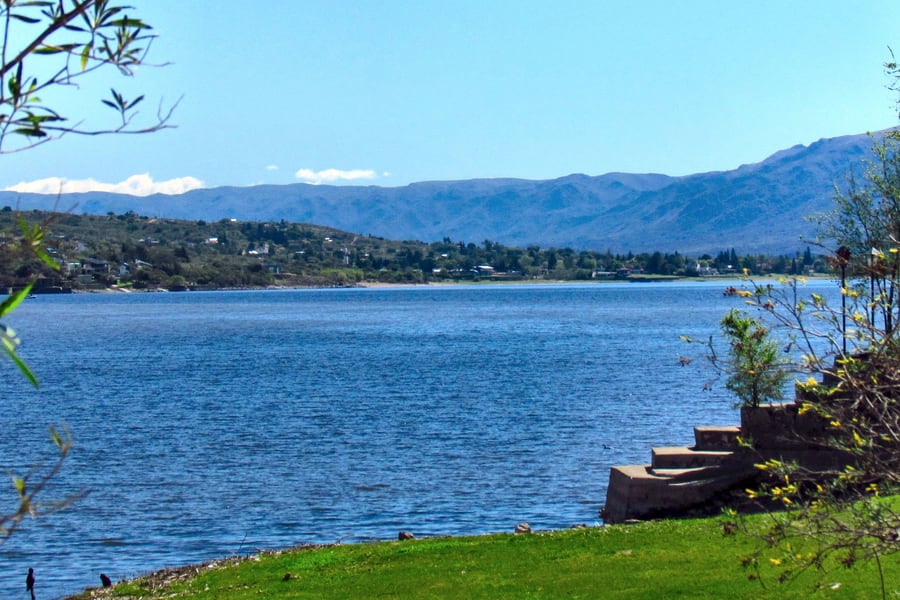
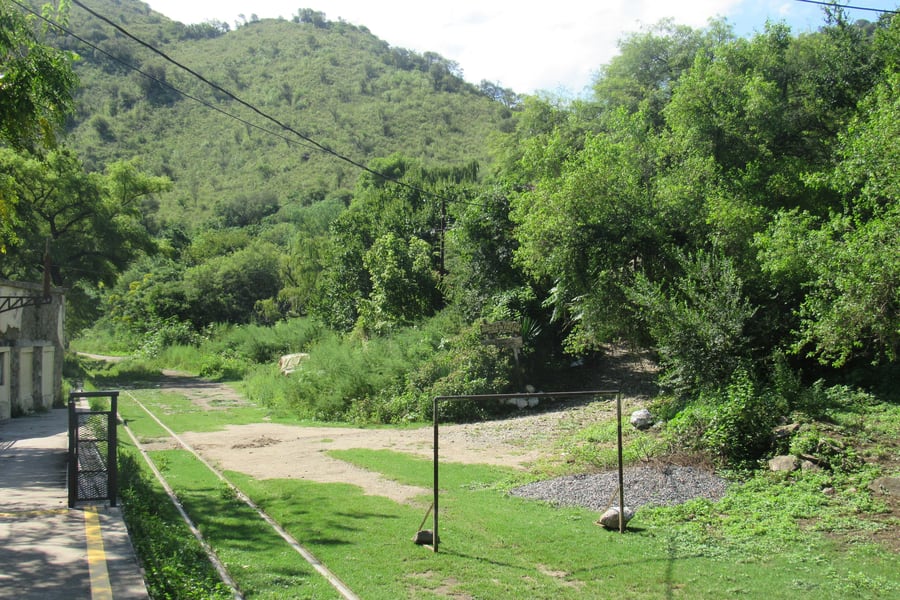
Beyond La Calera the line turns into the gorge of the Río Suquía, and the next stretch, 36 minutes to Casa Bamba, is the most dramatic of the journey. The track follows the river between steep, wooded walls, past the stone hall of the hamlet's old power station. The gorge opens out at Cassaffousth, on the shore of Lake San Roque, the reservoir behind a dam first built in 1890 to supply water to Córdoba and its farmland. The train follows the lake through San Roque and Bialet Massé, then Santa María, and reaches Cosquín, at 720 metres, three hours and twenty minutes after leaving Córdoba. It waits there a few minutes before going on.
Up the Punilla valley
North of Cosquín the line climbs the Valle de Punilla between the Sierras Grandes to the west and the Sierras Chicas to the east, through Molinari, Casa Grande and Valle Hermoso to La Falda, the town that grew up around the Eden Hotel. After Huerta Grande it reaches La Cumbre, at 1,141 metres the highest village on the line, some 420 metres above Cosquín. The last stop before the end is San Esteban; then the train runs into Capilla del Monte, below the bulk of the Cerro Uritorco, the highest peak of the Sierras Chicas, nearly six hours after leaving the city.
The train
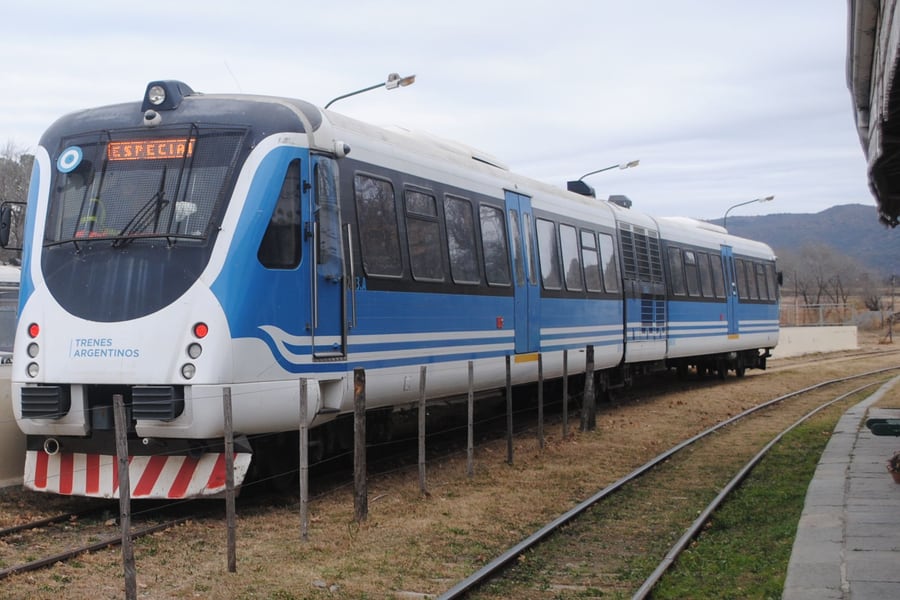
The line is worked by Alerce diesel railcars, built by Emepa at Chascomús in Buenos Aires province and named after the alerce, a conifer native to Argentina. Each is two carriages with the engine between them on its own articulated bogie, and a corridor through it; most of the parts are made in Argentina. The Alerces began replacing the line's Portuguese railcars, Alstom units of 1977 bought from Comboios de Portugal, in 2015, and the last two of the twenty Emepa built were delivered in 2018 for this line and for Salta.
Along the route
 Jmmuguerza / Wikimedia Commons · CC BY-SA 4.0 · 2025 · cropped
The Suquía gorge
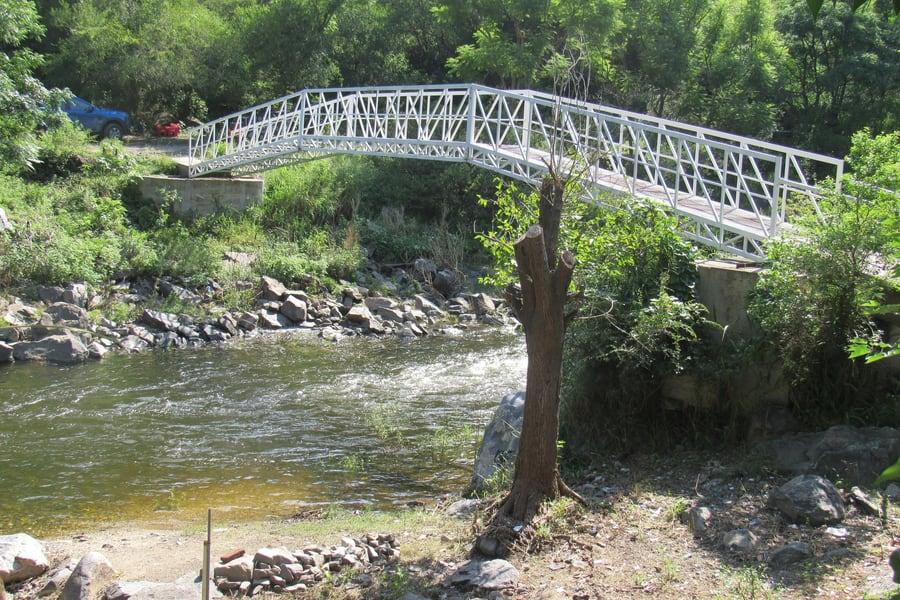
Beyond La Calera the line leaves the city behind and follows the Río Suquía into its gorge, cut through Precambrian rock. Trains returned to it in July 2008, and take 36 minutes from La Calera to Casa Bamba.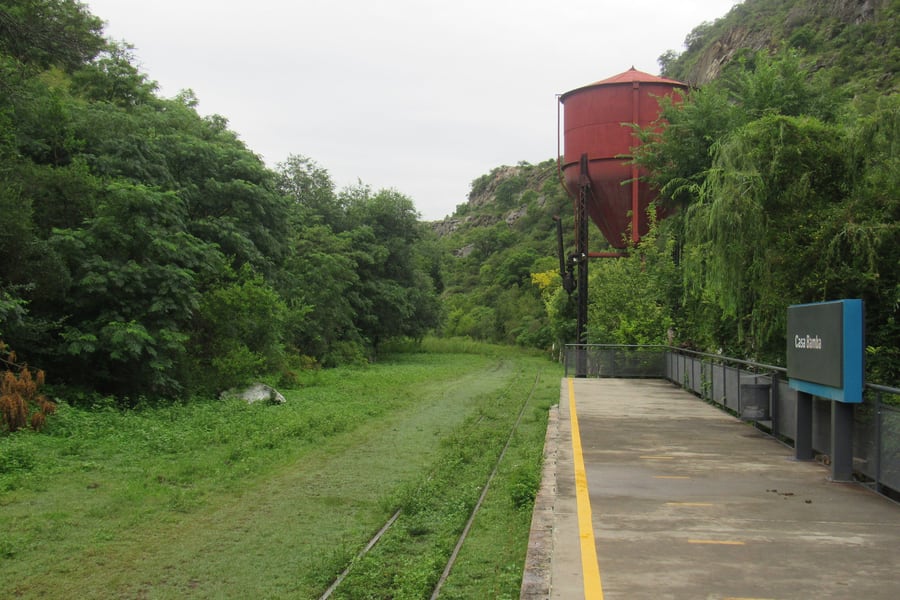 Jmmuguerza / Wikimedia Commons · CC BY-SA 4.0 · 2025 · cropped
Casa Bamba
A hamlet of 111 people at the 2010 census, deep in the gorge seven kilometres west of La Calera. Its name is said to come from a native man called Bamba. A red water tower stands over the platform.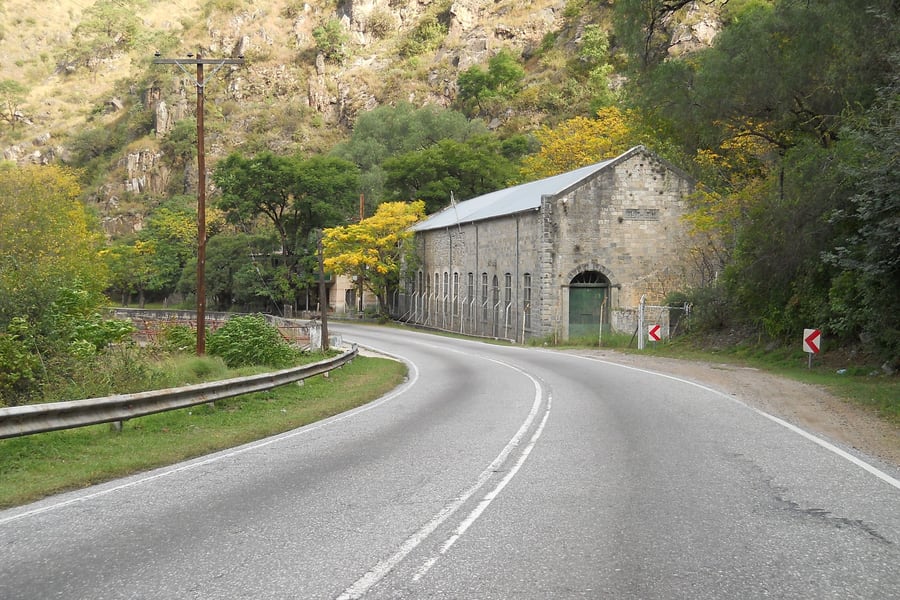 Arianza1 / Wikimedia Commons · CC BY-SA 4.0 · 2014 · cropped
The power station
In 1891 Joseph Oulton planned a power station here, with an 82-metre tunnel to turn the Suquía over a 31-metre drop. Three turbines went in between 1897 and 1901, the start of Córdoba's industrial age. The stone hall has made no electricity since 1964.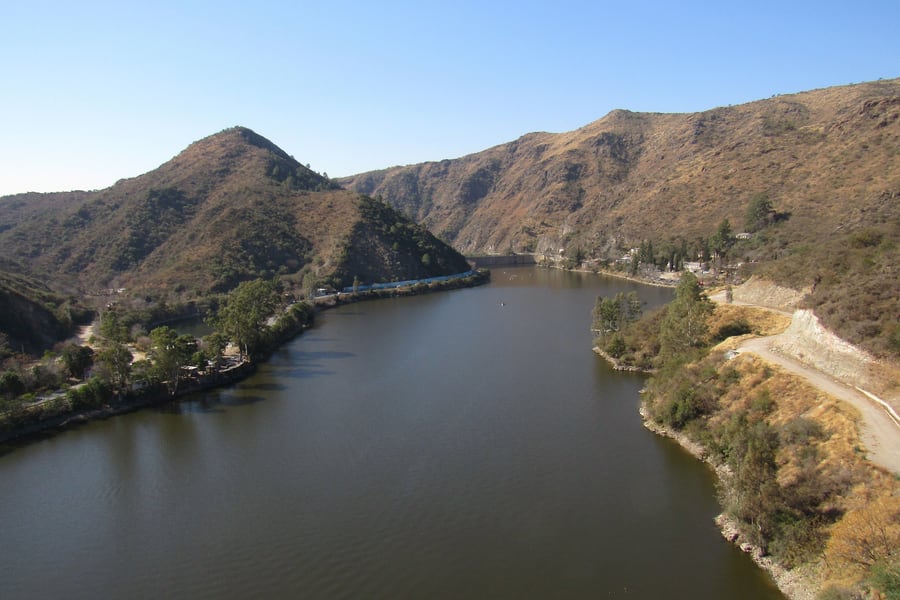 Jmmuguerza / Wikimedia Commons · CC BY-SA 4.0 · 2021 · cropped
Lake San Roque
The line runs along the reservoir of the San Roque dam, built in 1880–90 by the engineers Carlos Cassaffousth and Eugenio Dumesnil and rebuilt 150 metres downstream in 1939–44. Cassaffousth station, on the shore, carries his name.A bit of history
Culture & experiences along the way
 Noked / Wikimedia Commons · CC BY-SA 4.0 · 2025 · cropped
Alfajores
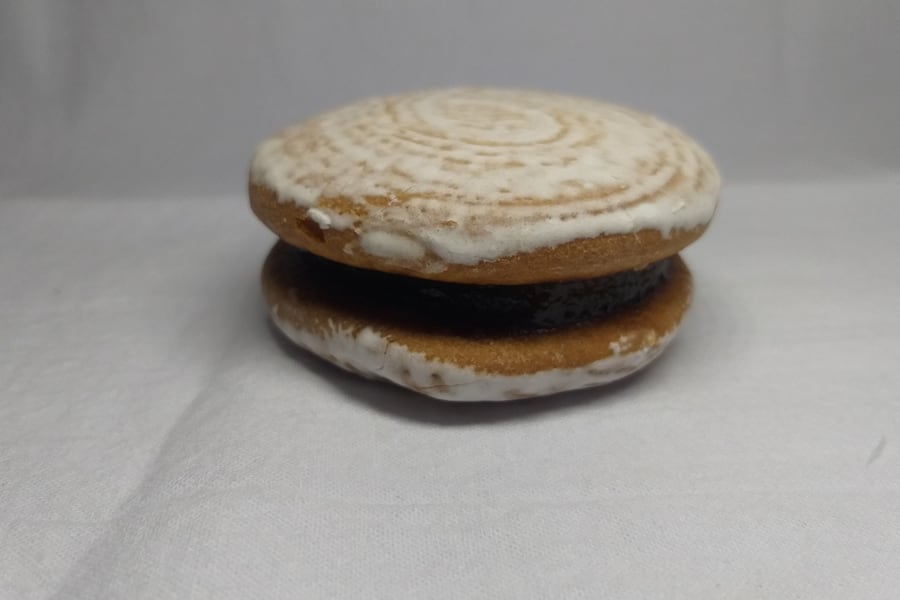
Córdoba province is known across Argentina as the home of the alfajor, and its own are filled with dulce de leche or fruit, like this one with peach jam. Every October La Falda fills several blocks of its Avenida Edén with stands for the Fiesta Nacional del Alfajor, with sweets and produce from all over the province.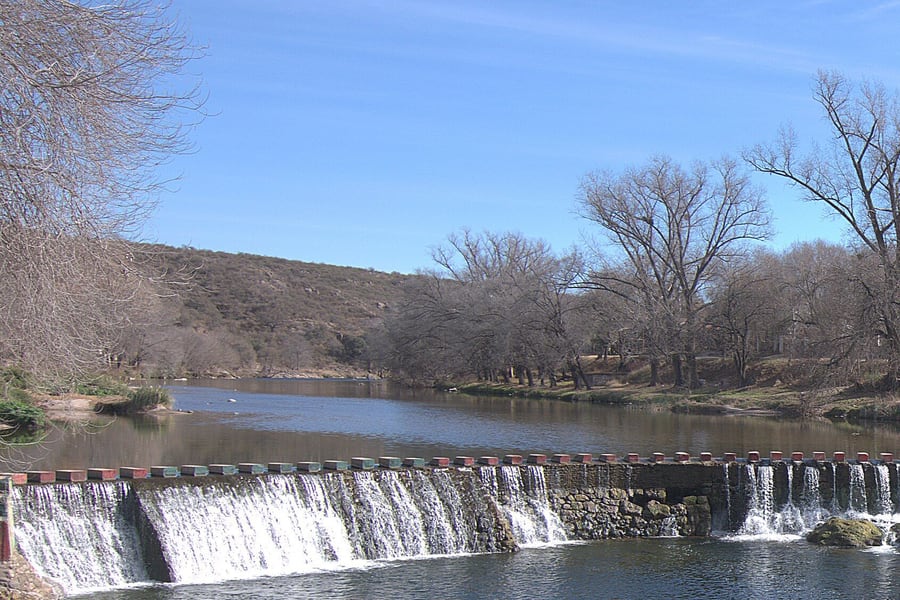 Ezarate / Wikimedia Commons · CC BY-SA 4.0 · 2021 · cropped
The river balnearios
Cosquín lines the banks of its river with campsites and balnearios, riverside bathing places where low weirs hold the water back into pools, as here at La Toma in July. Winters in the valley are dry; summers are warm and stormy, and the season for swimming.Timetables
Trains run every day of the year, with one timetable for Monday to Friday and another for weekends; on a public holiday the train runs to the timetable of the day of the week it falls on. Two trains a day run the whole line from Córdoba and one runs the whole line back, waiting a few minutes at Cosquín on the way. The times below are the operator's, from Trenes Argentinos' timetable valid from 7 September 2026, read in October 2026, for the main stations; the trains call at every station in between. Where a station shows two times, the train arrives at the first and leaves at the second.
Córdoba to Capilla del Monte
| Station | Mon–Fri | Mon–Fri | Sat–Sun | Sat–Sun |
|---|---|---|---|---|
| Córdoba (Mitre) | 06:40 | 12:02 | 07:16 | 12:41 |
| La Calera | 08:14 | 13:27 | 08:50 | 14:06 |
| Casa Bamba | 08:50 | 14:03 | 09:26 | 14:42 |
| Cosquín | 09:59 · 10:06 | 15:12 · 15:19 | 10:36 · 10:46 | 15:52 · 16:02 |
| La Falda | 11:03 | 16:16 | 11:43 | 16:59 |
| La Cumbre | 11:46 | 16:59 | 12:26 | 17:42 |
| Capilla del Monte | 12:30 | 17:43 | 13:10 | 18:26 |
Capilla del Monte to Córdoba
| Station | Mon–Fri | Sat–Sun |
|---|---|---|
| Capilla del Monte | 12:45 | 13:28 |
| La Cumbre | 13:30 | 14:13 |
| La Falda | 14:13 | 14:56 |
| Cosquín | 15:09 · 15:19 | 15:52 · 16:02 |
| Casa Bamba | 16:34 | 17:17 |
| La Calera | 17:06 | 17:49 |
| Córdoba (Mitre) | 18:39 | 19:13 |
Two shorter trains complete the day. An early train leaves Cosquín for Córdoba at 04:31 on weekdays (in Córdoba 07:50) and 06:54 at weekends (10:14). An evening train leaves Capilla del Monte for Cosquín at 18:00 on weekdays (in Cosquín 20:24) and 18:36 at weekends (21:00).
Services on the line are sometimes suspended at short notice after an incident on the track.
Departures are published by the operator: Trenes Argentinos · Tren de las Sierras (opens in a new tab).
Tickets
Tickets are sold on Trenes Argentinos' booking site, and can also be paid in cash to the guard on board. Fares are in Argentine pesos, one way, and depend on the distance: from 1 June 2026 they run from 700 pesos between neighbouring stations to 7,000 for the whole line from Córdoba to Capilla del Monte, and 3,500 from Córdoba to Cosquín.
Each passenger may bring one hand bag of up to 10 kg. Tents, cool boxes, large rucksacks, fishing rods and folding chairs are not allowed; bigger luggage is accepted only from passengers holding a ticket for that day's long-distance train.
Book your tickets
Córdoba to Capilla del Monte
The whole line, one way
The full fare, the highest on the line, for about six hours from the city to the foot of the Uritorco.
Book Tickets (opens in a new tab, on webventas.sofse.gob.ar)via webventas.sofse.gob.arCórdoba to Cosquín
Through the gorge and along the lake, one way
The southern half of the line, about three hours and twenty minutes on the morning train.
Book Tickets (opens in a new tab, on webventas.sofse.gob.ar)via webventas.sofse.gob.arCosquín to Capilla del Monte
Up the Punilla valley, one way
The northern half, through La Falda and La Cumbre, in just under two and a half hours.
Book Tickets (opens in a new tab, on webventas.sofse.gob.ar)via webventas.sofse.gob.arRail Passes
No rail pass covers the Tren de las Sierras. Interrail and Eurail are European schemes, and Argentina is not among the countries in Interrail's list of covered railway companies. Every ticket is bought from Trenes Argentinos, journey by journey.
Checked October 2026 against Interrail's list of railway companies (opens in a new tab).
Places to Visit
The Punilla valley is one of the most visited holiday regions in Argentina, and the train calls at the heart of it. The gorge and the lake are described along the route above; these are four places worth leaving the train for, in the order the train reaches them.
 Alpertron / Wikimedia Commons · CC BY-SA 4.0 · 2009 · cropped
Cosquín
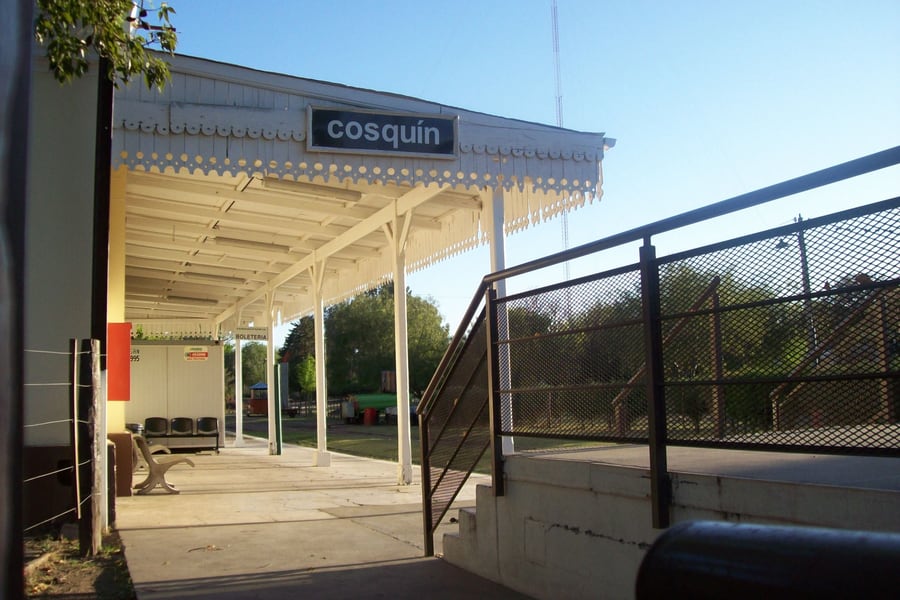
The oldest town in the Punilla valley and the seat of its department, on the Río Cosquín at 720 metres. Every January since 1961 it has held the Festival Nacional de Folklore, nine nights in the last week of the month on the Atahualpa Yupanqui stage in the Plaza Próspero Molina; it set off the folk boom of the 1960s. Through trains wait here a few minutes.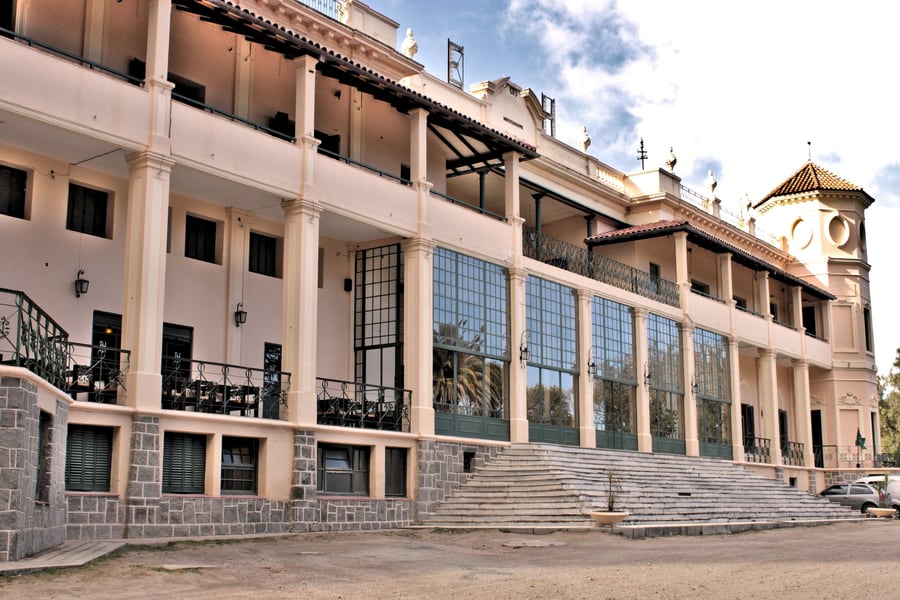 Niamfrifruli / Wikimedia Commons · CC BY-SA 4.0 · 2019 · cropped
The Eden Hotel, La Falda
A grand hotel at the foot of Cerro El Cuadrado that took its first guests in January 1898, with a hundred rooms; nearly 5,000 tonnes of building materials came in by train. Seized in 1945 to hold Japanese diplomats, it saw its last season in 1965. The town bought it in 1998 and opened it to visitors. La Falda grew up around it.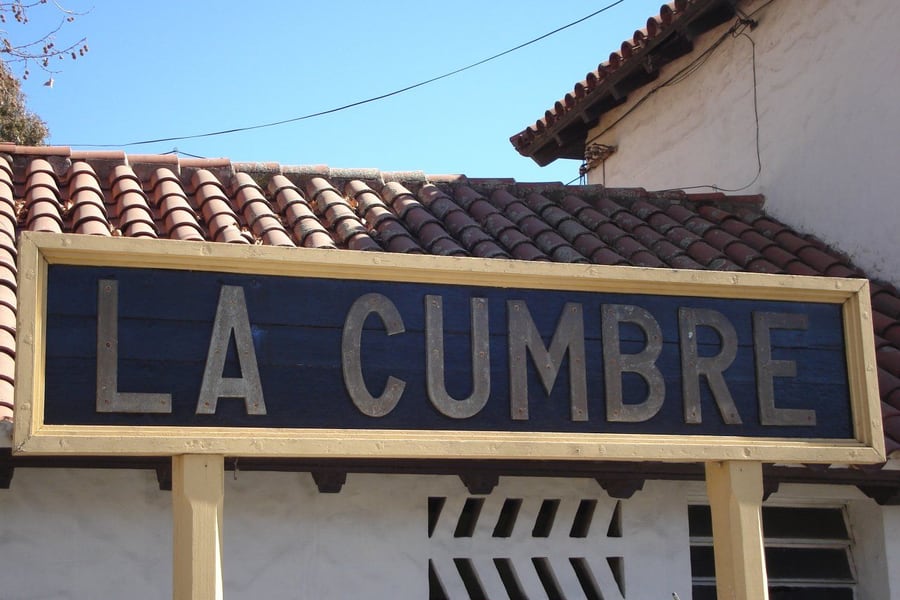 galio / Wikimedia Commons · CC BY-SA 2.0 · 2007 · cropped
La Cumbre
The town was San Jerónimo until the railway renamed it La Cumbre, the summit, with the first summer timetable on 1 December 1900, because at 1,141 metres it was the highest village on the line. Italian, Spanish and English settlers came in the 1900s; the golf club dates from 1924, and the 1930s are remembered as its golden years.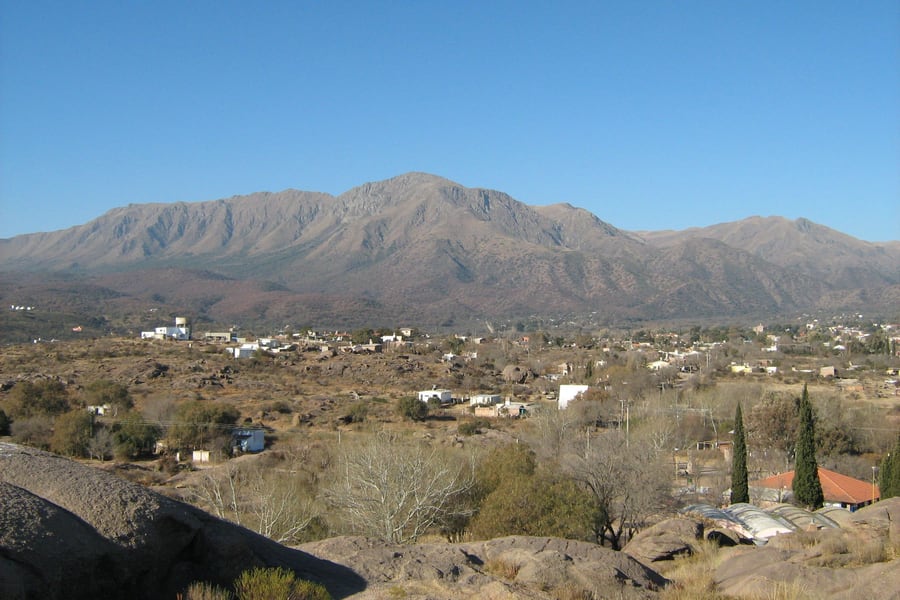 Santiago.coffey / Wikimedia Commons · CC BY 3.0 · 2007 · cropped
Capilla del Monte and the Uritorco
A town of about 12,800 people below the Cerro Uritorco, at 1,979 metres the highest peak of the Sierras Chicas, whose name in Quechua means hill of the parrots. A path climbs it from the south-west, and condors circle the summit. The original station building is now the town's tourist information centre.Where to Sleep
The whole line is a day trip from Córdoba, but the only through train back leaves Capilla del Monte at lunchtime, so an overnight stay in the valley gives a day to walk or climb before the return. One hotel at La Cumbre, the summit of the line, and one at Capilla del Monte, below the Uritorco.
Where to stay
Angelus Hotel Boutique
Belgrano 560, La Cumbre
Six rooms in wooded grounds with a pool, three blocks from the centre of La Cumbre, open all year.
Check Availability (opens in a new tab, on angelushotel.com.ar)via angelushotel.com.arTerrazas del Uritorco
Frías y Liniers, Capilla del Monte
A hotel with a pool and a spa facing the Uritorco, a few blocks from the centre and fifteen minutes' walk from the path up the hill.
Check Availability (opens in a new tab, on terrazasdeluritorco.com.ar)via terrazasdeluritorco.com.arQuestions or corrections
Planning this trip and stuck on something, or spotted a time, fare or detail that has changed? Send us a message about Tren de las Sierras. We read every one, and we update this page when something has changed.