Tren Patagónico
David Brossard / Wikimedia Commons · CC BY-SA 2.0 · 2023 · cropped
- Distance827 km (Viedma–San Carlos de Bariloche)
- Duration19 hr 10 min west, 19 hr 20 min east
- Best seasonWeekly all year; summer for the most daylight
Introduction
This railway was built to sell land. When Ezequiel Ramos Mexía, the minister behind Argentina's 1908 plan for Patagonia, sent railways into the south, the line from the Atlantic at San Antonio Oeste to Lake Nahuel Huapi was meant to be a state railway that colonised as it went: the track would raise the value of the empty steppe on either side, and the sale of that land would pay for the track. It took twenty-six years, a world war and two long stoppages before the first train reached Bariloche in May 1934.
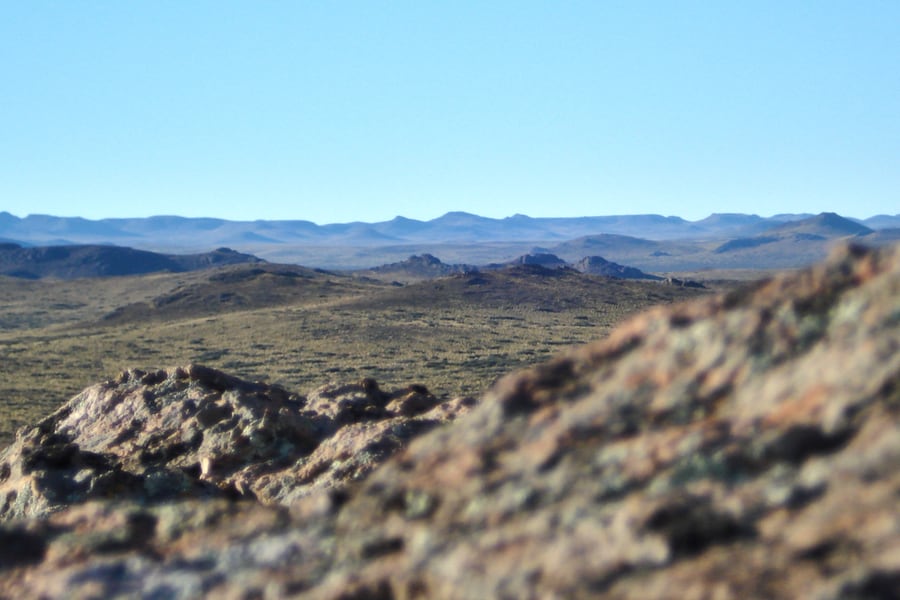
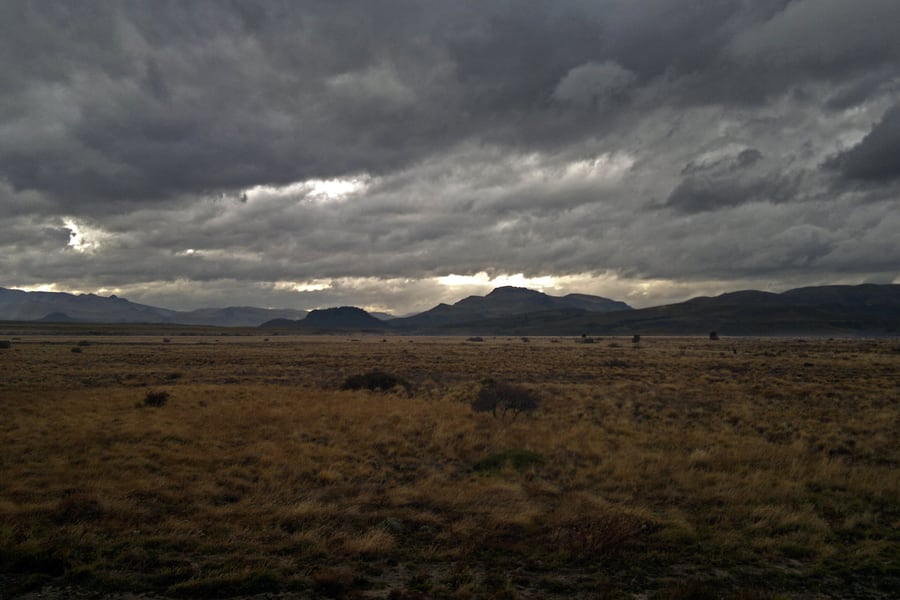
The land never filled up, and that is what you cross today. Once a week the Tren Patagónico leaves Viedma, the capital of Río Negro, on a Friday at 17:00 and runs 827 kilometres west to San Carlos de Bariloche, arriving at 12:10 on Saturday. It comes back on Sunday. Between the sea and the Andes lie the dry plateau the people of the province call the Línea Sur, a string of small towns that grew up around the stations, and a long night in a sleeper or a Pullman seat.
It is run by Tren Patagónico S.A., a company owned entirely by the Province of Río Negro, which took the line on in 1993 when the national railways were being wound up. It carries cars as well as people, and its dining car serves Patagonian lamb.
The Journey
The westbound train leaves Viedma at 17:00 on Friday from a station three kilometres south of the town centre, on the right bank of the río Negro. For the first four hours it runs west across the low country inland from the San Matías gulf to San Antonio Oeste, where it arrives at 21:20 and stands for an hour. This is where the railway began: Guido Jacobacci, the Italian engineer put in charge of the Patagonian state railways, arrived with his family in November 1908 and started laying track west from the village, living in houses of timber and corrugated iron shipped from England.
The Línea Sur, by night
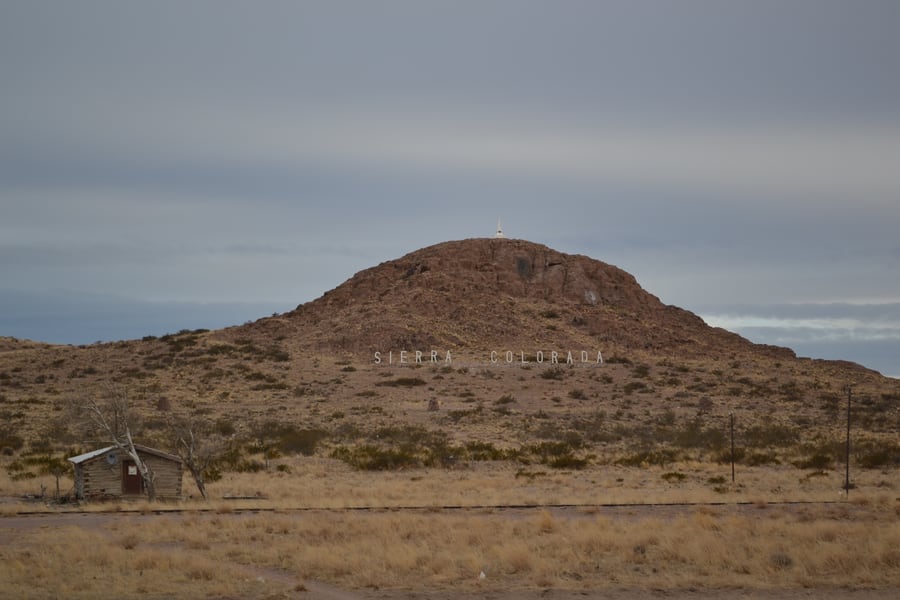
After San Antonio Oeste the train climbs onto the plateau, and most of the next eight hours pass in the dark. Valcheta, at 00:30, is an oasis on its stream; the first 112 km of line, opened on 19 March 1910, ended here, and water from the Valcheta went back down the track in tank wagons to supply the coast. Then come Ramos Mexía at 02:40, Sierra Colorada under its red hill at 03:40, and Los Menucos at 04:33. By Maquinchao, at 05:56, the train has passed kilometre 392, where the money ran out in 1914, four kilometres beyond an English-owned estancia.
Morning: Jacobacci to the mountains
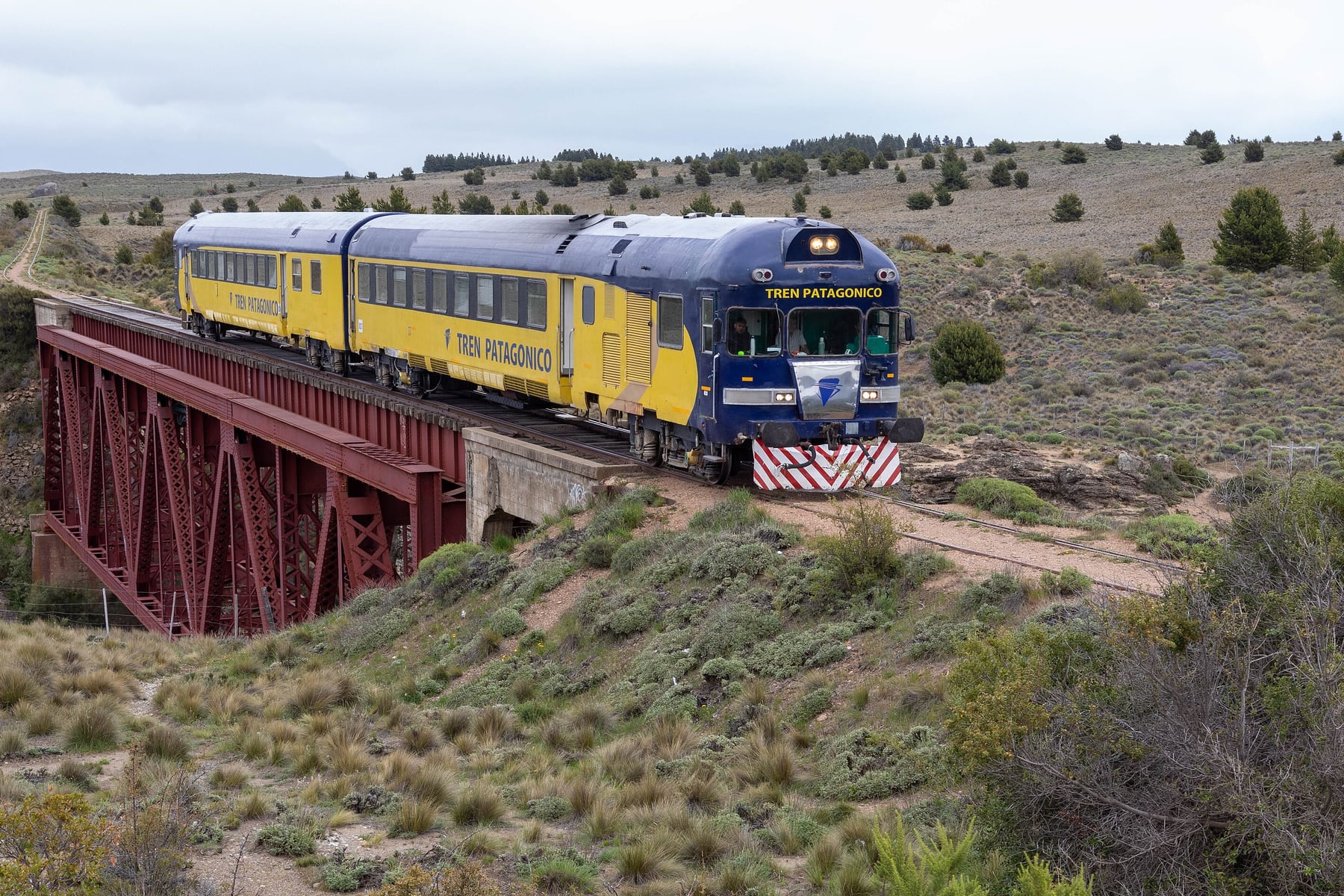
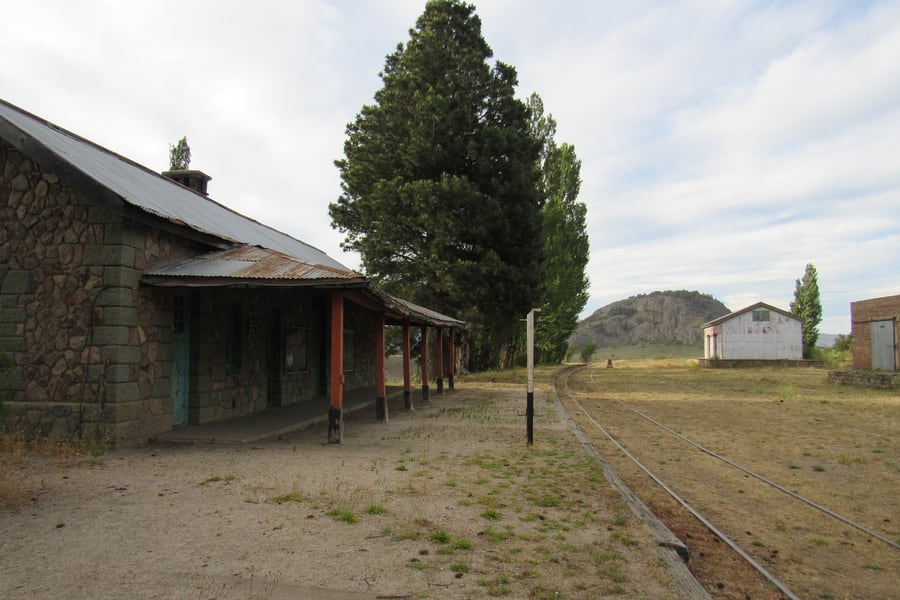
Ingeniero Jacobacci is the longest stop of the morning, 07:14 to 07:29. The town was named in 1925 after the line's builder, and it is the northern end of La Trochita, the 750 mm railway to Esquel, whose narrow track runs out of the same station. From here the line crosses the last of the steppe through Clemente Onelli, Comallo and Pilcaniyeu, which the rails had reached by 1925, and the mountains rise ahead. Fifteen kilometres from the end it crosses the gorge of the Ñirihuau on a steel truss, and at 12:10 it pulls into San Carlos de Bariloche, 19 hours and 10 minutes after leaving the sea.
Going east, the train leaves Bariloche at 17:00 on Sunday, so in summer the mountains and the western steppe pass in daylight, and the plateau again at night. It reaches San Antonio Oeste at 06:58 and Viedma at 12:20 on Monday.
The train
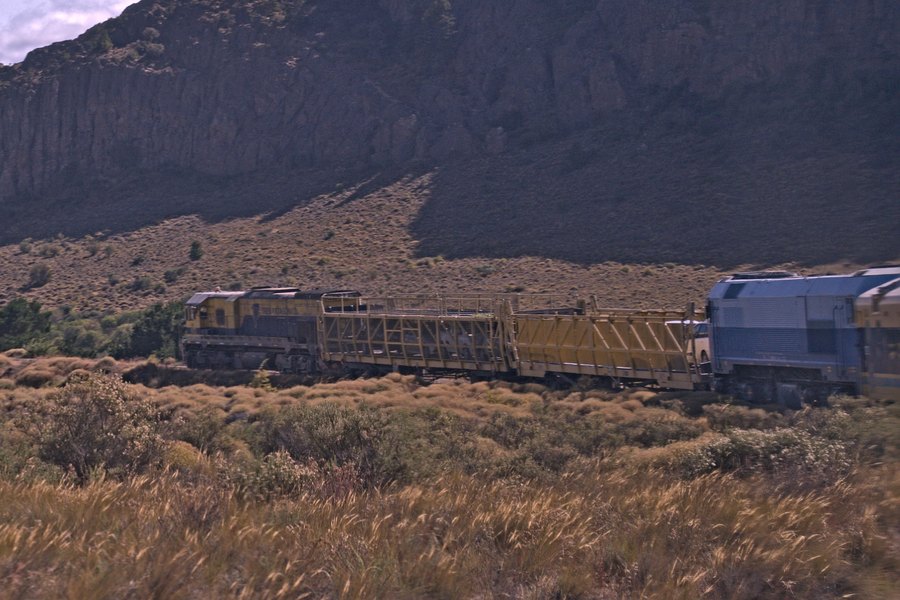
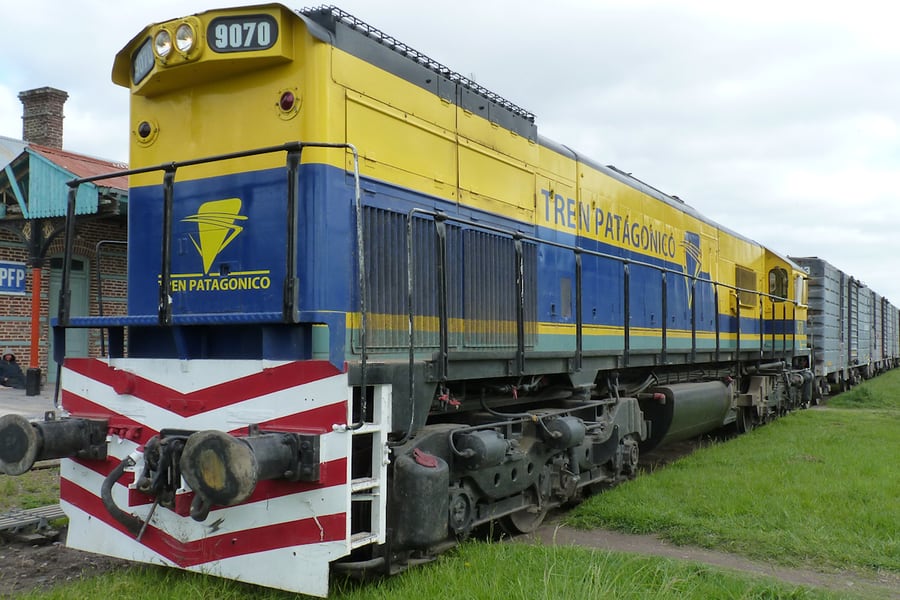
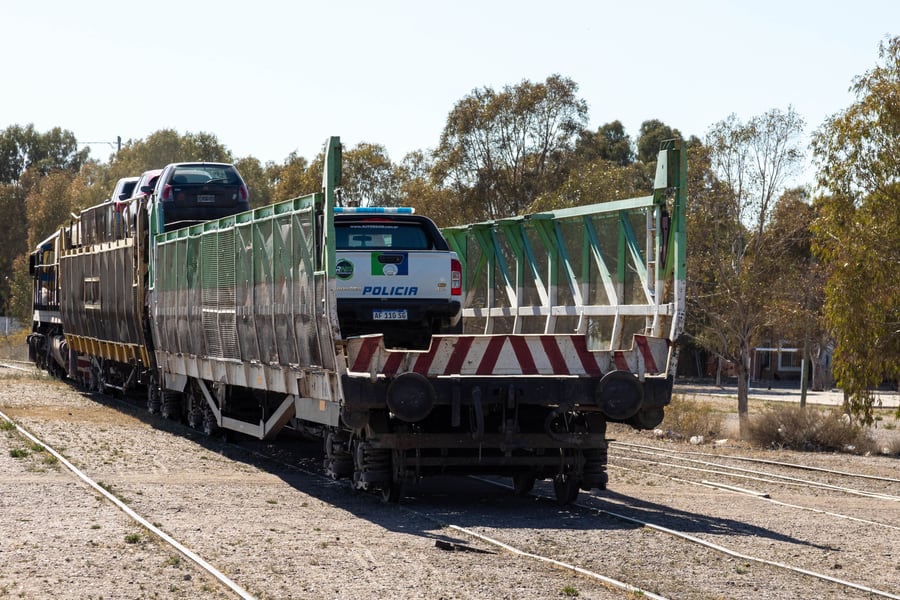
The long-distance train is hauled by diesel locomotives; GM GT22CW numbers 9070 and 9073 are two of the most powerful, and they run more than 90,000 km a year. Behind them come Pullman coaches with reclining seats, sleeping cars with two-berth cabins, a dining car serving set menus of regional cooking, and wagons that carry passengers' cars. On long weekends there is also a cinema car, showing Argentine and Patagonian films. In October the operator also sells a Primera Sorefame class: compartments for six with padded seats and central heating.
The same company runs a second, smaller train on the western half of the line: the Tren Expreso Rionegrino, a diesel railcar set between Ingeniero Jacobacci and Bariloche on Tuesdays and Thursdays. The photograph at the top of this page shows one of the company's diesel railcars, not the overnight train, crossing the Ñirihuau in November 2023.
Along the route
 Santiago matamoro / Wikimedia Commons · CC BY-SA 3.0 · 2013 · cropped
San Antonio Oeste
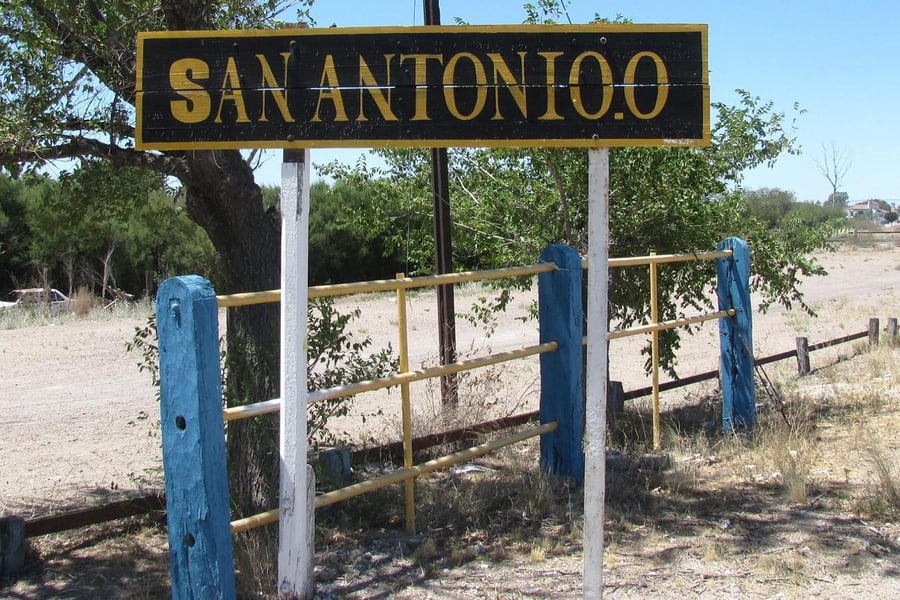
The train stands an hour here, 21:20 to 22:20 westbound. This is where the line began: in November 1908 Guido Jacobacci set up his works camp in the village and started laying track west, towards a lake some 650 kilometres away.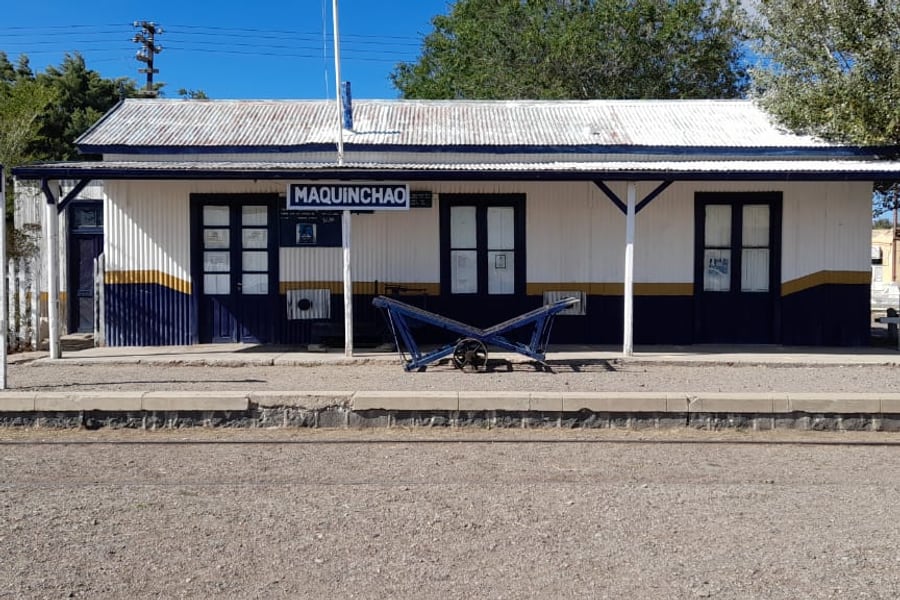 Carlosalbertooficial1992 / Wikimedia Commons · CC BY-SA 4.0 · 2023 · cropped
Maquinchao
In 1914 the government stopped the money and opened the line only as far as kilometre 392, four kilometres past the English-owned estancia of Maquinchao. Stored rails took it a little further; the real push west waited until 1922. Westbound, the train calls at 05:56.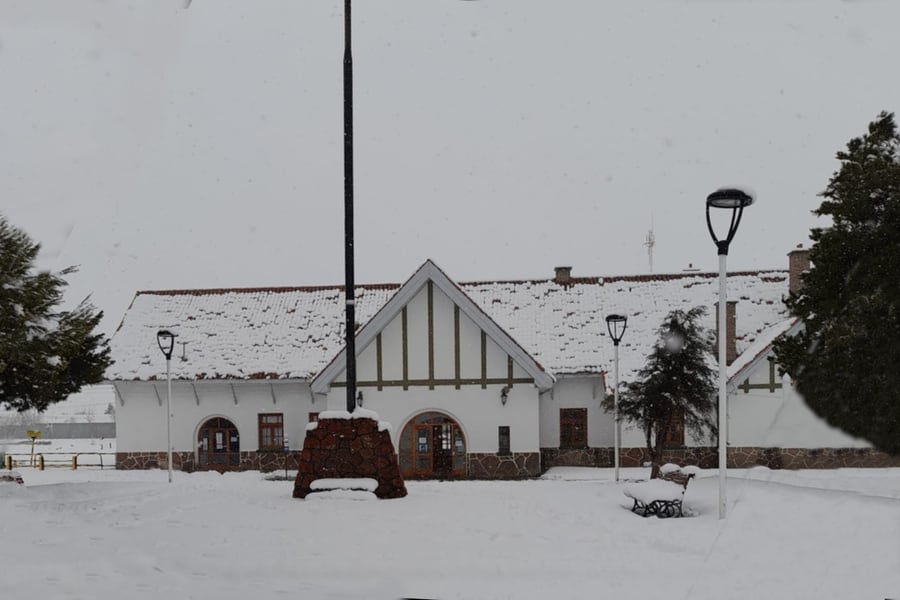 Daniyudiche92 / Wikimedia Commons · CC BY-SA 4.0 · 2022 · cropped
Ingeniero Jacobacci
Fifteen minutes on the platform at 07:14. The town is named after the line's builder, and it is the northern end of La Trochita, the 750 mm railway to Esquel; mixed-gauge track runs out of the station. Río Negro lists its own steam excursion as not running.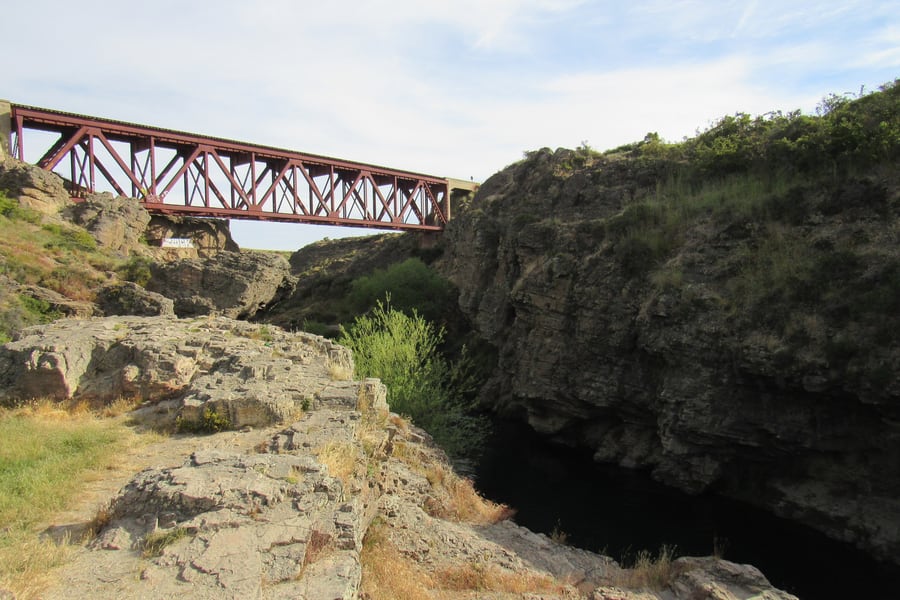 Jmmuguerza / Wikimedia Commons · CC BY-SA 4.0 · 2018 · cropped
The Ñirihuau crossing
Fifteen kilometres from Bariloche the line crosses the Ñirihuau gorge on a steel truss, "cañadón de los ñires" in Mapuche: the ravine of the ñire trees. The steppe ends here, and the Andes begin.A bit of history
Culture & experiences along the way
 Albasmalko / Wikimedia Commons · CC BY-SA 3.0 · cropped
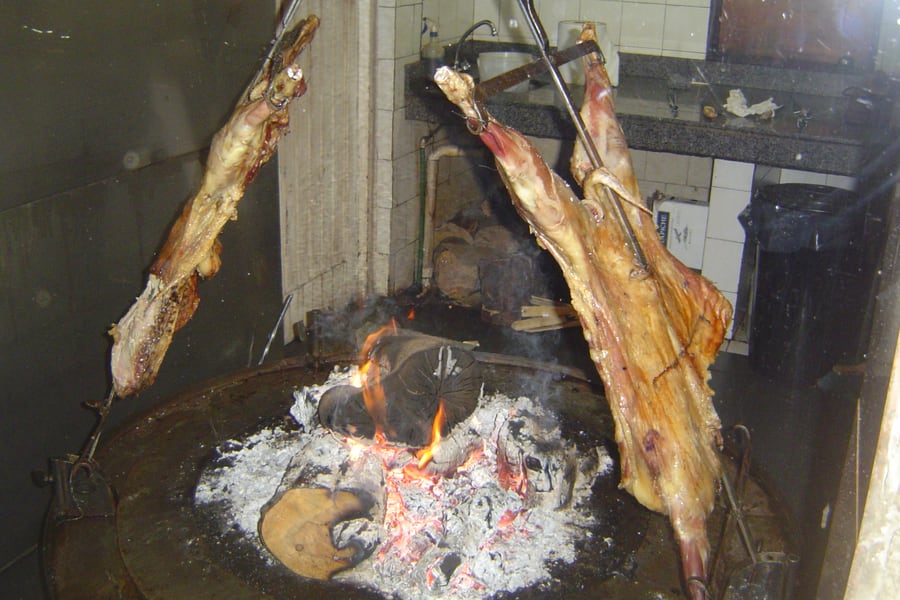
Patagonian lamb
Cordero patagónico is the meat of this steppe. The dining car serves it as estofado de cordero, a stew of Patagonian lamb and vegetables, on one of its set menus. At either end of the line, look for it the other way: whole, split open on the asador beside a wood fire.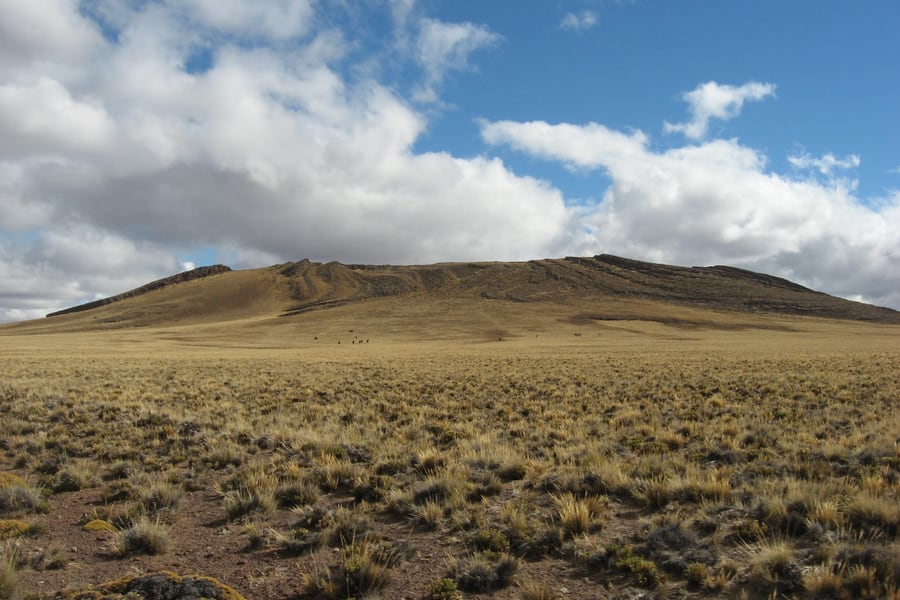 Jplauriente / Wikimedia Commons · CC BY-SA 4.0 · 2014 · cropped
Names older than the railway
Somuncurá, the basalt plateau south of Valcheta, is Mapuche for "the stone that speaks", and Ñirihuau is the ravine of the ñire trees. Valcheta is older still: a Gennakenk name that the anthropologist Rodolfo Casamiquela read as "the stream that fills to the brim".Timetables
One train a week in each direction, all year: west from Viedma on Friday at 17:00, back from Bariloche on Sunday at 17:00. The times below are the operator's own, from Tren Patagónico's published timetable, read in October 2026. Arrival is the first time, departure the second.
| Station | Viedma → Bariloche (Fri) | Bariloche → Viedma (Sun) |
|---|---|---|
| Viedma | dep 17:00 | arr 12:20 (Mon) |
| San Antonio Oeste | 21:20 · 22:20 | 06:58 · 07:58 |
| Valcheta | 00:30 · 00:33 | 04:45 · 04:48 |
| Ramos Mexía | 02:40 · 02:50 | 02:28 · 02:38 |
| Sierra Colorada | 03:40 · 03:43 | 01:35 · 01:38 |
| Los Menucos | 04:33 · 04:36 | 00:42 · 00:45 |
| Maquinchao | 05:56 · 05:59 | 23:19 · 23:22 |
| Ingeniero Jacobacci | 07:14 · 07:29 | 21:44 · 22:04 |
| Clemente Onelli | 08:34 · 08:35 | 20:36 · 20:39 |
| Comallo | 09:31 · 09:34 | 19:37 · 19:40 |
| Pilcaniyeu | 10:39 · 10:42 | 18:29 · 18:32 |
| San Carlos de Bariloche | arr 12:10 (Sat) | dep 17:00 |
Before you plan around it
The service is sometimes suspended at short notice. In 2026 it stopped for about two weeks in July after a partial derailment, when the train struck cattle on the line, and the operator cancelled the departures of 23 and 25 October for track repairs after storm damage. Check the operator's home page in the week you travel, where suspensions are announced.
The Tren Expreso Rionegrino, the operator's railcar between Ingeniero Jacobacci and Bariloche, runs on Tuesdays and Thursdays in each direction; the operator's 2026 page gives the days and fares but not the times.
Departures are published by the operator: Tren Patagónico · trenpatagonicosa.com.ar (opens in a new tab).
Tickets
Pullman seats are sold online through the operator's booking site. Sleeper berths and car places are sold only at the stations' ticket offices, in person or by phone, and through the operator's approved agencies. Fares are in Argentine pesos and are set in two bands: one for residents of Argentina and a higher one for everyone else. For October to December 2026 a Pullman seat is $126,200 for a visitor and a sleeper bed $176,300.
Retired people pay 20% less and children aged 4 to 12 pay 30% less; under-fours travel free but without a seat of their own. Each ticket includes 10 kg of luggage. Refunds lose 10% more than four days out, rising to 40% on the day, and nothing comes back once the train has left.
Book your tickets
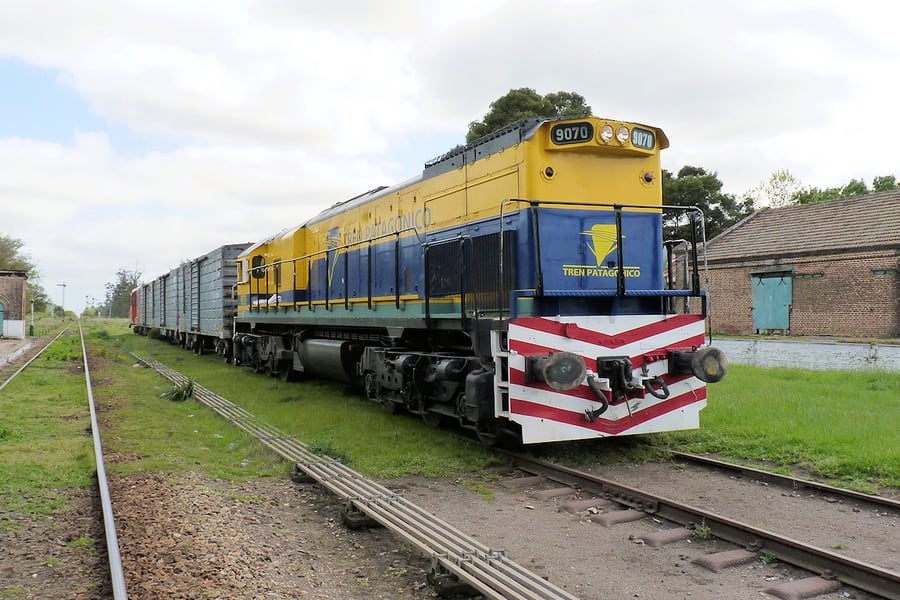 Juan Enrique Gilardi / Wikimedia Commons · CC BY-SA 2.0 · 2011 · cropped
Viedma to Bariloche, Pullman seat
$126,200 non-residents · $104,900 residents
A reclining seat in an air-conditioned Pullman coach, the one class sold online.
Book Tickets (opens in a new tab, on trenpatagonico.plataforma10.com.ar)via trenpatagonico.plataforma10.com.arViedma to Bariloche, sleeper berth
$176,300 non-residents · $145,900 residents, per bed
A bed in a two-berth cabin with bunks, a fold-down table and a wardrobe, sold at stations and agencies only.
Book Tickets (opens in a new tab, on trenpatagonicosa.com.ar)via trenpatagonicosa.com.arYour car on the train
$176,300 up to 1.55 m high · $243,900 above
An estimate before insurance, which is added on the car's assessed value and quoted at the station.
Book Tickets (opens in a new tab, on trenpatagonicosa.com.ar)via trenpatagonicosa.com.arRail Passes
No rail pass covers the Tren Patagónico. Interrail and Eurail are European schemes, and Argentina is not among the countries in Interrail's list of covered railway companies. Every seat and berth is bought from the operator, train by train.
Checked October 2026 against Interrail's list of railway companies (opens in a new tab).
Places to Visit
The train stops ten times between Viedma and Bariloche, and half of those stops come in the middle of the night. These four are worth getting off for, or staying longer at: the two towns at the start, the coast beside San Antonio Oeste, an oasis on the plateau, and the lakes at the end.
 Alejandro Zangrá / Wikimedia Commons · CC BY-SA 4.0 · 2008 · cropped
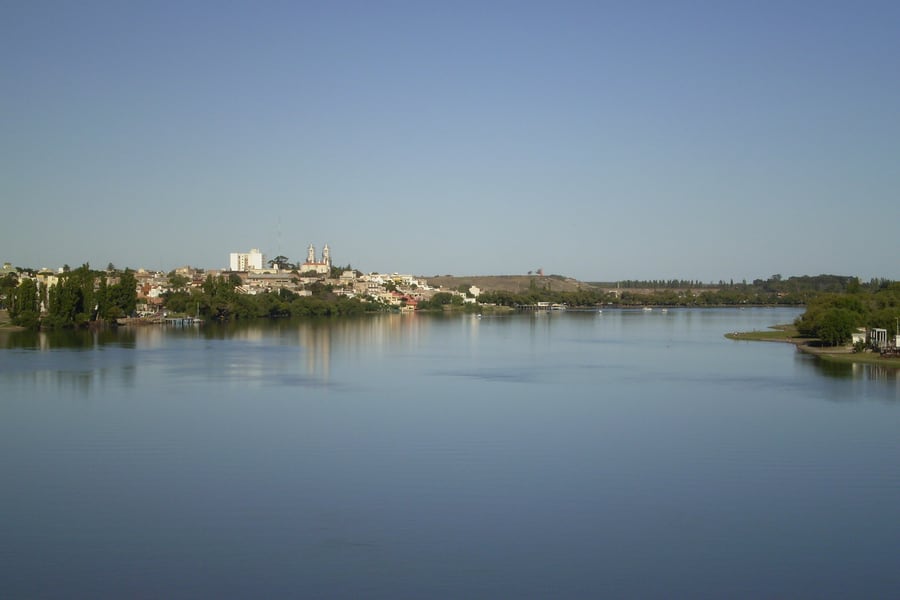
Viedma and Carmen de Patagones
Two towns facing each other across the río Negro, 30 km from the sea. Patagones, on the north bank, was founded as a Spanish fort in 1779; its settlers, short of the houses they were promised, first lived in caves dug into the riverbank. Viedma, on the south bank, is the capital of Río Negro. The station is three kilometres south of Viedma's centre.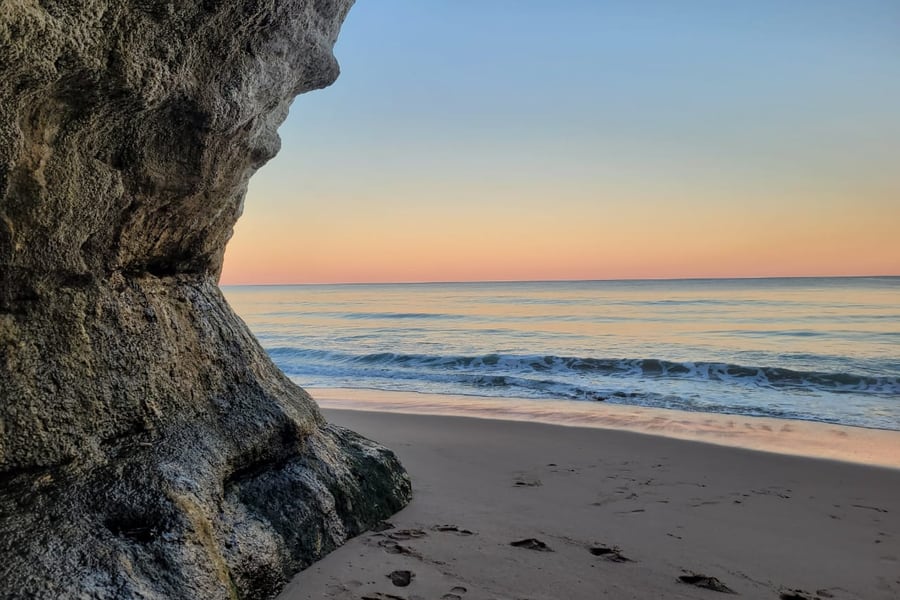 Bnitezkar / Wikimedia Commons · CC BY-SA 4.0 · 2023 · cropped
Las Grutas
The beach resort of San Antonio Oeste, named for the caves the sea has cut into its cliffs. The San Matías gulf gives it the warmest sea water on Argentina's coast, and the tide here is big enough to uncover a beach up to a kilometre wide at low water. Eastbound, the train reaches San Antonio Oeste at 06:58.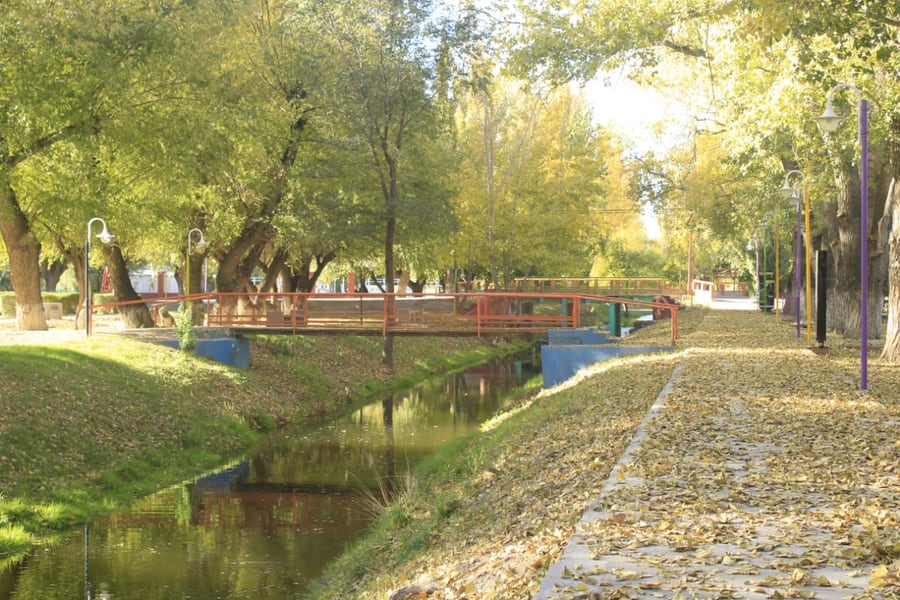 Tammy13Araya / Wikimedia Commons · CC BY-SA 4.0 · 2020 · cropped
Valcheta
A town of about 3,600 in a green valley, watered by the Valcheta stream in the middle of the dry plateau. In 1909 it saved the railway: water from the stream went down the line in tank wagons to San Antonio Oeste, which until then had relied on ships and cisterns. It is the nearest town to the Somuncurá plateau.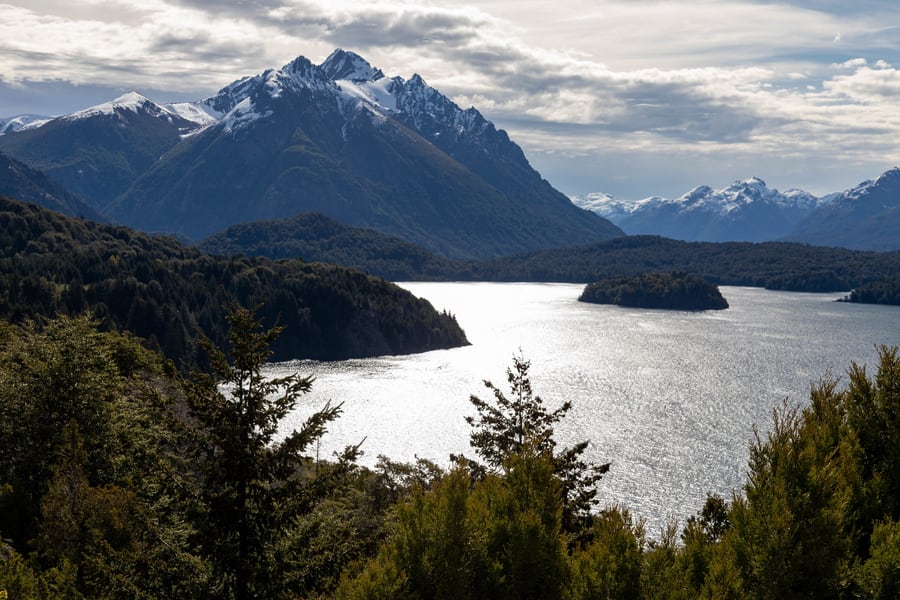 David Brossard / Flickr · CC BY-SA 2.0 · 2023 · cropped
Bariloche and Nahuel Huapi
Founded in 1902 on the shore of Lake Nahuel Huapi, Bariloche traded mostly with Chile until the railway arrived in 1934. The park around it began as a gift of land from Francisco Moreno and took its present name the same year: Nahuel Huapi, the oldest national park in Argentina, 717,261 hectares of lakes, forest and mountains.Where to Sleep
The train is the bed for one night. What is needed is somewhere in Viedma before the Friday-evening departure, and somewhere in Bariloche after the midday Saturday arrival: one hotel on the river at the start, and one on the lakes at the end.
Where to stay
Hotel Austral Viedma
Avenida Villarino 292, on the riverfront
A hotel on the río Negro facing Viedma's boat pier, from a group that also runs one in Bahía Blanca.
Check Availability (opens in a new tab, on hotelesaustral.com)via hotelesaustral.com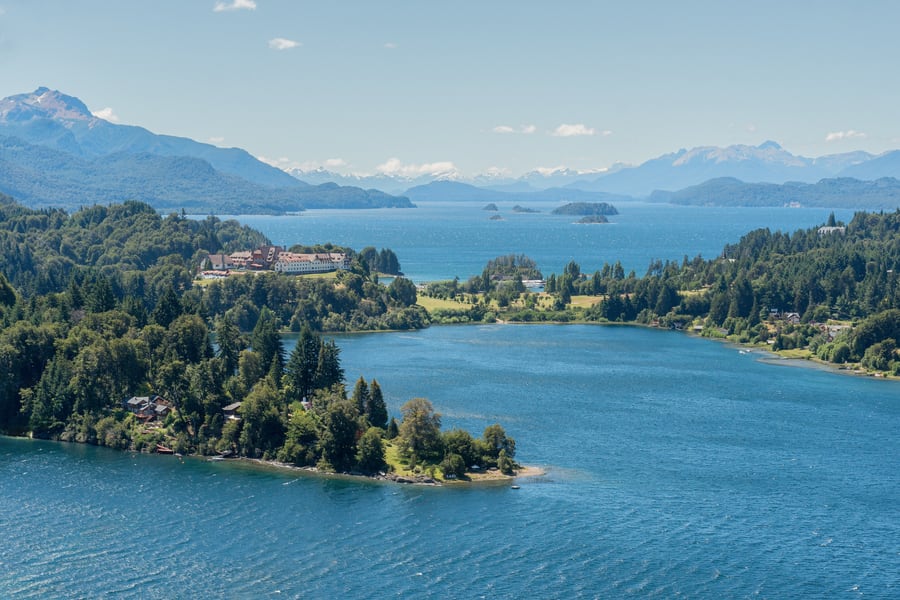 Fernando / Wikimedia Commons · CC BY-SA 4.0 · 2023 · cropped
Llao Llao Resort, Golf & Spa
On the Llao Llao peninsula, west of Bariloche
A 205-room hotel opened at the end of the 1930s between lakes Moreno and Nahuel Huapi, with an 18-hole golf course.
Check Availability (opens in a new tab, on llaollao.com)via llaollao.comQuestions or corrections
Planning this trip and stuck on something, or spotted a time, fare or detail that has changed? Send us a message about Tren Patagónico. We read every one, and we update this page when something has changed.