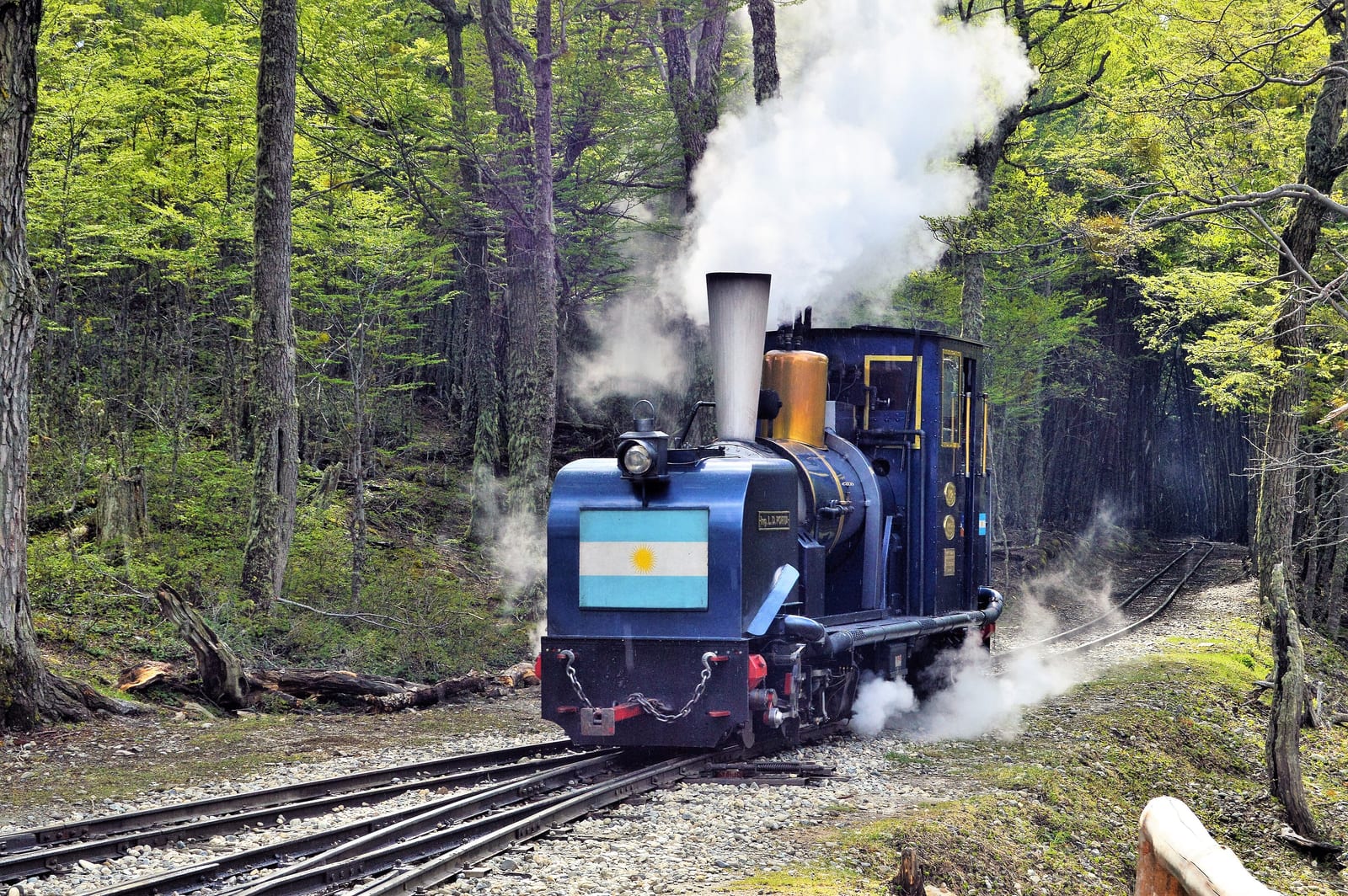
Tren del Fin del Mundo
MIKEMDQ / Wikimedia Commons · CC BY-SA 4.0
- Distance~7 km · 500 mm gauge
- DurationA half-day from Ushuaia
- Best seasonYear-round · Dec–Mar for long days
Introduction
There is a railway below this one. Look at a map and you'll find nothing but the Beagle Channel, Cape Horn, the Drake Passage and then Antarctica. At 54°50′ south, the Tren del Fin del Mundo is the southernmost functioning railway in the world, and for once that is not a brochure line — it is simply where it is.
It is also very small. Seven kilometres of 500 mm track, a top speed of 25 km/h, three stations, and about an hour of your day. If you measure railways by ambition, this one barely registers.
Measure it by what it was for, and it is one of the most disquieting journeys on this site.
Argentina put a penal colony at the bottom of the world. The first convicts landed at Ushuaia in 1884, and from 1902 they were building their own prison — hauling timber, rock and sand along a railway they had laid themselves, on wooden rails. In 1909 the governor asked for something better; 600 mm Decauville track and two steam locomotives arrived, and the line opened in 1910. It was called the Tren de los Presos: the Train of the Prisoners. Every working day it carried men out to the forest to cut it down, and carried the wood back.
The prison closed in 1947. The great Tierra del Fuego earthquake of 1949 wrecked much of what was left, restoration was judged not worth it, and the railway shut in 1952.
Then, in 1994, it came back — rebuilt narrower still, at 500 mm, as a heritage line running the last few kilometres of the convicts' route into Tierra del Fuego National Park. There are steam locomotives, and diesels too, and wooden carriages with generous windows and an audioguide in ten languages.
That could easily be twee, and it isn't, because the evidence is still lying beside the track. The Cementerio de Árboles — the tree cemetery — is a hillside of stumps and toppled century-old trunks, cut by prisoners over decades, and the forest has never covered it up. You ride past it in a warm carriage, at walking pace, looking at the work of men who were sent here as punishment.
Being the southernmost railway in the world is what sells the ticket. The stumps are what stays with you.
The Journey
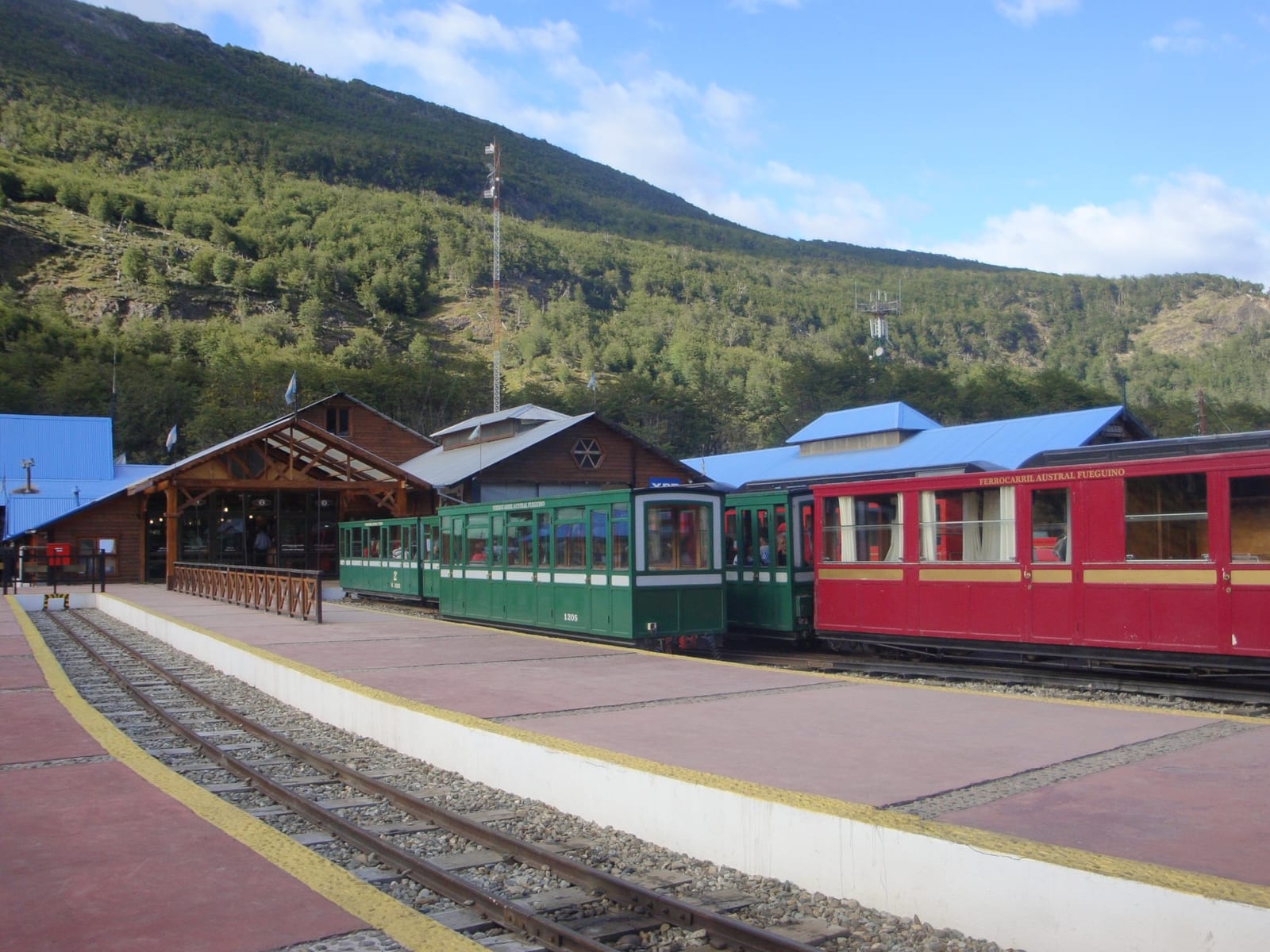
The first thing to know is that the train does not leave from Ushuaia. The Estación del Fin del Mundo sits about eight kilometres west of town, out on the road towards the national park, and you get there by hire car, taxi or an agency transfer. It is a handsome, slightly theatrical little station, and it is the only part of the operation that feels built for tourists — which, to be fair, it was.
Everything after it is the real trackbed.
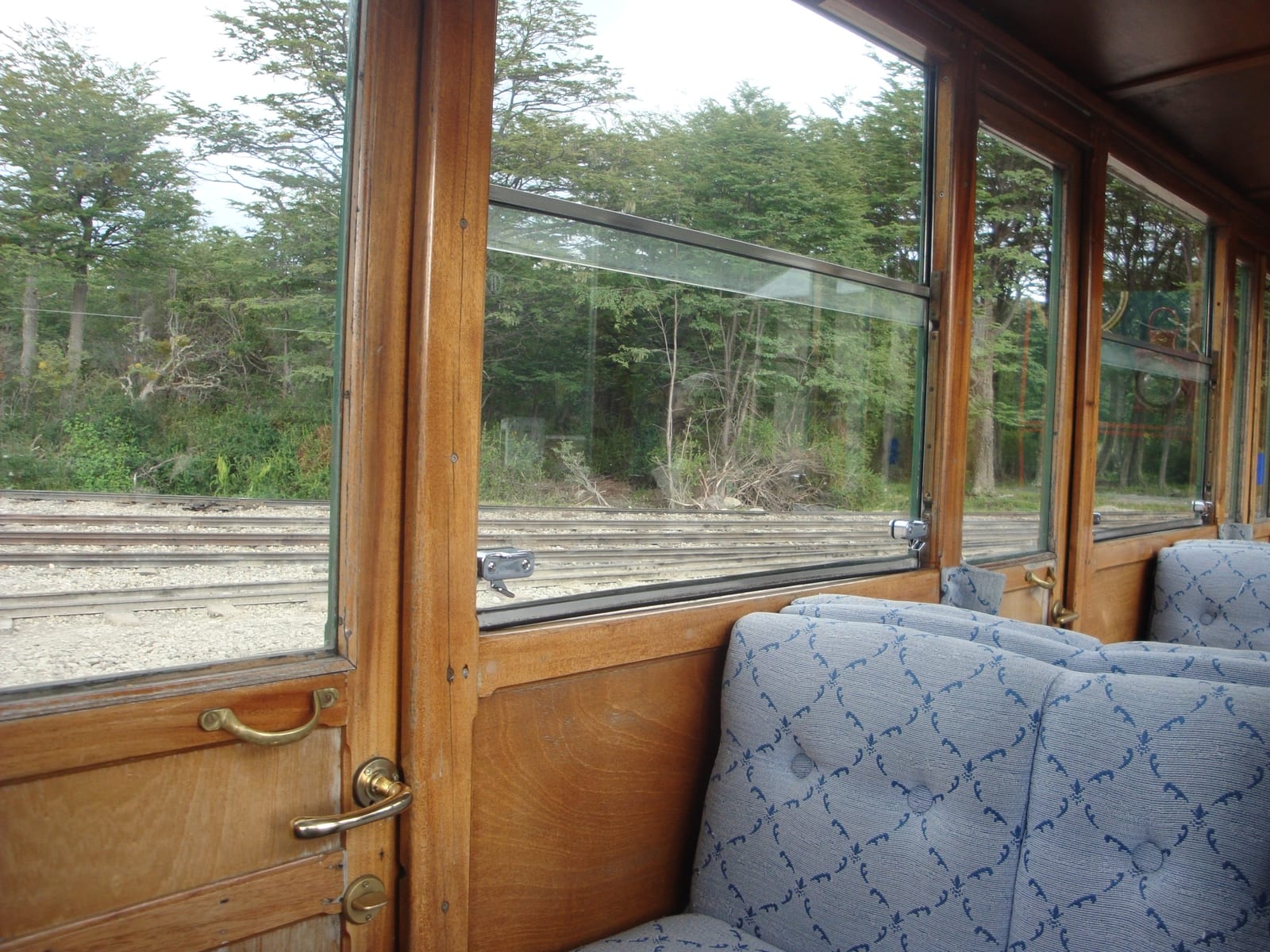
The train is tiny. Five hundred millimetres between the rails is narrower than the original Decauville line the prisoners used, and the carriages sit on it like something from a model village: wooden, low, with big windows and, sensibly, heating. At the front there might be steam — the railway keeps a 2-6-2 tank engine and a pair of Garratts — or one of the diesels, depending on the day and the season. Nobody minds much either way. At 25 km/h you are not here for the traction.
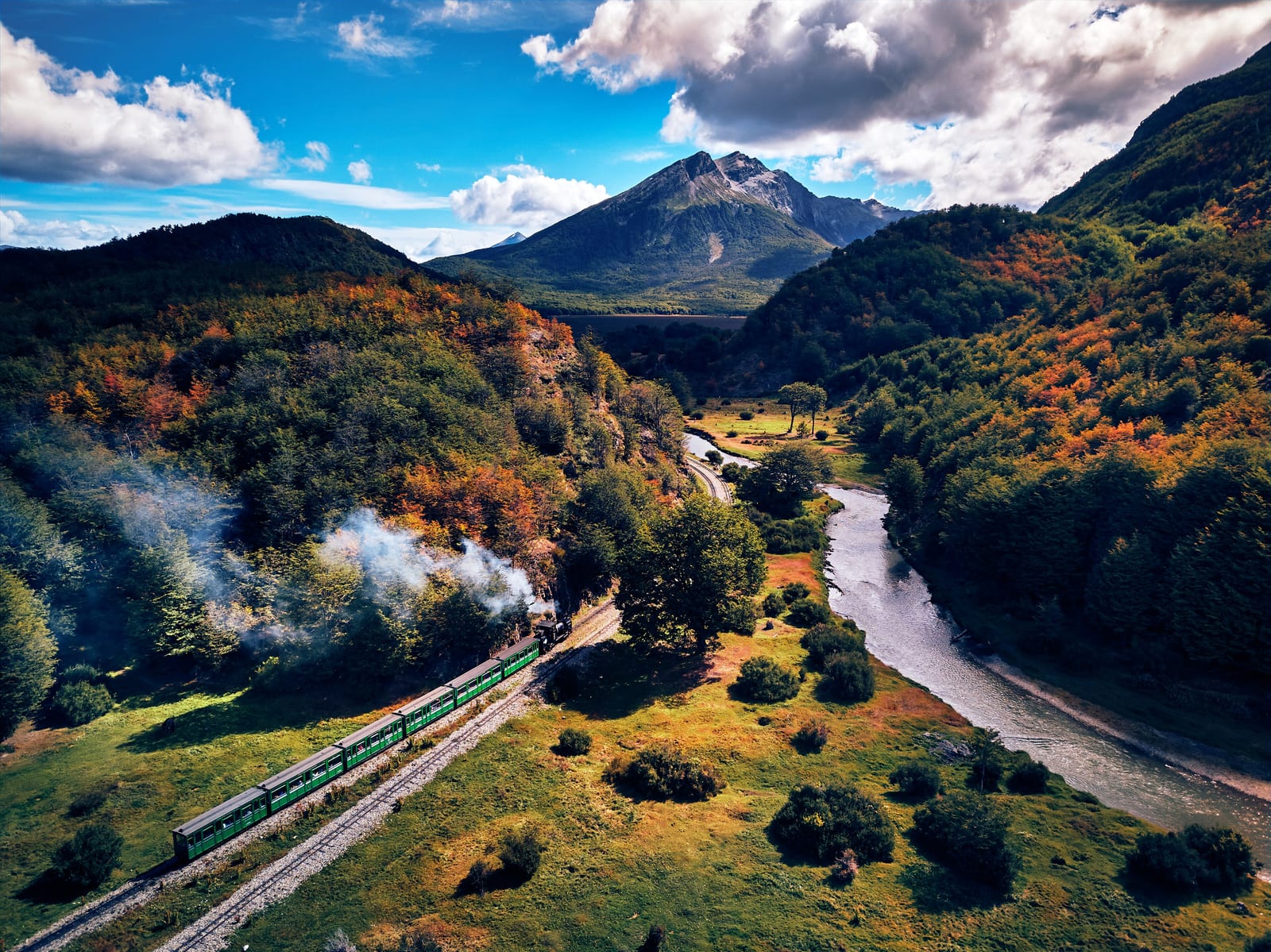
It runs up the valley of the Pipo, and this is where the mood turns. Out of the left-hand windows the Cementerio de Árboles begins: stumps, hundreds of them, and fallen trunks lying where they dropped, silver-grey and bleached. The prisoners logged this forest for decades — that was the point of the railway — and the ground still shows it a century later. The audioguide talks over it, in ten languages, calmly. It is a genuinely strange few minutes.
The train stops at Cascada La Macarena, which is not a photo-op invented for visitors: this is where the Tren de los Presos pulled up to fill its locomotive's water tanks. You get down, and you can climb the path to the viewpoint for the waterfall and, better, the long view up the Pipo valley to Monte Susana and Cerro Guanaco. A few minutes, and back aboard.
From there the line runs on into Tierra del Fuego National Park and ends at the Estación Parque Nacional, deep in lenga beech forest. The whole ride is about an hour.
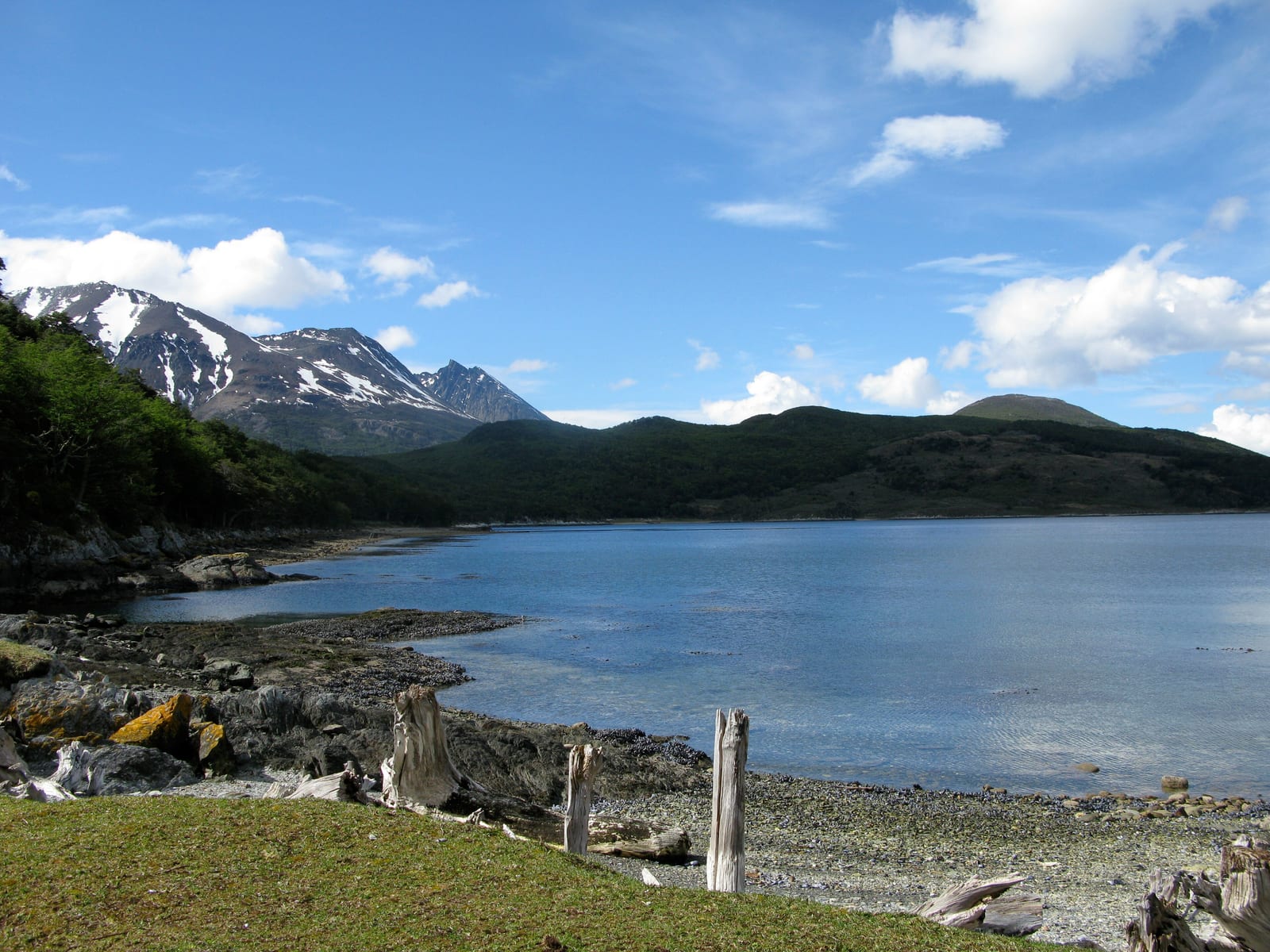
And that is the decision point. Most people ride back and drive away, which is a waste — the park is the finest thing in this part of Argentina. Tierra del Fuego National Park was established on 15 October 1960 and covers 630 km² of lenga and coihue beech forest, peat bog and lakes, running down to the water. Somewhere in it, at Lapataia Bay, the Pan-American Highway reaches its southern terminus and simply stops.
So don't treat the train as the whole outing. Combine it with the park — most Ushuaia agencies sell the two together, and the park has its own entry fee either way — and give the afternoon to walking the Senda Costera or Lapataia. The railway is an hour of your day. The place it delivers you to deserves rather more.
Along the route
MIKEMDQ / Wikimedia Commons · CC BY-SA 4.0The southernmost railway there is
Not a marketing line — a fact. At 54°50′ south, this is the southernmost functioning railway on earth, and there is nothing below it but the Beagle Channel, Cape Horn and Antarctica. Everywhere else that claims the title is further north.Banfield / Wikimedia Commons · CC BY-SA 3.0The Train of the Prisoners
This line exists because Argentina put a penal colony at the bottom of the world. Convicts laid it — wooden rails at first, in 1902 — and rode it out each day to fell the forest and haul the timber back. That is what you are riding on.Butterfly voyages Serge Ouachée / Wikimedia Commons · CC BY-SA 3.0Tierra del Fuego National Park
The line ends inside it, and the park is the finest thing in the region: lenga beech forest, peat bog, the Lapataia bay where the Pan-American Highway finally stops, and the stumps the prisoners left, still visible after a century.A bit of history
Culture & experiences along the way
Deensel / Wikimedia Commons · CC BY 2.0The Cementerio de Árboles
The "tree cemetery" — a hillside of stumps and fallen hundred-year-old trunks, left by decades of convict logging and never grown over. It is a strange, bleached, half-surreal landscape, and the most direct evidence of what this railway was for.Banfield / Wikimedia Commons · CC BY-SA 3.0Cascada La Macarena
The middle station, and a real piece of the old line — this is where the prisoners' train stopped to fill the locomotive's water tanks. Get off and climb to the viewpoint for the Pipo valley, Monte Susana and Cerro Guanaco.Viajera del alba / Wikimedia Commons · CC BY-SA 4.0Winter at the end of the world
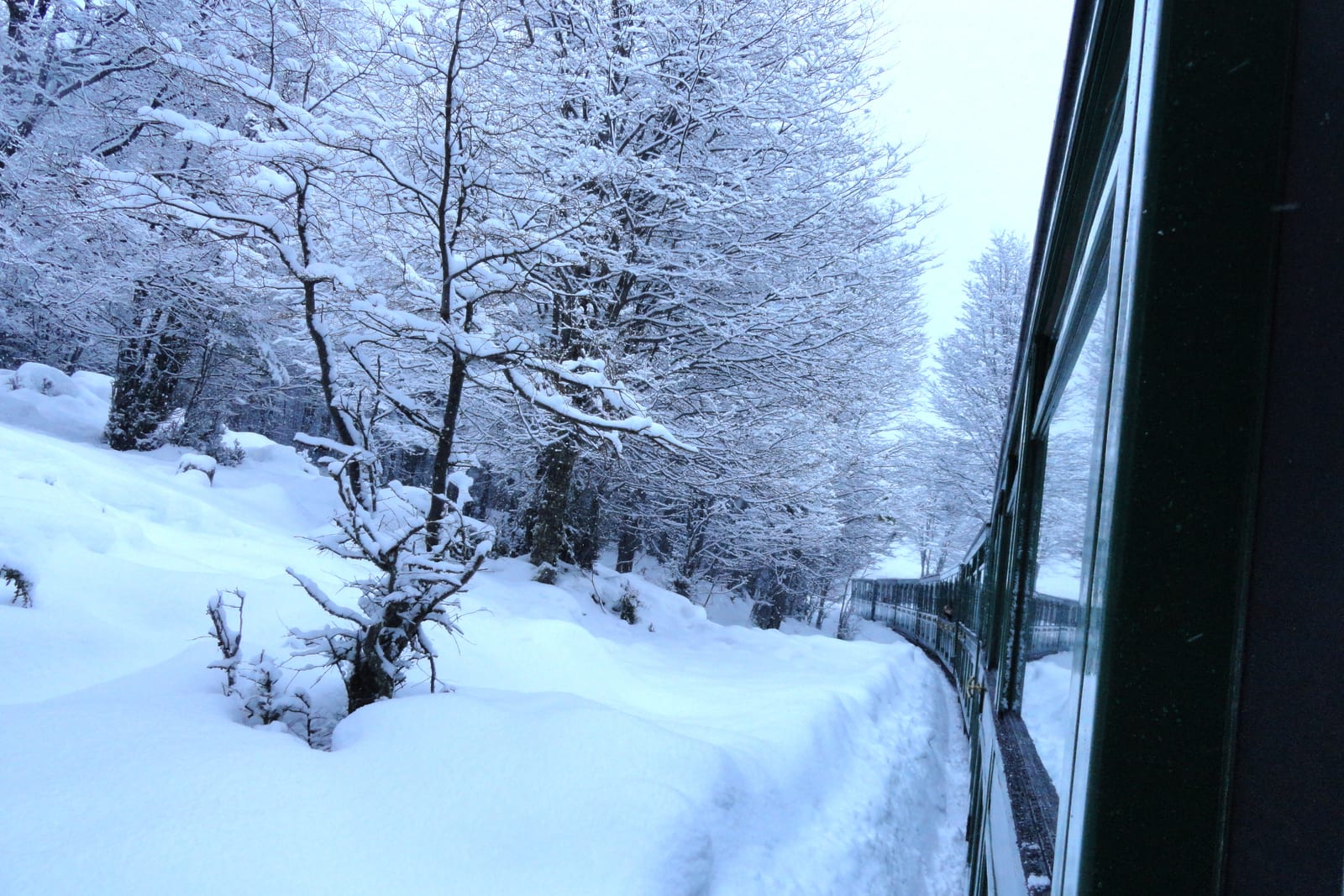
It runs all year, and the case for going in the southern winter is real: the beech forest under snow, the carriage warm, the light low and blue by mid-afternoon. Fewer people, and a far stranger trip.Timetables
The Tren del Fin del Mundo runs all year, three times a day, on a schedule that shifts by half an hour between summer and winter.
How it runs:
| Detail | What to expect |
|---|---|
| The line | Estación del Fin del Mundo → Cascada La Macarena → Estación Parque Nacional |
| Length | About 7 km · 500 mm gauge · 25 km/h |
| Duration | About an hour |
| 1 Sep – 30 Apr | Departures 9:30 · 12:00 · 15:00 |
| 1 May – 31 Aug | Departures 9:45 · 12:15 · 15:00 |
| The station | Pdte. Raúl Ricardo Alfonsín 4800 — ~8 km outside Ushuaia |
Good to know:
- The station is not in town. This catches people out. It's eight kilometres west on the park road, and you need a car, a taxi or an agency transfer to reach it. Build that into your timings.
- The park is separate. The national park charges its own entry, and the train is not a substitute for visiting it. Plan the two together — the train in the morning, the park for the afternoon, is the standard and correct shape of the day.
- It runs in winter, and winter is good. Snow on the beech forest, a warm carriage, low blue light by mid-afternoon and far fewer people. If you're in Ushuaia between May and August, don't write it off.
- Steam is not guaranteed. The railway runs steam locomotives and diesels, and which one is out depends on the day. If steam matters to you, ask before you book.
- Sit on the left going out for the Cementerio de Árboles and the Pipo valley.
- The audioguide is worth it. Ten languages, and it carries the prison history that makes the ride mean anything.
Tickets
Tickets come from the Tren del Fin del Mundo directly, or bundled with the national park through any Ushuaia agency, at four levels. Tourist is the standard carriage and genuinely fine — wooden, warm, big windows, and an audioguide in ten languages. Premium and VIP buy more room and fewer people, which on a one-hour trip is a comfort purchase rather than a different journey: worth it for a guaranteed window rather than a scrum for one, and unnecessary otherwise.
Budget for the park separately, because its entry fee is not your train ticket and the park is the better half of the day. Sort the transfer when you book the seat — the station is eight kilometres out of town, and "we'll get a taxi" is how people miss a 9:30 departure. And consider the 15:00 in winter: the light in the last hours of a Fuegian afternoon is the best thing the railway has to offer.
Book your tickets
Tourist class
The standard carriage
The ordinary ticket, and perfectly good — a wooden carriage with big windows and the audioguide, which runs in ten languages and is genuinely worth listening to for the prison history. Book the train and your park entry separately.
Book Tickets (opens in a new tab, on Tren del Fin del Mundo (Ferrocarril Austral Fueguino))via Tren del Fin del Mundo (Ferrocarril Austral Fueguino)Premium and VIP
More room, fewer people
The operator also sells Premium and VIP carriages, and charters the whole train. More space and service on a short ride — worth it if you want a guaranteed window rather than a scrum, and unnecessary otherwise.
Book Tickets (opens in a new tab, on Tren del Fin del Mundo (Ferrocarril Austral Fueguino))via Tren del Fin del Mundo (Ferrocarril Austral Fueguino)Rail Passes
No rail pass covers the Tren del Fin del Mundo. Interrail and Eurail are European schemes, and Argentina is not among the 33 countries in Interrail's list of covered railway companies. Tickets come from the operator or an Ushuaia agency, and the national park entry is paid separately.
Checked October 2026 against Interrail's list of railway companies (opens in a new tab).
Places to Visit
Ushuaia is the end of the road, and people arrive expecting a novelty and find a proper destination. The train is an hour of it.
Give the place three or four days if you can. Almost everything below is within an hour of the town, the weather changes by the hour in every season, and the two things most worth doing here — the national park and the prison museum — are the two that most reward a slow morning rather than a booked slot.
 Claudio Elias / Wikimedia Commons · CC BY-SA 3.0 · cropped
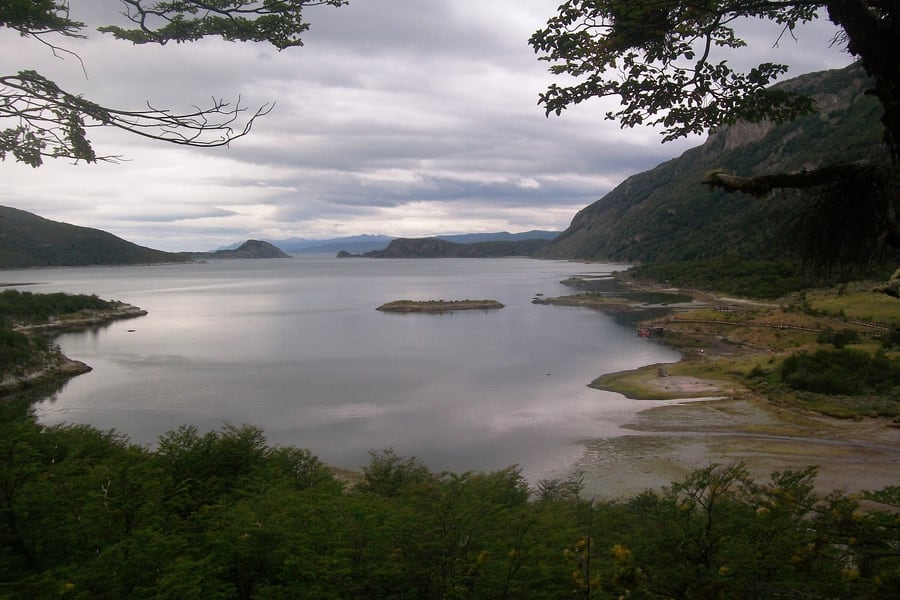
Tierra del Fuego National Park
Created in 1960 under Law 15.554 and now more than 68,000 hectares of lenga beech, peat bog and lake, of which only a small fraction is open to visitors. Walk the Senda Costera along the shore, or go out to Lapataia Bay, where National Route 3 simply stops at the water — 3,063 km from Buenos Aires, and the southern end of the Pan-American Highway. Give it a full day.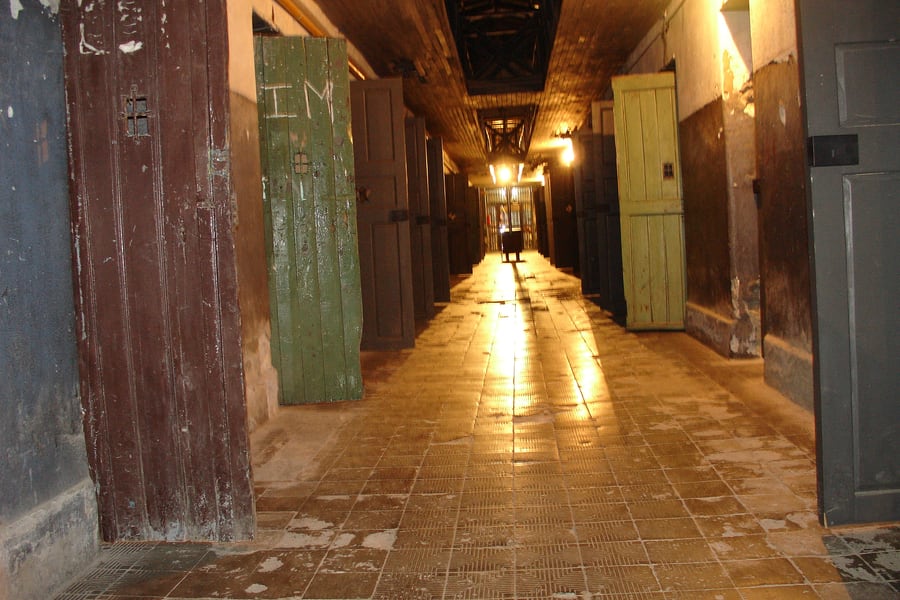 Albasmalko / Wikimedia Commons · CC BY-SA 3.0 · cropped
Museo del Presidio
The prison itself, and the reason the railway exists. Five pavilions, 380 cells of about four square metres, more than 540 men, shut on 21 March 1947 and a museum since 1994. You can walk the cell blocks of the colony whose inmates laid the track you rode on. Grim, superbly done, and it will reframe the train entirely. Do it after the train, not before.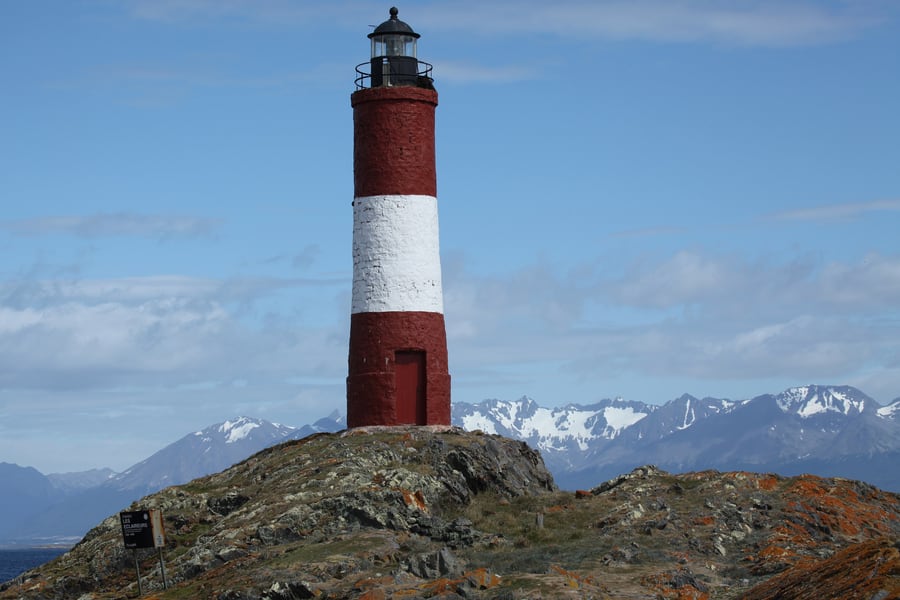 Liam Quinn / Wikimedia Commons · CC BY-SA 2.0 · cropped
The Beagle Channel
Boat trips to the sea lion and cormorant colonies and the Les Éclaireurs lighthouse — 11 metres of red and white stripes on a bare rock, lit on 23 December 1920, automatic and closed to the public. Everyone calls it the lighthouse at the end of the world and it is not: Jules Verne meant San Juan de Salvamento, away on Isla de los Estados, which the Maritime Museum has rebuilt at full size. Choose a small boat.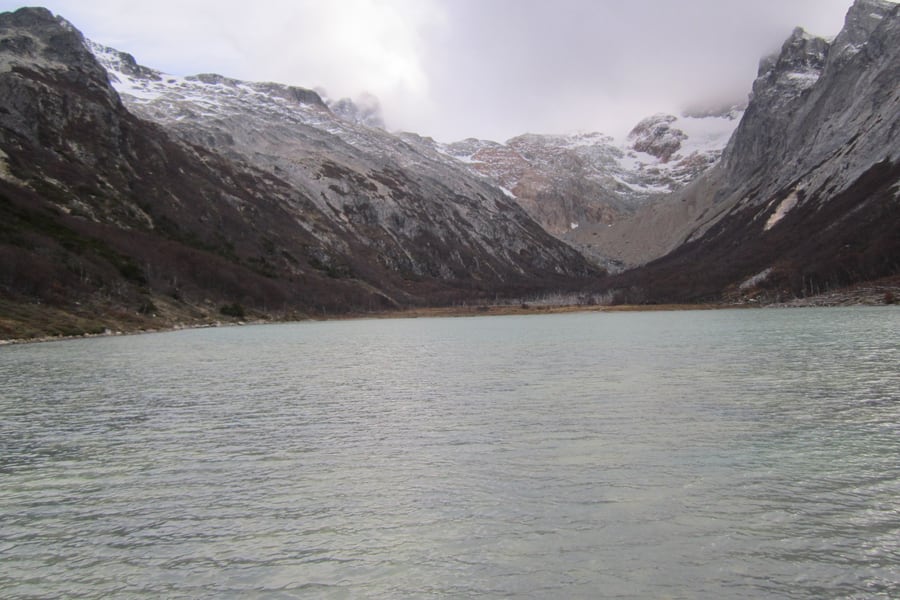 Eugeniabaccaro / Wikimedia Commons · CC BY-SA 4.0 · cropped
Laguna Esmeralda
The standard walk out of Ushuaia — roughly 9 km there and back, four to five hours, from a trailhead about 20 km from town. Beech forest, then peat bog on boardwalks, then the lake, whose colour is rock flour washed down from the Ojo del Albino glacier. The dams along the way are the work of North American beavers, brought here in 1946 for fur and never got rid of. Muddy, and worth it.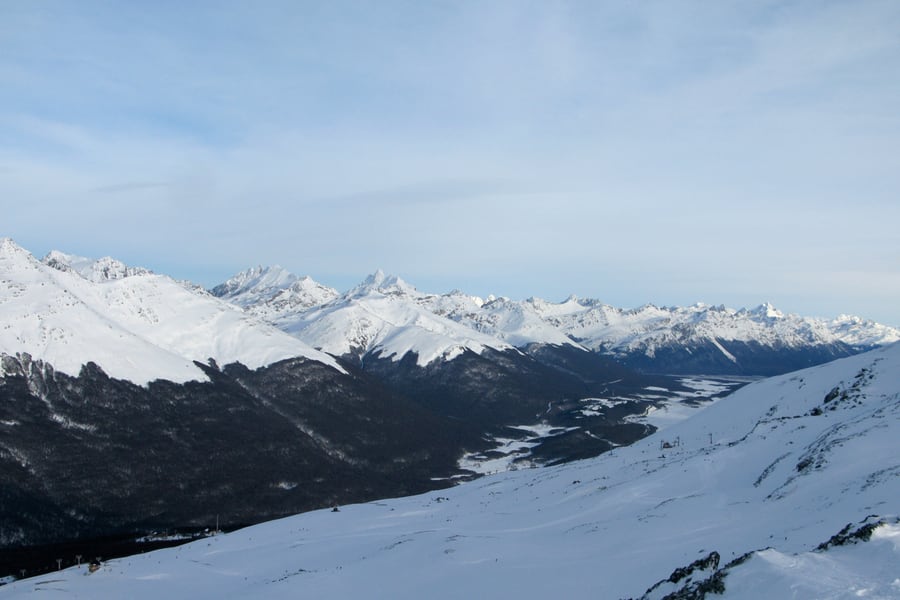 Butterfly voyages / Wikimedia Commons · CC BY-SA 3.0 · cropped
Cerro Castor
The southernmost ski resort in the world, open since 1999, about 26 km from Ushuaia on the road east. It runs from 195 m to 1,057 m — low numbers that would be useless anywhere else, and work here because of the latitude. The season is June to October, the longest in South America. If you came for the winter train, it is right there.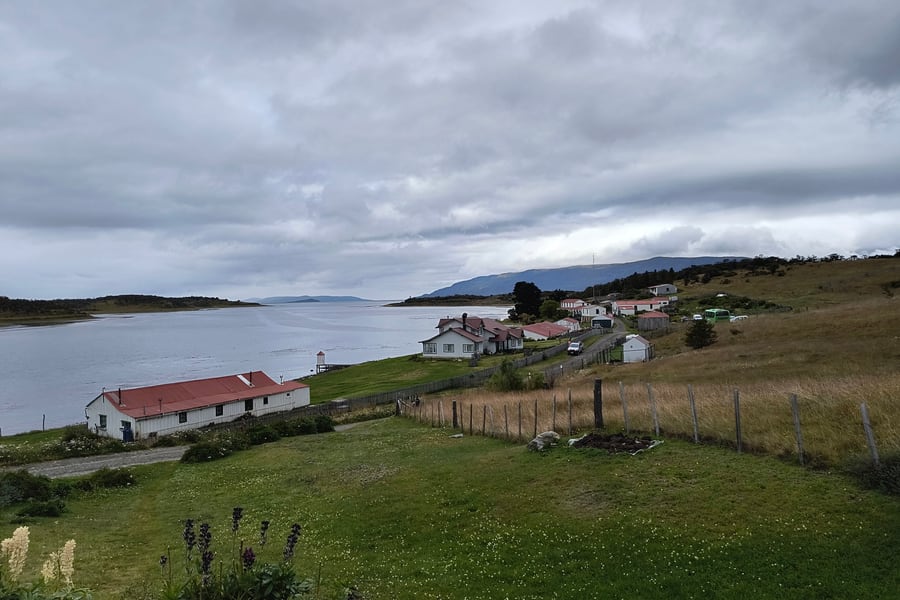 Vlasta x / Wikimedia Commons · CC BY-SA 4.0 · cropped
Estancia Harberton
The first estancia in Argentine Tierra del Fuego, founded in 1886 by the missionary Thomas Bridges, who left the Anglican mission and was granted the land by act of Congress. It is named after the Devon village his wife came from, and his fourth generation still runs it. A long drive out along the channel, and a real working place rather than a reconstruction — with a marine mammal museum and penguins offshore.Where to Sleep
You stay in Ushuaia. The train is a morning out and back, and there is nowhere to sleep on the line.
Ushuaia has more beds than a town of its size normally would, because everyone bound for Antarctica passes through it: hostels along the main streets, a solid range of mid-range hotels, and a handful of genuinely good lodges up on the hillside with views over the Beagle Channel. Prices are high by Argentine standards and highest between December and March, when the cruise season, the hikers and the Patagonia itineraries all arrive at once. Book early for those months.
Two things worth thinking about:
- The station is eight kilometres out. Wherever you stay, you need a transfer or a car to reach the train — so being central buys you restaurants and the prison museum rather than a walk to the platform. Central is still the right call.
- Up the hill or down by the water? The hillside places have the view; the centre has everything else. In a town this small, the walk between them is fifteen minutes.
If you want the region rather than the town, there are lodges and estancias out along Ruta 3 towards Harberton and the Beagle Channel — quiet, expensive, and a long way from a 9:30 departure. There is also camping inside Tierra del Fuego National Park, which is the most atmospheric option going: sleep in the park, ride the train in the morning, and spend the afternoon walking to Lapataia without ever going back into town.
Questions or corrections
Planning this trip and stuck on something, or spotted a time, fare or detail that has changed? Send us a message about Tren del Fin del Mundo. We read every one, and we update this page when something has changed.