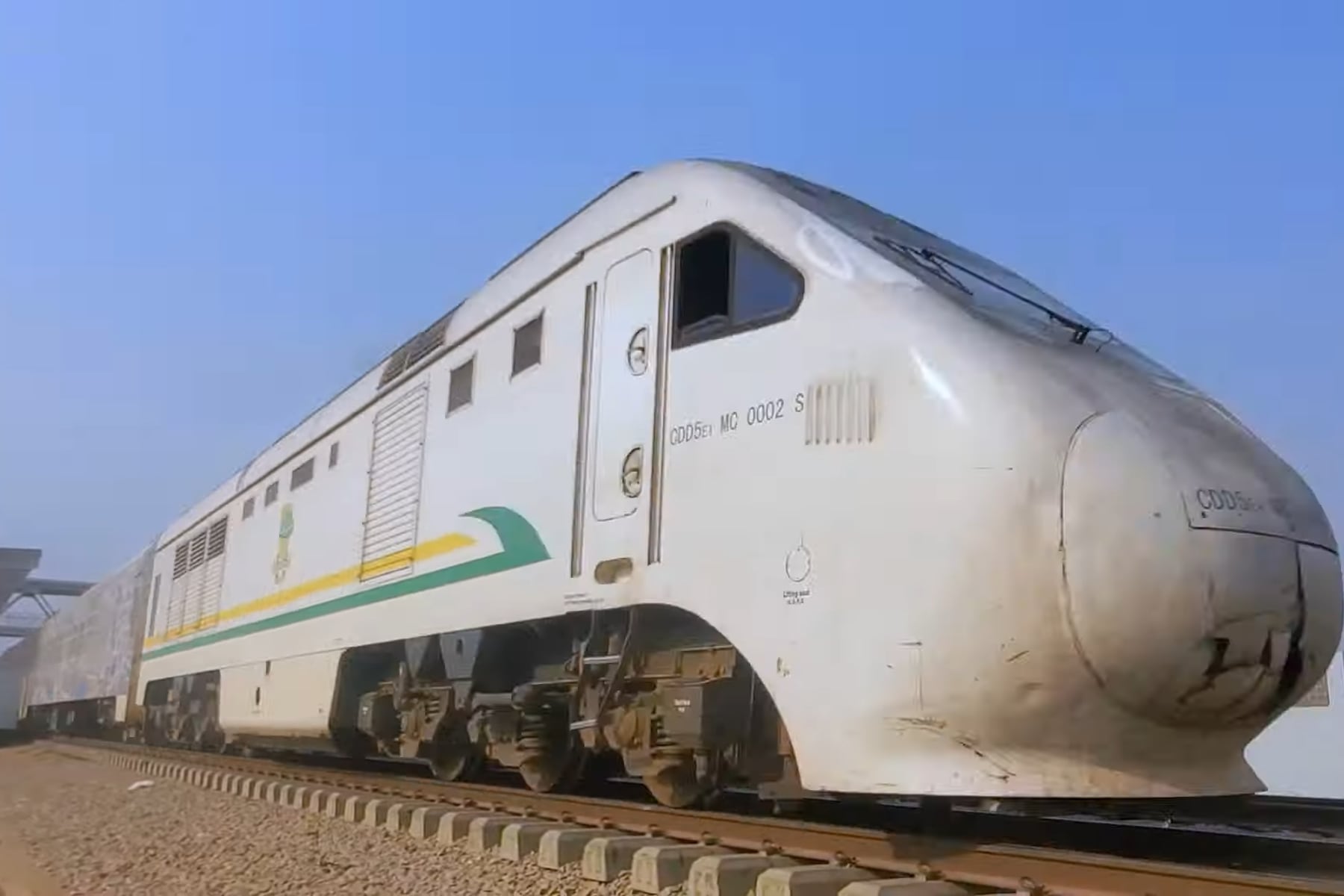
Lagos to Ibadan — Nigeria's first standard-gauge express
Just Ozed / Wikimedia Commons · CC BY 4.0 · 2024 · cropped
- DistanceAbout 156 km, Ebute Metta to Moniya
- Duration2 h 33 min; 2 h 21 min on the limited-stop pair
- Best seasonAll year; the dry season runs November to March
Introduction
Nigeria's railways were built to move goods to the sea, and for most of a century the country's main line was the metre-and-a-bit of Cape gauge that the British laid north from Lagos beginning in March 1896. It still exists. What runs beside it now is something else: a standard-gauge railway, 156 km of it, built by the China Civil Engineering Construction Corporation on a contract signed in 2012, broken ground in March 2017 and opened to fare-paying passengers on 10 June 2021. It is the first finished piece of a corridor meant to reach Kano, and it is the only fast, air-conditioned way between Nigeria's largest city and the old Yoruba capital in the hills behind it.
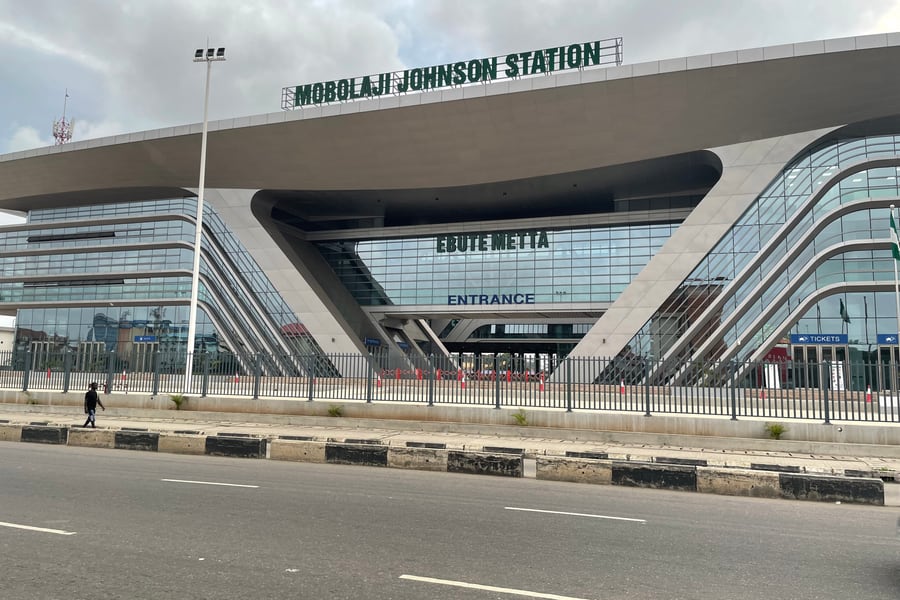
The train leaves Mobolaji Johnson Station at Ebute Metta — a great swooping concrete thing on the Lagos Mainland, a few minutes from the yard where the colonial railway kept its workshops — and runs out through Agege and Agbado, past the point where Lagos finally stops being Lagos, into the farmland of Ogun State. It calls at Abeokuta beneath Olumo Rock, crosses the Ogun river country, and ends at Moniya on the northern edge of Ibadan, two hours and thirty-three minutes after it started. Two trains a day run in each direction, three on Thursdays, Fridays and Saturdays, and the whole thing is bookable online for the price of a decent restaurant meal.
The Journey
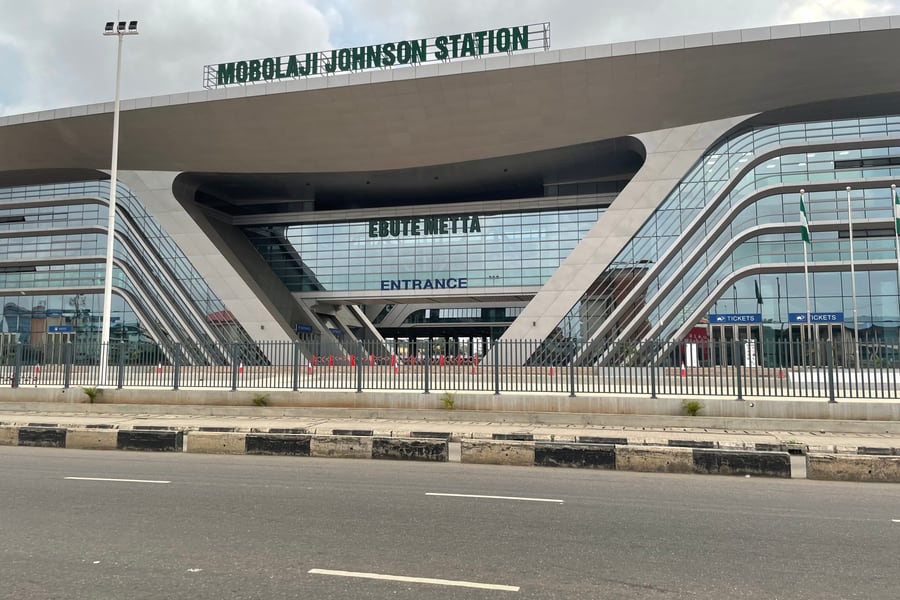
Mobolaji Johnson Station at Ebute Metta does not pretend to be modest: a white concrete roof that lifts at both ends over a hall of glass, dropped into the close-packed streets of the Lagos Mainland. A ticket is sold only on production of a valid identity card, seats are numbered, and the train that fills the platform is a CDD5E1 — the Nigerian version of the Chinese NDJ3, a power car at each end with the carriages between them, good for 150 km/h, with USB sockets at the seats and a trailer built for wheelchairs. Two sets came for this line, and they began work on 7 December 2020, six months before the railway opened commercially.
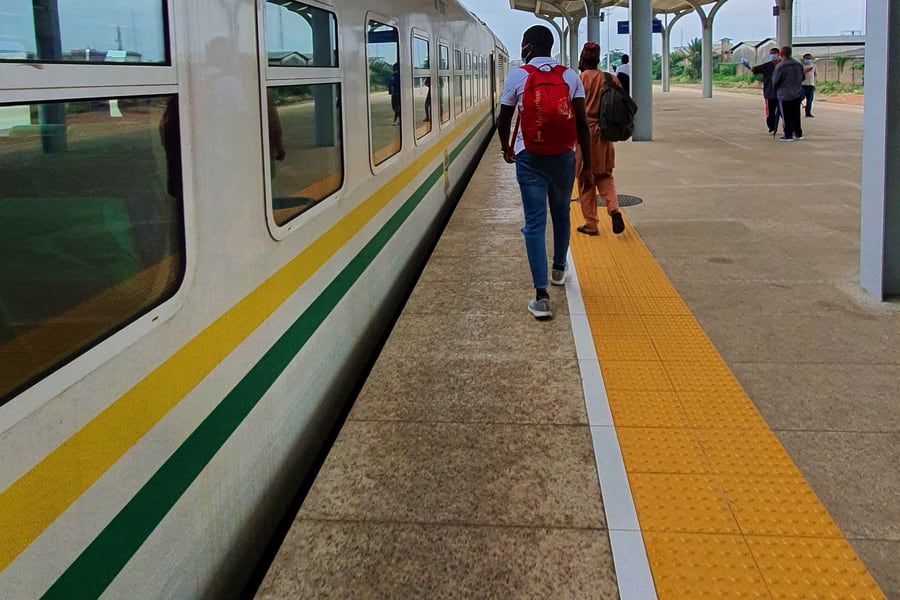
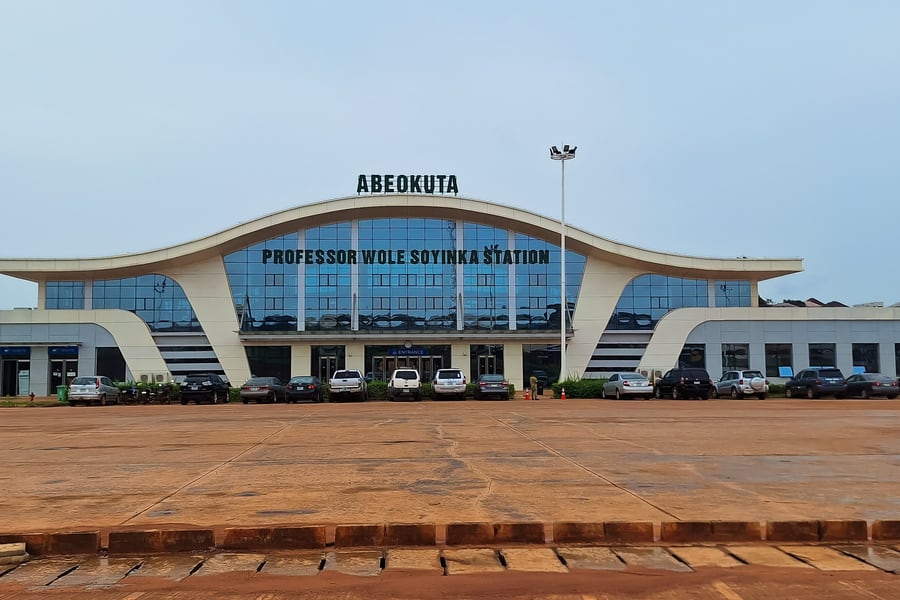
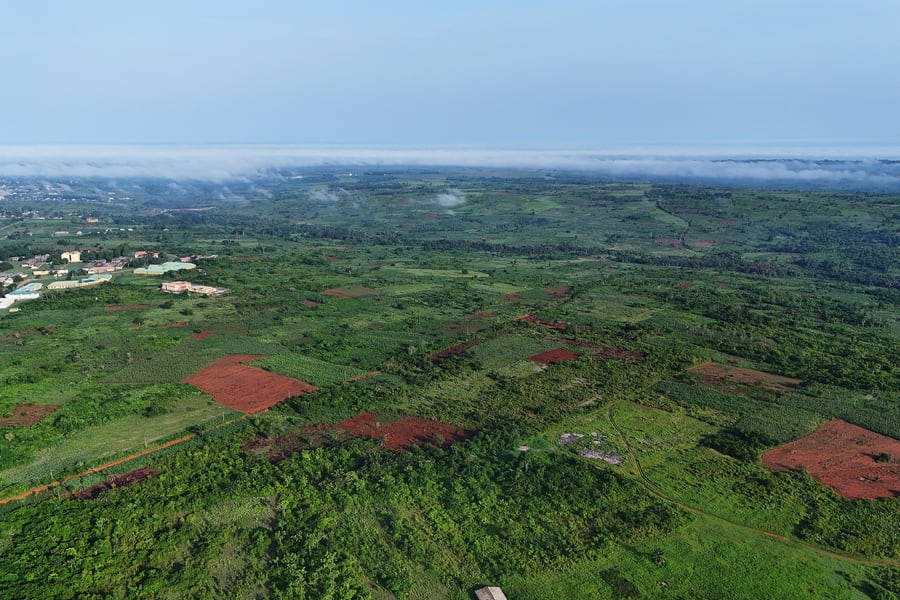
The first half-hour is Lagos: Agege, then Agbado, where the city's own Red Line to Marina turns back, sharing this railway's right of way the whole way in. Somewhere past Kajola the buildings give out and the line runs on embankment through Ogun State, over red laterite cuttings and small farms, at a speed no Nigerian road offers. Abeokuta comes at roughly the halfway mark, its station named for Wole Soyinka, who was born at Aké in the town and took the Nobel Prize in Literature in 1986.
The last hour
North of Abeokuta the country opens out — bush, cassava, the occasional block-built village hard against the fence — and the stations thin to Olodo and Omi-Adio, named for the journalist and governor Olusegun Osoba and for Ladoke Akintola, premier of the old Western Region. Both are quiet enough that the stop is measured in three minutes. The train finishes at Moniya, on the northern edge of Ibadan, where the platform ends and the city's minibuses begin. The afternoon pair does the run faster by calling only at Agege, Abeokuta and Omi-Adio: two hours and twenty-one minutes, gate to gate.
Along the route
 Princess of Ara / Wikimedia Commons · CC BY-SA 4.0 · 2021 · cropped
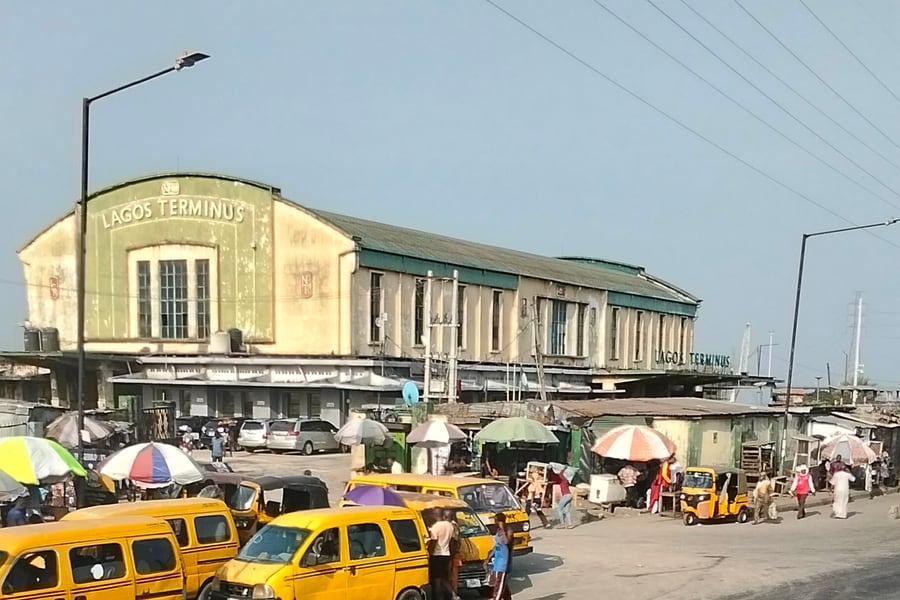
Out of Ebute Metta
The Lagos terminus stands on the Mainland, minutes from the compound the colonial railway built for itself. Trains leave at 08:00 and 16:00, with an extra pair Thursday to Saturday.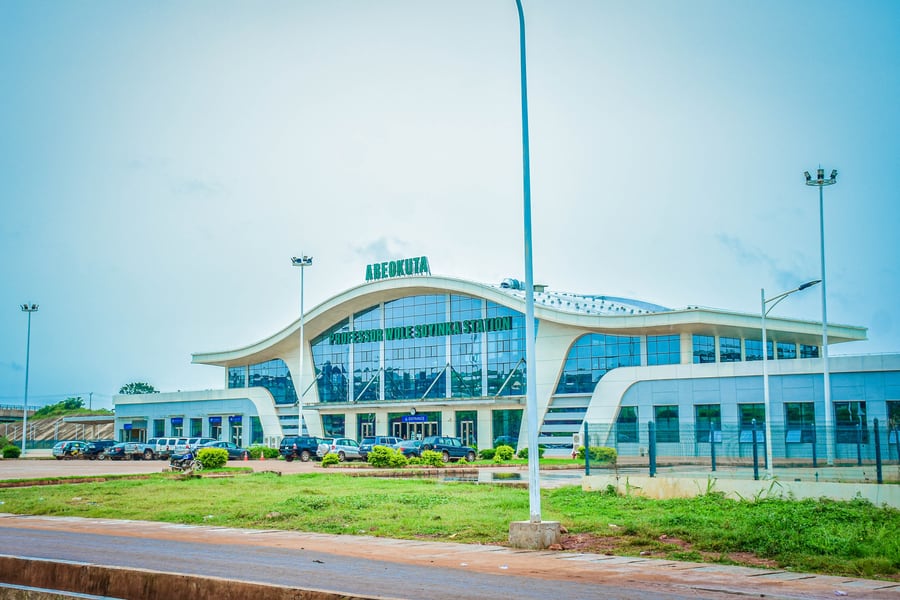 Solanke Lukman Oluwaseun / Wikimedia Commons · CC BY-SA 4.0 · 2023 · cropped
Abeokuta, under the rock
Roughly halfway, an hour and a half from Lagos and 77 km from it by rail. The town grew up around Olumo Rock, which the Egba used as a fortress, and its station is named for the writer born at Aké.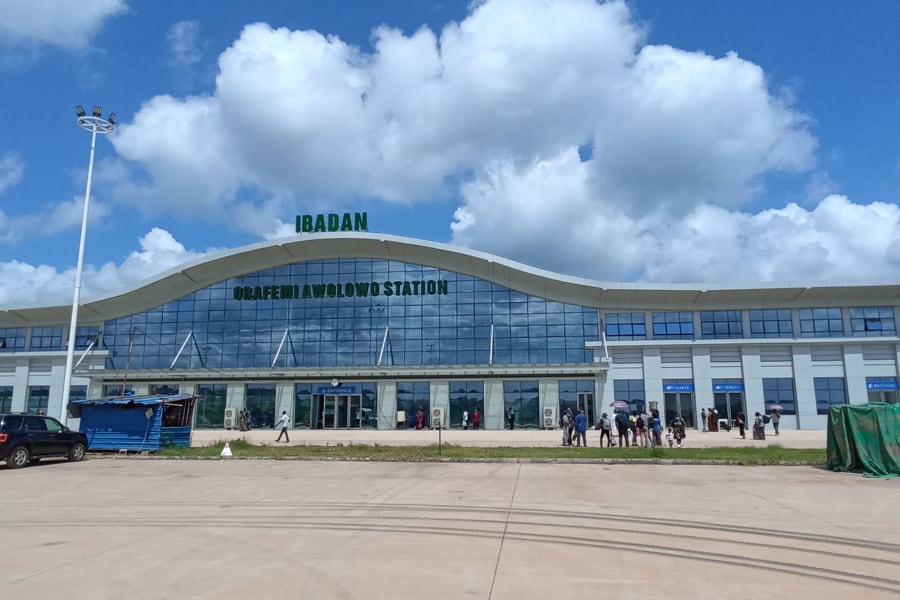 Haylad / Wikimedia Commons · CC BY-SA 3.0 · 2021 · cropped
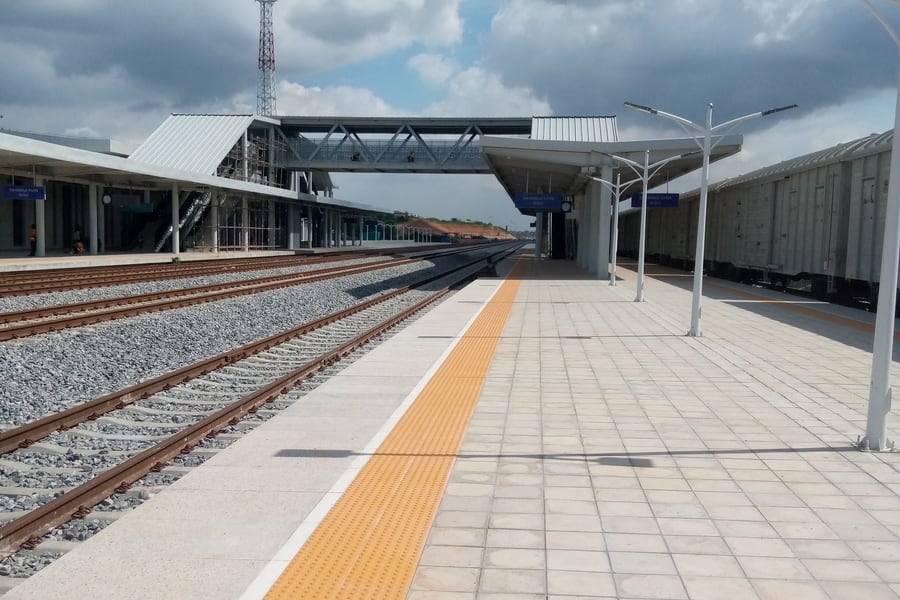
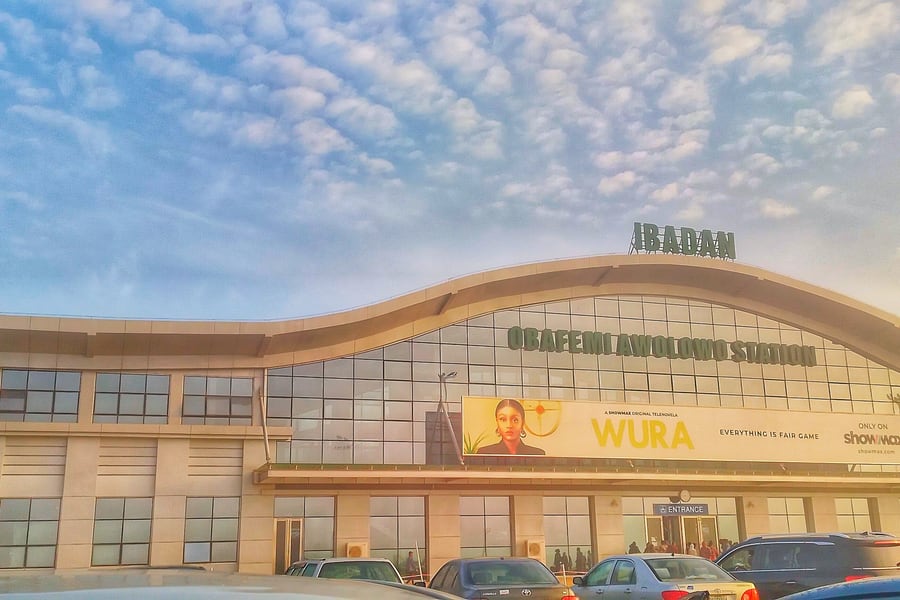
Moniya, on the edge of Ibadan
The line stops short of the city it was built to reach, on the northern outskirts. Taxis and minibuses wait at the door; allow a good half-hour more to the centre.A bit of history
Culture & experiences along the way
 Agbebiyi Adekunle (Tadek Photography) / Wikimedia Commons · CC BY-SA 4.0 · 2019 · cropped
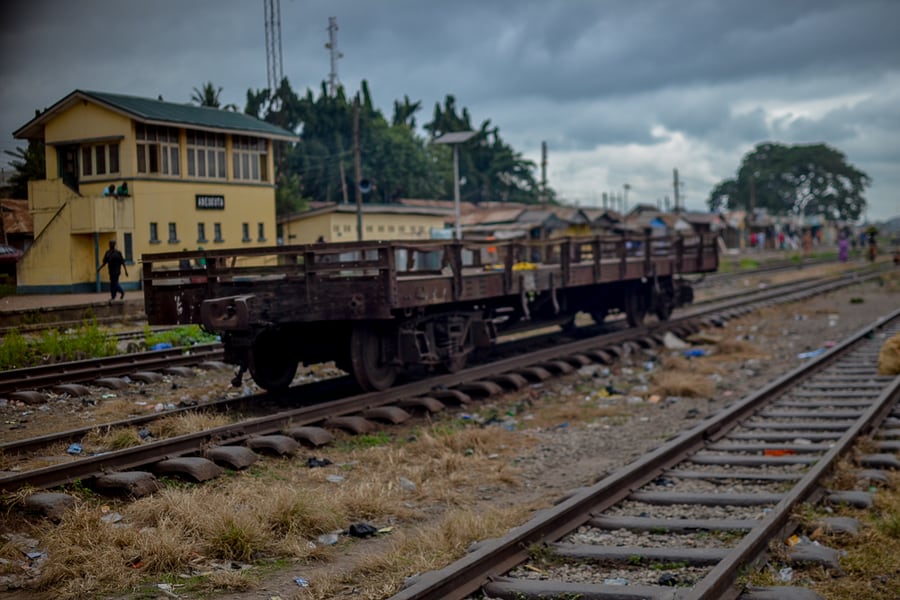
The railway this one replaced
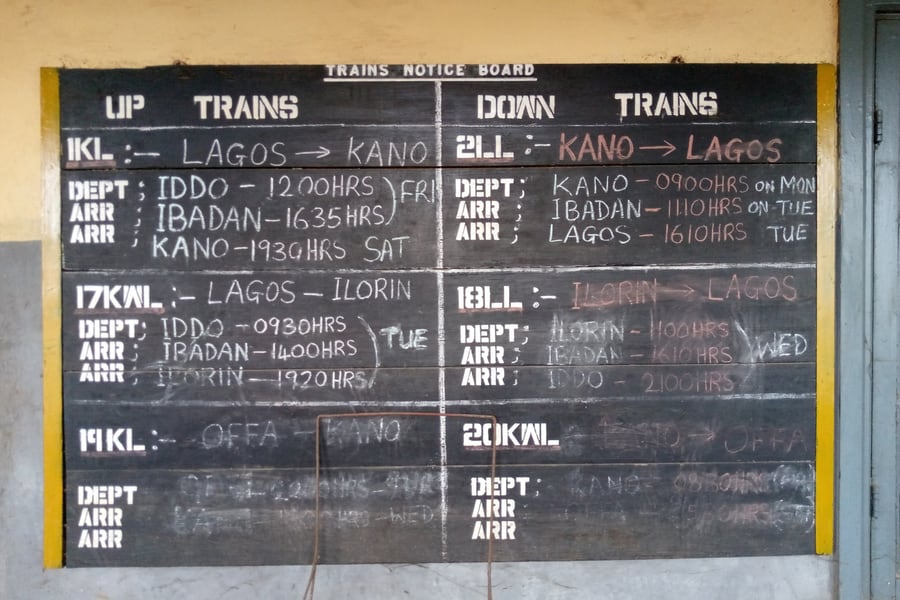
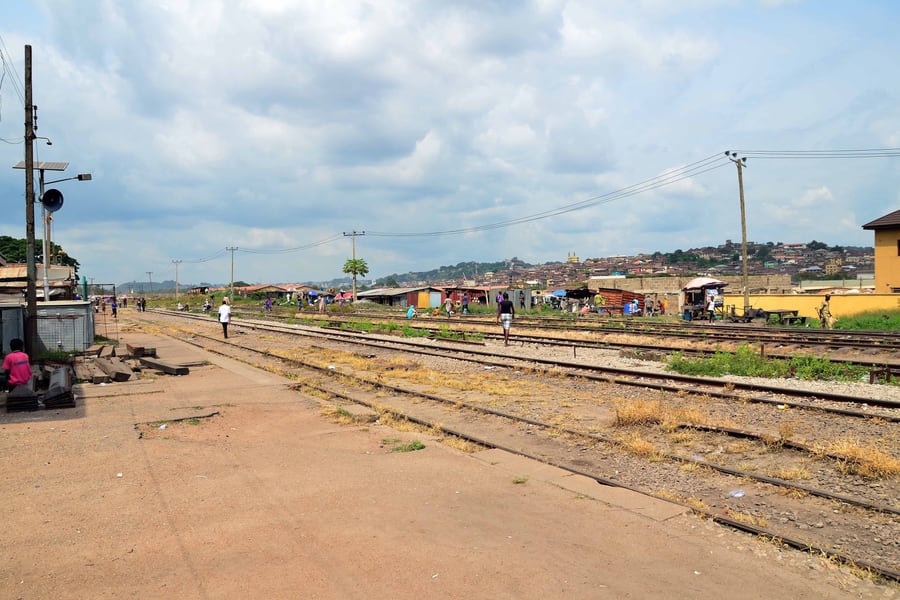
The Cape-gauge line to Ibadan was Nigeria's first railway and it is still there, running alongside for much of the way. Its stations — Lafenwa in Abeokuta, Dugbe in Ibadan — keep their signal boxes, their sidings and, at Dugbe, a chalked notice board listing one train a week to Kano.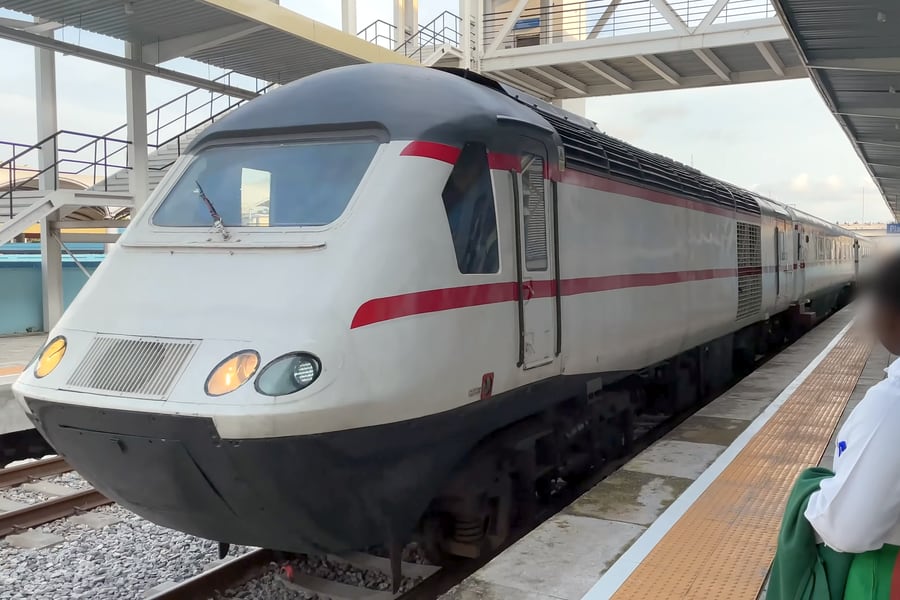 uk0do / Wikimedia Commons · CC BY 3.0 · 2024 · cropped
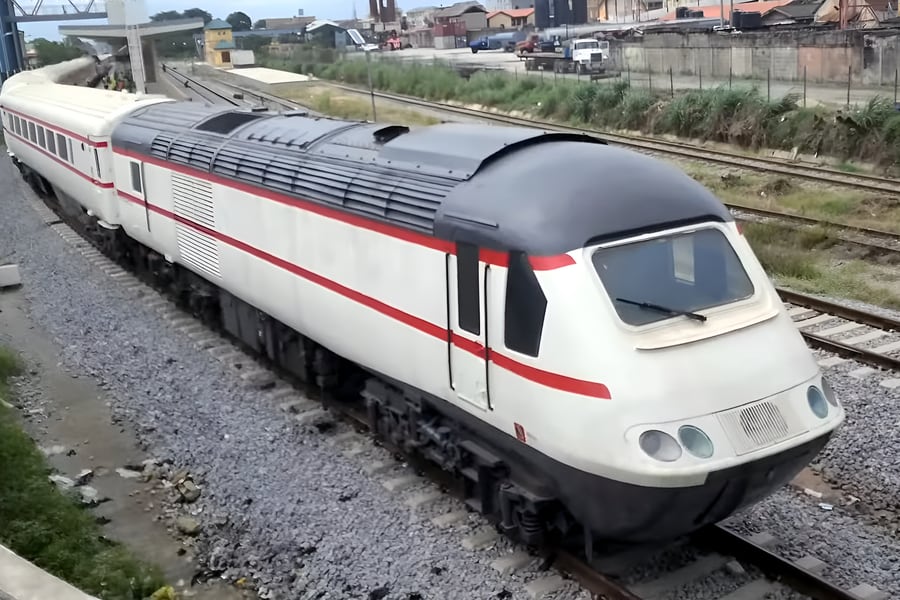
An InterCity 125 in Lagos
From Agbado into the city this railway shares its right of way with the Lagos Red Line, worked since October 2024 by Class 43 power cars and Mark 3 carriages bought second-hand from Britain. Passengers on the Ibadan train are quite likely to see one: a 125 mph design built by British Rail Engineering between 1975 and 1982, at work on the Lagos Mainland.Timetables
Two trains a day run each way, and three on Thursdays, Fridays and Saturdays — the six-trip days NRC added to the corridor in 2026. Times below are the operator's own, taken from the Lagos–Ibadan Train Service booking system in September 2026; departure times are shown, and the last line of each table is an arrival.
Lagos to Ibadan
| Station | Mon–Wed, Sun | Thu–Sat | Thu–Sat | Daily |
|---|---|---|---|---|
| Mobolaji Johnson (Ebute Metta) | 08:00 | 07:45 | 13:40 | 16:00 |
| Babatunde Raji Fashola (Agege) | 08:24 | 08:09 | 14:04 | 16:24 |
| Lateef Kayode Jakande (Agbado) | 08:39 | 08:24 | — | 16:39 |
| Professor Yemi Osinbajo (Kajola) | 09:00 | 08:45 | — | 17:00 |
| Funmilayo Ransome-Kuti (Papalanto) | 09:10 | 08:55 | — | 17:10 |
| Professor Wole Soyinka (Abeokuta) | 09:36 | 09:21 | 15:07 | 17:36 |
| Aremo Olusegun Osoba (Olodo) | 09:58 | 09:43 | — | 17:58 |
| Ladoke Akintola (Omi-Adio) | 10:15 | 10:00 | 15:43 | 18:15 |
| Obafemi Awolowo (Moniya), arrive | 10:33 | 10:18 | 16:01 | 18:33 |
Ibadan to Lagos
| Station | Daily | Thu–Sat | Mon–Wed, Sun | Thu–Sat |
|---|---|---|---|---|
| Obafemi Awolowo (Moniya) | 08:00 | 10:50 | 16:00 | 16:30 |
| Ladoke Akintola (Omi-Adio) | 08:20 | 11:10 | 16:20 | 16:50 |
| Aremo Olusegun Osoba (Olodo) | 08:38 | — | 16:38 | 17:08 |
| Professor Wole Soyinka (Abeokuta) | 09:02 | 11:49 | 17:02 | 17:32 |
| Funmilayo Ransome-Kuti (Papalanto) | 09:25 | — | 17:25 | 17:55 |
| Professor Yemi Osinbajo (Kajola) | 09:36 | — | 17:36 | 18:06 |
| Lateef Kayode Jakande (Agbado) | 09:57 | — | 17:57 | 18:27 |
| Babatunde Raji Fashola (Agege) | 10:12 | 12:50 | 18:12 | 18:42 |
| Mobolaji Johnson (Ebute Metta), arrive | 10:33 | 13:11 | 18:33 | 19:06 |
The two limited-stop workings — 13:40 out of Lagos and 10:50 out of Moniya, both Thursday to Saturday — cover the route in 2 h 21 min; everything else takes 2 h 33 min. NRC adjusts the pattern around public holidays and adds trips at Sallah and Christmas, so check the current board (opens in a new tab) before travelling.
Tickets
Seats are sold through the Lagos–Ibadan Train Service booking site and the NRC app, and at the station ticket office. A valid identity card has to be shown to buy one, every ticket carries an allocated seat number, and tickets are non-refundable and good for a single journey. Luggage is capped at 25 kg a passenger, and filming on board needs permission.
NRC publishes only its Abuja–Kaduna fares on its own website. The last Lagos–Ibadan scale issued publicly was the revision of December 2022, which set the end-to-end fares in the cards below, with shorter fares to match — Lagos to Abeokuta at ₦6,000, ₦4,500 and ₦3,000 by class, and Abeokuta to Ibadan at ₦3,000, ₦2,000 and ₦1,000. Children travel at a reduced standard-class fare.
Book your tickets
Standard class, end to end
Ebute Metta to Moniya
The cheapest through fare on the line, from NRC's December 2022 scale; children travel for ₦3,000.
Book Tickets (opens in a new tab, on nrc.gsds.ng)via nrc.gsds.ngBusiness class, end to end
Ebute Metta to Moniya
The middle of three classes, all of them air-conditioned, on the same December 2022 scale.
Book Tickets (opens in a new tab, on nrc.gsds.ng)via nrc.gsds.ngFirst class, end to end
Ebute Metta to Moniya
The top fare for the full 156 km, and the same money as NRC charges in first class to Kaduna.
Book Tickets (opens in a new tab, on nrc.gsds.ng)via nrc.gsds.ngRail Passes
No rail pass covers Nigeria. Interrail and Eurail stop at the Mediterranean, there is no African equivalent, and NRC sells no multi-journey or period ticket of its own — every seat on the Lagos–Ibadan train is bought singly, for a named train on a named date.
That matters less here than it would on a network. This is one line with one fare scale, and the only ticket worth arranging in advance is the seat itself: demand rises sharply around Sallah and Christmas, when NRC adds trips to the corridor rather than lengthening the trains.
Places to Visit
The line's two ends are two of the oldest ideas in southern Nigeria: Lagos, which the railway made into a port city, and Ibadan, which it was built to reach. Abeokuta sits between them, under the rock the Egba defended it from. All three are close enough to a station to be worth a day.
 Olaniyan Olushola / Wikimedia Commons · CC BY-SA 4.0 · 2019 · cropped
Jaekel House, the railway's own museum
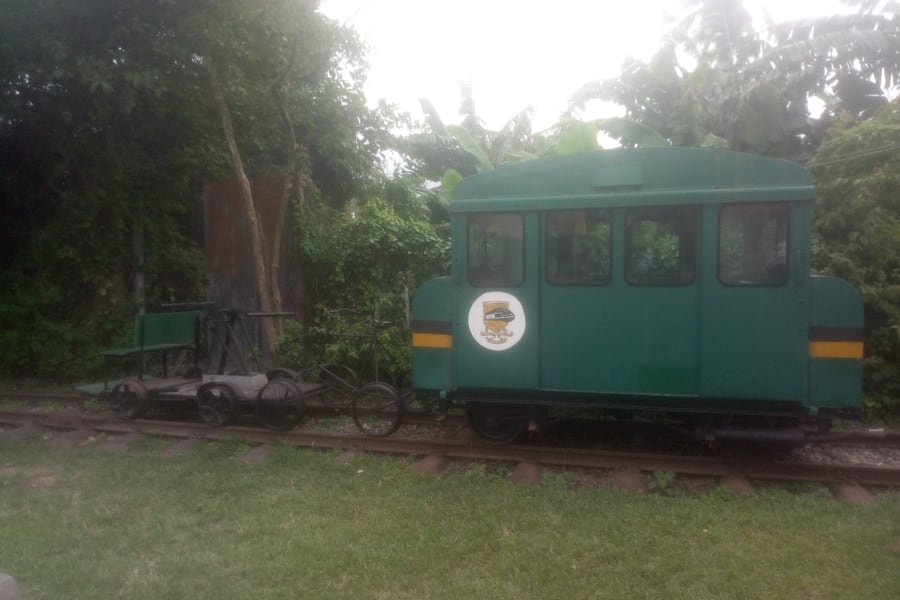
A two-storey colonial house of 1898 stands in the NRC compound at Ebute Metta, ten minutes from the Lagos terminus. It is named for Francis Jaekel, a railway superintendent who retired in the 1970s, and was restored in 2010 by the architect John Godwin. Inside are photographic archives from the 1940s to the 1970s; outside, on a length of Cape-gauge track, sit a green railcar and the relics of the line the new one replaced.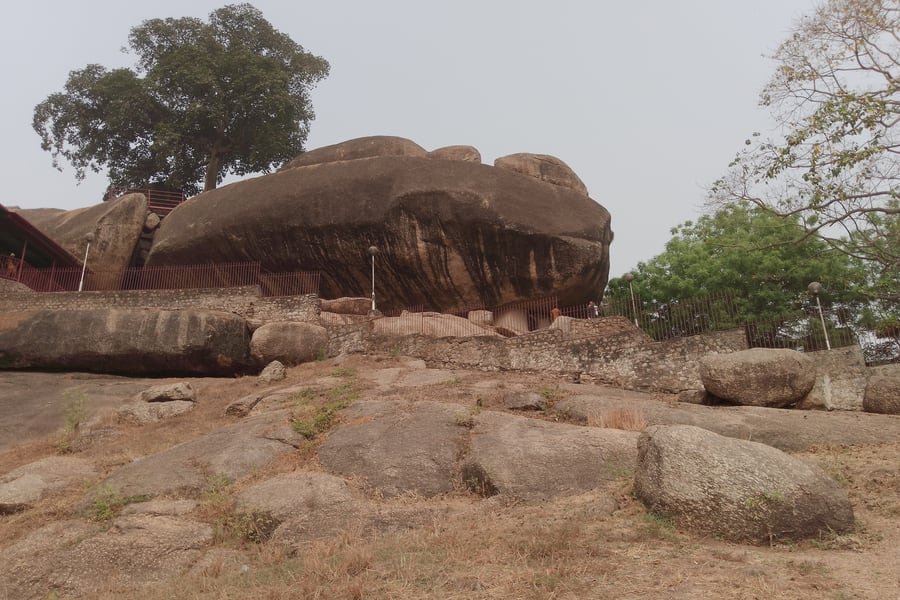 AdeolaStudio / Wikimedia Commons · CC BY-SA 4.0 · 2022 · cropped
Olumo Rock, Abeokuta
Abeokuta means "under the rock", and this is the rock: 137 metres of granite in the middle of the town, a few minutes from the station. The Egba sheltered in its clefts during the wars of the nineteenth century and watched the roads from the top of it, which is how the settlement came to be there at all. Steps and a lift go up; shrines and the old caves stay where they were.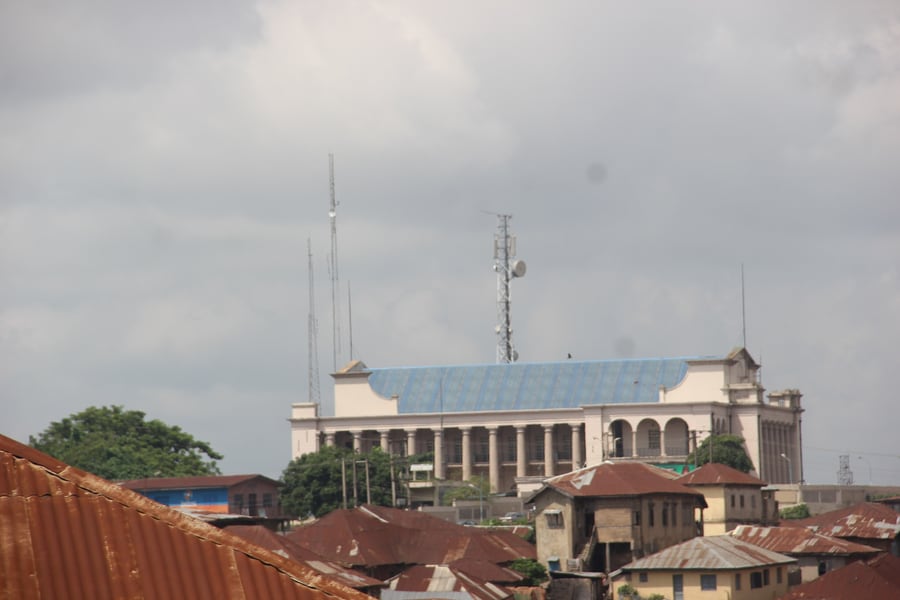 Kaizernify / Wikimedia Commons · Public domain · cropped
Ibadan from Mapo Hill
Ibadan spreads over a run of low hills in rust-coloured corrugated iron, and the view from Mapo Hill in the old town takes in most of it. This is the city the railway was built to reach; at independence in 1960 it was the largest in Nigeria and, after Cairo, the second largest in Africa. It lies south of Moniya station through traffic that will make the two-and-a-half-hour train ride feel brisk.Where to Sleep
Neither end of the line is short of beds, but the two worth naming sit at the Ibadan end and in Abeokuta, where the stations are a taxi ride from the towns they serve. Ibadan's Moniya terminus is on the northern outskirts, so plan for the run into the city in both directions.
Where to stay
Green Legacy Resort
In the grounds of the Olusegun Obasanjo Presidential Library, Abeokuta
A resort on the library estate with two outdoor pools, a spa and tennis, about twenty minutes from the station.
Check Availability (opens in a new tab, on greenlegacyresort.com)via greenlegacyresort.comKakanfo Inn & Conference Centre
Off Ring Road in Ibadan
A long-established Ibadan hotel with its own conference centre, booking direct from its website.
Check Availability (opens in a new tab, on kakanfoinn.com)via kakanfoinn.comQuestions or corrections
Planning this trip and stuck on something, or spotted a time, fare or detail that has changed? Send us a message about Lagos to Ibadan — Nigeria's first standard-gauge express. We read every one, and we update this page when something has changed.