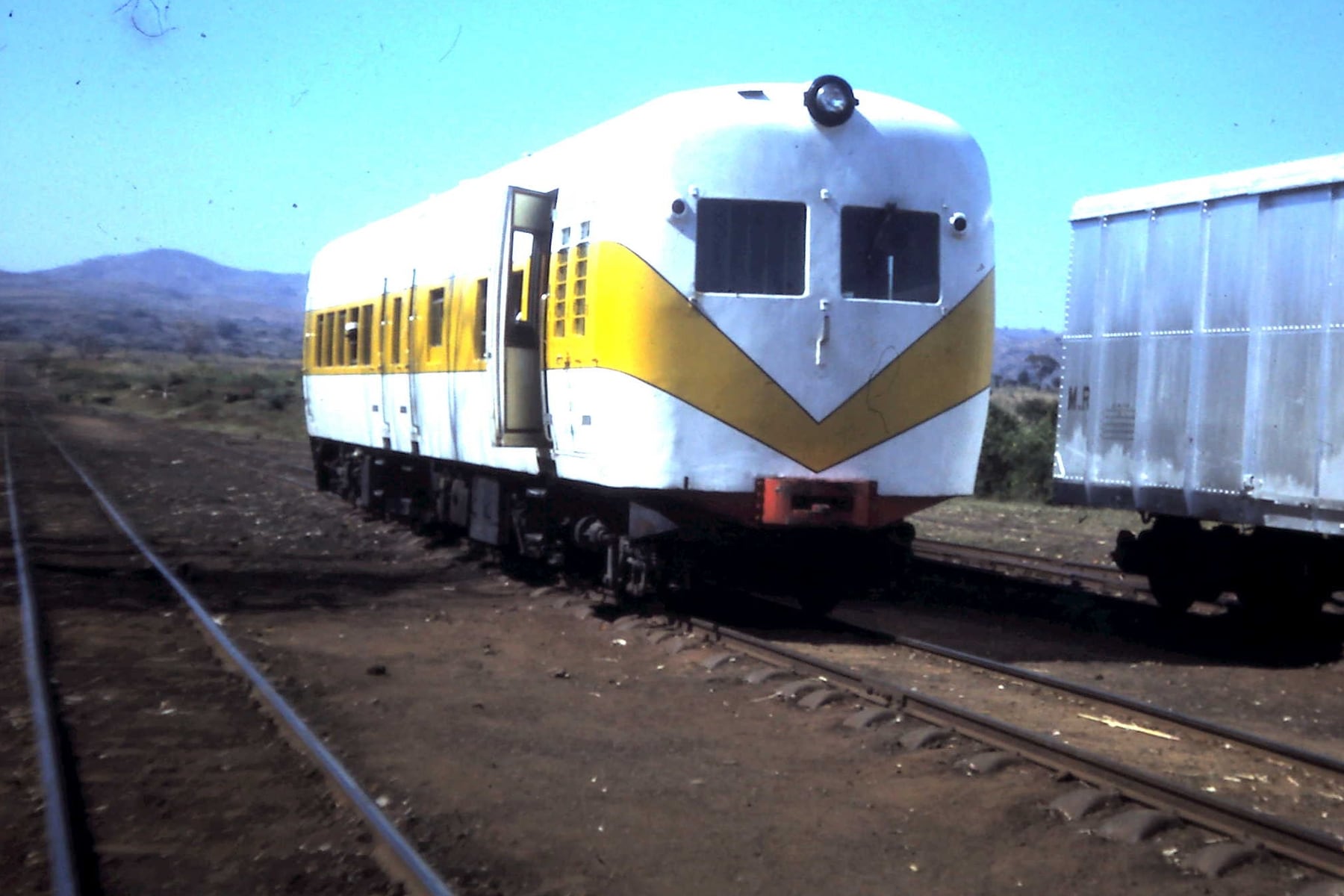
Limbe to Nayuchi
Lobsan / Wikimedia Commons · CC BY-SA 3.0 · 1984 · cropped
- DistanceLimbe–Balaka–Nayuchi; no operator distance is published
- DurationThree days out and back; no arrival times are published
- Best seasonTwo round trips a week, all year; dry season May to October
Introduction
Malawi has no coast. Mozambique wraps around three sides of it, and the shortest route to salt water from the commercial capital is not a road but a railway: the Nacala corridor, which leaves the Malawian network at Nkaya junction, crosses the frontier at Nayuchi and runs on to the Indian Ocean. Freight has the whole of it. Passengers get the Malawian half, twice a week, on the only scheduled passenger train left in the country.
It is less one train than a weekly circuit, and that is the thing to understand before planning around it. A working leaves Limbe — the railway town on the eastern edge of Blantyre, where the workshops and the operating headquarters have always been — on Tuesday and Saturday mornings, and lies over at Balaka. The next day it runs down the branch to the border and back, a day return. On the third day it returns to Limbe. The schedule is published not by the railway but by Malawi's own Department of Tourism.
The operator is Nacala Logistics, the Mozambican corridor company that holds the Malawian concession, and the two classes have the confusing names Premier and Business — Business being the dearer. It is a working country train through the Shire valley, and it is the last one Malawi has.
The Journey
The train starts at Limbe, not at Blantyre. The two are one city now — Limbe is the eastern half of it — but the railway's centre of gravity has always been the Limbe end, because that is where the Shire Highlands Railway put its workshops when it built north from the lower Shire at the beginning of the last century. Blantyre station is a few minutes further on, a low blue-and-white building set back from the road, and after that the line turns north into open country.
What follows is the Shire Highlands proper: tobacco and maize on red soil, hills standing off to either side, level crossings where the traffic is bicycles. The train works its way down off the highlands towards the valley floor, through Shire North and Utale, and reaches Nkaya about two-thirds of the way to Balaka. Nkaya is a junction and very little else: a set of loops in the bush where the line from Mozambique's Beira corridor meets the line to Nacala. It is the reason the whole route exists.
The second day, down to the frontier
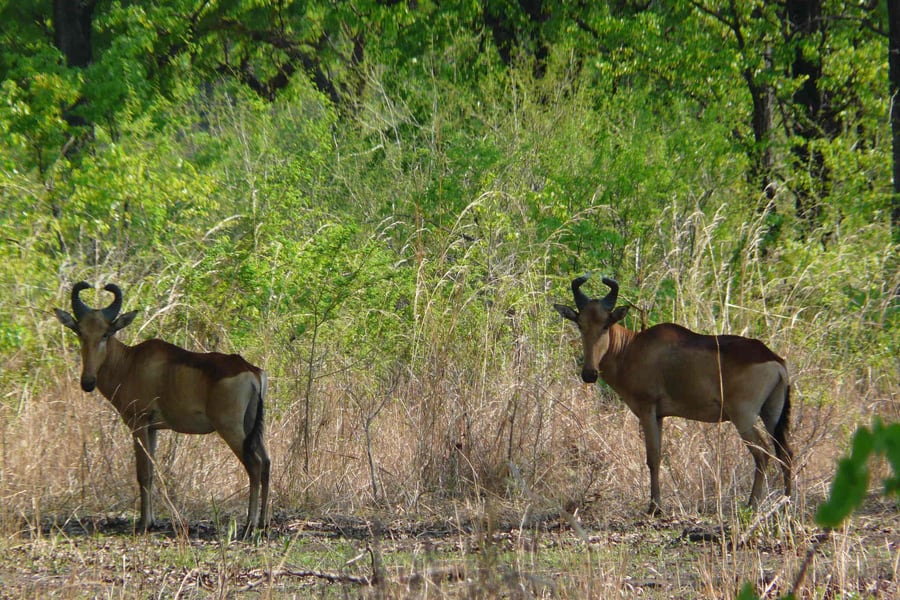
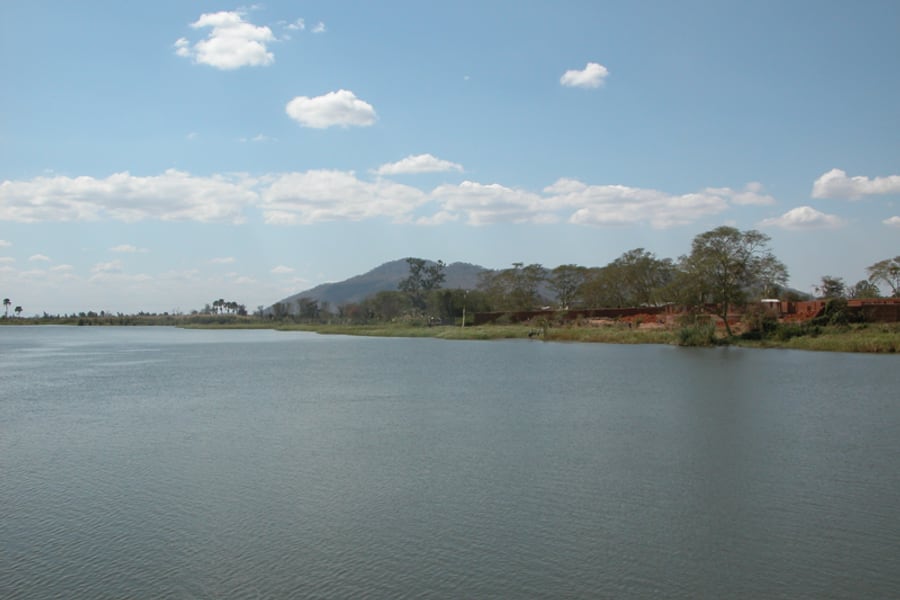
Balaka is the overnight stop and the operational hinge. From there the branch runs east and then north-east through Liwonde, a crossroads town on the Shire River where the road from Zomba crosses the water, and where Liwonde National Park begins on the far bank. Beyond Liwonde the country dries out and empties: mopane, borassus palms, villages of thatch set back from the track, and a border in front of you that most travellers have never heard of.
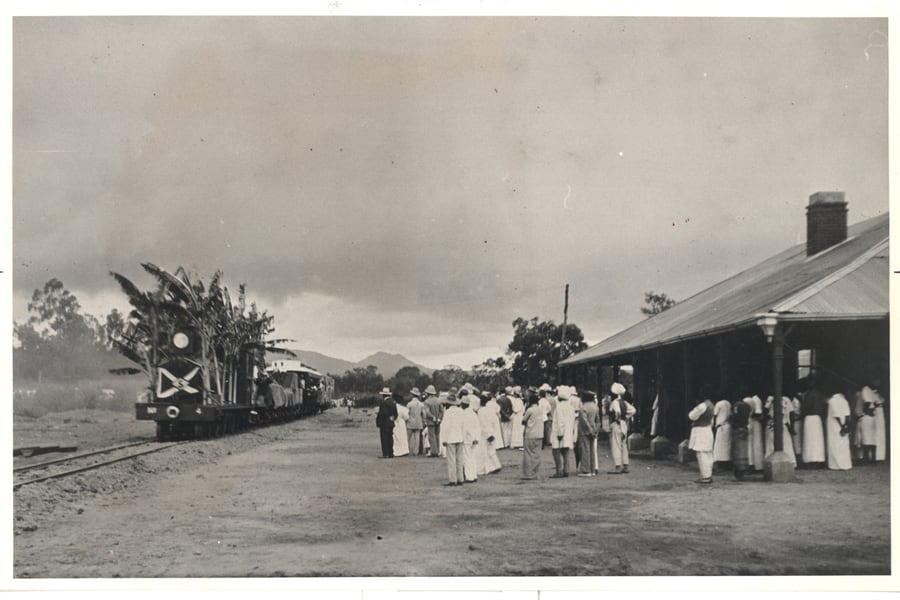
Nayuchi is the end of the Malawian railway and, in effect, a single street. The Mozambican town of Entre-Lagos runs into it on the other side of the line, close enough to walk. The train turns round there in the middle of the day and goes back to Balaka, and on the third morning back to Limbe.
Along the route
 Diego Tirira / Wikimedia Commons · CC BY-SA 2.0 · 2002 · cropped
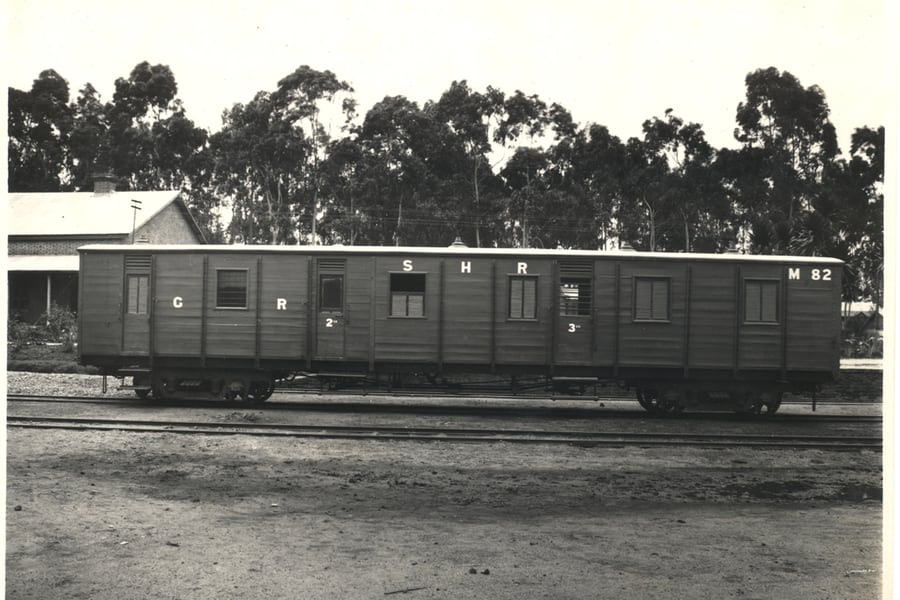
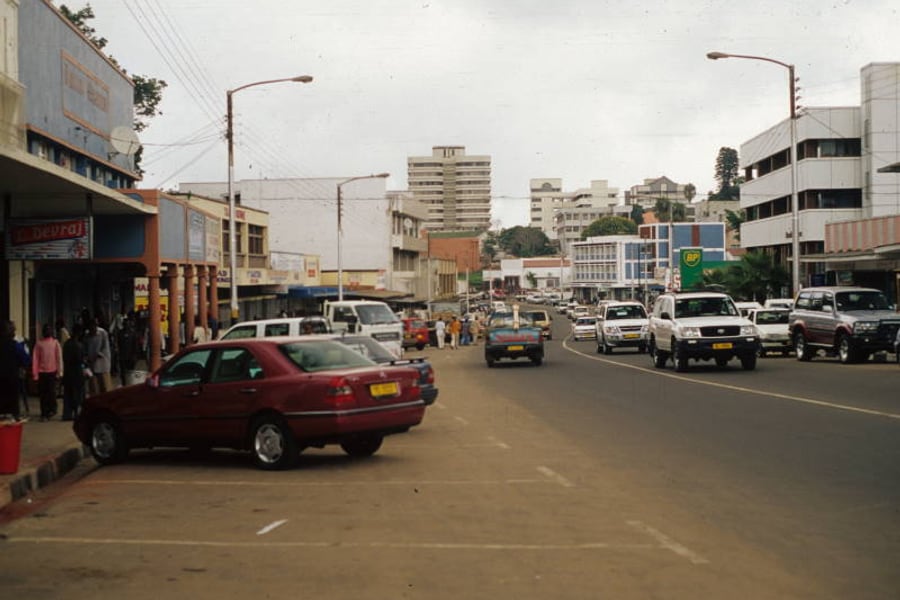
Limbe, and the workshops
The train starts in the eastern half of Blantyre, not the centre. Limbe has been the operating headquarters and the works since the railway was built, and it is still where the stock is kept.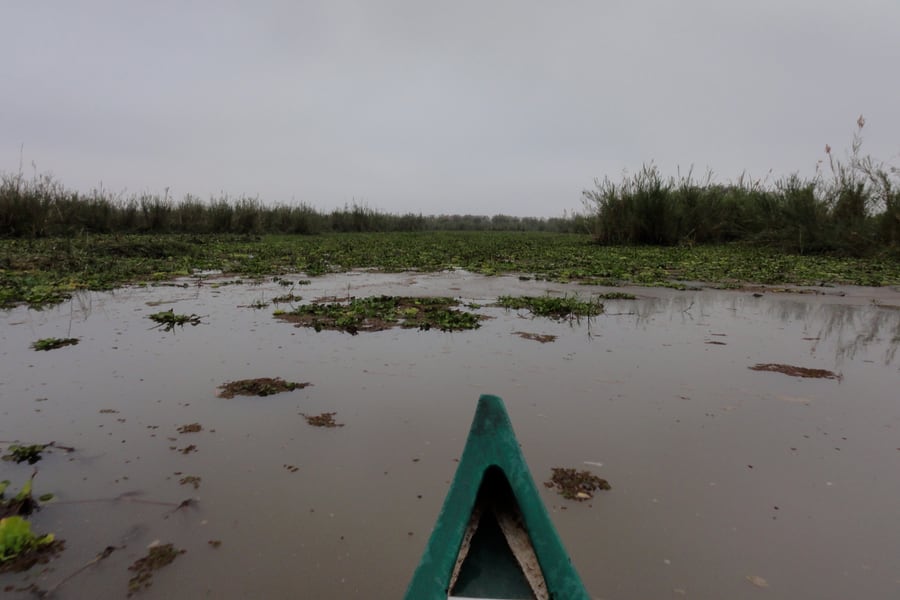 Timon Zingg / Wikimedia Commons · CC BY-SA 3.0 · 2011 · cropped
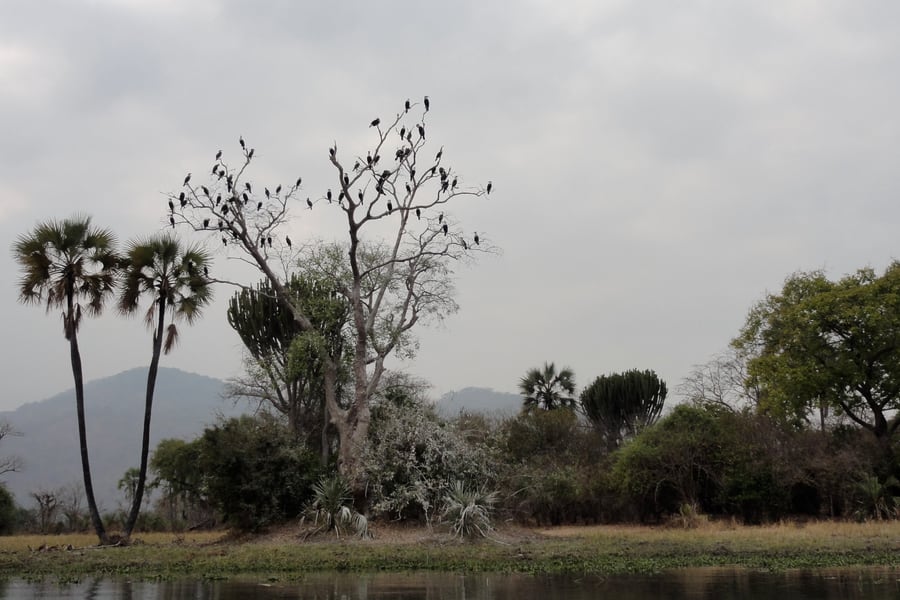
Down to the Shire
Past Nkaya the line drops off the highlands into the valley of the Shire, Malawi's only river, which drains Lake Malawi south to the Zambezi and carries dugouts the whole way.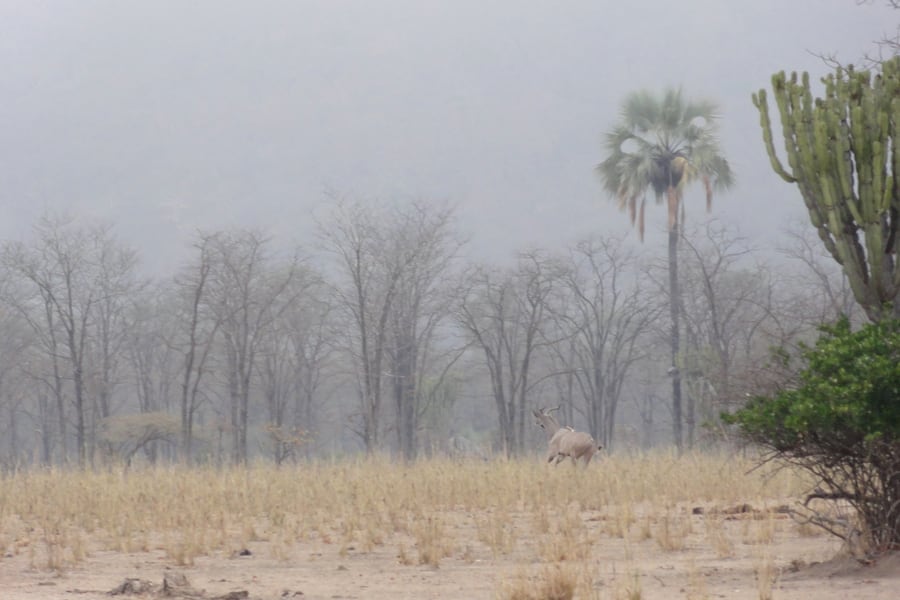 Timon Zingg / Wikimedia Commons · CC BY-SA 3.0 · 2011 · cropped
The last hour to the border
Beyond Liwonde the country thins out to mopane, palms and thatch, and stays that way until the rails run into Nayuchi and stop at a frontier almost nobody uses.A bit of history
Culture & experiences along the way
 TimCowley / Wikimedia Commons · CC BY-SA 3.0 · 2014 · cropped
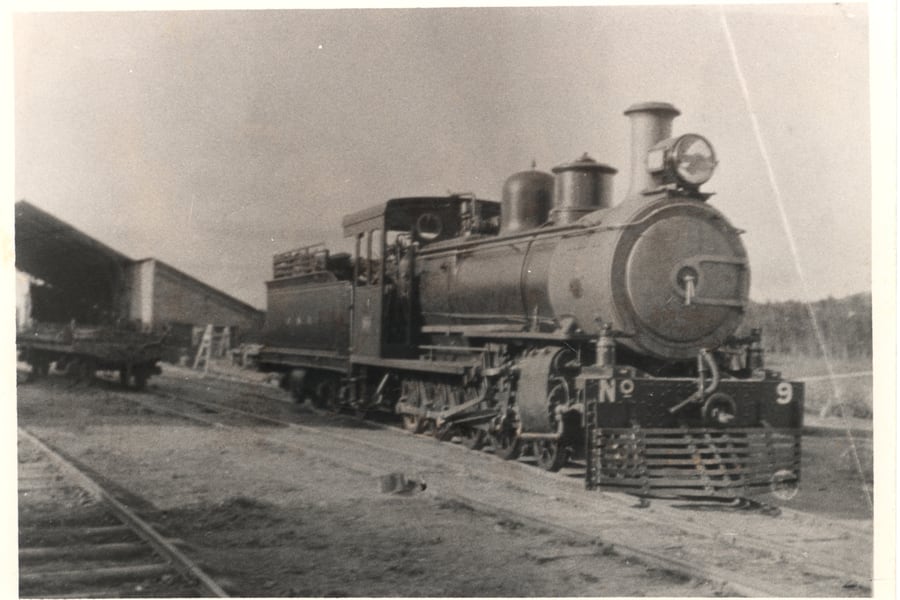
The engines that are left
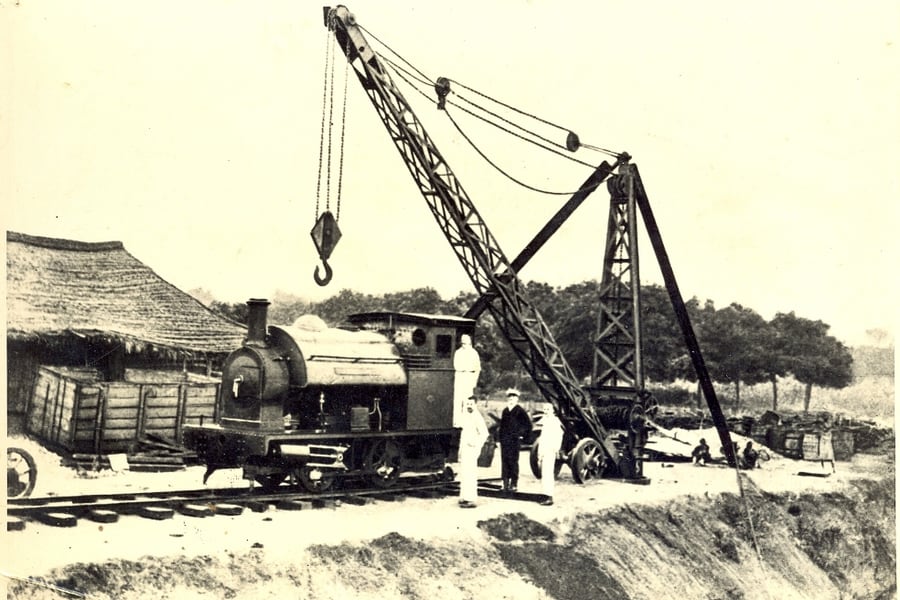
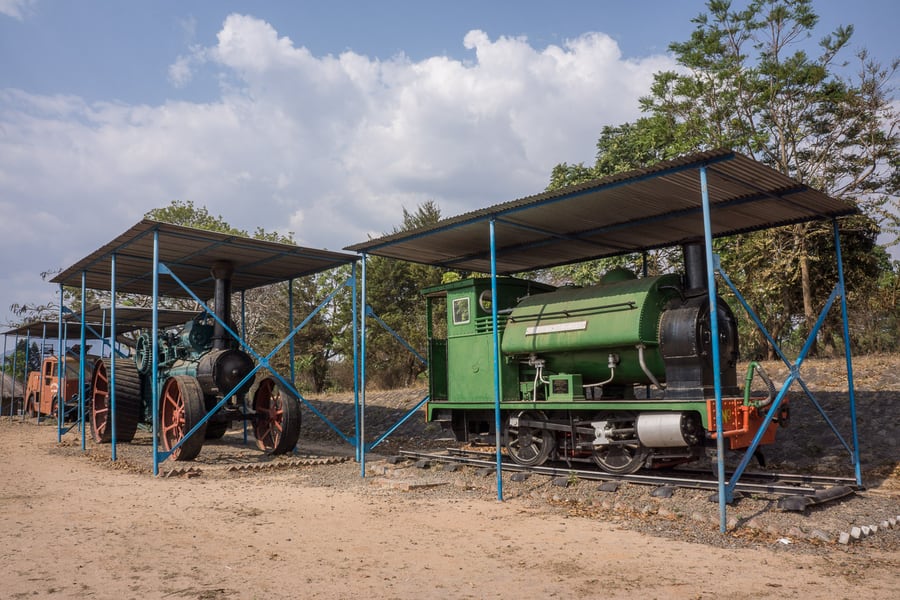
Two of the Shire Highlands Railway's first locomotives survive, under a shelter at the Chichiri Museum in Blantyre: saddle tanks bought from W. G. Bagnall of Stafford in 1904 to build the line. They are twenty minutes from Limbe station and they are the closest thing Malawi has to a railway museum.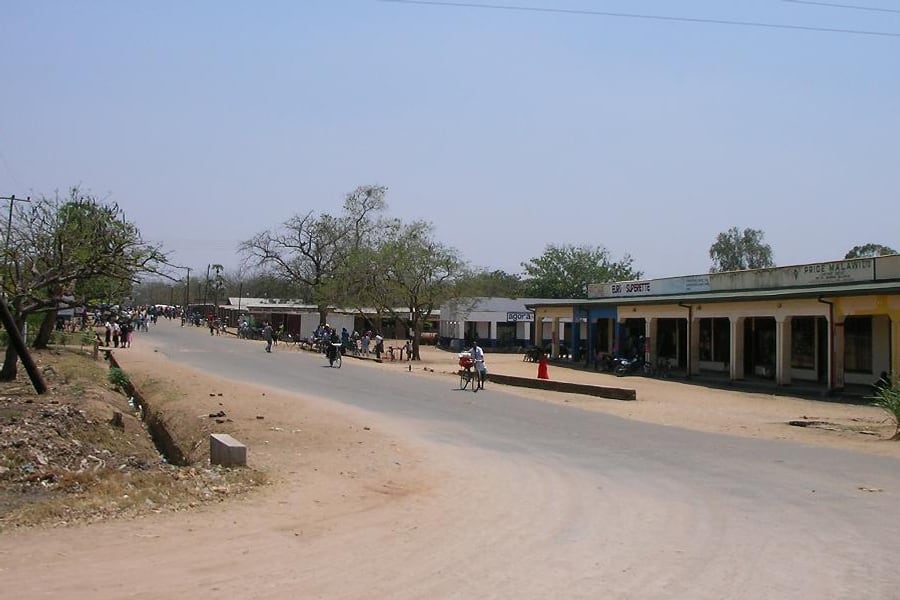 Brian Dell / Wikimedia Commons · Public domain · 2008 · cropped
Liwonde, where everything crosses
The branch, the Shire and the road from Zomba to the lake all meet in one small town, and the result is a trading place out of proportion to its size. It is the natural place to break the journey, and the gateway to the national park on the far bank.Timetables
Nacala Logistics publishes a passenger timetable for its Mozambican routes and none at all for its Malawian ones. The schedule below is the one published by the Department of Tourism of the Government of Malawi, on its Visit Malawi site, and it is the only public timetable for this train that exists. It is a weekly cycle of two out-and-back circuits, and the departures repeat exactly from Saturday as they run from Tuesday.
| Day | Departure | Time |
|---|---|---|
| Tuesday | Limbe → Balaka | 08:30 |
| Wednesday | Balaka → Nayuchi | 06:00 |
| Wednesday | Nayuchi → Balaka | 13:30 |
| Thursday | Balaka → Limbe | 05:00 |
| Saturday | Limbe → Balaka | 08:30 |
| Sunday | Balaka → Nayuchi | 06:00 |
| Sunday | Nayuchi → Balaka | 13:30 |
| Monday | Balaka → Limbe | 05:30 |
No arrival times are published anywhere, by the operator or by the tourism department, so no journey time is given on this page. Both the Thursday and the Monday working leave Balaka before dawn; the Wednesday and Sunday run to the frontier is a day return, out at six and back at half past one.
The Mozambican side
Nayuchi's twin across the border is Entre-Lagos, and Nacala Logistics runs a train there too: its own published calendar gives Cuamba to Entre-Lagos on Wednesdays, 08:00 to 11:00, and the return the same day, at 190 meticais executive class and 90 economy. That is the same day of the week the Malawian train reaches Nayuchi. The two railways are one railway, but they are sold as two, and nothing is through-ticketed — treat the frontier as a walk between two separate journeys, and check the border post's hours before counting on it.
As of September 2026, from Visit Malawi (opens in a new tab) and Nacala Logistics (opens in a new tab). This service has been suspended before — for vandalism in 2021 and for a washed-out bridge after Cyclone Ana in 2022 — so confirm it is running before travelling.
Tickets
Tickets are bought in cash at the station, in Malawi kwacha, and there is no online booking of any kind. The two classes are Premier and Business, and the naming is the wrong way round from what most people expect: Business is the more expensive.
The fares below are the last ones the operator announced, effective 1 March 2024. The full station-by-station table published by the Department of Tourism is older than that and its figures are now too low, so treat any printed table as a guide to what the journey costs relative to itself rather than as a price list.
Book your tickets
Business coach, Limbe to Liwonde
MWK 4,400 one way
The dearer of the two classes, at the fare the operator set from 1 March 2024, up from K3,050.
Book Tickets (opens in a new tab, on mbc.mw)via mbc.mwPremier coach, Limbe to Liwonde
MWK 3,150 one way
The cheaper class despite the name, raised from K2,220 in the same revision.
Book Tickets (opens in a new tab, on mbc.mw)via mbc.mwThe published station-by-station table
Every fare pair on the line, in both classes
The Department of Tourism prints the full table, from Limbe–Blantyre to Limbe–Nayuchi; its figures predate the 2024 increase.
Book Tickets (opens in a new tab, on visitmalawi.mw)via visitmalawi.mwRail Passes
No rail pass covers Malawi. Interrail and Eurail are European products, and there is no southern African equivalent that includes the Nacala corridor — Nacala Logistics sells single journeys in cash at its own station windows and nothing else. There is no season ticket, no return fare and no multi-journey product on this line.
The practical consequence is that the whole trip is cheap enough not to need one. The complete run from Limbe to Nayuchi has never cost more than a few thousand kwacha in either class, and the expensive part of visiting this railway is not the ticket but the two nights you have to spend waiting for the train back.
Places to Visit
The line runs through the two halves of southern Malawi that visitors actually come for: the old mission city at the Blantyre end, and the Shire River and its national park in the middle. The frontier at the far end is not a sight in the usual sense, but it is the point of the railway, and seeing how little is there is worth the ride.
 Diego Tirira / Wikimedia Commons · CC BY-SA 2.0 · 2002 · cropped
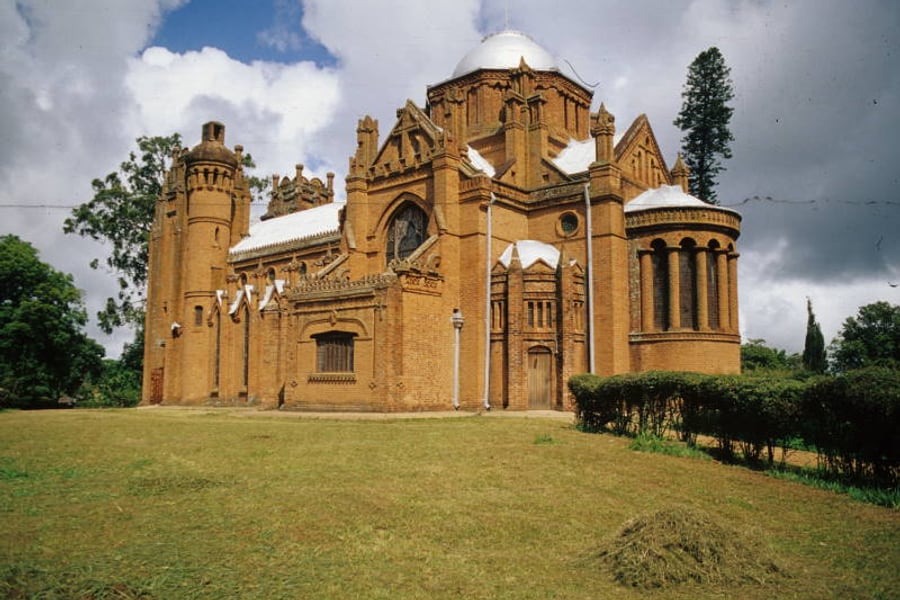
St Michael and All Angels, Blantyre
Built between 1888 and 1891 at the Blantyre Mission, in brick, by a missionary with no architectural training — the Rev. David Clement Scott, who worked it out as he went. Domes, arcades and a rose window, none of them in quite the same idiom, and the result is the most extraordinary building in Malawi. It is off Chileka Road, still in use by the Church of Central Africa Presbyterian, and a plaque records the lunar observations by which Blantyre's longitude was fixed in 1885.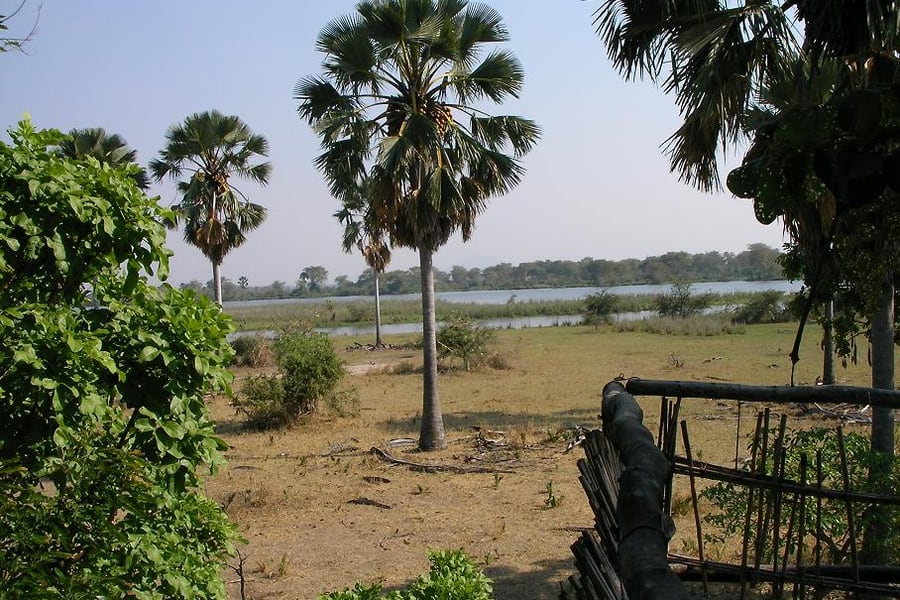 Brian Dell / Wikimedia Commons · Public domain · 2008 · cropped
Liwonde National Park
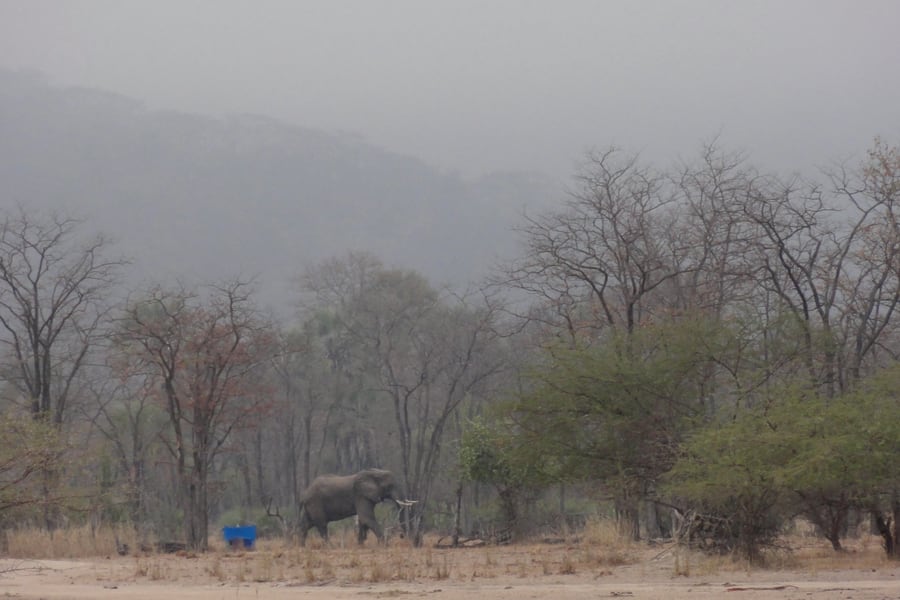
The park begins on the far bank of the Shire at Liwonde, half an hour from the station. Established in 1973 and run since August 2015 by the non-profit African Parks, which fenced its perimeter and, in 2018, took on the adjoining Mangochi Forest Reserve — nearly doubling the protected area. The river frontage is the reason to come: hippo and elephant on the banks, and boat safaris rather than game drives.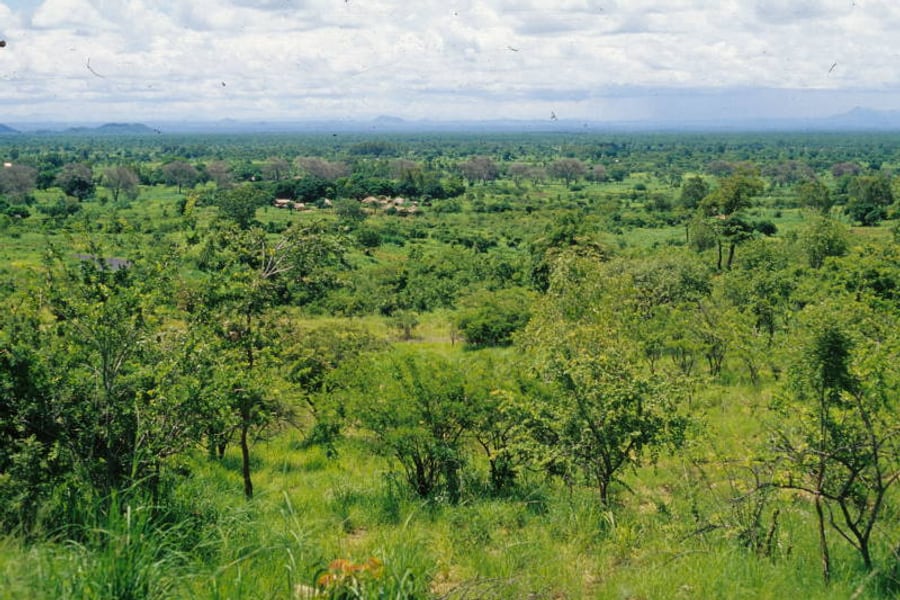 Diego Tirira / Wikimedia Commons · CC BY-SA 2.0 · 2002 · cropped
Nayuchi and the frontier
The end of the line, in Machinga district, and a border post for both road and rail. There is no monument and no view; what there is instead is the sight of a national railway simply stopping in the bush, with the Mozambican town of Entre-Lagos running into it on the other side. Cross only with a visa already arranged — the post keeps daylight hours and there is nothing at Nayuchi to wait in.Where to Sleep
The circuit forces two nights away from Blantyre — one at Balaka before the border run and one after it — and Balaka has nothing a visitor would travel for. Most people ride a leg of the line and treat the Shire as the reason for the trip, basing themselves in Blantyre at the start and in Liwonde National Park in the middle.
Book the park side well ahead: there are very few beds in it, and the camps fill in the dry season between May and October.
Where to stay
Sunbird Mount Soche
At the northern end of Blantyre's business centre
Set in gardens above the city, looking over Ndirande Mountain and the Chirimba valley, 15 km from Chileka airport.
Check Availability (opens in a new tab, on sunbirdmalawi.com)via sunbirdmalawi.comMvuu Camp
On the bank of the Shire, in Liwonde National Park
Fourteen stone-and-canvas chalets among fever trees, with family tents, run by a Malawian operator since 1987.
Check Availability (opens in a new tab, on cawsmw.com)via cawsmw.comPractical information
Getting to the start. Limbe is the eastern half of Blantyre and about 20 minutes by minibus or taxi from the city centre; Chileka International Airport is on the other side of town. There is no rail connection to Lilongwe for passengers — the line north through Salima and Lilongwe to Mchinji carries freight only.
Money and tickets. Kwacha in cash, bought at the station. Nothing is sold online, no card is accepted, and there is no reservation system, so arrive early rather than on time.
Crossing at Nayuchi. Nayuchi is a full immigration post for road and rail, and Entre-Lagos on the Mozambican side is within walking distance. It keeps limited daylight hours and it is not a place to arrive at without a Mozambican visa already arranged. The Malawian train's timetable is not built around the Mozambican one, and no through ticket exists.
Season. The dry season, roughly May to October, is the reliable time. The rains between December and March are what closed this railway in 2022, when Cyclone Ana took out a bridge and the passenger service stopped for months.
What to expect on board. Two classes of ordinary coaching stock on a corridor built for coal and containers, where the passenger working is the exception rather than the point. Buy water and food before you board, and expect a long day either side of an early start.
Questions or corrections
Planning this trip and stuck on something, or spotted a time, fare or detail that has changed? Send us a message about Limbe to Nayuchi. We read every one, and we update this page when something has changed.