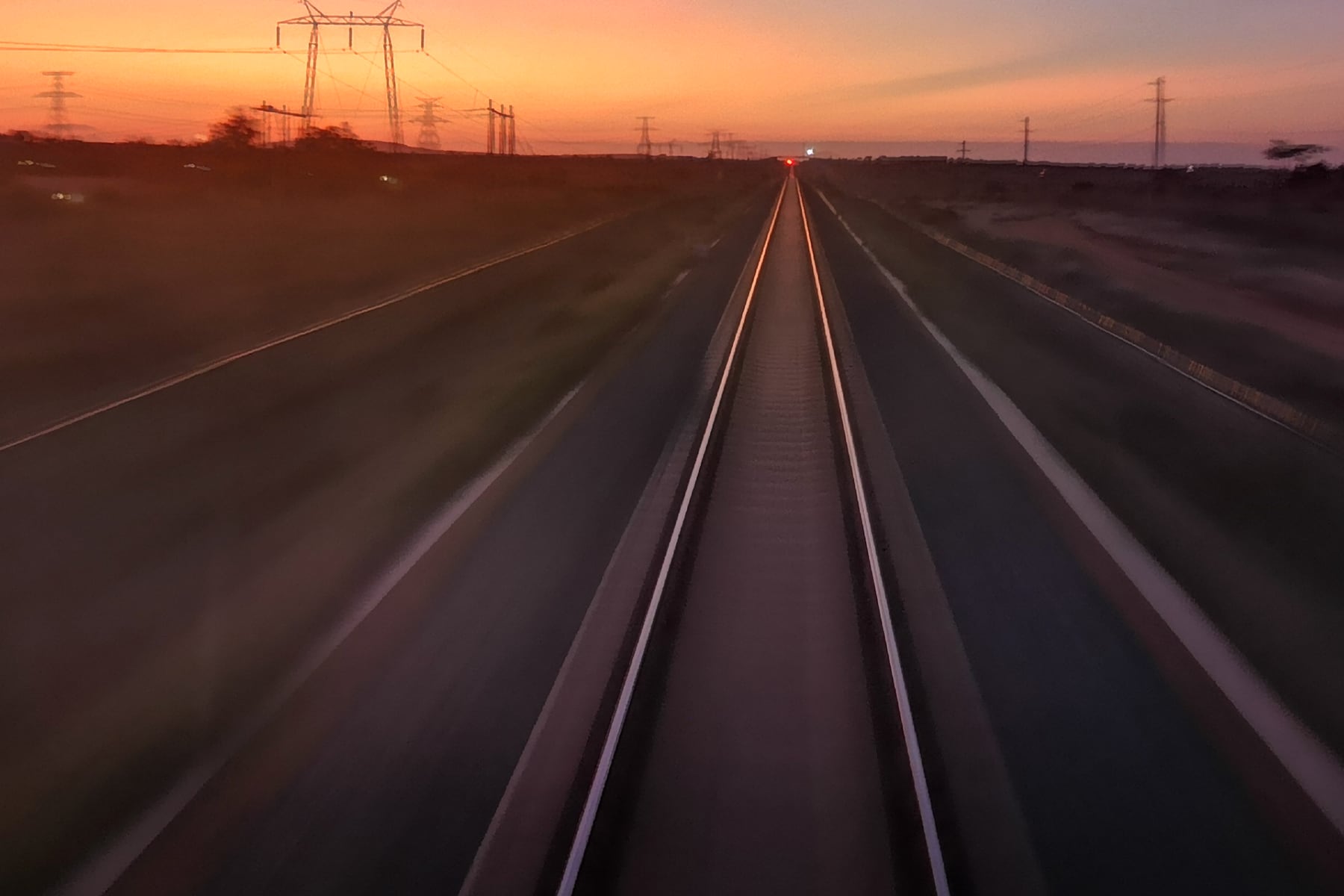
The Madaraka Express
David Michubu / Wikimedia Commons · CC BY-SA 4.0 · 2018 · cropped
- Distance472 km
- Duration5 hr 18 min express · 6 hr 10 min all stations
- Best seasonThree trains a day each way, all year
Introduction
Passengers off the morning train from Mombasa do not arrive in Nairobi. They arrive at Syokimau, on the edge of it, and the last twenty kilometres into the city are covered by a second train — older, smaller, running on rails 435 millimetres narrower — waiting on the far side of the concourse. That feeder is the Uganda Railway, the metre-gauge line driven inland from Mombasa from 1896, the line that put Nairobi on the map in the first place, and the line the Madaraka Express was built to replace. Its last through working to the coast ran on 28 April 2017. Thirty-three days later the new railway took its first fare-paying passengers, and what was left of the old one at each end was given a new job: delivering people to its successor.
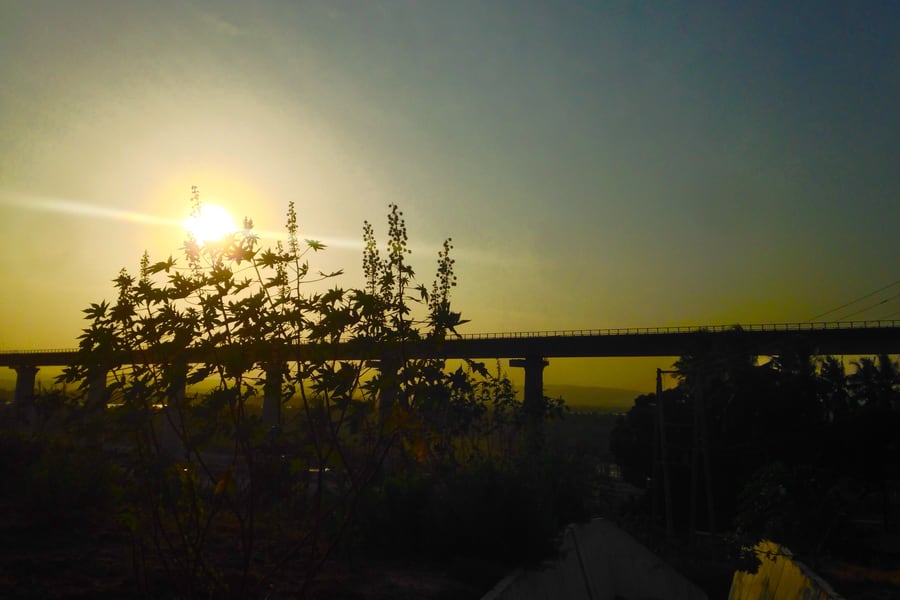
The Madaraka Express covers 472 kilometres between the Indian Ocean and the Kenyan highlands in about five and a half hours, on standard gauge laid beside the old route at a cost of US$3.6 billion, ninety per cent of it borrowed from the Export-Import Bank of China. It crosses the corridor between Tsavo East and Tsavo West on viaducts raised clear of the ground so that animals can pass underneath; the metre-gauge line and the trunk road were both laid at ground level, and both killed wildlife for a century.
The name is the point of it. Madaraka is self-rule, and the first passengers travelled on Madaraka Day, 1 June 2017. The colonial railway was named for a country it barely touched; this one is named for a date.
The Journey
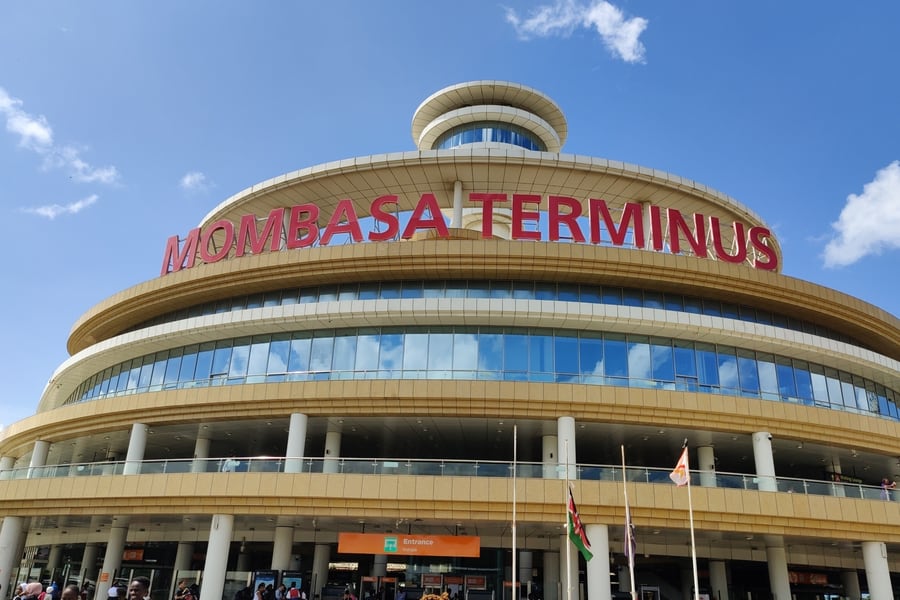
The journey starts six kilometres inland from Mombasa island, at a terminus that looks like nothing else in Kenya: a drum of concrete and glass at Miritini, ringed with balconies, a control tower on the roof and the name across the front in red letters two storeys high. Nothing about it belongs to the old port city, and that is deliberate — the standard-gauge railway was laid as a separate route with its own alignment and its own stations, generally outside the towns they serve. Getting to it from Mombasa Railway Station, the 1901 terminus on the island, means the Link train, which Kenya Railways times to connect with each departure.
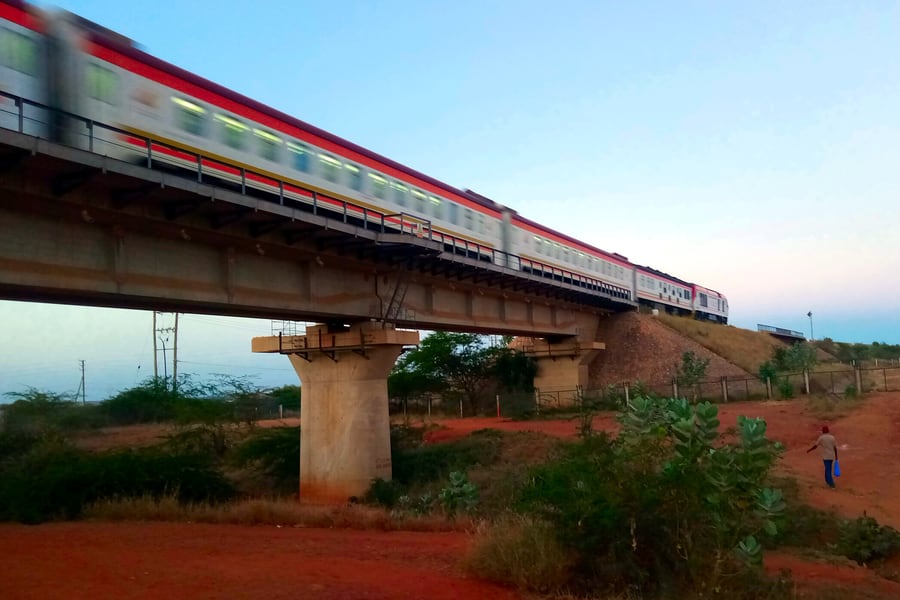
Out of Miritini the line climbs immediately. The Uganda Railway got up the hills behind the coast at Mazeras by winding round a spiral; the new railway crosses the same ground on two bridges, the higher of them 43.5 metres above the valley floor and the tallest structure on the route. There are ninety-eight bridges in all between the two termini, and the reason for so many is not only the terrain. Where the railway runs the length of the corridor between Tsavo East and Tsavo West national parks, its viaducts and embankments are lifted clear of the ground on purpose, so that elephant and buffalo can walk under the line rather than across it. The old railway and the Nairobi–Mombasa road were both built at ground level, and both spent a century killing animals.
What pulls it
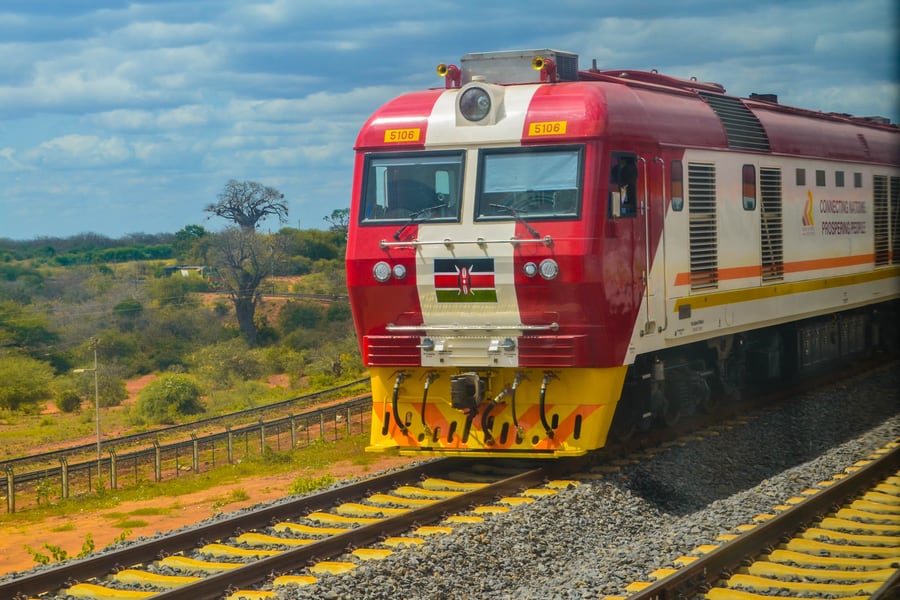
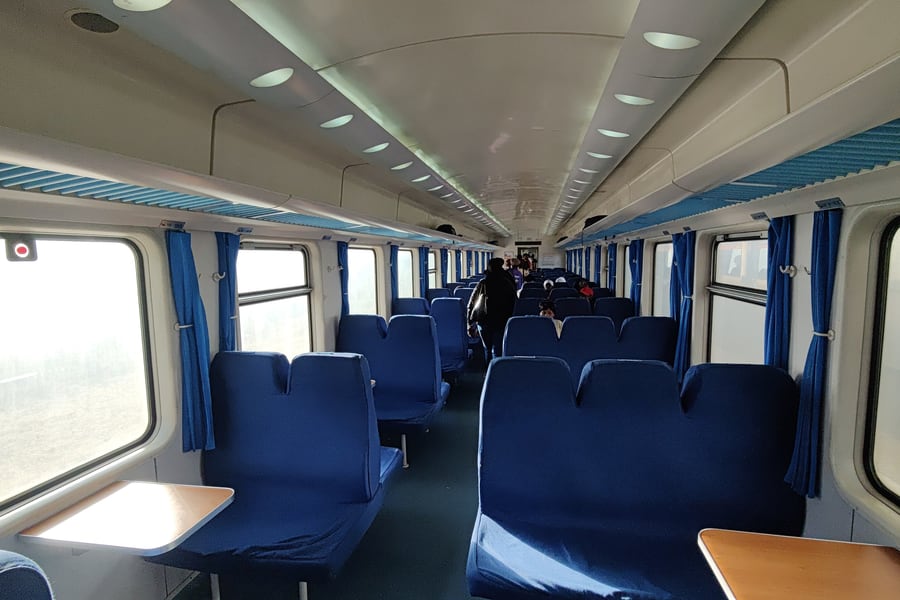
The trains are Chinese, and so are the locomotives. Passenger workings are hauled by DF11 diesel-electrics built by CRRC Qishuyan, in the red, white and yellow of Kenya Railways; the same railway's freight, which is what the line was really built for, runs behind the heavier DF8B. There is no wire. Behind the locomotive the rake is economy, first class and — since a delivery of twenty coaches from CRRC Nanjing Puzhen in June 2024 — premium, which is a separate product with its own booking page.
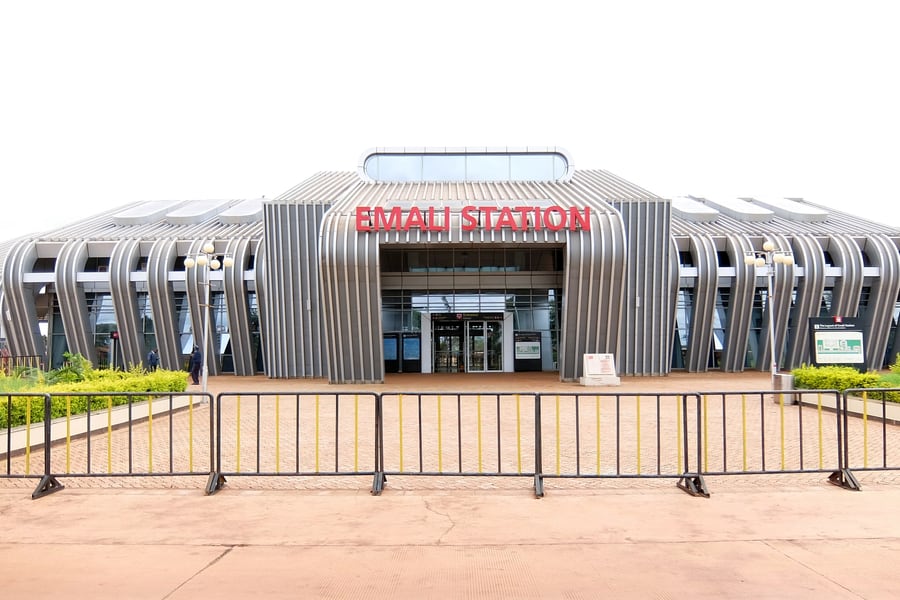
Nine passenger stations stand between Mombasa and Nairobi, each given a different piece of architectural decoration drawn from its own district, and most of them serve towns that sit a few kilometres away across the scrub. Mtito Andei is a glass wedge in the middle of nowhere. Emali is a market town on the Mombasa road that the railway line splits in two: the rails are the constitutional boundary between Makueni and Kajiado counties, so half the town is administered from one county headquarters and half from the other.
Voi, and the railway underneath
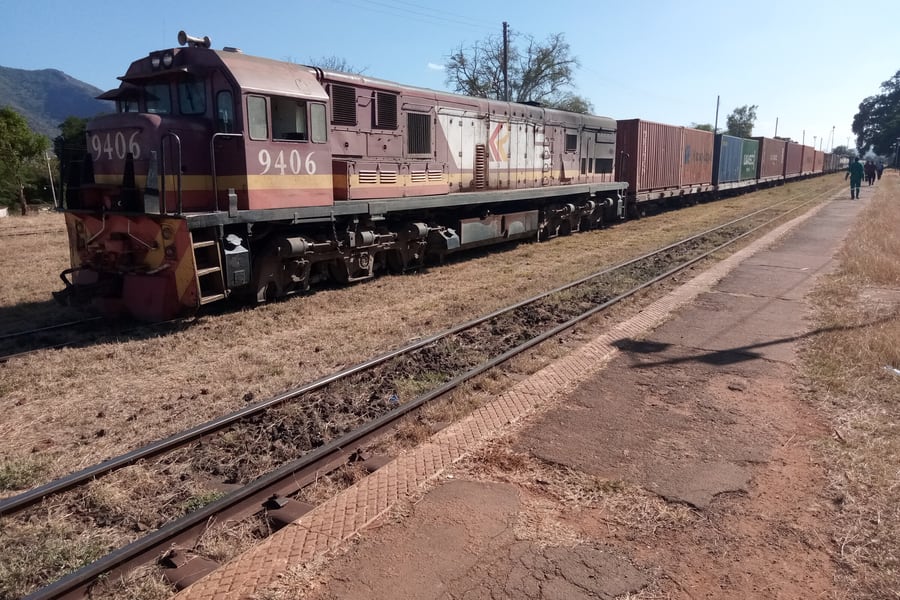
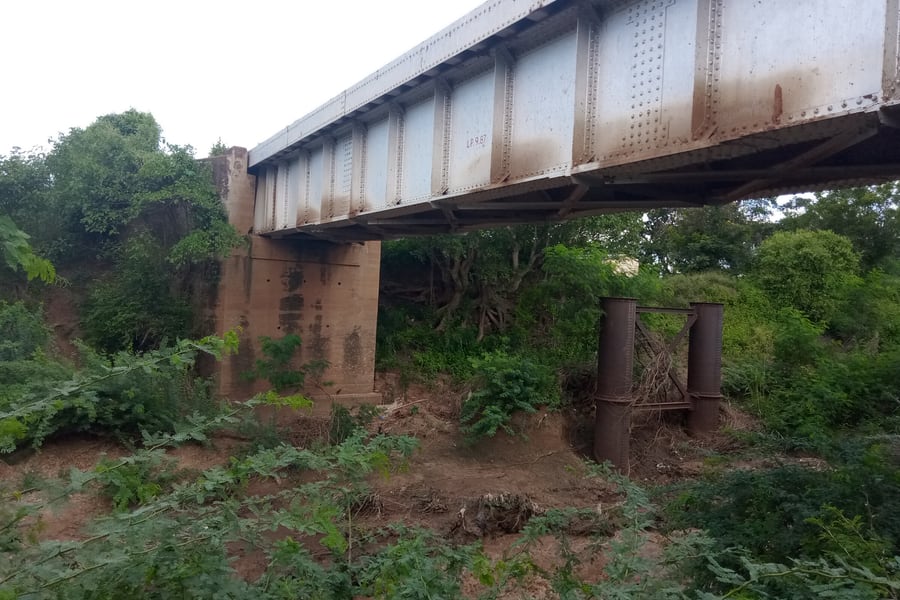
Voi is where the two railways are easiest to tell apart. The SGR station stands out on the plain; the old Voi station is still down in the town, still worked, and still sees Kenya Railways 94 Class locomotives — General Electric U26Cs delivered in 1987 — bringing freight in off the metre gauge. Just outside it a plate-girder bridge carries the old Kenya–Uganda line over a river, and beside it stand the rusting steel piers of an older bridge again. Three generations of railway in one view, and only one of them has a passenger timetable.
Arriving at the edge of Nairobi
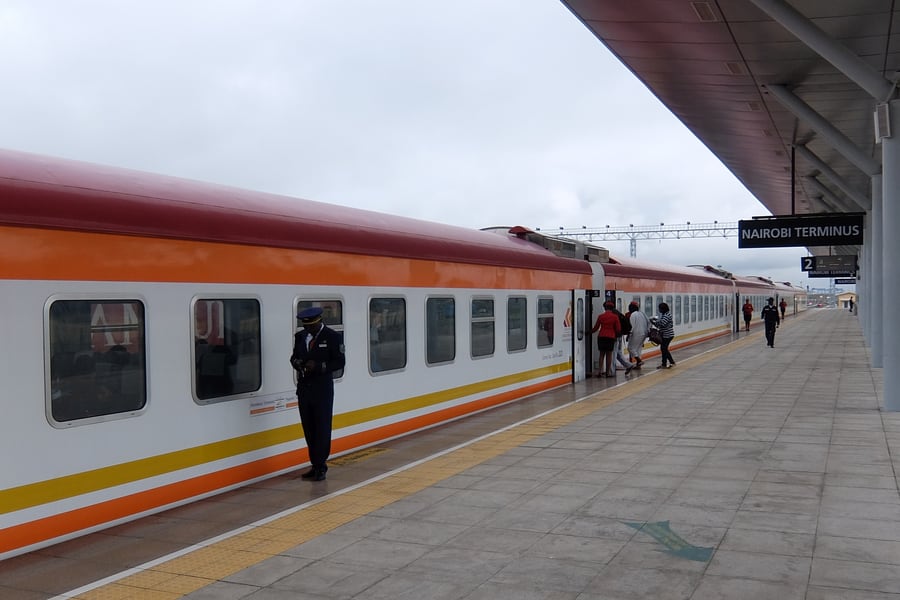
The last stretch is the flattest and the fastest. The line crosses the Athi plain on the Athi River Super Bridge, 2.6 kilometres long and at the time it was finished the sixth-longest bridge in Africa, and runs into Nairobi Terminus at Syokimau, out beyond the airport. The building was designed as a through station and originally called Nairobi South; it is a terminus only because the next phase had not been built when it opened, and trains now continue from it north-west to Suswa on Fridays, Saturdays and Sundays.
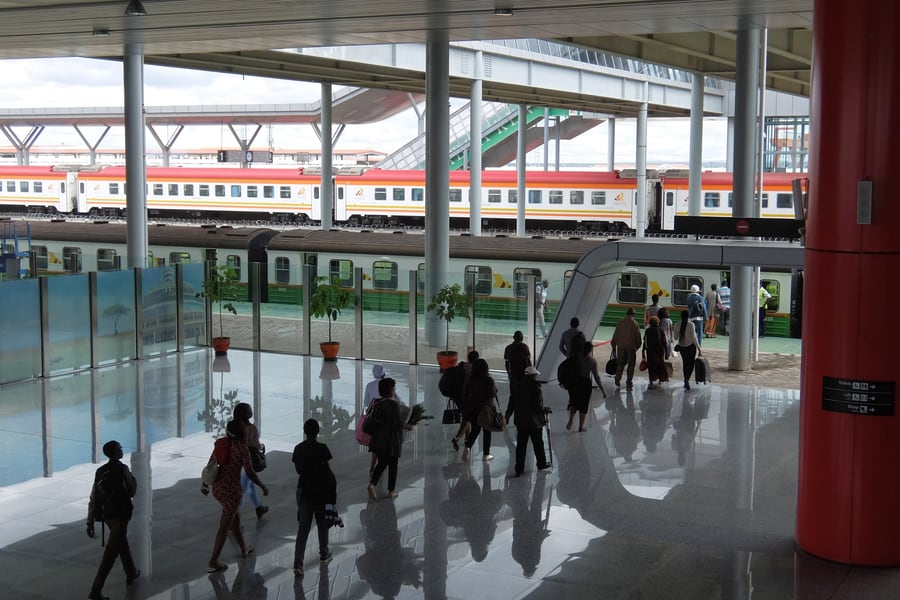
The afternoon express takes five hours and eighteen minutes from Mombasa, an average of about eighty-nine kilometres an hour including its stop at Voi. What happens at the end of it is the part nobody photographs: the crowd off the train walks across the concourse and boards a metre-gauge commuter set for Nairobi Central Station — the same railway that used to make the whole journey itself.
Along the route
 Macabe5387 / Wikimedia Commons · CC BY-SA 4.0 · 2019 · cropped
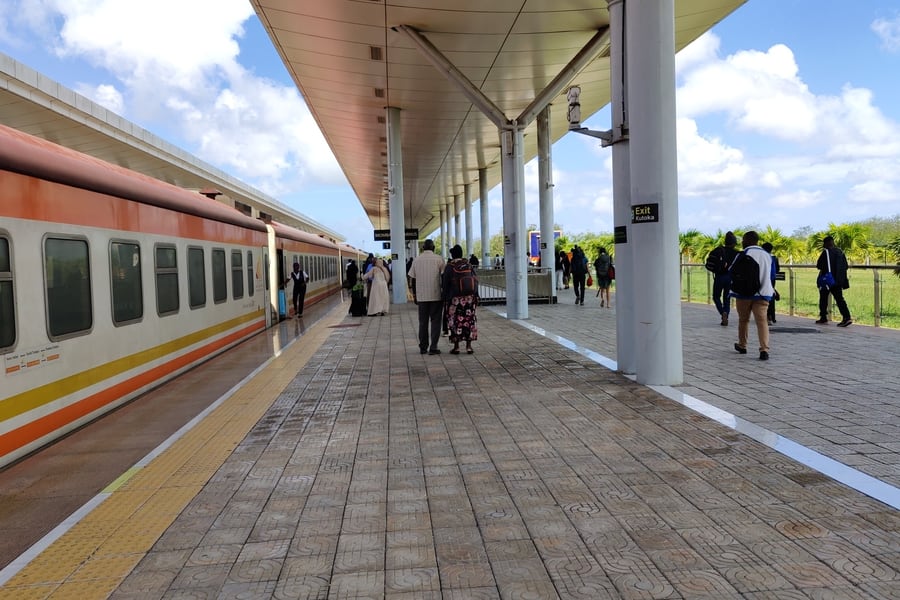
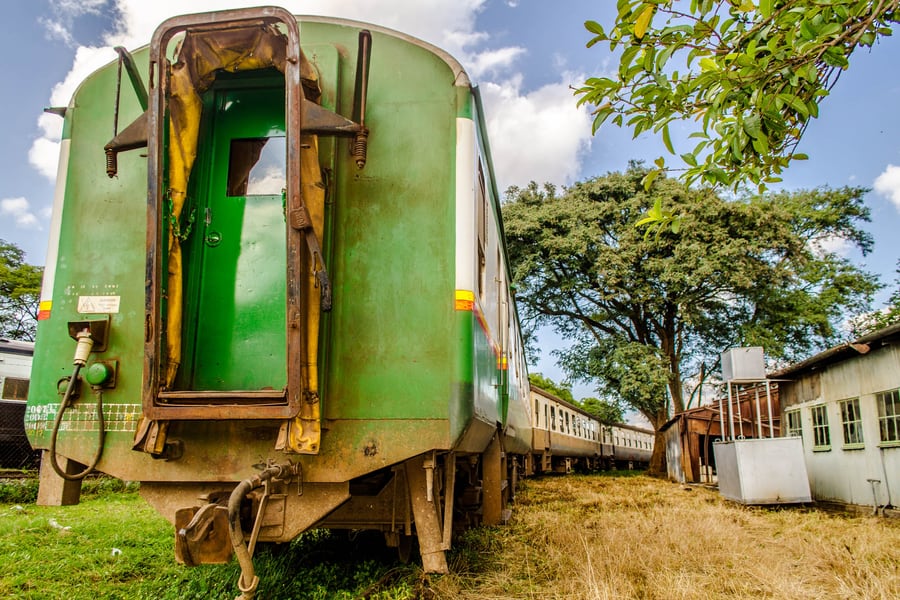
The railway it replaced now delivers its passengers
The last metre-gauge passenger train between Nairobi and Mombasa ran on 28 April 2017, and thirty-three days later the Madaraka Express carried its first fares from termini outside both cities. So Kenya Railways put the old line back to work as a feeder. The superseded railway is now the branch line of its own replacement.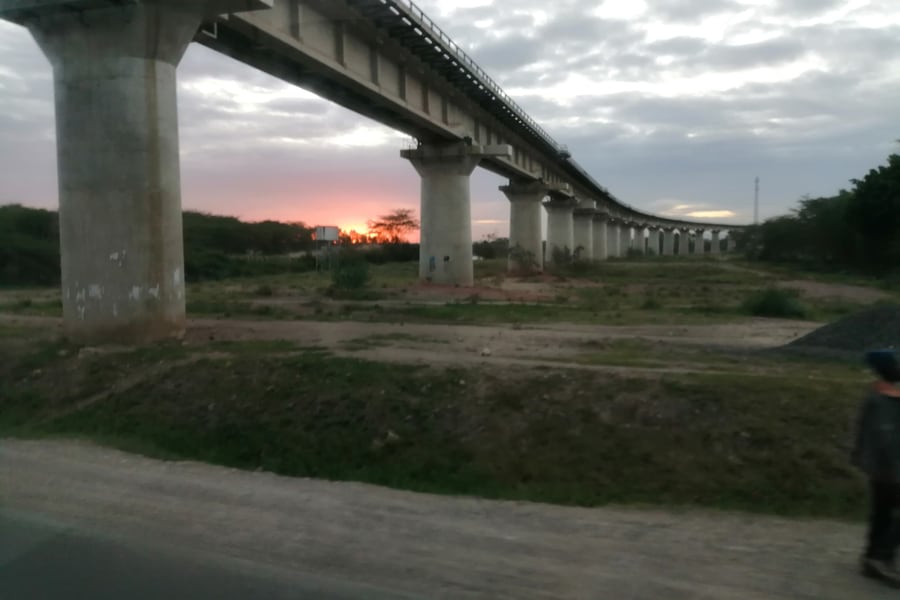 Sylvia.kyengo / Wikimedia Commons · CC BY-SA 4.0 · 2019 · cropped
Ninety-eight bridges, one of them 2.6 kilometres long
The Uganda Railway followed the ground; the SGR was laid straight and lifted over it. The tallest bridge stands 43.5 metres above a valley the old line had to spiral into. Through Tsavo the viaducts exist for another reason: to leave the ground clear so game can cross.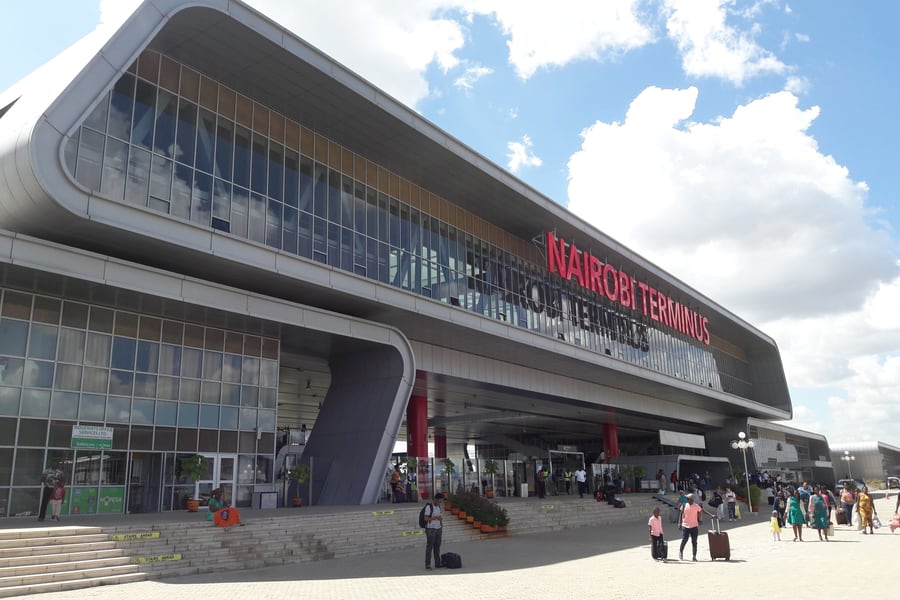 Macabe5387 / Wikimedia Commons · CC BY-SA 4.0 · 2018 · cropped
A terminus that was never meant to be one
Nairobi Terminus was designed and built as a through station, and so was Mombasa's. Both became termini only because the rest of the railway had not been built when they opened. The line has since been carried on past Nairobi to Suswa.A bit of history
Culture & experiences along the way
 shankar s. / Wikimedia Commons · CC BY 2.0 · 2010 · cropped
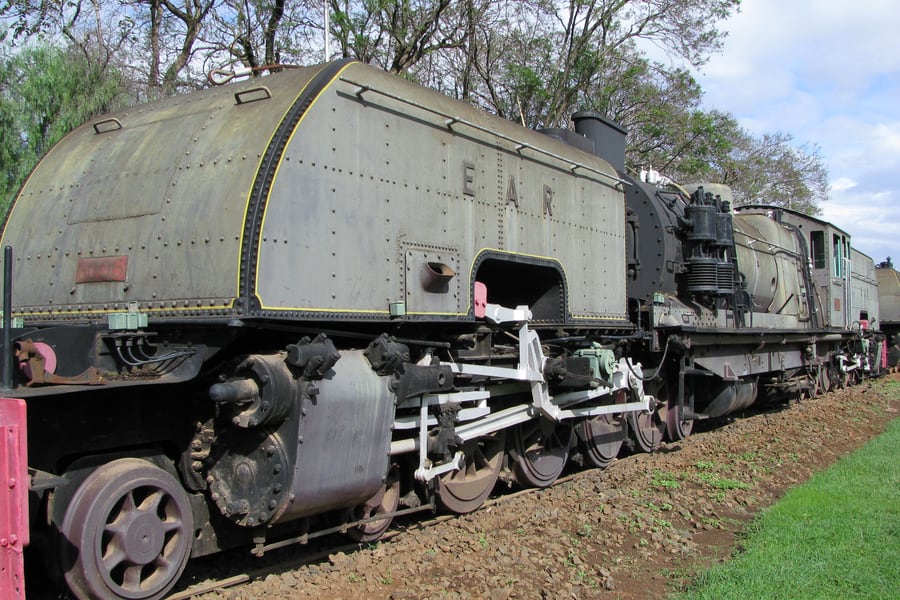
The two Garratts at the Nairobi Railway Museum
The museum stands beside the old Nairobi station, where the Link train ends. Two of the exhibits are EAR 59 class Garratts, oil-fired 4-8-2+2-8-4s by Beyer, Peacock of Manchester — the largest, heaviest and most powerful steam locomotives ever to run on metre gauge anywhere, 252 tonnes each, and the mainstay of Mombasa–Nairobi freight until the late 1970s. Two of the thirty-four survive. 5918 Mount Gelai came here from its last duty in April 1980, driven by Kirpal Singh, who retired that day.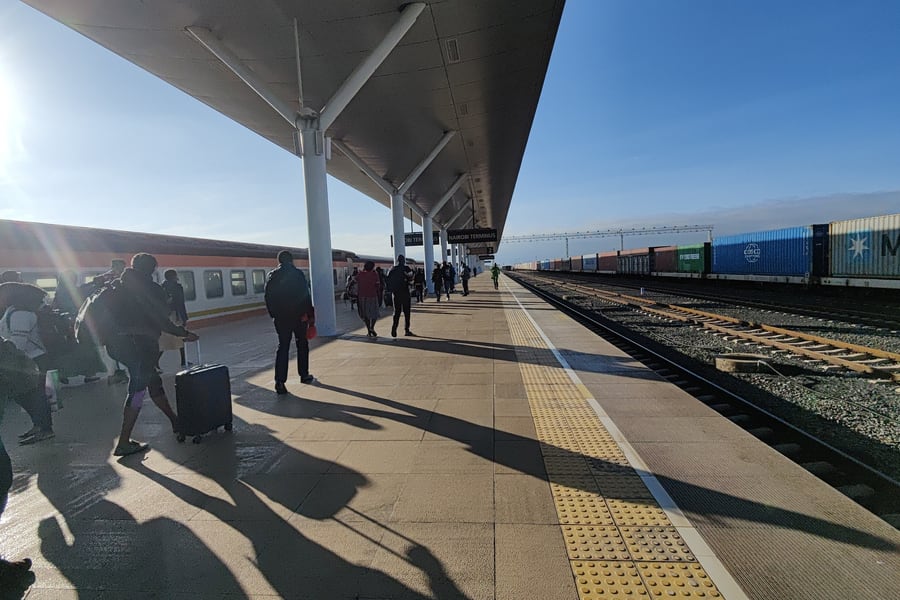 Ravi Dwivedi / Wikimedia Commons · CC BY-SA 4.0 · 2024 · cropped
The 22:00, and what four in the morning is like
The night train leaves both cities at ten and arrives at 03:55, which is the whole of its argument: it saves a hotel night and it costs the same as the day trains. What it does not save is the arrival. Nairobi Terminus is twenty kilometres from the city and the Link train into Nairobi Central leaves at 03:50; at the coast the connection is timed the same way. Neither terminus is a place to wait for daylight, and the platform empties fast.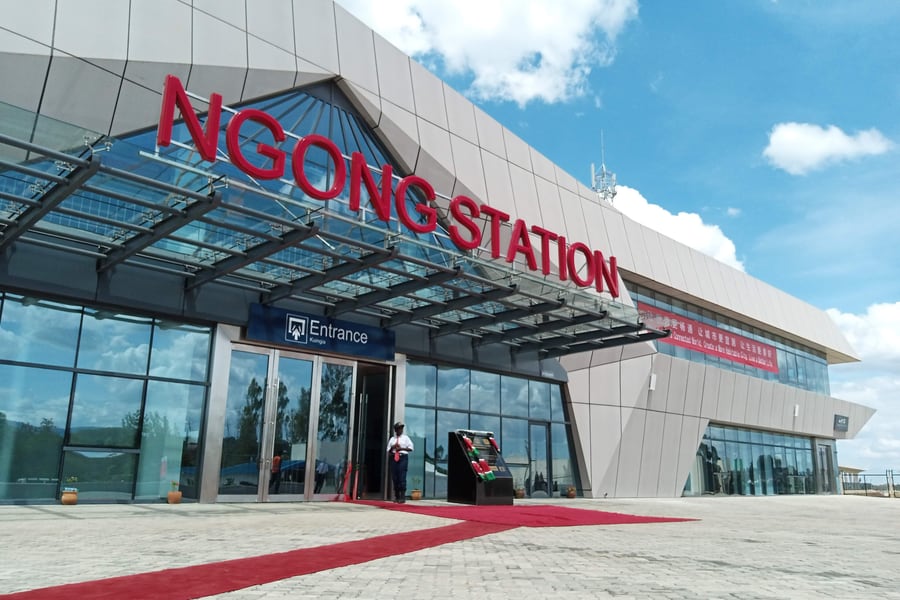 MarkDenver Karubiu / Wikimedia Commons · CC BY-SA 4.0 · 2019 · cropped
The weekend train to Suswa
On Fridays, Saturdays and Sundays the railway keeps going past Nairobi Terminus and out towards the Rift, calling at Ongata Rongai, Ngong and Maai Mahiu before ending at Suswa in Narok County. It leaves at 08:50 and comes back at 16:05, so it is a day out rather than a connection, and it is the cheapest thing on the whole railway — KES 250 from Nairobi to the end of the line. On weekdays the same tracks carry commuters between Ngong, Ongata Rongai and the terminus.Timetables
Three trains a day run in each direction, and they leave Mombasa and Nairobi simultaneously — 08:00, 15:00 and 22:00 from both ends. The 08:00 is the Inter-County, which calls at every station; the 15:00 Express and the 22:00 night train run through, with a single stop at Voi.
The times below are Kenya Railways' own published schedule, read from the operator's site in August 2026.
Mombasa to Nairobi
| Station | Inter-County | Express | Night train |
|---|---|---|---|
| Mombasa Terminus | 08:00 | 15:00 | 22:00 |
| Mariakani | 08:26 | – | – |
| Miasenyi | 09:12 | – | – |
| Voi | 09:49 | 16:38 | 23:45 |
| Mtito Andei | 11:18 | – | – |
| Kibwezi | 11:51 | – | – |
| Emali | 12:36 | – | – |
| Athi River | 13:45 | – | – |
| Nairobi Terminus | 14:10 | 20:18 | 03:55 |
Nairobi to Mombasa
| Station | Inter-County | Express | Night train |
|---|---|---|---|
| Nairobi Terminus | 08:00 | 15:00 | 22:00 |
| Athi River | 08:19 | – | – |
| Emali | 09:27 | – | – |
| Kibwezi | 10:14 | – | – |
| Mtito Andei | 10:50 | – | – |
| Voi | 12:02 | 18:48 | 02:05 |
| Miasenyi | 12:41 | – | – |
| Mariakani | 13:27 | – | – |
| Mombasa Terminus | 14:00 | 20:30 | 03:55 |
The all-stations run takes six hours and ten minutes northbound and six hours flat southbound; the express takes five hours eighteen and five and a half hours respectively; the night train takes five hours fifty-five in both directions and puts its passengers on the platform before four in the morning.
Getting to the terminus
Neither terminus stands in its city, so Kenya Railways runs Link trains on the old metre-gauge network to feed them, timed against each departure. At the coast they leave Mombasa Railway Station at 06:25, 12:35 and 19:20 for the 08:00, 15:00 and 22:00 departures, calling at Miritini on the way to Mombasa Terminus. At the Nairobi end the connections from Nairobi Central Station are at 06:40, 12:50 and 20:10, and in the other direction Link trains leave Nairobi Terminus for the city centre at 03:50, 14:30 and 20:30, after each arrival.
The Suswa branch
The same railway continues past Nairobi Terminus to Suswa, in Narok County, on Fridays, Saturdays and Sundays: 08:50 out, calling at Ongata Rongai, Ngong and Maai Mahiu and arriving at 11:10, and 16:05 back, arriving Nairobi Terminus at 18:10. On weekdays the same tracks carry a commuter service between Ngong, Ongata Rongai and Nairobi Terminus.
Departures and fares are published by the operator: Kenya Railways · Madaraka Express (opens in a new tab).
Tickets
Seats are sold by Kenya Railways itself, through its own booking site or the ticket windows, and there is no third-party monopoly to work around. Fares are fixed by distance and class and published as a full station-to-station table, and they are among the cheapest long-distance rail fares anywhere for the distance covered: the full Nairobi–Mombasa run is KES 1,500 in economy, KES 4,500 in first and KES 12,000 in premium. Children of three to eleven with an adult pay half; under-threes travel free.
Tickets can be cancelled or moved, at a cost — thirty per cent of the fare to cancel and ten to reschedule, each confirmed by a code sent to the phone and email on the booking. Sold-out departures carry a waiting list that can be joined online. Fares as published by the operator, August 2026.
Book your tickets
Ravi Dwivedi / Wikimedia Commons · CC BY-SA 4.0 · 2024 · croppedMombasa to Nairobi, economy
KES 1,500 one way · any of the three daily trains
The full 472 kilometres in economy, on the 08:00 all-stations train, the 15:00 express or the 22:00 night train. Booked through Kenya Railways' own system, which sells by station pair rather than by train type; children of three to eleven travelling with an adult pay half. Cancelling costs thirty per cent of the fare and rescheduling ten per cent, both confirmed by a code sent to the phone number and email address on the booking.
Book Tickets (opens in a new tab, on krc.co.ke)via krc.co.keRavi Dwivedi / Wikimedia Commons · CC BY-SA 4.0 · 2024 · croppedFirst class and premium
KES 4,500 first · KES 12,000 premium, one way
First class is the older of the two upgrades and runs on every train. Premium arrived with a delivery of twenty coaches from CRRC Nanjing Puzhen in June 2024 and is sold through a separate page of the operator's booking site, at KES 12,000 one way or KES 20,000 return between Nairobi and Mombasa. Sold-out departures carry a waiting list that can be joined online.
Book Tickets (opens in a new tab, on krc.co.ke)via krc.co.keRail Passes
No rail pass covers Kenya. The country belongs to no international scheme, there is no national multi-journey ticket, and the Madaraka Express is not included in any product sold outside the operator's own booking system. Seats are bought singly, by class and by station pair, from Kenya Railways.
That is less of a loss than it sounds, because the fares a pass would have to beat are already very low — KES 1,500 in economy for the full 472 kilometres. The constraint on this railway is not the price of a ticket but whether there is a seat left on the train you want, and there are only three departures a day in each direction. Booking early is worth more here than any discount scheme would be.
The Link trains at either end are run by the same operator, on the metre gauge, and timed against each Madaraka Express departure and arrival. Kenya Railways publishes their times alongside the main schedule rather than as a separate product.
Places to Visit
This is not a line where the interest is beside the track. The Madaraka Express crosses country most travellers come to Kenya specifically to see, and it does it without stopping in any of it: the national parks are reached from the stations, by road, and the train is simply the sensible way of getting to the gate. Voi and Mtito Andei are the two that matter — one for Tsavo East, one for Tsavo West — and Emali is the railhead for Amboseli and its view of Kilimanjaro.
At the ends are two cities that could not be less alike. Mombasa is a Swahili port with a Portuguese fort in the middle of it and centuries of Indian Ocean trade behind that. Nairobi did not exist until the railway needed somewhere to put a depot: the site was swamp, chosen in 1898 by the Uganda Railway's chief engineer for its altitude and its water, and the first train reached it on 30 May 1899. Its national park, seven kilometres from the city centre, was established in 1946.
 Alex Wafula / Wikimedia Commons · CC BY-SA 3.0 · 2012 · cropped
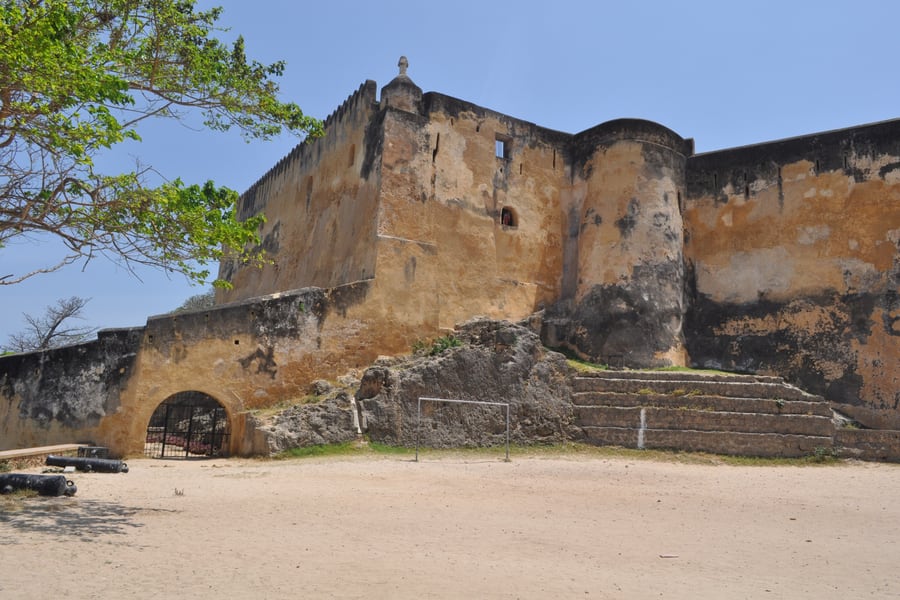
Mombasa
A Swahili port far older than any railway, with Fort Jesus in the middle of it — designed by the Italian architect Giovanni Battista Cairati and built between 1593 and 1596 for the king who then held both the Spanish and Portuguese crowns. It is the only fort the Portuguese kept on the Swahili coast, a UNESCO World Heritage Site since 2011, and the city's most visited attraction. None of it is near the station; Mombasa Terminus is out at Miritini, and the Link train runs onto the island.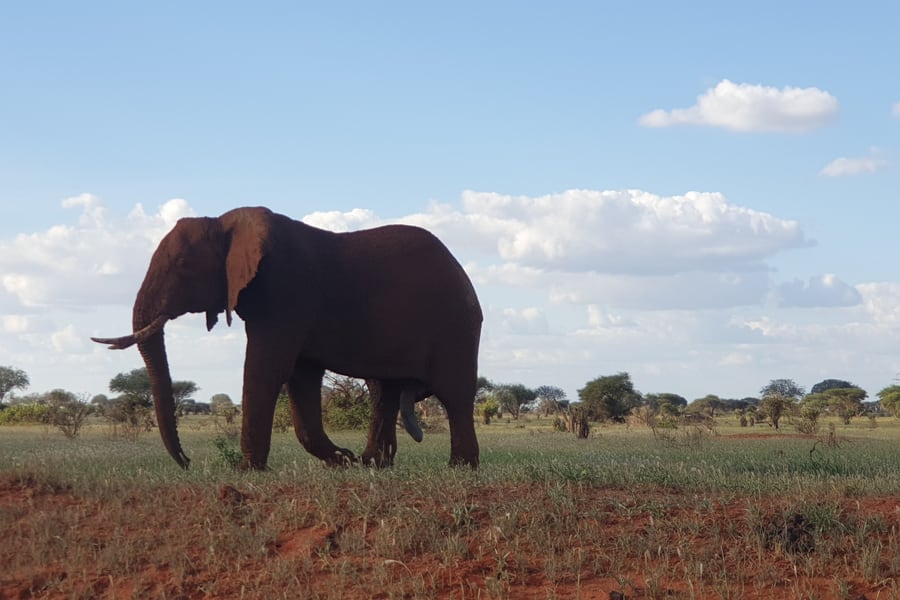 Tall Black / Wikimedia Commons · CC BY-SA 4.0 · 2022 · cropped
Voi
The gateway station for Tsavo East, and the one stop every train makes. Tsavo East covers 13,747 square kilometres, and about 22,000 with Tsavo West — by far the largest protected area in Kenya, and the corridor the train runs down is what separates the two halves. East is the drier and flatter one, and its landmark suits that: Mudanda Rock, a 1,600-metre outcrop that catches water and draws hundreds of elephants below it in the dry season. The park gates are a short drive from the station.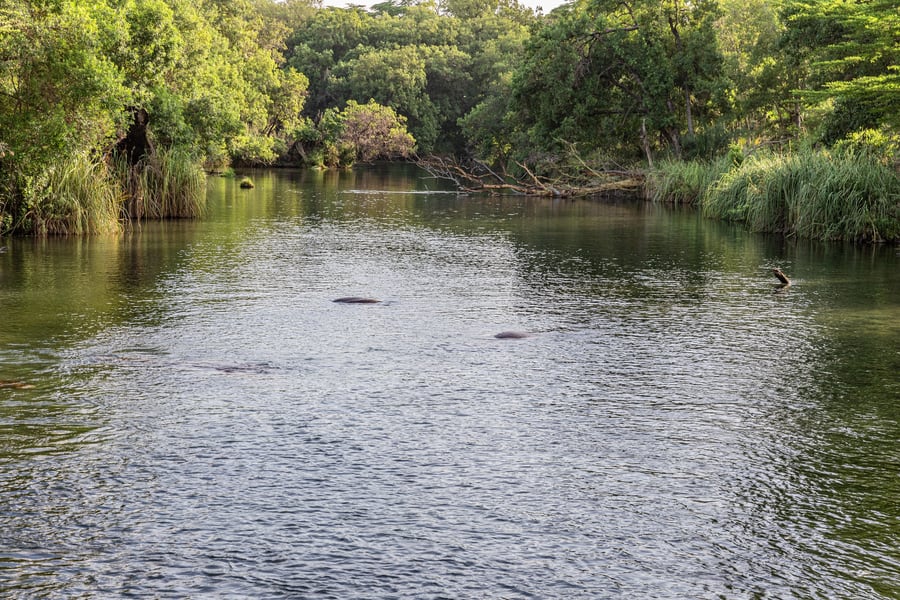 Ninara / Wikimedia Commons · CC BY 2.0 · 2023 · cropped
Mtito Andei
The other Tsavo, and the other kind of country: hillier, greener, volcanic, with lava flows young enough to still be bare rock. Its set piece is Mzima Springs, 48 kilometres from the station. The Chyulu Hills are too porous for rivers, so rain sinks into the lava and can spend twenty-five years underground before surfacing here — filtered clear enough to see the hippos and Nile crocodiles in the pools, which is what Alan and Joan Root filmed underwater in 1969.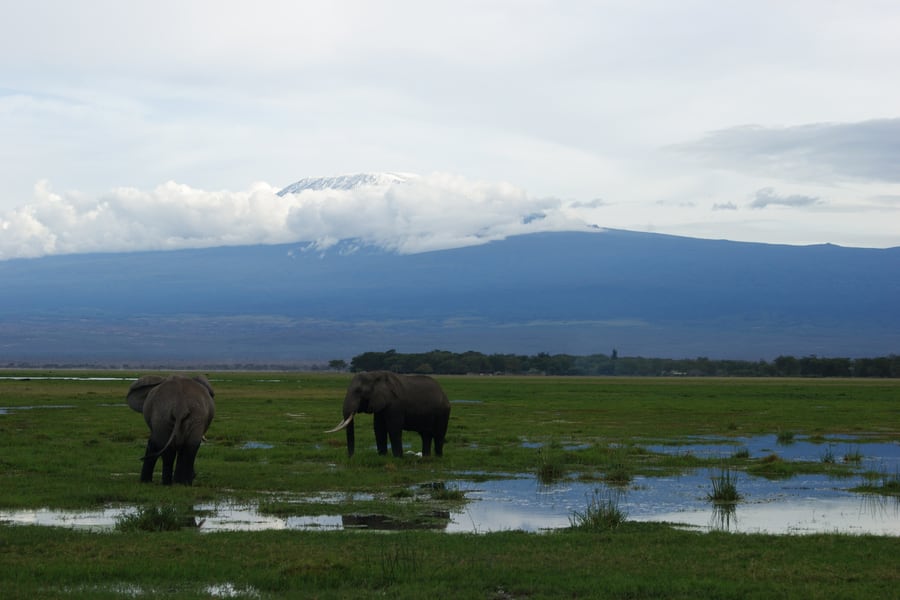 Lafleursauvage / Wikimedia Commons · CC BY-SA 4.0 · 2015 · cropped
Emali
A truck-stop town on the Mombasa road that the railway cuts in two — the rails are the constitutional county boundary, so half of it is administered from Makueni and half from Kajiado. It is also where people leave the train for Amboseli: 392 square kilometres at the centre of an ecosystem sixteen times that size, which runs across the Tanzanian border. Kilimanjaro is on the far side of that border, and the picture everyone comes for is taken from this one.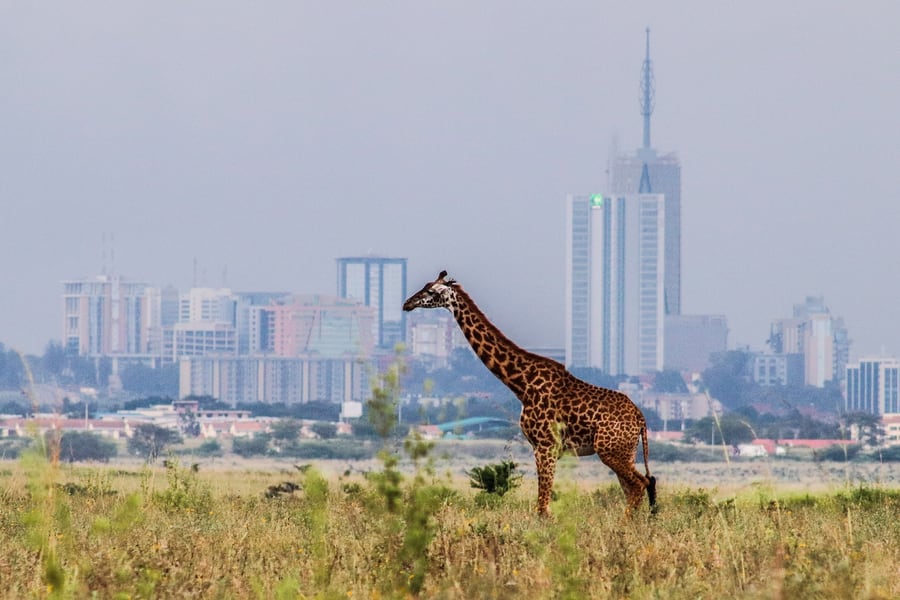 Alexmbogo / Wikimedia Commons · CC BY-SA 4.0 · 2020 · cropped
Nairobi
A city that exists because a railway needed a depot. The site was swamp when the Uganda Railway's chief engineer picked it in 1898 for its altitude and its water; the first train arrived on 30 May 1899, and by 1907 it had taken the capital away from Mombasa. Nairobi National Park, established in 1946, begins seven kilometres from the city centre, and the view of giraffe against the office towers is not a trick of the lens.Where to Sleep
The timetable does most of the choosing. The 08:00 and 15:00 trains both need a night at one end or the other, because the Link trains that reach the termini run to the same schedule and there is no late connection into either city. The 22:00 night train replaces one of those nights, at the cost of arriving at four in the morning.
Three places make sense: the coast north of Mombasa, where the beach hotels are; Voi, if the point of the journey is Tsavo rather than Nairobi, since the lodges there are a short drive from the SGR station; and central Nairobi, which the Link train reaches from the terminus. No prices, grades or ratings are given below, because none have been verified — each card says where the house stands and what it says about itself.
Where to stay
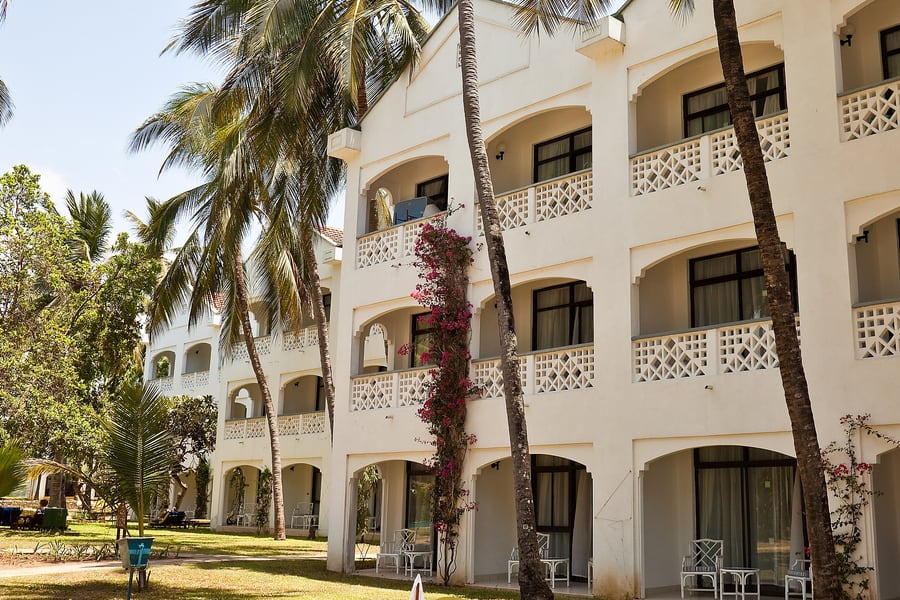 John Hickey-Fry / Wikimedia Commons · CC BY 2.0 · 2012 · cropped
Sarova Whitesands Beach Resort & Spa
Bamburi Beach, on the coast north of Mombasa
The resort's own site puts it on Bamburi Beach on Mombasa's north coast, 21 kilometres from Moi International Airport, with check-in at 14:00 and check-out at 10:00, complimentary parking and its own airport transfers. Rooms face gardens and the Indian Ocean, and the beach bar is on the sand.
Check Availability (opens in a new tab, on sarovahotels.com)via sarovahotels.comVoi Wildlife Lodge
On the Tsavo East boundary, fifteen minutes from Voi station
The lodge's own site describes a fifty-acre site on the boundary of Tsavo East, opened in 2003, accommodating up to 300 guests in rooms with balconies over the savannah, and a waterhole with a live webcam on it. It is one of the few places on this route that gives its distance from the railway: the SGR station at Voi, where every train stops, is a fifteen-minute drive away.
Check Availability (opens in a new tab, on voiwildlifelodge.com)via voiwildlifelodge.com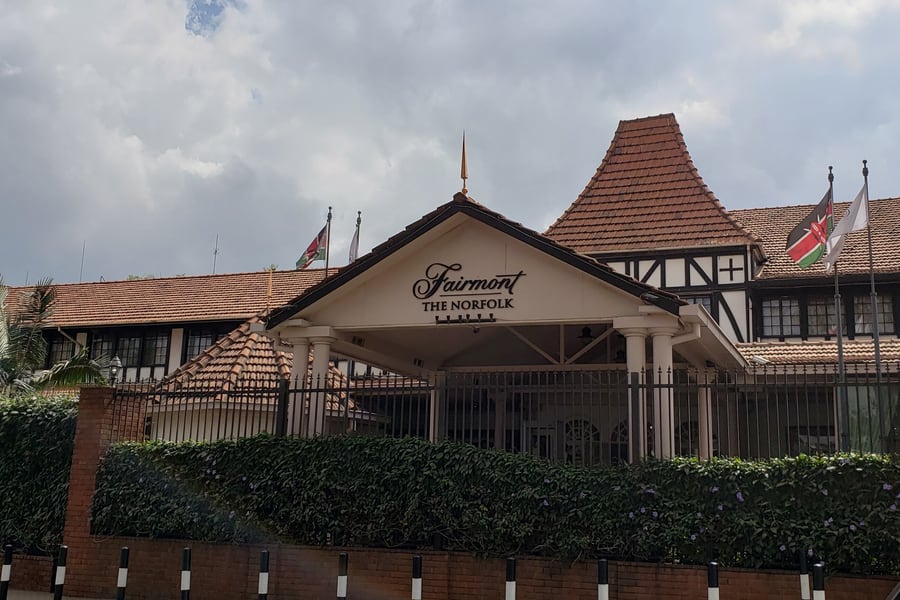 Pi3.124 / Wikimedia Commons · CC BY-SA 4.0 · 2019 · cropped
Fairmont The Norfolk
Harry Thuku Road, central Nairobi
The hotel's own site calls it "Nairobi's most iconic, luxurious and storied hotel" and places it along Harry Thuku Road, in the middle of the city the Link train runs into. What it emphasises is the mix: historic buildings with modern rooms behind their façades, a garden in the centre of Nairobi that brings birds with it, and a Fairmont Gold floor above the standard rooms and suites.
Check Availability (opens in a new tab, on fairmont.com)via fairmont.comQuestions or corrections
Planning this trip and stuck on something, or spotted a time, fare or detail that has changed? Send us a message about The Madaraka Express. We read every one, and we update this page when something has changed.