The Miljoenenlijn — Simpelveld to Schin op Geul and Kerkrade
Rob Dammers / Wikimedia Commons · CC BY 2.0 · 2016 · cropped
- Distance16.2 km, Schin op Geul to Kerkrade
- Duration30 min by steam to Schin op Geul; 20 min by railbus to Kerkrade
- Best seasonApril to late October, chiefly Sundays · Christmas services in December
Introduction
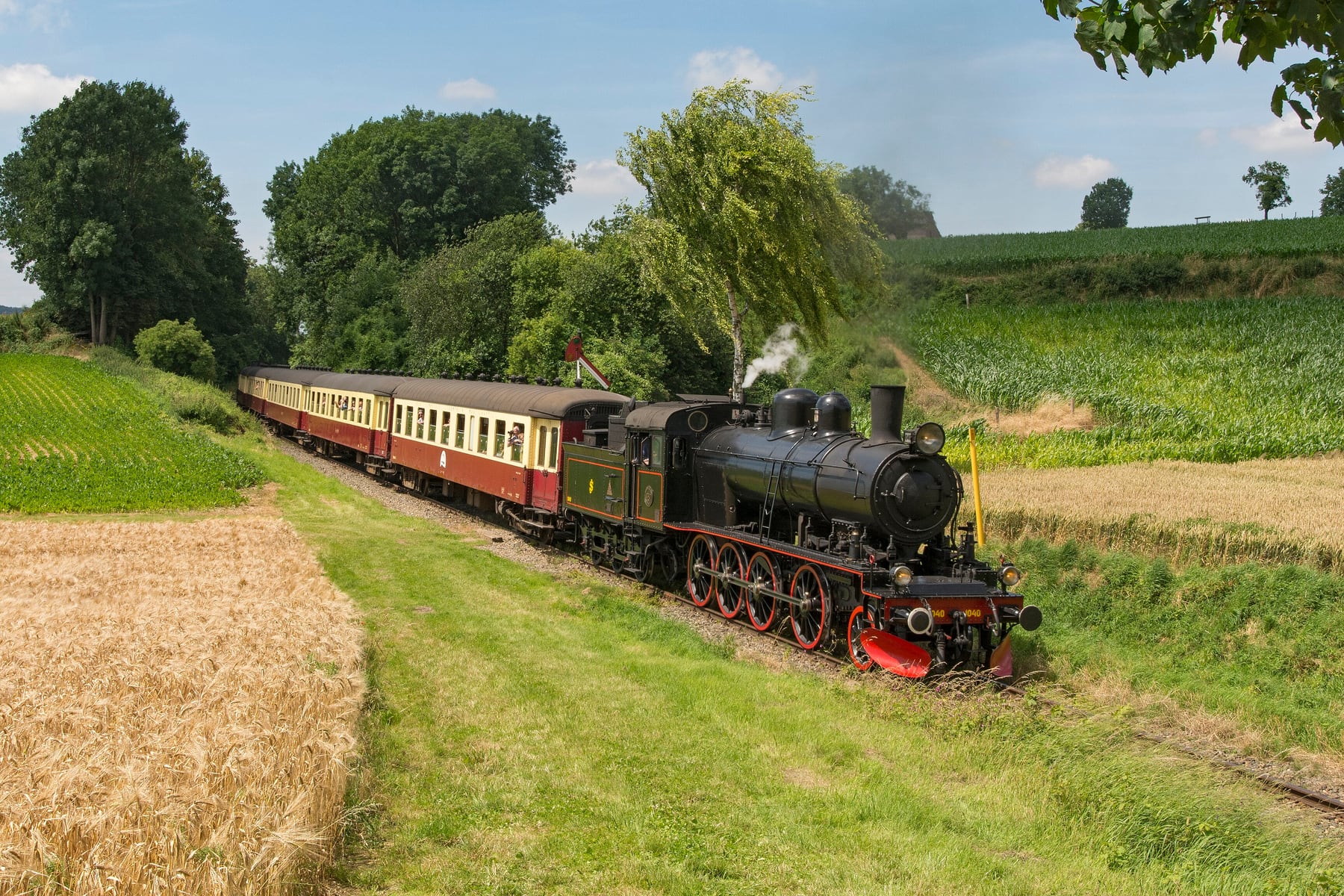
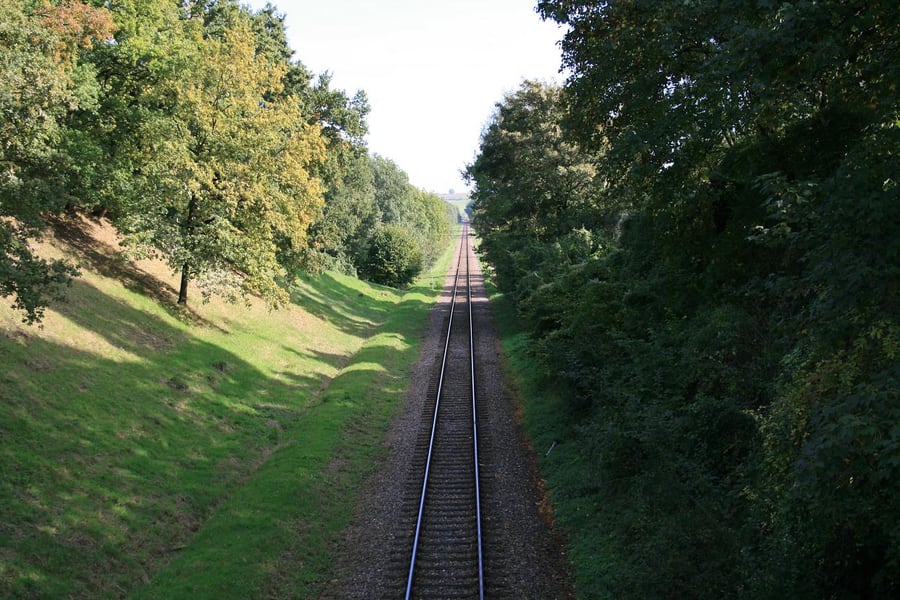
The Netherlands has one corner with hills in it, and this is the railway that went through them at ruinous expense. South Limburg is a wedge of country pushed in between Belgium and Germany, folded into plateaus and stream valleys, and in 1925 a subsidiary of the Nederlandsche Spoorwegen began driving a coal line across it from Schaesberg to Simpelveld. Holding the gradients down took three and a half million cubic metres of earthworks: an embankment raised 32 metres in the Anselerbeek valley at Kerkrade, a cutting sunk as much as 18 metres below the fields towards Simpelveld. By the time the goods line opened in 1934, its 12.5 kilometres had cost around 12.5 million guilders — a million a kilometre, at a time when that was an extraordinary sum. People called it the Miljoenenlijn, and the name outlived the coal.
Passenger trains ran from 1949 and stopped in May 1988. What runs now carries the same name and is worked by the Zuid-Limburgse Stoomtrein Maatschappij, a foundation of about 250 volunteers, out of the 1908 border station at Simpelveld. Steam trains go west down the Geul valley to Schin op Geul; a wine-red German railbus of the 1950s runs east to Kerkrade and south over the frontier to Vetschau, on the edge of Aachen. The coaches are Belgian first class of 1934. Every point and signal is pulled by hand from mechanical boxes, two of which are national monuments. It is not a short line pretending to be a big railway — it is a piece of a real main line, still being operated the way that main line was.
The Journey
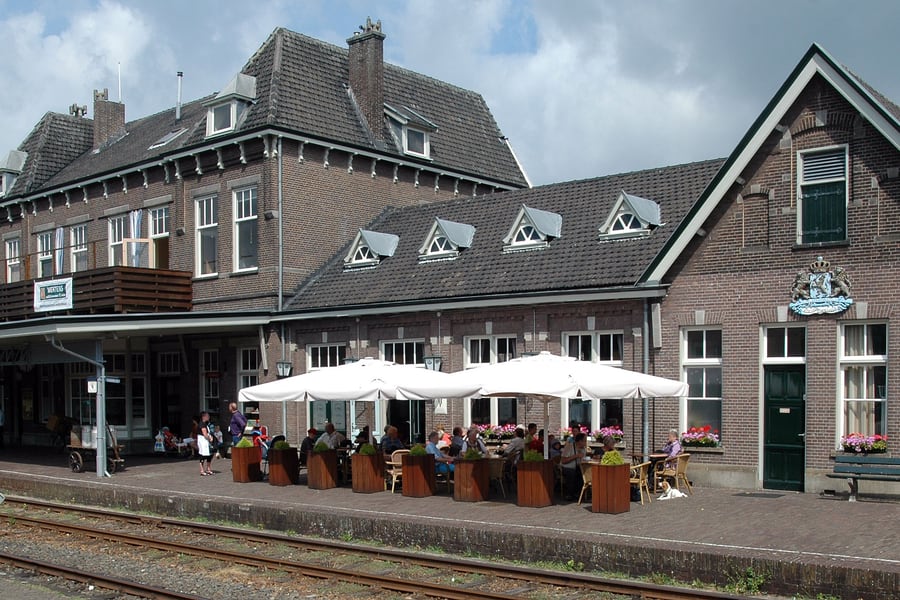
Everything starts at Simpelveld, and the station is half the point of the day. It was built between 1908 and 1910 for about ƒ82,500, a hundred metres long with two flats above the offices, and for a century it was the customs post on the Aachen–Maastricht line: every passenger was searched here, and the ones who dodged the search sold what they were carrying in one of the eight cafés across the road. Thirty-eight metres of the building survive a demolition of 1975. The long room where the luggage was opened is now Brasserie Perron 4, with a terrace the steam train stops in front of.
Beyond the platforms the yard is a working depot rather than a display. There is a carriage shed and a workshop, a turntable pit and a railway water tower that still supplies water — both national monuments — a shop, a picnic area, and a garden-gauge model railway on platform 1. None of it is fenced off or charged for. Trains cannot leave in either direction until a signalman in one of the two lever boxes has set the road, which is why departures here have a deliberateness that has gone almost everywhere else.
West to Schin op Geul
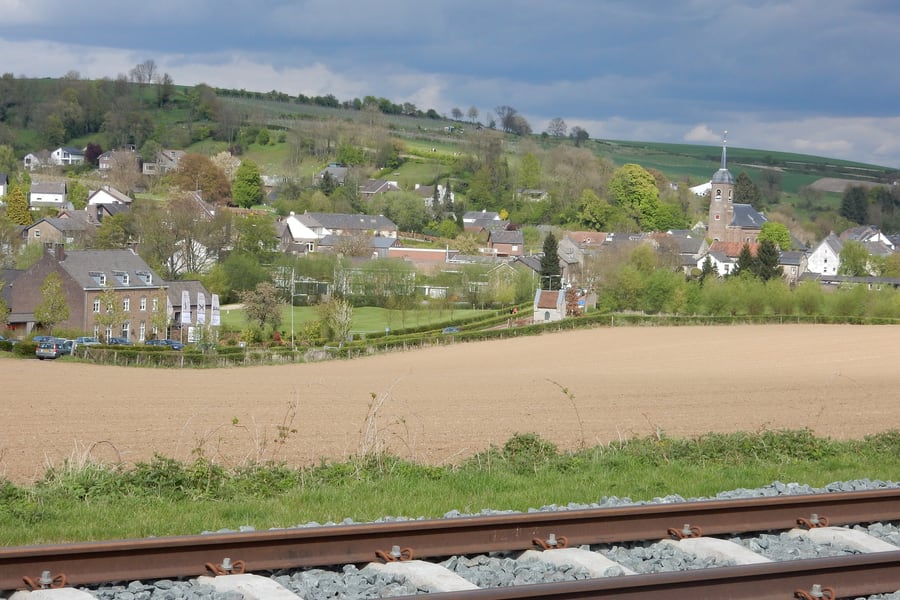
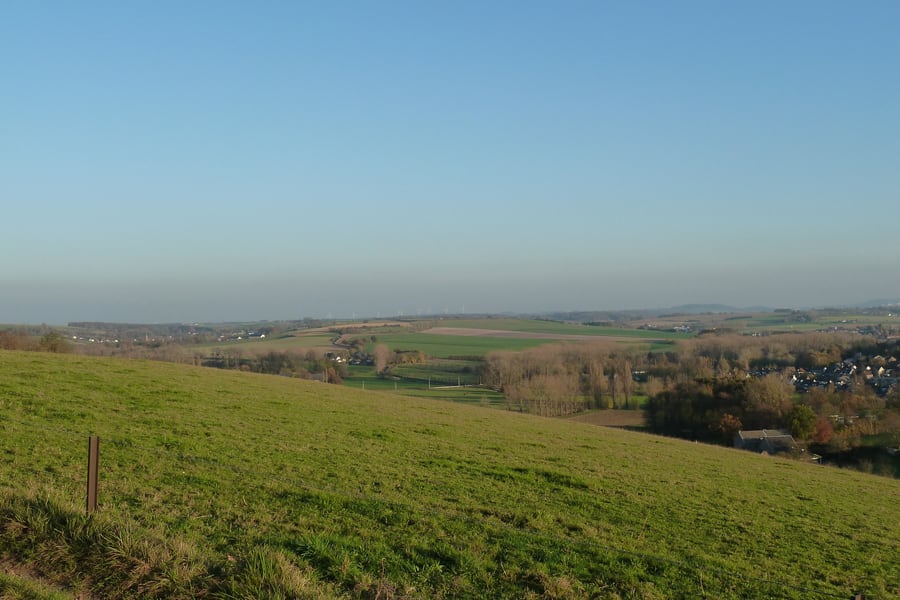
The steam train turns west, and within a few minutes the country starts to move. This is the 1853 Aachen–Maastricht railway, the first line built in Limburg and the first in the Netherlands to cross a border, and it was laid before anyone had the money to flatten anything: it works around the contours, between hedgerows and beech, in and out of cuttings, with fields of wheat and maize coming right up to the fence. Eys-Wittem comes after eleven minutes, a platform below the village. Wijlre-Gulpen is nine minutes further, and it is the operational heart of the western end — a crossing station with its own signal box, and from here to Schin op Geul the railway is double track. Trains run on the left-hand road in both directions, which is a piece of Dutch practice preserved for its own sake.
Schin op Geul, thirty minutes and 9.6 kilometres out, is where the museum stops and the country resumes. Arriva's trains for Valkenburg and Maastricht use the other face of the same island, so the two railways stand side by side for a few minutes at a time. The steam train waits twenty minutes and goes back. The line speed all the way is 40 km/h, and it never feels slow, because at 40 km/h you can see into the gardens.
East to Kerkrade, and the cutting
The railbus works the other side. Leaving Simpelveld it takes the Miljoenenlijn proper — the expensive one — and almost at once drops into the great cutting, a green trench up to 18 metres deep with trees closing overhead, dug for no better reason than that a coal train could not climb what was there before. There is one intermediate stop, at the depot and workshop, and then twenty minutes brings the train to Kerkrade, six and a half kilometres away and about a kilometre from the abbey of Rolduc, whose canons were digging coal out of this valley some seven hundred years before the railway arrived to carry it. The museum platform is not the one Arriva uses: the operator's own directions put its boarding point 80 metres further on, past the level crossing.
The train that leaves the country
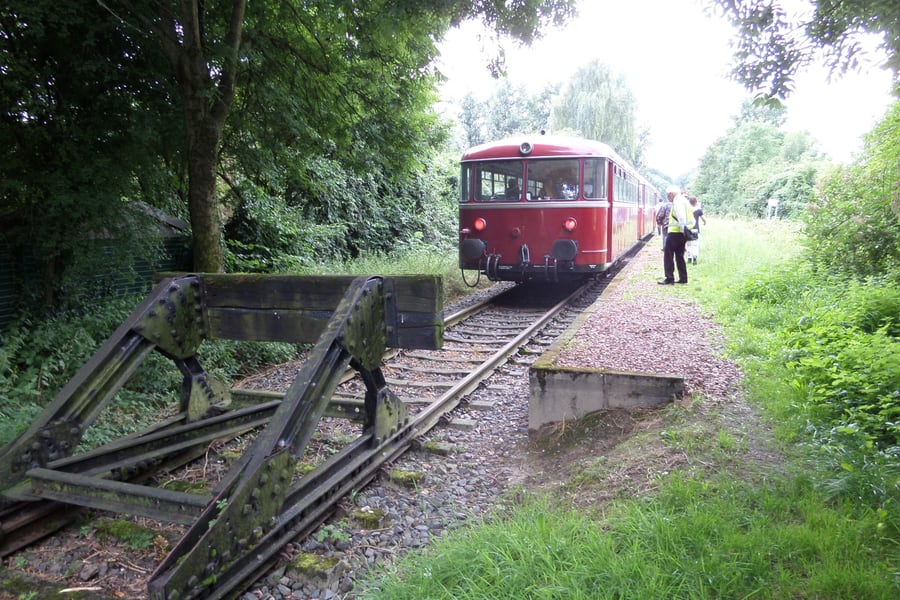
The third working goes south. Simpelveld to Bocholtz to Vetschau is 5.3 kilometres of the old main line towards Aachen, closed in 1992 and reopened by the ZLSM in 2000, and Vetschau is a single platform and a buffer stop in the Laurensberg district of Aachen — about five kilometres short of the cathedral. Two round trips run on an ordinary operating day. Only railbuses work it.
What pulls the trains
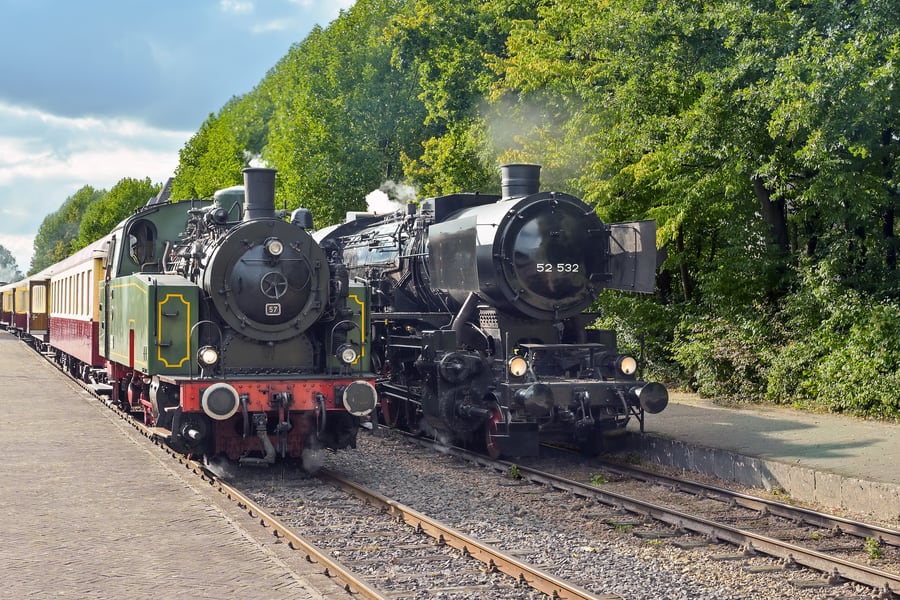
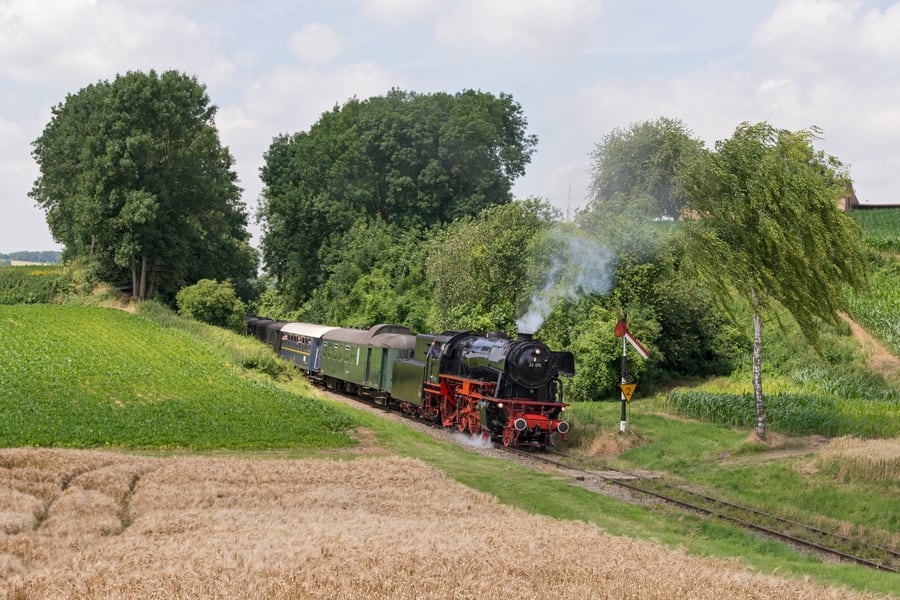
The steam fleet was assembled from Sweden. When the ZLSM went looking for engines resembling the ones that used to work out of Heerlen, a Polish class was blocked by export licence, so four locomotives were bought instead from the strategic reserve the Swedish state railways had kept under cover for decades, and shipped to Born. The heavyweight now is 52 532, a Kriegslok built by Schwartzkopff in Berlin in 1943, requisitioned by Soviet forces in 1945 and rebuilt in East Germany; it came to Simpelveld in December 2015 and went back into steam in September 2025 after an overhaul that took the workshop the best part of ten years.
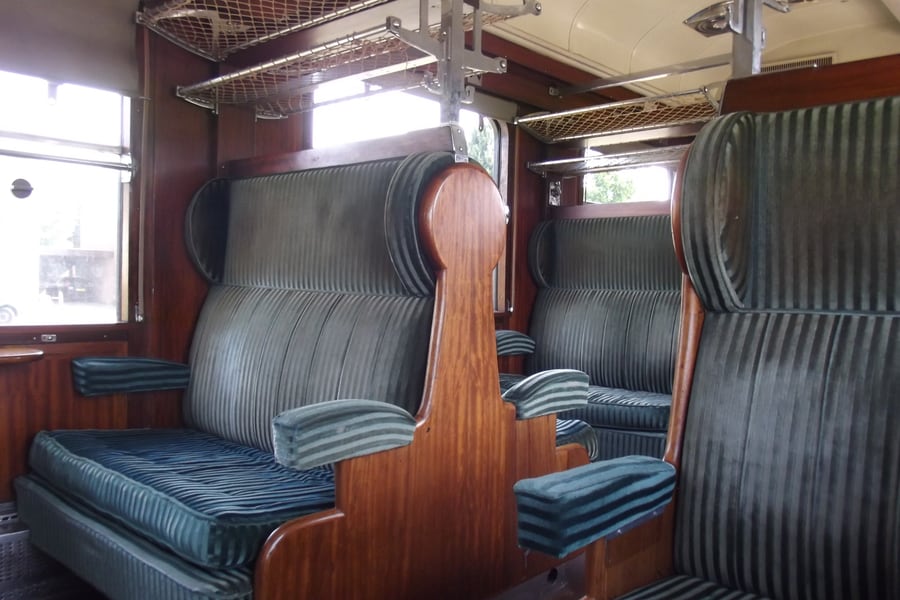
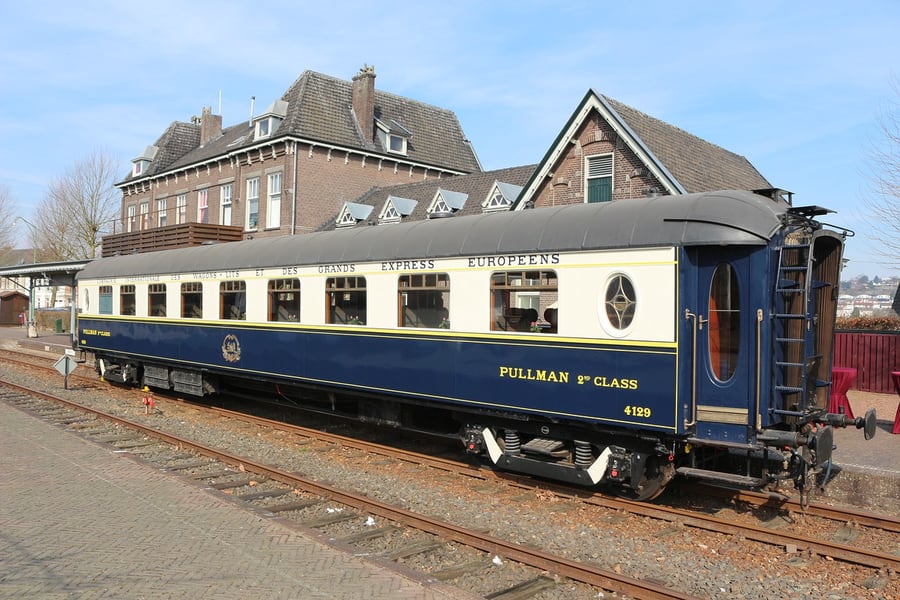
Behind whatever is in front, the rake is Belgian. Seven K1 coaches of 1934, built by Baume & Marpent for the NMBS as first-class stock, repainted in the railway's own wine red and marl yellow, with the original sprung benches, lacquered wood and chrome fittings — 52 seats in the open saloons, two compartments of six, and folding seats on the balconies. The steam train runs six carriages and four of them have a lavatory; the railbus has none. For the dining trains there is also Pullman 4129 of 1927, a Compagnie Internationale des Wagons-Lits car in blue and cream, restored here between 2003 and 2012.
Along the route
 Maurits90 / Wikimedia Commons · CC0 · 2016 · cropped
The Kriegslok that took ten years
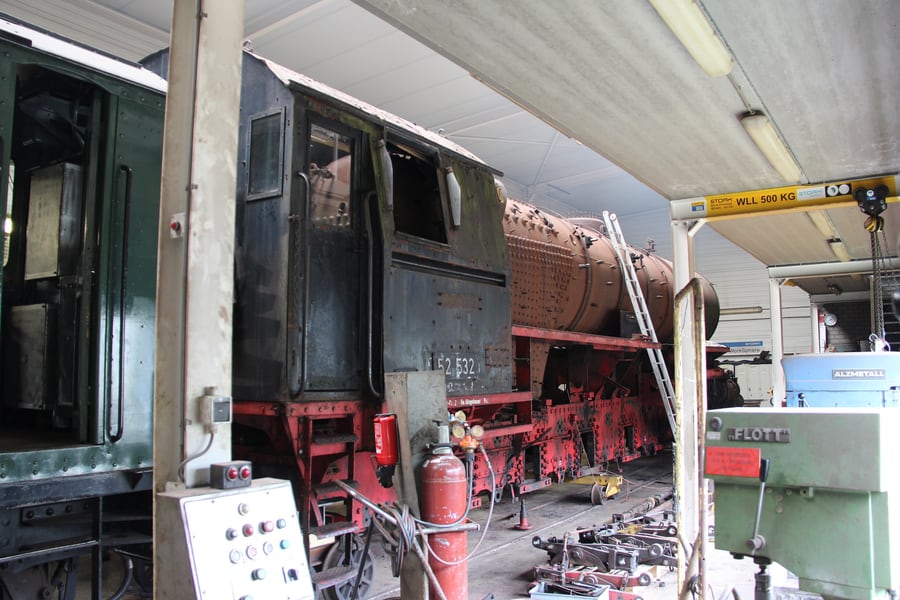
Locomotive 52 532 was built in Berlin in 1943, requisitioned by Soviet forces in 1945 and rebuilt in East Germany. It reached Simpelveld in 2015 with a boiler that had not been under pressure for twenty years. The overhaul took a decade; it steamed again in September 2025.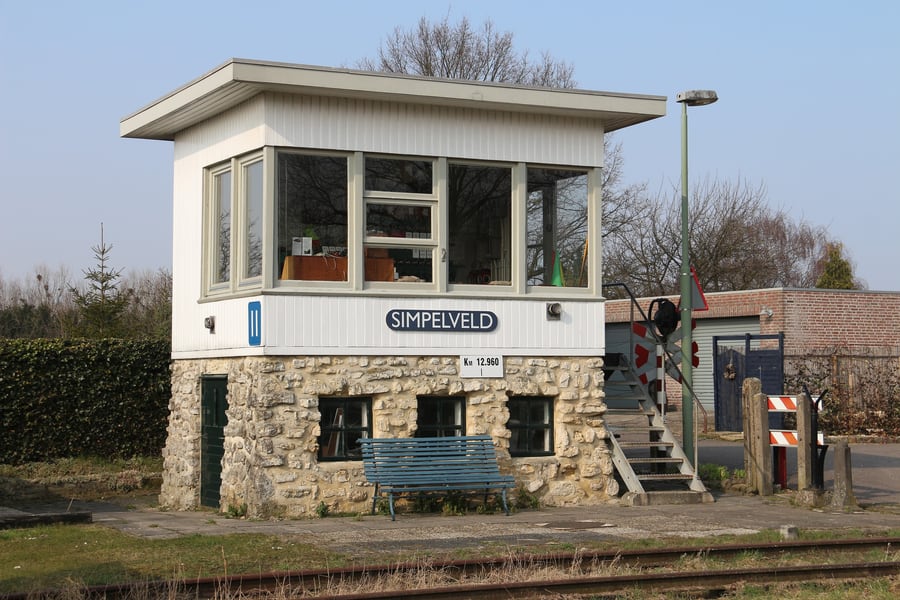 Jasper K / Wikimedia Commons · CC BY-SA 4.0 · 2015 · cropped
Signalled by hand, by lever
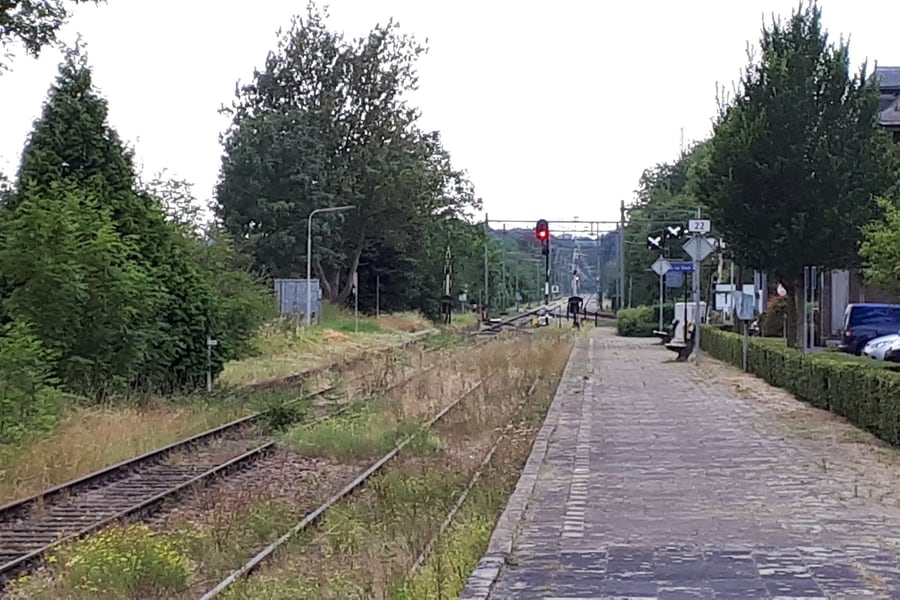
When the national railway gave up the line in 1992, the block posts at Simpelveld and Wijlre were the last two working on a Dutch passenger railway. Volunteers rebuilt the system rather than replace it. Two lever frames are national monuments, and no train moves until a signalman has set the road.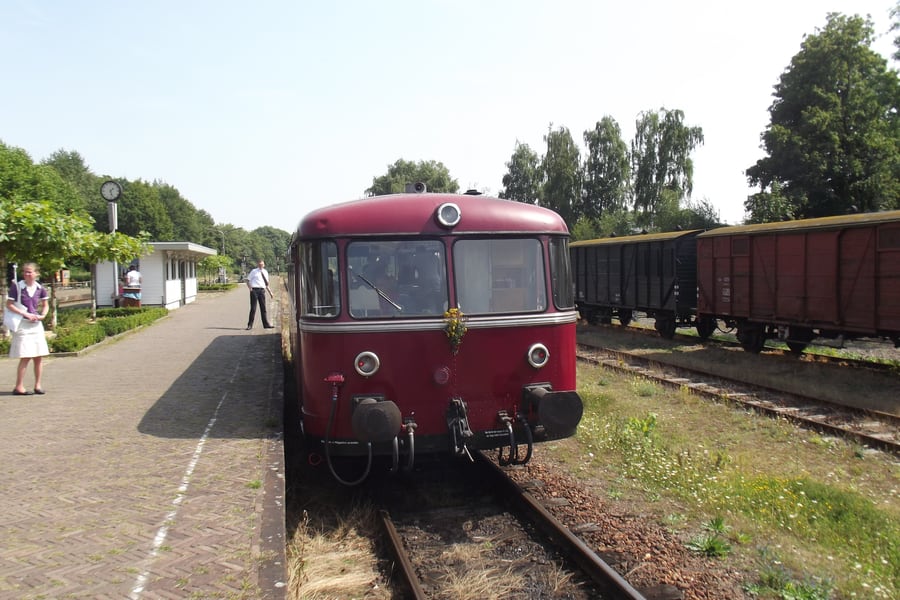 Smiley.toerist / Wikimedia Commons · CC BY-SA 4.0 · 2013 · cropped
The railbus does the other half
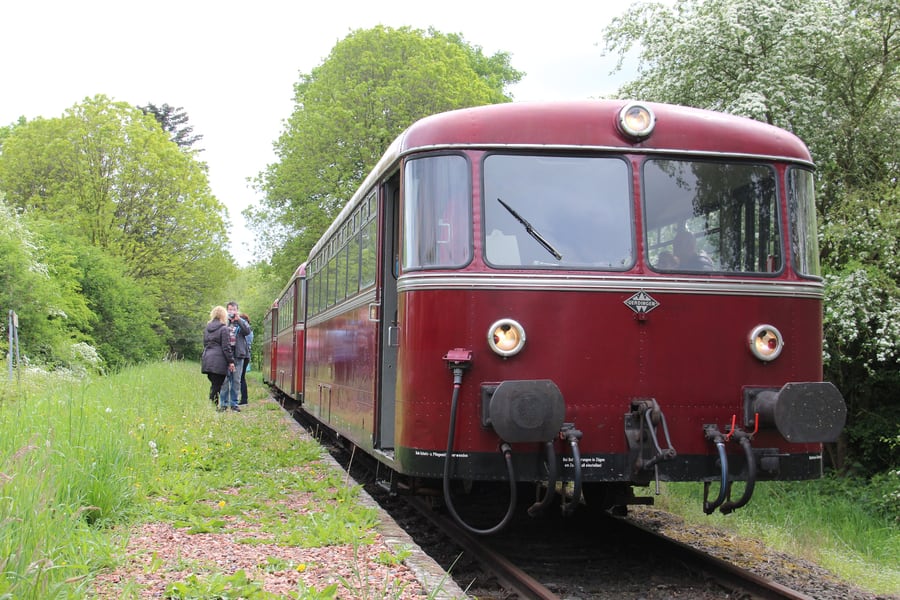
Half the timetable is not steam at all. A 1950s Uerdingen Schienenbus — a bus body on a railway underframe, built for German branch lines that could not pay for anything heavier — works the trains to Kerkrade and over the border to Vetschau.A bit of history
Culture & experiences along the way
 Willem 90 / Wikimedia Commons · CC0 · 2016 · cropped
A train that leaves the country
The railbus to Vetschau is the only service on the line that crosses a frontier, and it does it twice in seventeen minutes. Simpelveld to Bocholtz to Vetschau is 5.3 kilometres of the old Aachen–Maastricht main line, reopened in 2000, and the German end is a single platform and a buffer stop in the Laurensberg district of Aachen — about five kilometres short of the cathedral, with a bus stop on the road outside. Two round trips run on a normal operating day, at 12:20 and 13:30 out of Simpelveld.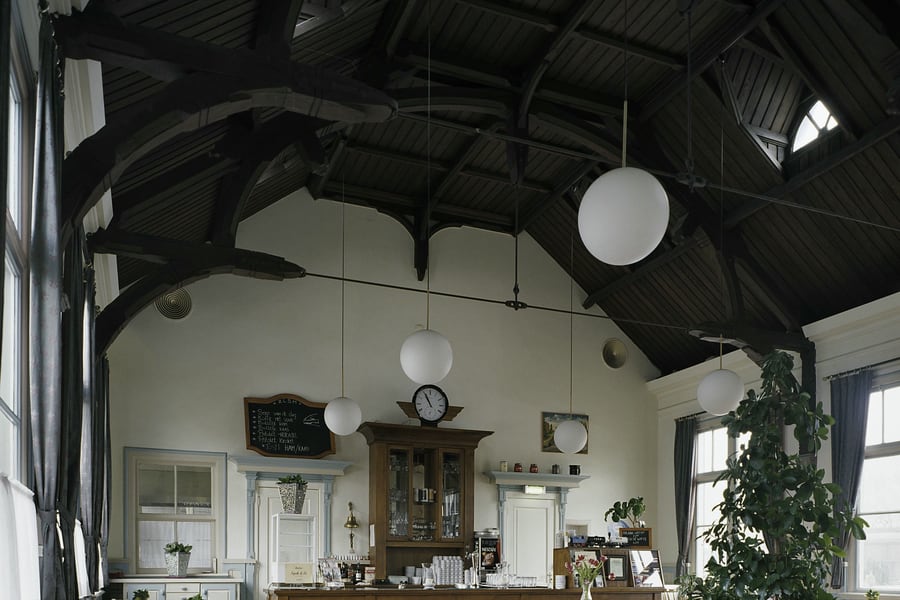 Sergé Technau / Wikimedia Commons · CC BY-SA 4.0 · 2006 · cropped
Lunch in the customs hall
Simpelveld was a frontier station, and the long room where customs officers went through travellers' luggage is now Brasserie Perron 4, under its original roof structure. The rest of the yard is open too: the depot and carriage shed, the working railway water tower and the turntable pit — both national monuments — the two signal boxes, a shop, and a garden-gauge model railway on platform 1. None of it costs anything to walk into, and the steam train stops at the terrace doors.Timetables
The Miljoenenlijn does not run daily. It runs on published travel days, and one timetable covers all of them: the operator's reguliere dienstregeling, which was identical on every 2026 running day checked — Saturday 29 August, Sunday 6 September, Wednesday 14 October, Saturday 17 October and Sunday 25 October. Three trains work west to Schin op Geul, two east to Kerkrade and two south over the border to Vetschau, and a day ticket covers all seven. Times below were read from the operator's own travel-day pages in August 2026.
Fourteen travel days were published for the rest of the 2026 season, from 29 August to Sunday 25 October — every Sunday, several Saturdays and two Wednesdays. The season proper runs from April, and beyond it the operator lists Sinterklaas trains on 15 and 22 November and the Kerst Expres from 5 December to 3 January.
Simpelveld to Schin op Geul, and back
The flagship run: 9.6 km down the Geul valley in thirty minutes. The first two departures are steam and the last is the railbus.
| Stop | km | Steam | Steam | Railbus |
|---|---|---|---|---|
| Simpelveld dep | 0 | 10:45 | 13:15 | 15:45 |
| Eys-Wittem | 4.2 | 10:56 | 13:26 | 15:56 |
| Wijlre-Gulpen | 6.2 | 11:05 | 13:35 | 16:05 |
| Schin op Geul arr | 9.6 | 11:15 | 13:45 | 16:15 |
| Schin op Geul dep | 9.6 | 11:35 | 14:05 | 16:35 |
| Wijlre-Gulpen | 6.2 | 11:47 | 14:17 | 16:47 |
| Eys-Wittem | 4.2 | 11:57 | 14:27 | 16:57 |
| Simpelveld arr | 0 | 12:10 | 14:40 | 17:10 |
Twenty minutes at Schin op Geul is enough to change on to Arriva, and enough for nothing else; the walk down the Geul to Kasteel Schaloen needs a whole train interval.
Simpelveld to Kerkrade
Railbus only, twice a day, 6.6 km through the deep cutting. The intermediate stop is the railway's own depot and workshop.
| Stop | Railbus | Railbus |
|---|---|---|
| Simpelveld dep | 11:15 | 14:45 |
| Depot-Werkplaats | 11:17 | 14:47 |
| Kerkrade arr | 11:35 | 15:05 |
| Kerkrade dep | 11:45 | 15:15 |
| Depot-Werkplaats | 12:02 | 15:32 |
| Simpelveld arr | 12:05 | 15:35 |
Simpelveld to Vetschau, in Germany
Railbus only, twice a day, 5.3 km and a ten-minute stand at the buffer stop before it comes back.
| Stop | km | Railbus | Railbus |
|---|---|---|---|
| Simpelveld dep | 0 | 12:20 | 13:30 |
| Bocholtz | 2.7 | 12:29 | 13:39 |
| Vetschau (D) arr | 5.3 | 12:37 | 13:47 |
| Vetschau (D) dep | 5.3 | 12:47 | 13:57 |
| Bocholtz | 2.7 | 12:55 | 14:05 |
| Simpelveld arr | 0 | 13:05 | 14:15 |
Fitting the three together
The whole railway can be done in a day from Simpelveld, and the timetable is built so that it can. The 10:45 steam train is back at 12:10; the 12:20 to Vetschau leaves ten minutes later and returns at 13:05; the 13:15 steam train follows, and the 14:45 railbus covers Kerkrade. The one clash is the 11:15 to Kerkrade, which leaves while the first steam train is still out. Event days — Sinterklaas, the Kerst Expres, the evening expresses — run to their own timetables and their own fares.
Travel days and times are published by the operator: De Miljoenenlijn · Rijdagen (opens in a new tab).
Tickets
The Miljoenenlijn sells one thing: a day ticket, valid on every train on all three branches from the time slot chosen at purchase. Getting off at Eys or Wijlre to walk, then picking up a later train back, costs nothing extra. Booking online saves €2.50 a head and is the only way to be sure of a seat — the steam train has a fixed capacity, and a full slot is closed to the counter too.
Payment is the catch. The Simpelveld window takes cash or a Dutch debit card, the conductor takes cash only, and no credit card works anywhere on the railway. The OV-chipkaart, NS Business Card and Museumkaart are not valid. A ticket also carries you free on Arriva's regional trains and buses, though engineering work near Voerendaal has suspended that connection to Valkenburg, Heerlen and Maastricht. Fares read from the operator in August 2026.
Book your tickets
Adult day ticket
€21.50 online, €24.00 at the counter
All three branches, all day, with as many stops along the way as you like.
Book Tickets (opens in a new tab, on miljoenenlijn.nl)via miljoenenlijn.nlChild day ticket
€11.50 online, ages 3 to 11
Under-3s travel free and need no ticket.
Book Tickets (opens in a new tab, on miljoenenlijn.nl)via miljoenenlijn.nlFamily day ticket
Two adults and two children under 12
The cheapest way for a family of four, booked online.
Book Tickets (opens in a new tab, on miljoenenlijn.nl)via miljoenenlijn.nlRail Passes
No rail pass covers the Miljoenenlijn. The Zuid-Limburgse Stoomtrein Maatschappij is an independent foundation running its own infrastructure, and it does not appear anywhere in Interrail's list of Dutch operators — which, checked in August 2026, runs to NS and its international partners, Eurostar, European Sleeper, Qbuzz, Arriva, Keolis, VIAS, Eurobahn and NMBS, and no one else. The €21.50 day ticket is payable whatever else is in your pocket, and a pass holder buys it on the same terms as everyone else.
Where a pass does earn something is the journey to the line. Arriva's regional trains are included, and Arriva is what reaches both ends: Maastricht Randwyck through Valkenburg to Schin op Geul on services S4 and S5, and Heerlen to Kerkrade Centrum on the S3. Aachen is joined to Heerlen by rail by way of Herzogenrath — the route the Maastricht–Aachen trains have taken since 1992 — so a pass holder arriving from Germany reaches the line without paying a fare either.
Which pass, if any
There is no Netherlands-only Interrail pass. The country is covered by the Benelux One Country Pass, shared with Belgium and Luxembourg, and by the Global Pass. Adult second-class prices read from Interrail on 28 August 2026:
| Travel days within one month | Adult, 2nd class |
|---|---|
| 3 days | € 137 |
| 4 days | € 165 |
| 5 days | € 191 |
| 6 days | € 216 |
| 8 days | € 259 |
Two conditions matter here more than usual. A One Country Pass cannot be bought for the country you live in, and it cannot be used for travel inside your own country — so a Dutch reader gets nothing from the Benelux pass at home, and a Belgian one cannot use it for the Belgian half of the trip.
Whether it is worth it
For this journey alone, no. A travel day on the cheapest Benelux pass costs about €46, and the Arriva ride from Maastricht or Heerlen to the line is a few euros bought at the machine. The pass makes sense only if the Miljoenenlijn is one stop in a fortnight that also takes in Amsterdam, Brussels and Luxembourg — and even then the steam train is a separate purchase.
Places to Visit
A day ticket lets passengers break the journey anywhere, and the stations are close enough together that a stop costs one train interval rather than an afternoon. Between them the halts reach a pilgrimage monastery, two moated castles, the largest abbey complex in the Netherlands and — at the German end of the railbus line — the outskirts of Aachen.
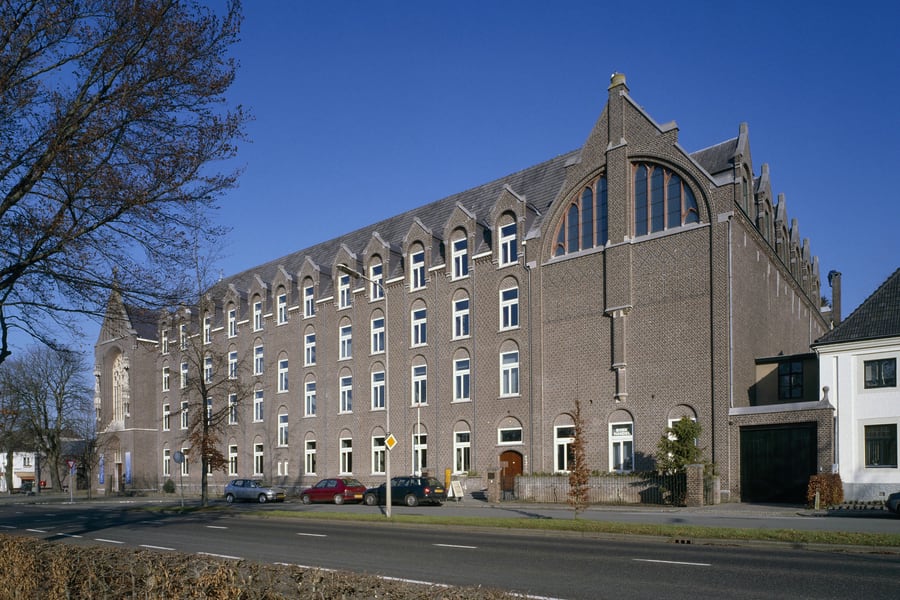 Paul van Galen / Wikimedia Commons · CC BY-SA 4.0 · 2005 · cropped
Klooster Wittem, at the Eys-Wittem halt
The Redemptorist monastery at Wittem is a pilgrimage church, and on most days it holds more people than any station on the line. The first building went up between 1729 and 1733 to a design by the Westphalian architect Johann Conrad Schlaun, executed by a young Johann Joseph Couven of Aachen; Capuchins lived in it until the French Revolution and the Redemptorists took over in 1835. Most of what stands now is Johannes Kayser's monastery of 1891–94, with the baroque church surviving inside it.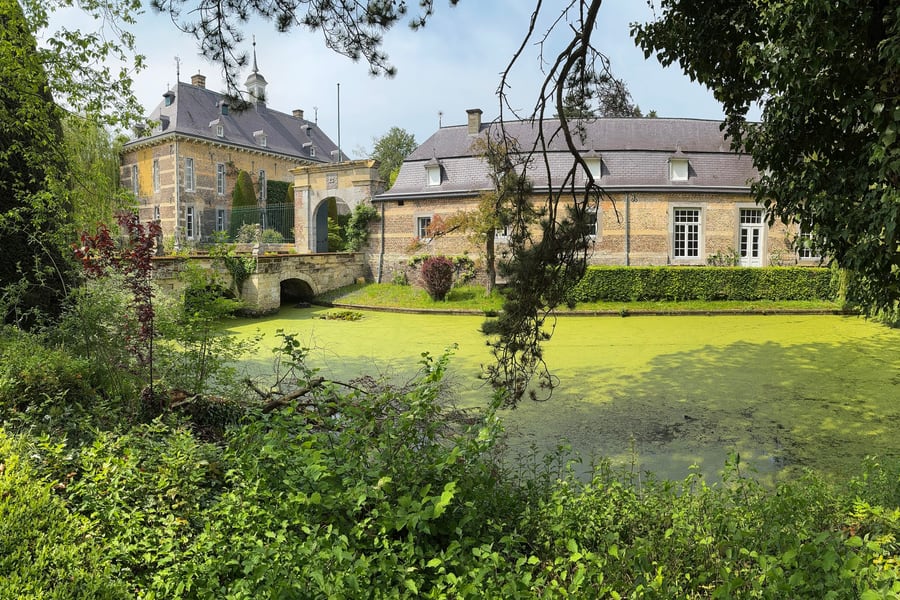 Wouterhagens / Wikimedia Commons · CC0 · 2026 · cropped
Kasteel Wijlre, by the Geul
A castle on the river a few minutes from the Wijlre-Gulpen platform, and one where the honest answer matters: the house itself is lived in and closed to visitors. What is open, at set times, is the estate around it — the walled garden, the coach house and the Hedge House, a purpose-built gallery in the kitchen garden that shows contemporary art and sculpture. The grounds are held by a charitable fund and run by a separate foundation, which is why the gate is open at all.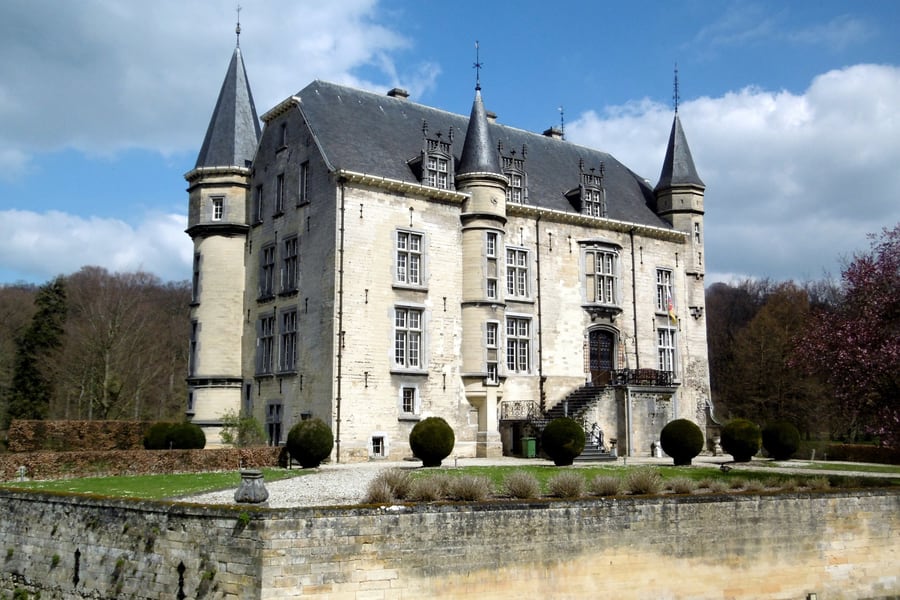 ArthurMcGill / Wikimedia Commons · CC BY-SA 4.0 · 2023 · cropped
Kasteel Schaloen, a walk from Schin op Geul
Downstream of the terminus, the Geul runs past a moated castle with corner turrets and a watermill, in the hamlet of Oud-Valkenburg. Schaloen is a national monument and part of a protected village setting that also takes in the church of St John the Baptist and the manor of Genhoes. It is about a twenty-minute walk from Schin op Geul station along the valley, which is the pleasant way to fill the gap between one steam train and the next.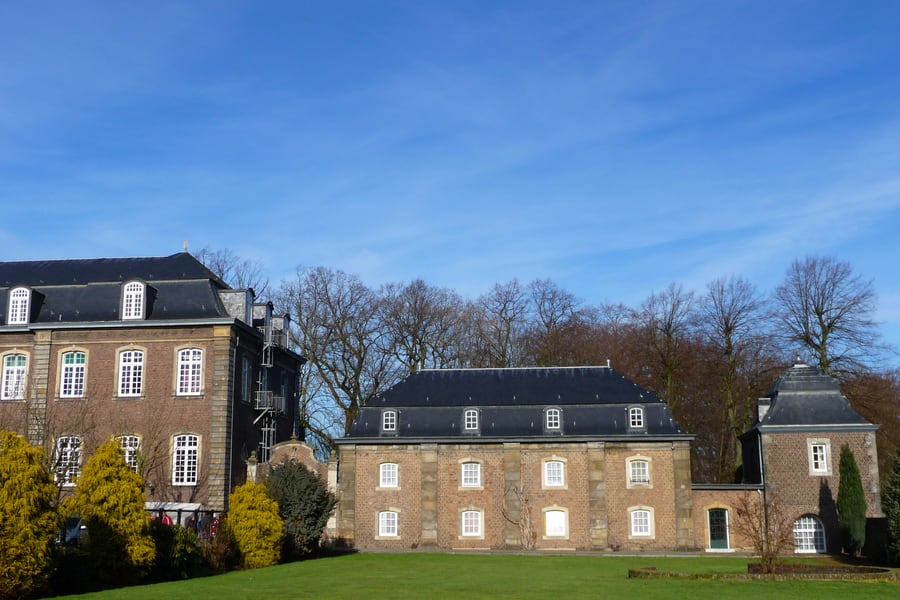 Rododendron / Wikimedia Commons · CC BY-SA 3.0 · 2009 · cropped
Abbey Rolduc, at the Kerkrade end
Rolduc is the largest surviving abbey complex in the Netherlands, and the reason there was coal mining here at all — its canons were digging it out of the Worm valley in the twelfth century. Ailbertus of Antoing founded the house in 1104 and laid the church's foundations in 1106; the crypt was finished in 1108 and is still the best thing in it. Abbey, seminary, famous boarding school, seminary again — and a kilometre from the railway.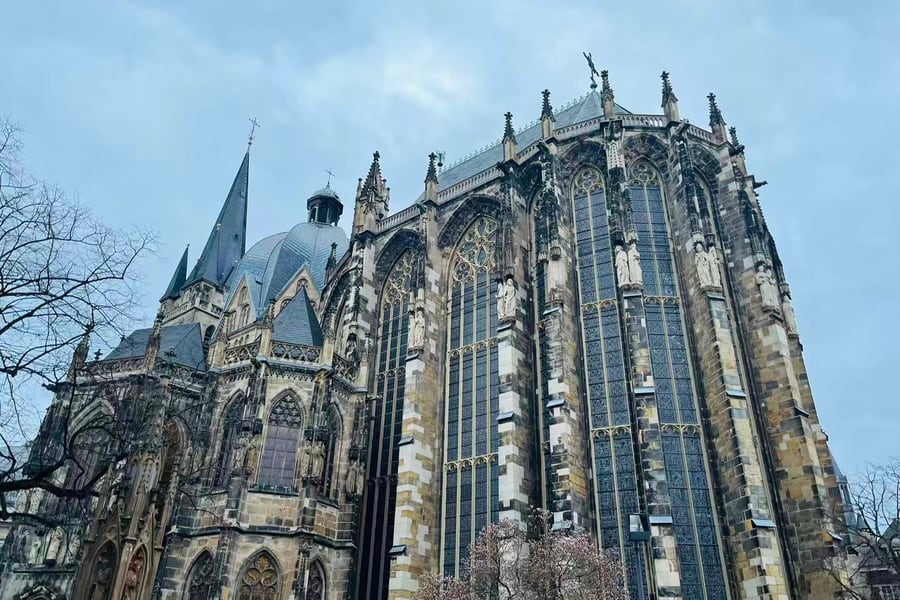 Kaap bij Sneeuw / Wikimedia Commons · CC0 · 2026 · cropped
Aachen, from the far end of the railbus line
Vetschau is a halt inside the Aachen city boundary, roughly five kilometres out from the cathedral. Charlemagne built that cathedral as his palace chapel and was buried in it in 814; thirty-one German kings were crowned there between 936 and 1531, and in 1978 it became one of the first twelve sites on the UNESCO World Heritage list. The Carolingian octagon at its centre was modelled on San Vitale in Ravenna and is startlingly small beside the Gothic choir that was built onto it.Where to Sleep
South Limburg is a walking and cycling district with a long tourist habit, so beds are plentiful and mostly small. Simpelveld itself is a village with little in the way of hotels; the three below sit at the ends and the middle of the line, and all three can be reached from a station the railway serves. Valkenburg, twenty minutes beyond Schin op Geul by Arriva and free with a Miljoenenlijn ticket, has by far the largest choice if none of these suits.
Where to stay
Hotel Salden
Family-run, at the steam terminus
A family hotel in Schin op Geul, at the end of the steam line, looking out at the Keutenberg. The Miljoenenlijn uses it for the lunch on its castle-walk package, so the two are already in the habit of working together.
Check Availability (opens in a new tab, on hotelsalden.nl)via hotelsalden.nl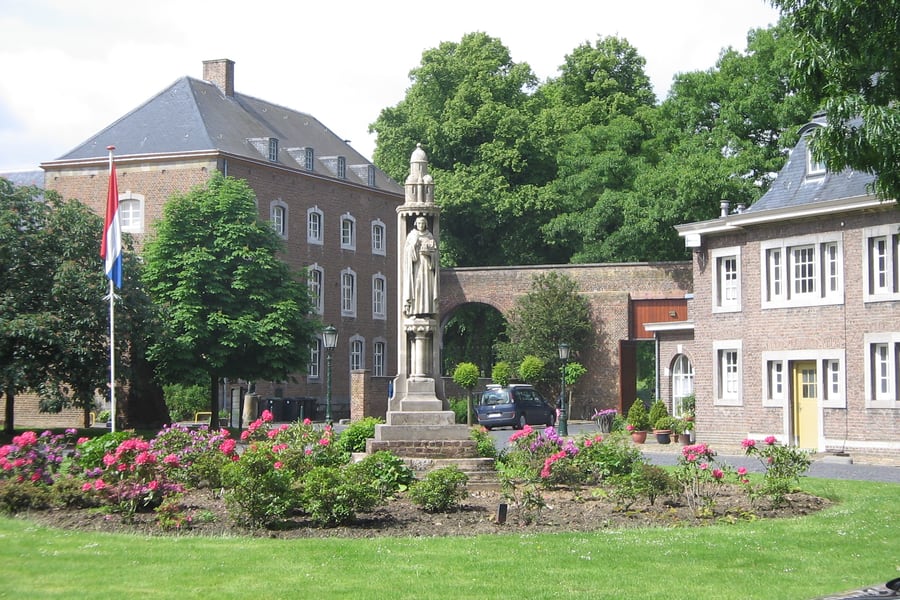 Wolf Meusel / Wikimedia Commons · Public domain · 2006 · cropped
Abdij Hotel Rolduc
156 rooms inside the abbey
The Kerkrade abbey takes guests in its own buildings, with 156 rooms around the cloister and the courtyards. It is the hotel nearest the eastern end of the line, and the twelfth-century church and crypt are on the doorstep.
Check Availability (opens in a new tab, on rolduc.com)via rolduc.com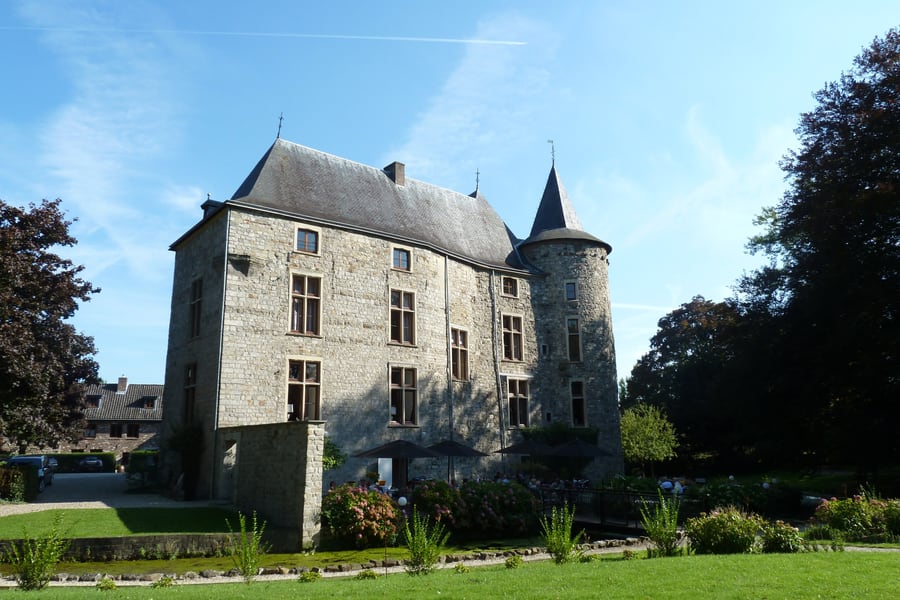 Romaine / Wikimedia Commons · CC0 · 2010 · cropped
Kasteel Wittem
A moated castle by the Eys-Wittem halt
A castle hotel with a brasserie and a park, on the old road between Maastricht and Aachen. William of Orange slept here while his troops were preparing to attack Maastricht, which is the sort of thing the building has been doing since 1220.
Check Availability (opens in a new tab, on nl-hotels.com)via nl-hotels.comQuestions or corrections
Planning this trip and stuck on something, or spotted a time, fare or detail that has changed? Send us a message about The Miljoenenlijn — Simpelveld to Schin op Geul and Kerkrade. We read every one, and we update this page when something has changed.