Netherlands
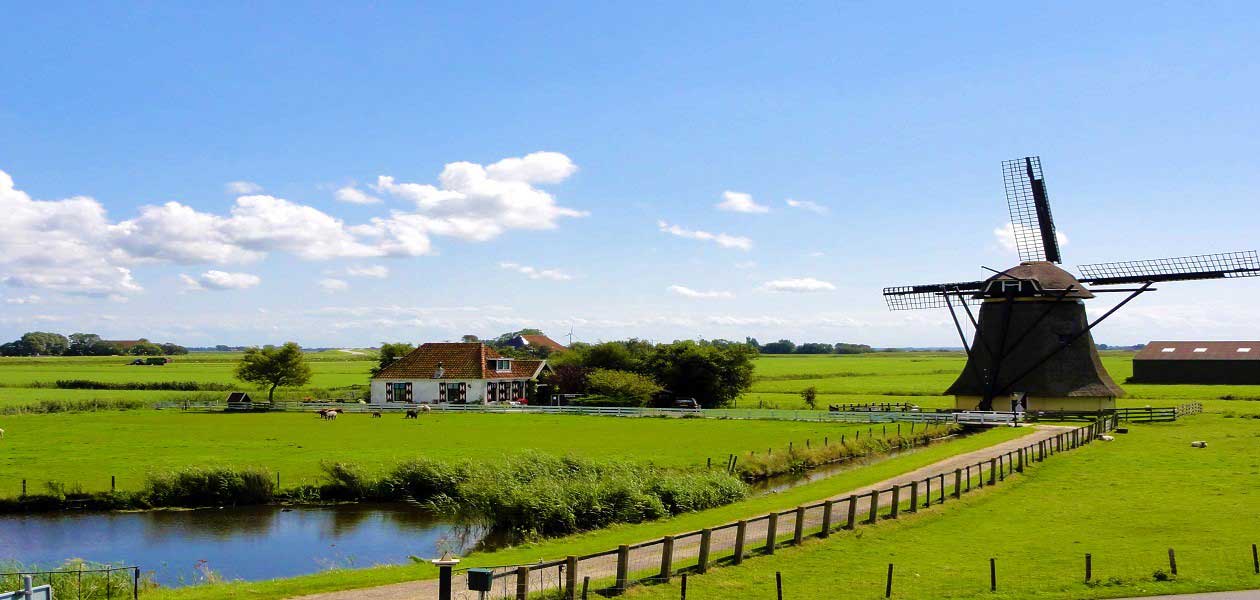
The Netherlands is a country of 41,543 km² and nearly 18 million people in north-western Europe, bordered by Germany to the east and Belgium to the south, with a long North Sea coast to the west. It is famously low: a substantial part of the country lies below sea level and exists only because it is drained and defended, and the flat, reclaimed polder landscape reaches almost everywhere. The exception is the far south-east, where the province of Limburg finally produces hills worth the name.
That flatness produced one of the densest and busiest railways in the world — some 6,830 km of track, intensively used, with the national operator NS running services at frequencies that make a timetable almost unnecessary between the big cities. The scenic interest lies elsewhere. Dutch preservation societies are among the best equipped in Europe, and three of them run substantial lines: through the Limburg hills, across West Friesland behind a steam tram, and over the heath and woods of the Veluwe.
Rail journeys in Netherlands
Good to know
Is the Netherlands worth visiting for scenery by train?
Honestly, not for landscape in the way Norway or Switzerland are — the country is flat by definition and the main-line network is built for speed and frequency rather than views. What it does offer is engineering and preservation: a very dense railway run extremely well, and three well-equipped heritage lines. The one part with real relief is South Limburg in the far south-east.
What heritage railways are there?
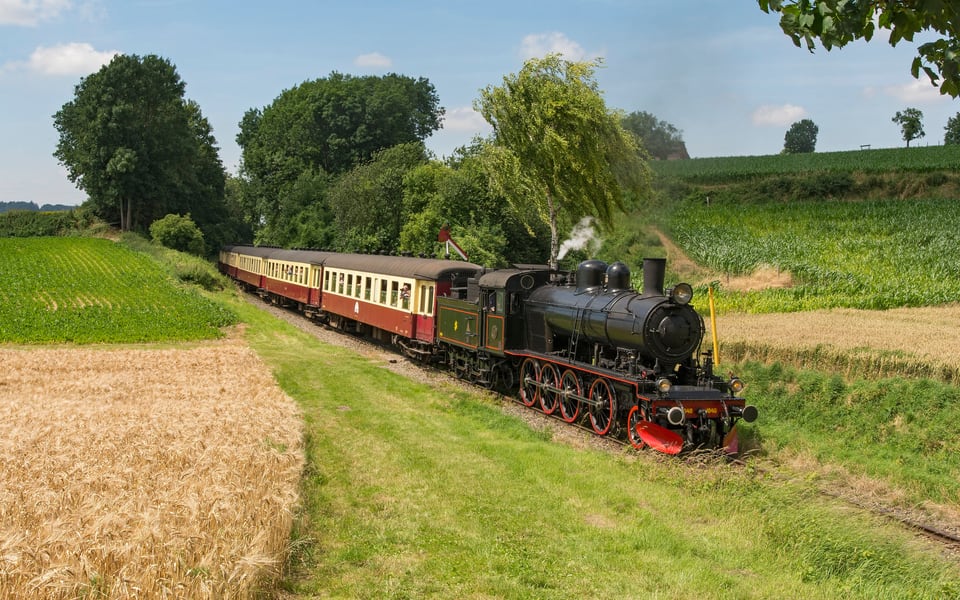
Three of substance. The Miljoenenlijn (ZLSM) works from Simpelveld through the South Limburg hills and across the border towards Aachen, on a rare double-track preserved line. The Museumstoomtram runs about 20 km from Hoorn to Medemblik behind steam tram locomotives, with carriages presented as they were in 1926. The Veluwsche Stoomtrein Maatschappij runs Apeldoorn to Dieren across the Veluwe.
Does an Interrail or Eurail pass cover the Netherlands?
There is no Netherlands-only Interrail pass; the country is covered by the Benelux one-country pass shared with Belgium and Luxembourg, and by the Global Pass. Note that heritage railways are run by independent foundations and are not part of the national network, so a pass should not be assumed to cover them.
How are tickets and stations organised?
The national network is operated principally by NS, with the infrastructure owned and managed separately by ProRail, and several regional operators running branch lines. Services between the major cities are frequent enough that most travellers turn up rather than plan around a departure time.
Which Dutch railway is the one to ride first?
The Miljoenenlijn in South Limburg, worked by the ZLSM from the old border station at Simpelveld. It runs steam trains west to Schin op Geul, a 1950s German railbus east to Kerkrade and south across the frontier to Vetschau on the edge of Aachen, and every point and signal on it is pulled by hand. It is the only part of the country where a preserved main line runs through hills.