The Zeeland Line, Roosendaal to Vlissingen
Smiley.toerist / Wikimedia Commons · CC BY-SA 4.0 · 2023 · cropped
- Distance74.4 km, Roosendaal to Vlissingen
- Duration48 min by the fast Intercity · 1 h 04 calling everywhere
- Best seasonAll year · weekdays for the fast trains
Introduction
Until the railway came, Middelburg and Vlissingen stood on an island. Walcheren was cut off from Zuid-Beveland by the Sloe, and Zuid-Beveland from the Brabant mainland by the Kreekrak, and when the Dutch state set out in 1860 to build a line to the Scheldt it did not bridge either channel. It dammed them. The Kreekrak dam opened in 1867, for trains only; the Sloedam was closed in 1871 by sinking caissons into a gap 335 metres wide and up to 11 metres deep at low tide, and the contractor finished seven months early. Two islands became mainland so that a train could reach the sea.
That is still the line's whole story, and it is told in its engineering. Trains cross the Kreekrak on a steel arch of 1971, because the Scheldt–Rhine Canal was later cut straight through the old dam; they cross the Canal through Zuid-Beveland on a bridge of 1992 whose lifting span opens for ships only when no train is due. The Sloedam carried the Canadian assault on Walcheren in 1944, and after the flood of 1953 the line near Kruiningen could be used only at low water.
Today it is NS's railway to Zeeland: Intercitys from Amsterdam and, since December 2025, from Zwolle, over 74.4 km of double track from Roosendaal to Vlissingen. It is not a scenic railway in the way a mountain line is — much of the water it was built to cross has since been reclaimed — but it is the reason the delta's islands are joined at all, and five of its stations still stand in the buildings the line opened with.
The Journey
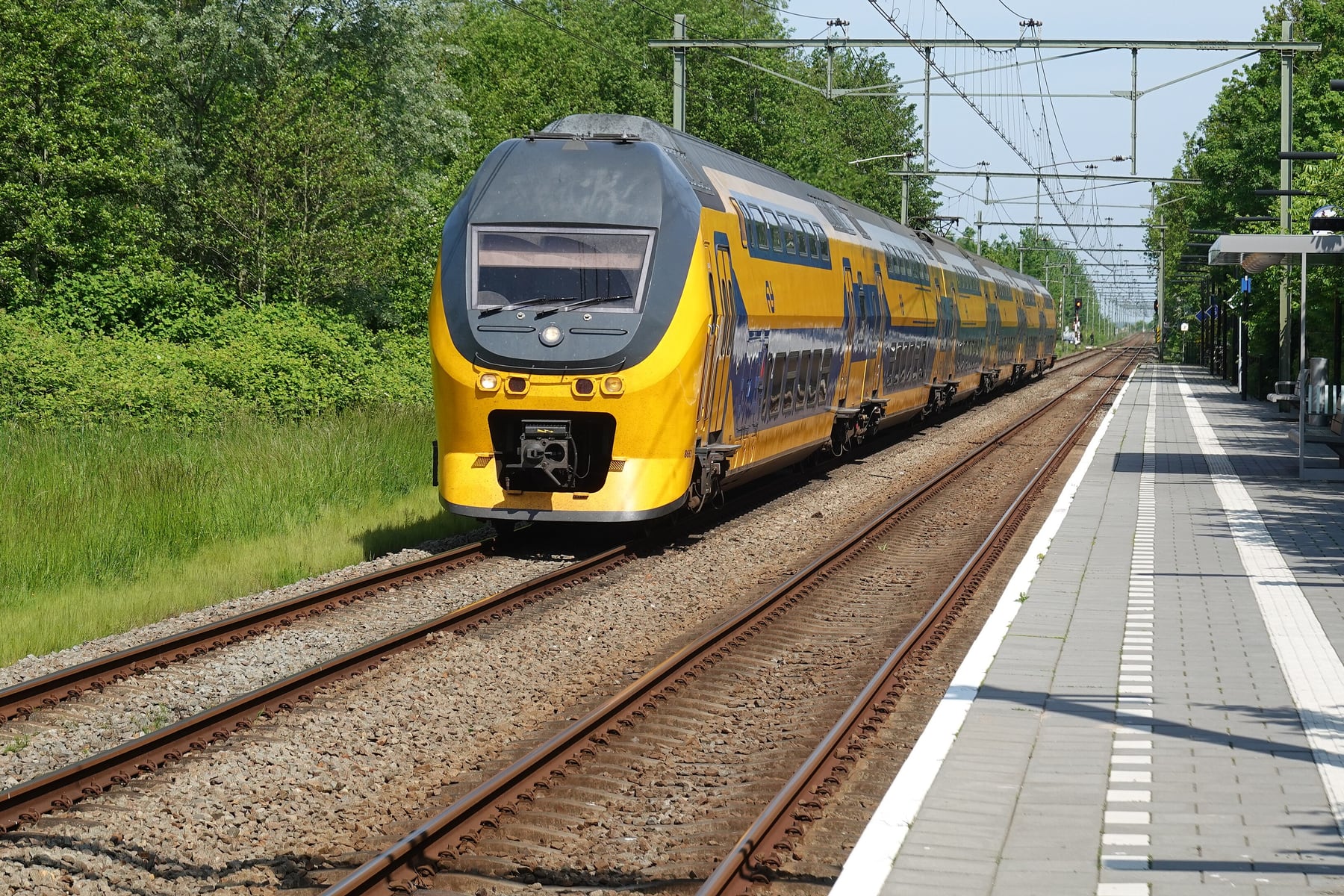
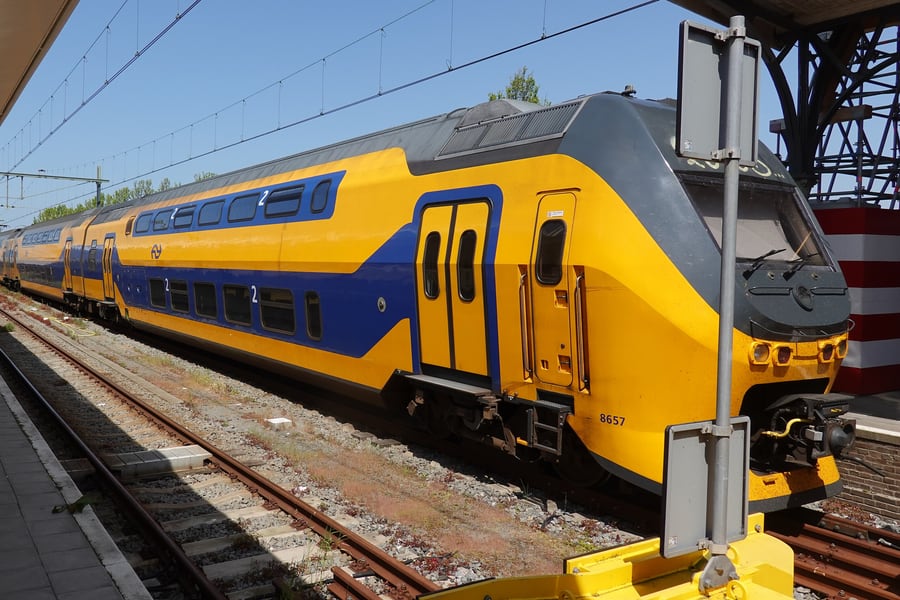
The line begins at Roosendaal, where the Intercitys from Amsterdam and Zwolle carry on into Zeeland, and heads west across Brabant to Bergen op Zoom, the first section to open, in December 1863. Every train is an Intercity now, and many of them are VIRMs — the yellow-and-blue NS double-deckers whose extended bodies Bombardier built between 2002 and 2009. On weekdays one train an hour runs fast, calling only at Bergen op Zoom, Goes and Middelburg; the others stop at all ten stations.
Across the Kreekrak
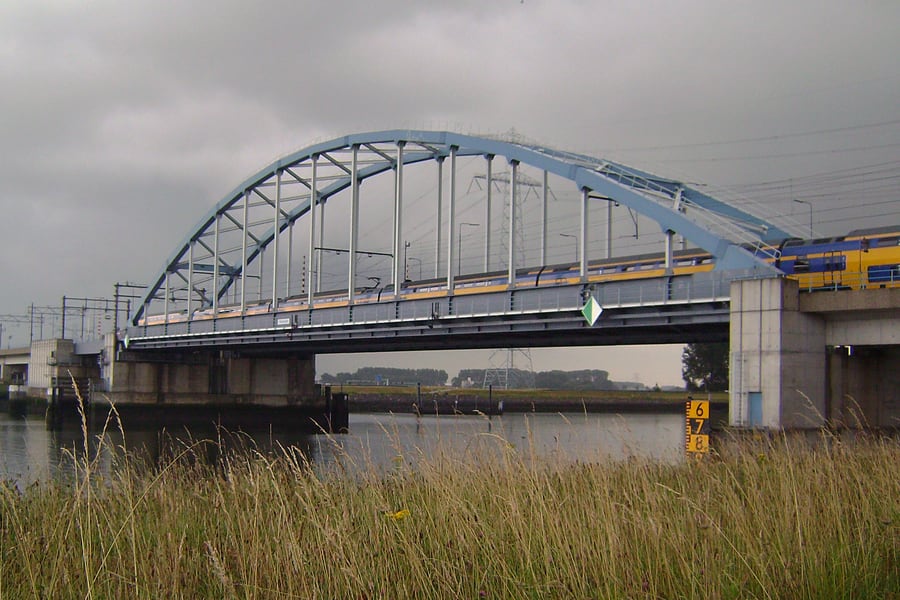
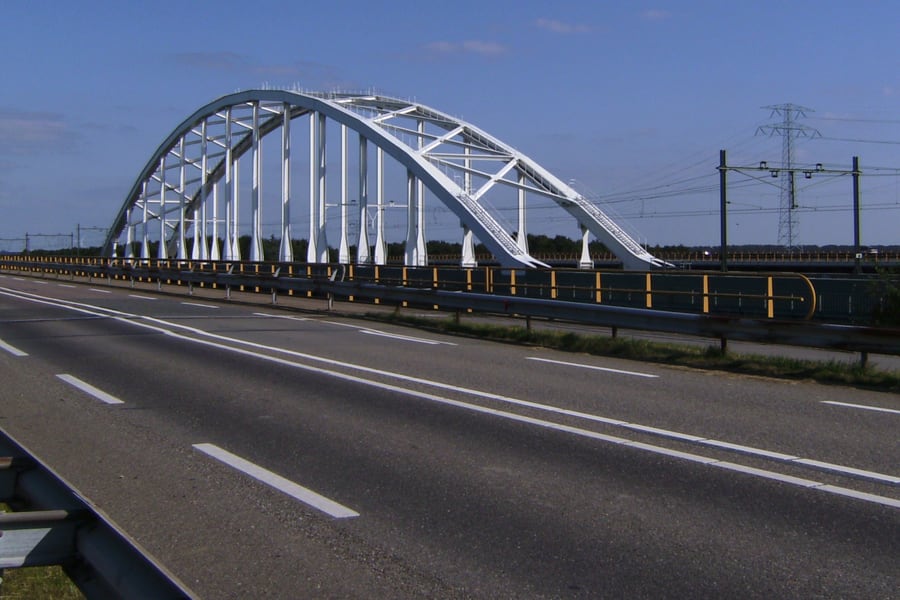
Beyond Woensdrecht the line runs out onto the Kreekrak dam, built in 1861–67 across the channel that kept Zuid-Beveland an island. The dam was chosen over a long bridge because it was simpler to build, and for its first years it carried nothing but the railway; the old road beside it came later. Between 1967 and 1976 the Scheldt–Rhine Canal was cut through it, and the trains now cross the canal on a stiffened bowstring arch of 1971, its main span 140 metres, just south of the Kreekrak locks.
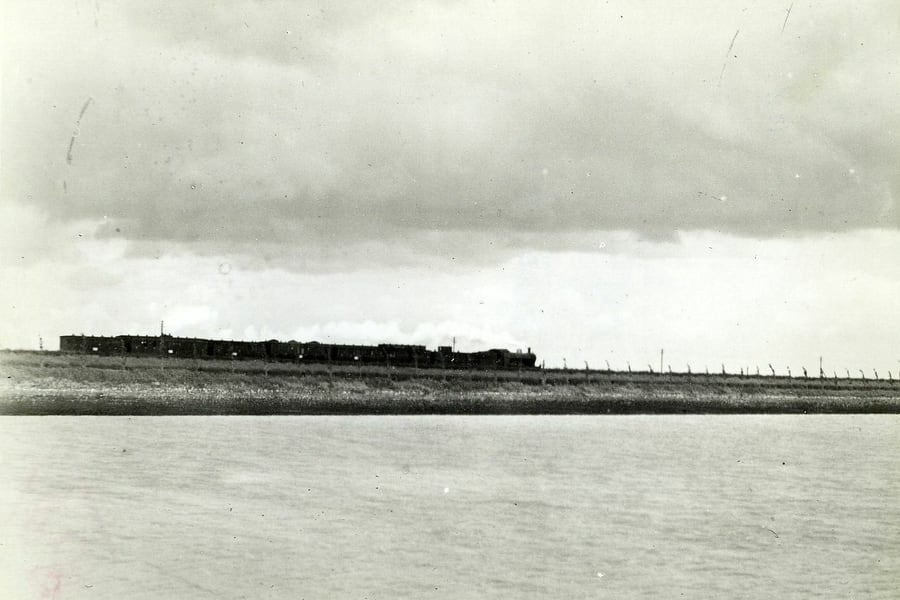
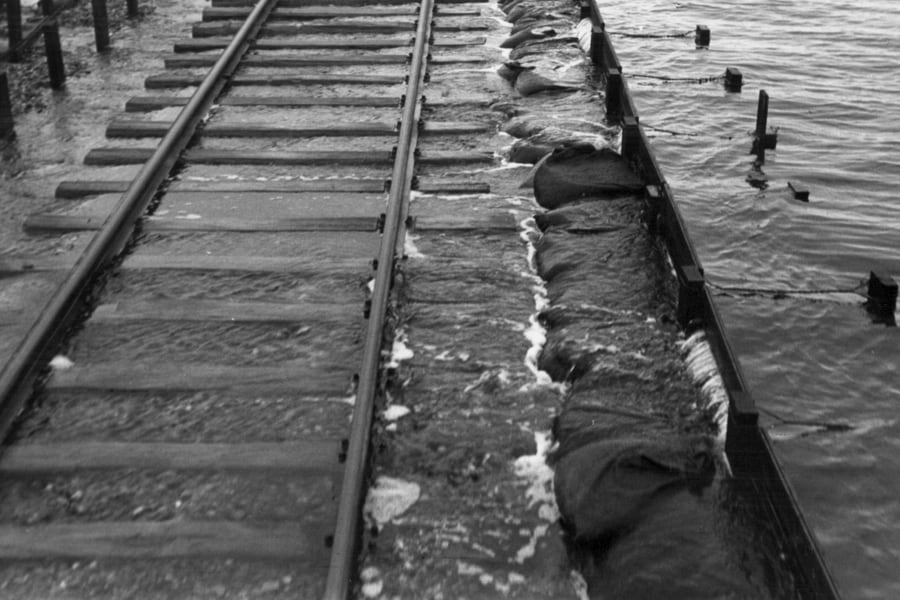
Rilland-Bath is the first station in Zeeland. From here to Goes the train runs across Zuid-Beveland's polders, calling at Krabbendijke, Kruiningen-Yerseke and Kapelle-Biezelinge, three of the stations that keep their original buildings. Near Kruiningen the track was breached in the flood of 1 February 1953, and for months afterwards it crossed the flooded Kruiningerpolder on an embankment that could be used only at low tide — the badkuipspoorweg, the bathtub railway.
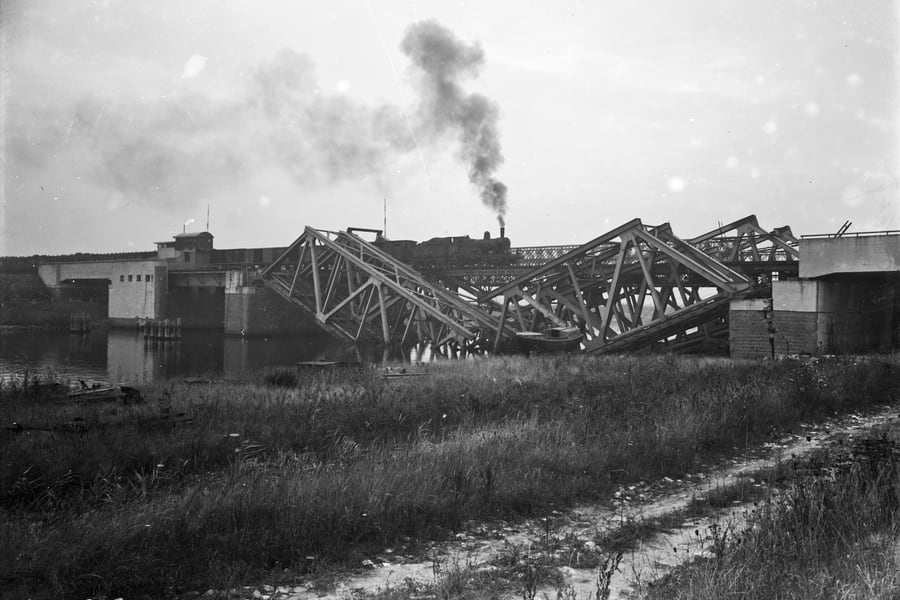
Between Kruiningen and Kapelle the line crosses the Canal through Zuid-Beveland on the Vlake bridge: a steel arch of 1992, about 130 metres across, with a lifting section for shipping that is raised only when no train is due. The bridge before it was bombed in 1944, and a temporary Bailey bridge carried the trains until its replacement opened in 1946.
Onto Walcheren
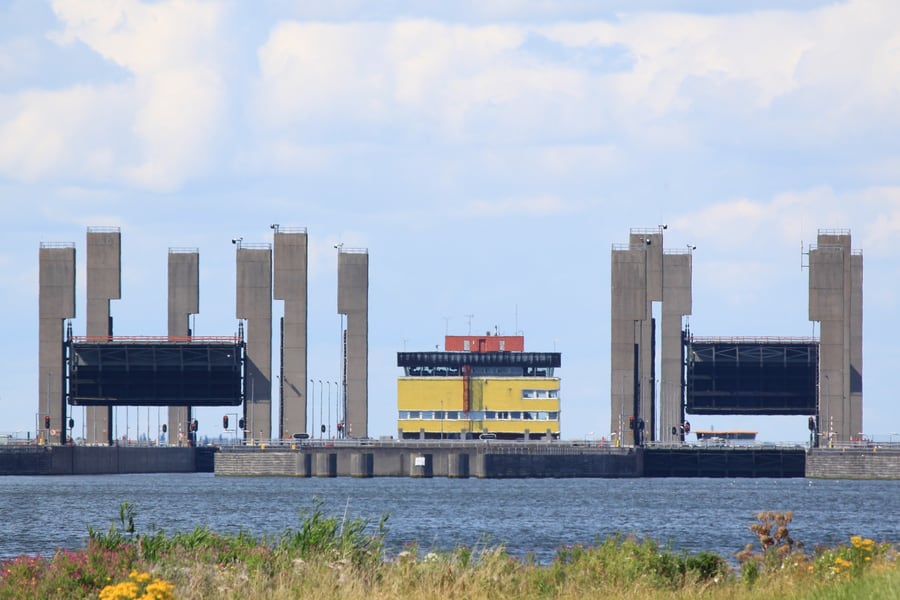
After Goes the train runs on to the Sloedam, the dam that ended Walcheren's life as an island. Napoleon had ordered a plan to close the Sloe in 1810; it took the railway to do it. The work began in March 1871, caissons were sunk into the channel, and by 14 June people could walk across at low water. On 31 October 1944 Canadian troops attacked along the dam, which offered no cover from the German mortars at its western end; the men who fought there called it the dodendam, the dam of the dead. Since the war the Sloe to the south has been reclaimed, and the A58 motorway and the old provincial road now run beside the old embankment.
Arnemuiden comes next, then Middelburg, its 1872 station beside the canal on the edge of the old town, and Vlissingen Souburg, the one station the line did not open with (1986). The terminus at Vlissingen stands by the ferry harbour on the Western Scheldt. Its neo-baroque building by Sybold van Ravesteyn opened on 18 December 1950, replacing a station destroyed in 1944; its predecessor had a waiting room for royalty, because from 1881 until the First World War through trains ran from here to Berlin to meet the boats from England.
Along the route
 Michielverbeek / Wikimedia Commons · CC BY-SA 3.0 · 2008 · cropped
The Kreekrak
Past Woensdrecht the line leaves Brabant on the Kreekrak dam, built for the railway in 1861–67 across the water that made Zuid-Beveland an island. Since 1971 a 140-metre steel arch has carried the tracks over the Scheldt–Rhine Canal cut through it.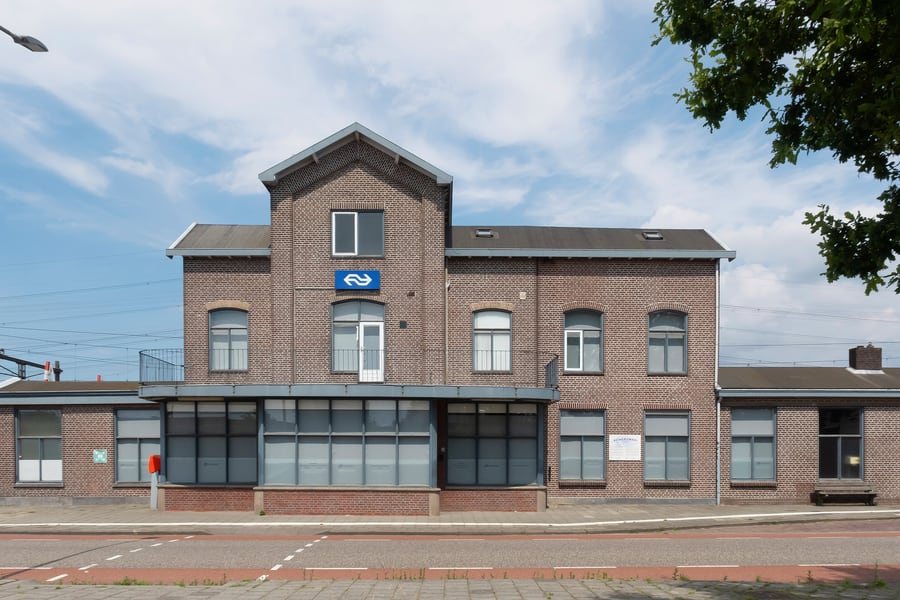 Michielverbeek / Wikimedia Commons · CC BY 4.0 · 2024 · cropped
Kruiningen-Yerseke
One of five stations still in their buildings of the 1860s and 70s. After the 1953 flood the track east of here crossed open water and could be used only at low tide — the "bathtub railway". Yerseke, the oyster and mussel village, gives the station half its name.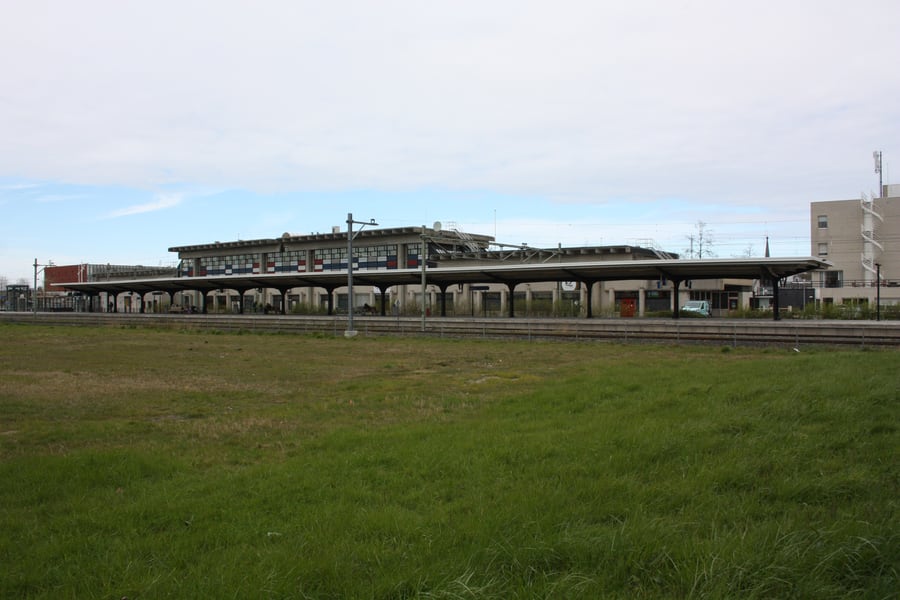 Sneeuwvlakte / Wikimedia Commons · CC BY-SA 4.0 · 2026 · cropped
Goes
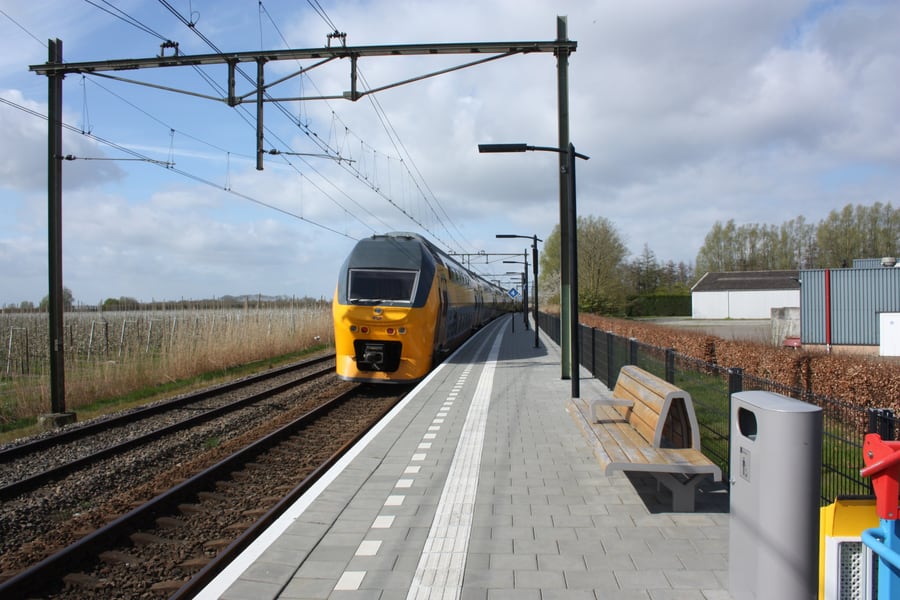
The market town of Zuid-Beveland and the fast trains' only stop between Bergen op Zoom and Middelburg. Beside the NS station, the Stoomtrein Goes–Borsele runs a museum line on part of a 1927 local railway to Hoedekenskerke.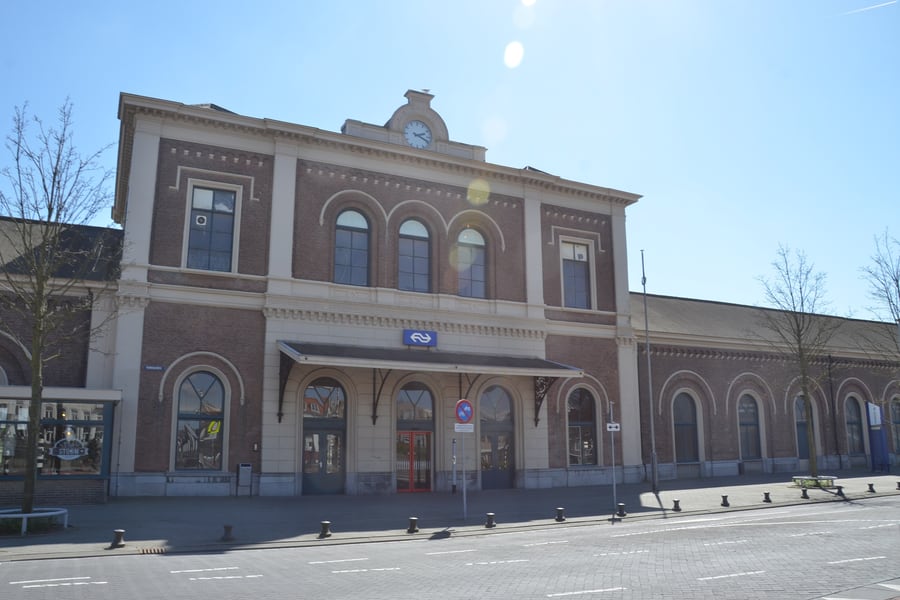 Steven Lek / Wikimedia Commons · CC BY-SA 4.0 · 2016 · cropped
Middelburg
The capital of Zeeland, reached on 1 March 1872 over the Sloedam. Its station is one of only nine third-class "Waterstaat" stations ever built, and it stands between the Canal through Walcheren, crossed by the Stationsbrug, and the old town moat.A bit of history
Culture & experiences along the way
 Hnapel / Wikimedia Commons · CC BY-SA 4.0 · cropped
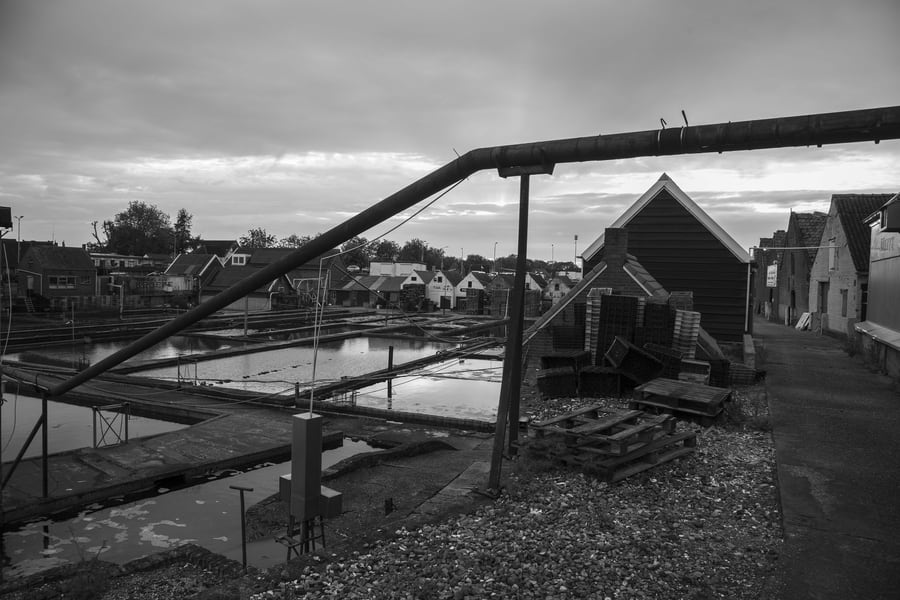
Oysters and mussels at Yerseke
Yerseke dug its first oyster pit in 1871 and still keeps the country's only mussel auction, where all mussels are offered for sale, imported ones included. Its Mosseldag falls on the third Saturday of August. The village is the "Yerseke" of Kruiningen-Yerseke station.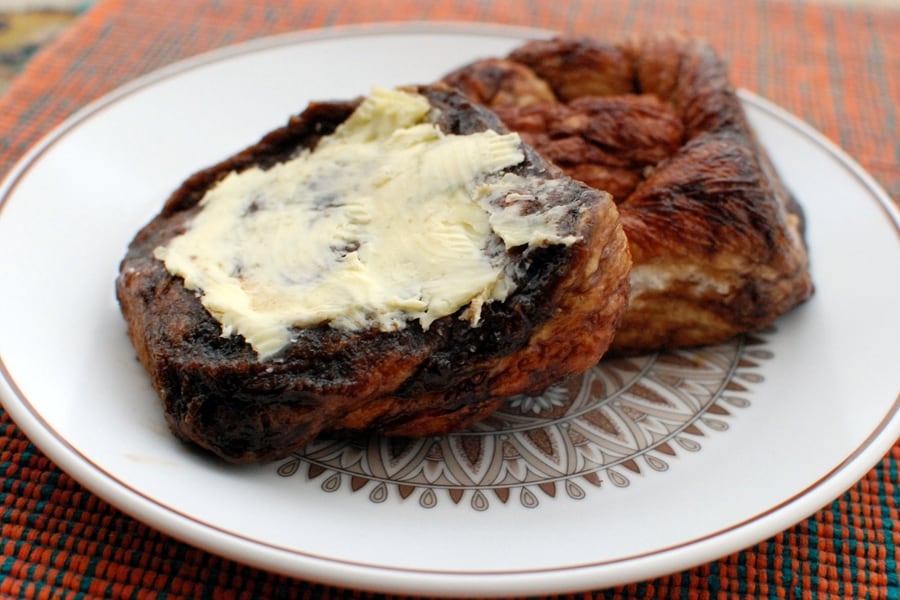 Takeaway / Wikimedia Commons · CC BY-SA 3.0 · cropped
A Zeeuwse bolus
A coil of sweet dough rolled in brown sugar, usually with cinnamon, baked until the sugar caramelises. Sephardic Jewish bakers brought it to Zeeland, probably to Middelburg, in the first half of the seventeenth century. It comes with coffee, the flat underside buttered.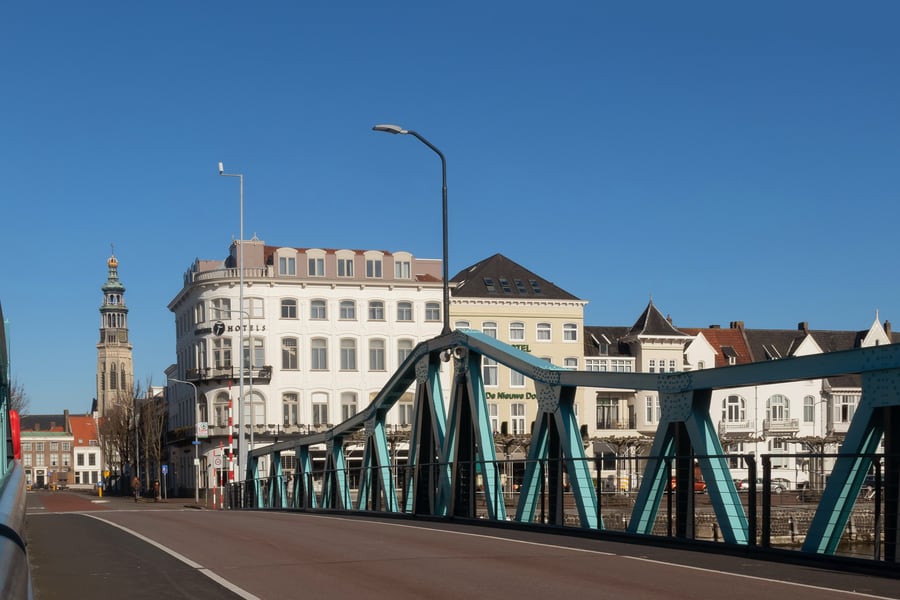 Michielverbeek / Wikimedia Commons · CC BY-SA 4.0 · 2022 · cropped
The Lange Jan carillon
The abbey tower in Middelburg, 90.4 metres tall and in sight from the station bridge, has burned three times, most recently in May 1940. Its carillon, cast in 1950, is played by hand for an hour around midday on market days, usually Thursdays; 207 steps climb halfway up.Timetables
The line runs every day of the year, with no reservations and no supplements. Times below are read from the NS journey planner for an ordinary Tuesday and Saturday in November 2026; the next timetable starts on Sunday 13 December 2026, so check the planner for later dates.
Weekdays — three trains an hour
From early morning until about 20:00, three Intercitys an hour leave Roosendaal for Vlissingen. The fast train at two minutes past the hour comes through from Amsterdam and calls only at Bergen op Zoom, Goes and Middelburg. The trains at :07, through from Zwolle, Arnhem and Breda, and :36, through from Amsterdam, call at every station.
| Roosendaal → Vlissingen | Fast | All stations | All stations |
|---|---|---|---|
| Roosendaal dep | 11:02 | 11:07 | 11:36 |
| Bergen op Zoom | 11:12 | 11:17 | |
| Rilland-Bath | — | 11:27 | |
| Krabbendijke | — | 11:31 | |
| Kruiningen-Yerseke | — | 11:37 | |
| Kapelle-Biezelinge | — | 11:43 | |
| Goes | 11:31 | 11:48 | |
| Arnemuiden | — | 11:58 | |
| Middelburg | 11:43 | 12:04 | |
| Vlissingen Souburg | — | 12:08 | |
| Vlissingen arr | 11:50 | 12:11 | 12:39 |
The pattern repeats every hour. The first fast train leaves Roosendaal at 07:02 and the last at 20:02; the first all-stations train is at 06:07, and after 21:00 two run an hour, at about :06 and :36, until the last at 00:06. From Amsterdam Centraal the fast train is the :06 (about 2 h 44 to Vlissingen) and the all-stations train the :36 (about 3 h 03); the direct train from Zwolle takes about 3 h 51.
Coming back, trains leave Vlissingen at about :18 (to Zwolle), :40 (fast, to Amsterdam; the first at 05:40) and :51 (to Amsterdam), reaching Roosendaal 48 to 64 minutes later.
Weekends
There is no fast train on Saturdays and Sundays. Two Intercitys an hour call at every station, leaving Roosendaal at about :06 and :36 and taking 1 h 03 or 1 h 04.
Engineering work
The line is being renewed in stages. From Saturday 14 to Sunday 22 November 2026 the planner shows NS buses replacing the trains between Goes and Vlissingen, adding about half an hour; a closure of about four months is planned for 2029, when the line becomes the national test route for the new ERTMS signalling.
Times and engineering work: NS · Journey planner (opens in a new tab).
Tickets
This is an ordinary NS journey: one fare for any train on the line, fast or stopping, with no reservation and no supplement. Buy an e-ticket through the NS journey planner and board any Intercity on the day. The full second-class single from Roosendaal to Vlissingen is €17.80; first class is €32.04.
Off-peak trains — weekdays 09:00–16:00 and after 18:30, and all weekend — are cheaper for anyone with an NS discount subscription, and the planner offers some of them at a reduced "PrijsTijd" price. Children up to 11 travel on a €2.50 Railrunner ticket. Fares read from the NS planner in November 2026.
Book your tickets
Single, second class
€17.80, Roosendaal–Vlissingen
The full NS fare for any train on the line, fast or stopping, with no reservation and no supplement.
Book Tickets (opens in a new tab, on ns.nl)via ns.nlSingle, first class
€32.04, Roosendaal–Vlissingen
The same trains as second class, in the quieter first-class section.
Book Tickets (opens in a new tab, on ns.nl)via ns.nlRailrunner
€2.50, children up to 11
NS's flat child's fare, the same for the whole line as for any other journey.
Book Tickets (opens in a new tab, on ns.nl)via ns.nlRail Passes
A rail pass covers the whole line. NS is in Interrail's list of Dutch operators — checked in November 2026, last updated 21 October — and NS Sprinters and Intercitys need no reservation, so a pass holder simply boards any train from Roosendaal to Vlissingen, fast or stopping. The Intercity Direct supplement applies only between Schiphol and Rotterdam, not here.
There is no Netherlands-only Interrail pass: the country comes under the Benelux One Country Pass, shared with Belgium and Luxembourg, and the Global Pass. Adult second-class Benelux prices read from Interrail in November 2026:
| Travel days within one month | Adult, 2nd class |
|---|---|
| 3 days | € 137 |
| 4 days | € 165 |
| 5 days | € 191 |
| 6 days | € 216 |
| 8 days | € 259 |
A One Country Pass cannot be used in the country you live in, so a Dutch reader gets nothing from it at home.
Whether it is worth it
For this journey alone, no. A pass day on the cheapest Benelux pass costs more than €45, and the full single from Roosendaal to Vlissingen is €17.80. It earns its keep only if Zeeland is one day of a longer trip around the Low Countries — and then the line is one of the easiest rides in the country to use it on.
Places to Visit
Every train calls at the three towns that matter, and with a train every half hour or better it is easy to break the ride: a palace in Brabant at one end, Zeeland's capital in the middle of Walcheren, and the sea front at the other.
 Hans-Jorg van Broekhoven / Wikimedia Commons · CC BY-SA 3.0 NL · cropped
The Markiezenhof, Bergen op Zoom
A late-Gothic town palace begun in 1485 for Jan II van Glymes, lord of Bergen op Zoom, and finished in 1511 to designs by Antoon and Rombout Keldermans of Mechelen. His successors became marquesses in 1533. After serving as a military hospital and then as barracks it was restored from the 1960s, reopened in 1987, and is now a museum with period rooms and a model of the town made in 1747.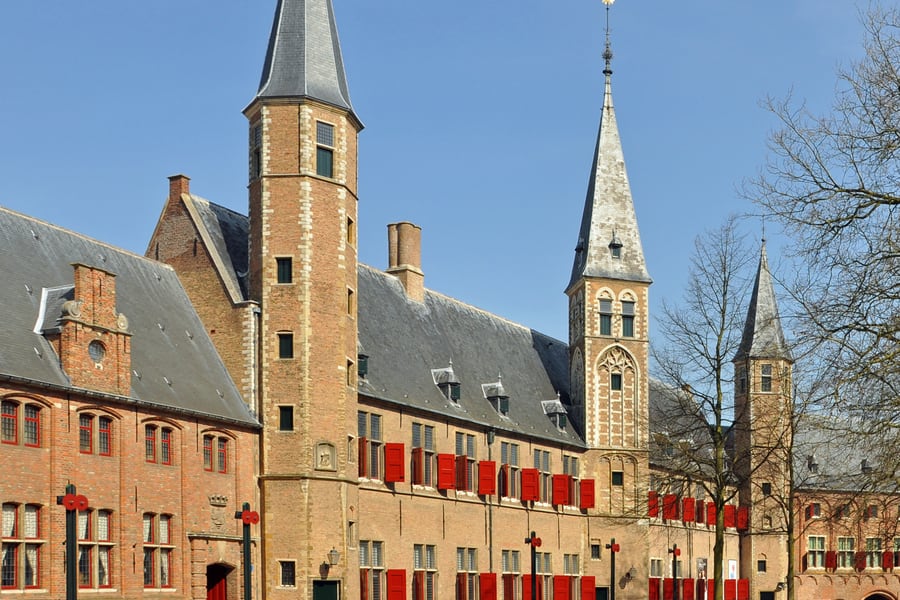 Marc Ryckaert (MJJR) / Wikimedia Commons · CC BY 3.0 · cropped
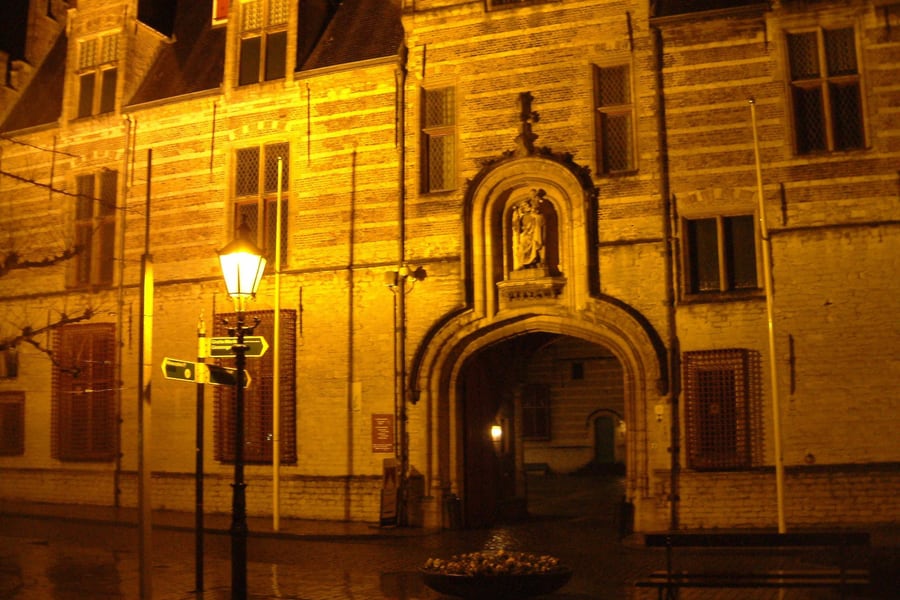
The Abbey, Middelburg
Premonstratensians from the Sint-Michielsabdij in Antwerp founded the abbey in 1127, and its great courtyard and two churches survive as one complex. The provincial government of Zeeland has sat here since 1812 and the Zeeuws Museum has occupied part of it since 1972. Bombing on 17 May 1940 set it alight; it was restored, as it has been several times before.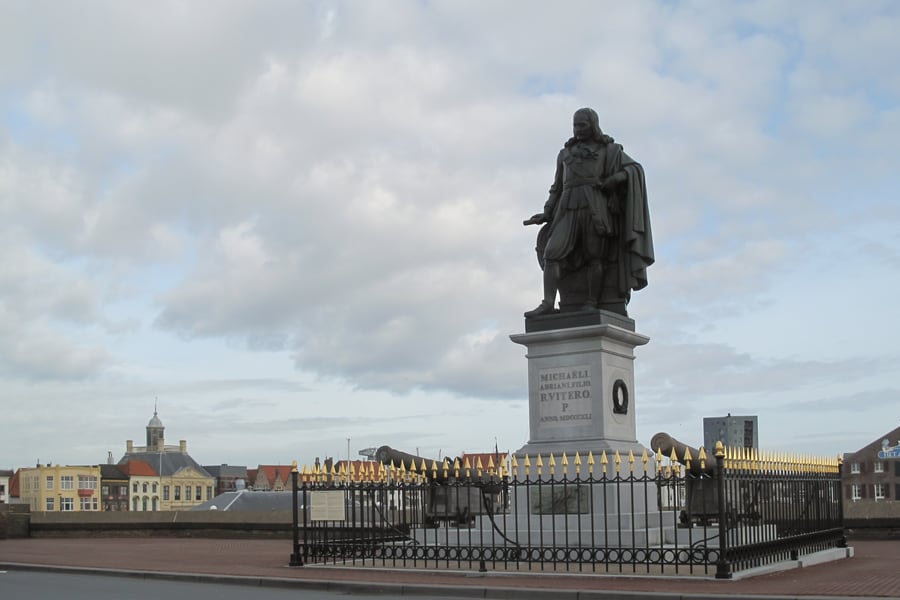 Michielverbeek / Wikimedia Commons · CC BY-SA 3.0 NL · 2014 · cropped
Michiel de Ruyter, Vlissingen
The admiral was born in Vlissingen, and here he stands on the sea front, telescope in one hand, on the deck of a ship with his back to the wheel. The statue by the Flemish sculptor Louis Royer was unveiled by King Willem II on 25 August 1841, first stood on the De Ruyterplein, and was moved to Boulevard de Ruyter in 1894. It is a national monument.Where to Sleep
The ride takes about an hour, so most people come for the day. A night on Walcheren leaves time for both ends of the island: Middelburg for the abbey and the old town, Vlissingen for the boulevard at the end of the line.
Where to stay
 Steven Lek / Wikimedia Commons · CC BY-SA 4.0 · cropped
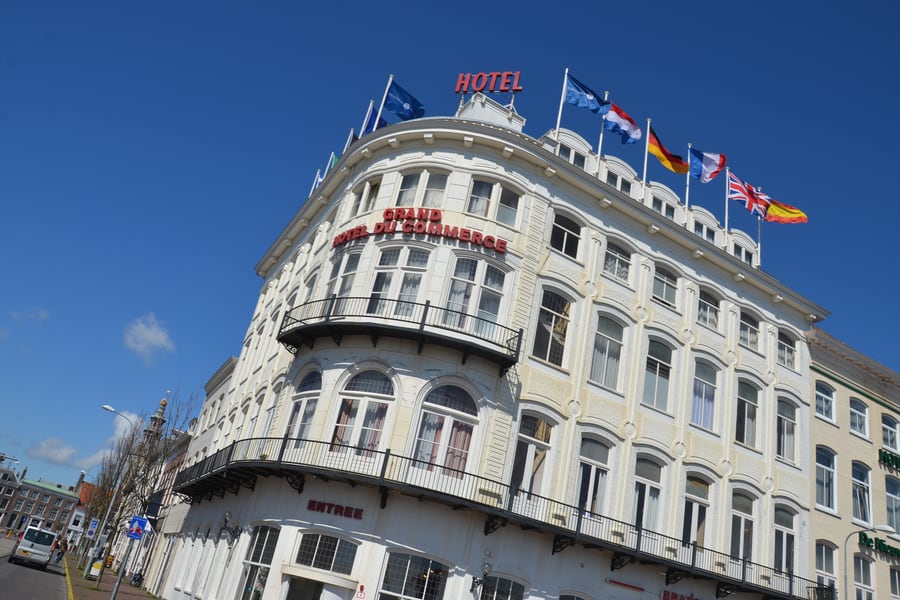
Fletcher Hotel-Restaurant Middelburg
On the Loskade, Middelburg
The former Grand Hotel du Commerce in the centre of Middelburg, with its own bistro and bicycles to hire.
Check Availability (opens in a new tab, on fletcherhotelmiddelburg.nl)via fletcherhotelmiddelburg.nlFletcher Hotel-Restaurant Arion-Vlissingen
On Boulevard Bankert, Vlissingen
A hotel with the historic centre on one side and the beach and boulevard on the other, and two restaurants.
Check Availability (opens in a new tab, on fletcherhotelvlissingen.nl)via fletcherhotelvlissingen.nlQuestions or corrections
Planning this trip and stuck on something, or spotted a time, fare or detail that has changed? Send us a message about The Zeeland Line, Roosendaal to Vlissingen. We read every one, and we update this page when something has changed.