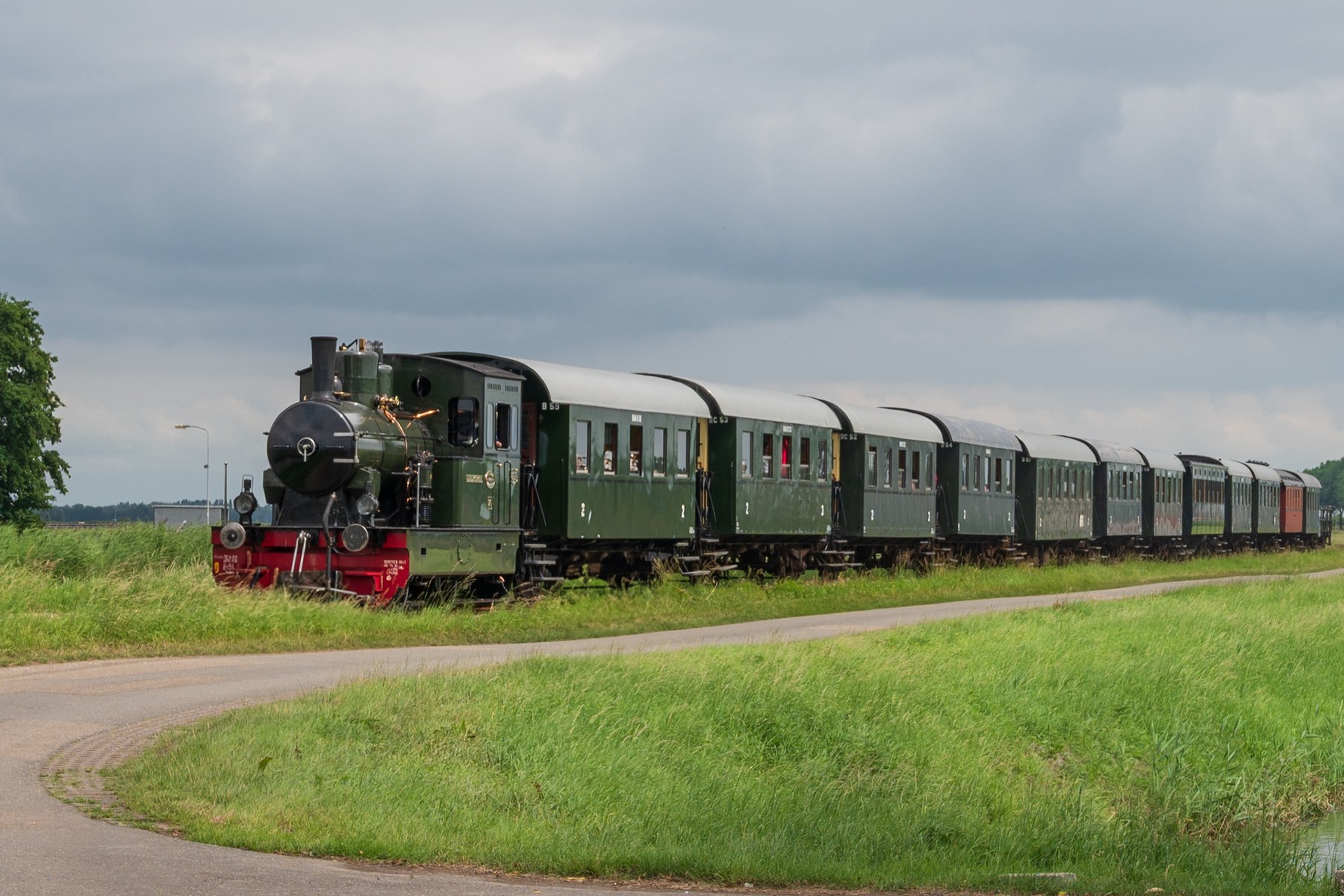
Hoorn to Medemblik by Steam Tram
Rob Dammers / Wikimedia Commons · CC BY 4.0 · 2025 · cropped
- DistanceAbout 20 km, Hoorn to Medemblik
- Duration1 hr 20 min each way
- Best seasonLate March to October, Tuesday to Sunday in summer · Sinterklaas and Christmas trams in winter
Introduction
West Friesland is the flat top of North Holland, reclaimed farmland ruled into fields by ditches, and in the 1880s its towns were cut off from the railway that had just reached Hoorn and Enkhuizen. A group of Medemblik notables raised the money for a line of their own. It took three years, and on 3 November 1887 twenty kilometres of track opened from Hoorn to Medemblik, laid on a deliberately winding course so that as little land as possible had to be bought, and calling at every village it could reach. The Hollandsche IJzeren Spoorweg-Maatschappij worked it. Buses took the passengers in the 1920s, and in 1935 the passenger trains stopped. Goods kept the track alive.
On 23 May 1968 a museum train ran out of Hoorn, and the Museumstoomtram Hoorn-Medemblik has worked the line ever since — about 250 volunteers and a small paid staff, presenting it as a Dutch steam tramway would have looked in 1926. That is the honest pitch. There is no scenery here in the sense Switzerland has scenery; there is a complete country railway, with eight of its ten station buildings still standing, a collection of steam tram engines that worked lines all over the Netherlands, and carriages to match.
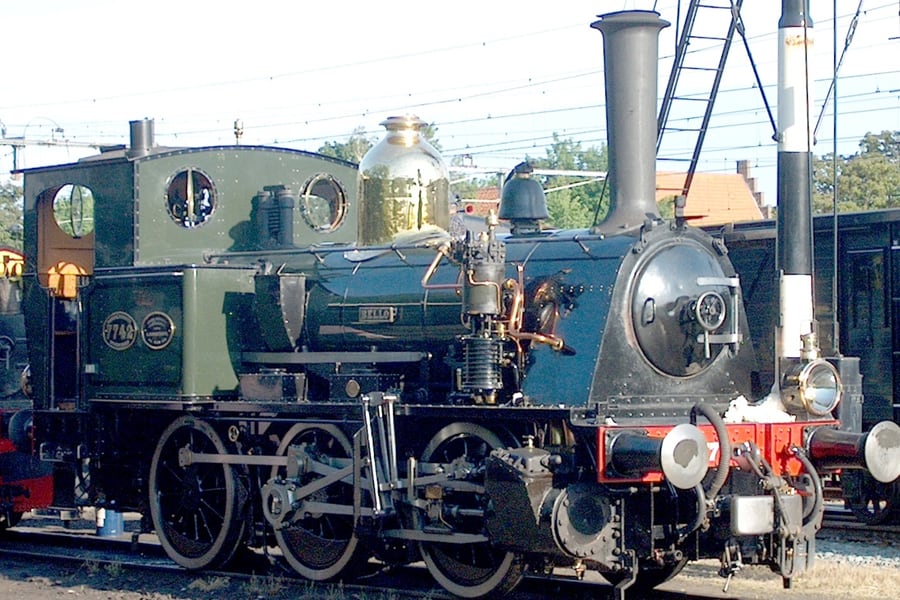
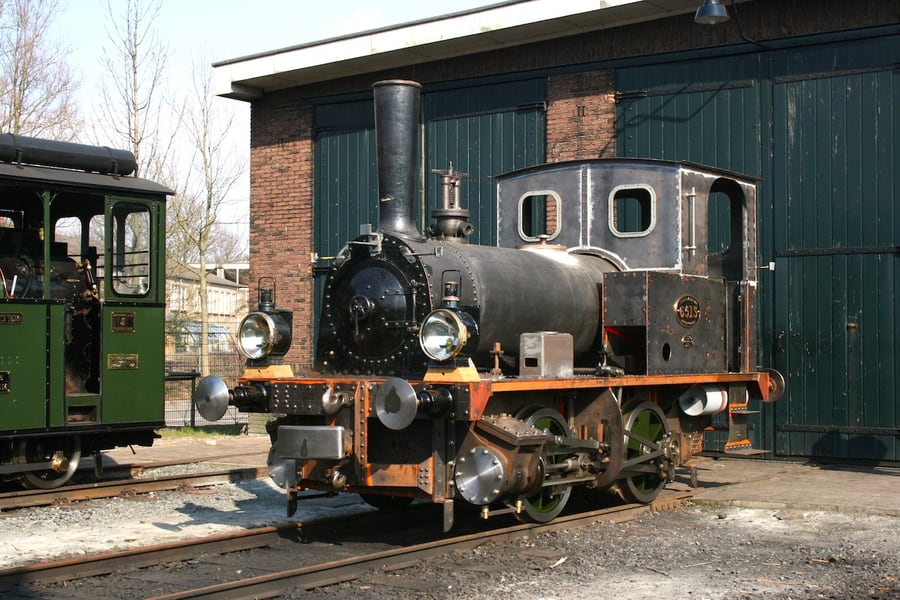
One engine belongs here more than any other. NS 7742, the locomotive everyone calls Bello, was delivered new in 1915 to work this very line, wandered the country for forty years, ended up as a monument in the middle of Bergen, and was sold to the museum in 1978 for a single guilder. At Medemblik the tram meets a 1956 ferry that crosses the IJsselmeer to Enkhuizen, and an ordinary NS train closes the triangle back to Hoorn.
The Journey
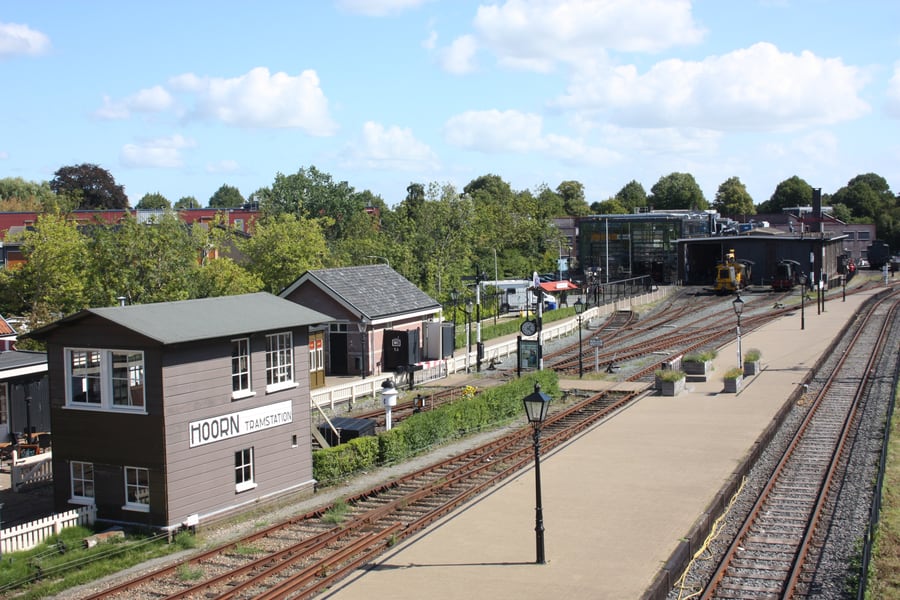
The trams leave from Tramstation Hoorn, on the north side of the NS station. It is not an original building. When the line was new, the Medemblik trains used the main station and this side of the tracks was the goods yard; the museum built its own station here from 1987 and rebuilt it in 2016 on the model of the 1900 tram station at Coevorden, with a wooden ticket hall, working gas lamps and enamel advertising boards on the walls. The museum's exhibition and its station buffet are inside. The workshop next door is the brick shed put up in 1929 for the railcars that were meant to save the line from the buses, and failed to.
Which locomotive works your train varies from day to day, and the operator publishes the choice on its Vandaag op reis page. Eight of the steam engines are in working order. Three are the square, boxed-in steam tram engines that look more like a garden shed than a locomotive. The others are conventional tank engines from Dutch tramways, factories and the national railway. Every one is fired by hand: a return trip of forty kilometres burns about 400 kilos of coal and 3,000 litres of water, and the fireman shovels all of it.
Across the polder
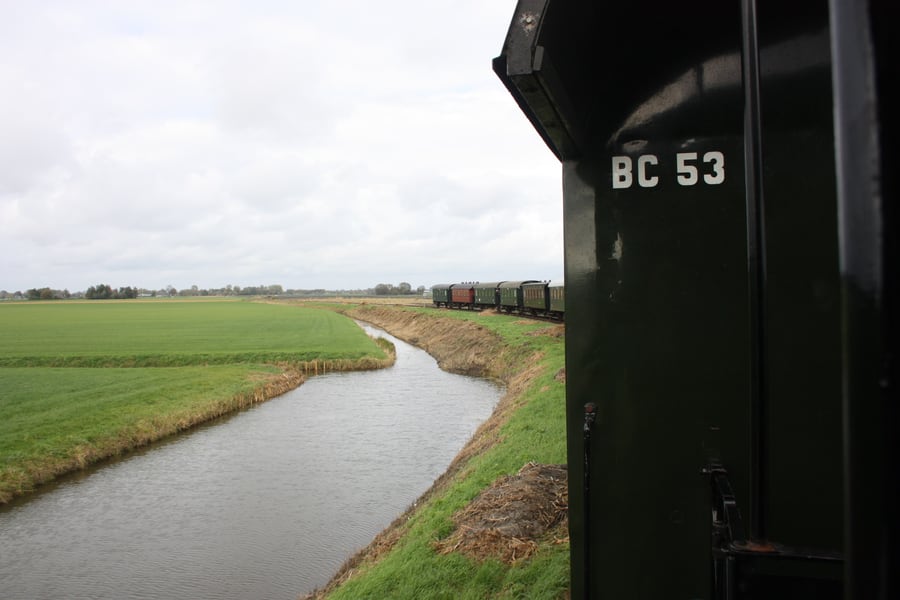
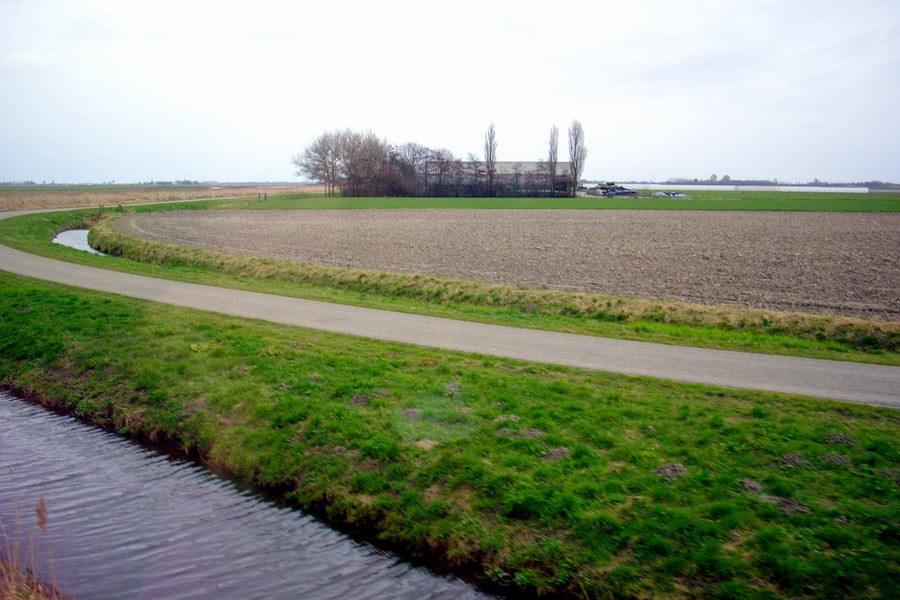
Out of Hoorn the line heads north and the town gives way almost at once to West Friesland: dead flat, intensely farmed, crossed by ditches and cycle paths, with village church towers marking the horizon. The railway's own story is in the track. It wanders, because the company that built it bought as little land as it could and tried to serve every village on the way, and the curves that saved money in the 1880s are what make the ride slow and pleasant now.
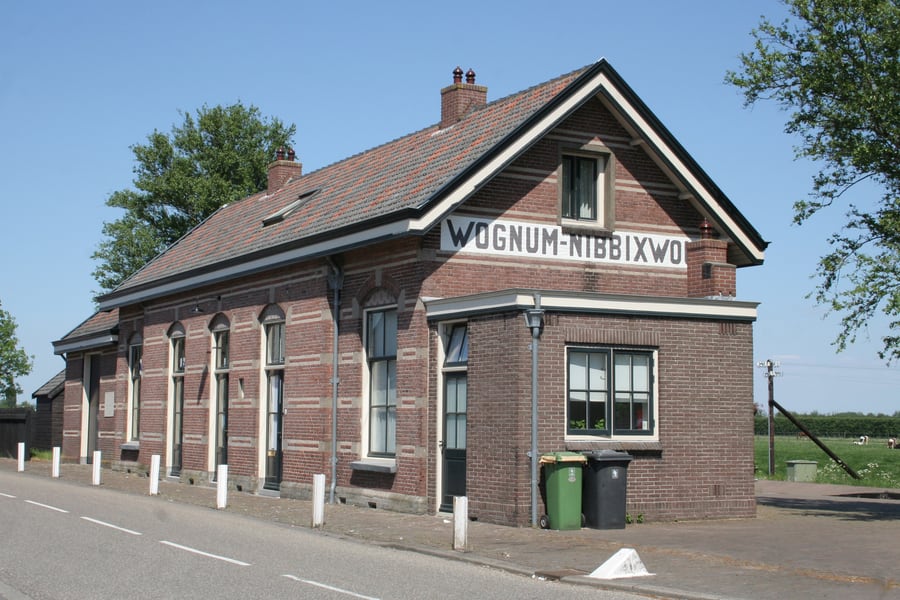
The trams stop at Wognum-Nibbixwoud for long enough to get out. It was a junction until 1930, for a steam tramway to Schagen, and the museum has returned the station to the way it looked in 1926: the waiting room and the stationmaster's office open, the goods shed, a hand-worked crane on the goods platform, and a separate brick privy. Food and drink are on sale here and at Hoorn.
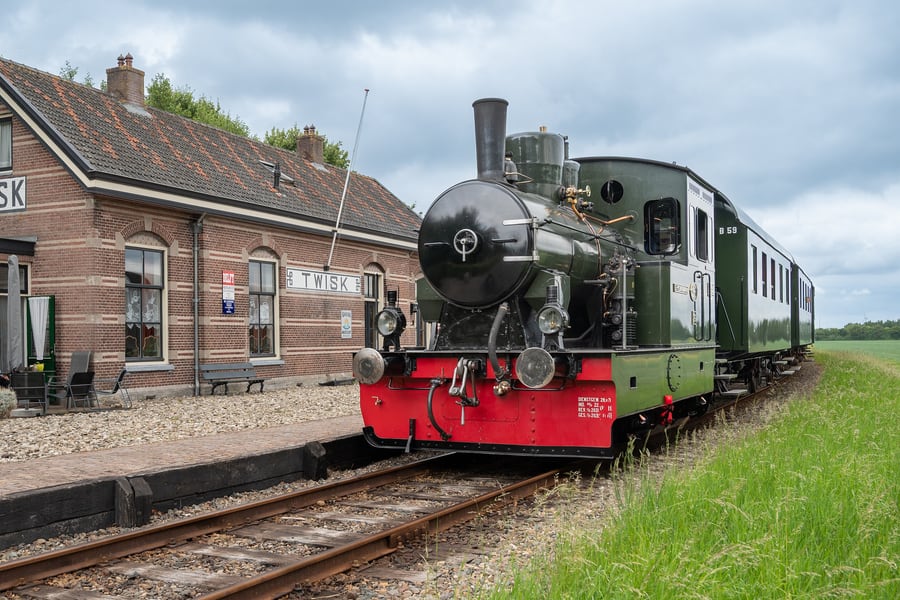
Then come brief calls at Twisk and Opperdoes, both original 1887 buildings designed for the company by A.J. Krieger, both with goods sidings still in place. The conductor clips tickets as the train goes, and the museum makes a point of saying that he or she knows a great deal about the steam trams, so ask.
Into Medemblik
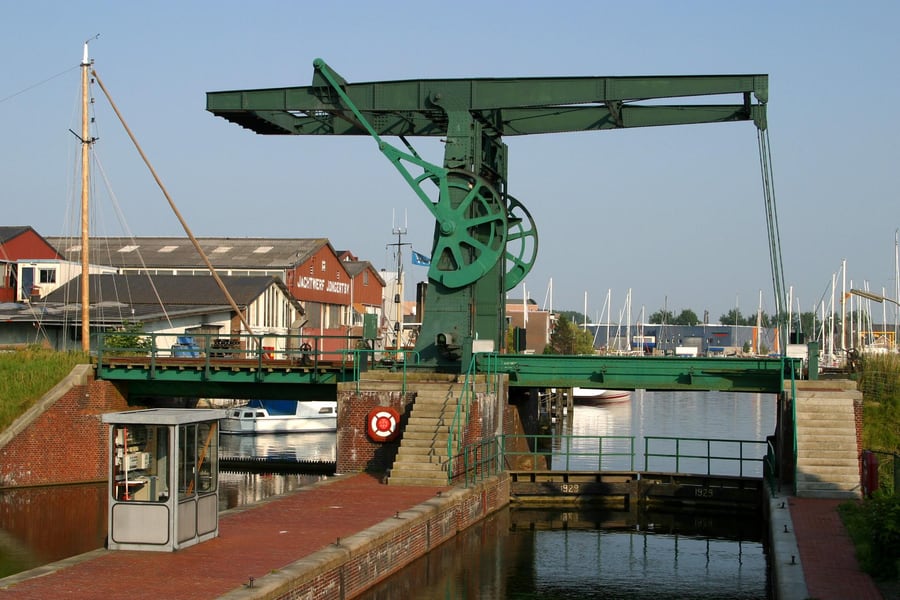
The approach crosses a lifting bridge over the lock, opened in 1928, and ends at the largest building on the line: Medemblik station, with its two waiting rooms and the stationmaster's flat upstairs, restored in 2007 exactly 120 years after it opened. The harbour is on the doorstep and the Friesland ties up at the pier opposite. On most days the tram arrives at noon and the boat sails at 13:20, which is enough time for lunch and not much else.
Along the route
 Maurits90 / Wikimedia Commons · Public domain · 2008 · cropped
Wognum-Nibbixwoud
The one stop long enough to get off. It was a junction until 1930, for the steam tramway to Schagen, and its waiting room, stationmaster's office, goods shed and outdoor privy are open to look round. The goods platform still has its hand-worked crane.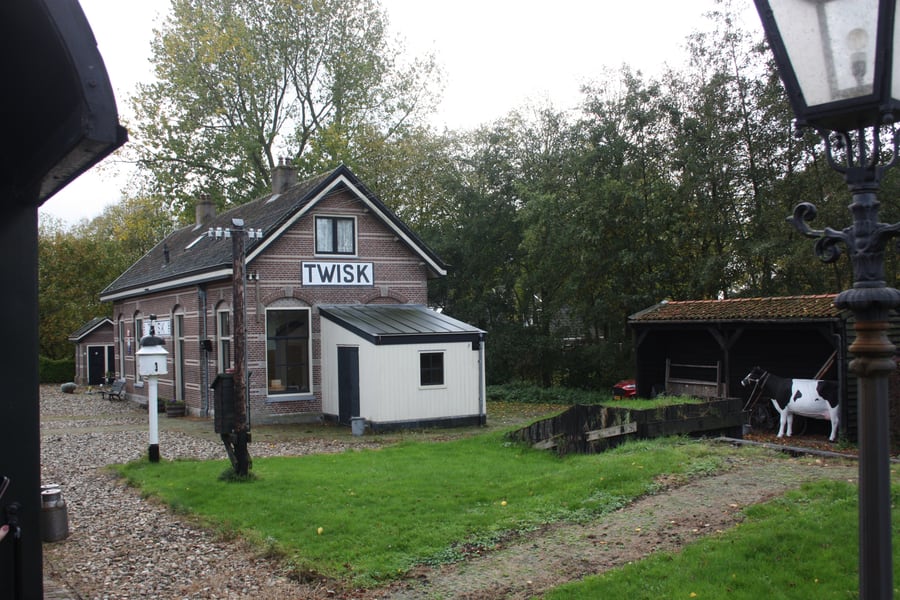 Sneeuwvlakte / Wikimedia Commons · CC BY-SA 4.0 · 2025 · cropped
Twisk
A short stop at one of the eight original station buildings still standing out of ten. There is a letterbox on the wall, emptied once by the postal conductors who rode the trains — and the museum has its own postal conductors doing it again.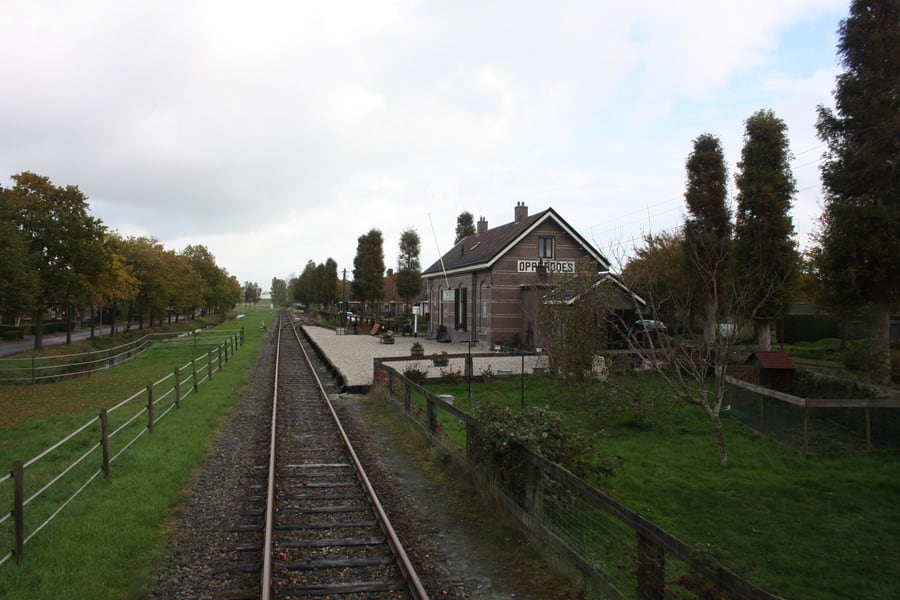 Sneeuwvlakte / Wikimedia Commons · CC BY-SA 4.0 · 2025 · cropped
Opperdoes
Two sidings survive here. One handled ordinary goods; the other loaded the district's cabbages, sprouts and beets — the freight that kept the line open long after the passengers had gone.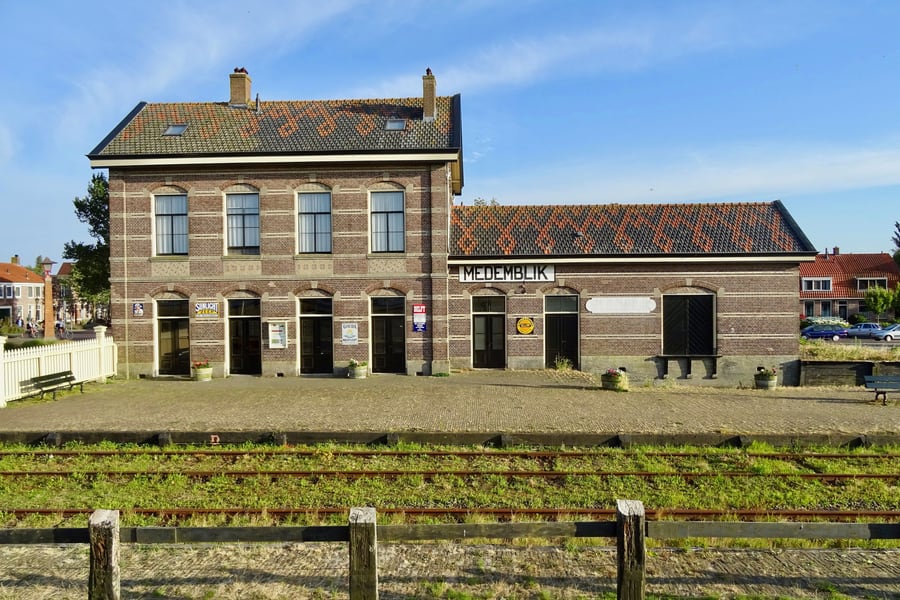 Gouwenaar / Wikimedia Commons · CC BY-SA 4.0 · 2018 · cropped
Medemblik
Noticeably bigger than the rest: two waiting rooms, for second and third class, a goods shed and a stationmaster's flat upstairs. The museum bought it in 2000 and finished restoring it in 2007, 120 years after it opened. The boat pier is opposite.A bit of history
Culture & experiences along the way
 GVR / Wikimedia Commons · CC BY 4.0 · 2026 · cropped
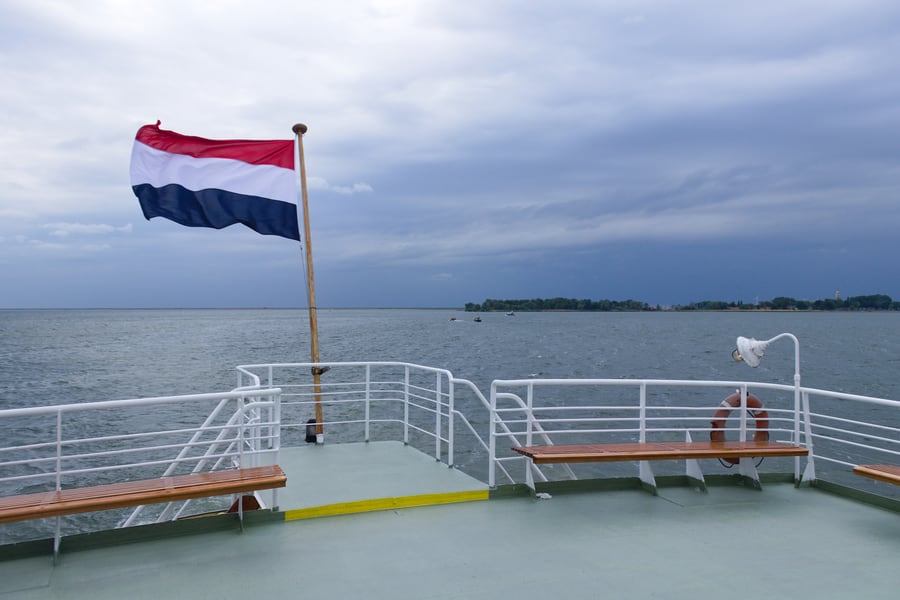
Across the IJsselmeer in a 1956 ferry
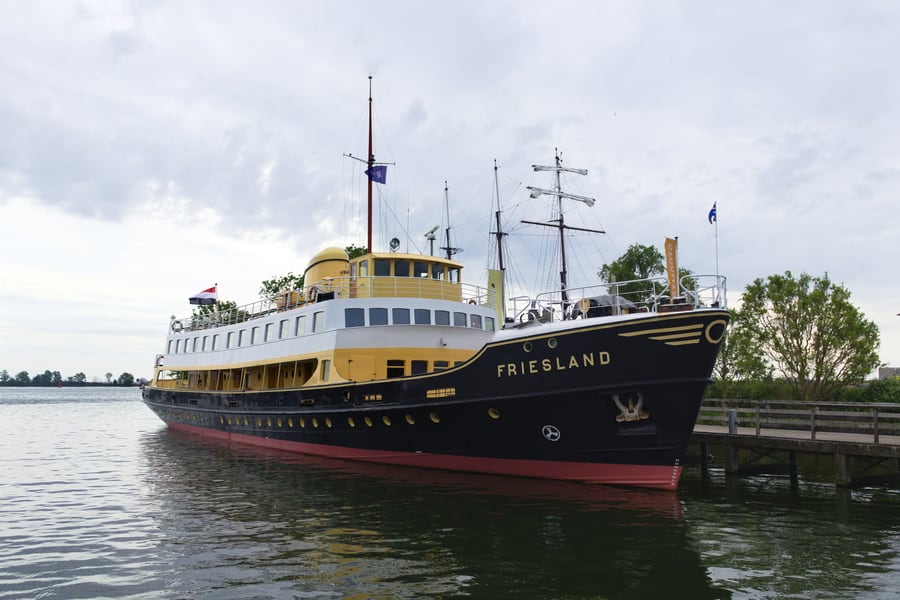
At Medemblik the tram meets the Friesland, which ran between Harlingen and Terschelling until the mid-1980s and has sailed for the museum since 2002. The crossing to Enkhuizen takes about an hour and a quarter, calls at the Zuiderzee Museum, and comes with a saloon bar and open decks. Back to Hoorn is twenty minutes by NS.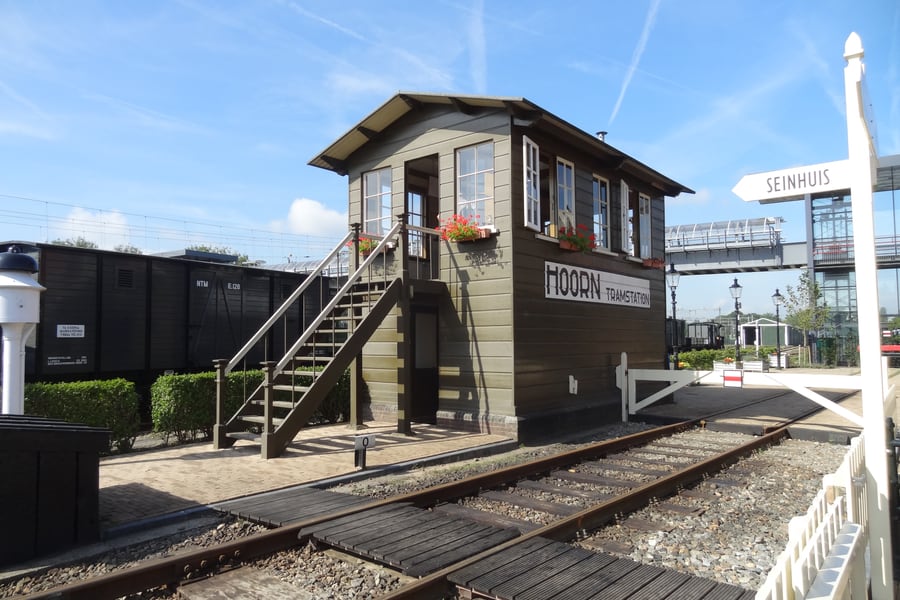 Dqfn13 / Wikimedia Commons · CC BY-SA 4.0 · 2016 · cropped
A signal box that came from somewhere else
The box at Hoorn was built in 1897 for Kesteren station, and the museum brought it here in 1983, lever frame and all. It still works the points and signals of the Hoorn yard. It opens with the museum, an hour before the first tram, along with the engine shed and the shop.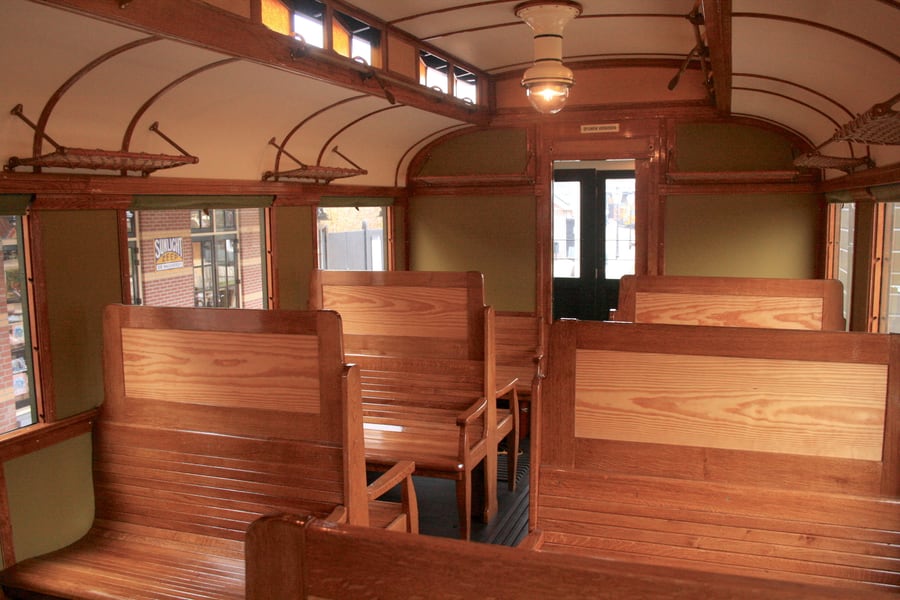 Eriksw / Wikimedia Commons · CC BY-SA 4.0 · 2024 · cropped
The tram for Bello
Bello's coaches survive too: Werkspoor carriages of 1920 that worked the line from Alkmaar to the beach at Bergen aan Zee until 1955. BC 423 is restored; BC 425 and BC 455 are being rebuilt in the Bello Atelier at Hoorn, where visitors can follow the work from a route past the coaches.Timetables
The steam tram does not run every day. The operator colours each day of the year in its online planner, and in 2026 the season ran from Saturday 28 March to Sunday 1 November: Tuesday to Sunday through most of the spring and summer, with few Mondays, then weekends and the autumn school holiday in October. Times below are from the operator's 2026 timetable, read in November 2026.
A standard day — one tram each way
On a standard ("yellow") day there is one return working, timed to connect with the boat at Medemblik. The tram stops briefly at Twisk and Opperdoes, and long enough at Wognum-Nibbixwoud to get out and look round.
| Steam tram | |
|---|---|
| Hoorn dep | 10:40 |
| Wognum-Nibbixwoud dep | 11:20 |
| Medemblik arr | 12:00 |
| Medemblik dep | 13:20 |
| Wognum-Nibbixwoud dep | 14:15 |
| Hoorn arr | 14:40 |
A busy day — a second tram
On the extended ("orange" and "red") days of the summer holidays a second tram follows an hour behind the first, so a family can take the later one out and still get back.
| First tram | Second tram | |
|---|---|---|
| Hoorn dep | 10:40 | 11:40 |
| Wognum-Nibbixwoud dep | 11:20 | 12:20 |
| Medemblik arr | 12:00 | 13:00 |
| Medemblik dep | 13:20 | 14:20 |
| Wognum-Nibbixwoud dep | 14:15 | 15:15 |
| Hoorn arr | 14:40 | 15:40 |
The boat and the triangle
The Friesland leaves Enkhuizen at 10:40 and reaches Medemblik at 11:55, in time for the 13:20 tram to Hoorn. Going the other way, it leaves Medemblik at 13:20, calls at the Zuiderzee Museum at 14:35 and reaches Enkhuizen at 14:50. NS trains link Enkhuizen and Hoorn every half hour in about twenty minutes, so the circuit closes from either end. The round trip cannot be started at Medemblik. The boat does not sail in winter; the operator expects it back in spring 2027.
Outside the season
Special trains run to their own timetables and must be booked: the Pieten Expres from 15 November to 5 December 2026 and the Kerst Expres from 19 to 30 December 2026, with the Dickens Expres on 11 December. The 2026 calendar also carried a Tulip Tram in April, the Bello Festival on 3–5 July and evening trains in July and August.
Running days and live times are published by the operator: Museumstoomtram · Reisplanner (opens in a new tab).
Tickets
Tickets are sold online, at the booking offices in Hoorn, Wognum and Medemblik, and aboard the Friesland for anyone starting in Enkhuizen; join the tram at Twisk or Opperdoes and the conductor sells you one. Booking is not required except for groups of 15 or more and for the Sinterklaas and Christmas trams, but the operator advises it, because only a booked ticket guarantees a seat. Special trams, packages and e-tickets carry a surcharge.
Children under four travel free, and so do holders of the Dutch Museumkaart. Any tram or boat ticket also opens the museum site at Hoorn, otherwise €7.00. A bicycle or a dog that will not sit on a lap needs a €5.00 supplement. The NS train between Enkhuizen and Hoorn is not included. Fares read from the operator in November 2026.
Book your tickets
Return by steam tram
€29.50 adult, €21.00 child 4–12
Hoorn to Medemblik and back, with the Hoorn museum site included.
Book Tickets (opens in a new tab, on stoomtram.nl)via stoomtram.nlSteam tram and boat
€29.50 adult, €21.00 child 4–12
The tram one way and the Friesland the other, between Hoorn and Enkhuizen.
Book Tickets (opens in a new tab, on stoomtram.nl)via stoomtram.nlSingle by steam tram
€17.50 adult, €10.50 child 4–12
Hoorn to Medemblik or the other way, for a return by bus or bicycle.
Book Tickets (opens in a new tab, on stoomtram.nl)via stoomtram.nlRail Passes
No rail pass covers the steam tram or the boat. The Museumstoomtram is an independent museum running its own railway and its own ship, and it does not appear in Interrail's list of Dutch operators — which, checked in November 2026 (last updated 21 October), names NS and its international partners, Eurostar, European Sleeper, Qbuzz, Arriva, Keolis, VIAS, Eurobahn and NMBS, and no one else. A pass holder pays the same €29.50 as everyone else.
What a pass does cover is the rest of the triangle. NS Sprinters and Intercitys are included with no reservation, and NS is what gets you to Hoorn and back from Enkhuizen. There is no Netherlands-only Interrail pass: the country comes under the Benelux One Country Pass, shared with Belgium and Luxembourg, and the Global Pass. A One Country Pass cannot be used in the country you live in, so a Dutch reader gets nothing from it at home.
Whether it is worth it
For this journey alone, no. The only rail travel a pass would pay for is the NS ride to Hoorn and the twenty-minute hop back from Enkhuizen, which is not worth a pass day. It earns its keep only if the steam tram is one day in a longer trip around the Low Countries — and even then the tram and the boat are bought separately.
Places to Visit
The tram, the boat and the NS train make a triangle of three old Zuiderzee harbour towns — Hoorn, Medemblik and Enkhuizen. The timetable leaves an hour and twenty minutes at Medemblik and puts a museum stop on the boat, so the day has room for more than the ride.
 BendeVos / Wikimedia Commons · CC BY-SA 4.0 · 2013 · cropped
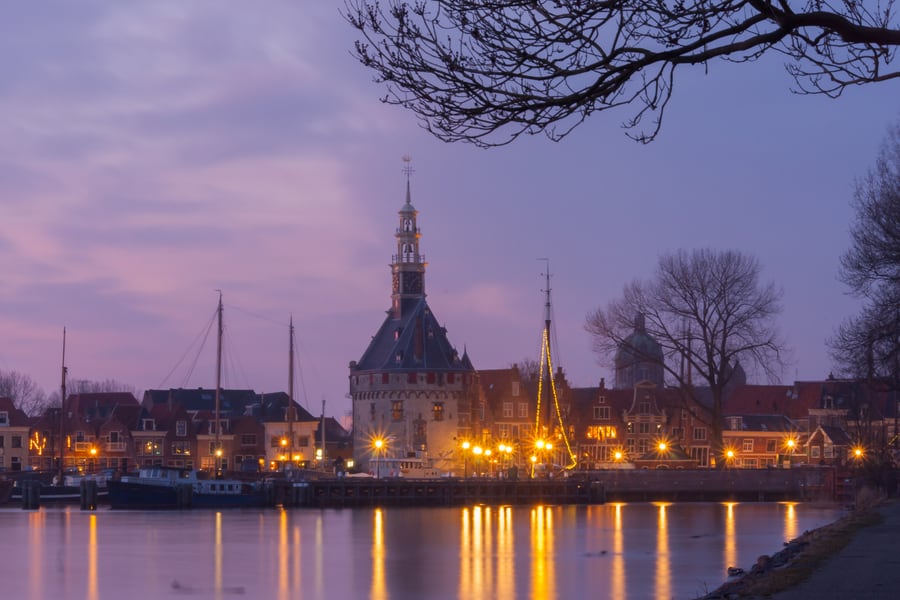
The Hoofdtoren, Hoorn
Hoorn's harbour tower went up in 1532, in limestone and brick, as part of the town's defences, and lost that job in 1614, when the Noordse Compagnie moved in. The little lantern on top was added in 1651. It has been a café and restaurant since 1968, and it is the view everyone takes home: the tower, the inner harbour and the gabled houses along the quay.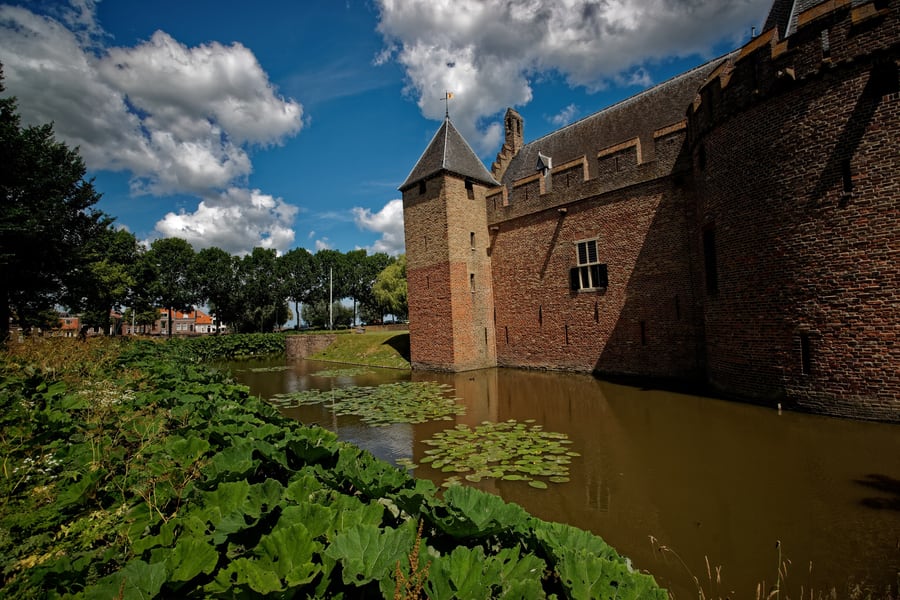 Txllxt TxllxT / Wikimedia Commons · CC BY-SA 4.0 · 2010 · cropped
Kasteel Radboud, Medemblik
Count Floris V of Holland built this castle in the 1280s to hold down the West Frisians he had just conquered. It once had much the same plan as the Muiderslot; two residential wings, two square towers and a round corner tower survive, with the rest traced on the ground. Frisian rebels besieged it in 1517. Restored from 1889, it stands on the east side of the harbour.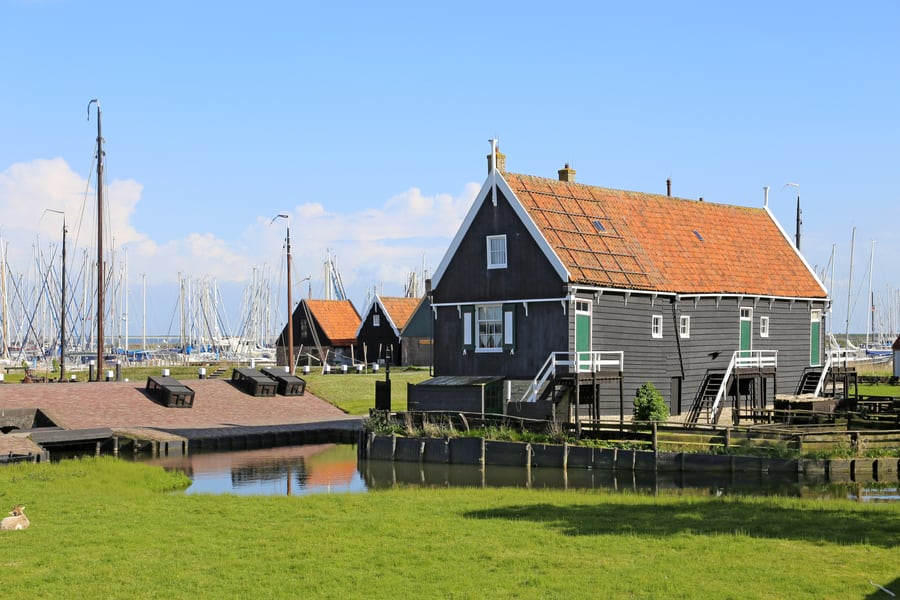 W. Bulach / Wikimedia Commons · CC BY-SA 4.0 · 2019 · cropped
The Zuiderzee Museum, Enkhuizen
The Friesland calls at the museum's own landing on the way to Enkhuizen. It tells the story of the Zuiderzee, the inland sea that was dammed off in 1932 and became the IJsselmeer. The museum opened in 1948; in 1983 it added an open-air village of houses, shops and workshops rebuilt from towns around the old shore, where crafts are still demonstrated. A ticket can be combined with the tram and boat.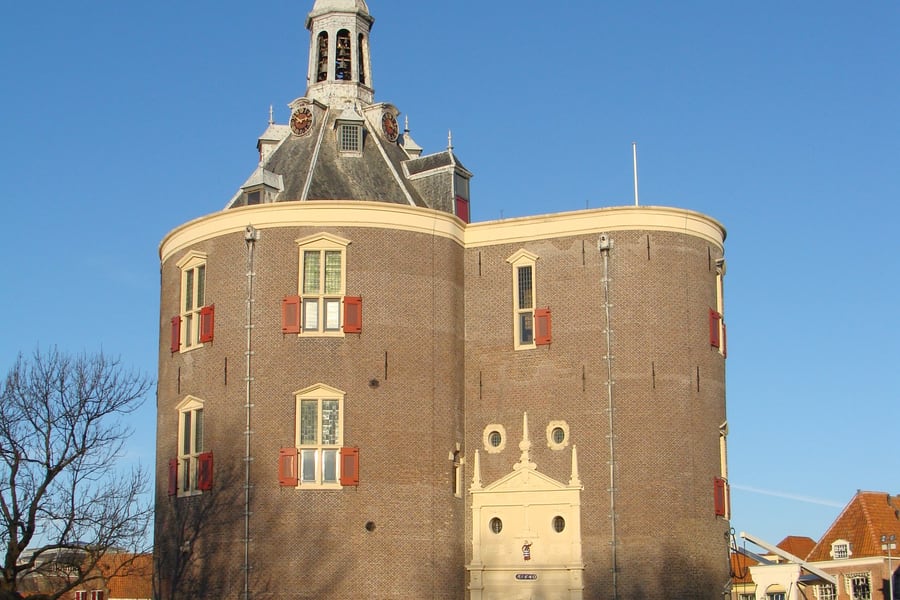 Pbech / Wikimedia Commons · Public domain · 2008 · cropped
The Drommedaris, Enkhuizen
Enkhuizen's southern gateway guarded the entrance to the old harbour, and the gun cellar and ground-floor room date from 1540. Above the gate is the cell for prisoners condemned to death, its oak panelling carved with dates and the occasional poem. It stands at the entrance to the old harbour.Where to Sleep
Most visitors make the trip as a day out, but the first tram leaves Hoorn at 10:40 and the full triangle takes most of the day, so a night at either end makes it unhurried. Hoorn has the wider choice; Medemblik is the small, quiet end of the line.
Where to stay
Het Wapen van Medemblik
On the harbour, at the Medemblik end
A hotel with its own restaurant and grand café at Oosterhaven 1, between the Oosterhaven and the Westerhaven, with Kasteel Radboud within walking distance.
Check Availability (opens in a new tab, on hetwapenvanmedemblik.nl)via hetwapenvanmedemblik.nlHotel Petit Nord
In the centre of Hoorn
A hotel on Kleine Noord in the middle of Hoorn, with three restaurants in the building, for a start from the tram station the next morning.
Check Availability (opens in a new tab, on hotelpetitnord.nl)via hotelpetitnord.nlQuestions or corrections
Planning this trip and stuck on something, or spotted a time, fare or detail that has changed? Send us a message about Hoorn to Medemblik by Steam Tram. We read every one, and we update this page when something has changed.